In this guide
- 01The Festival At A Glance: Five Days, Three Evenings
- 02Night One: The Doshin Fireworks Over Hakodate Bay
- 03Nights Two And Three: Wasshoi Hakodate And The Ika Odori
- 04Trams, Trains And The Station Crowd
- 05A Word On Weather And What To Bring
- 06How Our Concierge Team Plans A Visit
- 07What To Confirm Before You Travel
- 08Frequently Asked Questions
- 09Plan Your Evening On The Bay
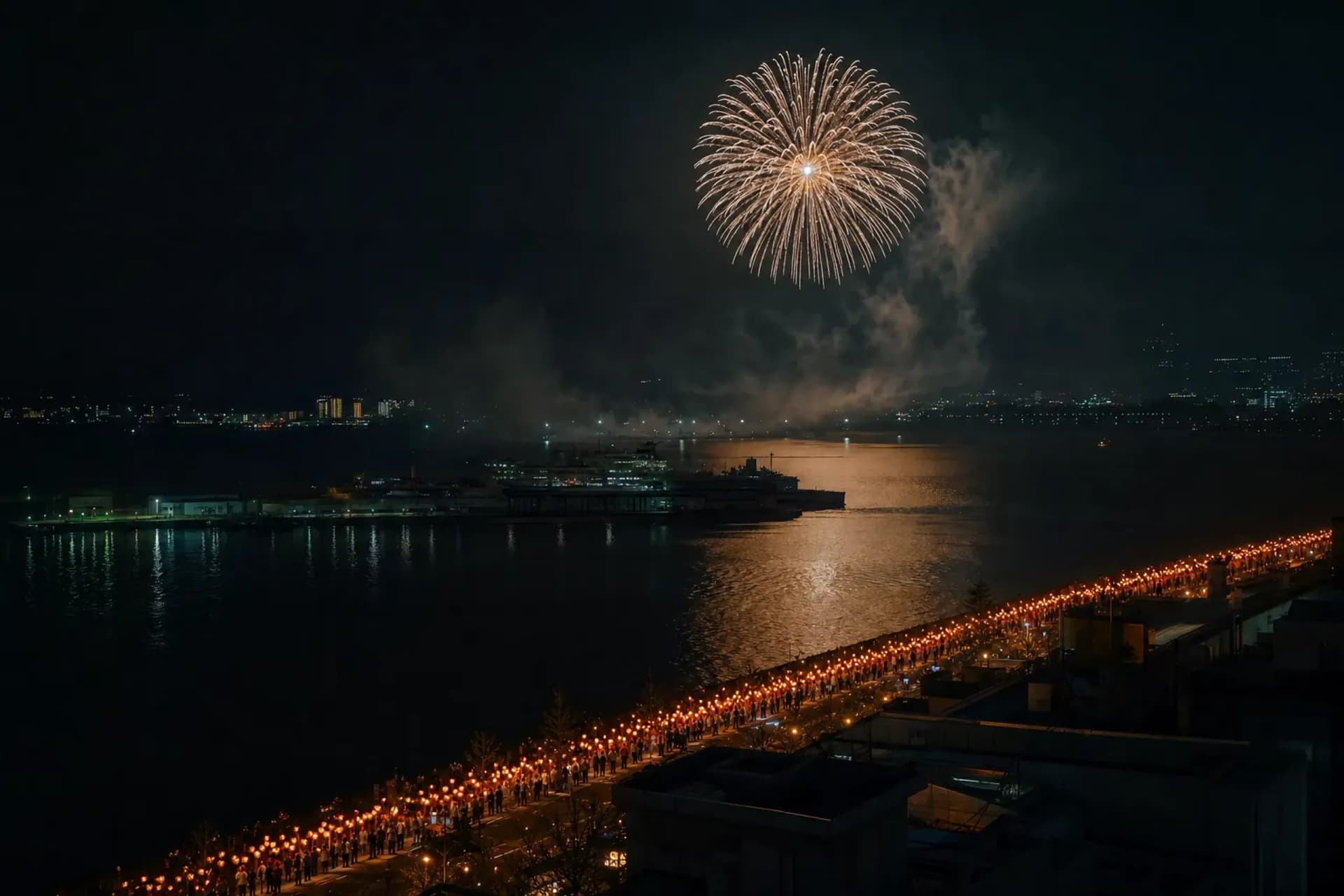
You arrive at the quay while the light is still gold over the water. The bay lies flat and mirror-still. Behind you, the city climbs its hill toward Mt. Hakodate, and out in front, a small island sits low on the horizon — Midori-no-shima, the launch point. Families spread cloths across the ground. Someone opens a bottle of cold barley tea. The crowd is patient in that particular Japanese way, settled and quiet, watching the dark gather over the harbour.
Then, as evening settles, the first shell climbs.
This is the Hakodate Port Festival — Hakodate Minato Matsuri — a harbour town's August distilled into five days. It is public and free to watch, and that is part of its charm. What follows is how the five days are shaped, where the quays lie, how the trams behave on parade nights, and how our concierge team at Japan Royal Service plans an evening that glides past the crowds instead of fighting them.
The Festival At A Glance: Five Days, Three Evenings
The Hakodate Port Festival is traditionally held from 1 to 5 August, with the fireworks opening the first night and two parade evenings following.
The shape is simpler than five days might suggest. There are three evenings that matter and two days held in reserve. The fireworks come first. The parades come next. Weather holds the remainder in reserve.
Here is how the five days are typically shaped:
| Day | What Happens |
|---|---|
| Day 1 | Doshin Fireworks, in the evening |
| Day 2 | Wasshoi Hakodate parade, from late afternoon (course set each year) |
| Day 3 | Wasshoi Hakodate parade, from late afternoon (course set each year) |
| Day 4 | Reserve day for the parade |
| Day 5 | Reserve day for the fireworks |
The organiser is the Hakodate Port Festival Executive Committee, with its secretariat inside the Hakodate International Tourism and Convention Association. The City's own timeline places the first Port Festival in 1935, the first fireworks in 1956, and the move to August in 1966 — nearly a century of civic memory folded into these summer nights.
Key fact: The dates are not fixed in stone every year. The 2022 edition, for example, was a reduced four-day version. Treat 1–5 August as the tradition, not a guarantee; the JRS concierge team confirms the current year's programme directly with the guest at time of arrangement.
Night One: The Doshin Fireworks Over Hakodate Bay
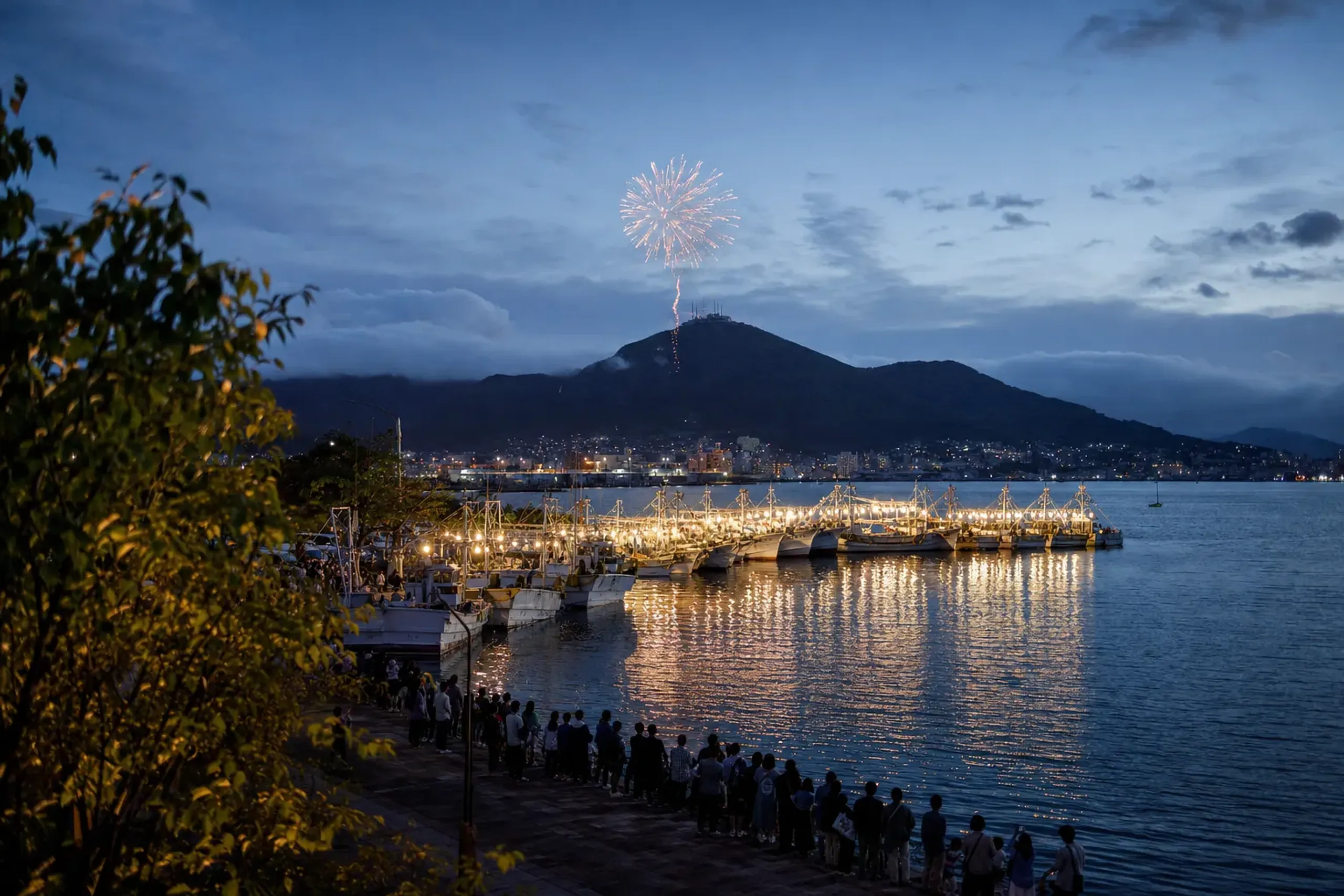
The fireworks are launched from Midori-no-shima and watched from the quays of Hakodate Port. There are no paid seats — the viewing is free, from public areas around Otemachi, Toyokawa-cho and the neighbouring wharves.
What makes this display unusual is the stage itself. The shells rise from an island in the bay, so the water carries the light twice — once in the air, once on its own black surface. The harbour becomes a mirror. From the quays you feel the concussion in your chest a half-second after the bloom, the way sound lags behind light across open water. There is a Japanese attentiveness to this — an appreciation of the bay as a collaborator rather than a backdrop, the display shaped to the season and the setting in the quiet spirit of shun, the sense that this is precisely the thing to witness in precisely this month.
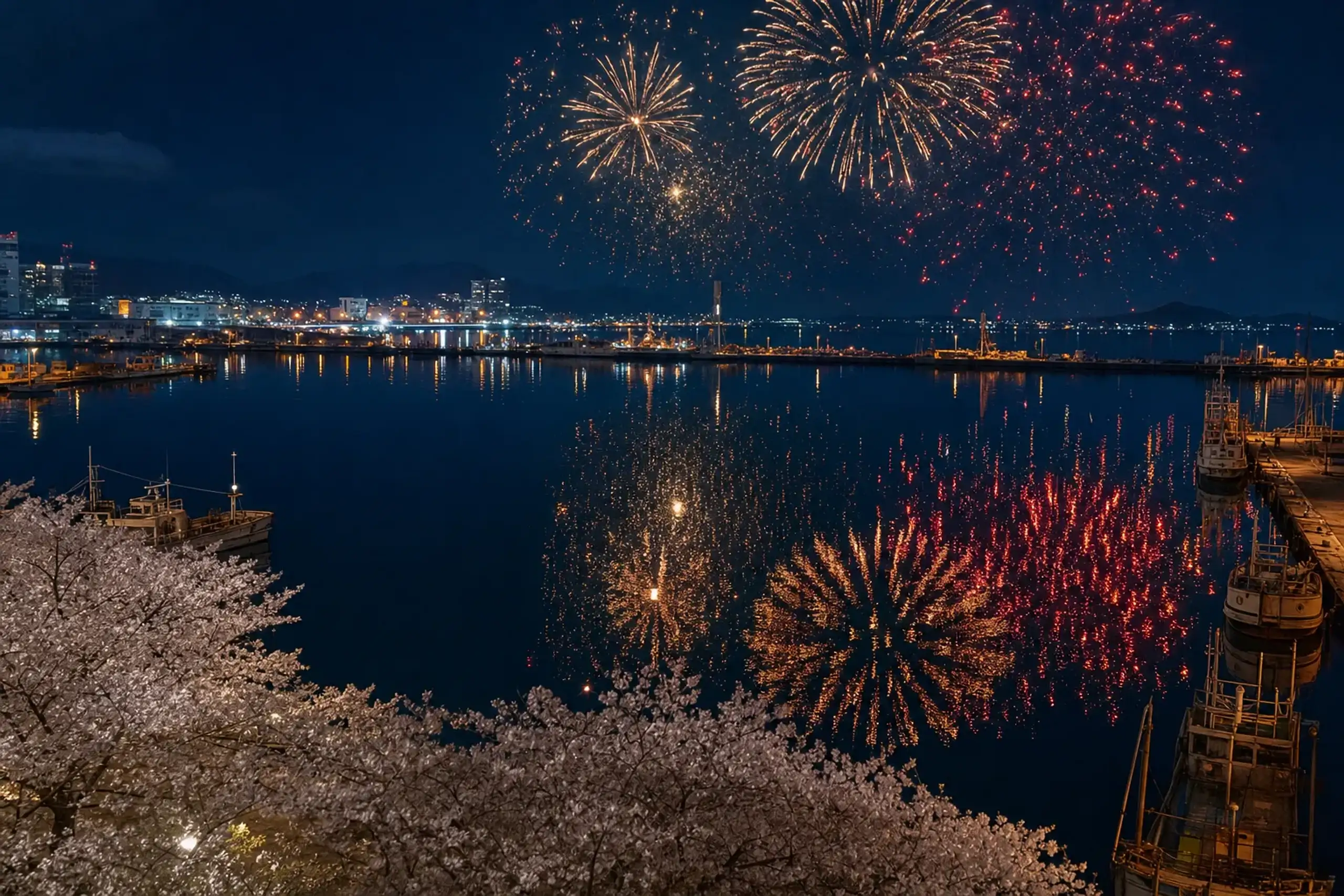
The Doshin Fireworks begin in the evening, and the JRS concierge team confirms the start time directly with the guest at time of arrangement. The number of shells is not published, but the rhythm is familiar: a steady program building to a dense finale, roughly an hour on the water.
A few practical truths. The decision to hold or cancel is made in the late morning on the day and finalised in the early afternoon — light rain does not stop the show. Drones are banned on fireworks day. Traffic regulation around the venue begins in the evening, and there is no parking at the venue. If the fireworks are cancelled, they fall back to the reserve day.
Hakodate Station sits about five minutes on foot from the fireworks area, which is the single most useful fact for planning the night. You do not need to be clever about where to stand. You need to be smart about how you arrive and, more importantly, how you leave.
Nights Two And Three: Wasshoi Hakodate And The Ika Odori
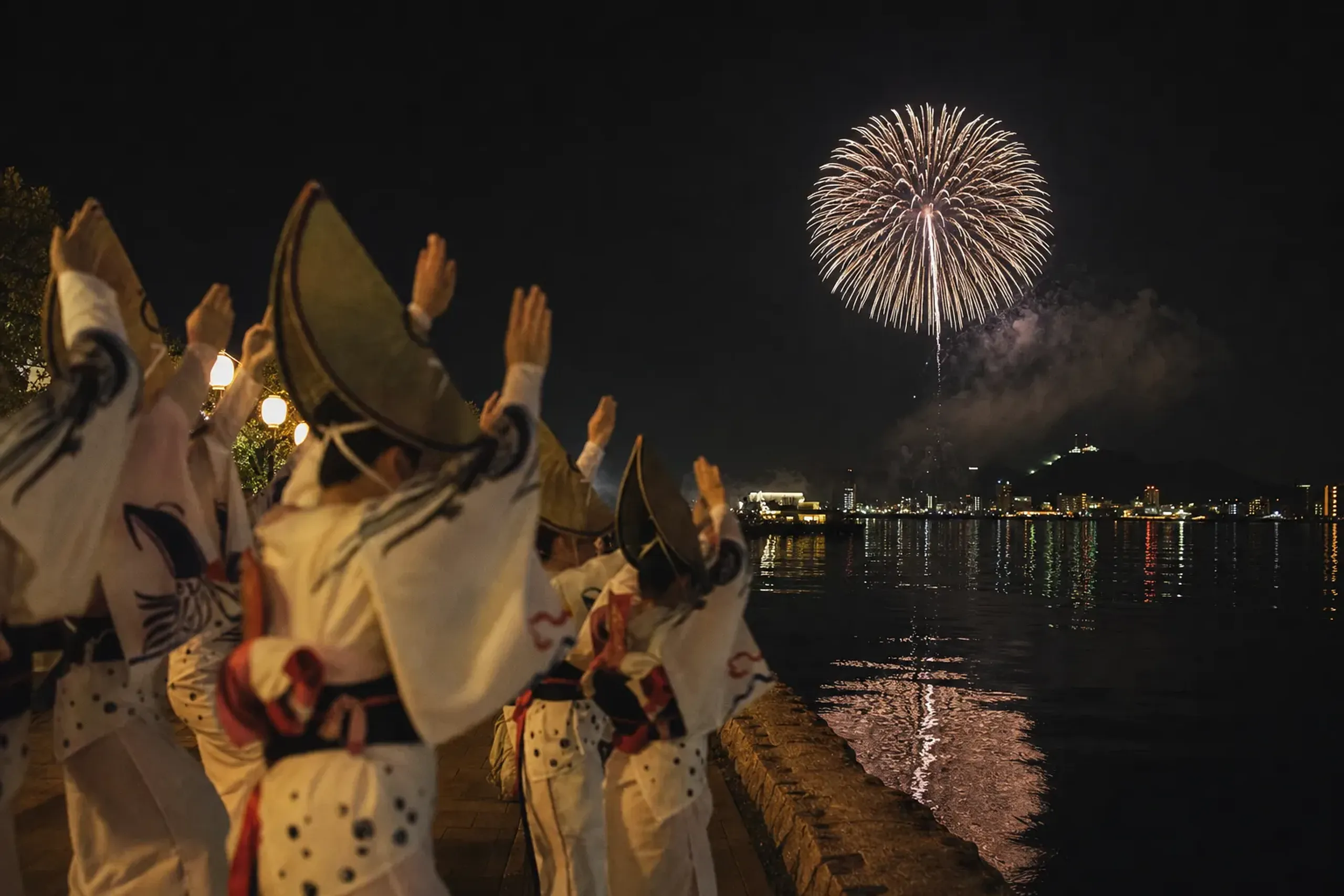
The parades are a different animal entirely. Where the fireworks ask you to sit still and look up, Wasshoi Hakodate pours through the streets at eye level — citizen groups, companies, whole neighbourhoods dancing a course through the city from late afternoon.
Each parade day carries the same three movements: the Hakodate Port Dance, a summer carnival, and then the Ika Odori — the squid dance.
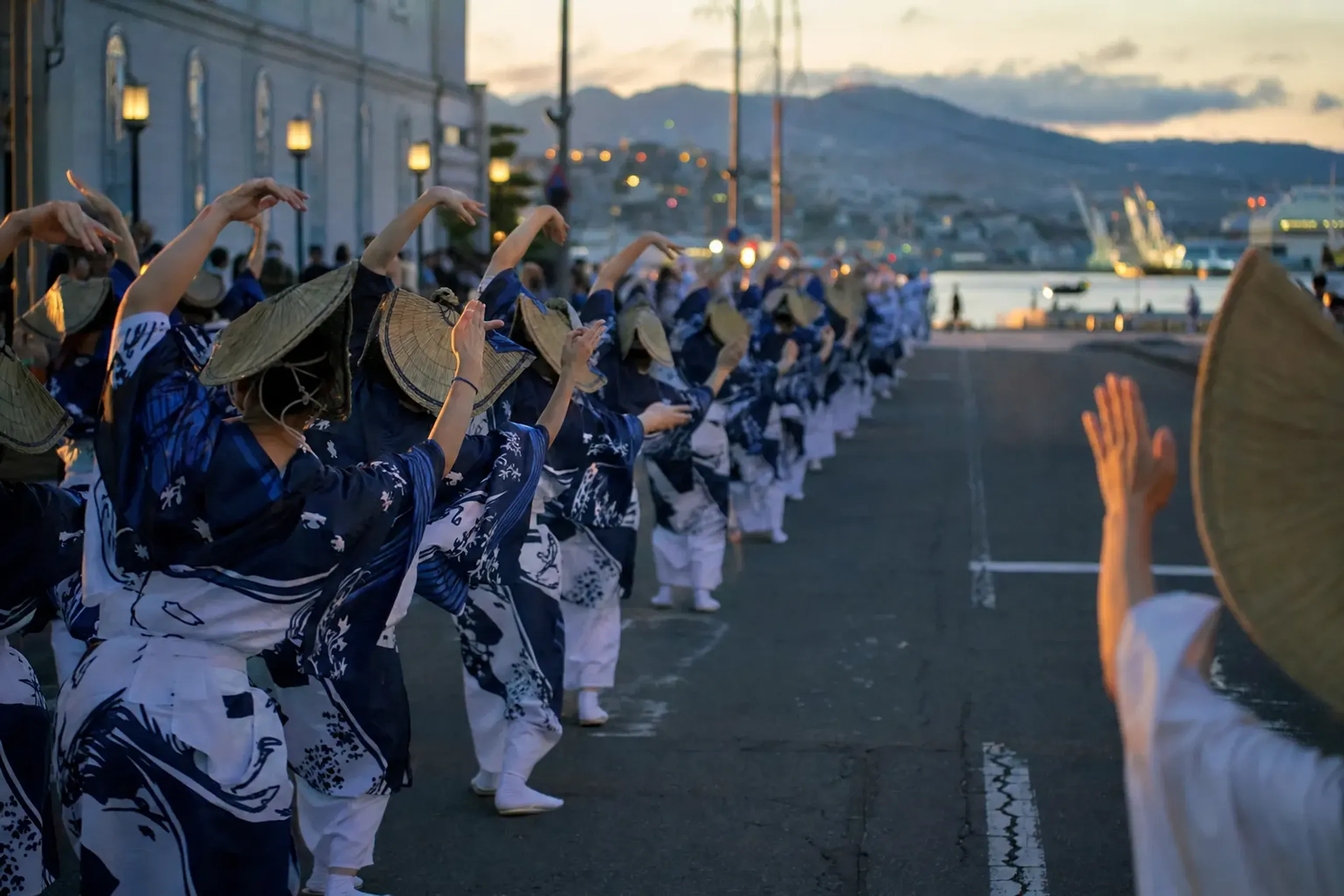
Published entries run to dozens of groups and many thousands of people on each parade day, though entries and the number who actually dance are different figures.
What The Squid Dance Actually Is
The Ika Odori has been part of the Port Festival since 1981, according to a City document. The gestures mimic a squid — arms up, hands curling, a bobbing step that is deliberately silly and deeply beloved. It is the moment the whole parade dissolves into one shared joke. Hakodate is a squid town, and the dance knows it.
The Ika Odori portion runs about 40 minutes and is open to people within an entered group. Joining from the roadside is not allowed, for safety. Anyone within a registered dancing group may take part, but a visitor cannot simply step off the kerb mid-parade. If participating matters to you, that is a conversation to have with our concierge well ahead of the date, because the arrangement depends on the organiser and the groups, not on us.
Watching It Well
A good interpreter changes a parade entirely. One of our English-speaking cultural guides can translate the chants, name the groups, explain why the squid and not some grander creature, and read the shape of the evening so you are in the right place when the Ika Odori finally arrives. Without that, it is colour and noise.
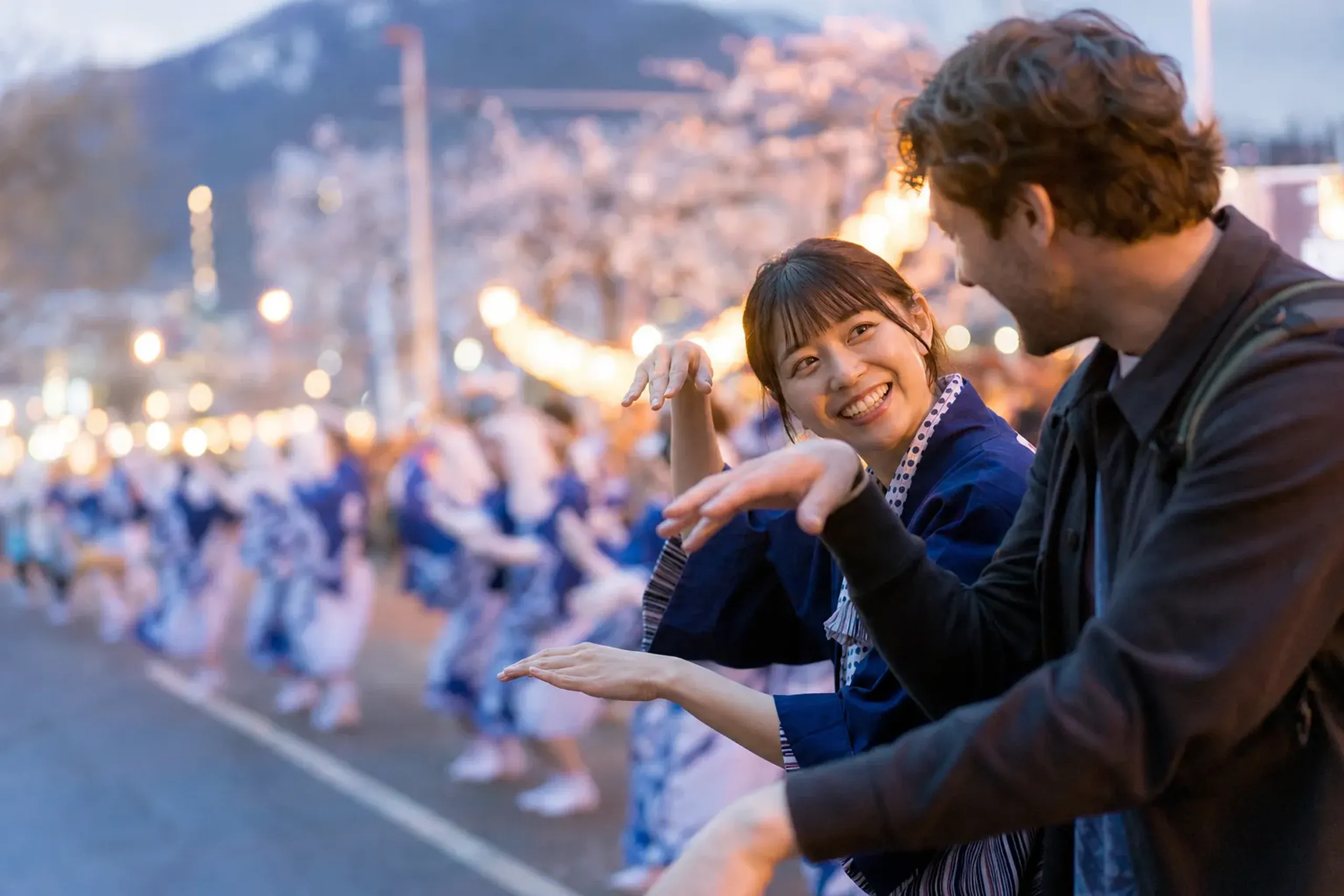
With it, it is a town telling you who it is.
One firm rule: occupying road space to reserve a viewing spot is prohibited, and unattended sheets are removed. Selling on public roads is banned, and your rubbish goes home with you. There is no roping off a patch of kerb hours early. The viewing is first-come and shared.
Trams, Trains And The Station Crowd
This is where a visit succeeds or stumbles. On both parade days, parts of the Hakodate tram line are suspended from mid-afternoon into the night, with replacement buses, and the suspended sections differ by day; the JRS concierge team confirms the current hours and sections directly with the guest at time of arrangement. The City advises using the Jujigai or Hakodate-Ekimae stops to avoid the worst crowding elsewhere.
A special "Flower Tram" also runs during the festival period, though it can be suspended in rain. It is a small, photogenic thing — a decorated car threading the city — and a nice daytime grace note rather than a way to beat a crowd.
On the rail side, JR Hokkaido has run extra trains on the fireworks day and the first parade day, including the Hakodate Liner. The railway recommended IC cards between Shin-Hakodate-Hokuto and Hakodate and asked visitors to buy return tickets in advance, because Hakodate Station gets very crowded. Extra trains are cancelled if the fireworks are cancelled.
Key fact: Buy your return ticket before the fireworks begin, not after. The post-show crush at Hakodate Station is the single hardest moment of the night. A ticket already in hand turns a 40-minute queue into a short walk.
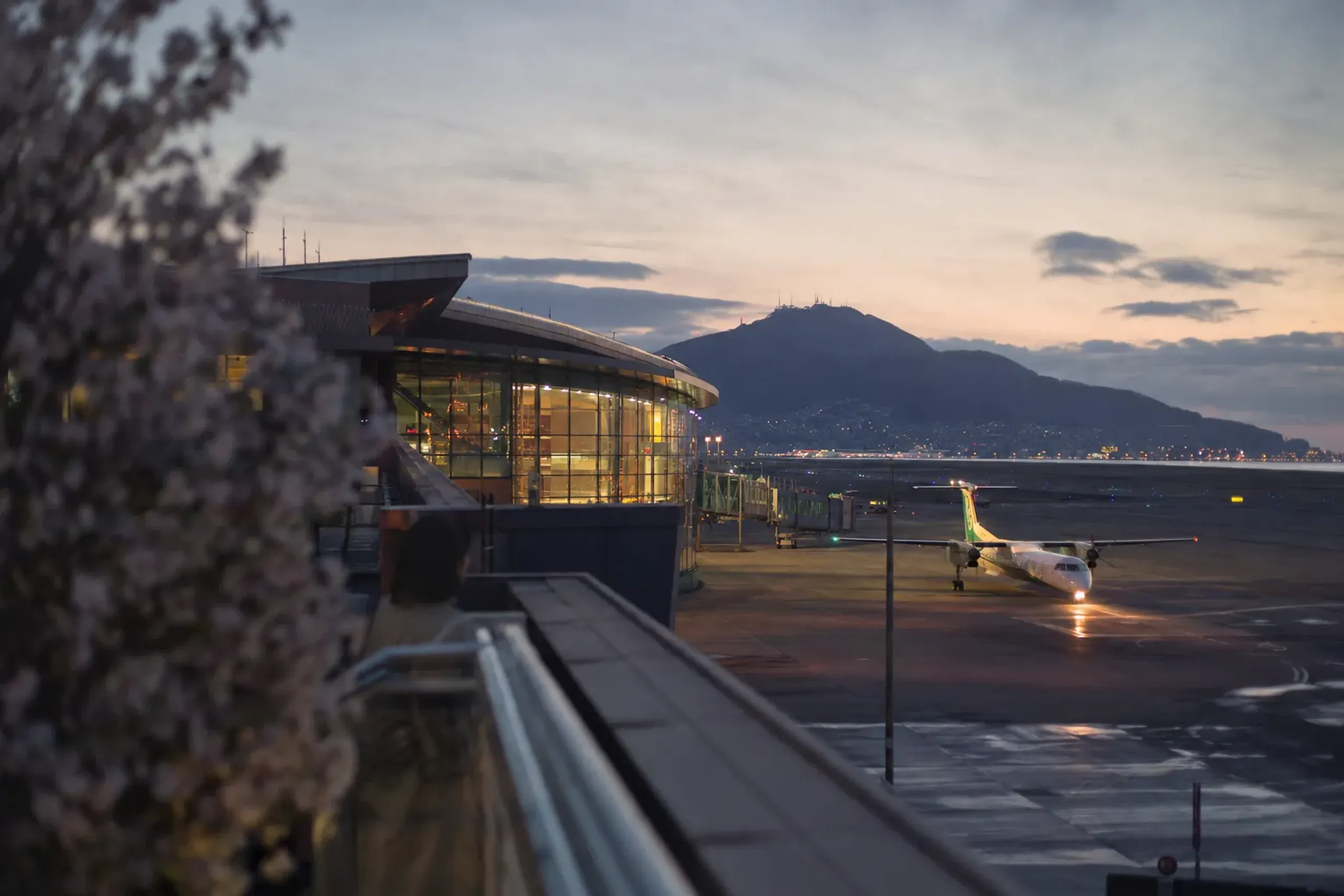
For getting into and out of the city: Hakodate Airport sits about 20 minutes from Hakodate Station by bus, and the Hokkaido Shinkansen reaches Shin-Hakodate-Hokuto, with the Hakodate Liner connecting on to Hakodate Station.
If you are weighing rail against a car for the wider trip, our note on private driver versus rail and the longer piece on how you actually move through Japan are worth a read before you decide.
A Word On Weather And What To Bring
Hakodate in early August is mild and often damp. Using the Hakodate station record (JMA, 1991–2020), August averages a mean of 22.1°C, a high near 25.9°C and a low around 18.9°C, with about 156.5 mm of rain across the month. Standing by the water after dark, it feels cooler than the daytime figure suggests.
Bring a light layer. The sea breeze off the bay carries a chill once the sun goes, and fog can drift in during early summer. A thin jacket you can carry and forget is the right call for the quayside.
How Our Concierge Team Plans A Visit
The Port Festival is public and free, and nothing we do changes that — nor would you want it to. Our role is to remove friction so the evenings land as they should. This is the quieter dimension of Japanese hospitality — the unobtrusive anticipation of what you will need before you think to ask for it. Within this festival, here is what we handle.
Guiding
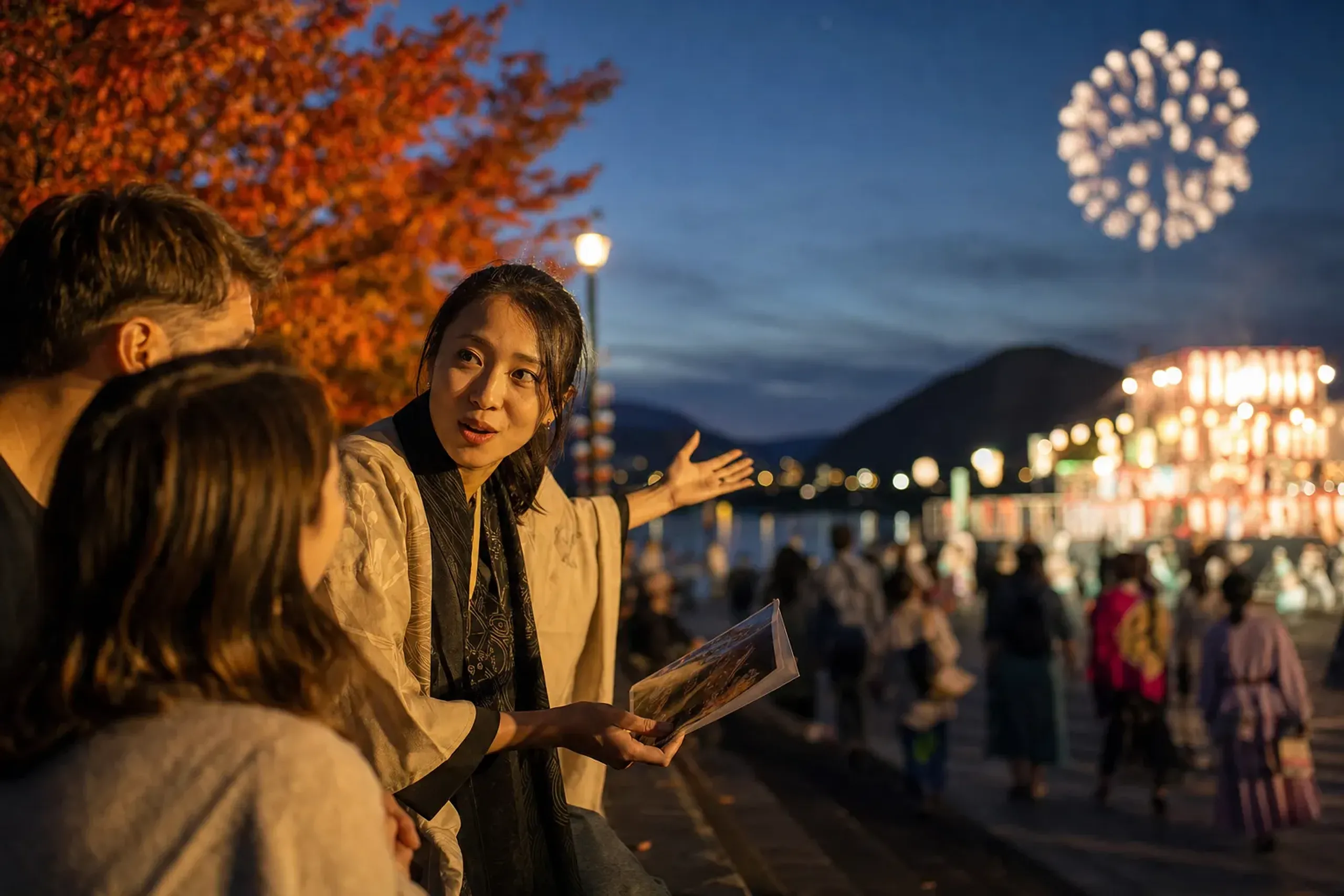
An English-speaking cultural interpreter who explains the parade, reads the Ika Odori as it builds, and makes sense of the fireworks program. This is the difference between watching and understanding.
Private Transfer
A vehicle from a partner company with an English-speaking driver that brings you to the edge of the traffic-controlled area, so you walk the last stretch rather than sitting in a jam. The driver and your guide are separate roles.
Accommodation And Timing
Coordination of a hotel close to Hakodate Station — a short walk from the fireworks quays — so your return after the crush is a matter of minutes, not an ordeal. And a tailor-made evening timed around the tram suspension and the station crowd: when to arrive, when to leave, where to eat so the kitchen is not slammed at the exact hour everyone else wants a table.
Ahead of your visit, our concierge team verifies the year's programme, the tram and train notices, and the traffic regulation directly through the organiser's channels. We do that because details shift year to year, and because certainty is the real luxury here. The festival belongs to the town.
What To Confirm Before You Travel
The programme outline above is drawn from Hakodate City, the Hokkaido Shimbun as co-organiser of the fireworks, JR Hokkaido's press notices, the Hakodate City Transportation Bureau and the JMA.
Each year’s programme is published ahead of the festival. By tradition, the fireworks open the festival with the parades on the two days after — but the courses, times and entry counts are confirmed only closer to the date. The number of fireworks shells is not published. Treat all of it as a well-sourced sketch to be confirmed, not a promise.
Frequently Asked Questions
When Is The Hakodate Port Festival Held Each Year?
It is traditionally held from 1 to 5 August, with fireworks on the first night and parades on the next two. The dates are not guaranteed every year, so confirm the current programme before booking.
Are There Paid Or Reserved Seats For The Fireworks?
No. The Doshin Fireworks are watched for free from the public quays of Hakodate Port, and the organiser lists no paid seating.
Plan Your Evening On The Bay
The Hakodate Port Festival rewards those who arrive knowing exactly when to be where — and who have someone quietly handling the parts that tend to unravel. We can shape the evenings around the fireworks, the Ika Odori and the station crowd, and weave the festival into a wider journey through Hokkaido.
To begin planning, contact our team here.