In this guide
- 01What Makes Hirosaki Neputa Different From Other Summer Festivals?
- 02What Is A Neputa Float, Exactly?
- 03How Does A Typical Hirosaki Neputa Evening Run?
- 04Which Days And Routes Should You Choose For Hirosaki Neputa?
- 05Do You Need Tickets For Hirosaki Neputa, Or Can You Watch For Free?
- 06What Happens If It Rains During Hirosaki Neputa?
- 07Can Visitors Join A Hirosaki Neputa Group And Pull A Float?
- 08Hirosaki Neputa Vs Aomori Nebuta: What’s The Difference?
- 09Hirosaki’s Heritage: What We Know, And What Is Legend
- 10The Final Day: The Morning Parade And The River Farewell
- 11Year-Round Neputa Culture: Tsugaru-han Neputa Village
- 12Experience Hirosaki Neputa, Quietly And Completely
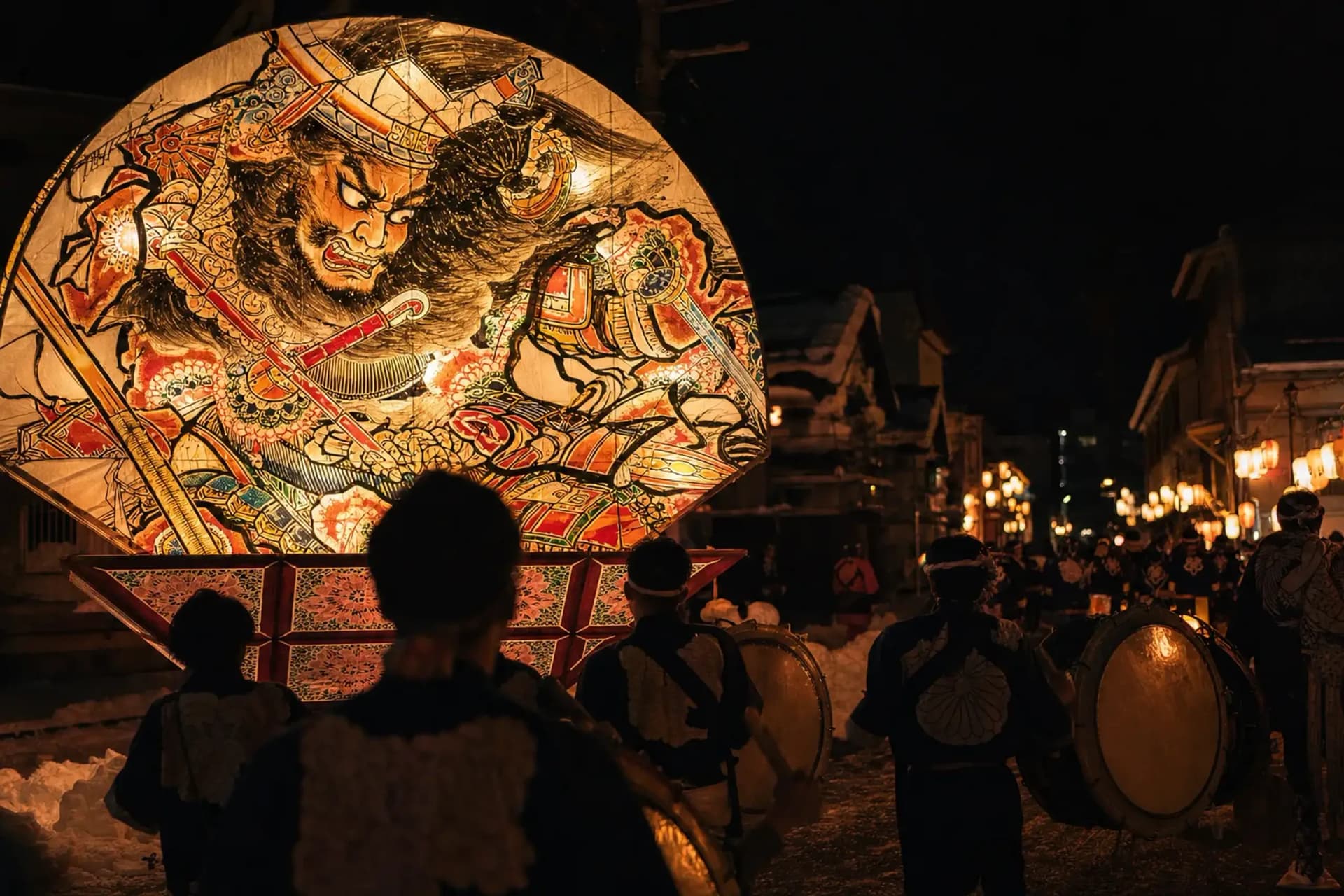
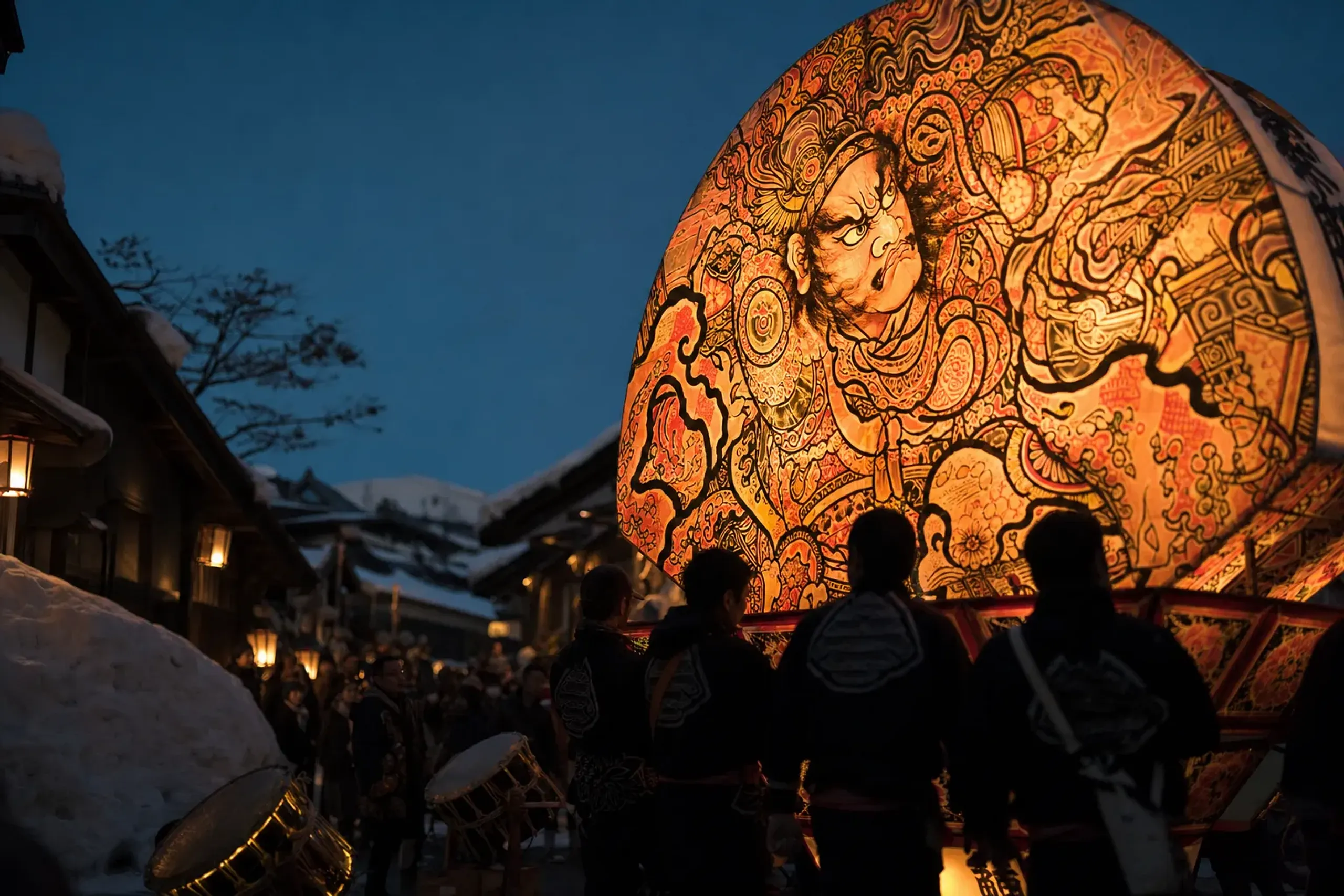
At 19:00, the first fan-shaped neputa rounds the corner and the street changes color.
Paper lantern light spreads slowly across painted faces. A single flute line threads through the air, then taiko answers—measured, watchful, almost stern. You realize quickly that Hirosaki is not asking you to chase the festival. It wants you to sit still and let it come to you.
This guide is built for travelers who value comfort, clarity, and the Japan that doesn’t shout. We’ll walk you through what the Hirosaki Neputa Festival is, how each night unfolds, where the routes shift mid-week, what the paid-seating rules mean in real life, and how our team at Japan Royal Service helps you experience it all with discretion and calm—your presence quietly arranged, your itinerary known only to those who need to know it.
What Makes Hirosaki Neputa Different From Other Summer Festivals?
Hirosaki Neputa is defined by two-sided, fan-shaped lantern floats pulled by neighborhood groups, with spectators often watching from seats rather than following dancers through the street.
The main float style here is the ōgi neputa (扇ねぷた), a tall fan with a front painting and a back painting, mounted on a wheeled base. You’ll also see some kumi neputa (組ねぷた), assembled figure-type floats, but the fan is the emblem of Hirosaki.
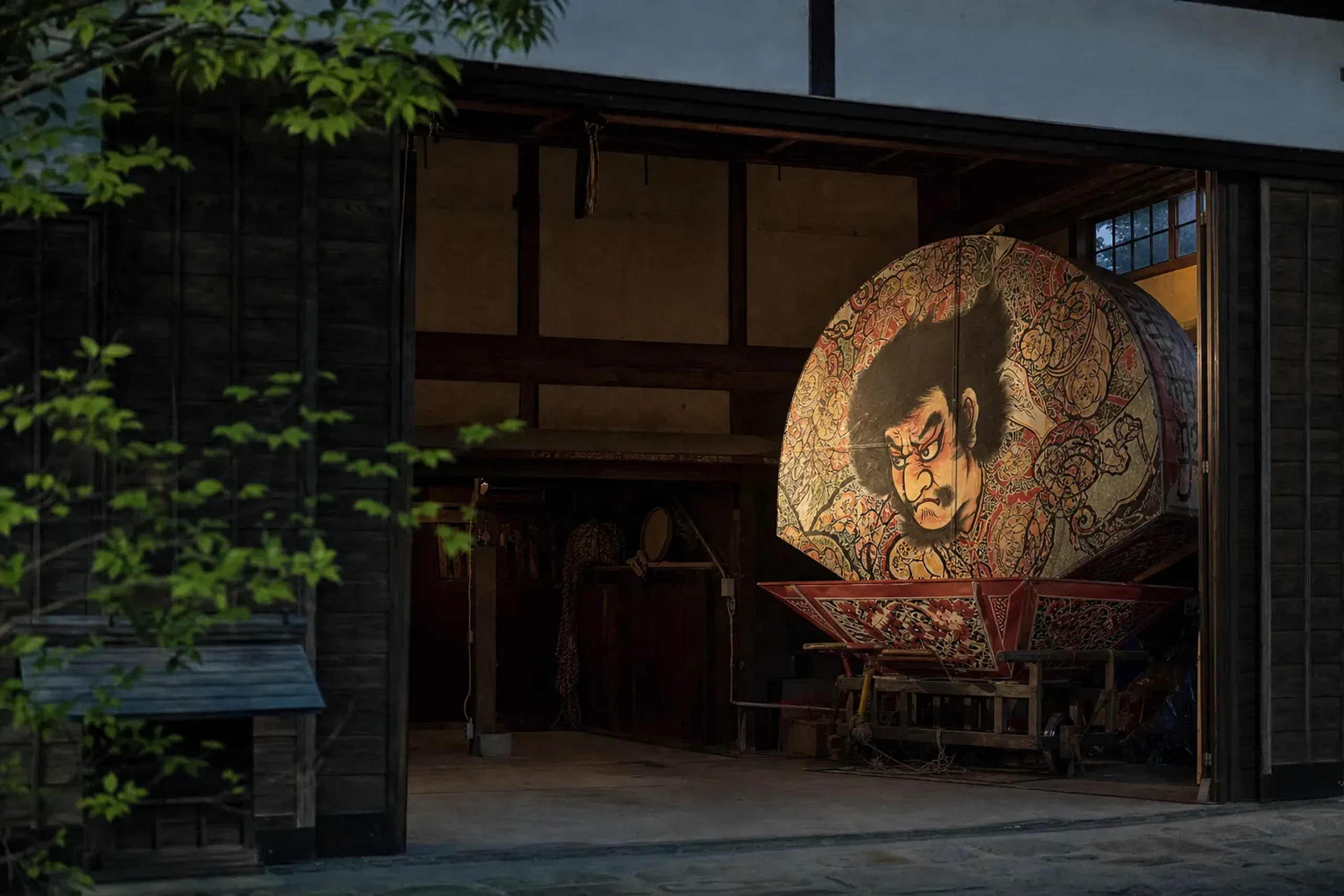
The front painting tends to show historical figures and bold scenes, rendered to read clearly at night. The reverse is the miokuri “farewell” painting, often a graceful woman.
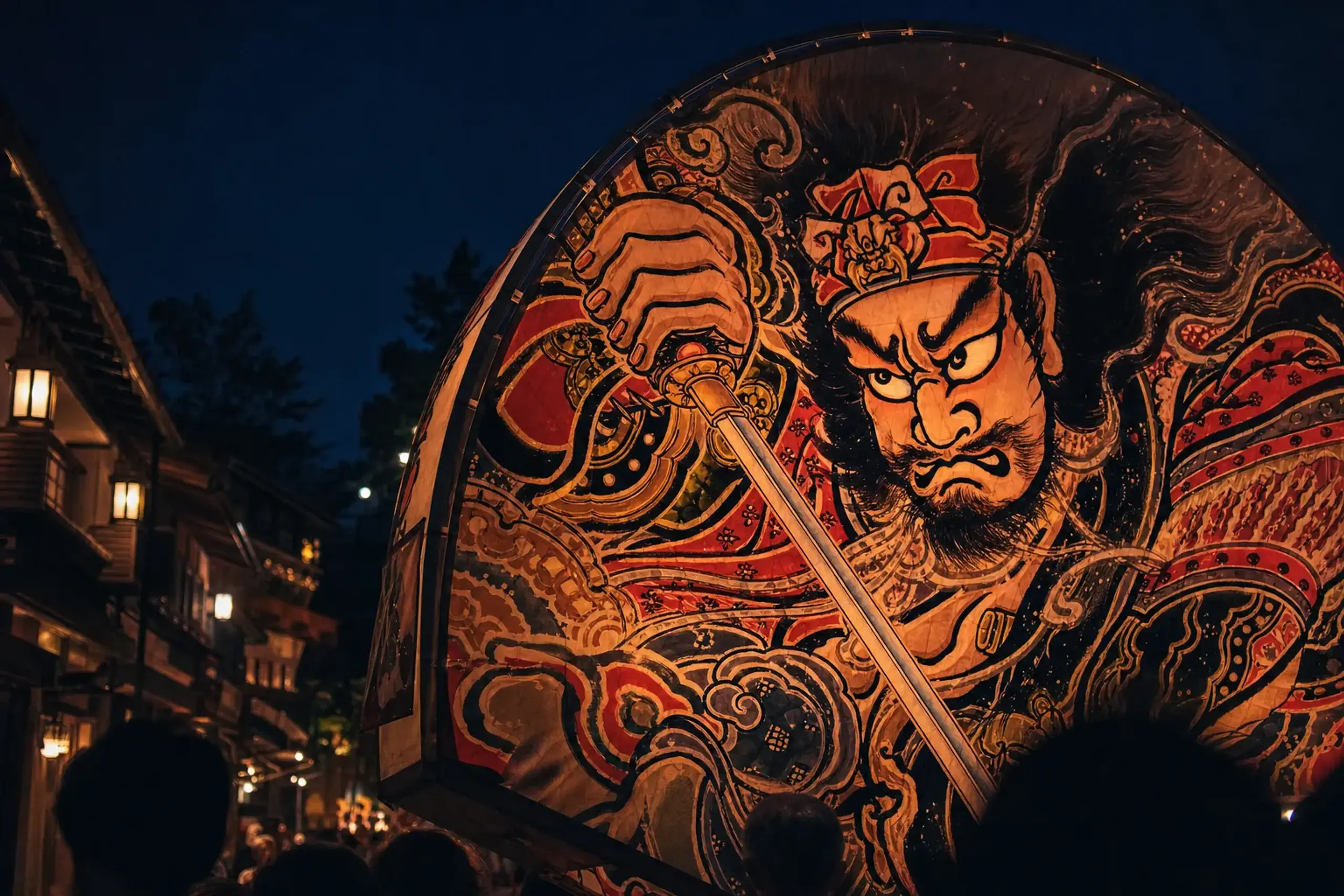
Two faces. One slow turn. It’s the moment many guests remember most: when the float pivots and the second painting appears as if the street itself had rotated beneath it.
This is a castle town festival, not a stadium show. The setting matters, and it rewards restraint rather than spectacle. You’re in Tsugaru, in Aomori Prefecture, where craft is a kind of local language—washi, lacquer, woodwork, and the steady pride of community groups who build their own float each year. There is a quiet wabi-sabi truth to it: the painted figures are fierce, yet the beauty lies in the imperfection of brushwork made by hand, the slight asymmetry, the patina of years. It reads as hidden Japan in plain sight.
What Is A Neputa Float, Exactly?
A Hirosaki neputa float is a lantern structure—most famously a fan shape—painted on two sides, lit from within, and pulled through the streets with flutes, drums, and the chant “ya-ya-do.”
Think of it as moving light you can hear. The construction is practical and ceremonial at once: framework, washi paper, pigment, internal illumination, and the pull ropes that keep everything steady through every turn.
From the curb, you notice details that photographs flatten and lose. Brush strokes thick as rope. Edges where color bleeds into shadow. Faces that look calm from one angle and ferocious from another. That’s why we encourage guests to watch more than one night if time allows—the same float reads differently depending on where you sit, and the pleasure of that difference is one only an unhurried traveler can afford.
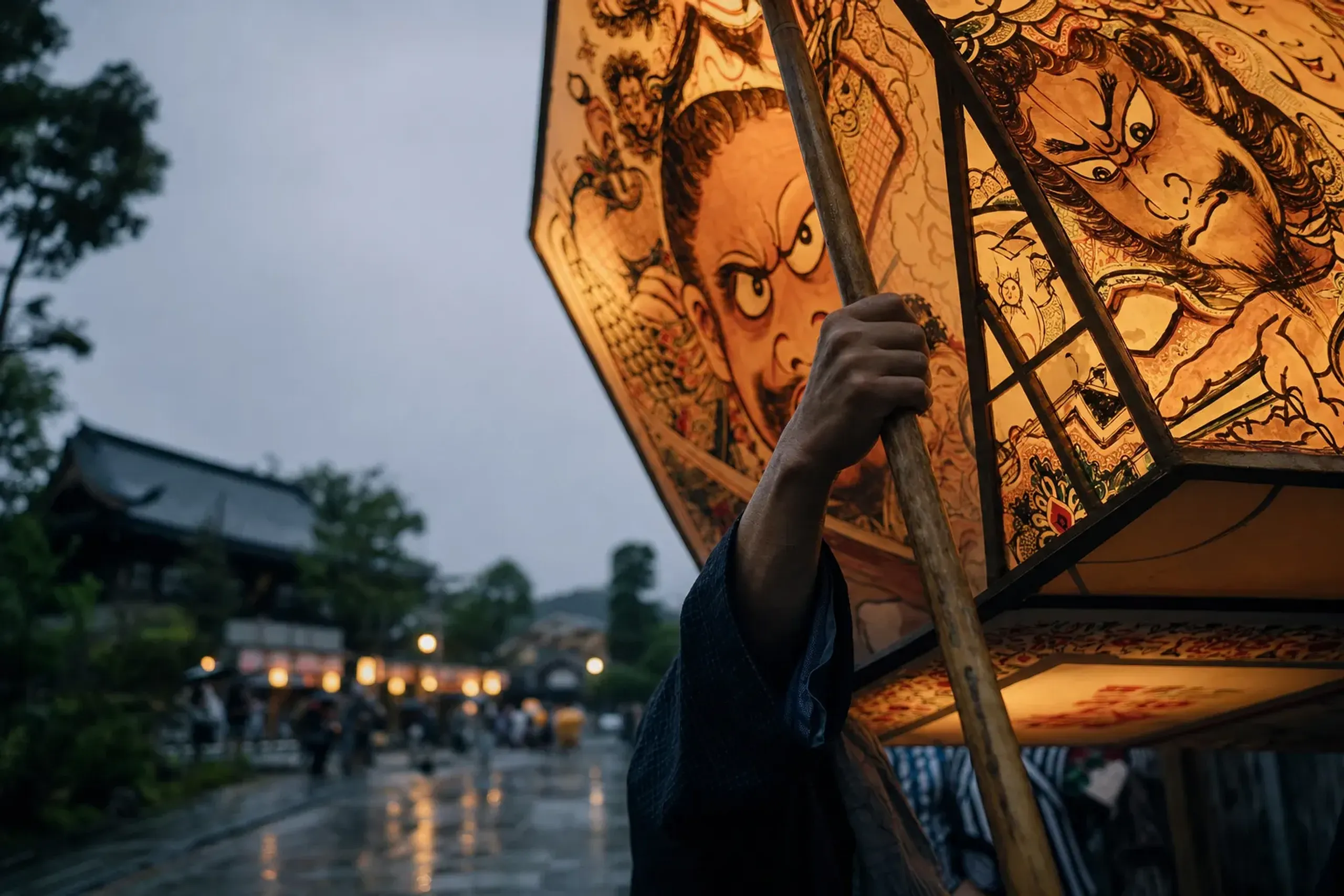
Listen, too. Aomori Prefecture describes three tune types for the accompanying music—marching, pausing, returning. You don’t need to name them to feel the shift. The beat relaxes. Then tightens. Then lets go.
How Does A Typical Hirosaki Neputa Evening Run?
Most nights build from an early-evening send-off atmosphere into a 19:00 parade start, then flow for several hours as dozens of floats pass in sequence.
In practice, your evening has three parts. First, arrival and settling. Streets close ahead of the parade, and the mood begins to gather before the floats even move. Second, the first wave—when the initial groups roll through and you learn the rhythm of the chant. Third, the long middle, when you stop checking your watch and start noticing the small things: how lantern light lands on a child’s face, how a single drumbeat echoes off the shutters of a closed shopfront.
On 1–4 August, an opening send-off ceremony takes place on Sakura-dōri as the festival builds toward 19:00. Details and timing can shift, so we advise confirming the official program close to your travel date. And don’t over-plan the night itself. This is an evening that rewards slack in the schedule.
Our team at Japan Royal Service often suggests a simple approach: dine early, arrive with ample time to orient yourself, then keep the post-parade plan deliberately light.
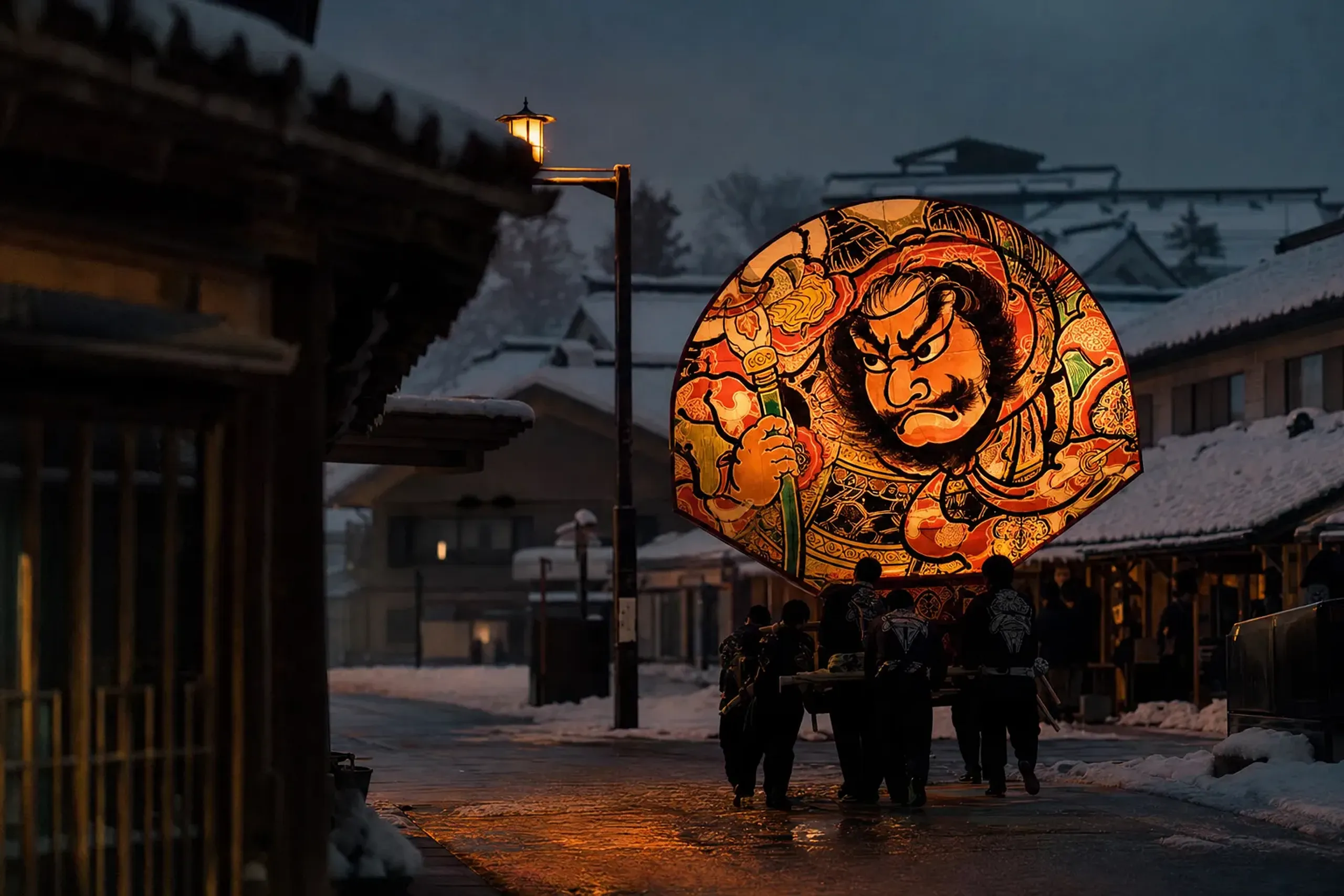
A quiet second dinner or a late drink in a private setting is ideal. A long cross-town dash is not. We handle the quiet logistics—private chauffeured transport that waits where the crowds thin, so you step from the parade into calm rather than scramble.
Which Days And Routes Should You Choose For Hirosaki Neputa?
The festival is held every year from 1 to 7 August, with night parades at 19:00 and a daytime closing parade on 7 August at 10:00.
The route pattern matters because it changes mid-week. For 2026 (offered here as a worked example), the official schedule listed:
- 1–4 August: Dotemachi course (night parade starts 19:00)
- 5–6 August: Station-front (Ekimae) course (night parade starts 19:00)
- 7 August: “Nanukabi” daytime parade at 10:00 on the Dotemachi course
Road closures were published as 18:30–22:00 on 1–6 August and 09:30–11:30 on 7 August. Schedules can change, so treat this as the baseline and confirm against the current program.
Here’s how we think about it when advising travelers who want the experience without friction. Choose one Dotemachi night and one station-front night if your calendar allows. They feel genuinely different, because your approach, your arrival, and your exit all differ. If you can only do one, we build the plan around where you’re staying and how you want the night to end.
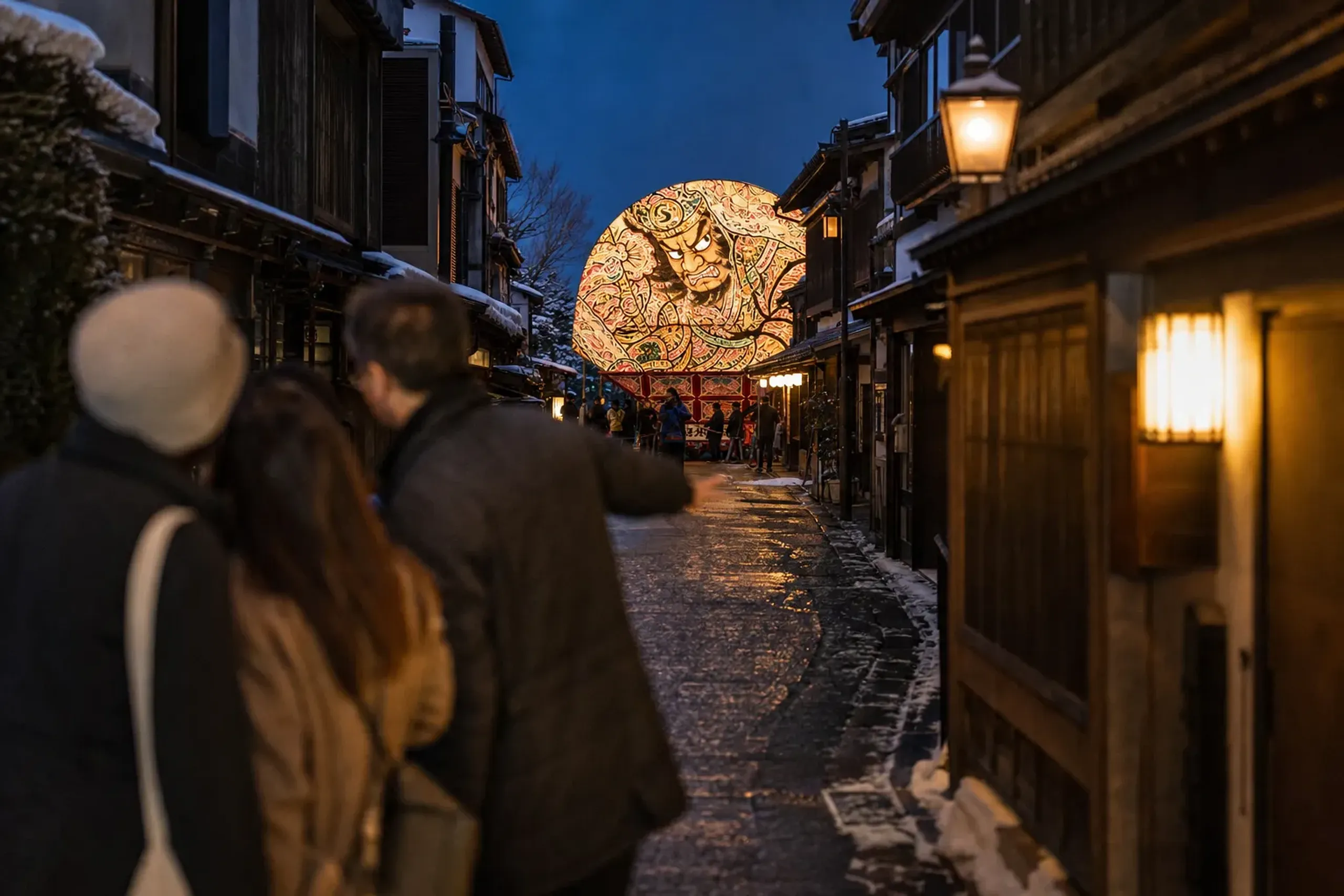
This is the heart of a tailor-made itinerary: not more activity, but the right activity in the right order.
And don’t ignore the morning parade. The daytime “Nanukabi” carries a different palette—sunlight on paint, details suddenly crisp, the town awake in a new way. Short. Clean. Worth it.
Do You Need Tickets For Hirosaki Neputa, Or Can You Watch For Free?
You can watch Hirosaki Neputa for free from public streets, and optional paid reserved seating is offered by the festival organizers for guests who want a defined seat and clearer sightlines.
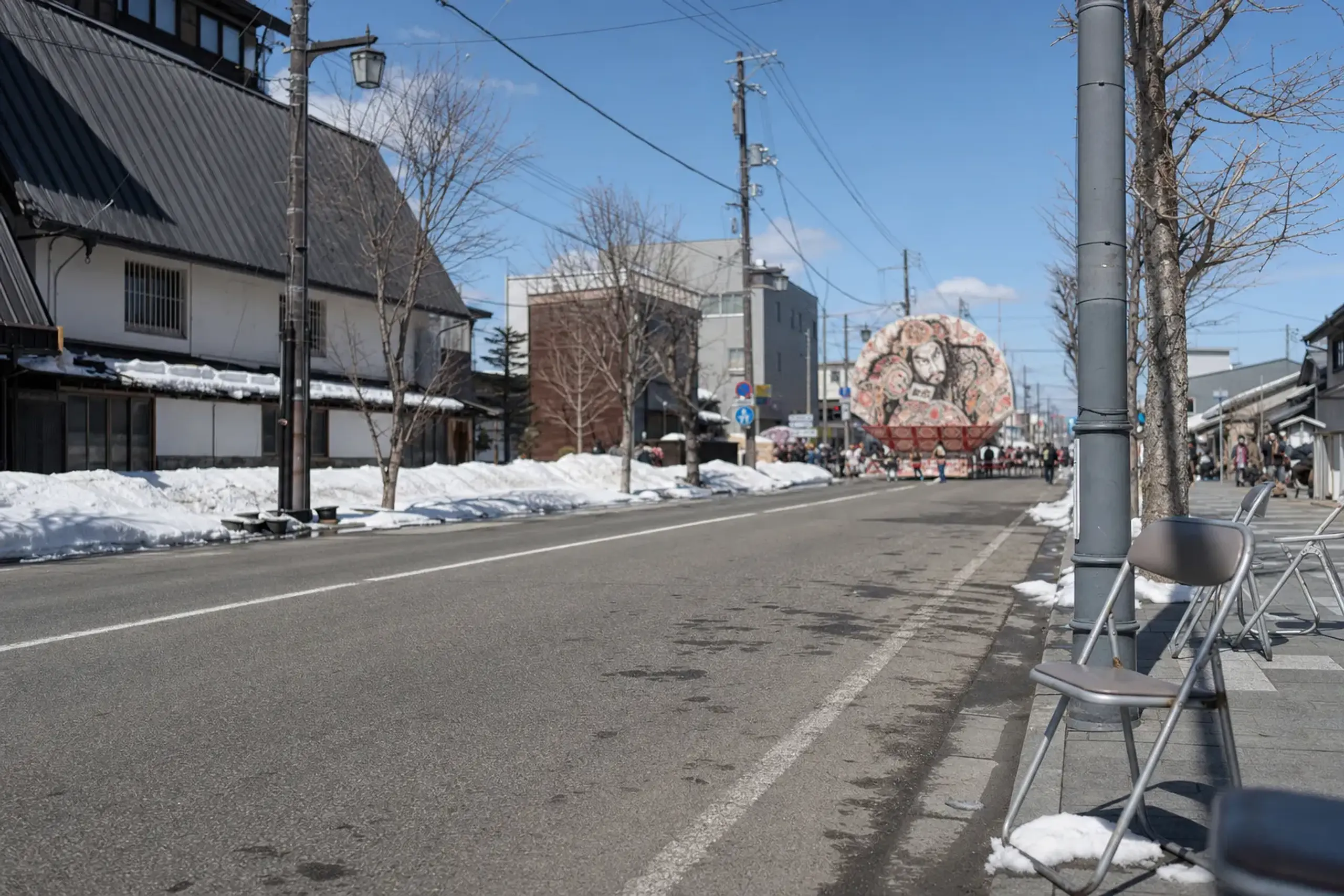
Free viewing is simple: you stand where space allows and follow local guidance. Officials ask spectators not to block pavements or tactile paving, and we recommend respecting that without negotiation. It keeps the mood friendly. It also keeps you safe when the crowd shifts.
Paid seating is a different experience altogether. In 2026, the official seat types included roofed special box seats with food and drink, group table seats, and numbered chair seats (chair seats came with a commemorative fan). Gate opening times were listed as 17:30 for Dotemachi seats and 18:00 for station-front seats.
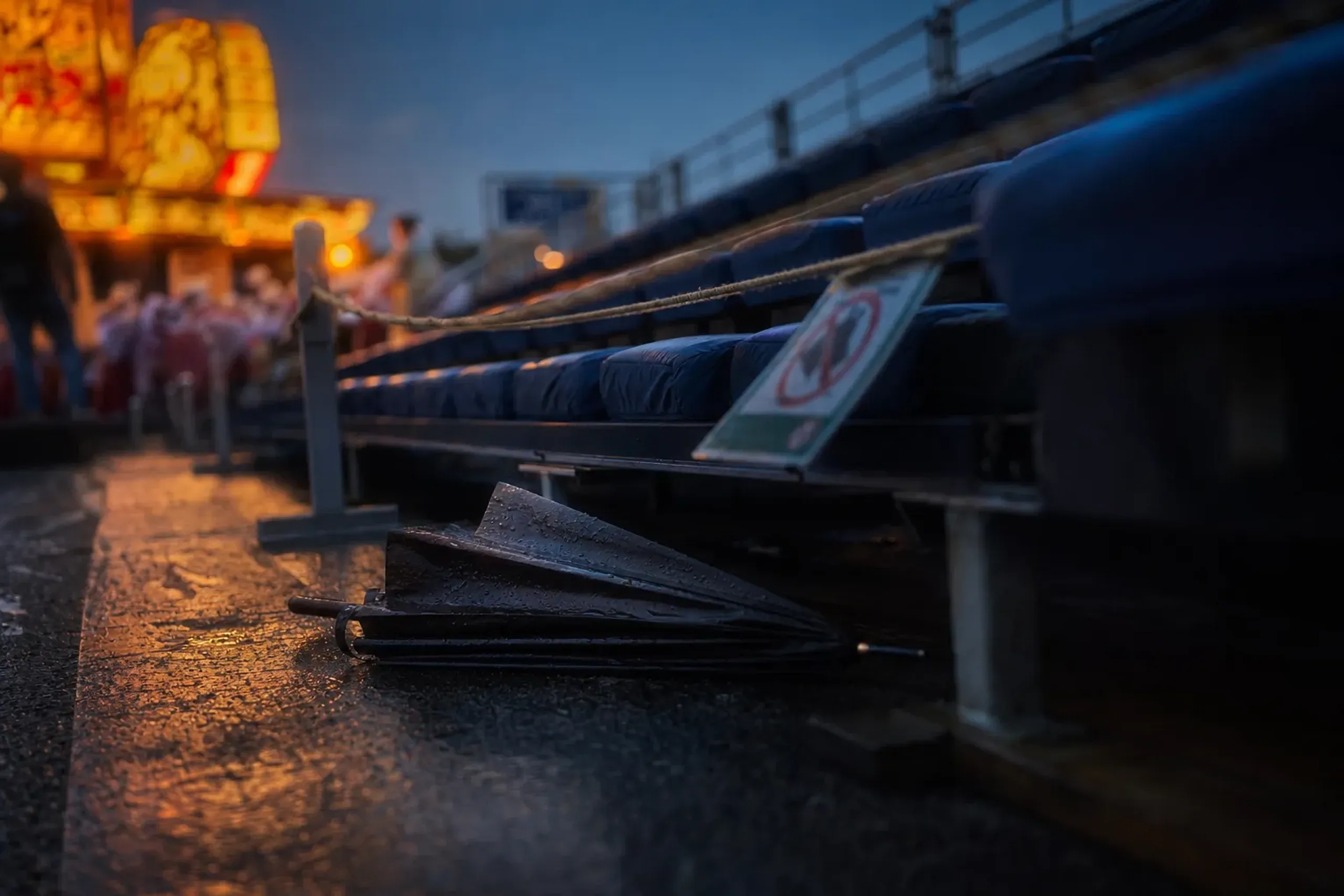
Two rules catch travelers off guard. First, chair seats are uncovered. Second, umbrellas and parasols are not permitted in the seating area, so you need a raincoat if the weather threatens.
Seats run in rain, with refunds only if the parade is cancelled, per the organizer’s rules.
Key fact: The parade can proceed in rain, but umbrella use may be restricted in reserved seating areas—pack a raincoat and a light layer.
Seat sales channels and terms can vary year to year. In 2026, sales included travel-agency handling for certain group allocations, JTB’s online booking for some seat categories, and separate channels for individual chair seats during a defined sales window, plus same-day leftovers at the tourist information center if available. Because the official seat pages sometimes contain confusing or shifting details, our concierge team can privately verify the current terms with you before you commit—and secure the quietest, best-positioned seating on your behalf.
What Happens If It Rains During Hirosaki Neputa?
The joint parade generally proceeds in rain, but severe weather warnings can trigger cancellation decisions, which are announced by organizers on official channels.
Practically, rain changes the feel more than the fact of the parade. Lantern light reflects on wet asphalt, and the sound sharpens—taiko seems to carry farther through the damp air. Your comfort becomes the main question.
For reserved seating, the umbrella rule is the tripwire. If you plan to sit, prepare as though it will rain even when the forecast looks polite. A compact raincoat. Shoes that don’t mind puddles. A small towel. These are the kinds of details our team anticipates before you ever ask.
For the final-night riverbank farewell events (details below), rain sensitivity is higher still. In 2026, the “Nanukabi-okuri” plans were described as cancelled in rain, with free shuttle buses provided. That is exactly the sort of detail we reconfirm close to the date, since these elements can change with safety guidance.
Can Visitors Join A Hirosaki Neputa Group And Pull A Float?
Some groups may allow visitors to participate in pulling a float, but there is no open, walk-in join-in system, and conditions vary by group.
This is where many first-time festival visitors arrive with assumptions borrowed from other cities. Hirosaki is not structured like Aomori Nebuta, where haneto dancers jump alongside and, if you have the right costume, participation is broadly open.
In Hirosaki, the official guidance is deliberately cautious: “depending on the group,” visitors may be allowed to take part in pulling. That word—depending—is doing real work. Each neighborhood group has its own approach, and enquiries are directed through the local tourist hall rather than handled as a simple on-site sign-up.
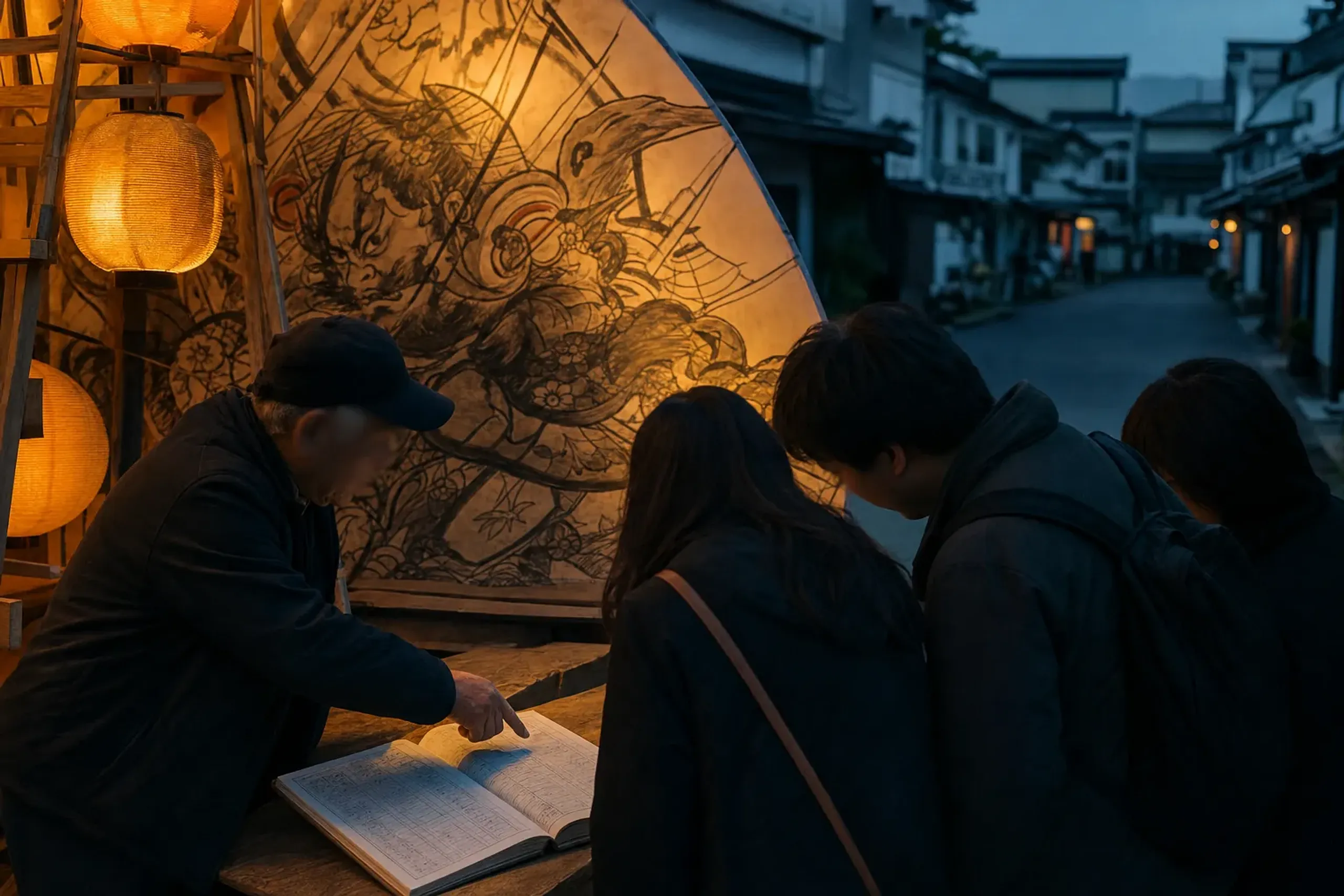
If joining matters to you, tell us early. Our team at Japan Royal Service will help you understand the current, official participation pathway and whether it realistically fits your schedule and your comfort level. Sometimes the finest “participation” is something quieter and rarer: a private introduction to a neputa craftsperson—a shokunin who paints these towering fans by hand—or an unhurried visit to a year-round facility, or simply hearing the music up close without forcing yourself into the rope line.
These are the moments Google cannot find, and they are the ones that linger.
Hirosaki Neputa Vs Aomori Nebuta: What’s The Difference?
Hirosaki Neputa is mainly fan-shaped floats with two-sided paintings, while Aomori Nebuta features large figure-style illuminated floats and haneto dancers, with broader public participation for those properly dressed.
Even the spelling is a clue. Hirosaki uses “Neputa.” Aomori City uses “Nebuta.” The float cultures are related, and both were designated Important Intangible Folk Cultural Properties in 1980, but they present very differently on the street.
Hirosaki’s signature moment is the turn—the quiet reveal of the back painting. Aomori’s is the mass of motion around the floats: dancers, calls, the sensation of a moving crowd carrying you with it.
If you’re choosing between them, the best question isn’t “which is better.” It’s what you want your body to do. Sit and watch, letting the town deliver the festival to you? Or move with it for hours? Our concierge can talk it through privately and map it against your wider Tohoku route.
Hirosaki’s Heritage: What We Know, And What Is Legend
Hirosaki Neputa first appears in written records in 1722 and was designated an Important Intangible Folk Cultural Property in 1980 under the name “Hirosaki no Neputa.”
There is also a tradition that connects neputa to the old “nemuri-nagashi” custom—floating away one’s sleepiness—and the idea that “neputa” derives from “nemuri.”
These are best treated as tradition rather than courtroom fact. Discerning travelers hold them lightly, and enjoy them all the more for it.
What is not legend is the civic ownership you feel in the parade. Each neighborhood group is not performing “for tourists.” They are keeping time with their own town. That is why the festival reads as hidden Japan even amid huge attendance; you are witnessing something that would happen, in some form, with or without you—an authenticity that no amount of staging could manufacture.
The Final Day: The Morning Parade And The River Farewell
7 August includes a 10:00 daytime “Nanukabi” parade, and the evening may include a riverbank farewell event whose details can change year to year.
The morning parade is straightforward: set your alarm, eat something small, and arrive early enough to choose a comfortable viewing position. Daylight changes everything. The paint feels closer. The pace feels brisker. You also reclaim your evening, which some guests appreciate after several late nights.
On the evening of 7 August, Hirosaki has traditionally presented a “Nanukabi-okuri” farewell beside the Iwaki River. In 2026, it was planned roughly 17:00–20:30, with neputa floating and then burning at approximately 19:30 and 20:10, and it was described as cancelled in rain with free shuttle buses.
Because this portion is weather-sensitive and operationally complex, always check the current program near your travel dates.
If you’re traveling with family, or if you simply prefer a calmer rhythm, it can be wise to treat the river event as optional. No guilt. One great night parade can be more than enough.
Year-Round Neputa Culture: Tsugaru-han Neputa Village
Tsugaru-han Neputa Village (Tsugaru Han Neputa Mura) is a year-round facility in Hirosaki where you can see fan-shaped floats and learn more about the culture outside festival week.
The address is published as 61 Kamenoko-cho, Hirosaki City, Aomori Prefecture. It’s a practical answer for travelers arriving in Aomori outside 1–7 August, and it’s also a smart addition during festival week itself, when you want context in daylight before the floats light up at night.
Experience Hirosaki Neputa, Quietly And Completely
The pleasure of Hirosaki Neputa is not in rushing it. It is in arriving unhurried, seated where the turn of the float lands perfectly in your sightline, your evening cleared of friction, your name on no list but ours. We handle the seating, the timing, the weather contingencies, and the private introductions that turn a festival into a memory held only by you.
To begin planning a discreet, tailor-made journey to the Tsugaru country and its lantern-lit nights, contact us here. We’ll shape an itinerary around your dates, your pace, and the particular quiet you’re looking for.