In this guide
- 01Hiroshima Is A River-Delta City, Not A Single Site
- 02How Many Days Do You Need In Hiroshima If You Also Want Miyajima?
- 03Peace Memorial Park And Museum: What To Know Before You Arrive
- 04What Happens On August 6, 2026 In Hiroshima (And How To Plan Around It)?
- 05A Sequence That Works: Memorial In The Morning, Then A Lighter Afternoon
- 06Hiroshima Castle: The Missing Chapter Most Visitors Skip
- 07Shukkei-en Garden: One Hour That Resets The Day
- 08How Do You Get Around Hiroshima Without Losing Time?
- 09Where To Stay In Hiroshima: Hondori/Hatchōbori Vs Hiroshima Station
- 10Hondori By Day, Nagarekawa By Night
- 11Hiroshima Food Culture: Okonomiyaki And Oysters, With A Plan
- 12The Carp: A City That Refuses To Be Frozen In Time
- 13Day 2 And Day 3 Extensions: Miyajima, Then Saijō
- 14Contemporary Hiroshima: Hiroshima MOCA And Hiroshima Festival 2026
- 15What We Can Coordinate (Briefly): Guides, Transport, And A Calmer Route
- 16Frequently Asked Questions
- 17Why Choose Japan Royal Service
Hiroshima is often reduced to a single morning. A park, a museum, a photograph, then a Shinkansen ticket out.
That approach misses the living city. Hiroshima is a river-delta place of streetcars, bridges, arcades, gardens, and a food culture that locals defend with real conviction.
Our team at Japan Royal Service plans Hiroshima as a full, modern stop—while still treating the memorial at its center with the clarity and respect it deserves. This guide shows you how to do both, without rushing, and without turning the city into a checklist.
Hiroshima Is A River-Delta City, Not A Single Site
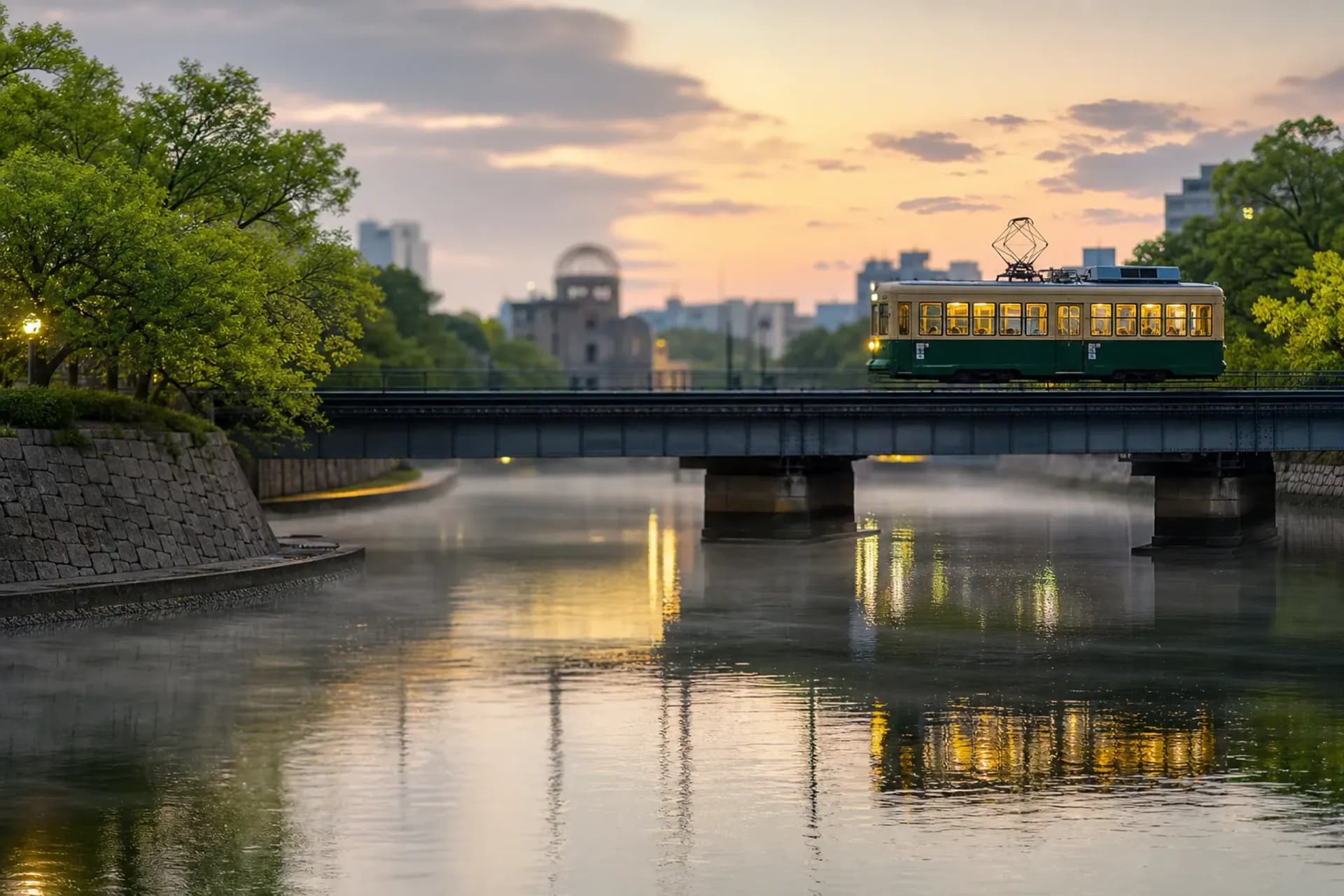
Hiroshima’s character starts with water. The Ōta River splits into channels across a flat delta, and the city is stitched together by bridges that turn “a short walk” into a sequence of crossings.
Look down from almost any bridge and you’ll see how the neighborhoods work: office blocks on one bank, a quiet residential edge on the other, then a tram sliding past with commuters who are not sightseeing.
Spend your first hour outside. Do it on foot. The city makes sense when you feel the grid and the rivers together.
How Many Days Do You Need In Hiroshima If You Also Want Miyajima?
Two days is the practical minimum for Hiroshima plus Miyajima, while three days lets you add the castle, the garden, and a calmer pace with an extra side trip.
What 2 days buys you: one full day in the city (including the Peace Memorial Museum) and one full day for Miyajima.
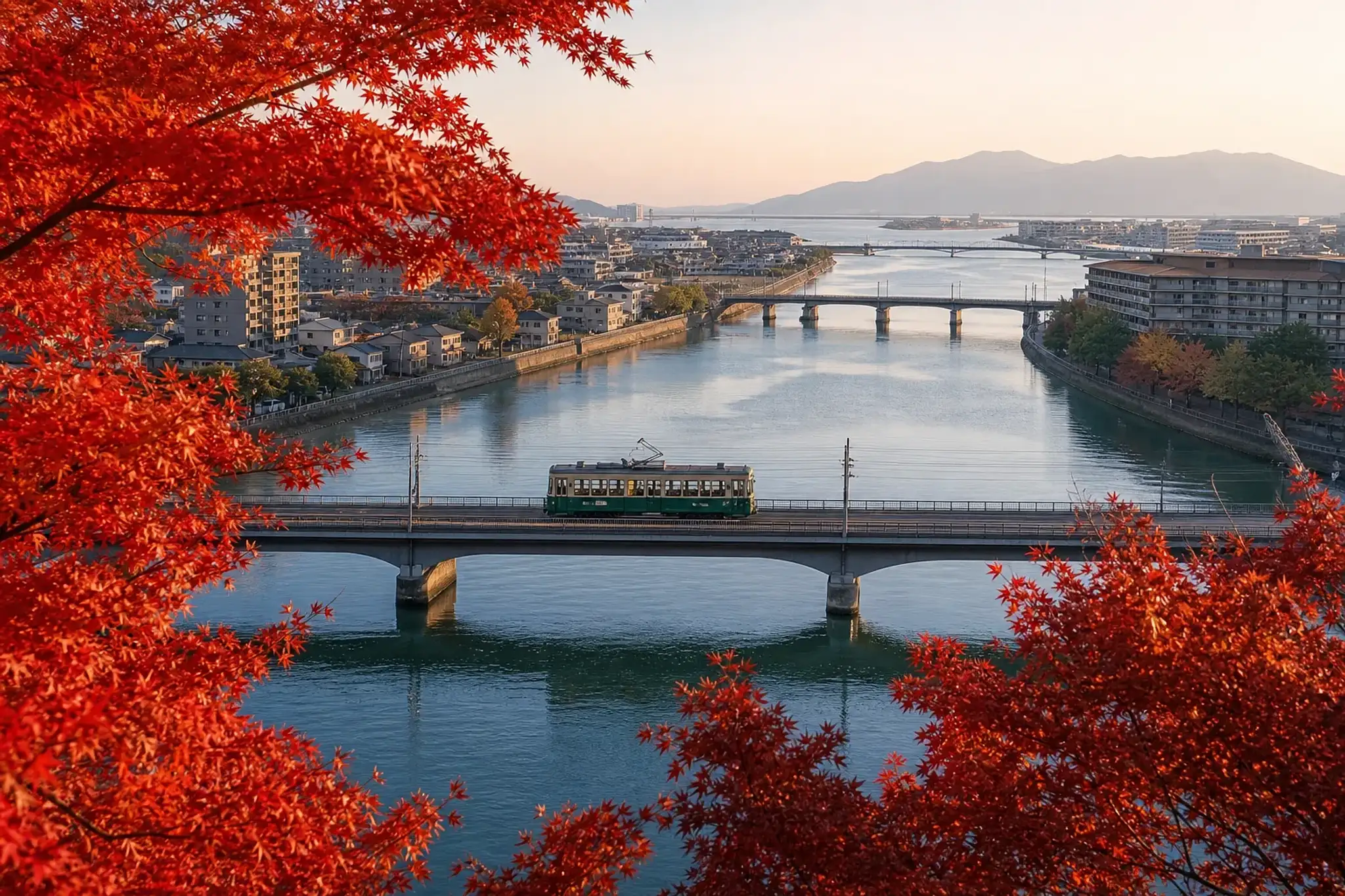
Hiroshima reads best from its bridges: water, grid, and streetcars in motion.
It works well for travelers doing Tokyo–Kyoto–Hiroshima and returning east.
What 3 days buys you: space. You can place Hiroshima Castle and Shukkei-en properly, take an unhurried evening in Nagarekawa, and consider a third-day extension such as Saijō for sake culture.
We see many HNW travelers “do” Hiroshima in half a day because the schedule looks tight on paper. Big mistake. This is where your Japan trip becomes less generic.
Peace Memorial Park And Museum: What To Know Before You Arrive
Peace Memorial Park is free and open at all hours, while the Hiroshima Peace Memorial Museum charges ¥200 for adults, ¥100 for high school students, and is free for junior high and younger.
Museum hours: 7:30am–7:00pm (March–July, September–November); 7:30am–8:00pm in August with later closing on 5 and 6 August; 7:30am–6:00pm (December–February). The museum is closed 30–31 December and in mid-February.
Prior online reservation is required for the permanent exhibition during extended early-morning and evening slots. Plan for that if you are aiming for first-entry or late-day timing.
Allow at least 1.5 to 2 hours for the museum. Many visitors spend 3 to 4 hours for the park and museum together. That’s normal.
The museum’s recommended order is the East Building first (the city before the bombing and the history of nuclear weapons), then the Main Building. Follow it. The narrative is built that way.
The exhibits are graphic. Charred clothing and a child’s melted tricycle are among them. If you are traveling with children or teenagers, decide as a family before you enter.
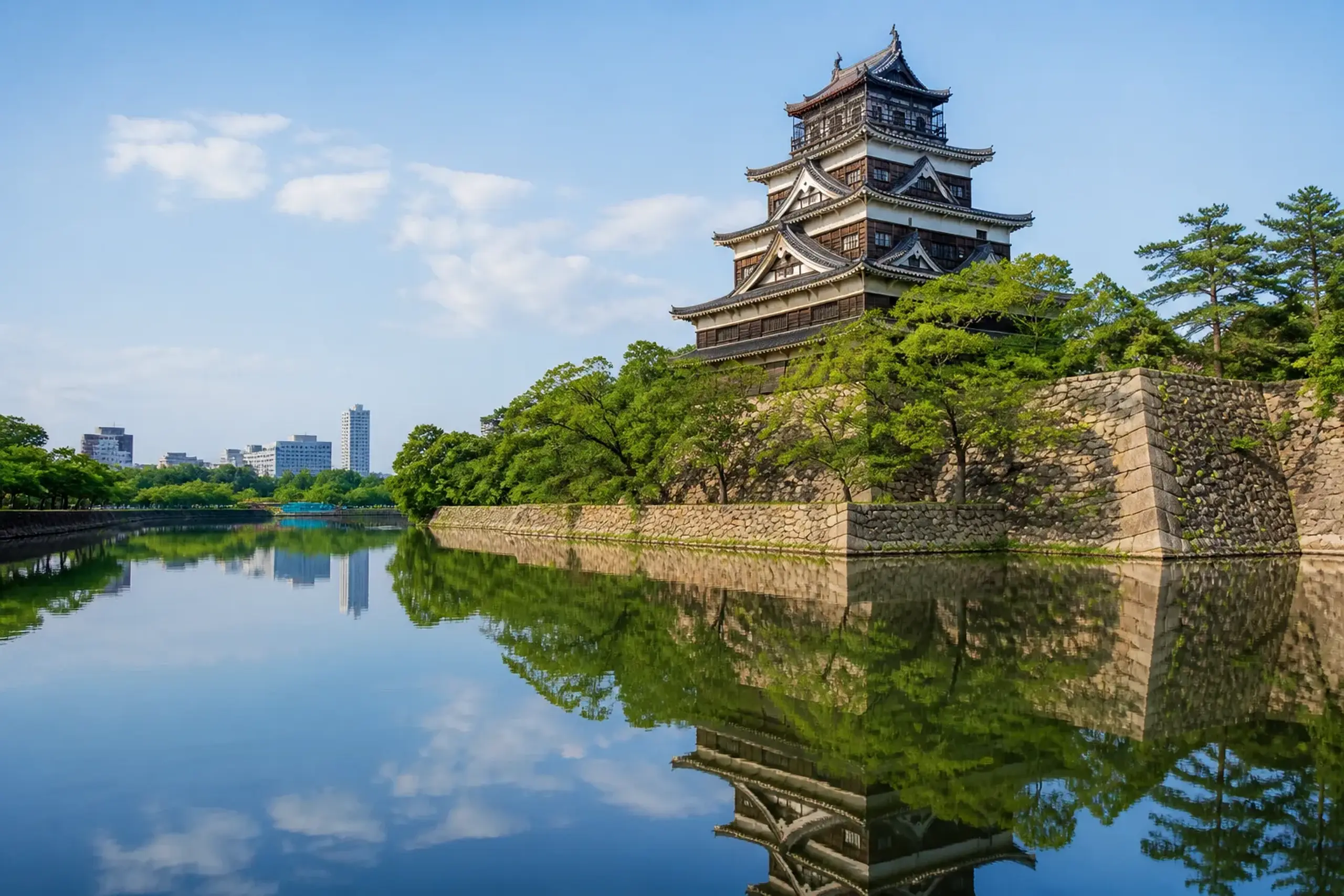
Hiroshima Castle adds pre-war context that most short visits miss.
The museum runs daily talks by A-bomb Legacy Successors and Hibakusha Family Member Legacy Successors, and guided tours by Hiroshima Peace Volunteers. If you want context, these are the city’s official, visitor-facing options.
Key fact: This guide does not retell the events of 6 August 1945. For history and testimony, rely on the museum and the city’s official programs.
What Happens On August 6, 2026 In Hiroshima (And How To Plan Around It)?
On August 6, 2026, the Peace Memorial Ceremony begins at 8:00 a.m., with a silent prayer and Peace Bell at 8:15 a.m., and closing at 8:50 a.m.
This is a high-intensity morning in the city center. Expect large crowds, controlled movement, and a very different atmosphere than a normal visit. If you are not specifically traveling to be present that day, choose another morning for the museum and use August 6 for quieter parts of the city.
If you are traveling during that week, we suggest shifting the day’s “weight” carefully. Keep logistics simple. Avoid stacking too many sites, and plan for longer transit times even over short distances.
For official updates, Hiroshima City publishes ceremony guidance in English. If you want help mapping respectful timing and routing, our concierge team at Japan Royal Service can advise privately after you inquire.
A Sequence That Works: Memorial In The Morning, Then A Lighter Afternoon
Visit the Peace Memorial Museum in the morning, take lunch nearby, then spend the afternoon at Hiroshima Castle and Shukkei-en for a calmer second half of the day.
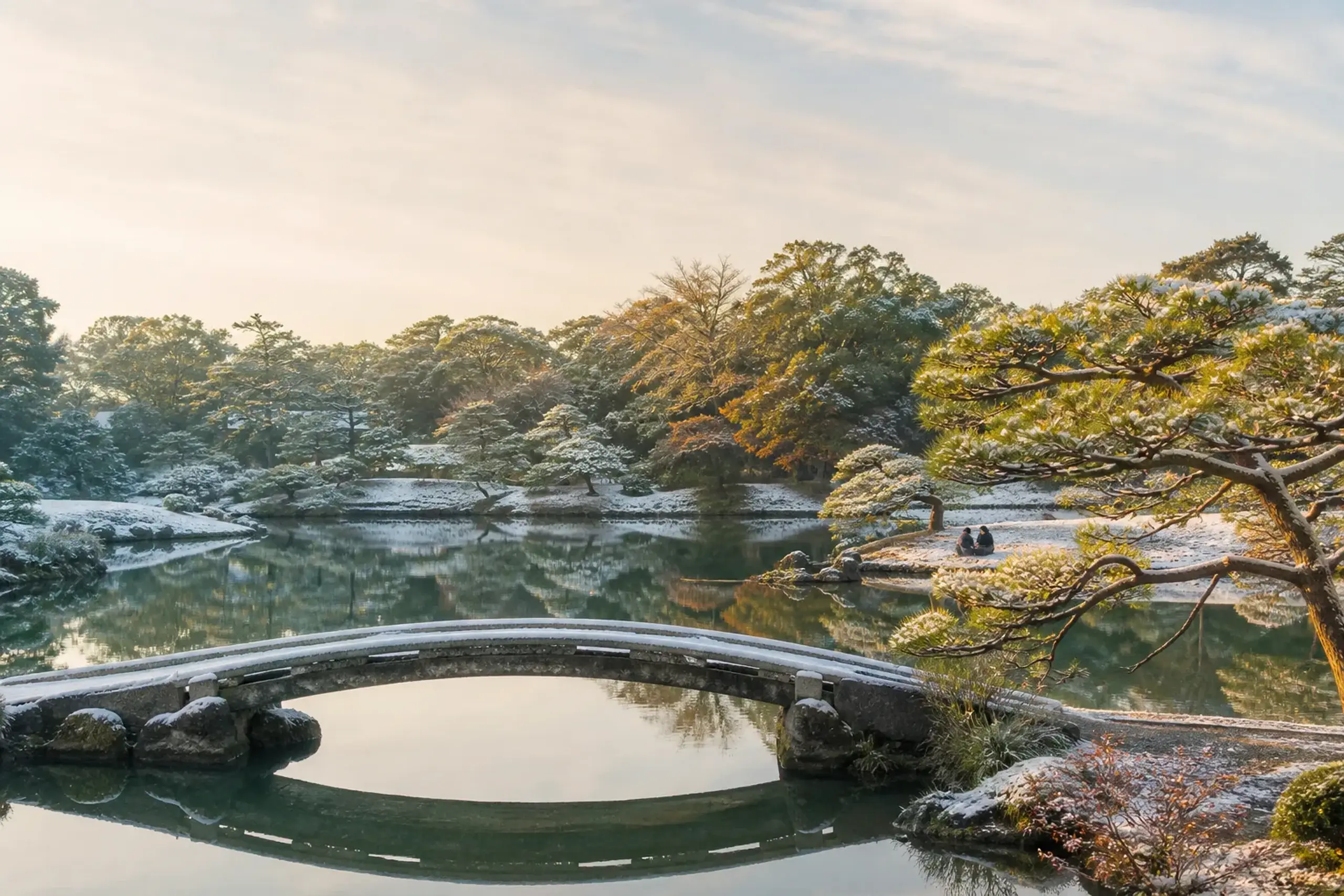
Shukkei-en is the city’s calm counterweight—best placed in the afternoon.
This order matters. The museum asks a lot of a visitor, and the afternoon should not try to “out-emote” it. You will enjoy the city more if you let the day breathe.
We usually aim for the museum soon after opening, then a simple lunch, then a shorter cultural block. No over-planning. No forced “highlights.”
Hiroshima Castle: The Missing Chapter Most Visitors Skip
Hiroshima Castle is a reconstructed castle north of the city center, with an admission fee of ¥370.
It is not Himeji. That is the point. The castle adds pre-war context that the Peace Memorial Park does not try to provide, and it helps you understand Hiroshima as a regional capital rather than a single historical moment.
The grounds include Hiroshima Gokoku Shrine, and there is also a eucalyptus tree that survived the bombing. These are small details, but they change the texture of the visit.
If you like craft, pay attention to what’s “rebuilt” and what’s maintained. That sensibility—quiet repair over spectacle—fits Hiroshima.
Shukkei-en Garden: One Hour That Resets The Day
Shukkei-en is a traditional Japanese garden in central Hiroshima with an admission fee of ¥260, and many visitors spend about an hour walking the circuit.
Go in the afternoon. Sit for a while. The garden is compact enough to feel manageable, but varied enough to hold your attention without effort.
This is where wabi-sabi becomes practical, not performative: moss, stone edges, clipped pines, and the feeling that restraint can be generous.
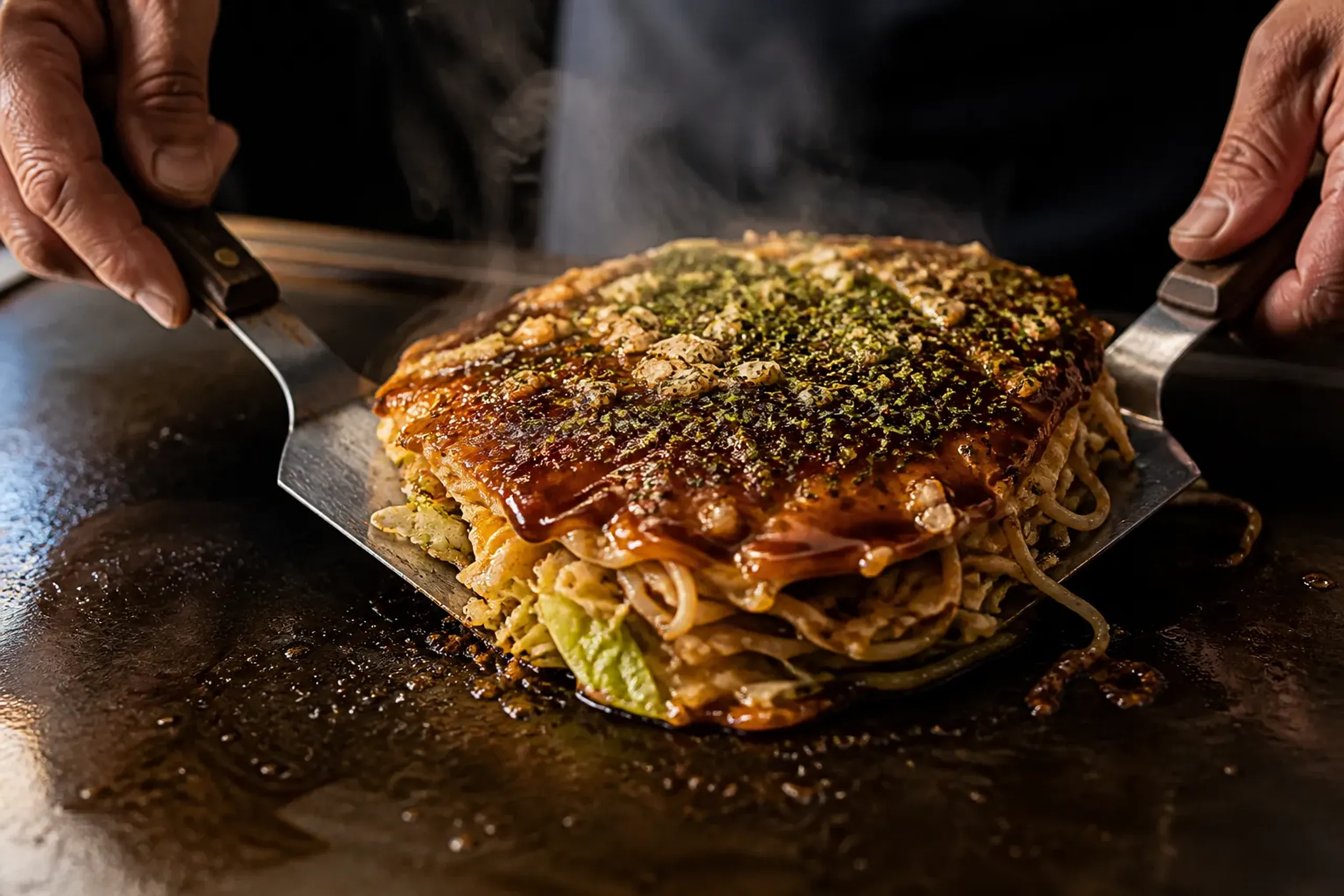
Layered, noodle-finished okonomiyaki is Hiroshima’s most delicious argument.
How Do You Get Around Hiroshima Without Losing Time?
Use Hiroshima’s Hiroden streetcars for day-to-day movement in the center, and treat them as real public transport—because they are.
The lines connect key areas and reach Miyajimaguchi for the ferry. They are not a novelty ride. Expect locals commuting, school uniforms, and grocery bags.
If you are moving with luggage, traveling as a family, or keeping a tight schedule, a private car removes friction. This is where pacing changes completely.
When our guests ask for a discreet, low-stress day, we typically recommend private transportation / chauffeur service for the city portion. You see more, and you arrive less tired.
Where To Stay In Hiroshima: Hondori/Hatchōbori Vs Hiroshima Station
Stay around Hondori and Hatchōbori if you want to walk to the Peace Memorial area, the Atomic Bomb Dome vicinity, the castle, and Shukkei-en without depending on transit.
This base is simple. You can step out for coffee, return to rest, then head to dinner with minimal planning. It also suits travelers who want an evening in the covered arcades and a shorter ride back.
Choose the Hiroshima Station area if your trip is built around Shinkansen arrivals and quick onward day trips. The trade-off is distance from the center. You will be using streetcars or cars more often.
Our view is blunt: if Hiroshima is more than a stopover for you, base central. You buy time.
Hondori By Day, Nagarekawa By Night
Hondori is Hiroshima’s covered shopping arcade, practical and everyday.
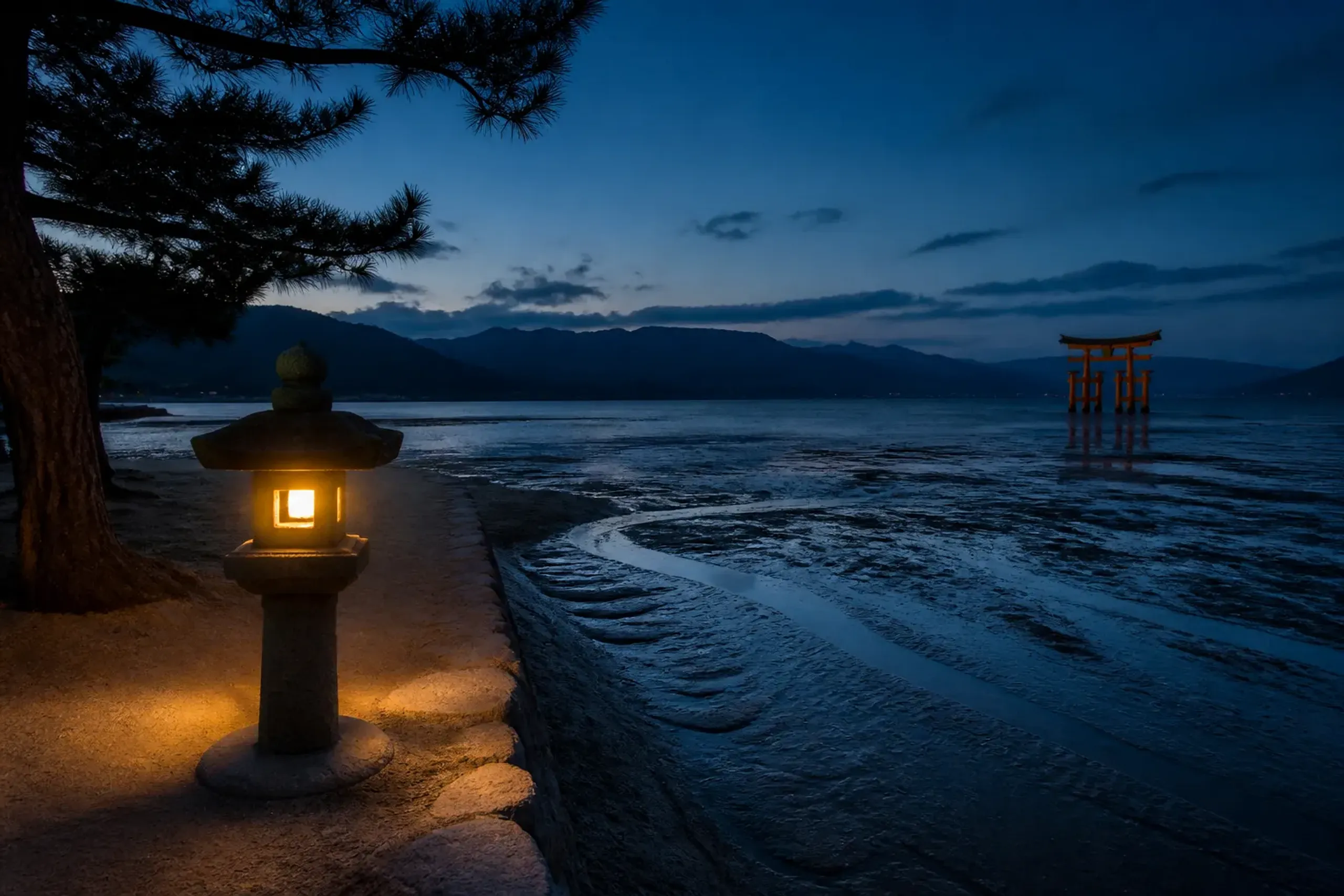
Pair Hiroshima with a Miyajima overnight for a slower second day.
It’s where you can browse without weather worries and watch the city’s rhythm at a human pace.
Nagarekawa is the evening counterpoint. Think small bars, izakaya, and a nightlife scene that feels local first, visitor-friendly second.
If you want something quieter, aim for an early dinner and a short walk along the rivers afterward. Hiroshima at night is not loud. It is watchful.
Hiroshima Food Culture: Okonomiyaki And Oysters, With A Plan
Hiroshima-style okonomiyaki is layered rather than mixed, often finished with noodles, and it is one of the city’s strongest “we’re not Osaka” statements.
Okonomi-mura is the tourist answer, and it is real, busy, and useful when you want choice under one roof. If you are with a group and opinions differ, it solves dinner quickly.
Mitchan Sōhonten is widely cited as the origin of the style, and its official history states it was founded in 1950. At the Hatchōbori main store, waits can run 30 to 60 minutes at peak times. Plan around that. Don’t improvise it at 7:30pm.
Then there are Seto Inland Sea oysters. If you like them, Hiroshima is not subtle. Order them grilled or fried, and treat it as part of understanding the geography you’ve been walking all day.
The Carp: A City That Refuses To Be Frozen In Time
The Hiroshima Toyo Carp are not a travel “activity.” They’re a civic pulse.
If you can fit a game at MAZDA Zoom-Zoom Stadium Hiroshima into your schedule, it tells you something the museum cannot: what the city gathers around now, and how ordinary joy sits beside memory without replacing it.
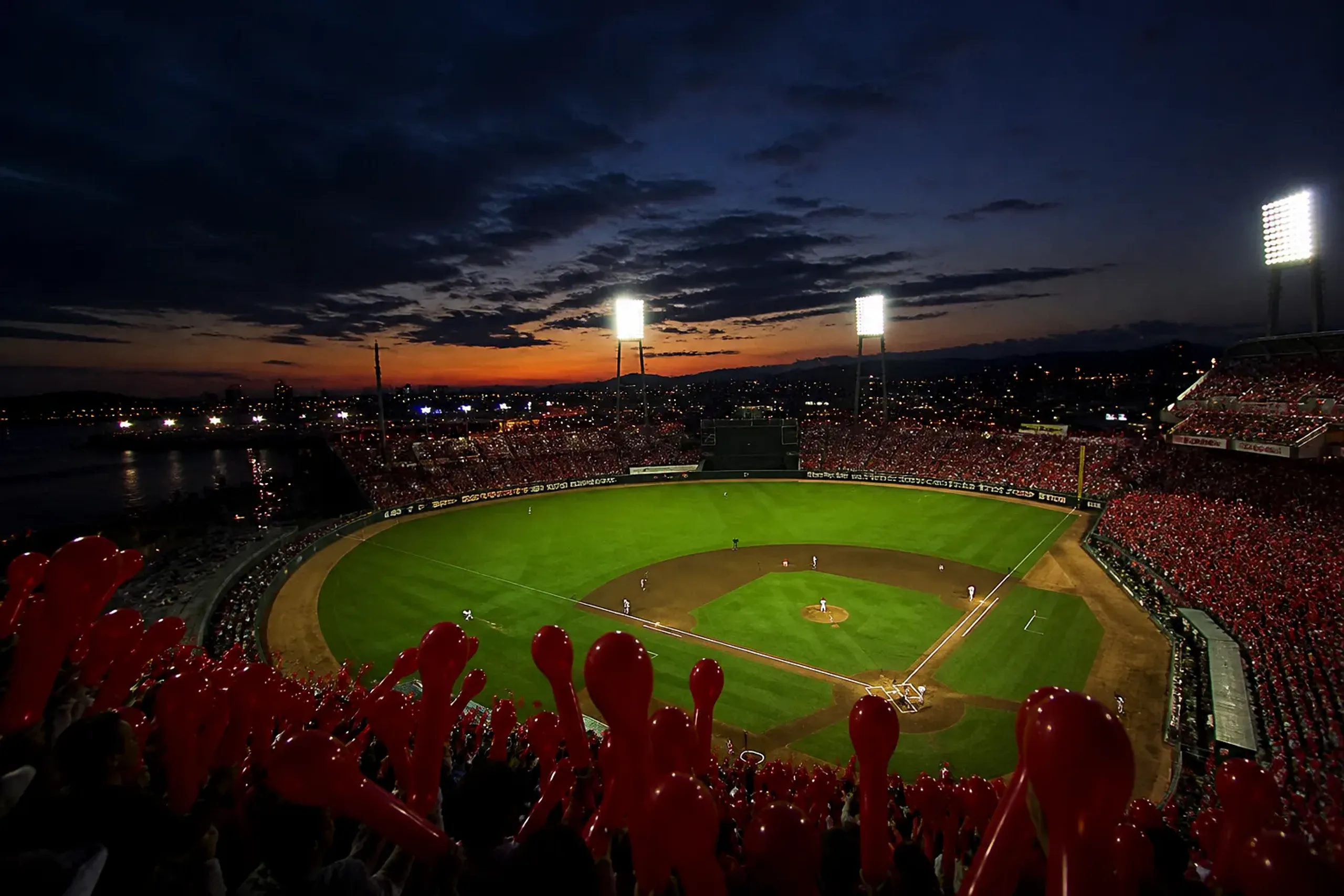
Even if you do not go inside, noticing the red jerseys on the street is its own lesson. Hiroshima is living.
Day 2 And Day 3 Extensions: Miyajima, Then Saijō
Miyajima is the natural second day. Stay overnight if you can, and you’ll understand why people speak about it differently after the day-trippers leave.
We wrote a full guide to that pacing here: After the Last Ferry: Miyajima Overnight. It pairs cleanly with a first-day Hiroshima city focus.
If you have a third day, consider Saijō, one of Japan’s well-known sake towns. It works as a cultural palate cleanser: technique, fermentation, water, and time.
Start with our guide: Technique Over Terroir: Saijō and Ginjō Sake. It’s a different side of Hiroshima Prefecture, and a welcome shift after the museum.
Contemporary Hiroshima: Hiroshima MOCA And Hiroshima Festival 2026
Hiroshima’s “rebuilt” story is not only architecture. It’s also cultural investment.
Hiroshima City Museum of Contemporary Art (Hiroshima MOCA) publishes its exhibition calendar, including Mel Chin scheduled for 2026-07-25 to 2026-10-12. If your trip overlaps, it’s a strong modern counterweight to historical sites.
The Hiroshima International Peace & Culture Festival 2026 (HIROSHIMA FESTIVAL2026) also publishes programming updates. If you like your travel anchored by real civic life—concerts, talks, public gatherings—this is when the city feels most present.
Our advice: don’t “add art” as a token.
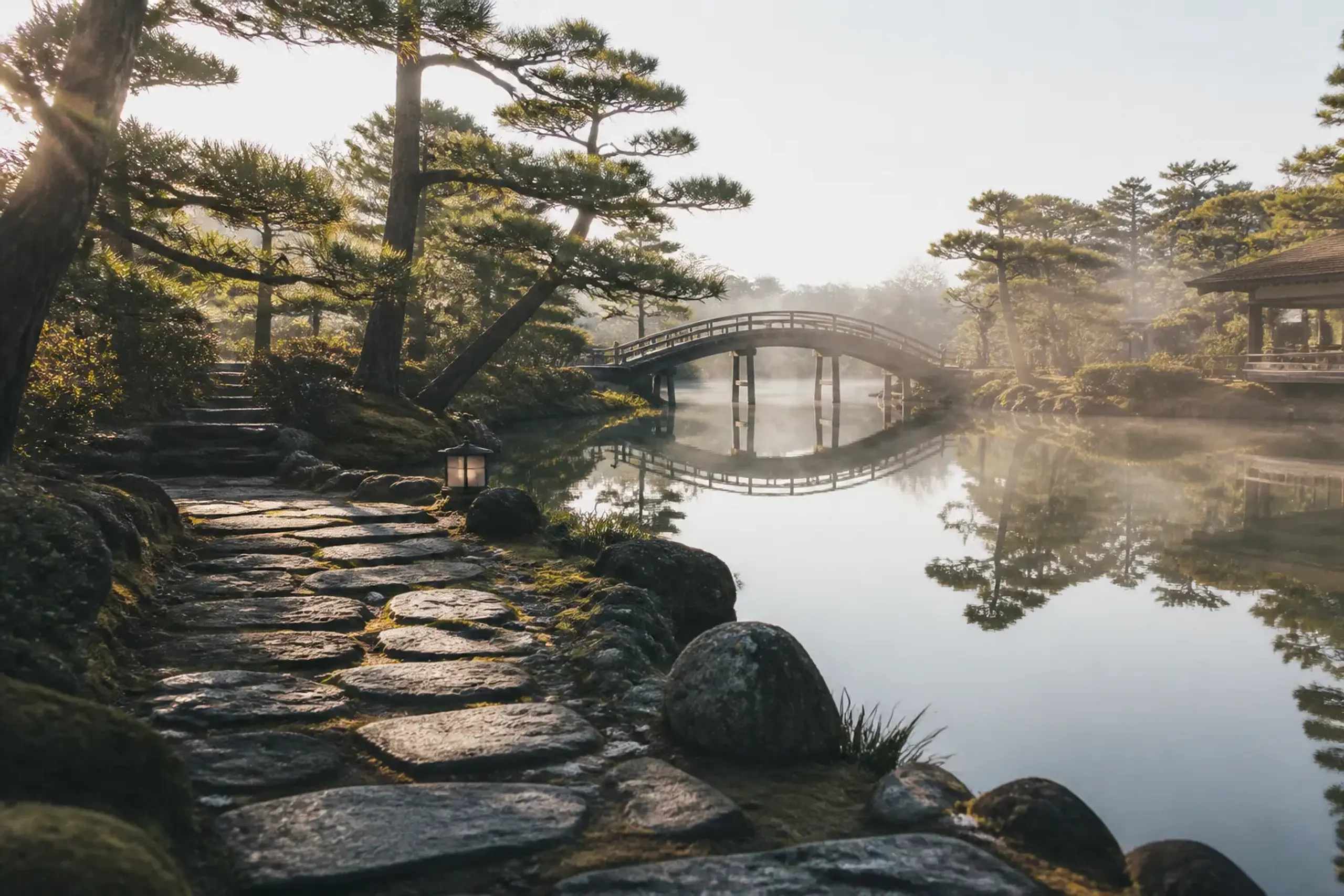
Put it in the itinerary as a deliberate shift in register.
What We Can Coordinate (Briefly): Guides, Transport, And A Calmer Route
Japan Royal Service supports Hiroshima trips with private guides, accommodation guidance, and private transportation, shaped around your pace and privacy needs.
That can look like a simple two-day Hiroshima–Miyajima plan, or a longer Setouchi route that includes Hiroshima as a thoughtful chapter rather than a stop. The point is control: time, movement, and exposure.
We also design tailor-made / bespoke itineraries that fit Hiroshima into a wider Japan journey without turning your days into a march.
Discretion matters here. Not as a slogan. As a working rule: fewer handoffs, less public confusion, and a plan that does not broadcast where you’ll be.
Frequently Asked Questions
Is Hiroshima Worth Visiting If I Have Limited Time In Japan?
Yes—if you can give it at least one full day in the city and ideally a second day for Miyajima.
Hiroshima rewards travelers who want a modern Japanese city with depth, not only major shopping districts or famous temples. The key is scheduling it as a “stay,” not a midday stop.
What Is The Respectful Way To Visit Hiroshima Peace Memorial Park And Museum With Children?
Read the museum’s content warning in advance and decide as a family, because some exhibits are graphic, including charred clothing and a child’s melted tricycle.
If you do visit with children, keep the schedule lighter afterward. Plan a garden or riverside walk so the day has room to settle.
Where Should I Stay In Hiroshima For Easy Walking And Dining?
Hondori and Hatchōbori are the most practical base for walking to the Peace Memorial area, Hiroshima Castle, Shukkei-en, and central dining.
This area also keeps evenings simple, with the covered arcade nearby and Nagarekawa reachable without a long ride back.
How Do I Plan Hiroshima Around The Peace Memorial Ceremony On August 6, 2026?
The Peace Memorial Ceremony begins at 8:00 a.m. on August 6, 2026, with a silent prayer and Peace Bell at 8:15 a.m., and it closes at 8:50 a.m.
Expect crowding and slower movement in the center that morning. If you are not specifically attending, choose a different morning for the museum and use August 6 for quieter parts of the city.
Why Choose Japan Royal Service
Hiroshima is where many luxury itineraries go generic. A driver, a museum, a ferry, done.
Our team at Japan Royal Service approaches it differently. We build the day around pacing, wabi-sabi restraint, and shokunin-level attention to the small choices that change everything—where you base, when you enter the museum, how you reset afterward, and how you move without friction.
We also work for a privacy-first clientele. Discretion is not a feature we add. It’s the baseline we protect, from planning through the last transfer.
If you’d like a Hiroshima plan built around your schedule and comfort level, reach our team privately via WhatsApp or LINE, or contact us here.