In this guide
- 01After The Last Ferry, Miyajima Changes Shape
- 02What Is The Difference Between Itsukushima And Miyajima?
- 03How Do The Tides Change Itsukushima Shrine Overnight?
- 04Why Stay Overnight On Miyajima Instead Of Day-Tripping From Hiroshima?
- 05Half Day Vs Full Day Vs Overnight: What Each Itinerary Actually Gives You
- 06Practical Facts: Shrine Hours, Tickets, Illumination, And Construction (2026)
- 07How Do You Pay The Miyajima Visitor Tax, And Why Does It Matter?
- 08A Tide-Aware Overnight Timeline (Step By Step)
- 09Mount Misen: The Island Beyond The Shrine
- 10Deer Etiquette On Miyajima: What Experienced Travelers Do
- 11What To Eat On Omotesandō (And What To Buy Before Shops Close)
- 12Seasonal Nights And Real 2026 Events Worth Planning Around
- 13Where Miyajima Fits In A Luxury Japan Itinerary (Without Rushing)
- 14How We Design A Miyajima Overnight For HNW Travelers
- 15Frequently Asked Questions
- 16Why Choose Japan Royal Service
The island does not close. It exhales.
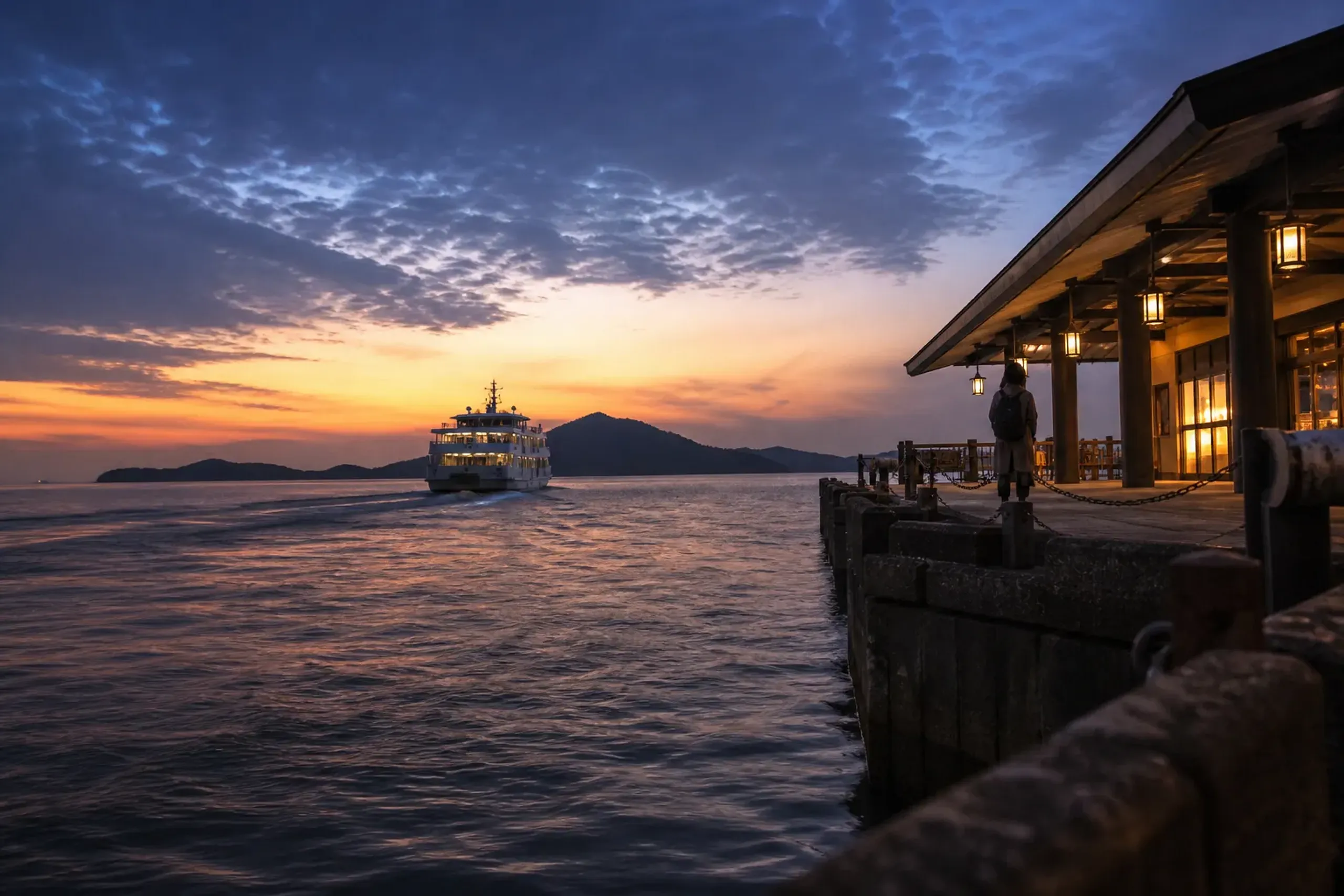
When the day boats thin and the souvenir shutters slide down, Miyajima turns quieter, almost watchful. Streetlights paint a thin sheen on damp stone. Deer step into the road as if they own it again.
Most visitors leave just as Itsukushima begins to feel like itself. Big mistake. This guide shows you how to plan an overnight that captures the two hours day-trippers never get: the illuminated Great Torii after the crowds fade, and the shrine corridors before the first wave arrives.
After The Last Ferry, Miyajima Changes Shape
The transformation is not a myth, but it is not total silence either. A few ryokan lights stay on. A late pair of footsteps echoes under the arcade on Omotesandō.
Then your pace changes. You stop rushing. You begin noticing small things: a lacquered vermilion beam drying after rain, the smell of salt in the Seto Inland Sea air, the soft clack of geta from someone heading home.
This is where wabi-sabi belongs. Not as a slogan, but as a mood you can only feel when the island stops performing for the day.
What Is The Difference Between Itsukushima And Miyajima?
Itsukushima is the island’s official name; “Miyajima” means “shrine island,” a familiar name used in everyday travel conversation.
Itsukushima is part of Hatsukaichi City in Hiroshima Prefecture, and it sits roughly 20 minutes from Hiroshima city by the standard approach route to Miyajimaguchi and onward by ferry. Short hop. Long effect.
The island’s cultural gravity comes from Itsukushima Shrine, a UNESCO World Heritage site.
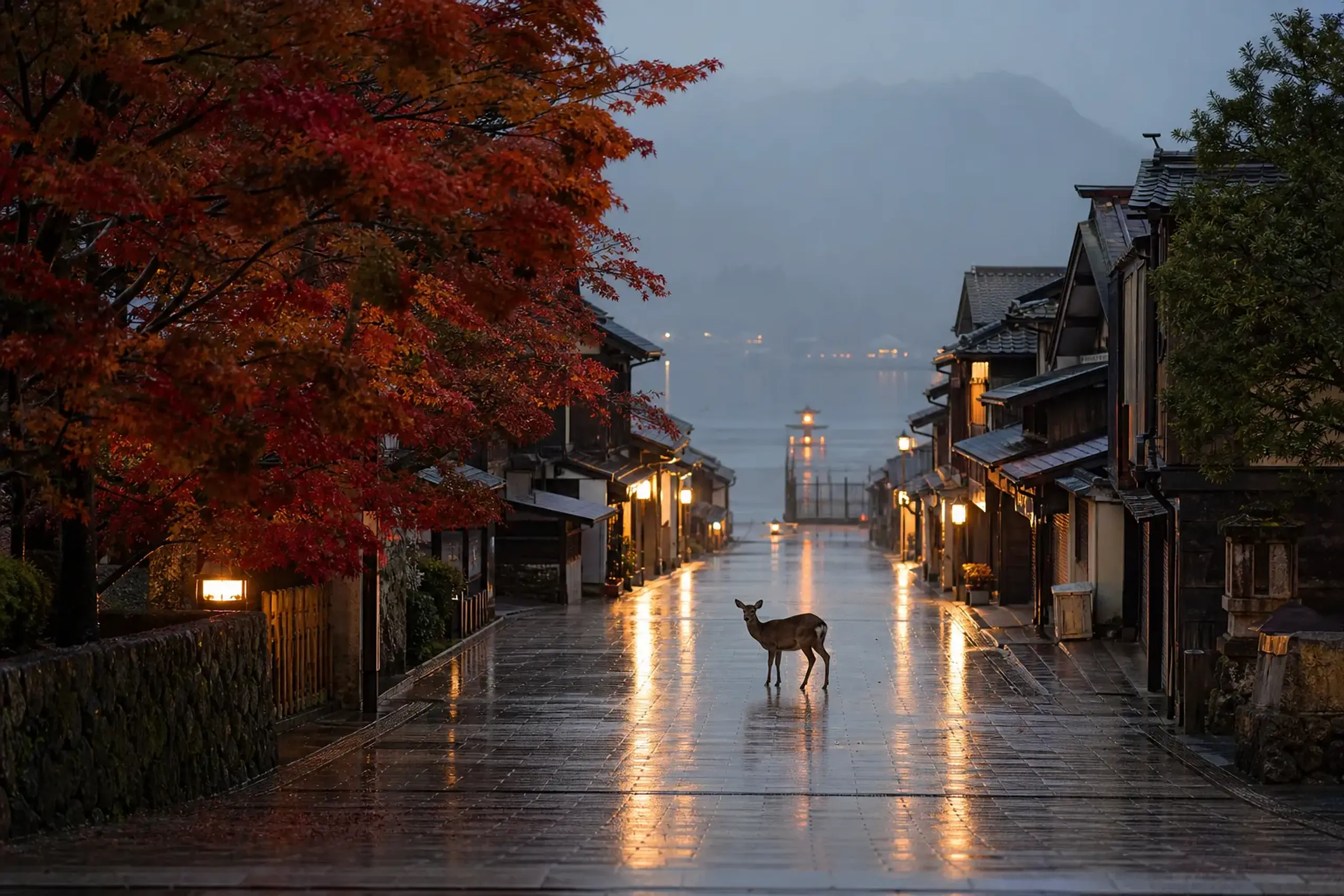
After the day boats thin, the island’s pace slows—and details start to surface.
It was founded in the late 6th century and expanded to its present form by Taira no Kiyomori in the 12th century.
How Do The Tides Change Itsukushima Shrine Overnight?
The shrine becomes two different places because the corridors stand over tidal flats, and high tide and low tide are roughly six to seven hours apart.
At high tide, the complex looks as if it is floating. Water presses up under the corridors. The sound is intimate—small waves tapping wood.
At low tide, the seabed opens. Visitors can walk out across exposed flats toward the base of the Great Torii, which stands about 16.6 metres and weighs roughly 60 tonnes. The scale feels less like a “sight” and more like a presence.
A half-day visitor usually sees only one version. An overnight guest can see both, without forcing the schedule into a sprint.
Key fact: Check tide tables for your date. They are published by the Japan Meteorological Agency and are also available at the ferry terminal.
Why Stay Overnight On Miyajima Instead Of Day-Tripping From Hiroshima?
An overnight stay buys you the illuminated torii after the day boats leave, and the shrine before the first ferry crowds arrive.
Capacity is the quiet constraint here. Miyajima’s accommodation inventory is genuinely small, which is why the “everyone does a day trip” pattern persists year after year.
Our team at Japan Royal Service often designs Miyajima as a deliberate pause in a wider route—Kyoto to Hiroshima, then out into the Setouchi atmosphere for a single night.
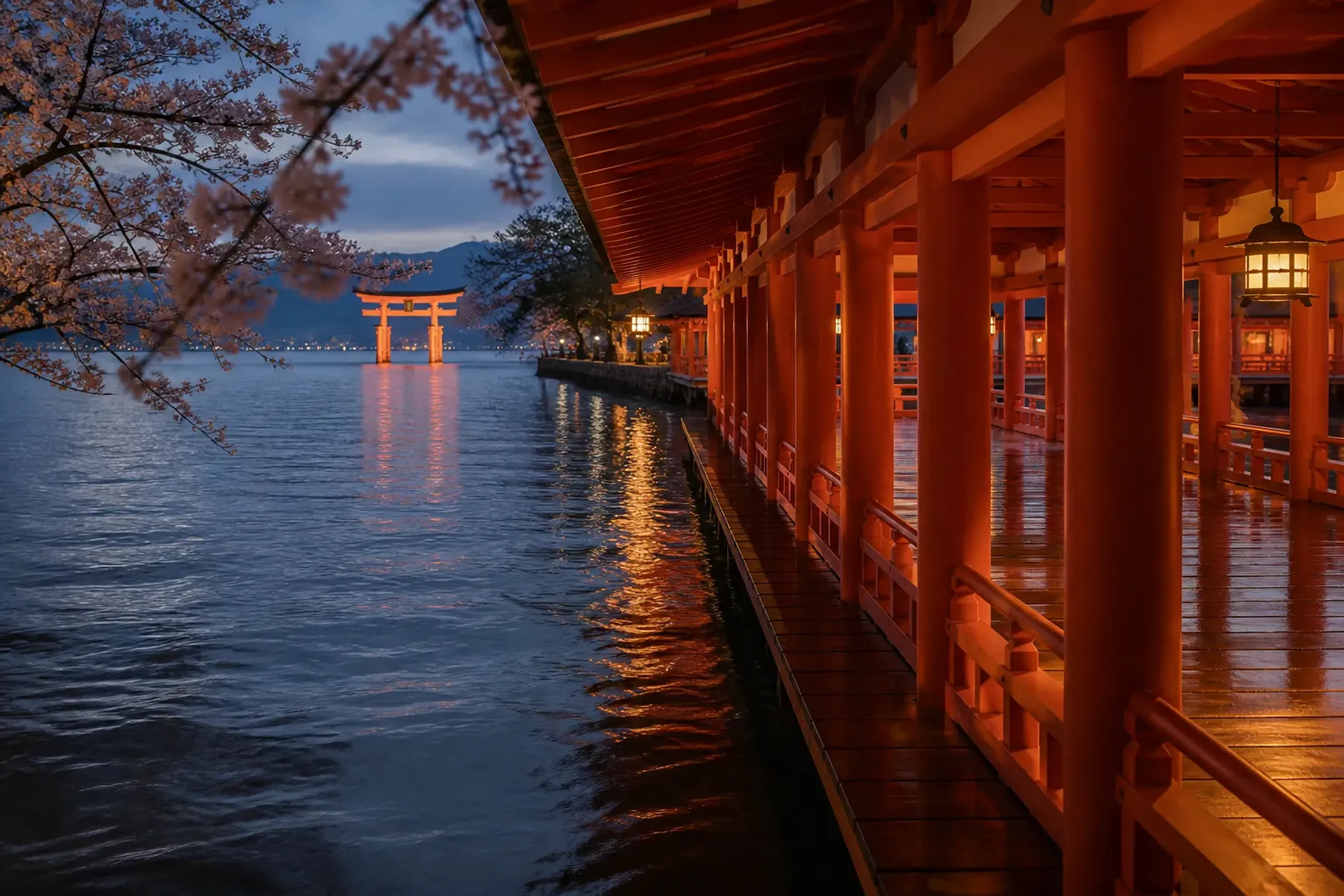
High tide turns the shrine into a floating architecture of wood and water.
One night is enough. If timed well, it can feel like you borrowed the island.
This is also the gentle way to visit. You spread your time across evening and early morning, instead of compressing everything into the peak midday crush.
Half Day Vs Full Day Vs Overnight: What Each Itinerary Actually Gives You
Miyajima rewards honest planning. Not wishful planning.
Option A: Half-Day (Classic Day Trip)
You can cover the shrine approach and the essential icons, but you will move with the crowd’s tempo. Fast.
- Itsukushima Shrine main paid route
- Omotesandō for snacks and shopping
- One tide state only (either high or low)
Option B: Full Day (Day Trip With Range)
This is the “do it properly without sleeping there” version. It works, but the best light is still tight.
- Itsukushima Shrine plus time for the Treasure Hall if desired
- Mount Misen by ropeway and short walks
- Potential to catch both tides if you plan the hours carefully
Option C: Overnight (After The Last Ferry + Before The First Wave)
This is the version that changes the memory. Quietly.
- Illuminated Great Torii and shrine corridors from sunset until around 23:00
- Early shrine visit atmosphere, especially before 08:00
- Two-tide experience without turning your day into a stopwatch exercise
- Onsen access at some larger ryokan (for overnight guests)
Practical Facts: Shrine Hours, Tickets, Illumination, And Construction (2026)
These details decide whether your plan feels calm or cramped.
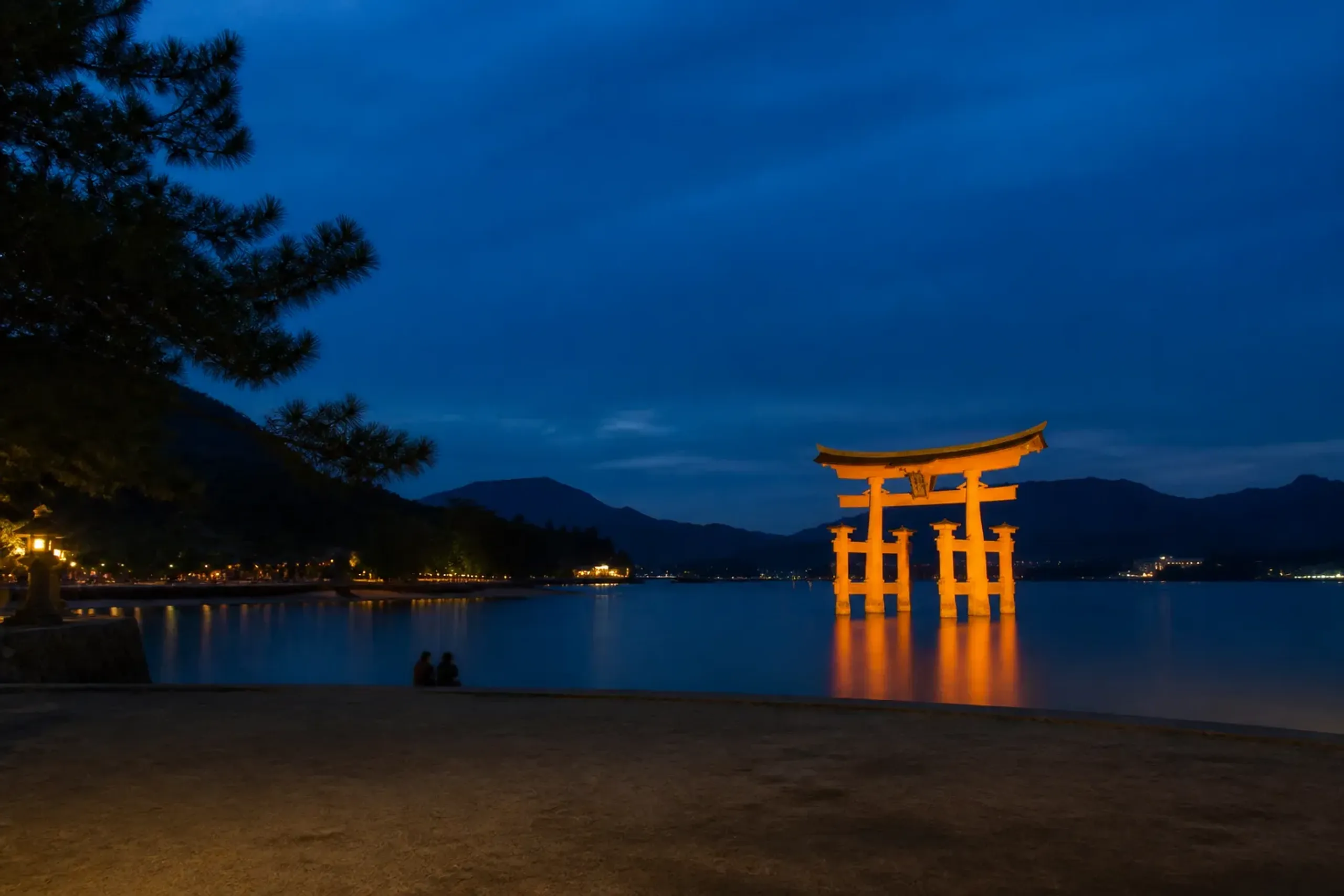
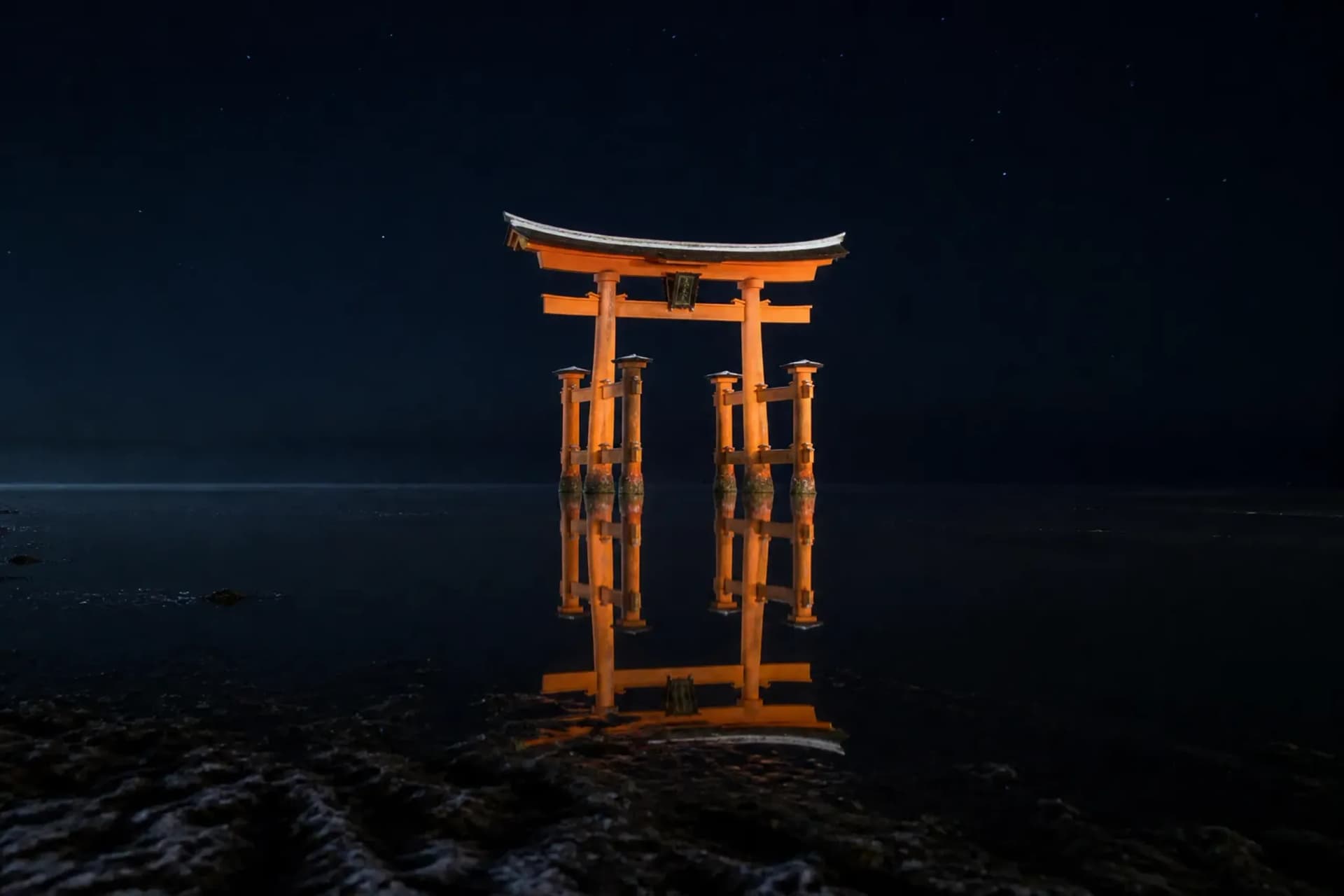
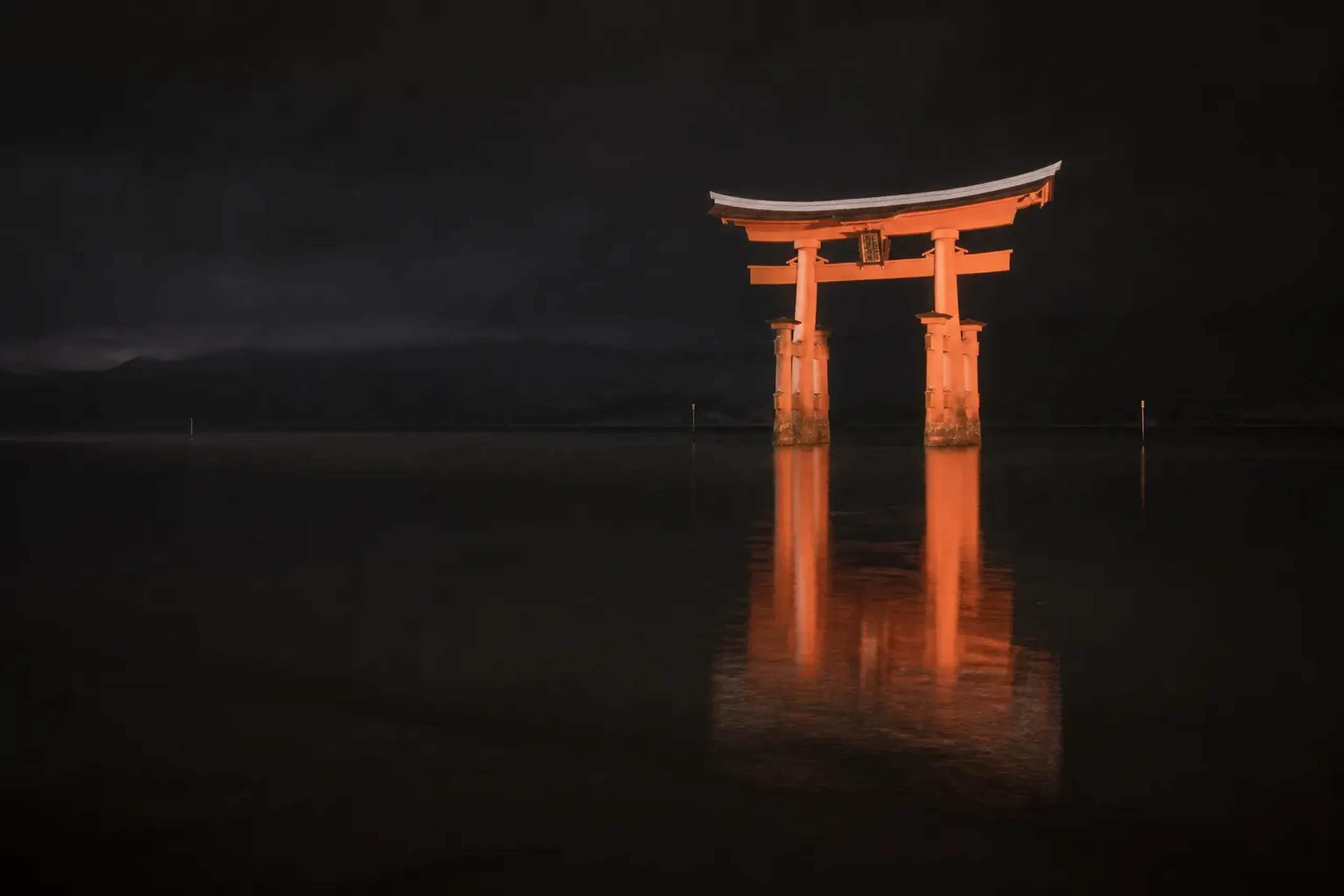
The hours that day-trippers miss: vermilion light against black water.
Small details. Big difference.
Itsukushima Shrine opening hours (last entry is closing time):
- March–14 October: 06:30–18:00
- 15 October–November: 06:30–17:30
- December–February: 06:30–17:00
Visitors inside may be allowed to remain about 15–20 minutes beyond last entry. Do not count on it for a “closing-time hack.” Bad idea.
Admission (verified): ¥300 adults. The Treasure Hall is ¥300 separately, or ¥500 combined. Bring cash anyway.
Illumination (verified): The Great Torii and shrine corridors are illuminated nightly from sunset until around 23:00, year round. This is the hinge of the overnight story.
Ferry reality (verified anchor): A last ferry can run around 22:14, which is why most day visitors miss the best of the illumination even if they stay late for dinner on the mainland.
Current works (verified): Structural reinforcement continues around the East Corridor through December 2026. The Five-Storied Pagoda near Senjōkaku is under a longer restoration; it sits outside the shrine’s paid route, so entry to the shrine route is unaffected.
If you are traveling primarily for photography, confirm the latest on-site conditions close to departure. Construction does not ruin the visit, but angles matter.
How Do You Pay The Miyajima Visitor Tax, And Why Does It Matter?
The Miyajima Visitor Tax is 100 yen per person per visit and is collected by passenger-boat operators by adding it to fares/charges.
Hatsukaichi City introduced this visitor tax starting October 1, 2023, to fund administrative demand created or amplified by many visitors to Miyajima. It is small, but it signals something important: the island is managing pressure.
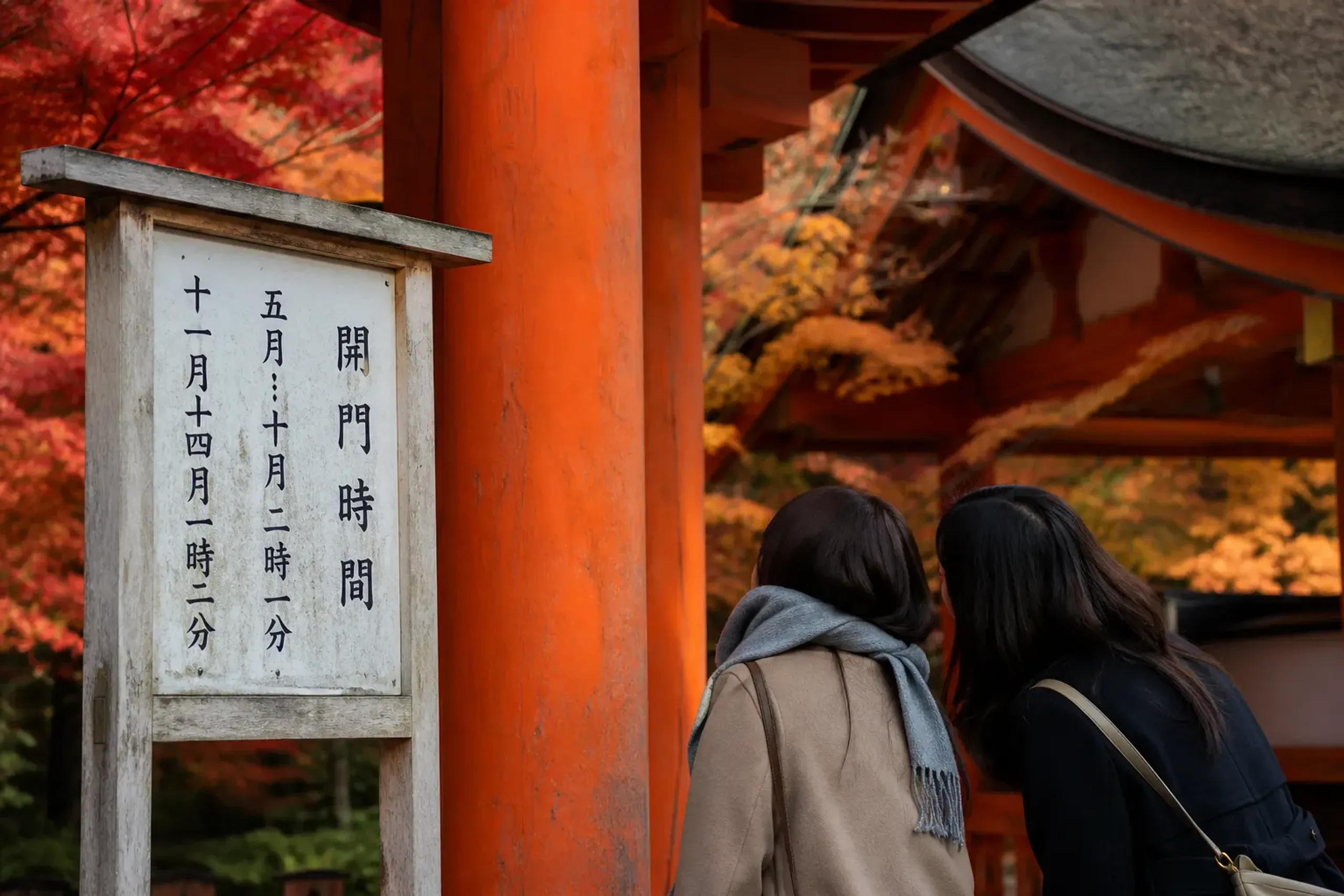
A calm visit starts with the basics: hours, last entry, and timing.
In practice, you may see the 100 yen line item stated by operators (for example, Miyajima Matsudai Kisen notes the 100 yen visitor tax in addition to fares). Knowing this ahead of time prevents needless friction at the ticket window.
We frame this with guests as a respect point. Pay it, don’t complain, and then visit in a way that spreads impact—overnight helps.
A Tide-Aware Overnight Timeline (Step By Step)
You do not need a complicated plan. You need a tide-aware one.
Step 1: Choose Your “Anchor Moment”
Pick one emotional anchor: either the illuminated torii after dark, or the shrine at first light. Then let tides dictate the rest.
- If your priority is floating-shrine imagery, aim to be at the corridors near high tide.
- If your priority is walking out toward the torii, aim for low tide and give yourself time for mudflat pacing.
Step 2: Check Tide Tables Before You Lock The Night
Look up the tide tables for your exact date via the Japan Meteorological Agency. Then cross-check what you see posted at the ferry terminal when you arrive.
This is your structural fact. Everything else is decoration.
Step 3: Arrive With A Dinner Plan
Many visitors assume they can “figure it out” after arrival. That is how you end up eating too early or too late.
On an overnight, dinner timing decides whether you enjoy the shrine illumination with unhurried steps, or rush through it thinking about the next table seating.
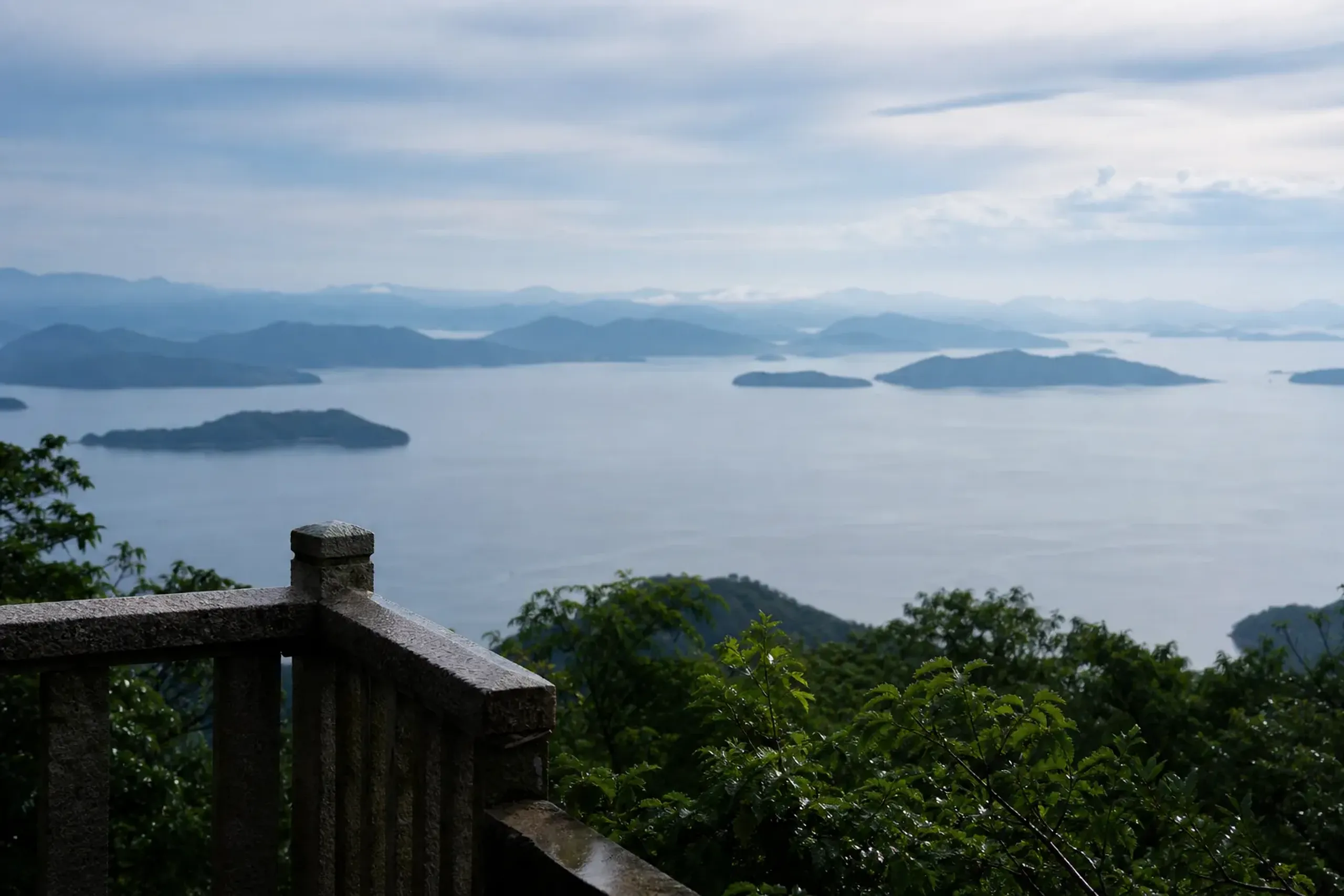
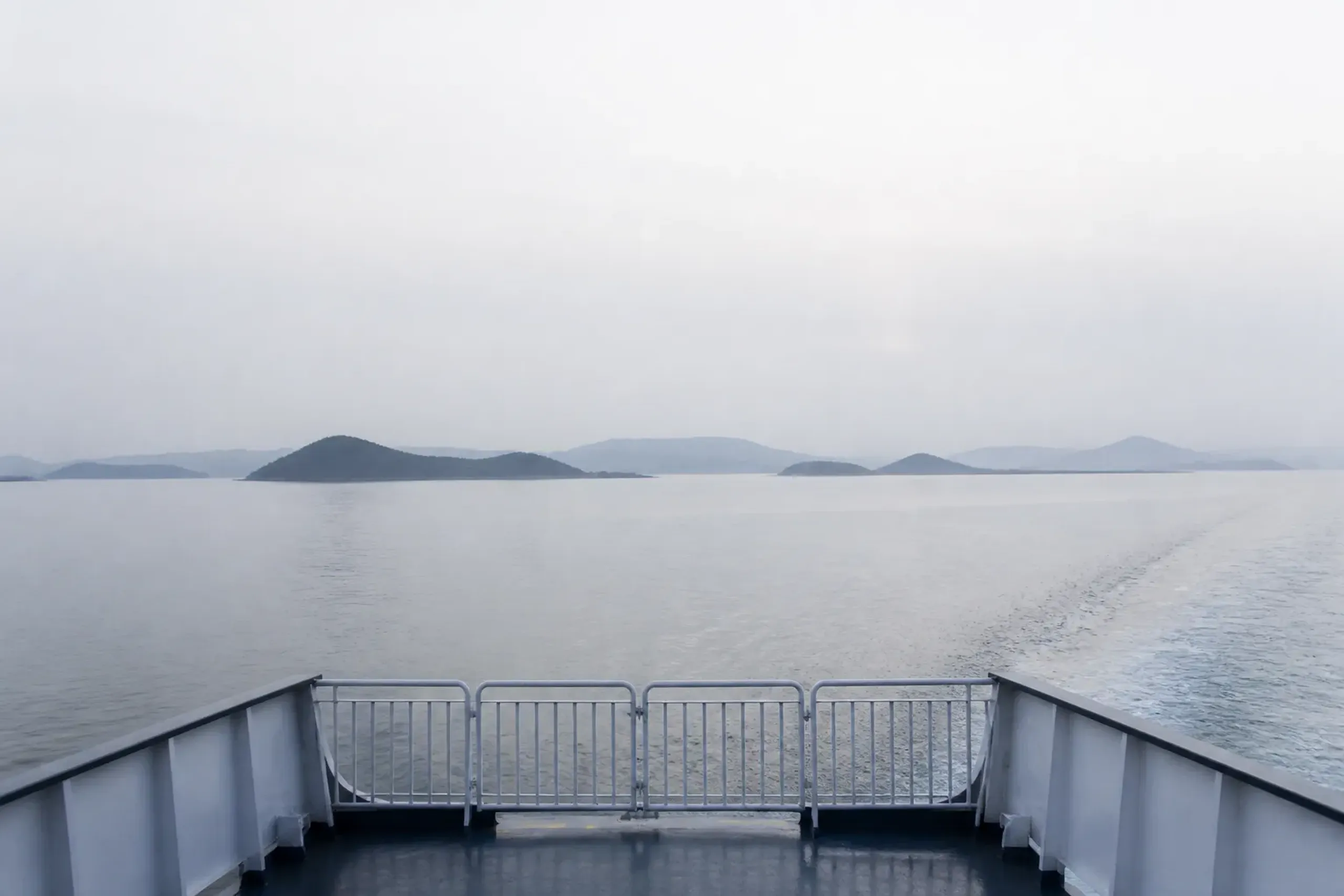
From 535 metres, Miyajima stops being a stop and becomes a landscape.
Step 4: Walk The Shrine Perimeter Twice
Once after dark, when the vermilion reads deeper and the water turns black. Then again early, when the first boats have not yet delivered their queues.
Two walks. Two different islands.
Mount Misen: The Island Beyond The Shrine
Mount Misen rises to 535 metres, and it changes the scale of the visit. Suddenly you understand why people have called this one of Japan’s three great views since the 17th century.
The ropeway makes it approachable, even for travelers who do not want a hard hike. On a clear day, the Seto Inland Sea looks like scattered ink stones, and you can see across toward Shikoku.
We often suggest doing Misen in the middle of your overnight sequence, not at the edges. Save dawn and night for the waterline and corridors. Protect the mood.
Deer Etiquette On Miyajima: What Experienced Travelers Do
The deer are free-roaming across the island. They are also habituated, and they will take food, paper, and even maps from bags if you make it easy.
Keep distance. Keep your hands quiet. Put snacks away and do not feed them.
Autumn is a special watch-out because males have antlers and can be aggressive. No flash photography. And if a deer blocks a narrow lane, do not challenge it—take the long way around.
This is not a petting-zoo moment. Respect reads as calm.
What To Eat On Omotesandō (And What To Buy Before Shops Close)
Food here is straightforward, local, and best taken between walks.
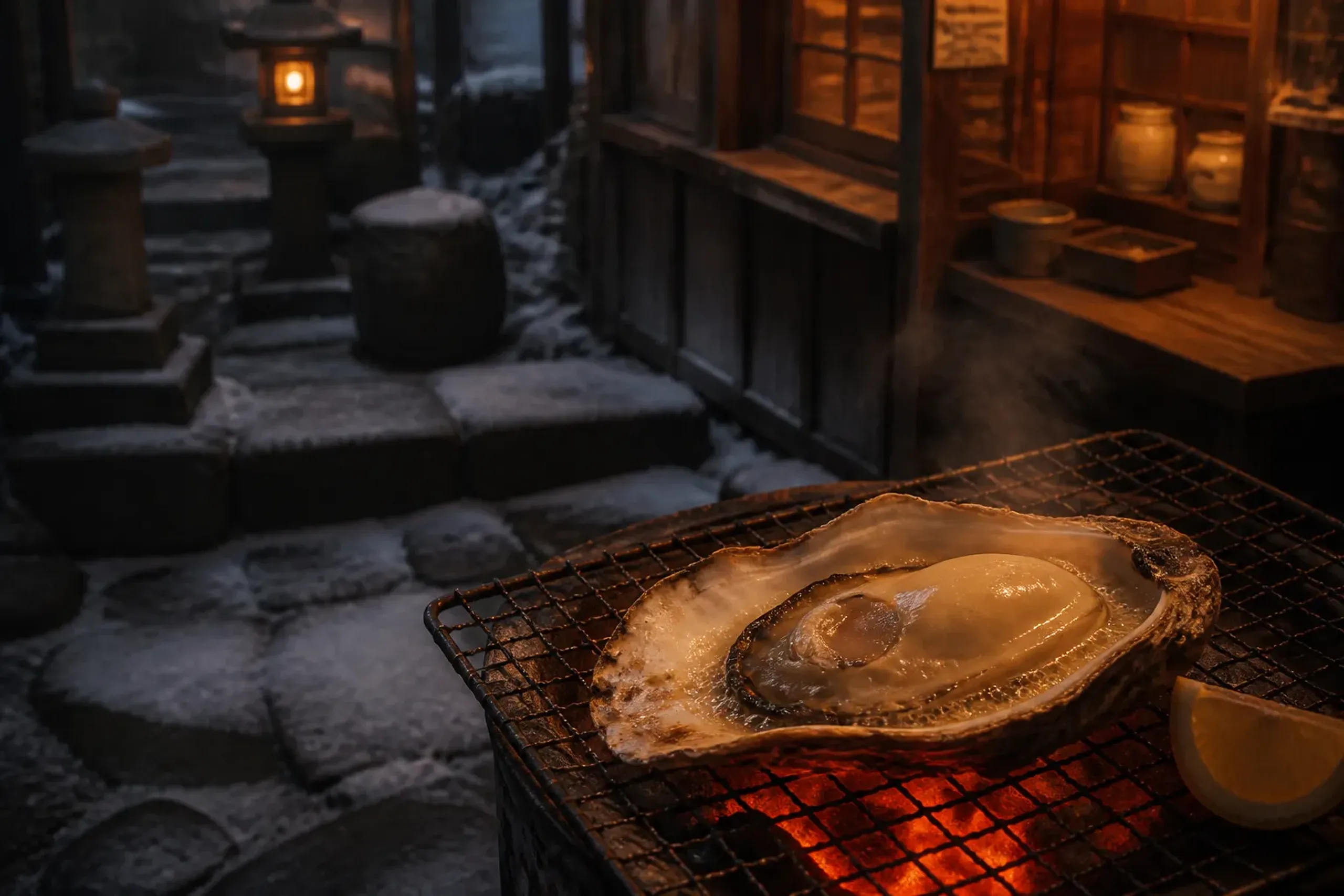
A small snack can reset your pace.
- Grilled conger eel (anago): a classic Miyajima specialty, often served over rice.
- Oysters: Hiroshima is known for them, and Miyajima offers many casual preparations.
- Momiji manjū: maple-leaf-shaped sweets sold along Omotesandō; easy to bring back to your room.
One practical tip: buy what you want in the afternoon. After dinner, options narrow fast.
Seasonal Nights And Real 2026 Events Worth Planning Around
Overnight stays become more compelling when the calendar gives you a reason to be on the island after dark. Not every night does.
The Miyajima Tourist Association publishes a 2026 event schedule in English, including named events at Itsukushima Shrine and nearby temples across January–March 2026. This is useful if you prefer winter’s clean air and smaller crowds.
Late summer also offers night-focused programming. The association’s Japanese listing shows Miyajima Odori no Yube scheduled for August 17–18, 2026 at Mikasa-hama, running 19:30–around 21:00.
For shrine-linked spectacle on the water, Hiroshima-focused event listings have promoted Miyajima Kangensai Boat Festival on July 30, 2026. Treat any event night as a logistics night: dinner timing, walking routes, and a plan for where you stand so you are not trapped behind a wall of phones.
Where Miyajima Fits In A Luxury Japan Itinerary (Without Rushing)
Most travelers arrive via Hiroshima. That is the cleanest gateway.
If you are building a wider Setouchi and Chūgoku arc, a Miyajima overnight pairs naturally with Saijō, Hiroshima’s sake town. For background on the region’s brewing craft, see our article Technique Over Terroir: Saijō and Ginjō Sake.
We keep the Hiroshima Peace Memorial Park out of this piece on purpose. It deserves its own unhurried day and a different tone.
On the logistics side, we often advise guests to treat Miyajima as a “soft landing” stop: arrive mid-afternoon, settle in, walk at night, and leave late morning after the early shrine atmosphere. No heroics.
How We Design A Miyajima Overnight For HNW Travelers
The luxury here is not loud. It is control.
Our team at Japan Royal Service designs Miyajima overnights around discretion, tide logic, and the quiet power of after-hours light. We keep identities private, and we avoid itineraries that funnel you into peak-hour bottlenecks.
When guests ask what changes the experience most, we point to three levers:
- Discretion: low-visibility routing, calm pacing, and a privacy-first approach to plans and movements.
- Wabi-sabi: time set aside for stillness—wet stone, dim lanterns, and the island’s unscripted moments after the shutters close.
- Hidden-Japan thinking: not “secret spots,” but the discipline of visiting public icons at uncommon hours, when the place reads as a living site, not a checklist.
For transport into and out of Miyajimaguchi, many guests prefer private transportation so luggage and timing stay simple. For a broader tailor-made Japan route that places Miyajima correctly among Kyoto, Osaka, and Hiroshima, we build the trip around your pace, not a template.
If you want a second opinion on Hiroshima-area approach planning, our airport-and-city transfer perspective may help: Who Is the Best Airport Transfer Service in Tokyo? (the principles of vehicle choice and timing apply across Japan, even when the city changes).
Frequently Asked Questions
Is One Night On Miyajima Enough To See Both Tides At Itsukushima Shrine?
Yes—one night often lets you see both high tide and low tide because they are roughly six to seven hours apart, but you must check tide tables for your exact date.
In our experience, arriving mid-afternoon and departing late morning gives you the best chance to catch two distinct tide states without forcing the schedule.
What Time Is The Great Torii Illuminated On Miyajima?
The Great Torii and the shrine corridors are illuminated nightly from sunset until around 23:00, year round.
This is why day-trippers often miss the most atmospheric window, even if they stay late.
How Much Is The Miyajima Visitor Tax And How Is It Collected?
The Miyajima Visitor Tax is 100 yen per person per visit and is collected by ferry/passenger-boat operators by adding it to fares/charges.
Hatsukaichi City introduced it on October 1, 2023, to support administration related to heavy visitor demand.
Are There Any Construction Works At Itsukushima Shrine In 2026?
Yes—structural reinforcement work continues around the East Corridor through December 2026, while the Five-Storied Pagoda near Senjōkaku is under a longer restoration.
The pagoda sits outside the shrine’s paid route, so shrine entry is not affected, but photographers should confirm the latest conditions close to travel.
Why Choose Japan Royal Service
Miyajima is a public UNESCO site, so the advantage is not “access.”
It is how the visit is shaped.
Japan Royal Service exists for travelers who want Japan’s famous places to feel personal again—through tide-aware design, shokunin-grade attention to detail, and discretion that keeps your identity and movements quiet. Not performative. Just precise.
If you are weighing agencies like Remote Lands, Quintessentially, Black Tomato, Artisans of Leisure, or InsideJapan Tours, consider what you want most from Miyajima: a standard stop, or an overnight crafted around the hours that Google rarely describes well. We build for the second.
For private coordination, reach our team at Japan Royal Service discreetly via WhatsApp or LINE, or contact us here.