In this guide
- 01What Makes Hitsujiyama Shibazakura Different From A Typical Flower Spot?
- 02When Do Hitsujiyama Shibazakura Blooms Usually Peak In Chichibu?
- 03What Time Of Day Is Quietest At Hitsujiyama Shibazakura Hill?
- 04How Do You Get To Hitsujiyama Park Shibazakura From Tokyo?
- 05What Are Crowds Like At Hitsujiyama Shibazakura During Golden Week?
- 06Is There Parking At Hitsujiyama Shibazakura, And How Does Traffic Control Work?
- 07A Step-By-Step “Calm Morning” Plan For Hitsujiyama Shibazakura
- 08What Japan Royal Service Can Coordinate For A Hitsujiyama Shibazakura Day Trip
- 09Frequently Asked Questions
- 10Let Us Plan Your Quiet Morning On The Hill
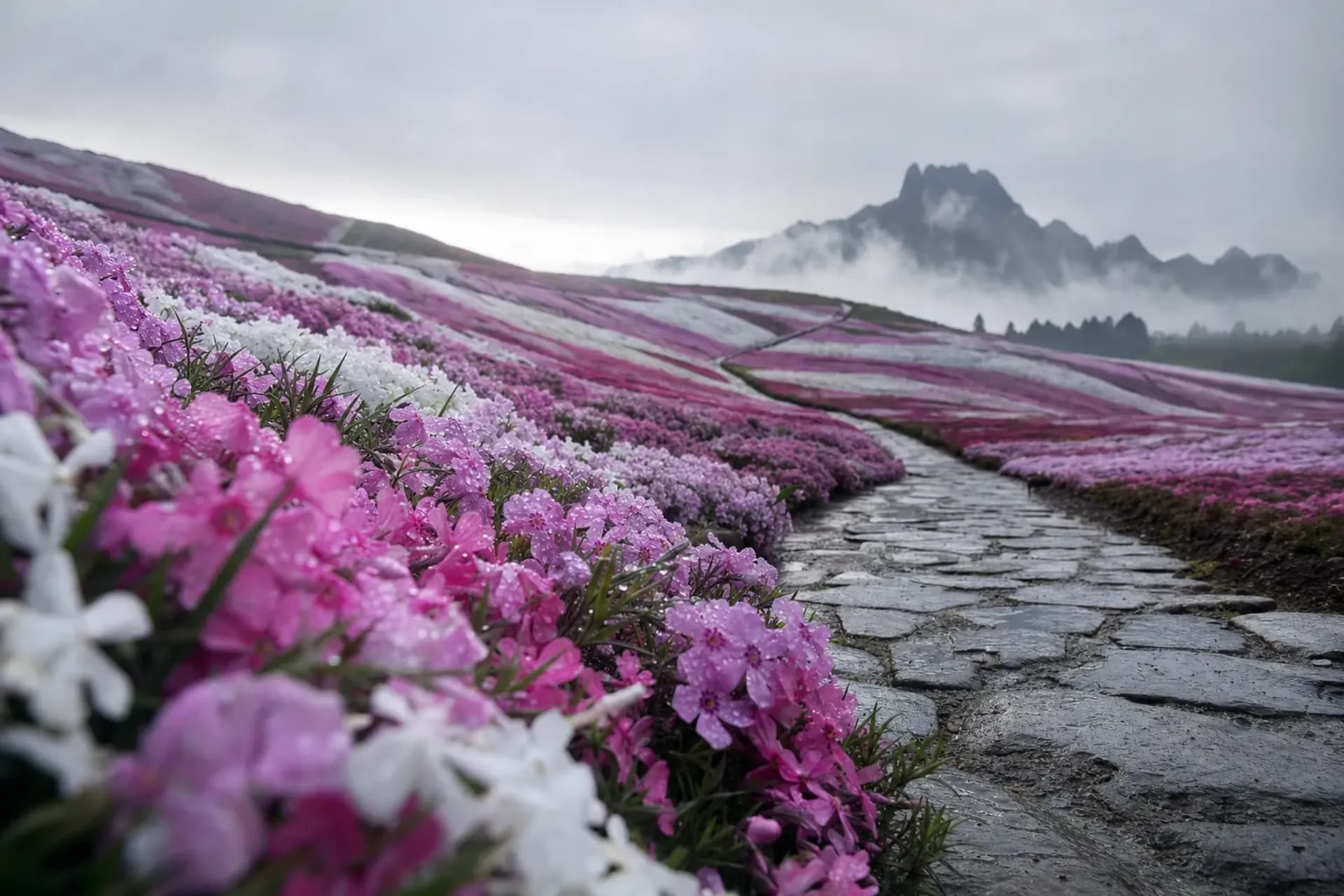
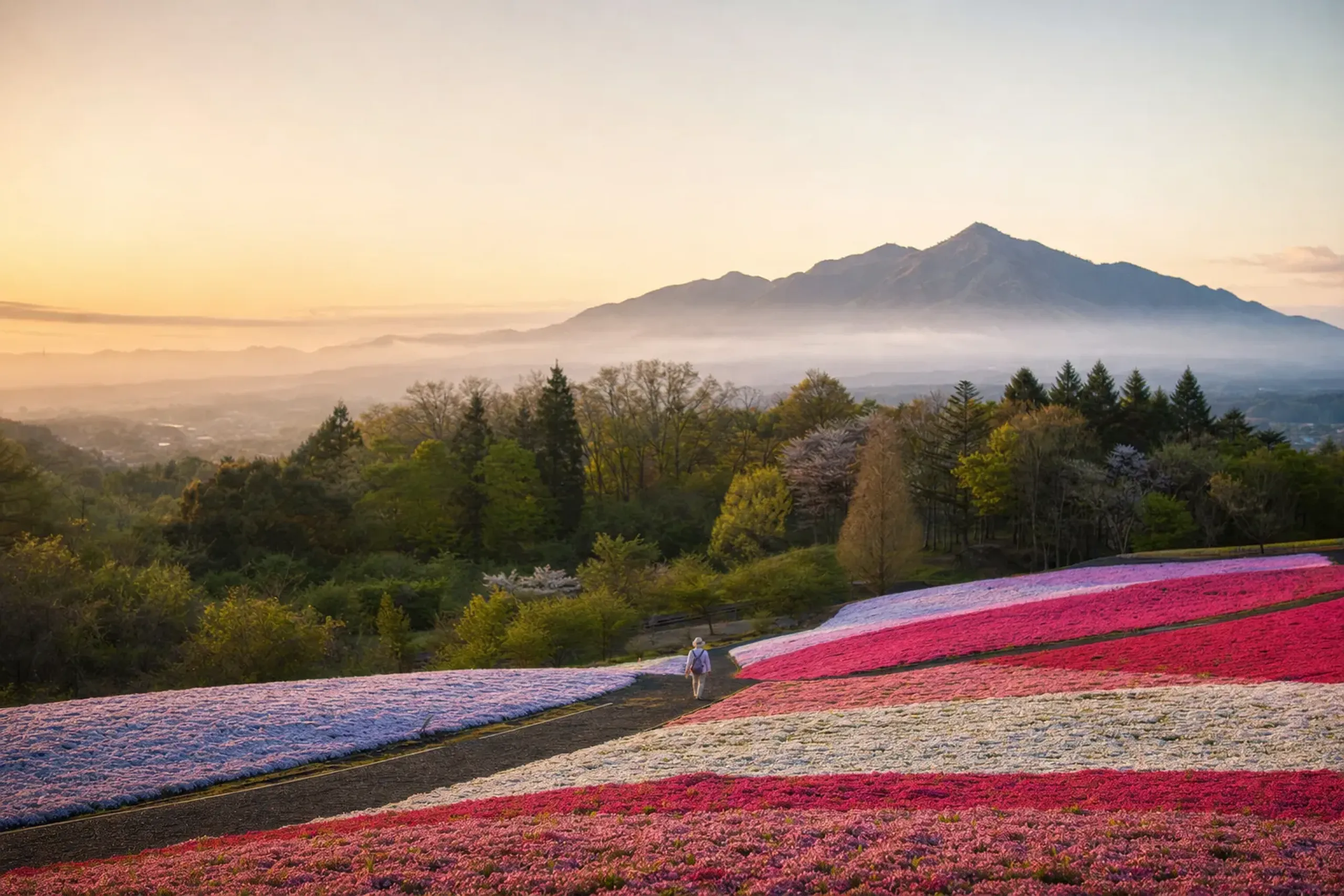
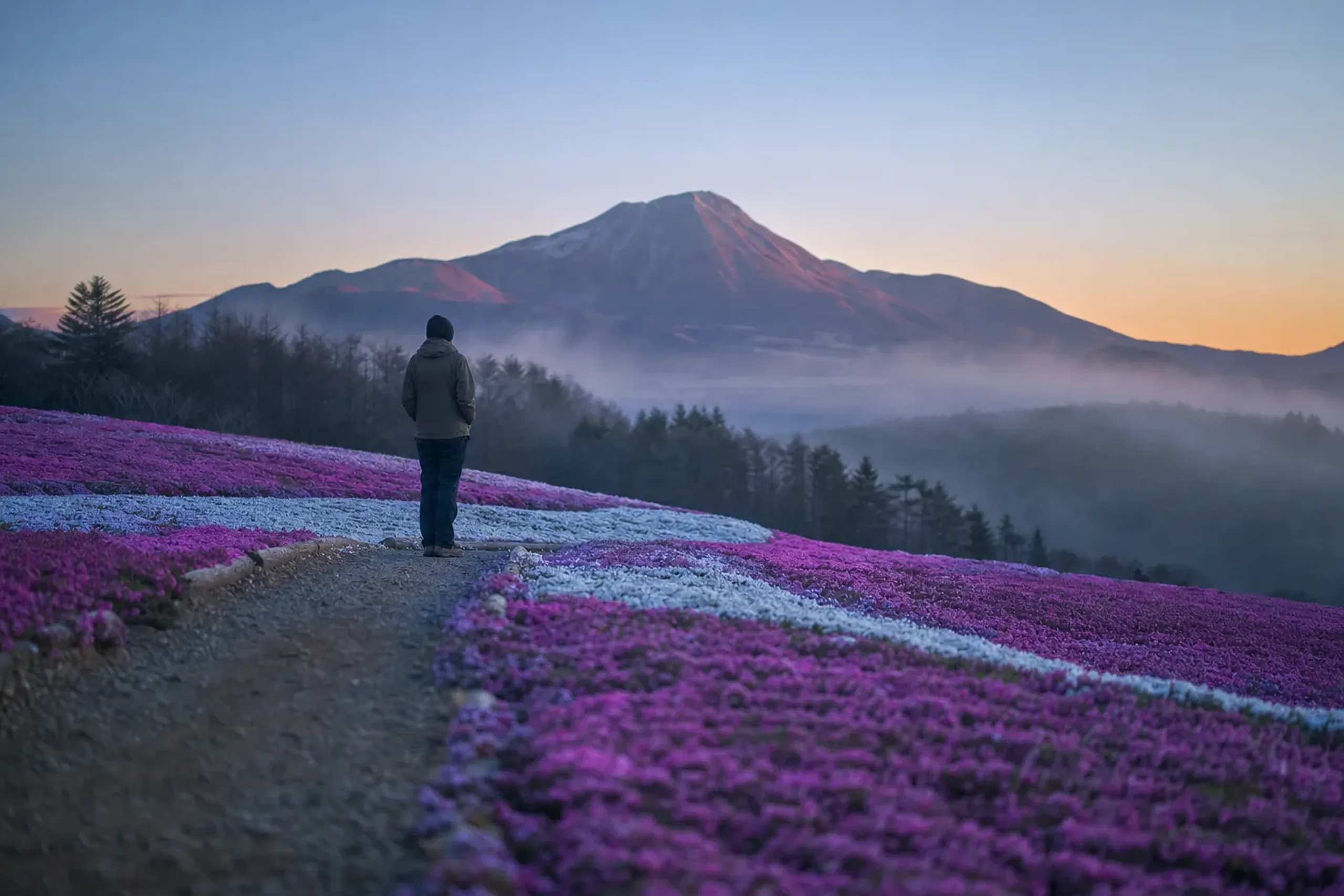
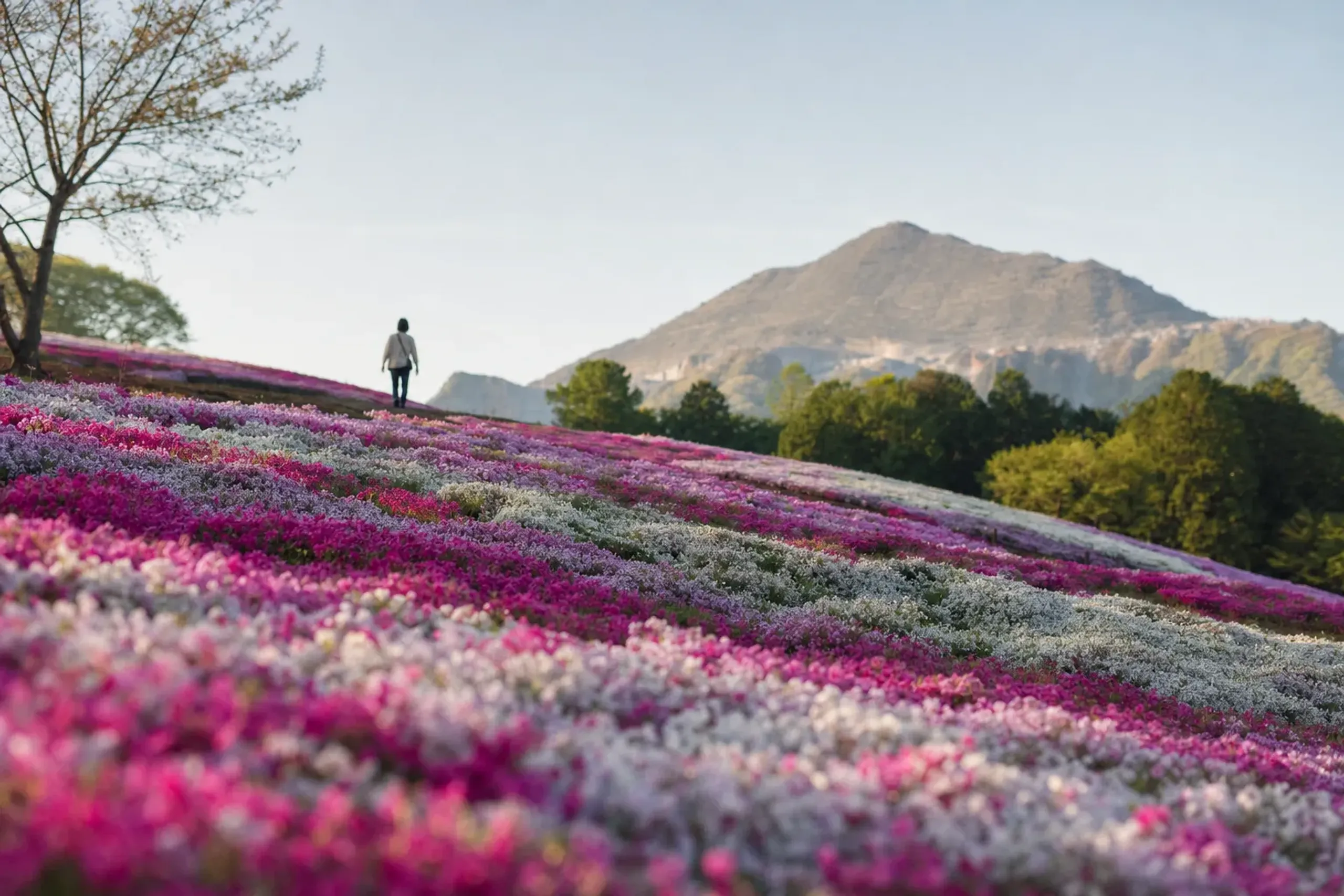
From the path, it looks as though someone spilled paint and let it settle into patterns.
Pink. White. A bruised-purple edge where the slope turns away from the light.
This is Hitsujiyama Park’s shibazakura hill in Chichibu, Saitama, with Mt. Bukō standing behind the color like a quiet, unhurried backdrop.
What decides your experience here isn’t a “perfect” date on the calendar. It’s the hour you choose to arrive—and the restraint you bring to it. The visitors who remember this hill most fondly are the ones who came early, walked slowly, and let the stillness do its work.
What Makes Hitsujiyama Shibazakura Different From A Typical Flower Spot?
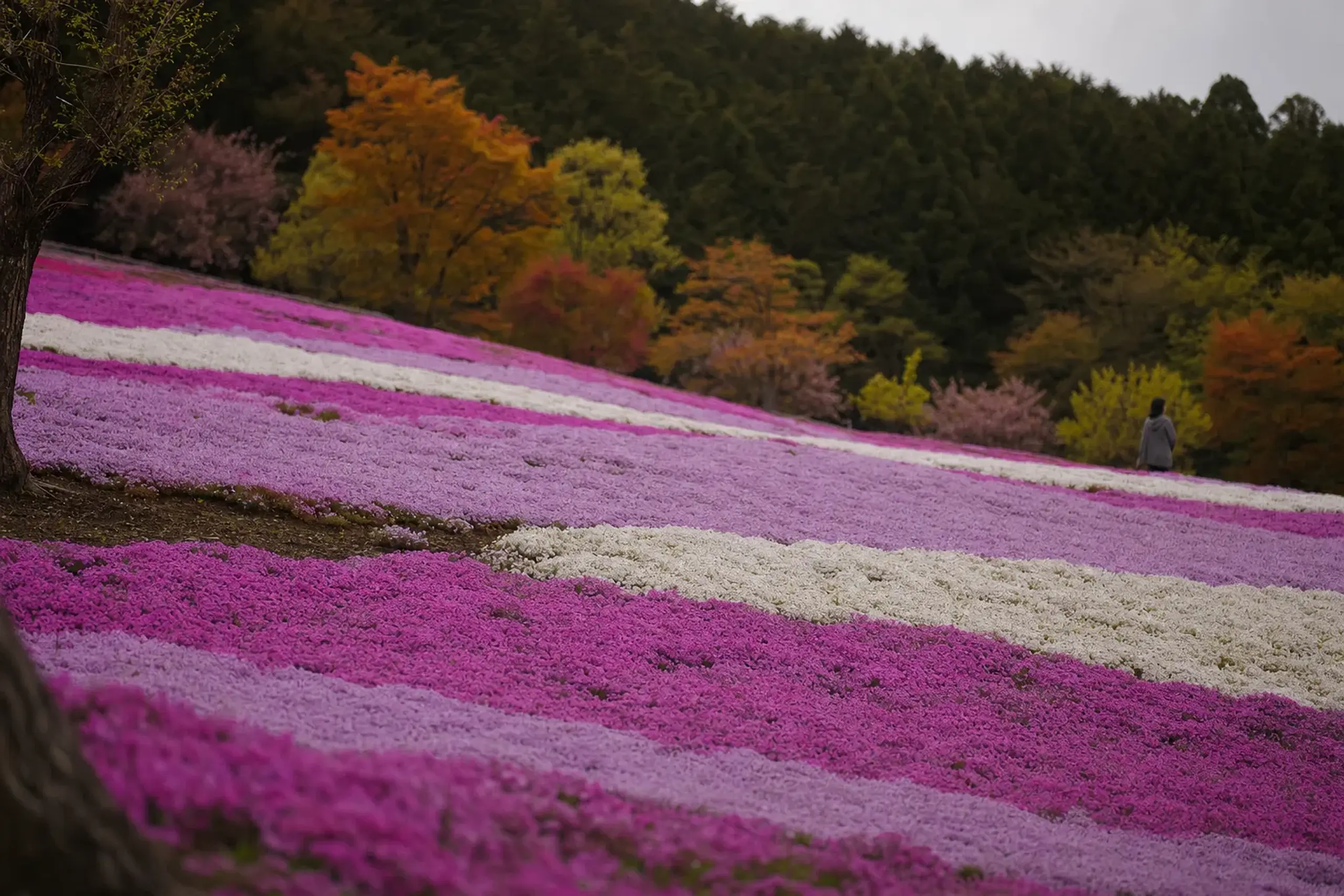
Hitsujiyama is different because shibazakura is a flower you walk beside, not a canopy you look up into. The hill is planted in a patchwork of designs across roughly 400,000 plants of nine varieties, so no two steps reveal quite the same composition.
Up close, shibazakura (moss phlox) sits low to the ground. It forms a living carpet that changes every few paces, because the planting is laid out in deliberate blocks of color rather than a single open field.
That design is precisely why photographs from Hitsujiyama feel “graphic.” Clear shapes. Hard edges. A hillside that reads like woven textile.
And the setting carries the moment. Mt. Bukō—often described as the very symbol of Chichibu—rises behind the slope in many of the classic viewpoints, lending the scene a composure that no arrangement of flowers alone could provide.
What You Will Actually See On The Hill
You will see bands and islands of pink, white, and purple laid out along a gentle incline, each block meeting the next with the clean confidence of a design that was planned, not left to chance.
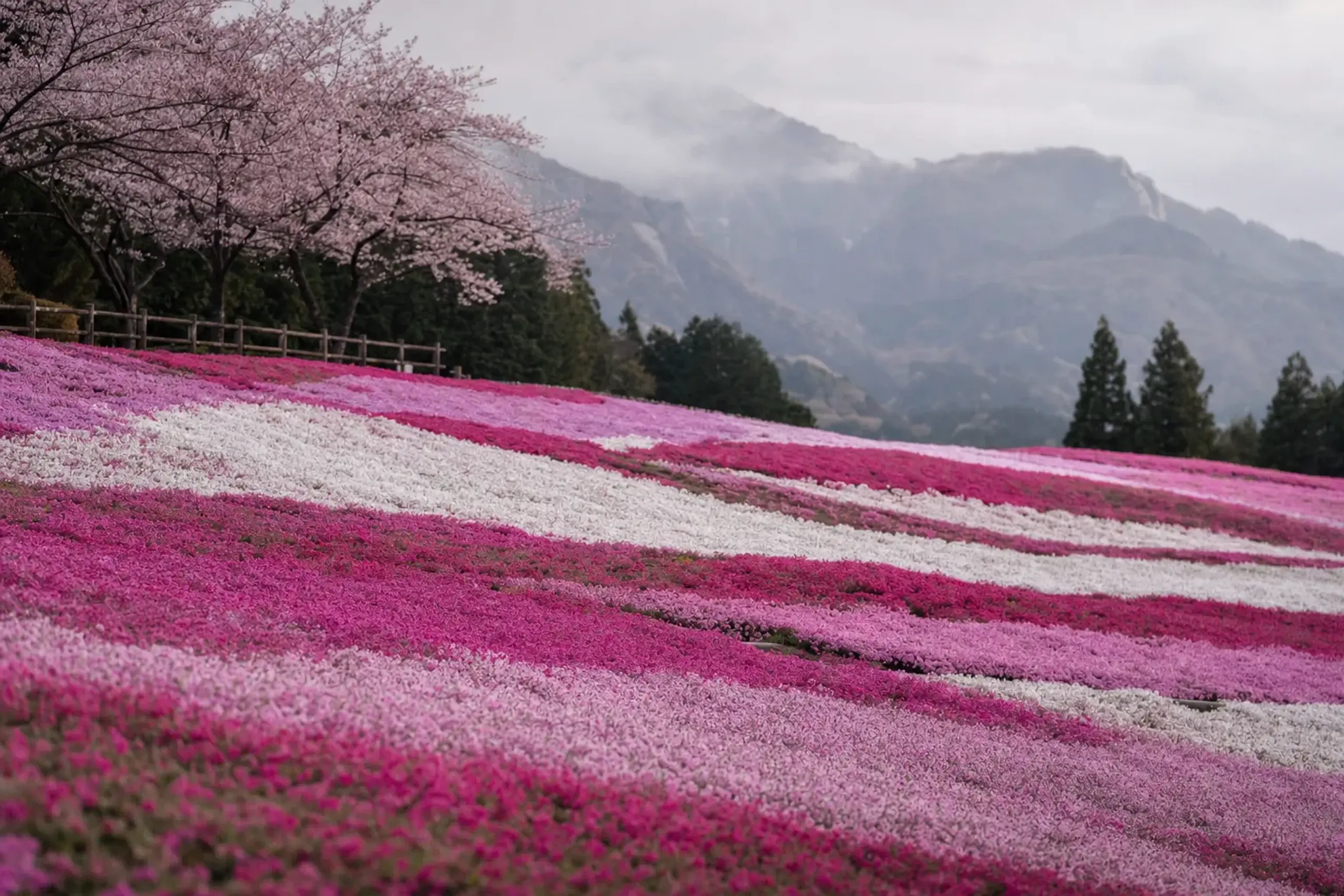
Paths let you slow down and look across the plantings without stepping into them. That restraint is the point. This is not a hike. It is a close-range walk defined by constant, small shifts in angle—a quiet exercise in attention.
You may also notice the “sheep” side of the park’s name. A small municipal “Fureai ranch” keeps sheep near the shibazakura area, as noted by local tourism sources—an unassuming detail that gives the place its character.
When Do Hitsujiyama Shibazakura Blooms Usually Peak In Chichibu?
Hitsujiyama shibazakura usually blooms from mid-April into early May, with many visitors aiming for late April to early May—often near Golden Week—when the crowds also rise.
The key is to think in stages, not in a single “best day.” Early in the season, parts of the hill may still be filling in. Later, some sections can begin to fade even while others still photograph beautifully. Reading the hill correctly—knowing what to experience, where, and in which exact week—is exactly the kind of seasonal judgment that separates a good visit from an unforgettable one.
For one concrete illustration only: the 2026 festival period was listed as April 3 to May 6, and published guidance often places peak bloom around Golden Week. This is not a promise. It is a reference point.
In our experience, the calmest plans stay flexible. Our concierge team monitors the official Chichibu City bloom-status updates ahead of your visit and adjusts the timing quietly on your behalf, so the decision never becomes a burden you carry.
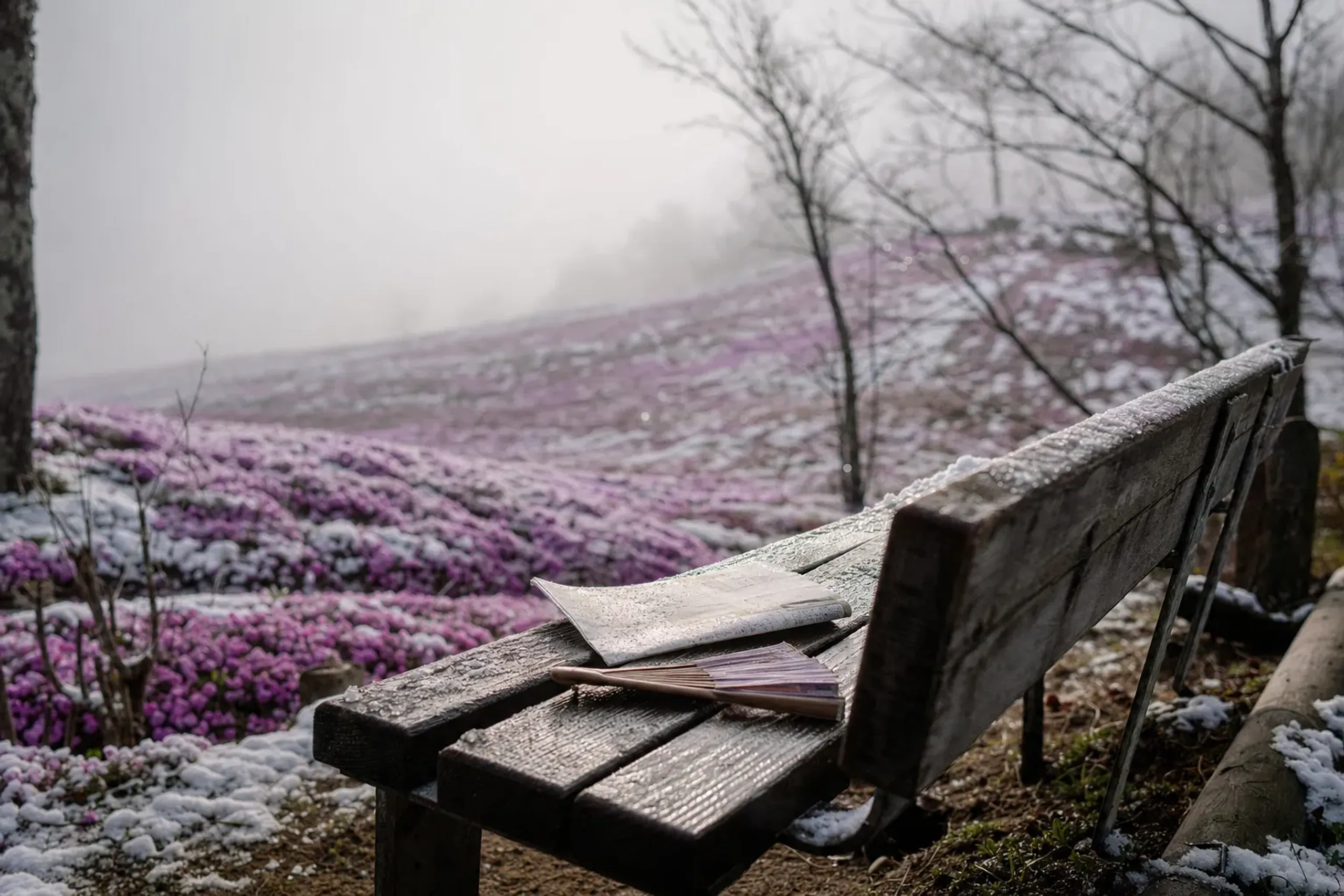
Key fact: Early in the festival window, the hill can be only partly in bloom, and by early May some years show fading—so plan for the “best hour” more than the “best week.”
A Simple Way To Read The Season
Look for three signals: how filled-in the color appears in official photo updates, whether rain or strong wind has struck recently, and whether you can arrive early on a weekday.
Miss one signal and it’s fine. Miss all three and the visit becomes a crowd-management exercise rather than a moment of quiet.
What Time Of Day Is Quietest At Hitsujiyama Shibazakura Hill?
The quietest time is typically right after opening—around 08:00 to 09:00—especially on weekdays, before tour buses and late-morning arrivals compress the paths.
That first hour feels like a different place entirely. Footsteps on gravel. The hill still cool from the night. You can pause for a photograph without a stranger’s shoulder entering your frame. It is the closest this public park comes to feeling like it is yours alone.
Golden Week is the opposite. The hill is still worth seeing, but you should expect slow movement, longer waits around the most obvious viewpoints, and road traffic that can reshape the entire day.
When we plan a day trip from Tokyo, we don’t “race” Chichibu. We simply give the morning the respect it quietly asks for.
A Micro-Timing Blueprint For A Calm Visit
- 07:45–08:15: Arrive near the park area and walk in while the light is still soft.
- 08:15–09:15: Do your main loop first. Photos first. Coffee later.
- 09:15–10:30: Make a second pass for details—close-ups, patterns, and slower viewing.
A small decision, a large difference.
Show up early. Leave before the wave.
How Do You Get To Hitsujiyama Park Shibazakura From Tokyo?
From Tokyo, you can reach Hitsujiyama by rail via Seibu-Chichibu Station or Mikahanata Station, then walk about 15–20 minutes uphill; by car, it’s roughly 25 km from Hanazono IC via Route 140.
Rail works well when you want predictable arrival timing. Road works well when you want door-to-door comfort and you are planning around traffic controls and limited parking.
For rail, one commonly cited benchmark is the Seibu Limited Express from Ikebukuro to Seibu-Chichibu in about 80 minutes, without a change. Timetables shift, so always check current schedules.
For driving, one published reference gives roughly 40 minutes in normal conditions from Hanazono IC (Kan-Etsu Expressway) via Route 140. During the festival, “normal conditions” is the fragile part of that equation.
Rail Approach: Seibu-Chichibu Station Or Mikahanata Station
From Seibu-Chichibu Station, the walk is usually described as about 15–20 minutes. Mikahanata Station (Chichibu Railway) is also used, with a similar walking time often cited.
The last stretch trends uphill. Nothing dramatic. Still: wear comfortable shoes, not slick soles.
One more detail that matters for planning: Seibu Railway has published seasonal measures during the spring Chichibu travel period (for example, in 2026 it announced an extended operation of one limited express train from April 4 to May 6).
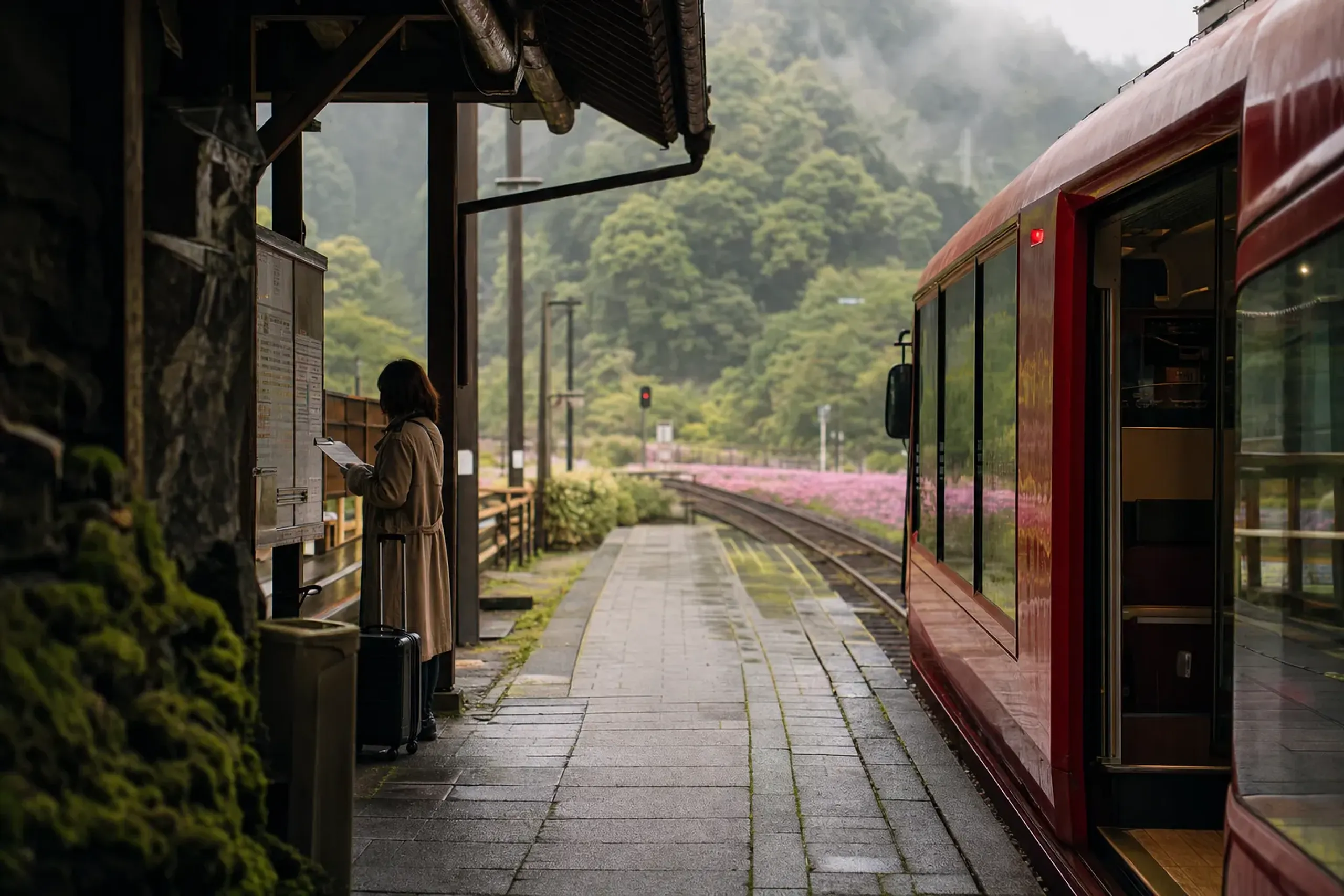
Operational details can shift, so our concierge team verifies the current service pattern ahead of travel—one of the many small checks that happen out of sight.
Car Approach: Comfort, Timing, And A Plan For Drop-Off
A private vehicle makes the morning gentler. Silence when you want it. A warm seat waiting the moment you step back out.
But Hitsujiyama is a public park, and festival traffic can be strict. The intelligent plan is not “drive closer.” It is choosing an arrival window and building your route around drop-off points, walking time, and the day’s traffic controls.
The first mention matters: for readers weighing comfort and pacing, see our guide to private transportation for Tokyo-to-Chichibu day trips and multi-stop days.
What Are Crowds Like At Hitsujiyama Shibazakura During Golden Week?
During Golden Week, Hitsujiyama shibazakura is commonly at its busiest, with heavier foot traffic on the paths and significantly slower car access due to concentrated arrivals.
Expect the hill to feel “tight.” The most photographed points can clog, especially from late morning onward.
If Golden Week is your only window, we recommend shifting the lever you still control: weekday versus weekend, and early morning versus late morning.
It can still be a beautiful visit. Just not a solitary one—and we will tell you so plainly rather than let you discover it on the day.
How We Set Expectations For A High-Comfort Day
We talk plainly about trade-offs, because discretion includes honesty.
If you want the hill at its most full, you may have to share it. If you want space, you may accept that one section is still filling in.
That is the honest rhythm of this site, and understanding it in advance is half the pleasure of a well-planned day.
For travelers building a wider spring calendar, you might also enjoy our guide to nanohana (rapeseed) season in Japan for another striking color-field experience.
Is There Parking At Hitsujiyama Shibazakura, And How Does Traffic Control Work?
During the festival period, Hitsujiyama Park typically offers about 300 parking spaces, and once they fill, drivers may be directed to temporary lots where shuttle buses sometimes operate under traffic controls.
This is where many day trips quietly unravel—not because the distance is hard, but because the wait becomes unknowable.
Official and local guidance warns that traffic concentrates during flower season, and parking waits can grow very long. Believe that warning. It is written for a reason.
For one season’s illustration only: in 2026, temporary parking was described in local materials as including areas behind Michi-no-Eki Chichibu and at Chichibu Muse Park, with shuttle buses mentioned. Locations and operations can change each year, so our concierge team verifies the current setup on your behalf ahead of the visit.
Key fact: Do not plan on “finding parking near the hill” at peak times; plan instead on timed arrival, possible redirection to temporary lots, and extra buffer.
Practical On-The-Ground Tips That Reduce Friction
- Arrive early: Parking and drop-off work best before the late-morning wave.
- Carry water: The walk is gentle, but the sun on the slope can be sharp.
- Keep your route simple: One hill, one loop, one exit plan beats improvisation.
- Respect site rules: Smoking is banned across the hill area.
A Step-By-Step “Calm Morning” Plan For Hitsujiyama Shibazakura
A calm visit is built by stacking small choices: early arrival, a simple walking loop, and a clean exit before the midday crowds tighten the paths.
Here is a planning template our team at Japan Royal Service often uses as a starting point for discerning travelers who want the experience without the strain.
Step 1: Choose A Weekday First, Then Choose A Date
Weekdays are your best friend here. Full stop.
Once you commit to a weekday, you can watch the bloom-status updates and decide when the hill looks “complete enough” for your taste.
Step 2: Aim For Opening Time
During the main festival period, hours are commonly listed as about 08:00–17:00. That opening hour is the window that changes everything.
Soft light helps, too. You get color without glare.
Step 3: Walk The Hill Once For Patterns, Once For Details
On the first loop, shoot wide. Step back. Let the patchwork read as patchwork.
On the second loop, go close. A few blossoms at ankle height can prove more memorable than the “big view.” There is a quiet beauty in the restraint of a single flower, framed carefully, that the sweeping panorama can never quite match.
Step 4: Finish Cleanly—Rail Or Road, But No Guessing
If you are returning to Tokyo, plan a fixed departure time. Don’t drift.
Many travelers like to close the day with a soak at Seibu-Chichibu Ekimae Onsen Matsuri no Yu, attached to Seibu-Chichibu Station.
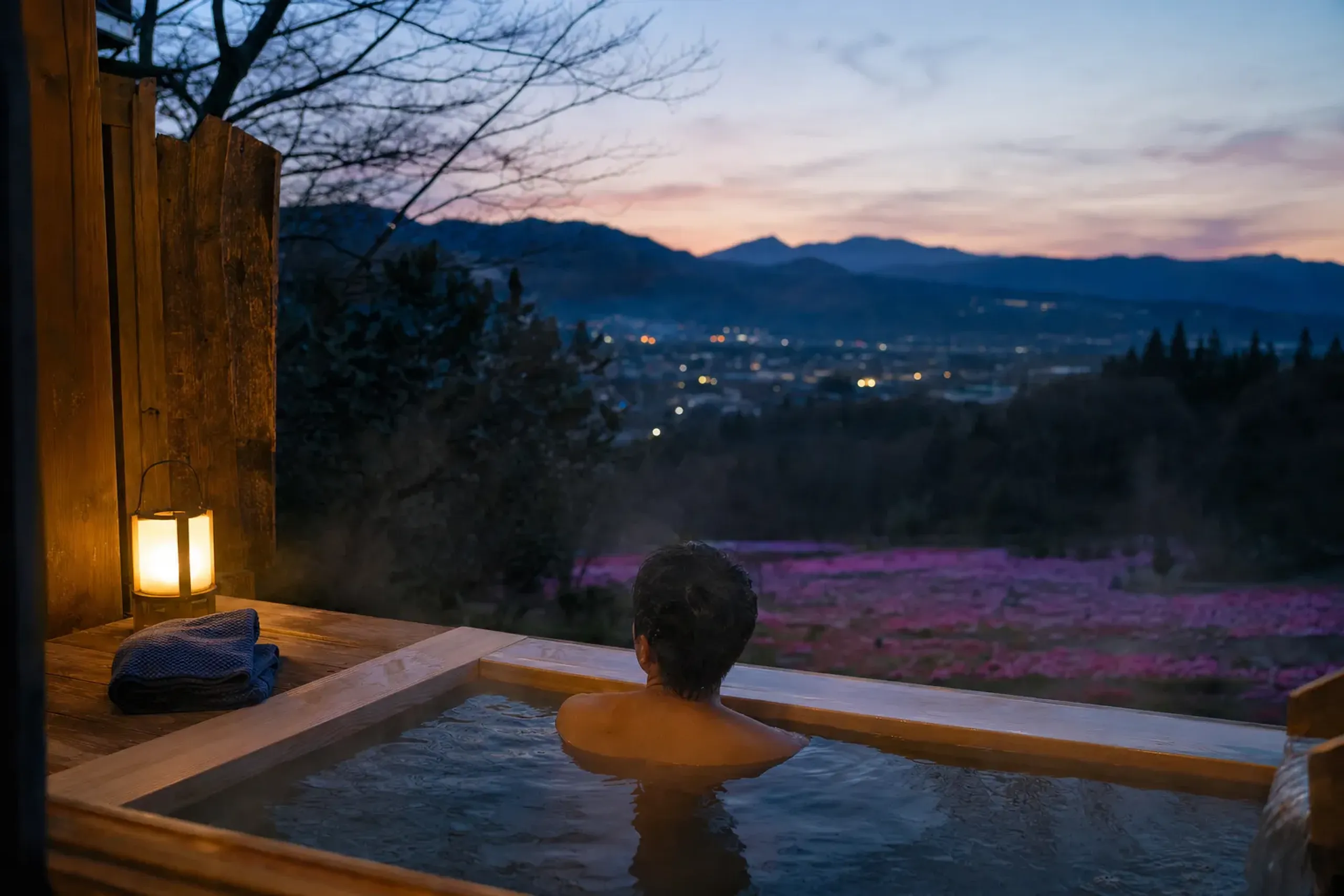
It is a simple, grounding pleasure after a morning of walking and standing for photographs.
What Japan Royal Service Can Coordinate For A Hitsujiyama Shibazakura Day Trip
Japan Royal Service can coordinate a private transfer plan, a cultural interpreter guide, and a micro-timed itinerary built around official bloom updates and the reality of festival traffic.
We keep the scope honest. Hitsujiyama is a public park and a public festival, so we never dress it up as private access. The value lies in the planning, the pacing, and the discretion with which it is all handled—your dates, your identity, and your preferences kept entirely confidential.
For transfers, our plan is built around early arrival and a practical drop-off strategy, because parking is limited and traffic controls may apply at peak times. Comfort stays high. Stress stays low.
For those who want the day to feel genuinely their own, we also design a tailor-made itinerary that fits your pace, your walking tolerance, and the kind of images you want to carry home.
What We Verify Privately Before Your Visit
- Current festival dates and whether paid admission is in effect
- Opening hours and entry arrangements for that specific day
- Parking operations, temporary lot locations, shuttle operation, and any traffic controls
- Bloom progress, using the official city bloom-status updates
This is the quiet work that makes the visible part feel effortless.
A One-Line Cross-Reference If You Love Shibazakura
If you are comparing other moss phlox landscapes, see our single deep-dive on Fuji Shibazakura Festival in Yamanashi—a different scale, a different crowd profile, and a different kind of backdrop.
Frequently Asked Questions
When Is The Best Time To See Hitsujiyama Shibazakura In Chichibu?
The usual bloom window is mid-April into early May, with many visitors targeting late April to early May while watching official bloom updates for real-time conditions.
Because bloom speed shifts with the weather, we recommend choosing a weekday first, then selecting a date based on the most recent official photo updates from Chichibu City.
What Time Should I Arrive To Avoid Crowds At Hitsujiyama Park?
Arrive around 08:00–09:00 on a weekday for the calmest paths and the best chance at unobstructed photographs.
Late morning is when the hill compresses, especially during Golden Week. If you can’t avoid peak dates, keep the early arrival regardless.
Can I Do Hitsujiyama Shibazakura As A Tokyo Day Trip By Train?
Yes—many visitors go by rail to Seibu-Chichibu Station or Mikahanata Station, then walk about 15–20 minutes uphill to the park.
One commonly cited benchmark is about 80 minutes on a Seibu Limited Express from Ikebukuro to Seibu-Chichibu, but you should check current timetables and seat availability.
Let Us Plan Your Quiet Morning On The Hill
The difference between a crowded afternoon and a serene, almost private morning at Hitsujiyama comes down to judgment—reading the bloom, timing the arrival, and removing every point of friction before you ever set out.
When you are ready to let someone else carry that quiet, meticulous work, contact us here for a tailored proposal built around your dates, your pace, and your preference for calm over crowds.