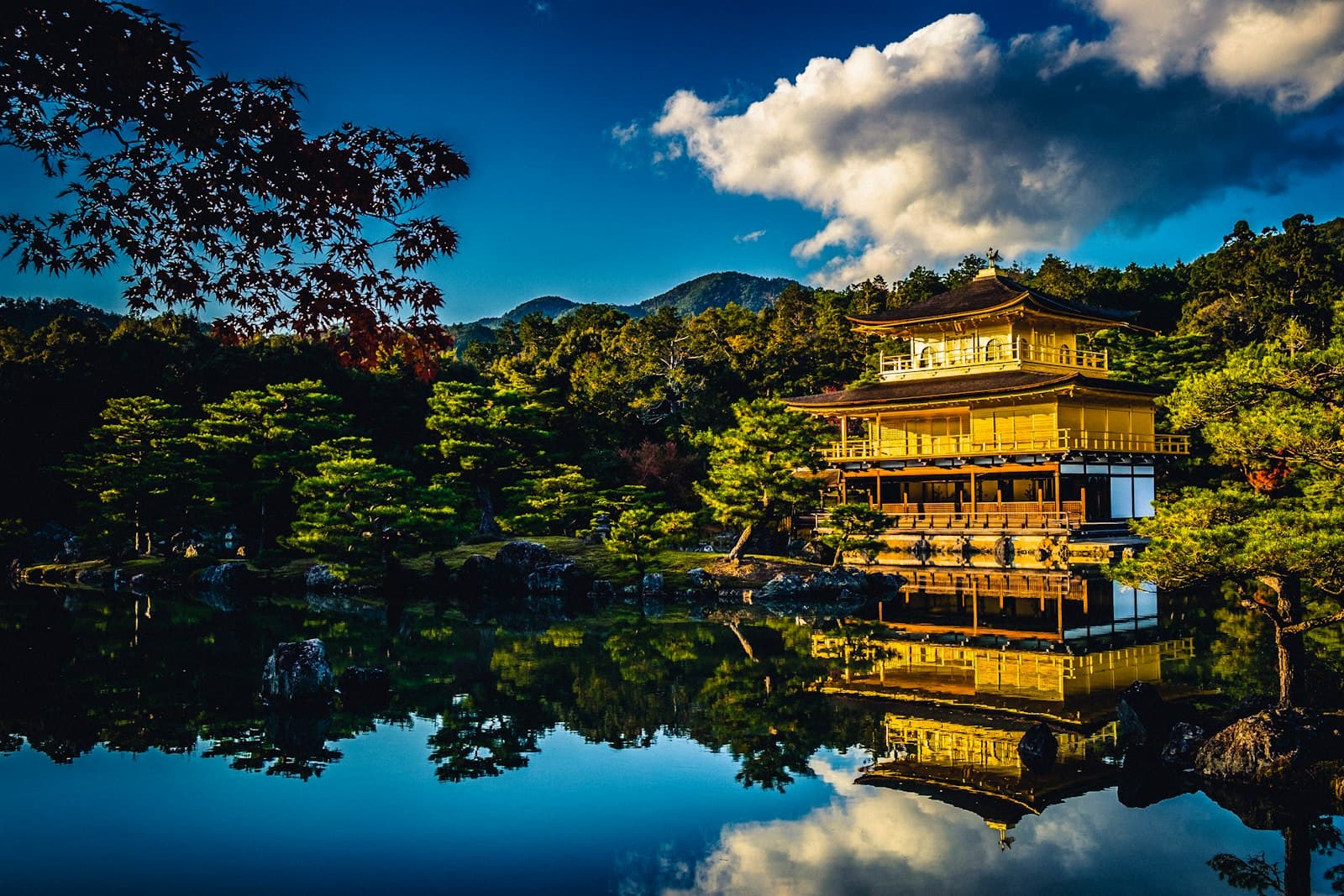
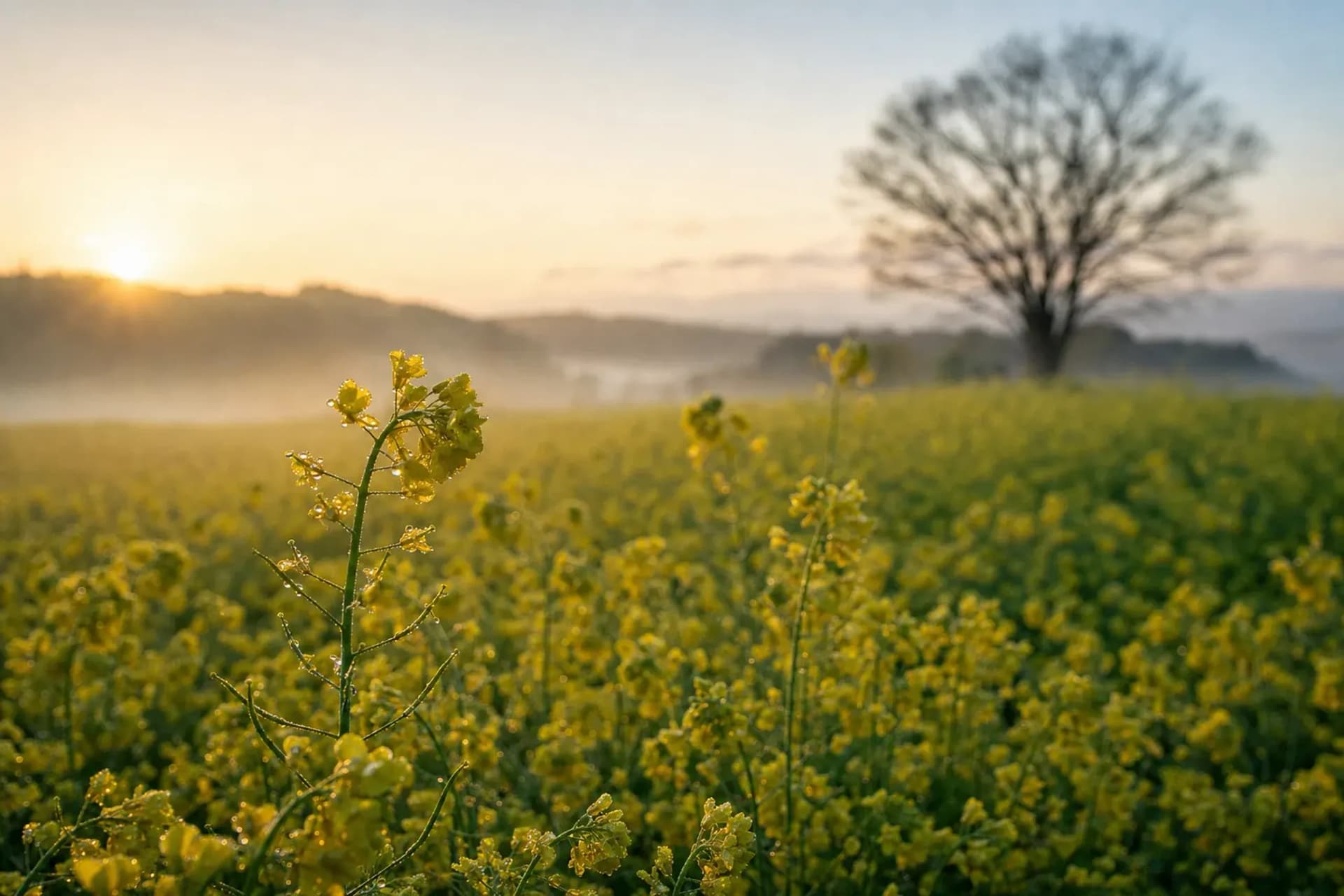
Most travelers assume the Japanese spring begins in late March. Big mistake. Six weeks earlier, a completely different floral front is already moving north across the archipelago. Yellow rapeseed fields—known as nanohana—open in southern Kyushu while Tokyo is still freezing.
Our team at Japan Royal Service frequently plans early spring itineraries around this resilient, bright bloom. The sakura season commands international attention, bringing immense crowds and a frenzied atmosphere. Nanohana offers a completely different rhythm. It is a quieter, calmer season to build a journey around.
Understanding this secondary bloom front adds real weeks to the usable spring calendar. A traveler with flexible dates can chase the yellow fields from south to north, starting in the deep winter and finishing in early summer. Below, our concierge team explains how to navigate this extended season and where to find the absolute best rural landscapes.
What Is Nanohana And Why Does It Bloom Before Sakura?
Nanohana is the Japanese rapeseed blossom. It blooms six to eight weeks earlier than cherry blossoms because the hardy plant requires far less sustained warmth to open.
This timing creates a massive geographical advantage for travelers. While the rest of the country waits for the late-March cherry blossom forecasts, coastal farming communities are already celebrating the arrival of spring. Nanohana embodies a humbler aesthetic. It is a working agricultural crop, lacking the performative flash of ornamental gardens.
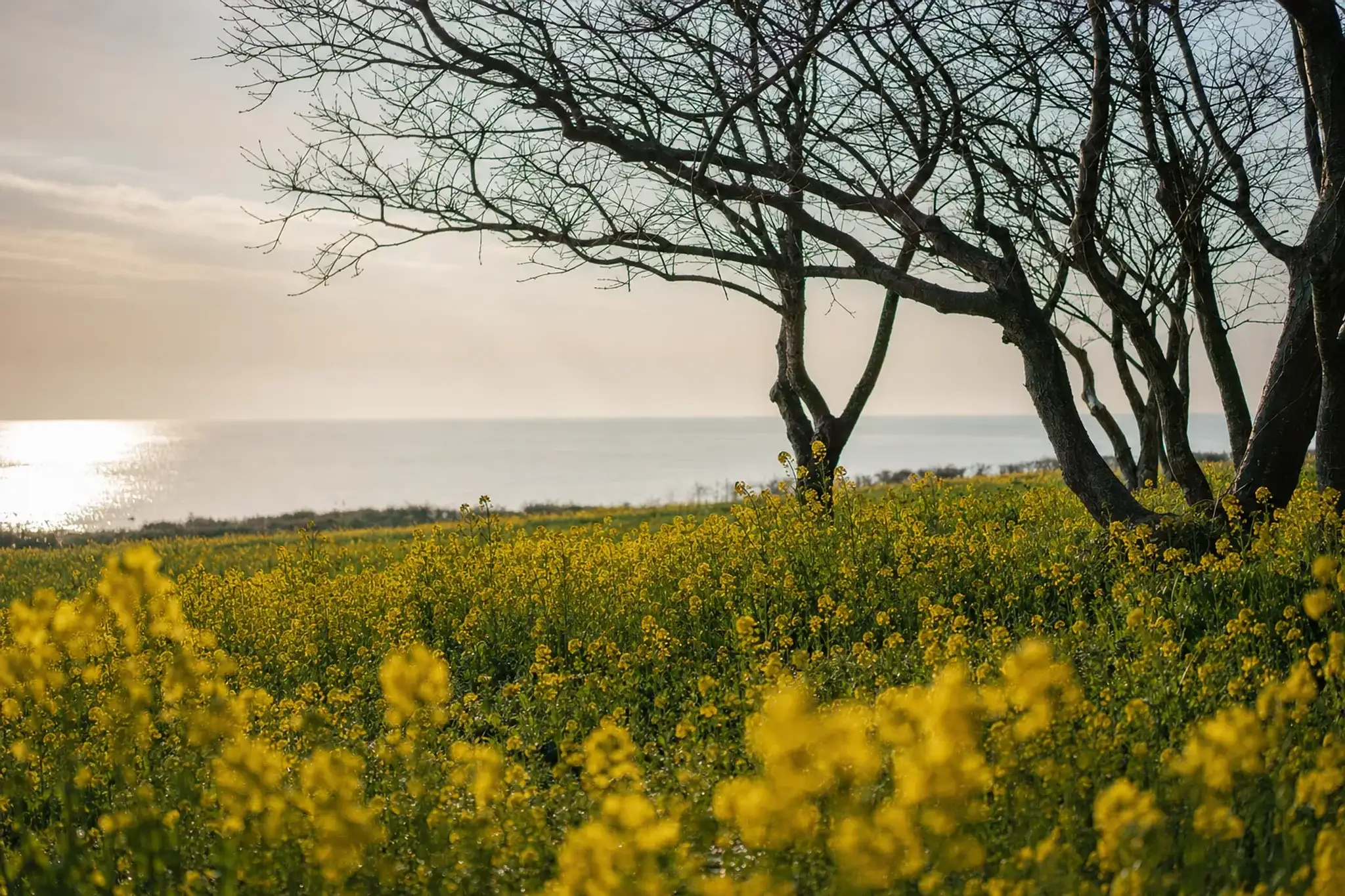
This is the essence of wabi-sabi—finding deep aesthetic refinement in ordinary, quiet utility.
It is also deeply tied to local food culture. Nanohana is not just scenery; it is a seasonal ingredient. Local farmers and culinary shokunin harvest the early stems. They preserve them using generations-old pickling techniques, creating a bitter, complex flavor profile that defines the taste of early spring. You will frequently find these edible greens served in regional kaiseki courses long before the flowers themselves reach full bloom.
Modern communities have also embraced the plant for its environmental utility. The Tahara Nanohana Eco Project in Aichi Prefecture presses the seeds into local cooking oil, later recycling the used oil into biodiesel. It is a circular, sustainable approach to local agriculture that grounds the scenic beauty in real-world purpose.
Where Can You See Nanohana In Japan?
You can track nanohana from the volcanic coasts of southern Kyushu in January all the way to the highlands of Hokkaido and Tohoku in late May.
Because the plant follows a south-to-north trajectory identical to the cherry blossom front, understanding its geography is crucial. Regional timing shifts dramatically based on latitude and elevation.
| Region | Typical Nanohana Peak | Typical Sakura Peak |
|---|---|---|
| Southern Kyushu (Kagoshima) | January to February | Late March |
| Kanto Coast (Chiba) | Mid-February to March | Late March to Early April |
| Central Alps (Nagano) | Late April to Early May | Mid-April |
| Northern Japan (Hokkaido) | Mid to Late May | Early to Mid-May |
In southern Kyushu, the Kaimon Sanroku Nature Park in Ibusuki offers one of the earliest viewing windows.
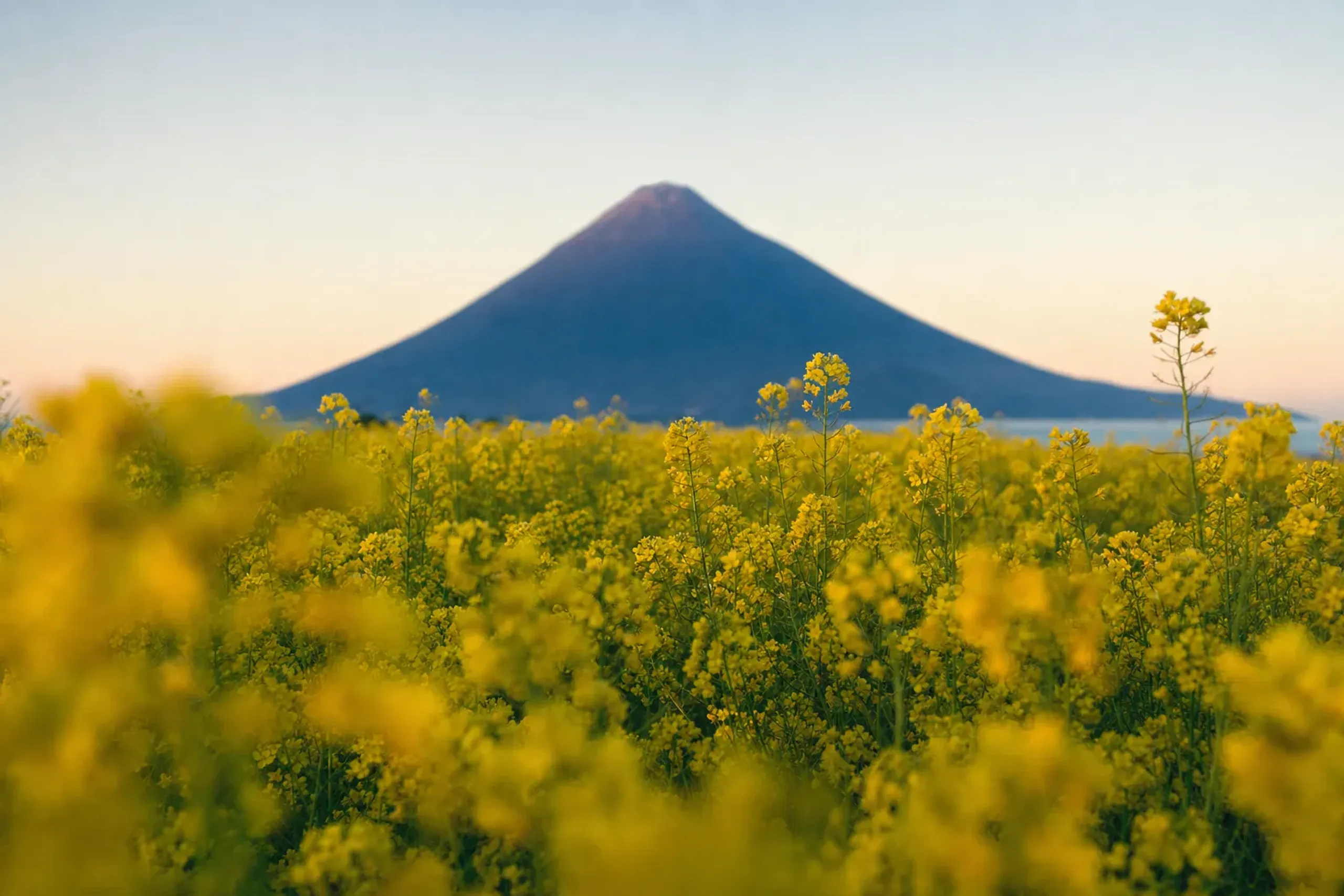
Bright yellow fields sit directly against the striking volcanic cone of Mount Kaimondake. The visual contrast is sharp and dramatic. By March, the front reaches the mid-latitudes around Tokyo, specifically favoring the warmer coastal climates.
By late April, the flowers finally arrive in the colder mountainous regions and northern prefectures. Yokohama Town in Aomori Prefecture holds the record for the largest continuous rapeseed field in the country. The scale is staggering. Meanwhile, Hokkaido’s Takikawa region celebrates its own massive bloom well into late May, officially closing out the season.
How To Experience The Nanohana And Sakura Overlap
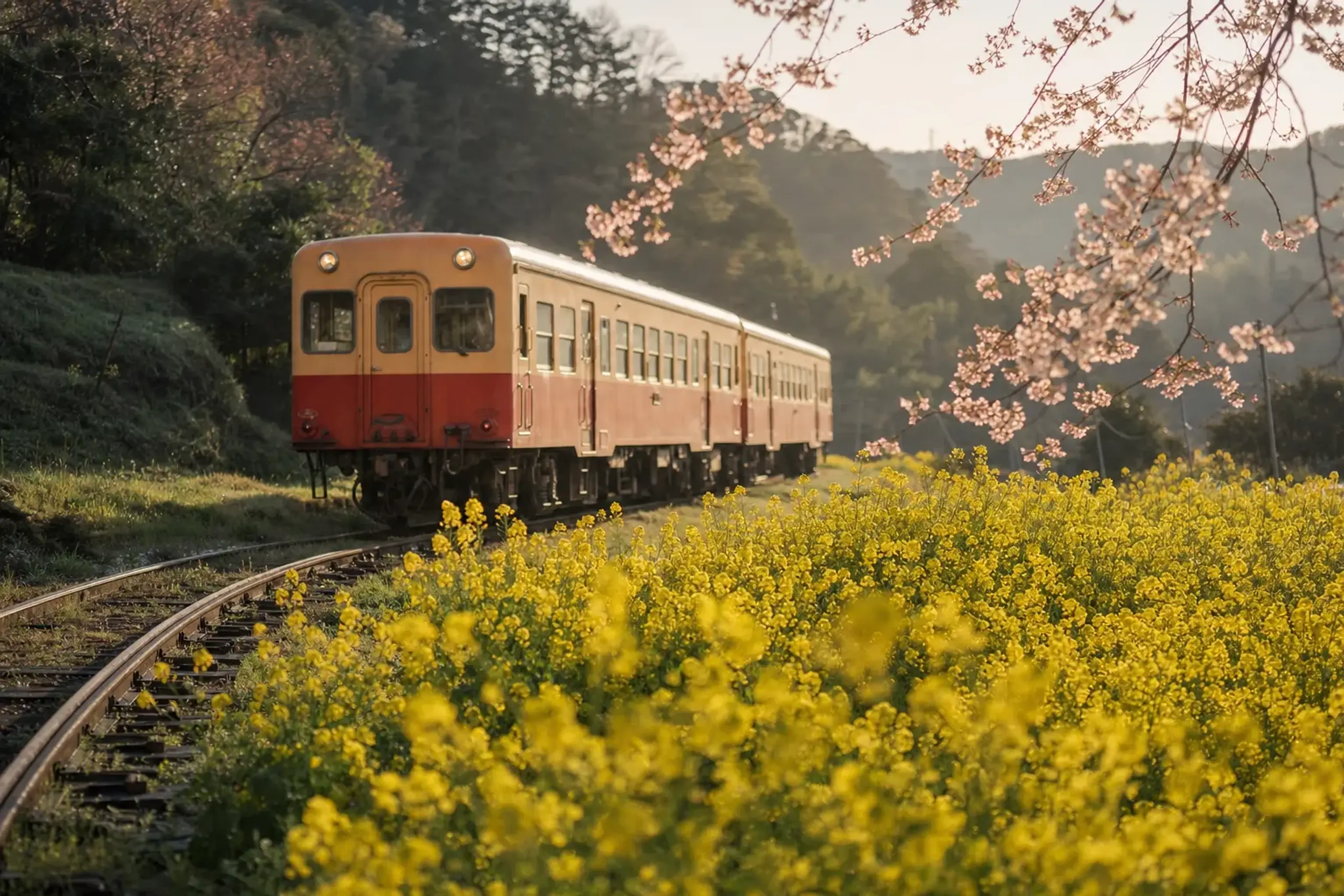
At mid-latitudes, the late nanohana bloom frequently overlaps with the early cherry blossom season. This creates a highly sought-after, dual-color landscape. Moving away from the crowded tourist centers reveals a hidden Japan, where these two flowers frame quiet rural infrastructure.
Option A: The Boso Peninsula Railway (Chiba)
Chiba Prefecture’s Boso Peninsula is famous for its early spring climate. Here, the local Kominato and Isumi rail lines run directly through working agricultural fields. During the overlap window in late March, passengers can view pink sakura branches hanging over bright yellow rapeseed from the train window. It is a classic, nostalgic view of rural Japan.
For more details on this specific region's early timing, see our guide on 5 Months Before Spring: Bōsō Peninsula Nanohana.
Option B: Iiyama Nanohana Park (Nagano)
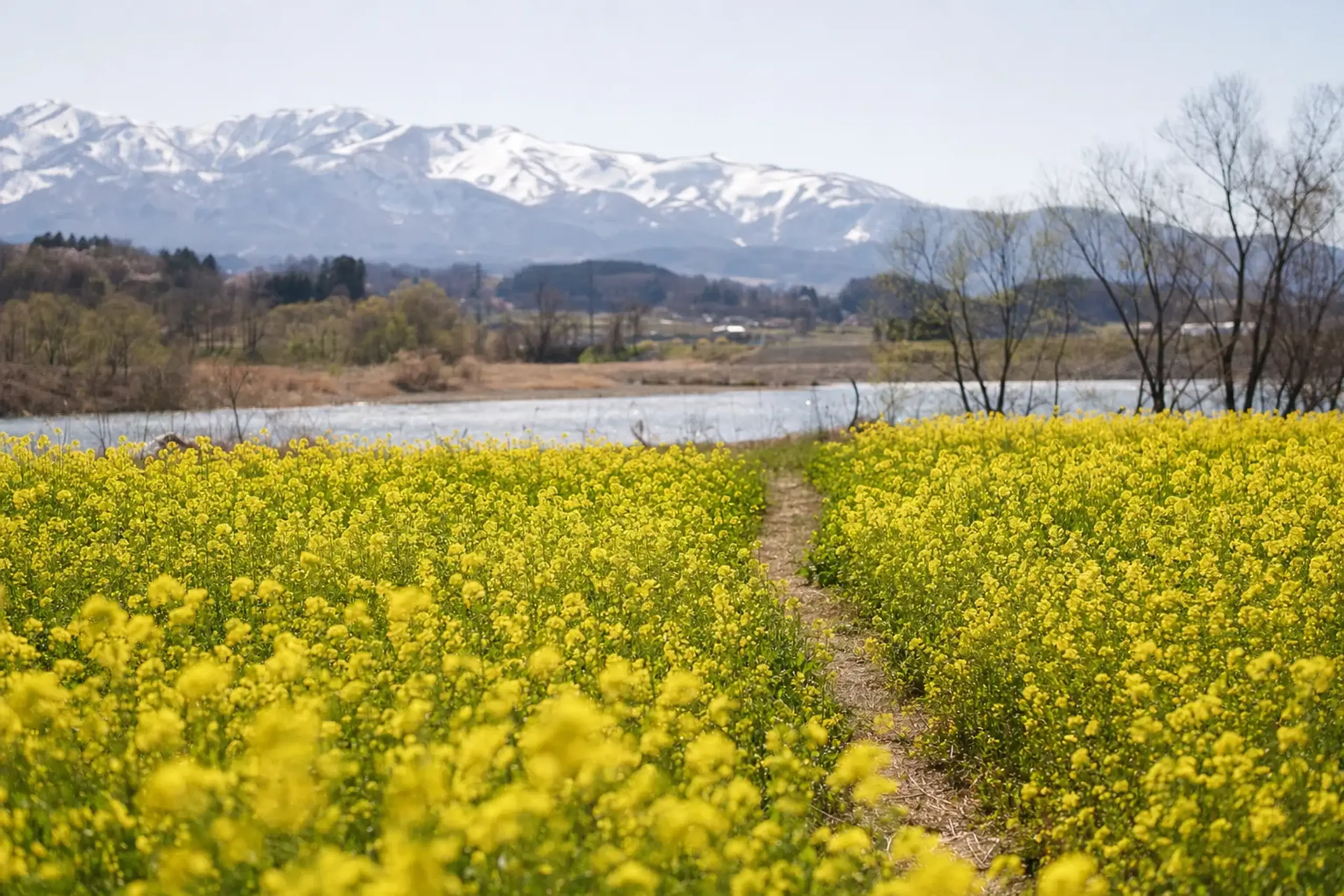
Located next to the Chikuma River, Iiyama Nanohana Park is an exceptional late-season destination. The park is carpeted in yellow blossoms just as the surrounding region transitions into full spring. The official Nanohana Flower Festival typically takes place here during Golden Week in early May. The Nozawa Nanohana variety grown in this specific park is heavily featured in local delicacies. While traveling through Nagano, visitors often pair this with historic temple viewings; you can read about nearby cultural sites in Unseen By Priests: Zenkō-ji in Spring (Gokaichō 2027).
Option C: Atsumi Peninsula (Aichi)
Aichi Prefecture serves as a brilliant transit detour between Tokyo and Kyoto. The Atsumi Peninsula Nanohana Festival dominates the local calendar, utilizing updated maps that route visitors to multiple viewing points across the coast. Securing private transportation allows guests to comfortably link these coastal flower fields with local strawberry farms and luxury ryokan stays, avoiding the logistical friction of public transit.
What Is The Proper Etiquette For Visiting Nanohana Fields?
Visitors must remain on marked paths and never step into the flower beds. These fields are working agricultural sites, not simply scenic backgrounds for photography.
Luxury travel requires respect for local industry.
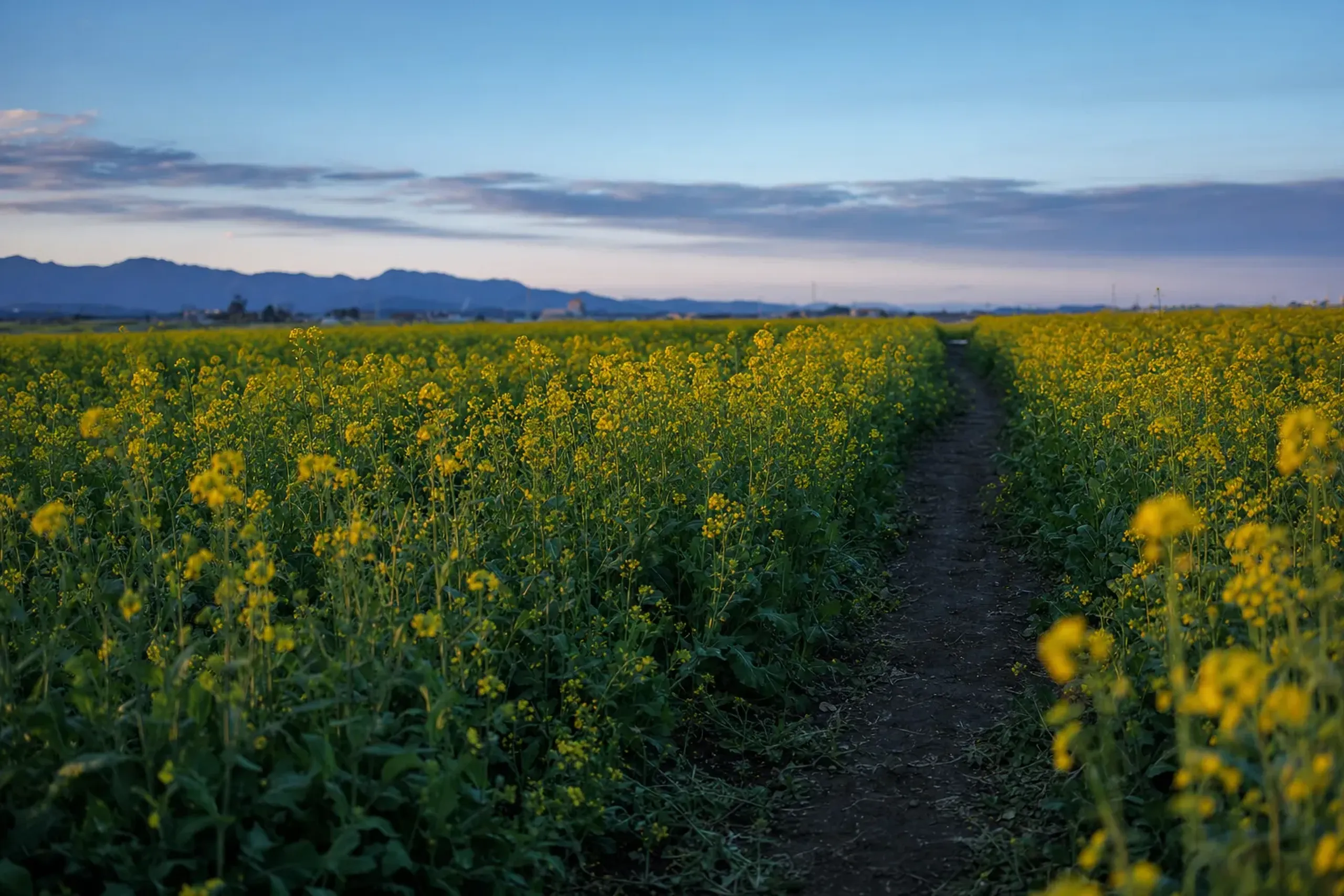
Crushing a plant destroys a farmer’s crop. Many regional authorities now publish strict operational guidance to manage heavy foot traffic. The Takikawa Nanohana Festival in Hokkaido explicitly recommends enjoying the vast fields from a car window to prevent agricultural damage.
Key fact: Agricultural biosecurity is taken seriously in rural Japan. Soilborne diseases can be transferred via footwear, which is why stepping past marked boundaries into a working field is strictly prohibited by local farmers.
Timing your visit correctly also dictates the experience. Arrive early. The best light for photography occurs just after sunrise, long before the midday tour buses arrive. Our team orchestrates these early morning arrivals to guarantee privacy and quiet contemplation.
Frequently Asked Questions
Can I eat nanohana during my visit?
Yes, nanohana is a traditional spring vegetable often served lightly boiled in dashi, dressed with sesame, or preserved as a regional pickle. It possesses a distinct, slightly bitter flavor that pairs perfectly with early spring kaiseki menus.
Does the nanohana bloom front overlap with cherry blossoms?
Yes, at mid-latitudes like Chiba and Saitama, the late nanohana bloom frequently overlaps with the early cherry blossom season around late March. This overlap creates a striking visual contrast of yellow and pink across the countryside.
How far in advance should I plan a nanohana trip?
You should begin planning six to eight months in advance, especially if you wish to secure luxury ryokan accommodations during regional flower festivals.
High-end properties in rural coastal areas possess very limited inventory during the early spring months.
Can nanohana be viewed at night?
Yes, certain botanical parks incorporate the flowers into evening illuminations. The sprawling Nabana no Sato in Mie Prefecture is famous for its extended winter-to-spring illumination season, providing a brilliant, weather-resilient evening viewing option.
Why Choose Japan Royal Service?
Chasing a seasonal front across rural Japan requires absolute logistical precision. Relying on rigid public transit schedules in agricultural regions often results in missed connections and compromised comfort. Our team at Japan Royal Service specializes in removing these friction points entirely.
We approach every tailor-made itinerary with discretion and an insistence on quality. When guests wish to view the dual bloom of sakura and nanohana in Chiba, or navigate the coastal roads of the Atsumi Peninsula, we deploy our in-house fleet of executive vehicles. Guests enjoy the scenery from the quiet comfort of a Lexus LM or Toyota Executive Alphard, entirely insulated from the crowds.
JRS arranges transport and timing around optimal nanohana viewing, quietly pairing it with exclusive culinary experiences and authentic ryokan stays. We operate strictly as an information and private coordination service, ensuring your journey reflects your exact preferences.
For private coordination, reach our team directly via WhatsApp or LINE, or contact us here.