In this guide
- 01The Myth Behind Izumo Taisha: Okuninushi And The Ceding Of The Land
- 02What Is Kamiarizuki, The Month With The Gods?
- 03What Happens During The Gathering Of Deities
- 04How Do You Pray At Izumo Taisha? Two Bows, Four Claps, One Bow
- 05Taisha-Zukuri And The Tradition Of A Much Taller Hall
- 06The White Rabbits And The Character Of Okuninushi
- 07Getting To Izumo Taisha: An Honest Word On Distance
- 08What A Respectful Visit Looks Like
- 09Frequently Asked Questions
- 10Why Choose Japan Royal Service
Most people arrive with one word in mind: marriage. Izumo Taisha is known across Japan as the great shrine of en-musubi, the binding of human bonds. That reputation is accurate, but it flattens something far stranger and more serious. To understand why couples travel here, you first have to understand what this shrine is believed to be — the one place, once a year, where every deity in Japan gathers to decide the shape of human relationships.
This is not folklore worn smooth into a tourist slogan. It is a living belief, still meaningful to the people praying quietly beside you. Our team at Japan Royal Service has arranged visits here for guests who wanted more than a photograph of the great straw rope. What follows is what the shrine actually is, and how to stand within it with the right measure of respect.
The Myth Behind Izumo Taisha: Okuninushi And The Ceding Of The Land
Izumo Taisha enshrines Okuninushi no Okami, the deity of en-musubi and, by tradition, the ruler of matters unseen. His story is one of the oldest in the country. He appears in the Kojiki and the Nihon Shoki, Japan's earliest written chronicles, both compiled in the early eighth century.
The founding myth is called kuniyuzuri — "the relinquishing of the land." In it, Okuninushi holds authority over the visible world. The sun goddess Amaterasu and her lineage lay claim to it.
Rather than war, Okuninushi cedes rule of the land. In exchange, he receives two things: a magnificent shrine built in his honor, and permanent dominion over the unseen realm — fate, the dead, and the binding of people to one another.
That bargain is the reason this specific shrine governs relationships nationally. Okuninushi did not simply retire. He was granted the invisible machinery of human connection. When Japanese couples come here to pray about marriage, they are addressing the deity who, in myth, was given charge of exactly that.
What Is Kamiarizuki, The Month With The Gods?
Kamiarizuki is the tenth lunar month, when all of Japan's Shinto deities are believed to leave their home shrines and travel to Izumo to decide the coming year's human relationships. Everywhere else, the same month is called Kannazuki — "the month without gods."
Sit with that for a moment. Across the whole of Japan, one month of the year is named for an absence. The gods are elsewhere. They are here, at Izumo, gathered in council. The rest of the country renames its calendar around this single event. Few religious traditions anywhere state their own geography of the sacred so plainly.
The gathering falls roughly across late autumn. Exact dates shift with the lunar calendar each year, so if your visit hinges on the gathering itself, our concierge confirms the precise window with you at the time of planning rather than leaving it to a generic listing.
What Happens During The Gathering Of Deities
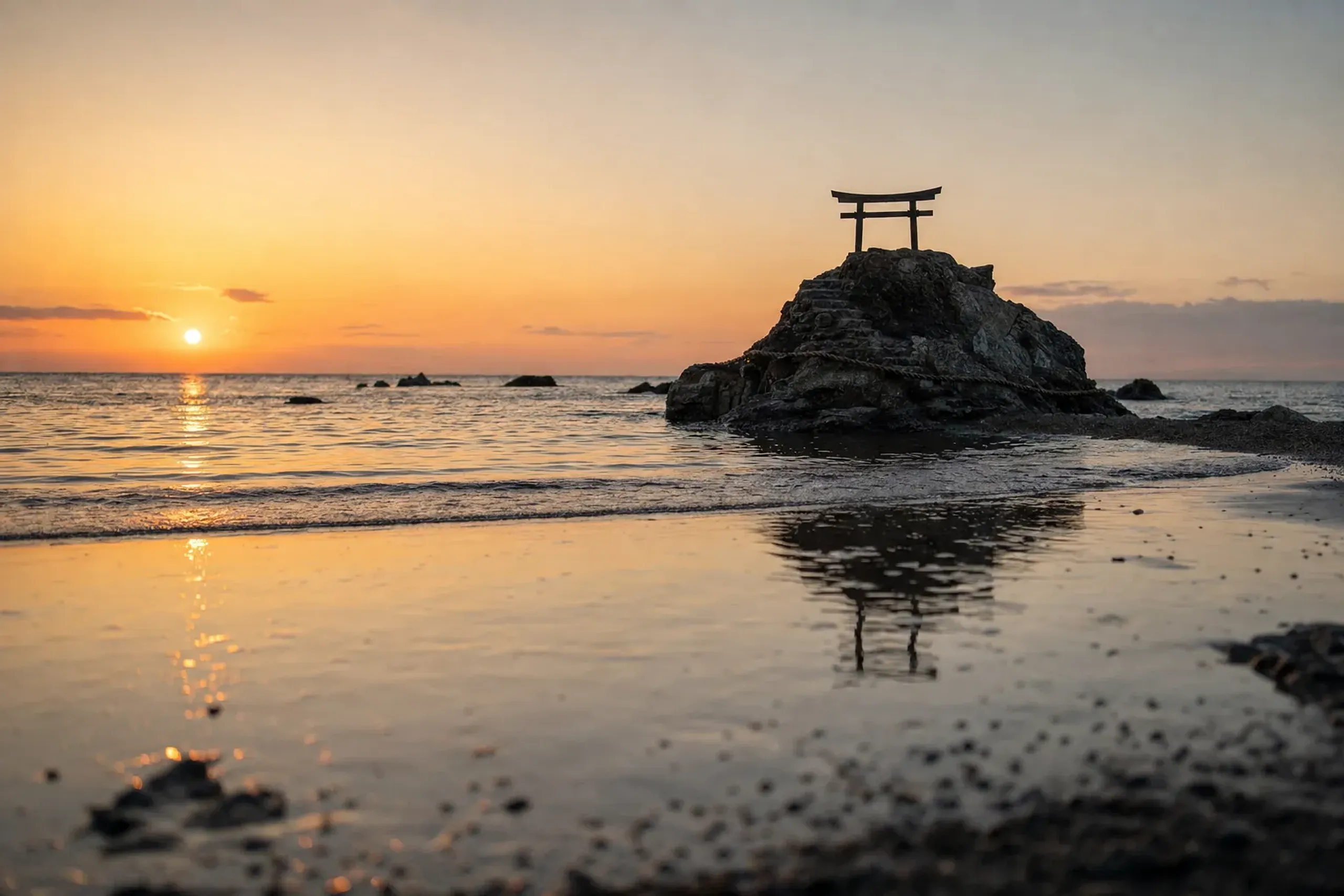
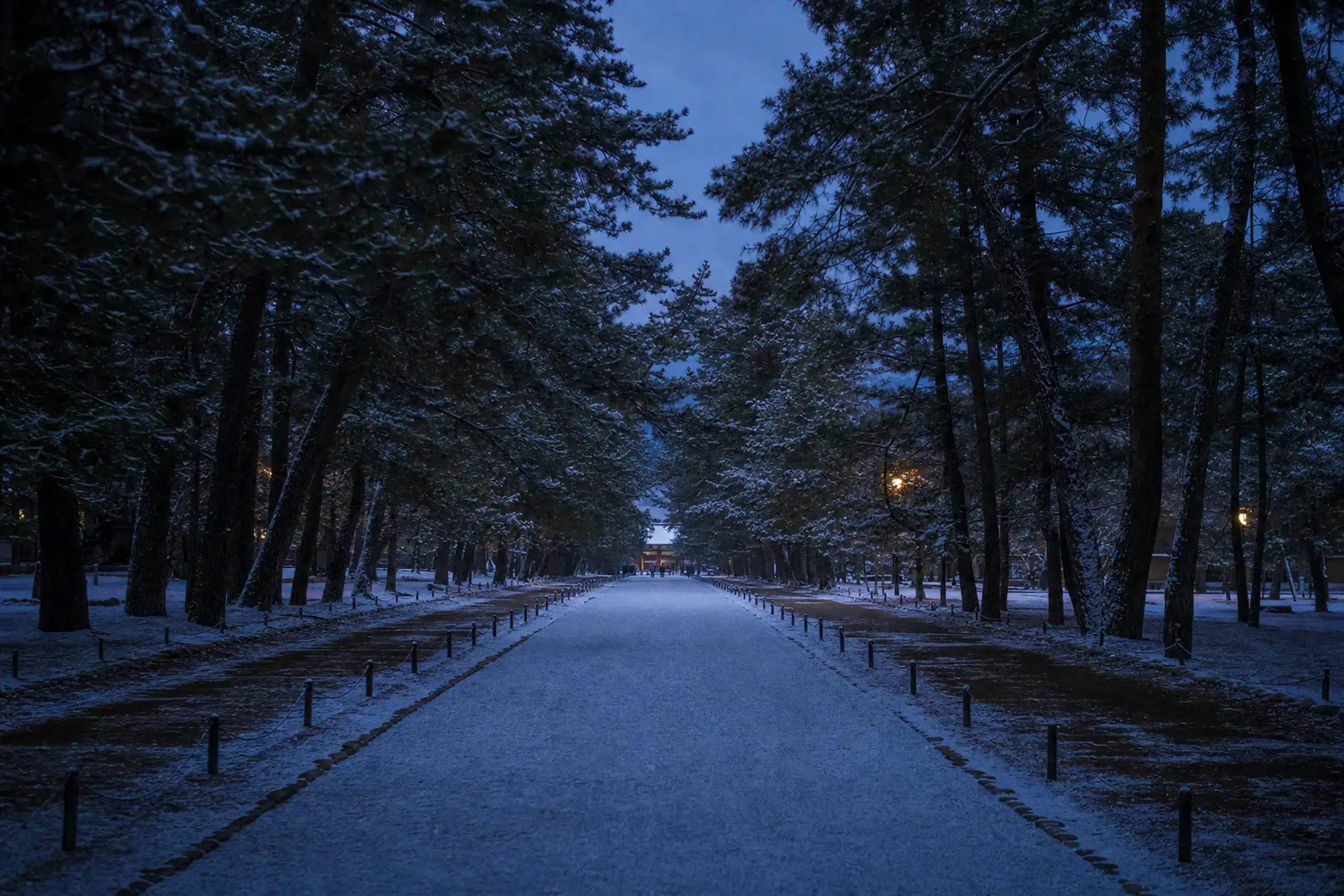
The deities are believed to arrive by sea. They are welcomed at Inasa Beach, a short distance west of the shrine, where a ritual receives them at the water's edge. From there they proceed inland along Matsu no Sando — "the pines' path" — toward the main sanctuary.
This is where visitors show their understanding most quietly. During the gathering, people keep to the outer edges of the pine path, leaving the center clear. The middle is left for the gods. It is a small act, but it tells you everything about the register of belief here. The path is shared. The center is not yours.
Once arrived, the visiting deities are housed in small subsidiary shrines set beside the main hall — modest structures, easy to miss, that serve as lodging for the assembled gods. If you visit during this period, those unassuming buildings are, in the belief of the shrine, fully occupied.
How Do You Pray At Izumo Taisha? Two Bows, Four Claps, One Bow
Key fact: At Izumo Taisha you bow twice, clap four times, then bow once. Nearly every other Shinto shrine in Japan uses two claps. This is the single thing most first-time visitors get wrong.
The standard worship at most shrines is two bows, two claps, one bow.
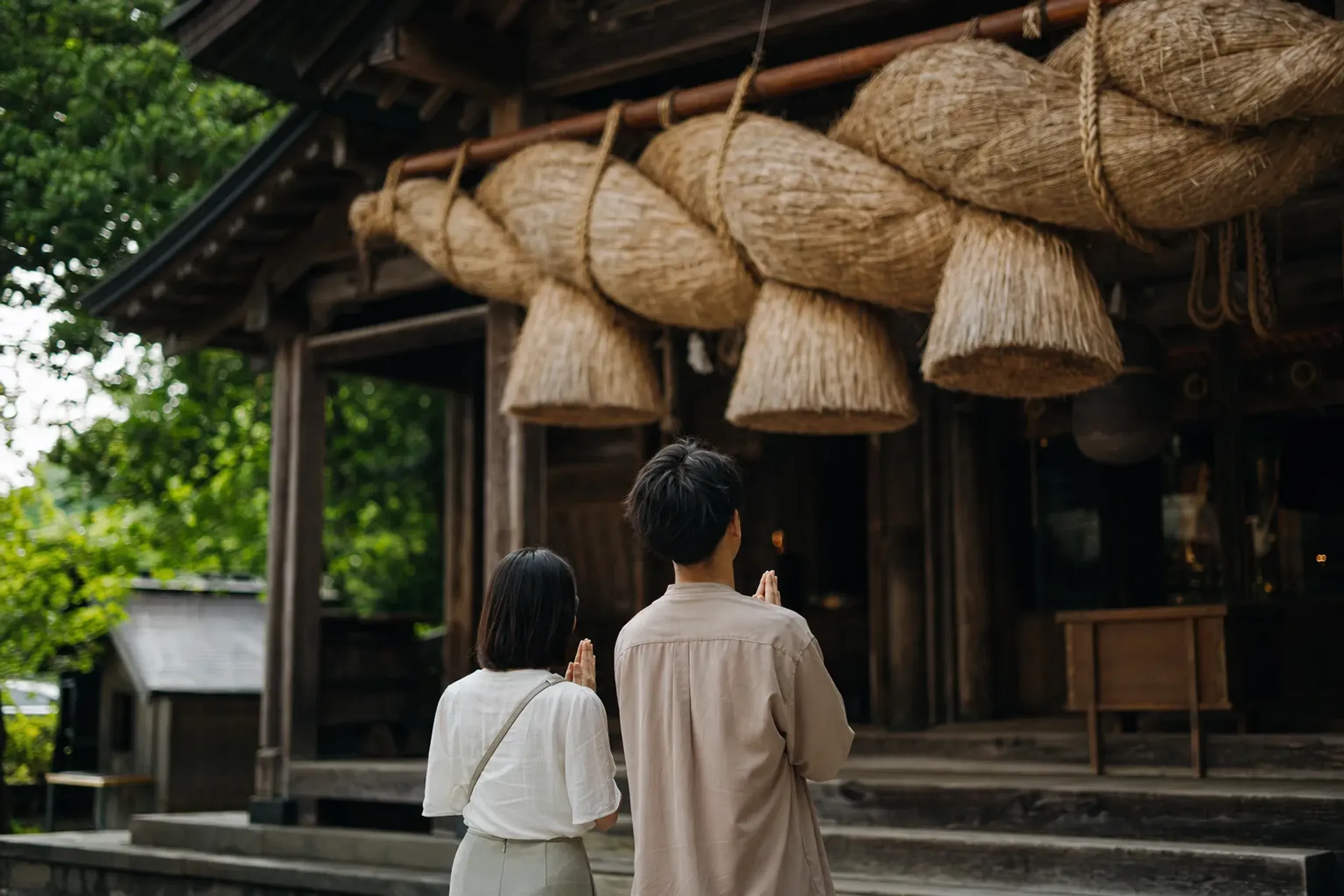
Izumo is different. Here the sequence is two bows, four claps, one bow. Four.
The extra claps mark this place apart, and getting the count right is a quiet sign that you understand where you are standing. Approach the offering hall. Bow deeply, twice. Clap four times, hands together and steady. Then a final, single bow. There is no need to rush. Many people around you are praying about real decisions — a marriage, a reconciliation, a choice they have carried a long way to make.
If the etiquette feels unfamiliar, that is normal. This kind of living devotional practice rewards preparation; our guides who accompany guests to sites like Nikkō Tōshō-gū walk through the conduct beforehand, so the moment itself is spent present rather than uncertain.
Taisha-Zukuri And The Tradition Of A Much Taller Hall
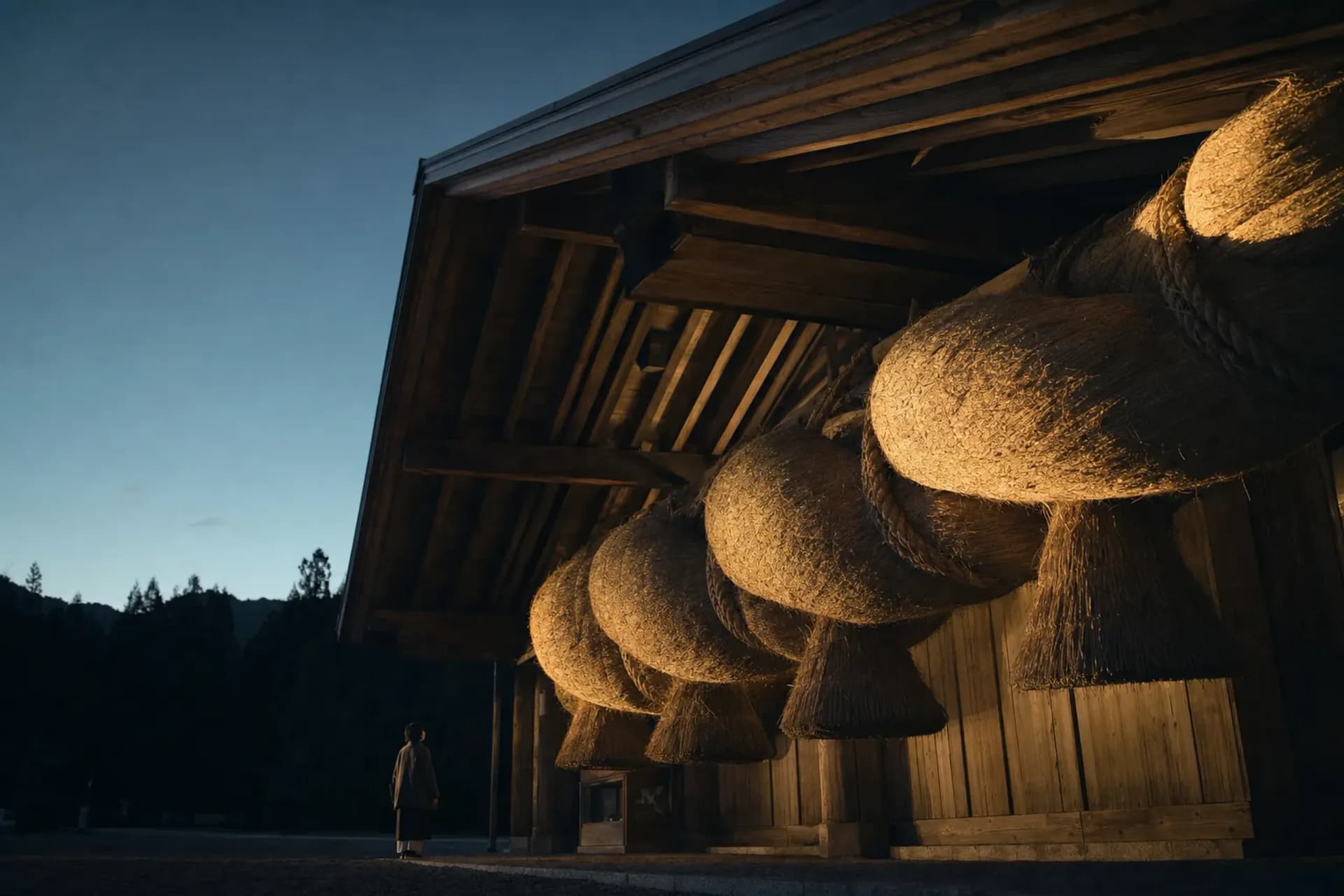
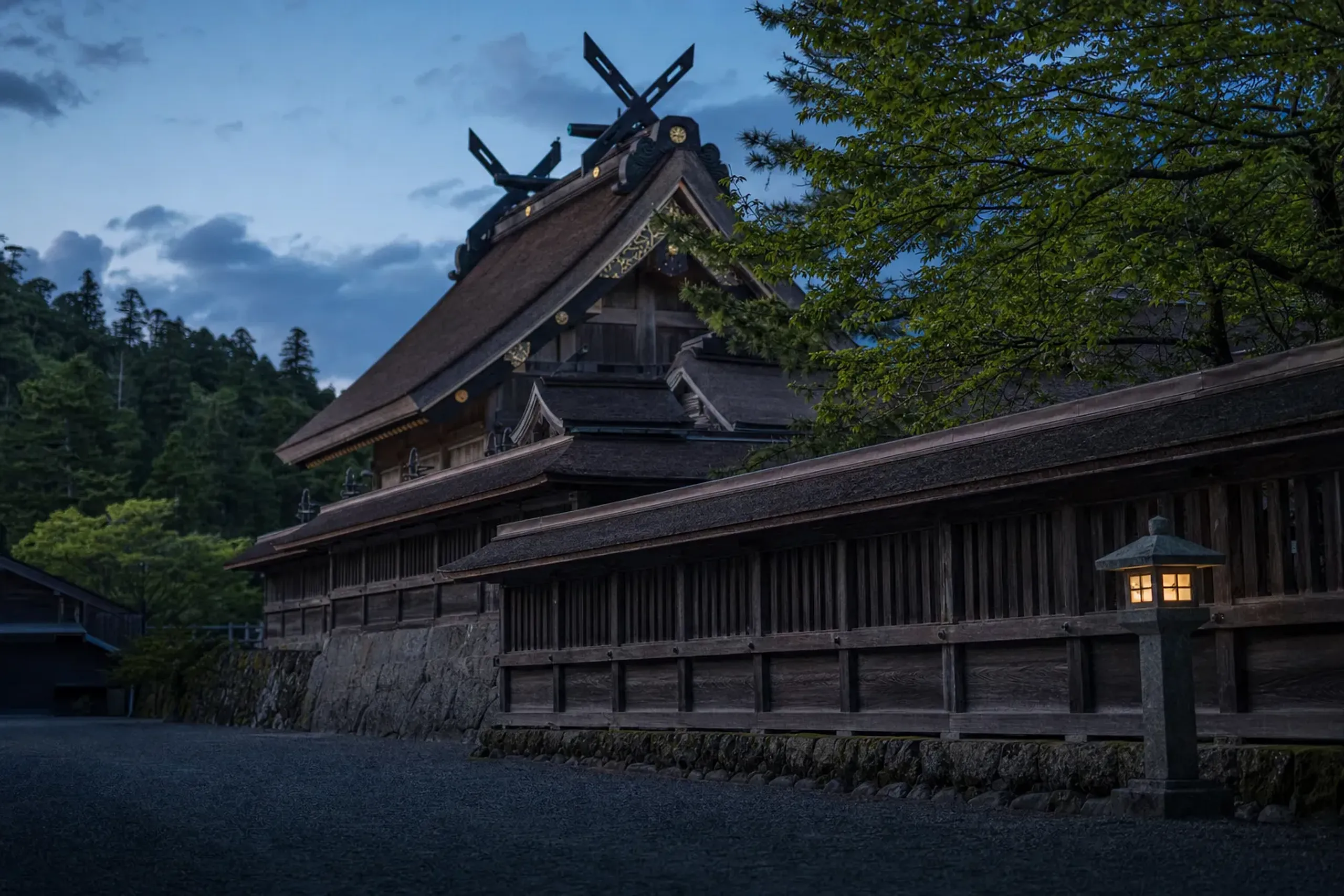
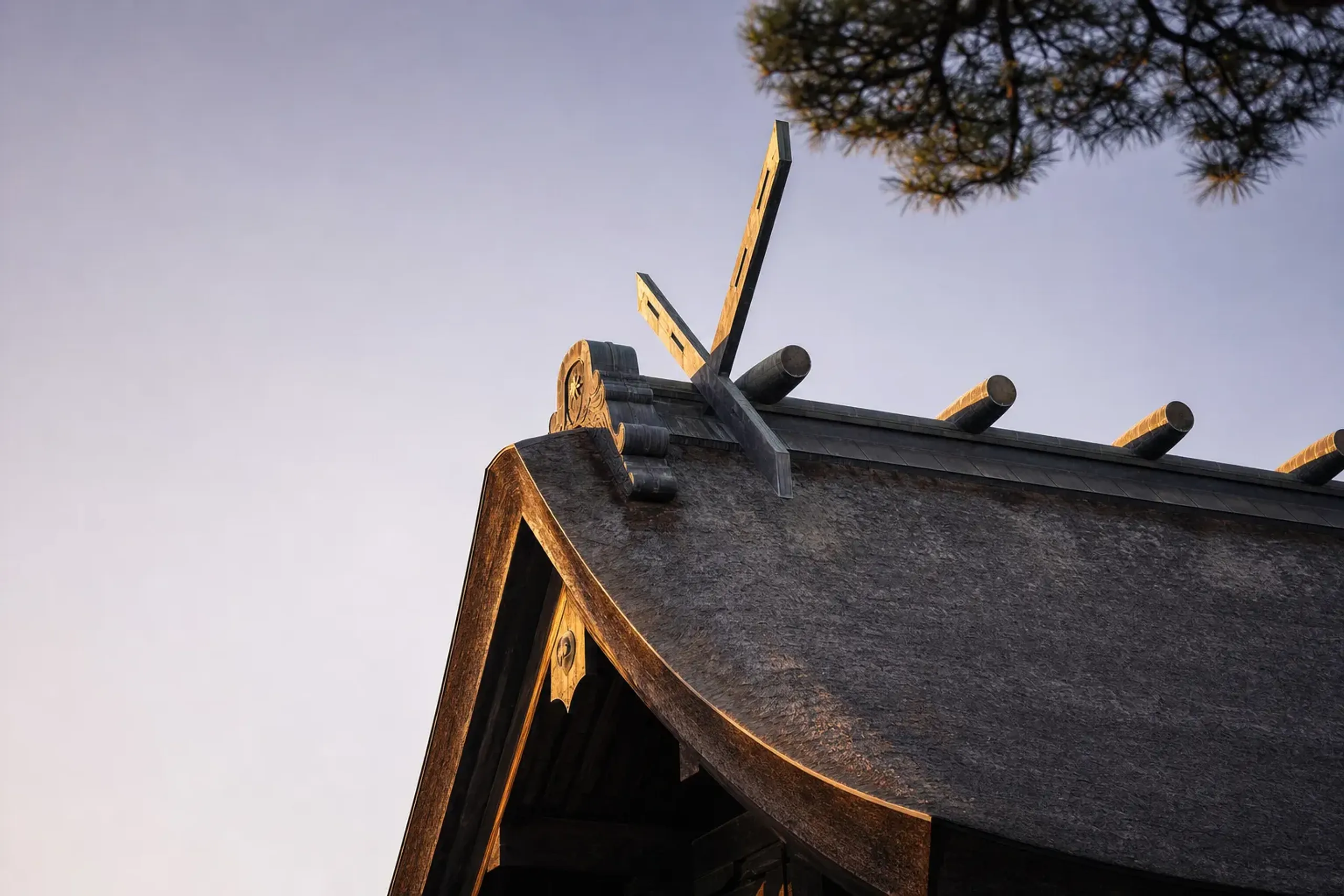
The main hall is built in a style called taisha-zukuri, named after Izumo's own sanctuary and counted among the oldest shrine architectural styles in Japan. The main hall was designated a National Treasure in 1952. Above the approach hangs one of the largest shimenawa — sacred twisted straw ropes — in the country, a mass of rope so heavy it changes the air beneath it.
There is a long tradition that the original hall stood roughly twice its present height, raised on enormous pillars, reached by a soaring staircase.
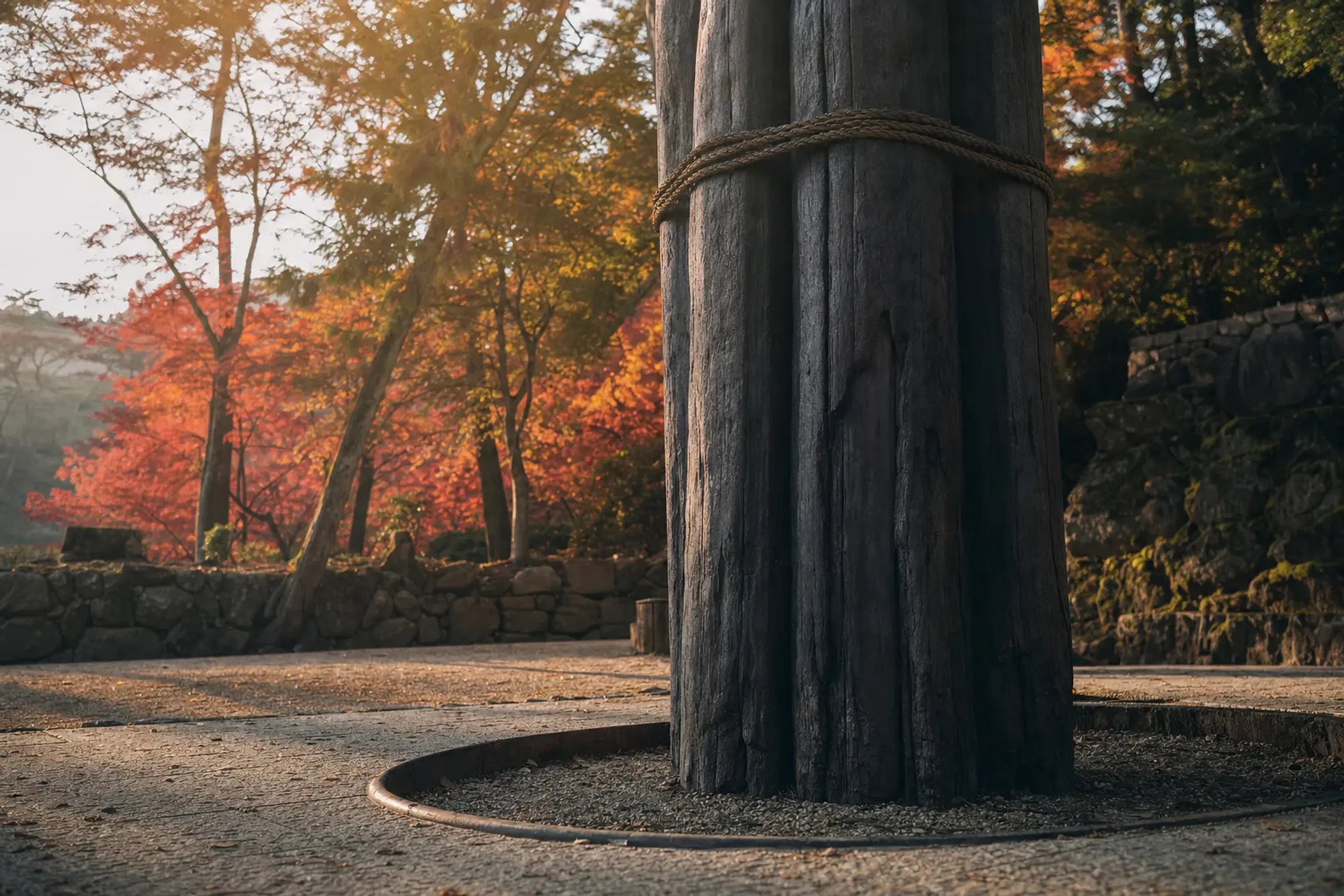
For centuries this was treated as legend. Then, in 2000, an excavation uncovered the remains of massive bundled pillars beneath the grounds — several great tree trunks lashed together as a single column. It is not final proof of the exact height. But it lends physical weight to a story that had lived only in old records.
One more oddity: the shrine's approach path descends toward the sanctuary rather than climbing to it. Most Shinto shrines ask you to ascend. Izumo brings you down. It is a small reversal you feel in your legs before you notice it in your mind.
The White Rabbits And The Character Of Okuninushi
You will see white rabbit statues throughout the grounds. They come from a folk tale. A hare, its fur torn off, lies suffering by the road. Okuninushi's many brothers pass by and offer cruel, false advice that worsens the animal's pain. Okuninushi, coming later, shows the hare genuine kindness and tells it how to heal.
The story is brief, almost a children's tale. But it does real work. It illustrates the temperament that, in myth, made Okuninushi worthy of governing matters of the heart — compassion where his brothers offered contempt. The rabbits scattered across the shrine are not decoration.
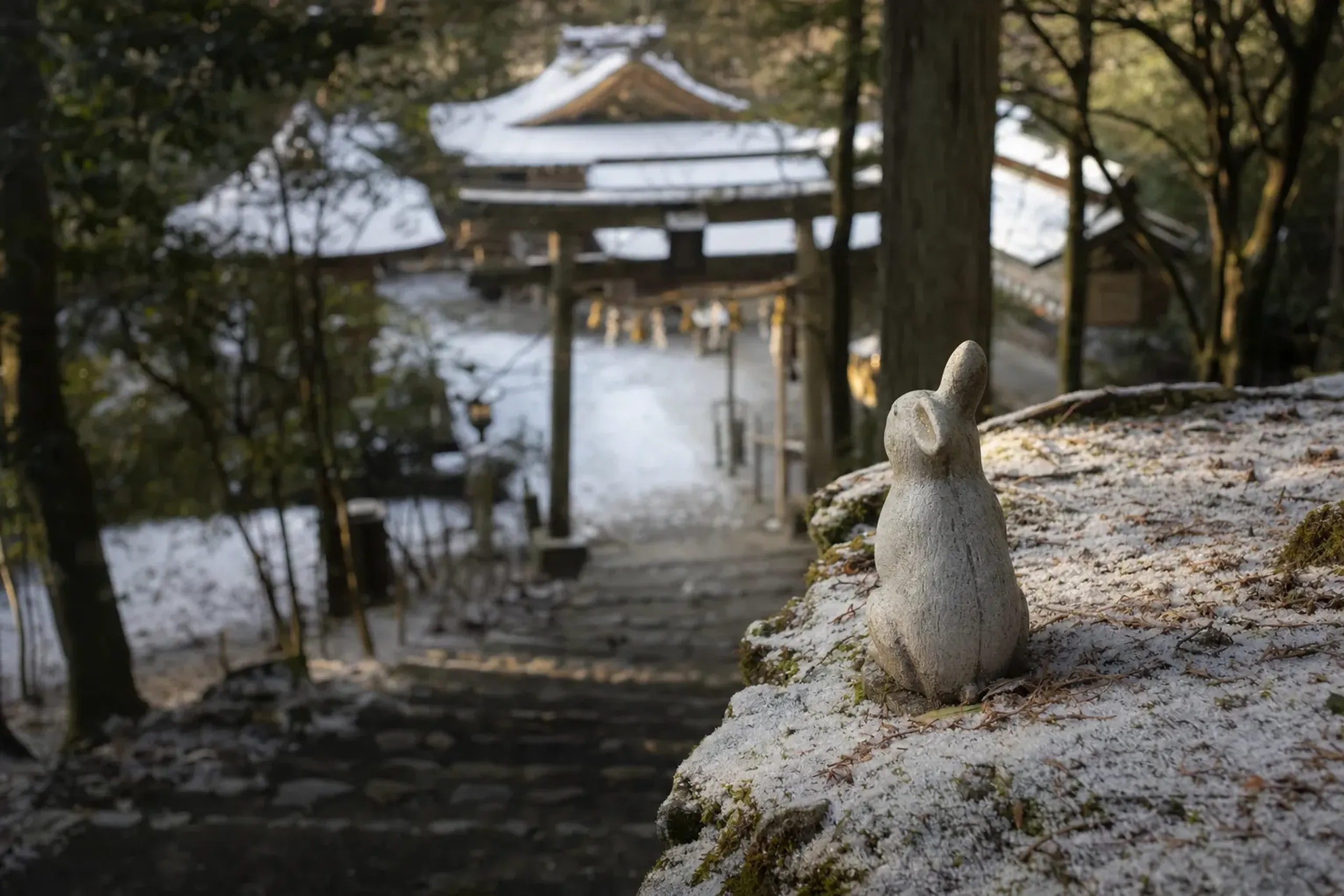
They are a reminder of the character behind the deity.
Getting To Izumo Taisha: An Honest Word On Distance
Izumo sits in Shimane Prefecture, on the Sea of Japan coast in western Honshu. It is genuinely remote from the rest of Japan's familiar circuit. This is not a stop you fold into a Kyoto day or a Tokyo weekend. Reaching it takes deliberate travel.
The closest station to the shrine is Izumo Taisha-mae, on the Ichibata Electric Railway, itself reached via the Matsue area. The distance is the point, not the obstacle. Part of what makes a visit here feel like a pilgrimage rather than a sightseeing errand is the effort it asks of you. You do not stumble upon Izumo Taisha. You choose it.
Because the region rewards a slower pace, guests often pair the shrine with the hot-spring towns and quiet coast nearby. If a longer, quieter route appeals, our approach to onsen towns like Kusatsu shows the kind of unhurried itinerary Shimane suits.
What A Respectful Visit Looks Like
Keep your conduct quiet. Move to the edges of the pine path, especially during the autumn gathering. Speak low. When you reach the offering hall, take the four claps seriously and do not photograph others mid-prayer.
Remember what surrounds you. Many of the people here have traveled far to pray about something that matters to them deeply — a partner, a family, a fork in a life.
The shrine's fame for en-musubi means much of the quiet around you is heavy with private hope. Standing well inside that atmosphere, unhurried and unobtrusive, is the whole of good conduct here. Beyond the autumn gathering, the shrine's principal annual ritual, the Reisai Grand Festival, falls in mid-May and offers a different, equally serious window into the shrine's calendar.
Frequently Asked Questions
How many times do you clap when praying at Izumo Taisha?
Four times. The sequence at Izumo Taisha is two bows, four claps, one bow — unlike most Japanese shrines, which use two claps. Getting the count right is the clearest sign you understand where you are.
What is Kamiarizuki and why is it important at Izumo Taisha?
Kamiarizuki, the "month with the gods," is when Japan's Shinto deities are believed to gather at Izumo to decide the coming year's relationships. The rest of the country calls the same month Kannazuki — "the month without gods."
Who is enshrined at Izumo Taisha?
Okuninushi no Okami, the deity of en-musubi and, by tradition, ruler of the unseen world of fate and human bonds. In the kuniyuzuri myth, he ceded the visible land in exchange for this shrine and authority over relationships.
Is Izumo Taisha older than Ise Shrine?
Some accounts suggest Izumo Taisha may predate Ise Shrine, and it appears in Japan's earliest chronicles, the Kojiki and Nihon Shoki.
It is widely regarded as second in importance only to Ise.
How do you get to Izumo Taisha and is it far?
Izumo Taisha is in Shimane Prefecture on the Sea of Japan coast, genuinely remote from Tokyo and Kyoto. The nearest station is Izumo Taisha-mae on the Ichibata Electric Railway. Reaching it requires dedicated travel, not a quick detour.
Why Choose Japan Royal Service
Izumo asks for deliberate travel, and that is exactly the kind of journey we prepare with care. Our team at Japan Royal Service arranges the standard visit logistics and private access for guests who want to reach the shrine without the friction of remote connections and shifting lunar dates. We confirm the details that matter — timing around the autumn gathering, respectful conduct, quiet routing — directly with you.
Because Shimane sits apart from the usual circuit, we can place a visit here inside a wider, unhurried itinerary built around a tailor-made journey and private chauffeured transport across the region. In our experience, guests who give Izumo the time it deserves come away understanding why the rest of Japan renames a month around it.
To plan a visit privately, reach our team via WhatsApp or LINE, or contact us here.