In this guide
- 01The Famous Reversed Pillar Has Two Hidden Siblings
- 02How Do You See The Reversed Pillar At Yōmeimon Without Fighting Crowds?
- 03A Brief, Precise History: Why Ieyasu Is Enshrined Here (And What That Really Means)
- 04Nikkō No Sha-ji: One Complex, Three Institutions, And An Unfinished Split
- 05What Happened To The “Crying Dragon” At Yakushi-dō?
- 06The Heisei Great Restoration (2013–2017): A Masterpiece Under Active Scrutiny
- 07How Many Steps Are Up To Okusha At Nikkō Tōshō-gū, And Is The Climb Worth It?
- 08Admission, Access, And What To Expect On The Day
- 09Festival Dates That Change The Feel Of The Shrine (2026 Planning)
- 10How Do You Get From Tokyo To Nikkō Comfortably: Premium Rail Or Private Car?
- 11A Connoisseur’s Route Inside Nikkō Tōshō-gū (A Step-By-Step Flow)
- 12Where Luxury Actually Shows Up Here: Shokunin, Discretion, And Imperial-Class Manners
- 13How This Fits Into A Tailor-Made Day Trip (Without Turning Sacred Space Into A Checklist)
- 14Frequently Asked Questions
- 15Plan Your Own Quiet Approach To Nikkō
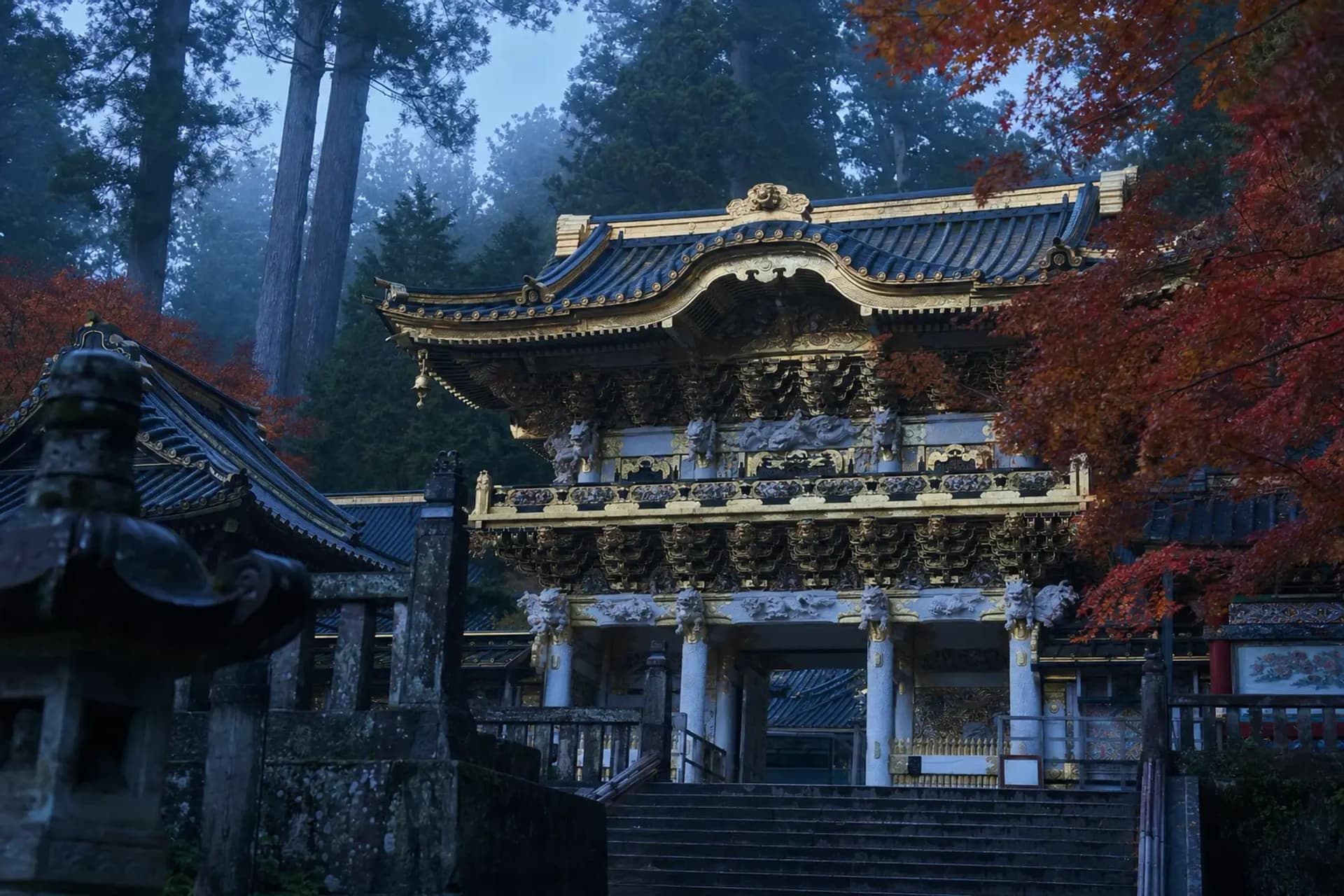
You step under Yōmeimon and the light changes. Gold leaf flashes, then goes quiet again as clouds pass overhead. Your eyes begin counting before you mean to. Twelve pillars, each carved with a curling guri spiral.
Then one pattern is wrong. Deliberately wrong. Most visitors know the story of the “reversed pillar” at Yōmeimon—an intentional imperfection, a quiet refusal to declare a sacred building “complete.”
Here is the correction that matters, the one that separates the informed traveler from the guidebook crowd. Nikkō Tōshō-gū has three reversed pillars, not one. Two more were discovered in May 1987, elsewhere in the complex, decades after the original construction.
The Famous Reversed Pillar Has Two Hidden Siblings
Yōmeimon Gate has twelve pillars carved with a spiral guri pattern—except one, on the north side, second from the west, carved upside-down compared to the rest.
The explanation is old and sharp. That which is full will decline. So the gate is left technically unfinished, as a ward against misfortune and complacency—a deliberate embrace of imperfection that sits at the very heart of the wabi-sabi sensibility.
Most guidebooks stop there. Nikkō Tōshō-gū does not. In May 1987, two more reversed pillars were discovered among the sixteen pillars that separate the worship hall, stone chamber, and main hall of the shrine’s principal building.
It changes how you look. Not just at Yōmeimon’s spectacle, but at the whole site’s mindset: precision, yes, and also restraint—an almost wry acceptance that permanence is not a human privilege.
How Do You See The Reversed Pillar At Yōmeimon Without Fighting Crowds?
Arrive at opening, stand slightly back from the gate’s centerline, and look up toward the north side—second pillar from the west—before group tours settle in.
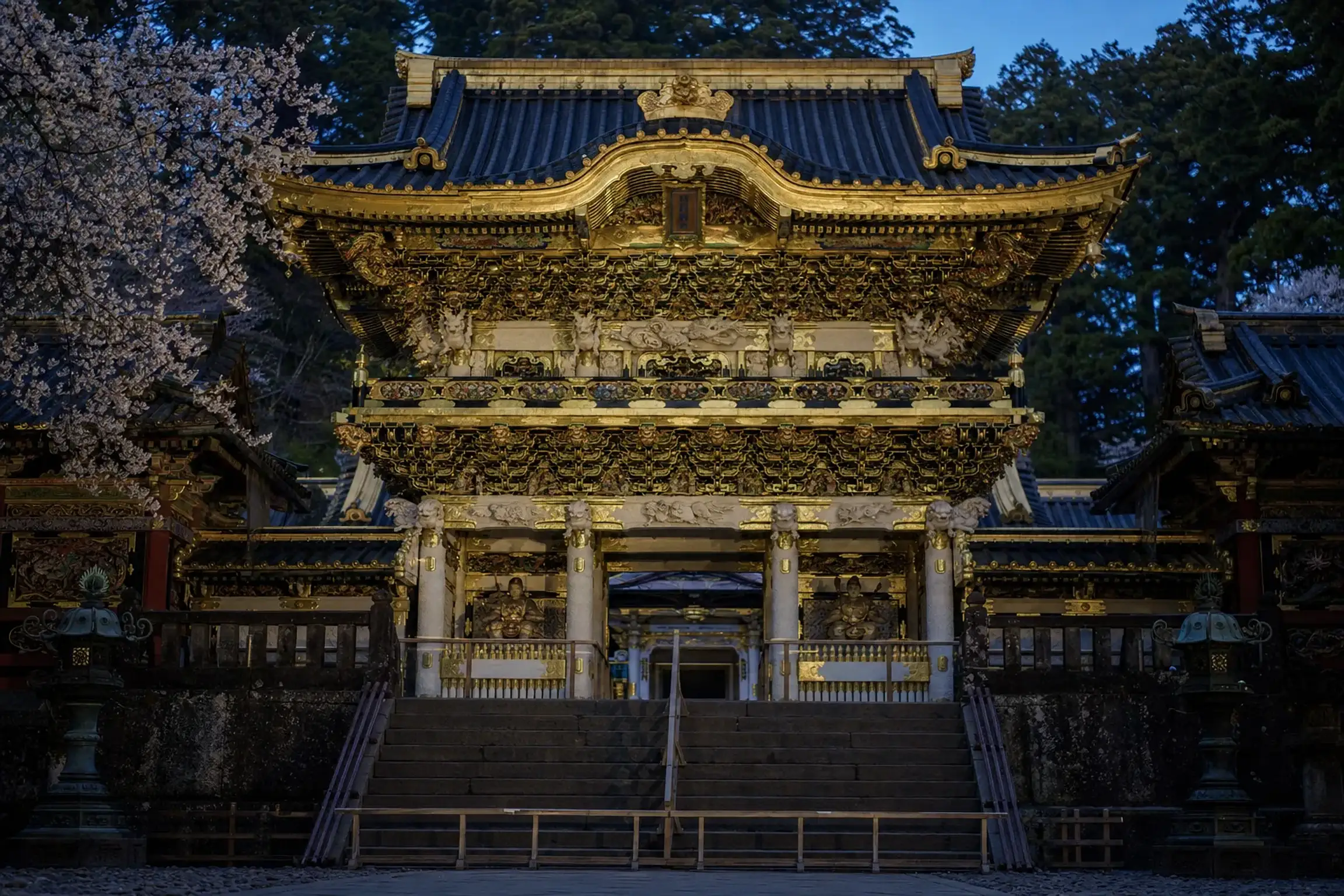
Five minutes late can be the difference. You feel it immediately. The space fills, camera arms rise, and the pillar becomes a photo target instead of a detail you can actually read with your own eyes.
In our experience, the calmest viewing comes from a simple rhythm: enter, look up, step aside, then return for a second pass when the first wave moves on. Two passes. Different light. Different mood.
If you’re traveling as a couple, one person can hold the viewpoint while the other scans the carvings nearby—then switch. A small tactic. A big payoff.
A Brief, Precise History: Why Ieyasu Is Enshrined Here (And What That Really Means)
Tokugawa Ieyasu died in 1616 at Sunpu Castle, aged 75, and left written instructions for a two-stage plan: burial at Kunōzan, then enshrinement at Nikkō after the first death anniversary.
This is not a trivia point. It corrects the common shortcut that Nikkō is simply “Ieyasu’s tomb.” His primary burial site was Kunōzan, in present-day Shizuoka. Nikkō was his specified secondary enshrinement—an act of statecraft as much as devotion.
Nikkō Tōshō-gū was founded in 1617 by Tokugawa Hidetada, the second shogun. The lavish form most visitors see today comes from a major rebuild ordered in 1636 by Tokugawa Iemitsu, the third shogun, timed to coincide with Ieyasu’s 21st death anniversary.
Walk the grounds with that timeline in mind and the site reads differently. Less “decorative shrine.” More political theology carved into wood and lacquer.
Nikkō No Sha-ji: One Complex, Three Institutions, And An Unfinished Split
Nikkō Tōshō-gū, Futarasan Shrine, and the Buddhist temple Rinnō-ji together form what is known as “Nikkō no Sha-ji”—two shrines and one temple.
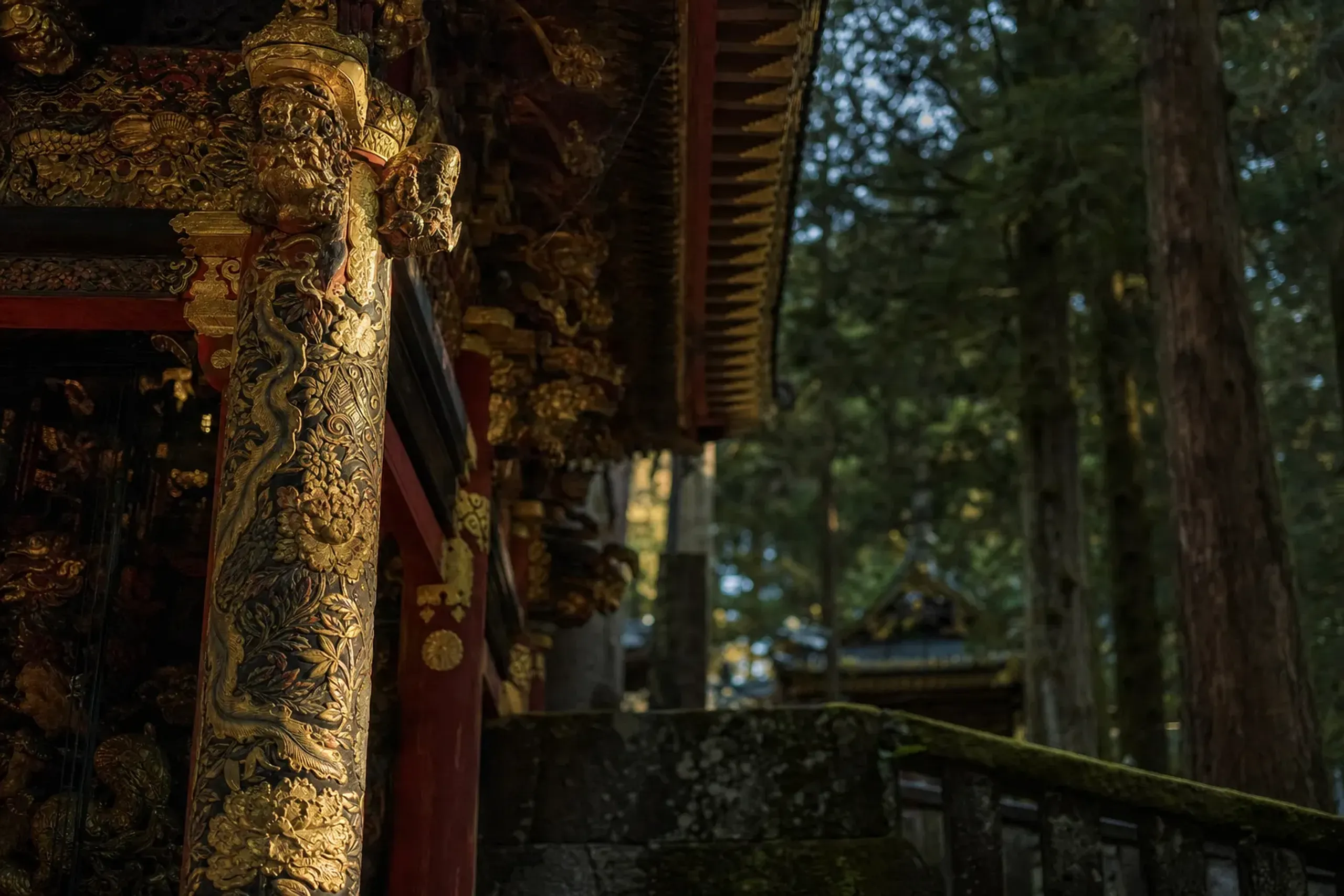
Today they are separate. That separation dates only to Meiji-era policy, implemented in 1868–1869, when Shinto and Buddhism were administratively disentangled. Before that, the complex was managed as a single religious site.
There is still friction in the background. Jurisdiction over certain facilities between Tōshō-gū and Rinnō-ji remains disputed to this day. Not a scandal. Just an ongoing tension that reminds you these are living institutions, not frozen exhibits.
For the discerning traveler, this matters in a practical way. A respectful visit is not about speed. It’s about knowing when to lower your voice, when to pause, and when a shortcut would be the wrong kind of efficiency. This is knowledge that Google cannot hand you—the kind that comes only from those who move within these sites regularly.
What Happened To The “Crying Dragon” At Yakushi-dō?
The original “Crying Dragon” ceiling painting was destroyed in a 1961 fire at Yakushi-dō, and what visitors see today is a later replacement.
The cause was mundane and tragic: a malfunctioning space heater. Yakushi-dō, a National Important Cultural Property building, was completely destroyed along with the original painting by Kanō Yasunobu.
It’s still worth experiencing. The acoustics and the ritualized demonstration remain powerful, even when you know it is not the original surface from the Edo period. Knowing the truth does not diminish the moment. It steadies it.
There is also an earlier scar. The 1949 Imaichi earthquake damaged parts of the shrine buildings.
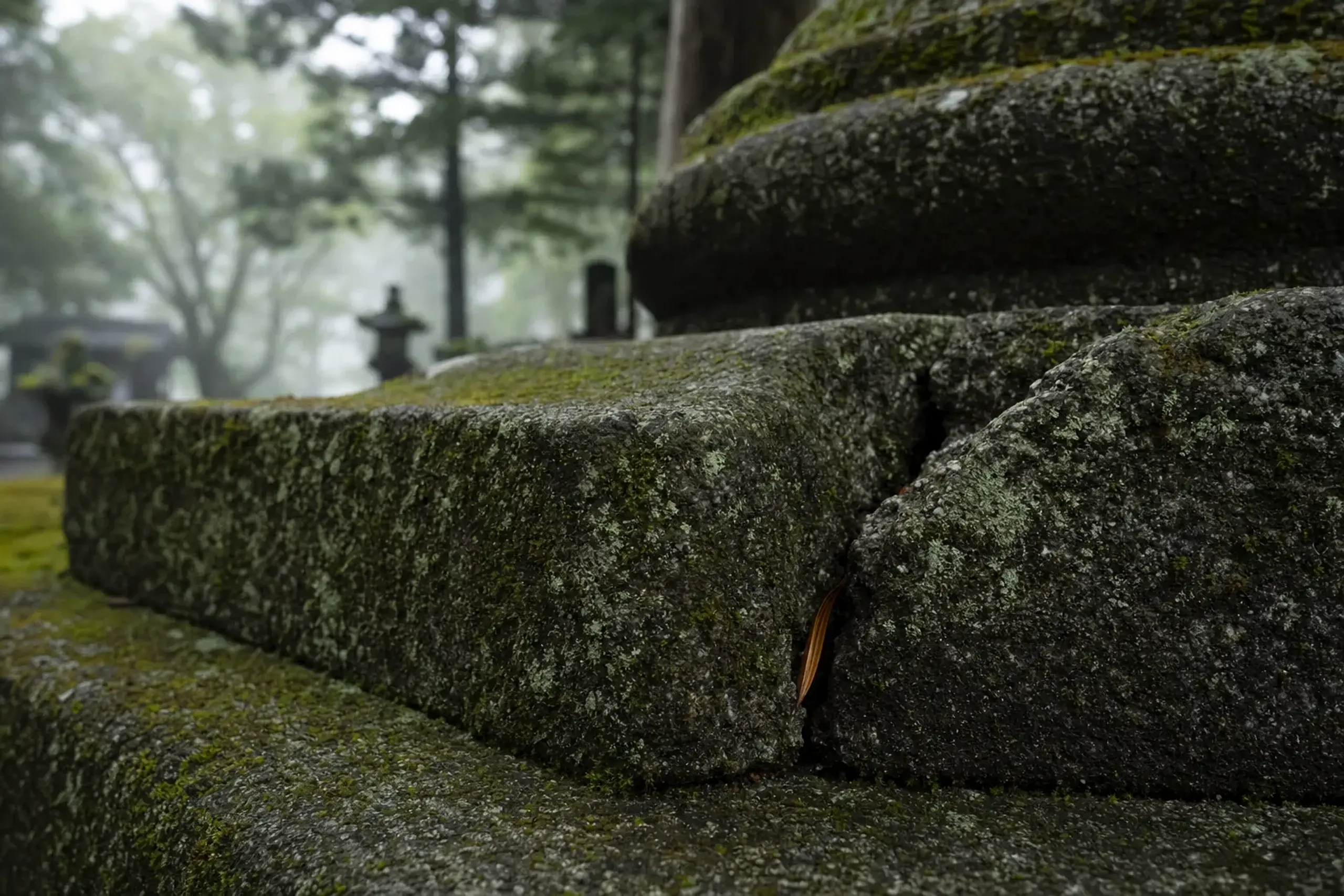
Nikkō’s beauty has always had repairs behind it—each generation of shokunin quietly re-earning what the last built.
The Heisei Great Restoration (2013–2017): A Masterpiece Under Active Scrutiny
The “Heisei Great Restoration” ran from 2013 to 2017, the first full restoration since one completed in 1973, closing a 40-year gap.
Restoration is never neutral. When the famous three-monkey carving (“see no evil, hear no evil, speak no evil”) was repainted during this period, it drew criticism from the public and experts alike. The eyes were described as inaccurately large compared with historical photographs, and outside experts called for reconsideration at the next restoration.
Then came material issues. Shell-powder paint applied during the restoration developed mold and began peeling within the same year, and a roof leak discovered in 2020 led to additional repair work from December 2021 through April 2022.
This is the honest context that discerning travelers appreciate. You are not visiting a static museum piece. You are stepping into a site that is maintained, debated, and continually re-earned—a place where the craft of the shokunin is never truly finished.
How Many Steps Are Up To Okusha At Nikkō Tōshō-gū, And Is The Climb Worth It?
Okusha is reached by climbing 207 stone steps from behind the Sleeping Cat carving, and yes, it’s worth it if you want the shrine’s most concentrated quiet.
The steps are not long in distance, but they feel ceremonial. Your breathing changes. The sound of the lower precinct dulls, replaced by your shoes on stone and the low rustle of cedar. This is where the moss-covered stillness of old Japan finally reaches you.
Okusha holds Ieyasu’s actual tomb. That phrasing matters. It is the inner sanctuary reached through effort, not the part most day-trippers linger over.
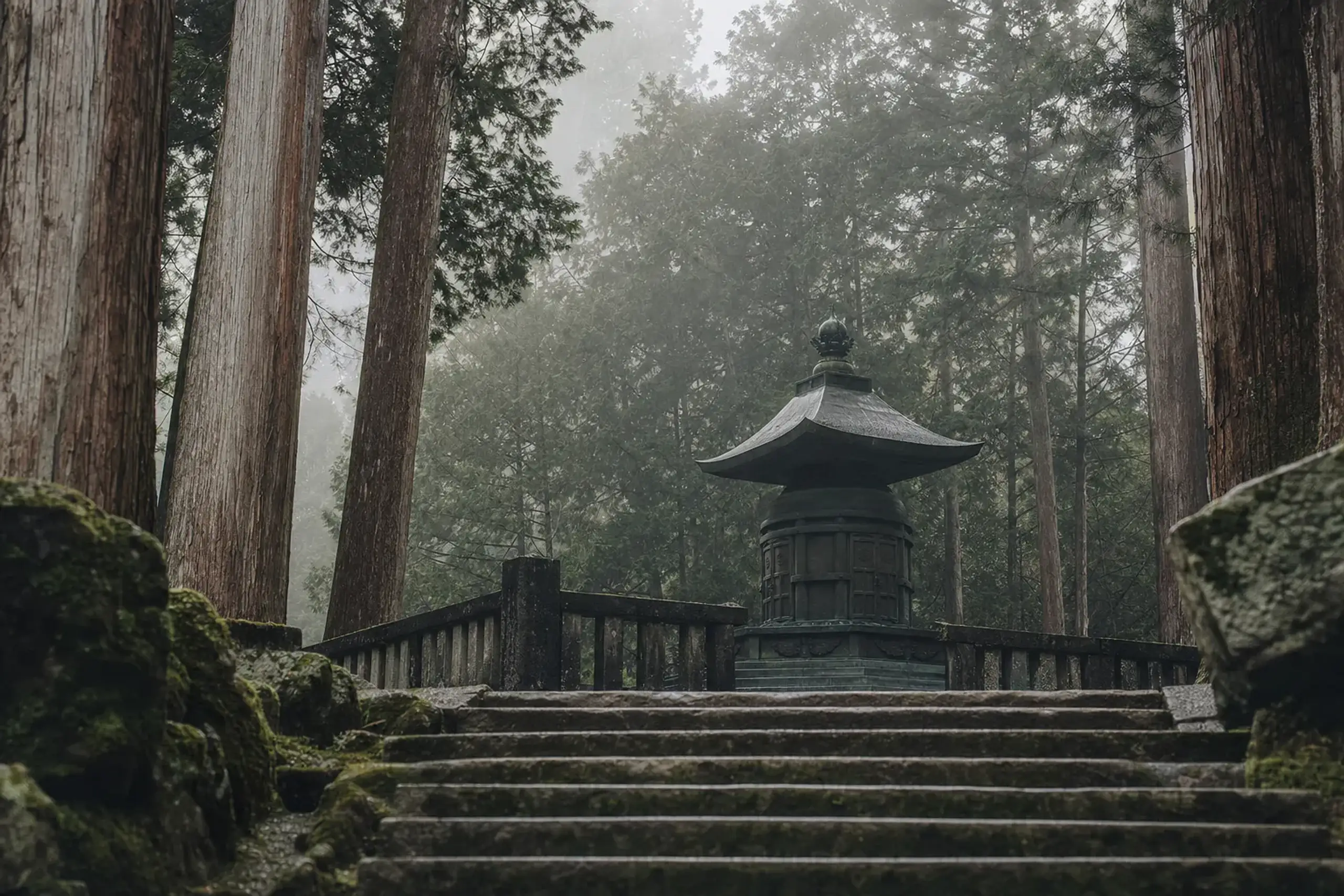
Wear stable shoes. Avoid slick soles after rain. And plan a short pause at the top before you do anything else. Let your pulse settle. Let the silence do its work.
Admission, Access, And What To Expect On The Day
Nikkō Tōshō-gū offers combined admission tickets covering the main shrine area and Okusha. Structures and access can shift due to ongoing maintenance, so check the latest details before you go.
If you’re coming from either Nikko Station or Tobu-Nikko Station, the “World Heritage tour bus” connects major UNESCO-related sites in Nikkō, including Nikkō Tōshō-gū. It’s straightforward. It’s also public.
For many high-net-worth travelers, comfort is not the issue—control is. Departing at the right minute, arriving before the bottlenecks form, and having a clear sequence inside the precinct matters more than saving a few steps. Discretion, too, is easier to preserve when you are not sharing a bus with the day’s crowds.
Key fact: Nikkō Tōshō-gū is an active religious site; keep voices low, follow photography rules, and treat queues and rituals with patience.
Festival Dates That Change The Feel Of The Shrine (2026 Planning)
For 2026, the Spring Grand Festival at Nikkō Tōshō-gū is held on May 17–18, and the autumn festival period in Central Nikkō is listed for October 16–17.
These are not minor calendar notes. Knowing which experience belongs to which month is precisely the kind of timing that transforms a good visit into an unforgettable one. On festival days, the shrine precinct and surrounding streets can move like a single organism—processions, pauses, crowds that swell and then suddenly thin.
If you want the shrine’s carvings and architectural details, choose a non-festival weekday. If you want living tradition, choose the festival window and plan for slower movement and longer standing.
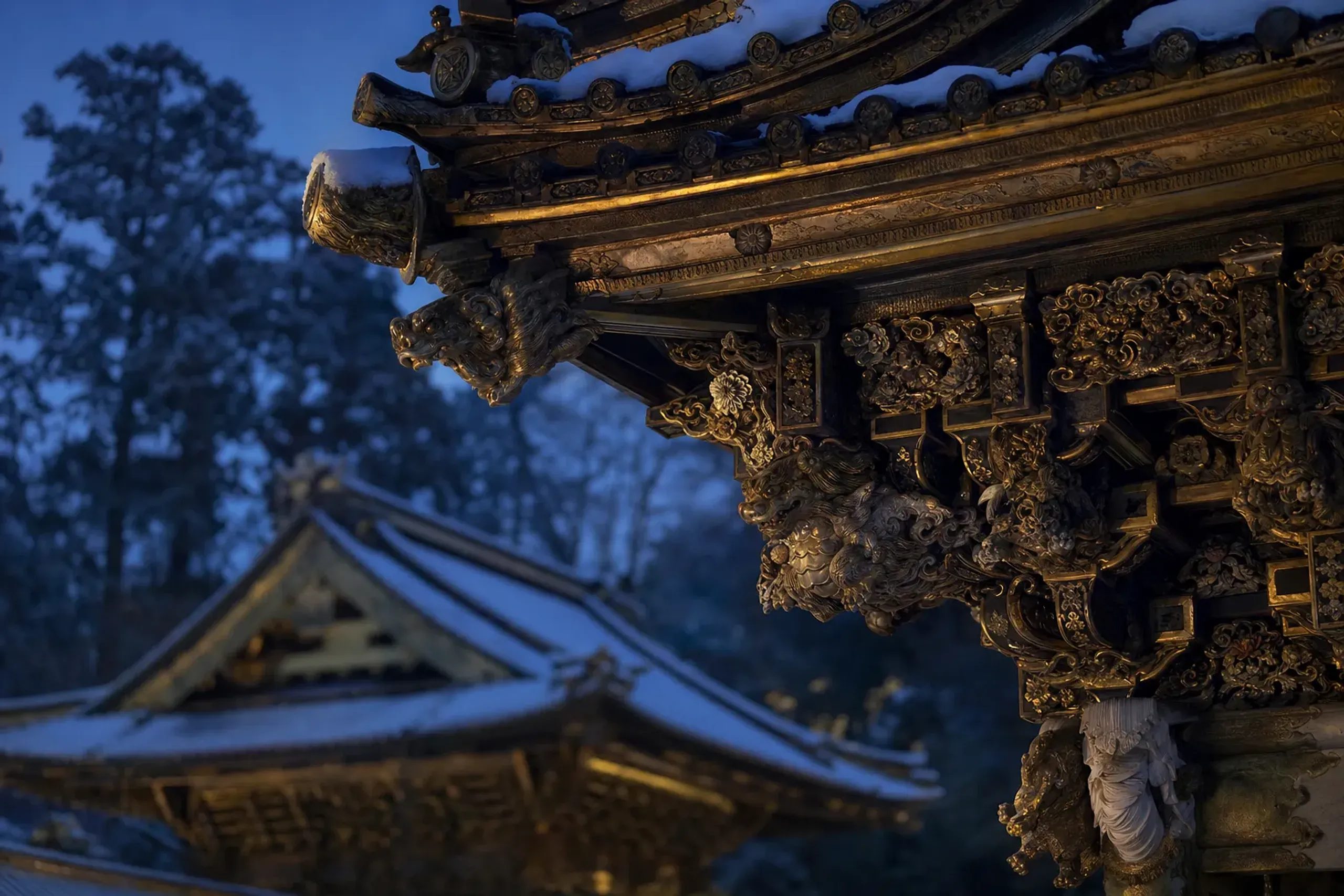
One more date to know for longer trips: the Nikko Official Guide lists Nikko Waraku Odori in Central Nikkō on August 7, 2026. Different energy. Warmer air. More local rhythm in town.
How Do You Get From Tokyo To Nikkō Comfortably: Premium Rail Or Private Car?
Premium rail via Tobu Railway’s limited express services and a private chauffeured car are the two comfort-forward ways to reach Nikkō from Tokyo, and the right choice depends on your privacy needs and pacing.
Rail is clean and predictable. You can read, doze, and arrive without road variables. Tobu Railway’s SPACIA X is the premium-facing product on the Tobu Nikko Line brand family, and Tobu also publishes “X COFFEE PROJECT” program information scheduled through November 27, 2026.
Private car is different. You control departure time, stop timing, and the small decisions that keep a day gentle. The first time you travel with a dedicated chauffeur, you notice the silence between locations. It’s restful.
Our team at Japan Royal Service provides guidance on both approaches, and our first mention of private transportation is here: private transportation. It’s a practical tool for discretion, especially if you prefer not to broadcast your itinerary in public spaces.
A Connoisseur’s Route Inside Nikkō Tōshō-gū (A Step-By-Step Flow)
This is a shrine that rewards sequencing. A rushed loop makes it feel like ornament. A measured route turns it into a conversation between craft and power.
Step 1: Start With Yōmeimon, But Don’t Get Stuck There.
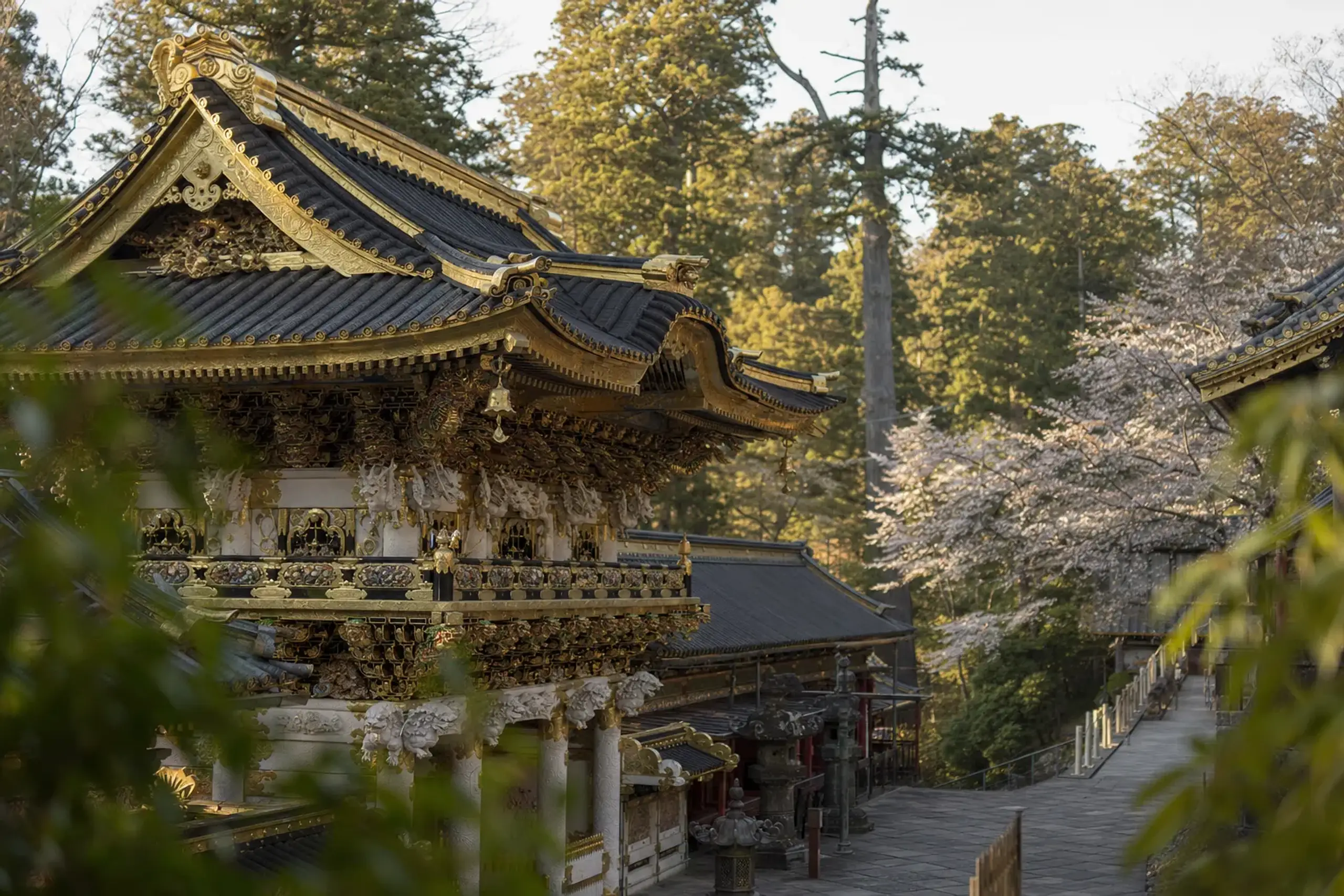
Look for the reversed pillar early, then step away. Come back later for a second glance when your eyes have adjusted to the density of detail.
Step 2: Give The Carvings Time. The famous motifs are easy to “collect.” The harder pleasure is noticing how many hands must have touched one surface—lacquer, pigment, carving cuts that change direction. This is the signature of the shokunin: repetition that never becomes mechanical.
Step 3: Move Toward Okusha When Your Mind Is Ready For Quiet. Pass the Sleeping Cat, then take the 207 steps. Don’t treat it as an add-on. Treat it as the inner chapter.
Step 4: Exit Slowly. Many visitors speed up on the way out. Do the opposite. It’s when you’re leaving that you finally see the proportions clearly.
Where Luxury Actually Shows Up Here: Shokunin, Discretion, And Imperial-Class Manners
Nikkō Tōshō-gū is not a place to perform luxury. It’s a place to practice it.
Shokunin shows up in the surfaces. Look at the repetition that never becomes mechanical. Look at the edges where a carver chose patience over speed. You don’t need to know every symbol to sense the mastery. It is the same lineage of dedication that produces a Living National Treasure—craft pursued as a lifelong discipline, not a task.
Discretion is the more modern concern. Many high-net-worth travelers want to be present without being noticed, and Nikkō’s narrow pinch points can make that surprisingly tricky. Timing, entry order, and transport choices do a lot of quiet work—protecting both your privacy and your peace.
Imperial-class manners matter because the site still feels formal. Not stiff. Formal. Small choices—where you stand, how you speak, how you photograph—signal a respect that staff and worshippers can feel immediately.
How This Fits Into A Tailor-Made Day Trip (Without Turning Sacred Space Into A Checklist)
A day trip to Nikkō Tōshō-gū from Tokyo can be deeply satisfying if the day is built around pace, not density.
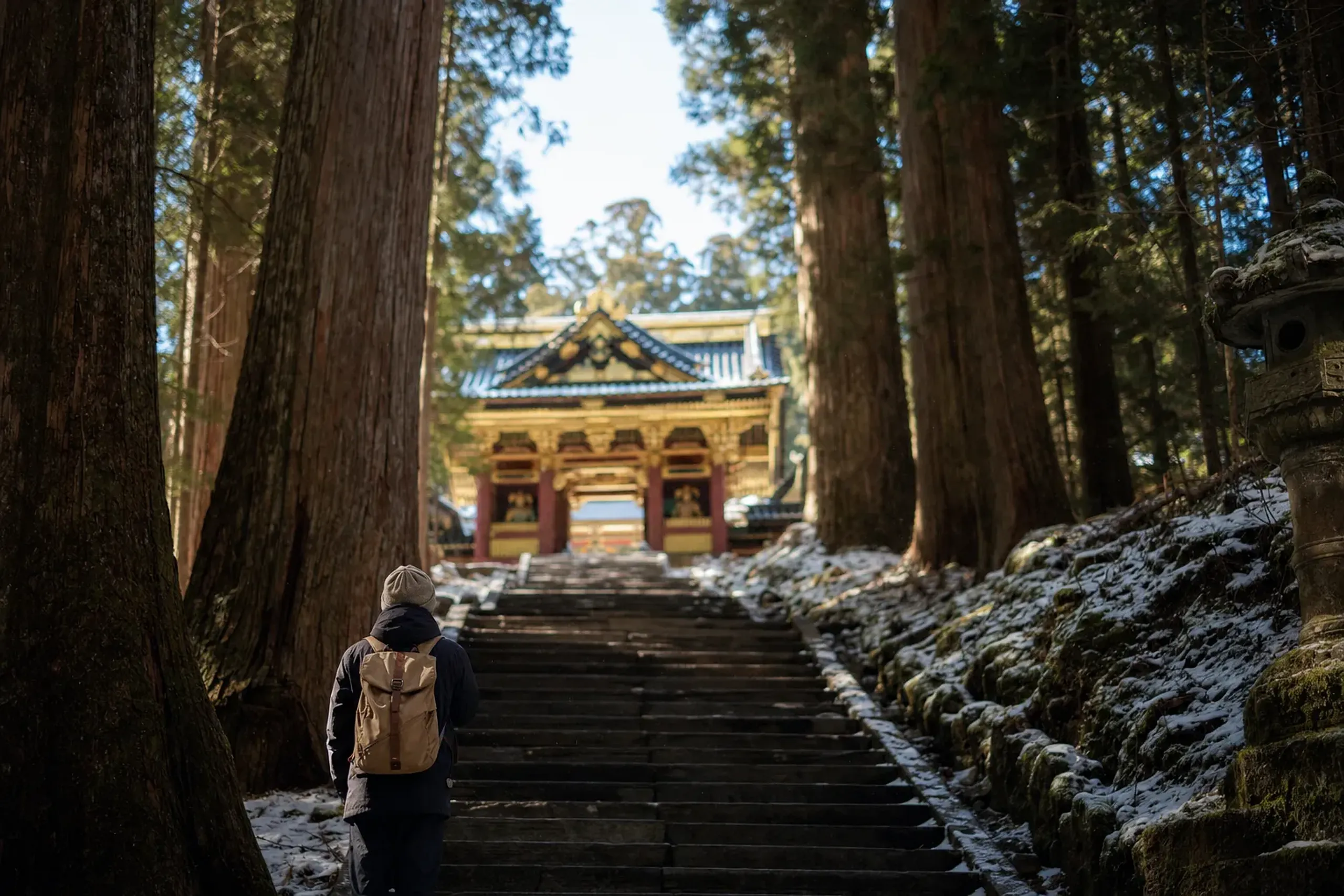
Our team at Japan Royal Service typically suggests a single anchor: the shrine itself. Then we build buffers—time for tea, a short rest, and unhurried walking. The day feels human that way.
If you want a fully bespoke plan, our first mention is here: tailor-made itinerary. The aim is not to add more stops. It’s to protect the experience you came for.
For readers who enjoy deeper historical texture, you may also like our essays on Japanese heritage sites such as Chikubushima on Lake Biwa and our guide to private zazen in Kamakura. Different places. Similar quiet.
Frequently Asked Questions
Is Nikkō Tōshō-gū A UNESCO World Heritage Site?
Yes—Nikkō Tōshō-gū is part of the UNESCO World Heritage listing “Shrines and Temples of Nikkō,” together with Futarasan Shrine and Rinnō-ji.
This designation is about the whole sacred landscape, not just one gate or carving. It’s also why respectful behavior matters; you are visiting a living religious complex with global cultural value.
Is Nikkō Tōshō-gū Actually Tokugawa Ieyasu’s Tomb?
Okusha at Nikkō Tōshō-gū holds Ieyasu’s tomb, but his primary burial site was Kunōzan, as specified in his own two-stage burial-and-enshrinement instructions.
This nuance is easy to miss in short summaries. We encourage travelers to keep it in mind because it clarifies what Nikkō represented: a planned seat of veneration and authority.
Plan Your Own Quiet Approach To Nikkō
Nikkō Tōshō-gū rewards those who arrive knowing what to look for, when to arrive, and how to move—the three reversed pillars are only the beginning of what a well-prepared visit reveals. If you would like a day shaped around the shrine’s finest hours, its quietest steps, and a level of privacy the public routes cannot offer, our specialists would be glad to help. To begin designing your visit in complete confidence, contact us here.