In this guide
- 01When The Gods Gather At Inasa Beach
- 02Why Do The Gods Gather At Izumo Taisha?
- 03The Jūkyūsha: Where Eight Million Gods Reside
- 04Which Direction Does The Deity Face At Izumo Taisha?
- 05Soganoyashira And The Sacred Sand Ritual
- 06Navigating Izumo and the Wider San'in Coast
- 07Frequently Asked Questions
- 08Why Choose Japan Royal Service
Every shrine across Japan calls the tenth month of the traditional lunar calendar Kannazuki. The month without gods. This is not a poetic metaphor. According to Shinto tradition, the resident deities genuinely vacate their local sanctuaries. They pack up and leave. Where do they go? They travel to a single destination in Shimane Prefecture. Consequently, at Izumo Taisha, the terminology inverts. Here, and only here, this period is known as Kamiarizuki: the month with gods.
Our team at Japan Royal Service crafts bespoke itineraries that guide sophisticated travelers into this profound gathering. We prioritize authentic cultural access over superficial sightseeing. Experiencing Kamiarizuki requires an understanding of ancient mythology, a respect for absolute stillness, and meticulous logistical foresight. This is the Japan that resists mass tourism.
When The Gods Gather At Inasa Beach
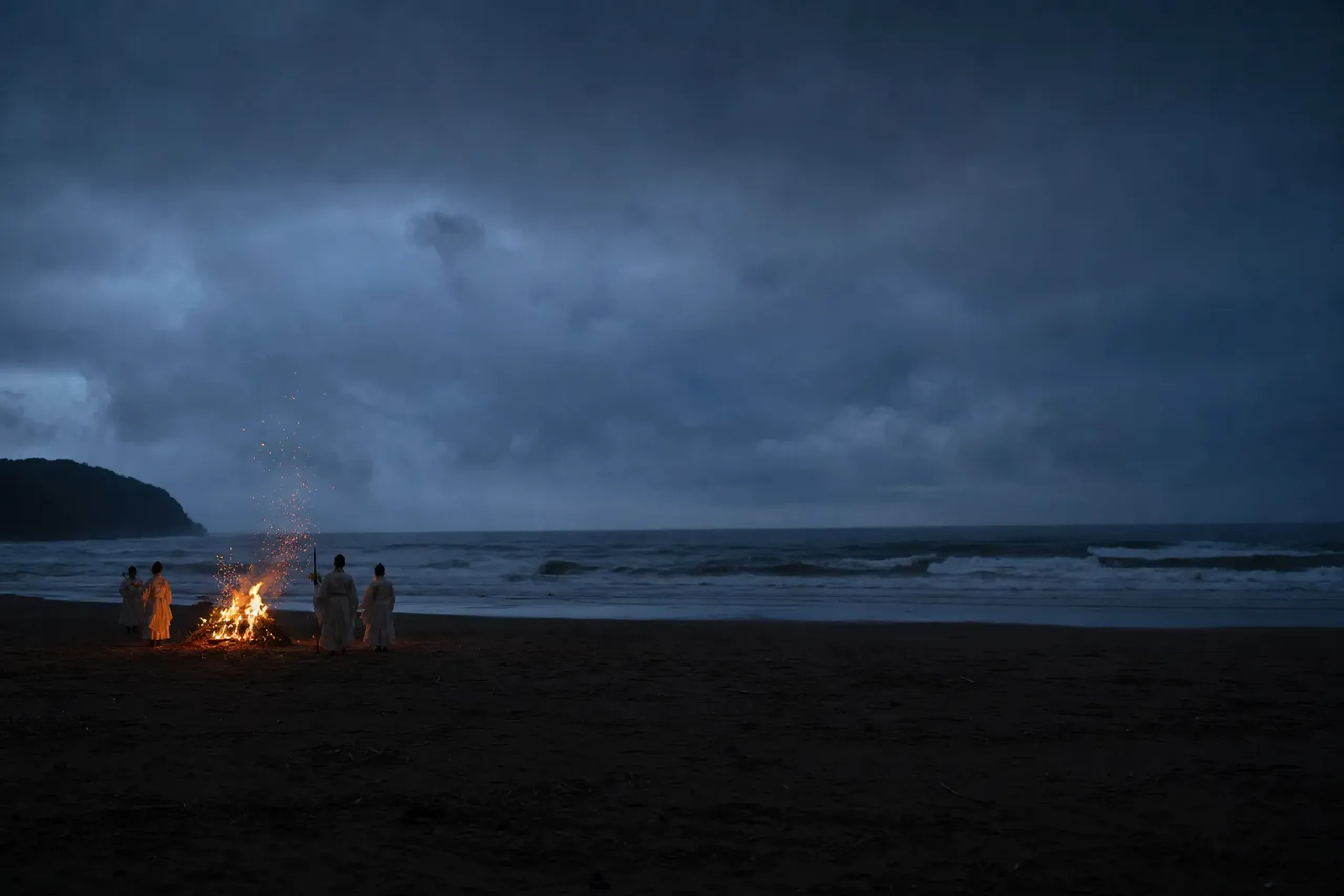
The transition begins at the shoreline. A short distance from the main shrine lies Inasa Beach. As evening falls on the designated day, the Kamimukae Shinji (welcoming rite) commences. A sacred bonfire cuts through the dark. Shinto priests perform ancient invocations against the sound of breaking waves. It is intensely atmospheric.
A solemn procession then forms. Led by dragon-serpent deities—associated with abundant catches and family prosperity—the gathered gods are guided along a dedicated path from the sand to the shrine grounds. The atmosphere shifts from elemental rawness to refined reverence.
During this period, the entire area observes Oimi-san, a time of ritual quiet.
Locals traditionally refrain from loud activities. No singing, no dancing, no construction. Our concierge reminds guests that this is an active religious observance. Silence is not just expected; it is the core condition of the ceremony.
Why Do The Gods Gather At Izumo Taisha?
The gods gather at Izumo Taisha to deliberate on en—the unseen bonds of human relationships and marriage, fulfilling Ōkuninushi’s mythological retreat to govern invisible matters.
The belief traces directly to a foundational mythological event. The deity Ōkuninushi transferred the governance of the visible world to the sun goddess, Amaterasu. In exchange, he retreated to rule over the hidden, unseen realm. Over centuries, this hidden practice was interpreted specifically as governing the invisible bonds between people. It is the architecture of fate.
Because these bonds are unseen, the pantheon must assemble collectively at Izumo to deliberate on them. They decide who will meet whom in the coming year. Only one notable deity does not make the journey. Ebisu remains behind as a house-sitter for the countless shrines left temporarily empty across the archipelago.
The Jūkyūsha: Where Eight Million Gods Reside
Mythology in Japan often anchors itself in physical space. At Izumo Taisha, the visiting deities require lodging. This takes the form of the Jūkyūsha.
Two long, austere shrine buildings flank the main hall to the east and west.
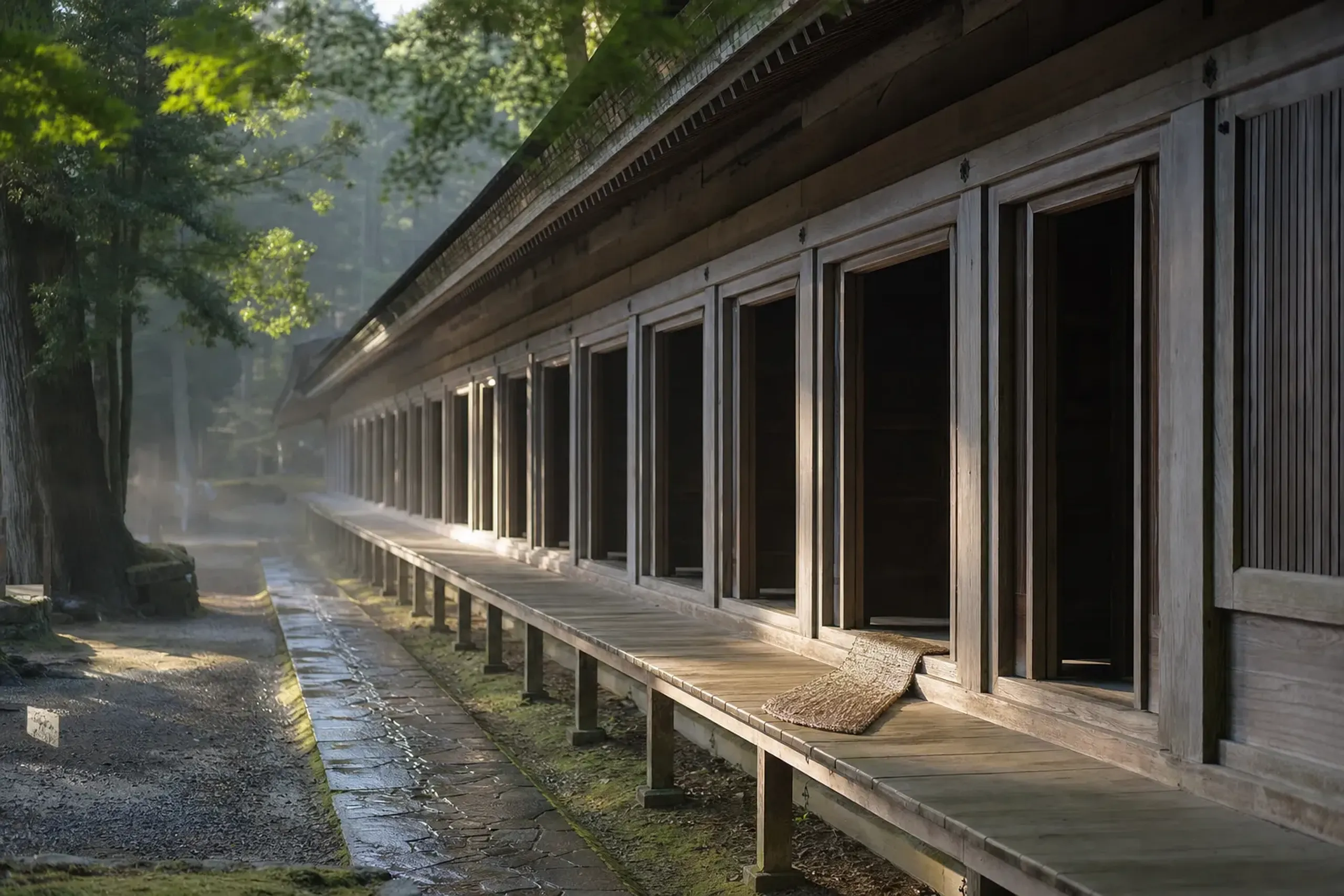
For most of the year, their doors remain firmly shut. They open exclusively during Kamiari-sai. The eastern building houses gods arriving from regions east of Izumo, while the western building shelters those from the west. The number nineteen (jūkyū) in the name does not denote a literal count of rooms. Instead, it symbolically represents the countless deities in residence.
Seeing these doors open is a rare privilege. It provides physical, checkable evidence of a nationwide belief. For travelers seeking authentic tradition, standing before the open Jūkyūsha is a profound encounter with living heritage.
Which Direction Does The Deity Face At Izumo Taisha?
The enshrined deity at Izumo Taisha faces west toward Inasa Beach, meaning worshippers praying at the front of the main hall are actually addressing the deity from the side.
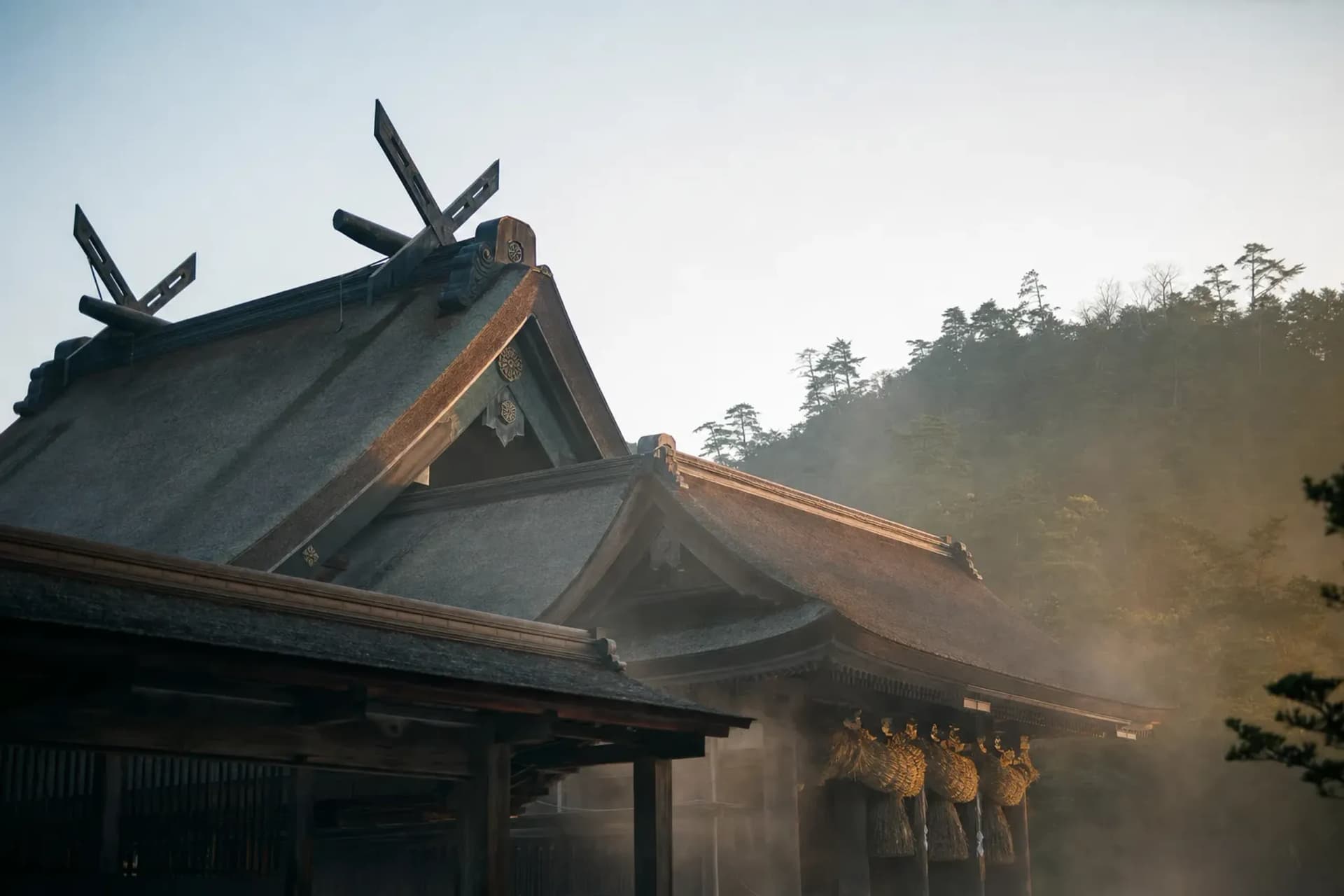
Most visitors assume a standard frontal orientation when approaching a Shinto shrine. Big mistake. At Izumo Taisha, the architecture subtly subverts expectations. The main hall (honden) is constructed in the Taisha-zukuri style, widely considered Japan’s oldest shrine architectural form. The current structure, rebuilt in 1744, stands approximately 24 meters tall. Its massive crossed roof-beam finials (chigi) run 7.9 meters long.
Because the deity faces west, those seeking to pay their deepest respects often move to the western perimeter of the honden enclosure. Knowing this detail transforms a superficial visit into an act of genuine cultural literacy.
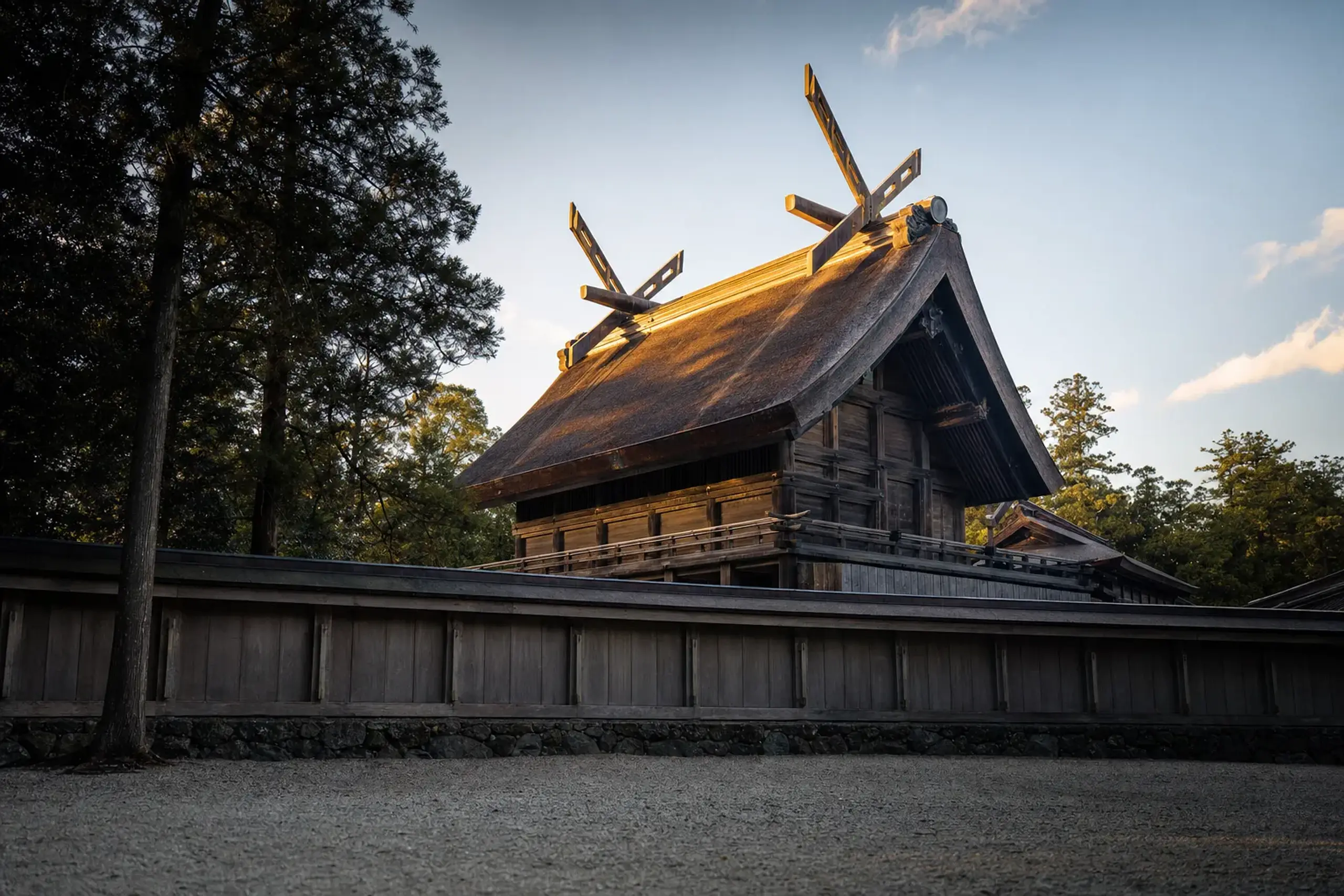
It is a detail our guides discreetly impart to guests before they approach the main hall.
Soganoyashira And The Sacred Sand Ritual
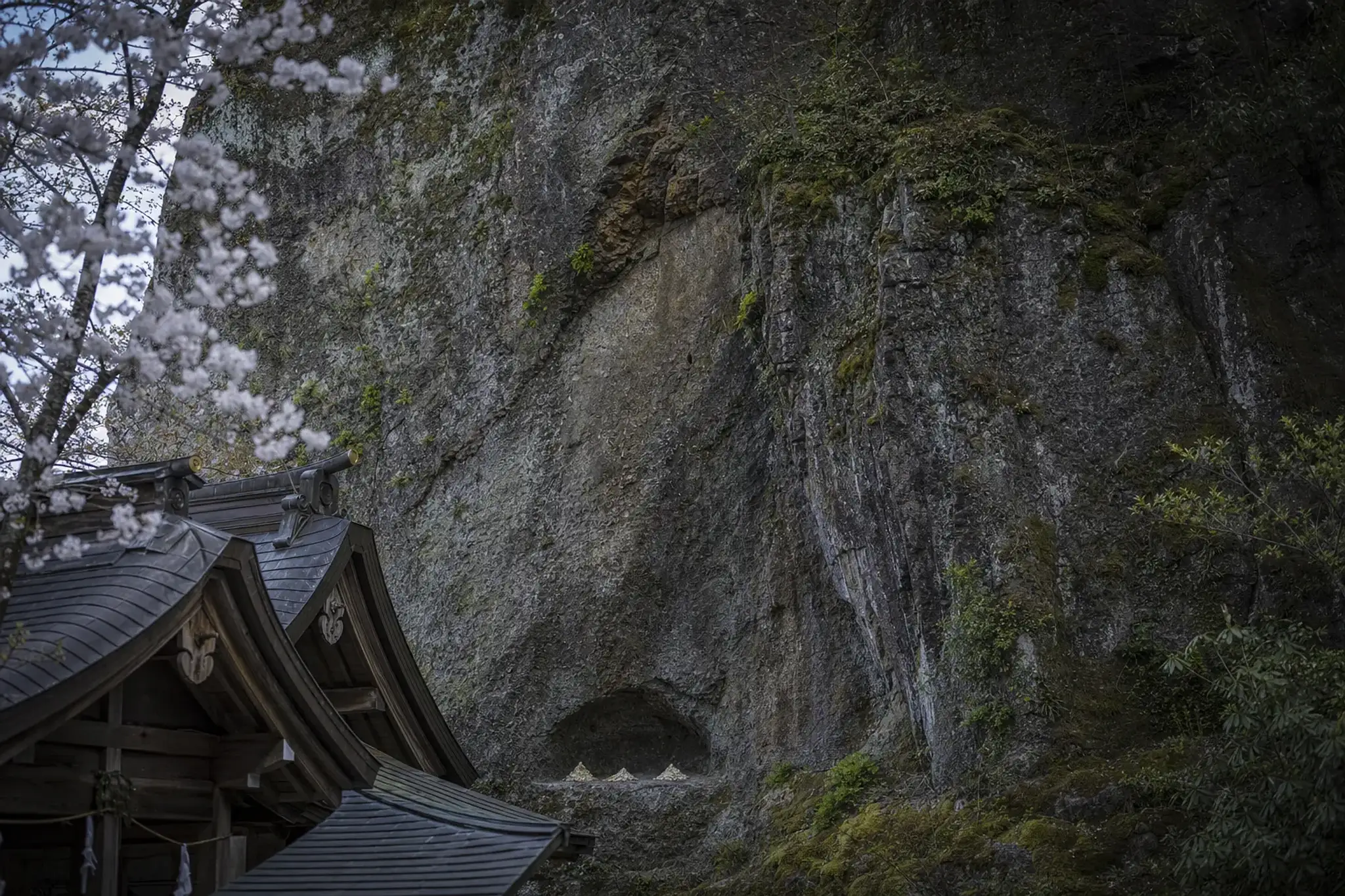
Directly behind the towering honden, resting at the very base of Mount Yakumo, is a smaller sub-shrine named Soganoyashira. It enshrines Susanoo, the formidable father-deity to Ōkuninushi. The air here feels palpably different. Older. Heavier.
Visitors are permitted to walk behind this sub-shrine and directly touch the exposed rock face of the mountain. It is a tactile connection to the sacred landscape. Furthermore, a distinct ritual practice occurs here involving sacred sand (o-suna). Worshippers collect a small amount of this specific sand, an observance entirely separate from the main hall rituals.
Understanding these granular distinctions elevates the experience. While other travelers rush through the primary gates, those guided by deep local knowledge pause in the shadows of Mount Yakumo.
Navigating Izumo and the Wider San'in Coast
The Kamiarizuki period generally falls between late October and early December, shifting annually with the lunar calendar. The primary deliberation rites (Kamiari-sai) held at the upper shrine are strictly closed to the general public. However, the atmosphere of the town, the welcoming fires on the beach, and the open doors of the Jūkyūsha remain accessible.
For guests seeking to immerse themselves fully, we highly recommend pairing the shrine visit with an evening Izumo Kagura performance.
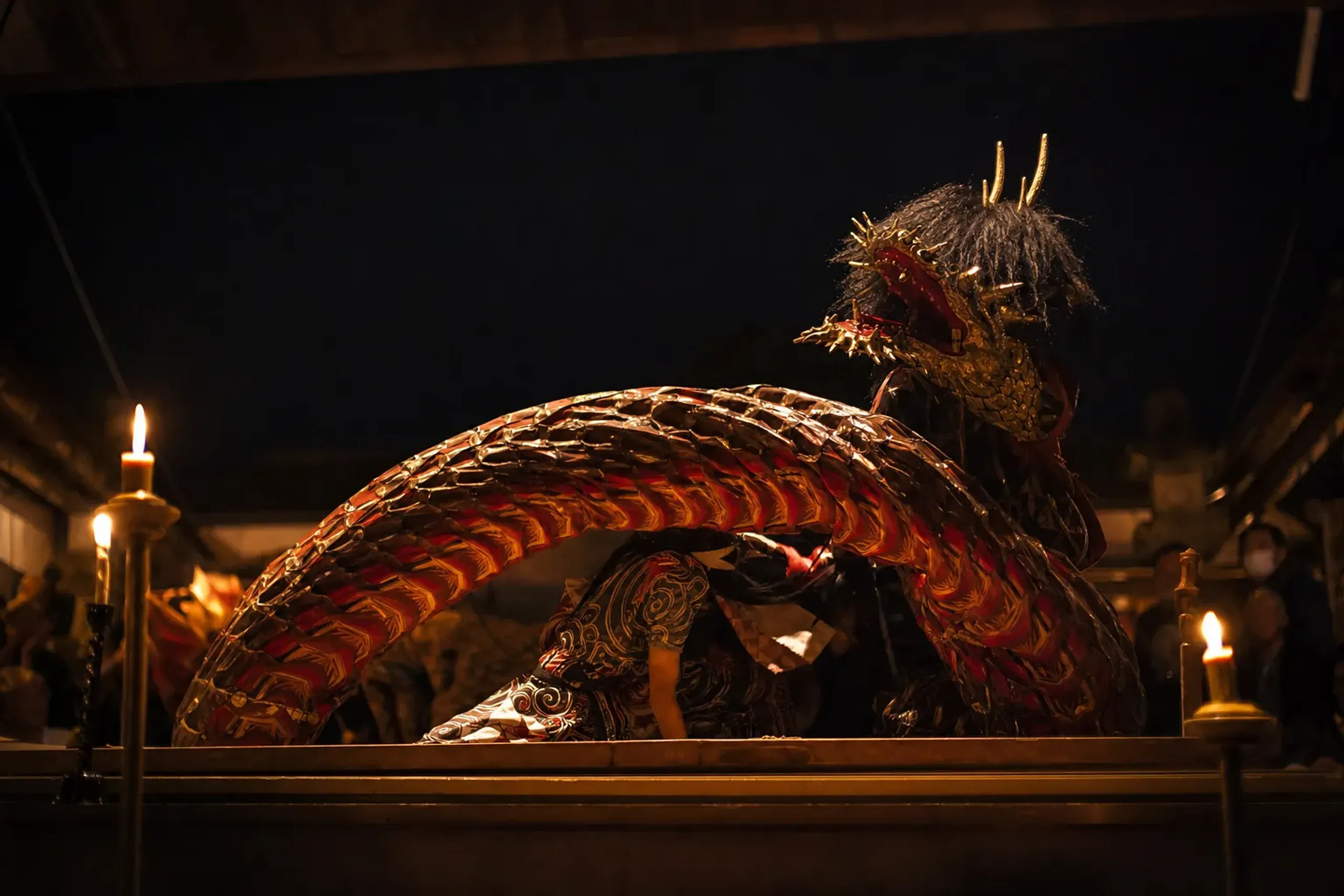
This dynamic, ritualistic theater brings the region’s mythology to life through vivid costumes and hypnotic percussion. It serves as a striking cultural climax to a day of quiet spiritual reflection.
The broader region also warrants exploration. While some travelers venture east to experience a quiet Mt. Daisen summer hike in warmer months, the autumn chill of the San'in coast offers a different kind of stark beauty. Extending a trip to explore the striking landscapes of the sand dunes in Tottori provides a striking ecological contrast to the dense cedar forests of Shimane.
Because Izumo is intentionally remote, superior logistics are mandatory. We arrange private transportation directly from Izumo Enmusubi Airport or Yonago Kitaro Airport, utilizing our executive fleet to bypass the friction of regional rail schedules.
Frequently Asked Questions
When exactly does Kamiarizuki occur in Shimane?
It occurs during the tenth month of the traditional lunar calendar, typically falling between late October and early December. The exact ceremony dates shift annually, requiring careful verification by our team before finalizing any itinerary.
Can visitors attend the Kamiari-sai deliberation rite?
No, the general public cannot attend the Kamiari-sai deliberation itself, which is held privately at the upper shrine. Visitors may, however, observe the welcoming and farewell rites along the public approaches and beach.
How do luxury travelers efficiently reach Izumo Taisha?
Most luxury travelers fly into Izumo Enmusubi Airport or Yonago Kitaro Airport, followed by private chauffeur transfers.
Relying on regional train schedules can introduce unwanted friction, making private ground logistics the preferred standard.
Is it necessary to hire a private guide for Izumo Taisha?
Yes, navigating the complex mythology and specific architectural details requires a highly knowledgeable private guide. Without expert context, the profound significance of the west-facing deity and the sacred sand ritual is easily missed.
Why Choose Japan Royal Service
Our team at Japan Royal Service specializes in unlocking Hidden Japan for sophisticated travelers. We understand that true luxury lies in absolute discretion and precise cultural context. We do not offer generic tours; we curate highly secure, deeply knowledgeable access to the country's most revered cultural sites.
When approaching an active spiritual event like Kamiarizuki, operational precision is vital. One of our team members verifies the shifting lunar dates directly with local authorities, ensuring your journey aligns flawlessly with the ceremonial calendar. We coordinate quiet arrivals, secure private lodging in a region unaccustomed to mass luxury, and provide the deep narrative context required to appreciate what you are witnessing.
Experience the profound stillness of the month with gods. For private coordination, reach our team directly via WhatsApp or LINE, or contact us here to begin planning your tailor-made Shimane journey.