In this guide
- 01The Timing Problem: Why Wisteria Often Collides With Golden Week
- 02Which Wisteria Destination Should You Choose: Kawachi Fujien, Ashikaga, Or Kameido Tenjin?
- 03Kawachi Fujien (Fukuoka Prefecture): The Tunnel-Scale, Destination-Only Choice
- 04Ashikaga Flower Park (Tochigi): The Most Famous, Most Photographed, And Most Crowded
- 05Kameido Tenjin Shrine (Tokyo): The No-Travel Wisteria Option With An Honest Scale Trade
- 06Is Wisteria Worth It During Golden Week If You Dislike Crowds?
- 07How Do Timed Entry And Access Rules Work At These Wisteria Sites?
- 08What A Private Car Changes At Kawachi Fujien Vs Ashikaga Vs Kameido Tenjin
- 09Who Should Skip Wisteria This Trip (And Feel Fine About It)
- 10How To Combine Wisteria With A Wider Itinerary Without Breaking The Trip
- 11Let Us Time Your Wisteria Perfectly
You timed cherry blossom perfectly. Flights locked, hotels confirmed, dinners planned. Then you realized wisteria peaks later. Awkwardly later.
That “second spring” often lands right as Golden Week pressure builds across Japan. You can still see wisteria beautifully. You just need to pick the right kind of wisteria trip — not simply the prettiest photo.
The Timing Problem: Why Wisteria Often Collides With Golden Week
Wisteria typically blooms weeks after cherry blossoms, and its short peak often sits close to the start of Golden Week, so flower timing can quietly become crowd timing.
Wisteria follows a similar south-to-north logic to sakura, but the calendar feels tighter. The reason is simple. The “best few days” can be brief, and the places that stage major wisteria seasons draw domestic travel at exactly the time Japan itself is on the move.
If you have already planned sakura, treat wisteria as a choice, not an automatic add-on. Sometimes it is worth extending. Sometimes the calmer, more refined move is to step away from headline flowers and lean into wabi-sabi: quiet gardens, soft rain, moss-covered stone, and time that isn’t scheduled by bloom reports.
For a focused explanation of how spring bloom fronts behave across regions, we keep our sakura method in one place. Read Cherry Blossom Timing: What the Forecast Actually Tells You, then apply that same logic later in the season.
Which Wisteria Destination Should You Choose: Kawachi Fujien, Ashikaga, Or Kameido Tenjin?
Choose Kawachi Fujien for a destination-level tunnel experience, Ashikaga Flower Park for the most famous and developed festival near Tokyo, or Kameido Tenjin for a low-logistics wisteria stop inside the city.
These three are not interchangeable. One is a deep-commitment day in Kyushu. One is the headline spring park experience near Tokyo, with predictable pressure at peak. One is a shrine garden in Tokyo where “smaller” is the whole point.
Below, we compare them using the same criteria in the same order. No hand-waving. Just the honest trade-offs you can actually plan around.
Kawachi Fujien (Fukuoka Prefecture): The Tunnel-Scale, Destination-Only Choice
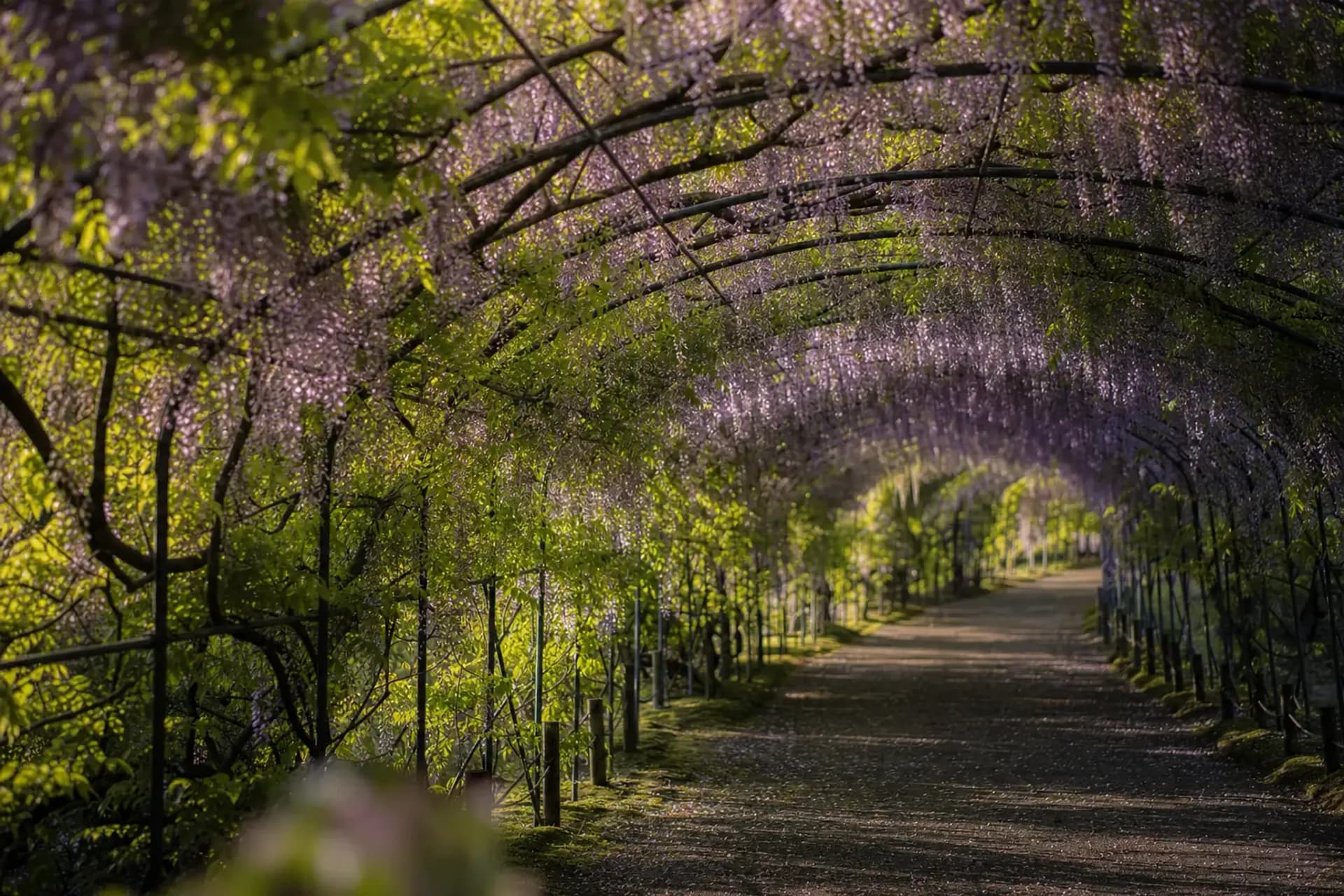
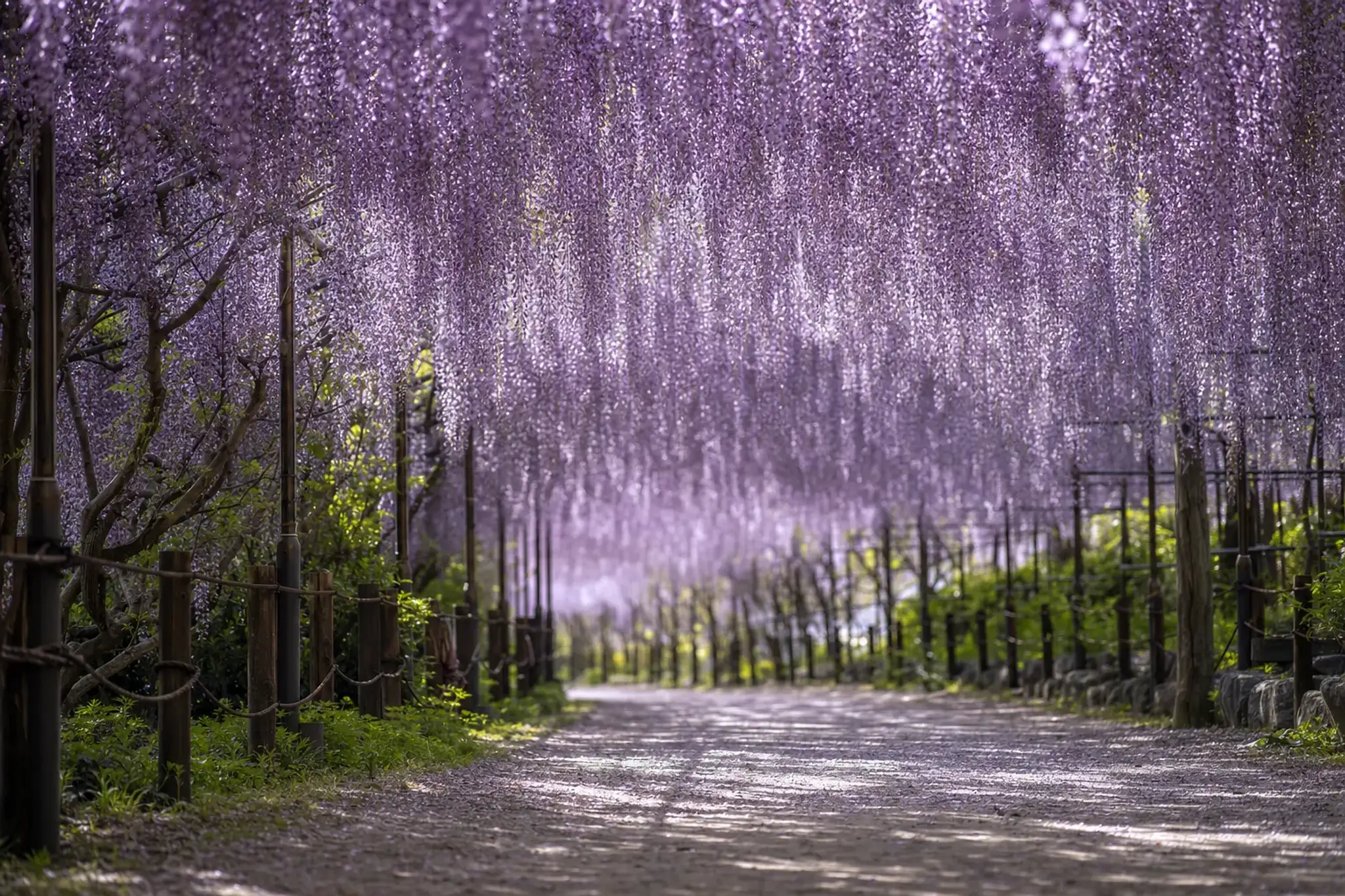
Kawachi Fujien is a private wisteria garden in Kitakyushu known for tunnel-style wisteria viewing, and entry is managed through advance arrangements during the spring opening period.
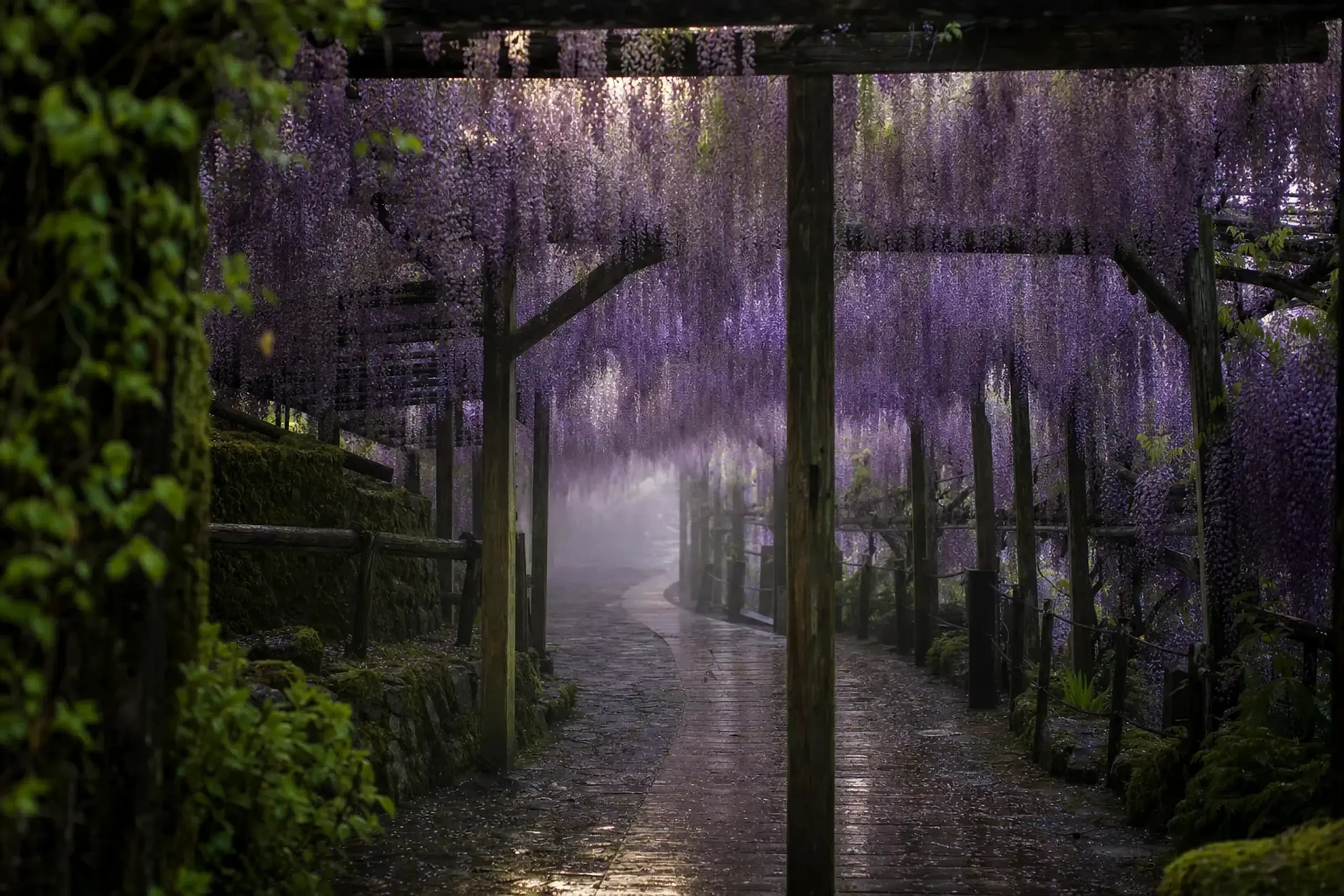
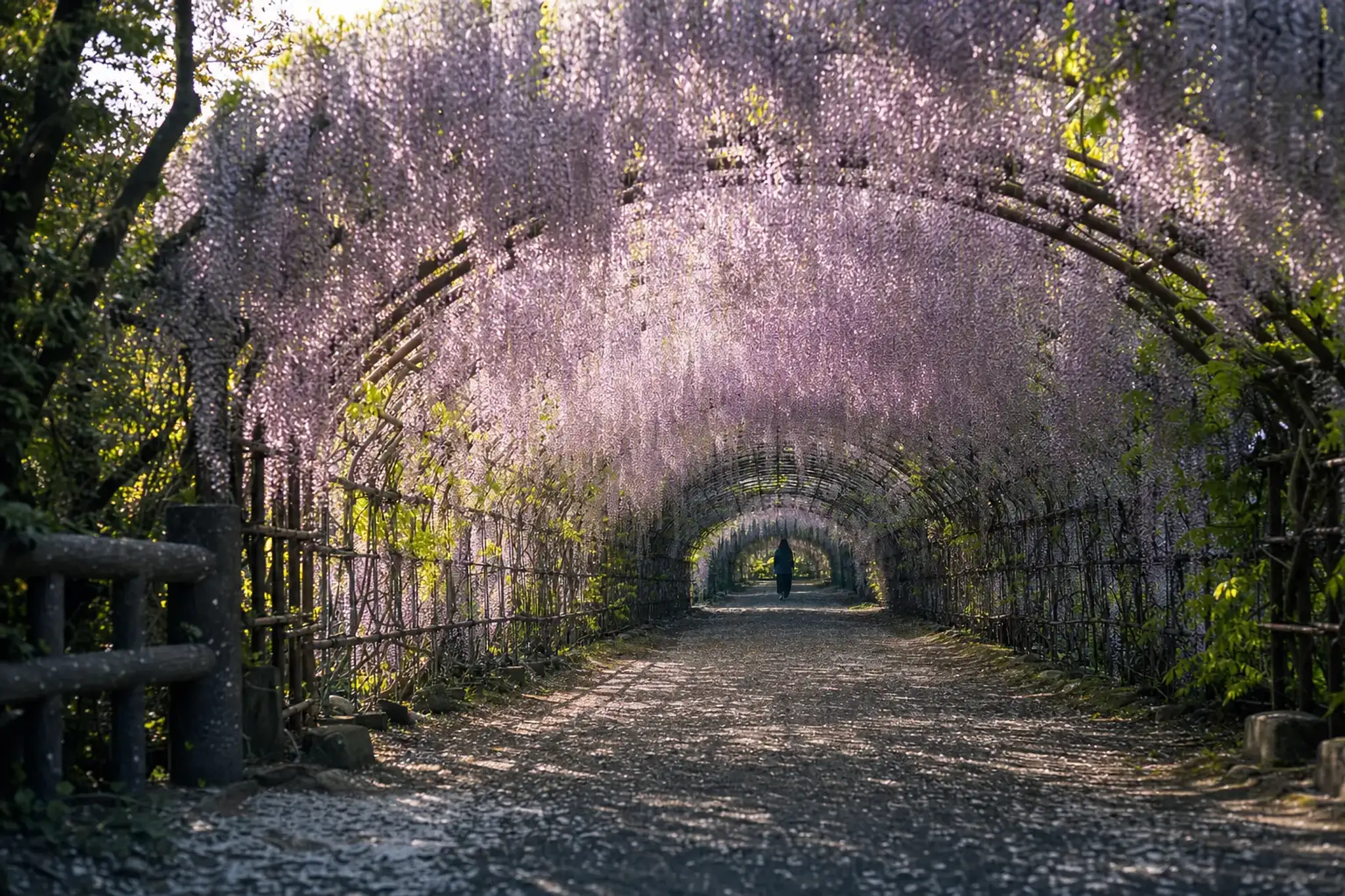
What It Actually Is Kawachi Fujien (Kawachi Wisteria Garden) is not a park you casually “drop into.” It is a purpose-built floral destination, with wisteria presented in a way that feels almost architectural. The tunnel format — long corridors of cascading violet — is the point.
Scale This is the most singular of the three. Big feeling. Long sightlines. You go for immersion, not for a quick look between appointments.
How Far From A Major Base You are committing to Kyushu routing. For many HNW travelers, that means making it a Kyushu chapter, not a Tokyo add-on. The upside is clarity: one major floral target, then you move on.
Crowd Character Because it is farther and more specialized, it can feel slightly more insulated from the day-trip surge that hits Tokyo-area sites during peak holiday movement. It still draws heavy interest. The difference is who is willing to travel that far for a single garden.
Who Should Choose It Choose Kawachi Fujien if you want one wisteria experience that feels like a destination in its own right, and you are comfortable building a day around access, timing, and a long drive rhythm.
If you are already considering Kyushu for spring, keep the broader geography in view. Our team has a separate Kyushu routing piece for context: The Kyushu Onsen Circuit.
Ashikaga Flower Park (Tochigi): The Most Famous, Most Photographed, And Most Crowded
Ashikaga Flower Park is the best-known wisteria venue near Tokyo, and its Great Wisteria Festival runs from April 11, 2026 to May 20, 2026.
What It Actually Is This is a full, developed flower park experience with a named seasonal festival. The official 2026 festival page describes over 350 wisteria trees, and it also references azaleas in bloom. It is designed for viewing, walking, and staying on-site long enough to feel the sequence of gardens unfold.
Scale Largest “event” feel of the three. Not subtle. The park’s fame is earned — but fame has consequences.
How Far From A Major Base From Tokyo, this is the easiest headline wisteria day trip to justify. That proximity is exactly why so many people do it. Convenient. Busy.
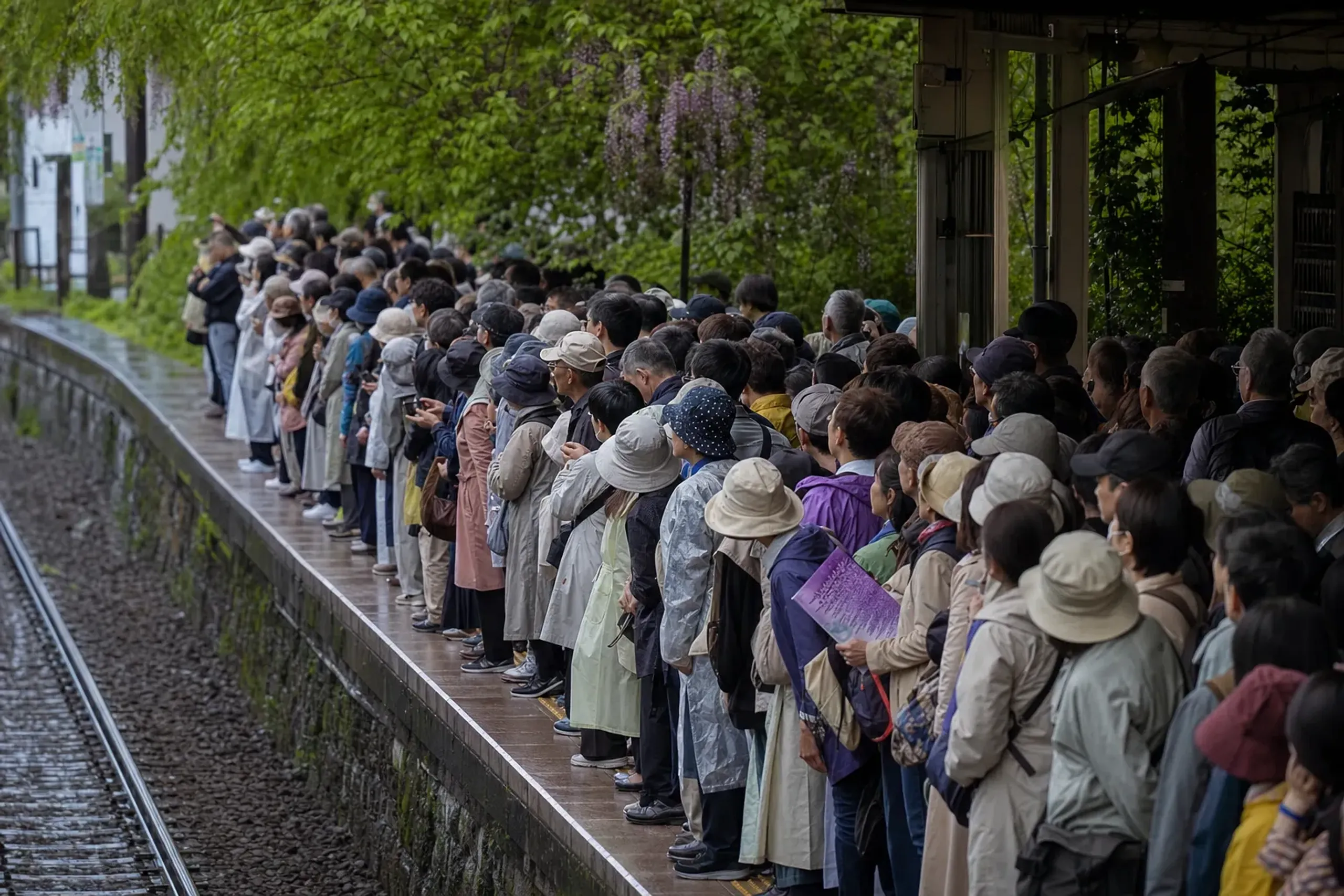
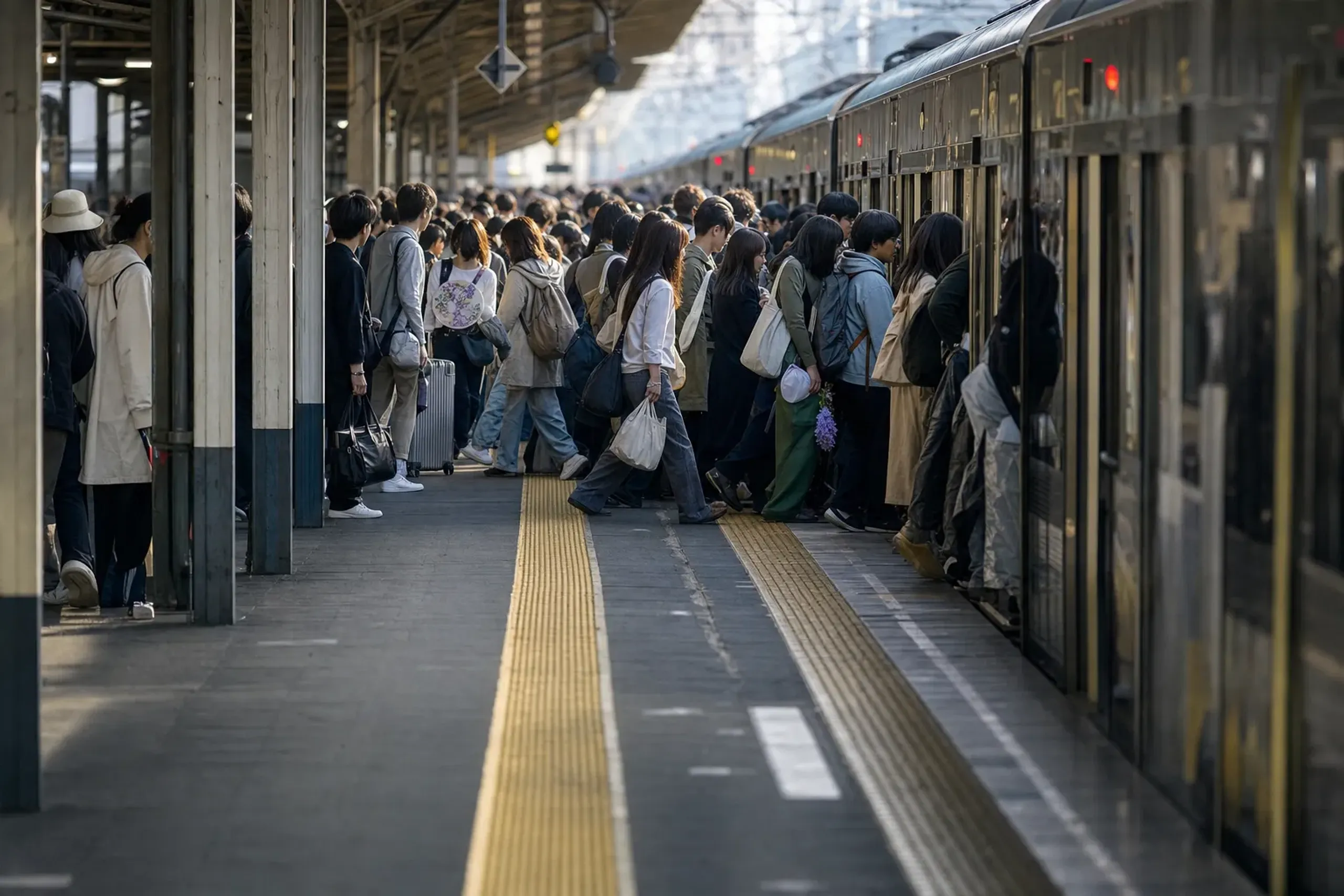
Crowd Character This is where Golden Week pressure can become personal. Trains fill. Platforms compress. Entry lines and internal pathways can feel like a slow tide rather than a stroll. If you dislike being carried by the group pace, plan like a skeptic — and, ideally, let someone else absorb the logistics on your behalf.
Who Should Choose It Choose Ashikaga if you want the classic “Japan wisteria” visual story, you value a polished venue, and you can be disciplined about timing so the day doesn’t turn into a patience test.
Kameido Tenjin Shrine (Tokyo): The No-Travel Wisteria Option With An Honest Scale Trade
Kameido Tenjin Shrine offers a wisteria festival experience inside Tokyo, trading grand scale for simple logistics and an easy fit into a city itinerary.
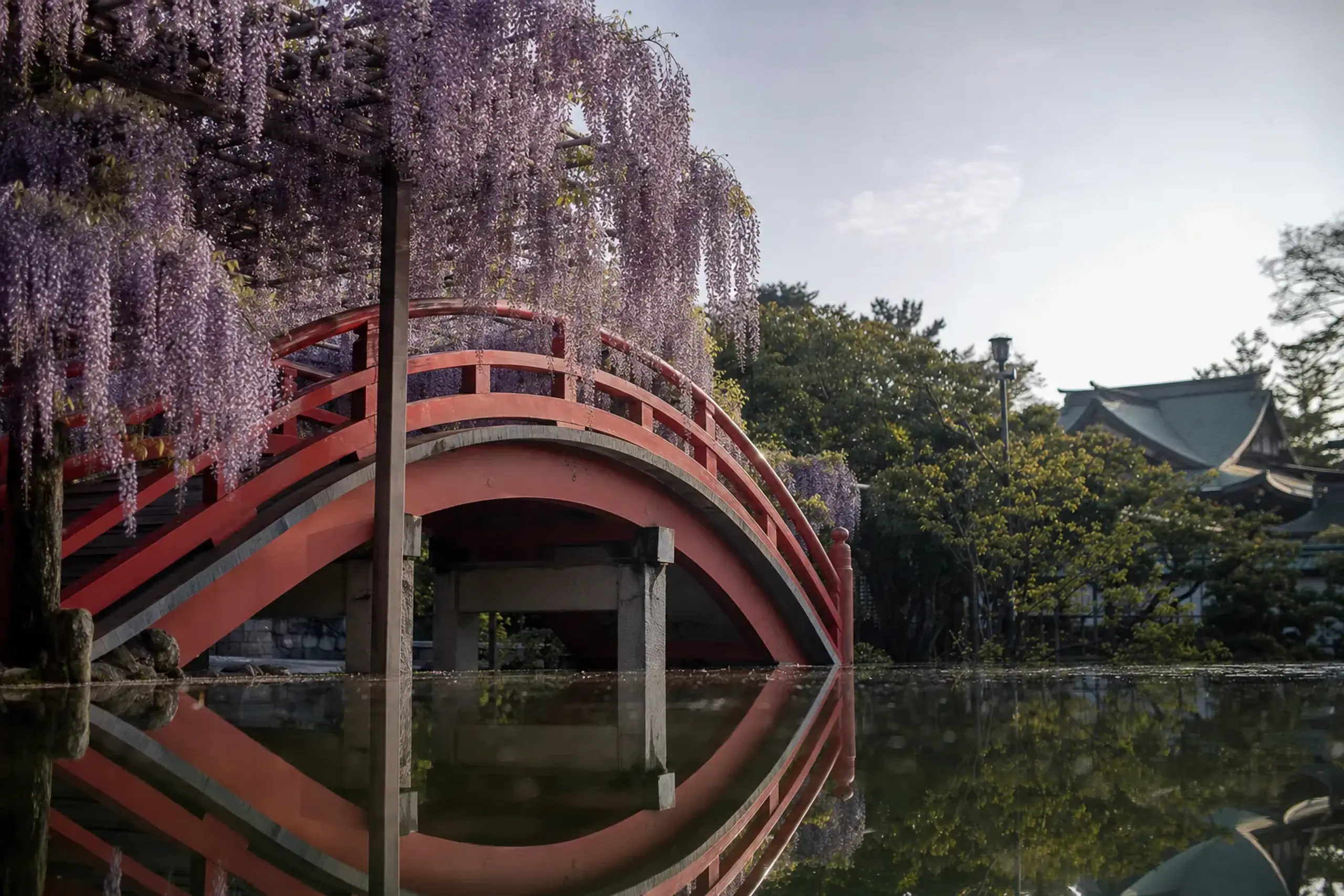
What It Actually Is Kameido Tenjin Shrine is a shrine setting first, and a wisteria stop second. You come for a small garden moment in the middle of the city — violet blooms mirrored over the arched drum bridge — not for a long wandering park day. A brief visit can still feel complete.
Scale Modest. That is the advantage. You can treat it as a calm hour rather than an expedition.
How Far From A Major Base You are already in Tokyo. That’s the whole appeal. No regional transit planning, no day-trip fatigue, no “we lost half the day on logistics” regret.
Crowd Character During peak domestic travel periods, Tokyo is never empty. Still, Kameido Tenjin’s main crowd dynamic is local density, not mass arrivals from a single transport node. You can often improve the experience simply by choosing your time of day with care — a quality our team treats as second nature.
Who Should Choose It Choose Kameido Tenjin if you want wisteria without building your trip around it, or if your spring dates are fixed and you want a low-risk, in-city flower visit.
If you are staying in Tokyo and want a structured, low-movement plan, we can create a bespoke itinerary shaped entirely around your dates and pace.
Is Wisteria Worth It During Golden Week If You Dislike Crowds?
If you strongly dislike crowds, wisteria during Golden Week is often not worth structuring a trip around — unless you choose lower-logistics sites and accept that peak bloom may come with peak congestion.
This is the trade-off most guides glide past. Wisteria’s peak can be glorious, but the national calendar can make the experience feel louder than the flower deserves. Ashikaga and Kameido Tenjin sit closer to the domestic travel surge, so the crowd penalty is more predictable there.
Kawachi Fujien, being farther and more specialized, can be slightly more buffered. Not empty. Just different. You still need to respect managed entry and the reality that scarcity draws attention.
If you want “spring beauty” without “spring crush,” consider making wisteria a light touch. One Tokyo shrine garden. One evening walk. Then let the rest of the trip lean into Hidden Japan: small towns, craft studios kept for private introduction, quiet coasts — places that don’t spike on a holiday graph. This is where a well-connected planner earns their keep, opening doors to the Japan that a search engine cannot surface.
How Do Timed Entry And Access Rules Work At These Wisteria Sites?
At major wisteria venues, entry is often managed through advance systems and controlled capacity, so you should expect time-specific access rules rather than fully open, walk-in admission.
Kawachi Fujien’s official site states that it operates a reservation/advance ticket system, and it posts planned opening periods with bloom-dependent changes.
That combination matters. It means access is part of the experience design, not an afterthought — and securing the right window quietly, ahead of time, is precisely the sort of anticipatory care that separates a smooth day from a scramble.
Ashikaga Flower Park’s festival has a published 2026 date range, which helps planning. Even with a long festival window, the wisteria itself still has a peak. You want your day to be adjustable, because the park calendar is broader than the flower’s best moment.
Kameido Tenjin’s festival information is best treated as a current-status check, not a tradition you assume is identical every year. The GO TOKYO event listing format and its update stamps are useful when you are confirming what is actually happening on the ground.
What A Private Car Changes At Kawachi Fujien Vs Ashikaga Vs Kameido Tenjin
A private car changes the wisteria day by shifting the hardest part — arrival and departure — from public crowd flow to your own pace, which matters most at Ashikaga and most strategically at Kawachi Fujien.
Kawachi Fujien Distance is the main friction. A car day lets you treat the garden as a single, intentional destination without forcing an overnight purely for transit convenience. It also gives you control of pacing: you can arrive early, linger under the blossoms, then leave before the next wave.
Ashikaga Flower Park The choke point is often the transit rhythm. Trains can be efficient, but when domestic travel spikes, efficiency can still feel crowded. A chauffeured day reduces the sensory load — no packed platforms, no timetable anxiety, no standing-room ride after a long walk.
Kameido Tenjin Shrine The advantage is simplicity.
Tokyo traffic exists, yet the biggest gain is not speed. It is discretion and comfort: arrive, step out, take your time, then move on to the next appointment without negotiating busy stations or curious eyes.
The first time you consider private transportation in Japan, the vehicle matters more than people expect. Quiet suspension, clean sightlines, and a driver who reads your pace change the whole day. Our transportation overview explains how we approach it.
Who Should Skip Wisteria This Trip (And Feel Fine About It)
You should skip wisteria if you only want one major flower event per trip, if your dates fall in peak domestic holiday movement, or if your travel style turns sour when plans must orbit a bloom peak.
Skipping is not a failure. It can be a smart edit. A spring trip can still feel complete with gardens, craft, food, and a single quiet shrine visit that does not require a regional detour.
In our experience, the biggest mistake is forcing Ashikaga as “one more box” after a sakura itinerary that already had crowd exposure. That is when travelers start resenting Japan for being popular. Japan isn’t the problem. The calendar is.
If you want an alternative spring floral anchor that is less tied to a single mega-venue, consider wisteria in historically layered shrine contexts — such as Kasuga Taisha’s Manyo Botanical Garden in Nara, which the JNTO highlights for early May bloom. That becomes a cultural stop, not a crowd event, and it can be paired with the kind of quiet imperial-class settings and craft encounters that give a spring itinerary genuine depth.
How To Combine Wisteria With A Wider Itinerary Without Breaking The Trip
The cleanest way to add wisteria is to match the site to your base — Kameido Tenjin for Tokyo days, Ashikaga as a dedicated Tokyo-area day trip, and Kawachi Fujien only when Kyushu is already in your plan.
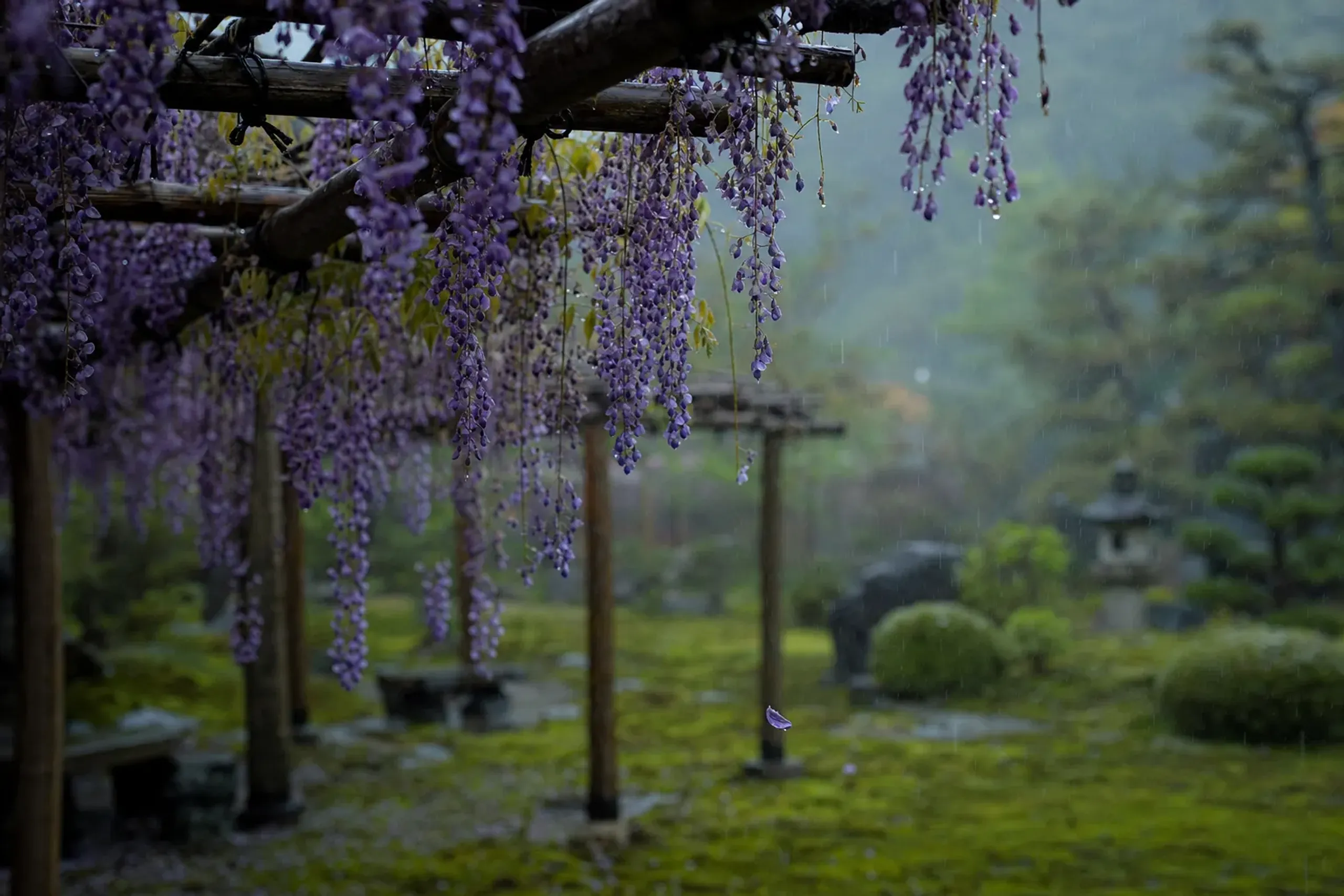
Option A: Tokyo Stay, Minimal Disruption
Keep Tokyo as your base and use Kameido Tenjin as your wisteria punctuation mark. Short. Satisfying.
- Pair it with a Japanese garden visit where restraint matters more than spectacle — the wabi-sabi register of moss, water, and stone.
- Schedule it on a weekday if your trip overlaps domestic holidays.
- Leave space for a second stop nearby so the day feels rounded, not rushed.
Option B: Tokyo Stay, One “Big” Wisteria Day
Use Ashikaga Flower Park as a single, committed day outside Tokyo. Don’t stack it with other far-flung stops.
- Travel early, then plan a calm meal afterward rather than sprinting back into central Tokyo.
- Assume the park will be busy at peak bloom. Your goal is to reduce friction, not deny reality.
- Use the fact-based anchor: the Great Wisteria Festival runs April 11, 2026 to May 20, 2026.
Option C: Kyushu Chapter, Destination-Style Wisteria
If Kyushu is already part of your itinerary, Kawachi Fujien becomes plausible and powerful. If Kyushu is not in your plan, treat it as a separate trip idea.
- Build the day around managed entry rather than improvisation.
- Keep the rest of the Kyushu routing calm so the garden remains the peak moment.
- Accept that access constraints are part of why the experience stays controlled — and quietly exclusive.
Let Us Time Your Wisteria Perfectly
Wisteria rewards precision — the right site, the right day, the right hour, arranged so the flower feels like a private moment rather than a shared queue. That is exactly the kind of quiet choreography Japan Royal Service handles for our guests, from managed-entry reservations to discreet arrival by car and the calmer corners of the season most visitors never find.
Tell us your dates, your base, and how much movement you are willing to trade for beauty, and we will build the wisteria chapter around you. To begin a confidential, tailor-made proposal, contact us here.