In this guide
- 01Which Airport, And What The Distance Costs On Arrival Day
- 02Digital Pre-Clearance: Visit Japan Web Before You Fly
- 03Arrival Time At A Ryokan, Against A Kaiseki That Is Plated To A Schedule
- 04Luggage Forwarded Ahead, Versus Carried Between Cities
- 05Shinkansen Oversized Baggage: The Rule That Comes With A Fee
- 06One Base With Day Trips, Versus Moving Hotels Nightly
- 07Booking Windows That Open On A Fixed Date And Close Within Hours
- 08Per-Person Pricing Inclusive Of Two Meals, And The Budgeting Error It Causes
- 09Dietary Requirements Briefed Against A Menu Planned In Advance
- 10Ground Transport Held On Standby, Versus Dispatched Per Journey
- 11Where Rail Beats Air, And Where It Does Not
- 12Language Requirements At Gated Experiences, And Who Supplies The Interpreter
- 13Frictionless Kyoto: Planning Around Crowds, Not Through Them
- 14A Note On Passports At Check-In
- 15Frequently Asked Questions
- 16Why Work With Japan Royal Service
Most of the friction on a Japan trip is decided months before the plane lands. The choices look administrative. They are not. A booking window that closed in January cannot be reopened in April by spending more, and the calendar, not the budget, is what usually breaks a trip.
What follows is a set of decisions, each with a real answer. Some are irreversible. Some are not. We will say which. The register here is operational, not inspirational: arrive at a ryokan after six and the kaiseki is already plated. That is the kind of consequence this page is about.
Which Airport, And What The Distance Costs On Arrival Day

Tokyo has two international gateways. They are not interchangeable. Narita (NRT) sits in Chiba, well east of the city; Haneda (HND) sits inside Tokyo, close to the bay.
The gap shows up on arrival day, when you are tired and the light is going. From Haneda, central Tokyo hotels are roughly 30 to 45 minutes by private car in normal traffic. From Narita, plan on 60 to 90 minutes and often more. That difference is an hour of your first evening, spent on an expressway instead of a bath.
The recommendation is plain. Where a flight schedule allows, choose Haneda for a Tokyo stay. When Narita is the only option, do not stack a dinner reservation against the arrival. Give the drive room. Our concierge at Japan Royal Service builds a buffer into arrival day for exactly this reason, and coordinates private chauffeured transport so the transfer is one fixed thing rather than a scramble at the taxi rank.
Digital Pre-Clearance: Visit Japan Web Before You Fly
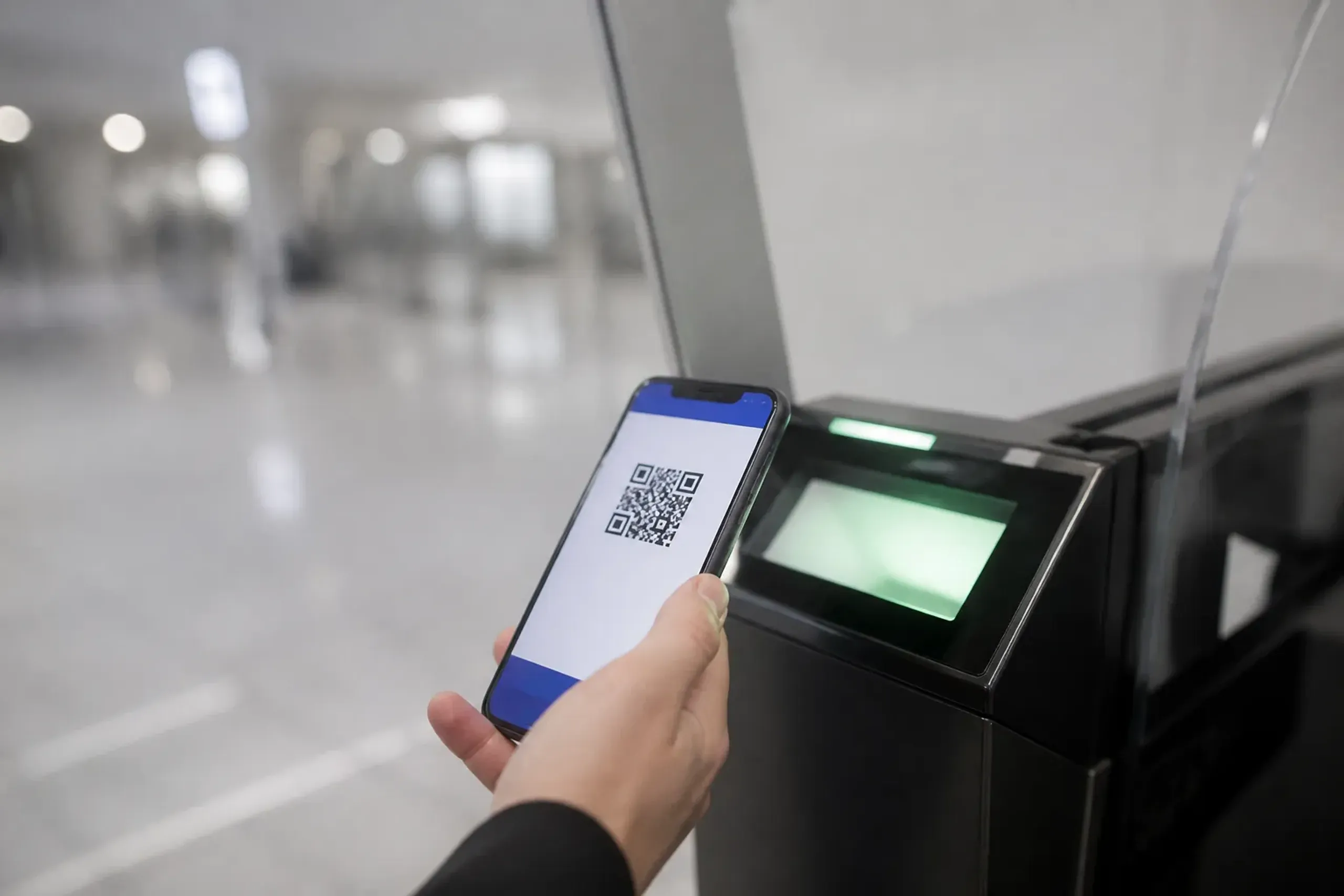
This is the cheapest friction-reducer on the entire trip, and it is free. Japan's Immigration Services Agency recommends using Visit Japan Web to submit entry record information electronically for smoother immigration procedures. The Digital Agency of Japan describes it as the service that handles immigration, customs, and tax-free shopping procedures online.
Set it up before departure, not in the immigration hall. Register your details, generate the QR codes, and screenshot them. Japan Customs notes e-Gates are available at seven international airports and references Visit Japan Web for the process. One detail matters: since January 25, 2024, 2D codes created by the older Customs Declaration App are no longer effective, because Japan unified the codes on Visit Japan Web. An outdated app is a live source of airport friction.
Key fact: Codes from the retired Customs Declaration App stopped working in January 2024. Use only the current Visit Japan Web codes. If someone in your party set up the old app on a previous trip, delete it before you go.
There is one more calendar item for some travellers. For US applicants, Japan's consular guidance notes visa fees will be revised effective July 1, 2026, and that eVISA online application is available only for a short-term tourism visa under 90 days, single entry. The embassy also flags missing itinerary detail as a common application problem, which is a good argument for having your plan documented before you apply.
Arrival Time At A Ryokan, Against A Kaiseki That Is Plated To A Schedule
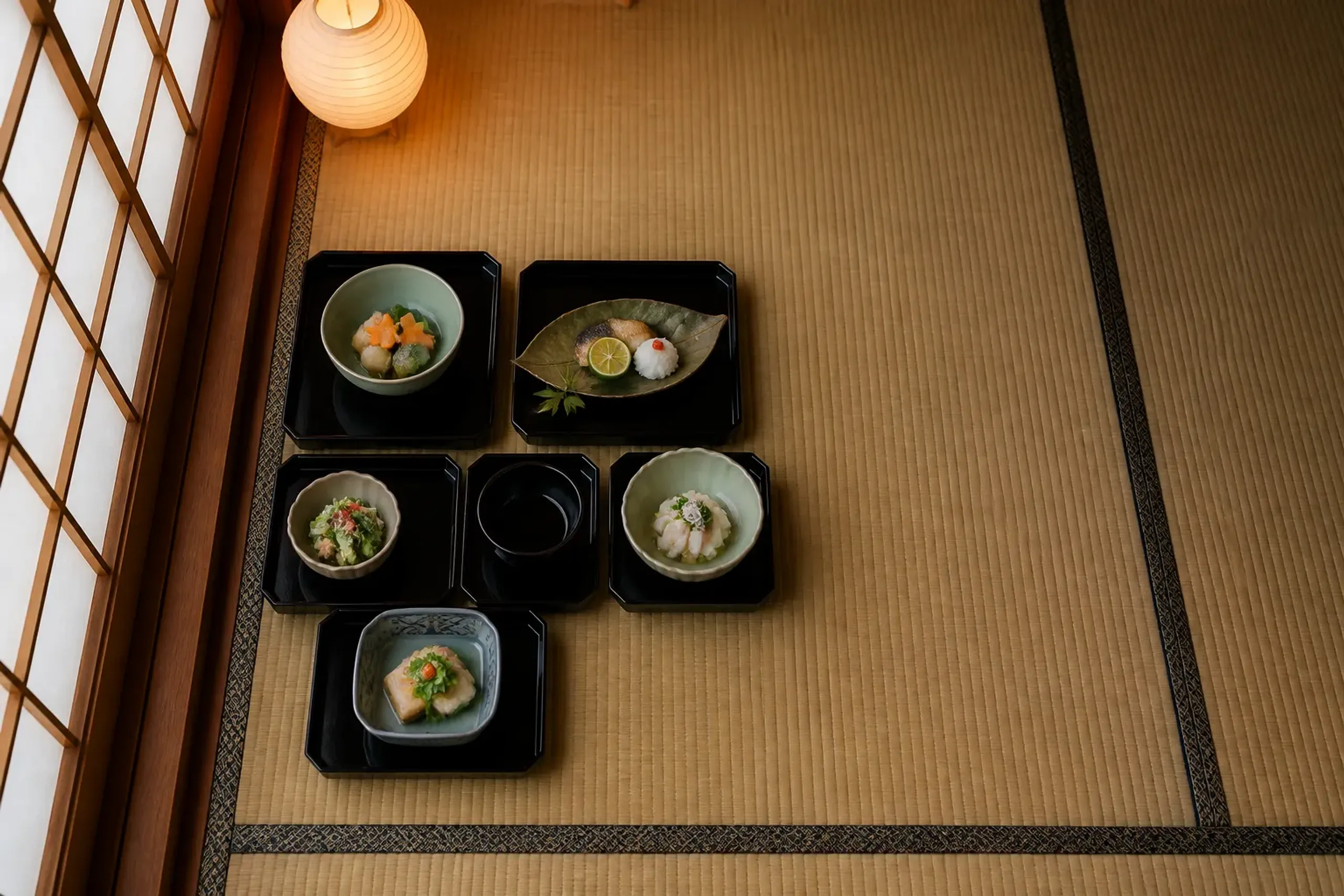
A ryokan dinner is not a restaurant you drop into. Kaiseki is plated to a schedule, course by course, timed to when you sit down. Many ryokan serve the evening meal in a fixed window, and the kitchen builds the night around it.
Arrive late and you do not simply eat late. You arrive to a meal that has been held, or shortened, or served in a rush that undoes the whole point of the room. The bath, the yukata, the slow unwinding before dinner all collapse into a hurried hour.
Get to the ryokan by mid-afternoon, ideally between three and four. That leaves time for the onsen, a change of clothes, and dinner at the pace it was designed for. When we build a day that ends at a ryokan, our team at Japan Royal Service treats the arrival window as a hard constraint and works backward from it. See our guidance on ryokan reservations for how the timing fits together.
Luggage Forwarded Ahead, Versus Carried Between Cities
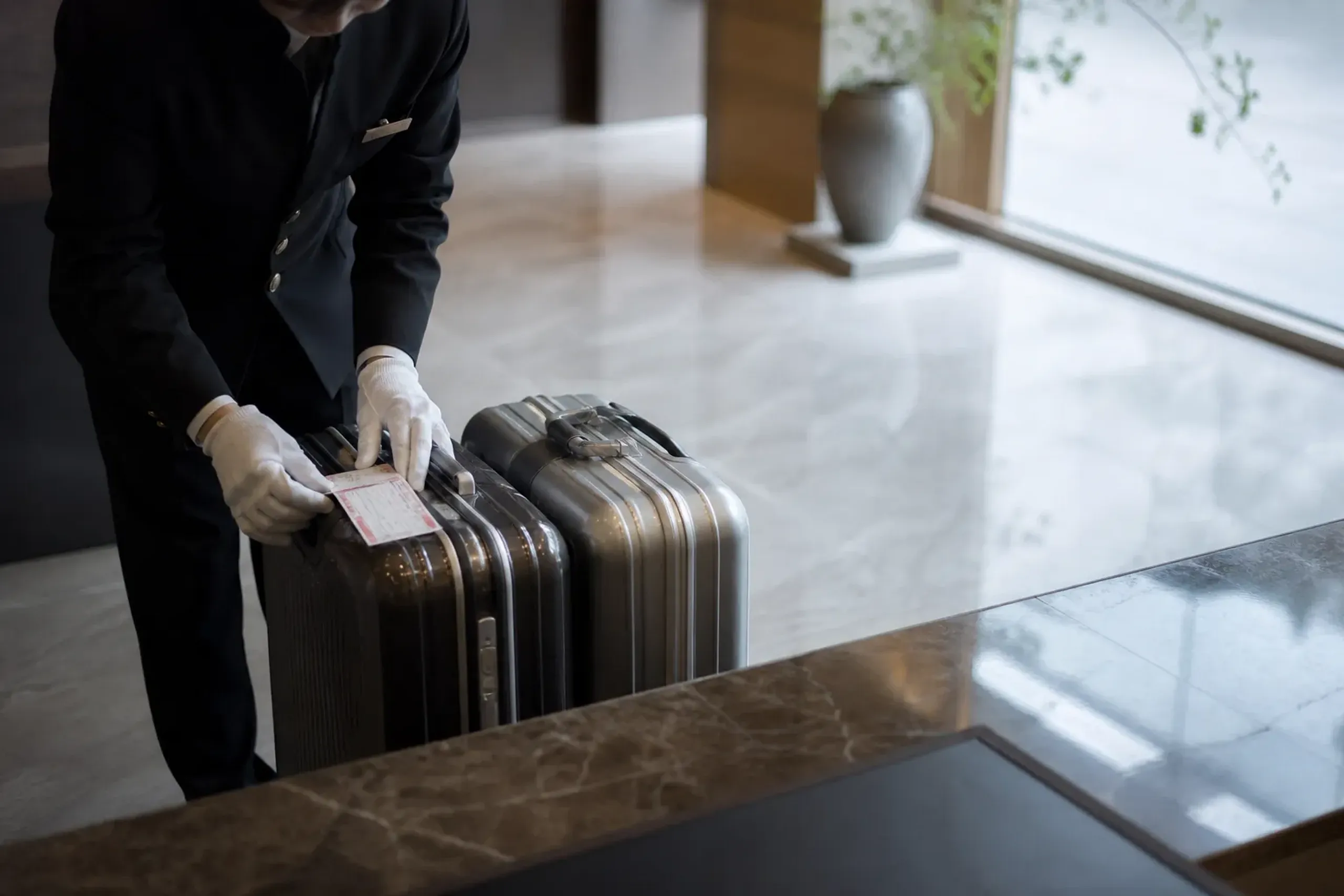
This is the invisible decision that separates a trip that runs from one that mostly runs. Japan's official tourism site explains 'Hands-Free Travel' as luggage delivery and storage that lets travellers move without hauling heavy bags, with airport-to-hotel and hotel-to-hotel delivery both available. Yamato Transport's takkyubin service, which began in the 1970s and remains a market leader, is the everyday tool for this.
The mechanic is simple. You hand your large cases over at one hotel's front desk, and they arrive at the next. You travel between cities with an overnight bag. No wrestling suitcases up station stairs, no blocking a Shinkansen aisle.
There is a timing rule that catches people out. Standard takkyubin between cities typically takes about a day, so the bag you send from Tokyo on the morning you leave will not be waiting in Kyoto that same afternoon. Pack an overnight bag with one change of clothes and anything you need that first night. The recommendation: forward the heavy cases, carry the overnight bag, and let the hotels handle the rest. Our concierge choreographs the handover points so a bag never lands at a hotel before you have a room to receive it.
Shinkansen Oversized Baggage: The Rule That Comes With A Fee
If a large case does travel with you on the bullet train, there is a rule worth knowing before the platform. JR Central states that passengers with oversized baggage on applicable Shinkansen services who have not reserved will be charged a baggage fee of 1,000 yen, tax included, and that a reservation can be made by selecting a 'Seat with an oversized baggage area.' JR East publishes its own guidance for its network, which differs from the Tokaido and Sanyo context.
The consequence of getting this wrong is small in money and large in friction: an on-board charge and, worse, a case with nowhere to go on a full train. The clean answer is usually to sidestep the whole question. Forward the large luggage by takkyubin and travel light, which is the cheap and obvious choice on the busy Tokyo–Kyoto–Osaka corridor. Reserve the oversized-baggage space only when you genuinely must keep a big case with you.
One Base With Day Trips, Versus Moving Hotels Nightly
Every hotel change costs a morning. Checkout, luggage handover, transfer, check-in, and the small disorientation of a new room. Do that five nights running and the trip becomes a series of departures.
A single base with day trips trades some geographic reach for a great deal of calm. You unpack once. Kyoto works well this way, with Nara, Osaka, and the wider Kansai region all reachable and returnable in a day. Tokyo works even better as a base, with Hakone and Nikko within comfortable range.
The recommendation depends on your appetite for movement, and this one is reversible until you commit the bookings. For a first trip, or a restorative one, a two-base plan — say Tokyo and Kyoto — usually beats a hotel every night. We often build a tailor-made journey around one or two anchors precisely so the days go to Japan and not to logistics.
Booking Windows That Open On A Fixed Date And Close Within Hours
Here is the central argument, stated plainly. Friction is decided by the calendar, not the budget. The most coveted rooms, tables, and cultural access open on a fixed date, in some cases six months to a year ahead, and the best of them are gone within hours or days.
A window that closed three months ago cannot be reopened by spending more. This is the single most important sentence on the page. Money buys many things in Japan; it does not buy a reservation that no longer exists.
The recommendation is to plan the fixed-date items first and let the flexible ones fill in around them. Know when each window opens and be ready on the day. This is where a concierge earns their place — not by conjuring inventory that is gone, but by having your details prepared and submitting the moment a window opens. We keep a running calendar of these dates for our clients at Japan Royal Service.
Per-Person Pricing Inclusive Of Two Meals, And The Budgeting Error It Causes
Ryokan are commonly priced per person, per night, with dinner and breakfast included. This is standard, and it quietly breaks the mental model of travellers used to per-room hotel rates.
Two errors follow. First, people compare a per-person ryokan rate against a per-room hotel rate and think the ryokan is far dearer than it is. Second, they forget the price already contains two significant meals, so the day's food budget is smaller than it looks. A ryokan night is lodging and dinner and breakfast, not lodging alone.
The recommendation: read the rate as per person with two meals, and budget the surrounding days accordingly. It changes the arithmetic in your favour more often than not.
Dietary Requirements Briefed Against A Menu Planned In Advance
A kaiseki menu is designed ahead of time and shops to it. The chef buys for the courses that are coming. This is a strength — and a constraint if your table has a restriction the kitchen learns about at the door.
Tell them at the door and, at best, a course is swapped clumsily; at worst, an allergy is not properly accommodated because the ingredients were already committed. Vegetarian, shellfish, gluten — these need lead time, not a mention on the night.
Brief every dietary requirement well in advance, in Japanese, with specifics rather than labels. 'No dashi made with bonito' is useful; 'vegetarian' alone is often misread, because Japanese stock is frequently fish-based. Our concierge relays these to the kitchen in writing before arrival, so the menu is planned around your table rather than repaired at it.
Ground Transport Held On Standby, Versus Dispatched Per Journey
A car dispatched per journey is ordered when you need it and released when you are done. A car on standby waits for you, all day, wherever you are. The difference is not luxury for its own sake; it is time and certainty.
Dispatch is cheaper and fine for predictable point-to-point moves. It fails on a full day of unhurried stops, where 'wait ten more minutes' is worth more than a saved fare, and where a car circling for a pickup slot costs you the calm you came for. Standby costs more and buys back the whole day's flexibility.
The recommendation: dispatch for airport transfers and single hops, standby for full touring days and for any day where the schedule should bend to you rather than the reverse. Our fleet — the Lexus LM 500, the Mercedes V-Class, the Toyota Alphard for families — is held on standby for touring days so the car is simply always there. Details are on our private chauffeur and transport page, and for the longer reaches we also coordinate helicopter and luxury hotel packages.
Where Rail Beats Air, And Where It Does Not
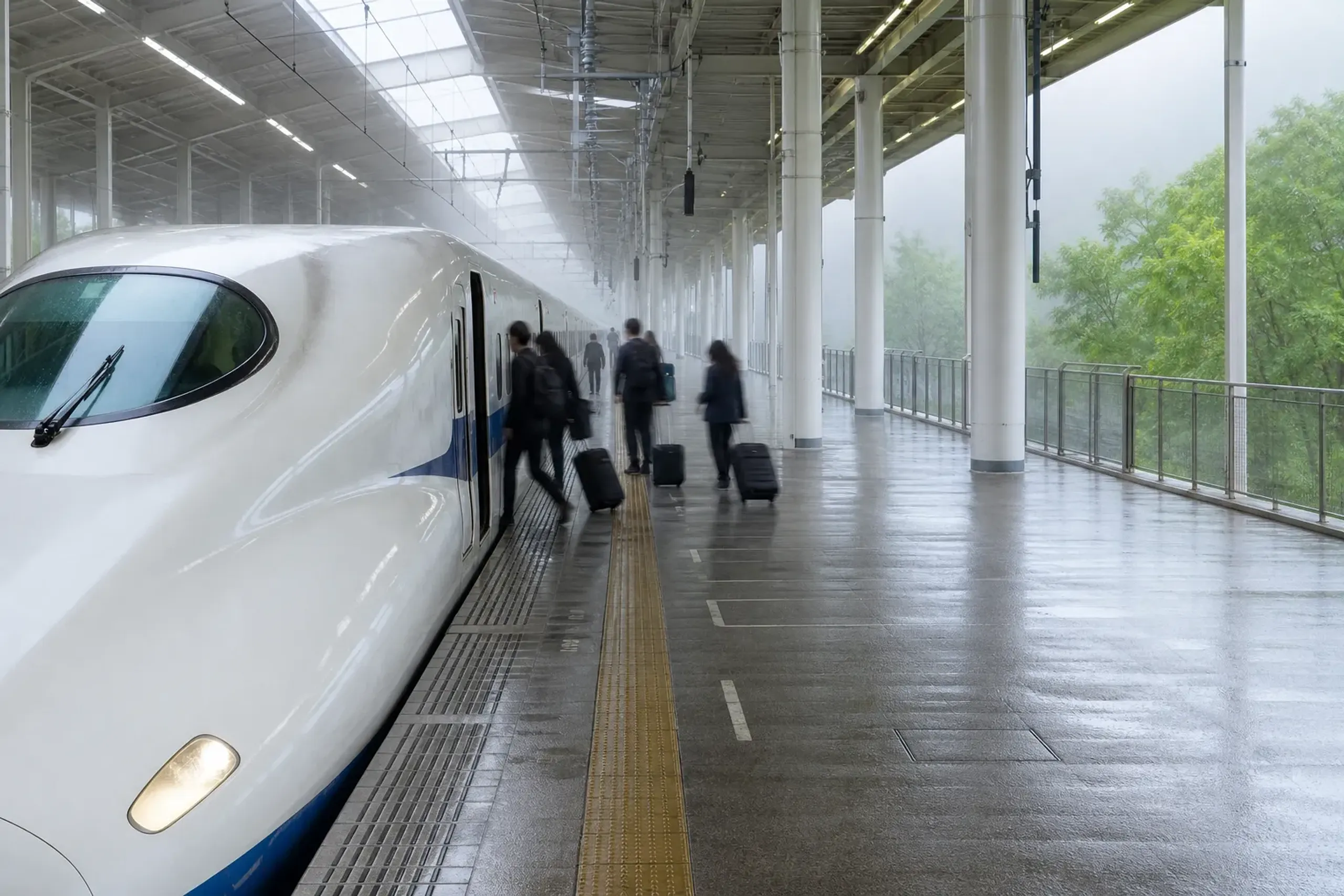
Concede this one, because conceding it makes the rest of the page credible. On the Tokyo–Kyoto–Osaka corridor, the Shinkansen beats a private charter and often beats flying, city centre to city centre, with no security line and no airport at either end. Tokyo to Kyoto runs around two hours and fifteen minutes on the fastest services. Rail is the cheap, obvious, correct answer here.
Air wins over distance and water. Tokyo to Sapporo in Hokkaido, or down to Fukuoka in Kyushu, or out to Okinawa — these are flights, not train days. The rule of thumb: if the rail journey runs past roughly four hours, look at flying.
The recommendation is unglamorous and right. Take the train on the main corridor, fly the long legs, and use a private car for the first and last miles at each end, where a chauffeur genuinely saves time and effort that rail cannot.
Language Requirements At Gated Experiences, And Who Supplies The Interpreter
Some of the experiences worth building a trip around are conducted entirely in Japanese. A tea ceremony with a senior practitioner, time in a shokunin's atelier, a visit to a workshop that does not usually take outside guests — these often assume the room speaks the language.
Arrive without an interpreter and the encounter thins to watching, when the value was in the conversation. The nuance of what a kiln master is telling you does not survive gesture and a translation app. This is a decision made in the planning, not the room.
The recommendation: confirm the language of every gated experience in advance and arrange an interpreter who understands the craft, not only the words. Where we open a private atelier session or a cultural introduction, an interpreter briefed on the subject comes as part of it, so nothing is lost in the gap between languages.
Frictionless Kyoto: Planning Around Crowds, Not Through Them
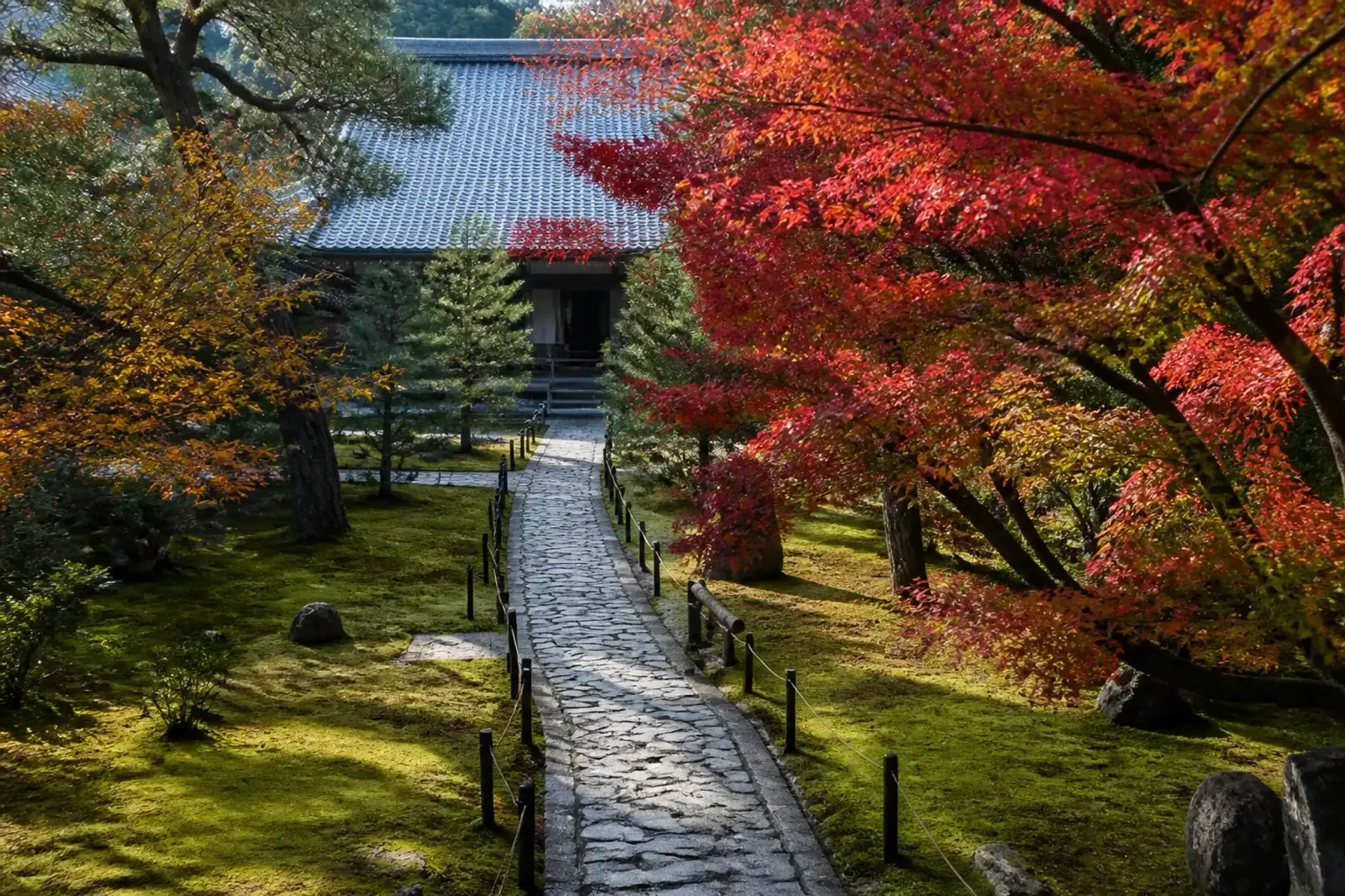
Kyoto's own institutions now treat crowding as a live variable. The official Kyoto Travel site publishes seasonal sightseeing tips and states a goal of welcoming visitors while keeping tourism in harmony with residents' daily lives, and it references crowding-awareness tools. Kyoto City published an update in February 2026 on initiatives to balance citizens' lives with tourism, signalling ongoing management at the policy level.
For a traveller, this translates into one operational fact: the difference between a serene morning at a temple and a shoulder-to-shoulder one is often 90 minutes of timing. Arrive at the famous sites at opening, route the middle of the day to quieter places, and return to the celebrated spots in the last light when the day groups have gone. The correct answer here is not a secret location. It is the ordinary location at an uncommon hour, planned deliberately with a car ready to move you between the two.
A Note On Passports At Check-In
One small, universal item so it does not surprise you. Japan's consumer affairs guidance notes that for guests who do not reside in Japan, hotels are legally required to record nationality and passport number in the guest registry. Hotels will therefore ask to see your passport at check-in and are said to keep a copy, for security. Have the passport to hand at every check-in. It is routine, and expected.
Frequently Asked Questions
How Far Ahead Should I Plan A Japan Trip?
Plan the fixed-date items first — the most sought-after ryokan, restaurants, and cultural access — because many windows open six months to a year ahead and close quickly. Flexible elements can fill in later, but the calendar-driven bookings cannot be recovered once the window has passed.
Should I Forward My Luggage Between Cities?
For most multi-city trips, yes. Japan's official tourism site describes 'Hands-Free Travel' luggage delivery between hotels, and services like Yamato's takkyubin let you travel between cities with only an overnight bag. Send the large cases a day ahead and carry what you need for the first night.
Is It Better To Stay In One City Or Move Hotels?
Every hotel change costs a morning to checkout, transfer, and check-in. A one- or two-base plan with day trips usually runs more calmly than a new hotel each night, and Kyoto and Tokyo both work well as bases for surrounding day excursions.
What Time Should I Arrive At A Ryokan?
Aim for mid-afternoon, roughly three to four o'clock. Kaiseki dinner is plated to a fixed schedule, so a late arrival means a rushed or held meal and no time for the onsen beforehand.
Do I Need Visit Japan Web?
It is strongly recommended. Japan's Immigration Services Agency advises using Visit Japan Web to submit entry information electronically for smoother arrival, and it also handles customs and tax-free shopping. Set it up and save the QR codes before you fly.
Which Tokyo Airport Should I Choose?
Choose Haneda (HND) when your schedule allows, because it sits inside Tokyo and central hotels are roughly 30 to 45 minutes away. Narita (NRT) is farther, typically 60 to 90 minutes or more, which costs an hour of your arrival evening.
Will I Be Charged For Large Luggage On The Shinkansen?
You can be. JR Central charges a 1,000 yen fee, tax included, for oversized baggage on applicable services without a reservation for an oversized-baggage seat. The simplest fix is to forward large cases by takkyubin and travel light.
How Are Ryokan Priced?
Ryokan are usually priced per person, per night, with dinner and breakfast included. Compare that against per-room hotel rates carefully, and remember the day's food budget is already smaller because two meals are built in.
Why Work With Japan Royal Service
Everything above is a decision a traveller can make alone. The reason to hand it over is that the decisions interlock, and a small miss in one cascades into the next. A late arrival meets a plated kaiseki; a forwarded bag meets a room not yet ready; a closed booking window meets a budget that cannot reopen it.
Our team at Japan Royal Service works these decisions as one system rather than a list. We build the arrival buffers, choreograph the luggage handover points, hold the fixed-date booking calendar, brief kitchens on dietary needs in advance, keep a car on standby when the day should bend to you, and place an interpreter in the room where the craft matters. We are based in Japan, we run our own fleet, and we keep every itinerary confidential. To learn more, read about Japan Royal Service.
To discuss a trip privately, reach our team via WhatsApp or LINE, or contact us here.