In this guide
- 01Why "Vegetarian" Is Not Always Enough In Japan
- 02Why Kaiseki And Ryokan Dinners Need Notice
- 03Request By Request: What To Say And What To Watch For
- 04Allergies: What A Kitchen Can And Cannot Promise
- 05Shojin Ryori: The Temple Kitchen
- 06Eating Out Without A Set Menu
- 07How A Request Travels From Booking To Your Table
- 08Questions We Are Often Asked
- 09How Japan Royal Service Arranges It
In Japan, the thing you need to avoid is usually hidden, not visible. Dashi, the stock under much of the cooking, often carries fish, so a dish that looks vegetarian can still contain it. Soy sauce carries wheat. The risk lives in the broth and the seasoning, not on the plate you can see.
So the single most useful step is simple. Tell us at booking, as early as you can. Our team at Japan Royal Service passes the request to the kitchen in Japanese, and the kitchen's answer comes back to you before you travel. A note made at the table is often too late for that night's meal.
Why "Vegetarian" Is Not Always Enough In Japan
In Japan, "vegetarian" does not always mean "no fish stock." Dashi made from katsuobushi (dried bonito, a fish) sits in miso soup, simmered dishes and many sauces, so a vegetable dish can still contain fish.
This is the detail that surprises experienced travellers. A bowl of greens, a clear broth, a plate of simmered vegetables — any of these may be built on a bonito stock. The flakes dissolve. Nothing on the plate shows fish, yet it is there.
Egg is another one. Tamagoyaki, the sweet rolled omelette on many breakfast trays and some kaiseki courses, is egg. For vegan guests that matters.
The wording fixes most of this. Rather than say "vegetarian" alone, the request should spell out "no fish, no meat, and no fish stock (dashi)." For vegan guests, add "no egg and no dairy."
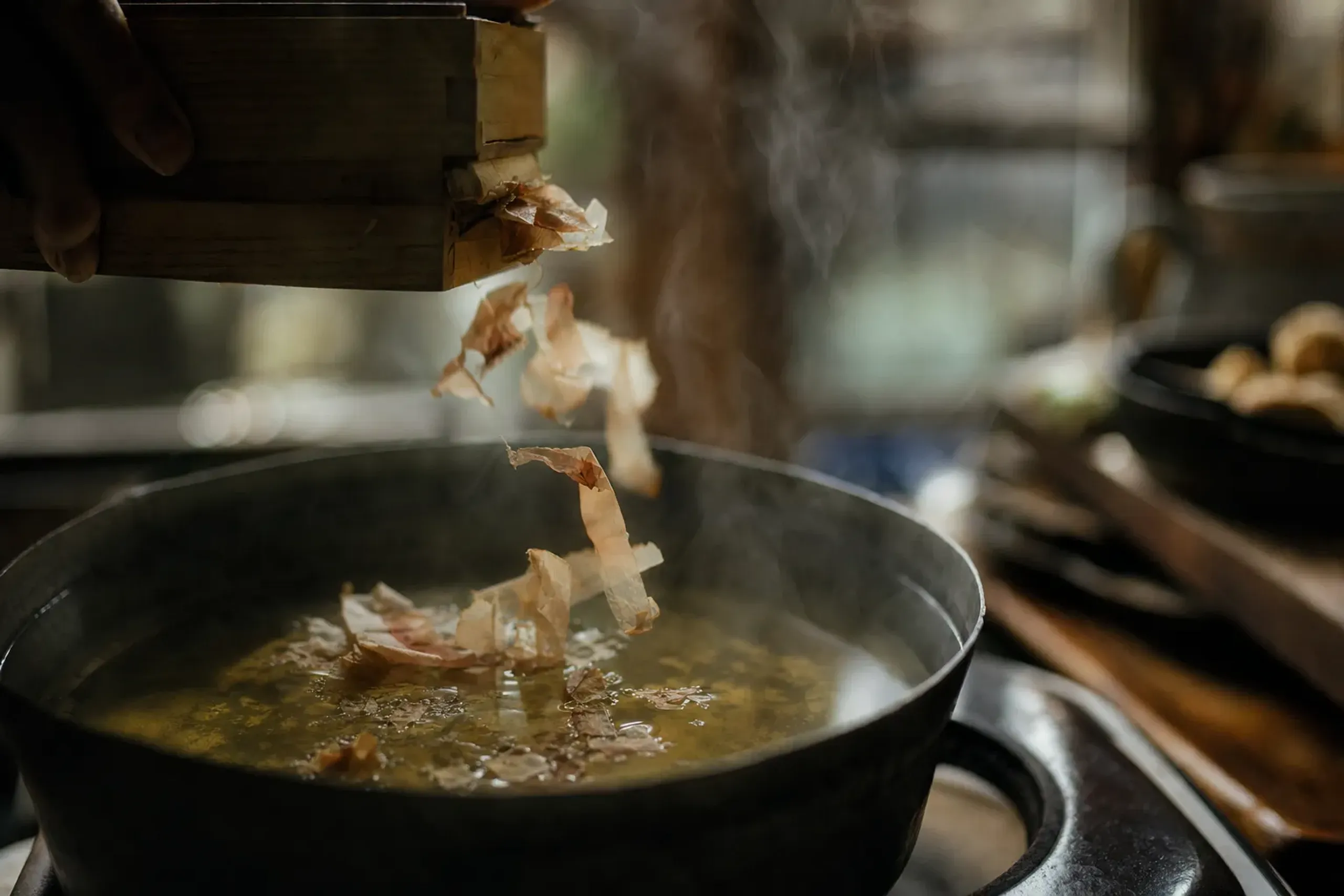
Dashi made with bonito flakes puts fish into dishes that look entirely vegetarian.
Our concierge puts that precise phrasing into Japanese so the kitchen reads the same meaning you intended.
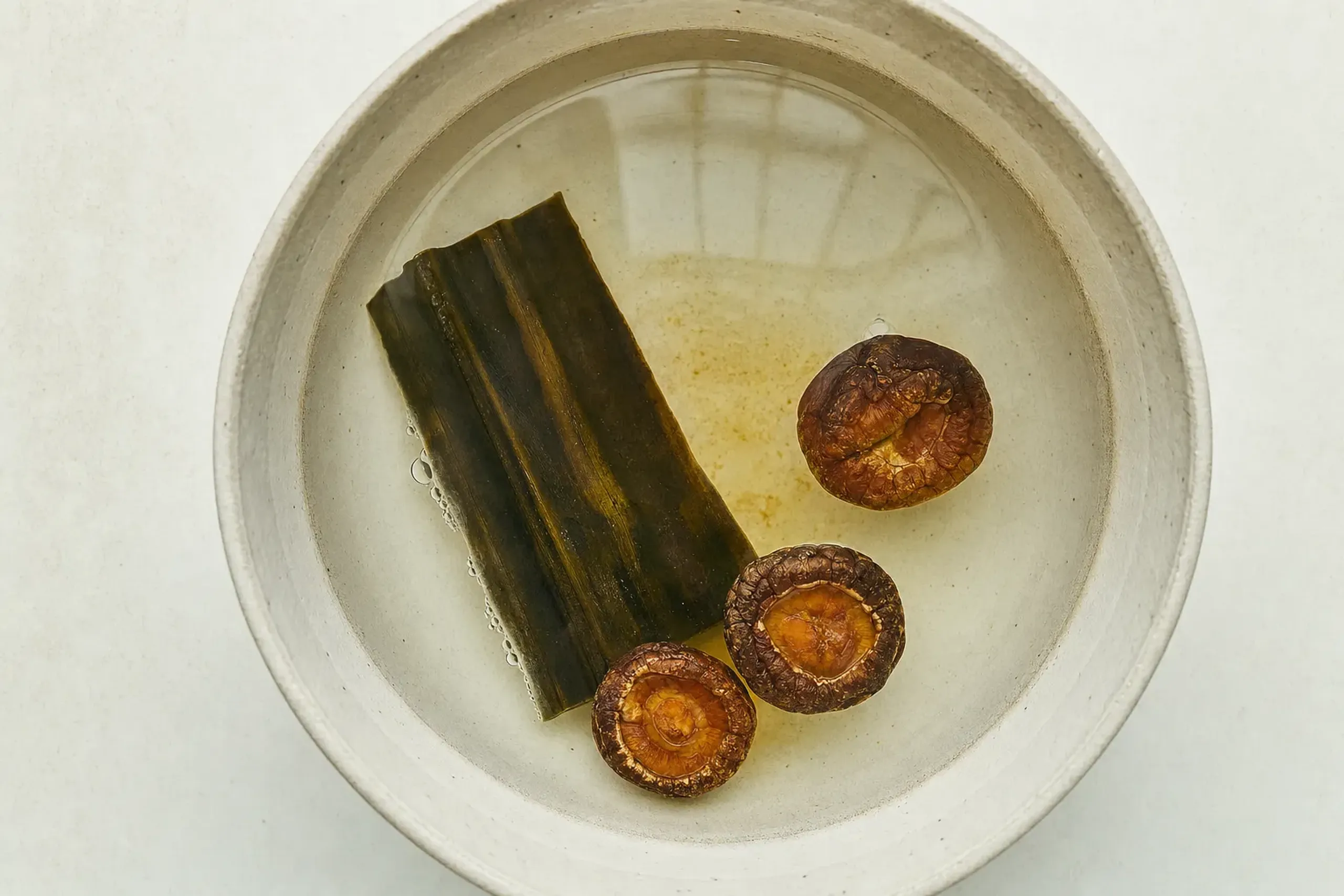
Key point: A plant-based dashi exists. It is drawn from kombu (kelp) and dried shiitake, and it is the stock used in shojin ryori. A kitchen that keeps it can build a genuinely fish-free meal.
Why Kaiseki And Ryokan Dinners Need Notice
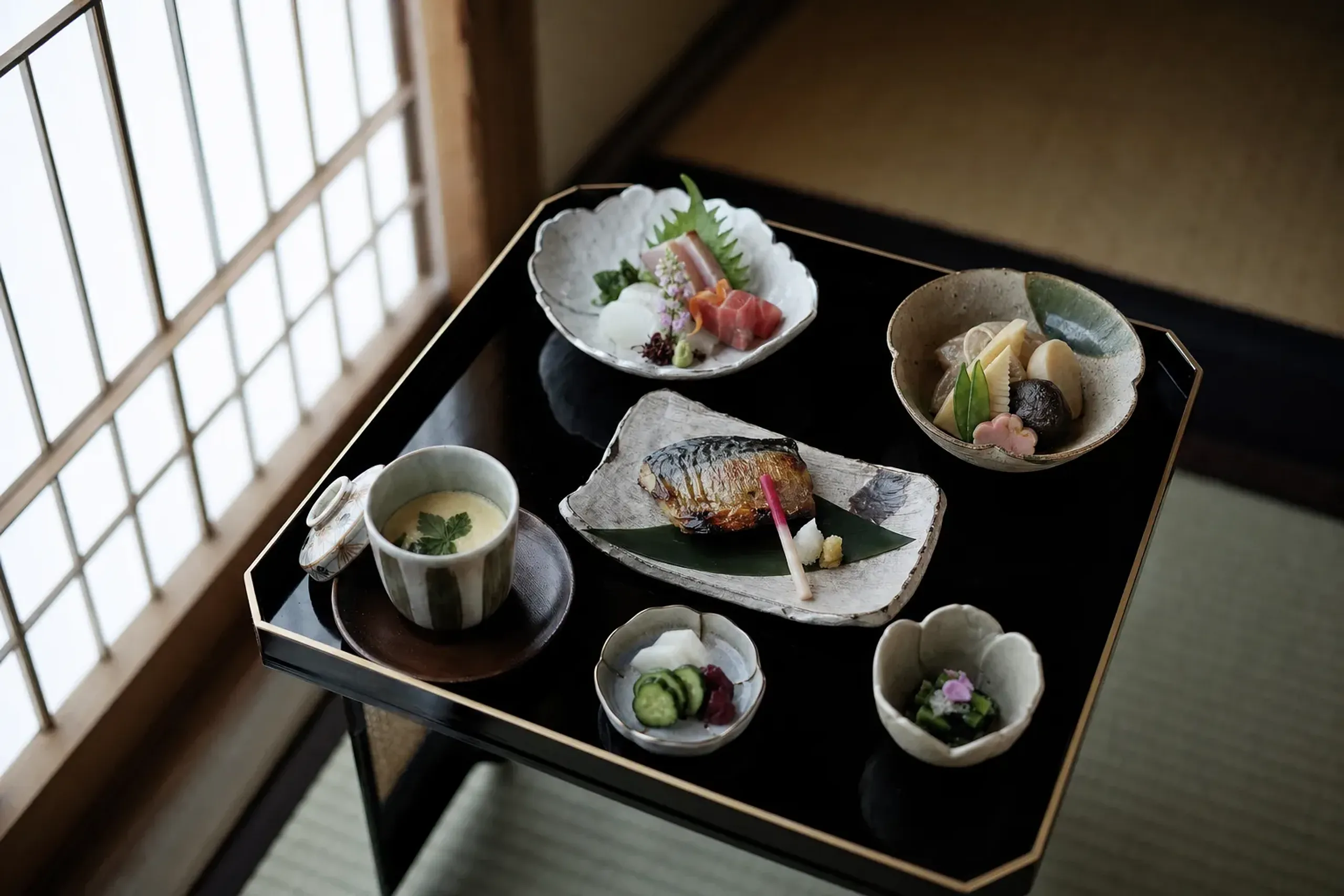
Kaiseki is planned before you arrive, not ordered dish by dish. A request made at booking can shape the menu; a request made at the table usually cannot change that night's courses.
Kaiseki is a seasonal set menu of many courses, decided by the kitchen in advance. At a ryokan, dinner and breakfast are often part of the stay and prepared for each guest by name. The chef shops, preps and composes around the season days ahead. That is the pleasure of it. It is also why late notice is hard.
When the request arrives early, the kitchen has room. It can swap a fish course, build a vegetable broth, or set aside the egg. When the request arrives as you sit down, the ingredients are already bought and the courses already set.
If you are still deciding what kind of meal suits you — a multi-course kaiseki, a sushi counter, or a more relaxed kappō — our guide on how to choose between sushi, kaiseki or kappō walks through the differences.
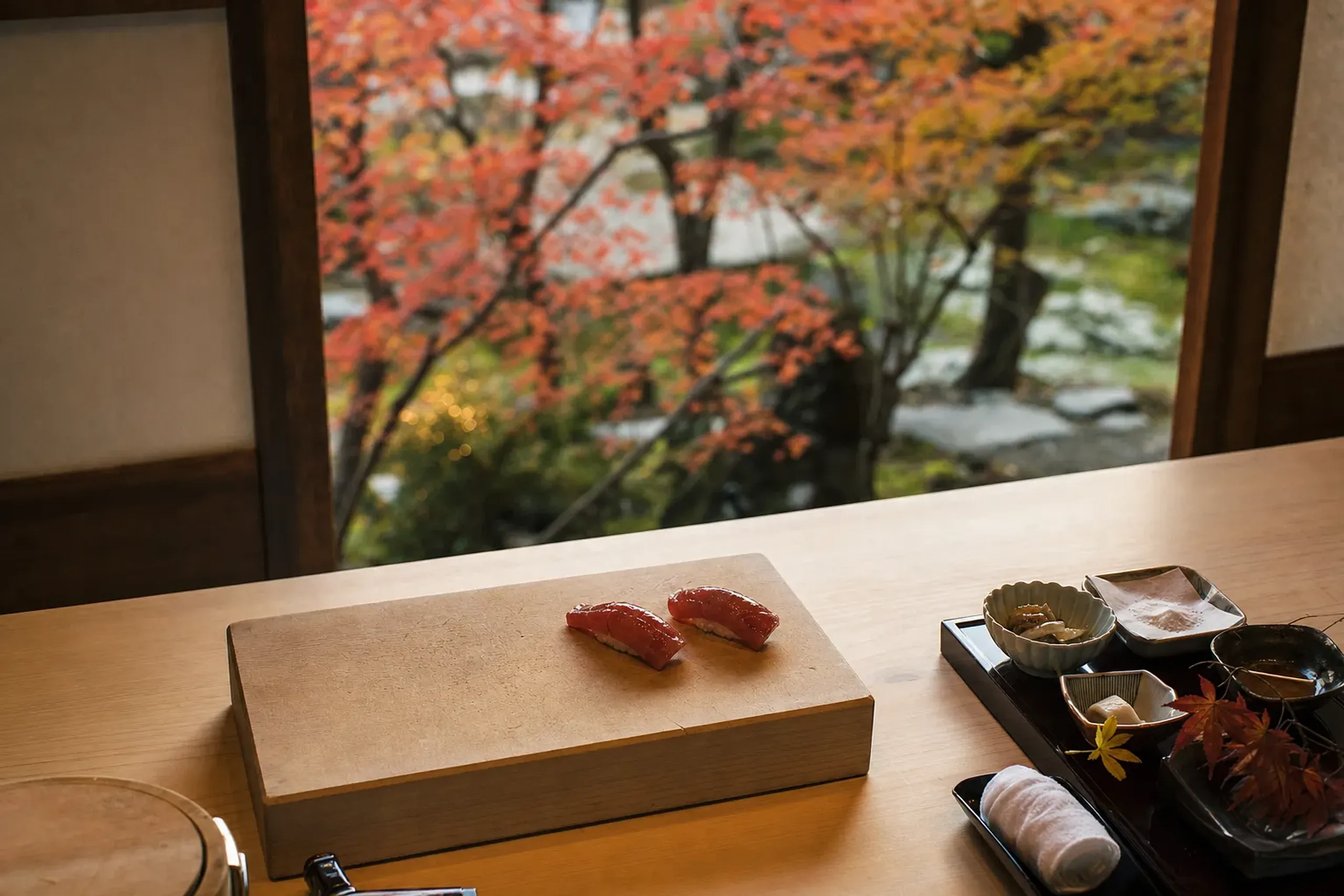
Each style handles dietary notes a little differently, and the choice is worth making before the booking goes in.
Request By Request: What To Say And What To Watch For
Different needs call for different wording. Here is the practical version for the most common ones. Each gives the request to make and the thing to watch for.
Vegetarian And Vegan
Say "no meat, no fish, and no fish stock (dashi)." For vegan, add "no egg, no dairy." Watch for dashi in miso soup and simmered dishes, bonito flakes scattered as a topping, and egg in tamagoyaki. A kitchen with kombu-and-shiitake dashi can go much further.
Pescatarian
Usually the easiest in Japan, since fish and seafood are central. Still, confirm that any stock is not made from meat, and that a dish billed as "vegetable" has not been finished with a pork or chicken base.
No Pork
Watch the broths. Ramen and some noodle soups use a pork-bone base (tonkotsu), and lard turns up in fried and stir-fried dishes. Say "no pork, including pork broth and lard." Many kitchens can switch to a chicken or fish base.
No Alcohol
Mirin and sake are common cooking seasonings, used in simmered dishes, glazes and sauces. Most cooks off most of it, but if you avoid alcohol entirely, say so at booking so the kitchen can season another way.
Wheat
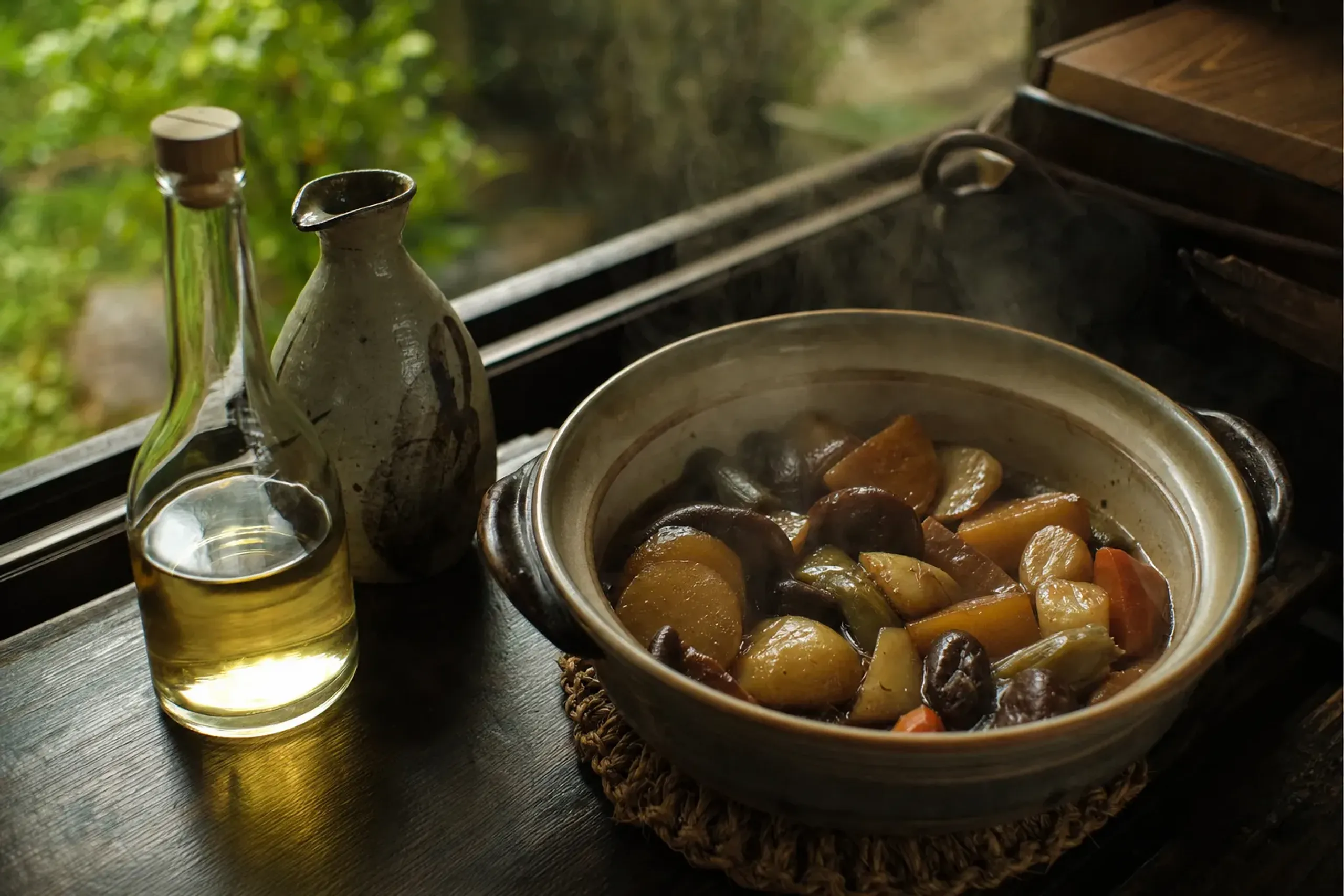
Soy sauce is brewed from soybeans, wheat and salt, so it contains wheat, and it is nearly everywhere — dipping sauces, glazes, simmered dishes. Tempura batter is wheat. Many noodles are wheat. Say "no wheat, including soy sauce," and expect the kitchen to need real notice.
Shellfish And Nuts
Name these plainly and specifically at booking — "shellfish" or the exact nut — rather than folding them into a general note. Clear naming is what lets the kitchen check its broths, sauces and oils against that single ingredient.
Buckwheat (Soba)
Buckwheat is common and is a known allergen. Soba noodles are the obvious source, but it also appears in some sweets and, occasionally, in flour blends. Name it directly, the same way you would a nut.
Kitchens differ in how far they will go. Some will rebuild a whole kaiseki around a need; others can adjust a few courses, and some may decline. That is normal, and it is better known before you travel than at the table.
Allergies: What A Kitchen Can And Cannot Promise
Name the allergen clearly at booking, by its specific name, and let the answer come back before you travel. That is the whole of the practical advice, and it is worth saying plainly.
A kitchen can adjust a menu, but it cannot guarantee a dish is free of an allergen; the JRS concierge team confirms directly with the guest at time of arrangement what each kitchen can do.
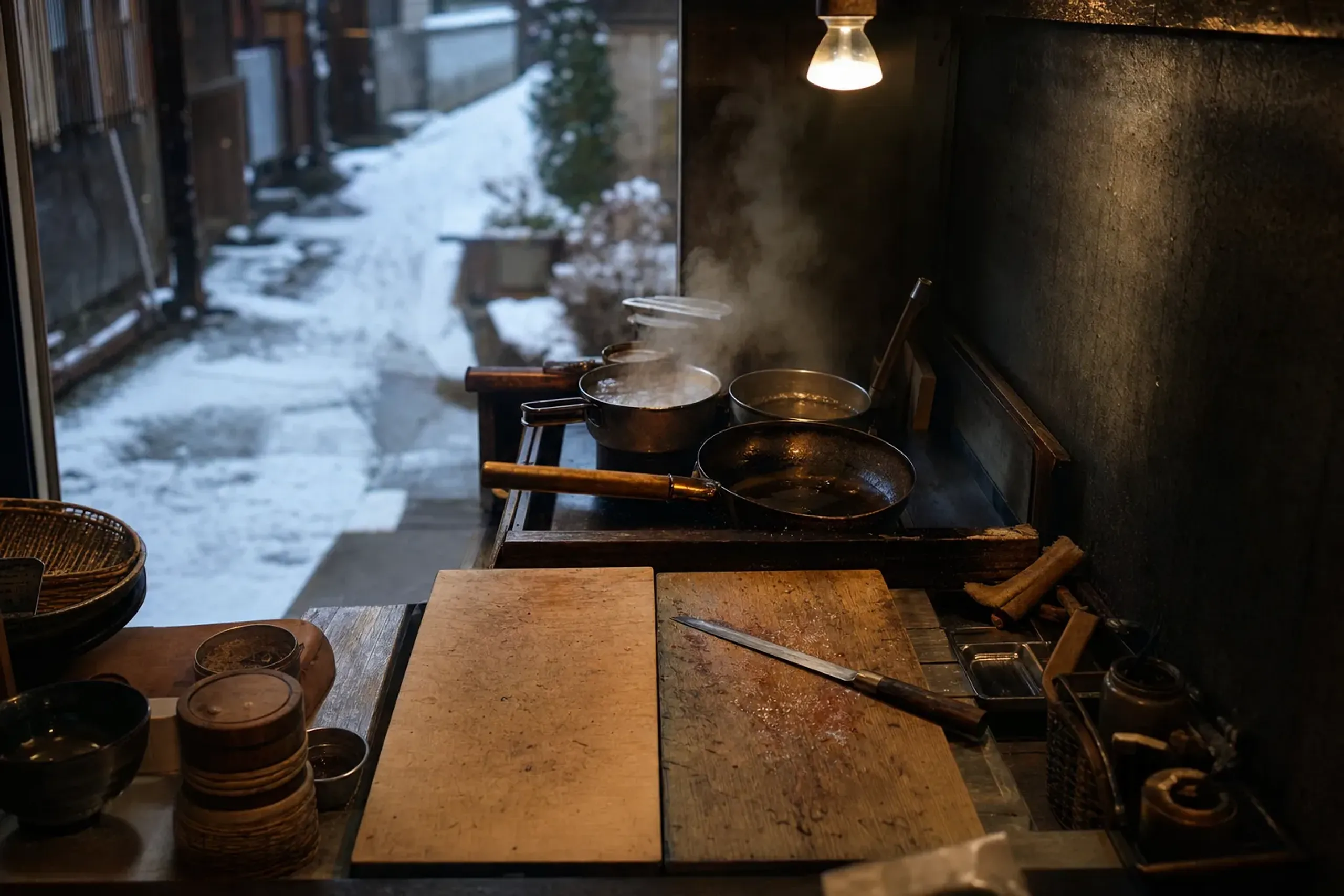
Small kitchens share equipment and surfaces, and the honest answer from a chef is about what they can and cannot build, not a promise of absence.
What our role does add is clarity. The request goes in by name, in Japanese, and the kitchen's real answer — "yes, we can," "we can adjust these courses," or "we cannot" — comes back to you while you still have room to choose.
Shojin Ryori: The Temple Kitchen
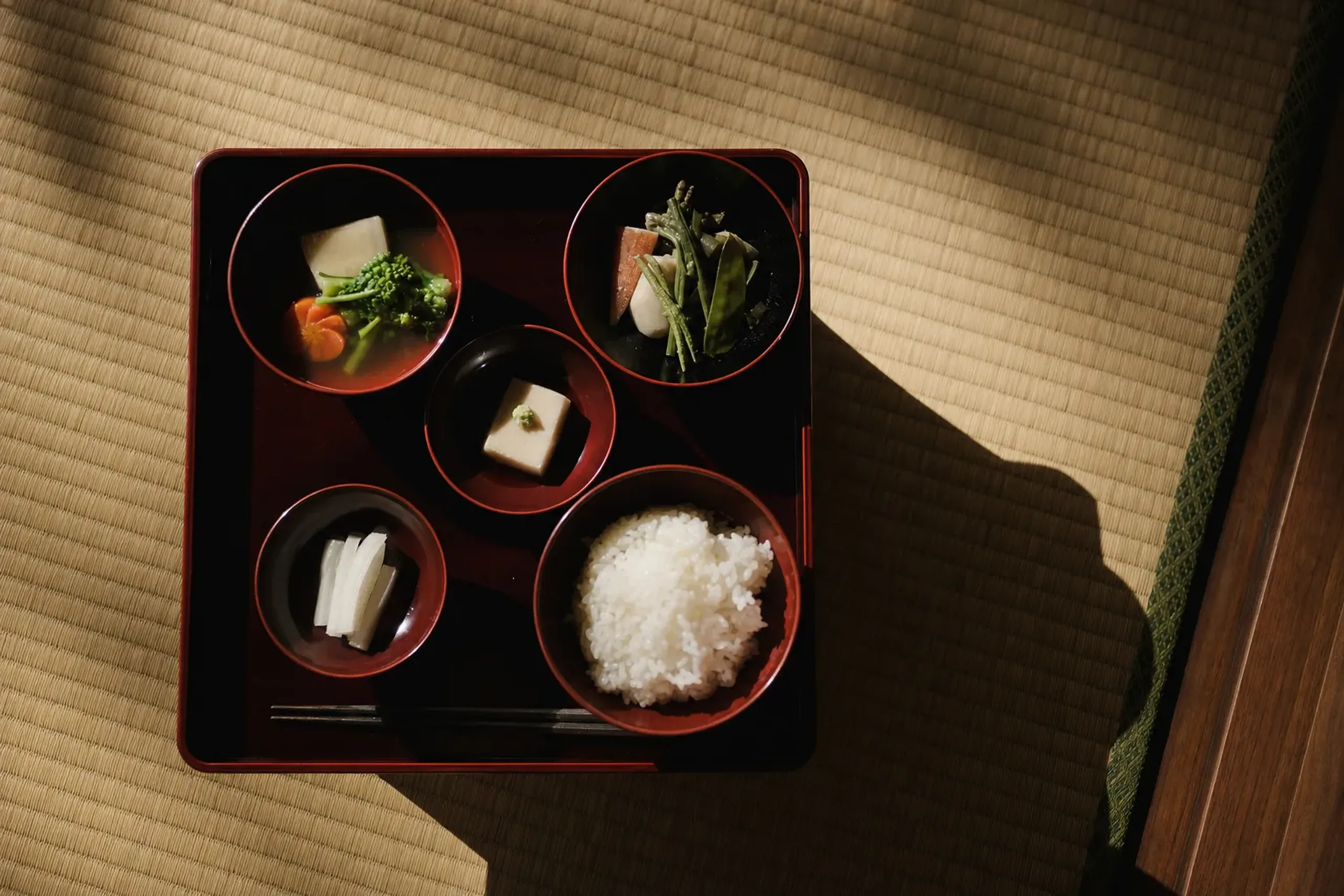
Shojin ryori is Buddhist temple cuisine with Zen roots, and it is entirely plant-based — no meat, no fish, no animal products at all. For vegetarian and vegan guests, it is a natural fit in Japan.
Because it is built that way by design, the hidden-fish problem simply does not arise. The stock is kombu and dried shiitake, not bonito. Traditionally the cuisine also leaves out pungent vegetables such as garlic, chives and onions, and alcoholic drinks, following the same practice.
You will find it at temple lodgings, including those on Kōyasan and at some temples in Kyoto. A temple stay pairs the meal with the quiet it came from: a plain room, an early morning, a simple tray.
If a temple night appeals, our comparison of choosing a temple stay on Kōyasan, Eiheiji or in Kyoto sets out the character of each, and our closer look at Eiheiji and Kōyasan side by side helps you decide which suits the rest of the itinerary.
Eating Out Without A Set Menu
Counters and casual meals are more flexible than a fixed kaiseki, but the hidden ingredients are the same. At a counter you can ask as you go — about the stock, the sauce, the oil — and a good cook will tell you straight.
The questions to carry are short. What is the broth made from? Is there dashi or bonito in this? What is in the dipping sauce? For a place you will visit on your own, it helps to have those lines ready in Japanese, which our concierge can prepare.
Careful checking matters even at small, vegetable-forward spots. Our piece on whether Kiichi is genuinely vegetarian shows the kind of patient, ingredient-by-ingredient check that a single restaurant deserves.
How A Request Travels From Booking To Your Table
The path is short and the same every time: booking, then the request in Japanese to the kitchen, then the kitchen's reply, then confirmation to you before you travel. Nothing is left to the moment you sit down.
It begins when the reservation goes in. Alongside the date and party size, your dietary note travels with it — phrased precisely, in Japanese, so "no fish stock" reads as "no fish stock" and not as a vague "vegetarian."
The kitchen answers in its own words. We relay that back to you. If a chef can rebuild the whole meal, you will know. If they can adjust three courses and not a fourth, you will know that too, and you can decide whether that works or whether a different table suits you better.
This is one piece of a larger discipline — the quiet logistics that keep a trip from snagging. We set out more of that thinking in the logistics decisions that shape a trip, of which dining is one line among many.
Questions We Are Often Asked
Is It Hard To Be Vegetarian In Japan?
Vegetarian dining in Japan is manageable with early notice, mainly because fish stock (dashi) appears in dishes that look meat-free. State "no fish, no meat, no fish stock" at booking, and shojin ryori offers a fully plant-based option.
Does Miso Soup Contain Fish?
Often, yes. Most miso soup is built on dashi made with katsuobushi (dried bonito, a fish), so a bowl can contain fish even though none is visible. A kitchen can make it with kombu-and-shiitake stock if asked in advance.
Can A Ryokan Adjust Its Kaiseki Dinner For Dietary Needs?
Many can, if told early. Because kaiseki is a set menu planned ahead, a request at booking lets the kitchen reshape courses; a request at the table usually arrives too late. Kitchens differ in how far they will adapt.
Is Soy Sauce Gluten-Free?
Standard soy sauce is not gluten-free. It is brewed from soybeans, wheat and salt, so it contains wheat, and it appears in many sauces and simmered dishes. Guests avoiding wheat should name soy sauce specifically at booking.
How Japan Royal Service Arranges It
Our work here is plain and specific. At Japan Royal Service, our team books ryokan and restaurants and passes dietary needs ahead to the kitchen in Japanese, so the request arrives in the right words well before you do.
- We book the ryokan and the restaurant, and pass your dietary needs ahead to the kitchen in Japanese.
- Our concierge relays back what each kitchen can do, before you arrive — not a promise of absence, but an honest account of what can be built.
- If a meal changes, we re-plan the same day.
- Private transport with English-speaking drivers comes from vetted partner companies; English-speaking guides are arranged separately from drivers.
- Every trip is a tailor-made itinerary, with dining shaped around how you eat.
Early notice is the whole trick. The sooner we have your needs, the more a kitchen can do with them, and the more of Japan's table opens to you — hidden kaiseki rooms and temple meals included.
To begin planning, contact our team here.