In this guide
- 01What Is The Difference Between Sushi, Kaiseki And Kappo?
- 02The Sushi Counter: One Craft, Up Close
- 03Kaiseki: A Seasonal Sequence, Usually In Private
- 04Kappo: The Counter Between The Two
- 05Which Format Should You Choose For The Evening?
- 06Dietary Needs And A Short List Of Courtesies
- 07How Japan Royal Service Arranges Your Meal
- 08Frequently Asked Questions
- 09Why Choose Japan Royal Service
Three formats. Three entirely different evenings. Choosing among a sushi counter, a kaiseki room and a kappo bar is less about which cuisine you prefer and more about the night you want to have.
One asks you to keep pace with a single craft. One unfolds as a seasonal sequence, usually in a private room, where the conversation belongs to your table. One sits between the two: counter seating, cooking in view, a chef who talks while he works. At Japan Royal Service, the question our concierge team hears most often is not "where" but "which kind of meal." This guide answers that first.
Below, plain definitions, a short way to decide, and the few points of etiquette that genuinely matter.
What Is The Difference Between Sushi, Kaiseki And Kappo?
A sushi counter is a single craft at close range; kaiseki is a seasonal course served from the kitchen, often in a private room; kappo is counter cooking you watch, with conversation built in.
That is the shortest honest answer. The distinction that matters to you as a guest is not the ingredients. It is the pace, the privacy, and how much the chef is part of your evening. Keep those three in mind as you read on.
The Sushi Counter: One Craft, Up Close
At an omakase sushi counter, the chef decides the order and the rhythm. You do not order dish by dish.
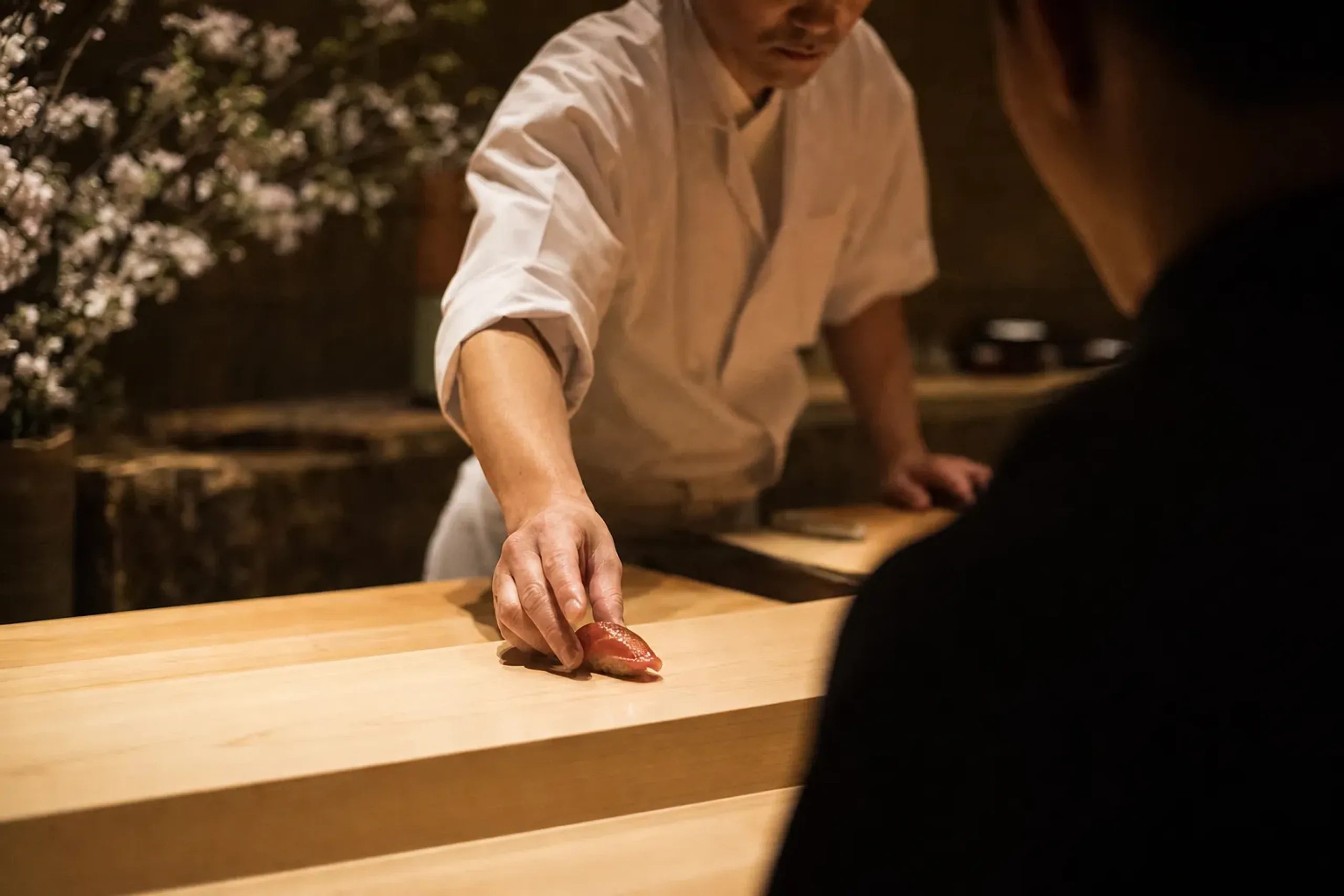
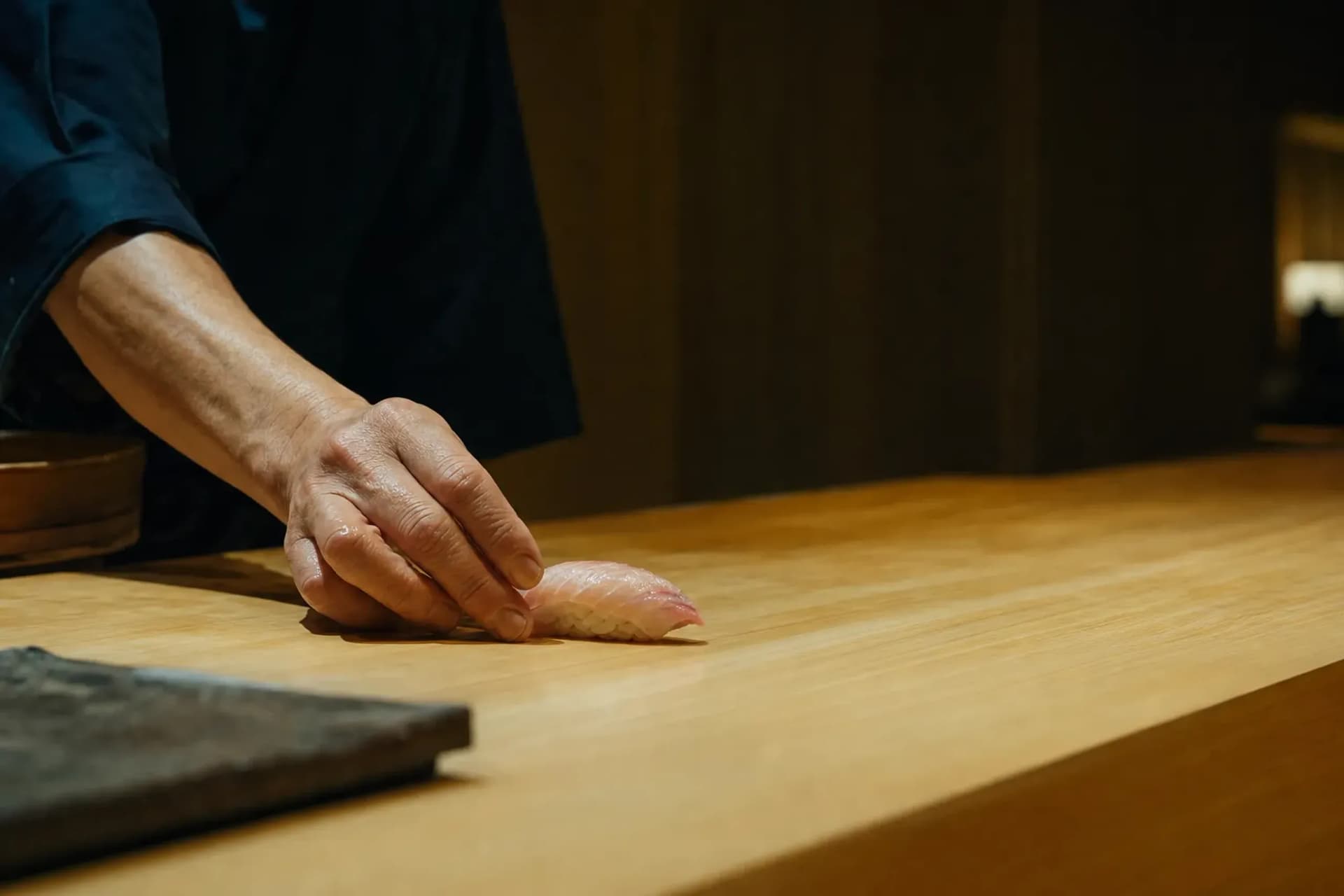
Each piece of nigiri is made to be eaten the moment it reaches you, at the temperature the chef intends. The meal moves at his pace, and your part is to keep up.
This is the format's whole character. The rice is molded lightly, warm, loosely held together so it falls apart cleanly against the fish. Wait too long and the balance the chef built into that single piece begins to slip. So eat it. Promptly. That courtesy is the meal.
Hands Or Chopsticks?
Either is correct. Nigiri can be eaten by hand, and many chefs expect it, partly because the rice is molded so lightly that chopsticks can break a piece apart. If you prefer chopsticks, lift gently. There is no wrong choice here, only a lighter touch.
A sushi counter suits a smaller party and a guest who wants focus. The seating is close. The exchange, if you want one, is direct. Two people, or one, can have a remarkable evening watching a single pair of hands work. A large group splits the chef's attention and breaks the rhythm that makes the format what it is.
If you want an evening of conversation across your own table, this is not that evening. The counter pulls your attention forward, toward the work in front of you. That is the point of it.
Interaction Is A Choice
At a counter, a cultural interpreter guide changes what you can ask.
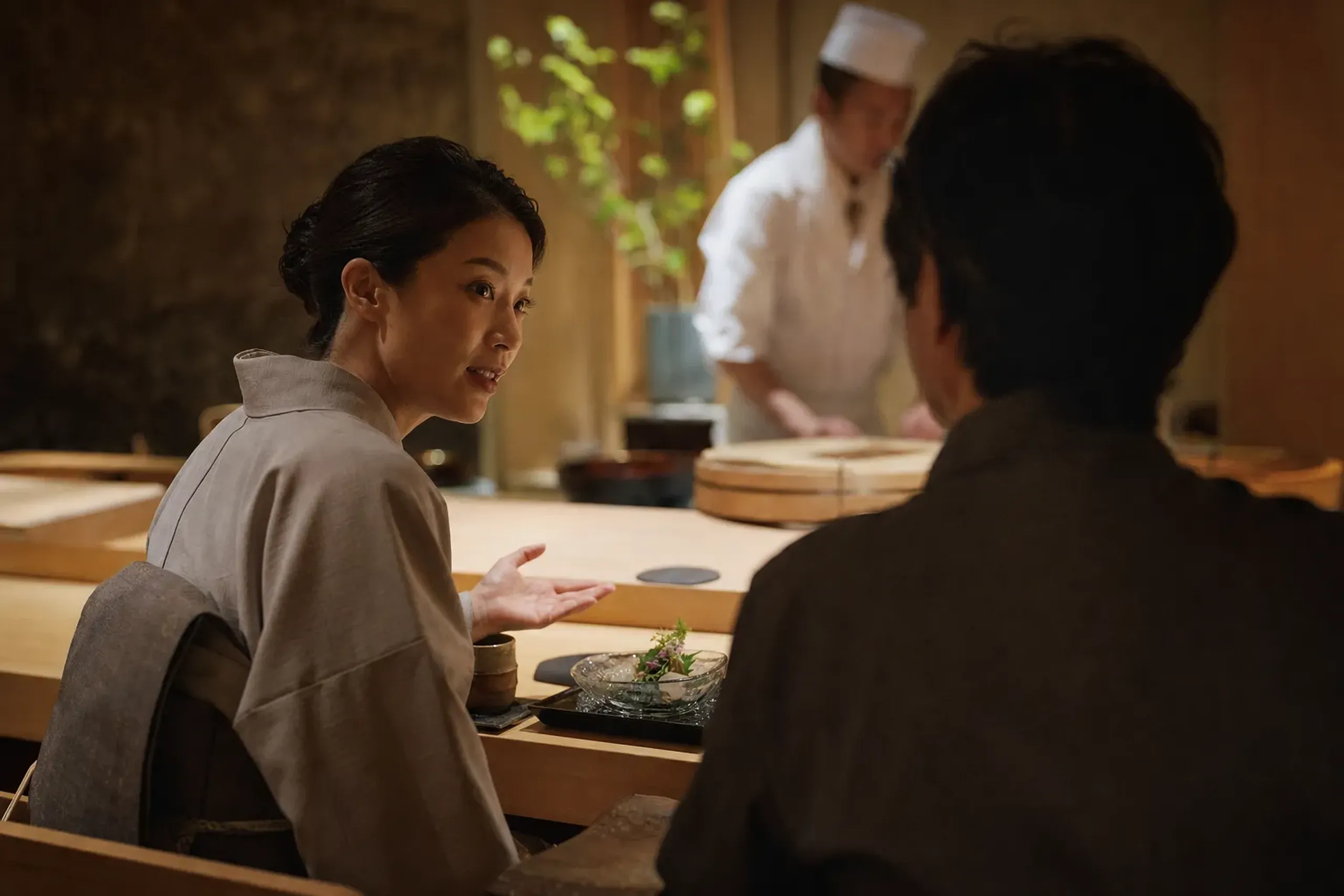
Which fish, from where, why it is served now and not in three months. Without one, the meal is still beautiful; with one, it opens up. Our team at Japan Royal Service arranges an interpreter guide on request, and at a counter it earns its place more than almost anywhere.
Kaiseki: A Seasonal Sequence, Usually In Private
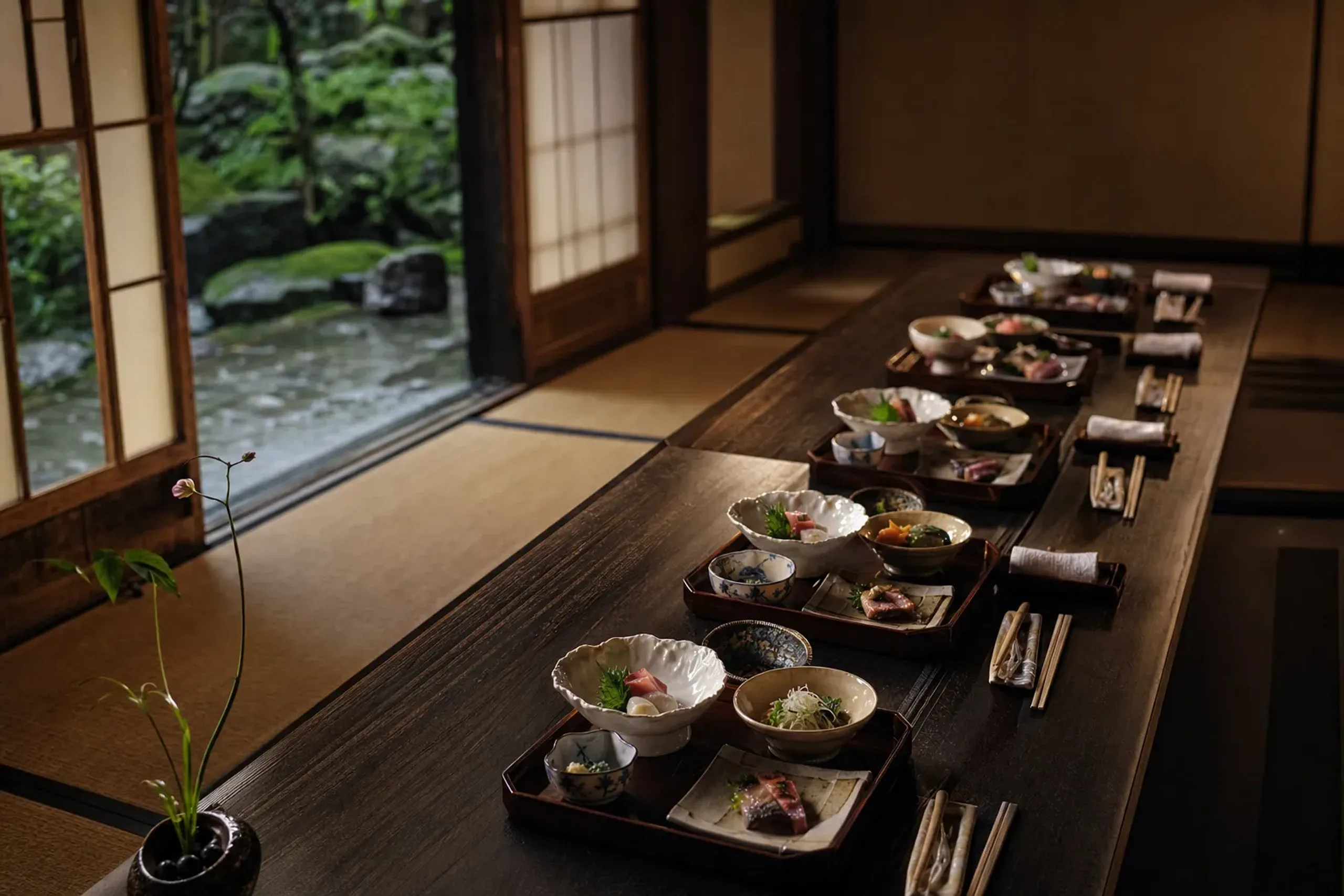
Kaiseki is a traditional multi-course meal built around the season. Japan's official tourism body frames it as a culinary art form centered on seasonality and presentation, served as a set course rather than ordered à la carte.
Two words share the reading. 懐石, cha-kaiseki, is the restrained meal served before a tea ceremony. 会席 is the banquet-style set meal. Modern kaiseki restaurants mostly serve the latter. That is the version you will almost certainly encounter.
A modern kaiseki course moves through set stages. Typically an appetizer, sashimi, a simmered dish, a grilled dish and a steamed course, with further dishes at the chef's discretion. The sequence has a shape: lighter to richer, the season declared early and carried through. Food is generally prepared in the kitchen and brought to you, often in a private room.
That last detail decides a lot. Because the cooking happens out of sight, kaiseki does not ask for your attention the way a counter does. The evening belongs to your table.
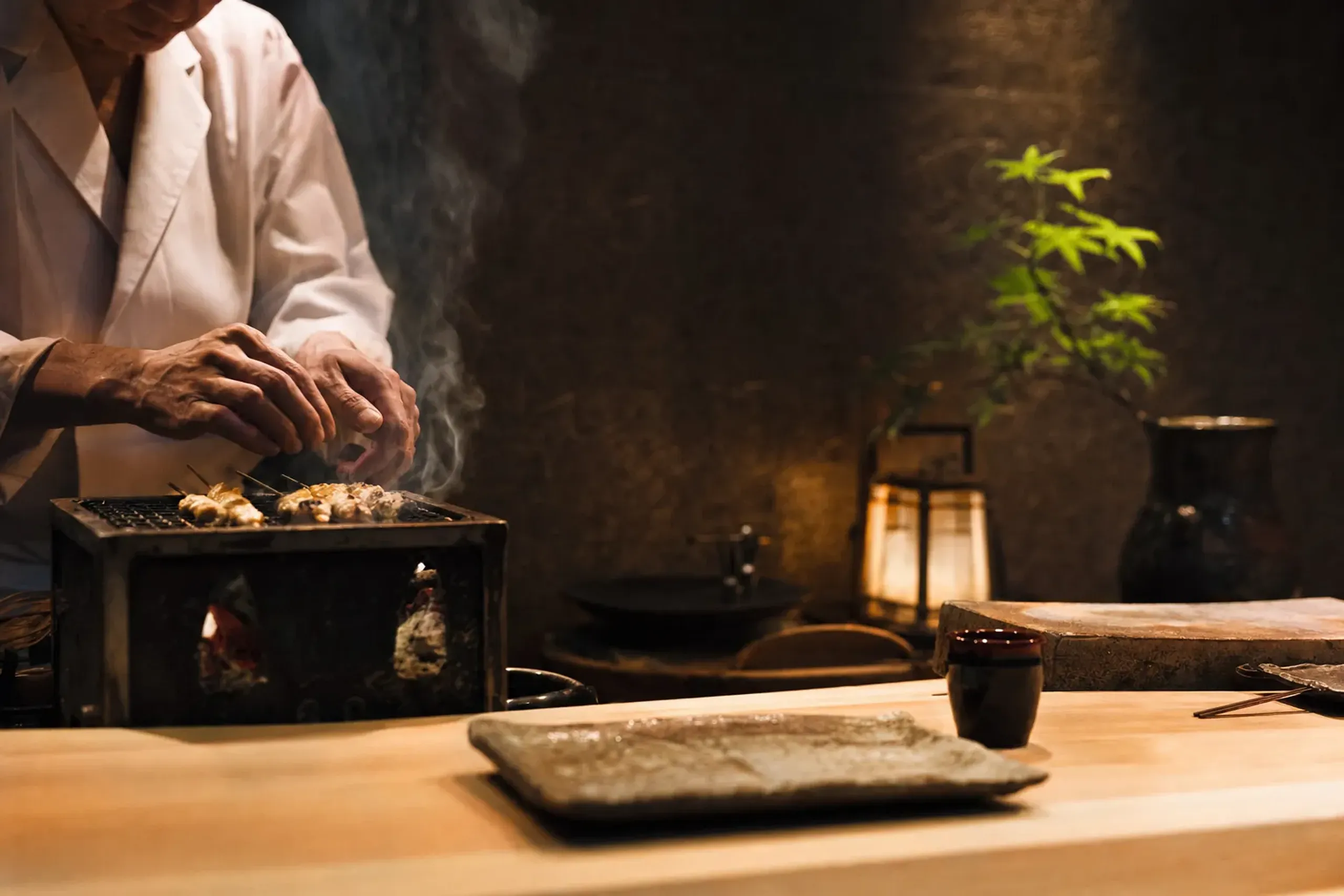
You talk. You linger between courses. This is the format for a celebration, for a quiet family dinner, for a group that wants to be alone together.
It also suits larger parties better than a counter ever will. A private room holds six or eight comfortably, and the service is calibrated for exactly that. If your evening is about the people with you rather than the hands making the food, kaiseki is built for it.
For a seasonal variation on the course tradition, our guide to Kibune's riverside kawadoko dining shows how a kaiseki sequence is served over a Kyoto stream in summer, and the cormorant-fishing ukai evening pairs a course meal with an older ritual on the water.
Kappo: The Counter Between The Two
Kappo, written 割烹, comes from the words for cutting and cooking. It is a counter format where the chef prepares the food in front of you, and conversation with him is part of the meal. You watch the knife work, the grilling, the simmering. He explains as he goes.
The Peninsula Tokyo, describing its own kappo room Zuicho, translates the word as "to cut and to cook" and frames it as a multi-course journey on an evolving seasonal menu. That captures the format's position neatly. You get the intimacy of a counter and the seasonal arc of a course.
Service varies. Some kappo restaurants serve a chef's seasonal course from start to finish.
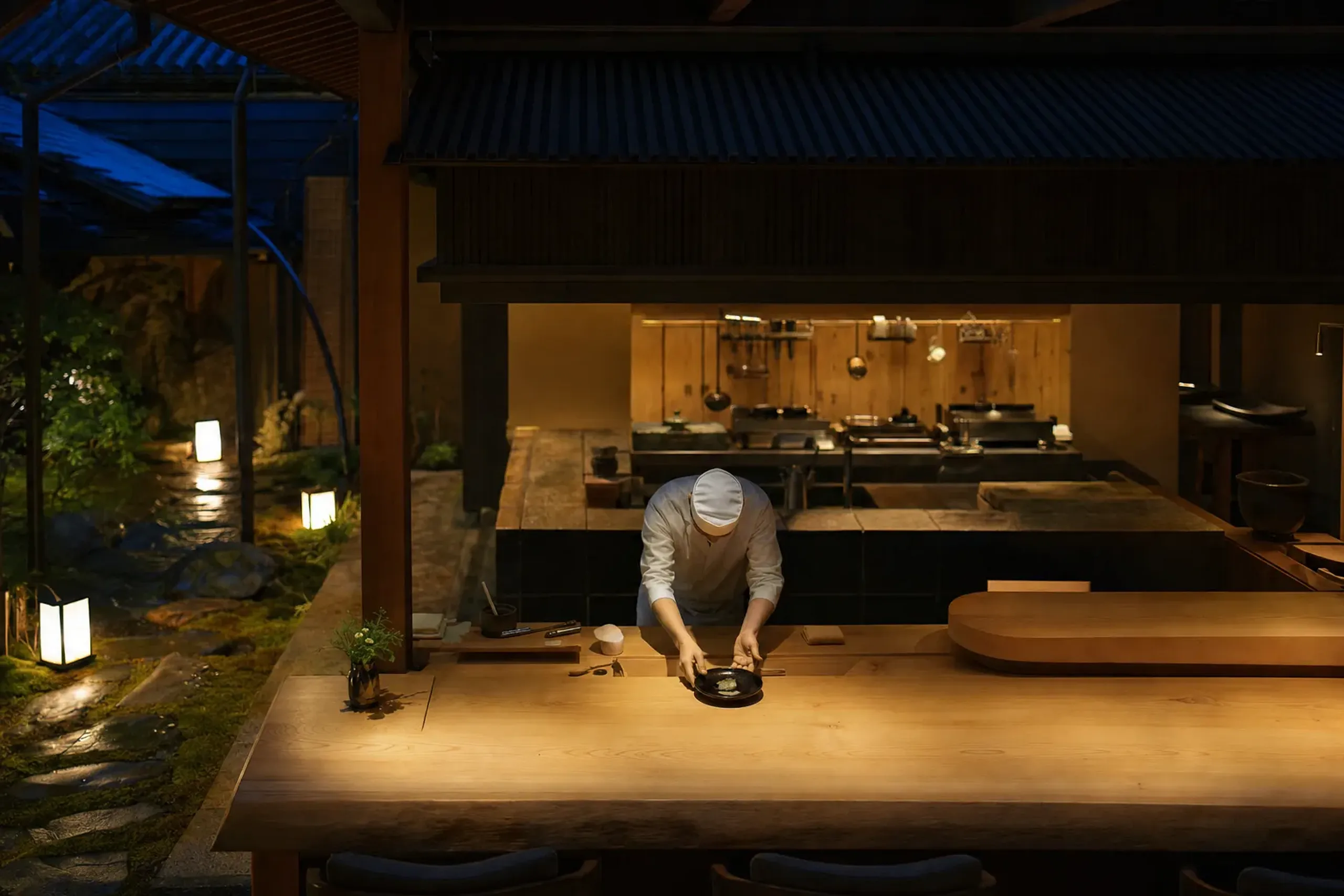
Others take orders dish by dish, closer to a conversation than a menu. We will not tell you which is more common, because it genuinely depends on the room; the JRS concierge team confirms the format with the restaurant directly at the time of arrangement.
Kappo is the bridge. More relaxed than a kaiseki room, more flexible in its pacing than a sushi counter, and talkative by design. It suits a guest who wants to watch the cooking and ask about it, without the forward tension of eating each piece the instant it lands. A party of two to four fits the counter well. For this format too, an interpreter guide changes how much of the chef's running commentary you can follow.
Which Format Should You Choose For The Evening?
Choose by the evening you want, not the cuisine: a counter for focus and a single craft, kaiseki for privacy and conversation among your group, kappo for watching the cooking with the chef in dialogue.
Here is the decision laid out against the four things that actually decide it.
| Consideration | Sushi Counter | Kaiseki | Kappo |
|---|---|---|---|
| Party size and privacy | Small; one or two ideal | Larger groups; private rooms | Small to mid; counter seating |
| Pace | Chef-set, eat as served | Unhurried, lingering between courses | Relaxed, in view of the cooking |
| Interaction with the chef | Direct, focused | Limited; kitchen out of sight | Central to the meal |
| Flexibility of courses | Set by the chef | Set course, little change on the night | Set course or dish by dish |
A worked example.
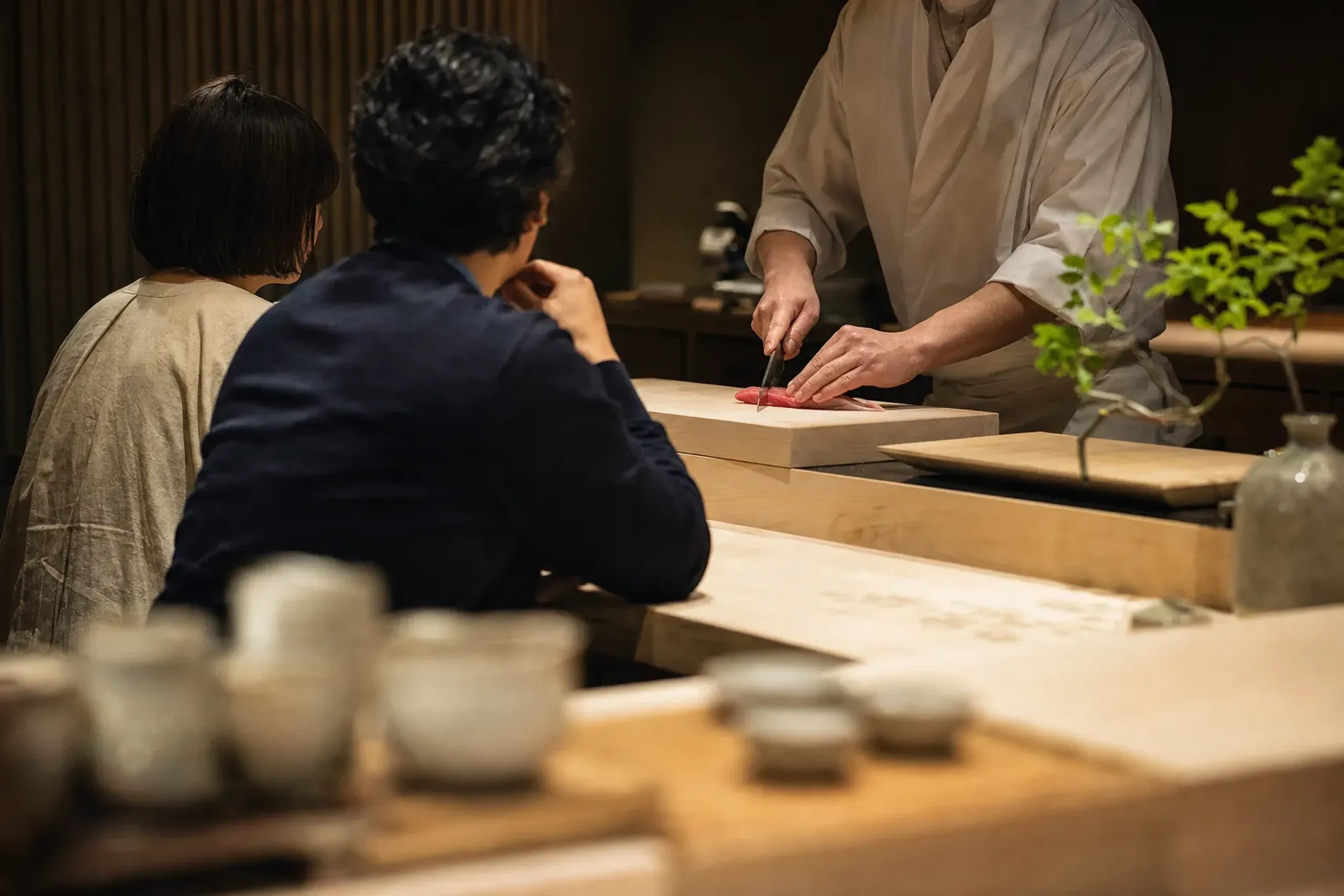
A couple who want to watch a single craft, closely, with time to talk to the person making it: a sushi counter. A family of six marking an occasion who want their own space: kaiseki in a private room. Two travelers curious about the cooking itself, happy to ask questions across the bar: kappo.
None is above the others. They are different nights, and the right one is the one that matches who you are with and how you want the hours to pass.
Dietary Needs And A Short List Of Courtesies
Dietary needs decide more than most guests expect. A set course leaves little room to change on the night. Allergies and restrictions are communicated when the reservation is made, not at the table. Substitutions at a course menu are limited and must be planned in advance, and the restaurant decides what it can accommodate. We pass your requirements to the kitchen ahead of time; what follows is theirs to confirm.
The etiquette is short, and it is courtesy rather than rule.
- Arrive on time. A counter often seats guests together, and a late arrival disrupts the shared rhythm for everyone at the bar.
- Keep fragrance light. Some chefs ask guests to avoid strong scent because it masks the food. Treat it as a kindness to the meal.
- Photograph discreetly. No flash, and do not move the plate. Policies vary by restaurant, and the JRS concierge team confirms the specific rule directly with the guest at the time of arrangement.
- Eat sushi as it is served. At a counter, the timing is the dish.
Key point: At a set course, the kitchen plans around your dietary needs in advance. There is little flexibility on the night, so the detail you share at booking is the detail you get.
If your interest runs to sourcing, Tokyo's Toyosu Market opened its 2026 season with a single 243-kilogram bluefin tuna selling for 510 million yen at the first auction.

It is a reminder of how far the best counters reach for a single ingredient, and of the care behind a piece of nigiri that lasts seconds on the plate. For a gentler food outing, Tokyo's depachika food halls covers the department-store basements worth an afternoon.
How Japan Royal Service Arranges Your Meal
Japan Royal Service books restaurants directly. Popular counters fill well ahead, and our concierge handles the reservation so you are not managing timed releases across several platforms yourself.
Before the meal, we pass your dietary requirements and allergies to the restaurant, giving the kitchen time to plan around them. On request, we arrange a cultural interpreter guide to accompany you, which matters most at a counter, where the chef's commentary and the story of each dish are part of what you came for.
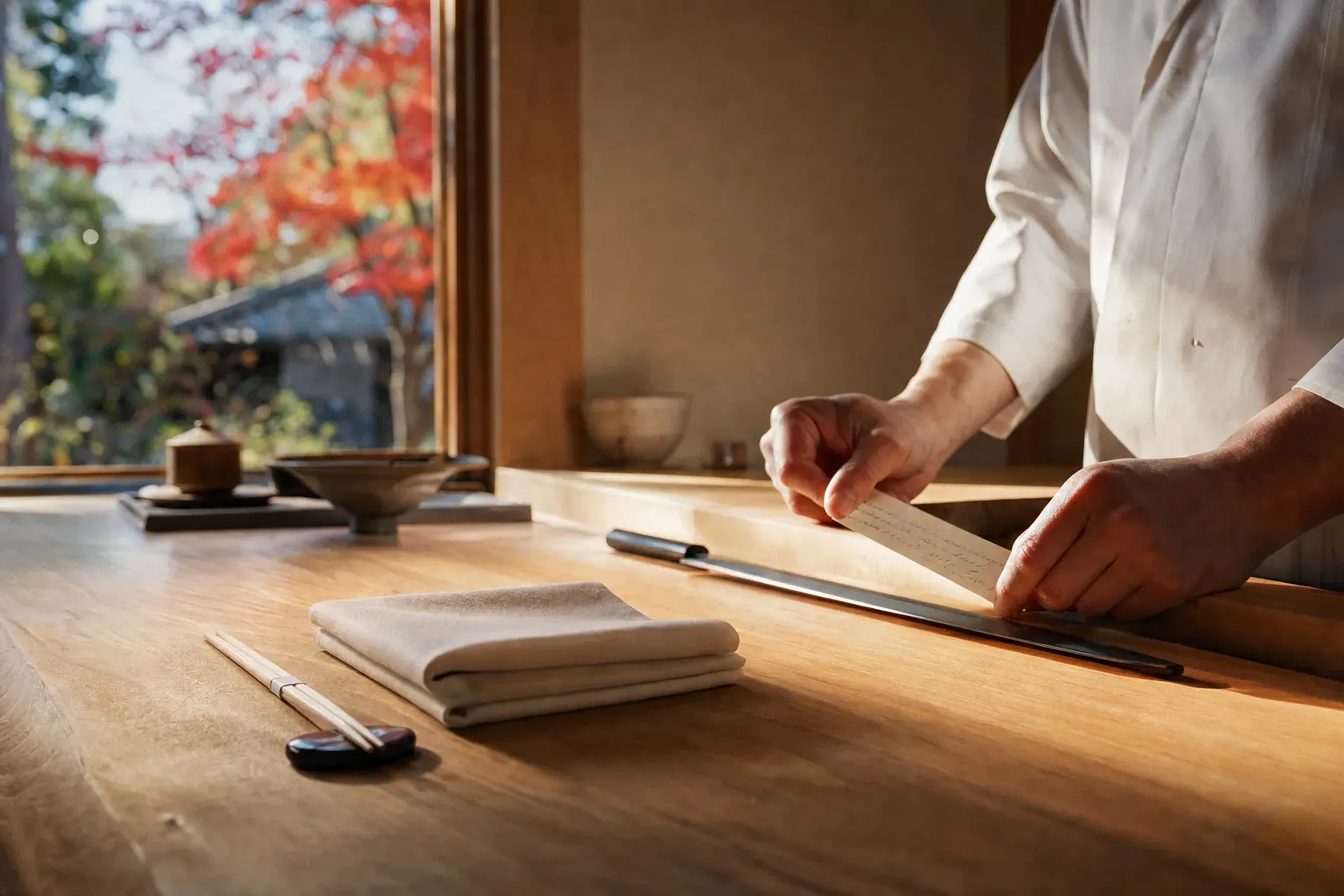
In a private kaiseki room, an interpreter matters less, and we will say so.
Private chauffeured transport can bridge the evening, so arrival is calm and on time, and a late seating never costs the table its rhythm. Our private chauffeur service and tailor-made itineraries are built to carry a single dinner or a full week with the same quiet care.
Frequently Asked Questions
Is Kappo More Flexible Than Kaiseki For Dietary Restrictions?
Sometimes, because some kappo rooms serve dish by dish rather than a fixed course. But flexibility always depends on the restaurant. At any set course, substitutions are limited and planned in advance, and the kitchen decides what it can do.
Can I Take Photos At A Sushi Counter In Japan?
Often yes, but discreetly: no flash, and do not move the plate. Policies vary by restaurant. Our concierge team confirms the specific room's rule directly with you when we arrange the meal.
Should A Group Of Six Choose Sushi, Kaiseki Or Kappo?
Kaiseki suits a group of six best. It is commonly served in private rooms, with service calibrated for a table of that size, and it leaves the conversation to your party rather than the chef.
Do I Need An Interpreter Guide For A Japanese Fine-Dining Meal?
Only if you want one, and it helps most at a counter. A guide lets you ask the chef about each dish and ingredient. In a private kaiseki room, where the kitchen is out of sight, it matters far less. Japan Royal Service arranges one on request.
Do I Have To Eat Nigiri With My Hands?
No. Both hands and chopsticks are correct. Chefs note the rice is molded lightly and can break with chopsticks, so if you use them, lift each piece gently.
Why Choose Japan Royal Service
Deciding between a sushi counter, a kaiseki room and a kappo bar is the real work, and it is the part a thoughtful concierge should carry with you. Our team at Japan Royal Service starts with the evening you want, not a venue list. We match the format to your party, your pace and your dietary needs, book the restaurant directly, and pass your requirements to the kitchen ahead of time. When a counter calls for it, we arrange an interpreter guide so the chef's commentary is not lost to you. Discretion runs through all of it: your identity and your itinerary stay yours.
Tell us the night you have in mind, and we will tell you which format fits. To plan privately, reach our team via WhatsApp or LINE, or contact us here.