In this guide
- 01One Master, Two Chapters: The Story Behind Kaga-Yūzen
- 02Mushikui And Sotobokashi: How Kaga-Yūzen Differs From Kyoto
- 03The Five Kaga Colours And What They Reveal
- 04A Craft Five Centuries Deep
- 05Where Should You Start With Kaga-Yūzen In Kanazawa?
- 06What Japan Royal Service Arranges Around Kaga-Yūzen
- 07Frequently Asked Questions
- 08Why Choose Japan Royal Service
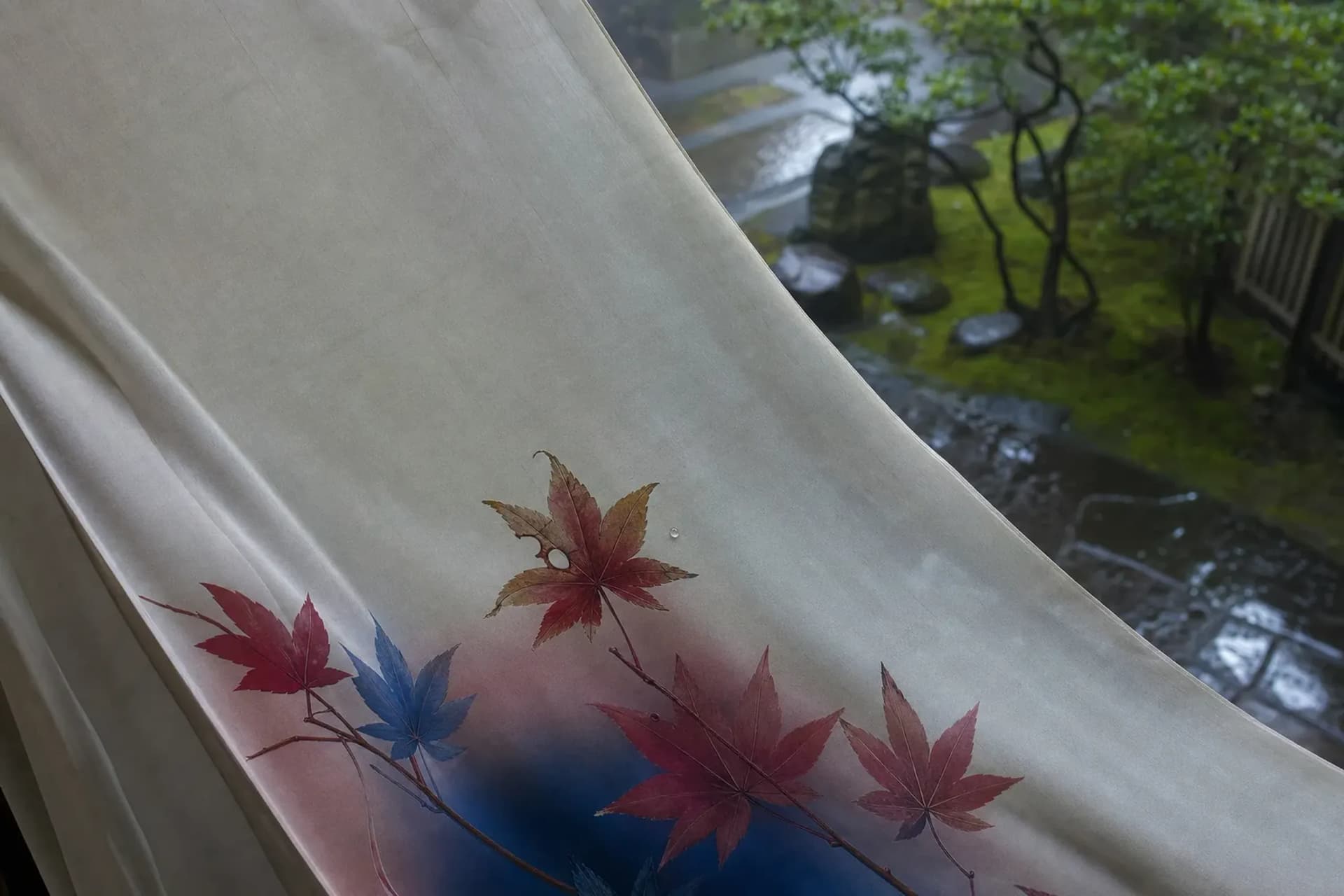
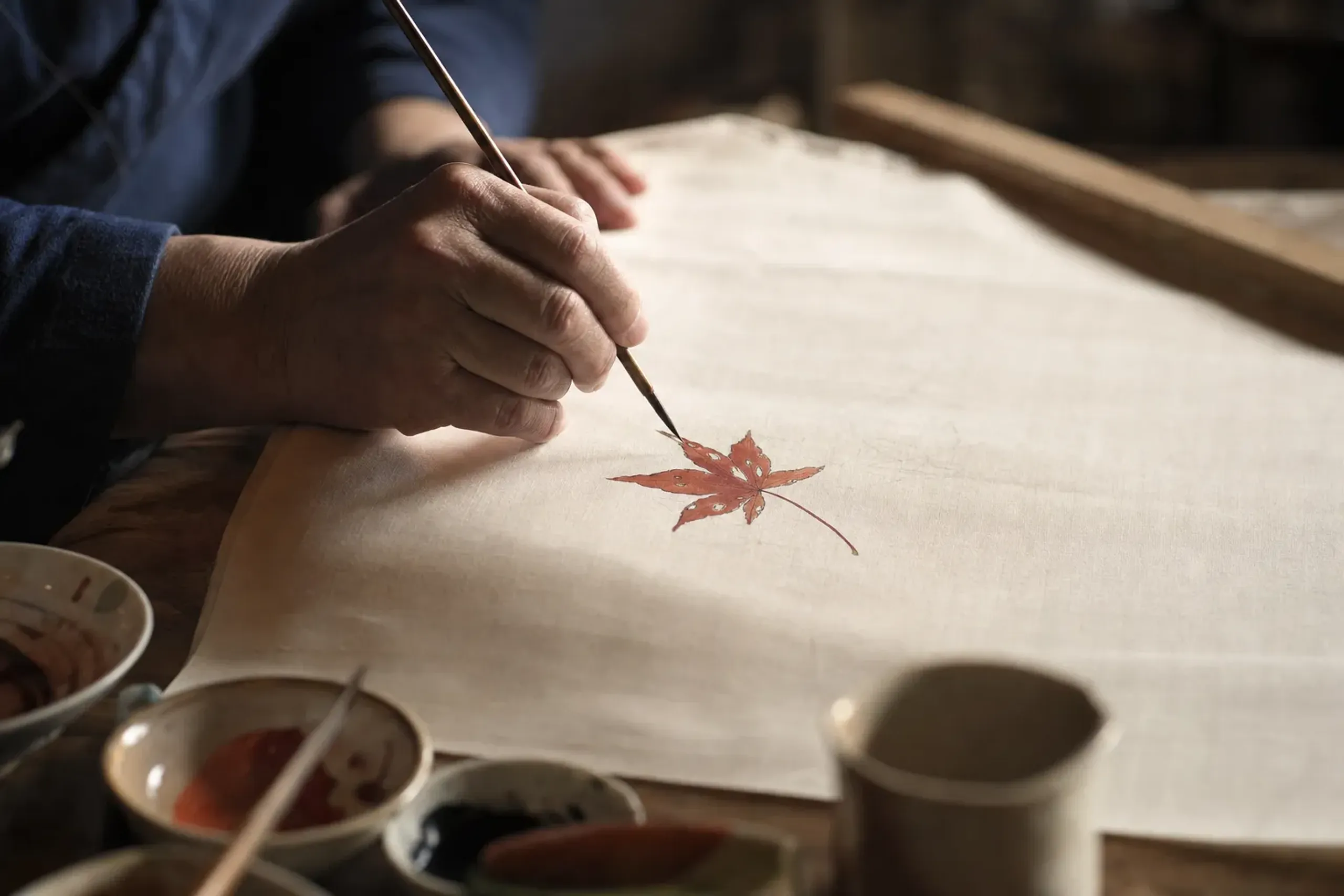
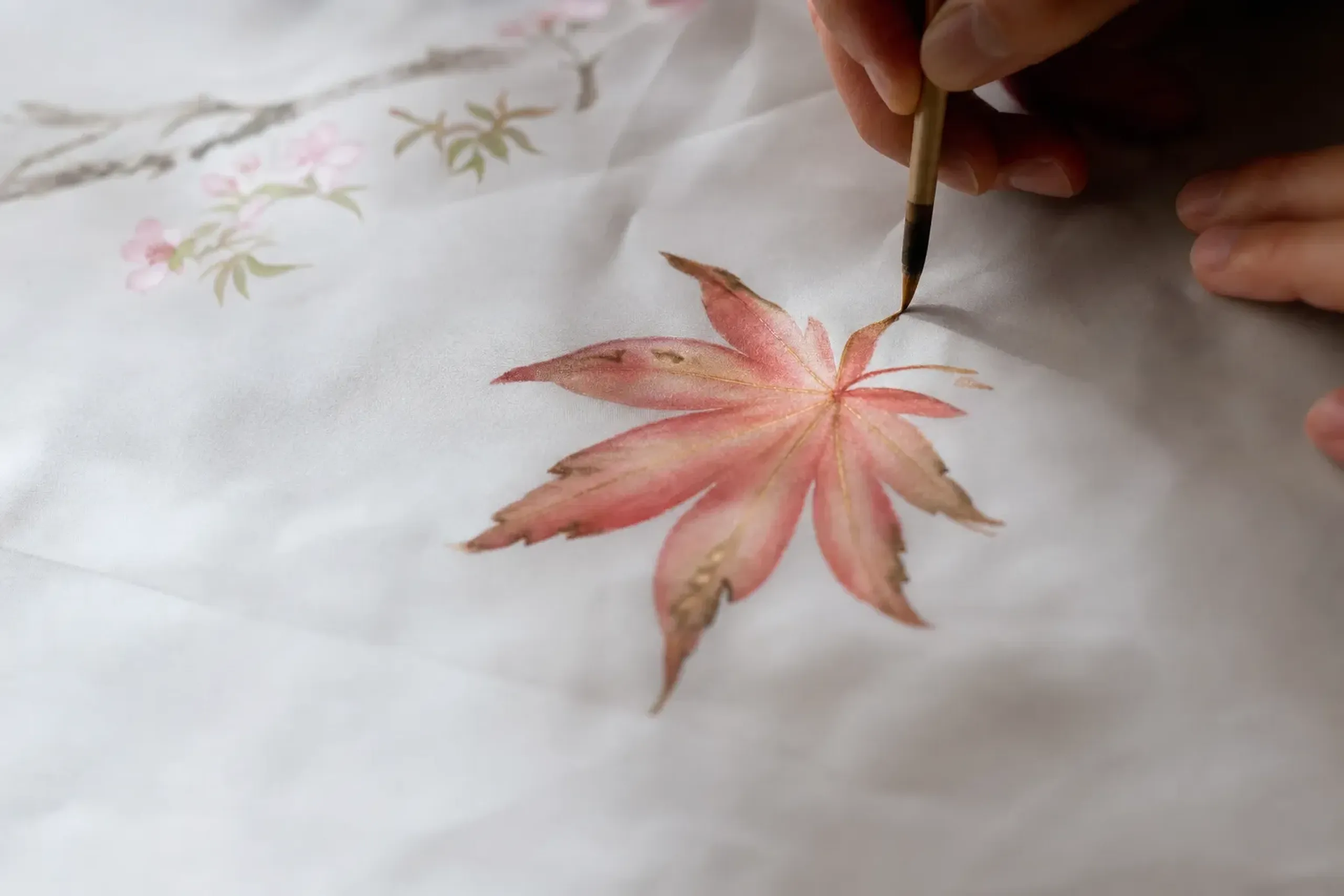
A length of white silk hangs taut across the frame. On it, half-finished, a spray of maple leaves. Look closer at one leaf. The dye is darkest at its outer rim and softens toward the middle — the opposite of what your eye expects. And there, along the veins, three small black marks, as though a beetle had already found the leaf and taken a bite before the artist ever lifted a brush.
That is not a mistake. It was painted on purpose. This is Kaga-yūzen, the silk-dyeing tradition of Kanazawa, and almost everything about it runs contrary to the more famous Kyoto style most travellers already half-know.
Our team at Japan Royal Service spends a great deal of time in Ishikawa, and of all the crafts we introduce, this is the one guests most often misunderstand. So let us start with the story nobody tells them.
One Master, Two Chapters: The Story Behind Kaga-Yūzen
Kaga-yūzen and Kyoto's Kyō-yūzen trace to the same man. Miyazaki Yūzensai (1654–1736), credited as the founder of Kyoto's silk-dyeing tradition, moved to Kanazawa in his later years — and there developed the craft that became Kaga-yūzen.
Read that again. It reframes everything.
Yūzensai made his name in Kyoto. Then, around 1712, he took refuge in Kanazawa, working with a dyeing house serving the Kaga domain. He arrived into a place that already had its own long dyeing tradition. Rather than transplant Kyoto's aesthetic wholesale, he introduced bold new designs into what the local dyers were already doing — and that fusion became something distinct.
So Kaga-yūzen is not a provincial copy of Kyoto's style. It is not a regional variant. It is the same founding master's later work, developed inside a different local tradition and pushed in an entirely different technical direction. Two chapters of one artist's life, a hundred kilometres and a lifetime apart.
Once you hold that in your head, the differences stop looking like decoration. They start looking like a decision — a considered break from the court aesthetic Yūzensai had already mastered.
Mushikui And Sotobokashi: How Kaga-Yūzen Differs From Kyoto
Two techniques separate Kaga-yūzen from its Kyoto sibling, and both are checkable with your own eyes on a single kimono. Once you know them, you can never look at either tradition the same way again.
Mushikui — The Insect-Eaten Leaf
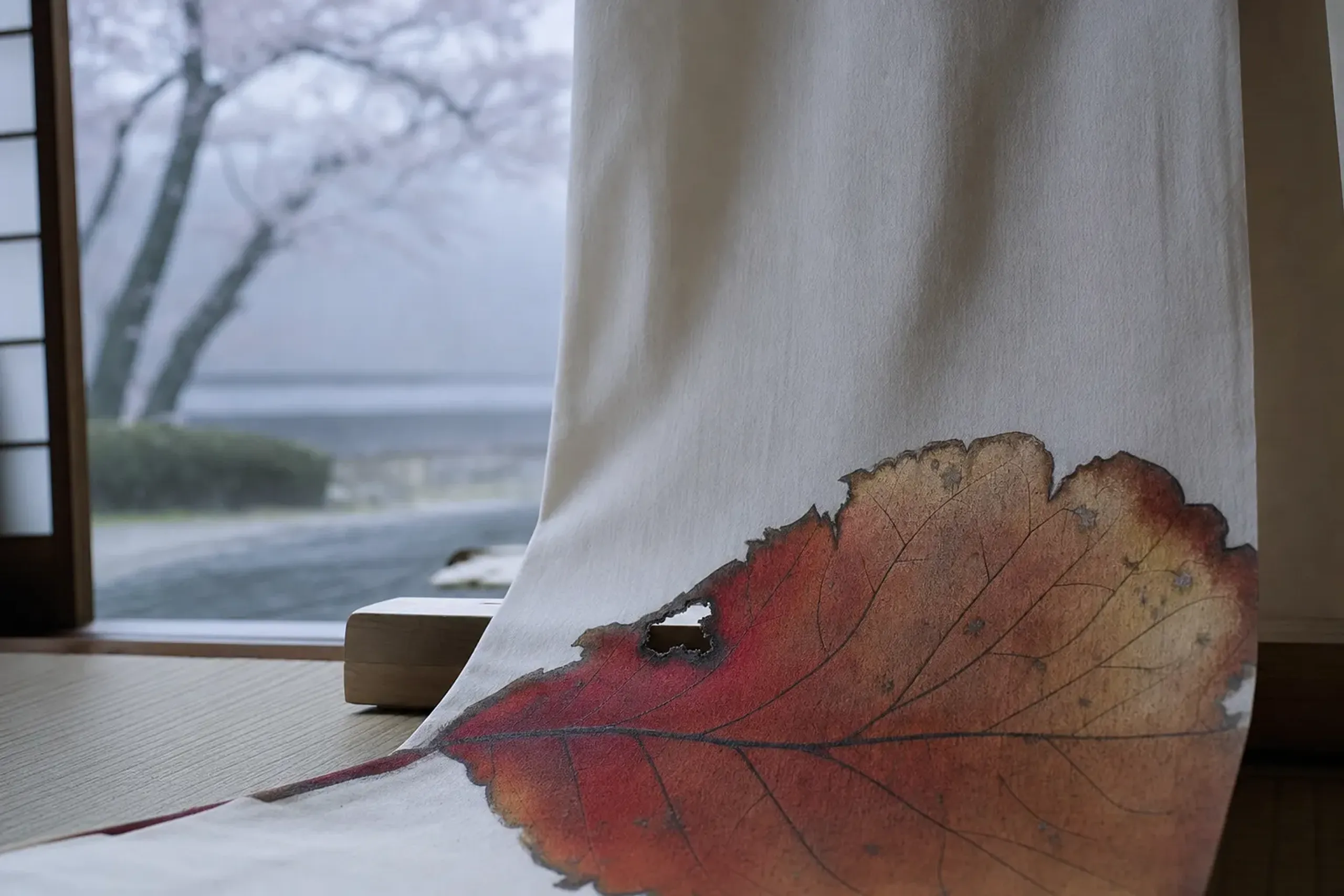
Mushikui means "insect-eaten." These are the small black marks deliberately painted onto leaves within a design, depicting insect damage — as though nature had already touched the fabric before the dye did.
The technique is essentially unique to Kaga-yūzen. You will struggle to find it anywhere else in Japanese textile dyeing. And the principle behind it is worth pausing on.
Kyoto's yūzen tends to idealise nature. Perfect blossoms, flawless leaves, an eternal spring. Kaga-yūzen does the opposite. It insists on the faithful, unidealised depiction of nature — including its blemishes. A real leaf in a real garden has been chewed at the edges, spotted, and browned. The Kaga dyer paints that in. Not the flower nature might have been, but the flower nature actually is.
It is a quietly radical idea for a luxury textile: that a wormhole in a leaf belongs on a garment worn by a samurai-class woman, and belongs there because it is true. This is the wabi-sabi sensibility made literal — beauty located in imperfection, in the honest mark of time rather than the flattering illusion of permanence.
Sotobokashi — Shading Backward
The second difference is technical and precise. Kyoto's yūzen shades a pattern from its centre outward, growing lighter toward the edges. Kaga-yūzen reverses this exactly. Its sotobokashi, or "outer shading," runs from the outer edge inward — darker at the boundary, lighter toward the centre.
This is not merely "a different style." It is the technique run backward. And the effect is startling: petals and leaves gain depth and roundness, a three-dimensional realism the centre-out method never quite achieves. A Kaga petal sits on the silk like a thing you could pinch.
Two tells to look for: small painted "insect bites" on the leaves (mushikui), and shading that is darkest at the outer edge of each motif (sotobokashi). Spot both, and you are almost certainly looking at genuine Kaga-yūzen — not Kyoto's.
The Five Kaga Colours And What They Reveal
Kaga-yūzen is built on a defined palette known as the Kaga Gosai — five colours. Indigo (ai), crimson (enji), moss green (kusa), ochre (ōdo), and ancient purple (kodai-murasaki).
Five sounds sparse. It is not. By varying the concentration of each and combining them, dyers draw roughly fifty distinguishable tones across a single design. The restraint is the point.
The overall register runs more muted than Kyoto's brighter courtly palette. That is history speaking.
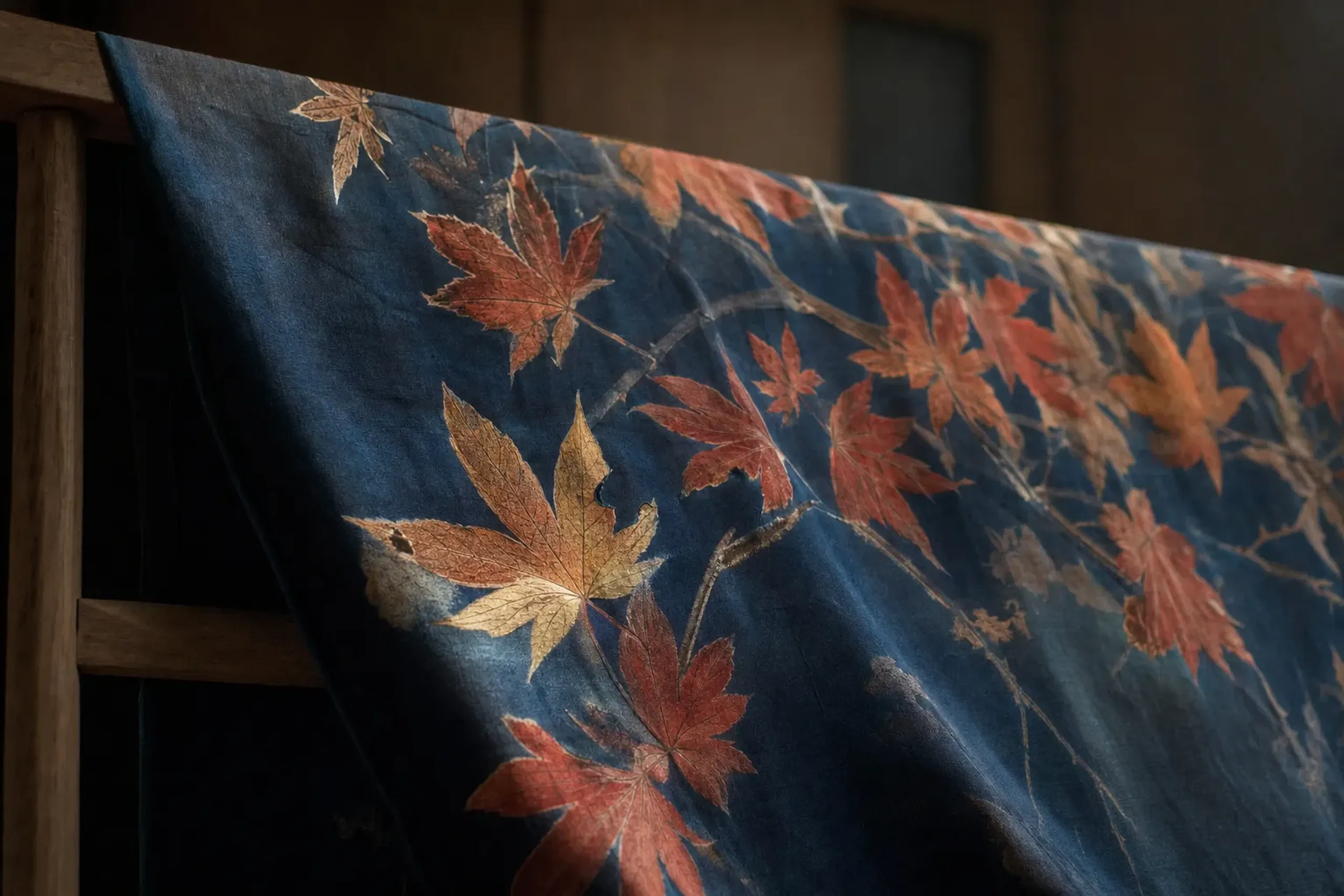
Kaga-yūzen was historically worn by samurai-class and wealthy merchant-class women, and it carries the restraint of Kaga's warrior culture the way Kyoto's yūzen carries the colour of the imperial court. The garment tells you who wore it and why.
There is another difference that separates the two traditions at a glance. Kaga-yūzen leans almost entirely on the dyeing itself for its finished effect. Gold leaf, tie-dyeing, embroidery — the flourishes that so often finish a Kyoto kimono — are rarely used here. What you see is dye, colour, and the drawn line. Nothing added afterward to dazzle you. It is confidence expressed as subtraction, the same aesthetic of restraint that runs through the moss-and-stone quietude of a Kanazawa garden.
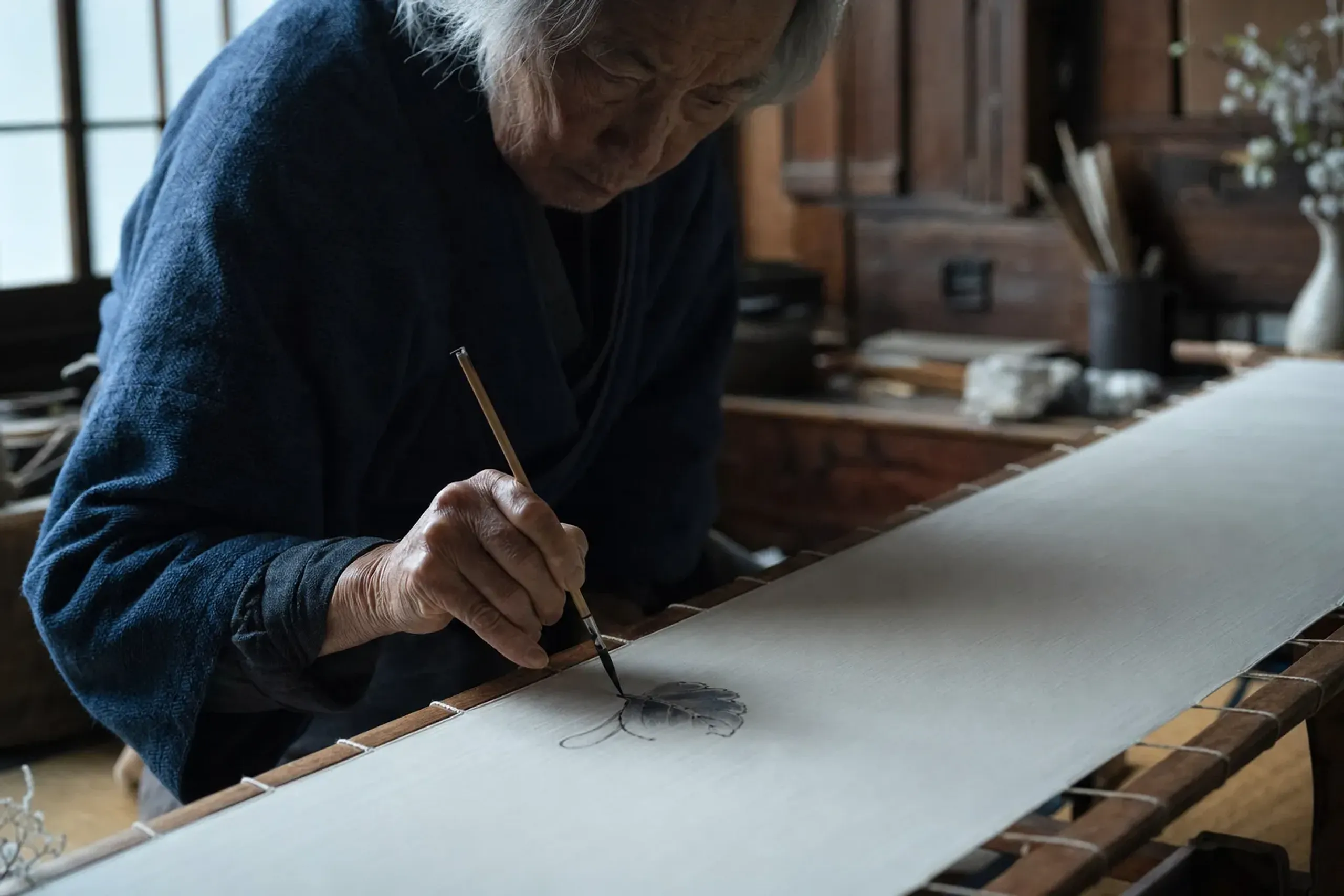
One detail delights nearly everyone we tell. The designs are first sketched directly onto the white silk using aobana, a temporary blue dye pressed from dayflower — spiderwort — juice. It vanishes on contact with water. The entire preparatory drawing disappears once the permanent dye is set, leaving only the finished design. The scaffolding evaporates. You never see the drawing that made the picture possible.
A Craft Five Centuries Deep
The Miyazaki Yūzensai fusion, dramatic as it is, sits fairly late in this story. The roots run roughly five hundred years back.
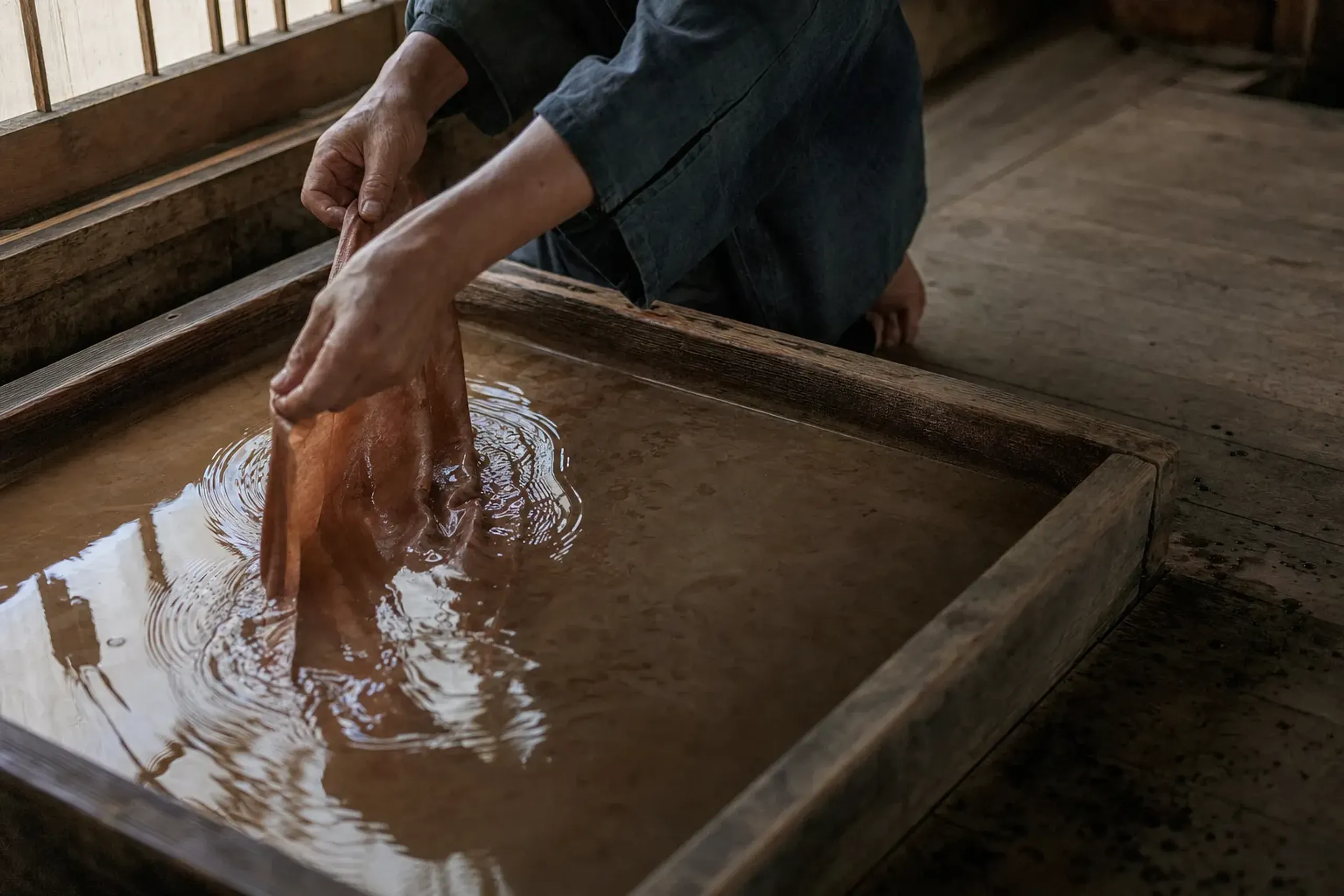
It began with a plain-dye technique called umezome — "plum-dye" — using plum bark and astringent to colour undyed cloth. From that base grew a more elaborate mid-Edo local tradition, Kaga-mikuni-zome. Only then, in the Genroku era, did Yūzensai arrive and add his designs to a craft already generations deep. He did not invent the ground he stood on.
He transformed it.
The finished process runs to roughly nine major stages, from the first aobana sketch through to the final dye, each demanding a specialist's hand. This is the world of the shokunin — makers who devote a lifetime to a single discipline, and whose mastery is measured not in years but in decades.
One historical stage was genuinely picturesque. Excess paste and dye were once rinsed from finished cloth directly in the Asano River, a practice called yūzen-nagashi. Long bolts of brilliant silk streaming in cold running water through the middle of the city — a working step in the craft that happened to be beautiful. It is largely a demonstration and heritage event now rather than daily practice, but it remains one of the most evocative images the tradition has left in Kanazawa.
None of this is folklore dressed up for visitors. Kaga-yūzen is a Traditional Craft designated by Japan's Ministry of Economy, Trade and Industry, ranked with Wajima lacquer and Kutani porcelain as one of Ishikawa's three most internationally recognised crafts. Authenticated work carries an official certification mark from the Kaga Dye Promotion Association, alongside the individual artist's own registered seal. Two marks: the tradition's, and the maker's. A protected craft, not a souvenir.
Where Should You Start With Kaga-Yūzen In Kanazawa?
Start at the Kaga-Yuzen Kimono Center. It is the respectful, legitimate first encounter — a public museum with an established programme covering the tradition's history and technique, at a modest admission fee.
The Center sits at 8-8 Koshomachi in Kanazawa, generally open 9:00–17:00 and closed on Wednesdays (open on holidays), with year-end and New Year closures.
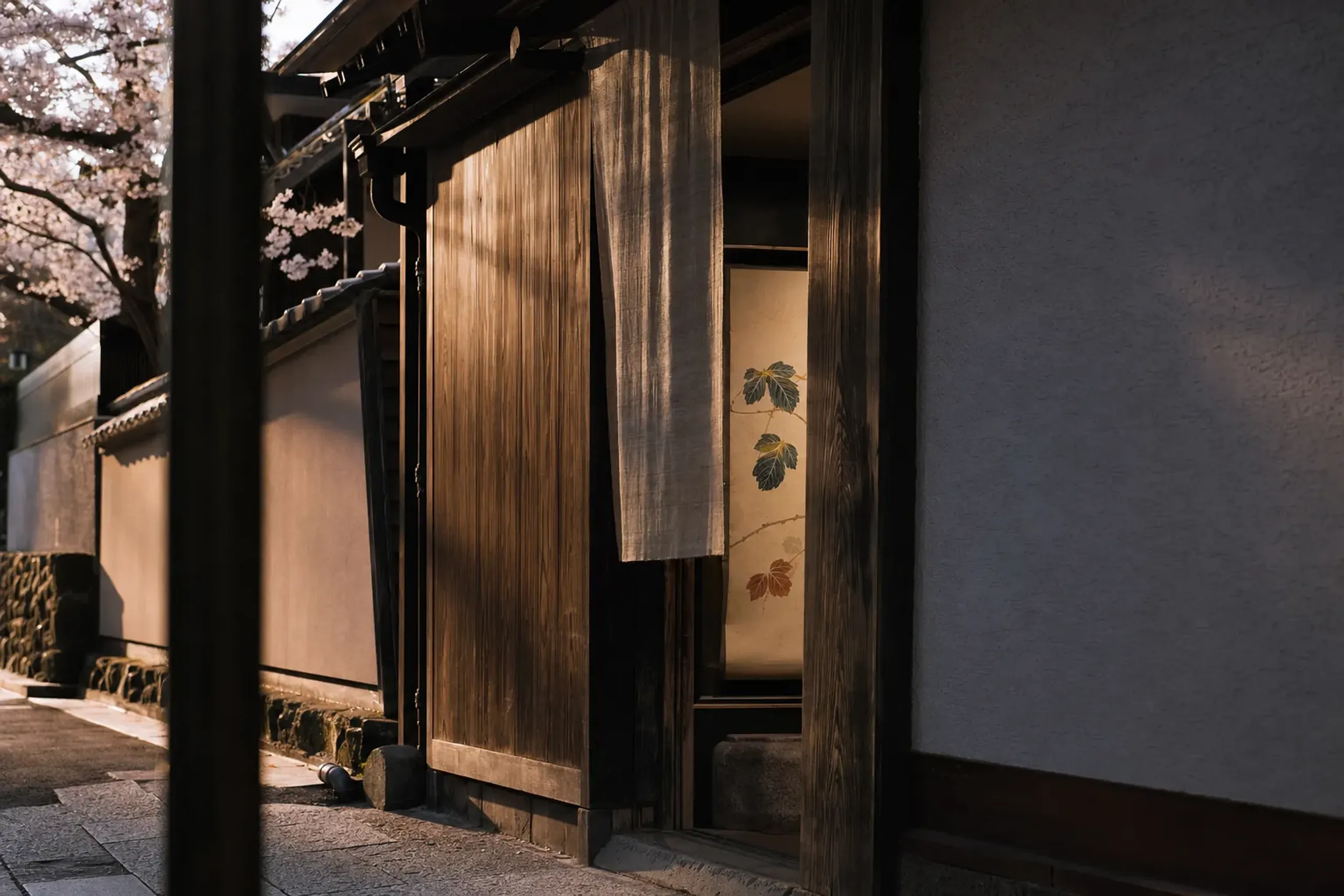
It offers historical context, kimono rental, and a genuine hand-dyeing experience on site. We will note plainly that the Center has announced its dyeing-experience prices will change from 1 October 2026 owing to rising material costs — worth knowing when you plan.
Why begin at a museum rather than an artist's studio? Because context earns the next door. This follows the philosophy we set out in our writing on Japan's shokunin: the finest makers are not a workshop attraction, and hands-on participation is not the point. Many masters simply do not welcome a supervised visitor's attempt at their own work — and that reticence is part of what makes the craft serious. Understand the tradition first. Then, where a genuine introduction is possible, you meet the person.
Kanazawa rewards this patience. It holds UNESCO Creative City of Crafts and Folk Art status — the first Japanese city so designated — and Kaga-yūzen shares that city with gold leaf and Kutani porcelain, all within a short chauffeured ride of one another.
For those whose timing aligns, the calendar occasionally opens rare windows: the Traditional Kaga Yuzen Craft Exhibition at the Ishikawa Prefectural Museum of Art gathers current work under one roof, and periodic yūzen-nagashi demonstrations by the Asano River bring that streaming-silk image briefly back to life. Knowing precisely which month rewards the journey — when the exhibitions open, when the river runs with silk — is exactly the kind of seasonal judgement that turns a good trip into an unrepeatable one. These are the moments a collector-minded traveller plans an entire itinerary around.
What Japan Royal Service Arranges Around Kaga-Yūzen
Our role here is careful, and we will state its limits honestly.
We arrange museum visits and guiding, private introductions to artists where they are genuinely available, and the practicalities of purchase or commissioning. What we do not do is pretend every atelier is open. An introduction is required, and not every maker welcomes a supervised visitor attempt at their own work — the same principle that governs how we approach every shokunin.
Around that, we build the trip. A private, English-speaking guide who can read a certification seal and translate a maker's intent. A private chauffeured car so the day between the Kimono Center, a gold-leaf atelier, and lunch moves without a timetable. A quiet tailor-made itinerary that folds Kanazawa's crafts into a broader Ishikawa route — Kenrokuen at opening hour, the Asano River on foot, a considered ryokan or hotel stay to close the day. If you are commissioning a piece, we handle the correspondence, the seasonal motif discussion, and the discretion the whole thing deserves — your identity, your intentions, and your itinerary held in complete confidence throughout.
Our concierge team confirms current hours, programme availability, and any required introduction ahead of your arrival — anticipating the small frictions before they surface, so nothing about the day feels arranged.
Frequently Asked Questions
What Is The Difference Between Kaga-Yūzen And Kyoto Yūzen?
Kaga-yūzen shades motifs darker at the outer edge (sotobokashi) — the reverse of Kyoto's centre-out shading — and paints "insect-eaten" marks (mushikui) onto leaves. It relies on dyeing alone, rarely using gold leaf or embroidery. Both traditions trace to master Miyazaki Yūzensai.
Where Can I See Authentic Kaga-Yūzen In Kanazawa?
The Kaga-Yuzen Kimono Center at 8-8 Koshomachi is the respectful starting point — a public museum with history, technique displays, kimono rental, and a hand-dyeing experience, at modest admission.
It is generally open 9:00–17:00, closed Wednesdays.
How Do I Know A Kaga-Yūzen Kimono Is Genuine?
Authenticated Kaga-yūzen carries two marks: an official certification mark from the Kaga Dye Promotion Association, and the individual artist's own registered personal seal. Look for both when purchasing or commissioning a piece.
Can I Visit A Private Kaga-Yūzen Artist's Studio?
Sometimes, but only by genuine introduction — and not every master welcomes visitors or hands-on attempts at their work. We recommend beginning at the Kimono Center for context; our concierge confirms whether a private artist visit is available before your trip.
Why Are Kaga-Yūzen Leaves Painted To Look Damaged?
The mushikui or "insect-eaten" technique reflects a faithful, unidealised view of nature — depicting real leaves as insects have already touched them, rather than an idealised perfect version. It is essentially unique to Kaga-yūzen.
Why Choose Japan Royal Service
Understanding a craft like Kaga-yūzen is easy to fake and hard to honour. Our team at Japan Royal Service is based in Japan, works directly with Ishikawa's craft community, and treats an artist's reticence as something to respect rather than a booking obstacle to bulldoze. We do not resell a generic "workshop." We open the right door, in the right order, and stay out of the way once you are through it.
If you would like to see Kaga-yūzen as it is meant to be understood — the tradition first, then, where a genuine welcome exists, the maker's own hand — contact us here. Tell us your dates, and we will begin quietly arranging the season, the introductions, and the discretion the craft deserves.