In this guide
- 01Why Plum Rewards A Planner And Cherry Punishes One
- 02The Six Named Trees Among Three Thousand
- 03What Kairakuen Is, And What Nariaki Meant By The Name
- 04The Kōdōkan Pairing: Study And Rest As One Design
- 05Kōbuntei, The Villa Nariaki Designed
- 06When Is The Mito Plum Festival In 2026?
- 07How Do You Get To Kairakuen From Tokyo?
- 08What Japan Royal Service Arranges At Kairakuen
- 09Frequently Asked Questions
- 10Why Choose Japan Royal Service
The scent reaches you before the flowers do. You cross the front gate in mid-February, past a stand of moso bamboo, and the air is cold enough to sting. Then it turns sweet. Somewhere ahead, on branches still mostly bare, the first white plums have opened. This is how the garden is walked in this season — nose first, then eyes.
Kairakuen sits in Mito, capital of Ibaraki Prefecture, an hour and change north of Tokyo. It ranks among Japan's three great gardens, alongside Kenrokuen in Kanazawa and Kōrakuen in Okayama. But in plum season it does something the other two do not. It gives a planner six weeks of margin where cherry gives one. At Japan Royal Service, that single fact reshapes how we build a spring day around Mito.
Why Plum Rewards A Planner And Cherry Punishes One
Plum blossom gives you roughly six weeks of reliable flowering; cherry gives you about one, forecast a fortnight out and wrong as often as right. That is the whole argument, and almost nobody writes it.
Kairakuen holds around three thousand plum trees across roughly a hundred varieties. They do not bloom together. Early, mid, and late types open in sequence from mid-February into late March. There is always something in flower. There is never a single peak to gamble on.
Contrast that with the cherry cluster in Kyoto, Nara, and Osaka. A client flies in for a fixed week, watches the forecast slide, and prays. We have written before about how uncertain that Kansai timing can be.
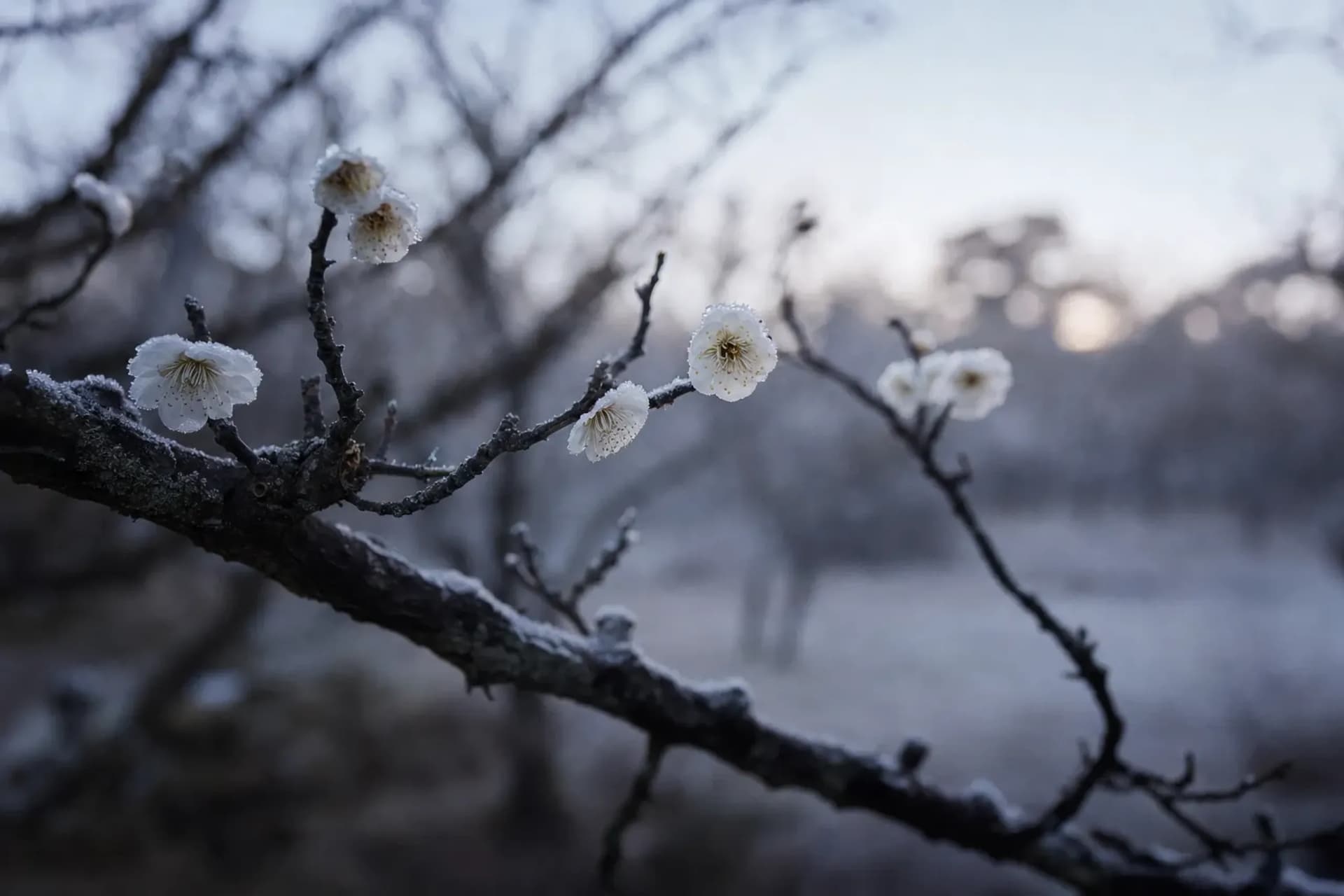
Plum opens on bare wood, weeks before the weather turns — and long before cherry.
Plum removes the gamble. You pick a week in the window and the garden delivers.
One distinction, said once: these are flowering plums, grown for blossom and scent, not the fruiting orchard kind. The point of the tree is the flower.
The Six Named Trees Among Three Thousand
Among the three thousand plums, six are singled out by name for the form, scent, and colour of their flowers. They are known as the Rokumeiboku of Mito.
They are: Rekkōbai, Shironaniwa, Tsukikage, Kōnanshomu, Yanagawa Shidare, and Tora no O. Six named individuals in a crowd of three thousand. That is the connoisseur's frame, and it gives a guided walk a spine — a reason to pause, look closely, and understand rather than simply pass through.
Rekkōbai carries a memorial. It is named for Tokugawa Nariaki, whose posthumous name was Rekkō. Its flowers are pale pink, petals close to oval, opening late February into early March. Tsukikage is different in character altogether — a white, single-petalled variety that opens in mid-February, its flowers unusually large and clean.
The condition and precise placement of the six shift year to year. Our concierge confirms which are in flower, and where they stand, before we set a date — so a guided walk lands on trees at their best rather than trees just past.
What Kairakuen Is, And What Nariaki Meant By The Name
Tokugawa Nariaki, ninth lord of the Mito domain, created the garden in July 1842.
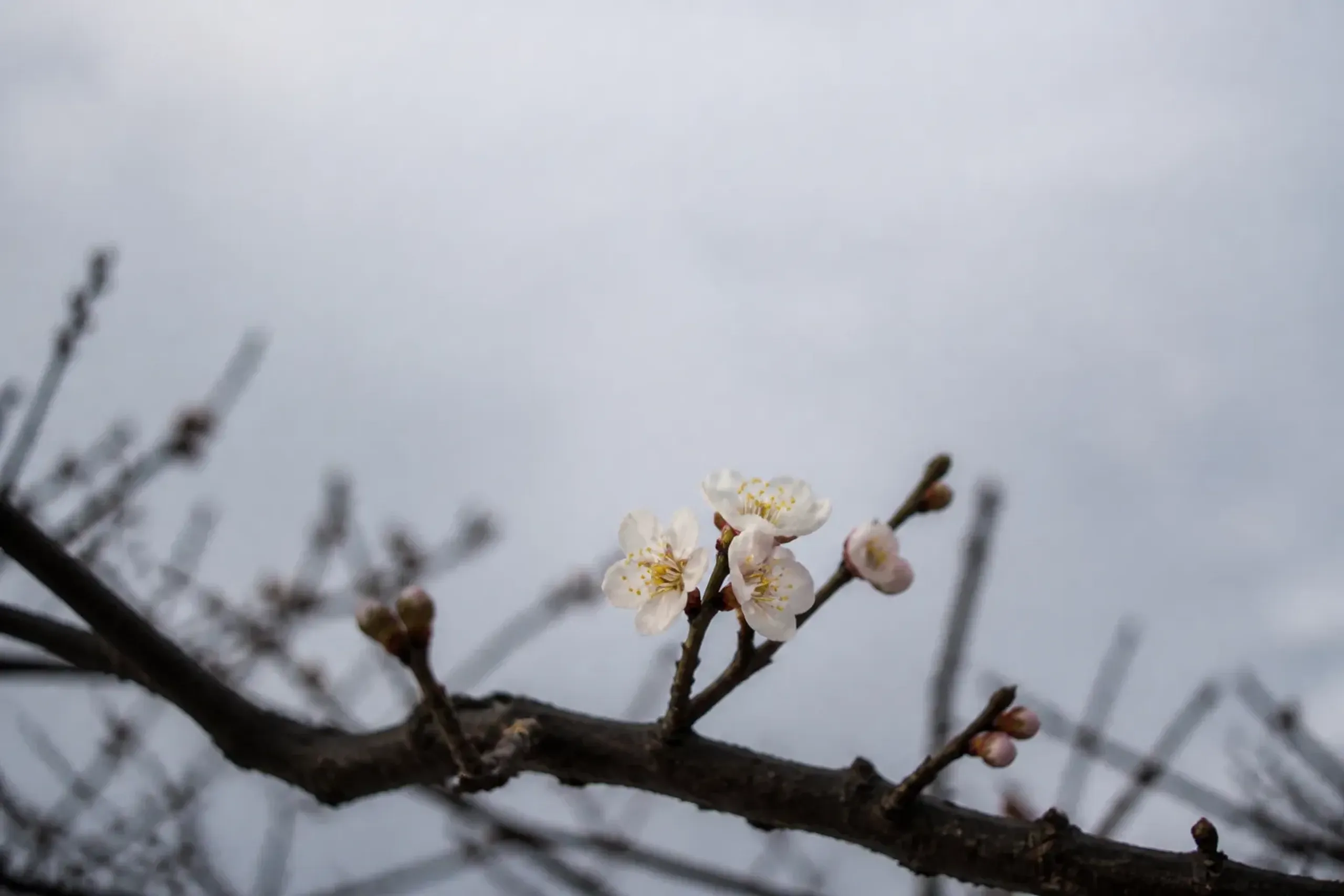
Six trees are singled out by name among three thousand — the Rokumeiboku of Mito.
He worked out the design himself, down to the siting of its buildings.
The name repays attention. It comes from Mencius: the ancients took their pleasure together with the people, and could therefore truly take pleasure. "Kairaku" means shared enjoyment. Nariaki built a place to be enjoyed with those he governed, not held apart for the lord alone.
That intention still marks the ground. Where Kenrokuen and Kōrakuen read as a ruler's private world made visible, Kairakuen feels open, almost civic. It was designed to feel that way. Understanding this changes how the place lands underfoot — you are walking someone's deliberate act of generosity, not just a pretty landscape.
The Kōdōkan Pairing: Study And Rest As One Design
Nariaki did not conceive the garden alone. He designed it as one half of a pair with Kōdōkan, the domain school — a place for study and training. The school for the mind's work; the garden for its rest. One system, two halves.
Kōdōkan has its own plum grove: roughly eight hundred trees across some sixty varieties. So the plum theme runs through both sites, binding them. A visitor who sees only the garden misses the idea. Seen together, they explain what Kairakuen was for — discipline and recovery, held in balance by a single Edo-period mind.
This is the pairing luxury competitors skip. Most name the "three great gardens" and move on. The intellectual architecture behind Mito's garden is where the day gains depth.
Kōbuntei, The Villa Nariaki Designed
Inside the grounds stands Kōbuntei, a traditional wooden villa.
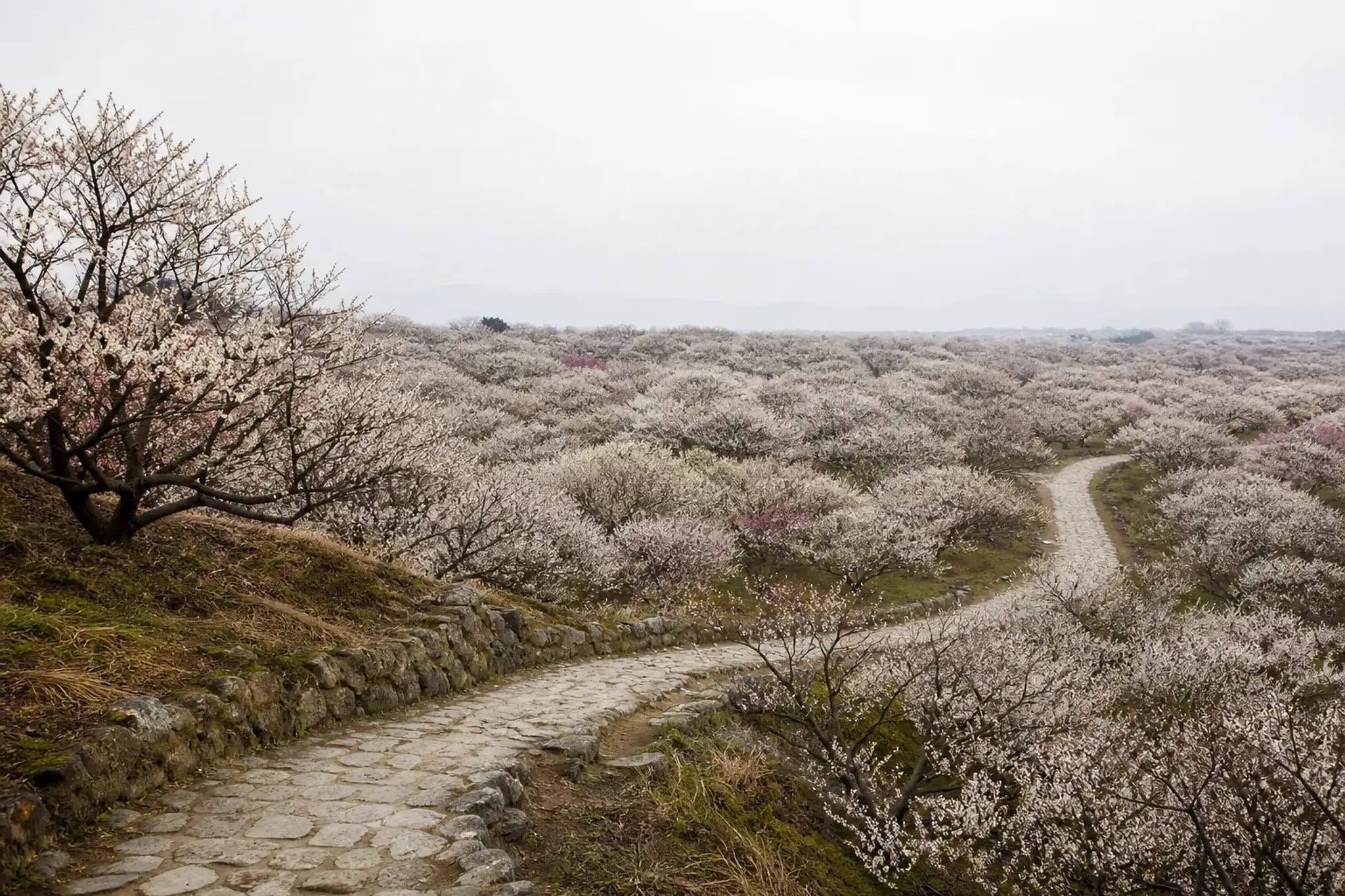
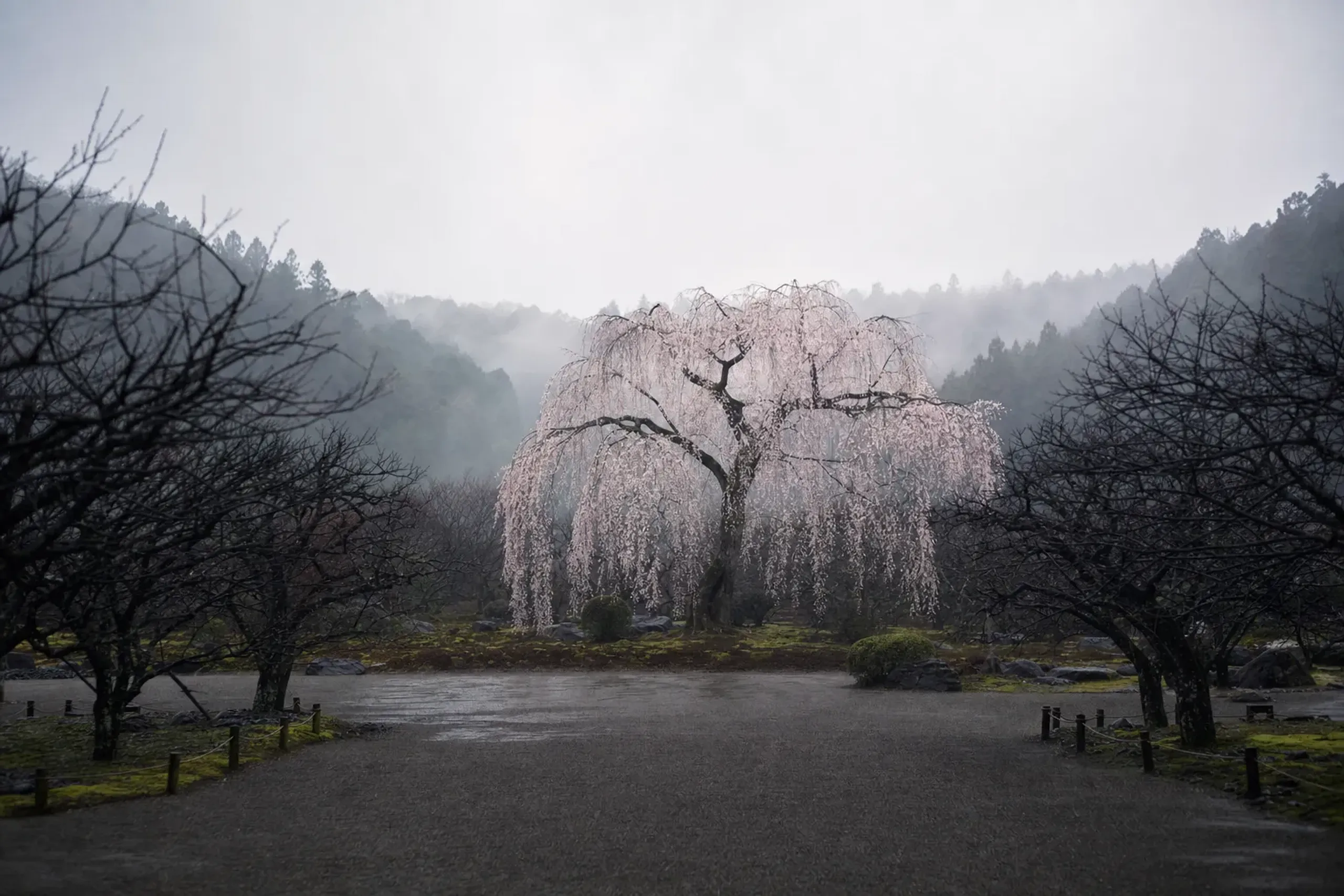
In the east and west groves, the view is plum in every direction.
Nariaki determined everything about it, from where it sits to how it is built. Its upper floor opens to views across the garden and toward nearby Senba Lake.
A café now operates on the ground floor. Admission to Kōbuntei is charged separately from the garden itself. For guests who want quiet, we can arrange the walk so the villa's rooms are reached before the day's foot traffic builds — the tatami still, the light low, the grove framed in the window like a scroll.
Worth knowing: Mid-February in Ibaraki is genuinely cold. The plums open before the weather turns. Dress for winter, not spring — the scent rewards those who stand still in the chill.
When Is The Mito Plum Festival In 2026?
The 130th Mito Plum Blossom Festival runs February 11 to March 22, 2026, at both Kairakuen and Kōdōkan. Please confirm current dates before travel, as they set each year.
The festival has been held for well over a century. Most of the three thousand trees stand in the east and west groves, where the view is plum in every direction — a full horizon of it. Outdoor tea gatherings are staged during the season, and a temporary Kairakuen Station opens on the JR Jōban Line at peak times, stopping trains directly beside the garden.
There is a night event too. UME The Lights 2026 illuminates the groves on select evenings. Note the friction: even if you have already entered during the day, you must exit at 17:00 and buy a separate ticket to attend the illumination.
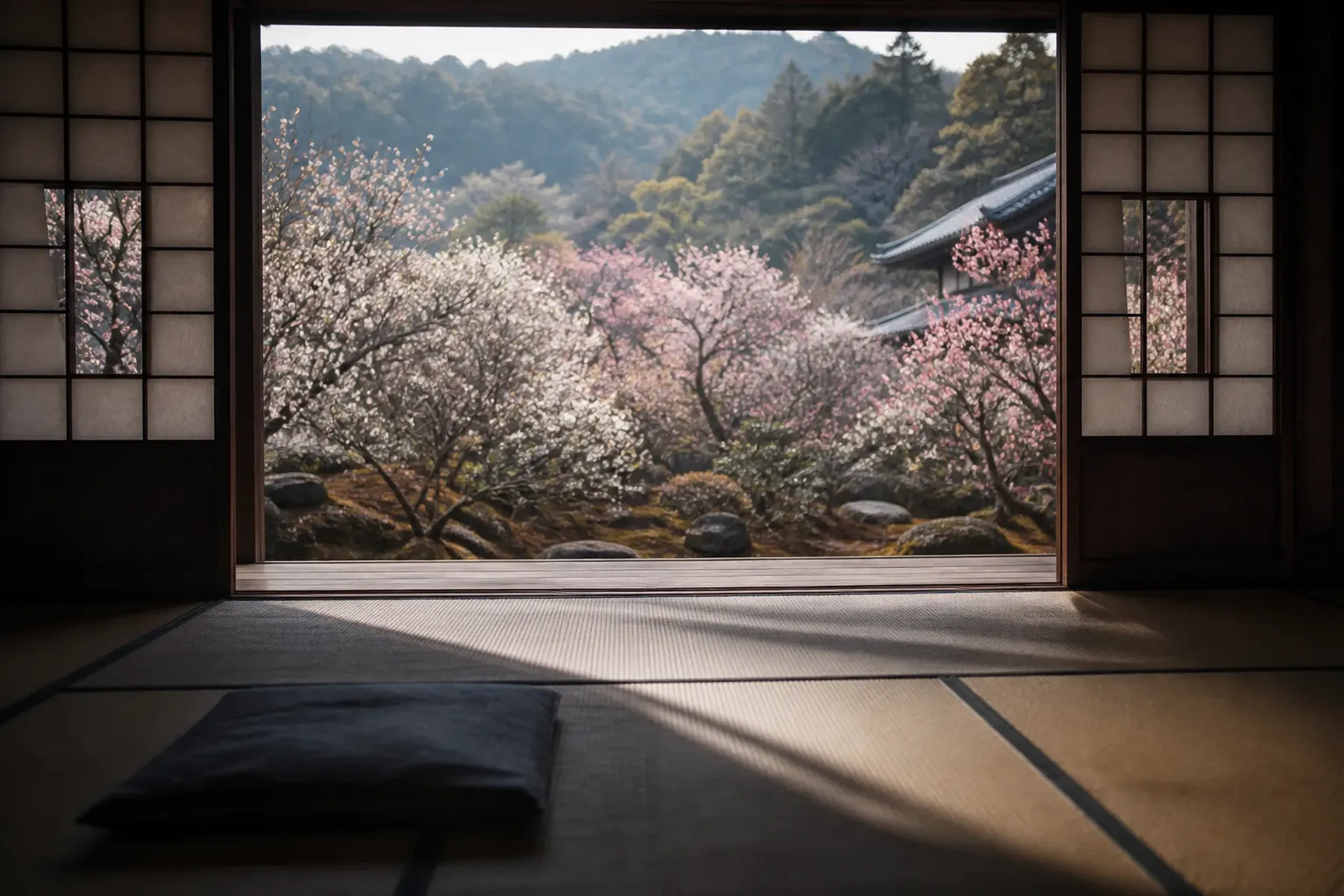
From Kōbuntei's rooms, the grove is framed like a scroll — the villa Nariaki designed himself.
A festival umeshu programme also runs in Mito, pairing the garden's plum identity with tastings of plum wine.
If you value stillness over spectacle, February is the quiet window. The flowers are already opening while the festival crowds have not yet built. March brings both fuller bloom and more feet.
How Do You Get To Kairakuen From Tokyo?
Mito is about one hour ten minutes from Tokyo Station by limited express on the JR Jōban Line, then roughly twenty minutes by bus to the garden. It is comfortably a day trip from Tokyo.
Be clear about geography. Mito sits in a different part of the country from the March cherry cluster in Kyoto, Nara, and Osaka. A client cannot fold both into the same week without real effort. We would rather say so than draw a tidy circuit that does not exist. Kairakuen belongs to a Tokyo-based itinerary, or an overnight extension into Ibaraki — not a Kansai loop.
For those who prefer the door-to-door route, our private chauffeured transport runs from central Tokyo directly to the garden gate, with the day paced to reach the groves before the crowds and the named trees while the light is still soft.
What Japan Royal Service Arranges At Kairakuen
Plainly, once: we provide English-speaking private guiding through the groves and the six named trees, chauffeured transfers from Tokyo, timed access to Kōbuntei, and — where it can be granted — quiet visits outside the busiest public hours.
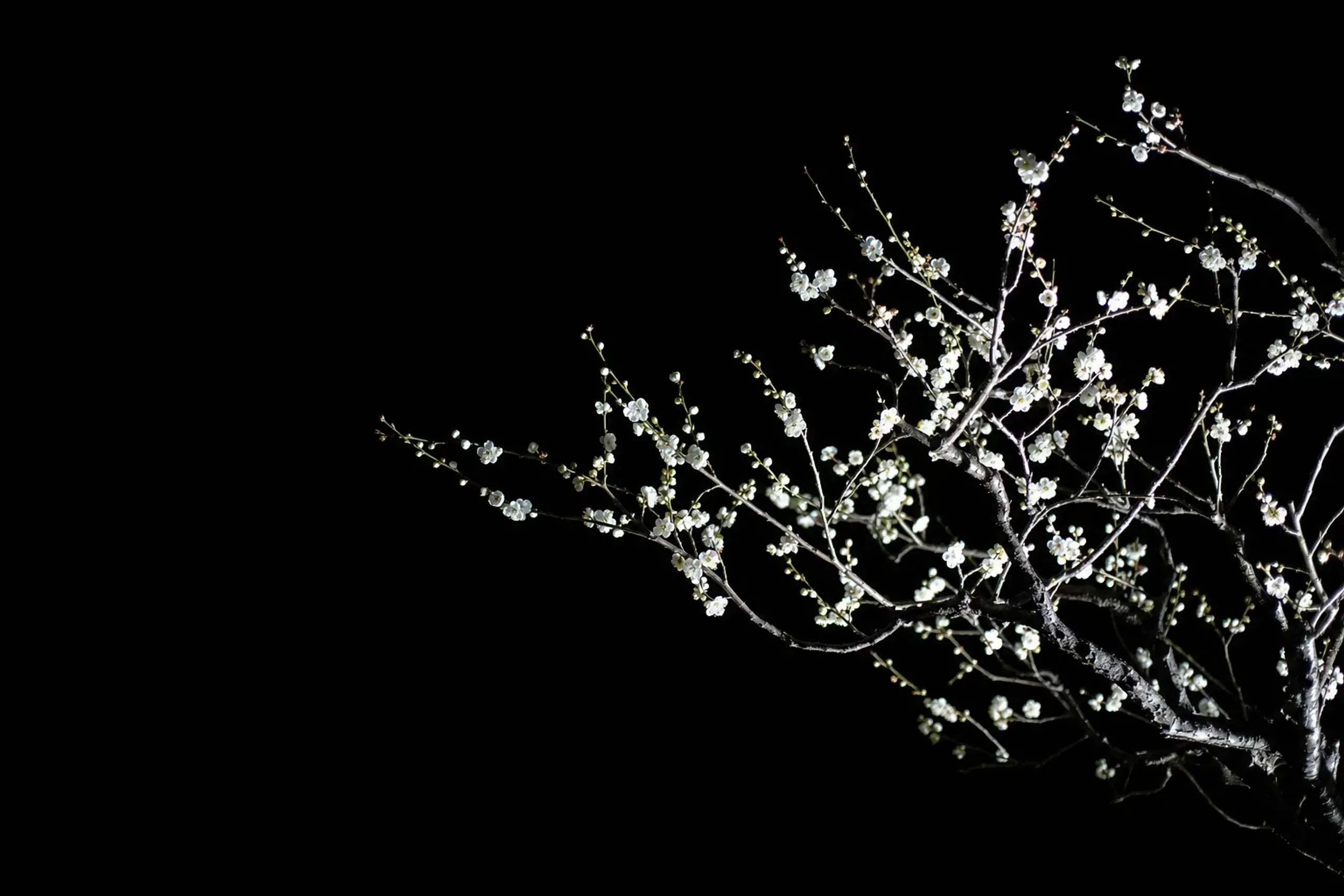
UME The Lights illuminates the groves on select festival evenings — a separate ticket after 17:00.
That is the shape of a Kairakuen day with us.
Beyond the guided walk, a tailor-made itinerary can fold in the Kōdōkan grove, an evening at UME The Lights with the ticketing handled cleanly, or an umeshu tasting timed to the festival. If you would rather stay the night near Mito than return to Tokyo after dark, our concierge can advise on refined places to rest for the extension.
Frequently Asked Questions
When is the best time to visit Kairakuen for plum blossoms in 2026?
Anytime from mid-February to late March works, because roughly a hundred plum varieties open in sequence rather than all at once. February is the quiet, colder window before festival crowds build in March.
What are the six named plum trees at Kairakuen?
They are the Rokumeiboku of Mito: Rekkōbai, Shironaniwa, Tsukikage, Kōnanshomu, Yanagawa Shidare, and Tora no O. These six are singled out among three thousand trees for the form, scent, and colour of their flowers.
Can I combine Kairakuen with a Kyoto cherry blossom trip in the same week?
Not easily. Mito sits north of Tokyo, while the cherry cluster is in Kansai — Kyoto, Nara, Osaka. Kairakuen fits a Tokyo-based itinerary or an Ibaraki overnight, not a Kansai loop.
Do I need a separate ticket for the UME The Lights night illumination?
Yes. Even if you entered Kairakuen during the day, you must exit at 17:00 and purchase a separate ticket to attend UME The Lights 2026.
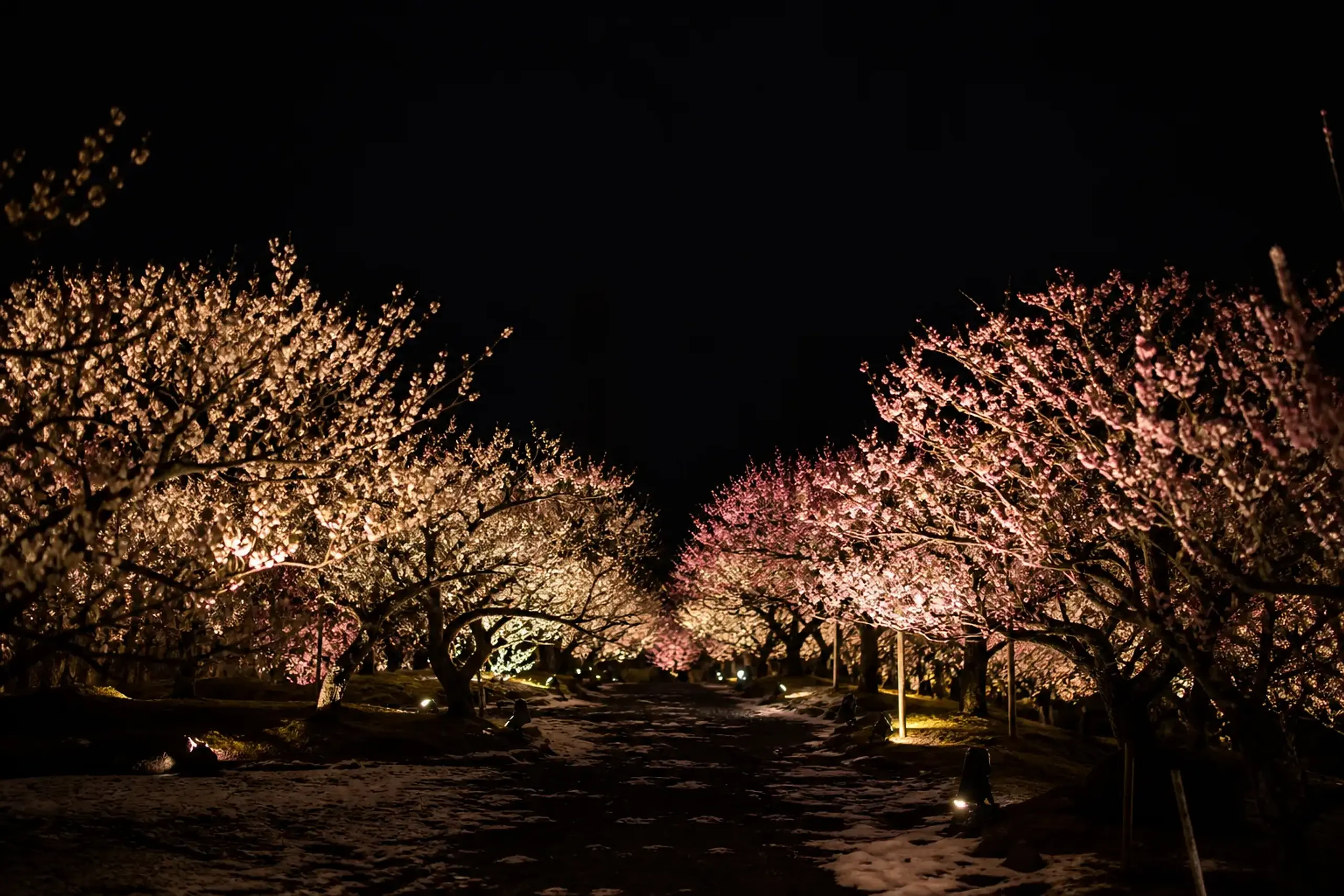
Our concierge can advise on the timing so the transition is seamless.
Is Kairakuen better than Kenrokuen or Kōrakuen for a spring visit?
For plum specifically, yes — Kairakuen's three thousand trees and six-week bloom window make it the strongest of Japan's three great gardens for a low-risk spring visit built around blossom rather than cherry.
Why Choose Japan Royal Service
Kairakuen is a public prefectural garden, and we would never dress it as something it is not. What we add is judgement. Knowing which of the six named trees is in flower this week. Knowing that February's cold buys you quiet the March crowds erase. Knowing how to move a guest from a daytime grove into a ticketed night illumination without a fumbled queue at the gate.
Our team at Japan Royal Service works from within Japan, with our own fleet and our own guides, and with the discretion our clients expect. We do not sell a fixed circuit. We build the day around the flowers, the light, and how you like to walk. In our experience, that is what makes a garden stay with you.
To plan a plum-season day at Kairakuen, reach our team privately via WhatsApp or LINE, or contact us here.