In this guide
- 01What Is Tawaraya Ryokan, And Why Does It Matter In Kyoto?
- 02Hōei-Era Origins: A Cloth Wholesaler Who Started Taking In Travelers
- 03Fire, Rebuilding, And A House Registered For What It Is
- 04Satō Toshi’s Sixty Years: The Proprietor Who Decided Everything And Met No One
- 05Change As The Method: How Tawaraya Keeps The Same Mood While Updating The House
- 06How Hard Is It To Stay At Tawaraya Ryokan For Cherry Blossom Or Autumn Leaves?
- 07The Garden-Facing Room: A Dense City Block Turned Into Private Silence
- 08The Ernest Study: A Western Photographer’s Room, Kept Without Friction
- 09Rooms, Check-In, And The Plain Logistics You’ll Want Up Front
- 10Food And The House’s Two Public-Facing Names
- 11How Do You Book Tawaraya Ryokan In 2026 And 2027?
- 12What To Buy Nearby: Gallery Yukei And The Objects Tawaraya Uses Every Day
- 13A Note On Discretion, And Why Tawaraya Feels So Quiet
- 14It Shows Fully Booked Everywhere — What Are My Options Now?
- 15Frequently Asked Questions
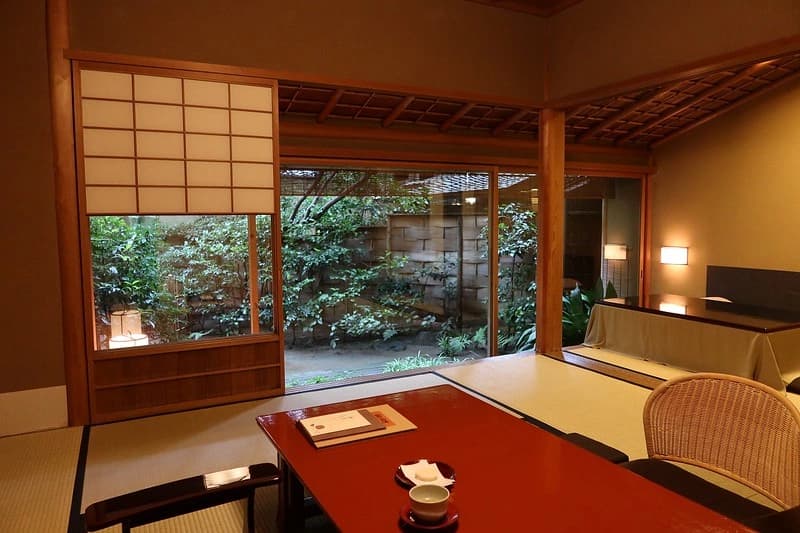
A sliding door closes with a soft, practiced hush. Kyoto is still there—buses, bicycles, the small impatience of traffic—but it is held at arm’s length by wood, paper, and a garden that seems impossible for this dense block of Nakagyō.
From the tatami, you see it first as shapes. Moss darkened by water. A stone that looks placed, then un-placed, then inevitable. A branch trimmed with restraint, not flair. Quiet work.
This is the feeling Tawaraya Ryokan trades in. Not spectacle. Not volume. A kind of wabi-sabi calm that asks you to slow down, then rewards you for obeying.
What Is Tawaraya Ryokan, And Why Does It Matter In Kyoto?
Tawaraya Ryokan is Kyoto’s oldest surviving inn, founded in the early 1700s, and it sets the reference point for what a classic Kyoto ryokan can be today.
People call it “historic,” but that word gets lazy. Tawaraya is not a museum piece that refuses change. It is a living house that has stayed itself by revising itself, year after year, detail after detail.
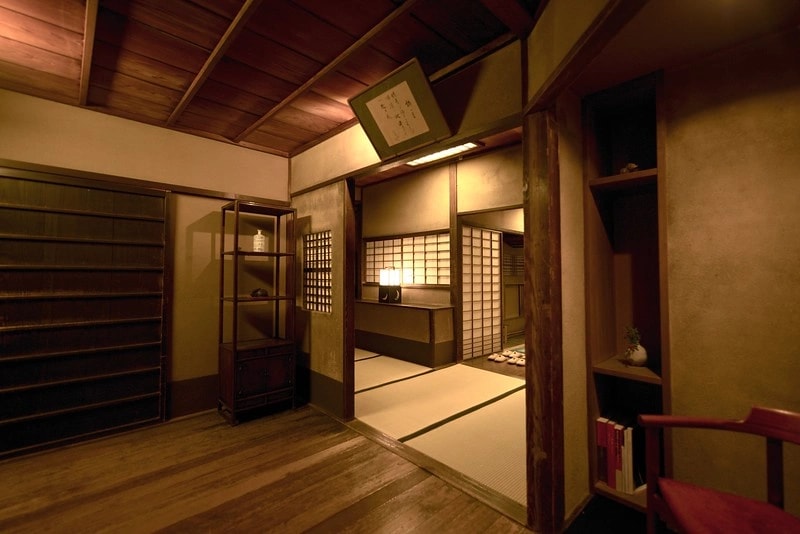
There are only eighteen rooms. None are copies. Every room faces a garden. That last fact is not trivia; it is the whole trick, a private horizon built inside a city block.
Hiiragiya stands directly opposite. That single sentence is enough context: you are in the tight, central Kyoto where tradition is not a theme but a daily practice.
Hōei-Era Origins: A Cloth Wholesaler Who Started Taking In Travelers
Tawaraya traces its founding to the Hōei era of the early 1700s, with 1709 most often cited.
The story begins not with hospitality as a concept, but with commerce and distance.
Tawaraya Wasuke, a cloth wholesaler from Hamada in Iwami Province (now Shimane Prefecture), bought the site at Fuyachō-dōri Anekōji-agaru. He lodged travelers from his home province alongside his textile trade. The lodging, gradually, became the business.
In the Edo period, it operated as a kishuku—a high-grade inn used by domain retainers, distinct from the more ordinary hatagoya. Status, in Kyoto, has always had a choreography. The house learned it early.
Fire, Rebuilding, And A House Registered For What It Is
Tawaraya was destroyed in the fire following the Kinmon Incident and rebuilt. The present wooden two-storey building was later registered as a Tangible Cultural Property in 1999.
That registration reads like a label, but the lived experience is tactile. Slightly worn thresholds. A corridor that makes you turn your shoulders. Light that lands softly because someone decided it should.
In our experience, many luxury travelers misunderstand “old” in Japan. They expect stiffness. What they meet at Tawaraya is precision that feels human—like shokunin work you notice most when you stop searching for it.
Satō Toshi’s Sixty Years: The Proprietor Who Decided Everything And Met No One
From 1965, Satō Toshi led Tawaraya as representative director, shaping what guests saw and—just as important—what they did not see. She did not appear before guests. No greetings. No theater.
She was born in Kyoto and studied at Gakushuin University.
Over decades, she directed furnishings, gardens, lighting, bedding, original furniture, and even the house’s own soap. It is a rare form of hospitality: the proprietor present in every decision, absent in person.
Satō Toshi was named a Contemporary Master Craftsman in 2019 for continuing tradition by revising it. That phrasing matters. Not freezing. Revising.
Satō Toshi died on 21 June 2026, aged 93. Her son, Satō Morihiro, is the twelfth-generation proprietor.
Change As The Method: How Tawaraya Keeps The Same Mood While Updating The House
Some ryokan protect the past by refusing new things. Tawaraya protects the past by editing it. Quietly. Constantly.
The main building was extended in 1958. In 1965, an annexe was designed by the architect Yoshimura Junzō, a modernist whose work sits comfortably with restraint. The house has been renovated repeatedly, with Satō Toshi describing the result as layered rather than preserved.
Three rooms now have beds. That single detail tells you a lot about the house’s seriousness: it adapts to bodies without turning itself into a hotel.
Even the most practical shift carries symbolic weight. Tawaraya opened its official website in January 2026, after operating without one for centuries. Not a rebrand. A small, deliberate opening of the door.
How Hard Is It To Stay At Tawaraya Ryokan For Cherry Blossom Or Autumn Leaves?
It is very difficult, because Tawaraya has only 18 rooms and peak Kyoto seasons fill first, so serious lead times and flexible dates are the safest approach.
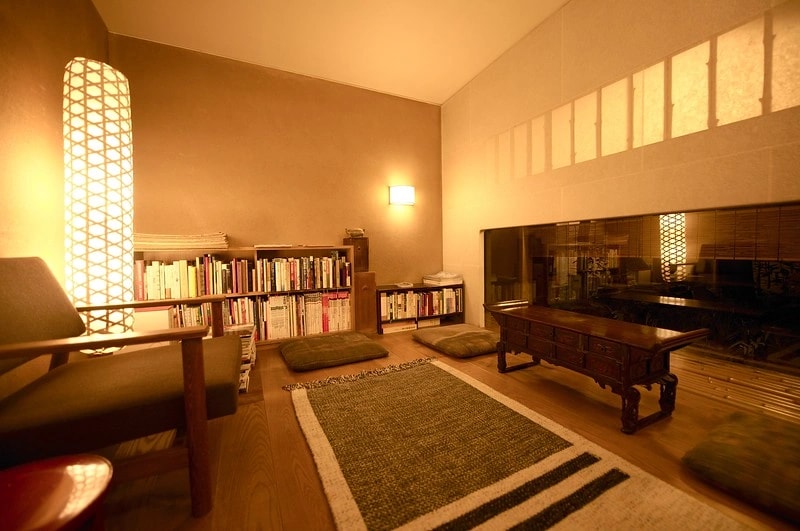
Scarcity here is not manufactured. Eighteen rooms is simply eighteen rooms. When Kyoto is under pressure, the math becomes blunt.
In our experience, the travelers who do best with Tawaraya are decisive but not demanding. They arrive with clear preferences and a willingness to accept the house’s rhythm.
If you are planning Kyoto in the shoulder window just before the busiest weeks, our team often points guests to this guide: Kyoto in March: The Month Before the Crowds. It frames Kyoto timing with a calmer eye.
The Garden-Facing Room: A Dense City Block Turned Into Private Silence
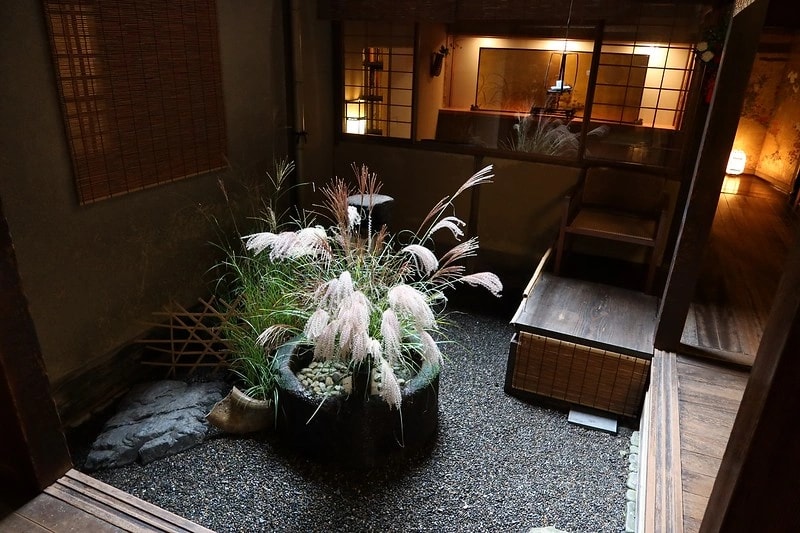
Every room faces a garden. Read that again, then imagine the address: central Nakagyō, where space is negotiated in centimeters and the city never truly steps aside.
Ground-floor rooms open onto gardens. Upper-floor rooms look down into them. The experience changes with elevation: on the ground, the garden feels like an extension of the room; above, it becomes composition, a framed view that edits the city out.
No two rooms are alike. That is not a design gimmick. It is the accumulated taste of successive proprietors, each leaving a handprint, then stepping back.
The Ernest Study: A Western Photographer’s Room, Kept Without Friction
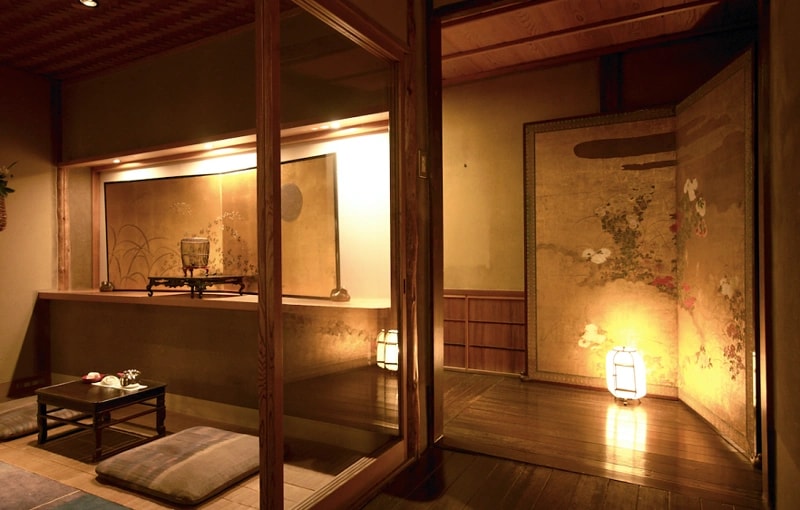
Satō Toshi’s husband was the photographer Ernest Satow (1927–1990), who taught as a professor at Kyoto City University of Arts. At Tawaraya, guests can see the Ernest Study, a recreation of his working room.
This is one of the house’s most revealing spaces.
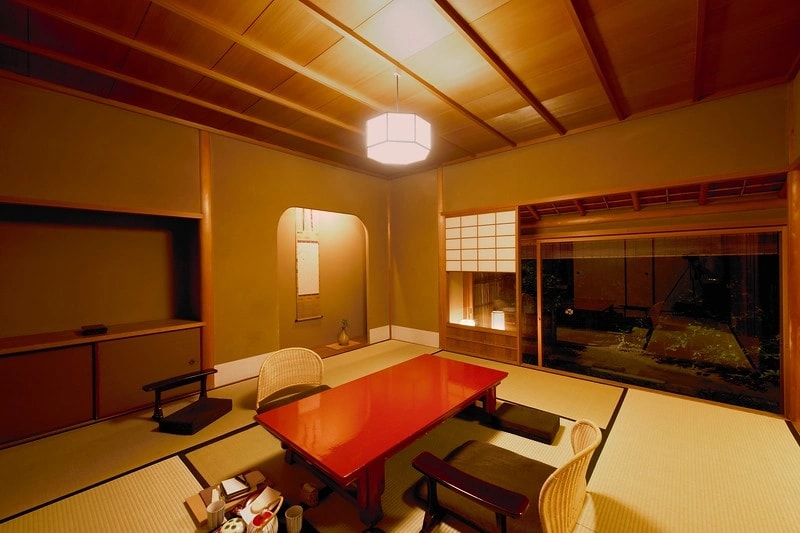
A Japanese inn holds a Western study without trying to “Japan-ify” it, and without turning it into a curiosity cabinet. It is simply there. Private. Unforced.
If you want to understand Tawaraya’s taste, spend time with this room. Not long. Just enough to feel what the house respects: work, concentration, restraint.
Rooms, Check-In, And The Plain Logistics You’ll Want Up Front
Some of the most common questions about Tawaraya have simple, published answers. Knowing them early prevents awkward back-and-forth later.
- Rooms: 18 total; all face a garden; no two are the same.
- Beds: Three rooms have beds.
- Check-in / check-out: The Japan Ryokan & Hotel Association listing indicates check-in 14:00 and check-out 11:00.
- Building: Present wooden two-storey structure registered as a Tangible Cultural Property (1999).
Kyoto also revised its lodging tax from 1 March 2026. Tawaraya published a notice about Kyoto City accommodation tax in February 2026; for broader travel planning context around timing, see our Kyoto seasonal guide above rather than memorizing tax bands.
Key fact: Tawaraya’s official address and access information are published on its official site, including nearby Gallery Yukei, described as about a one-minute walk away.
Food And The House’s Two Public-Facing Names
Tawaraya’s kitchen has continuity. Head chef Kurokawa Nobuyoshi joined in 1988 and has led the kitchen since 1994.
The house also operates the tempura restaurant Tenyū and the tearoom Yūgen Salon de Thé. These names matter because they show the house’s relationship to Kyoto: private rooms and private gardens, yes, but also a willingness to participate in the city’s public life with restraint.
We keep our language careful here. Meals and pacing are personal, and Tawaraya is not a place for performative “foodie” checklists. Quiet appetite wins.
How Do You Book Tawaraya Ryokan In 2026 And 2027?
You book Tawaraya directly using its official contact channels, and you should approach with flexible dates, clear preferences, and enough lead time for a thoughtful reply.
For years, many guides repeated the idea that “Tawaraya has no website.” That changed on 20 January 2026, when Tawaraya launched an official website. Use that official presence to verify legitimacy and avoid impostor listings.
We avoid publishing booking scripts or private contact details on a public page, because processes change and older instructions can become wrong. Still, the approach that tends to work is simple: write politely, share your party size, your preferred dates, and any non-negotiable needs (mobility, beds, allergies), then wait.
If you are building a broader Kyoto plan around a stay like this, it helps to think in lead times across the whole trip. Our team has covered that planning reality here: When to Book: Reservation Timelines for Japan.
What To Buy Nearby: Gallery Yukei And The Objects Tawaraya Uses Every Day
Not every souvenir deserves space in your luggage. Tawaraya’s house-made standards are different.
On Tawaraya’s access page, Gallery Yukei is described as about a one-minute walk from the ryokan, with items such as soaps, towels, and bedding used at the inn.
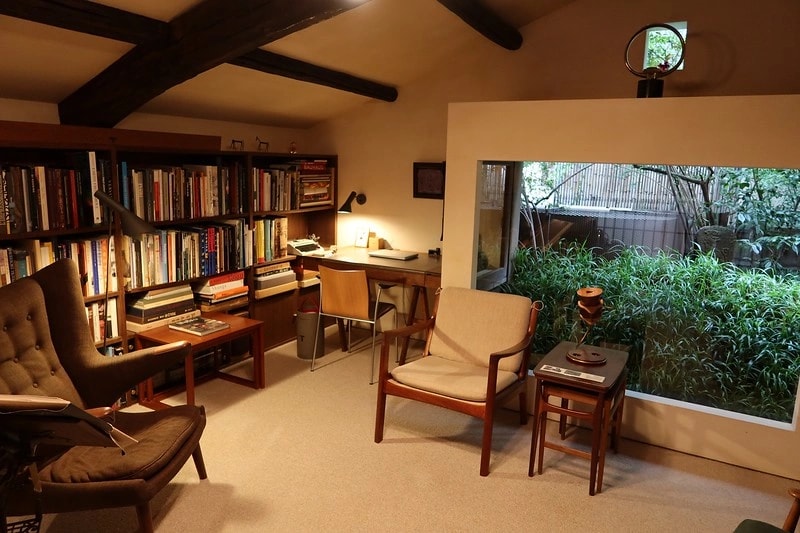
This is not retail as entertainment; it is a practical extension of the house.
In our experience, HNW travelers appreciate this kind of take-home most. One small object. Daily contact. The memory returns without effort.
A Note On Discretion, And Why Tawaraya Feels So Quiet
Tawaraya has long been associated with discretion. The house does not trade on publicity, and Satō Toshi did not appear before guests.
Steve Jobs is widely and credibly reported to have stayed regularly, and was named in Japanese press coverage around Satō Toshi’s death. We will not repeat other circulating names. Loose talk is the opposite of the point.
This is where “hidden Japan” becomes practical rather than poetic: the best parts are often the least photographable. The silence is the feature.
It Shows Fully Booked Everywhere — What Are My Options Now?
If Tawaraya shows fully booked, you have four realistic moves: enquire directly by phone in Japanese for cancellations and future openings, adjust your dates away from peak weeks, ask a Kyoto-literate concierge to work the request, or book a comparable ryokan while you wait.
Here is how each one actually works.
1. Enquire Directly, In Japanese, By Phone
The house works by direct contact. A same-day "sold out" impression online rarely reflects the true state of a phone-first inn. Cancellations happen. Rooms open on a rolling basis. A polite, specific enquiry in Japanese — naming your dates, party size, and flexibility — is the honest first step. If you speak the language and have the patience for the time difference, do this yourself.
2. Move Your Dates
Availability is a function of season. The same request that is impossible in the first week of April may be quite possible in early December or late January. If the house matters more than the exact week, widen your window. Midweek beats weekend. Winter beats blossom. Flexibility is leverage.
3. Have A Concierge Work The Request
This is where a service like ours earns its place. Tawaraya takes its reservations directly, so the work is the call itself: made in Japanese, in the house’s business hours, for the specific room and the specific nights you want. Our guidance on hard-to-book ryokan rooms sets out how that conversation runs.
What a concierge does is concrete work. We place the call in Japanese. We request a specific room by name where possible. We track when future dates open and enquire the moment they do. We brief the kitchen on dietary needs in writing. We confirm cancellation and payment policies so there are no surprises. And when the answer is no, we say so plainly and propose a comparable house instead. That is the honest scope of our ryokan request work.
4. Book A Comparable House While You Wait
Sometimes the answer stays no, and a fine trip should not hinge on a single address. Kyoto and its region hold other houses of real quality. In Hakone, Gora Kadan offers a different but comparably considered ryokan experience for travellers whose route allows it. Within Kyoto itself, several sukiya-style and modern ryokan can hold a stay beautifully. A candid concierge conversation will match the substitute to what you actually loved about the idea of Tawaraya — the quiet, the in-room dining, the age of the wood — rather than just the name.
One caution on the name: Shirasagiyu Tawaraya in Yamanaka Onsen, Ishikawa, is a different ryokan entirely, with its own domain and phone. If you are searching for Kyoto's Tawaraya, make sure the listing you land on points to the Kyoto house — the official Kyoto tourism site links to the correct one.
Frequently Asked Questions
How can a foreign visitor book a room at Tawaraya Ryokan?
A foreign visitor books Tawaraya the same way as anyone: directly with the ryokan through its official contact channels — the hurdle is language and timing, not eligibility.
Tawaraya takes reservations directly rather than through the large international booking platforms, and enquiries are handled in Japanese during Kyoto business hours. Overseas guests who read Japanese can write or call directly with their dates, party size, and any needs (beds, mobility, diet). Those who cannot can have a Japanese-speaking concierge place the enquiry on their behalf. Japan Royal Service makes that request for you, in Japanese, and plans the surrounding Kyoto trip around whatever the ryokan confirms.
Is Tawaraya Ryokan Really Kyoto’s Oldest Inn?
Tawaraya is widely cited as Kyoto’s oldest surviving inn, with founding traced to the early 1700s and 1709 commonly referenced.
Its importance is not just age; it is continuity—eighteen rooms, garden-facing design, and a house culture shaped across generations.
Does Tawaraya Ryokan Have An Official Website Now?
Yes—Tawaraya announced the launch of its official website on 20 January 2026.
This matters for verification. If you are researching from abroad, prioritize official channels to reduce confusion and avoid outdated “no website” claims.
What Are Tawaraya’s Check-In And Check-Out Times?
The Japan Ryokan & Hotel Association listing indicates check-in at 14:00 and check-out at 11:00.
For travelers used to late hotel check-outs, this is a useful reset: plan a gentle arrival and a calm departure, especially if you are moving on the same day.
How Many Rooms Does Tawaraya Have, And Do Any Have Beds?
Tawaraya has 18 rooms, and three rooms have beds.
Because rooms differ, the best approach is to be clear about needs (beds, stairs, mobility) while staying flexible on exact room assignment.
Who Runs Tawaraya Ryokan After Satō Toshi?
Satō Toshi died on 21 June 2026, and her son Satō Morihiro is the twelfth-generation proprietor.
Please confirm the current proprietorship status close to your travel dates, as formal announcements and titles can be updated over time.
Tawaraya shows sold out on every booking site for my dates — is that final?
Not necessarily. Tawaraya takes its reservations directly rather than through the large booking platforms, so an online listing marked unavailable is not a reading of the house’s own book. The reliable step is a direct enquiry in Japanese naming your dates, your party size, and how much you can move them. Cancellations occur, and future months open on a rolling basis. If you would rather not place that call yourself, our ryokan reservation service makes it for you and tells you plainly when the answer is no.