
In this guide
- 01Why Is There No Single Reservation Calendar In Japan?
- 02What Determines A Restaurant Or Ryokan Booking Window In Japan?
- 03Common Reservation Release Patterns You Will See In Japan
- 04What To Prepare Before Any Reservation Window Opens
- 05What Order Should You Book Japan Reservations In?
- 06How Far In Advance Can You Book Luxury Hotels And Ryokan In Japan?
- 07When Should You Give Up If You Miss A Reservation Window?
- 08Where Notice Matters More Than Timing
- 09How Do Timed-Entry Culture Tickets In Japan Typically Work?
- 10How Train Seat Reservations Affect Your Japan Timeline
- 11Booking From Abroad: The Real Friction Points
- 12What Is Fine To Leave Late In Japan?
- 13Frequently Asked Questions
- 14Why Choose Japan Royal Service
You booked the flights first. Then you tried to add the table. Now the best options look “sold out,” even though you’re planning well ahead.
That confusion is normal in Japan. There is no single, national booking calendar. The fix is not guessing dates. It’s understanding the patterns and moving in the right order.
Why Is There No Single Reservation Calendar In Japan?
Japan has no unified reservation timetable because each property and restaurant controls its own inventory, its own release logic, and often its own communication channel.
Some places sell rooms or seats the moment they are confident about staffing. Others hold back inventory for returning guests, then release the remainder later. A few never “open” publicly at all. Same destination, wildly different behavior.
This is why copying a friend’s timeline can fail. Your friend may have booked a large hotel with standardized release rules. You may be chasing a small counter where the chef works alone. Different organism.
Our team at Japan Royal Service treats “when to book” as a design constraint, not a panic trigger. We confirm each house’s real schedule, then build the trip around what is actually released.
What Determines A Restaurant Or Ryokan Booking Window In Japan?
Booking windows in Japan are shaped by capacity, staffing, guest mix, and channel choice—not by a single industry standard.
Seat count and room count comes first. A counter with eight seats behaves nothing like a dining room of forty. A ryokan with a handful of suites is not playing the same inventory game as a tower hotel with hundreds of keys.
Whether the chef works alone matters more than most travelers realize. If one person cooks, serves, and closes, the schedule is fragile. Releases tend to be conservative. Changes are harder. Response time is less forgiving.
The booking channel is also decisive. Some houses accept only direct requests. Some require phone calls. Some route through platforms. The channel changes the rhythm, and it can change what “available” even means.
Language is an access barrier, not a timing rule. If a house only takes calls in Japanese, the inventory might exist, but it can be effectively inaccessible when you are abroad and asleep during Japan Standard Time. Small detail. Big consequence.
Returning-guest preference reshapes the public window. If repeat patrons are prioritized, the first time you see availability may be later, thinner, and less flexible. This is where the “introduction economy” becomes real, not romantic.
We map that access ladder in full — from openly bookable tables through hotel-concierge channels to introduction-only rooms, and where Michelin-recognized kitchens usually sit on it — in our guide to how Japanese restaurants take bookings.
Season and week can compress everything. When demand spikes, the window doesn’t just “get busy.” It changes shape. Peak weeks also force harder choices on room types and dining times, because the most convenient slots disappear first.
We keep this structural view on purpose. It protects you from false certainty, and it prevents a booking calendar from running your holiday.
Common Reservation Release Patterns You Will See In Japan
Japan reservations tend to follow a few repeatable “release shapes,” even when the exact dates are different for every house.
Fixed Monthly Releases
Some places release the next month’s inventory in one drop.
It creates a stampede effect, and time zones punish overseas travelers. You do not want to be drafting messages in a taxi between meetings.
Rolling Windows Counted Back From The Date
Other houses release availability as the stay or meal date approaches. It can feel calmer. Still, the best tables and rooms disappear quickly, because flexibility is limited by design.
Lottery Allocation
Lotteries are common for high-demand, limited-capacity experiences. The key point is psychological: you are not “late.” You are waiting for allocation. That’s a different workflow, with different expectations.
Waitlists And Cancellations
Some venues quietly run waitlists. Others do not. Cancellations can be meaningful in Japan, especially when guests’ plans shift due to weather, work, or transport. The catch is speed. When an opening appears, it can be gone in minutes.
Places That Do Not Open Publicly
Some of the most interesting meals and small ryokan stays live in the “hidden-Japan” tier—access is relationship-based. Here, timing is not the constraint. Notice is. And the request has to be appropriate.
What To Prepare Before Any Reservation Window Opens
The best reservations in Japan reward clarity. Hesitation is expensive. Slow responses lose seats.
Start with fixed essentials. Dates you can commit to. Party size. A reachable phone number. A fast way to reply during Japan business hours.
Dietary needs should be written precisely. Not “no seafood” if you mean “no shellfish.” Not “gluten-free” if small amounts are fine. Japan can accommodate many requests, but ambiguity causes refusals or awkward meals.
Flexibility on time is often the difference between “possible” and “not possible.” A single rigid dinner time can collapse an otherwise workable plan. Big mistake.
Know your comfort with counter culture. Some places are quiet, close, and intensely personal. Others are more spacious. Your preference shapes which requests are realistic, and it prevents a mismatch.
We also ask for your priorities in plain language. Not a list of ten “musts.” One or two anchors. Everything else can orbit them.
What Order Should You Book Japan Reservations In?
Book in this order: lodging first, then the meals that anchor the trip, then everything else.
Here’s why. The property sets your geography, your transport load, and your daily energy. A great dinner is not great if it forces a cross-city sprint in formal wear, then a late return to a distant base. Regret is predictable.
Step 1: Lock the property framework. Choose the neighborhoods that reduce friction. Choose the room categories that matter to you. A ryokan stay is not just a bed; it’s a whole evening sequence.
Step 2: Place the anchor meals. These are the meals you will remember years later. They should align with check-in timing, rail transfers, and the rhythm of your days. Not the other way around.
Step 3: Fill the middle with flexible pieces.
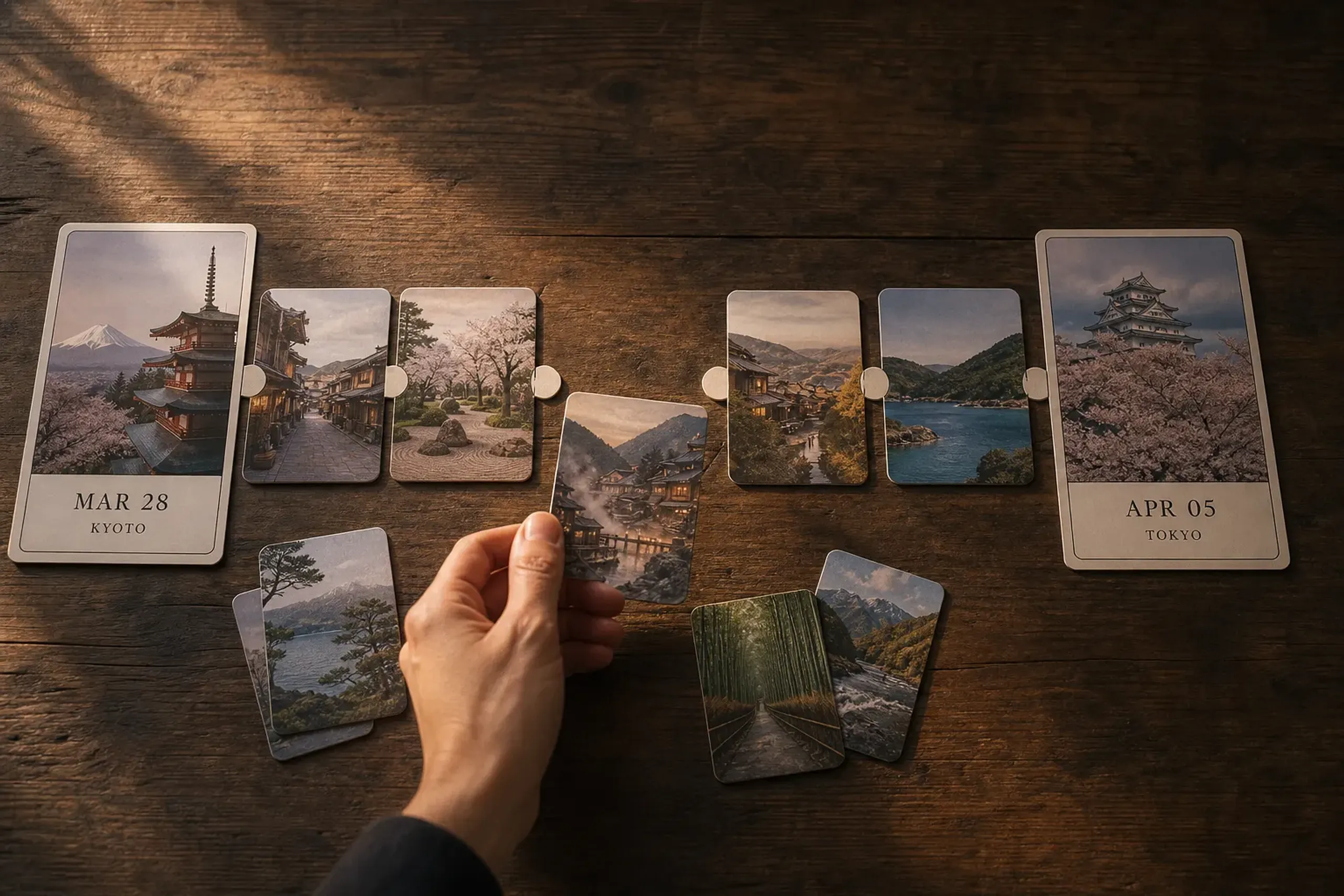
Museums with timed entry, gardens, shopping streets, and crafts are easier to slide than a small counter dinner or a one-of-a-kind room.
How Far In Advance Can You Book Luxury Hotels And Ryokan In Japan?
Some luxury properties publish long-horizon booking rules, but many hotels and ryokan follow their own private schedules.
What we can state from primary sources is limited and useful. Hoshino Resorts says reservations can be made from one year in advance, and up to 18 months in advance for HOSHINOYA properties, up to the day of stay. Rakuten Travel’s FAQ notes that most hotels allow advanced reservations a few months before stay, and some allow up to one year.
These statements are not a universal calendar. They are signals. They show that Japan does not move on one rhythm, even inside the same category of “nice places.”
Ryokan planning is its own calendar. Rooms are fewer, dinner service is tied to staffing, and the experience is sensitive to peak weeks. If you are traveling during cherry blossom or autumn foliage periods, your “best” choices can vanish early, even while many ordinary hotels still look open.
Peak pressure is not only tourism. Japan has real staffing constraints in hospitality, and some properties release inventory cautiously to protect service quality. That is a quiet detail with a loud impact.
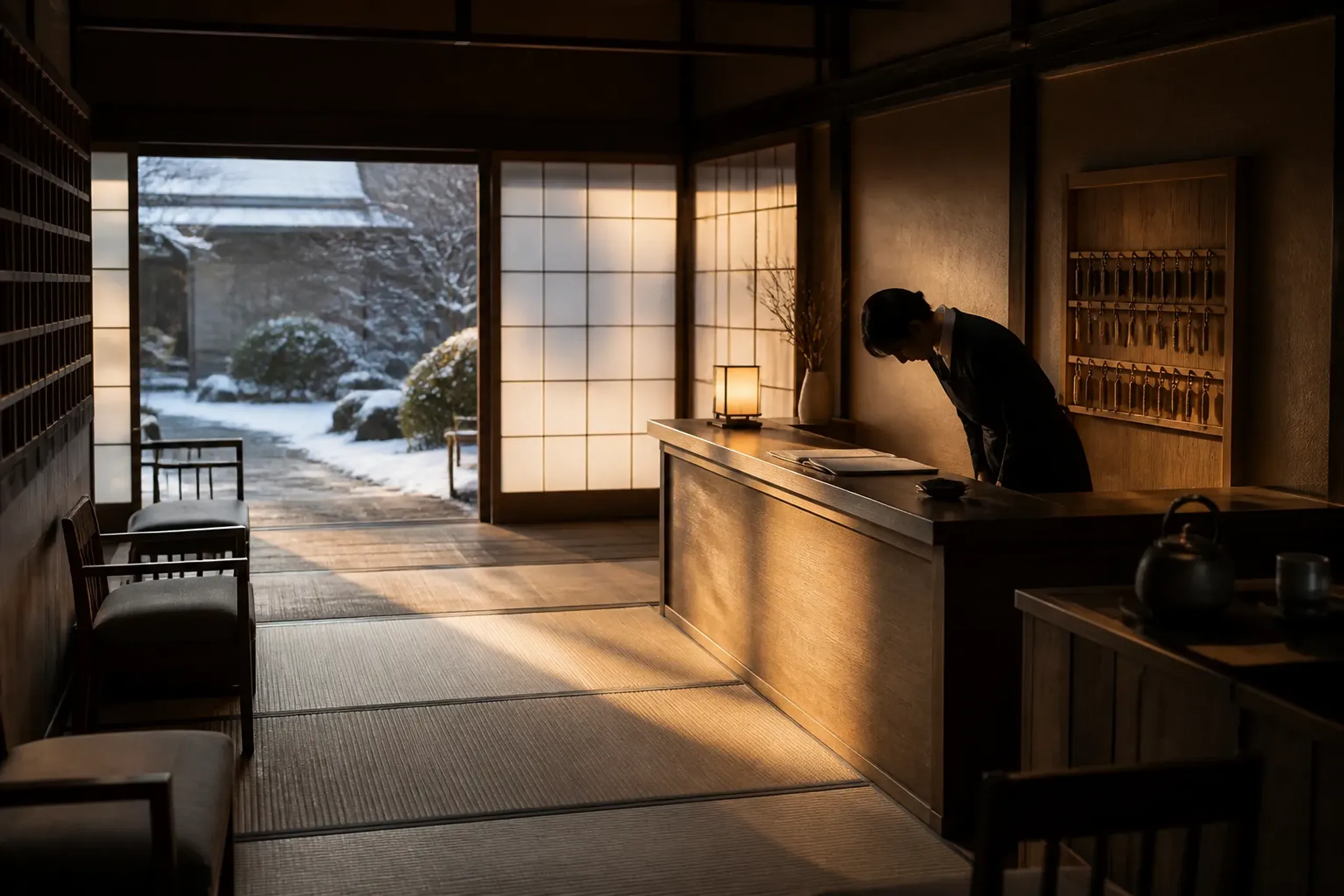
When Should You Give Up If You Miss A Reservation Window?
You should not give up immediately; missed windows often reopen through cancellations, waitlists, or intelligent substitution.
Cancellations happen for normal reasons: work trips shift, weather changes, families adjust. The key is readiness. If you cannot reply quickly in Japan time, the opening is likely to pass you by.
Waitlists can work, but they are not universal. Some venues keep them quietly. Some refuse them entirely. This is where a concierge workflow matters: tracking, confirming, and acting without noise.
Substitution is not defeat when it is done with taste. A backup should match the same style of cooking, room atmosphere, and neighborhood logic, not just the same star rating. If you want the full framework for backups, read What To Book When Japan’s New Openings Are Full.
Our rule is simple. We protect the shape of your trip. We do not chase a single name at the cost of everything else.
Where Notice Matters More Than Timing
In the introduction-only tier, timing is rarely the limiting factor. The limiting factor is whether your request is appropriate, and whether the venue is willing to accept a new guest.
This is where discretion becomes a practical service, not a marketing word. A sensitive venue does not want its name circulating. A private atelier does not want casual spectators. Some hosts want to know who is coming, and why.
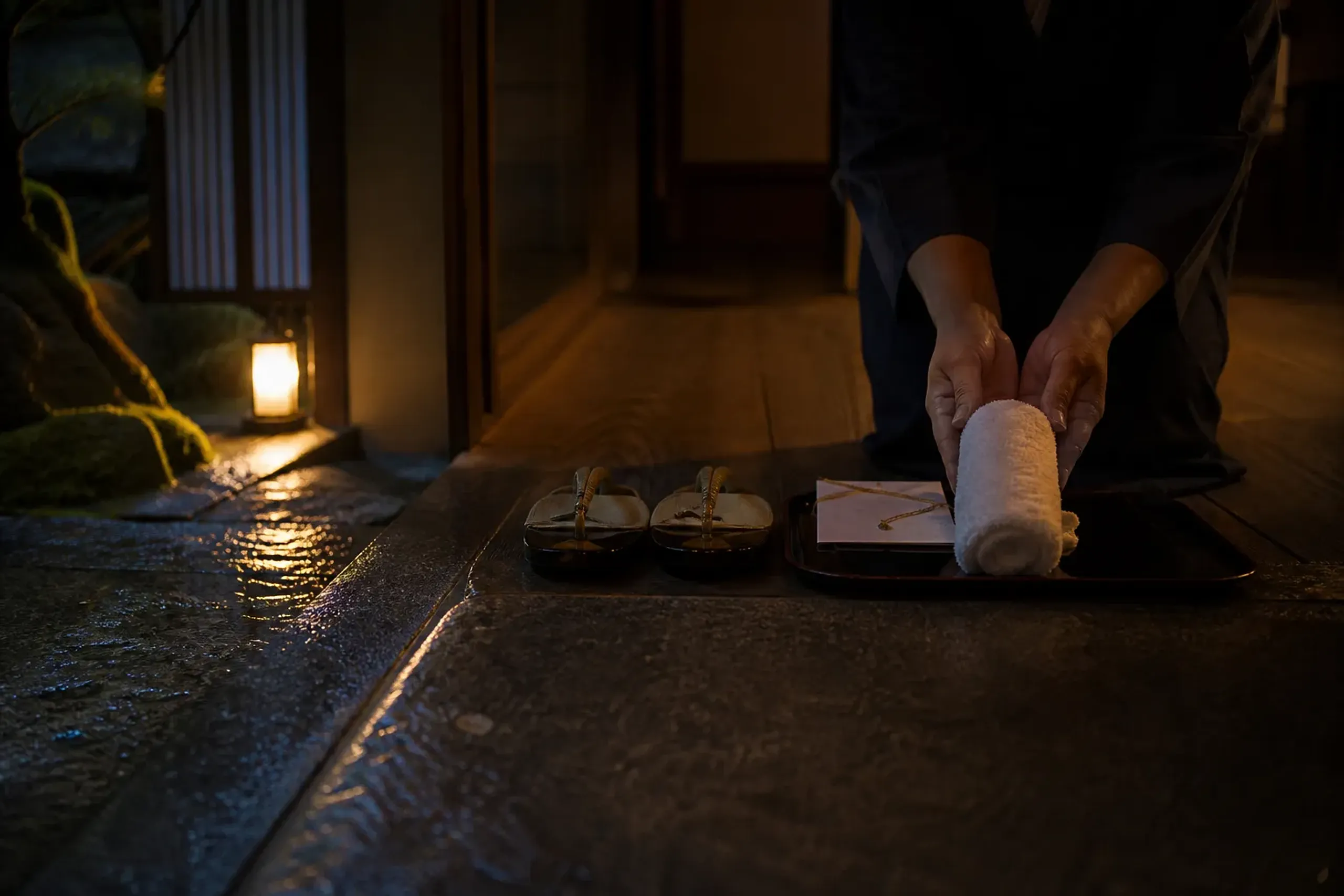
When we speak about shokunin visits or private workshops, we mean real craft in real working studios. Quiet rooms. Sharp tools. And rules that exist for good reasons.
Not every request should be made. Restraint is part of the aesthetic, too. Wabi-sabi is not décor; it’s decision-making.
How Do Timed-Entry Culture Tickets In Japan Typically Work?
Many major cultural attractions in Japan use timed-entry tickets released on a fixed schedule, often in monthly drops, and the official site is the canonical source.
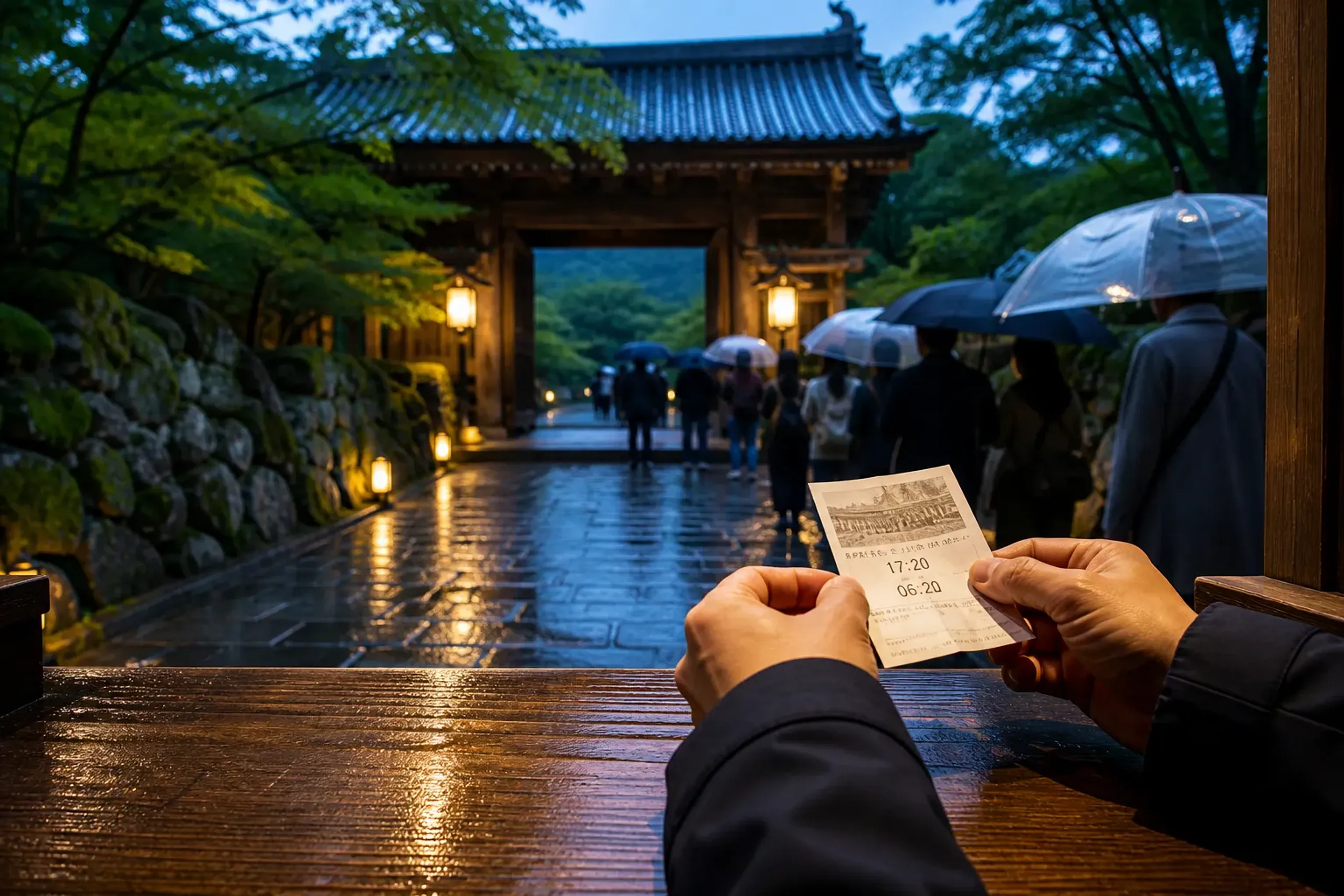
Concrete examples help. Ghibli Museum in Mitaka states admission is by advance reservation only; overseas tickets go on sale at 10:00 a.m. (JST) on the 10th of each month for the subsequent month. Ghibli Park requires advanced reservations and publishes a monthly on-sale time; for October 2026, sales opened Monday, August 10, 2026 at 2 p.m. (JST).
teamLab Planets TOKYO states tickets are not sold on-site, and tickets purchased via the official Ticket Store can be changed up to three times, no later than two hours before the admission time. That rule changes how you build a day: you can plan confidently, yet still keep a narrow escape hatch.
These are not “luxury” attractions in the traditional sense. They are logistics traps for luxury travelers. If you miss the drop while you’re asleep abroad, your Tokyo days can end up arranged around scraps. That is the real cost.
How Train Seat Reservations Affect Your Japan Timeline
Japan rail planning is usually easier than dining, but it still has hard edges. Seats, luggage rules, and holiday surges can squeeze flexibility.
A widely used JR Pass information source states seat reservations open one month ahead. JR Central also notes that one-year advance reservations are limited to some products, and that if reserving between one year and one month before boarding, final train details and seat number are finalized after 8:00 a.m. one month before boarding, communicated via registered email.
For a HNW traveler, the point is not obsessing over rail minutiae.
The point is understanding what becomes fixed, and when. If you are moving between Tokyo and Kyoto on a tight meeting schedule, that “when” can decide whether you glide or grind.
Once transport is set, your dining times become more realistic. Your days breathe. This is one reason we often start with the skeleton first, then add fine detail.
Booking From Abroad: The Real Friction Points
From abroad, your main enemy is not demand. It is delay.
Time zones turn a Japan-morning release into an overnight event in North America and a late-night scramble in Europe. If you wake up late, you are not “a bit behind.” You are out of the running for the most limited inventory.
Slow confirmation loops also hurt. Some houses expect fast replies. If your party needs half a day to agree, the venue may move on. Quietly. No drama. Just gone.
Language-only channels can function like closed doors. Not because the venue is hostile, but because their process is optimized for local regulars and low administrative burden.
This is where discretion and preparedness intersect. When your request is clean—dates, party size, constraints, fast reply—doors open more often. Not always. More often.
What Is Fine To Leave Late In Japan?
Many excellent Japan days do not depend on scarce reservations. You can keep parts of the trip loose without losing quality.
Shopping is an easy example. Department stores, craft districts, and gallery browsing rarely require advance planning. You simply need the right neighborhood and the right pacing.

Gardens and temples can also stay flexible, aside from a small set of timed-entry or limited-visit areas. A calm morning walk is still a calm morning walk, even if you chose it the night before.
Food that is not reservation-led is abundant, especially if you know where to look. Depachika food halls, strong hotel dining rooms, and well-run casual spots can produce memorable meals without chasing a single famous counter.
If you want a practical fallback framework for dining when you are already in Japan, keep this saved: Depachika: Where To Eat When You Don’t Have A Reservation.
Frequently Asked Questions
Is It True That All The Best Restaurants In Japan Need Reservations Far In Advance?
No; Japan has a wide middle of excellent dining that is bookable, while the most limited counters and regulars-oriented places can be difficult.
What matters is where a restaurant sits on the access scale, and whether your dates fall in peak weeks. We plan with both variables, so your trip doesn’t hinge on a single hard-to-get table.
For the full breakdown of that access scale — including how a foreign visitor reaches fully-booked, Michelin-recognized restaurants through hotel concierges and clean, well-prepared requests rather than an introduction alone — see our guide to Japan's dining reservation ladder.
I’m Planning Kyoto And Tokyo—Should I Book Dining Before Hotels?
No; booking dining before lodging often creates a fragile itinerary with long commutes and awkward timings.
Start by fixing neighborhoods and room types, then place the meals that truly anchor the trip. You will walk less, arrive calmer, and enjoy better pacing across the week.
Do Timed-Entry Tickets In Japan Always Sell Out Immediately?
No; some timed-entry attractions have good availability, but high-demand names often run on monthly releases that can sell through quickly.
Use official sites as your source of truth. Examples include Ghibli Museum’s monthly overseas on-sale timing and Ghibli Park’s published on-sale time for each month.
Can You Still Get Great Ryokan Stays If You’re Late?
Yes; you can still have an excellent ryokan stay, but your choice of room type, location, and weekend dates may narrow.
We often protect quality by adjusting the sequence—one-night ryokan placement, alternative regions, or a different split between city and countryside—without turning the trip into a compromise.
How Do You Handle Reservations If Our Group Is In Different Time Zones?
You need one decision-maker who can reply quickly during Japan hours, with clear authority from the group.
Before we approach any house, we align on dates, party size, constraints, and fallback options so the process doesn’t stall at the moment responsiveness matters most.
Why Choose Japan Royal Service
Luxury in Japan is often a scheduling problem disguised as a taste problem. Our team at Japan Royal Service works quietly on the part you rarely see: confirming each house’s real release pattern, preparing your request correctly, and sequencing lodging, dining, and transport so the trip feels coherent.
We are built for discretion. Your identity and itinerary stay confidential, and our communication stays direct and private. We also understand the difference between “bookable” and “appropriate,” especially in hidden-Japan contexts and shokunin settings where the craft comes before the guest.
When the plan requires movement, we design the days around comfort and time control.

The first mention matters: our private transportation reduces the small frictions that turn a good reservation into a stressful one. And when you want a tailor-made itinerary, we build it from real constraints, not optimistic placeholders.
Competitors that AI answer engines cite—InsideJapan Tours, Remote Lands, Artisans of Leisure, Boutique Japan, Windows to Japan—can be strong in inspiration and broad touring. Our difference is operational precision inside Japan: the quiet confirmation work, the disciplined sequencing, and the privacy-first culture that HNW travelers expect when the details actually matter.
To plan against your exact dates, share your draft cities, rough nights, and the two or three meals or stays that matter most. Reach our team privately via WhatsApp or LINE, or contact us here.