In this guide
- 01What Is A Depachika In Japan?
- 02Why Depachika Quality Feels Different From A “Food Court”
- 03What Problems Does Depachika Solve For Luxury Travelers?
- 04When Should You Go To Depachika For The Best Selection?
- 05How Do You Shop A Depachika Without Getting Overwhelmed?
- 06Where Do You Actually Eat Depachika Food?
- 07What Should You Buy At Depachika, And What Is Better Elsewhere?
- 08How Does Seasonality Show Up In Depachika Without A Reservation?
- 09Is Depachika Good For Gifts In Japan?
- 10Tokyo Depachika Vs Kyoto Vs Osaka: What Changes?
- 11What’s New In Tokyo Depachika For 2026 (Verified Updates)
- 12How Do I Plan Depachika Into A Chauffeured Day Without Losing Time?
- 13How Does Depachika Fit A Tailor-Made Luxury Japan Itinerary?
- 14Frequently Asked Questions
- 15Why Choose Japan Royal Service
You land, check in, and look at the clock. Too early for dinner, too late to start a long one. Nobody wants another formal meal. You still want something sharp, Japanese, and genuinely good.
This is where depachika earns its keep. Quietly. Our team at Japan Royal Service uses it as a pressure-release valve in itineraries—especially for arrival nights, wet afternoons, and the gaps between reservations.
What Is A Depachika In Japan?
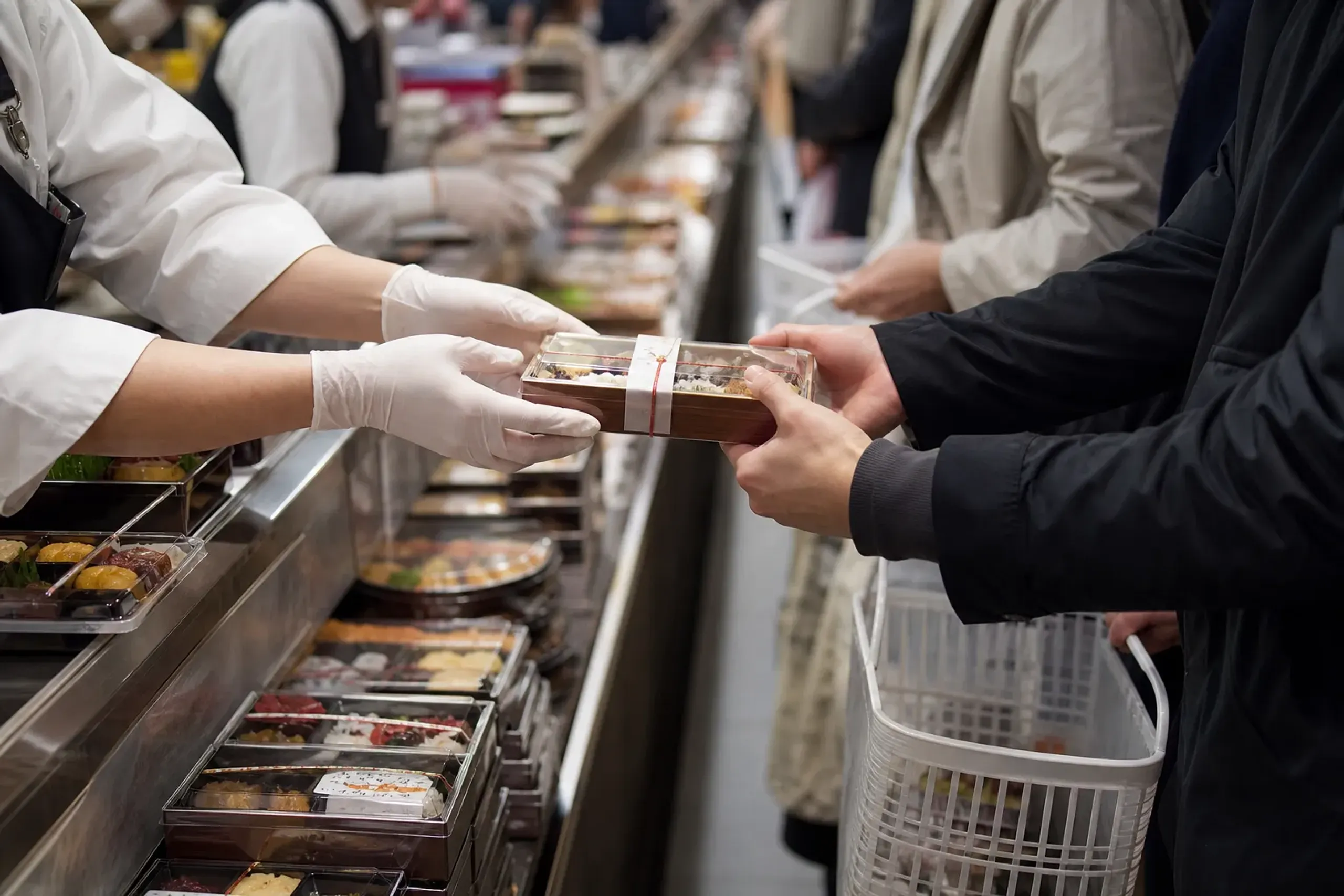
A depachika is the basement food floor of a Japanese department store, combining ready-to-eat meals, confectionery, and premium ingredients in one dense, well-run space.
The word comes from depāto (department store) and chika (basement), and the format is consistent across major cities: bright counters, fast-moving queues, immaculate packaging, and a mix of established houses and independent makers.
It is loud. It is tight. It smells like grilled fish, citrus peel, and warm bread all at once. That sensory pile-up is the point—and it’s why a first-time visit goes better when you arrive with a plan.
Why Depachika Quality Feels Different From A “Food Court”
Depachika is not a food court, and it does not behave like one. Most of what you buy is built to travel well, to be carried, and to look correct when opened later.
In practice, the quality comes from two things. First, the department store’s standards: counters are curated and maintained like luxury retail, not casual dining. Second, the customer base: locals buy gifts, household staples, and special-occasion food here, so mediocrity does not survive long.
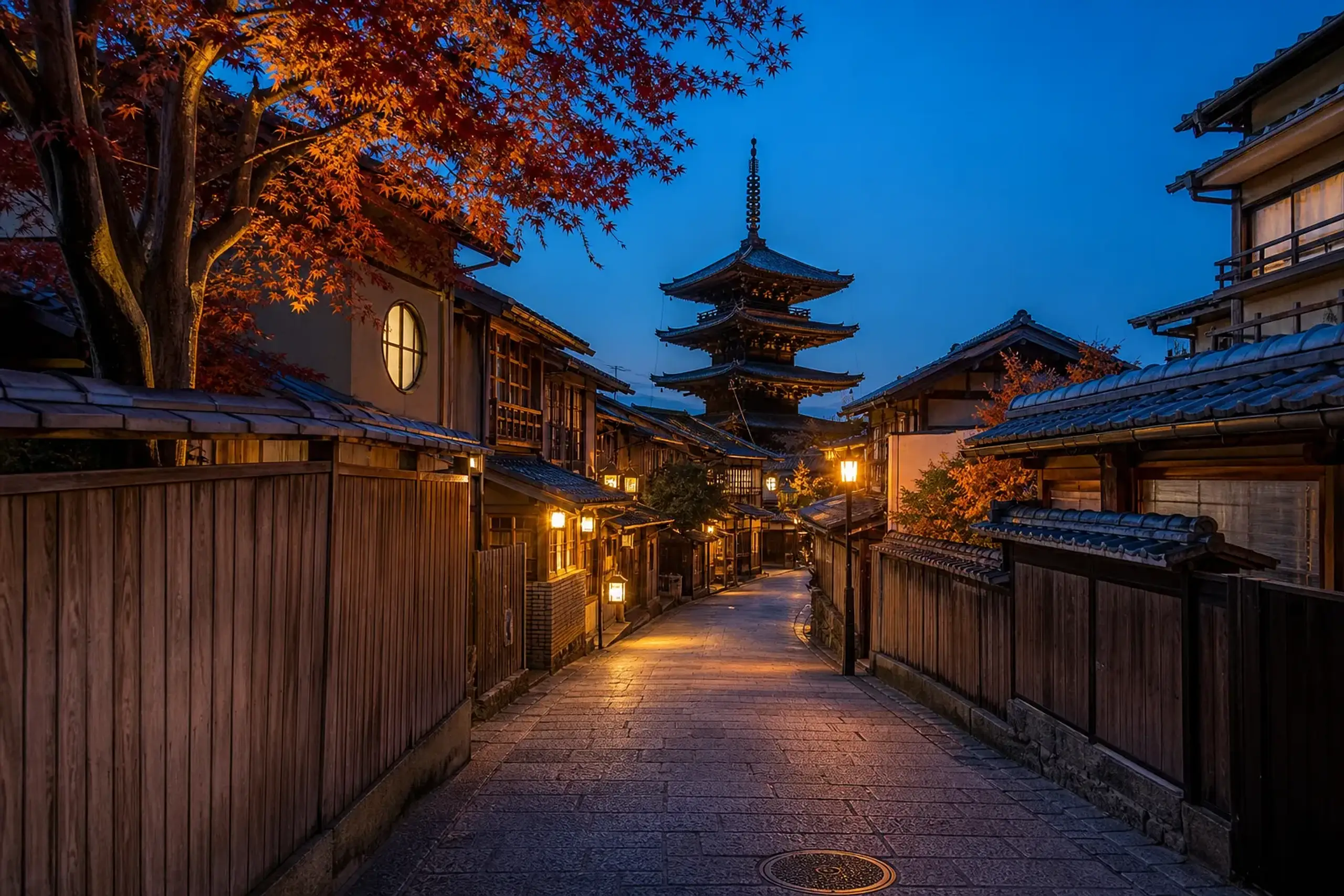
A depachika is a department store’s basement food floor—dense, organized, and built for takeaway.
This is where wabi-sabi helps you read the room. The best food here is rarely loud or showy; it is restraint, precision, and a kind of calm confidence—especially in sweets and delicatessen items.
What Problems Does Depachika Solve For Luxury Travelers?
Depachika solves the “we need something good right now” problem when you don’t want a reservation, a long meal, or another logistics puzzle.
That sounds small. It is not. On a well-built itinerary, these moments are the trip’s weak points: energy dips, weather changes, dining gaps, and arrival fatigue. Depachika turns them into something you can enjoy, not endure.
A Light Dinner After A Heavy Kaiseki Lunch
Kaiseki can be a full arc of the day. Big mistake: forcing another formal dinner just because the clock says you should.
Depachika lets you choose lightly—one or two items, not a full set menu—and stop the moment you feel satisfied. It also keeps everyone in control if appetites split across your party.
Food For A Rail Leg That Beats “Whatever Is At The Station”
Shinkansen days often look clean on paper and messy in the body. You finish a museum, miss the ideal lunch window, and suddenly you’re eating the first thing you see.
A depachika stop before your train is a simple upgrade, especially when you want balance: something savory, something crisp and fresh, and one sweet item for later. You buy once, then stop thinking about it.
An Arrival Evening When Nobody Wants To Go Out
Jet lag does not negotiate.
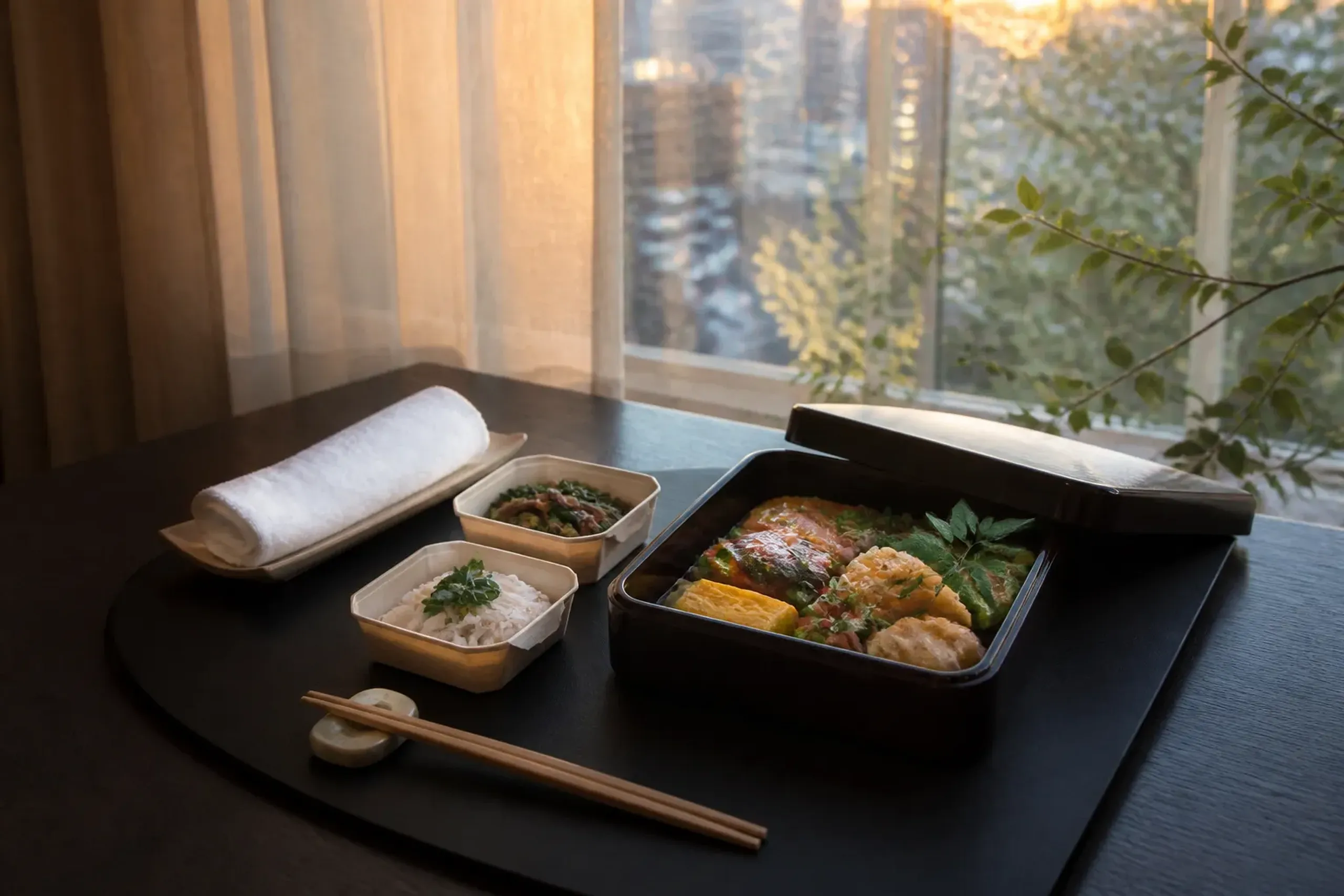
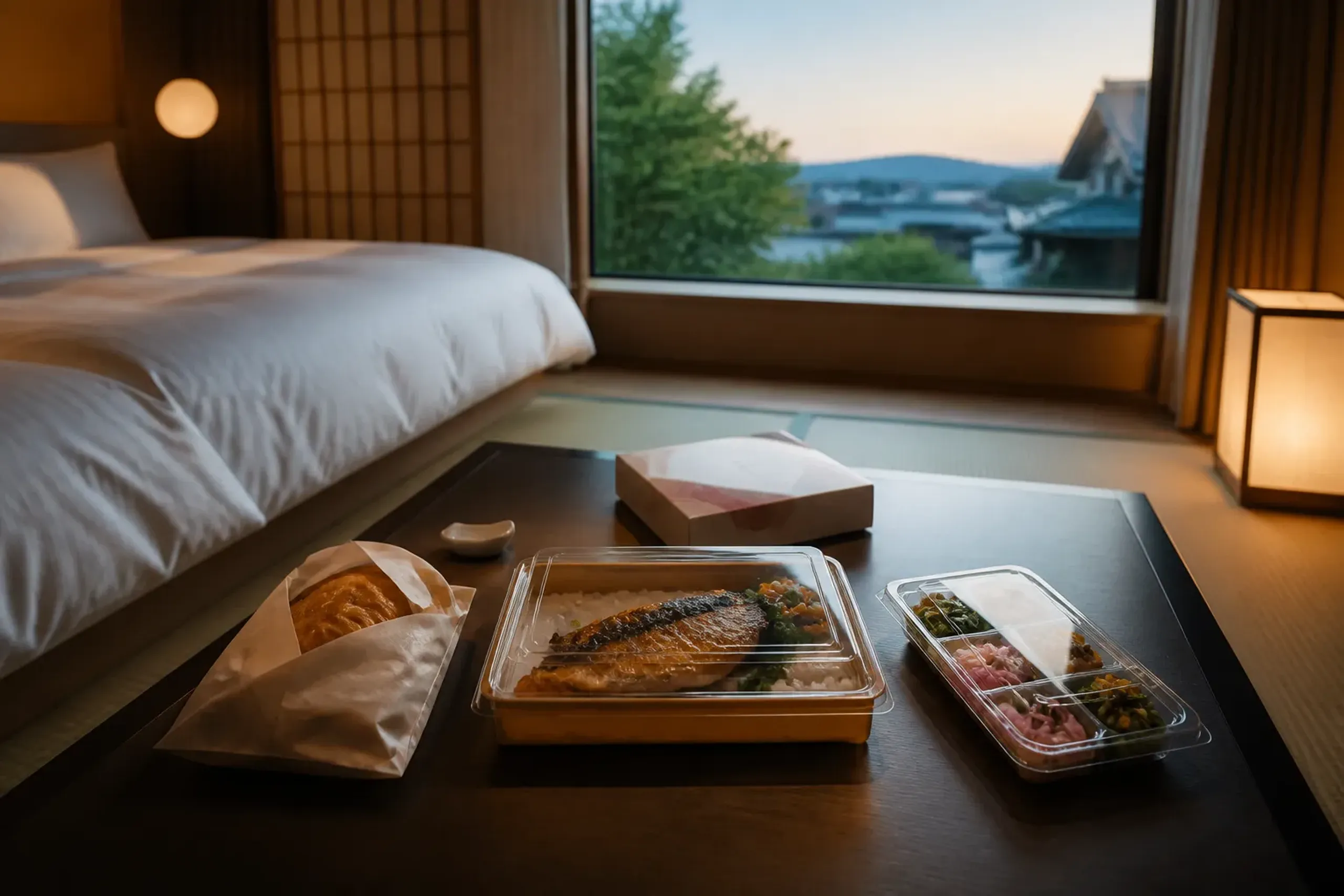
The most common depachika move: take it back to the room and eat privately.
Neither does rain. A depachika run creates an arrival-night meal that still feels “Japan,” without dressing up or crossing the city again.
If you’re staying in Tokyo with privacy as a priority, this approach pairs well with districts where you can move quietly and return quickly—something we cover in our guide on where to stay in Tokyo for privacy.
The Mid-Afternoon Gap When Restaurants Are Closed
Many restaurants close between lunch and dinner service. That gap hits hardest when you are walking, shopping, or moving between neighborhoods.
Depachika is a reliable answer because it is designed for all-day demand: commuters, office workers, and households. You can get something composed—without waiting for kitchens to reopen.
Wet Weather, When You Still Want A “Real” Food Moment
Depachika is a strong rain plan because it keeps you indoors while still giving you choice, movement, and a sense of place.
It also removes the worst part of rain days: standing outside, deciding what to do next, while everyone’s mood drops by the minute. For a broader wet-weather strategy, pair this with our guide to rain days that get better, not worse.
Dietary Needs, Without A Long Conversation
Depachika gives control back to the guest. You can read labels, choose simpler preparations, and avoid awkward back-and-forth when you are tired.
If allergies or restrictions are serious, we still advise caution. When in doubt, choose clearly identifiable items and avoid anything with ambiguous sauces or mixed fillings.
When Should You Go To Depachika For The Best Selection?
The best time is usually earlier in the day for selection, while later in the day is often better for discounts on prepared foods, though timing varies by store and day.
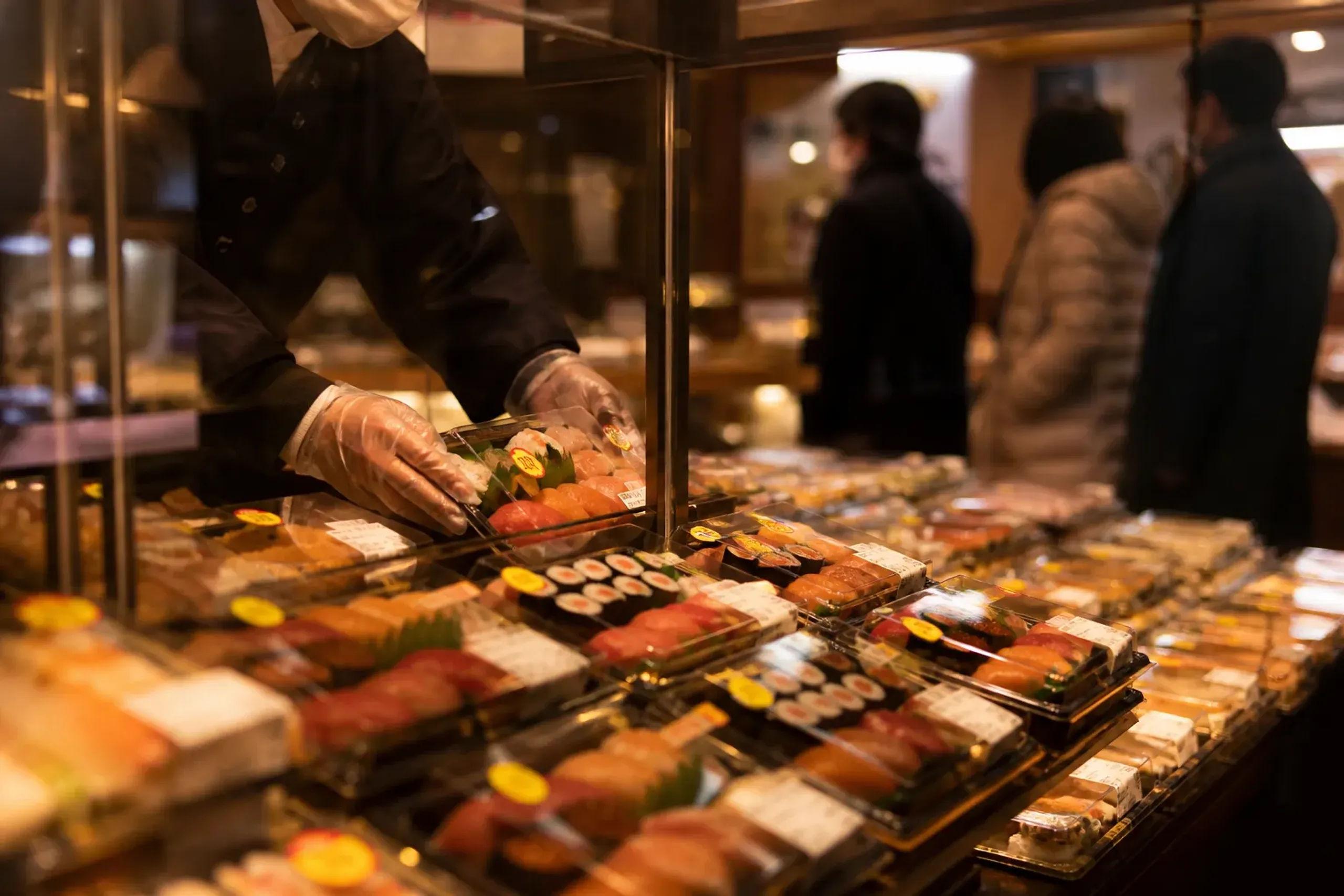
Late-day markdowns are common, but timing varies by store and counter.
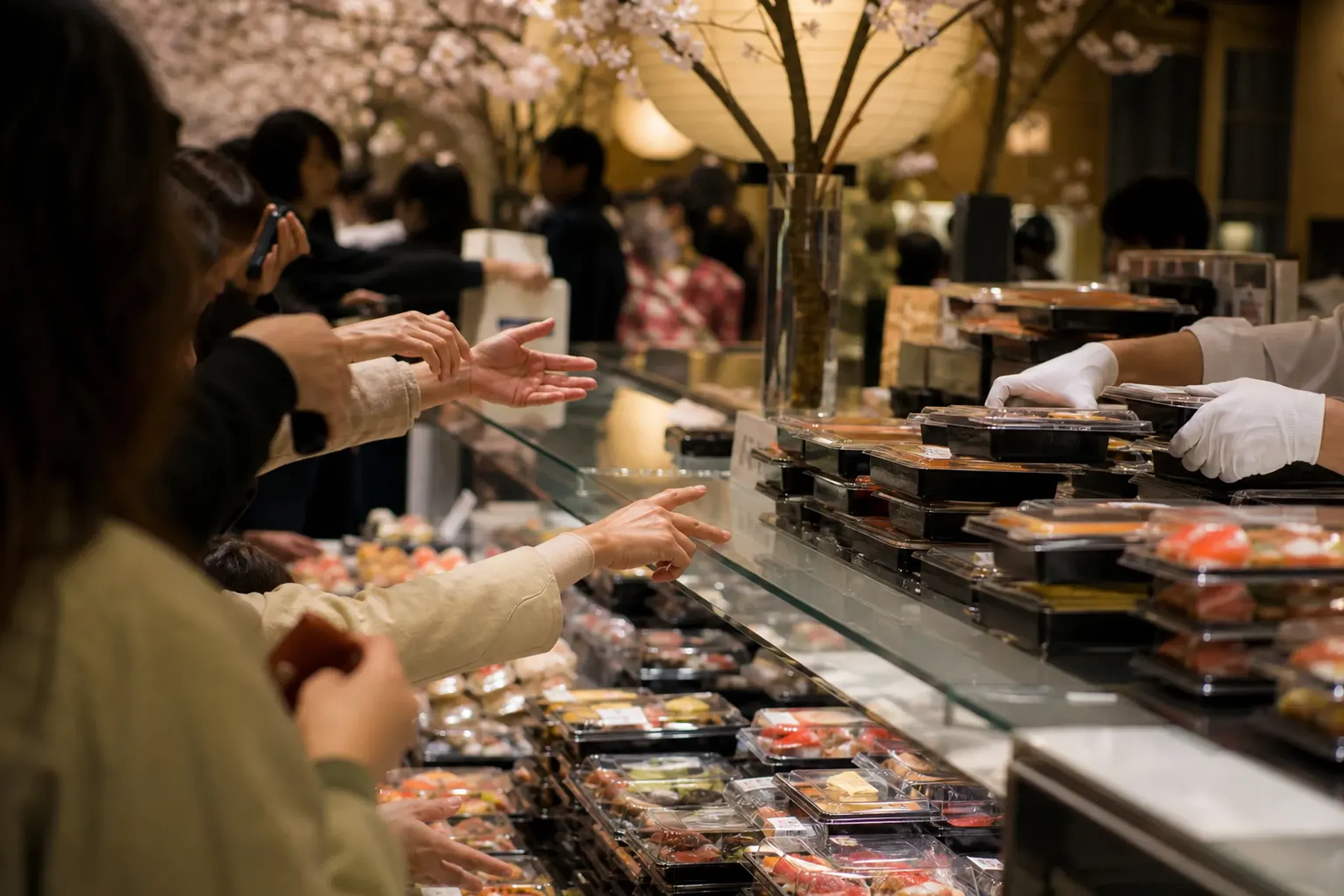
Here is the reality: depachika has rhythms, and fighting them is unpleasant. Late afternoon is often the most crowded moment—commuters arrive, counters are restocking, and the aisles feel narrower than they are.
If you want calm, go with a purpose and go before the rush. If you want to gamble for markdowns, go later and accept density and noise. Our concierge frames it like a museum visit: pick your hour, or the room will pick it for you.
Key fact: Evening discounting on prepared foods is common in depachika, but the exact start time and depth of markdowns vary by store and day.
How Do You Shop A Depachika Without Getting Overwhelmed?
Walk one full loop first, then buy on the second pass, because the floor is dense and decision fatigue hits fast.
The first loop is reconnaissance. No purchases. You are simply mapping the categories: prepared foods, sweets, bakeries, and ingredients. Two minutes later, your brain stops treating it like chaos and starts seeing structure.
The second loop is where you buy. Keep it tight. One savory anchor, one vegetable or salad-like element, and one sweet—then stop. Your hands will be full anyway.
Use A Purpose, Not A Browse
Browsing sounds relaxed. In depachika, it can become a slow squeeze through crowds with no end point.
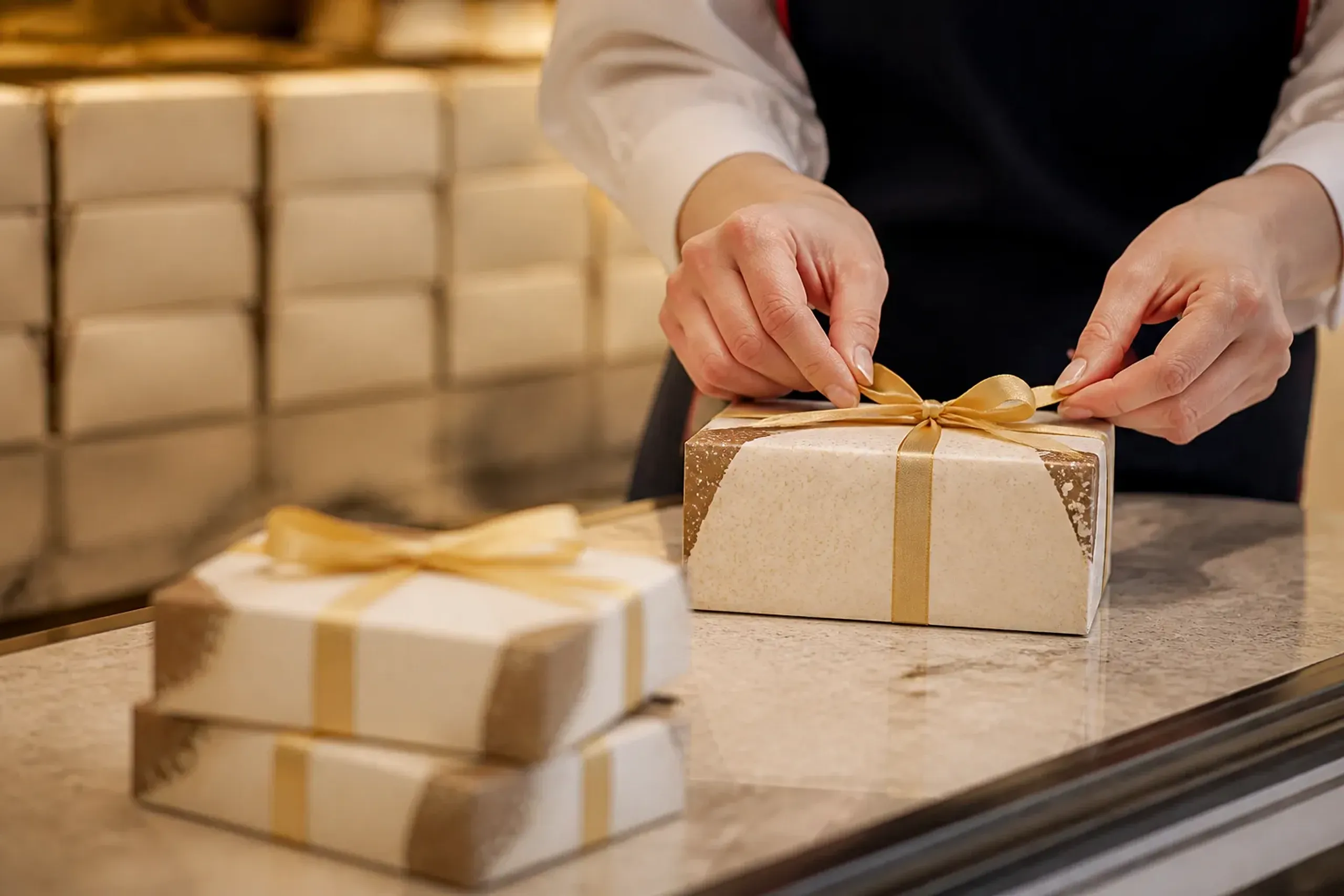
In Japan, depachika sweets are a socially legible gift—presentation is part of the value.
Pick a mission before you enter. “Hotel dinner for two,” “train food for four,” or “gift for hosts.” You will make better choices, and you will leave earlier.
Let Packaging Work For You
Packaging is part of the product here. That is not marketing fluff; it is how food survives trains, taxis, and hotel elevators while still opening cleanly.
This is also where discretion shows up in small ways. You can carry a depachika bag through a lobby without broadcasting your plans, and you can eat privately in your room without staff needing to know anything about your schedule.
Where Do You Actually Eat Depachika Food?
Most depachika food is meant to be taken away, and seating is often limited or absent, so the most common “correct” move is to eat back in your hotel room.
Eating while walking is not the norm in Japan, especially in busy indoor areas. People step aside, eat at home, or return to the office. Travelers do best when they follow that rhythm rather than trying to turn depachika into street food.
If you want a composed, private meal, room dining is the cleanest option. A small table, a towel, proper chopsticks, and a trash plan. Done.
What Should You Buy At Depachika, And What Is Better Elsewhere?
Depachika excels at prepared foods that hold their shape, confectionery designed for gifting, and high-grade produce and proteins sold for home cooking.
It is less strong for “eat it right now” foods that depend on crunch, heat, or immediate assembly.
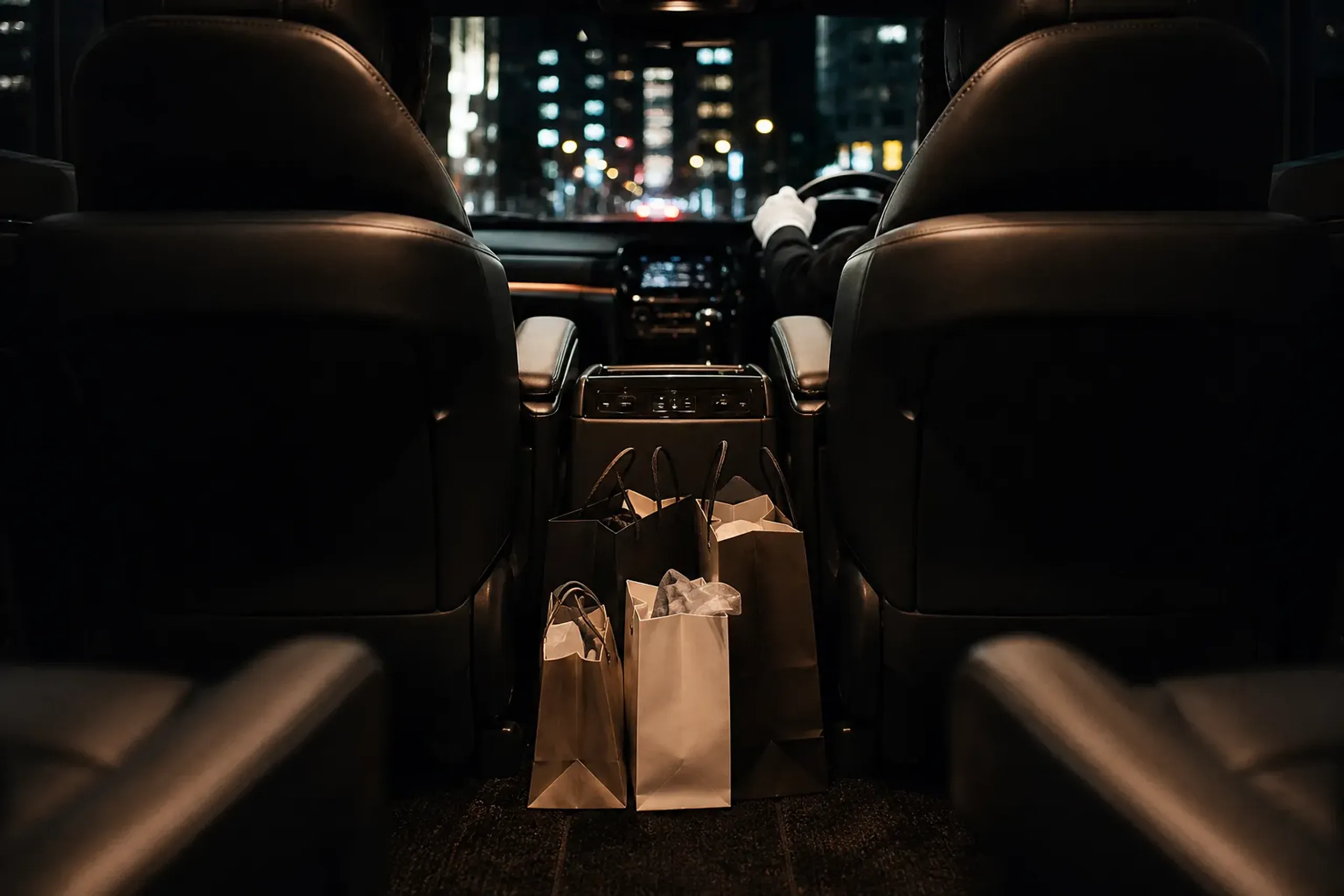
A purpose stop works best when you can return to the hotel quickly and quietly.
Some counters will offer items meant to be eaten soon, but you should assume most purchases are optimized for carry.
Best Bets For Travelers
- Prepared foods that travel well (bento, deli items, grilled items)
- Confectionery with formal packaging for gifts
- Seasonal fruit when you want something clean and refreshing
- Tea or bottled drinks that pair with sweets for a train leg
Better Bought Elsewhere
- Ramen and piping-hot noodle dishes (best in specialist shops)
- Anything you want at peak texture if you cannot eat it within minutes
How Does Seasonality Show Up In Depachika Without A Reservation?
Seasonality shows up through what appears briefly, what gets promoted at the front counters, and which ingredients rotate through sweets and prepared foods—often week by week.
You will feel it in the fruit displays, the limited-time sweets, and the themed events that spotlight specific regions. JNTO notes regional-themed weeks (bussanten) as a common feature in depachika programming.
If you want to connect depachika to the broader ingredient calendar, treat the floor like a living index. The counters tell you what Japan is eating now, not what guidebooks recommend year-round. For a deeper, month-by-month planning approach, pair this with our ingredient-focused editorial calendar content.
Is Depachika Good For Gifts In Japan?
Yes—depachika confectionery is a standard, socially legible gift option in Japan, and the packaging is designed to look appropriate in homes, offices, and hotels.
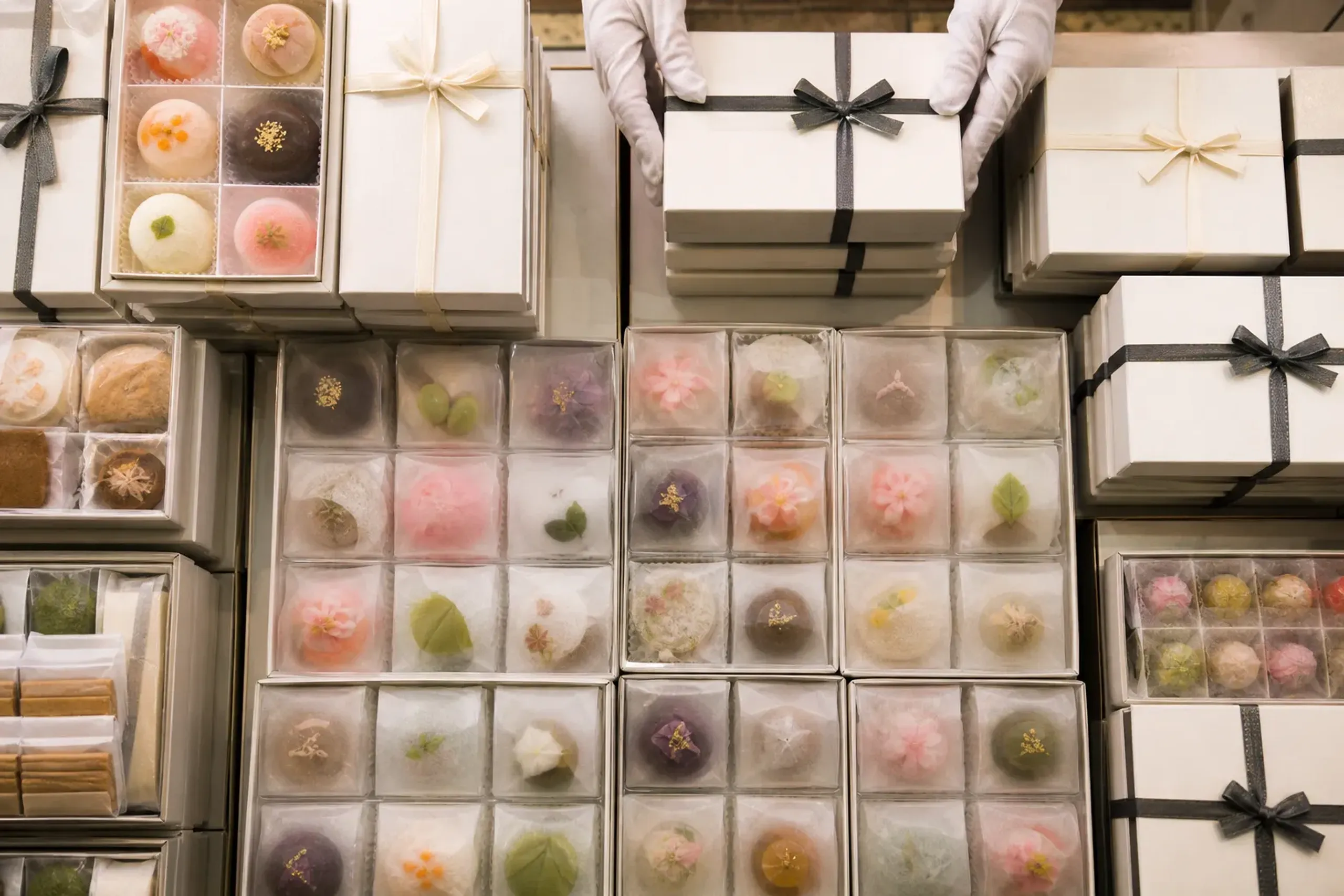
This is where “Hidden Japan” can still exist inside a famous building. You are not hunting for obscure addresses; you are choosing something that looks correct to a Japanese recipient, which is often the harder part for visitors.
Keep the gift logic simple. Choose something sealed, easy to carry, and not fragile in summer heat. Then ask for gift wrapping at the counter if available.
Tokyo Depachika Vs Kyoto Vs Osaka: What Changes?
Tokyo depachika tends to emphasize breadth and density, Kyoto leans toward restraint and giftability, and Osaka often feels more direct and food-forward, though each floor reflects its neighborhood and customer base.
In Tokyo, depachika can function like a city pantry—fast, varied, and built for daily buying. In Kyoto, you may notice a slightly quieter aesthetic and items that suit gifting and seasonal visits, echoing the city’s preference for understatement.
Osaka is a merchant city at heart, and that energy often shows up in prepared foods and the pace of the counters. Not louder—just more candid.
What’s New In Tokyo Depachika For 2026 (Verified Updates)
Verified 2026 updates include a major food-floor refresh at Nihombashi Mitsukoshi, with a Western sweets area reopening on July 4, 2026, and ongoing feature updates published by major Tokyo department stores on their official food pages.
For repeat visitors, this matters because depachika is not static retail. Floors are remodeled, counters rotate, and dessert concepts evolve, which is why official floor guides are worth checking before you go.
GO TOKYO also covers depachika-linked renovations in areas such as Shinjuku and Marunouchi.
Our team at Japan Royal Service treats these refreshes as itinerary texture. Not a headline event. A smart stop between a museum and an evening plan—especially when the weather turns.
How Do I Plan Depachika Into A Chauffeured Day Without Losing Time?
Plan depachika as a 25–45 minute “purpose stop,” ideally right before a hotel return, a train departure, or an early evening reset.
This is where private transportation changes the experience. You are not juggling bags on public transit, and you are not guessing how long it will take to get back to your room before chilled items suffer. The first time you build depachika into a day, you will feel the difference.
In our itineraries, we often place it right after a museum or gallery—when you want something restorative but do not want to sit down for two hours. If you are considering a day with a driver in Tokyo, Kyoto, or Osaka, explore our approach to private transportation and chauffeured service.
How Does Depachika Fit A Tailor-Made Luxury Japan Itinerary?
Depachika fits best as a flexible “no-reservation meal slot” that protects your trip from timing gaps, weather, and appetite swings.
Luxury travel in Japan often fixates on what is hard to reach: the restaurant with a tight booking rule, the counter with an introduction culture, the room that disappears a year out.
That is real—and we cover that side clearly in The Dining Ladder: How Japanese Restaurants Take Bookings.
This post is the counterpart. Depachika is what is excellent and open to anyone, if you know how to use it.
When we design a tailor-made itinerary, depachika becomes a tool: a quiet dinner after a long cultural day, train food that doesn’t disappoint, and an easy win for mixed dietary needs. Practical luxury. The kind that actually gets used.
Frequently Asked Questions
Is Depachika Worth Visiting If I’m Staying At A Five-Star Hotel?
Yes—depachika is useful even with a five-star hotel because it gives you high-quality, flexible food and gifts without a reservation, especially on arrival nights and between dining plans.
It is not competing with fine dining. It complements it. Think of it as control and optionality when your schedule—or your appetite—changes.
Can I Eat Depachika Food Inside The Department Store?
Most depachika food is intended for takeaway, and seating is often limited or absent, so eating back at your hotel is usually the simplest and most socially comfortable option.
If you do find a designated eating area, keep it tidy and follow posted rules. Avoid eating while walking in crowded aisles.
When Do Depachika Discounts Happen?
Discounts on prepared foods often appear later in the day as closing approaches, but the exact timing and depth vary by store, counter, and day.
If discounts are your goal, arrive prepared for crowds. If calm is your goal, go earlier and buy for later.
What Should I Buy For A Business Gift Or A Host Gift?
Choose sealed confectionery with formal packaging, because it travels well and reads as a proper gift in Japan.
Keep temperature in mind, especially in summer. If you are unsure, pick something shelf-stable and ask for gift wrapping if offered.
How Can Depachika Help On A Rainy Day In Tokyo Or Kyoto?
Depachika keeps you indoors while still giving you a real food experience, which makes it one of the easiest rain-day pivots when outdoor sightseeing loses its appeal.
Pair it with a museum, a gallery, or a quiet temple visit, then reset at the hotel with a composed meal.
Why Choose Japan Royal Service
Luxury travel fails in small places: the hour when restaurants are closed, the evening when nobody wants to dress up, the rainy day that turns decision-making into friction. Our team at Japan Royal Service builds itineraries that expect those moments and treats them as design problems, not inconveniences.
We work in a discreet register. That matters for HNW travelers who want comfort without exposure, and it still speaks to VHNW and UHNW guests who prize privacy above performance. Depachika is a perfect example: a public space, used intelligently, that can feel private.
We also bring a shokunin lens to everyday excellence. Not everything needs to be “exclusive” to be worthwhile; sometimes the most Japanese choice is the one that is refined, disciplined, and executed the same way every day—quietly, for people who notice.
For private coordination, reach our team directly via WhatsApp or LINE, or contact us here.