In this guide
- 01The Weight Of Microscopic Gold
- 02Why Does Kanazawa Produce 99 Percent Of Japan's Gold Leaf?
- 03The 1808 Castle Fire That Changed Everything
- 04How Did Koshino Sasuke Legalize Kanazawa's Gold Leaf Trade?
- 05The Climate Mechanism: Rain, Static, And Fragile Gold
- 06How Is Traditional Entsuke Gold Leaf Made?
- 07Experiencing Kanazawa's Gold Leaf Today
- 08Frequently Asked Questions
- 09Why Choose Japan Royal Service
The Weight Of Microscopic Gold
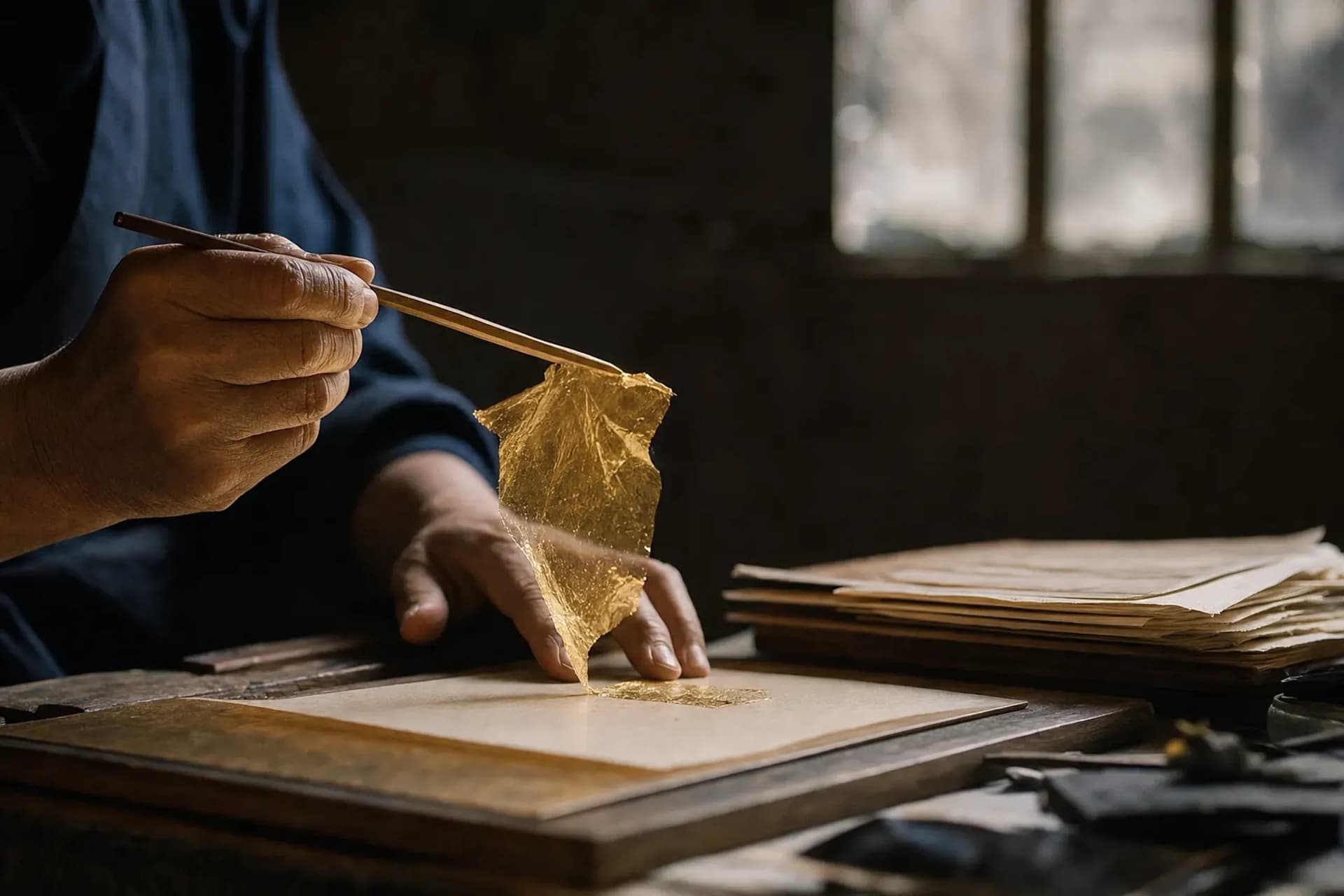
Imagine a sheet of precious metal beaten so relentlessly it becomes little more than a breath. Roughly 1/10,000th of a millimeter thick. It is thin enough that static electricity generated by a dry wind can tear it to shreds. This is the exacting reality of Kanazawa kinpaku (gold leaf). Today, this coastal Ishikawa city commands over 99 percent of Japan's domestic gold leaf production, supplying everything from historical restoration projects to contemporary lacquerware.
Yet, this absolute dominance did not emerge from a peaceful, undisturbed craft tradition. It was born of subterfuge.
For more than a century, producing gold leaf in Kanazawa was a criminal act. The history of this luminous material is one of clandestine workshops, political maneuvering, and a devastating castle fire that accidentally forged an industrial empire. Our team at Japan Royal Service frequently introduces discerning travelers to this gleaming heritage. We do not just show you the bright facade. We reveal the outlawed history beneath, guiding you into the quiet ateliers of the shokunin (craft masters) who carry on a legacy of resilience.
Why Does Kanazawa Produce 99 Percent Of Japan's Gold Leaf?
Kanazawa dominates production because its artisans spent over a century perfecting the craft in secret after the shogunate banned it, creating superior techniques that later overtook the legal market.
The story begins in 1593. Lord Maeda Toshiie, the founding daimyo of the formidable Kaga domain, sent strict instructions from his military camp.
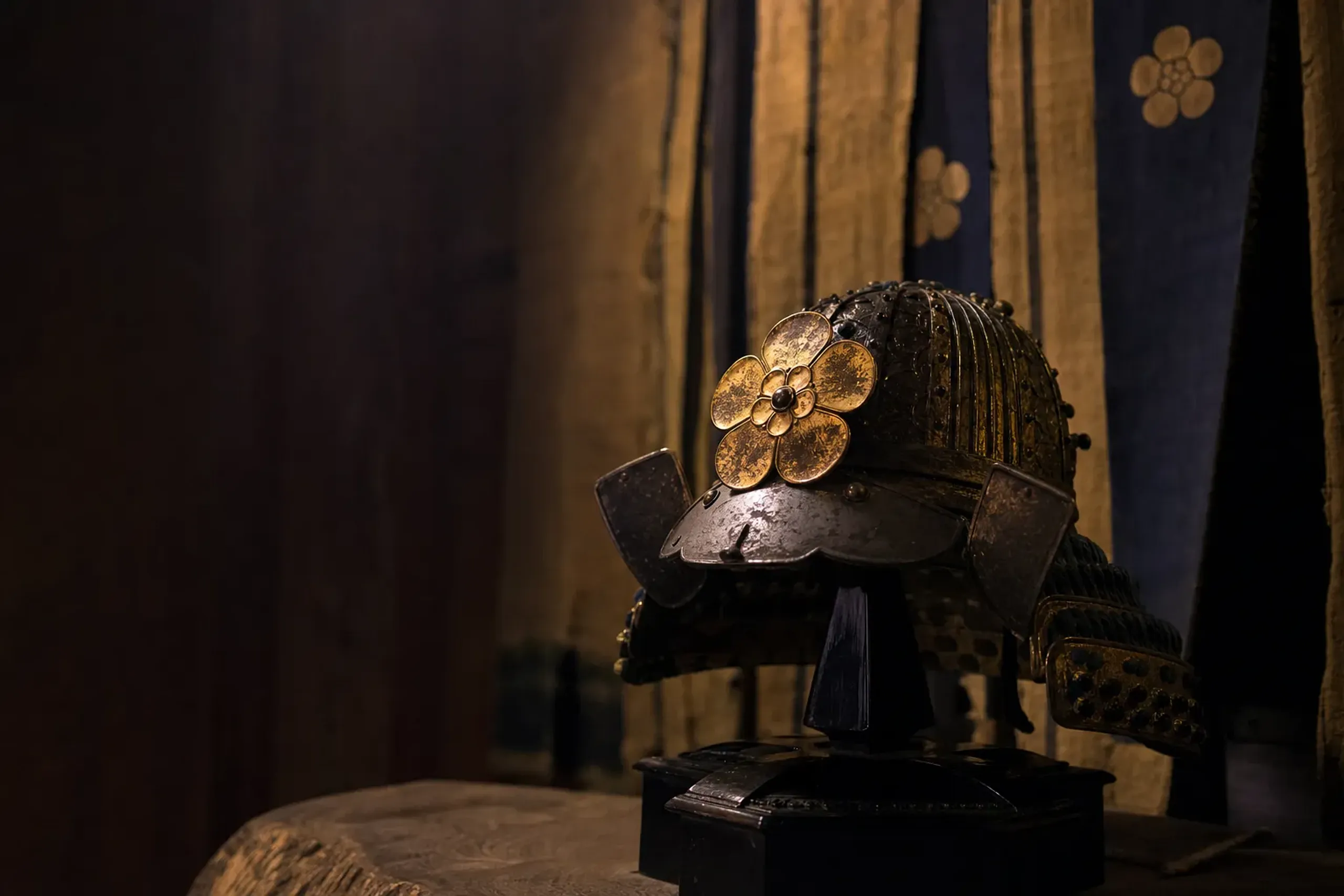
He ordered local artisans to begin striking gold and silver leaf back home. The domain possessed immense wealth and a deep appreciation for cultural refinement, funding the arts with unparalleled zeal. Early production flourished under the domain's watchful eye.
Then the hammer fell. In 1696, the Tokugawa shogunate in Edo enacted a sweeping ban on gold and silver leaf production anywhere outside of Edo and Kyoto. The objective was absolute control. By restricting the trade to authorized mints, the central government maintained an iron grip on precious metals used for national currency. Regional production was strictly outlawed.
The Kaga domain did not comply. They merely pushed the work underground.
Sheltered within the domain's covert saikujo (craft workshops), Kanazawa artisans continued to strike gold in secret. For well over a hundred years, they refined their techniques away from the eyes of shogunate inspectors, producing just enough leaf to maintain their clandestine skills. The punishment for discovery would have been severe. They beat the gold anyway.
The 1808 Castle Fire That Changed Everything
This hidden industry might have remained a permanent secret if not for a catastrophic accident. In 1808, Kanazawa Castle's second bailey burned completely to the ground. The cultural heart of the Kaga domain was reduced to ash.
Rebuilding the massive structure required a staggering volume of gold leaf, far more than anyone could realistically smuggle or procure through normal, legal channels in Kyoto. The domain seized the moment.
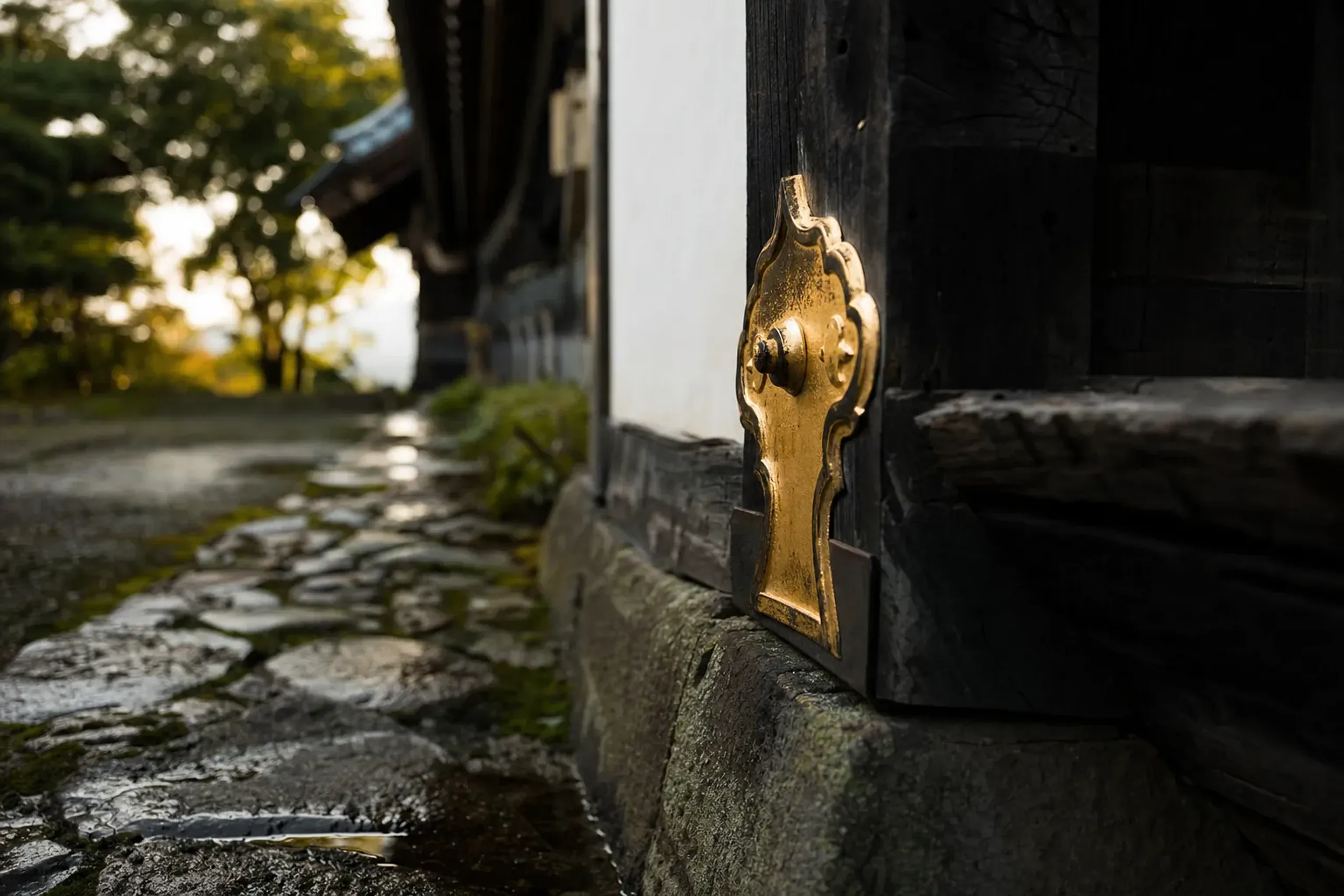
They submitted a carefully worded petition to the shogunate, requesting special, time-limited permission to produce gold leaf locally strictly for the reconstruction effort.
The central government agreed. A critical loophole opened.
During this brief window of legality, master craftsmen from Kyoto were invited to Kanazawa to teach their techniques openly. Local artisans, emerging from the shadows, absorbed these advanced methods voraciously. They merged Kyoto's technical precision with their own century of covert innovation. Once the castle repairs concluded, the shogunate's permission expired. Further bans followed in 1820 and 1824. The trade went back underground, but the artisans now possessed unmatched technical superiority.
How Did Koshino Sasuke Legalize Kanazawa's Gold Leaf Trade?
Koshino Sasuke repeatedly petitioned authorities for decades, initially winning the right to sell Edo-made leaf before establishing a covert local workshop disguised as a repair facility for damaged gold.
The journey to full legalization required immense personal sacrifice from a local merchant initially known as Notoya Sasuke. Refusing to accept the permanent suppression of his city's craft, he launched a decades-long campaign against the central government's monopoly. His early petitions were routinely rejected.
In 1844, he finally secured a compromise: the exclusive right to sell Edo-manufactured leaf within the Kaga domain. But selling imported goods was not enough. To push the boundary further, he traveled to Edo, adopted the new name Koshino Sasuke, and relentlessly pursued direct permission from the shogunate.
By 1856, his efforts yielded a quiet victory. A functioning leaf workshop appeared in Kanazawa, operating under the legal fiction of "re-striking" damaged leaf.
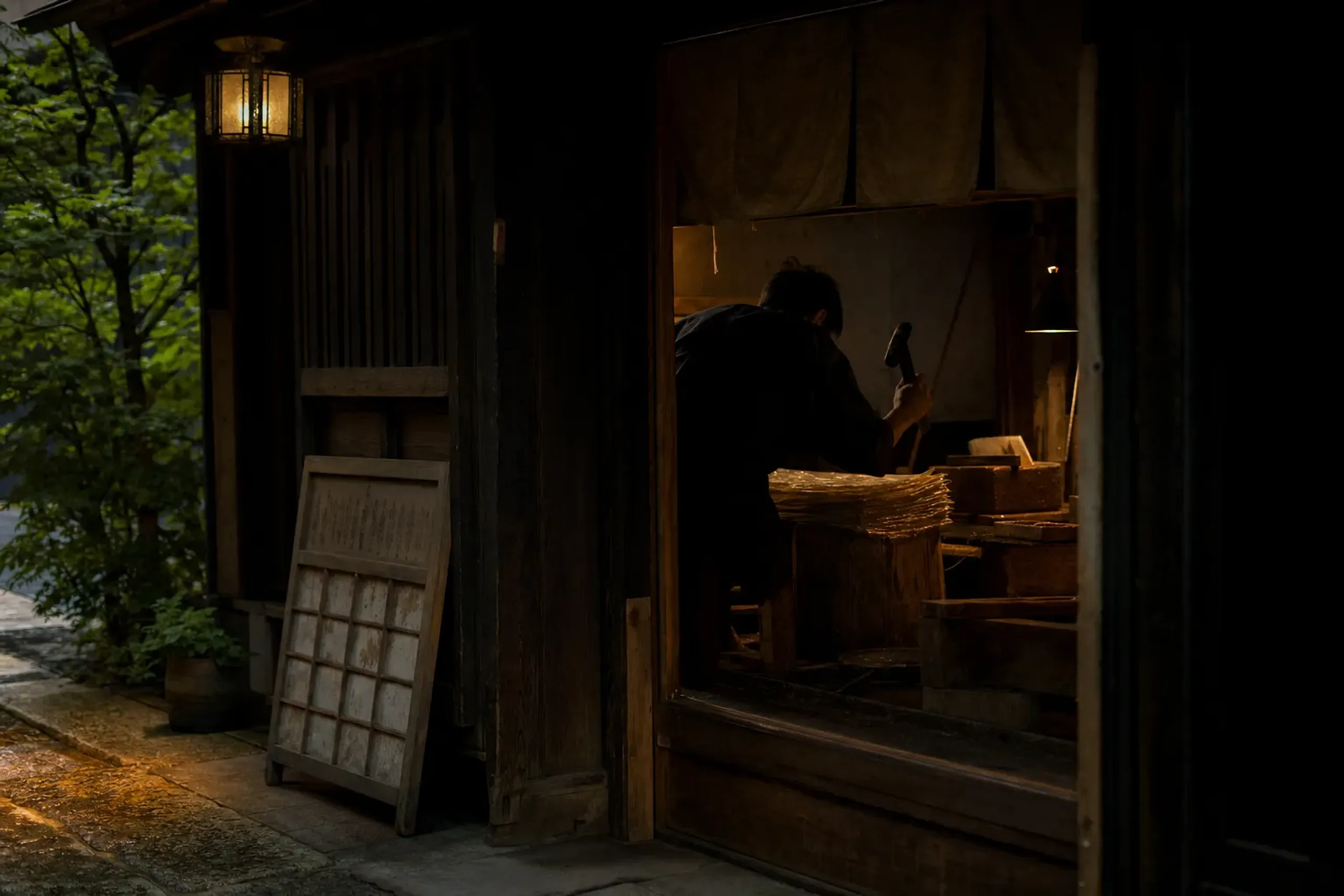
By 1864, he gained explicit permission to strike leaf for castle repairs and official domain commissions. Finally, the 1869 Meiji Restoration abolished the shogunate's mint controls entirely. Once exposed to genuine free-market competition, Kanazawa's leaf—honed through generations of restriction—completely outcompeted Edo's product, establishing the absolute dominance that persists today.
The Climate Mechanism: Rain, Static, And Fragile Gold
Kanazawa's geography is as crucial to the craft as its history. A famous local proverb dictates: "Even if you forget your lunch, don't forget your umbrella." The city experiences near-constant rainfall, heavy winter snows, and persistent humidity.
For most travelers, this necessitates careful packing. For a gold leaf artisan, it is an environmental blessing.
When gold is beaten down to 1/10,000th of a millimeter, it becomes terrifyingly fragile. In a dry climate, the mere friction of lifting the foil would generate enough static electricity to shatter the metal into useless dust. Kanazawa's heavy, damp air acts as a natural grounding mechanism, suppressing static electricity and allowing artisans to handle the impossibly thin sheets without tearing them.
Key fact: The climate is so integral to production that historically, artisans could only perform the final stages of leaf-beating on specific humid days. Today, modern climate control assists the process, but traditional ateliers still rely on the region's natural dampness.
How Is Traditional Entsuke Gold Leaf Made?
Artisans alloy gold with trace silver and copper at extremely high heat, then repeatedly beat the cut squares between specially treated washi paper until the foil reaches microscopic thinness.
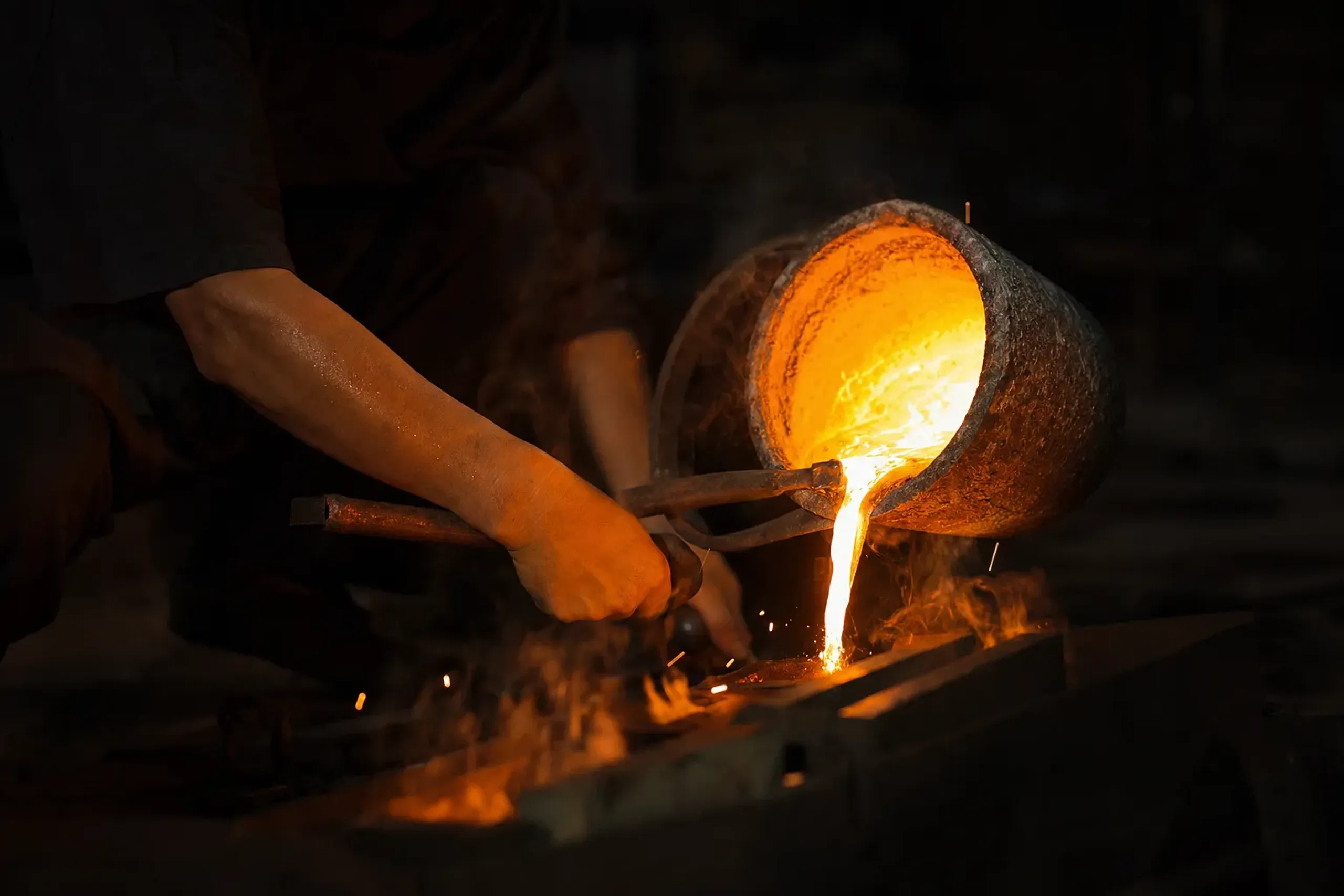
Pure gold is far too soft to be beaten into usable foil on its own. The master artisan must first melt the gold at roughly 1300°C, alloying it with precise, minute quantities of silver and copper. Altering this specific ratio changes the final color tone of the leaf, allowing for variations ranging from deep bronze to bright yellow.
The alloy is rolled into long, thin strips and cut into small squares. Then comes the true secret of the craft: the paper.
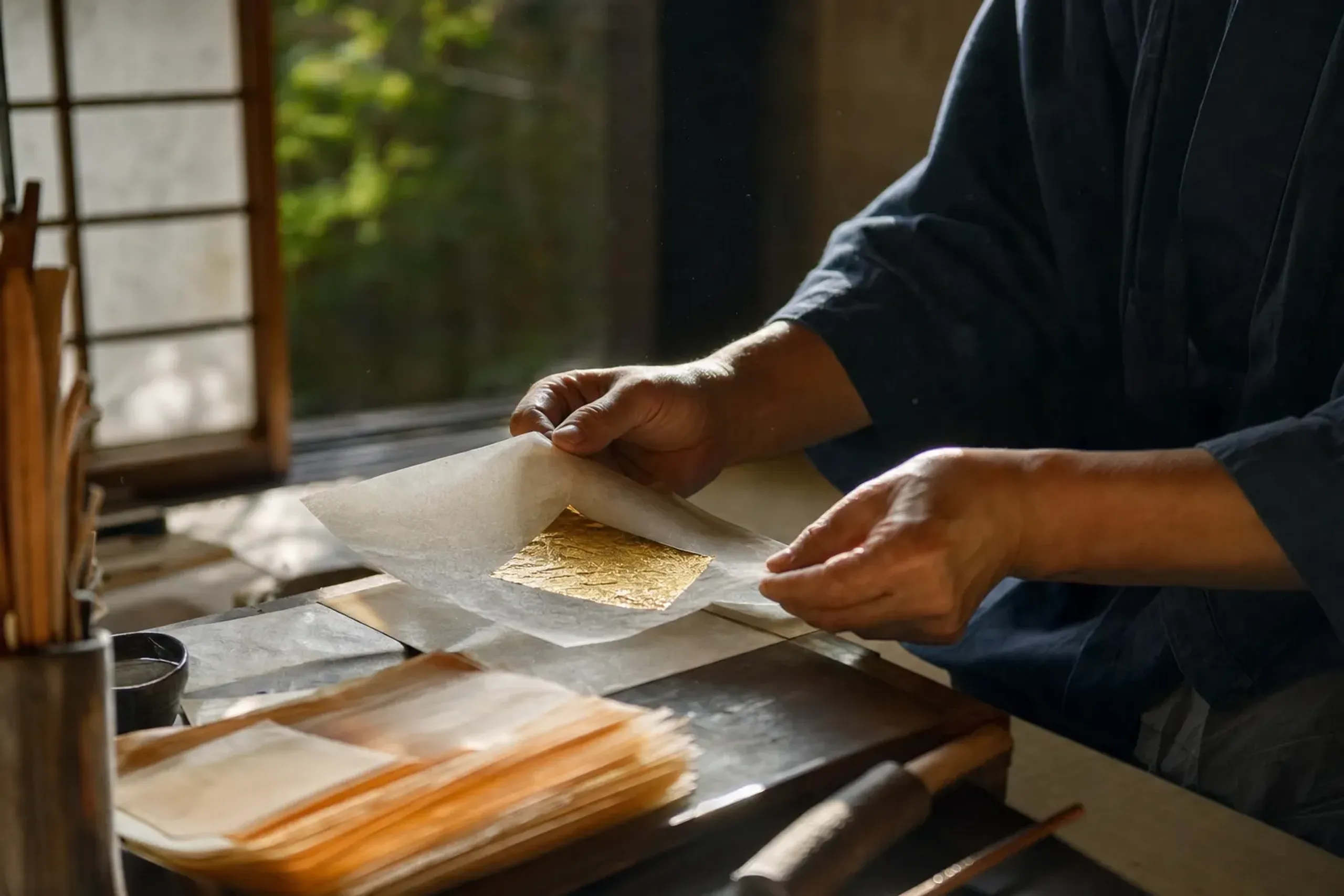
In the traditional entsuke method, the gold is interleaved with specialized paper made from local washi. Preparing this paper is a hidden craft all its own. The sheets are meticulously treated with a mixture of lye, astringent persimmon tannin, and egg, a preparation process that takes over a month to complete. The quality of this paper directly dictates the quality of the finished gold. If the paper is flawed, the gold will fail.
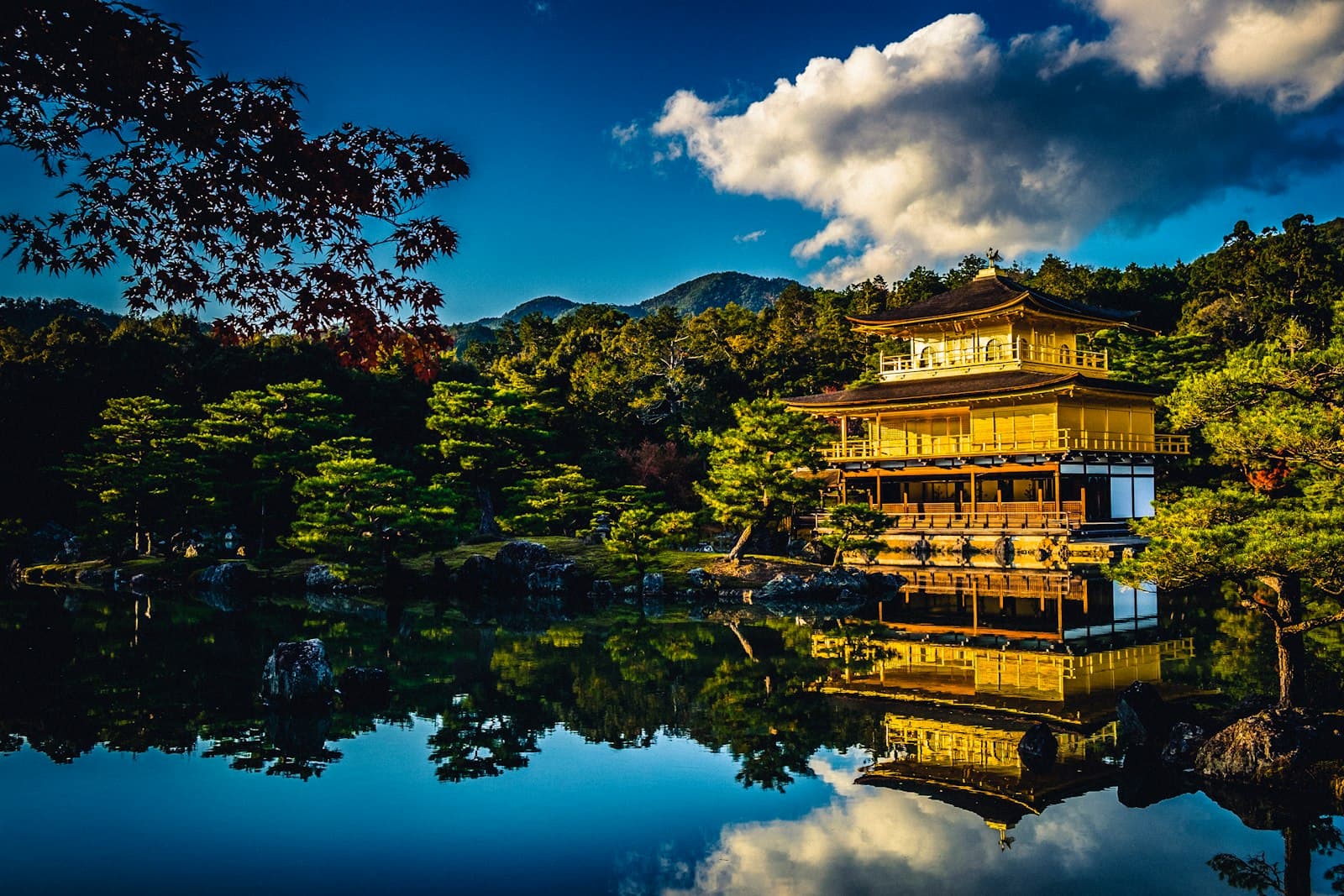
The artisan strikes the bundles repeatedly. The gold expands, is cut, interleaved between progressively thinner sheets of paper, and beaten again. This exact method produced the leaf used to adorn major historical monuments, including Kyoto's Kinkaku-ji and Shizuoka's Kunōzan Tōshō-gū. It is a slow, rhythmic, highly physical discipline.
Experiencing Kanazawa's Gold Leaf Today
Modern travelers visiting Kanazawa will encounter gold leaf everywhere, from soft-serve ice cream to mass-produced chopsticks.
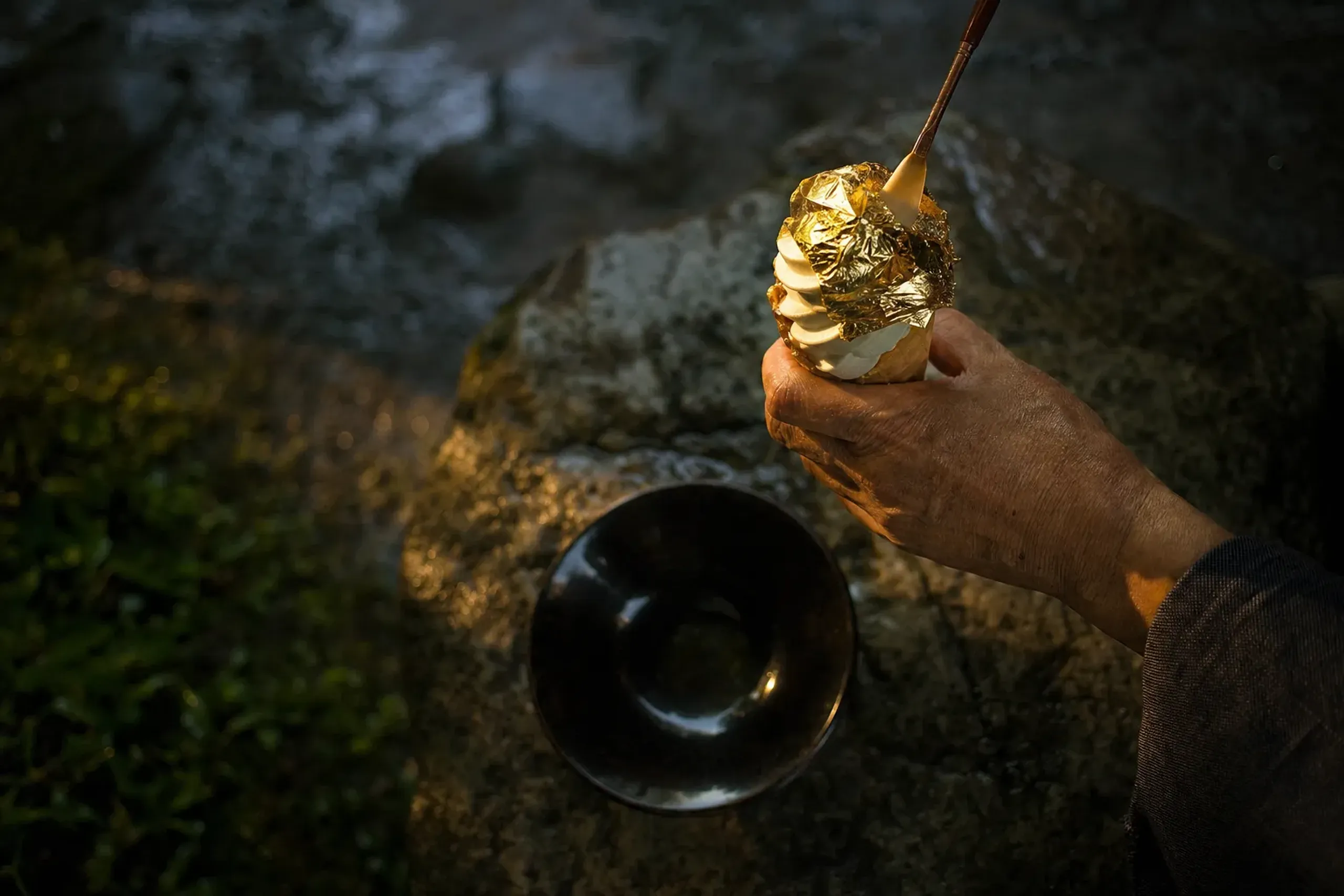
However, experiencing the genuine, historical craft requires careful curation. The city's Sustainable Tourism Promotion Plan emphasizes authentic, low-impact cultural engagement, steering sophisticated visitors away from crowded tourist centers and toward serious artisanal appreciation.
| Experience Tier | Technique Shown | Setting |
|---|---|---|
| Standard Tourist Workshop | Modern chemical foil application via stencils | Large group retail environments |
| Private Shokunin Atelier | Traditional entsuke beating and paper preparation | Restricted-access artisan workshops |
Option A: The Standard Tourist Workshop
Many retail locations in the Higashi Chaya district offer short, accessible workshops where visitors can apply precut stencils to small items. These sessions serve as an introductory glimpse into the decorative uses of the metal. While pleasant, they rarely expose the visitor to the demanding physical process of actually striking the leaf or the complex history of its production.
Option B: Private Atelier Access
For those seeking cultural depth, true luxury lies in observing the entsuke process firsthand. Some elite institutions and heritage companies offer private, appointment-only viewings where master craftsmen demonstrate the rhythmic beating and paper preparation. These visits often include access to restricted architectural spaces, such as private tearooms entirely gilded in artisan leaf. Guests interested in learning more about private atelier access may contact our concierge for tailored guidance.
Frequently Asked Questions
Can I buy genuine Kanazawa gold leaf directly from the artisans?
Yes, many established heritage companies in Kanazawa operate private showrooms where collectors can purchase authentic crafts. Purchasing high-end lacquerware or ceramics finished with entsuke leaf requires discerning the maker's specific provenance and historical lineage.
How much time should I allocate for a private gold leaf atelier visit?
A comprehensive private viewing and artisan demonstration typically requires 60 to 90 minutes. This allows sufficient time to understand the paper preparation process, observe the striking, and explore the finished architectural or craft applications without rushing.
Is edible gold leaf safe to consume?
Yes, edible gold leaf is entirely safe. Artisans produce a specific grade of leaf for culinary use, ensuring it contains no copper or non-food-safe alloys, allowing it to pass harmlessly through the digestive system.
Why Choose Japan Royal Service
Navigating the nuanced tiers of Japanese traditional crafts requires specialized insight. Our team at Japan Royal Service excels in separating the superficial from the profound. We do not deal in crowded tourist experiences. Instead, we secure access to the Hidden Japan—the silent, moss-lined courtyards and private artisanal workshops that remain strictly off the public radar.
When you journey with us, every logistical detail is handled with absolute discretion. From arranging premium private transportation that skirts crowded tourist corridors to designing entirely tailor-made itineraries, we ensure your time in Kanazawa reflects your exact cultural interests. We respect your privacy fiercely, allowing you to engage with grand masters in complete confidentiality.
To begin designing your custom Ishikawa experience, reach our team privately via WhatsApp or LINE, or contact us here to speak with our concierge.