In this guide
- 01What Happens In Kanda Matsuri’s Main-Festival Year Vs The Shadow Year?
- 02Why Does Kanda Matsuri Only Run A Full Program Every Two Years?
- 03Who And What Is Carried: Palanquins, Mikoshi, And The Neighborhoods Behind Them
- 04Saturday In A Main Year: How To Watch The Procession Through Nihonbashi, Otemachi, And Akihabara
- 05Sunday In A Main Year: The Mikoshi Entries At Kanda Myojin
- 06How Do I Plan Two Days At Kanda Matsuri If I Want To Avoid Crowds?
- 07A Main-Year Program You Can Recognize: The 2025 Worked Example
- 08Step-By-Step: How Our Concierge Team Times The Weekend For HNW Travelers
- 09How To Get To Kanda Myojin And Where The Closest Stations Actually Are
- 10Let Us Shape Your Kanda Matsuri Weekend
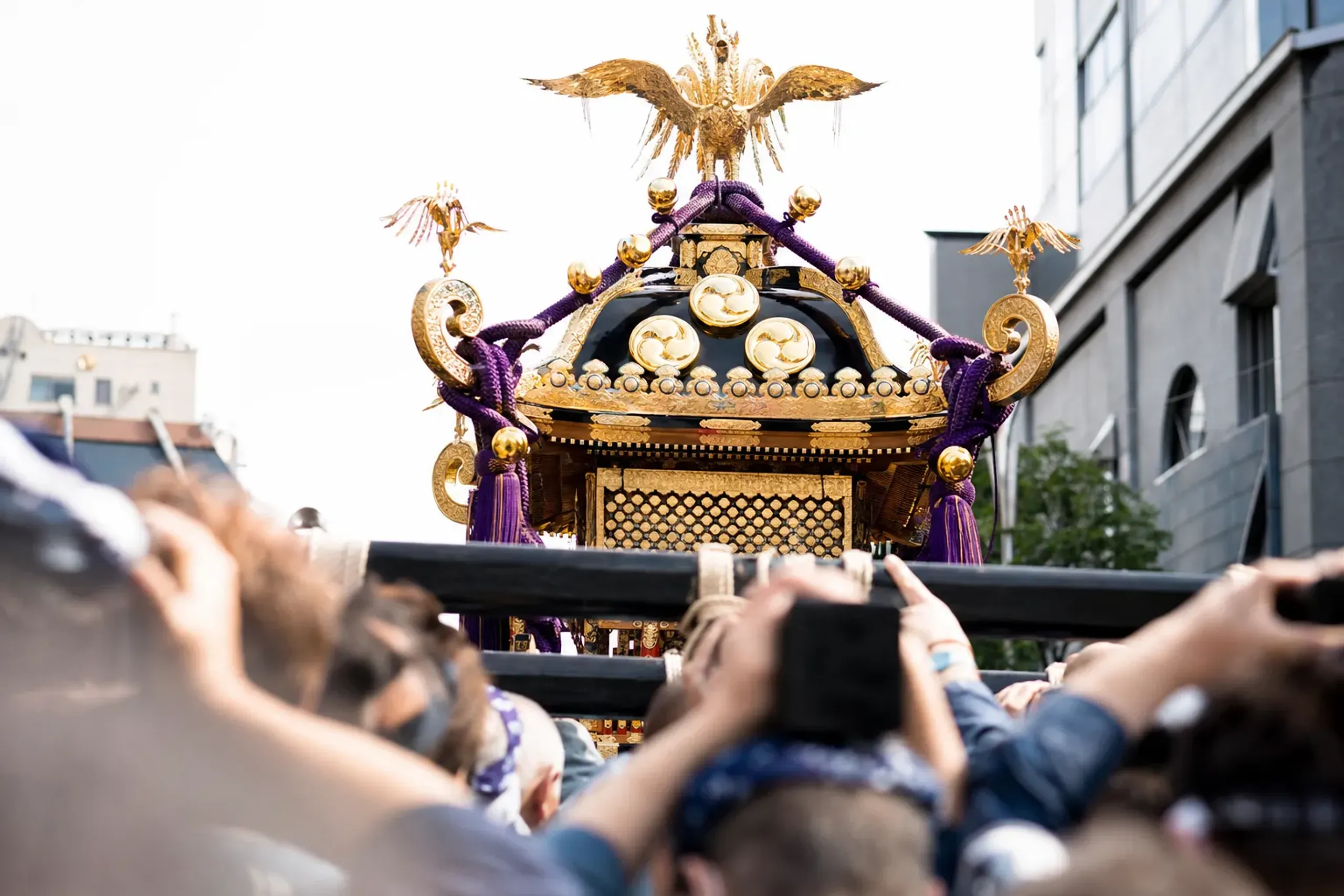
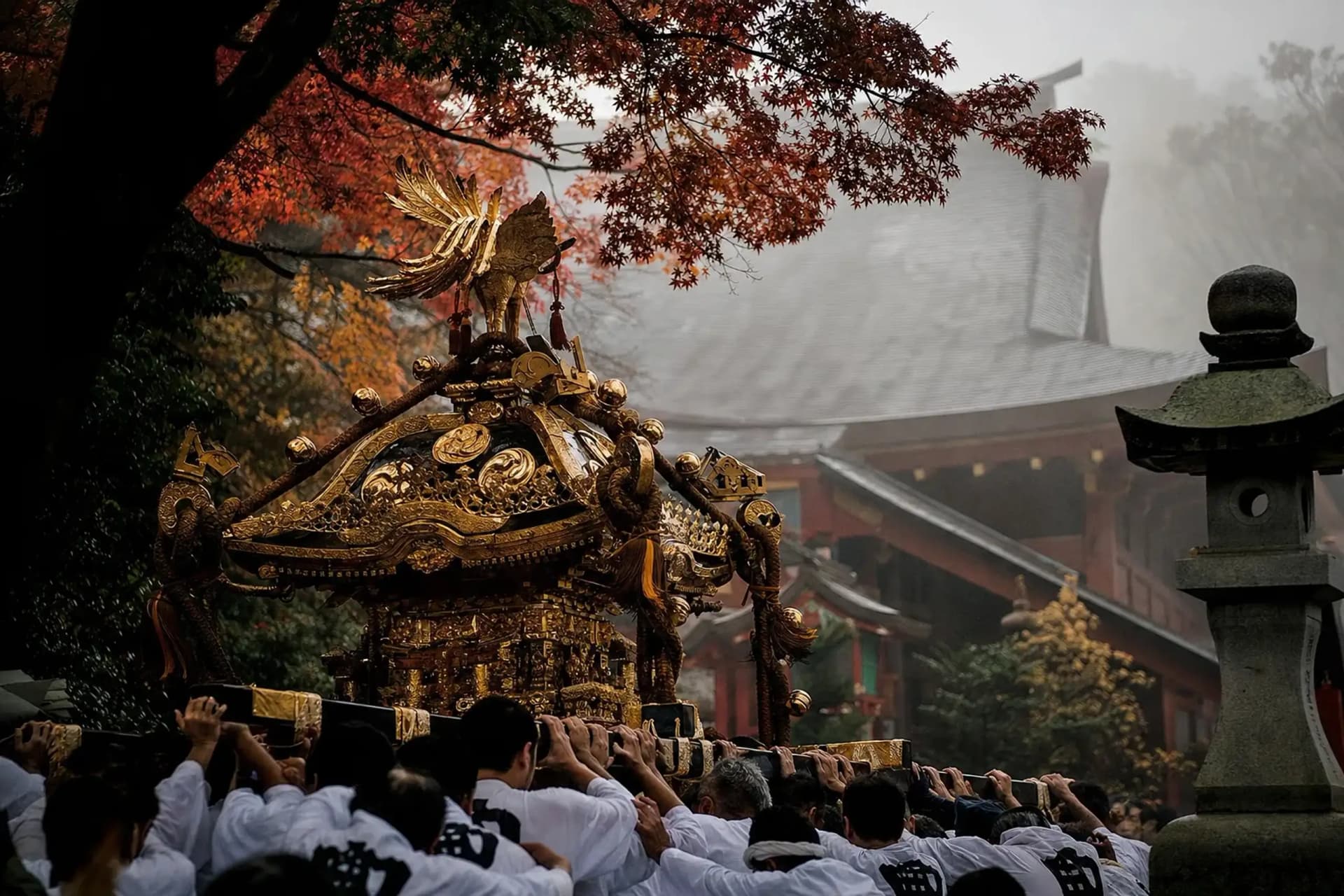
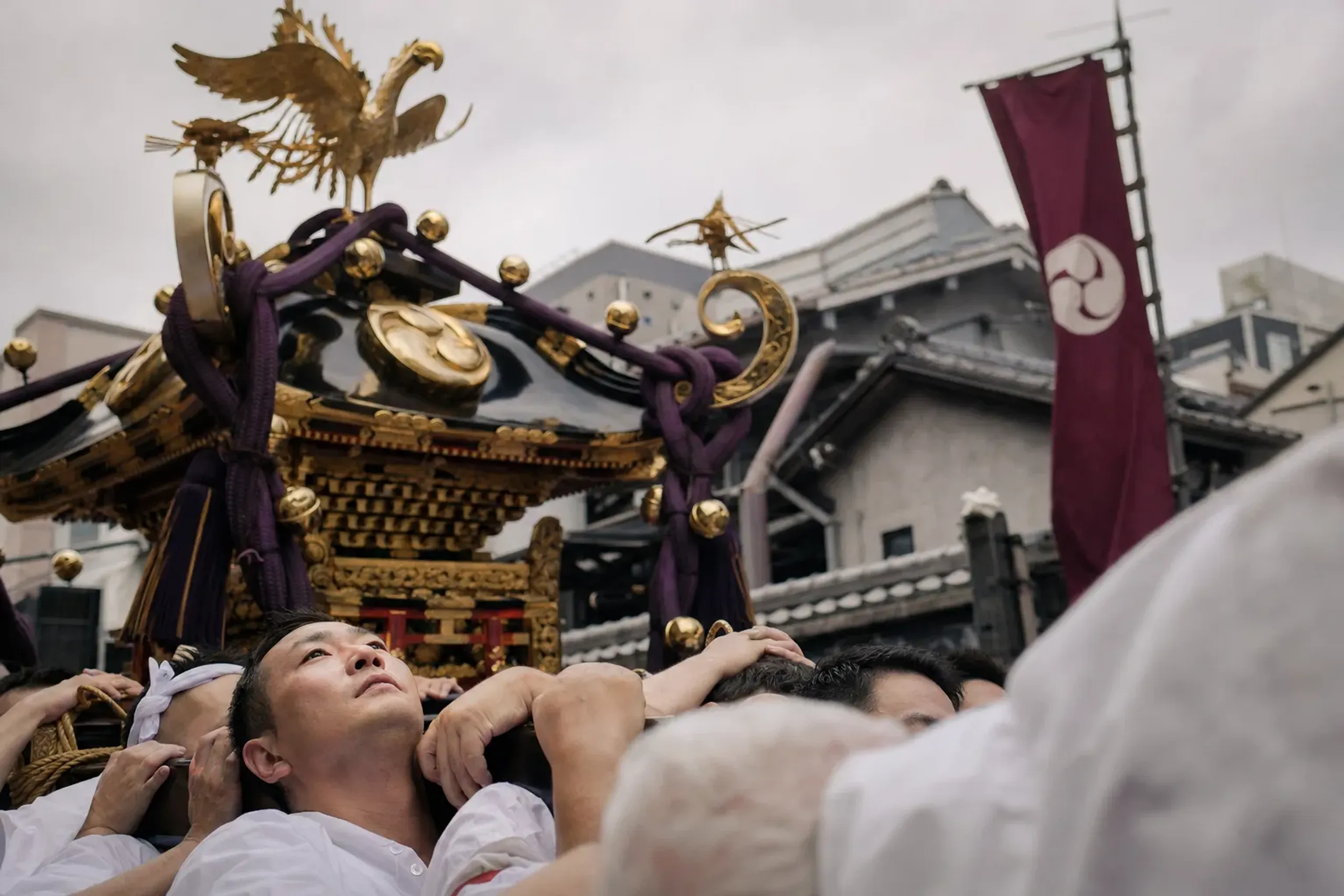
The first mikoshi of the day waits just beyond the torii of Kanda Myojin. You hear it before you see it—a low chant, the sharp click of geta against stone, then the sudden creak of wood straining under its own weight.
Tokyo is already bright in mid-May, but the shrine forecourt holds a light of its own—filtered, watchful, edged with incense. Visitors tighten their grip on cameras. Someone whispers a neighborhood name you don’t recognize, and in that instant you realize how much of this festival is written in a language you cannot yet read.
This is precisely why main-year planning matters. In a shadow year, you can visit Kanda Myojin and feel the pull of the season, but you will not witness this sequence of entries—one after another, each borne in by the towns themselves.
Our team at Japan Royal Service helps you read the street, not merely stand on it. Quiet guidance. Clean timing. And discretion—because even within a public festival, your privacy can be preserved entirely.
What Happens In Kanda Matsuri’s Main-Festival Year Vs The Shadow Year?
Kanda Matsuri reveals its full form only in odd-numbered years. Even-numbered years are a shadow festival—held without the headline procession or the mikoshi entry at Kanda Myojin.
That single distinction changes everything. In a main year (such as 2025), you build your visit around two decisive days: the Saturday shrine procession winding through central Tokyo, and the Sunday neighborhood mikoshi entries at Kanda Myojin.
In a shadow year (such as 2026), the large-scale spectacle simply does not take place.
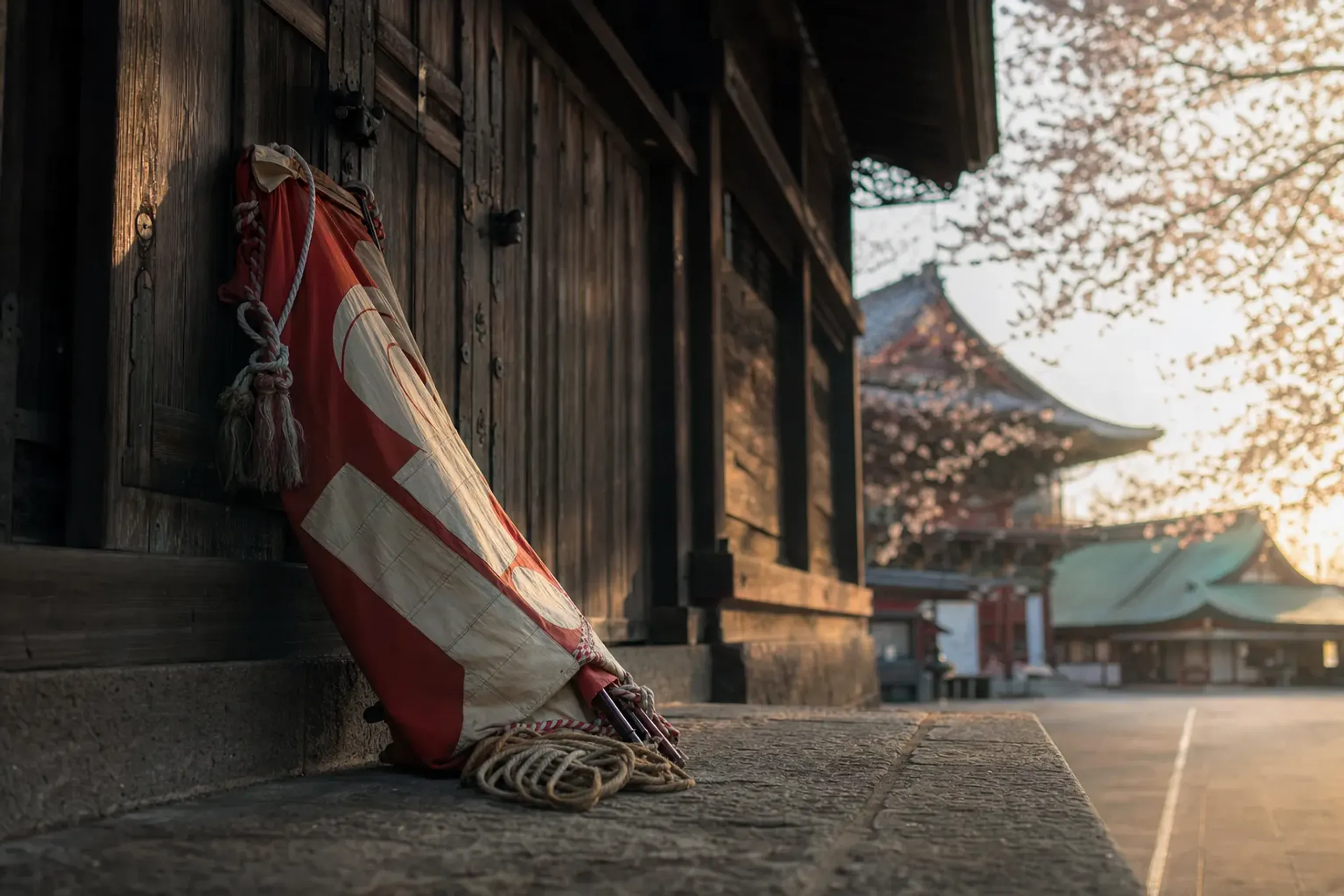
Rites and shrine events continue, but the street-wide momentum—the sense of Tokyo moving as one living body—never arrives in quite the same way.
One line of context worth carrying with you: the cycle is commonly described as alternating with Sannō Matsuri at Hie Shrine, so Tokyo’s two major shrine festivals effectively “trade” their big years.
Why Does Kanda Matsuri Only Run A Full Program Every Two Years?
Kanda Matsuri’s major procession and mikoshi entry are held once every two years, alternating by year with the major cycle associated with Sannō Matsuri (Hie Shrine).
In practical terms, this is Tokyo’s way of concentrating its energy rather than diluting it. The route threads through districts that still carry the shape of Edo’s merchant and castle city—Kanda, Nihonbashi, and the business corridors of Otemachi and Marunouchi—before turning back toward Akihabara and the shrine.
At the center stands Kanda Myojin (Kanda Shrine). Tradition dates its founding to 730, with a move to its present site in 1616.
During the Edo period, the procession is said to have entered Edo Castle itself, to be viewed by the shogun. The shrine describes the festival as one of Japan’s “three great festivals,” and also among Edo’s “three great festivals.” The label, though, is not the point. The continuity is—an unbroken thread of ceremony reaching back across centuries, still carried by the same neighborhoods today.
Who And What Is Carried: Palanquins, Mikoshi, And The Neighborhoods Behind Them
If you remember only one distinction, make it this: the deities travel in formal palanquins and a single mikoshi, while the neighborhood mikoshi belong to the town associations.
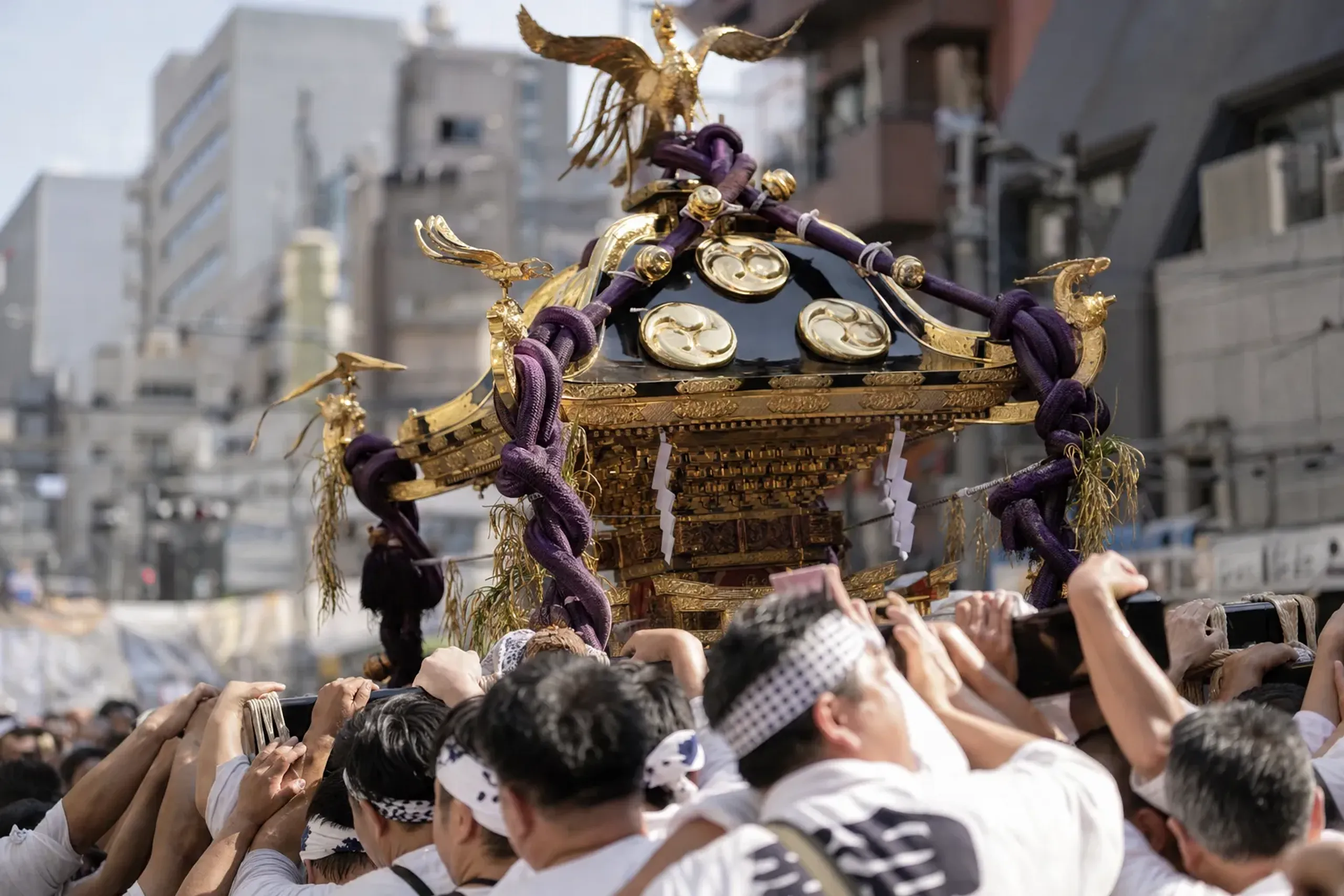
Kanda Myojin enshrines three deities: Daikoku (Ōnamuchi), Ebisu (Sukunahikona), and Taira no Masakado (enshrined in 1309, according to the shrine). In the main-year procession, the deities travel in two palanquins (hōren) and one mikoshi. Masakado’s is a hōren.
Then comes the city’s own heartbeat: the neighborhood mikoshi. The festival draws in 108 neighborhoods. You will often hear the figure “around 200 mikoshi” across the festival as a whole, with roughly 100 or more carried into the shrine on the entry day—though counts vary by source and by how each mikoshi is classified.
To watch well, you want names. Who is approaching. Which 町会 (town association) it is. What their crest signifies. This is where an English-speaking cultural interpreter guide transforms the day, because the festival was never designed to explain itself.
Saturday In A Main Year: How To Watch The Procession Through Nihonbashi, Otemachi, And Akihabara
On the main-year Saturday, Kanda Matsuri’s shrine procession passes through Kanda, Nihonbashi, Otemachi/Marunouchi, and Akihabara, with the float parade (tsukematsuri) joining later in the day.
In 2025, the main-year Saturday fell on May 10, with the float parade noted from about 15:00, and the procession’s mikoshi entry also taking place. Those exact times are not a rule to carry into the next main festival. They are a worked example—a shape, not a schedule.
What you can plan around is the character of the day itself.
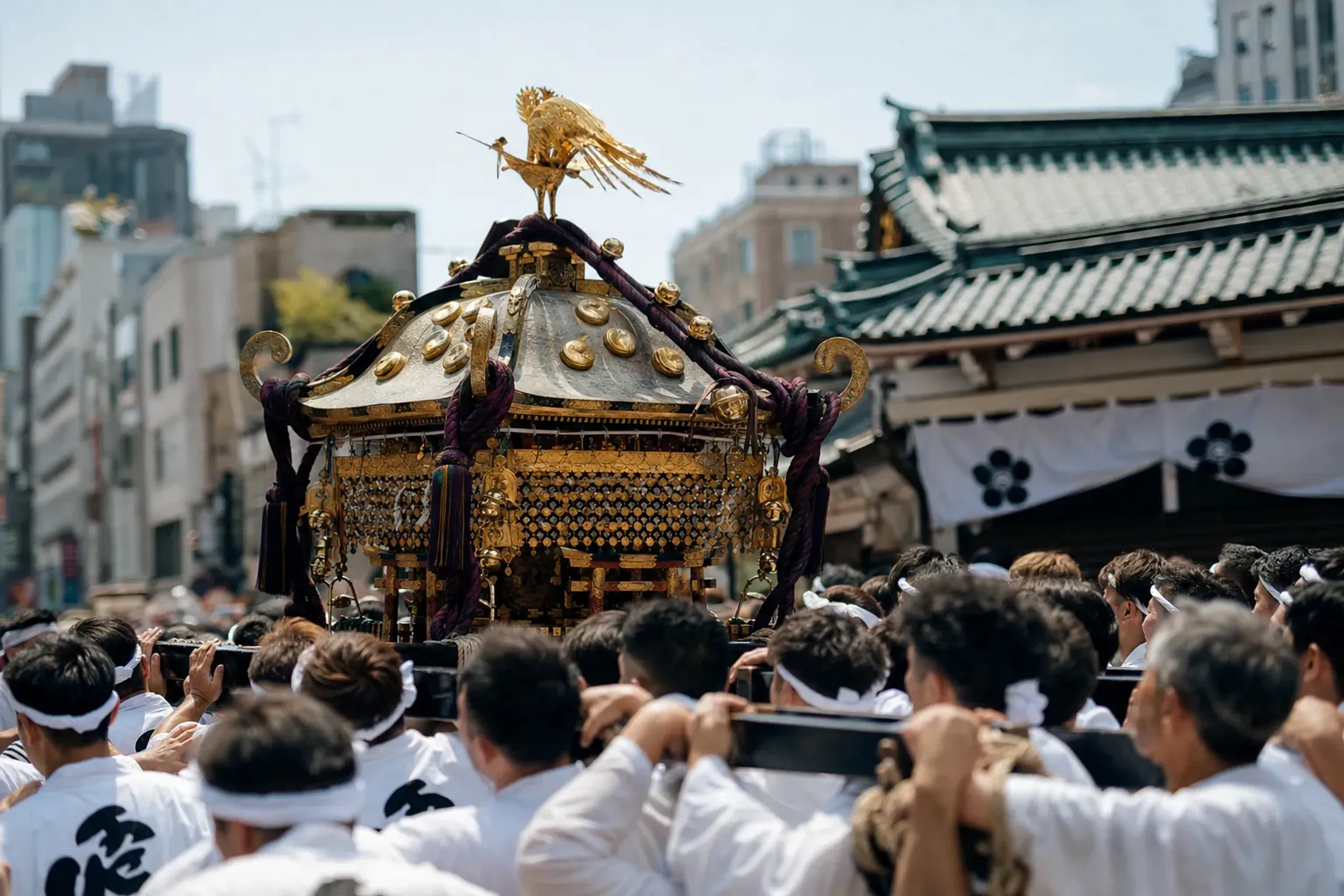
It is outward-facing. You watch along broad avenues, amid steady flows of people, against a shifting backdrop—from the old merchant geometry of Nihonbashi to the glass-and-stone edges of Otemachi.
Where We Like To Place You For The Best Sightlines
These are street-watching zones, not reserved seating areas. Simple choices matter here. The common mistake is arriving without any sense of what “good viewing” even means.
- Chūō-dōri near Nihonbashi: A wide road, long approach lines, and room to step back for photographs.
- Chūō-dōri in Akihabara: A different energy altogether. Tighter edges. A striking contrast between the festival procession and the modern storefronts framing it.
For a timing reference only, the Chiyoda tourism association’s 2023 guide data suggested the procession and float parade meet on Chūō-dōri between Nihonbashi and Kanda around 16:30–17:30. Treat that as a compass, not a clock.
What To Listen For When The Tsukematsuri Arrives
The float parade is not silent theater. It is street sound in its fullest form. You notice drums, flutes, and the shifting call-and-response patterns that make heads turn before anything comes into view.
If you are travelling with children—or if you simply prefer calmer spacing—our concierge team will usually shape the day around earlier street viewing, followed by a reset. A hotel close by matters enormously here. So does the way you move once the roads begin to close.
Sunday In A Main Year: The Mikoshi Entries At Kanda Myojin
In a main-festival year, Sunday is given over entirely to the all-day neighborhood mikoshi entry at Kanda Myojin, where roughly 100 or more mikoshi may be carried into the shrine grounds across the day.
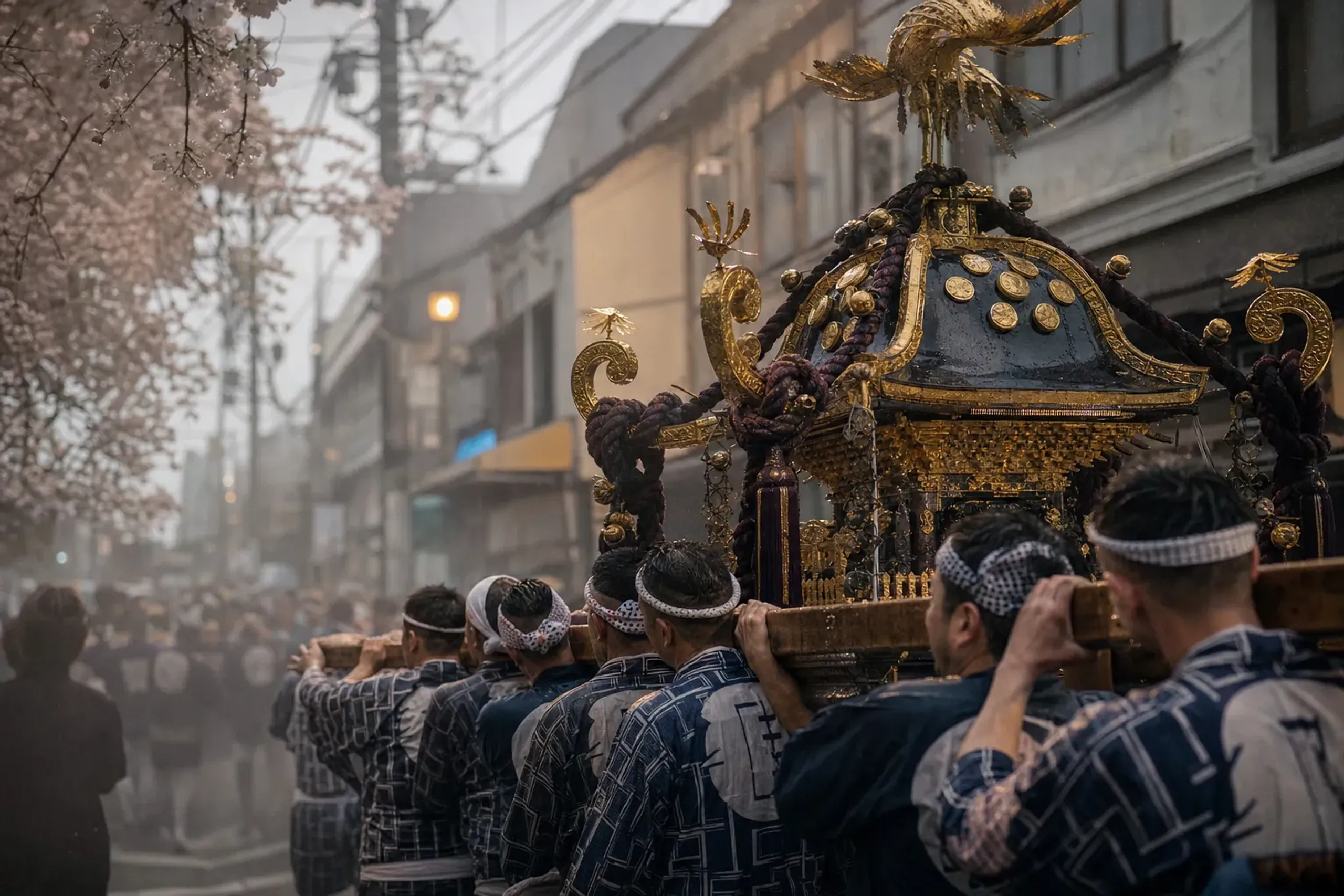
This is the reason to stay the extra night. It is also the day many travelers underestimate, because it unfolds in a single place—and they assume that means “easy.” It does not.
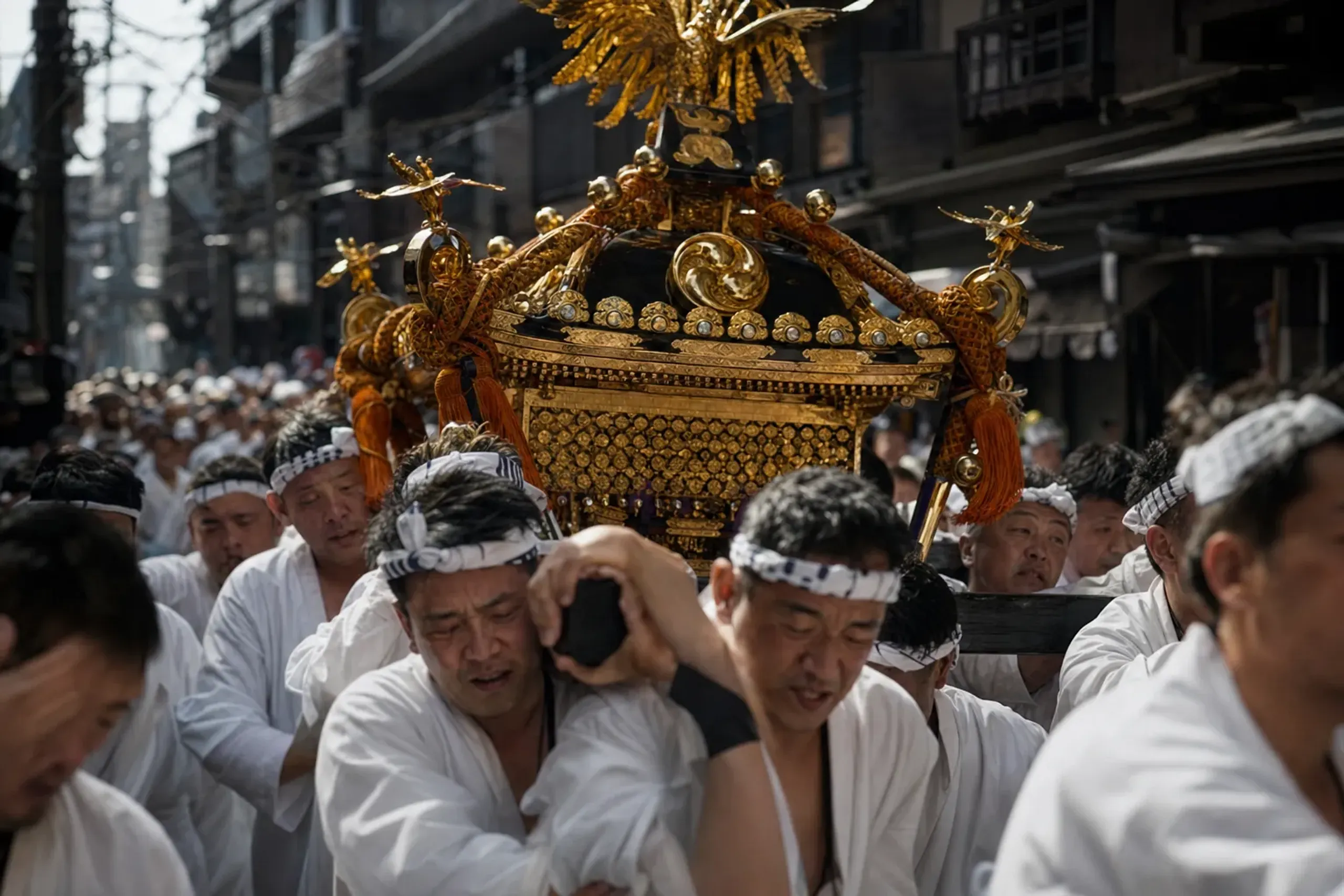
Each mikoshi queues for its slot. The carry teams wait, adjust their grip, and test their rhythm. The lift at the forecourt can take more than one attempt, and that uncertainty is part of the suspense—wood rising, dipping, rising again as the crowd tightens into silence. There is a quiet discipline in it, a restraint you feel rather than see.
For a timing reference only, 2023 guide data suggested entries ran roughly 9:00–18:30. The schedule for the next main festival should be confirmed directly with Kanda Myojin.
Where To Stand At The Shrine Without Getting Crushed
The best view is rarely the closest. You want an angle that lets you see the front of the mikoshi and, just as importantly, the carry team’s footwork.
- Shrine forecourt approach: You can watch the mikoshi line form, and you’ll feel the charged “before” moment.
- Edges of the open space: Better for families and for photographers who need a steadier frame.
Follow police and staff direction without hesitation. Move early, not late. If you attempt to cut through once the lift begins, you will surrender both time and patience.
How Do I Plan Two Days At Kanda Matsuri If I Want To Avoid Crowds?
Plan two separate viewing windows—Saturday on Chūō-dōri for the procession, and Sunday early at Kanda Myojin for the first entries—then build your breaks around hotel proximity and road closures.
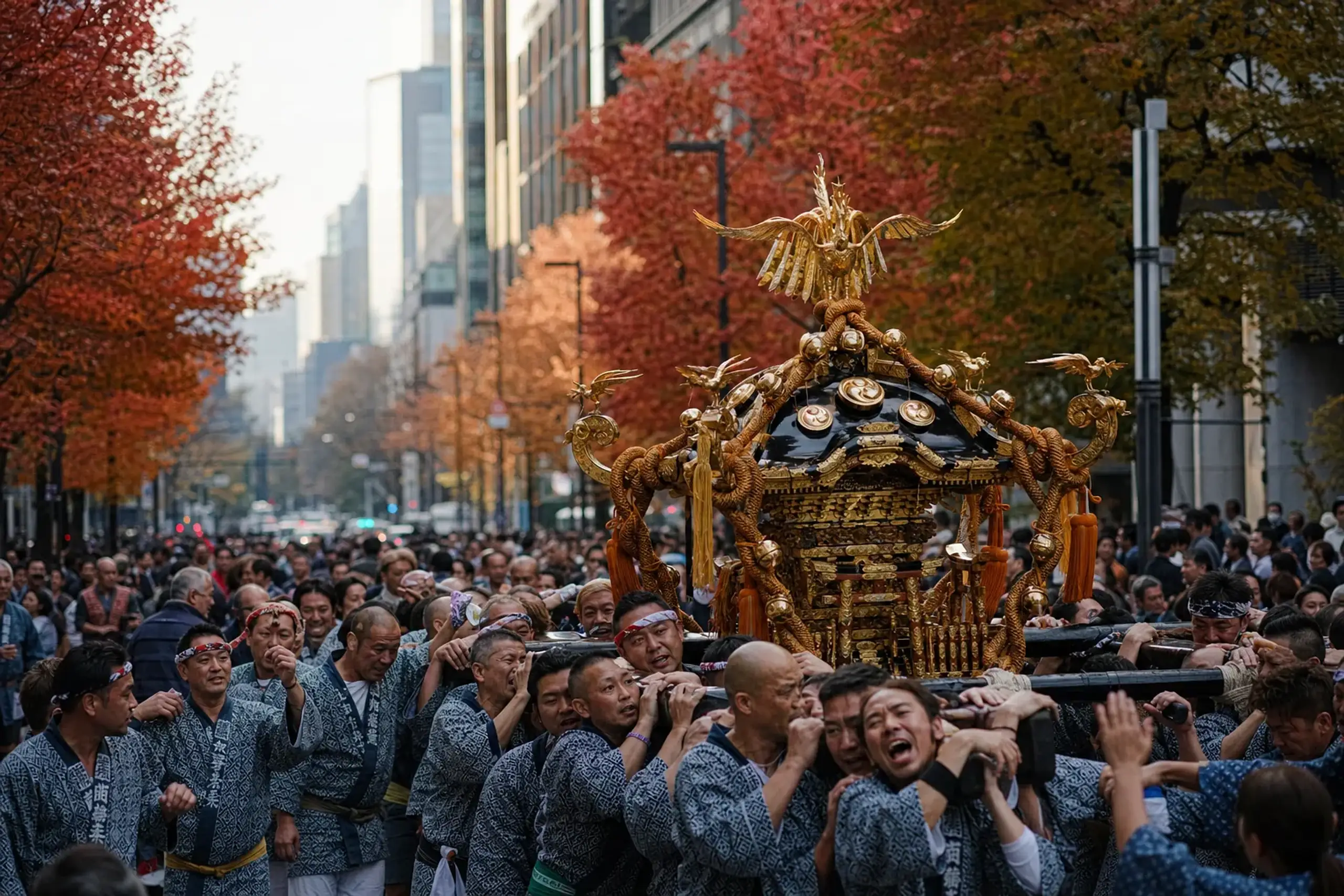
Our approach is calm, never heroic. We plan for the small frictions that quietly ruin festival days: a station exit you cannot reach because of crowd control, a meeting point that becomes impossible, a late lunch that forces you to choose between food and the best viewing run.
In our experience, a two-day plan works best when you treat each day as one “anchor viewing” paired with one “roam” period. You do not need to chase everything. You need only to be in the right place when the atmosphere reaches its peak—and knowing precisely where that is, in which hour, is the quiet art of it. This is a bespoke itinerary built entirely around you.
Key fact: Viewing is free, and we did not find paid seating; plan for street viewing and standing room, and confirm the latest route and traffic regulations with Kanda Myojin.
A Main-Year Program You Can Recognize: The 2025 Worked Example
The 2025 main festival unfolded across a clear arc of eight days, with the public-facing highlights concentrated on Saturday and Sunday.
Use this as a reference for what a main year can include—not as a template for the next main festival’s dates or times.
| Day (2025 Example) | What Happened |
|---|---|
| Thu 8 May, 19:00 | Transfer rite for the palanquins and mikoshi |
| Fri 9 May | Neighborhood mikoshi receive the spirit |
| Sat 10 May | Procession through Kanda, Nihonbashi, Otemachi/Marunouchi, Akihabara; float parade from about 15:00; procession’s mikoshi entry |
| Sun 11 May | All-day entry of neighborhood mikoshi |
| Wed 14 May | Tea ceremony and ticketed Noh performance |
| Thu 15 May, 14:00 | Annual rite |
For the next main festival (expected around mid-May 2027), dates and route details should be confirmed with Kanda Myojin once published.
Avoid rules of thumb. The calendar shifts.
Step-By-Step: How Our Concierge Team Times The Weekend For HNW Travelers
The luxury here is not a roped-off seat. It is the quiet experience of having the entire day feel readable—legible in a way it simply isn’t for the visitor standing beside you.
Our team at Japan Royal Service builds a plan around three values that matter profoundly in this festival: discretion, hidden-Japan literacy (knowing what matters that Google will never explain), and imperial-class precision—the highest formal register of conduct when you stand near a shrine’s most sacred moments.
And yes, you can achieve all of this without turning the weekend into a military operation. Better, in fact.
1) Base Yourself Close Enough To Reset
We often suggest a hotel area rather than a named property, because flexibility matters and tastes differ. For Kanda Matsuri, the practical bases are Nihonbashi, Otemachi, or Ochanomizu.
Close is quiet. Close means you can step away from the crowd, change your shoes, and return for the next viewing window without draining the day of its pleasure.
2) Use A Private Chauffeured Transfer For Edges, Not For The Last Meter
Road closures and pedestrian controls define this weekend. A car is most useful for carrying you to the edge of the controlled zone, then letting you continue on foot with a clear meeting plan already in place.
When we include private transportation in a Kanda Matsuri weekend, we treat it as a staging tool—never a shortcut. Your driver should not double as your guide, and your guide should never be asked to manage traffic logistics.
3) Bring An English-Speaking Cultural Interpreter Guide
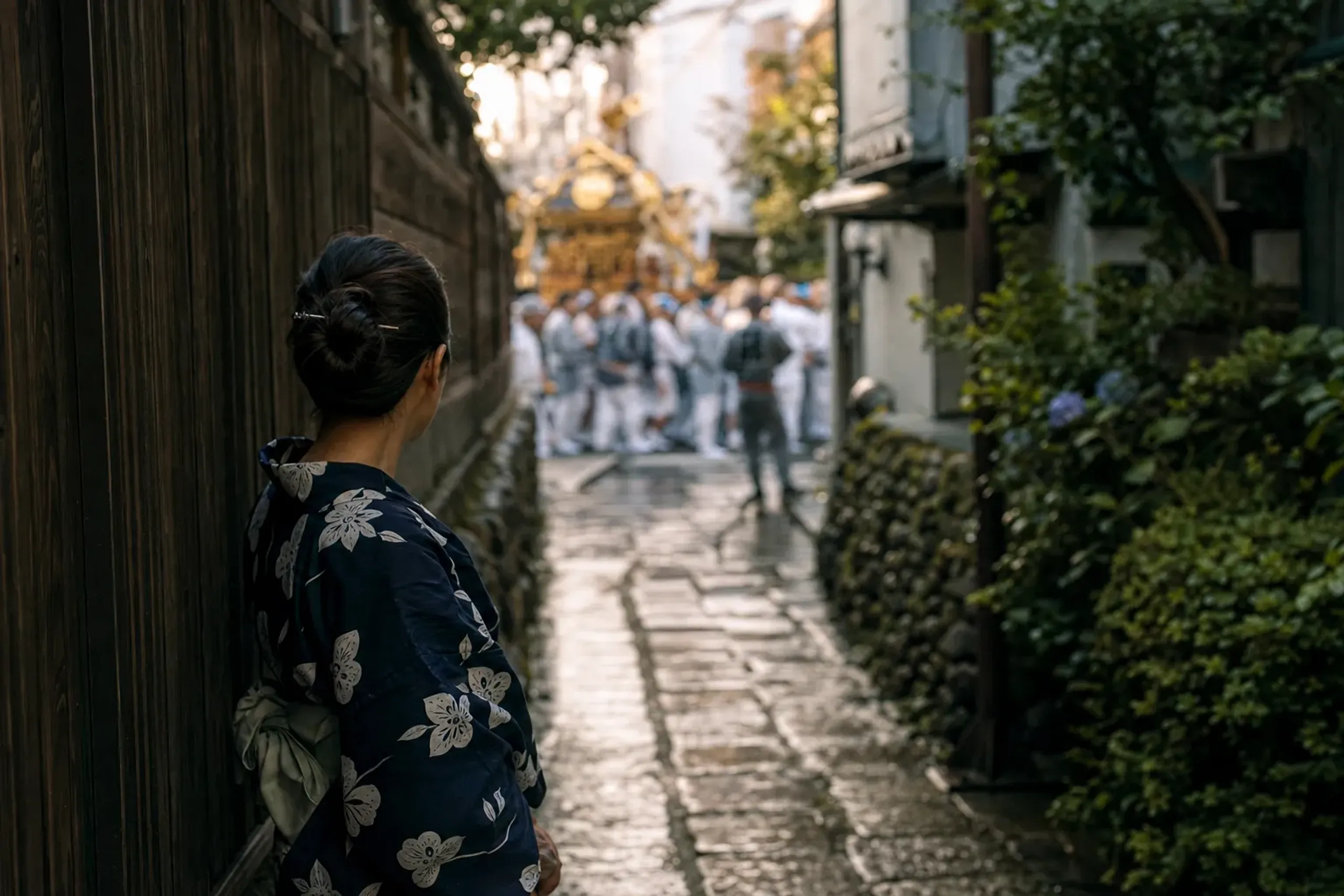
The street does not label itself. Without context, most visitors see only “a parade.” With a guide at your side, you begin to hear the structure of the city itself: which mikoshi belongs to which neighborhood, what you may photograph up close, and when a pause is not a delay at all but a rite in progress.
This is also how you avoid any accidental disrespect. Quiet corrections, offered in real time. No fuss—only grace.
4) Confirm The Latest Route Times Privately Before You Step Out
We verify, well ahead of your visit, the route timings and traffic regulation releases—because published schedules can be updated and crowd measures can shift without notice.
That verification happens entirely on your behalf. Discreetly. Then your weekend runs on one shared brief, rather than ten conflicting browser tabs.
5) Keep The Pace Humane
This is mid-May in Tokyo. The Japan Meteorological Agency’s normals (1991–2020) put the monthly mean at 18.8°C, with an average high of 23.6°C and low of 14.6°C, alongside 139.7 mm of rainfall across the month.
Pack for warmth at night and a shower at noon. You will stand far more than you expect to.
How To Get To Kanda Myojin And Where The Closest Stations Actually Are
Kanda Myojin lies a short walk from several stations—but on festival days, the “best” station is simply the one you can still reach through the crowd controls.
Official access guidance includes:
- JR Ochanomizu Station (Hijiri-bashi Exit): about 5 minutes on foot
- JR Akihabara Station (Electric Town Exit): about 7 minutes on foot
- Tokyo Metro Ochanomizu Station (Exit 1): about 5 minutes on foot
- Tokyo Metro Shin-Ochanomizu Station (Exit B1): about 5 minutes on foot
- Tokyo Metro Suehirochō Station: about 5 minutes on foot
On the main weekend, arrive earlier than you imagine you need to. If you turn up at the precise moment something “should” pass, you will spend that moment trapped inside a moving crowd.
Let Us Shape Your Kanda Matsuri Weekend
A main year of Kanda Matsuri comes only once every two years—and the difference between watching it and truly reading it rests entirely on timing, access, and quiet local knowledge. If you would like your weekend arranged with discretion, cultural depth, and the kind of precision that lets you simply be present, contact us here to begin a tailored proposal built around the next main festival.