In this guide
- 01What Is The Kurayami Matsuri In Fuchu?
- 02When Is The Kurayami Matsuri Held Each Year?
- 03What Happens On The Night Of 5 May?
- 04The Return At Dawn On 6 May
- 05Why Is It Called The Darkness Festival?
- 06Okunitama Shrine And Its Zelkova Approach
- 07How Do You Reach Okunitama Shrine In Fuchu?
- 08How Japan Royal Service Arranges The Evening
- 09Frequently Asked Questions
- 10Why Choose Japan Royal Service
Western Tokyo holds a festival that reaches its peak after dark. The Kurayami Matsuri takes place at Okunitama Shrine in Fuchu each spring, across Golden Week.
Everything described here is open to the public. There is no reserved seating sold for the festival, and procession times are confirmed at arrangement.
What Is The Kurayami Matsuri In Fuchu?
The Kurayami Matsuri is a spring festival held at Okunitama Shrine in central Fuchu, in western Tokyo. It runs from 30 April through 6 May. The name means darkness.
The festival spans a full week of rites. According to GO TOKYO, the Tokyo Metropolitan Government's official tourism site, the opening rituals run from 30 April to 2 May. From 3 May, visitors come for the open-air stalls along the approach. The main event falls on the evening of 5 May.
Fuchu sits in the Tama area, west of central Tokyo. If you have already read our pieces on the Sanja Matsuri in Asakusa and the Kanda Matsuri, this festival rounds out a picture of Tokyo's spring shrine events away from the city centre.
When Is The Kurayami Matsuri Held Each Year?
The Kurayami Matsuri runs every year from 30 April to 6 May, with the public days starting on 3 May and the main procession on the evening of 5 May. The JRS concierge team confirms the schedule directly with the guest at time of arrangement.
The first days belong to ritual. According to GO TOKYO, the public days begin on 3 May, after the opening rites of 30 April to 2 May.
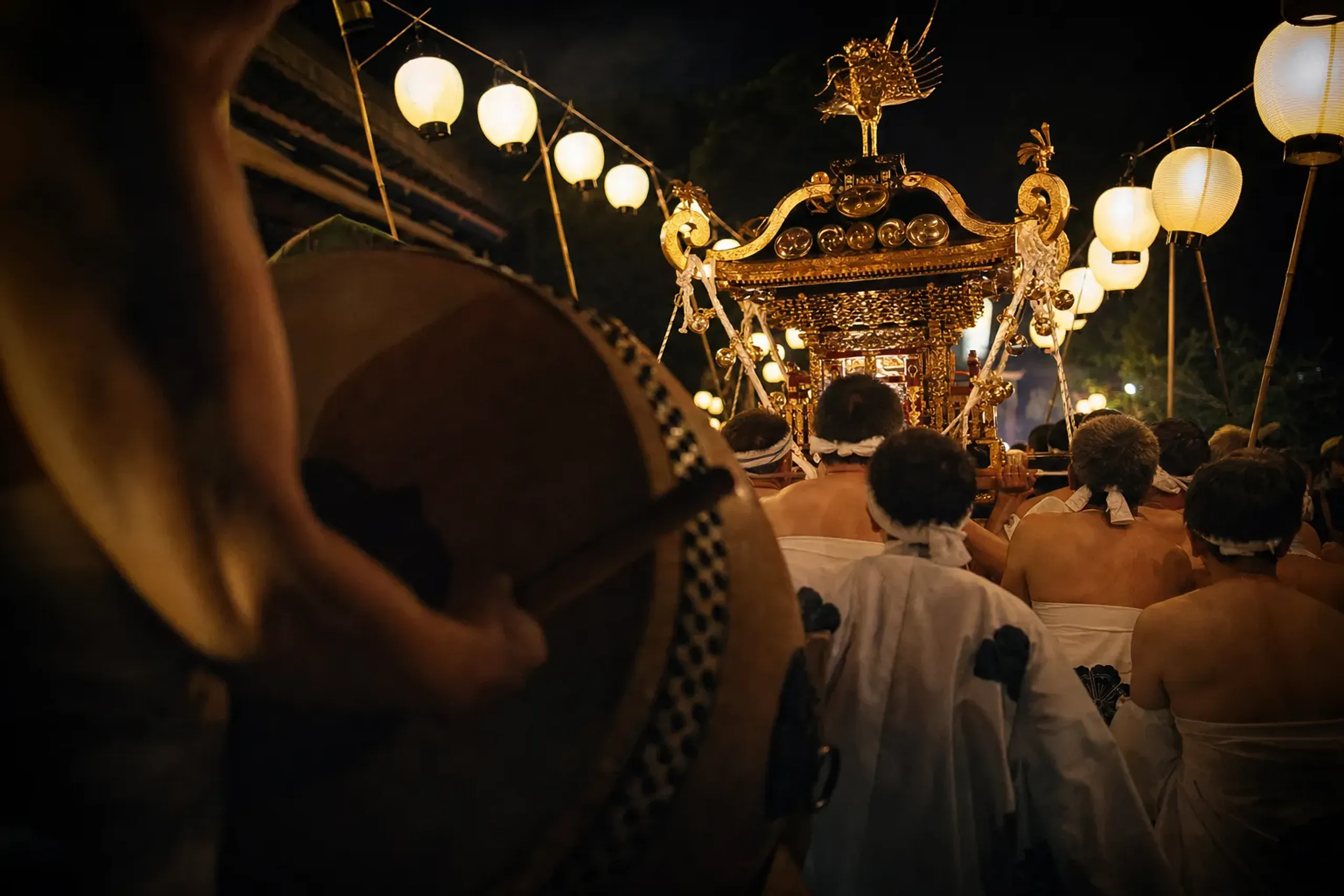
The night procession is the centre of the Kurayami Matsuri at Okunitama Shrine.
The approach to the shrine fills with stalls, and the days build toward the night of 5 May. Dates follow this annual pattern; the JRS concierge team confirms the current timing with the guest at time of arrangement.
Key fact: No reserved viewing is sold for the Kurayami Matsuri. The festival is open to the public, and procession times are confirmed at arrangement.
What Happens On The Night Of 5 May?
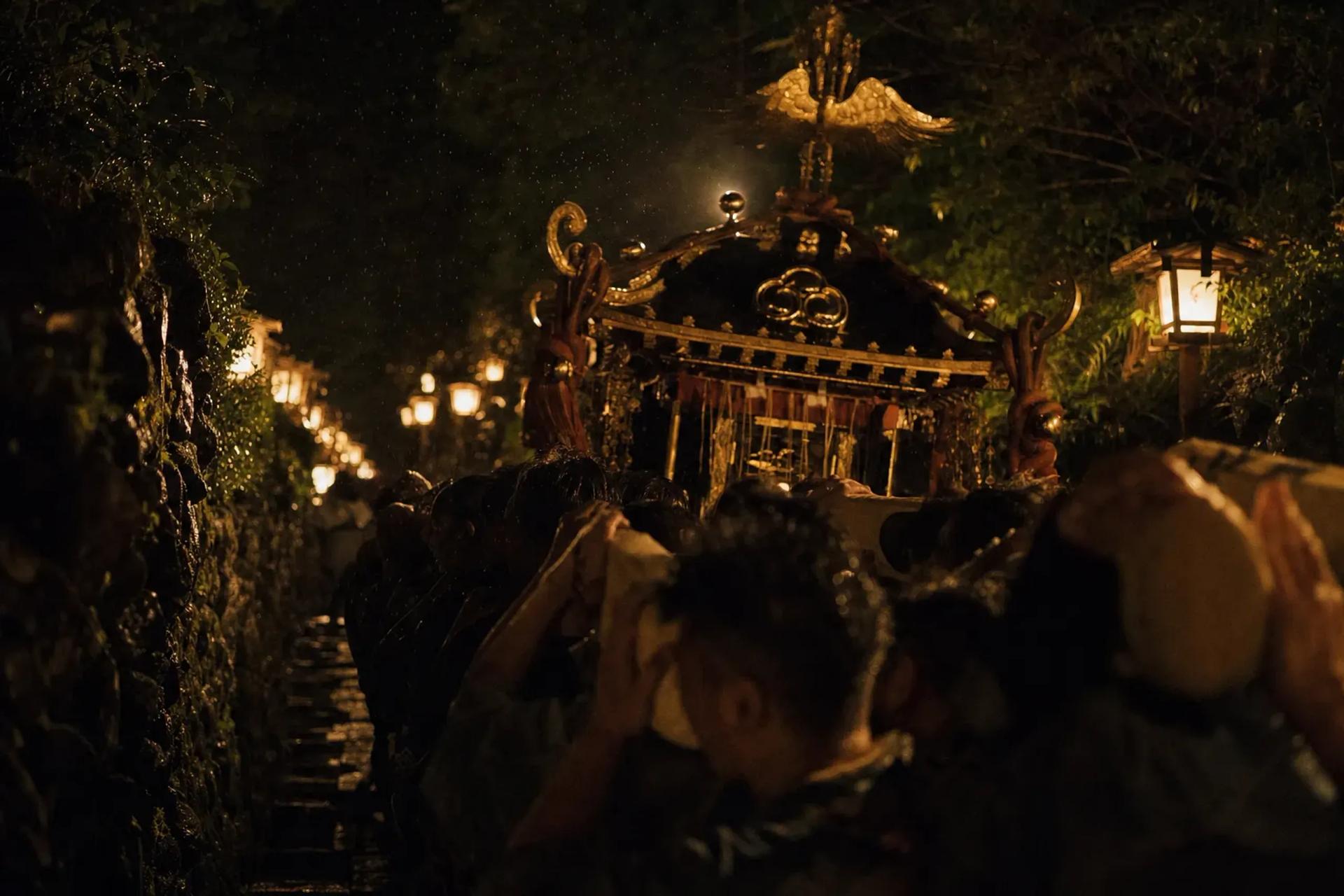
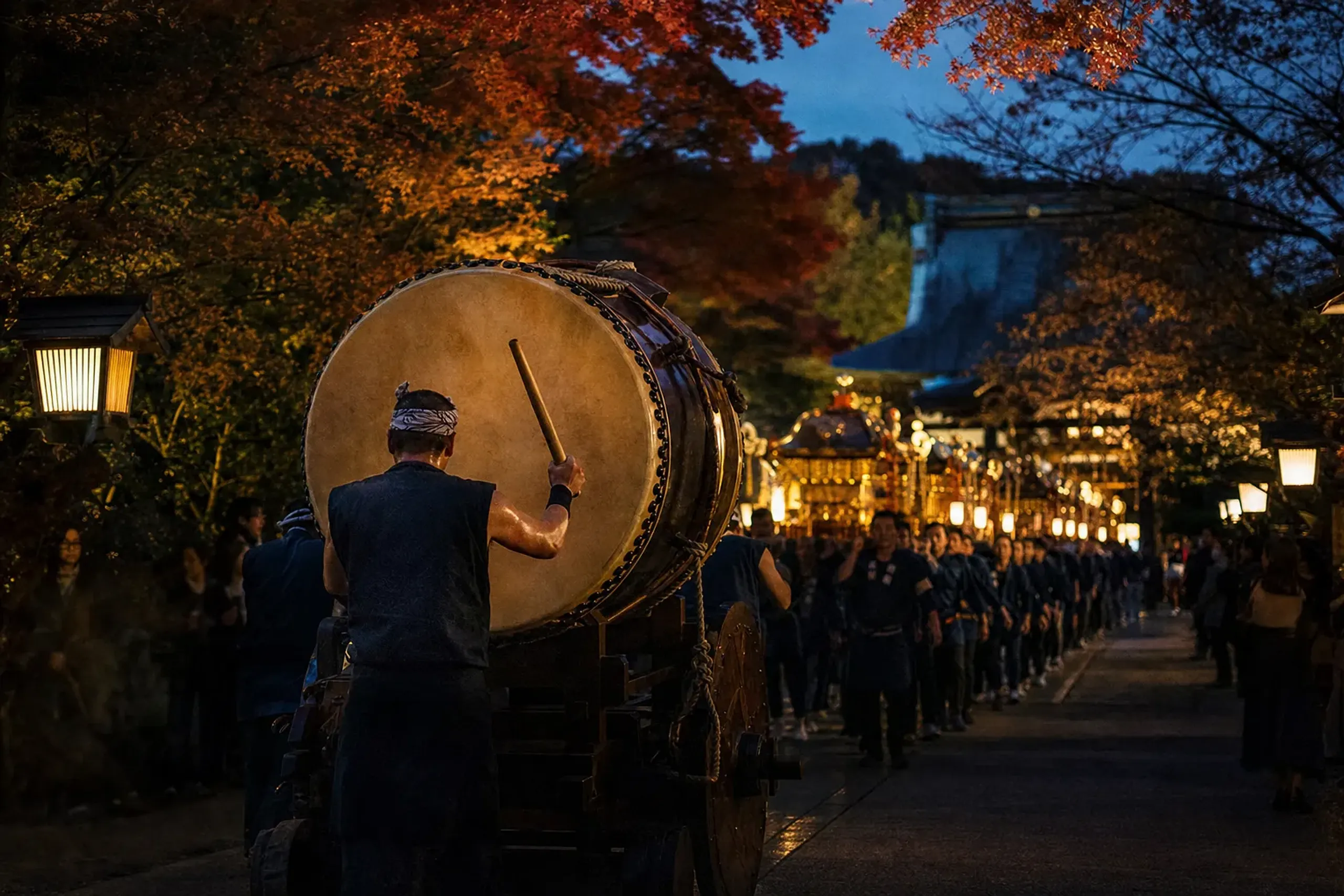
On the evening of 5 May, eight mikoshi leave Okunitama Shrine behind large taiko drums, accompanied by fireworks, in a procession that continues for about three hours. This is the festival's main event.
According to the Another TOKYO TAMA site, published by the Tama Council for the Promotion of Tourism, eight mikoshi are carried, and large taiko drums lead them. The drums go first. The portable shrines follow.
GO TOKYO records that the procession departs the shrine on the evening of 5 May and continues for about three hours, and that the route was extended in recent years. The portable shrines travel to the otabisho, the temporary resting place for the deities during the festival. That resting place stands at the intersection of the Kamakura-kaido and the former Koshu-kaido.
Procession times shift, and the JRS concierge team confirms them directly with the guest at time of arrangement, along with any road closures in the area.
The Return At Dawn On 6 May
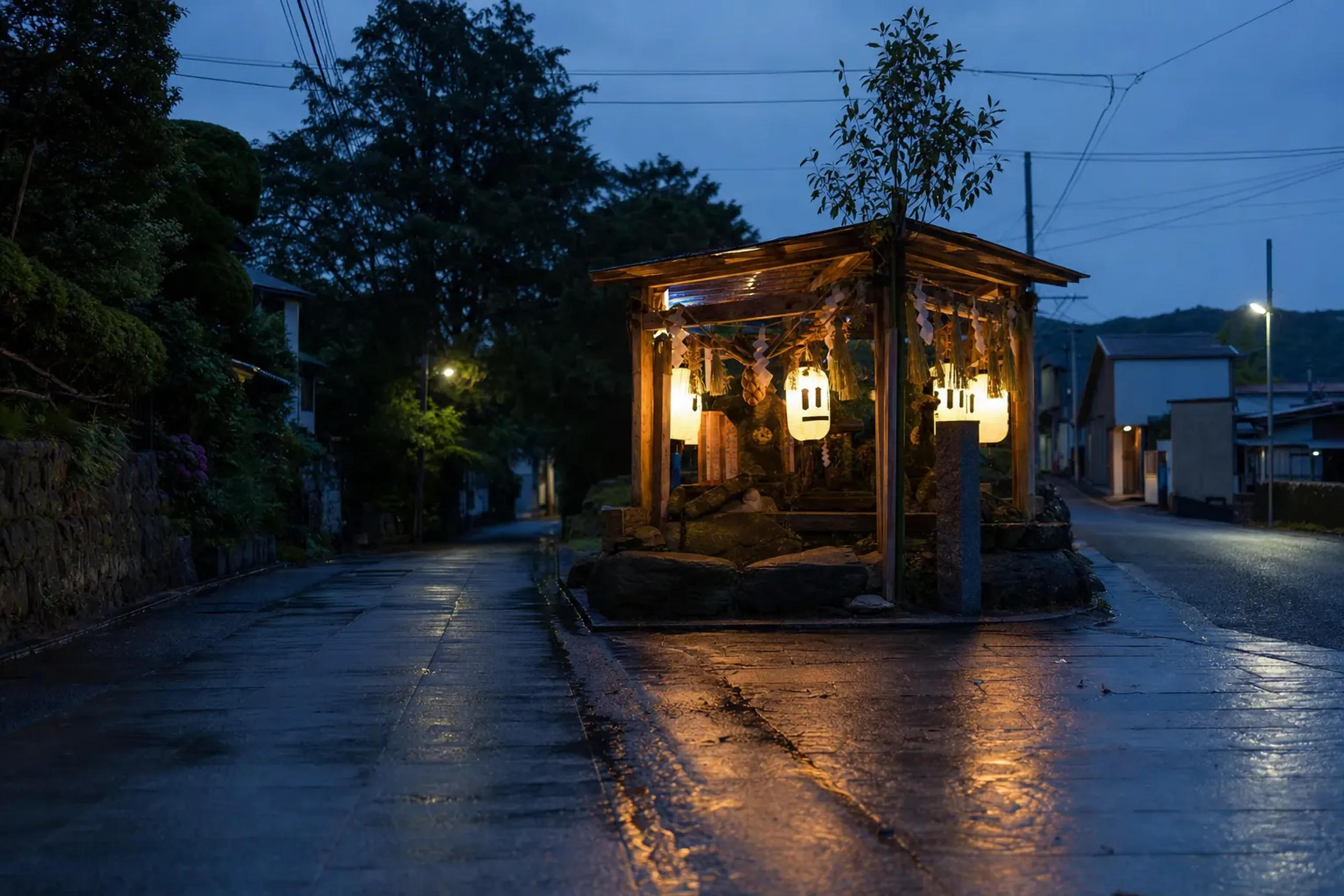
The festival does not end with the night. According to GO TOKYO, the mikoshi leave the otabisho in the early morning of 6 May and the return continues for about four hours.
So the procession has two halves. First the departure from the shrine on the evening of 5 May. Then the return journey from the temporary resting place at dawn on 6 May, carrying the deities home.
If you plan to see both, the evening and the dawn are separate outings. The JRS concierge team confirms the timing of each directly with the guest at time of arrangement.
Why Is It Called The Darkness Festival?
The name Kurayami means darkness. According to the Another TOKYO TAMA site, the name comes from a night procession once held after the lights were extinguished, because it was taboo to look straight upon the gods.
GO TOKYO notes that it is said that in the past the mikoshi were carried in complete darkness. The lights went out. The portable shrines moved through the dark so that no one would gaze directly on the deities being carried.
The procession still centres on the night of 5 May.
Okunitama Shrine And Its Zelkova Approach
Okunitama-jinja stands in the centre of Fuchu, and GO TOKYO records that it has a long history.
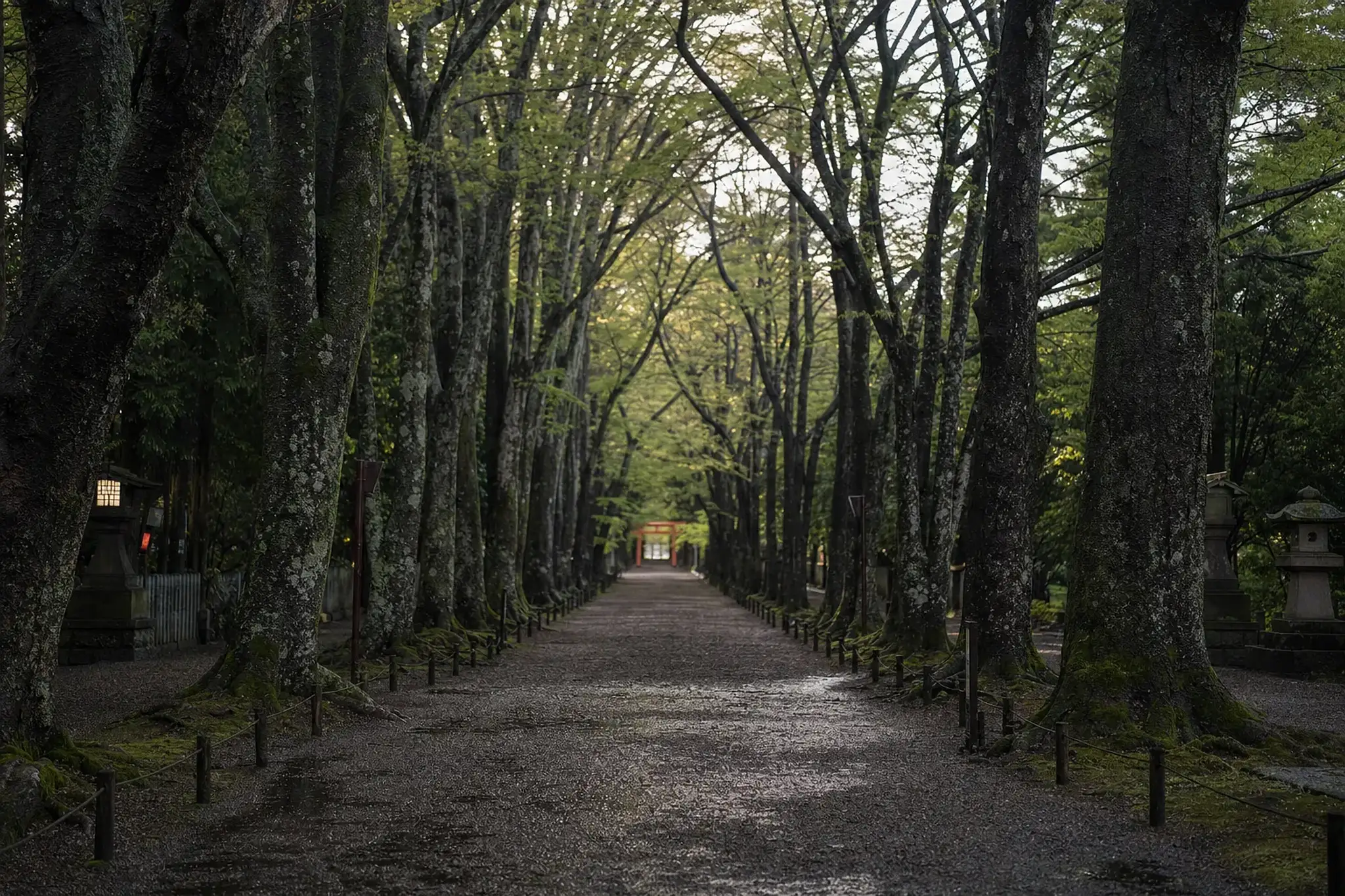
The zelkova trees that line the approach are designated natural monuments.
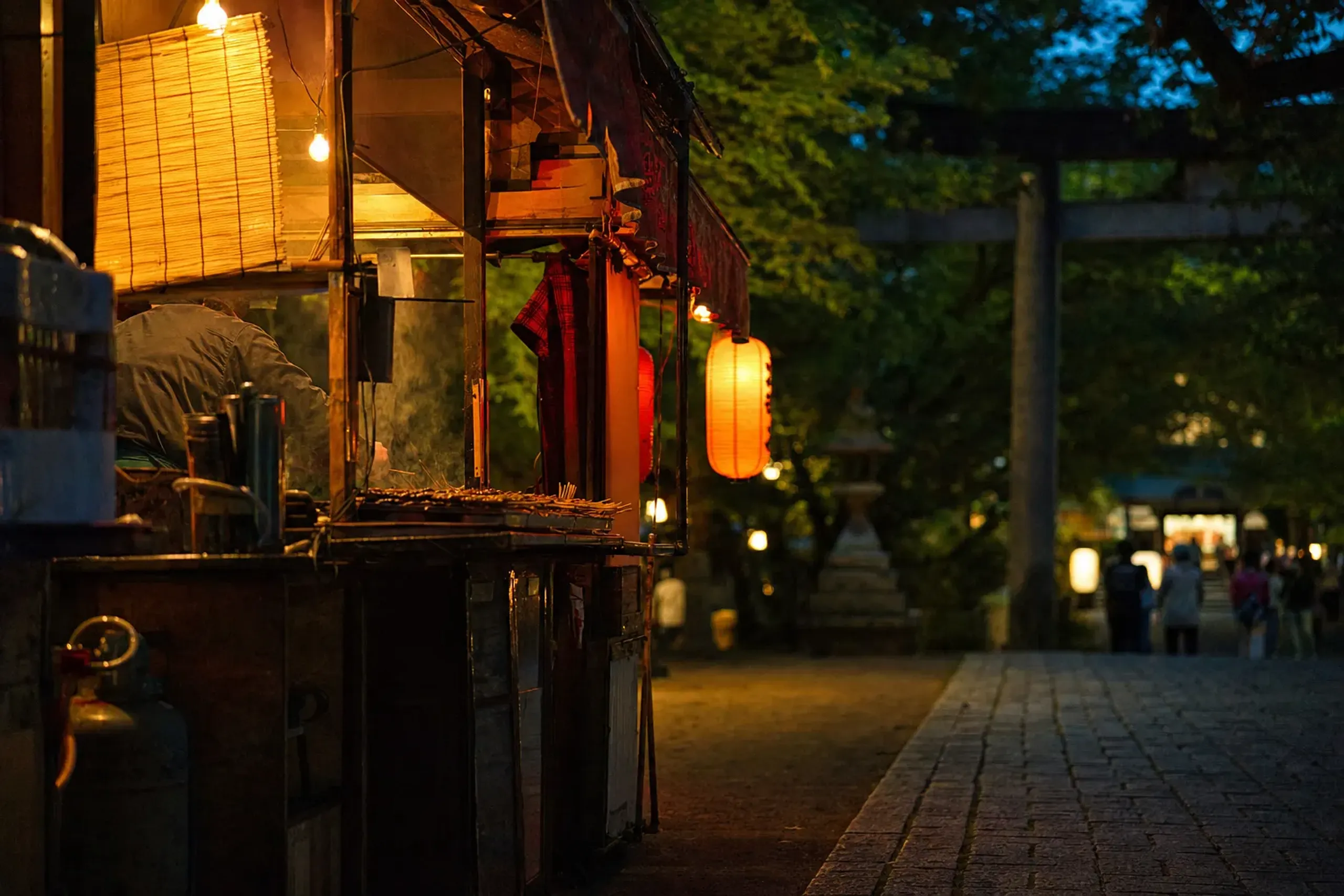
The approach is the long tree-lined path that leads to the shrine. On the public days from 3 May, this is where the stalls gather. It is also where the night procession of 5 May begins.
How Do You Reach Okunitama Shrine In Fuchu?
Okunitama Shrine is 5 minutes on foot from Fuchu Station on the Keio Line, and 5 minutes on foot from Fuchuhommachi Station on the JR Nambu and Musashino lines. Both put you within a short walk of the approach.
From central Tokyo you have two broad choices: rail, or a road transfer.
| Option | How it reaches the shrine |
|---|---|
| Keio Line | Fuchu Station, then 5 minutes on foot to Okunitama Shrine. |
| JR Nambu and Musashino lines | Fuchuhommachi Station, then 5 minutes on foot to the shrine. |
| Road transfer | A vehicle from a partner company with an English-speaking driver, set down and collected near the station. |
If you are weighing rail against a car for a festival evening, our piece on choosing a private driver versus the train walks through the trade-offs. For this festival, the walk from either station is short.
How Japan Royal Service Arranges The Evening
Within the scope of this festival, our concierge team can build the Kurayami Matsuri into a Tokyo stay.
The planning starts with your dates and what you want to see: the evening procession of 5 May, the dawn return of 6 May, or both.
We can book an English-speaking cultural interpreter guide, separate from the driver, to walk you through the shrine and the meaning of the festival. For transport, we arrange a vehicle from a partner company with an English-speaking driver between central Tokyo and Fuchu, set down and collected near the station. The driver and guide are always separate roles.
Rail is optional. Tickets on the Keio or JR lines can be arranged, with platform assistance and luggage forwarding. We can also handle accommodation and restaurant booking in Tokyo, with dietary needs passed ahead, and re-plan the same day if the weather turns.
All of this sits inside a tailor-made itinerary. The JRS concierge team confirms the procession times and any road closures directly with the guest at time of arrangement.
Frequently Asked Questions
When Is The Kurayami Matsuri Held At Okunitama Shrine?
The Kurayami Matsuri runs every year from 30 April to 6 May at Okunitama Shrine in Fuchu. The opening rites run from 30 April to 2 May, and the public days begin on 3 May. The JRS concierge team confirms timing at arrangement.
What Happens On 5 May At The Kurayami Matsuri?
On the evening of 5 May, eight mikoshi leave the shrine behind large taiko drums, with fireworks, in a procession lasting about three hours.
The mikoshi then return from the otabisho in the early morning of 6 May.
Why Is The Kurayami Matsuri Called The Darkness Festival?
The name Kurayami means darkness. According to the Another TOKYO TAMA site, it comes from a night procession once held after the lights were extinguished, because it was taboo to look straight upon the gods.
How Do You Reach Okunitama Shrine For The Festival?
Okunitama Shrine is 5 minutes on foot from Fuchu Station on the Keio Line, and 5 minutes on foot from Fuchuhommachi Station on the JR Nambu and Musashino lines. A road transfer can set you down near the station.
Why Choose Japan Royal Service
Japan Royal Service plans each festival evening around your own dates and interests. For the Kurayami Matsuri, that means the procession of 5 May, the dawn return of 6 May, or both, built into a Tokyo stay.
The JRS concierge team arranges an English-speaking cultural interpreter guide, a vehicle from a partner company with an English-speaking driver, optional Keio or JR rail with platform assistance, and accommodation and restaurant booking with dietary needs passed ahead. Procession times and any road closures are confirmed directly with you at time of arrangement.
To begin planning, contact our team here.