In this guide
- 01Opening Scene: Asakusa Before The First Mikoshi
- 02Why Sanja Matsuri Is A Three-Day Weekend, Not One Big Crowd
- 03What Happens On Friday At Sanja Matsuri In Asakusa?
- 04How Do You Spend Saturday At Sanja Matsuri If You Want To See Many Mikoshi?
- 05What Happens On Sunday At Sanja Matsuri: The Three Main Shrine Mikoshi
- 06Getting There, Moving Around, And Staying Oriented In The Crowd
- 07Where Most Visitors Misread Sanja Matsuri (And How Not To)
- 08A Short Note On Asakusa Beyond The Festival (Keep It Small)
- 09How Our Concierge Team Plans Sanja Matsuri Days For HNW Travelers
- 10Frequently Asked Questions
Friday afternoon in Asakusa can feel oddly calm at first. You hear a drum somewhere beyond the rooftops, then a ripple of voices, then a hush as people angle their shoulders toward the street. Something is arriving. Slowly.
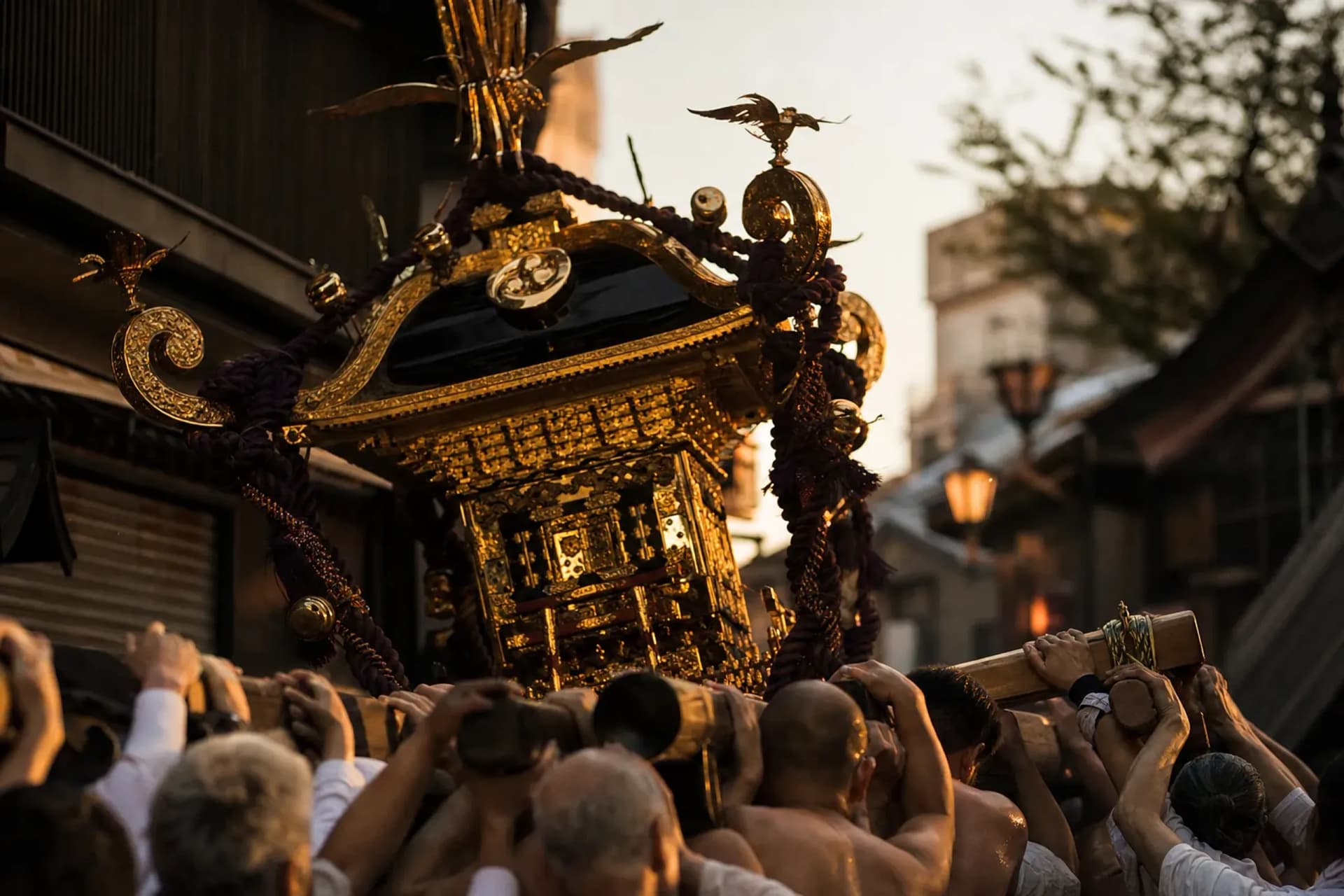
This is Sanja Matsuri, the grand festival of Asakusa Shrine. It runs Friday to Sunday around the third Saturday of May, and it draws crowds on a scale that changes the very air of the district. Big crowds — about 1.8 million people across three days, by the shrine’s own figure.
The mistake is treating it like “a busy day in Asakusa.” Sanja is not one event but three distinct experiences stitched into a single weekend: a formal Friday procession, a Saturday of neighborhood mikoshi, then Sunday’s three main shrine mikoshi leaving at dawn and returning long after dark. Timing is everything, and knowing which hour to be where is precisely what separates a crowded blur from an afternoon you will remember for years.
Opening Scene: Asakusa Before The First Mikoshi
Arrive early and you’ll notice the one thing the day will later erase: space. The streets still belong to commuters and shop shutters and the first wave of festival staff. Quiet details reward the attentive eye — a white rope line laid along a curb, a police whistle that isn’t urgent yet, incense drifting from a side lane. There is a restraint to this hour that the wabi-sabi sensibility teaches you to value: the beauty of what is not yet full, of a space holding its breath.
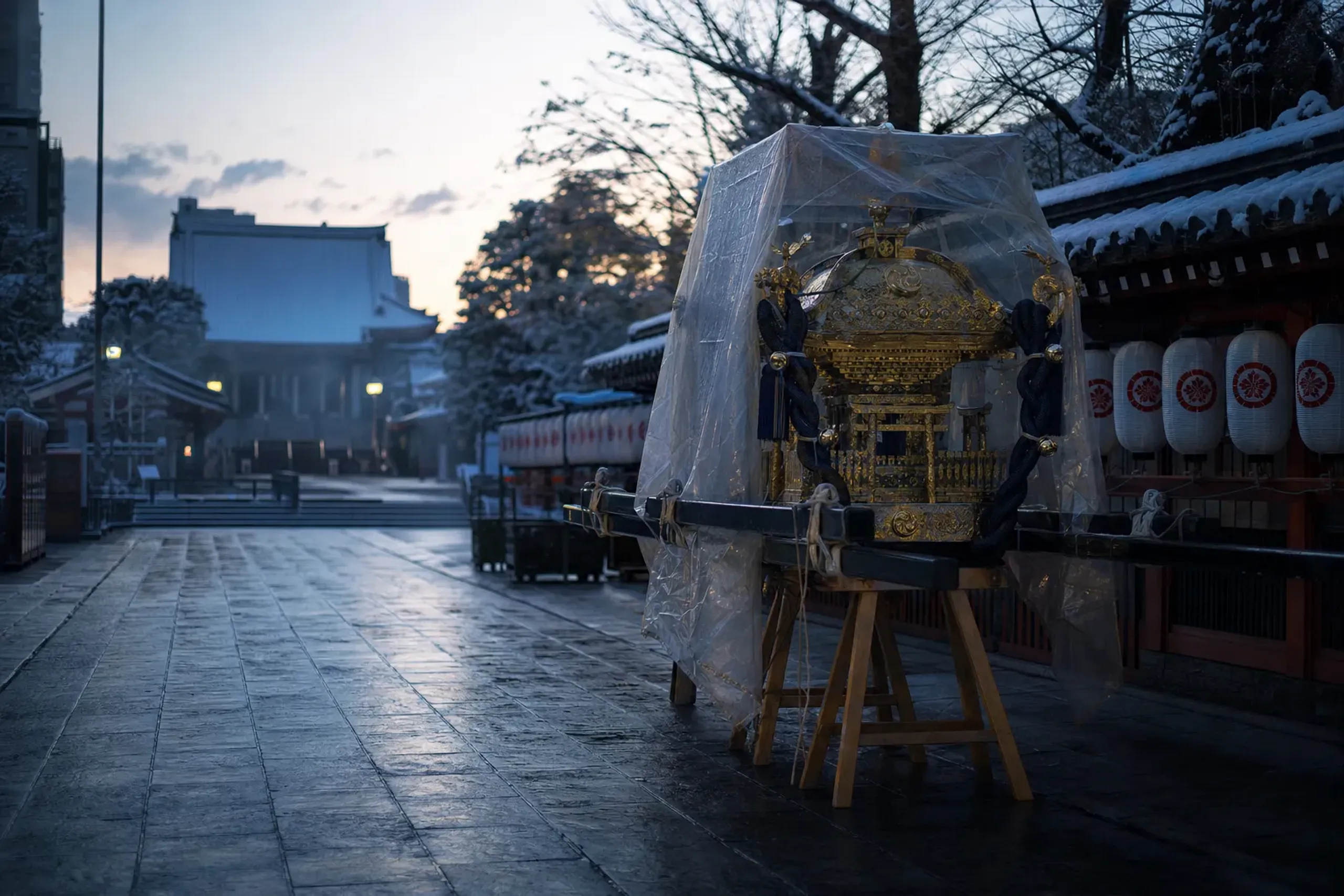
Near Asakusa Shrine, the crowd builds in layers. Locals who know exactly where to stand. Families holding a child’s hand tight. Visitors who look up, trying to read the flow by watching other faces instead of a map.
Plan for walking. A great deal of it. Asakusa Station sits about a 7-minute walk from the shrine on the Tokyo Metro Ginza Line, the Toei Asakusa Line, and the Tobu lines, and about 10 minutes from the Tsukuba Express station.
Why Sanja Matsuri Is A Three-Day Weekend, Not One Big Crowd
Sanja Matsuri is the grand festival of Asakusa Shrine, held Friday to Sunday around the third Saturday of May, and each day carries a different pace, sound, and purpose. Three moods. Three kinds of attention.
Friday leans ceremonial. You can follow faces, costumes, and the order of things without being pushed along by the tide. Saturday turns outward to the neighborhoods — around 100 town mikoshi from 44 neighborhoods gather, then fan back into Asakusa. Sunday belongs to the shrine itself: the three main mikoshi depart at 07:00 and return at night, when the streets tighten and the crowd becomes a single, breathing organism.
For a worked example, the 2026 festival ran May 15–17 (Fri–Sun). Asakusa Shrine publishes the schedule for each coming festival and notes that it is subject to change, so you should treat the times here as a planning scaffold, not a guarantee.
What Happens On Friday At Sanja Matsuri In Asakusa?
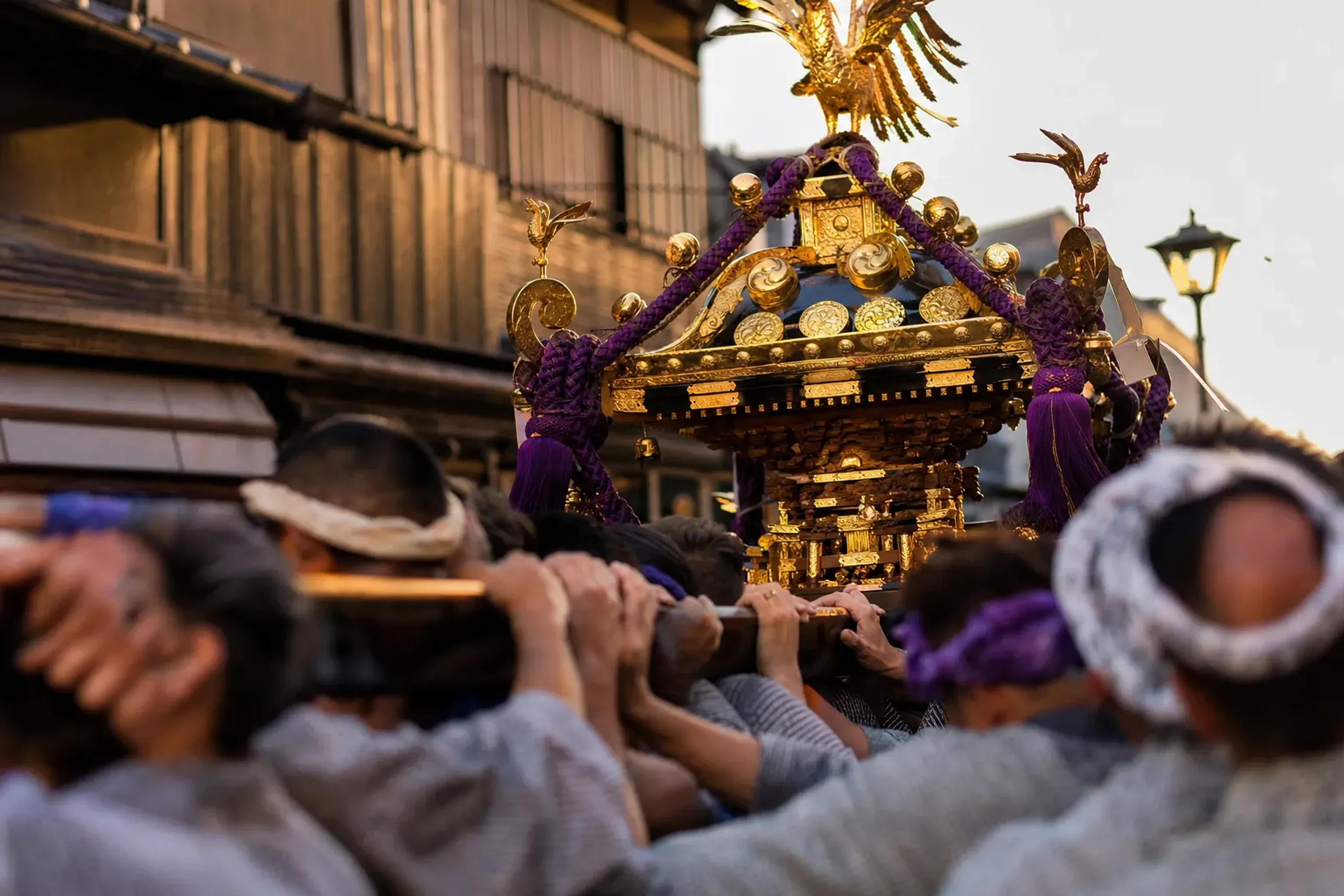
Friday is the grand procession (daigyoretsu), a formal, parade-like movement that departs at 13:00 in the 2026 schedule and reaches Asakusa Shrine around 14:00. If it rains, the shrine notes it may be cancelled.
This is the day for watching faces and fabric. The procession includes the geisha association’s tekomai, and the mood is measured — less compression, more visibility. You are not chasing spectacle. You are reading a civic ritual as it passes by, at a distance that lets you actually see it.
In the 2026 schedule, the Binzasara dance is offered at the shrine at 14:20, and again at the kagura hall at 15:00. Asakusa Shrine describes Binzasara as a Tokyo intangible cultural property. The distinction matters, because it changes how you watch: not “a performance,” but a sacred offering with a set place and time. Understanding that frame is a quiet luxury in itself — the kind of context that turns a photograph into a memory.
Key fact: If Friday’s grand procession is a priority for you, treat rain as a real risk and keep a second-choice plan ready for Saturday or Sunday.
How Do You Spend Saturday At Sanja Matsuri If You Want To See Many Mikoshi?
Saturday is the finest day to see a high volume of neighborhood mikoshi in motion, because the town mikoshi joint procession begins at 12:00 (2026 schedule) and gathers roughly 100 mikoshi from 44 neighborhoods.
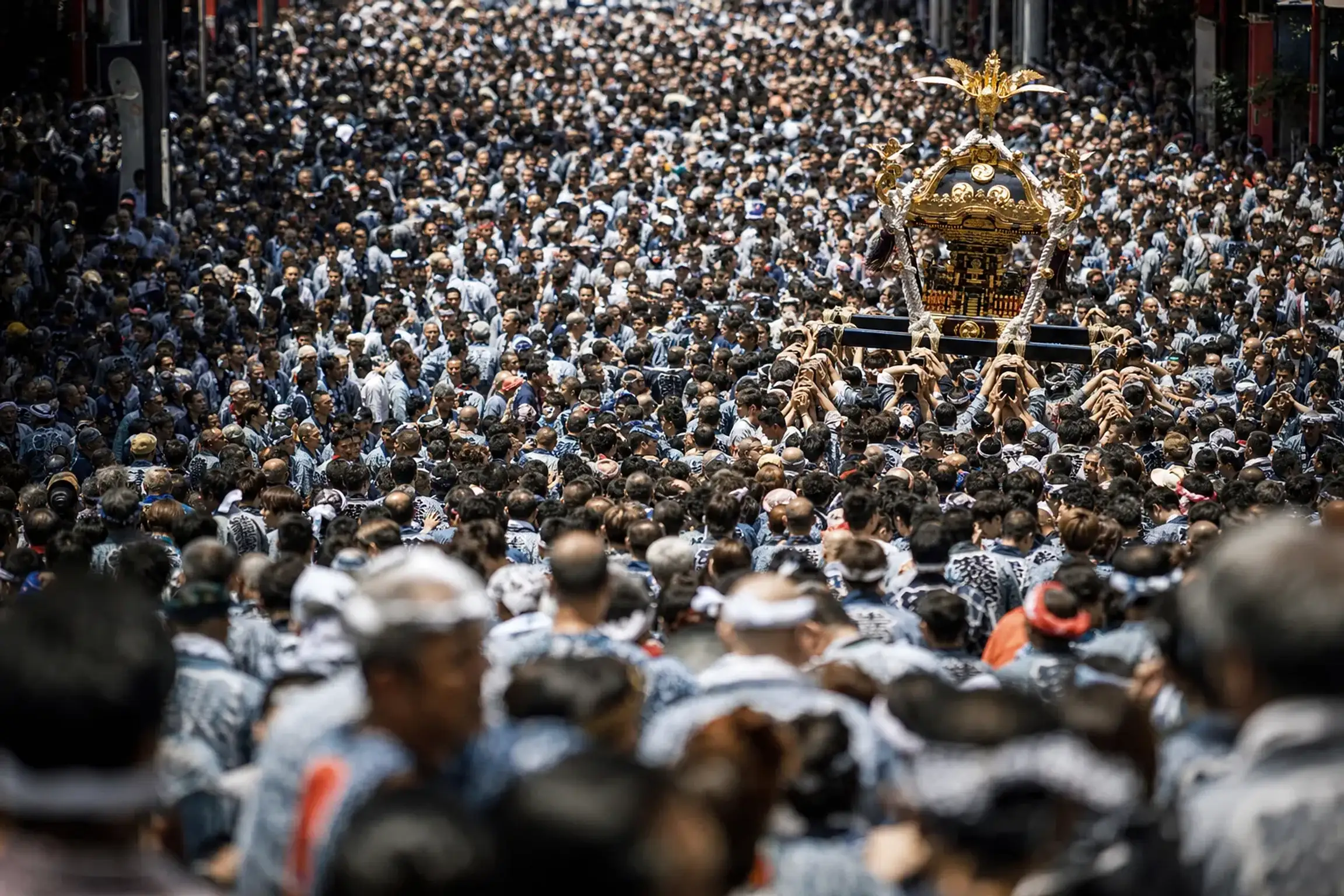
The day often opens earlier with a ceremony at 10:00 (2026 schedule). Then, around midday, the town mikoshi assemble and move in three groups: west, south, and east. The feeling is entirely different from Friday. Sharper. Closer. You will hear calls that need no translation to understand.
Later, a children’s mikoshi procession follows at 15:00 (2026 schedule). If you are traveling as a family, this can be a more comfortable emotional temperature — still crowded, but with a gentler cadence and less edge.
What you are seeing on Saturday belongs to the neighborhoods. Each town mikoshi is purified at the shrine, then returns to its own district. If you only come for an hour, come to watch the transition: the moment when the same object is both sacred and deeply local, moving from shrine space back into everyday streets. That threshold — the Japan that no guidebook timestamps for you — is where the weekend reveals its heart.
What Happens On Sunday At Sanja Matsuri: The Three Main Shrine Mikoshi
On Sunday, the three main shrine mikoshi leave Asakusa Shrine at 07:00 (2026 schedule), then return from about 19:00, with the spirit-return rite later in the evening. The atmosphere shifts twice: at dawn, and again at night.
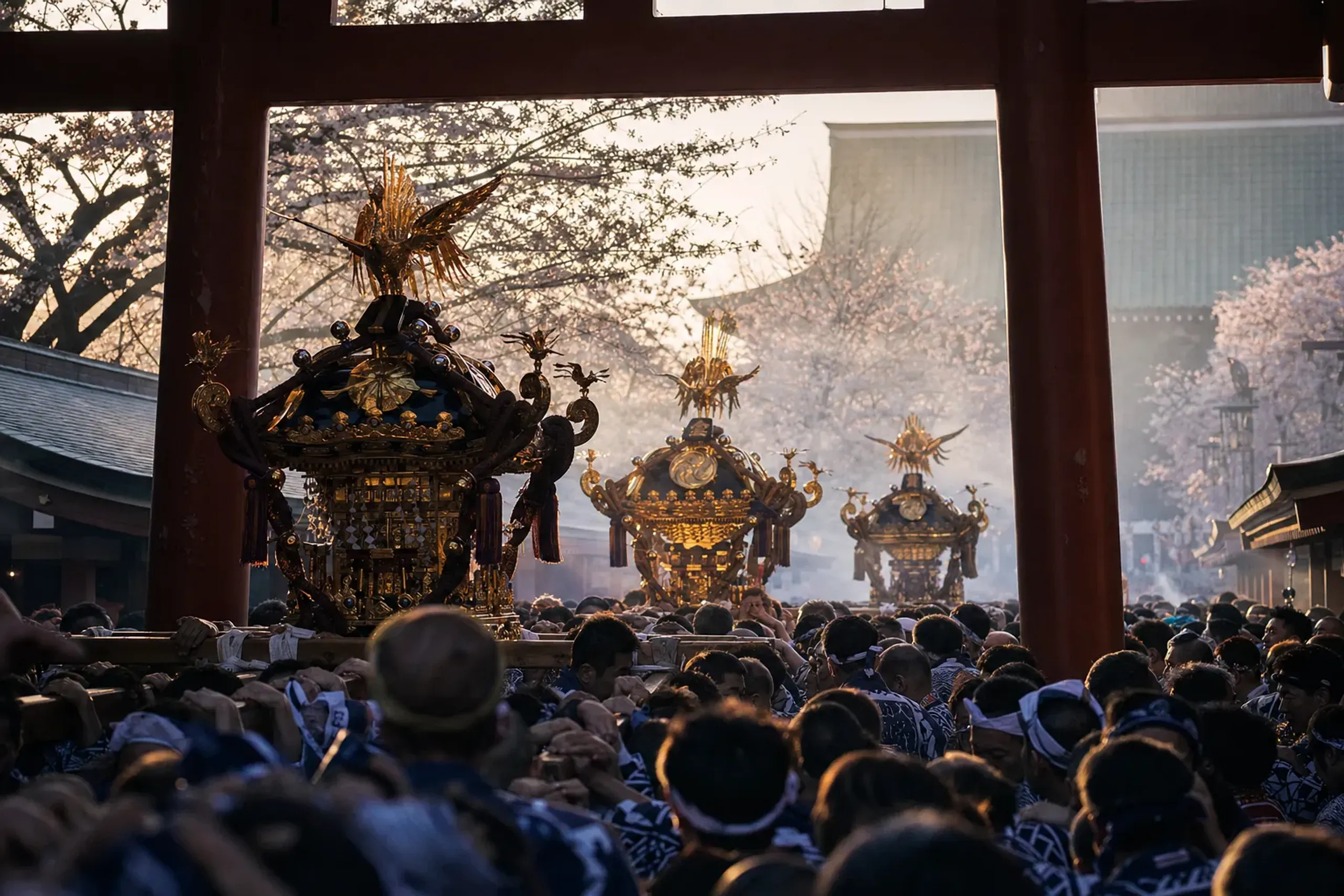
Sunday morning is early for a reason. It is the hour when you can still breathe. Carriers gather and the energy begins to collect, but the streets have not yet filled wall to wall. If you want to understand the day rather than merely survive it, begin here.
The three mikoshi travel in three directions. In the 2026 schedule, west involves 16 towns, south 16, and east 12. The shrine notes that registered neighborhood carriers bear them, with 30 registered carriers plus 5 officers per town. This is not a tourist-participation moment. It is a community duty, with names, rules, and generations of responsibility behind it.
In the afternoon, dances run at 14:00, 15:00, and 16:00 (2026 schedule). By early evening, movement becomes harder. Entry to the shrine and the Senso-ji precincts is restricted from 18:00 (2026 schedule), and the crowd’s density changes the very sound — more echo, less conversation, more collective waiting.
Then the homecoming begins. The mikoshi return from about 19:00. Night restores the drama that morning held back, and you will feel it in the way people stop walking and start leaning forward, as if the street itself is tilting toward the shrine gate.
Two of the shrine’s main mikoshi were donated in 1950 and the third in 1953, according to the shrine. It is a small fact, but it gives weight to what you are watching: these are not props.
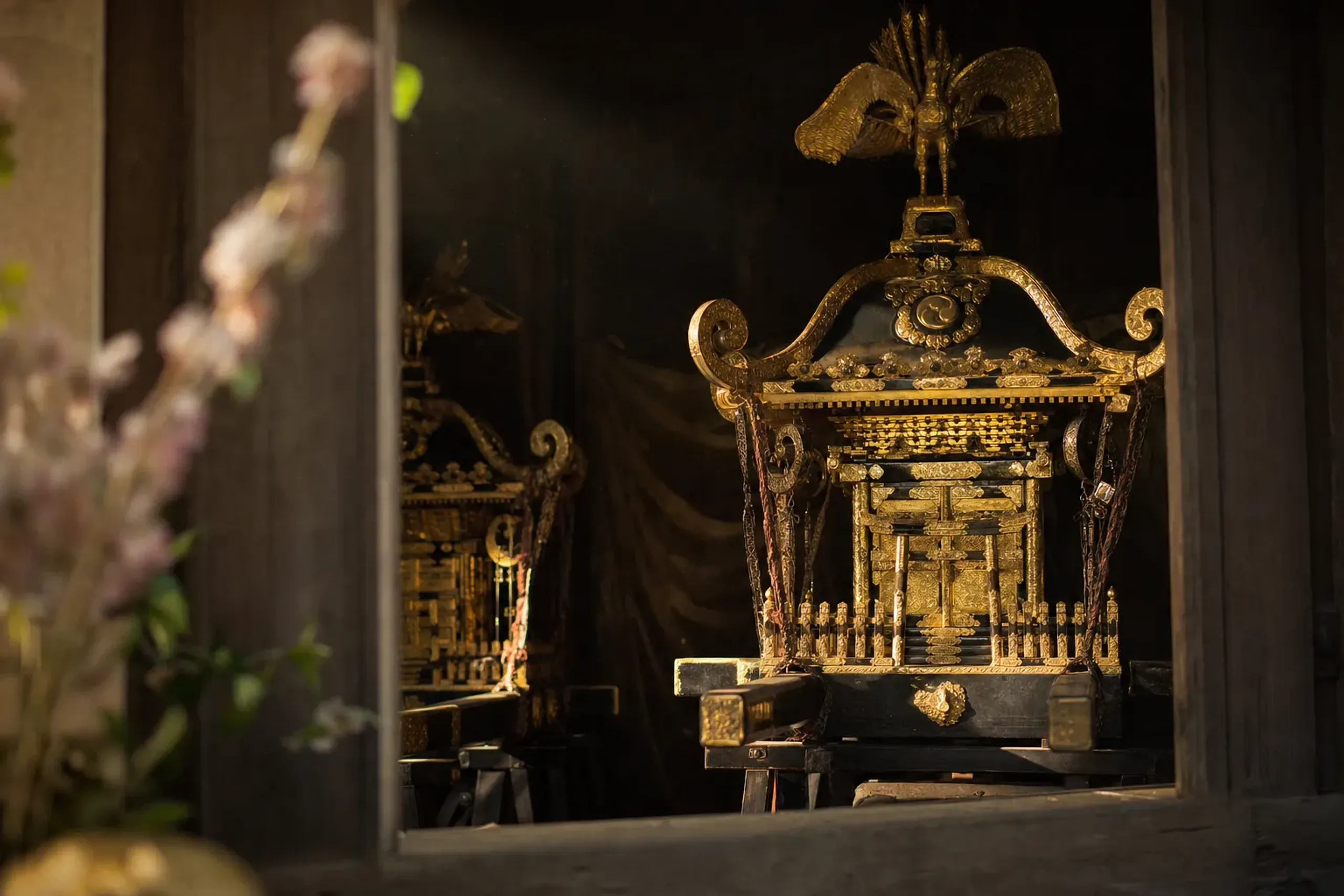
They are inherited objects with postwar dates and living caretakers — lineage you can feel, if you know to look for it.
Getting There, Moving Around, And Staying Oriented In The Crowd
Start with the trains. Asakusa becomes traffic-controlled during Sanja Matsuri, and rail keeps you predictable when streets are closed and bus stops shift. A simple choice.
Asakusa Shrine is an easy walk from Asakusa Station, and that matters because walking is the final step no matter how you arrive. Street closures mean the “last mile” often becomes the real journey. Expect it, and plan for it.
Local notices can affect bus routing and stops, and Toei Bus publishes traffic-control notices for the Saturday and Sunday in some years. In the 2026 visitor notices, bus stop relocation on Sunday was specifically flagged by local destination information. Our concierge team at Japan Royal Service verifies the current hours and transport notices on a client’s behalf before the weekend, so your plan matches the reality on the street rather than last season’s timetable.
Wear shoes you can trust. Keep water on you. And agree a meeting point that is not “right by the shrine gate,” because that phrase means nothing once the crowd thickens and phone signals slow to a crawl.
A Calm Three-Day Strategy (With A Worked Example For 2026 Times)
Think in windows, not in “all day.” Even seasoned travelers burn out here if they try to muscle through from noon to night.
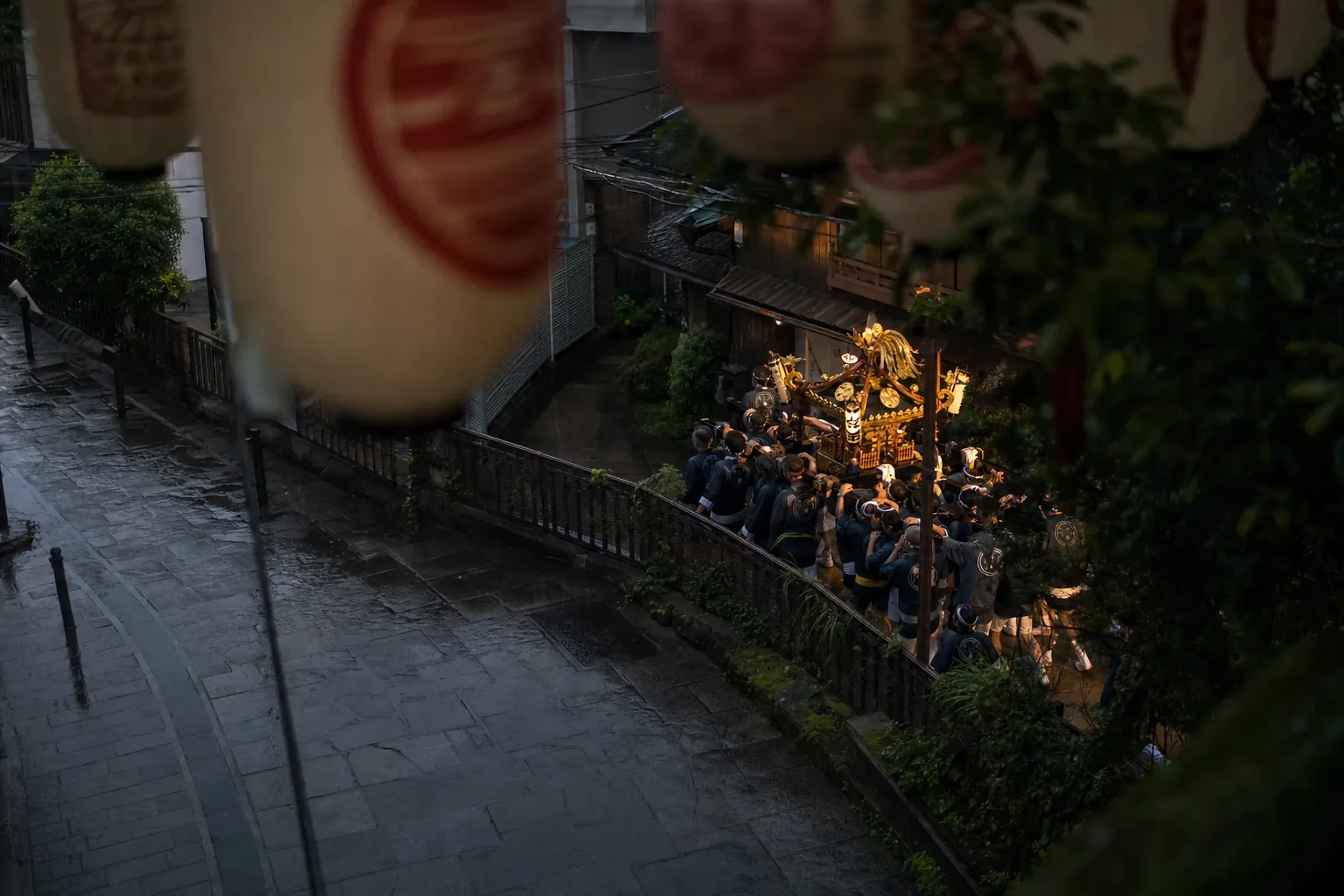
The festival’s own rhythm is your ally, not your obstacle.
- Friday: Arrive before 13:00 to settle in, then watch the grand procession (13:00 departure; reaching the shrine around 14:00 in 2026). Stay for Binzasara at 14:20 and/or 15:00 if that is your focus.
- Saturday: Position yourself for the joint procession start around 12:00 (2026), and decide in advance whether the children’s mikoshi at 15:00 (2026) is a better fit for your group’s stamina.
- Sunday: Choose either the 07:00 departure (2026) for clarity and open air, or the night return from about 19:00 (2026) for intensity — trying to do both without a reset in between is how people unravel.
Times may differ in the next festival’s schedule. Assume change. Plan with margins.
Where Most Visitors Misread Sanja Matsuri (And How Not To)
People often arrive at peak density and assume that is the festival. It isn’t. It is merely one pressure point, and it makes everything look the same: noise, shoulders, phones held in the air.
Instead, let timing do the explaining. Friday shows the formal spine of the weekend. Saturday shows the neighborhood ownership of the streets. Sunday shows the shrine’s center of gravity, with dawn departure and night return framing the day like brackets.
A second misread is the hunt for “the best spot.” There isn’t one. There is only the spot that matches your tolerance for compression, your height, your party size, and how long you want to stand still before you need a quiet side street to breathe again.
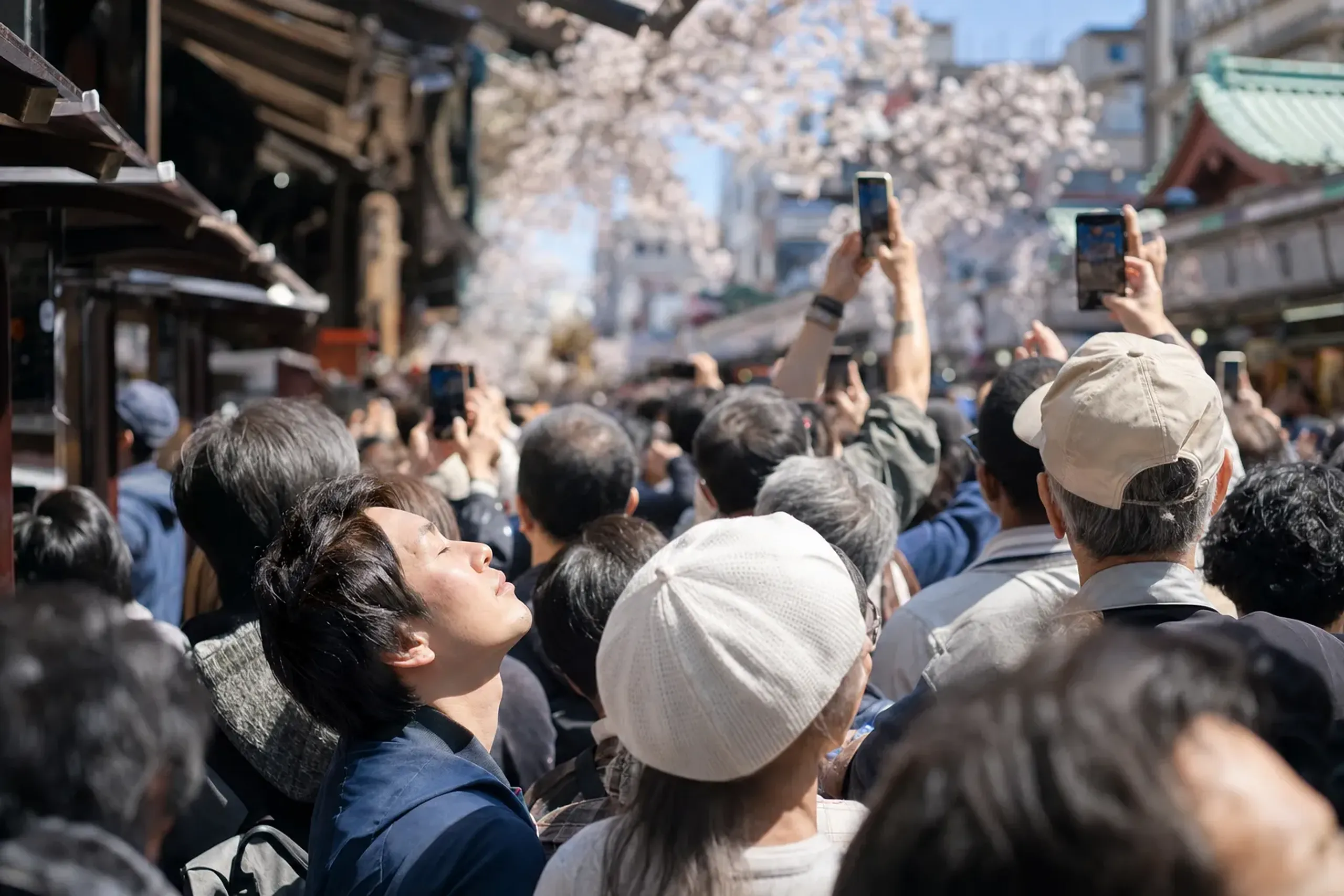
Knowing your own threshold — and having someone who has already scouted the alternatives — is the quiet advantage.
A Short Note On Asakusa Beyond The Festival (Keep It Small)
Sanja Matsuri is centered on Asakusa Shrine, beside Senso-ji, and the surrounding Asakusa area becomes part of the weekend’s stage. You do not need a packed sightseeing list here. Too much friction defeats the point.
If you want one gentle addition, do it early in the day, before the streets tighten. Then return to the festival’s own clock. That restraint is the real itinerary.
How Our Concierge Team Plans Sanja Matsuri Days For HNW Travelers
Our team at Japan Royal Service treats Sanja Matsuri like live weather: you plan it, then you keep checking it. The goal is not merely “access.” It is calm, unhurried movement inside a public festival that belongs, rightly, to its communities — and the quiet confidence of knowing your identity and itinerary remain entirely your own.
We begin by choosing which day matches your intent. Friday for ceremony. Saturday for the sheer volume of town mikoshi. Sunday for the shrine’s three mikoshi and the homecoming after dark. One clear choice changes everything that follows.
Then we shape the day’s logistics around crowd physics.
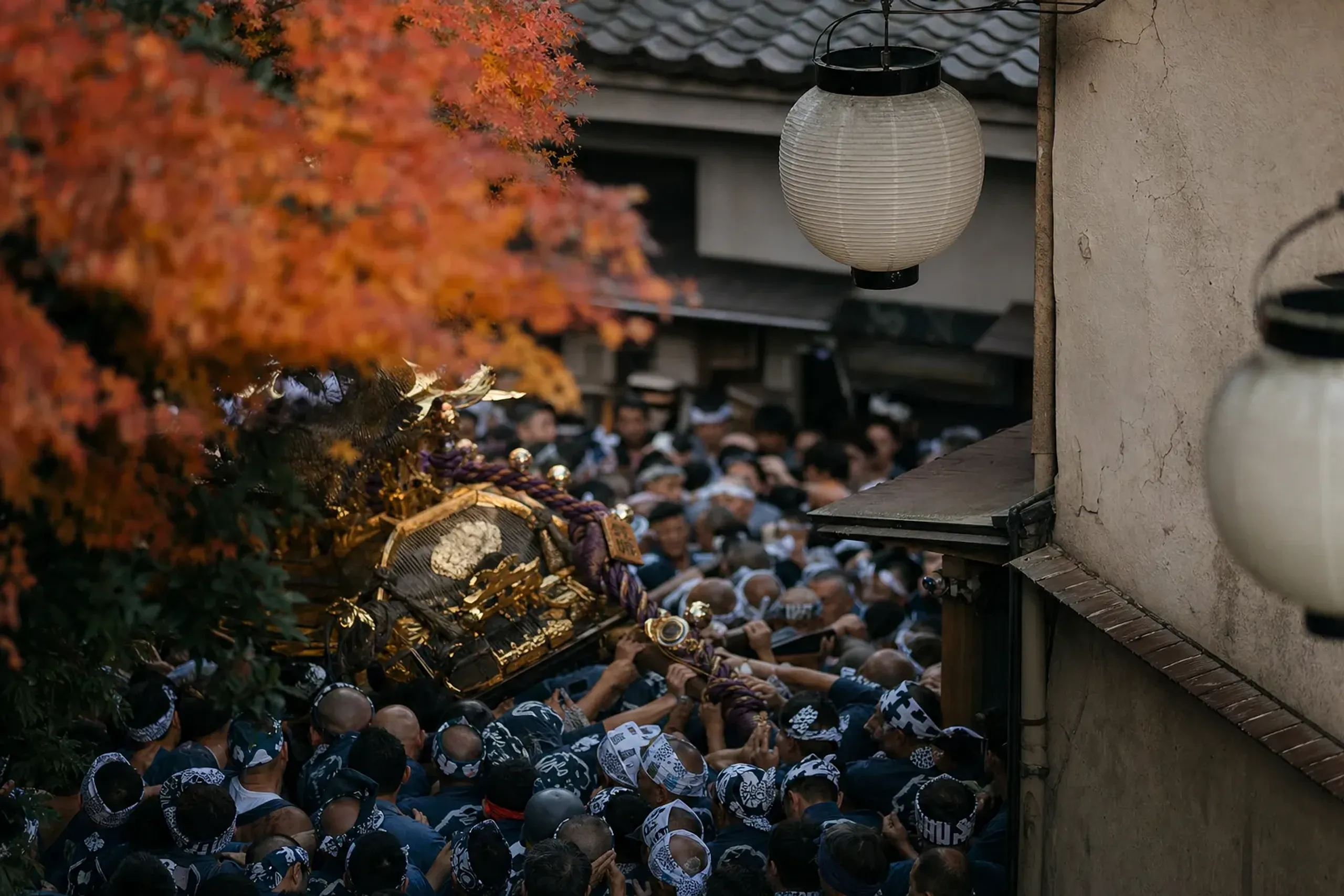
That can include a partner-fleet private transportation plan to reach the edge of the closed streets, a walking strategy for the final stretch, and rendezvous points that still make sense when the main roads compress.
For many guests, the true difference-maker is language and context — the silent anticipation of what you need before you ask. We can include an English-speaking cultural interpreter guide who explains what you are seeing — which kind of mikoshi is passing, and why the mood changes street by street — without ever turning the moment into a lecture.
Finally, we align lodging and meal timing with the festival’s pulse. A well-placed hotel reduces friction across all three days. A properly timed lunch keeps you steady when the afternoon crowds peak. If you want a broader tailor-made itinerary around the weekend, we keep it spare and purposeful, so that Sanja remains the main event — not one entry on an overstuffed list.
For readers building a wider spring festival arc, you may also like our field guide to Kanda Matsuri: Watching the Mikoshi in the Main Year. And for a broader perspective on etiquette and pacing, see Japan Matsuri: How To Watch.
If Sanja Matsuri is drawing you to Asakusa this May, let us quietly take the logistics off your hands so you are free simply to witness it. To begin shaping your three days around the festival’s rhythm, contact us here, and we will prepare a tailored proposal built around the day — and the moments — that matter most to you.
Frequently Asked Questions
Which Day Of Sanja Matsuri Should I Choose If I Only Have One Day?
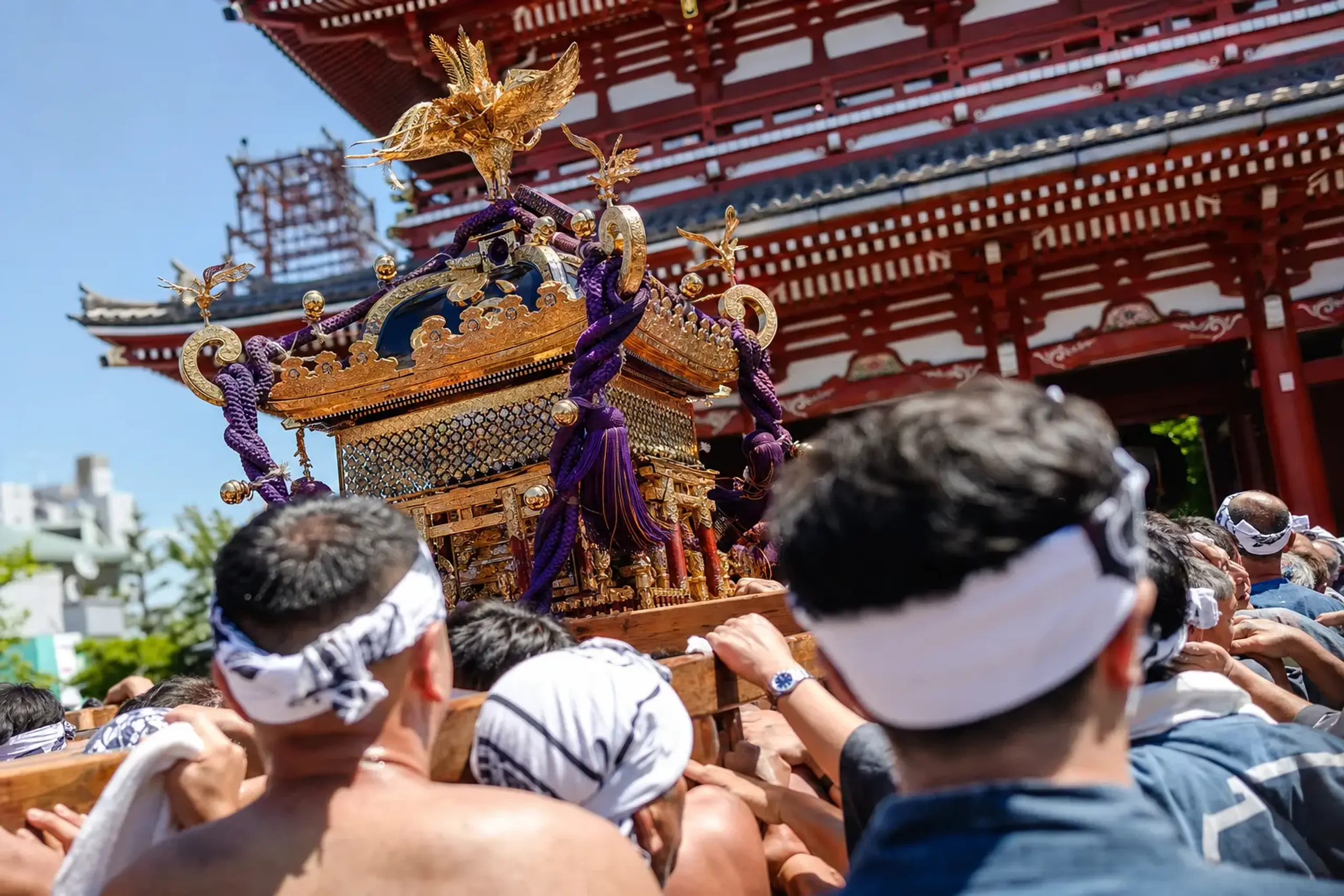
Choose Friday for a calmer ceremonial procession, Saturday for the widest spread of neighborhood mikoshi, or Sunday for the shrine’s three main mikoshi leaving at 07:00 and returning after dark.
If you dislike dense crowds, Friday is often the kindest entry point. If you want the most “street energy,” Saturday is hard to beat. If you want the weekend’s core ritual feeling, Sunday — especially the night return — delivers it.
How Crowded Is Sanja Matsuri In Asakusa?
Asakusa Shrine cites about 1.8 million visitors across the three days, so you should expect heavy crowding and slow walking, particularly on Saturday afternoon and Sunday evening.
Arrive early, pick clear meeting points, and plan breaks away from the tightest streets. It is entirely normal to move in waves rather than straight lines.
What Happens If It Rains During Sanja Matsuri?
Asakusa Shrine notes that the Friday grand procession may be cancelled in rain, while other events may proceed with adjustments, so you should keep your plan flexible.
We suggest treating Friday as the most weather-sensitive day. If Friday is your priority, consider holding Saturday or Sunday in reserve as a backup viewing day.