In this guide
- 01A Waterfall That Moves Upstream, One Collapse At A Time
- 02How Did Kegon Falls And Lake Chūzenji Form?
- 03Why Is Kegon Falls Called “Kegon”?
- 04The “Twelve Falls” (Jūni-taki) Are A Different Water System
- 05Why The Main Flow Often Looks Consistently Powerful
- 06When Is The Best Time To Visit Kegon Falls For Fresh Greenery, Birds, Or Blue Ice?
- 07How Do You Get To Kegon Falls From Nikkō Station Or Tobu-Nikkō Station?
- 08Kegon Falls In Autumn: How Do You Avoid Irohazaka Standstills?
- 09What Changes In Nikkō From January 16, 2026 (Akechidaira Ropeway Closure)?
- 10Upper Deck Vs Lower Observatory: Which View Is Better?
- 11The Elevator, The Rock, And A Small Piece Of Timekeeping
- 12A Practical Half-Day Plan For HNW Travelers (Without Rushing)
- 13Recognition: Why Kegon Falls Is Considered A National Landmark
- 14What We Mean By “Hidden Japan” At A Famous Waterfall
- 15Frequently Asked Questions
- 16Why Choose Japan Royal Service
At the lower observatory, the sound arrives first.
It is not a simple roar. It is a hard, continuous pressure in the air, as if the cliff itself is exhaling.
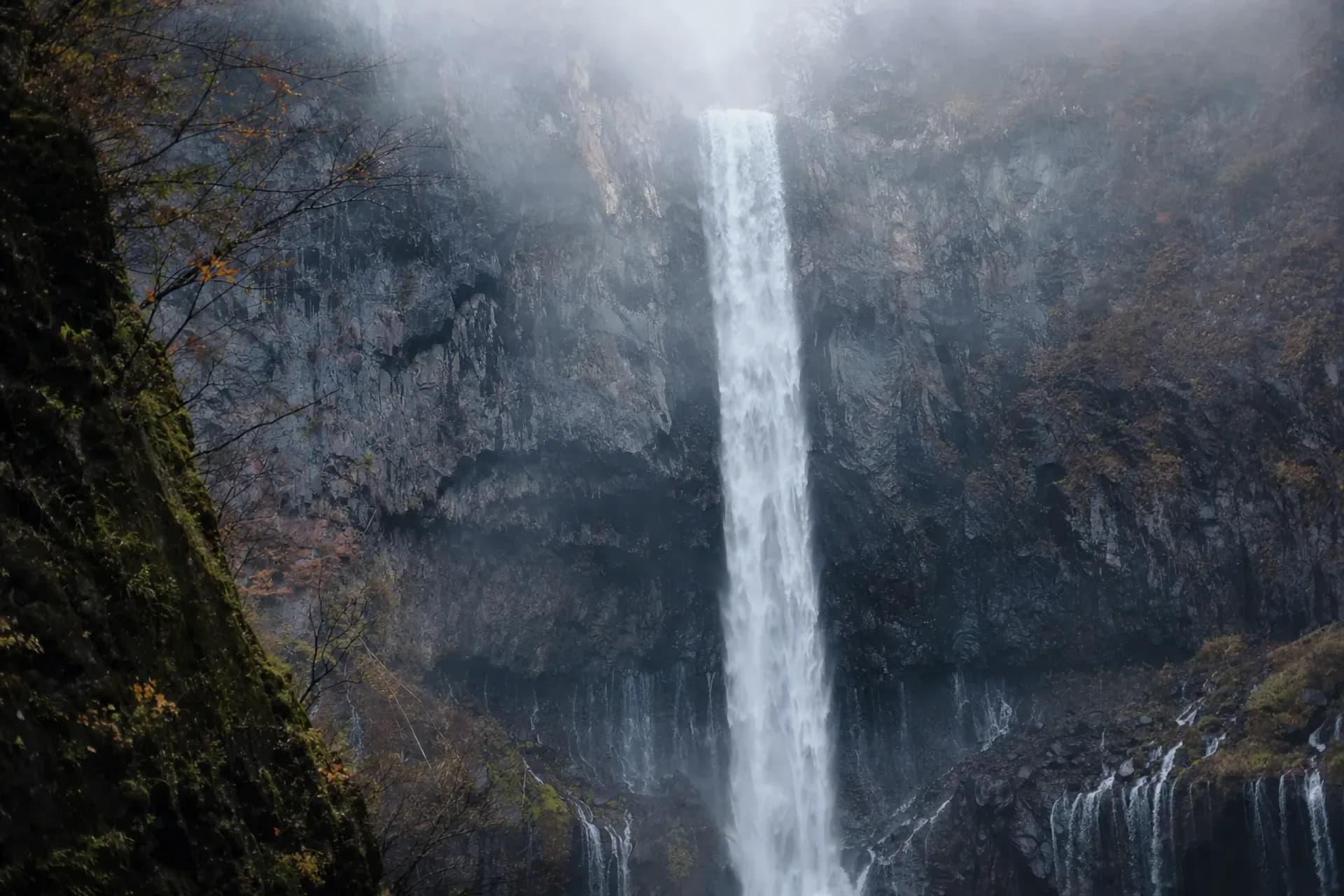
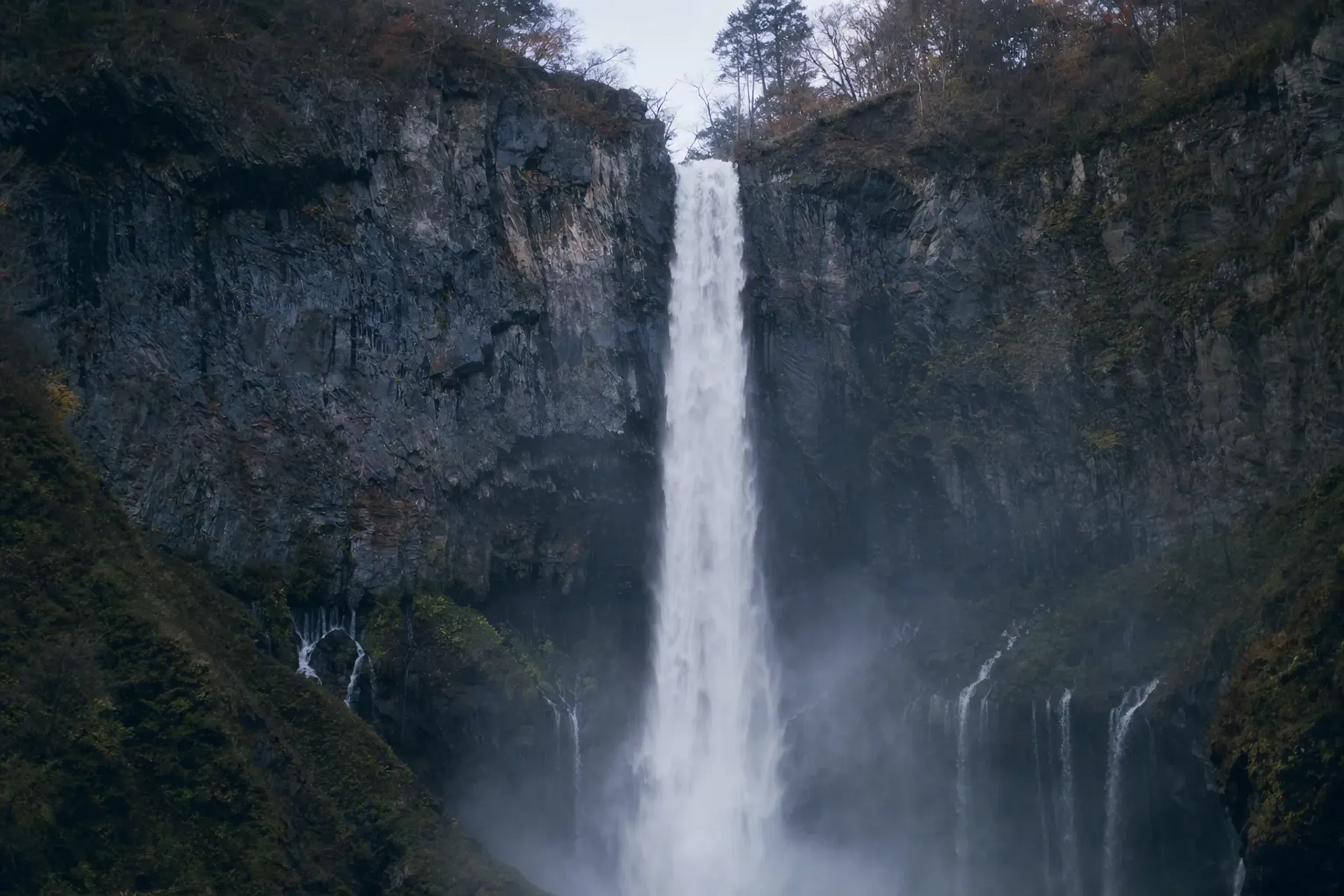
Then you look up. A single white column drops roughly 97 meters, striking dark volcanic rock before dissolving into mist.
Most famous waterfalls feel fixed in place, monuments frozen for the camera. Kegon Falls does not. It is quietly on the move.
A Waterfall That Moves Upstream, One Collapse At A Time
Kegon Falls is slowly retreating upstream toward Lake Chūzenji as erosion eats back the cliff, and one estimate suggests the lip could reach the lake in roughly 2,000 years.
That timeline is not a promise. It is simply a way to picture the scale of time at work here, because the cliff is not a single block of stone.
It is layered. Andesite and volcanic breccia sit above older quartz porphyry, and water patiently exploits every seam.
Stand close and you can feel the process on your skin. The spray carries tiny grains that once belonged to the wall itself.
One account places the falls around 800 meters farther downstream in ancient times. Old plunge-pool sites along that stretch are described as visible today—fossil evidence of where the water once stood.
It means the “place” of Kegon Falls is not one fixed coordinate. It is a process still unfolding, and you are watching a single frame of it.
How Did Kegon Falls And Lake Chūzenji Form?
Lake Chūzenji formed about 20,000 years ago when Mount Nantai’s eruption sent lava flows that dammed the Daiya River, forcing the water to pool behind the natural barrier.
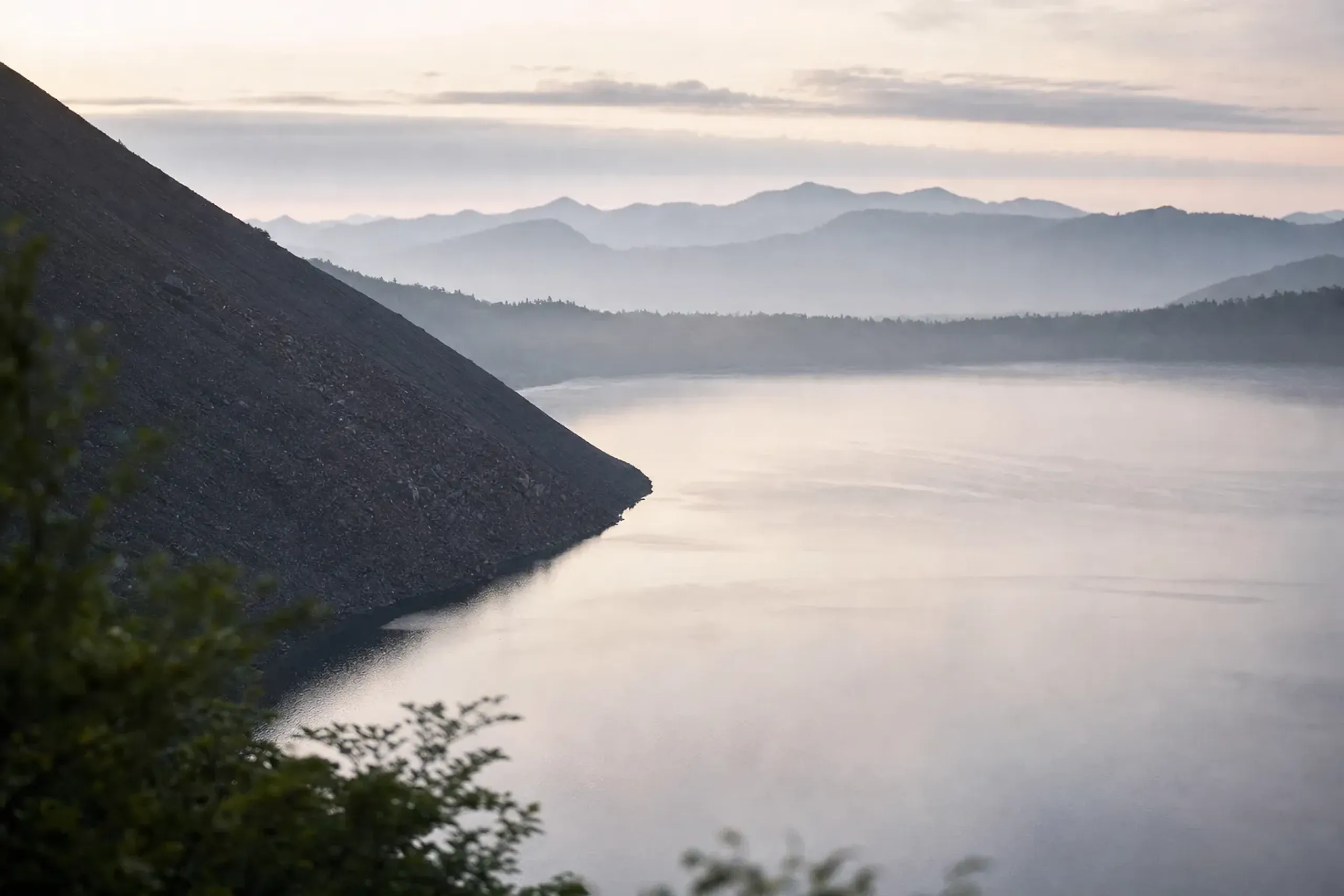
That detail changes how you read the landscape. The lake above you is not a gentle basin carved slowly by time; it is a volcanic interruption, a body of water born from fire.
Kegon Falls is the lake’s only surface outlet. Every drop leaving the lake passes through this single notch in the rock.
So the waterfall is not “fed” by random mountain streams. It is the lake emptying itself, moment by moment, through one dramatic exit.
Why Is Kegon Falls Called “Kegon”?
The name “Kegon” comes from the Kegon Sutra (the Avatamsaka Sutra), linked to the Tendai sect’s classification of Buddhist scripture, and the falls are traditionally associated with Shōdō Shōnin’s early explorations of Nikkō.
This is not decorative naming. It is doctrinal, rooted in centuries of religious meaning.
In Nikkō, the landscape and its religious history often share a single vocabulary, and Kegon Falls is one of the clearest examples of that overlap.
Two smaller waterfalls downstream continue the same naming convention, each tied to a different Buddhist sutra. The names form a quiet chain of scripture along the water’s path.
The “Twelve Falls” (Jūni-taki) Are A Different Water System
Jūni-taki appears when groundwater seeping from Lake Chūzenji emerges along a rock-layer seam partway down the cliff, forming thin side-streams entirely separate from the main cascade.
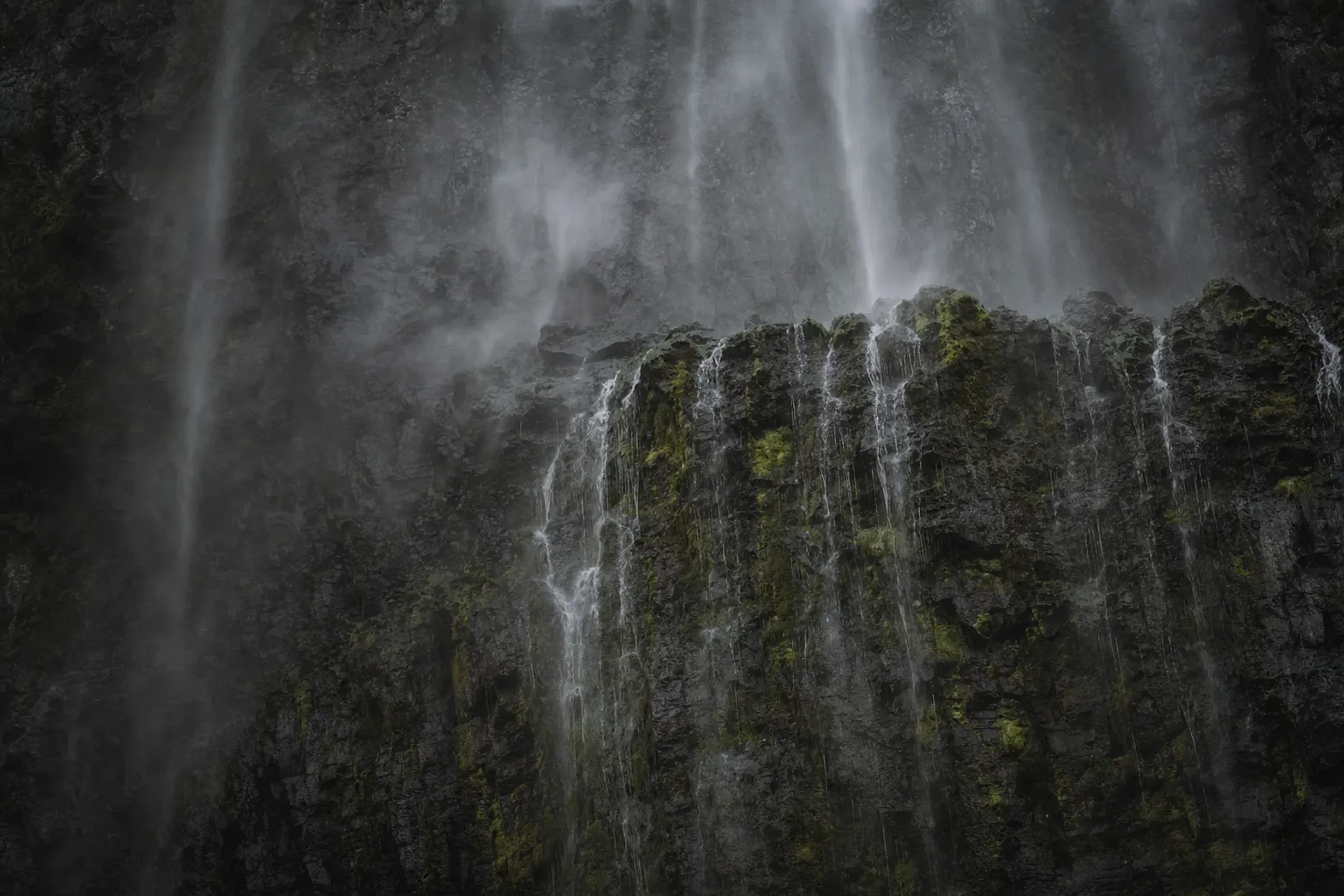
They look like pale threads pinned to the wall. Delicate. Almost weightless. There is a wabi-like restraint to them that the thunderous main column cannot offer.
Geologically, they mark a boundary where two volcanic layers meet. Water finds that meeting point, slips out, and gravity takes over instantly.
Because they rely on seepage rather than the lake’s regulated surface outflow, they can shift character across the year in a way the main falls often do not.
Why The Main Flow Often Looks Consistently Powerful
Kegon Falls’ main outflow is regulated by the Chūzenji Dam, so the waterfall’s volume is not simply “natural overflow” from rainfall alone.
This is worth knowing before you plan photography. The falls can present strongly even when the surrounding weather feels calm and still.
It also explains why official operational notices sometimes mention changes related to water volume and viewing conditions.
Key fact: Conditions can be updated by the operator; our concierge team checks the latest Kegon Falls Elevator notices and access status ahead of your visit.
When Is The Best Time To Visit Kegon Falls For Fresh Greenery, Birds, Or Blue Ice?
For fresh greenery, go in May; for swirling house martins, visit in June; for blue ice on the Twelve Falls, plan for January into February. Knowing precisely what to see, and when, is the quiet art of Nikkō.
May in the Chūgushi area has a clean, newly rinsed feeling. The cliff face looks sharper against the first true green of the season.
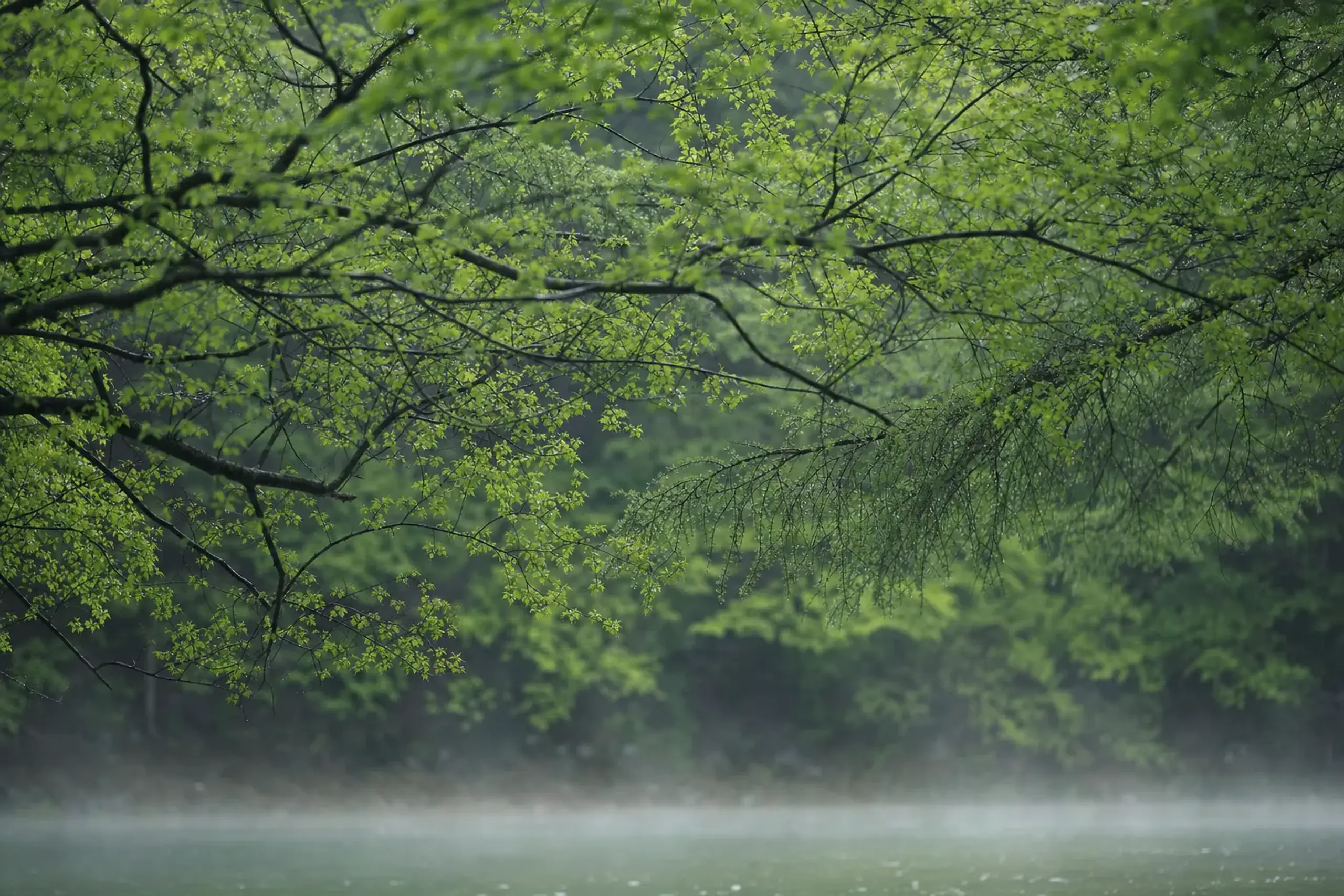
June adds motion. House martins gather and dart around the rock face, fast enough to blur if your shutter is slow.
Winter is the transformation. In January into February, the thin Jūni-taki freeze, and the whole complex takes on an icy, blue-toned stillness that feels closer to sculpture than water—a study in sabi that rewards those who brave the cold.
How Do You Get To Kegon Falls From Nikkō Station Or Tobu-Nikkō Station?
By public transport, Kegon Falls is about 40 minutes by bus from Nikkō Station or Tobu-Nikkō Station on a route bound for Chūzenji Onsen.
On paper, that sounds simple. In practice, timing matters enormously, especially during peak foliage when Irohazaka traffic can turn a short ride into a long, stationary wait.
Many HNW travelers choose a private car day trip for control over departure time, comfort, and pacing. The difference is not speed alone.
It is optionality. A quiet pause when you want it, a second viewpoint, a warm drink the moment the mist turns cold.
For guests who prefer door-to-door ease, our first mention of private transportation belongs here because it changes the day in one stroke: you are no longer bound to bus intervals or crowded boarding lines.
Kegon Falls In Autumn: How Do You Avoid Irohazaka Standstills?
The most reliable way to reduce autumn congestion risk is to stay overnight around Lake Chūzenji or Oku-Nikkō Yumoto Onsen, so you can visit early, before day-trippers begin to funnel up Irohazaka.
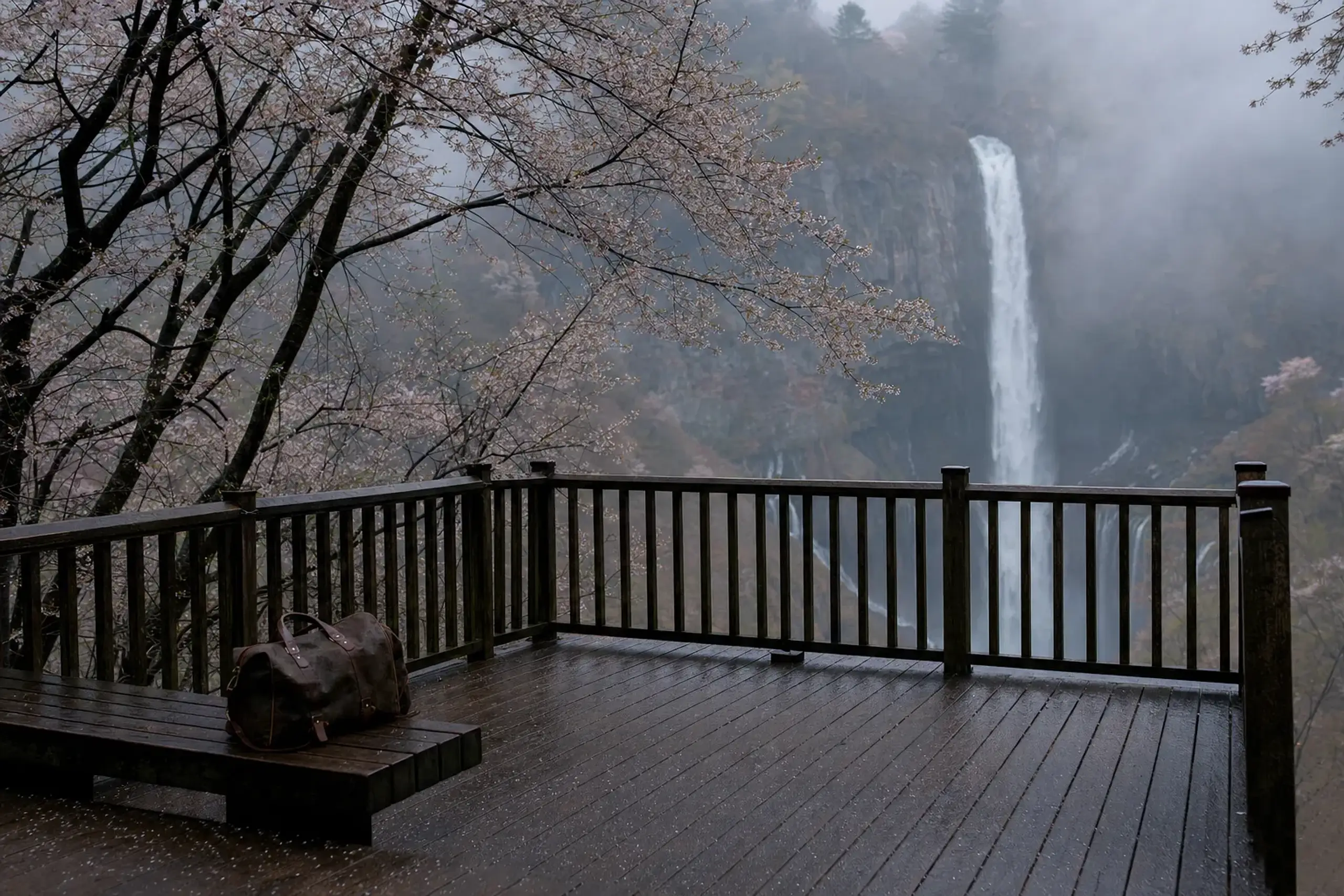
This guidance appears in the Nikko Official Guide’s local tips for foliage. It is not “luxury advice.” It is basic physics: too many cars, too few switchbacks.
In our experience, the common mistake is treating Kegon Falls as a quick stop from Tokyo with no buffer built in. That rarely ends well.
If you must do it as a day trip, go on a weekday and leave earlier than feels necessary. But if you can build in one night above the slope, the waterfall feels like an entirely different place.
- Low-stress plan: Overnight near Lake Chūzenji, visit Kegon Falls soon after opening hours, then return to the lake for a slow, unhurried lunch.
- Time-risk plan: If you go up and down the same day in peak foliage, keep your afternoon flexible and avoid stacking fixed-time appointments.
What Changes In Nikkō From January 16, 2026 (Akechidaira Ropeway Closure)?
Akechidaira Ropeway begins a long-term closure on January 16, 2026, so the classic panoramic viewpoints that rely on it should be removed from your plan.
This matters because many online itineraries still reference that “one-frame” view over Lake Chūzenji and Kegon Falls. For 2026–2027, you will need an alternative structure.
Kegon Falls itself remains fully visitable. The free upper observation area and the elevator-access lower observatory are entirely separate from the ropeway.
Our team at Japan Royal Service flags this closure early in planning, because it affects timing, photo expectations, and how much you should reasonably try to fit into a single day.
Upper Deck Vs Lower Observatory: Which View Is Better?
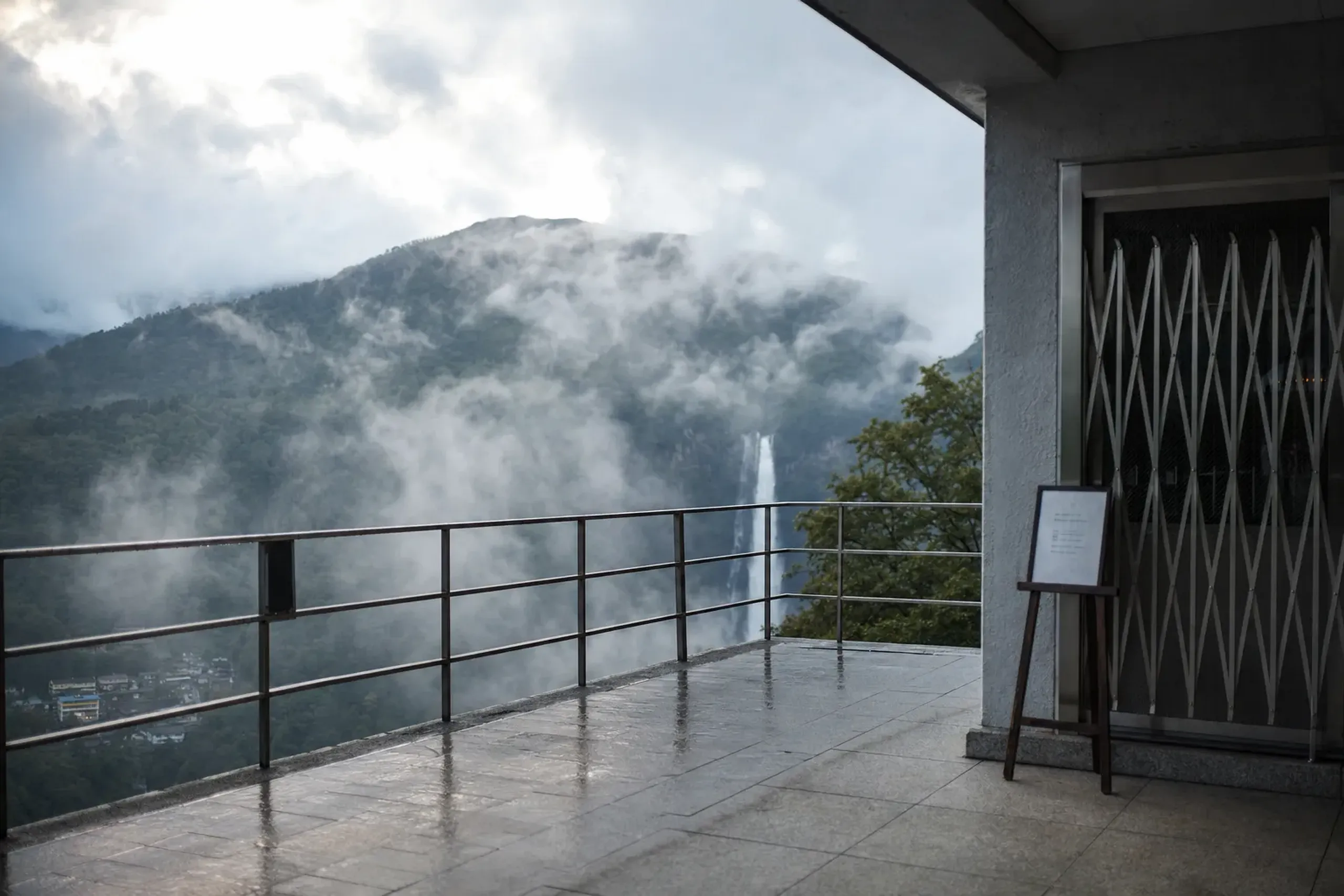
The upper deck offers a broad, free view from above, while the elevator-access lower observatory delivers a closer, head-on perspective near the base of the falls.
These are two different experiences, not substitutes for one another.
From above, you read the geography: the notch where the lake spills over, the cliff edge, the sheer scale of the drop. It is also the easier option for travelers who want a fast stop.
From below, you feel the waterfall. The mist beads on your coat, and the sound becomes something physical, felt in the chest.
The upper platform has a wheelchair-accessible ramp, though the incline is steep enough that assistance is recommended. Accessibility here is real, but it is not effortless.
The Elevator, The Rock, And A Small Piece Of Timekeeping
The Kegon Falls Elevator, built in 1930, descends about 100 meters through solid rock to the lower viewing platform.
This is not a scenic ride. It is a quick, deliberate drop straight into the geology.
There is a reason the lower view stays with people long after: you are looking up at a cliff born from volcanic violence, then patiently reshaped by water over millennia.
A teahouse opened at the base in 1900, marking an early chapter in the area’s tourism development. Even today, the idea holds up beautifully: warm hands, a warm cup, cold mist drifting past.
A Practical Half-Day Plan For HNW Travelers (Without Rushing)
Arrive, take the upper view first, then descend to the base, and finish with an unhurried pause near Lake Chūzenji—this order keeps the experience building in intensity instead of fading away.
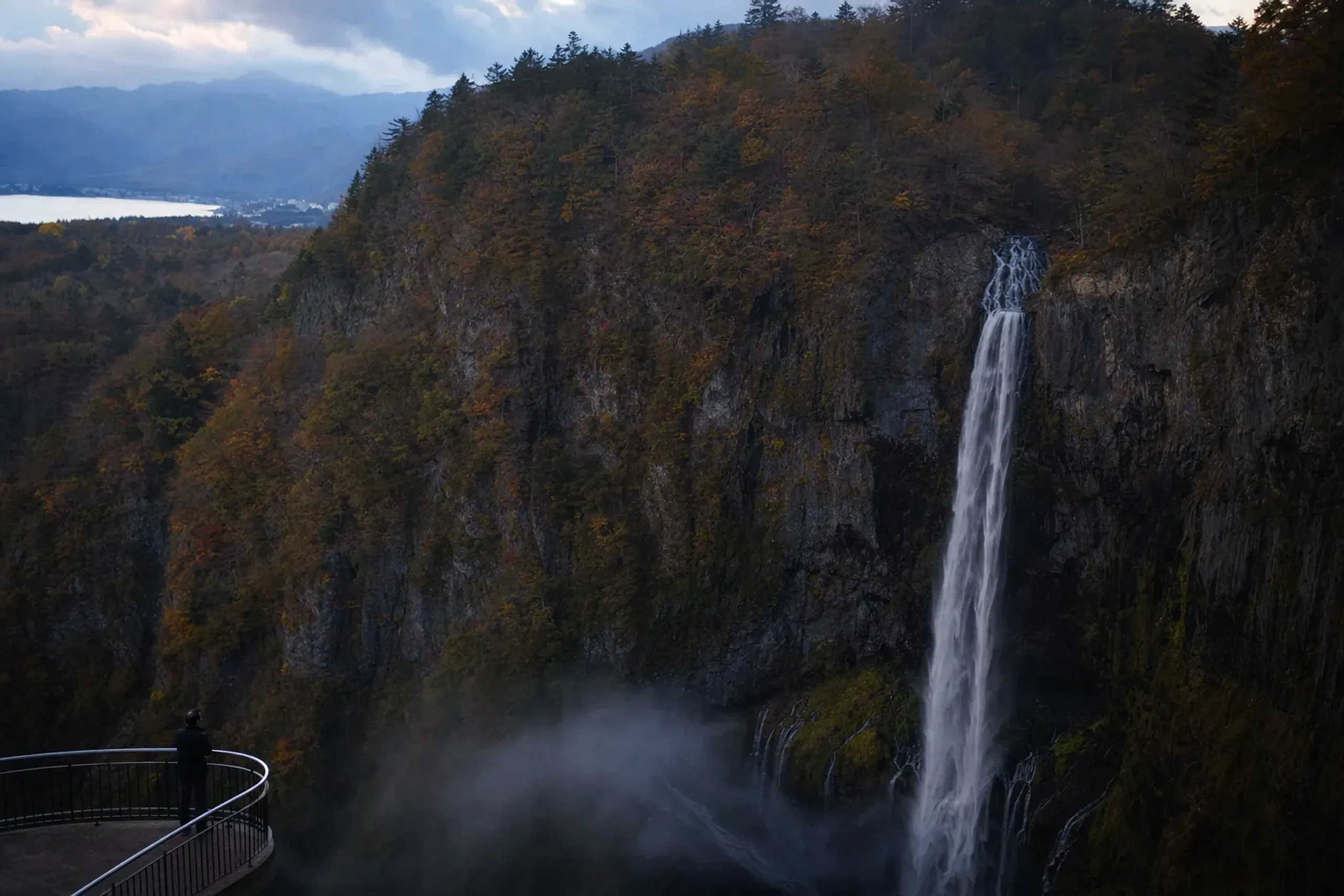
We like to keep this portion of the day clean and open. No frantic checklist.
Here is a simple sequence our concierge team often recommends when guests want calm and certainty in equal measure:
- Step 1: Arrive and take in the upper observation deck while your clothes are still dry.
- Step 2: Descend by elevator for the close-up view and the full sound-and-mist moment.
- Step 3: Look for the Jūni-taki threads along the cliff, which reward a slower, quieter gaze.
- Step 4: Transition back to the lake area for a reset, especially welcome in the colder months.
If your party is small—two to four guests—this pace feels entirely natural. With families, we build in extra time at each stop so no one is rushed.
Recognition: Why Kegon Falls Is Considered A National Landmark
Kegon Falls is counted among Japan’s Three Great Waterfalls, was designated a National Place of Scenic Beauty in 1931, and was selected among Japan’s 100 Geological Sites in 2007.
The “Three Great Waterfalls” list is often quoted alongside Nachi Falls in Wakayama and Fukuroda Falls in Ibaraki.
If you want context, our site already covers Nachi Taisha and the Nachi Fire Festival in Wakayama, where water and ritual meet: Kumano Nachi Taisha: The Nachi Fire Festival, Wakayama.
For Kegon, the case is not only its beauty.
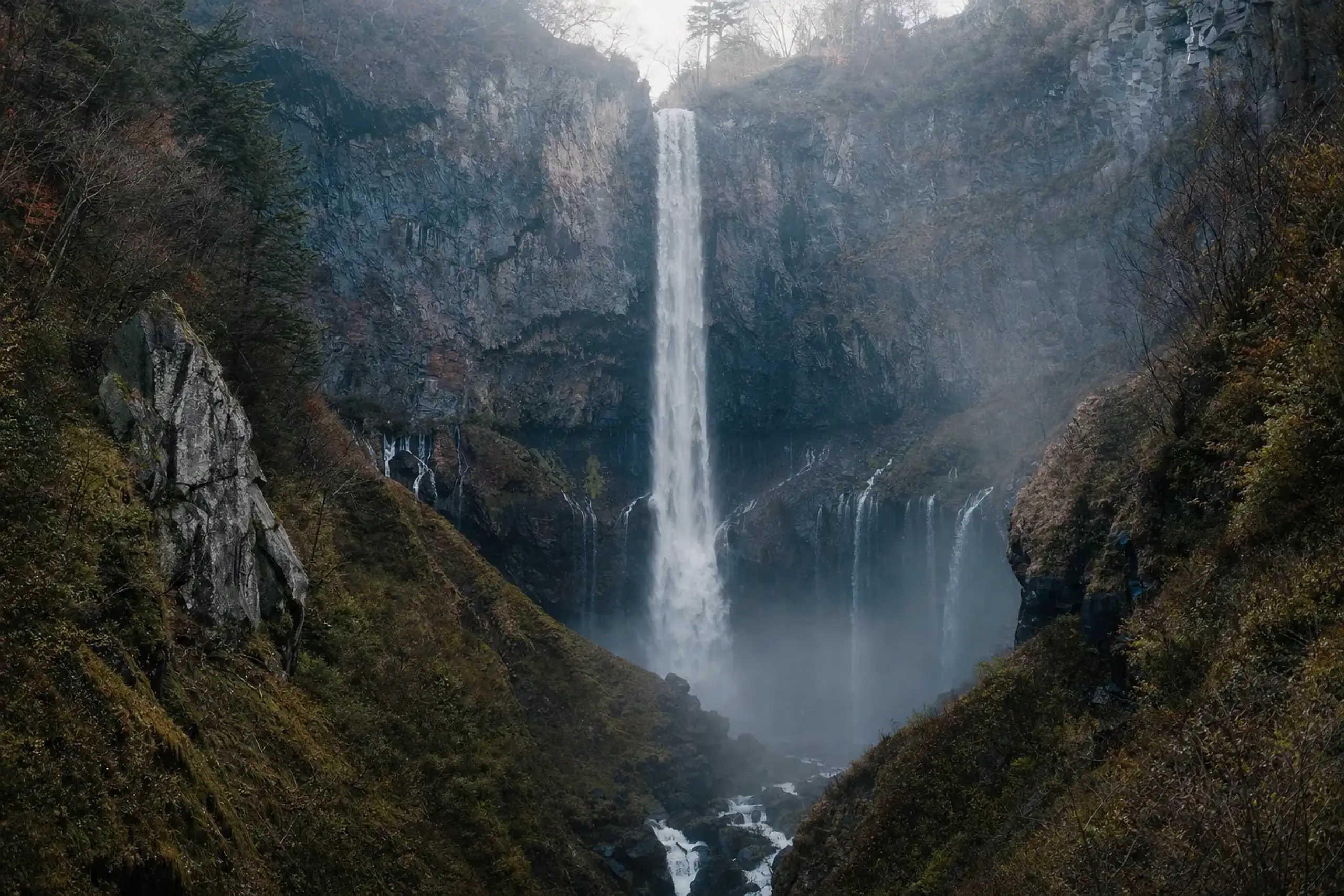
It is the clean geological story you can read from a single viewpoint.
What We Mean By “Hidden Japan” At A Famous Waterfall
Hidden Japan is not always a secret place; sometimes it is simply a quieter way of seeing a public one, with fewer compromises and far better timing.
Kegon Falls is famous. That, in itself, is not the problem.
The problem is arriving at the loudest, most crowded moment, with the least control, then leaving before the cliff has had time to register in your body at all.
Our team at Japan Royal Service approaches Kegon with restraint. We keep the schedule breathable, then layer in craftsmanship and culture elsewhere in the journey when it fits—private shokunin moments, from kiln masters to seasoned artisans, that never feel staged.
Frequently Asked Questions
Is Kegon Falls Wheelchair Accessible For A Family Traveler?
The upper observation deck has a wheelchair-accessible ramp, but the incline is steep enough that assistance is recommended.
If mobility is a concern, tell our concierge team your needs and pace preferences so we can suggest a comfortable timing plan and arrival strategy.
Do The Twelve Falls (Jūni-taki) Run Year-Round?
Jūni-taki is fed by groundwater seepage, so it can behave quite differently across the seasons than the main falls.
In January into February, those thin streams can freeze into striking ice formations, while in other months they appear as fine curtains beside the main cascade.
Will Kegon Falls Still Be Worth Visiting After The Akechidaira Ropeway Closure In 2026?
Yes—Kegon Falls remains a major highlight because its main viewing areas are entirely independent of the Akechidaira Ropeway.
The closure mainly affects certain panoramic viewpoints used in older itineraries, so your plan should simply be updated for 2026–2027.
How Long Should We Allow On Site If We Want Both Viewpoints?
For both the upper deck and the elevator-access lower observatory, many travelers plan roughly 60–90 minutes on site.
Add extra buffer in autumn for traffic on Irohazaka, and in winter for slower walking conditions near the mist and ice.
Why Choose Japan Royal Service
Japan Royal Service is built for travelers who want Japan to feel private, even when the destination itself is famous.
We protect discretion first. Your itinerary and identity stay quiet, and our communication remains contained to what genuinely matters.
We also think like craftspeople. That shokunin mindset shows in small decisions—departure times that avoid crowd compression, clean routing, and quiet contingency planning when conditions change.
For Kegon Falls, we provide guiding, transfers, and elevator viewing-platform coordination, then keep the day paced so the place can do its slow work on you. Every element can be shaped around your preferences within a tailor-made itinerary that treats Nikkō as one movement in a larger, carefully composed journey.
When you are ready to see Kegon Falls the way it deserves to be seen—early, unhurried, and entirely on your own terms—contact us here to begin a private conversation about your journey.