In this guide
- 01Why Is The Nachi Fire Festival Also Called The Fan Festival?
- 02What Happens At Nachi No Ōgi Matsuri On 14 July?
- 03Is The Nachi Fire Festival Held At Night Or In The Day?
- 04Step-By-Step: The Day’s Sequence At Kumano Nachi Taisha
- 05Where Does Nachi Dengaku Fit In?
- 06What Does The Festival Mean To Kumano Nachi Taisha?
- 07How To Get To Kumano Nachi Taisha For The Festival (Without Rushing)
- 08What To Wear, What To Carry, And How To Behave
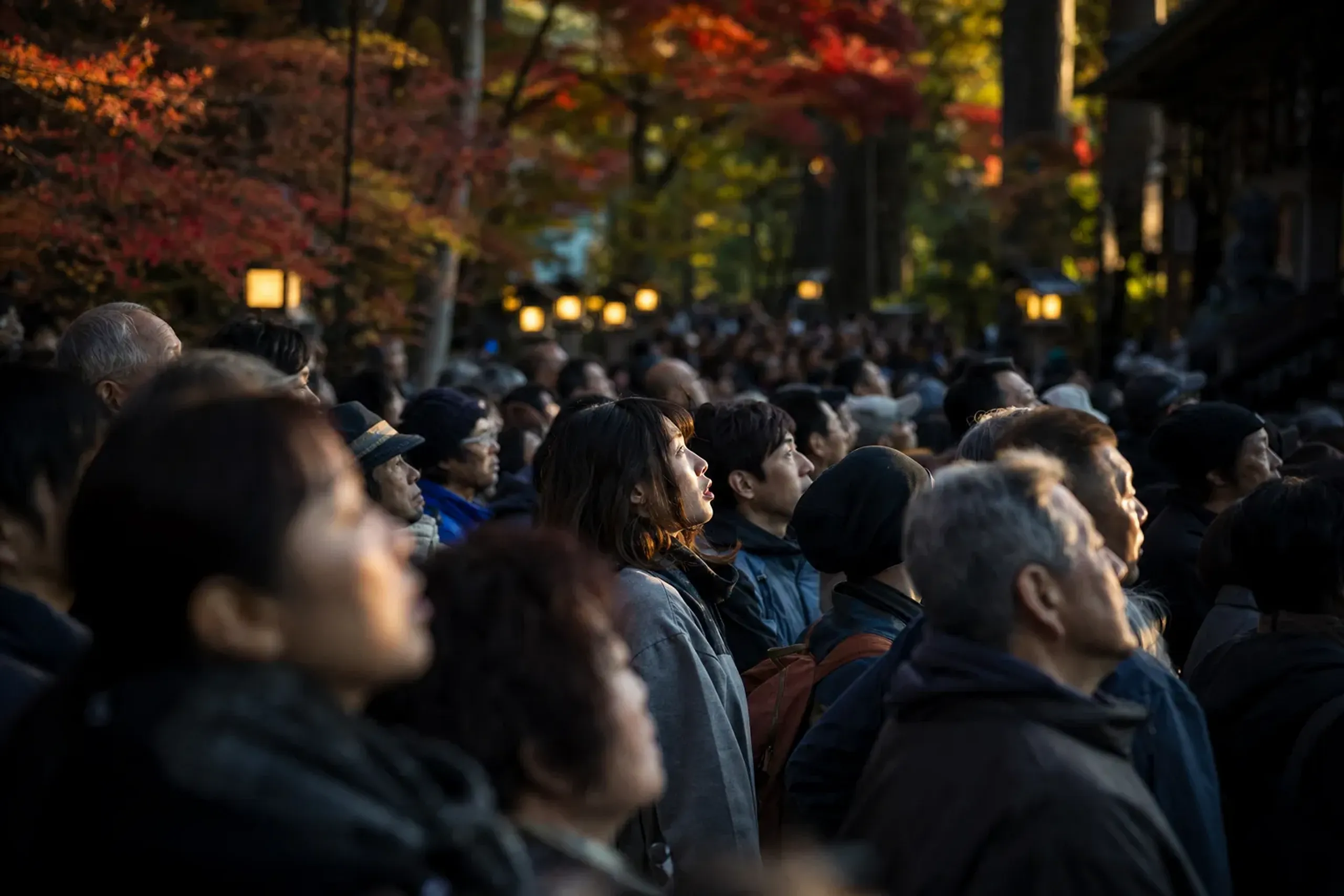
- 09How Crowds Actually Feel: Pressure Points And An Exit Mindset
- 10Recognition That Matters (And Why It’s Verifiable)
- 11A Quiet Luxury Lens: Hidden Japan Without Turning It Into A Product
- 12Practical Planning: Where This Festival Fits In A High-Comfort Wakayama Route
- 13What Our Team At Japan Royal Service Can Do Publicly (And What Happens Privately)
- 14Begin Planning Your Nachi No Ōgi Matsuri
The stone steps are still in shadow, even at midday.
Cedar trunks hold the light back. The air smells faintly resinous. Then a torch turns, sparks spill, and the crowd’s chatter drops into a watchful hush.
This is why so many visitors arrive expecting a night fire spectacle. Big mistake.
The Nachi Fire Festival is, in truth, the Nachi no Ōgi Matsuri—the Fan Festival—held in daylight on 14 July at Kumano Nachi Taisha in Wakayama, when twelve fan-covered mikoshi descend to Nachi Falls.
Why Is The Nachi Fire Festival Also Called The Fan Festival?
It is officially the Nachi no Ōgi Matsuri (Fan Festival), and “Nachi Fire Festival” is merely the nickname, borrowed from the twelve great torches that lead and purify the procession.
Once you know that, your eyes change. You stop hunting for flames and start reading the shapes: tall portable shrines sheathed in fans, carried with steady, collective strain down the mountain.
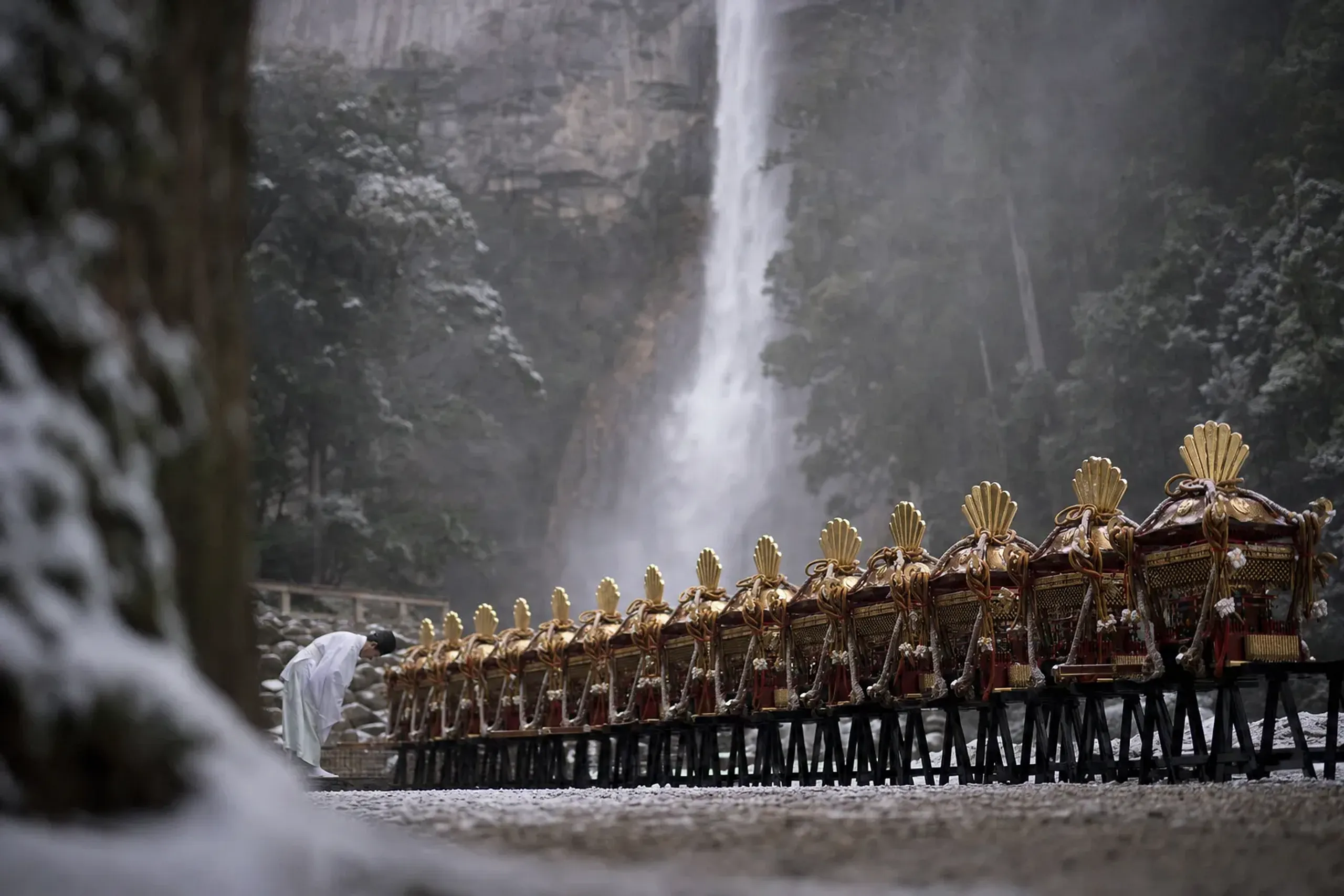
The fans are not decoration. They are the idea made visible. Each ōgi mikoshi is fitted with 32 fans painted with a sun disc, two of them left half-open, and set with bronze mirrors and ornaments.
The shrine’s own tradition frames the form as modeled on the sun, and also as representing the falls themselves. You can feel both meanings at once when the fans tilt and catch the dim light beneath the cedars. Quiet power.
What Happens At Nachi No Ōgi Matsuri On 14 July?
On 14 July, twelve ōgi mikoshi representing the twelve Kumano deities are carried from Kumano Nachi Taisha down to Nachi Falls, led and purified by twelve large burning torches.
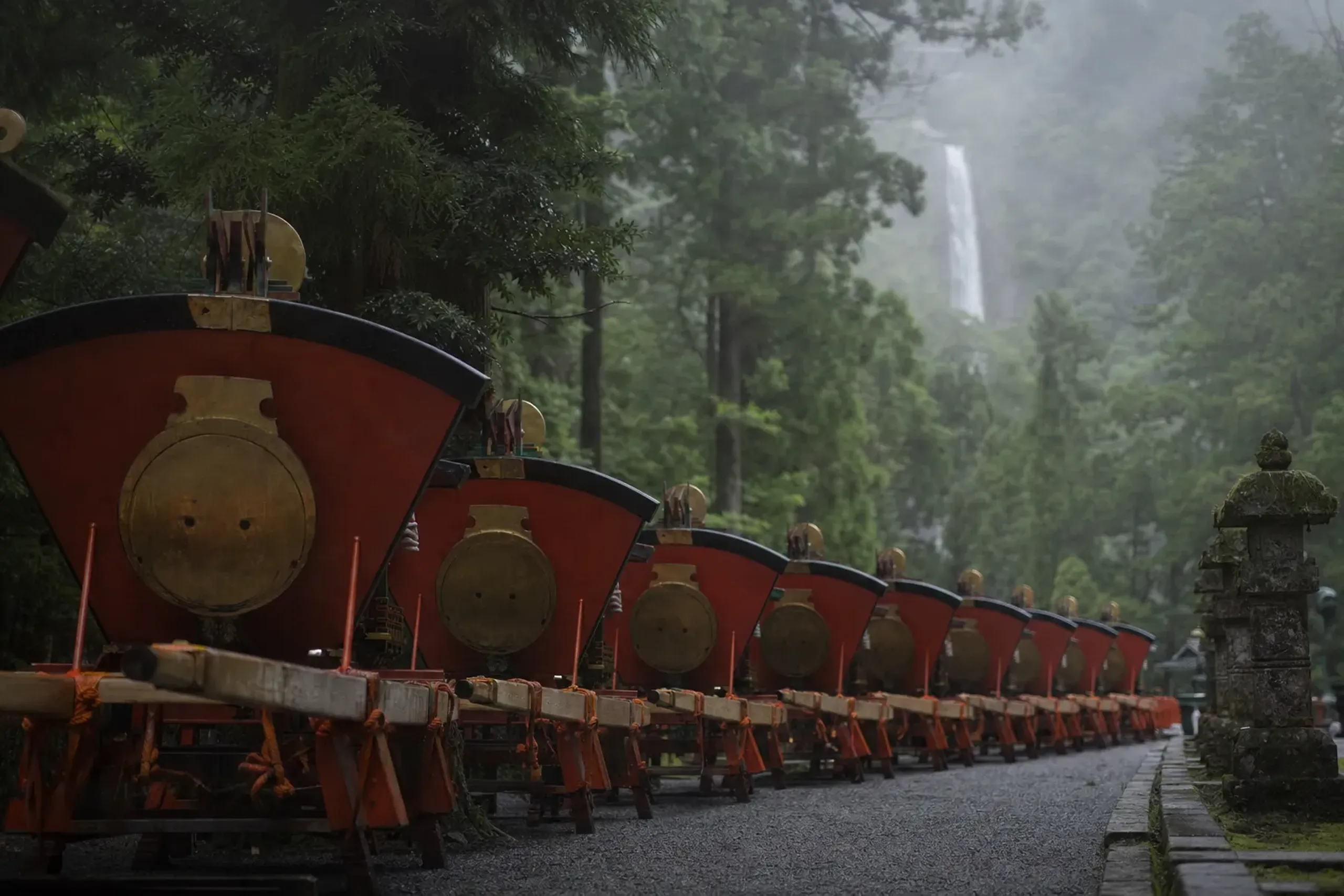
The structure is crisp. Twelve-and-twelve. The mikoshi embody the Kumano Jūnisho Gongen, and the torches clear the route ahead like moving boundary markers.
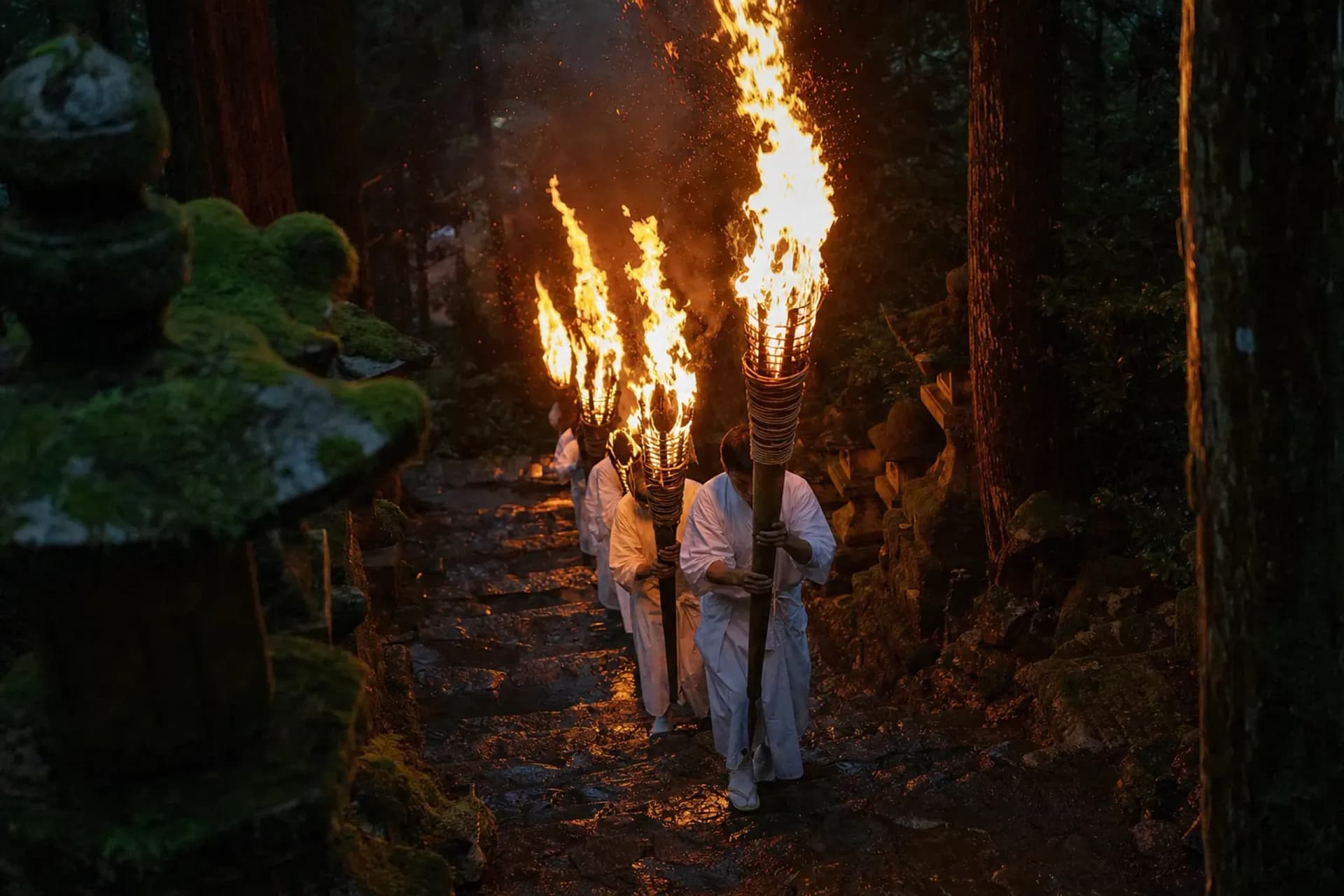
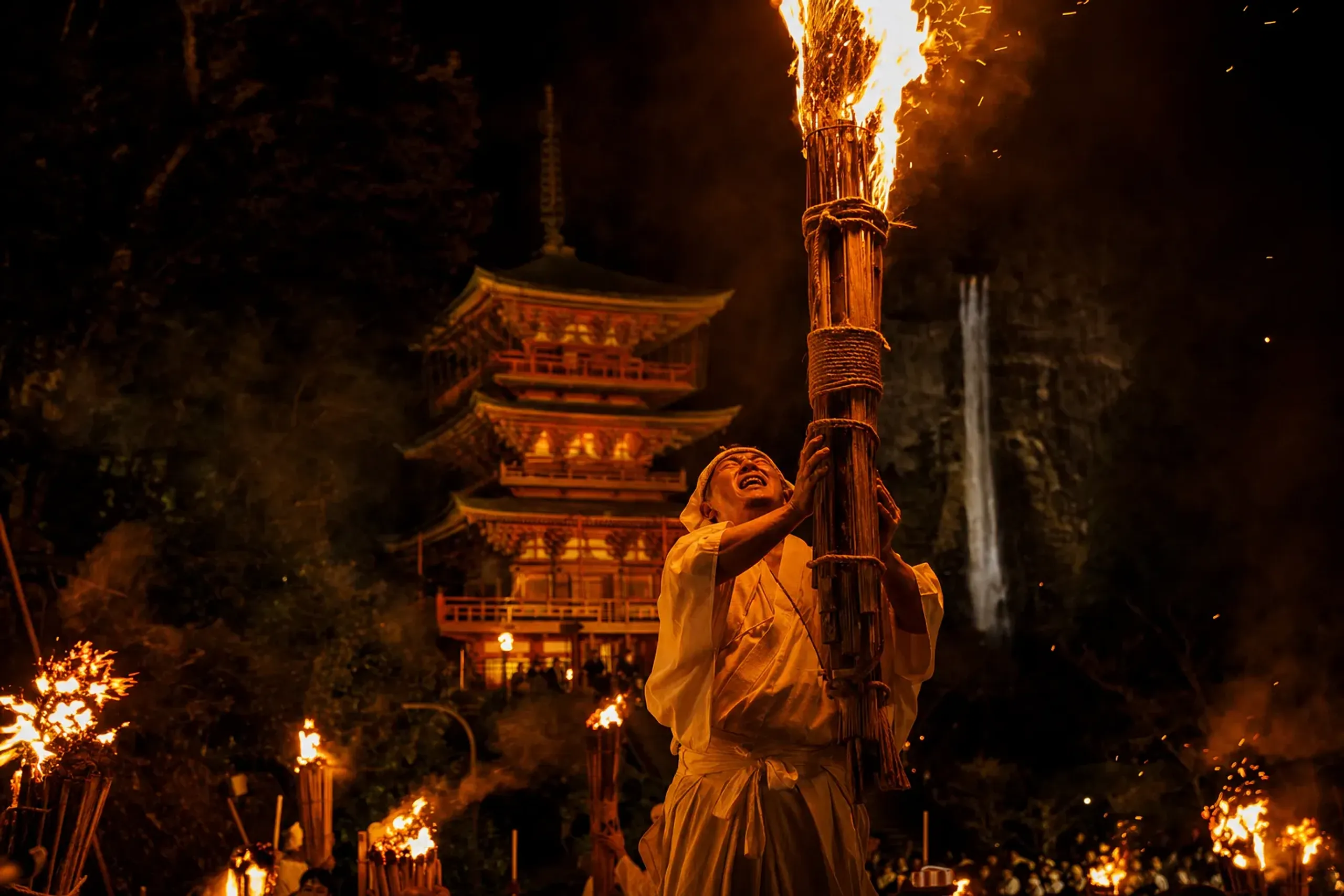
Each of the twelve large torches is made entirely of hinoki cypress and weighs about 50 kilograms, with sources describing them as around or over that figure and up to roughly 1.4 meters long. Heavy. Real flame. Real heat.
The torch-bearers—parishioners in white robes with eboshi hats—carry the fire in circles up and down the stone steps, calling “Hariya, hariya,” and shower the descending mikoshi with sparks in a purification rite.
Is The Nachi Fire Festival Held At Night Or In The Day?
The main rite unfolds in daylight, not at night, and the shaded cedar approach makes the flames read clearly even at midday.
This daylight fact changes how you plan. It changes what you pack. It changes how you pace yourself on the steps.
In our experience, first-time visitors underestimate the contrast: bright summer heat outside the precincts, then a darker corridor of trees where fire becomes the strongest color on the route.
It also reshapes photography expectations. The finest images often come from the dim approach, where sparks register as sharp arcs rather than washed-out points of light.
Step-By-Step: The Day’s Sequence At Kumano Nachi Taisha
This is an active Shinto grand festival led by the shrine’s parishioners. You are there to witness, not to steer.
The timing of each segment can shift year to year, so treat the outline below as a planning scaffold and confirm locally closer to the date. Our concierge team at Japan Royal Service verifies the current year’s schedule, viewing flow, access, and any restrictions before a client visit.
Before The Main Day: Early-July Preparations
The visible work begins before 14 July. Around 9 July, the sacred rope (shimenawa) at the falls is replaced, and around 11 July the fans are assembled; some sources also describe 13 July as a public day.
These dates are approximate. The point is the feeling: the site is being readied, not decorated. A different mood entirely.
Morning: Rites At The Worship Hall
On 14 July, ceremonies begin at the worship hall in the morning. A rice-planting dance is woven into the day’s observances.
It is easy to arrive late and miss these tone-setting moments. Another mistake.
Early Afternoon: The Procession Sets Out
The mikoshi set out for the falls in the early afternoon, leaving the main shrine on a shouted signal.
You will feel the shift instantly. The crowd becomes a corridor. People stop wandering and start holding their positions.
Fushiogami: A Lined-Up Pause
At Fushiogami, the mikoshi are stood in a line and pause. This is one of the clearest “breath” points in the day.
If you want to watch without constant jostling, this is often where patience pays. Stand still.
Nachi Falls Plaza: Fire Messengers And The Arrival
The torches go ahead to the falls plaza and dispatch fire messengers three times to summon the mikoshi. Then the mikoshi descend and are received by the burning torches.
The torches spiral ahead, purifying the path. Sparks fall. People flinch back. The carriers do not.
Closing: Reverence, Dances, And Dying Flames
At the falls the party pays reverence. By the time mikoshi and torches reach the plaza, the fires are dying, and dances are offered to close the festival.
It ends as it should. Not with a finale, but with completion.
Where Does Nachi Dengaku Fit In?
Nachi dengaku is performed before the mikoshi depart, and it is separately designated as a national Important Intangible Folk Cultural Property (since 1976).
Many visitors treat it as a “pre-show.” It isn’t. It is part of the religious and cultural spine of the day.
If you care about meaning, not just motion, you plan your morning around it. The texture is different from the torch rite—measured, patterned, and older in its atmosphere.
What Does The Festival Mean To Kumano Nachi Taisha?
At its core, the festival is a homecoming: by the shrine’s tradition, the Kumano deities are said to return once a year to Nachi Falls, where worship began before the shrine moved up the mountainside.
The Agency for Cultural Affairs describes the rite as strongly rooted in nature worship—sun, water, and fire. You can see all three elements without anyone explaining them to you.
The shrine’s own account also frames the festival as commemorating the deities’ enshrinement on the mountainside and as stirring the divine spirit to pray for growth and prosperity. Local readings often speak of purification, rebirth, and restored order.
The shrine’s tradition places the mountain’s faith at the falls since Emperor Jinmu’s legendary eastern expedition, and dates the shrine’s move to the 5th year of Emperor Nintoku. These are presented as tradition rather than verified history, and they are best received that way—quietly.
How To Get To Kumano Nachi Taisha For The Festival (Without Rushing)
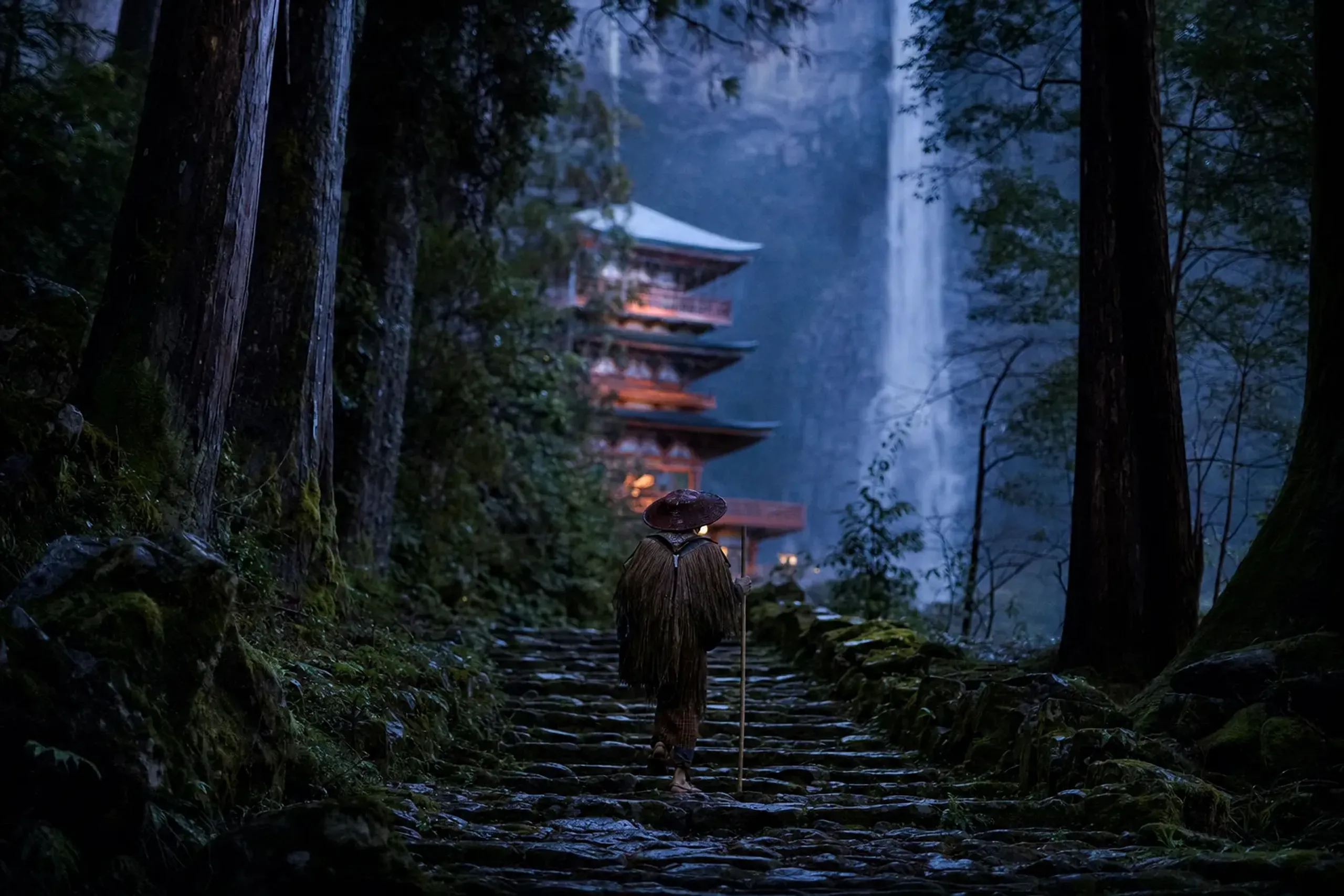
Kumano Nachi Taisha is reached via bus from JR Kii-Katsuura Station, with official tourism guidance commonly describing a roughly 30-minute ride to the Nachisan bus stop.
From there, you are on foot in a sacred landscape of stairs, summer heat, and crowd compression. Plan like an adult.
In our experience, the true luxury move is not arriving late in a panic. It is arriving early enough to find your bearings, locate restrooms, and decide where you will wait—before the corridor tightens.
Key fact: This is a public religious festival. There is no “private viewing” of the rite, and visitors should follow shrine staff instructions and local crowd flow.
Two Calm Arrival Strategies (Choose One)
Both approaches can work. The right choice depends on how you handle crowds and heat.
Option A: Shrine-First, Then Follow The Movement
This option suits travelers who want context before spectacle.
- Arrive earlier so you can walk the precincts at a slower pace.
- Claim a simple waiting position where you are not blocking traffic on the steps.
- Move only when movement is obvious; the worst squeeze happens when people try to “improve” their view midstream.
Option B: Falls-Side First, Then Let The Procession Come To You
This option suits travelers who prioritize a single moment: the mikoshi meeting the torches at the falls plaza.
- Arrive with buffer time and accept that you may wait longer.
- Stand where you can exit without crossing the flow; keep a clear line behind you.
- Watch for the three summons (the fire messengers), which signals the next shift.
What To Wear, What To Carry, And How To Behave
Comfort is not vanity here. It is respect.
Wear stable shoes for stone steps. Bring water. Bring a small towel. July in Wakayama can be genuinely hot, and the shaded approach still holds heavy, humid air.
Dress modestly. Keep your voice low. Do not push forward when the torches pass; the carriers need room, and the heat is not a prop.
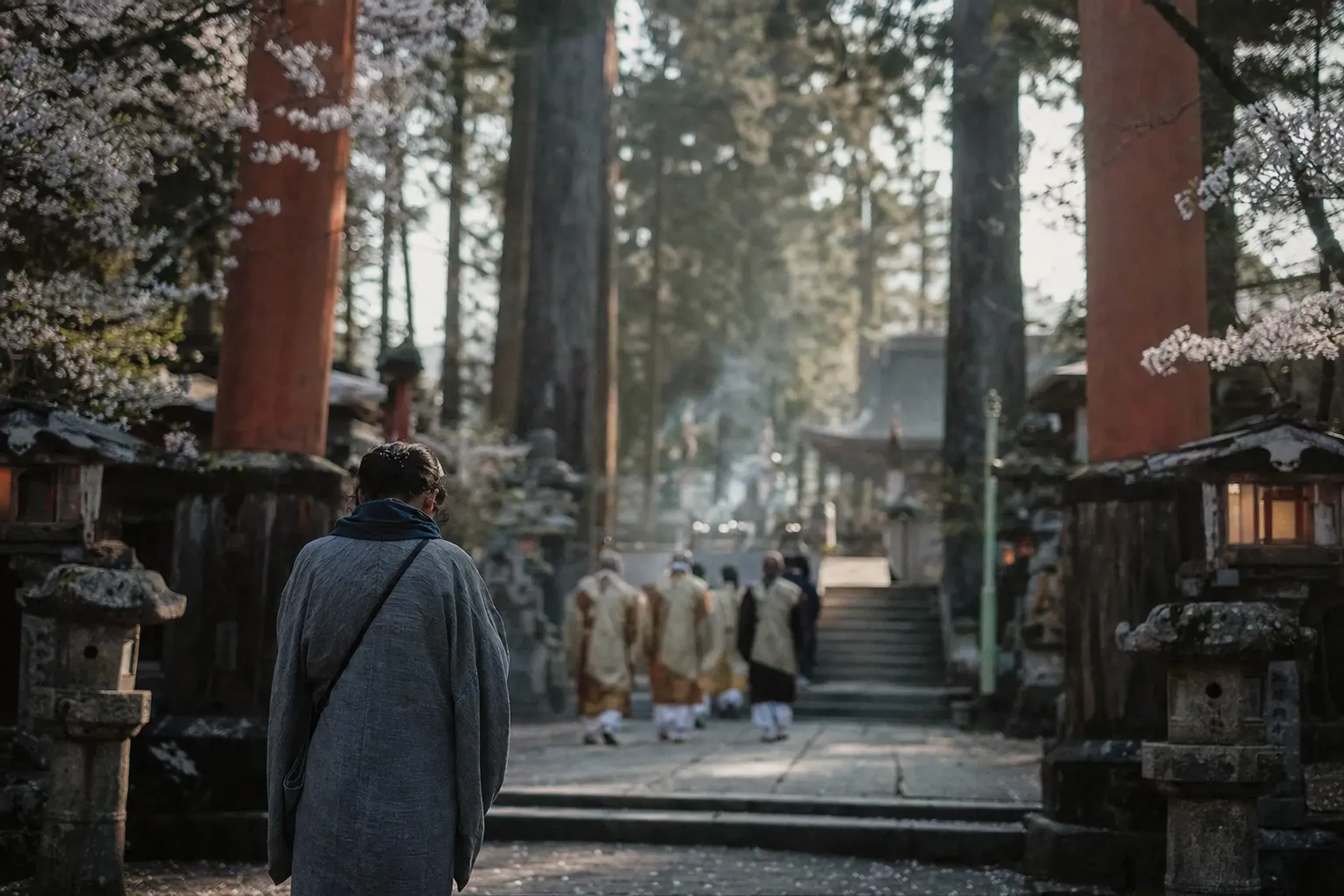
Photography is generally possible in public spaces, but do it without turning people into your foreground. No flash near fire. And if staff ask you to stop, you stop.
How Crowds Actually Feel: Pressure Points And An Exit Mindset
The festival is famous, and the site is tight. Expect slow movement in the shaded approach and on the steps.
Our team at Japan Royal Service encourages clients to decide on one priority—either the descent corridor or the falls arrival—and build the day around that single anchor. Trying to “do it all” usually means you see everything badly.
When the rite is finishing, leave with intention. The most tired moment is the final one.
If you are traveling with family, older parents, or anyone who dislikes compression, plan a clear meeting point and a simple post-festival decompression window away from the main flow.
Recognition That Matters (And Why It’s Verifiable)
Nachi no Ōgi Matsuri was designated a national Important Intangible Folk Cultural Property in 2015, and Nachi dengaku has held national designation as an Important Intangible Folk Cultural Property since 1976.
Kumano Nachi Taisha is also part of the UNESCO-inscribed Sacred Sites and Pilgrimage Routes in the Kii Mountain Range. These are not marketing labels; they are public designations with paper trails.
A Quiet Luxury Lens: Hidden Japan Without Turning It Into A Product
For a discerning traveler, the temptation is to “upgrade” a festival with access. Resist that instinct.
The real upgrade is literacy. Knowing the correct name—Nachi no Ōgi Matsuri. Knowing it is held by day. Knowing the twelve mikoshi are fan-covered because the fans are the symbol, not because they photograph well.
This is where the Japan that Google cannot find quietly reveals itself. Not in secrecy, but in a precision that most visitors never bother to learn—the same restraint you feel in a moss-covered stone approach, where meaning outlasts spectacle.
And then there is discretion. The best way to attend is to be present, not performatively present—minimal fuss, no loud narration, no attention drawn to you. That composure is its own kind of refinement, and it is precisely what our guests value most.
Practical Planning: Where This Festival Fits In A High-Comfort Wakayama Route
Nachi no Ōgi Matsuri happens on one fixed day: 14 July. Everything else—the route, the pacing, the recovery—has room for taste.
Many travelers use Kii-Katsuura Station as their practical rail anchor for the area. From there, the bus to Nachisan is straightforward, and it keeps you focused on the rite rather than on complicated transfers.
If you are building a longer trip, treat this as a culminating day rather than a first day. You will walk more than you expect, you will stand longer than you want, and you will feel the heat.
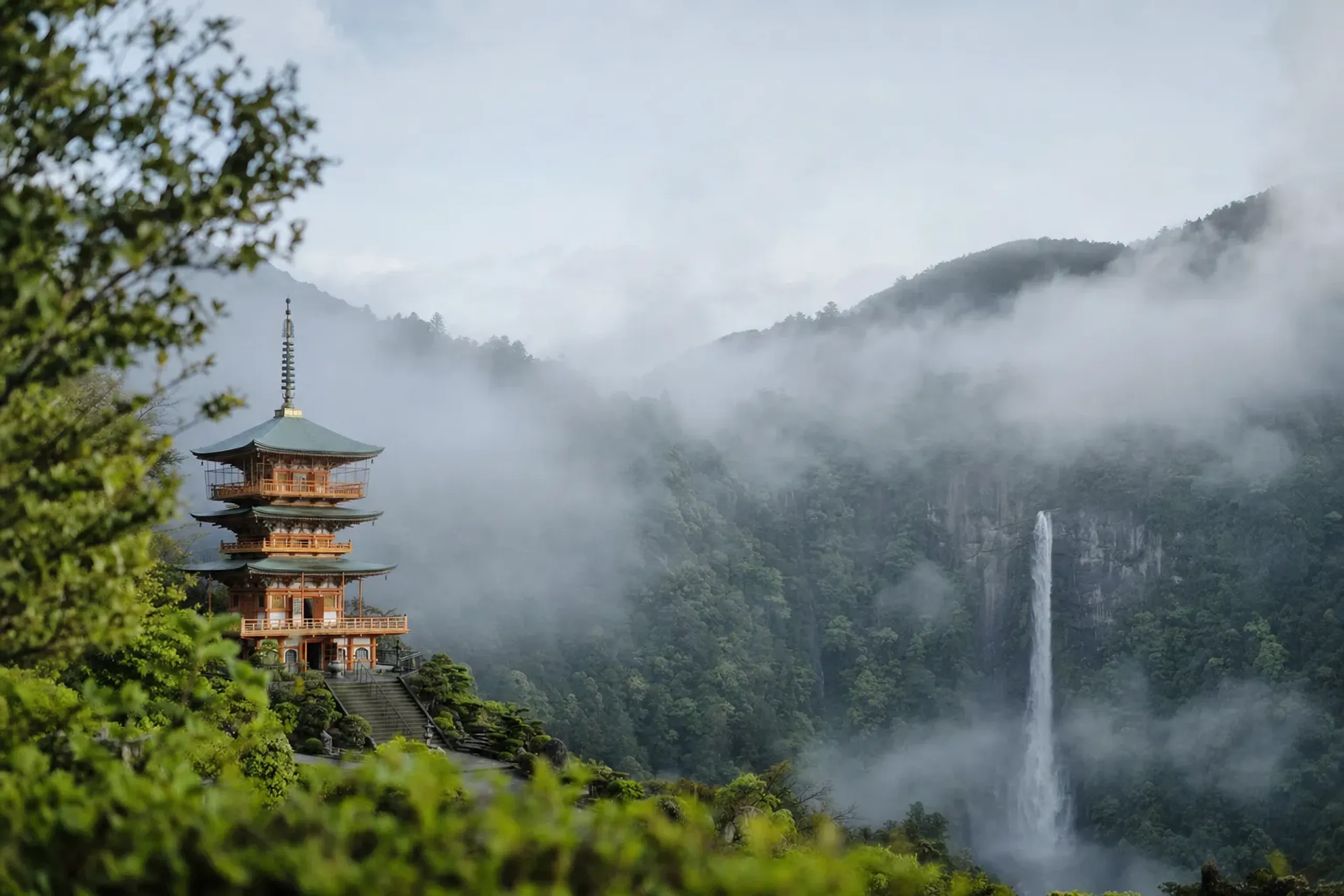
For a companion deep-dive on the broader sacred route context, see our Kumano Kodo guide here: Kumano Kodo, Wakayama: Designed to Welcome Everyone.
What Our Team At Japan Royal Service Can Do Publicly (And What Happens Privately)
Japan Royal Service supports clients with guiding, transfers, and positioning advice for the day, while respecting that the rite itself is a public religious festival led by local parishioners.
In practice, comfort often comes down to small, anticipatory choices: when to arrive, where congestion usually forms, how to keep your party together, and how to exit without stress. That quiet anticipation of the needs you haven’t voiced is the heart of how we work.
For guests who prefer to travel by private transportation, our team can advise on realistic timing for approach roads and drop-off planning based on the day’s on-the-ground conditions.
If you want the festival to sit inside a longer, tailor-made itinerary, we’ll shape the pacing so the festival day feels intentional rather than punishing.
Begin Planning Your Nachi No Ōgi Matsuri
Nachi no Ōgi Matsuri rewards those who arrive knowing what they are actually there to witness. If you would like the day arranged with quiet precision—the right arrival window, the calmest vantage point, seamless transfers, and total discretion around your itinerary—contact us here for a tailored proposal built around your dates and your pace.