In this guide
- 01The Islands And The Sea At A Glance
- 02Tokashiki, Zamami, And Aka: Which Island Fits Your Summer Plan?
- 03Where Can I See Sea Turtles In The Kerama Islands In Summer?
- 04Swimming And Snorkelling Rules: What You Must Follow In Summer
- 05What Does The Okinawa Box Jellyfish Advisory Mean In Kerama?
- 06Summer Weather, Typhoons, And The Days The Ferries Don't Run
- 07Getting There And Getting Back: Ferries From Naha Tomari Port
- 08How To Plan A Day Trip Vs A Stay: Two Simple Itineraries
- 09A Few Notes On Conservation And History
- 10Let Us Plan Your Kerama Summer
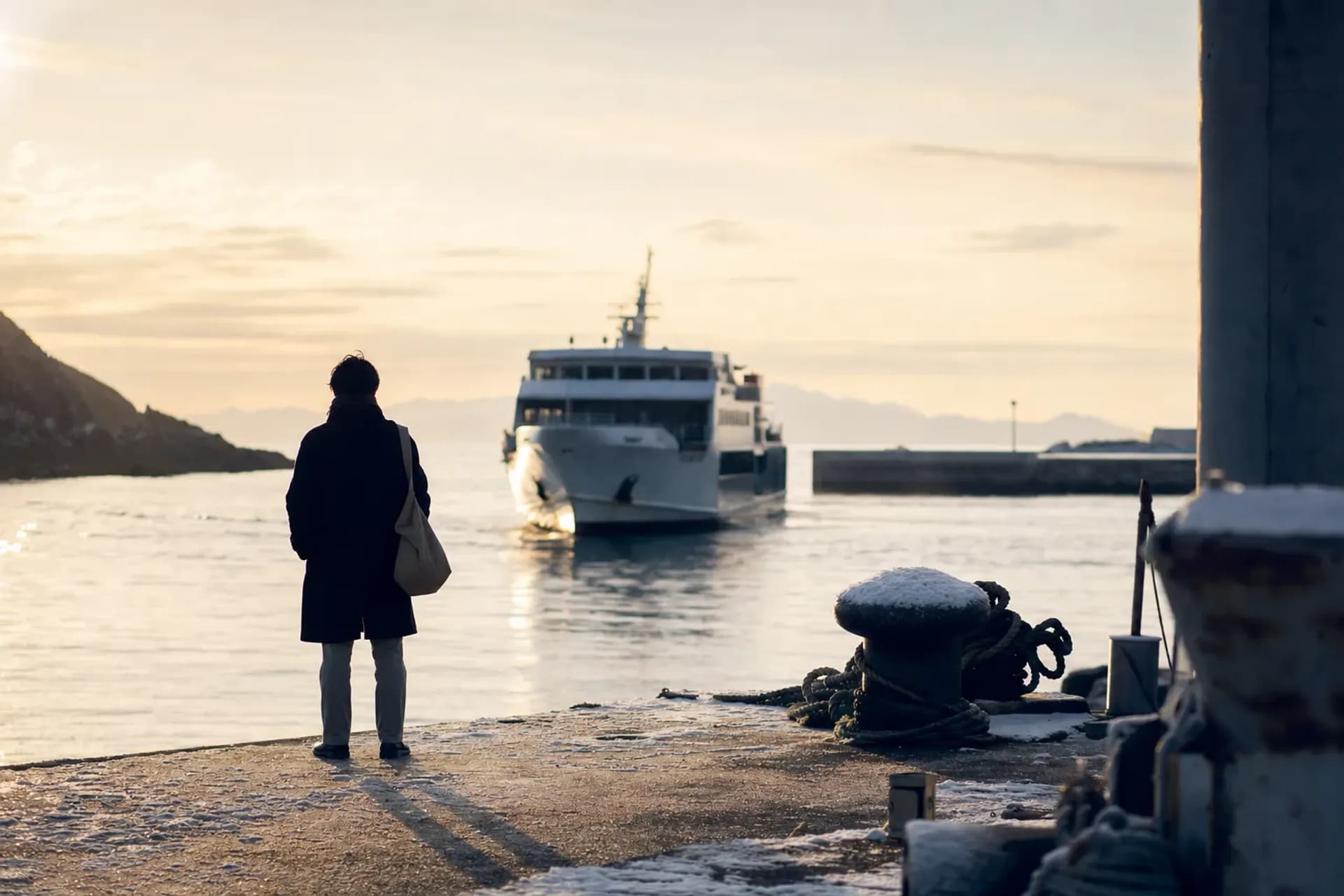
The morning at Tomari Port begins with small sounds. Suitcases rolling across tile. A vending machine clacking out a cold can. The low, steady thrum of an engine warming somewhere behind the terminal doors.
You stand with a boarding pass in one hand and a bottle of water already sweating in the other. It feels too early for the heat. It isn't.
Out beyond the harbour, the Kerama Islands sit roughly 40 km west of Naha City — close enough for a day trip, wild enough to demand a plan.
The Islands And The Sea At A Glance
The Kerama Islands lie within Keramashoto National Park, designated in March 2014, and the sea here is widely celebrated as “Kerama Blue.”
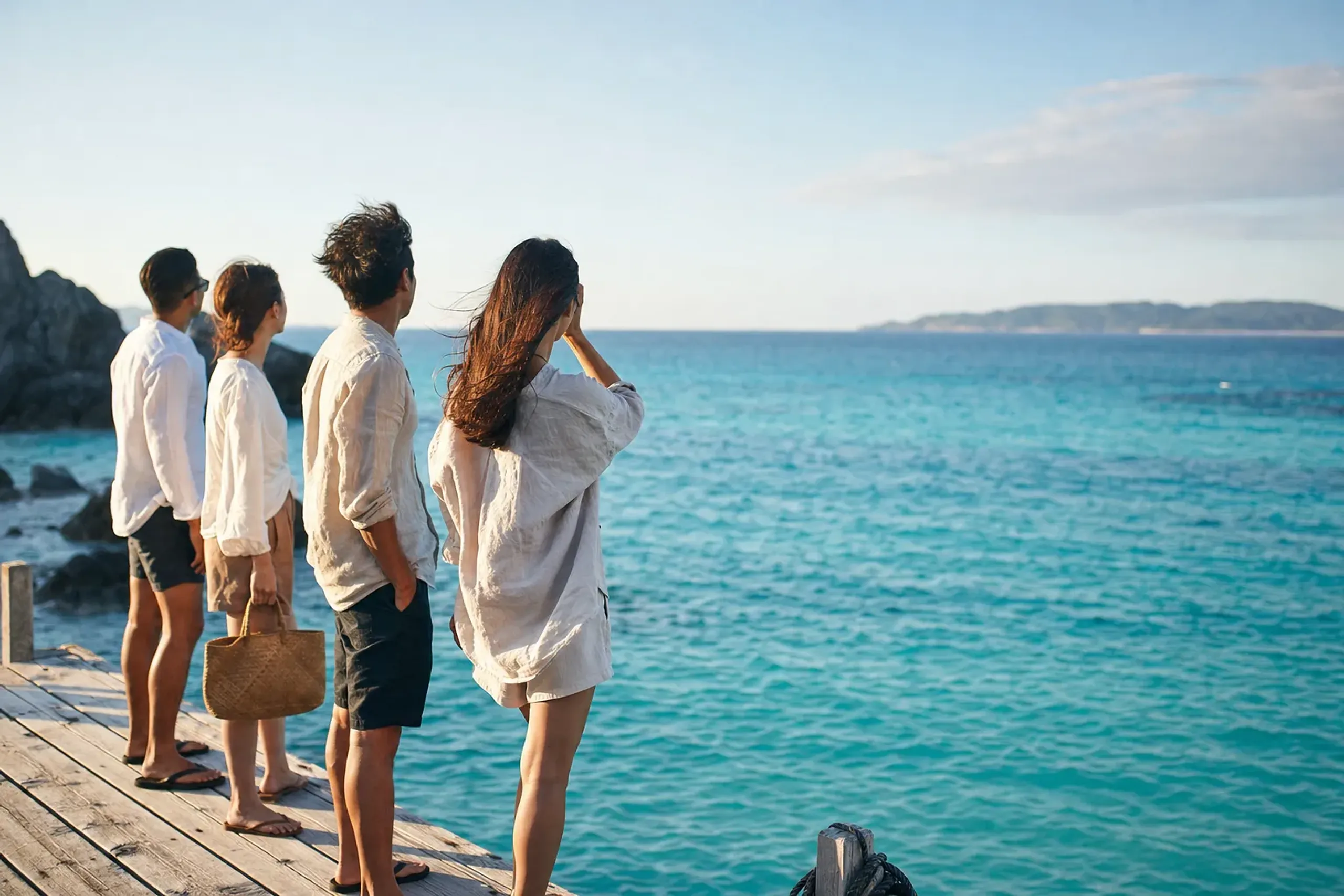
On a calm day, the water shifts from pale mint near the shore to a hard, mineral cobalt beneath the ferry hull. You come for that colour. You also accept what comes with it: a protected reef, strict beach rules, and weather that can quietly cancel your return boat.
The national park encompasses Tokashiki, Zamami, Aka, and smaller Geruma, along with more than 30 islets. People often ask “which island is best,” but the better question is simpler — and more honest. What kind of day do you want?
Our team at Japan Royal Service treats Kerama as a sea-first destination. That single orientation changes everything: ferry choice, sunscreen, how you pack, and whether you dare to schedule this on the same day as a flight.
Don't. The restraint is the luxury here — the willingness to leave margin, to let the sea set the tempo rather than your calendar.
Tokashiki, Zamami, And Aka: Which Island Fits Your Summer Plan?
Tokashiki usually suits the quickest day-trip rhythm; Zamami and Aka reward an overnight; Aka and Geruma feel quieter still, with the Kerama deer living on both Aka and Geruma.
That is the high-level decision. Then come the details that genuinely matter: where independent swimming is permitted, where the buses actually run, and what you do when the sea turns rough at 8:00 a.m.
Tokashiki: The Fast, Practical Day Trip
Tokashiki works when you want a clean beach day with uncomplicated logistics. Go early. Come back before dark.
Two beaches anchor most first visits: Aharen Beach (the easiest to reach) and Tokashiku Beach (known for turtle sightings offshore). The island bus serves Aharen Beach, but not Tokashiku Beach. A small detail with a large consequence.
Tokashiki's rules are not decorative. Snorkelling inside the monitored area requires a life jacket. No swimming after alcohol. No smoking on the beach. And rubbish goes home with you.
Zamami: Longer Stays, More Options, Stricter Swim Boundaries
Zamami is where people settle into the pace. A slower morning. An extra swim. A second beach before dinner.
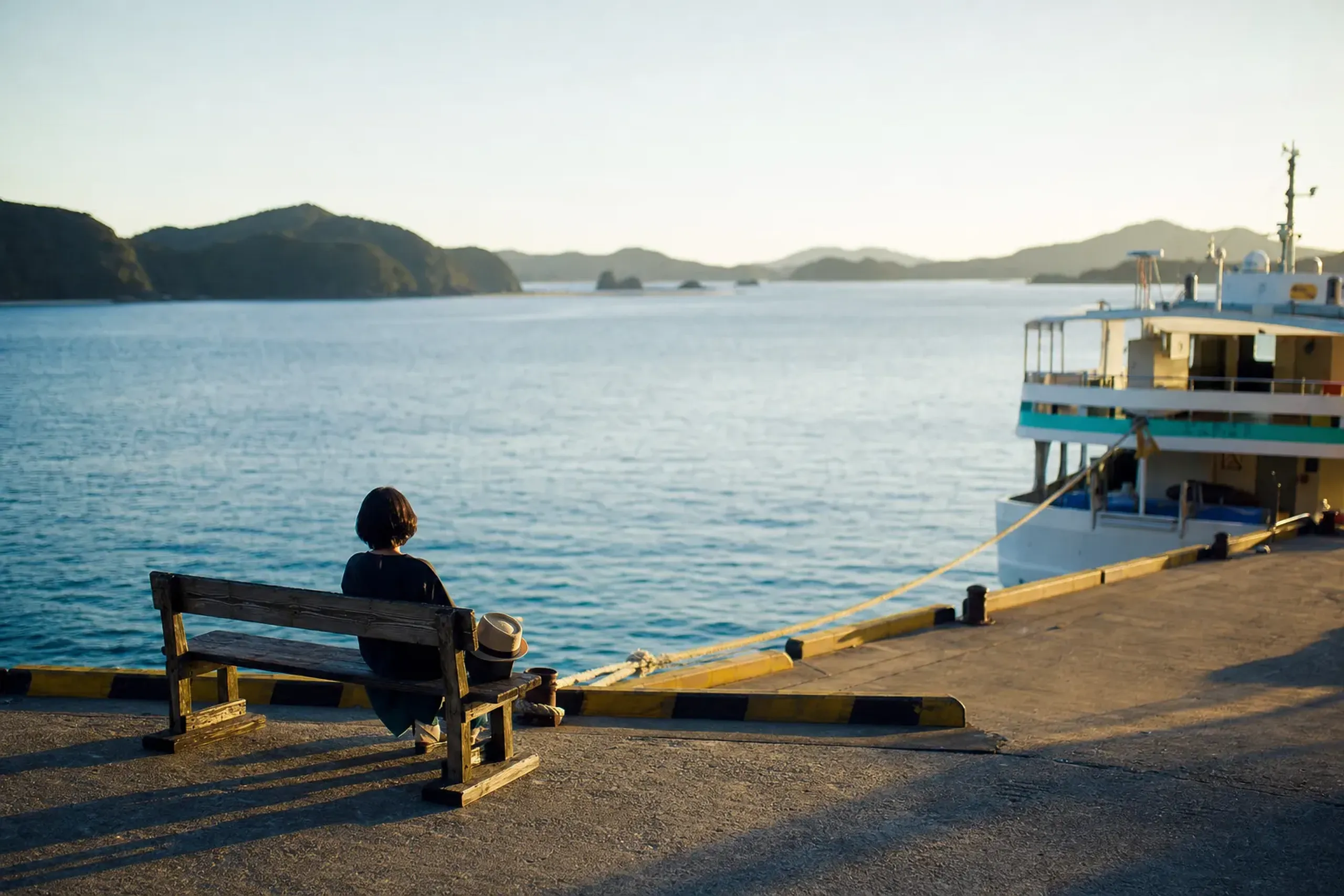
The signature beaches are Furuzamami Beach and Ama Beach. In summer, sea turtles are often seen at Ama Beach. You watch. You do not follow. That restraint is the whole point.
On Zamami, independent swimming is limited to designated areas at Ama and Furuzamami. Swimming elsewhere requires a guided tour with a licensed guide. The rule is simple, and it is enforced for sound reasons: currents, sudden drop-offs, and the plain reality that help is not instant on a small island.
Aka: Nishibama, Short Hops, And The Deer On Aka And Geruma
Aka feels smaller. Quieter. The beach conversation drops to a whisper without anyone announcing it — the kind of unhurried hush that money cannot manufacture and that the finest hospitality simply protects.
Nishibama Beach is the name to remember. Aka also connects to Zamami by a small link boat that takes about 15 minutes and runs 4 to 6 times a day (service varies by schedule). That makes “stay on Aka, visit Zamami” a genuinely workable option.
The Kerama deer live on Aka and Geruma and are a National Natural Monument, designated in 1972. Treat them like wildlife, not a photo prop. No feeding. No chasing. No shortcuts.
Where Can I See Sea Turtles In The Kerama Islands In Summer?
You can often see sea turtles at Ama Beach on Zamami and offshore at Tokashiku Beach on Tokashiki, especially in summer.
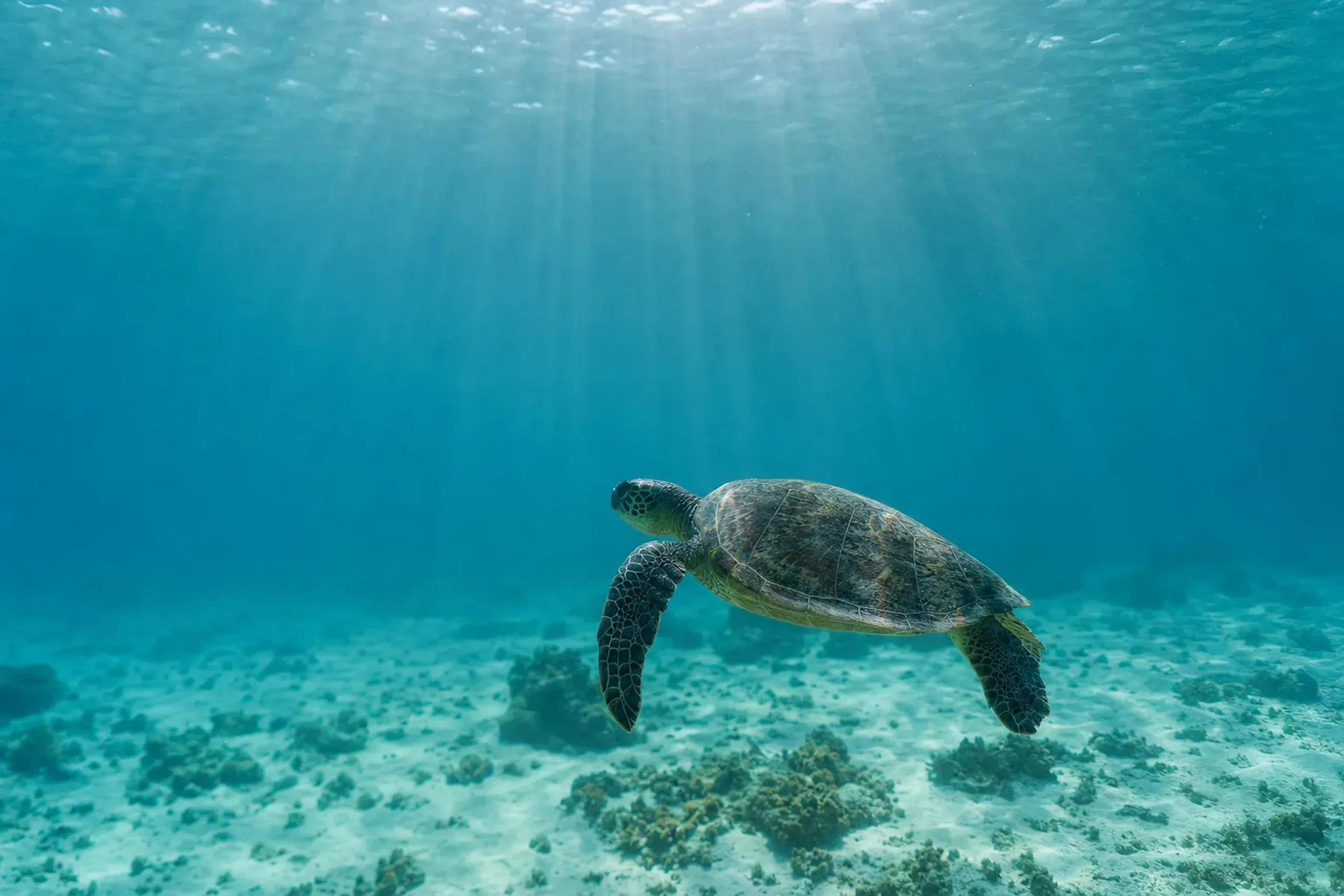
Japan's Ministry of the Environment notes green and hawksbill turtles in Kerama waters, and that in summer they come ashore on sandy beaches to lay their eggs. That does not mean you will see nesting. It means you move softly and keep your distance.
What “doing it right” looks like is almost boring. Float, observe, and let the turtle decide the distance. No chasing, touching, or blocking its path. If you want a better view, improve your patience, not your proximity.
Pack with this in mind: a rash guard for sun protection, water shoes for beach entry, and enough water to stay sharp. Heat makes people careless. That is the real risk.
Swimming And Snorkelling Rules: What You Must Follow In Summer
In summer, swim only in designated areas, wear a life jacket when required, avoid alcohol, and follow the local beach rules designed to protect both swimmers and the reef.
Kerama's appeal is also its vulnerability. The coral reef wetland here was registered under the Ramsar Convention on 8 November 2005, with 248 or more coral species confirmed. Coral does not heal on your schedule.
Key fact: Do not step on coral, do not take plants or animals, and do not feed marine life. What you remove “as a souvenir” is precisely what the reef loses.
Specific summer rules to plan around:
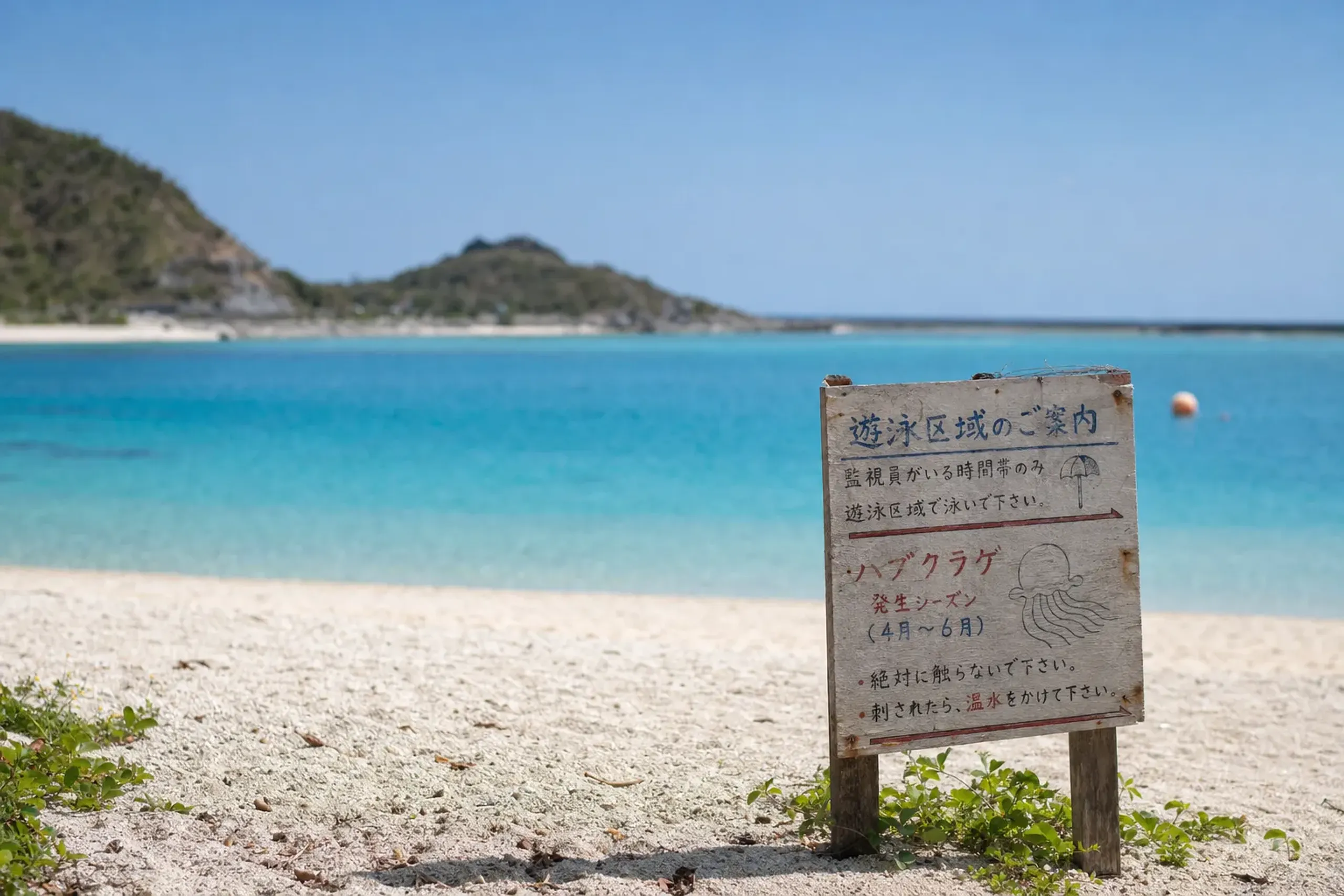
- Zamami: Independent swimming is limited to designated areas at Ama and Furuzamami (and also Nishibama on Aka). Swimming elsewhere requires a guided tour with a licensed guide.
- Tokashiki: A life jacket is required when snorkelling inside the monitored area. No swimming after alcohol. No smoking on the beach. Rubbish goes home.
- Dress and manners: Do not walk through settlements wearing only swimwear. Keep cover-ups within reach.
Sunscreen is part of reef etiquette now. The Zamami tourism association strongly recommends reef-safe sunscreen, and local stock can run low in peak weeks. Bring your own. Bring enough.
What Does The Okinawa Box Jellyfish Advisory Mean In Kerama?
It means stings peak from early to late summer, so Okinawa issues a seasonal warning — an example advisory ran from 1 June to 30 September in 2026.
This is where confident swimmers get sloppy. Don't be one of them.
During advisory months, we suggest you treat every swim as a managed activity, even if you are a seasoned snorkeller: check the day's conditions, stay within supervised zones, and follow local guidance. If you are travelling with children, that discipline matters all the more.
We do not claim nets exist at any specific beach, and you should not assume they do. Your protection is planning: time of day, swim-area choice, and listening to the people who read this sea for a living.
Summer Weather, Typhoons, And The Days The Ferries Don't Run
Expect Naha to average about 29°C in July and August, with highs near 32°C, and plan for typhoons to peak in August and September.
Those are Naha normals (1991–2020). The islands have no official station to quote in quite the same way, so we keep it honest: Kerama feels hotter than you expect when you are on sand, in windless coves, with sun bouncing up from the shallows.
Typhoons are not a headline here. They are a scheduling reality. The Japan Meteorological Agency notes that August and September see the most formations and approaches to Okinawa, and in those weeks you need a spare day built quietly into the trip.
In our experience at Japan Royal Service, the single best “luxury move” in Kerama is restraint. Don't cram. Don't pin your only free day between meetings and a departing flight. The sea does not negotiate — and the most refined itinerary is the one that leaves room for it to have its say.
Getting There And Getting Back: Ferries From Naha Tomari Port
Public ferries to Tokashiki, Zamami, and Aka depart from Tomari Port (Tomarin) in Naha, using high-speed boats and standard ferries depending on route and sea state.
Start with the ground truth: you must confirm timetables closer to your visit.
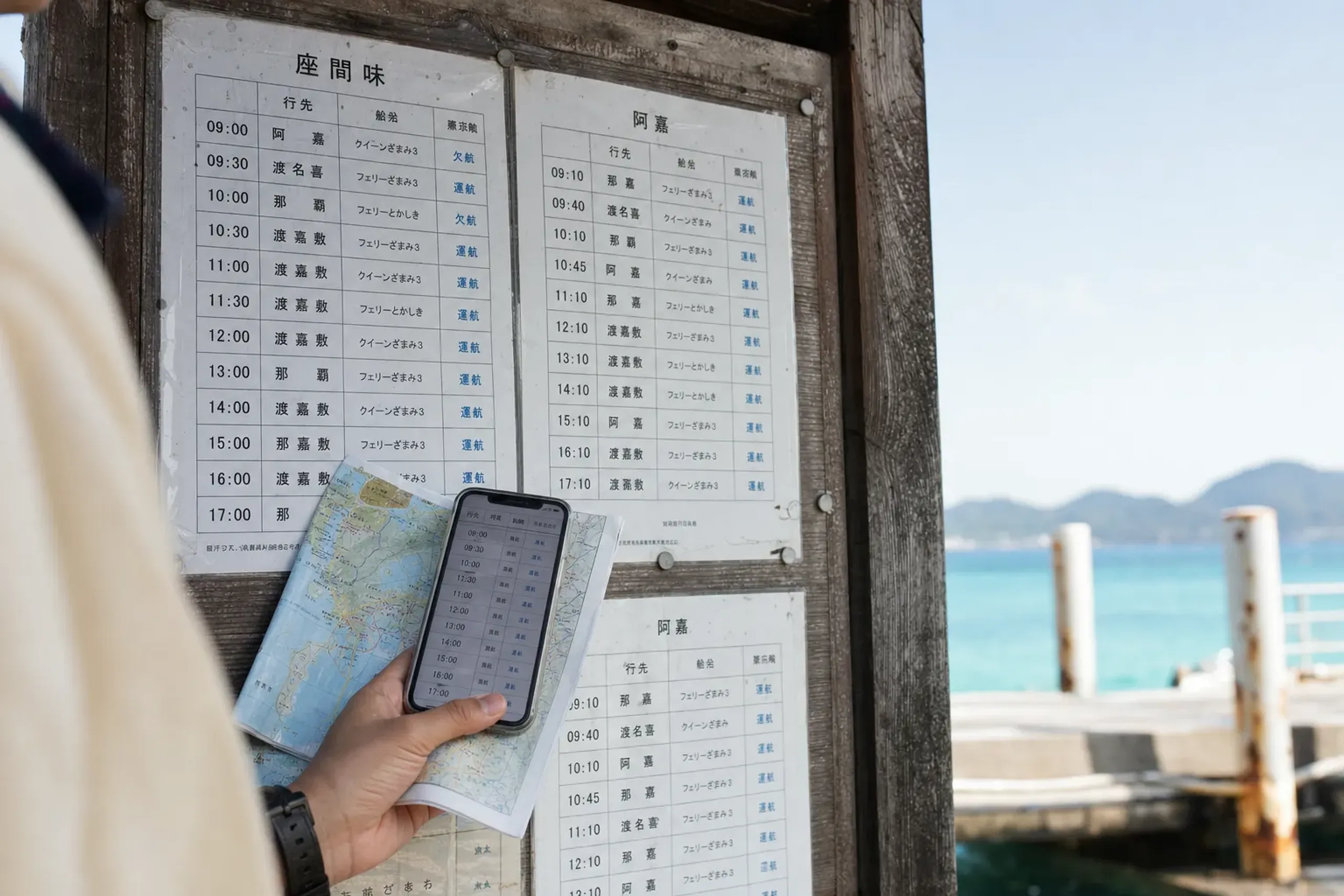
Summer schedules change by season and by year, and boats can be cancelled for weather.
Naha Airport To Tomari Port: Practical Transfer Notes
From Naha Airport to Tomari Port, a taxi is roughly 10 to 15 minutes. A bus takes about 30 minutes. The Yui Rail monorail to Miebashi Station runs about 14 minutes, followed by around a 10-minute walk.
If you prefer a calmer start, our concierge can advise on timing and luggage strategy, and we can arrange a car transfer in Naha through a trusted partner fleet. Your morning is too important to leave to guesswork.
The first mention matters to many of our guests: we can arrange private transportation on the Naha side so you arrive steady, not flustered — the quiet, anticipatory care that makes the difference before the day has even begun.
Tokashiki Ferry Times (Worked Example: 1 March To 30 September Timetable)
Tokashiki Village publishes seasonal timetables; as a worked example, a 1 March to 30 September schedule shows high-speed service taking about 40 minutes and the standard ferry about 70 minutes.
Example departures from Naha Tomari included 9:00 and 16:30 (high-speed), plus 10:00 (standard). Example returns included 10:00 and 17:30 (high-speed), plus 16:00 (standard). These are time-bound postings. Re-check before you commit.
Tokashiki also publishes a clear cancellation threshold: the high-speed boat may be cancelled when waves exceed 3 m, and the standard ferry above 4 m, with status typically updated at 8:00.
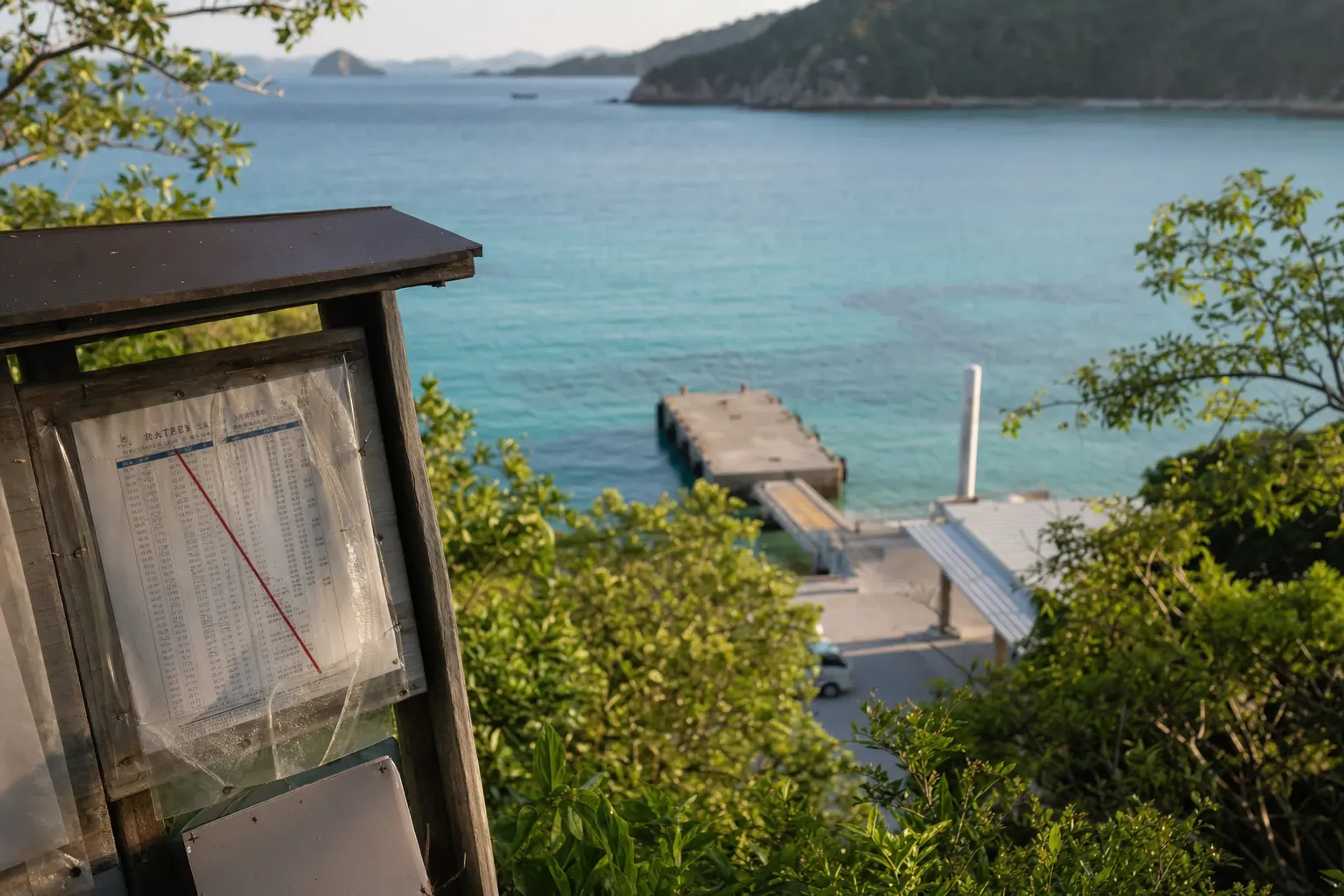
That single line should shape how you plan your dinner reservations back in Naha.
Zamami And Aka Ferry Times (What “50–70 Minutes” Really Means)
Zamami and Aka are roughly 50 to 70 minutes by high-speed ferry, while the slower ferry can take about 90 minutes to Aka and about 2 hours to Zamami.
Published timetables for Zamami can be time-limited. One schedule publicly available, for example, covered October 2026 only, and the high-speed service had a dry-dock pause from late October into early December (as posted). Treat this as a reminder: you confirm, and then you confirm again.
Once you are in the islands, the link boat between Aka and Zamami is a useful connector at around 15 minutes. It opens up split-stay thinking without forcing you to change base every single day.
How To Plan A Day Trip Vs A Stay: Two Simple Itineraries
A day trip works best on Tokashiki; an overnight makes Zamami and Aka feel far less rushed, with room for weather shifts and the slower ferry option.
Here is how we think about it when guests ask for a Kerama plan that will not collapse if the sea turns moody.
Option A: Tokashiki As A Clean Day Trip
This is the “single purpose” Kerama day: sea time, a proper swim, and back to Naha before you start watching the clock.
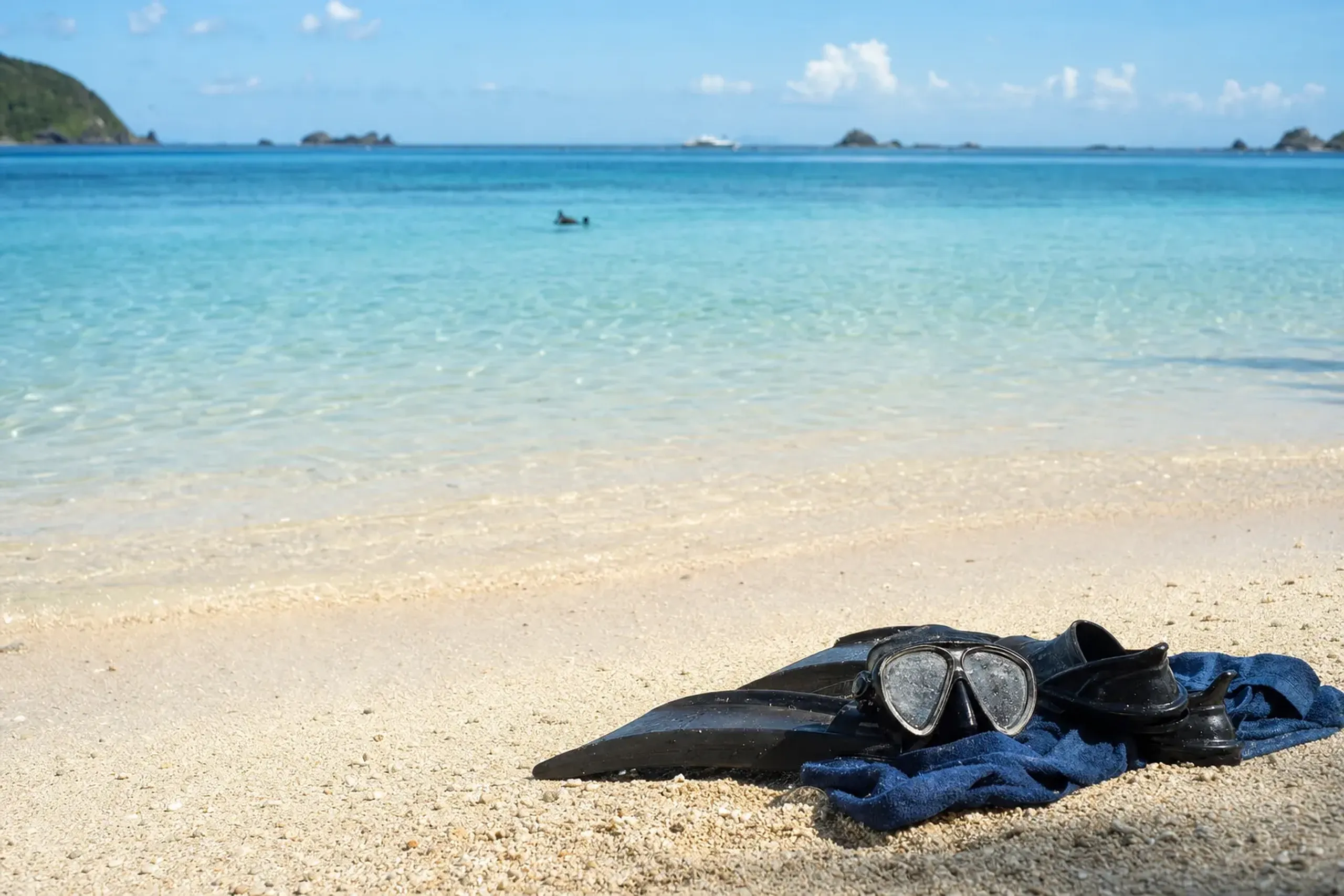
- Take an early high-speed departure (when available) so you reach the beach before the fiercest midday sun.
- Choose Aharen Beach if you want straightforward access and services nearby.
- If you want a turtle-focused swim, plan carefully for Tokashiku Beach logistics (no island bus service).
- Plan your return around the posted timetable, and accept that cancellations can happen if waves rise.
Keep your dinner in Naha flexible. If the boat is cancelled, you want slack, not a penalty.
Option B: Zamami Or Aka With One Overnight
This is the version that feels genuinely human. You get an early-morning swim, and you are not shaking sand out of your shoes in a hurry.
- Arrive on Zamami and base near Furuzamami Beach or Ama Beach, staying within designated swim areas.
- Or base on Aka for Nishibama Beach, using the link boat for a day visit to Zamami when schedules align.
- Carry reef-safe sunscreen and a cover-up for village streets. Small respect. Big difference.
- Keep a weather buffer day in your overall Okinawa plan during August–September.
Overnight planning is also a matter of reality: inventory on these islands is limited in peak summer, and the quietest, most characterful lodgings are rarely the ones a search engine surfaces. If you want an island stay — particularly one entered by introduction rather than by booking site — decide early.
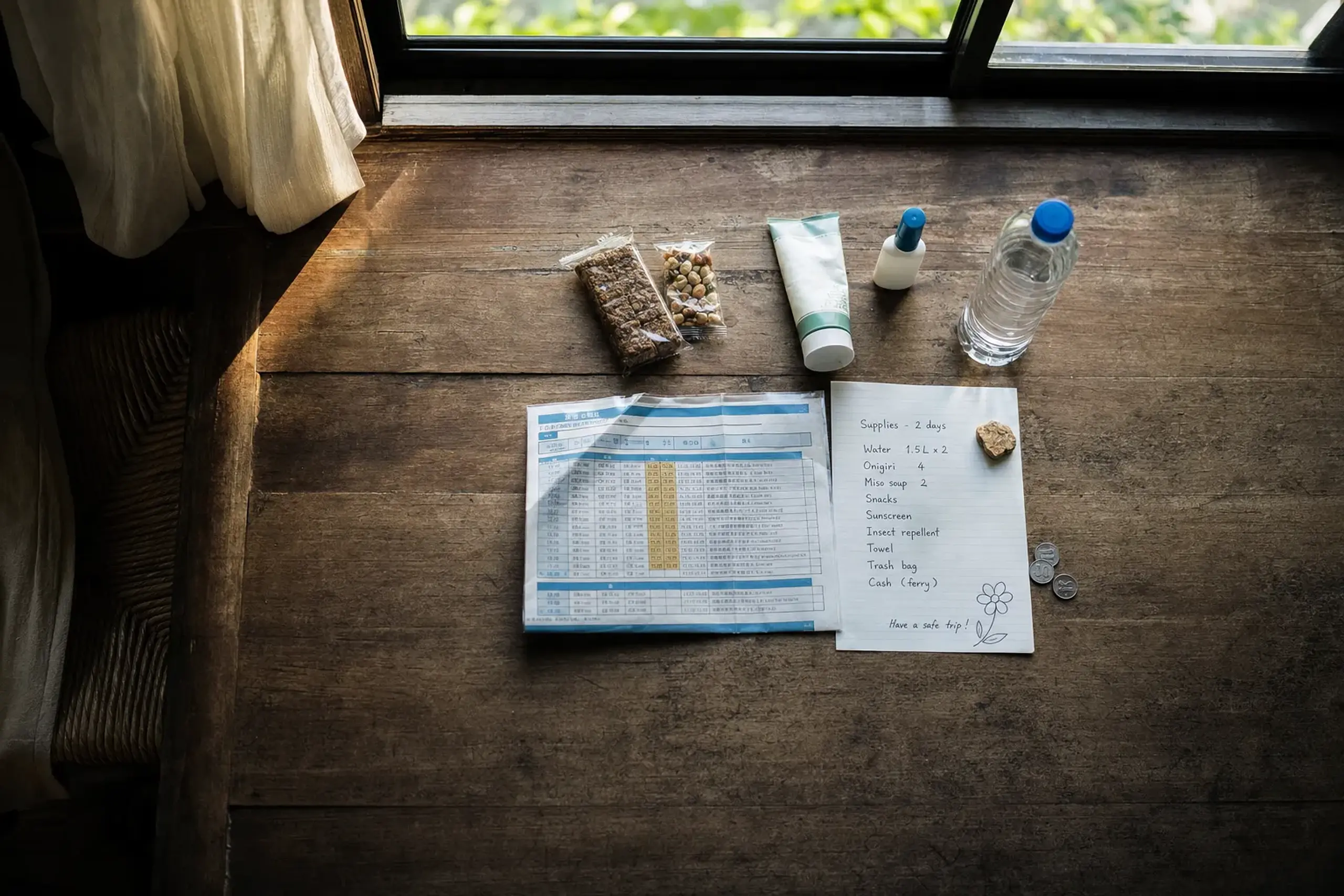
A tailor-made itinerary lets us hold the right rooms and the right ferries before the season fills.
A Few Notes On Conservation And History
Kerama's summer fame rests on a reef that cannot defend itself. Coral spawning is observed around June, and the area's Ramsar registration is not a label for brochures; it is a reminder that your fins and your footing have consequences.
One historical note deserves a quiet line. On 26 March 1945, Zamami was the site of the first U.S. landing in the Battle of Okinawa, and many people died, including those who took their own lives. If you visit the memorial spaces, do so with restraint — the same still, watchful respect the islands ask of you at the water's edge.
Let Us Plan Your Kerama Summer
Kerama rewards those who move quietly and plan well — the traveller who builds in a spare day, chooses the right island for the right mood, and trusts someone who knows which boat will run and which room is worth holding. That discreet, anticipatory curation is exactly what we do. When you are ready to shape your own Kerama Blue days around the sea's rhythm rather than against it, contact us here and let our team design it around you, in complete confidence.