In this guide
- 01What "After-Hours" Actually Means At Kiyomizu-dera
- 02Two Of The Three Nights Open Something Closed
- 03Does The Hidden Buddha Become Visible During Sennichi Mairi?
- 04The Three Night Viewing Periods
- 05When Is The Quietest Time To Visit Kiyomizu-dera At Night?
- 06How Japan Royal Service Shapes The Evening
- 07Frequently Asked Questions
- 08Why Choose Japan Royal Service
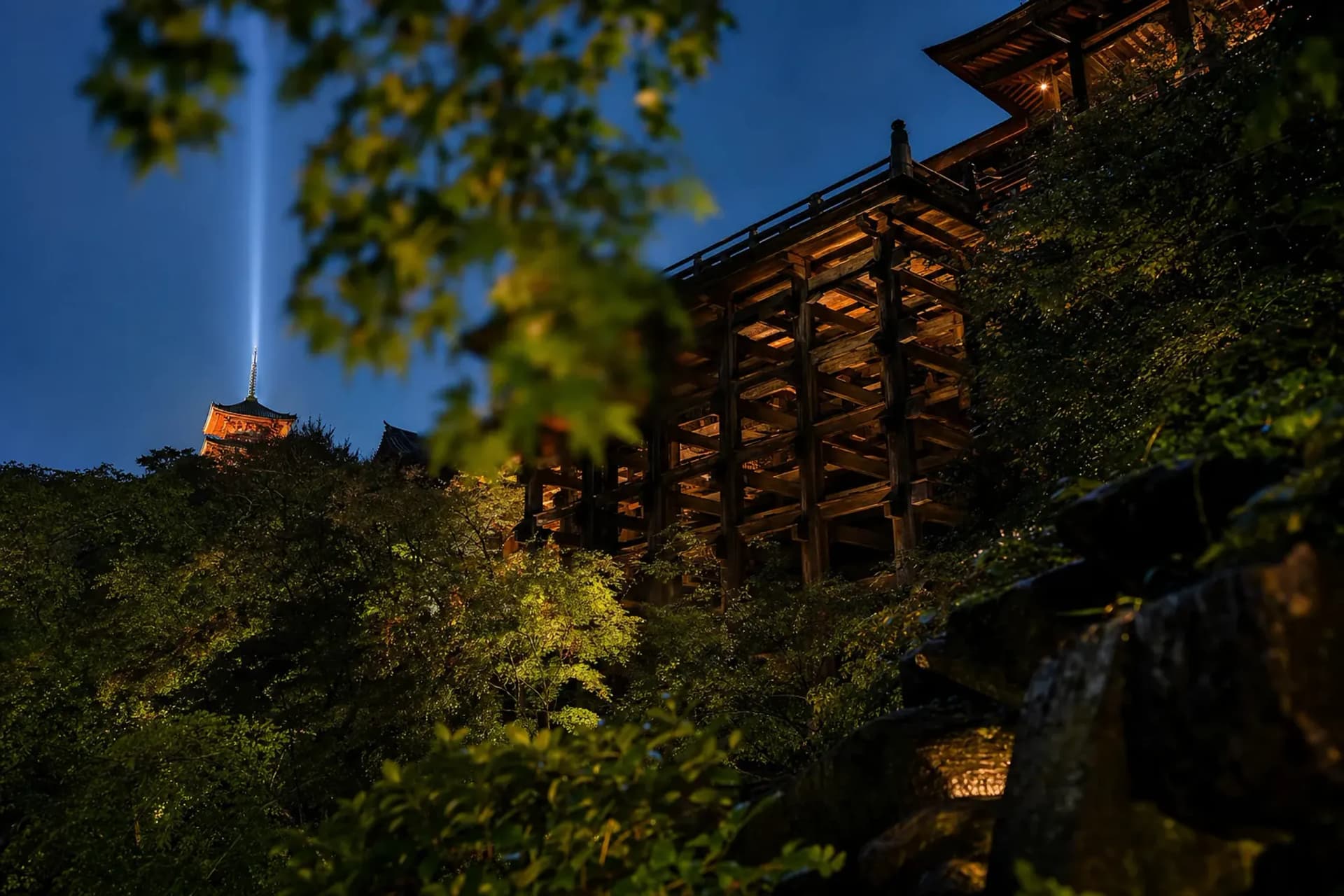
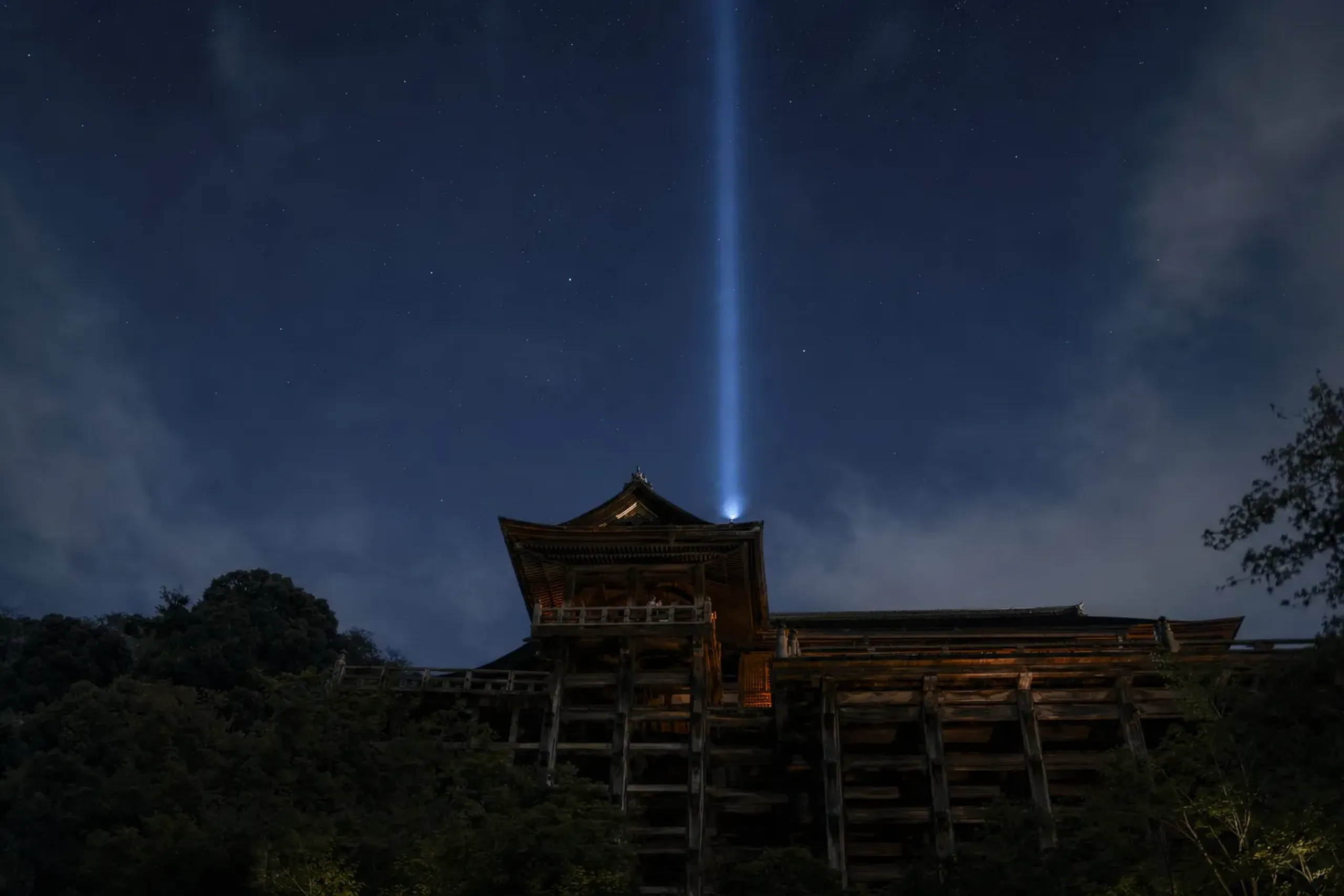
A single blue column of light climbs from the wooden hall into the dark over Higashiyama. It has a name. Kannon Jihi-kō — Kannon's Mercy Light — the compassion of the temple's central deity, cast skyward where the whole city can read it. You see it before you reach the gate. From a car crossing the Kamo River. From a hotel window in Gion. It marks the three nights of the year that Kiyomizu-dera opens after dark.
Most visitors treat these evenings as prettier lighting. They are not wrong. But they miss the substance. Twice a year, the temple unlocks spaces that stay closed the rest of the calendar. That is the reason to come at night — not the glow. Our team at Japan Royal Service builds these evenings around the openings, not the illumination.
What "After-Hours" Actually Means At Kiyomizu-dera
After-hours at Kiyomizu-dera means official Special Night Viewing — public, ticketed, extended to 9:30 p.m. with last entry at 9:00 p.m., generally no reservation required. It is not private closure. It happens three times in a year.
We say this plainly because vague luxury marketing rarely does. There is no secret door outside these windows. Between the three periods, Otowa-san Kiyomizu-dera goes dark at night like any active place of worship. No year-round evening access exists. What we shape is everything around the ticket: timing, the walk, the car, the exit. That is where a night here goes from crowded to quiet.
Key fact: Special Night Viewing is a public event. Anyone with admission may attend during the stated windows. Japan Royal Service provides guiding, timing, and transfers — not private entry outside official hours.
Two Of The Three Nights Open Something Closed
Here is the part the illumination listicles skip. Two of the three seasons open interior spaces that are otherwise sealed.
In summer, during the Sennichi Mairi period, the Main Hall's inner sanctuary — the naijin — opens for special viewing. Closed the rest of the year. In autumn, on a separate ticket from the main lightup, the Jōju-in Garden opens. Also closed the rest of the year. These are the genuine rarities. The blue light is the thread that ties the seasons together; the openings are the reason to go.
Kiyomizu-dera is a temple of the Kita-Hossō school — a distinction worth getting right, since older summaries often say only "Hossō." Small precision. It matters at a site this old.
Does The Hidden Buddha Become Visible During Sennichi Mairi?
No. The inner sanctuary opens during Sennichi Mairi, but the temple's principal Kannon image stays hidden. It is a hibutsu — a secret Buddha — unveiled only once every 33 years.
This is where careful reading pays off. When the naijin opens in August, you enter the sanctuary space. You do not see the central image. Even at the once-in-33-years unveiling, that figure is not photographed; only a stand-in image is published.
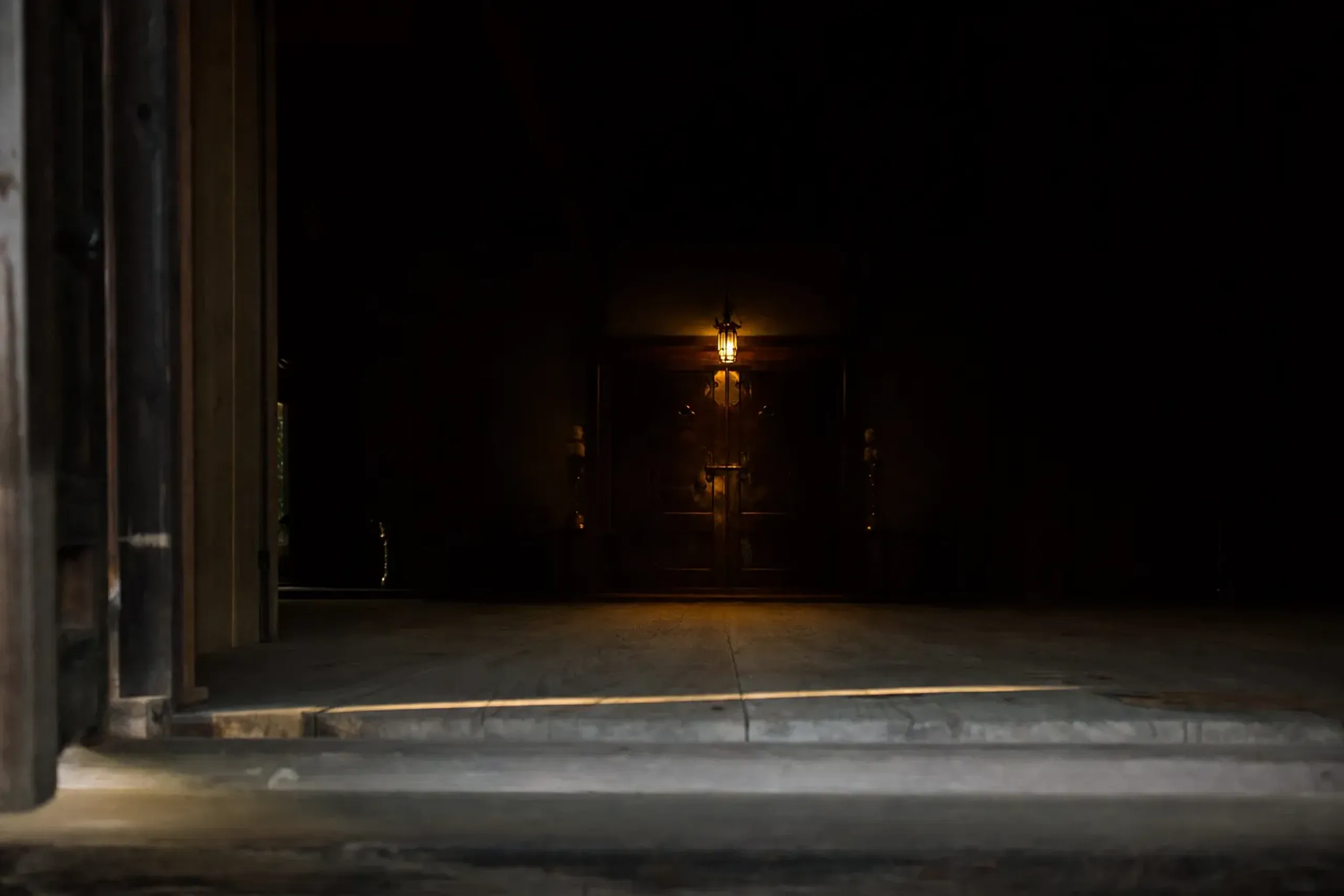
So the opening is real and rare, and the hidden Buddha remains hidden regardless of season. We tell guests this before they arrive, because the difference between "the sanctuary opens" and "you will see the secret Buddha" is the difference between a promise we can keep and one no one can.
The Three Night Viewing Periods
Kiyomizu-dera holds Special Night Viewing three times in a year: spring, summer, autumn. All three share Kannon Jihi-kō. Each carries its own character. Hours below follow the temple's own announcements — confirm close to your visit, as the temple notes content and timing change year to year.
Spring: Cherry Blossom, March – April
18:00–21:30, reception ends 21:00. Full-bloom cherry lit against the wooden stage. The famous veranda floats above a pale cloud of blossom, the blue beam rising past it into the sky. This is the most photographed of the three, and the most crowded early in the evening.
Summer: Sennichi Mairi, August
18:30–21:00, reception closing around 20:30–21:00. Sennichi Mairi means "Thousand-Day Pilgrimage." The belief: one visit during this three-day window carries merit equal to a thousand separate pilgrim visits. This is the strongest hook in the temple's year. And it is when the inner sanctuary opens for special viewing — the period's real substance, far beyond the lightup. Three nights only.
Autumn: Foliage, November
Evening reception ends 20:30; illumination runs to roughly 21:00–21:30.
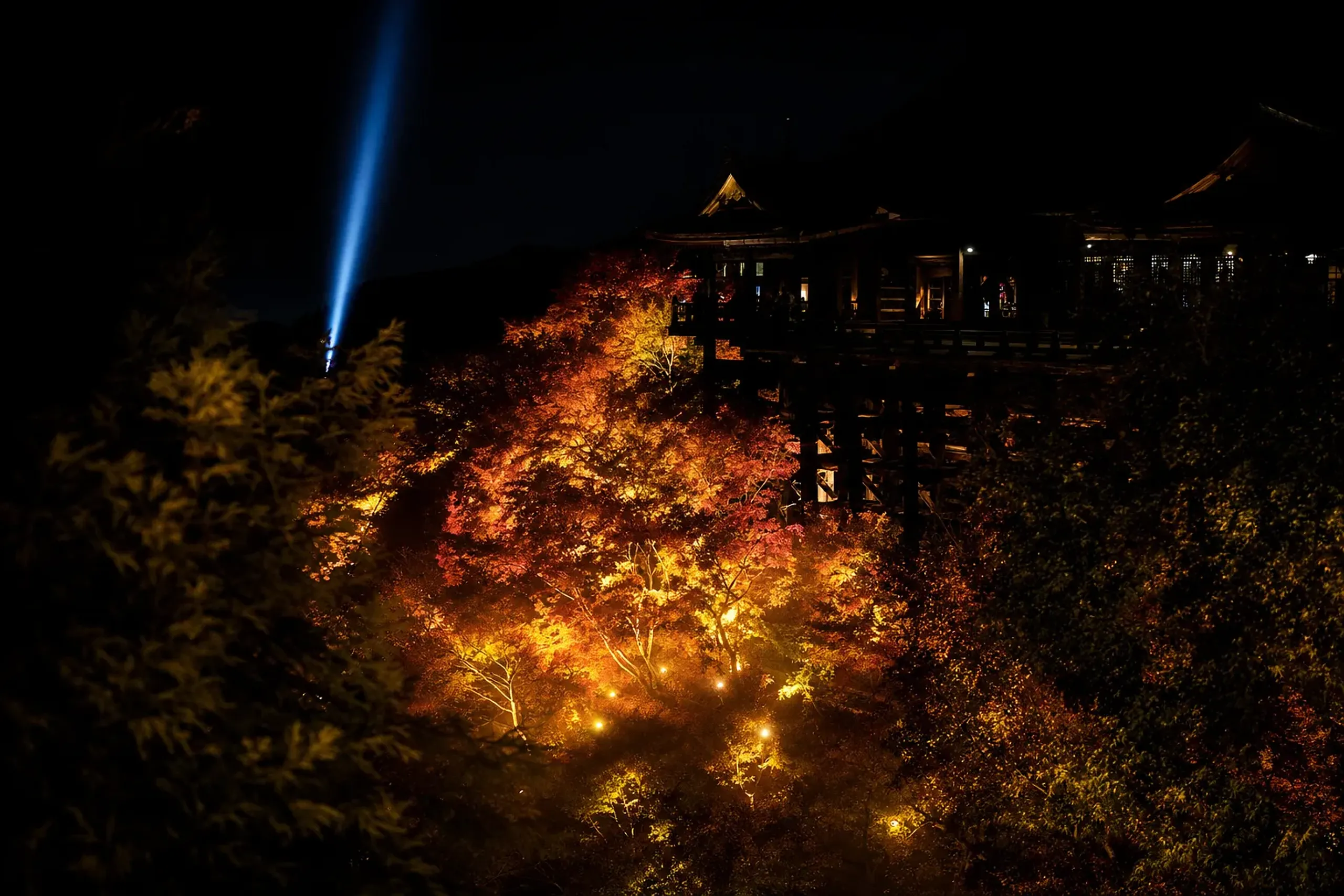
Daytime reception ends 16:00. Day and night entry are fully separate — kanzen irekae-sei — so a visitor wanting both must exit and re-enter. Roughly 500 lighting fixtures work across close to 1,000 maple trees. The stage hangs above a canyon of red. It is the most theatrical of the three seasons.
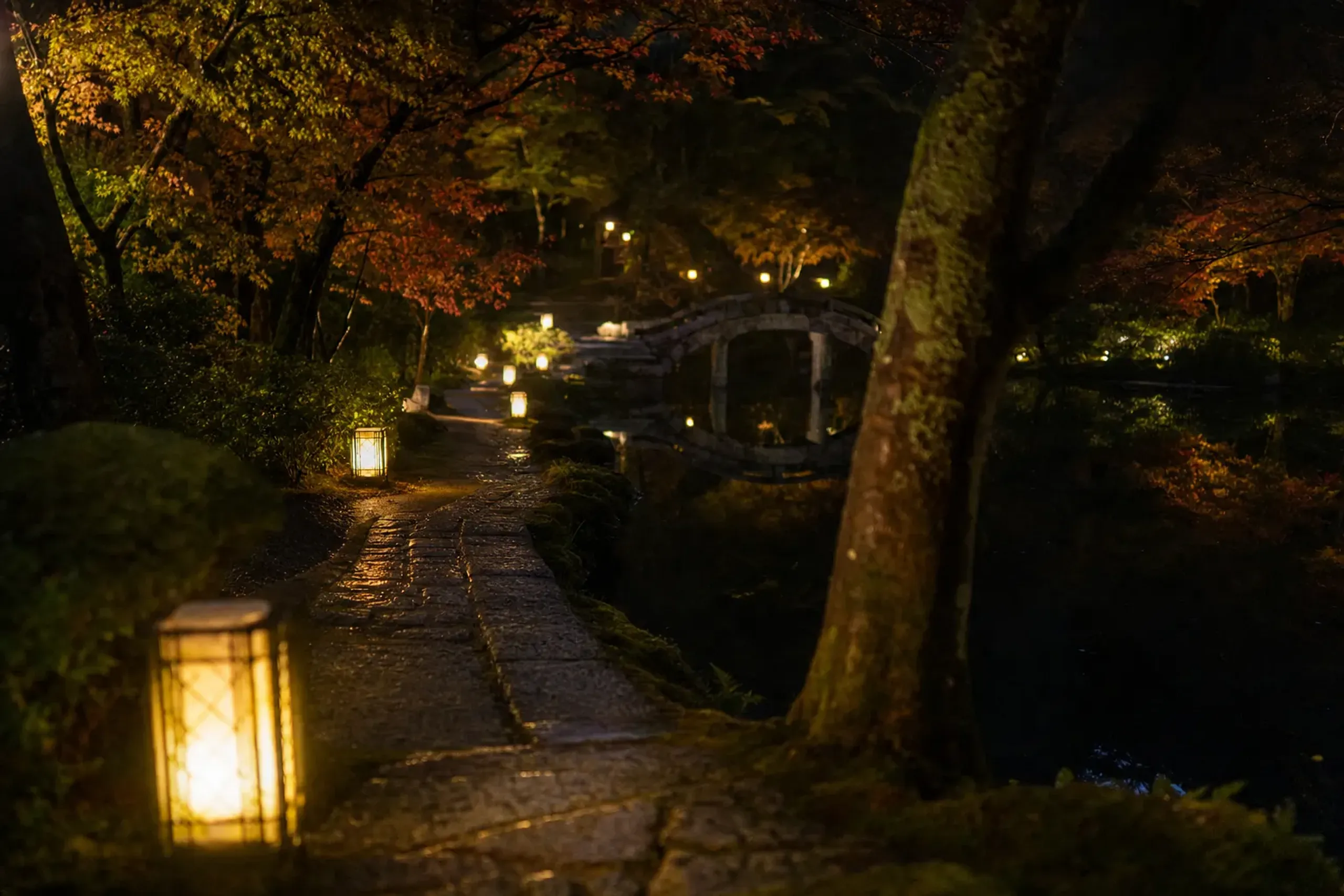
Autumn also brings the second act. During these same dates, the Jōju-in Garden — normally shut — opens on its own ticket. The garden's evening session runs to an 8:30 p.m. last entry. After the press of the main approach, it is a quiet, contemplative counterpoint: a strolling garden read by lamplight, a different register entirely. Most night-illumination write-ups omit it. It is, for many of our guests, the better half of the evening.
| Season | Dates | The Rare Opening |
|---|---|---|
| Spring | Mar – Apr | Cherry over the stage (illumination) |
| Summer (Sennichi Mairi) | Aug | Inner sanctuary (naijin) opens |
| Autumn | Nov | Jōju-in Garden opens (separate ticket) |
When Is The Quietest Time To Visit Kiyomizu-dera At Night?
After 20:00. Congestion peaks between 17:30 and 18:30 as day visitors linger and evening crowds arrive; the grounds thin noticeably in the last hour before the reception cutoff.
A few concrete moves change the whole feel of the night. Within the autumn window, late November runs busier than the first days of December elsewhere in the city — the maples peak, and everyone knows it.
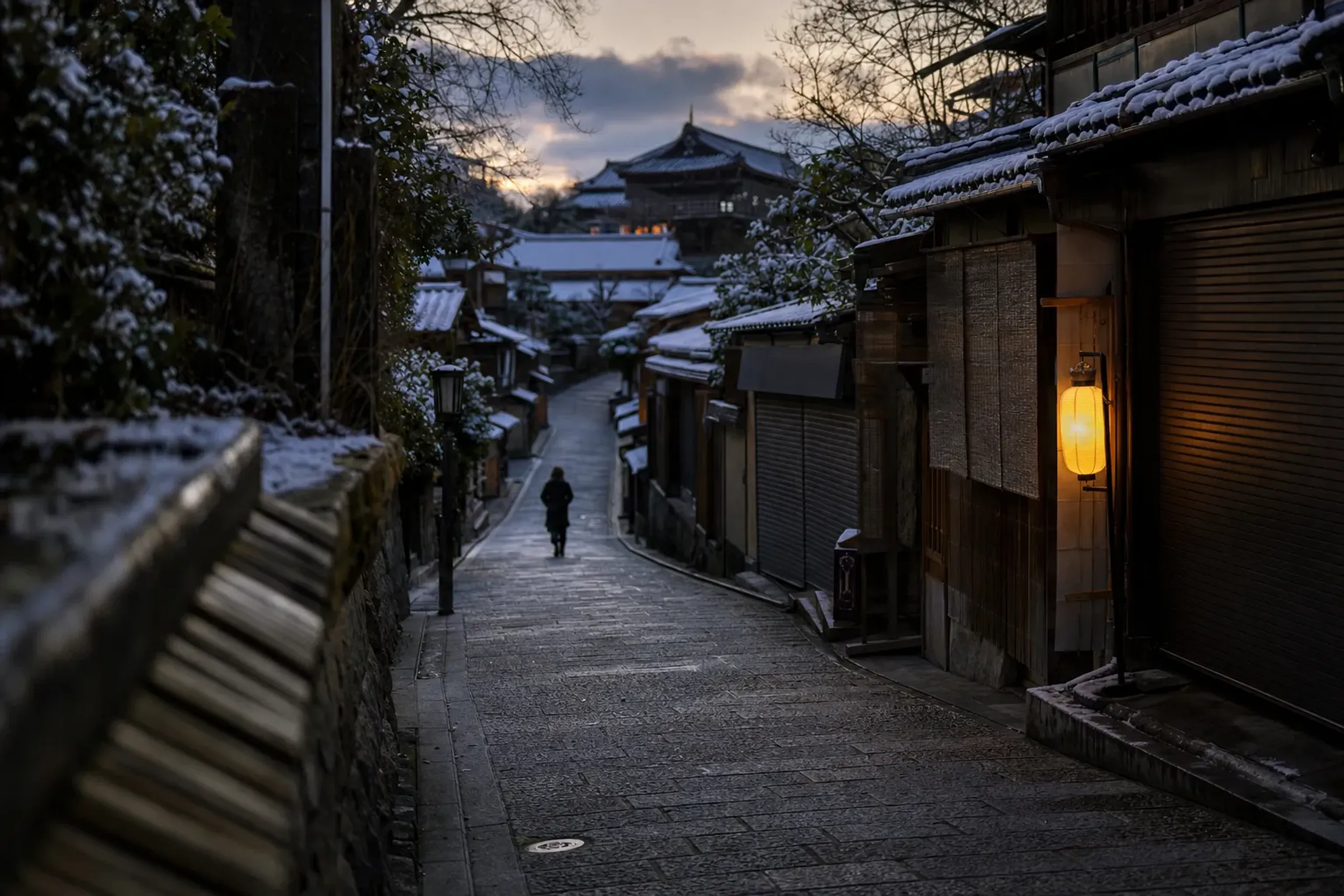
Approach matters too. The Chawan-zaka slope draws far fewer feet than the main Gosaka route up from the bus stops. And when you leave, don't retrace the crush. Walk down through Gion toward Hankyū Kawaramachi. The most congested exit lanes empty behind you.
This is the layer our concierge obsesses over. The ticket is public. The experience is not — it is built from weekday selection, a drop-off point clear of the worst pedestrian pinch, an arrival timed to the lull, and a walking line that keeps you out of the tide. On a peak November night, a well-chosen route can be the difference between a pilgrimage and a scrum. Kyoto's narrow Higashiyama lanes close to vehicles near the temple, so a private chauffeured transfer is choreographed to the exact permitted drop point rather than fighting the last hundred metres.
How Japan Royal Service Shapes The Evening
Guiding, timing, transfers. That is what we arrange, stated precisely. These are public ticketed events open to any visitor during the official windows — we do not provide private or exclusive entry outside them, and we won't pretend otherwise.
What we do control is considerable. A tailor-made itinerary sequences the night so the crowded hours pass over dinner, and you reach the gate as the tide recedes. Our cultural interpreter reads the Kita-Hossō context, the meaning of Sennichi Mairi, the distinction between an open sanctuary and a hidden Buddha — the things that turn a lit stage into a place of worship you actually understand.
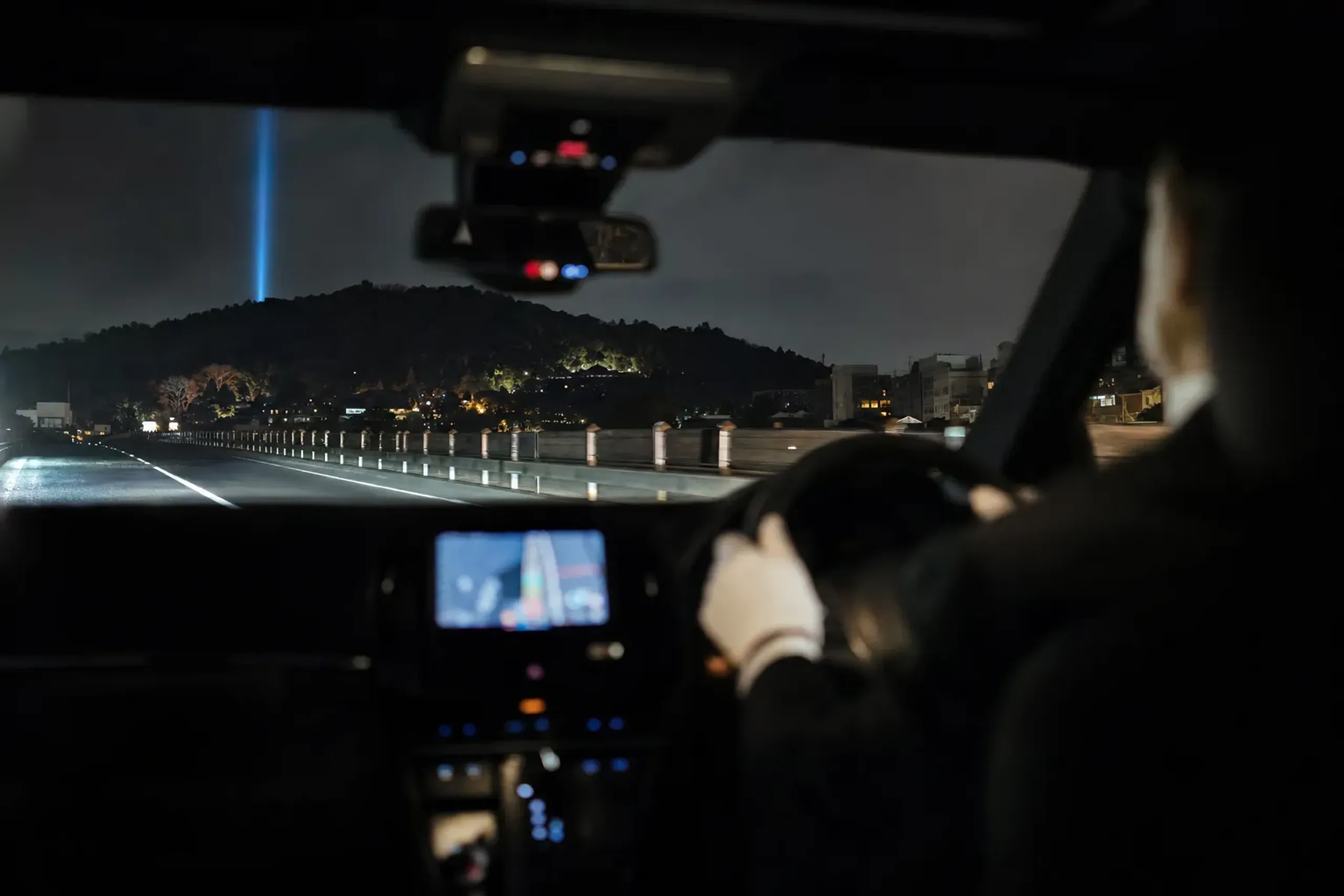
For the autumn window we pair the main approach with the Jōju-in Garden's later session, so the evening ends in stillness rather than noise. And the car meets you where the lanes allow, guided by our Kyoto chauffeur team who know exactly which streets close and when.
Discretion runs through all of it. Your itinerary, your identity, your pace — kept to ourselves. If a ryokan or hotel in Higashiyama suits the trip, our accommodation service places you within a short, quiet transfer of the gate.
Frequently Asked Questions
Do I Need A Reservation For Kiyomizu-dera's Night Viewing?
Generally no. Per the temple's 2026 spring announcement, Special Night Viewing requires no reservation — you attend with admission during the published windows. Confirm close to your date, as details change year to year.
Can I See The Hidden Kannon Statue During Sennichi Mairi In August?
No. The inner sanctuary opens during Sennichi Mairi (August), but the principal image is a hibutsu, unveiled only once every 33 years and never photographed. The sanctuary space opens; the image stays hidden.
Is Kiyomizu-dera Lit Up At Night All Year Round?
No. Kiyomizu-dera holds night viewing only three times in a year — spring, summer, and autumn. Between these windows the temple is not illuminated at night, and no year-round evening access exists.
When Does The Jōju-in Garden Open, And Is It A Separate Ticket?
The Jōju-in Garden opens for autumn on November, on a ticket separate from the main lightup. Its evening session runs to an 8:30 p.m. last entry — a quiet counterpoint to the main approach.
What's The Best Way To Avoid The Crowds At The Autumn Illumination?
Arrive after 20:00, use the Chawan-zaka approach rather than the main Gosaka route, and exit down through Gion toward Hankyū Kawaramachi. Weekday timing and a well-placed car drop reduce congestion further.
Why Choose Japan Royal Service
Plenty of agencies imply exclusive access at Kiyomizu-dera. Few tell you the truth: the night is public, and the craft lies in how you meet it. We'd rather be trusted than dazzling. In our experience, the guests who remember a night here are the ones who understood the Sennichi Mairi belief, stepped into the open sanctuary knowing what it was and wasn't, and closed the evening in the hush of the Jōju-in Garden while the crowds drained away below.
That is what our team at Japan Royal Service builds — real openings, honestly framed, wrapped in timing and transport and quiet that no walk-up visitor can assemble alone. Kyoto native knowledge, an in-house fleet, total discretion. The blue light does the rest.
To plan a night at Kiyomizu-dera around the viewing windows, reach our team privately via WhatsApp or LINE, or contact us here.