In this guide
- 01The Four Kyoto Spring Dances At A Glance (By Calendar)
- 02Why Choose Kamogawa Odori First If You’re Visiting Kyoto In May?
- 03How Do Kyoto Spring Geisha Dance Tickets Work For Foreign Visitors?
- 04A Kamogawa Odori Afternoon, Step By Step
- 05If Kamogawa Doesn’t Fit Your Dates, Choose By Calendar
- 06How Our Concierge Team Plans One Odori Day In Kyoto
- 07Frequently Asked Questions
- 08Plan Your One Perfect Odori Afternoon
You step into Pontocho as the matinee clock approaches. The lane is short—about 500 meters—and it asks you to slow down. Stone underfoot. A hush between doorways. The city seems to lower its voice for you.
This is the Kyoto many visitors miss, because they try to do everything at once. Four spring dances. Four theaters. One trip. Exhausting—and, quietly, a little disrespectful to each performance.
Our team at Japan Royal Service encourages a quieter approach: choose one odori, commit fully to the room, and let the afternoon unfold without turning art into a checklist. The restraint itself becomes the luxury.
The Four Kyoto Spring Dances At A Glance (By Calendar)
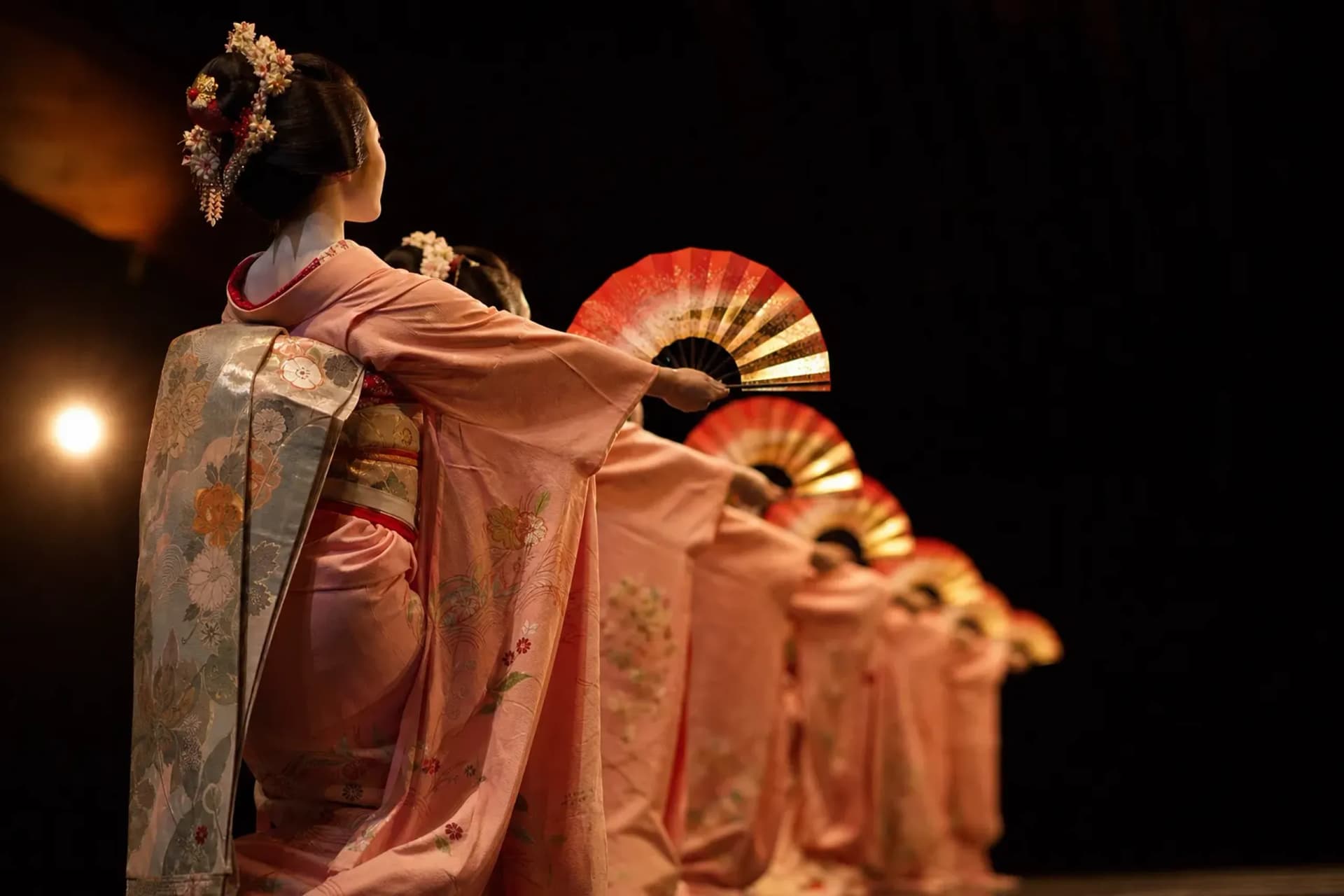
Kyoto’s five hanamachi (kagai) keep their culture alive through annual public dance performances, with four major spring productions running from late March through May. These are not “tourist shows.” They are working districts staging their year—the visible surface of a tradition that continues quietly whether or not an audience is watching.
Pick by dates first. Then by temperament. Do not try to “collect” all four unless you are returning for a long, unhurried stay.
| Spring Dance (Hanamachi) | Typical Season Window (Example: 2026 Published Dates) | Show Times (Example Schedule) | Notes That Affect Planning |
|---|---|---|---|
| Kitano Odori (Kamishichiken) | Late March to early April (20 Mar–2 Apr 2026) | 14:00, 16:30 | ~90 minutes; preschool children not admitted |
| Miyako Odori (Gion Kobu) | April (1–30 Apr 2026) | 12:30, 14:30, 16:30 | ~1 hour; tea ticket option; no cancellations/changes/refunds |
| Kyō Odori (Miyagawachō) | Early to mid April (4–19 Apr 2026) | 13:00, 16:00 | Tea included with all tickets; children under 10 not admitted; online-only tickets |
| Kamogawa Odori (Pontochō) | May (5–22 May 2026) | 12:30, 14:20, 16:10 | Two parts; tea option in top seat tier; seats assigned by organizer; online purchases cannot be cancelled |
Key fact: Each year’s dates and rules are set by the organizers. Use the published schedule for your travel year, and treat any example dates here as a planning model rather than a guarantee.
Why Choose Kamogawa Odori First If You’re Visiting Kyoto In May?
Kamogawa Odori is often the easiest first spring dance, because it runs in May—after the cherry-blossom weeks, when Kyoto’s pace softens and Pontocho already feels like an evening even before the curtain rises.
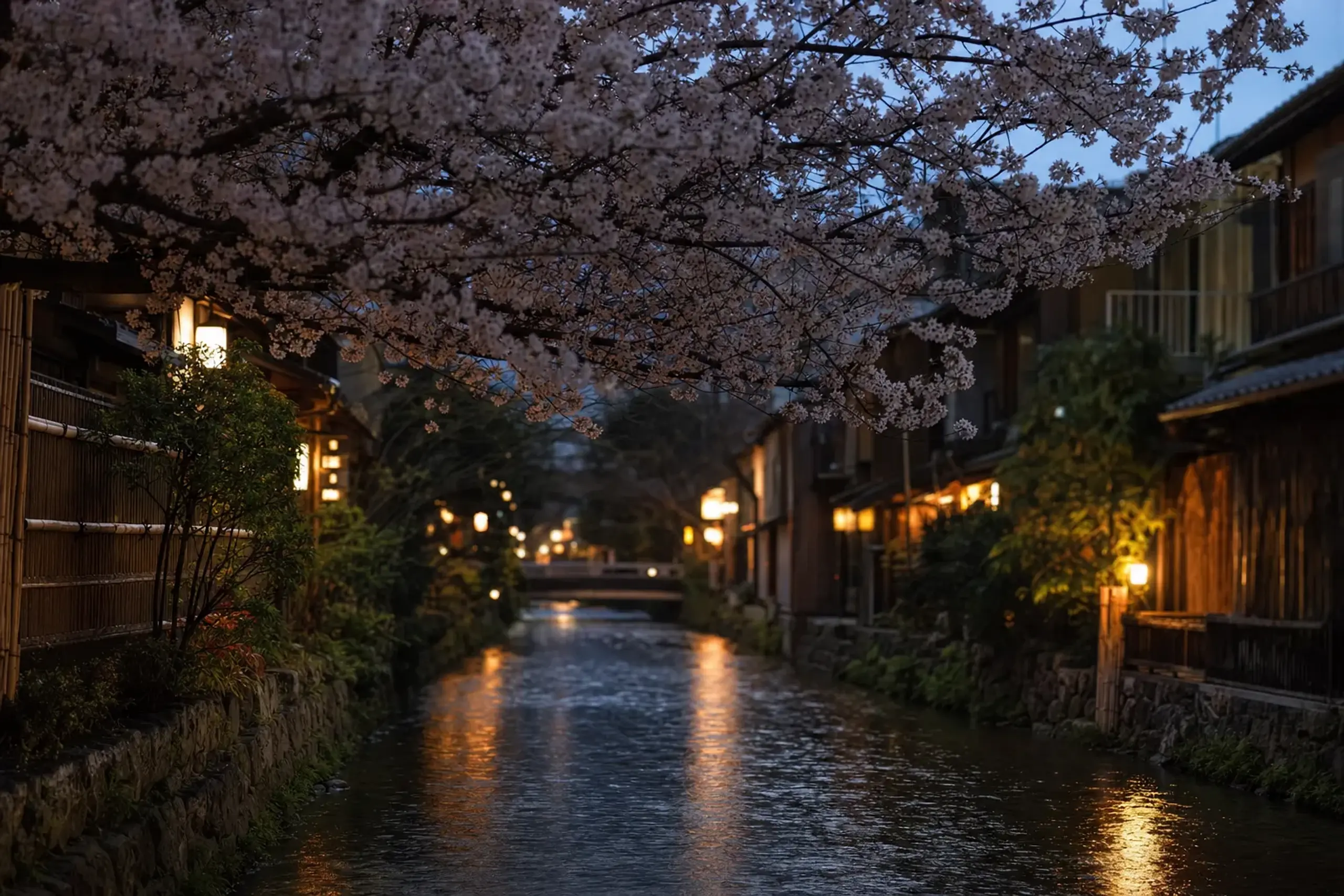
Timing changes everything. In April, Kyoto can feel like a crowded corridor between popular temples. In May, you can hear your own footsteps again. That difference is not incidental; it is the whole point.
Pontocho’s setting supports that mood. The district is a lane beside the Kamo River, and geisha were first permitted there in 1813. The Kaburenjo theater was built in 1925–27, and it has no parking. Good. Less traffic. Less noise. The quiet is designed in.
This is also where the discerning traveler’s advantage is not “access.” It is restraint. The spirit of wabi-sabi applied to a schedule: one performance, one well-paced afternoon, and enough space around it for the memory to settle rather than compete.
How Do Kyoto Spring Geisha Dance Tickets Work For Foreign Visitors?
Tickets for Kyoto’s spring dances are sold through each organizer’s official channels, with seat classes and rules that can include strict no-cancellation policies and organizer-assigned seating.
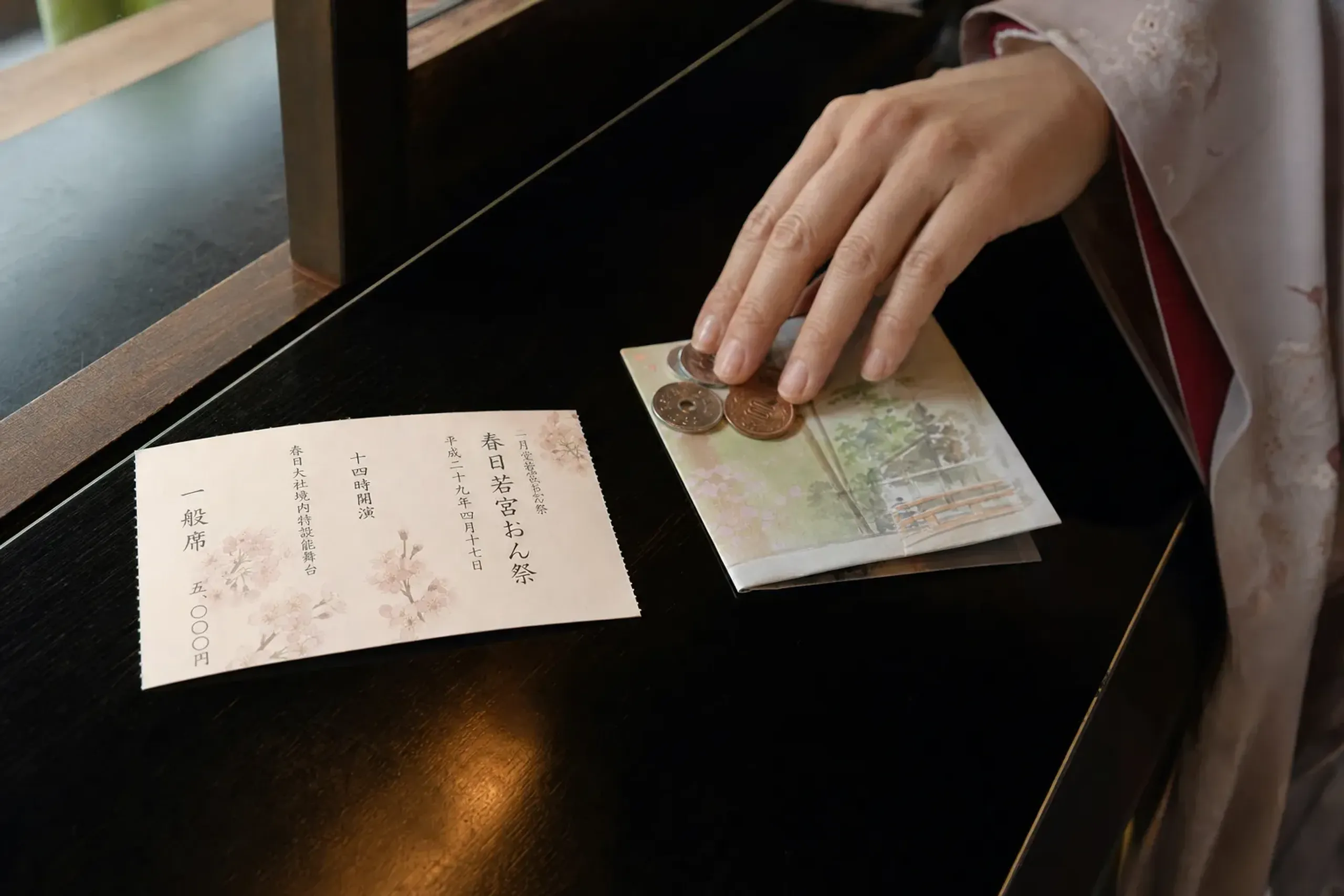
In practice, your planning hinges on three points. First: each odori uses its own ticket system (online shop, phone, sometimes agencies). Second: some online purchases cannot be cancelled. Third: the organizer assigns the seat, not the guest.
That is why we focus on decision-making before ticketing. Choose the dance. Choose the show time that forgives your jet lag. Then choose a seat class you will be happy with once the organizer assigns the exact location—because you will not be able to trade it later.
Guests who want tailored guidance can speak with our concierge team at Japan Royal Service privately, especially when Kyoto dates are tight and you want a calm, quietly coordinated day built around the theater rather than against it.
A Kamogawa Odori Afternoon, Step By Step
This is the simplest way to attend Kamogawa Odori without turning it into a scramble. One afternoon. One arc. Nothing loud.
Step 1: Arrive Early, But Not An Hour Early
Pontocho Kaburenjo sits on Pontocho-dori, south of Sanjo. It is about 5 minutes from Keihan Sanjo Station (Exit 6), or about 10 minutes from Hankyu Kyoto-Kawaramachi Station (Exit 1). Walkable, yes.
But walking is not the same as arriving composed. Our team often suggests building in a buffer that lets you pause—especially if you have just crossed the city and still carry its momentum.
If you prefer a quieter approach, we can include private transportation with a partner-fleet vehicle to bring you close without the heat, the wrong turn, or the last-minute hurry.
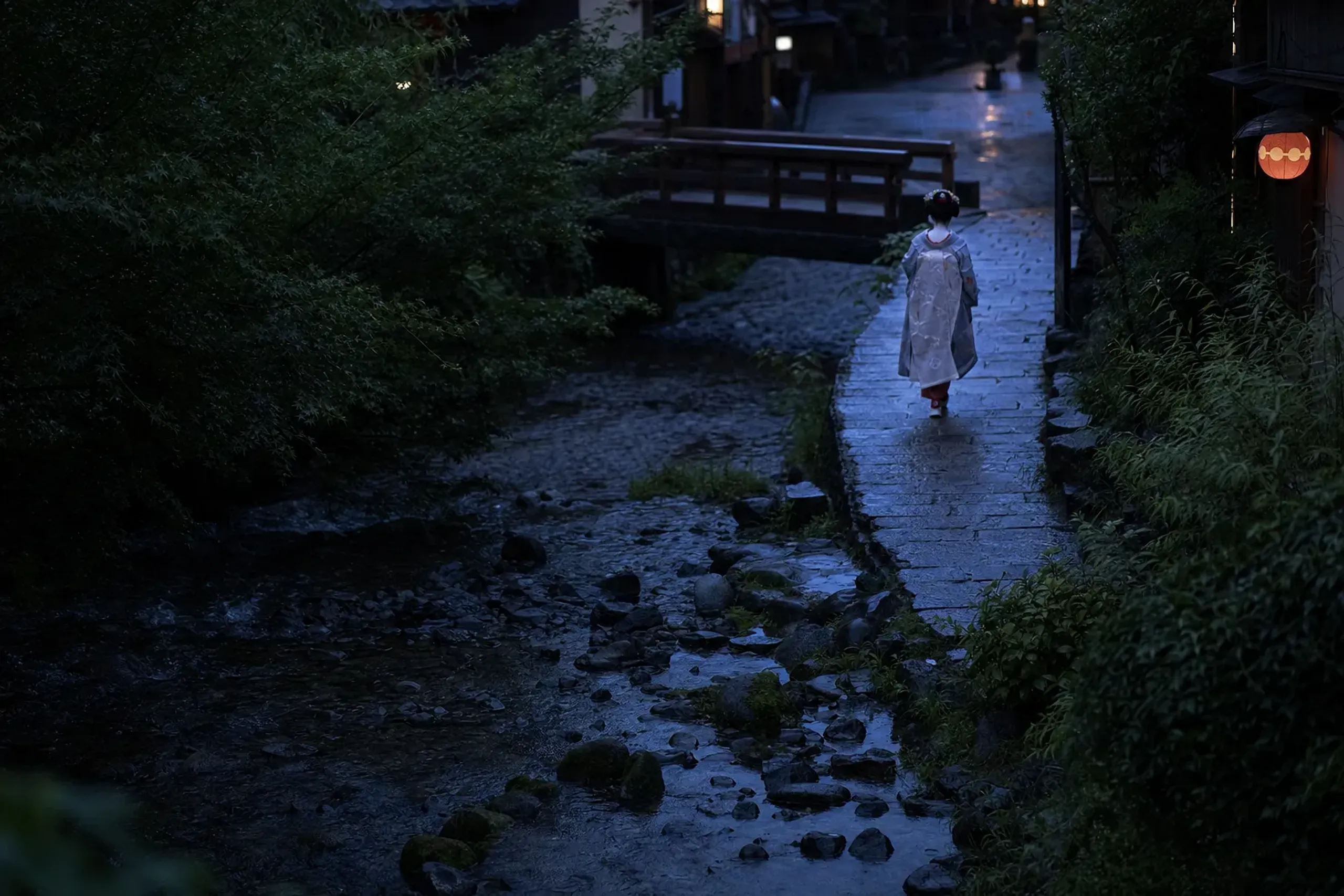
Different feeling. Same destination.
Step 2: Tea If Your Ticket Includes It
Kamogawa Odori has three seat classes: special with tea, special, and regular. Tea is served on the fourth floor in a standing-table style space. Expect it to be orderly and brisk.
This is not a long tea ceremony. It is a prelude—a few measured minutes that reset you. You steady your breath, adjust your posture, and step into the theater ready to watch rather than merely to attend.
Step 3: Know The Shape Of What You’ll See
Kamogawa Odori is presented in two parts: a dance drama, and then a pure-dance finale called odori emaki. Older organizer materials describe it as roughly an hour and a quarter in total, though you should confirm timing on the day.
Even a little context changes the experience. A sleeve turn is no longer merely “pretty.” It becomes a decision. A pause becomes a line break. You begin to see the discipline of the shokunin behind the grace—the years of training that make effortlessness possible.
When guests request it, our concierge team can include an English-speaking cultural interpreter guide to explain the story conventions before the show, then quietly debrief afterward. No lecturing. Just clarity.
Step 4: Theatre Practicalities That Save The Mood
There is no dress code. That said, Kyoto theaters reward neatness. Clean shoes. A jacket you can fold.
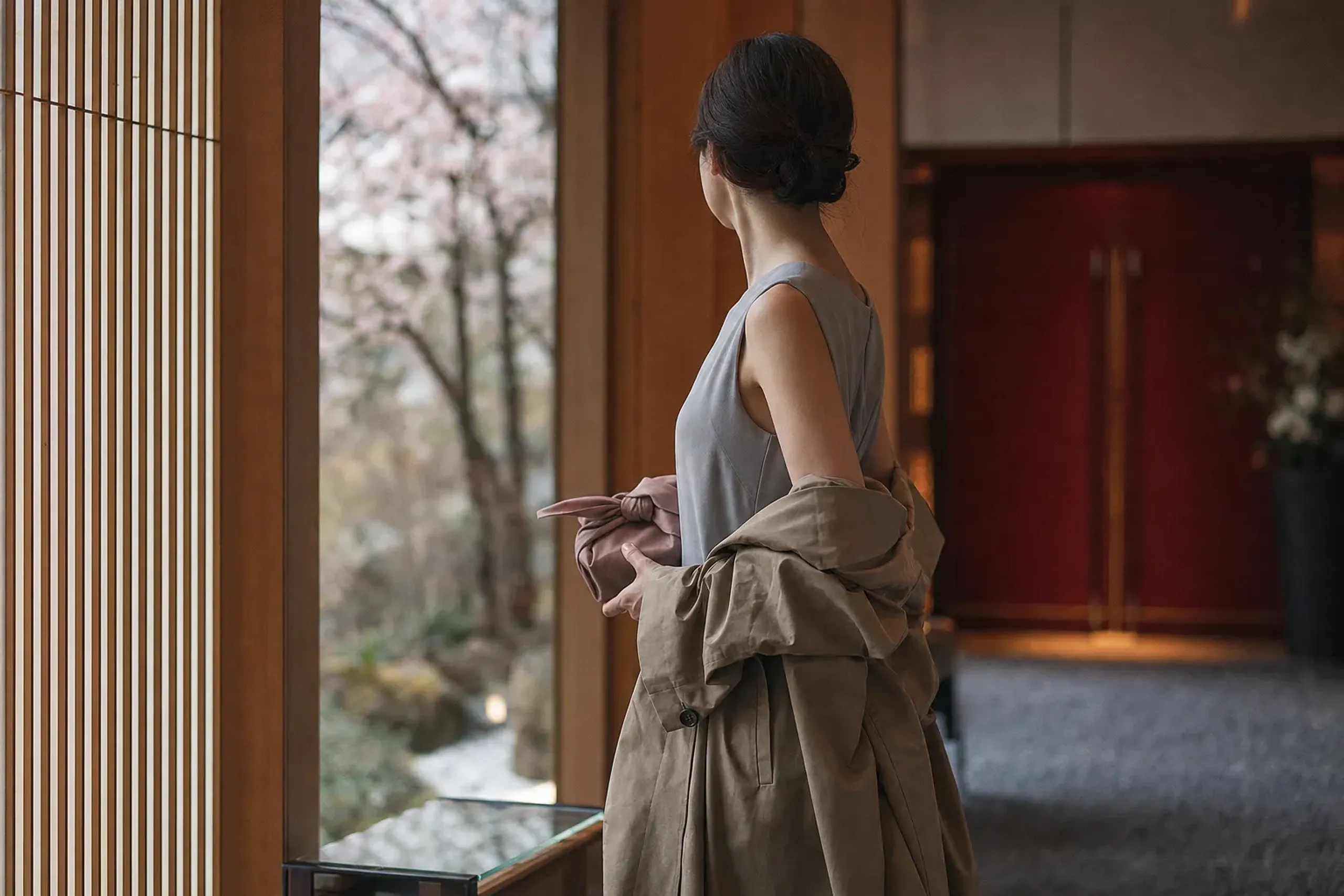
A bag that does not sprawl into your neighbor’s space.
Food and drink are not allowed in the theatre. There is a cloakroom on the first floor. Wheelchair seating is handled by phone with the organizer in advance.
If you want to take a call, step outside. Simple. Keep the room intact for everyone around you.
Step 5: After The Curtain, Keep It Small
Many visitors rush straight to the next attraction. Big mistake. Give yourself a short, unhurried walk along the lane instead.
This is where “hidden Japan” becomes real—not because you found a secret, but because you let the atmosphere do its quiet work. The river nearby. The narrowness of the lane. The sense that Kyoto is not performing for you, and never was.
If Kamogawa Doesn’t Fit Your Dates, Choose By Calendar
Sometimes May is not possible. That is fine. Choose the odori that matches your travel week, then plan the day with the same restraint: one performance, done properly.
Miyako Odori (Gion Kobu): April’s Anchor Performance
Miyako Odori runs through April and is staged at Gion Kobu Kaburenjo. In the published 2026 schedule, performances are at 12:30, 14:30, and 16:30.
It is presented as eight scenes in one continuous act, with a new work each year. Organizer and tourism materials trace its beginnings to 1872. Tradition, yes. Also renewal—the same living tension that keeps these districts vital.
A tea-ticket class includes ryurei tea before the show. The organizer’s rules state no cancellations, changes, or refunds.
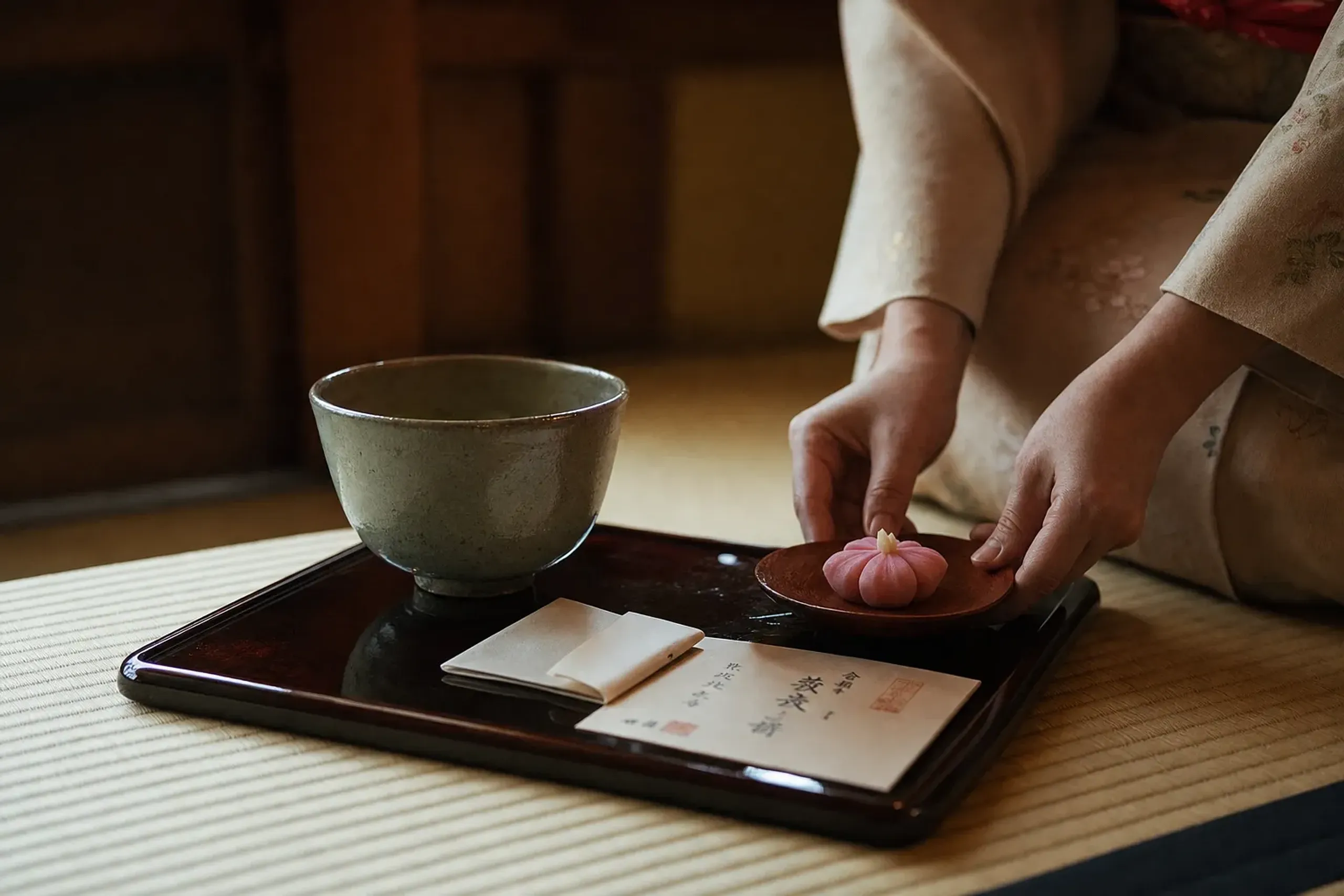
Decide carefully.
If you want a cultural storyline, 2026’s theme was published as “Kan’ei Gyoko,” tied to an imperial visit to Nijō Castle in 1626. That echo of imperial history can sharpen what you notice on stage, even for first-timers.
Kyō Odori (Miyagawachō): April With A Tighter Frame
Kyō Odori is staged at Miyagawachō Kaburenjo. The published 2026 dates were 4–19 April, with 13 April listed as a day off, and shows at 13:00 and 16:00.
Every ticket class includes tea. Children under 10 are not admitted. Tickets are online only, per the organizer’s published information.
If your travel rhythm prefers fewer daily time slots—and you like your plans to feel decisive rather than sprawling—this tighter structure can be a relief.
Kitano Odori (Kamishichiken): The Early Start
Kitano Odori is staged at Kamishichiken Kaburenjo and, in the published 2026 season, ran 20 March to 2 April with shows at 14:00 and 16:30. The organizer describes it as about 90 minutes.
It has two parts plus a finale, and it was first performed in 1952. Preschool children are not admitted.
For travelers arriving early in the spring—before April’s pressure builds—Kitano can be the cleanest way to see an odori without squeezing it between peak-day crowds.
How Our Concierge Team Plans One Odori Day In Kyoto
Our job is to protect the room. That means protecting the hours around it, too—the arrival, the meal, the walk afterward.
We start with your reality. Arrival day, jet lag, walking tolerance, and whether this is your single Kyoto cultural “anchor” or one of several quiet highlights across a longer journey.

1) Choose One Dance, Then Choose The Time Slot
A 12:30 curtain can be kind to families and early risers. A later show can be kinder to people arriving from Tokyo that same morning. Small choice. Big impact.
If you are traveling during cherry-blossom weeks, we will also talk through crowd timing using our broader planning approach—then point you to helpful reading like First Light In Japan: A Timing Playbook For Empty Temples and our Kyoto resources such as Kyoto Cherry Blossoms.
2) Build A Transfer Plan That Avoids Friction
Kyoto looks compact on a map. It is not. A wrong bus stop or a crowded taxi line can sour the hour before the curtain, and that hour is precisely the one you want to arrive calm.
When guests request it, we include a partner-fleet car and driver so you arrive steady, not hurried, and leave without searching for a ride after the finale.
3) Place Your Hotel So The Day Stays Walkable
For a single odori afternoon, location is a form of luxury. You want a hotel that makes pre-show pacing easy and post-show return simple—no long transfers bookending a quiet art form.
We treat this as part of a tailor-made itinerary rather than a standalone ticket task. Less juggling. Fewer compromises.
4) Sequence A Meal Without Racing The Clock
We keep it practical. A lunch that ends early enough to walk in calmly, or an early dinner timed for after the last curtain—and, where you wish, a quiet kaiseki room that favors seasonal restraint over spectacle.
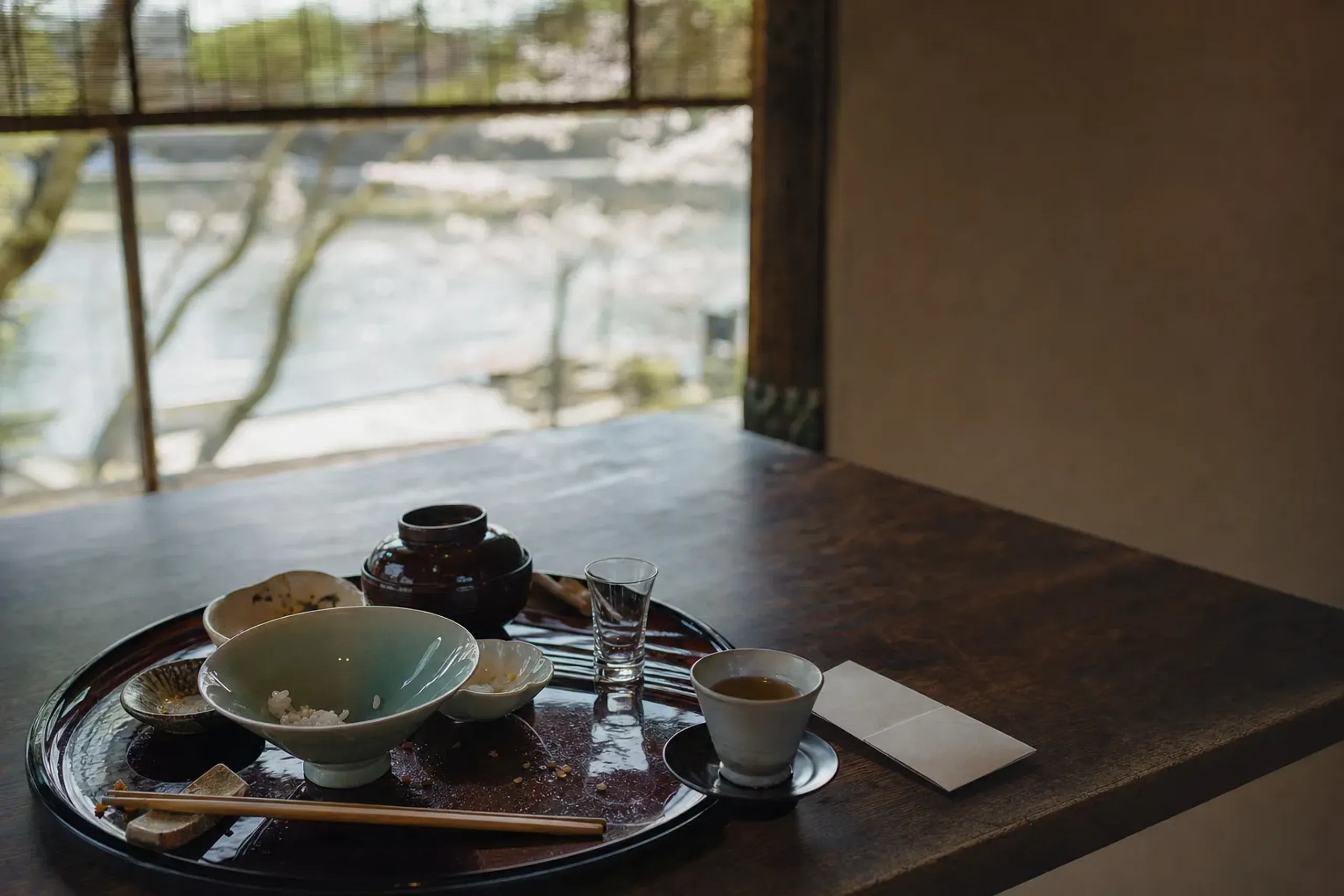
Nothing experimental right before the show. Nothing so heavy you fight sleep during the dance drama. The goal is attention.
5) Add A Cultural Interpreter, Not A Loud Tour
Theater works best when you understand just enough to watch closely. Our preferred approach is a short briefing on stage conventions, then silence.
Discretion matters here. We plan so you do not feel on display, and we keep your schedule entirely private—especially when you are traveling with children, colleagues, or clients whose presence is nobody else’s business.
Frequently Asked Questions
When Do Kyoto Spring Odori Tickets Usually Go On Sale?
Ticket release timing varies by organizer, so the safest approach is to check each official odori site for the current season’s sales announcement once your travel dates are fixed.
For example, Miyako Odori has announced in the past that sales open in early January for the coming season, but you should rely on the organizer’s current notice for your year.
Can Children Attend Kyoto Spring Geisha Dances?
Age rules depend on the specific odori, and some performances do not admit young children.
Kyō Odori’s published rules state children under 10 are not admitted. Kitano Odori’s published guidance states preschool children are not admitted. If you are traveling as a family, we recommend choosing the performance that fits your child’s age and attention span.
What Should I Wear To Kamogawa Odori Or Miyako Odori?
There is no formal dress code, but smart, quiet clothing helps you feel appropriate in the theater.
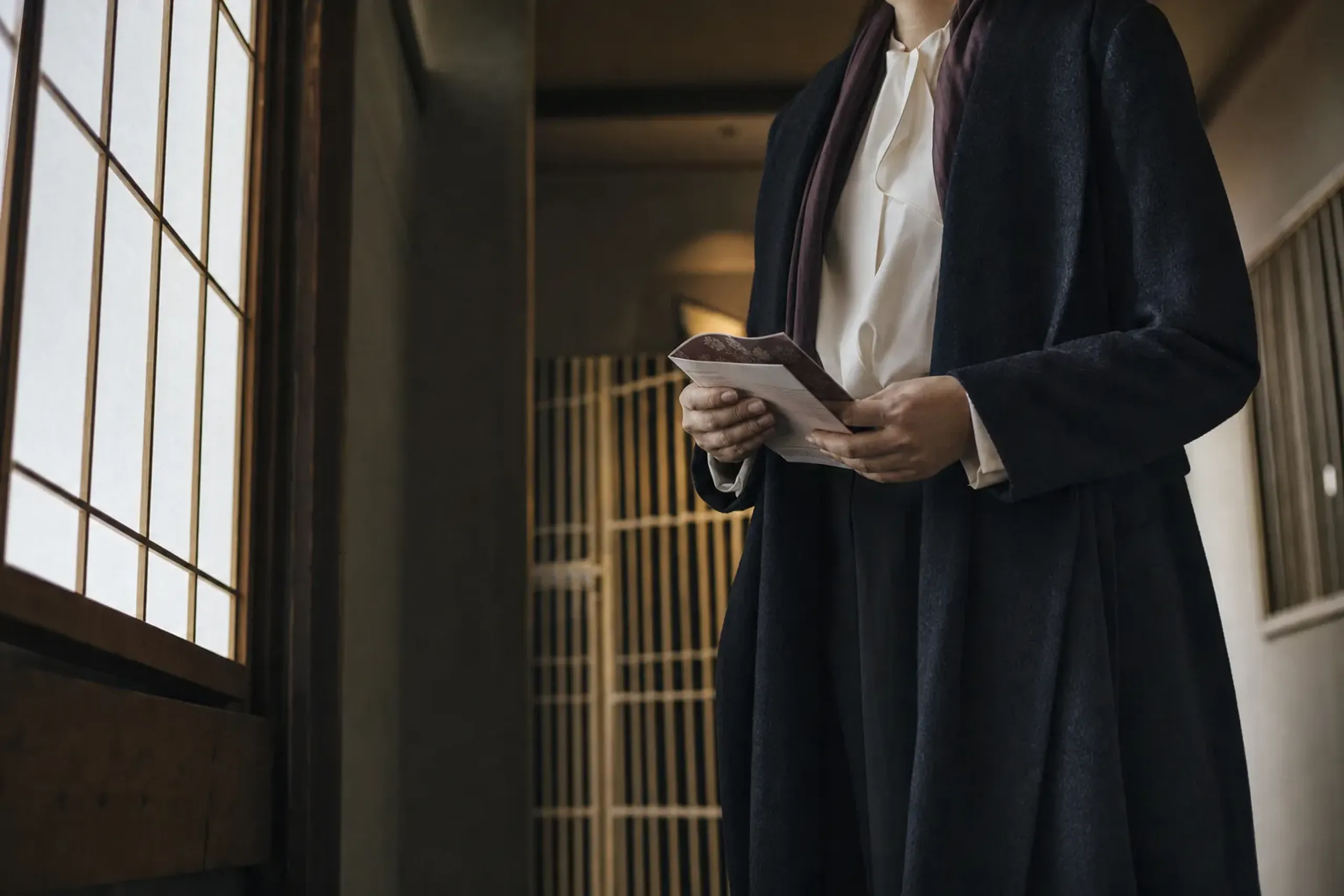
Think clean lines, comfortable shoes, and layers you can remove without fuss. Avoid strong fragrances and anything that rustles loudly when you move.
How Long Are The Kyoto Spring Dances?
Most spring odori run around one to one-and-a-half hours, depending on the production.
Organizer materials commonly describe Miyako Odori as about an hour, Kitano Odori as about 90 minutes, and Kamogawa Odori as roughly an hour and a quarter in older materials—please confirm timing on the day.
What If The Odori Is Sold Out When I Try To Go?
If one spring dance is sold out for your dates, the practical solution is to choose a different odori that fits your calendar rather than forcing the trip into a ticket hunt.
This is where planning by calendar helps: Kitano comes first, then Miyako and Kyō in April, then Kamogawa in May. Our concierge can advise on alternatives and pacing so you still get a complete cultural afternoon.
Plan Your One Perfect Odori Afternoon
A spring dance in Kyoto rewards the traveler who chooses less. One performance, approached with care, will stay with you far longer than four seen in a rush. Let us protect the room—and the quiet hours around it—so you simply arrive, watch, and remember.
When your dates take shape, contact us here for a discreet, tailored proposal built around a single, unhurried afternoon in Pontochō or the hanamachi that best fits your calendar.