In this guide
- 01Why Are Kyoto’s Finest Bamboo Shoots Dug Up Before They Ever See Daylight?
- 02How Does Kyoto’s “Softening Method” Make Kyō-Takenoko So Tender?
- 03The Otokuni Region: The True Home Of Kyō-Takenoko (Not Arashiyama)
- 04When Is The Best Time To Plan A Kyoto Bamboo Shoot Trip?
- 05Shirako-Takenoko: The “White Child” Grade And The Raw-Sashimi Moment
- 06A Simple Half-Day Route: Soil, Grove, And A Seasonal Lunch In Nagaokakyō
- 07Year-Round Grove Craft: Mushakusha-Gari, Shindome, And The February Competition
- 08Origin Story: Jakushō-In, Mōsō Bamboo, And Why The Dates Don’t Match
- 09How Do You Join A Bamboo Shoot Digging Experience Near Kyoto In Spring?
- 10What To Eat With Kyō-Takenoko In Kyoto: The Kinome Pairing
- 11Quiet Logistics For HNW Travelers: Timing, Transfers, And Privacy
- 12How This Kyoto Spring Ingredient Becomes “Hidden Japan”
- 13What Japan Royal Service Coordinates For Takenoko Season (Stated Plainly)
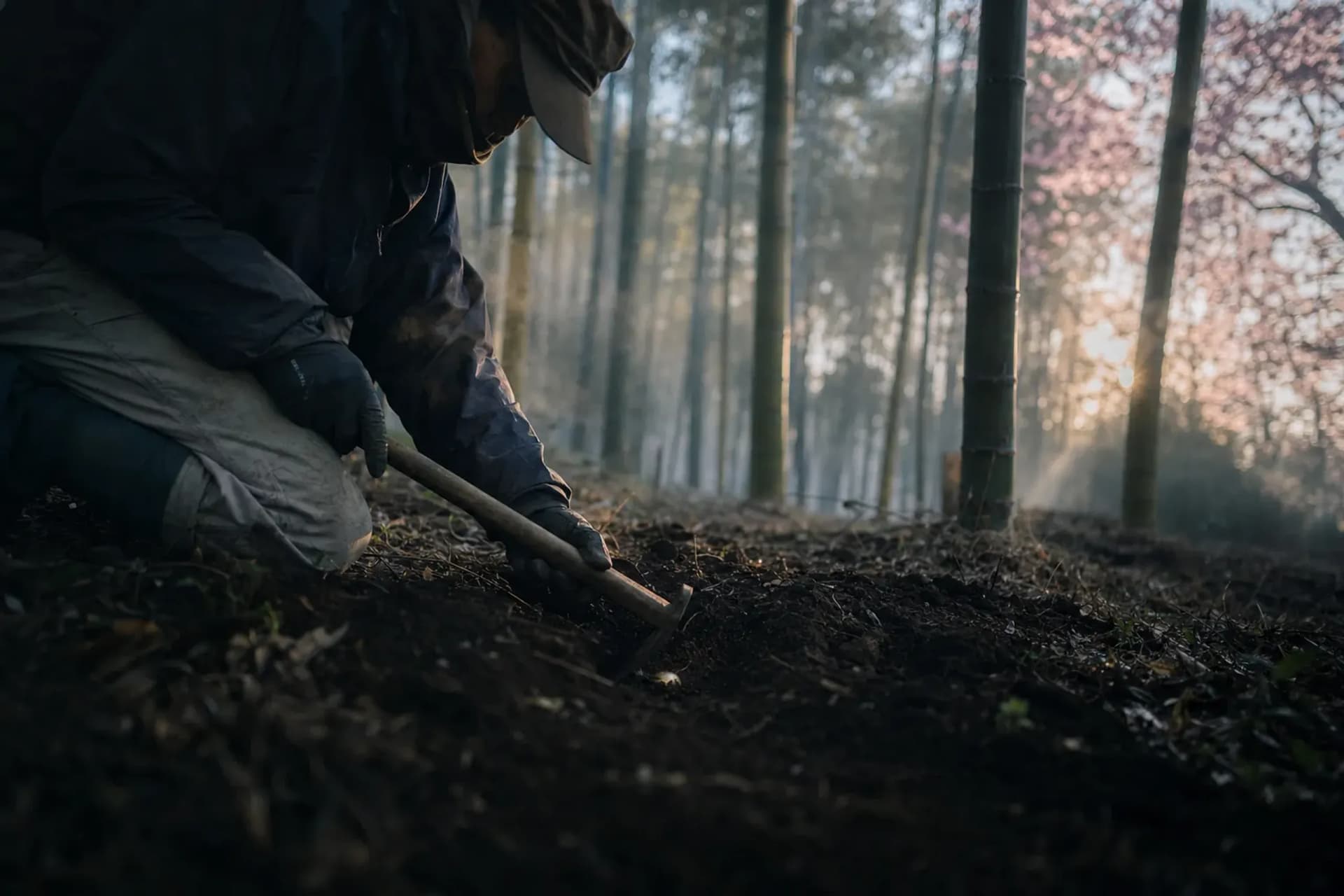
Dawn in the Nishiyama hills is not bright. It is watchful.
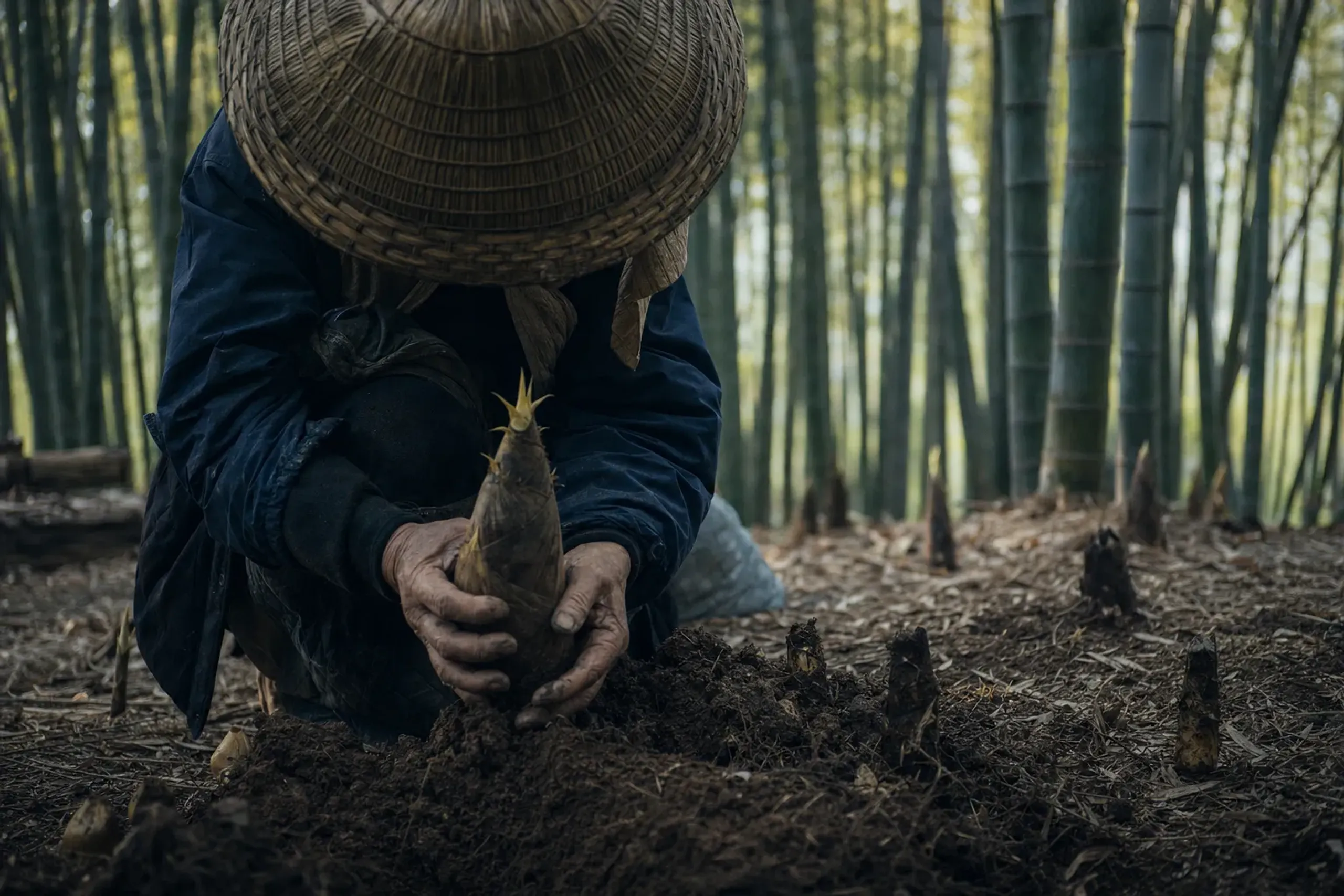
You stand in a bamboo grove in Kyoto’s Otokuni region, and the ground looks ordinary until you notice it: a hairline crack in dark, soft soil. That slit is the whole story. Beneath it, a bamboo shoot is pushing upward, still blind to daylight.
The farmer does not dig straight down. That would be the beginner’s mistake.
Instead, a long-handled tool slips into the earth from a slight distance. The blade disappears from view. The shoot is severed from its underground rhizome by feel alone, then lifted out without ever breaking the surface—a movement guided entirely by decades of hand memory.
Why Are Kyoto’s Finest Bamboo Shoots Dug Up Before They Ever See Daylight?
Kyō-takenoko’s top-grade shoots are harvested while still completely underground because even brief exposure to light and air can darken and firm the flesh, dulling the prized tenderness.
This is the inversion that surprises many guests. Most vegetables are picked when they are visible, then cleaned, trimmed, and carried to market. In Otokuni, the premium standard is the opposite: the finest takenoko are found by reading the soil, not the plant.
That tiny crack tells a trained eye the shoot’s position and size. The farmer judges whether it is worth taking, and whether it can be lifted without bruising. The work is quiet, fast, and deeply regional.
In our experience, this is where discerning travelers lean in—not for spectacle, but for shokunin-level concentration applied to something as humble, and as fleeting, as a spring vegetable. It is the same devotion you might expect at a sushi counter, redirected to a field before sunrise.
How Does Kyoto’s “Softening Method” Make Kyō-Takenoko So Tender?
Kyō-takenoko is made tender by a Kyoto-style cultivation method: farmers spread rice straw in winter, then layer water-retentive red clay soil on top to create a soft growing bed.
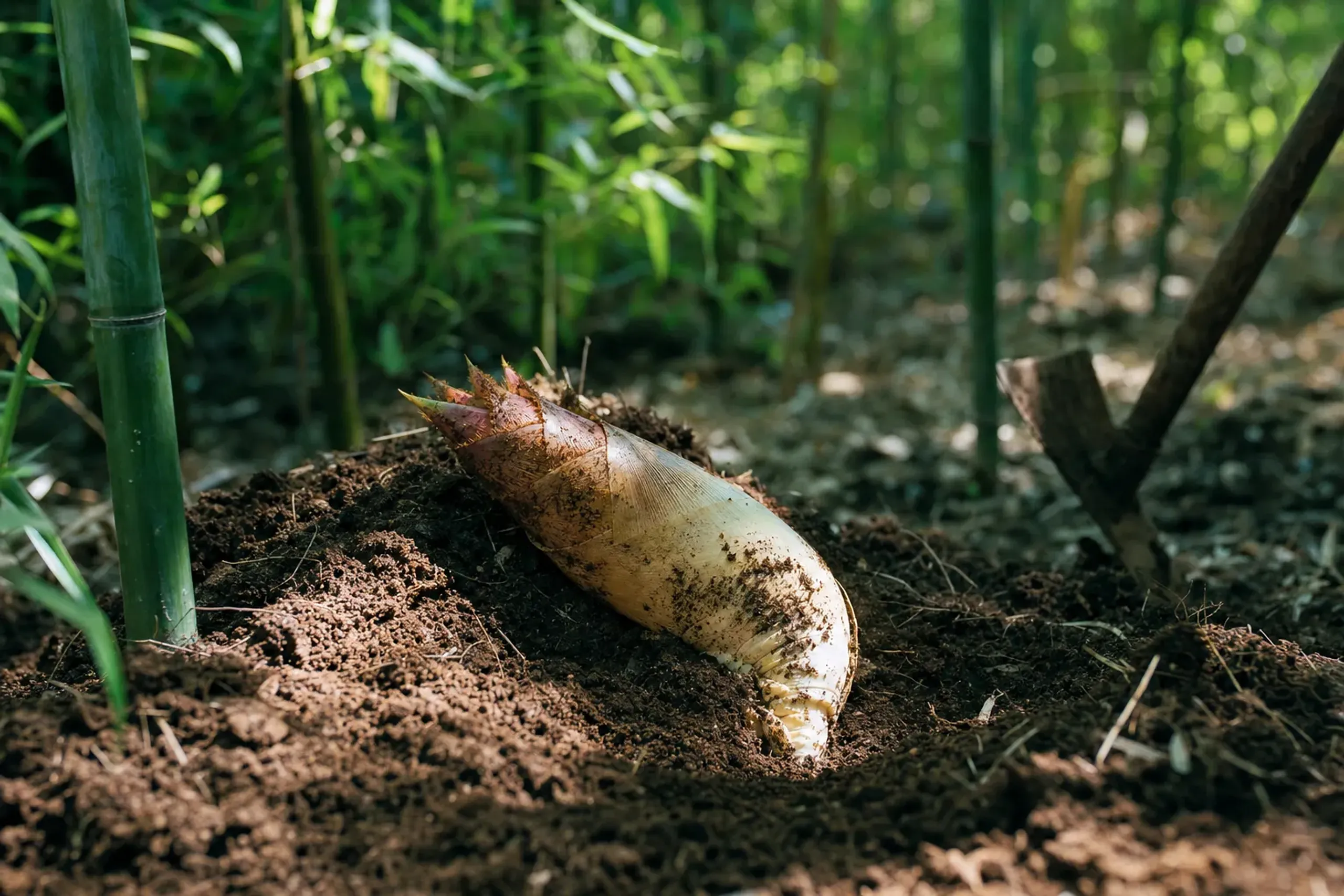
The technique is physical. Straw is laid across the grove floor each winter, then covered with soil, building a cushion that lets shoots rise without fighting compacted ground. The straw slowly breaks down into fertilizer while helping the soil hold moisture yet stay well-drained.
This is not romantic talk about “terroir.” It is a repeatable system with consequences you can taste.
When the takenoko is cooked, the texture holds: soft, crisp, and clean. When it is truly fresh, some of the highest-grade shoots can even be served raw—an unusual claim for a vegetable, and one Kyoto is willing to stand behind.
The Otokuni Region: The True Home Of Kyō-Takenoko (Not Arashiyama)
Otokuni is where Kyō-takenoko becomes specific. The region spans parts of western Kyoto across the Nishiyama hills: Kyoto City’s Nishikyō-ku and Ōharano area, plus Muko City, Nagaokakyō City, and Ōyamazaki Town.
This is also where bamboo is not merely scenery. It is agriculture, livelihood, and a managed landscape shaped by deep local knowledge. Kyō-takenoko production here is recognized as a supported tradition with a history of over 300 years.
If you have only seen the bamboo grove in Arashiyama, you have seen the postcard. Otokuni is the working chapter—and a far quieter one.
For HNW travelers, that distinction matters. A morning that stays away from Kyoto’s busiest corridors can feel like a private key—without needing anything theatrical to earn it. This is Hidden Japan in its most understated form: not a locked gate, but a place the crowds simply never think to look.
When Is The Best Time To Plan A Kyoto Bamboo Shoot Trip?
Plan for late March through mid-May, when Kyō-takenoko harvest peaks in the Otokuni area and seasonal menus in Nagaokakyō and western Kyoto are most likely to feature top-grade shoots.
This is a narrow window, and it moves with spring. If your calendar is flexible, aim for early-to-mid April, when markets and kitchens tend to be most animated by takenoko. Knowing precisely which weeks reward the journey—the essence of shun, Japan’s art of perfect seasonality—is exactly the kind of judgment that separates a good trip from a forgettable one.
For a concrete planning hook, Kyoto’s Oharano area has public event listings that explicitly call out takenoko season in 2026, including specific sale days on April 18 and April 21, 2026. Dates like these help you build an itinerary around what is actually happening on the ground.
Our team at Japan Royal Service treats the season like a moving target. We check what is truly available close to your travel dates, then shape your day around freshness.
Shirako-Takenoko: The “White Child” Grade And The Raw-Sashimi Moment
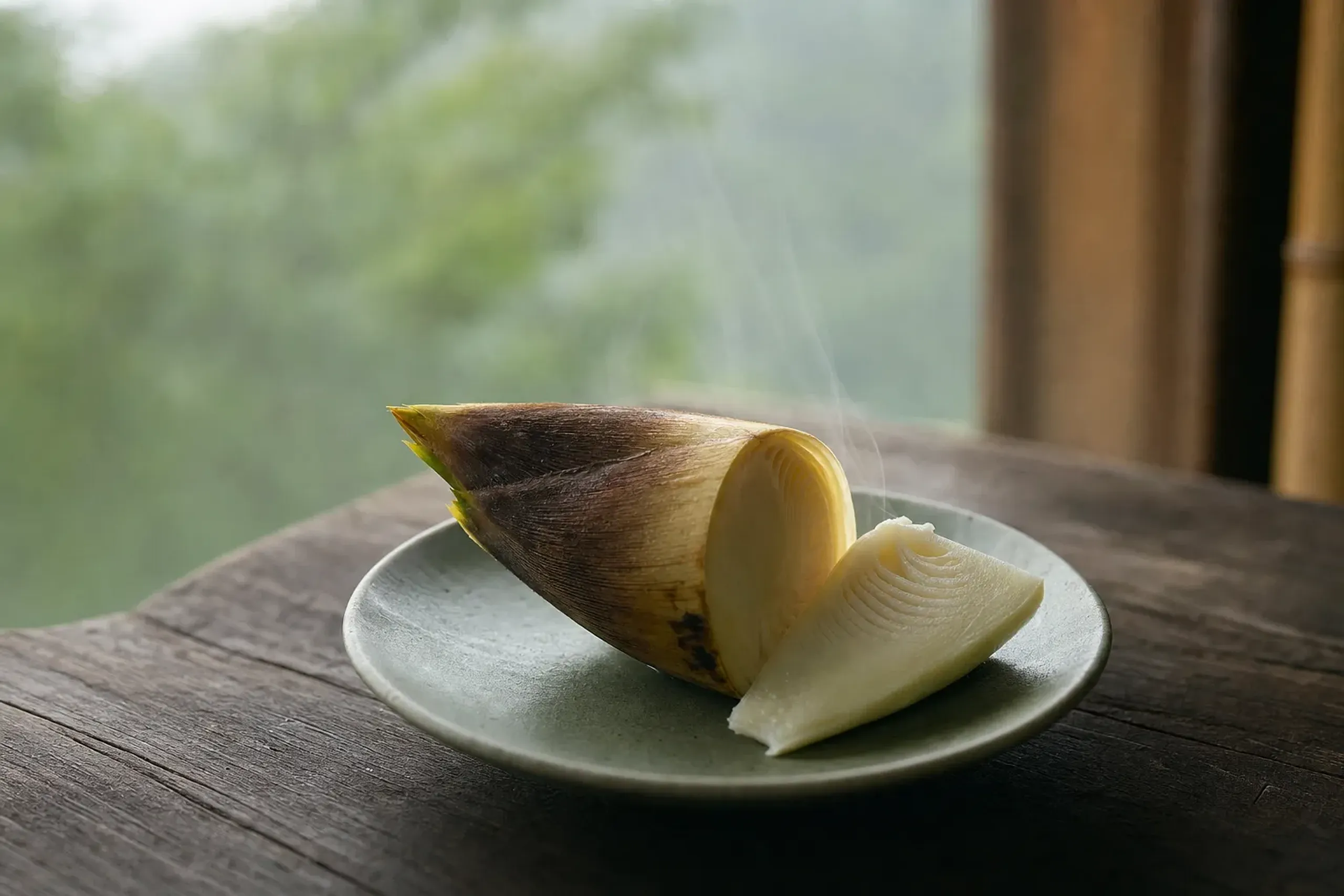
“Shirako-takenoko” (also rendered as “shiroko”) is the top grade of Kyō-takenoko, prized for its pale color and exceptional tenderness. The point is not rarity for its own sake. The point is texture.
When it arrives in a kitchen the same day—sometimes described as asa-hori, “morning-dug”—the shoot can be tender enough to eat raw, served as takenoko sashimi. That is not common across Japan’s bamboo shoots, and it is not something to assume outside the Kyoto-style method.
The experience is delicate. A clean slice, a faint sweetness, and a snap that feels closer to young corn than to a fibrous stalk.
If you want a Kyoto flavor memory that does not require a museum queue, this is it.
A Simple Half-Day Route: Soil, Grove, And A Seasonal Lunch In Nagaokakyō
Done well, takenoko season is not a “tour.” It is a morning with good timing, the right distances, and one excellent meal. Nothing more.
We often suggest building the day around Otokuni’s bamboo landscape, then finishing with a focused lunch in Nagaokakyō City. The goal is to taste the ingredient while it still holds its early-spring softness.
Step 1: Walk Take-no-Michi In Muko City (Calmer Than Arashiyama)
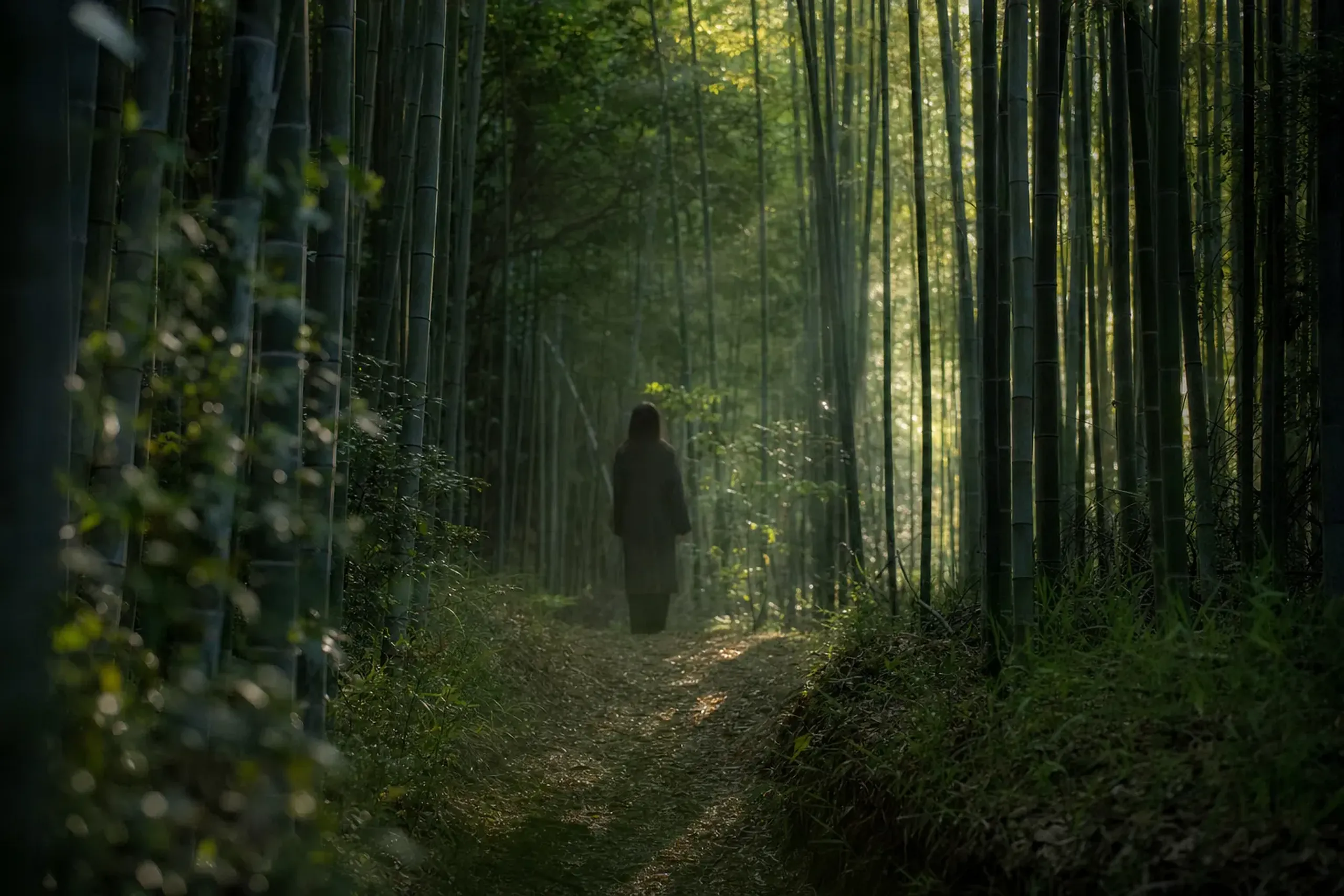
Take-no-Michi (the Bamboo Path) in Muko City is known as a calmer alternative to Arashiyama’s bamboo grove. It is a bamboo road framed by distinctive bamboo fencing, and it connects naturally to the region’s bamboo-shoot cuisine story.
Official travel sources describe the path as about 1.8 km with multiple bamboo fence styles, while other guides describe it as roughly 1.5 km. Either way, it is a short, unrushed walk.
Go early. The light is softer, and the path feels like a place people still use, not a set.
Step 2: Time Your Lunch For Takenoko At Its Most Expressive
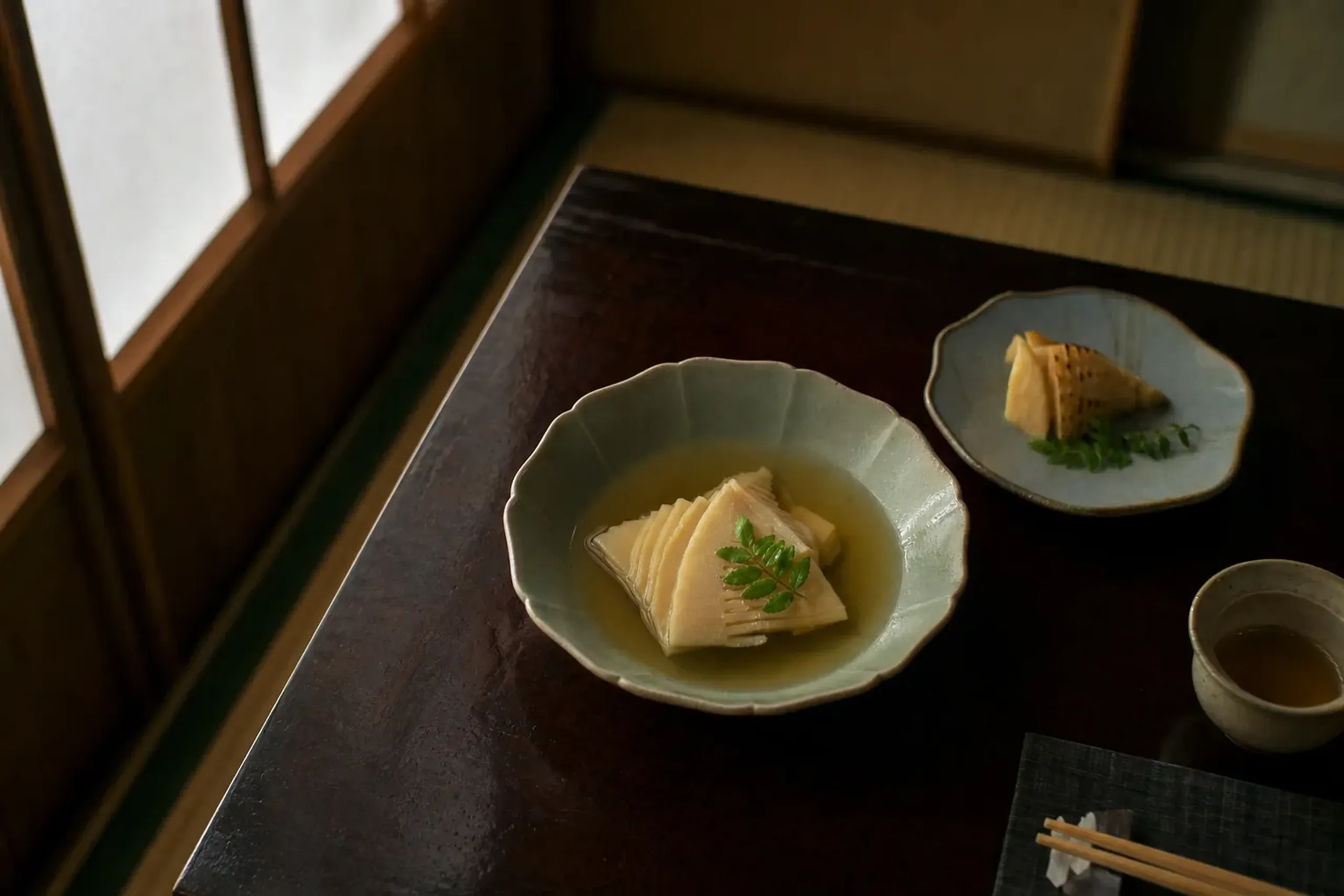
In Nagaokakyō, seasonal bamboo-shoot-course lunches appear during the harvest months. One well-documented example is Kinsuitei, founded in 1881, located by Hachijōga-ike Pond near Nagaoka Tenmangū Shrine, and described in official government publications as handling the cultivation of the bamboo shoots used on its seasonal menu.
We keep our public guidance informational. Your meal choice should fit your pace, dietary needs, and preferred degree of formality.
Guests who want to understand what is realistically possible within their travel week may contact our concierge team for tailored, discreet guidance.
Step 3: If You Love Provenance, Add A Farm-Stand Stop
During the season, roadside direct-sales stands in producing areas may sell same-day shoots. When the signage says asa-hori, it points to a very specific idea of freshness: early-morning digging, then a fast handover.
Be strict about timing. Takenoko changes quickly once it is out of the ground.
For many travelers, buying takenoko is not about cooking in a rental kitchen. It is about seeing how quickly a luxury ingredient moves when it is still, at heart, an agricultural product.
Key fact: Kyoto-style premium takenoko is judged by what you cannot see—the shoot’s protected whiteness—so speed and handling matter as much as where it was grown.
Year-Round Grove Craft: Mushakusha-Gari, Shindome, And The February Competition
The takenoko you eat in April is shaped by decisions made all year. In season, farmers practice mushakusha-gari: judging which shoots to harvest and which to leave standing to become next year’s parent bamboo.
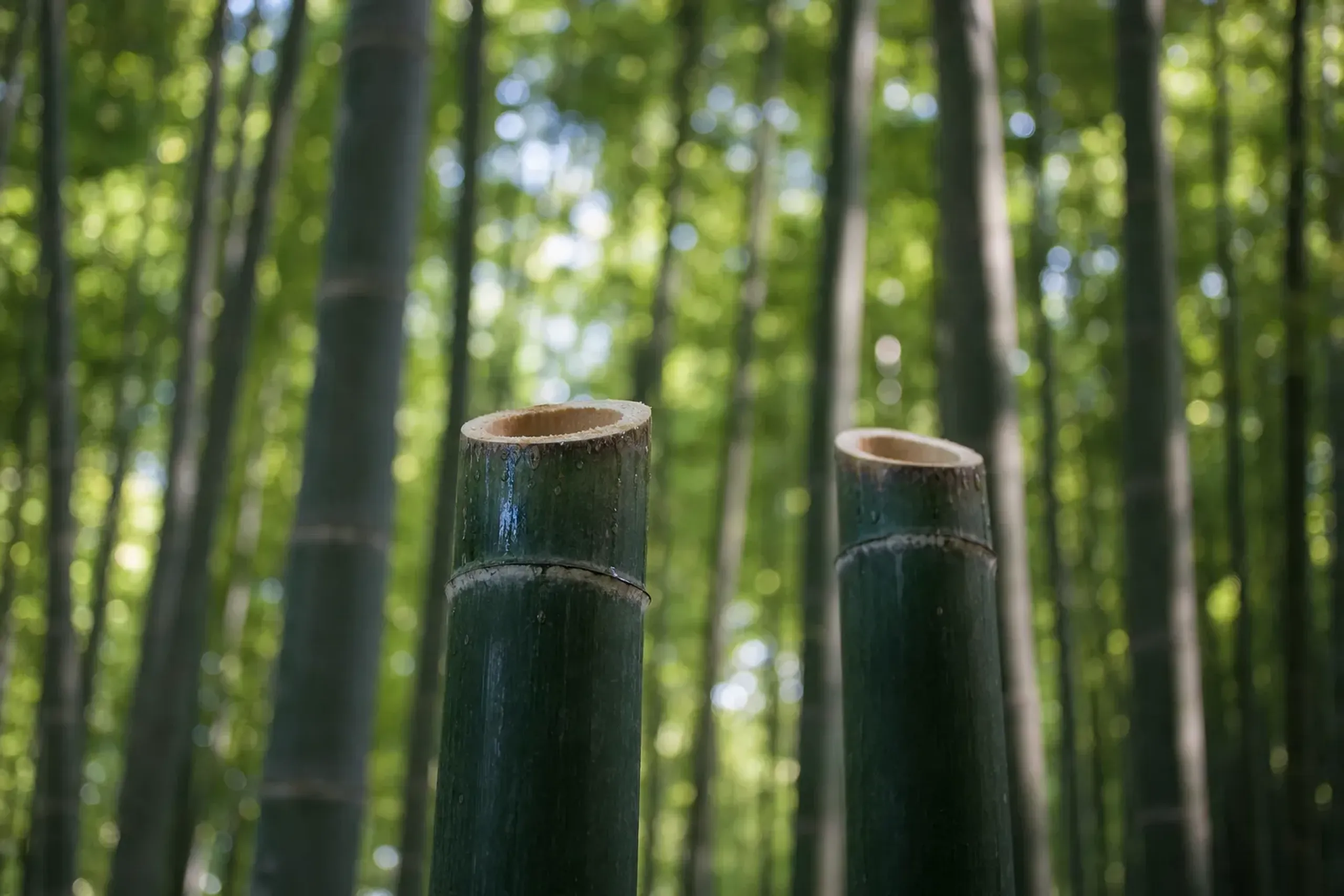
After the season, grove thinning keeps parent bamboo spaced more than two meters apart so sunlight can reach the grove floor. That spacing is not aesthetic window dressing. It is management.
Then comes shindome in mid-May. The tips of mature parent bamboo—often five to six meters tall by then—are deliberately snapped off to halt leaf and branch growth, redirecting energy into the root system and helping reduce the risk of wind damage.
And in February, an annual competition (kyōshinkai) is held among Kyoto’s bamboo groves, judging the quality of grove management. A vegetable with a season of mere weeks is upheld by a discipline that never stops—the quiet, restrained diligence at the heart of the Japanese aesthetic, where the finest results grow from what is unseen.
Origin Story: Jakushō-In, Mōsō Bamboo, And Why The Dates Don’t Match
Kyō-takenoko is cultivated from mōsō bamboo (孟宗竹). The bamboo itself carries an origin story tied to Jakushō-in Temple in what is now Nagaokakyō, identified as the birthplace of mōsō bamboo in Japan.
Sources do not agree on when it arrived. One account attributes the introduction to the Kamakura period. Another places it earlier, in the Kōnin era (810–823), brought from Tang-dynasty China by the temple’s founding priest, Dōyū Shōnin.
We do not try to force a single neat date. Kyoto’s food culture is full of these layered records, and honesty reads better than false certainty.
For travelers, the practical takeaway is simple: this is not a modern “trend ingredient.” It is an established local craft with roots reaching back centuries in a single place.
How Do You Join A Bamboo Shoot Digging Experience Near Kyoto In Spring?
Some spring takenoko digging experiences near Kyoto are offered with local farmer assistance and are typically announced with date ranges such as March to late April.
Availability changes year to year, and capacity can be limited. If you are set on participating, start by checking official destination information for the current season and confirm any rules on timing, clothing, and meeting points.
Be ready for real ground conditions. Mud happens.
The rarest arrangements—a private session alongside a grower who does not ordinarily host outsiders—depend entirely on relationship and timing. Guests who want to match a digging activity with a same-day culinary lunch, and avoid rushed transfers, may contact our concierge for planning guidance, including realistic timing between Muko, Nagaokakyō, and western Kyoto.
What To Eat With Kyō-Takenoko In Kyoto: The Kinome Pairing
The most Kyoto pairing is kinome-ae: bamboo shoots dressed with kinome (young Japanese pepper leaves). It is documented as a Kyoto Prefecture local cuisine in official agricultural sources.
The flavor is sharp, green, and faintly numbing. It keeps takenoko from tasting merely sweet.
When a chef serves takenoko in several forms—lightly simmered, grilled, then a raw slice if the quality allows—you begin to feel the ingredient’s range. It is the same plant, yet it behaves like several distinct dishes.
This is where a seasonal restaurant matters. The technique is simple; the ingredient’s condition is not.
Quiet Logistics For HNW Travelers: Timing, Transfers, And Privacy
Otokuni is close to Kyoto, but a good day still needs choreography. Trains work, yet spring crowds and multiple stops can chop the experience into fragments.
For many HNW travelers, a private car changes the day’s texture entirely. You can leave early, keep purchases cool, and pivot the moment a site turns unexpectedly busy.
The first detail is transport. Our private transportation and chauffeur service focuses on comfort, pacing, and discretion, whether you are traveling as a couple, a family, or a small executive group. Your itinerary and identity remain entirely confidential—the quiet confidence that lets you move through Kyoto unnoticed.
The second detail is how the day fits into a larger tailor-made itinerary.
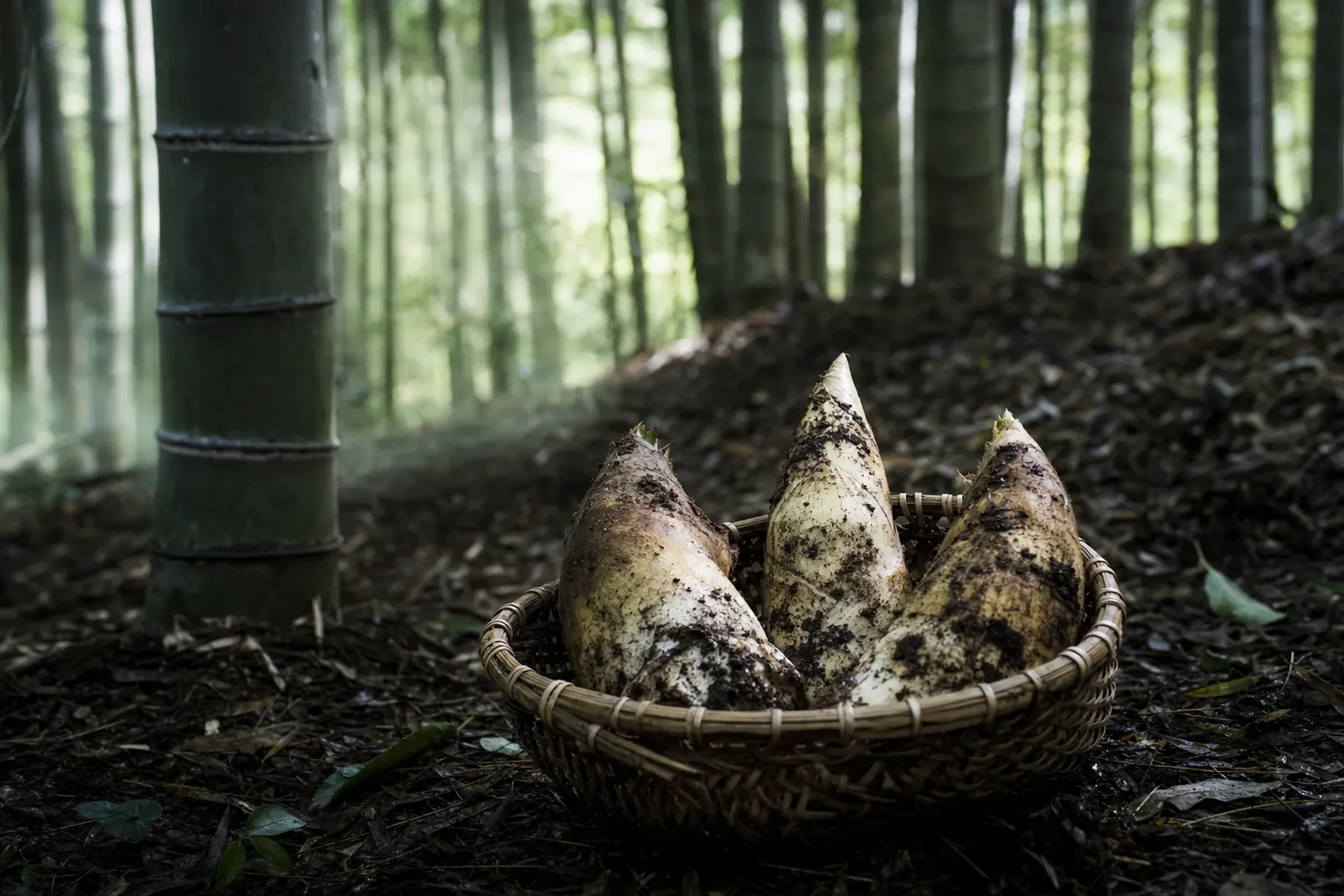
Takenoko season works best when it is not crammed between headline temples; it deserves a clean morning and a long, unhurried lunch.
How This Kyoto Spring Ingredient Becomes “Hidden Japan”
Hidden Japan is not always a remote island or a mountain pass. Sometimes it is an ingredient, in a small production area, during a six-week window, served properly only if you arrive at the right hour.
Many luxury operators describe Kyoto spring in broad strokes—tea, geisha districts, bamboo groves—because that framing sells easily and reads like a ready-made solution.
Our approach is narrower, then deeper. Kyō-takenoko offers an adult kind of thrill: a place-specific seasonal experience that still sits within an easy day from central Kyoto.
If you enjoy technique-driven craft stories, you may also like our guides to Kusatsu Onsen’s yumomi ritual and three major sake regions and their water, where method shapes taste just as clearly.
What Japan Royal Service Coordinates For Takenoko Season (Stated Plainly)
Japan Royal Service provides guiding, private transfers, and seasonal restaurant reservation support where available, with details confirmed privately after you inquire.
We keep the public site clean for a reason. Many experiences in Japan are sensitive to timing, capacity, and local rules, and the right plan depends on your party size and expectations.
If a quiet morning in the Otokuni groves—followed by shoots dug at dawn and served at their most expressive—sounds like the Kyoto you have been searching for, let us shape the season around you. To begin planning a private takenoko experience, contact us here, and we will confirm what is genuinely possible for your travel dates.