In this guide
- 01Miyakojima’s Geology: Flat Coral, No Rivers, And Why The Water Looks Unreal
- 02How Do You Get To Miyakojima If There Is No Ferry?
- 03The Bridges Are The Point: A Loop Drive Across Irabu, Shimoji, Kurima, And Ikema
- 04Where To Find “Miyako Blue” Without A Boat: Beach Time And Shore Snorkeling
- 05Miyakojima Vs Ishigaki: Which Island Fits Your Travel Style?
- 06Why Combining Miyakojima With Okinawa Main Island Or Ishigaki In One Short Trip Usually Backfires
- 07A Quiet Luxury Itinerary Framework For Miyakojima (3 To 5 Nights)
- 08What’s New In Miyakojima For 2026–2027 Planners (Openings And Event Weeks)
- 09Discretion On Miyakojima: How To Enjoy A Small Island Without Feeling Observed
- 10Frequently Asked Questions
- 11Plan Your Private Miyakojima Escape
Miyakojima is often mentioned as “the other Okinawan island,” usually in the same breath as Ishigaki. That shorthand causes a lot of mismatched trips. This island is not about hopping around a chain. It is about stopping.
The ground is flat coral, not jungle ridges, and there are no rivers to cloud the sea. Water clarity isn’t a marketing line here; it is geology. Spend a few days driving bridges, walking long stretches of empty sand, and snorkeling straight off the beach, and the difference becomes obvious — and quietly unforgettable.
Miyakojima’s Geology: Flat Coral, No Rivers, And Why The Water Looks Unreal
Miyakojima is a flat, raised-coral island with no mountains and no rivers, and that single fact is the cleanest explanation for “Miyako Blue.” Full stop.
On volcanic islands, rain carries sediment from the hillsides into the sea. Here, there are no rivers to do that work. The coastline stays startlingly clear because there is far less runoff feeding the nearshore water.
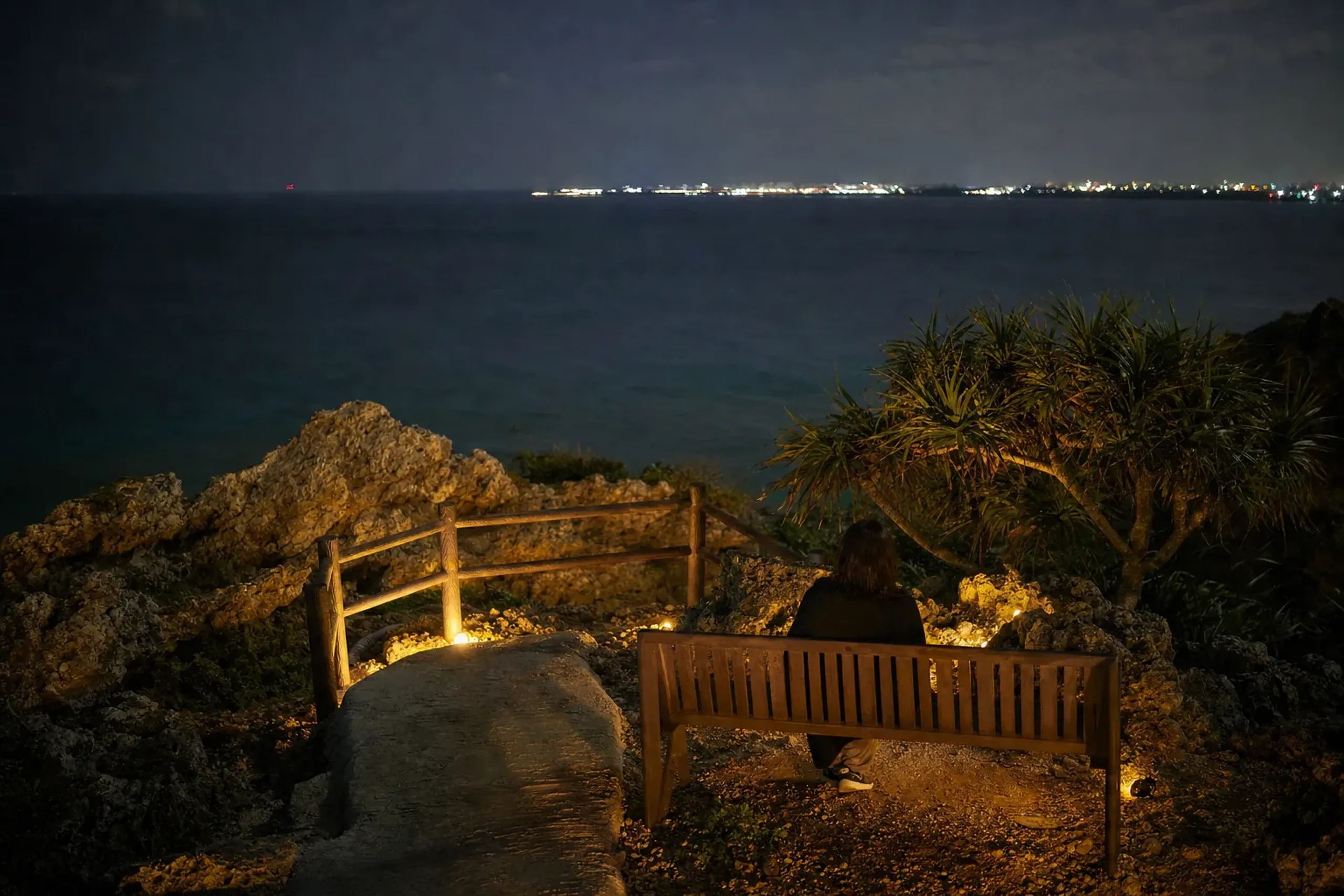
You feel this in the small details. The sand looks pale and clean even after weather has passed through. Step into the shallows and you can still see your toes clearly below the surface. It changes your pace without your deciding to.
This is also why Miyakojima suits wabi-sabi tastes so well. The island’s luxury is one of restraint, not spectacle. Think of it as a quiet shoreline, a long horizon, and the mild friction of coral ground underfoot — beauty that asks nothing of you but attention.
How Do You Get To Miyakojima If There Is No Ferry?
You reach Miyakojima by air only, with no ferry links to Okinawa Main Island or Ishigaki, and flights from Naha take roughly 55 minutes.
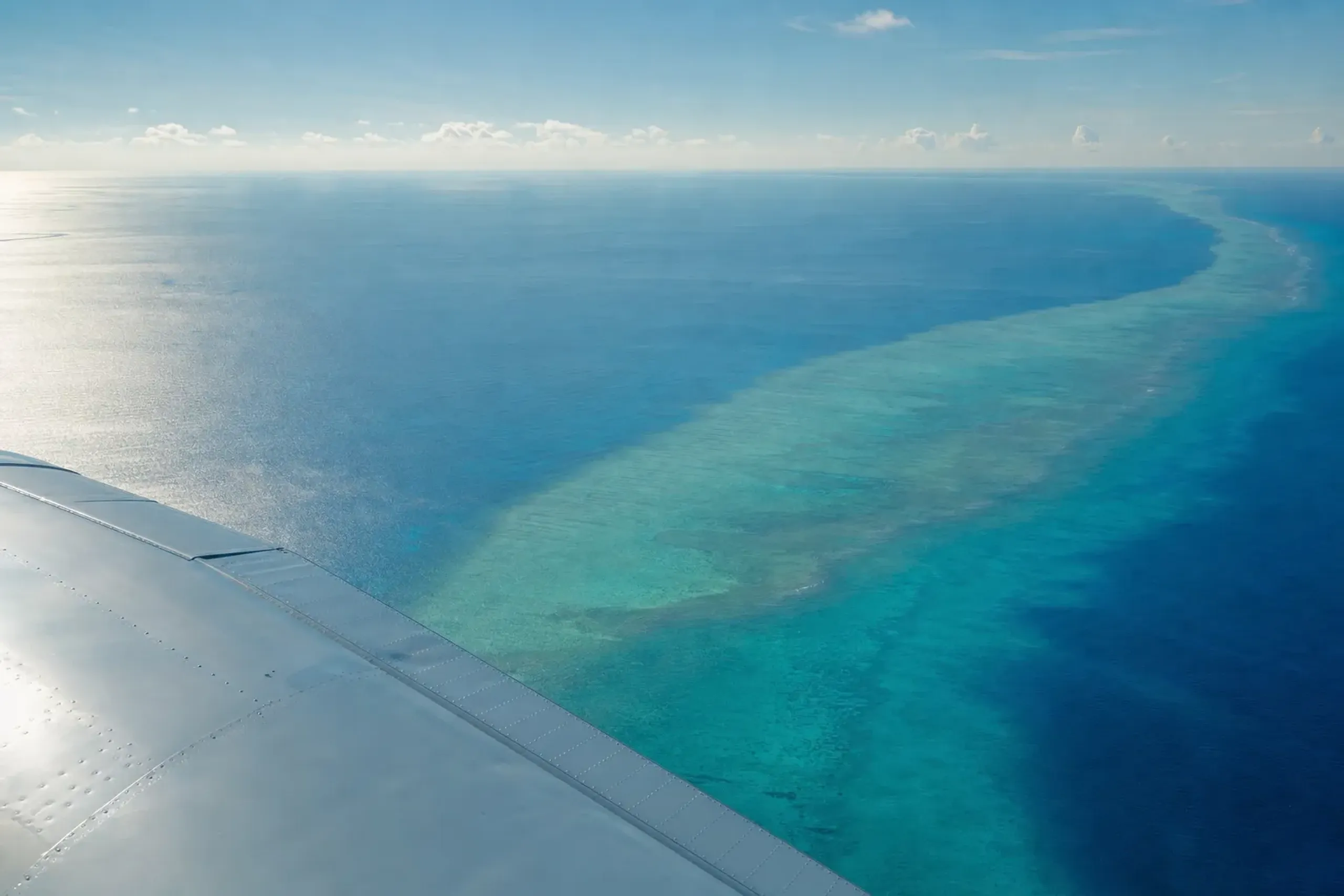
That air-only access is not a trivia point. It shapes how the island feels. There is less casual “maybe we’ll just pop over” traffic, and fewer visitors arriving with the restless energy of constant movement.
For planning, it means your luggage strategy matters. Pack for a single base and settle in, rather than building a suitcase around daily transfers. A small choice. A big difference.
In our experience, HNW travelers enjoy Miyakojima most when the arrival day stays light: a calm check-in, an early dinner, and an unhurried morning after. Don’t try to land and sprint. It reads as stress — and this is one of the few places in Japan engineered against it.
The Bridges Are The Point: A Loop Drive Across Irabu, Shimoji, Kurima, And Ikema
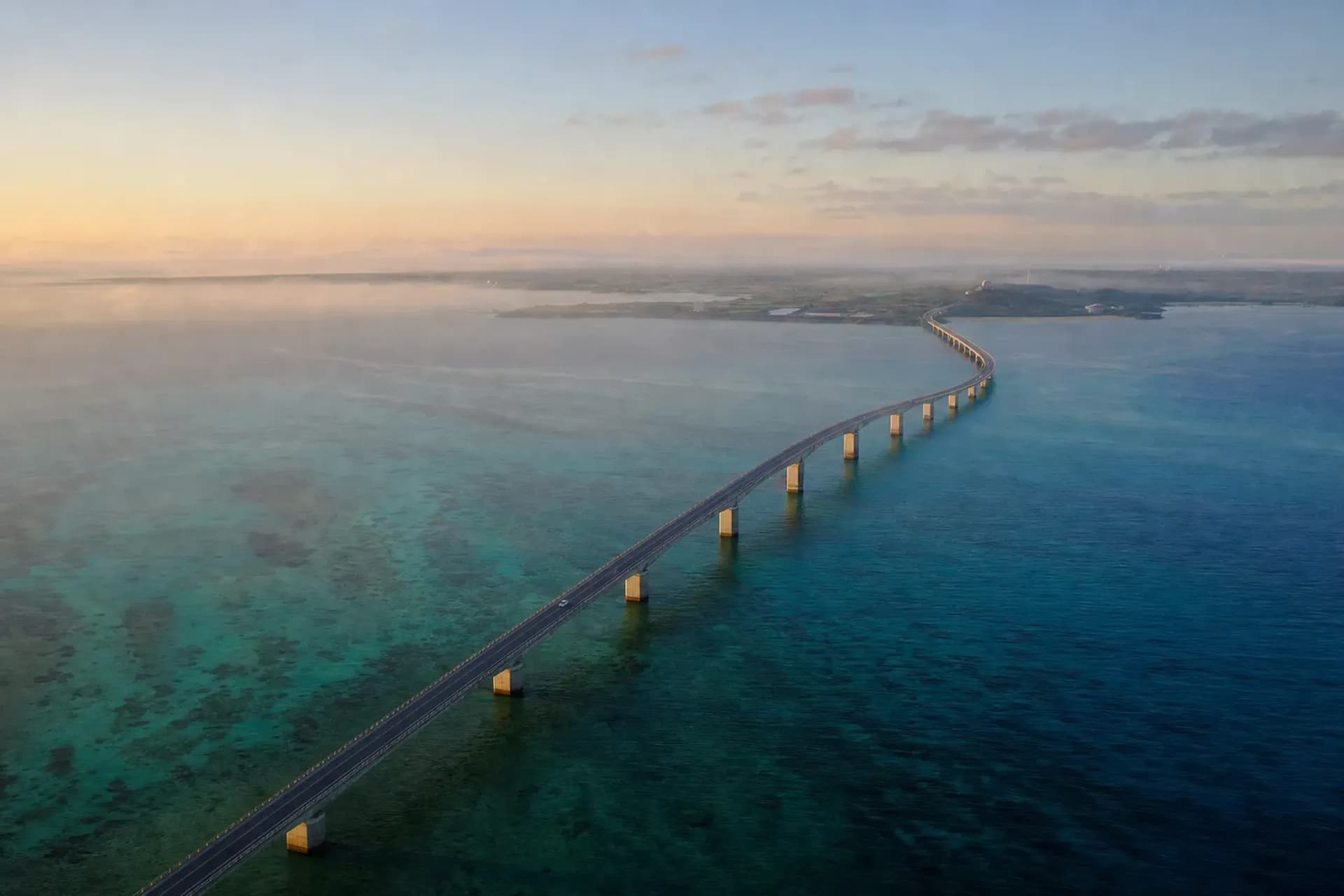
Miyakojima links to four smaller islands—Irabu, Shimoji, Kurima, and Ikema—by free, toll-free bridges, and you can drive them as a single loop.
This is where Miyakojima stops being “a beach destination” and becomes a driving island. The bridges are not simply infrastructure. They are the day’s main scene, the place where turquoise turns to deeper blue right beside your window. Experienced best from the quiet of a private chauffeured car, where you watch rather than steer.
Start early, when the light is sharp and the roads are quiet. Bring water, sunglasses, and patience. You are not trying to tick islands off a list; you are letting the coastline change slowly, bridge by bridge.
Irabu Bridge (Opened 2015): The Signature Crossing
Irabu Bridge connects Miyakojima and Irabu Island, and at 3,540 meters it is the longest toll-free bridge in Japan.
Drive it once without music.
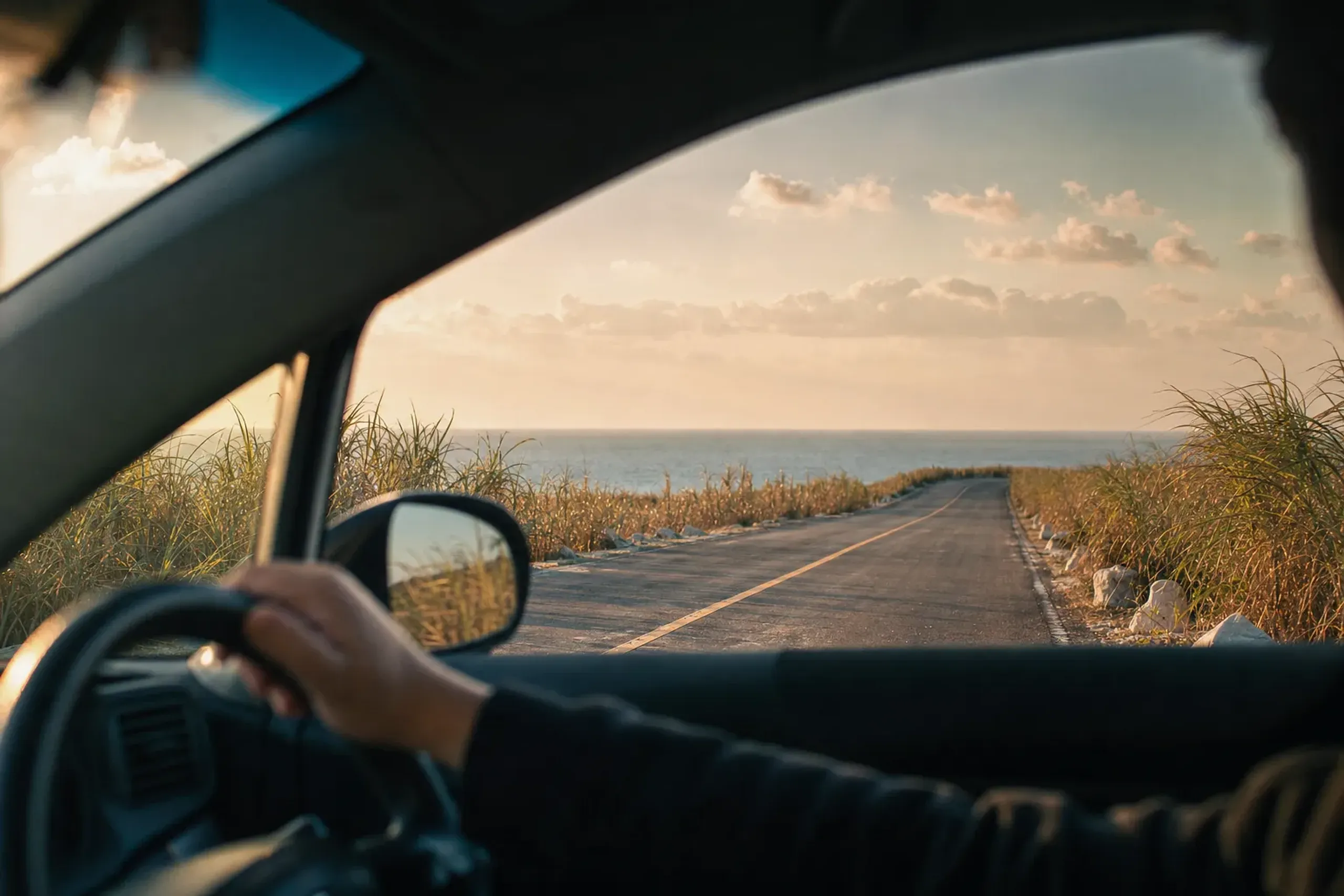
A strange request, perhaps. You will hear the wind and the texture of the road, and you will notice how the color banding in the sea shifts as the sun climbs.
Because the bridge is toll-free, it is easy to repeat at different times of day. Our concierge team often suggests one crossing in the morning, then another in the late afternoon, so the same line of water reads entirely differently.
Ikema Bridge And A Useful Micro-Stop
Ikema Bridge is also a practical waypoint because the Yukishio Museum (雪塩ミュージアム) sits nearby.
The museum’s appeal lies in its specificity. It explains Yukishio salt production, it is easy to visit, and it offers a grounded cultural counterweight to a beach-heavy itinerary. It also lists free admission.
Keep the stop short and clean. Thirty to sixty minutes is often enough. Then go back to the coast.
Key fact: On Miyakojima, the drive is often the “activity.” Plan fewer locations per day and give the bridges time to work on you.
Where To Find “Miyako Blue” Without A Boat: Beach Time And Shore Snorkeling
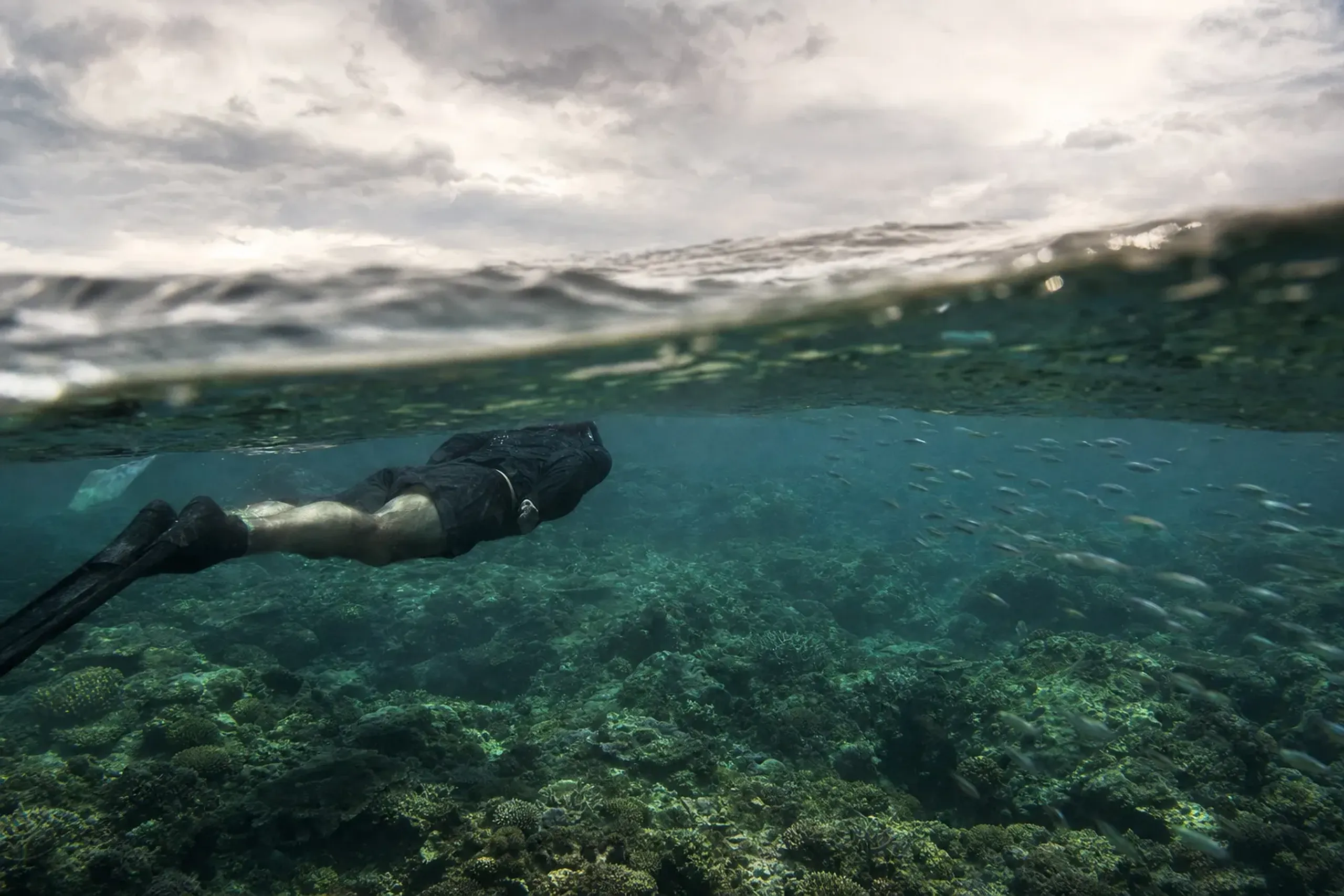
Miyakojima’s strongest, simplest water days come from beaches where the coral begins close to shore, so snorkeling can be excellent without needing a boat.
That matters if you want control. You can step in for twenty minutes, get out, dry off, then return later when the light improves. No fixed departure time. No group rhythm. This is the quiet, anticipatory care — the omotenashi of pacing — that makes a day feel like your own.
Snorkeling is still nature, not a showroom. Conditions change with wind and tide. Our team at Japan Royal Service confirms day-by-day suitability privately when we plan your itinerary and transport on the island, so your mornings are spent in the water rather than weighing forecasts.
Yonaha Maehama Beach: The Long White Line
Yonaha Maehama Beach is roughly 7 km of white sand and is highlighted by JNTO as one of Japan’s best sandy beaches.
Its scale is the luxury. You can walk until other people become small, then turn around and see just how flat the island really is. Few places make you slow down this quickly.
If you lean toward wabi-sabi, come early and do almost nothing. A towel, a book, and a long stare at the waterline. That is the point — and that restraint is harder to buy than any spectacle.
Miyakojima Vs Ishigaki: Which Island Fits Your Travel Style?
Ishigaki is a gateway to the wider Yaeyama chain, with more developed tourism infrastructure and jungle-covered terrain; Miyakojima is beaches, bridges, and a slower, quieter register.
Neither is “better.” They are simply different trips. If you choose incorrectly, you can still have a good time, but you will feel slightly out of sync all week.
Option A: Choose Miyakojima If You Want To Stop Moving
This is the island for a single-base stay. The map is simple. The days repeat in a pleasant way.
- Best for: couples, families, or solo travelers who want long beach time and short drives.
- Core rhythm: bridge drive → beach → shore snorkeling → early dinner.
- What you trade away: that “new island every day” feeling.
Option B: Choose Ishigaki If You Want Variety And Island-Hopping
Ishigaki suits travelers who measure satisfaction by contrast: different islands, different terrain, different day structures.
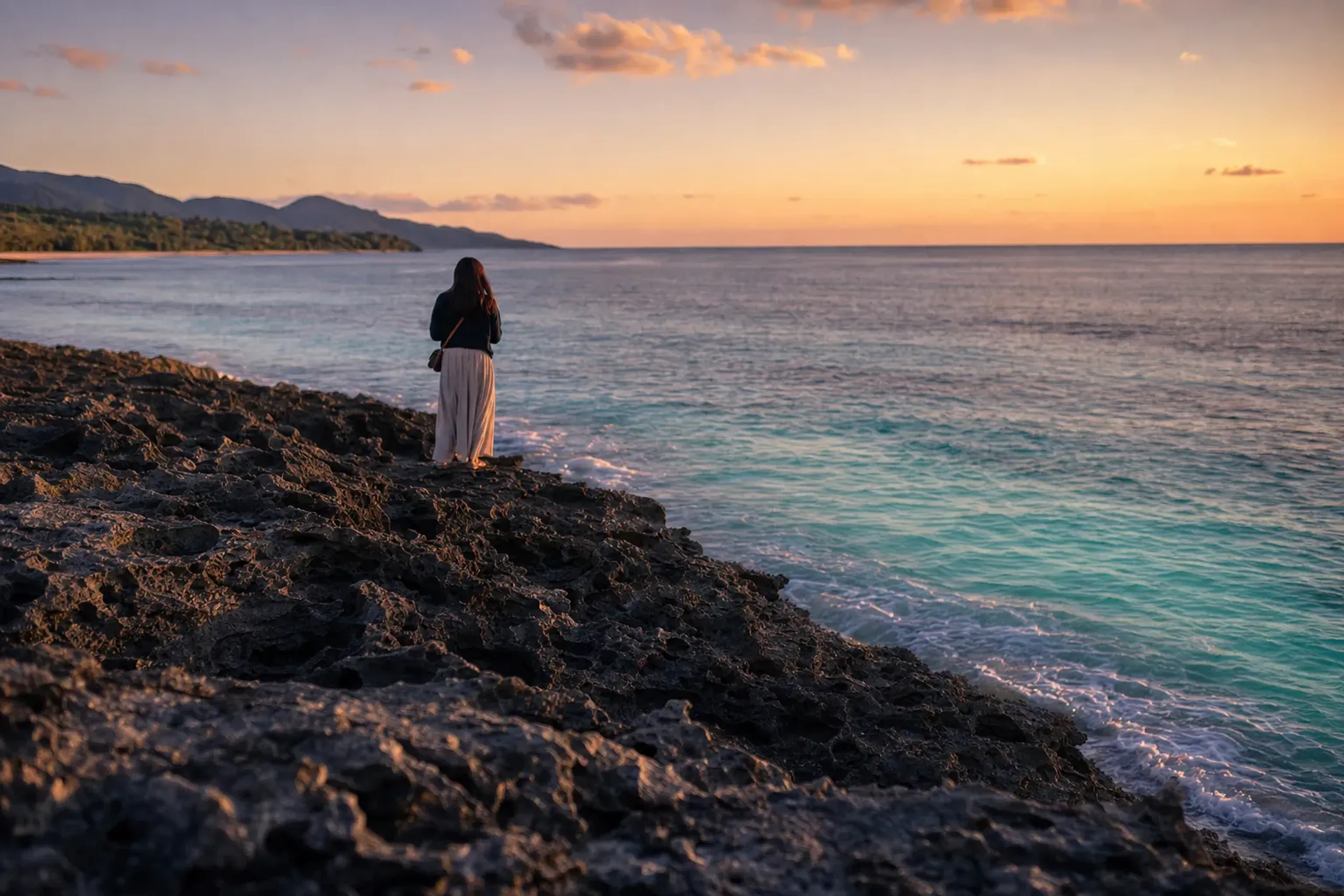
It is a gateway logic.
- Best for: travelers who like changing hotels or day-tripping across a chain.
- Core rhythm: transit days and activity days mixed together.
- What you trade away: the slow repetition that makes Miyakojima restorative.
Why Combining Miyakojima With Okinawa Main Island Or Ishigaki In One Short Trip Usually Backfires
Most short trips feel better when you choose one outer-island base—Okinawa Main Island, Miyakojima, or Ishigaki—instead of trying to combine them.
The reason is not distance alone. It is mental posture. Each place asks for a different pace, and switching styles mid-trip burns time in airports, packing, check-ins, and “reset” days.
For HNW travelers who can travel more than once, a cleaner pattern is treating Okinawa as a series. One visit for Miyakojima’s bridges and beaches. Another for a different base entirely. You keep the feeling intact. A thoughtfully tailor-made itinerary makes this sequencing effortless.
If you must combine, keep the split simple and long enough to land properly. The classic mistake: two islands in four nights. You will remember logistics, not water.
A Quiet Luxury Itinerary Framework For Miyakojima (3 To 5 Nights)
Miyakojima rewards repetition, so our planning bias is fewer big “events” and more well-timed, well-supported days.
Day 1: Arrival By Air, Then Do Less Than You Think
After you fly in, keep your first day contained. Eat early. Sleep early. The island works best when you wake up calm.
If you want a single task, choose one short beach visit near your base and step into the water for ten minutes. Just to mark the shift. Then stop.
Day 2: Irabu Bridge Drive, Then A Long Beach Afternoon
Start with the Irabu Bridge when the light is clear and the day still feels empty.
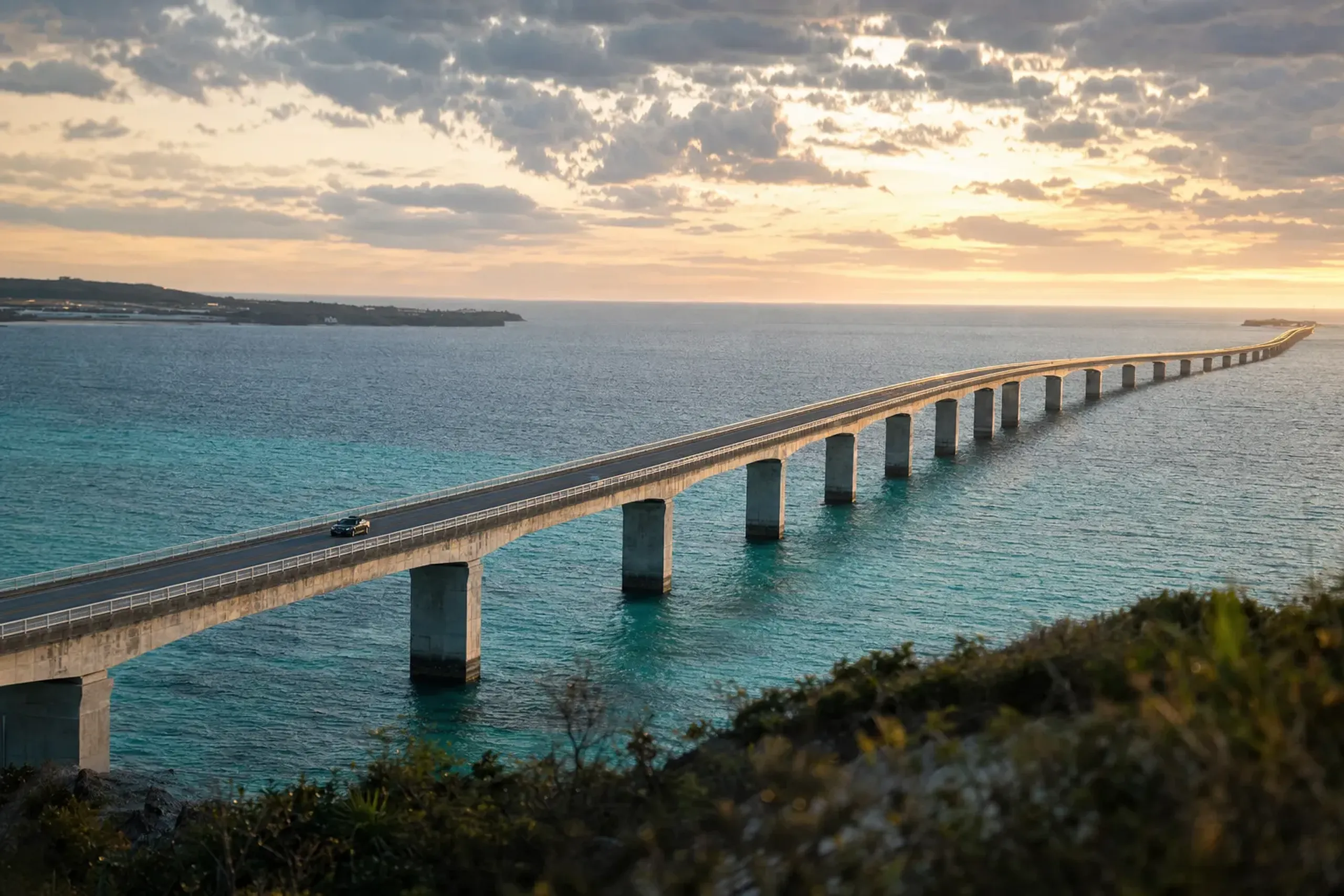
Let the crossing be the “activity.”
After that, commit to one beach for hours. Bring shade. Bring patience. Your schedule should look almost blank.
Day 3: Ikema Bridge Area + Yukishio Museum As A Short Cultural Counterweight
Make the Yukishio Museum a brief stop near Ikema Bridge. It gives the day a hinge point that is not purely coastal.
Then return to the sea. Shore snorkeling works well when you treat it as several short sessions, not one long push.
Day 4: Yonaha Maehama Beach Day
Give Yonaha Maehama the respect of time. Walk first. Then sit.
If you are traveling as a couple, this is the day for silence. If you are traveling as a family, it is the day to let children run without a plan. Both are rare luxuries.
Day 5 (Optional): A Second Bridge Loop, Slower And More Selective
On a longer stay, repeat one bridge loop at a different time of day. The island is not “done” after one circuit.
This is where hidden-Japan travel logic applies. The pleasure is not novelty; it is noticing more the second time — the quiet depth that Google cannot surface for you.
What’s New In Miyakojima For 2026–2027 Planners (Openings And Event Weeks)
Miyakojima’s luxury inventory is changing quickly, and 2026 brought real additions that can affect availability, timing, and the feel of a stay.
New Openings You May Want To Time Around
ALLAMANDA Splendid opened on April 29, 2026, as part of Shigira Seven Miles Resort.
Canopy by Hilton Okinawa Miyakojima Resort opened on April 1, 2026, launching simultaneously with a commercial facility called “Yard miyakojima,” according to Hilton’s Japan press release.
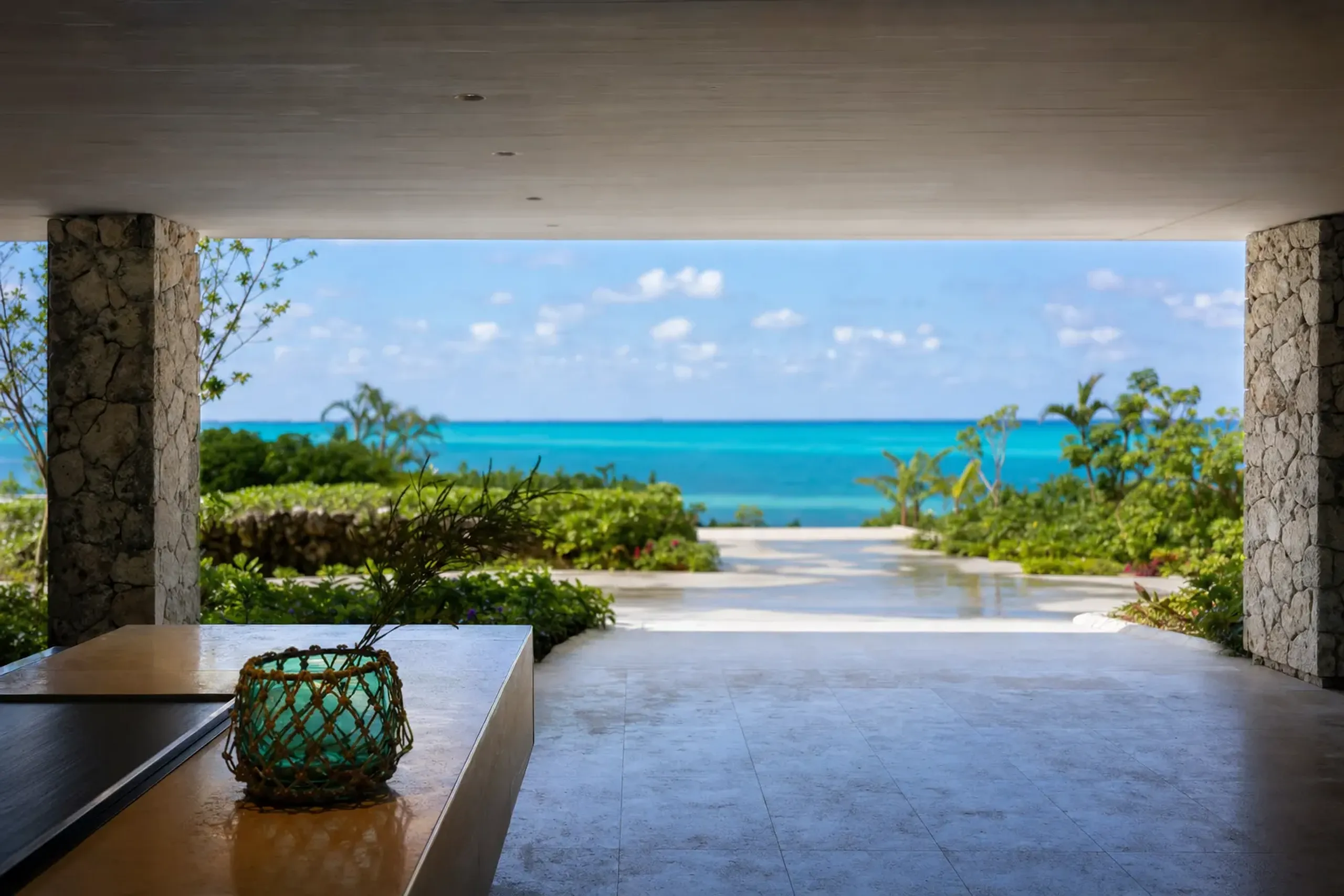
NOT A HOTEL announced on August 12, 2026 that it had begun accepting accommodation reservations for “NOT A HOTEL MIYAKO ANNEX.”
These are not just “new hotels.” They signal three different travel styles: classic resort comfort, an urban-style hub element, and design-forward private-home energy. Different guests. Different expectations. Choosing well between them is precisely where discreet guidance earns its place.
Event Weeks That Change The Island’s Logistics
The 40th All Japan Triathlon Miyakojima Tournament took place on Sunday, April 19, 2026, and recruitment for the next edition was posted on October 1, 2026 on the official site.
A Miyakojima local event listing includes ‘The 49th Miyako Industry Festival 2026’ (Oct 11–12, 2026) and ‘Kuichaa Festival 2026’ (Nov 1, 2026).
During event periods, road traffic and availability can shift. If your dates overlap, our concierge team plans your days with a sharper eye on timing and route choice. No heroics. Just precision.
Discretion On Miyakojima: How To Enjoy A Small Island Without Feeling Observed
Discretion on Miyakojima is less about being “hidden” and more about choosing a rhythm that avoids friction in a small community.
Keep your plans simple. Don’t announce them loudly. Use private transport when it makes sense, and avoid turning every moment into a public photoshoot.
If you intend to film seriously, treat it as a request that needs proper handling, not a casual impulse. Our team can advise privately on a low-profile approach that respects local norms and current notices — your identity and itinerary remain entirely your own.
This is also where shokunin experiences fit, when approached properly. Not as content. As a quiet meeting, a short lesson with a maker who rarely receives outside guests, and a clean thank-you.

Frequently Asked Questions
Is Miyakojima Really Only Reachable By Plane From Okinawa?
Yes—Miyakojima has no ferry links to Okinawa Main Island or Ishigaki, so access is by air, with flights from Naha taking roughly 55 minutes.
Because that flight is short, the planning challenge is less the journey and more the mindset shift: arrive, unpack once, and let the days slow down.
What Is The Best Way To See Irabu Bridge In One Day Without Rushing?
The best approach is to drive Irabu Bridge once in the morning, spend a long beach or snorkeling block, then cross again later when the light changes.
It sounds repetitive. It isn’t. The sea color and the feel of the wind differ, and you avoid the “one-and-done” rush that makes the island feel thin.
How Many Nights Do You Need In Miyakojima To Feel The Difference?
Plan at least 3 nights to enjoy Miyakojima’s bridges, beaches, and shore snorkeling without turning your trip into a sequence of transfers.
Four to five nights reads best for travelers who want a real rest. That is where the island stops being a destination and becomes a tempo.
Plan Your Private Miyakojima Escape
Miyakojima rewards travelers who know how to stop — and the quiet choreography behind that stillness is exactly what we arrange. From the right single base and a chauffeured bridge loop at the perfect hour to shore snorkeling confirmed privately against the day’s conditions, every detail is handled before you arrive. When you are ready to design your own unhurried island stay, contact us here for a tailored proposal.