In this guide
- 01When Is The Mt. Fuji Climbing Season?
- 02The Four Trails At A Glance
- 03The Yoshida Trail Rules: Cap, Gate And Reservation
- 04The Climb: Huts, Cold And A Steady Pace
- 05Sunrise, And The Way Down
- 06Safety, Rubbish And The Protected Zone
- 07How Do I Get To The Mt. Fuji 5th Station?
- 08How The Concierge Team Plans The Days Around The Climb
- 09Begin Planning Your Ascent
- 10Frequently Asked Questions
The bus climbs through forest for most of an hour, gears shifting, the trees thinning as the road bends higher. Then it stops. You step out at the Yoshida 5th station, 2,305 metres up, and the air has changed — cooler, cleaner, with a thin edge to it. Below you, cloud sits flat over Yamanashi like a lid. Above, the summit of Mt. Fuji waits, pale and enormous, closer than it has ever looked and still a long way off.
This is the moment every climb begins. Not with a dash. With a pause.
Mt. Fuji opens to climbers for roughly ten weeks a summer, and in that short window the rules have quietly rewritten what a good plan looks like. The old picture — a headlamp, an all-night push, no sleep — is now actively discouraged. Our team at Japan Royal Service builds the days around this climb the way the mountain now asks: with rest on either side, a night in a hut, and a clear-eyed read of the gate, the cold and the thin air. Knowing precisely when to go, and what the season will ask of you, is itself a form of preparation — the quiet attention to timing that a well-made Japanese journey turns on. Here is the climb in order, honestly.
When Is The Mt. Fuji Climbing Season?
Mt. Fuji is open to climbers from early July to early September, with dates that vary by trail and by year.
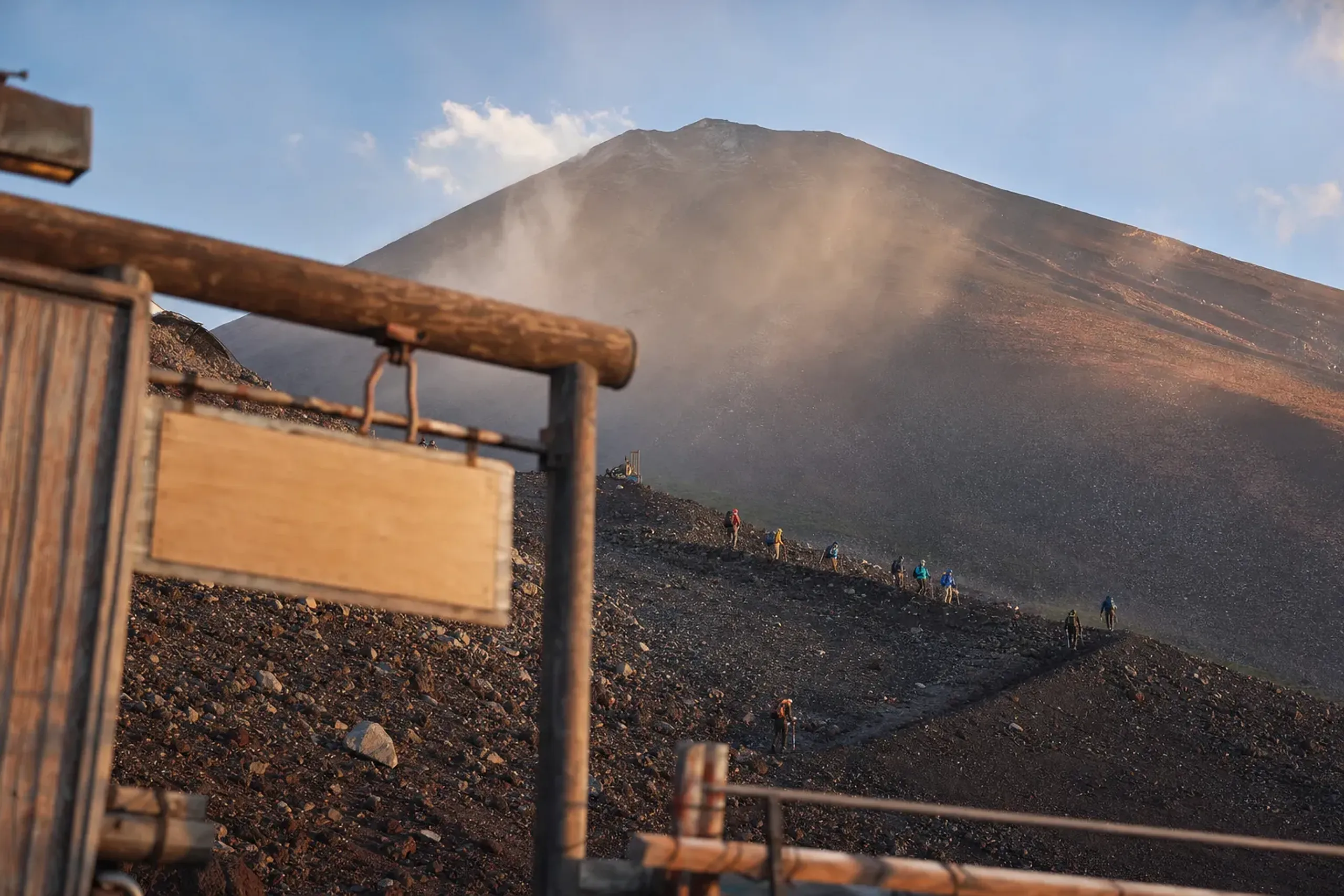
Outside that window the trails above the 5th station are closed, and officials do not recommend climbing.
Take the 2026 season as a worked example. The Yoshida Trail (Yamanashi side) ran 1 July to 10 September. The Subashiri Trail ran 1 July to 10 September. On the Shizuoka side, the Fujinomiya and Gotemba trails ran 10 July to 10 September — from 9:00 on 10 July to 17:00 on 10 September. The crater-rim walk opens from around 10 July, snow permitting, and its opening can be delayed by weather in any year.
The important thing: these are the 2026 dates, and they change. The officials — Yamanashi Prefecture, Shizuoka Prefecture and the Mt. Fuji climbing site fujisan-climb.jp — publish each season's dates and rules before the season opens. Always confirm the current year.
Key fact: Outside the official season, the mountain huts and first-aid centres are closed. That is why the officials do not recommend climbing then — not glamour lost, but safety gone.
One line on why people have climbed here for centuries: Fuji was inscribed as UNESCO World Heritage in June 2013 as "Fujisan, sacred place and source of artistic inspiration," a cultural property of 25 sites. Mountain worship and Shugendo training here are said to reach back to the late Heian period, and Fuji-ko pilgrimages flourished in the mid-Edo period.
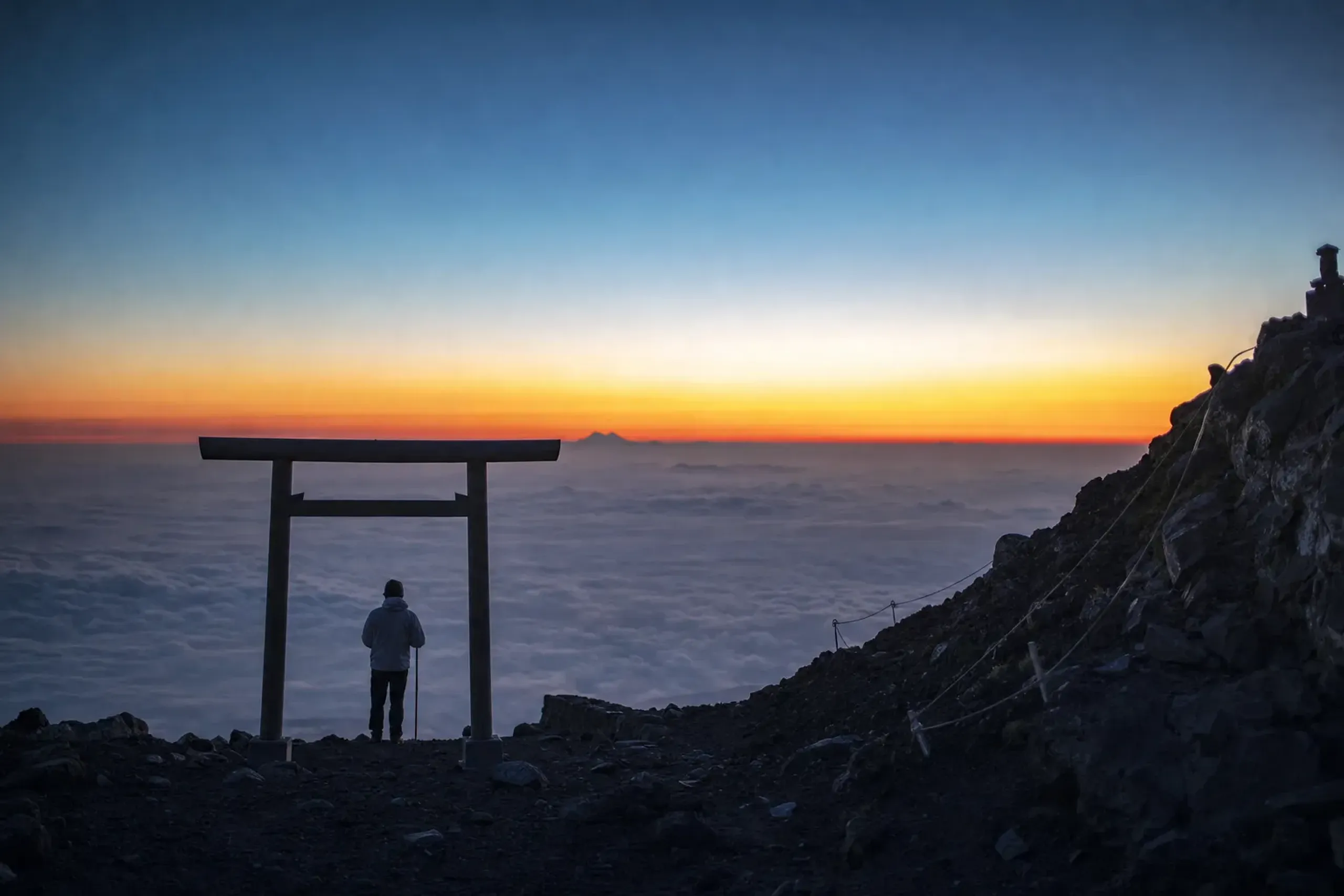
To climb Fuji is to walk a path trodden by centuries of pilgrims — a lineage that still shapes how the mountain is approached today.
The Four Trails At A Glance
Four trails climb Mt. Fuji, each starting from its own 5th station at a different height. The trail you choose shapes your crowds, your climbing time and how much altitude you gain.
| Trail | Side | 5th-station height |
|---|---|---|
| Yoshida | Yamanashi | 2,305 m |
| Fujinomiya | Shizuoka | 2,400 m |
| Subashiri | Shizuoka | 2,000 m |
| Gotemba (New 5th) | Shizuoka | 1,440 m |
The Yoshida Trail is the busiest and best served with huts, which is why most first-time climbers choose it. The summit itself stands at 3,776 metres — Japan's highest point, and a serious altitude gain whichever way you start.
Fujinomiya begins highest, at 2,400 metres: a shorter climb but a steeper one. Subashiri and Gotemba are quieter and longer, with Gotemba the longest haul of all. If you are less experienced, Yamanashi recommends joining a guide or tour.
The Yoshida Trail Rules: Cap, Gate And Reservation
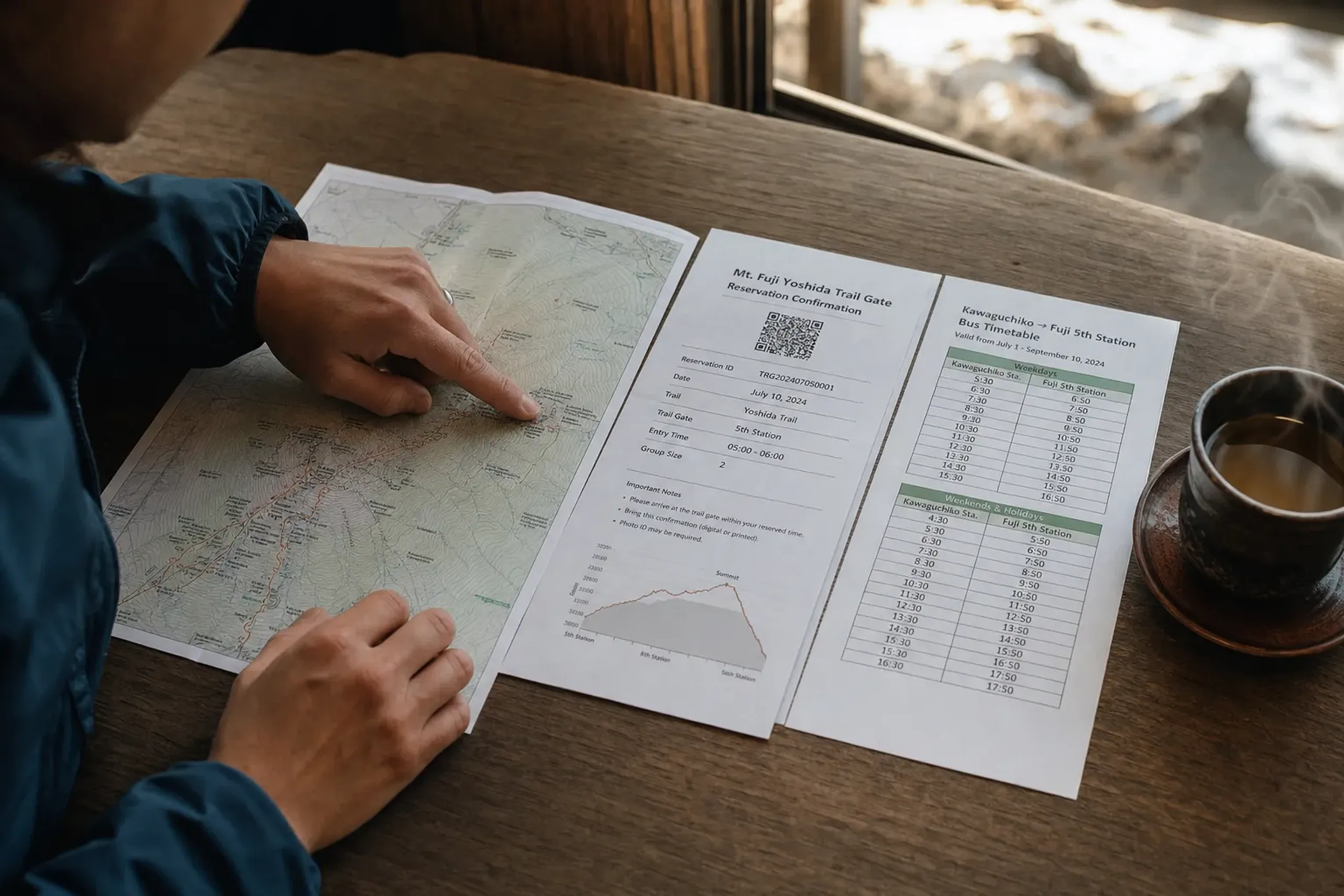
On the Yoshida Trail in 2026, a daily cap of 4,000 climbers applied, the gate closed from 2 pm to 3 am, and a reservation system was in place — hut guests exempt from both the cap and the gate hours.
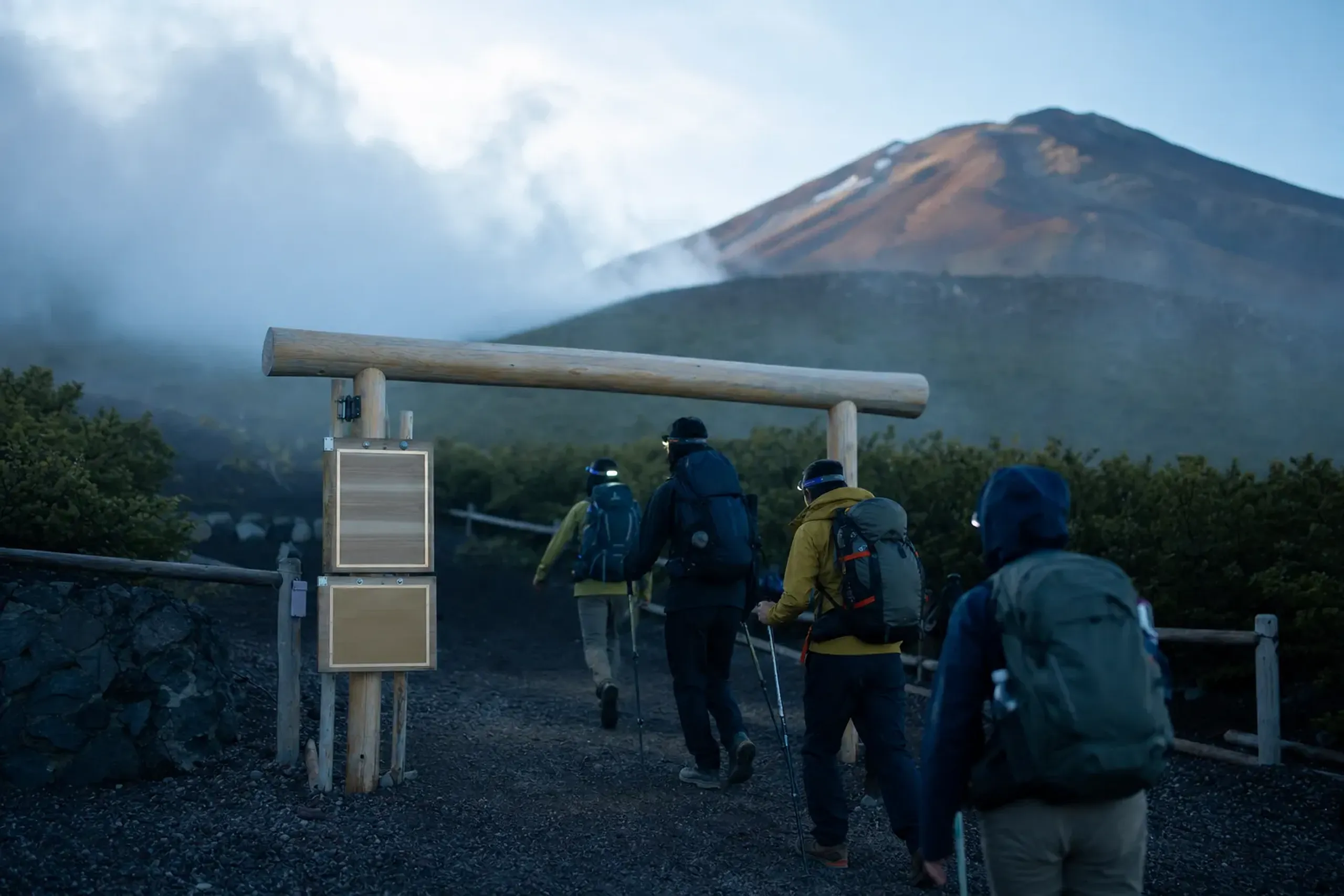
That gate closure is the rule that catches people out, so understand the honest reason behind it. For years, climbers would arrive in the evening and push straight through the night to reach the summit by dawn, exhausted and under-dressed. "Bullet climbing," it is called. It fills the trail with people who have not slept and are not ready for the cold. The overnight gate closure exists to stop exactly that.
So if you are not staying in a hut, you cannot pass through the Yoshida gate between 2 pm and 3 am. A hut stay is not required to climb — but it is the way to climb overnight. The city warns that huts fill weeks ahead.
Gear Checked At The Gate
At the Yoshida gate, staff check that you are carrying warm clothing, a rain jacket and trousers, and hiking boots. Turn up in trainers and a cotton hoodie and you may be turned back. This is not bureaucracy for its own sake. The summit sits near freezing before dawn even in August, and the weather can turn in an hour.
The reservation system for the Yoshida Trail opened on 27 April for the 2026 season, with same-day passage still possible. Our concierge team walks each client through the current year's system — because, like the dates, it can change.
The Climb: Huts, Cold And A Steady Pace
From the Yoshida 5th station, reckon on about six hours up and four hours down, plus rests — roughly eleven hours in all.
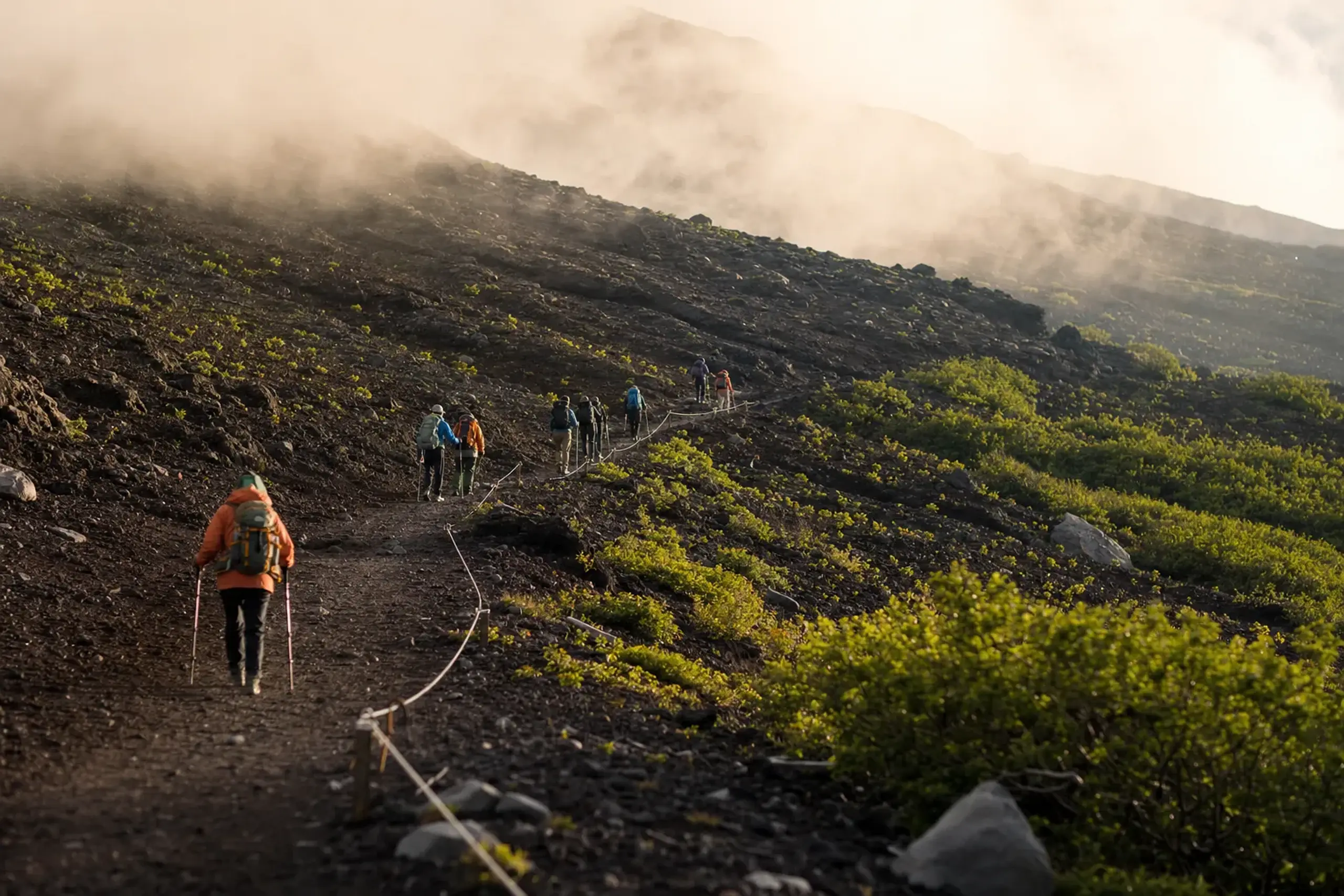
The climbing site puts the ascent at about six hours ten minutes. These are not numbers to rush.
The pattern that works: rest one to two hours at the 5th station first, letting your body meet the altitude. Then climb slowly. Reach your hut in the afternoon or early evening, eat, and sleep for a few hours. The temperature drops about 0.6°C for every 100 metres you gain, and the summit in July averages 5.3°C, in August 6.4°C — before sunrise it can sit near zero.
Huts are the only overnight option on Fuji. Tents and camping are not allowed, and pets are not permitted inside. Hut toilets work in season, run on a tip basis. The sleeping is communal, shoulder to shoulder, and brief. You lie down knowing an alarm will pull you back into the dark. For a guest used to the hush of a fine ryokan, the austerity of a mountain hut comes as a surprise — but it is part of the mountain's own quiet discipline, a night stripped to its essentials before the dawn.
Altitude, And The Courage To Descend
Altitude sickness is real on Fuji, and the official guidance is plain: the best treatment is to descend.
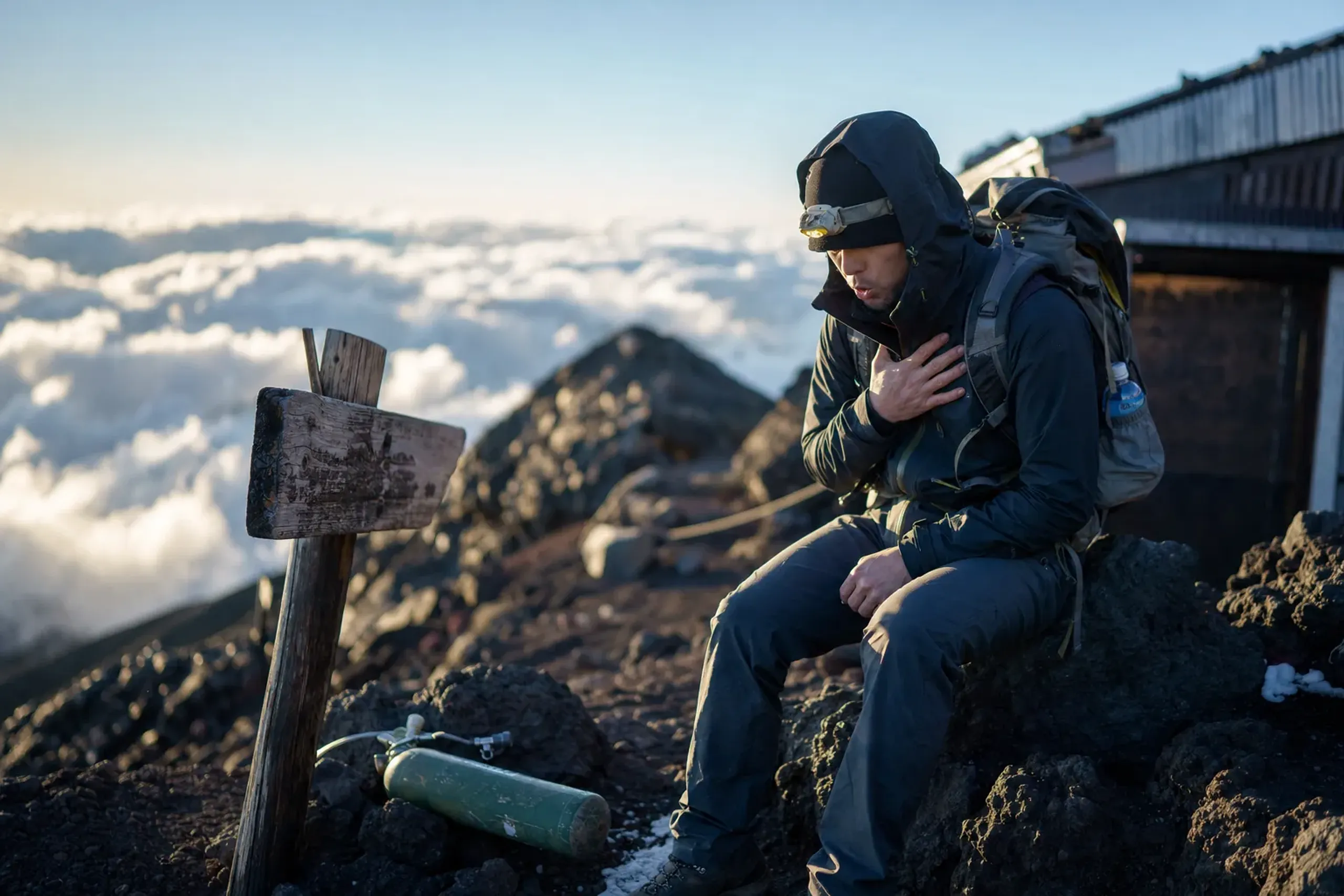
Rest at the 5th station before you start, climb at a steady pace, and if symptoms become severe, go down. The climbing site puts it simply — have "the courage to descend." Treat this as official guidance, not medical advice; anyone with a health concern should speak to their own doctor before travelling.
Sunrise, And The Way Down
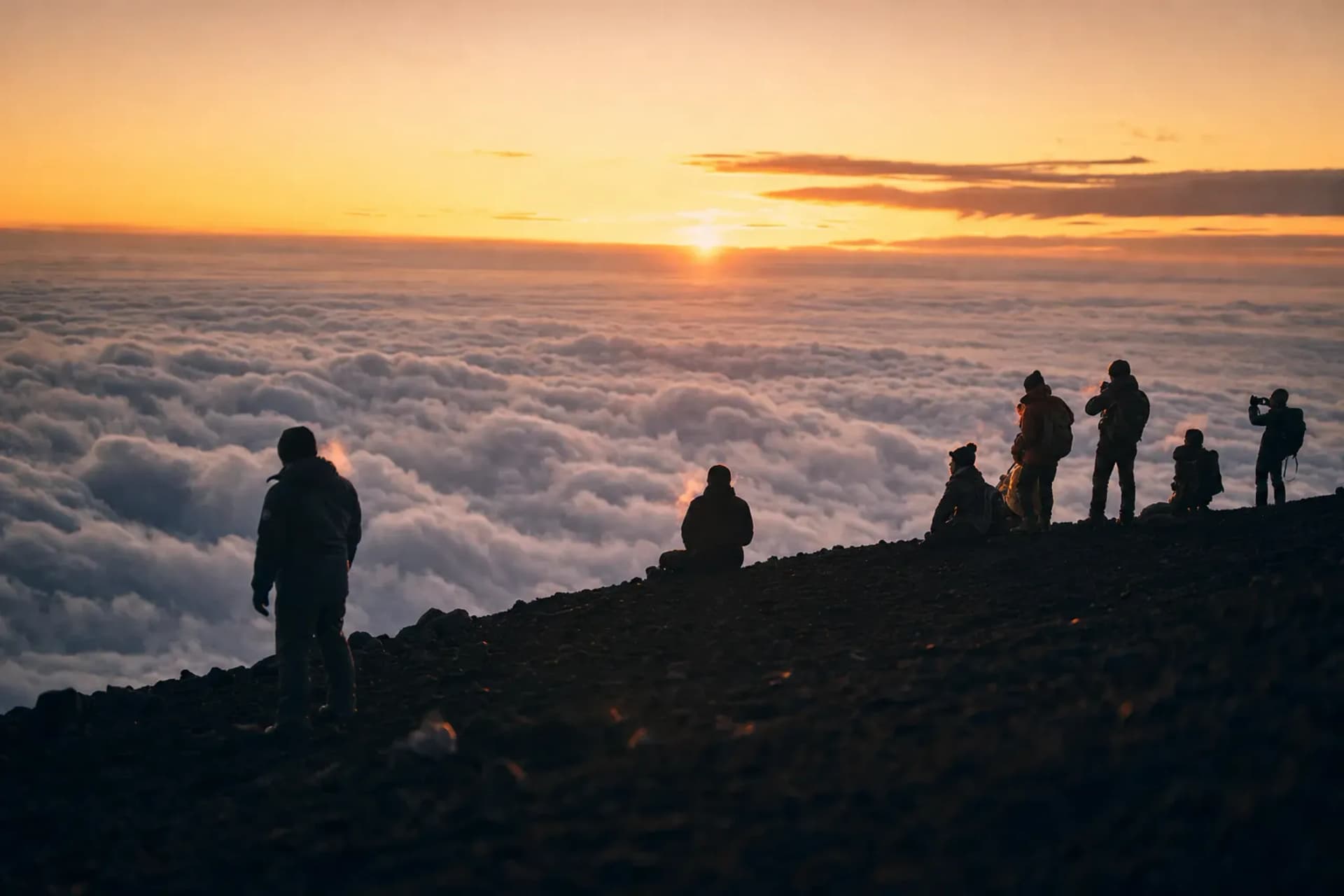
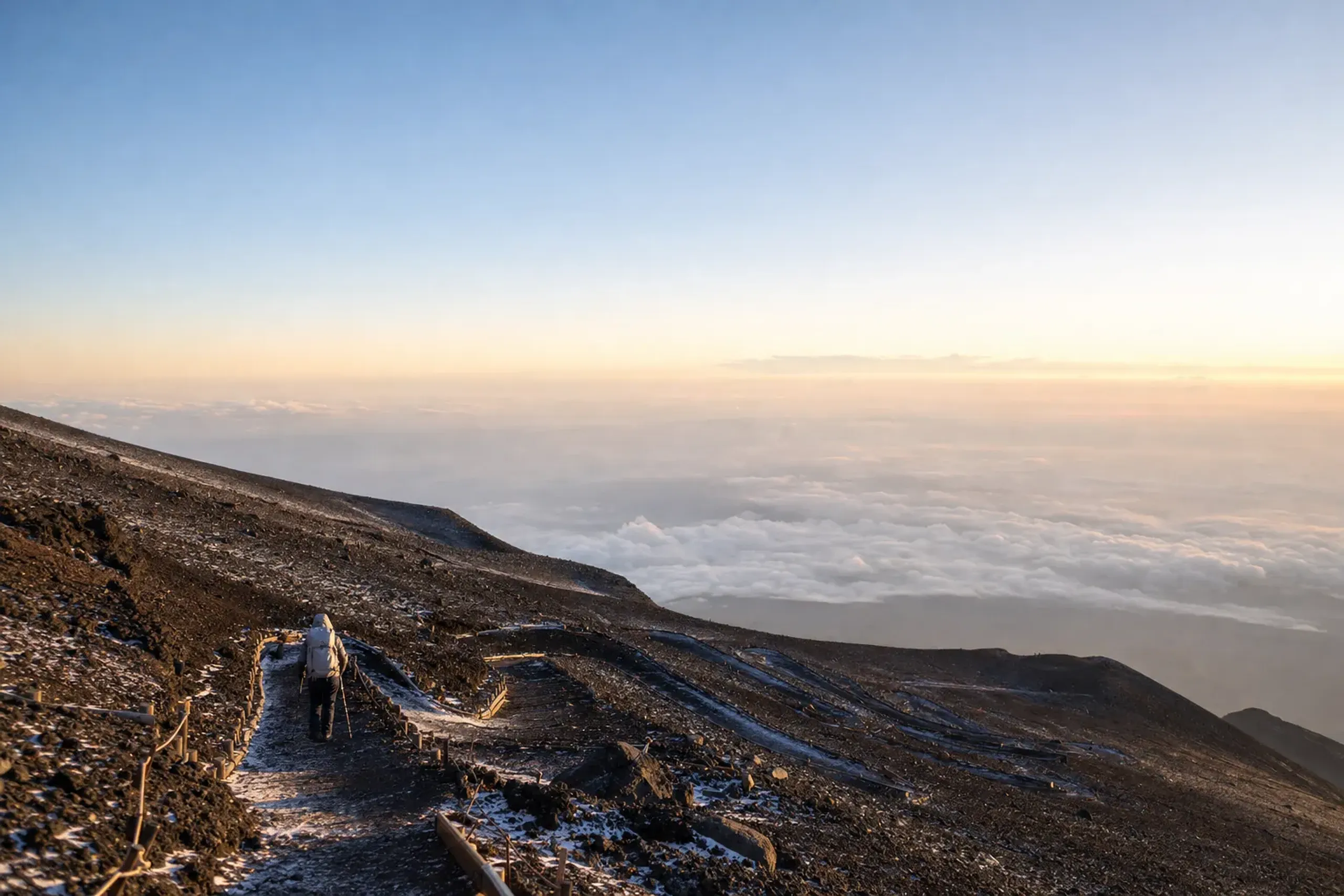
In July and August the sun rises over Mt. Fuji at around 4:20 to 4:50 am. On 1 July it broke at 4:21; by 10 September, 5:13. Those few minutes are the reason most people climb.
But here is the honest part. You do not have to be standing on the crater rim when it happens. The trail below the summit is packed before dawn, a slow river of headlamps, and waiting at the very top in the cold raises the risk of hypothermia. Watching the light come up from a little below the summit, still moving, is often the safer and no less beautiful choice. The grey turns to rose, the sea of cloud catches fire, and the whole of Honshu seems to tilt toward the sun.
Then you go down. The descent is its own long effort — four hours of switchbacks on loose volcanic grit, knees working, the summit shrinking behind you. Take it steadily. Most injuries happen on the way down, when people are tired and the ground gives underfoot.
Safety, Rubbish And The Protected Zone
Above the 5th station, Mt. Fuji is a special protected zone of the national park. No collecting plants or animals, no camping, no fires. Everything you carry up, you carry down — there are no bins on the trails or in the huts, and climbers are asked to bring a portable toilet for emergencies.
A few rules keep you safe:
- Avoid bullet climbing — the non-stop overnight push with no rest.
- Use a headlamp, and stay on the marked trail; stepping off risks rockfall.
- A helmet is recommended against rockfall.
- Summer thunderstorms are frequent; watch the sky and turn back if it darkens.
- Drones and paragliders are banned above the 8.5th station.
- In an emergency, contact a mountain hut, or call 110 (police) or 119 (fire and ambulance).
None of this is meant to frighten you off. It is the frame that lets you enjoy the climb instead of fighting it.
How Do I Get To The Mt. Fuji 5th Station?
Private cars cannot enter the 5th station during the climbing season, so you reach it by bus or by shuttle from a car park lower down. Which service depends on your trail.
For the Yoshida Trail, buses run from Kawaguchiko Station — about 45 to 55 minutes on the 2026 plan — and a highway bus runs from Shinjuku.
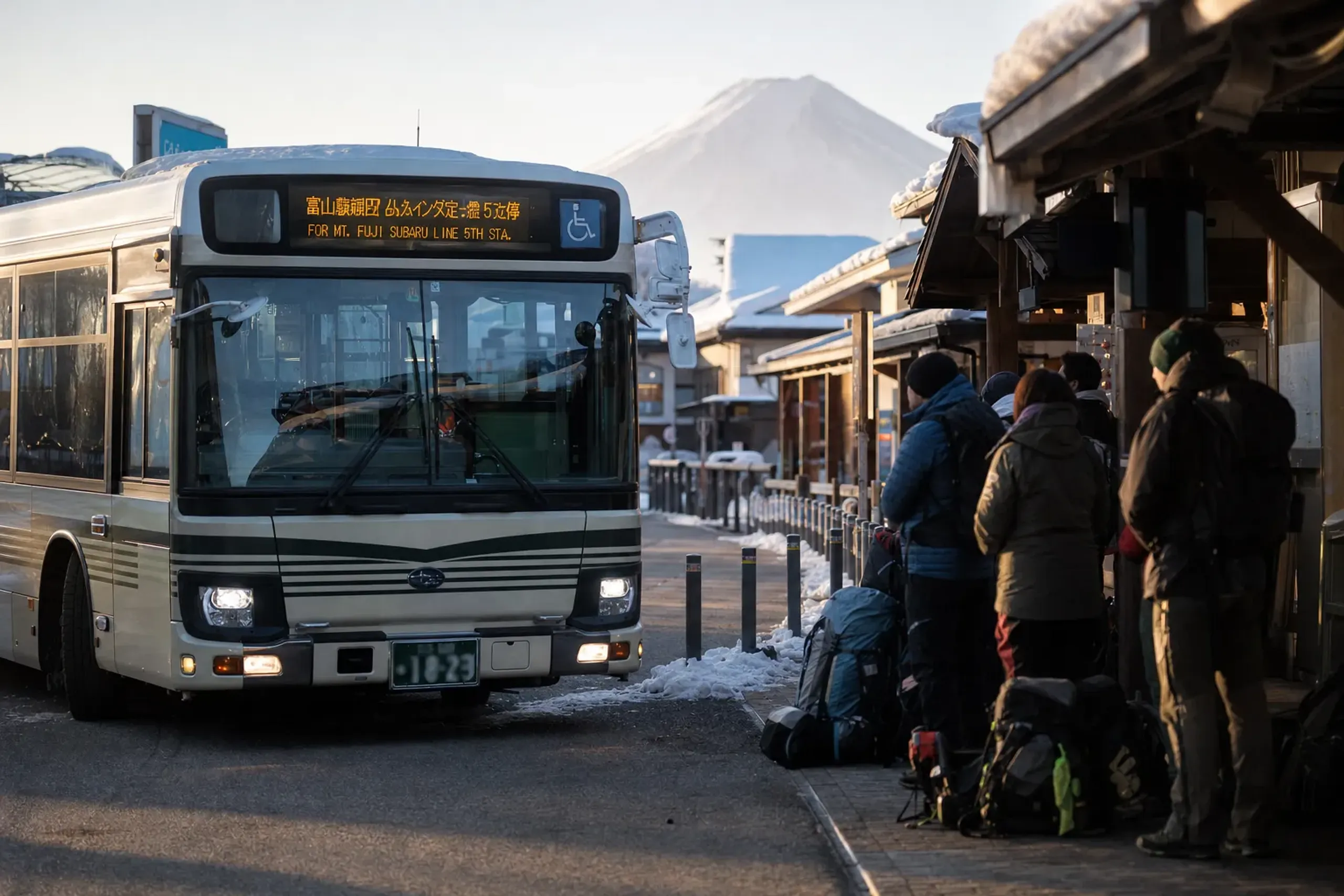
For Fujinomiya, buses come from Mishima, Shin-Fuji, Fuji and Fujinomiya stations. Gotemba is reached by bus from Gotemba Station, and Subashiri from Gotemba and Shinmatsuda stations.
Because private cars are barred, shuttle buses replace them. In 2026 the Fuji Subaru Line shuttle to the Yoshida 5th station ran from early July to 10 September from Fujisan Parking; the Fuji Azami Line served Subashiri from 1 July to 10 September; and the Fuji Skyline served Fujinomiya from 10 July to 10 September. The exact car-restriction dates shift year to year, which is why our concierge team confirms them for the client's dates and checks which vehicles may enter the 5th station in season.
How The Concierge Team Plans The Days Around The Climb
Mt. Fuji is a public mountain. No private, reserved or priority access exists on it, and our team at Japan Royal Service will not suggest otherwise. What we do is build a sane, well-rested itinerary around a climb that punishes the rushed — and we do it with complete discretion, your identity and your plans held in confidence from first enquiry to the final descent.
First, planning. Our concierge team walks you through the current season dates, helps you choose the right trail, and explains the Yoshida Trail reservation system in plain terms — then shapes the trip with a rest day before and after, because the climb takes more out of you than people expect.
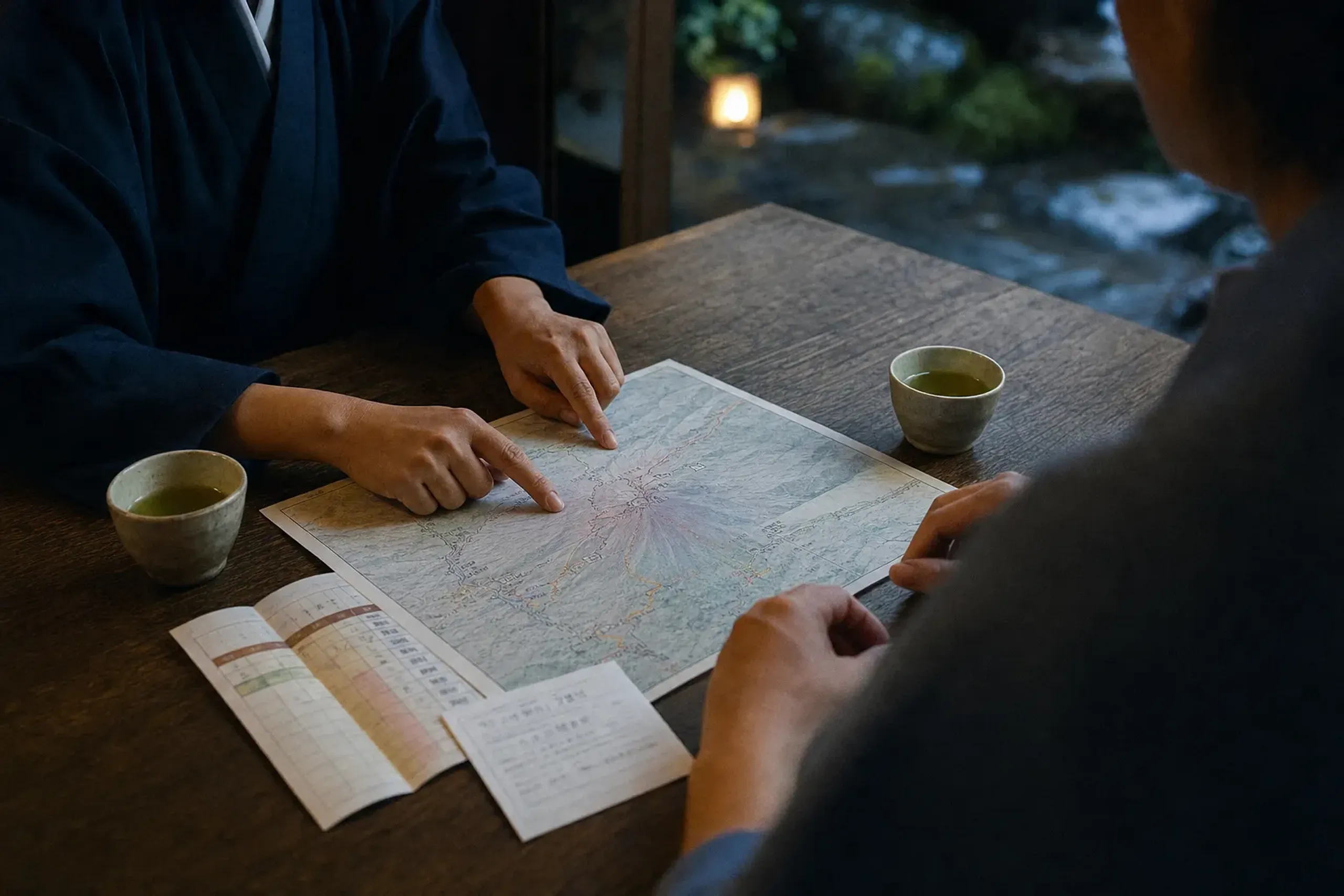
Second, the days either side. We can arrange an English-speaking cultural interpreter guide for the time around the climb — the Fuji Five Lakes and the Sengen shrines at the mountain's foot, where the pilgrim tradition lives. This is a cultural guide for the valley, not a mountain guide on the climb itself. For those drawn to the craft traditions of the region, we can also open doors that do not ordinarily open: a quiet session with a shokunin working in the shadow of the mountain, the kind of encounter that cannot be booked through any public channel.
Third, movement. Through our private chauffeured transfer partners, we can run a comfortable vehicle between your base hotel and the bus stop or car park for the 5th-station shuttle, with the team checking the season's vehicle rules in advance. We can also coordinate a hotel near Kawaguchiko or Fujinomiya for the nights before and after, so you start fresh and recover properly.
And throughout, our team verifies the moving parts for you ahead of the visit — the season dates, the gate and cap rules, the car-restriction dates and the weather. Every element sits inside a tailor-made itinerary shaped to your pace. If rain threatens, our guide to planning when the weather turns shows how we keep the days around the climb worthwhile whatever the sky does.
One more line for late summer: the Yoshida Fire Festival in Fujiyoshida lights the town with towering torches at the end of August — a striking evening if your dates align, and a reason some clients stretch their stay in the valley. Reading the calendar this way, knowing what unfolds where and in which week, is precisely the kind of seasonal timing that turns a good trip into an unrepeatable one.
Begin Planning Your Ascent
Fuji rewards the climber who arrives rested, read-in and unhurried — and punishes the one who does not. If you would like the season dates, the trail choice, the hut and the days on either side handled with quiet precision, our concierge team is ready to shape them around you. To begin a private, confidential conversation about your climb, contact us here.
Frequently Asked Questions
When Can You Climb Mt. Fuji, And How Long Is The Season?
Mt. Fuji is open from early July to early September — about ten weeks — with dates that vary by trail and by year. In 2026 the Yoshida and Subashiri trails ran 1 July to 10 September, and Fujinomiya and Gotemba 10 July to 10 September. Always confirm the current year.