In this guide
- 01How Do You Reach The Izu Islands From Tokyo?
- 02Niijima: The Long Beach And The Moyai Statues
- 03Shikinejima: The Cove And The Hot Spring By The Sea
- 04Kozushima: The Boardwalk And The Starry Sky Reserve
- 05Which Izu Island Suits Which Trip?
- 06Why An Izu Island Trip Needs A Weather Buffer
- 07Frequently Asked Questions
- 08Why Choose Japan Royal Service
Tokyo does not end at the city limits. Draw a line south from Takeshiba Pier and you cross open water to a string of islands that still carry a Tokyo address. Three of them pair well for a summer trip: Niijima, Shikinejima and Kozushima. A long white-sand beach. A cove and a sea-side hot spring. A coastal boardwalk on Tokyo's first Starry Sky Reserve Area.
The questions that matter here are plain ones. How do you reach each island? How long does it take? Which island suits which kind of trip? How do the islands connect to each other? And what happens when the weather moves the schedule? This guide answers them in that order, using the Tokyo Metropolitan Government's published journey times as minimum figures for normal conditions. Our team at Japan Royal Service builds these trips around the sailing and flight schedule, with a spare day folded in from the start.
How Do You Reach The Izu Islands From Tokyo?
Two ways: by sea from Takeshiba Pier in central Tokyo, or by air from Chofu Airport in the city's western suburbs. The right choice depends on the island, the season and how much of a buffer your plan can carry.
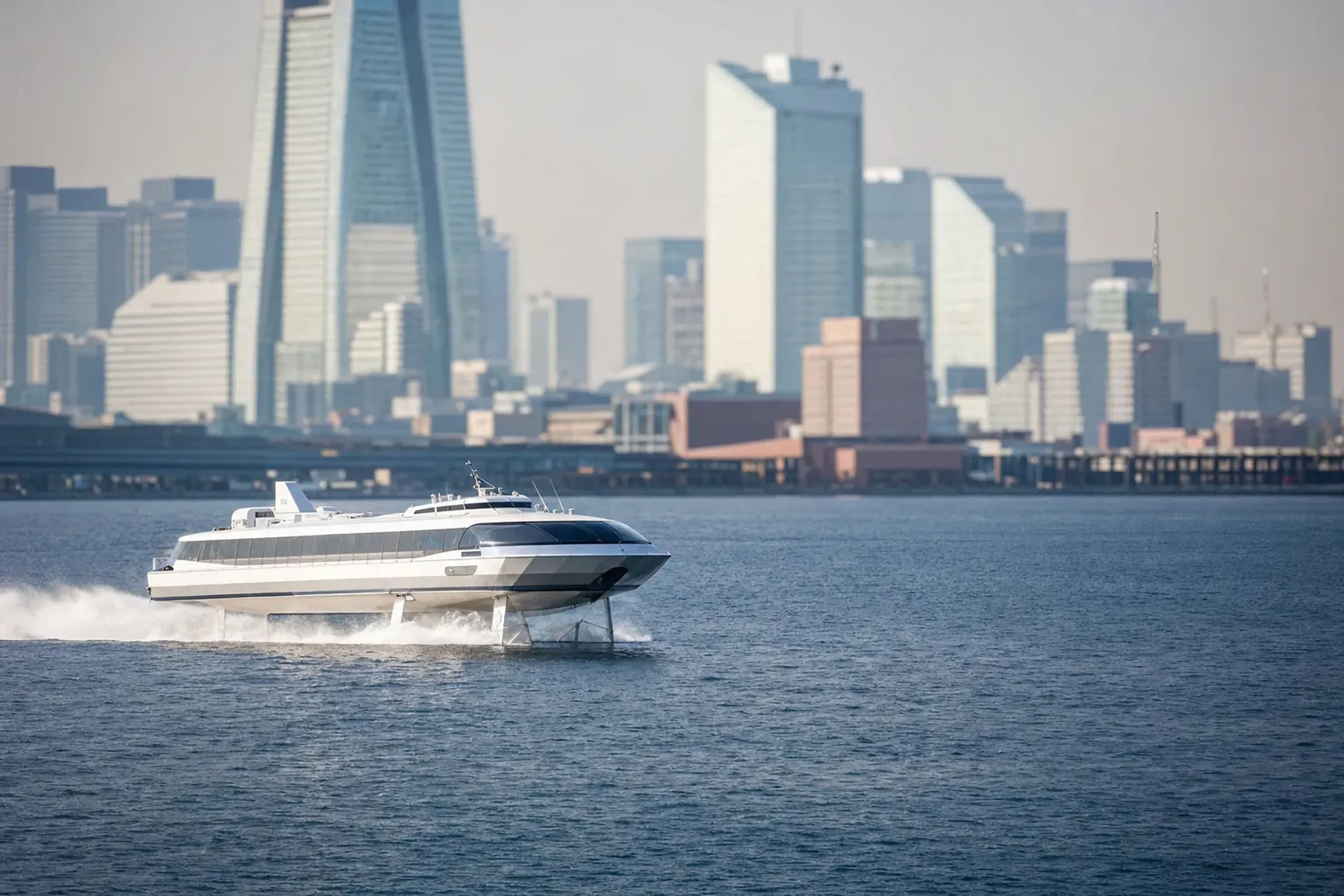
The sea route starts at Takeshiba Passenger Ship Terminal, about a minute's walk from Takeshiba Station on the Yurikamome line. Tickets are collected and boarding happens at the terminal. Two kinds of vessel run: a jet ship and an overnight ship.
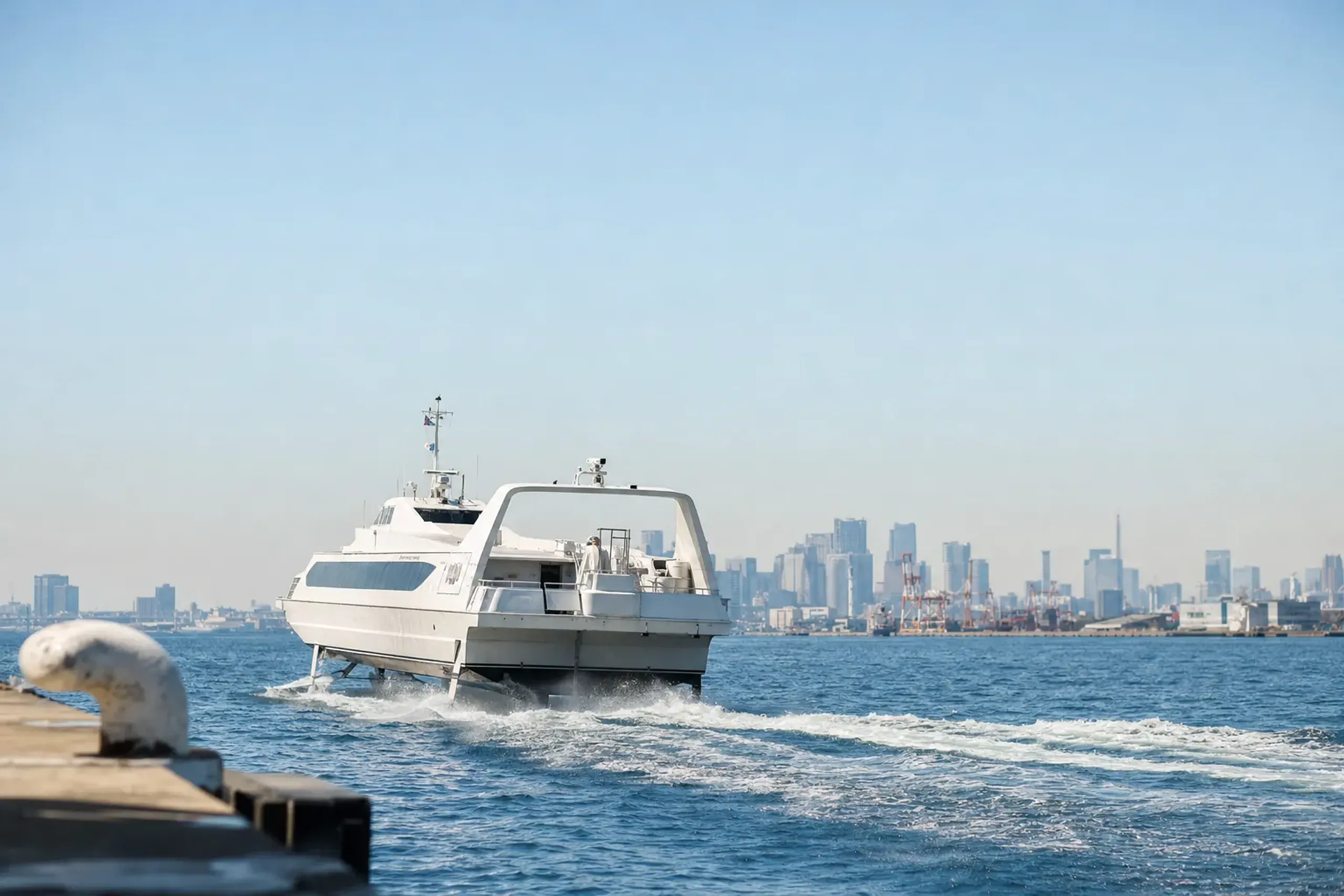
The air route runs from Chofu Airport to Niijima and Kozushima; Chofu lists no flight to Shikinejima.
Here are the Metropolitan Government's "at least" times for normal conditions. Read them as minimums, not promises.
| Island | Jet ship from Takeshiba | Overnight ship from Takeshiba | Flight from Chofu |
|---|---|---|---|
| Niijima | about 2 hours 20 minutes | about 8 hours 30 minutes | about 40 minutes |
| Shikinejima | about 2 hours 20 minutes | about 9 hours | — |
| Kozushima | about 3 hours 5 minutes | about 9 hours 55 minutes | about 45 minutes |
GO TOKYO states that "travel times are for normal conditions, and may vary somewhat depending on the weather," and recommends reserving online or by phone. The Metropolitan Government pages note that schedules and times change with the season and the weather. We book the jet ship, overnight ship and flight tickets where they are bookable. We do not run the ships or the flights. The JRS concierge team confirms the current sailing and flight schedule directly with the guest at time of arrangement.
Key fact: Every journey time here is a minimum for normal conditions. Build an island trip with at least one spare day, because the schedule moves with the season and the weather.
Niijima: The Long Beach And The Moyai Statues
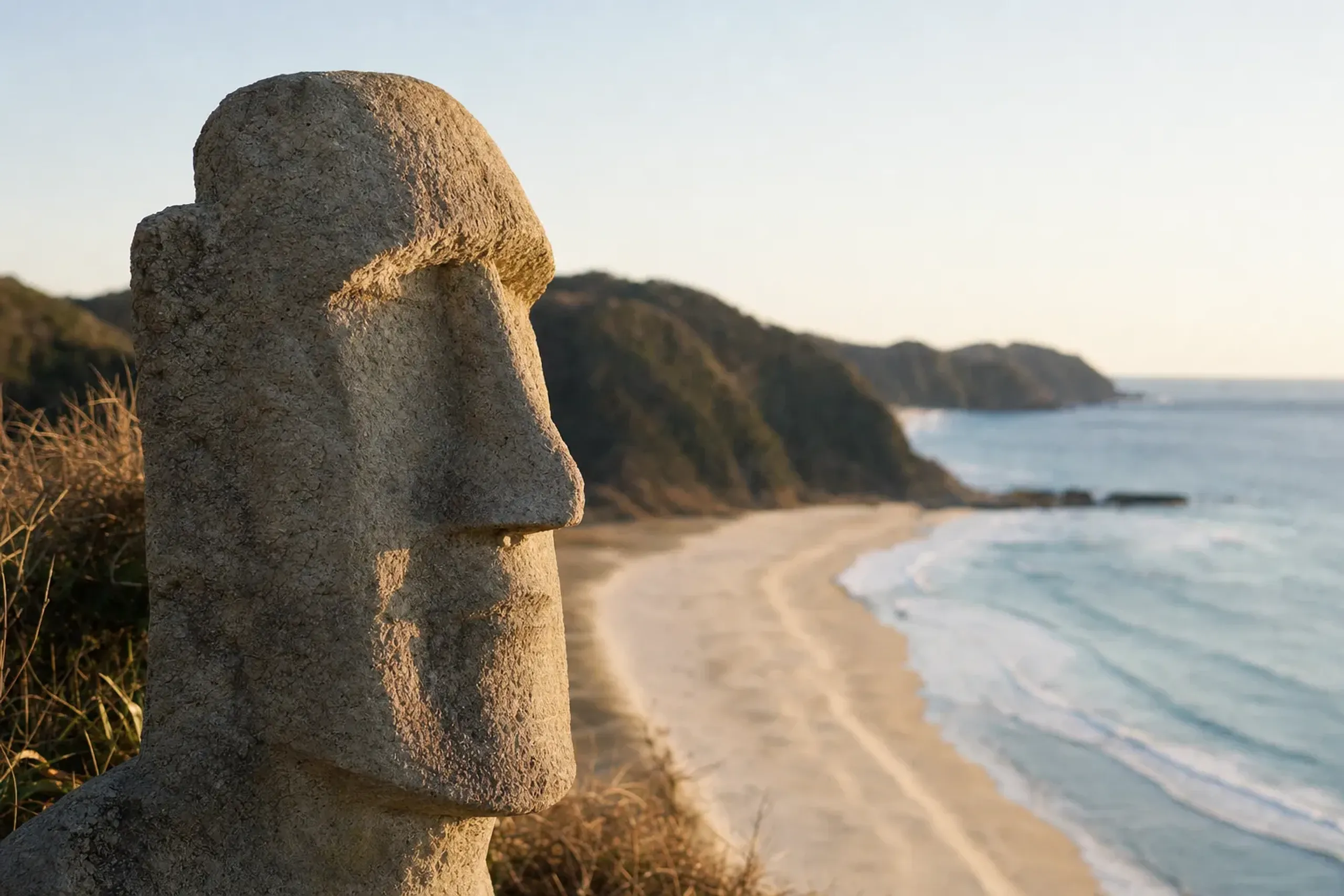
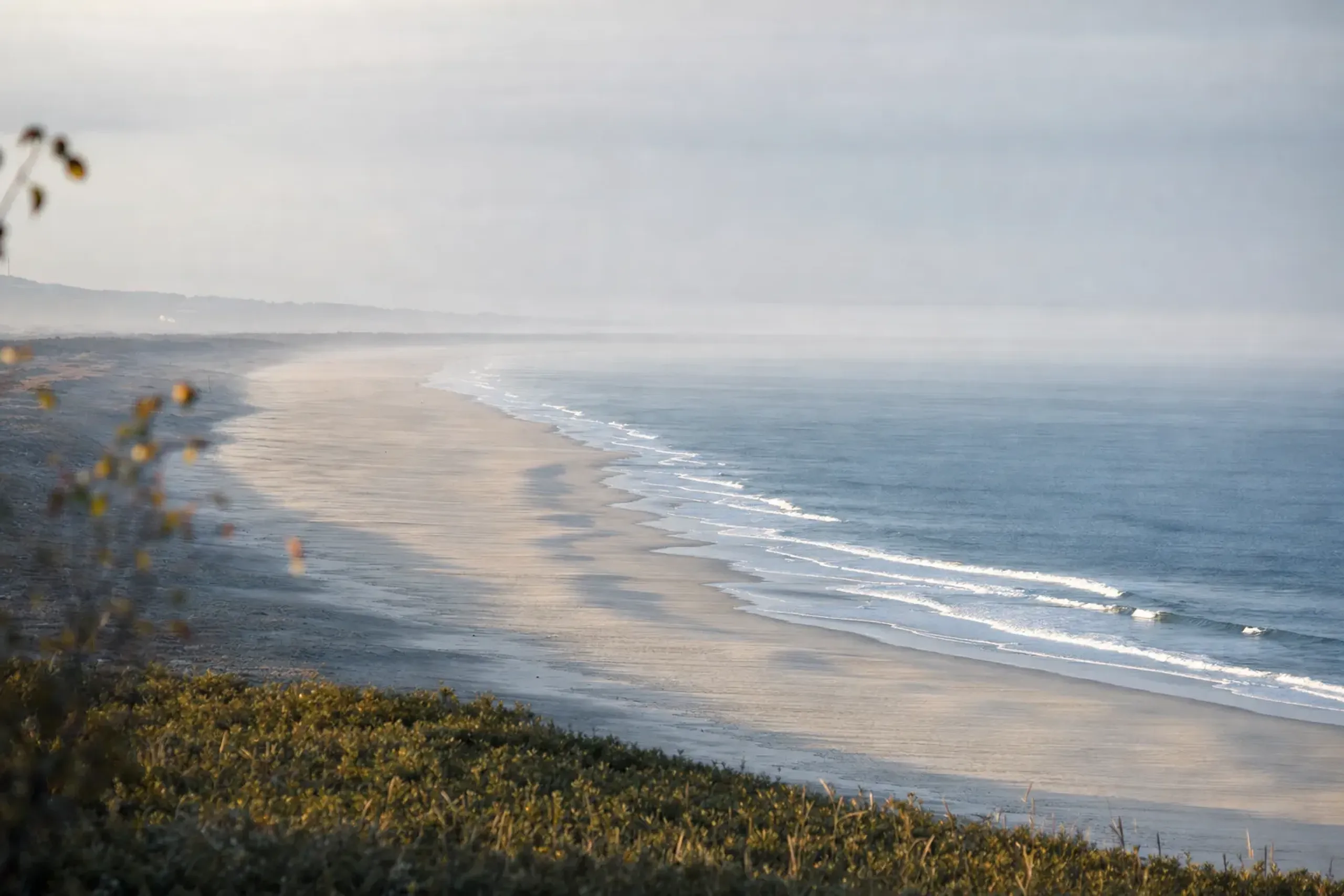
The Metropolitan Government describes Niijima as one of Japan's leading surfing islands, and its east side holds the Habushiura Coast, a 6.5-kilometre stretch of white sand used for swimming and surfing. Local rules apply and can change; follow your guide's briefing, and the JRS concierge team confirms current conditions directly with the guest at time of arrangement.
Then there are the moyai. Across the island stand many stone figures carved from local Koga stone and modelled on the moai of Easter Island. The moyai statue in front of Shibuya Station was donated by Niijima.
A campground and a northern observatory are listed on the island. Niijima has two ports, Maehama, also called Kurone, and Tobune, also called Wakago, along with Niijima Airport for the Chofu flight.
Getting Around Niijima
The island lists route and sightseeing buses, rental cars, taxis and bicycles. For guests who prefer not to drive, the concierge team confirms what guides and vehicles from partner companies with English-speaking drivers are available on the island at time of arrangement.
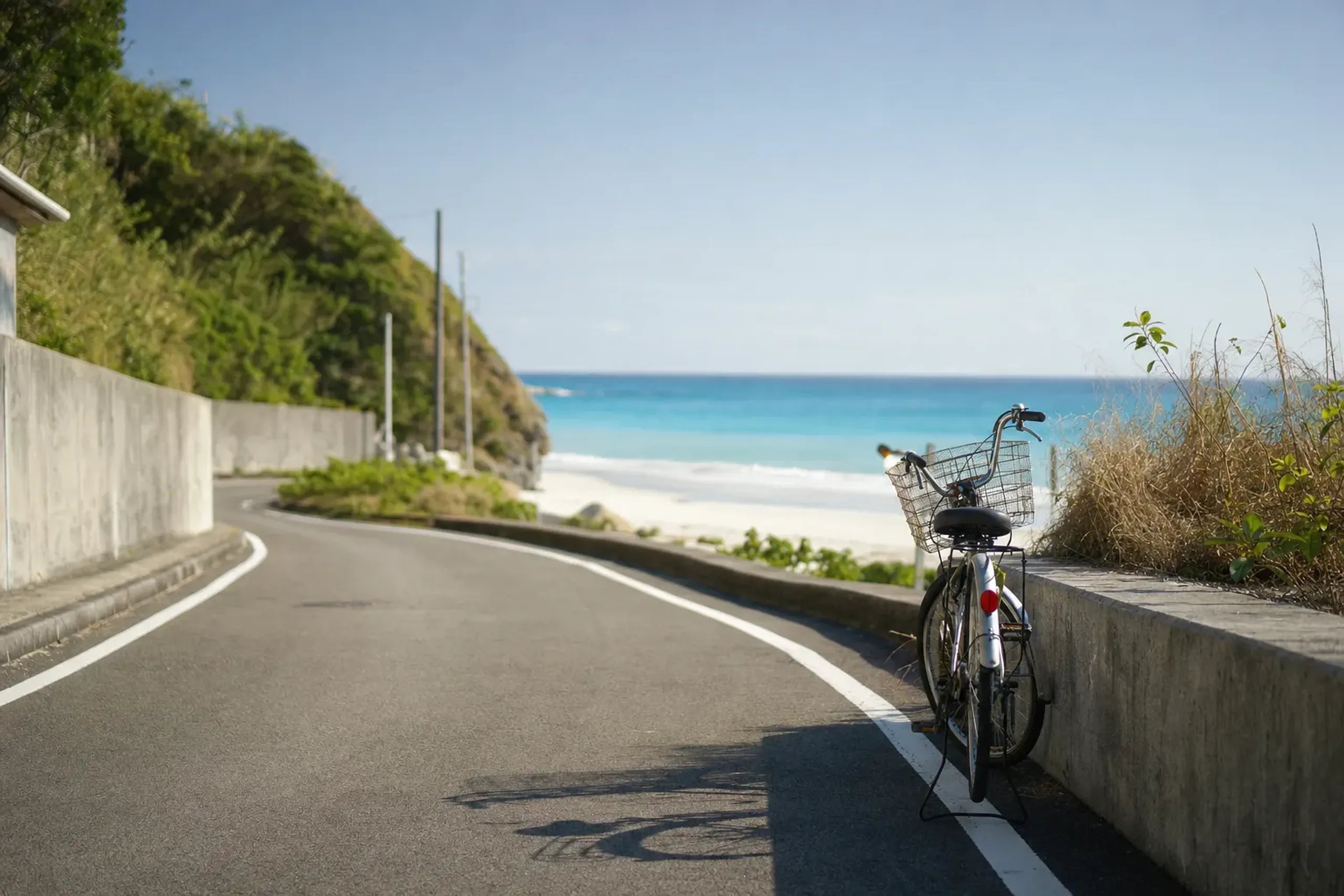
Driver and guide are separate roles.
Shikinejima: The Cove And The Hot Spring By The Sea
Shikinejima is reached from Niijima by ferry. GO TOKYO gives the inter-island crossing as about 10 to 20 minutes, and notes that the service varies by day of the week. The port is Nobushi Port.
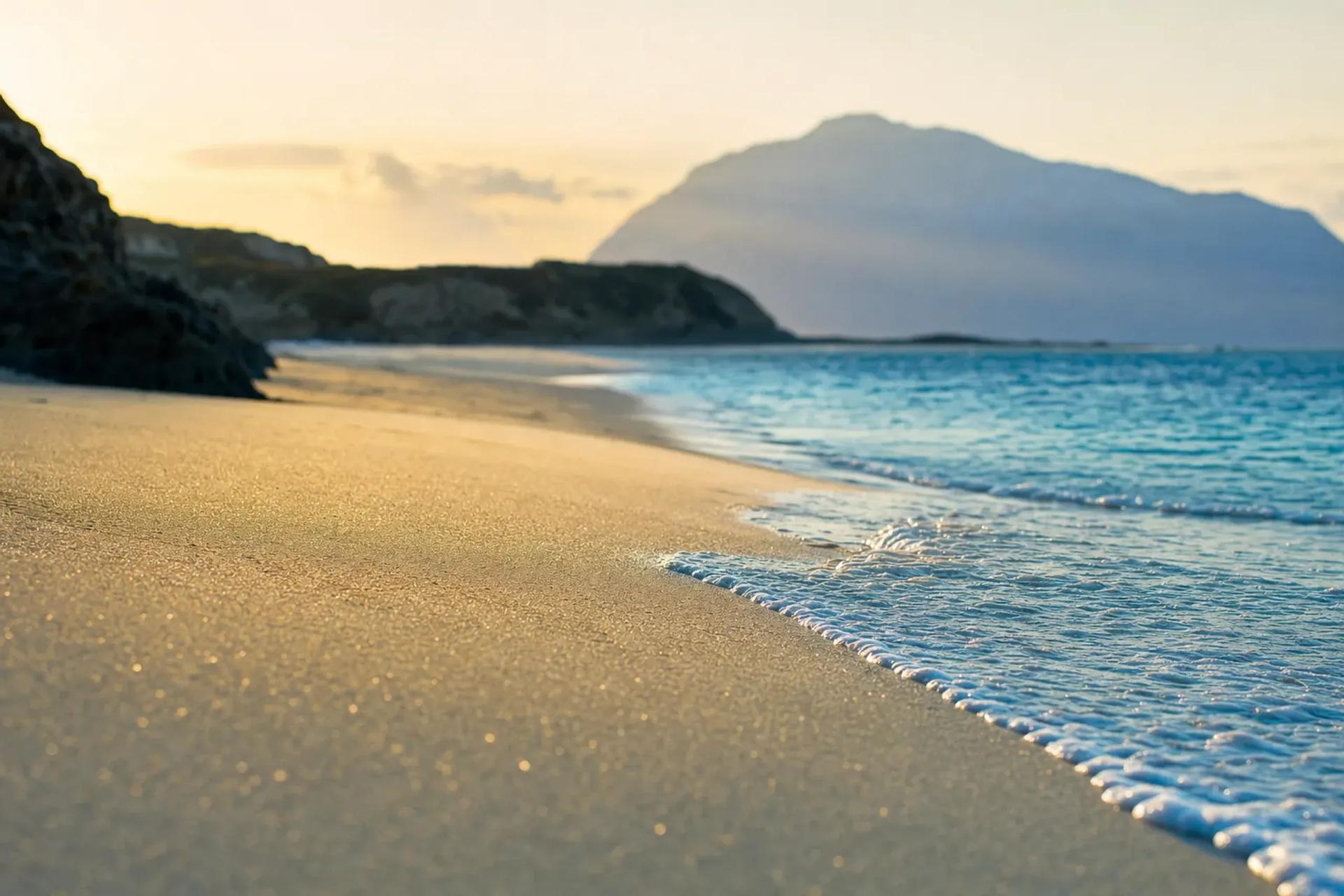
The draw at the northern tip is Tomari Beach, a fan-shaped cove ringed by rock, roughly a five-minute walk from Nobushi Port. The water is shallow and clear, and the island page describes it as popular with snorkelers and families. Local rules apply and can change; follow your guide's briefing, and the JRS concierge team confirms current conditions directly with the guest at time of arrangement.
Shikinejima is also known for its hot springs. Jinata Onsen is an open-air spring by the sea, reached down a long flight of stairs. The island page lists three natural hot springs with open-air views, along with a Kamibiki observatory looking out over the sea and the coast. The island runs about 12 kilometres around and can be covered on foot or by bicycle.
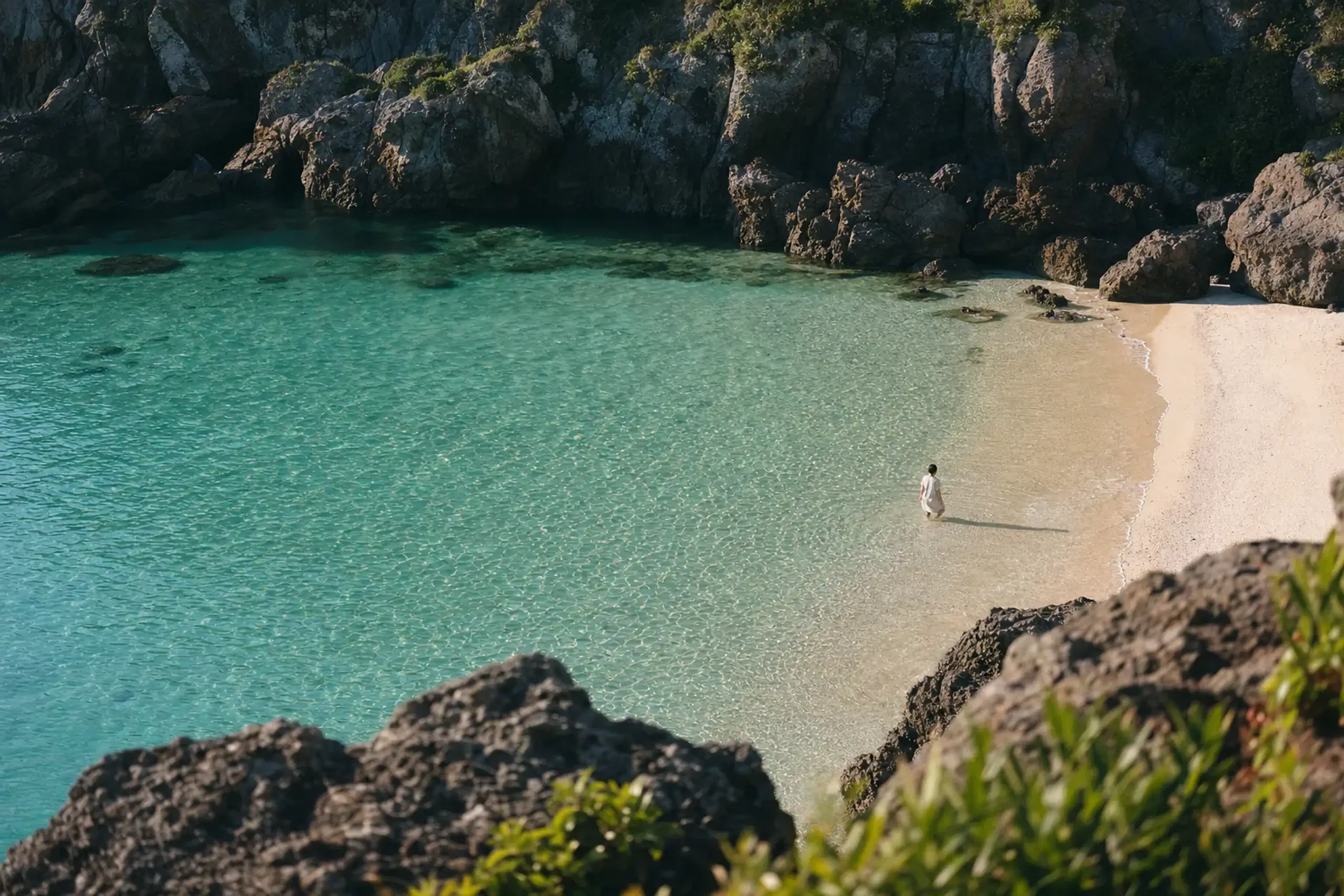
The inter-island service pattern changes with the day of the week, which the concierge team confirms at time of arrangement.
Kozushima: The Boardwalk And The Starry Sky Reserve
Kozushima is the farther island. By jet ship the crossing runs about 3 hours 5 minutes as a minimum; by plane from Chofu, about 45 minutes. Two ports serve the island, Tako Bay, also called Miura Port, and Maehama Port, with Kozushima Airport for the flight.
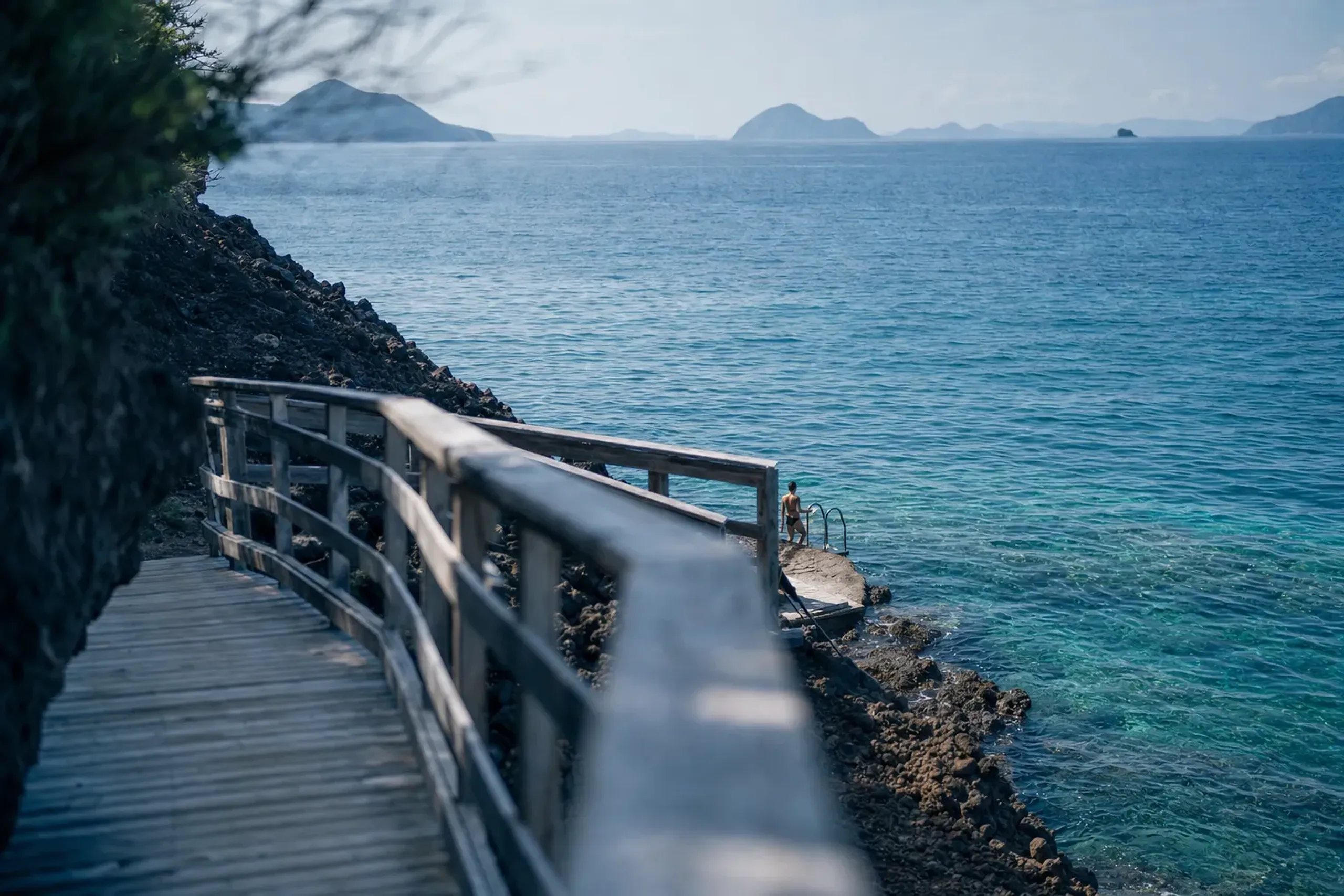
Along the coast runs the Akasaki boardwalk, about 500 metres of walkway the island describes as good for snorkeling and stargazing, with Mount Fuji visible from the observatory. Local rules apply and can change; follow your guide's briefing, and the JRS concierge team confirms current conditions directly with the guest at time of arrangement. Rising over the island is Mount Tenjo, 572 metres above sea level.
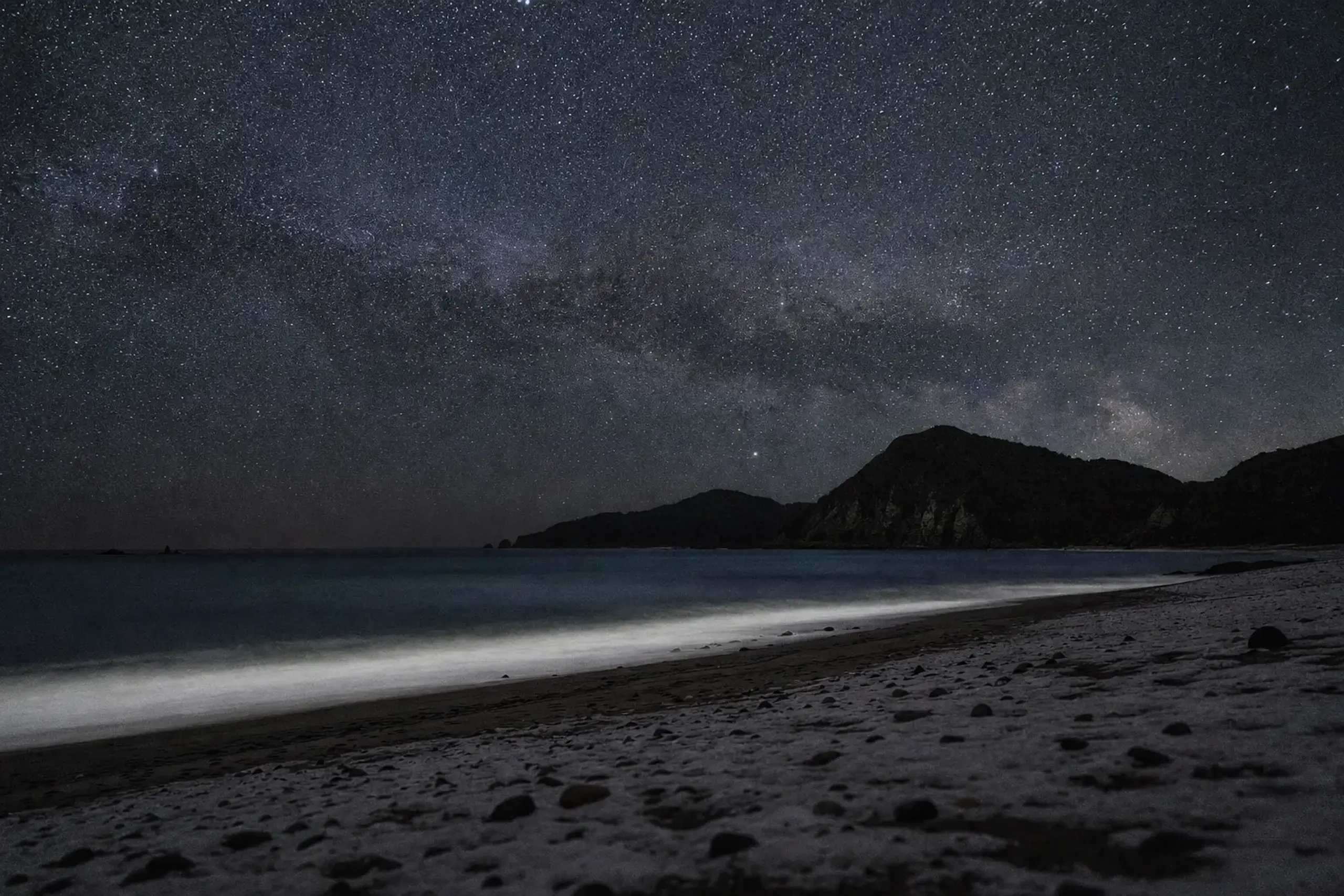
In December 2020 the island was recognised as Tokyo's first Starry Sky Reserve Area.
Which Izu Island Suits Which Trip?
Each of the three answers a different wish. Here is the quick version.
Niijima: The Long Beach And The Stone Figures
- The 6.5-kilometre Habushiura Coast on the east side.
- Moyai statues in Koga stone across the island, one of them donated to Shibuya Station.
- Buses, rental cars, taxis and bicycles for getting around.
- Reachable by jet ship, overnight ship or the Chofu flight.
Shikinejima: The Cove And The Sea-Side Hot Spring
- Tomari Beach, a fan-shaped cove a short walk from Nobushi Port.
- Jinata Onsen, an open-air hot spring by the sea, among three natural springs on the island.
- About 12 kilometres around, walkable or ridable by bicycle.
- Ten to twenty minutes from Niijima by ferry, so the two pair naturally.
Kozushima: The Boardwalk And The Dark Sky
- The roughly 500-metre Akasaki boardwalk, with Mount Fuji from the observatory.
- Tokyo's first Starry Sky Reserve Area, recognised in December 2020.
- Mount Tenjo at 572 metres.
- The farthest of the three, about 3 hours 5 minutes by jet ship or 45 minutes by plane.
A trip that wants a beach base leans toward Niijima, with Shikinejima a half-day away. A trip built around the night sky leans toward Kozushima. A trip to all three needs a plan that carries room to move.
Why An Izu Island Trip Needs A Weather Buffer
Build at least one spare day into any trip to these islands. The published journey times are minimums for normal conditions, and the Metropolitan Government is clear that schedules and times shift with the season and the weather.
The sources say travel times may vary with the weather. If your return crossing moves, a plan with no slack turns an island stay into a scramble for the mainland. A plan with a buffer absorbs it.
This is where our planning earns its keep. The concierge team builds the trip around the sailing and flight schedule, the choice of island and a fallback day, then handles same-day re-planning when the weather changes. We book jet ship, ferry and flight tickets where they are bookable, arrange ryokan and restaurant reservations with any dietary needs passed ahead, and confirm luggage forwarding where it is available for an island trip. Which services are running, and what is open on each island, the JRS concierge team confirms directly with the guest at time of arrangement.
If you want the wider picture on moving between Japan's islands by boat and plane, our guide to island ferries, flights and weather buffers sets out how to plan around them.
For islands further south, see our notes on Hachijojima in summer and the Ogasawara Islands.
Frequently Asked Questions
How Long Does It Take To Reach Niijima From Tokyo In Summer?
At least about 2 hours 20 minutes by jet ship from Takeshiba Pier, about 8 hours 30 minutes by overnight ship, or about 40 minutes by plane from Chofu Airport. These are minimums for normal conditions and change with the weather.
How Do You Get From Niijima To Shikinejima?
By ferry, in about 10 to 20 minutes according to GO TOKYO, with the inter-island service varying by day of the week. The port on Shikinejima is Nobushi Port. The concierge team confirms the current pattern at time of arrangement.
Can You Fly To Kozushima From Tokyo?
Yes. Flights from Chofu Airport to Kozushima take about 45 minutes in normal conditions. The sea alternative is the jet ship from Takeshiba, at least about 3 hours 5 minutes. Flight and sailing schedules shift with the season and weather.
What Is Kozushima Known For?
Kozushima is known for the roughly 500-metre Akasaki boardwalk, with Mount Fuji visible from the observatory, and for being recognised in December 2020 as Tokyo's first Starry Sky Reserve Area. Mount Tenjo rises to 572 metres.
What Happens If The Weather Changes The Island Schedule?
A well-built plan carries at least one spare day, so a moved sailing or flight can be absorbed. Our concierge team handles same-day re-planning and confirms which services are running directly with the guest at time of arrangement.
Why Choose Japan Royal Service
Planning for the Izu Islands is less about the islands themselves and more about the space between them. The schedule is the variable. At Japan Royal Service, our concierge team builds the trip around the sailing and flight times, the choice of island and a fallback day, then books the jet ship, ferry and flight tickets where they are bookable. We arrange ryokan and restaurant reservations with dietary needs passed ahead, confirm what guides, buses, bicycles and vehicles from partner companies with English-speaking drivers are available on each island, and sort luggage forwarding where it is offered for an island trip.
When the weather moves, we re-plan the same day. You get an itinerary that bends instead of breaking, across three Tokyo islands. For the full picture of how we shape a multi-island route, see our tailor-made itineraries.
To begin planning, contact our team here.