In this guide
- 01What Ichigen-San Okotowari Actually Means
- 02Why Houses Operate This Way
- 03The Two Tiers: Genuinely Closed Versus Difficult But Open
- 04Two Documented Examples
- 05What This Means for a Traveller Planning a Trip
- 06How Introductions Actually Work
- 07Common Questions About Introduction-Only Dining in Tokyo
- 08Why Choose Japan Royal Service
Takeshi Kitano is not an anonymous man. In Japan he is a household name, a director and comedian whose face the whole country knows. The story goes that he sent his driver ahead to secure a table at a certain restaurant. The answer came back: the house does not accept first-time visitors. So he went himself. Same answer.
That is the cleanest way to understand the practice this article explains. Fame did not move the rule. Money did not move the rule. A face known to millions did not move it either. The Japanese term for what stopped him is ichigen-san okotowari (一見さんお断り) — literally, "we decline first-time visitors." It is the searchable phrase, and understanding it correctly is the whole point.
Our team at Japan Royal Service works with houses like this every week. An introduction depends entirely on whether a house is open to one. And the practice is not snobbery. It is hospitality — of a kind that simply cannot function with strangers.
What Ichigen-San Okotowari Actually Means
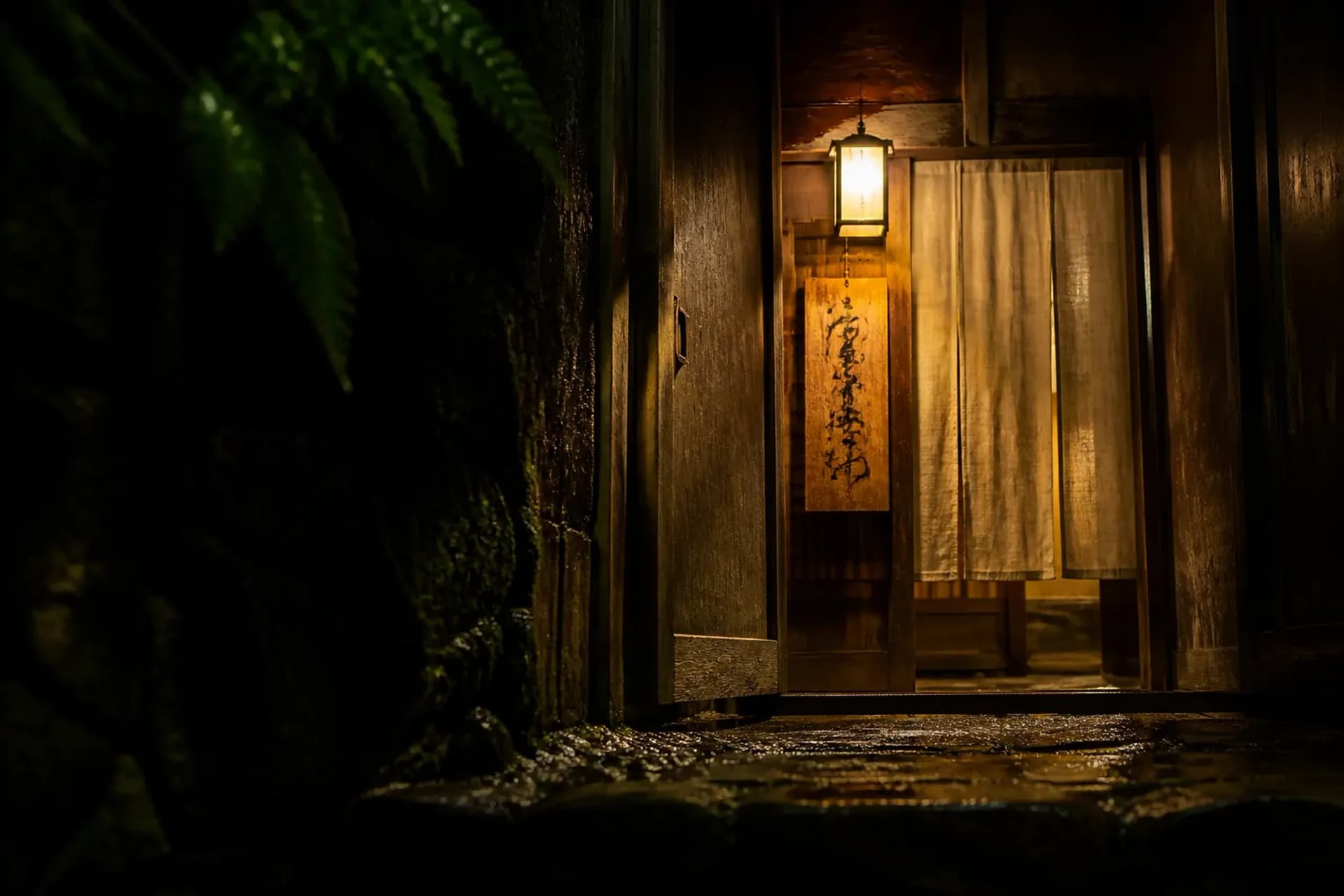
There is no membership card. There is no fee. Nobody at the door checks a list of qualifying assets. The mechanism is quieter than that, and stranger to outsiders.
A new customer simply cannot book. That is the entire wall. Only regulars can reserve, and a regular may bring guests. But a guest brought once is not automatically welcome the next time — they have to establish themselves before they enter the circle on their own name. The house extends trust person to person, and it does so slowly.
You will find the practice in several settings, not restaurants alone:
- High-end counter restaurants, especially small sushi and kaiseki houses
- Traditional ryotei — formal Japanese restaurants with private rooms
- Certain private lounges in Ginza and Roppongi
- A few luxury ryokan
- Kyoto's ochaya, the teahouses of the geisha districts
The common thread is small rooms and long memory. These are not businesses trying to grow. They are trying to stay the same.
Why Houses Operate This Way
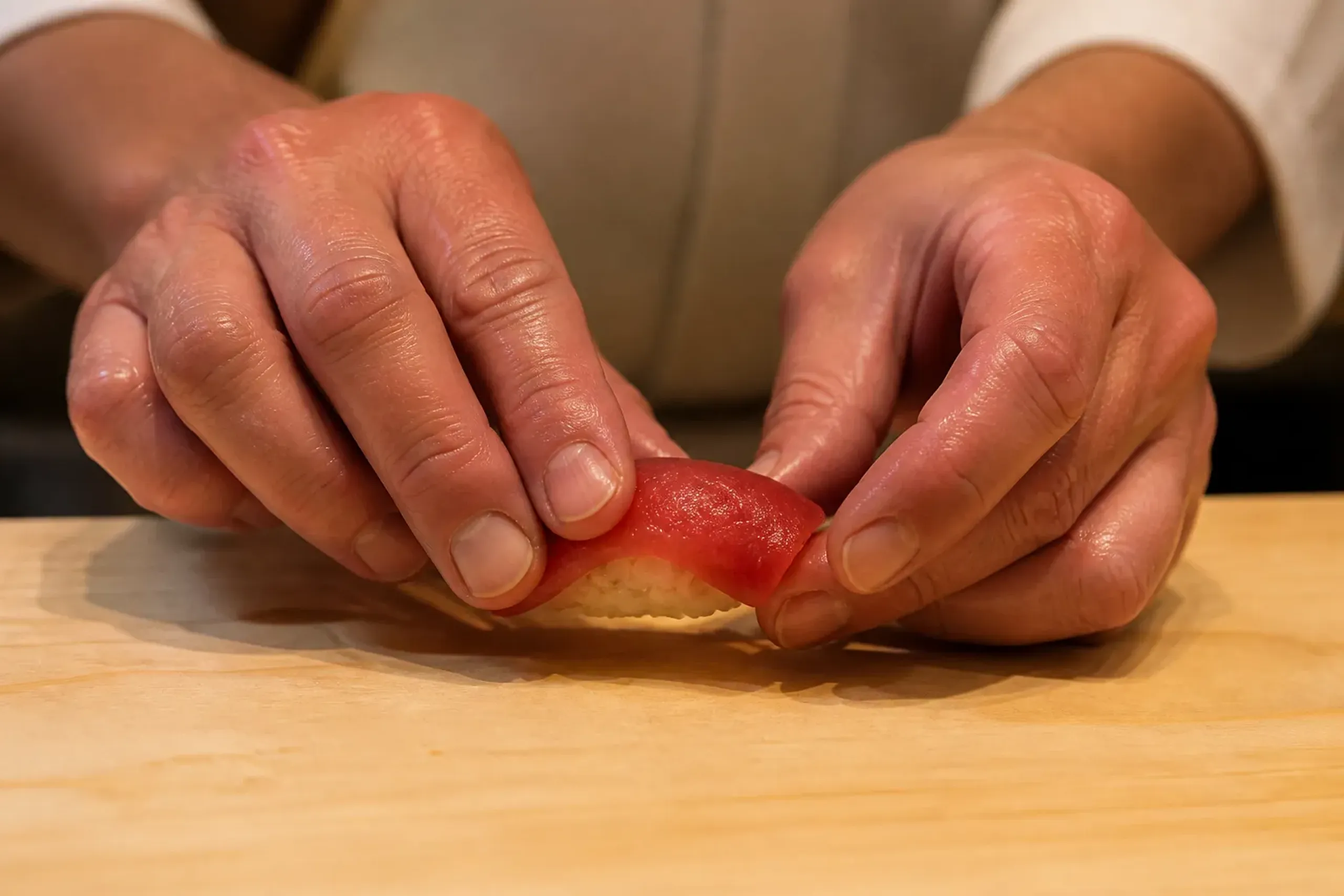
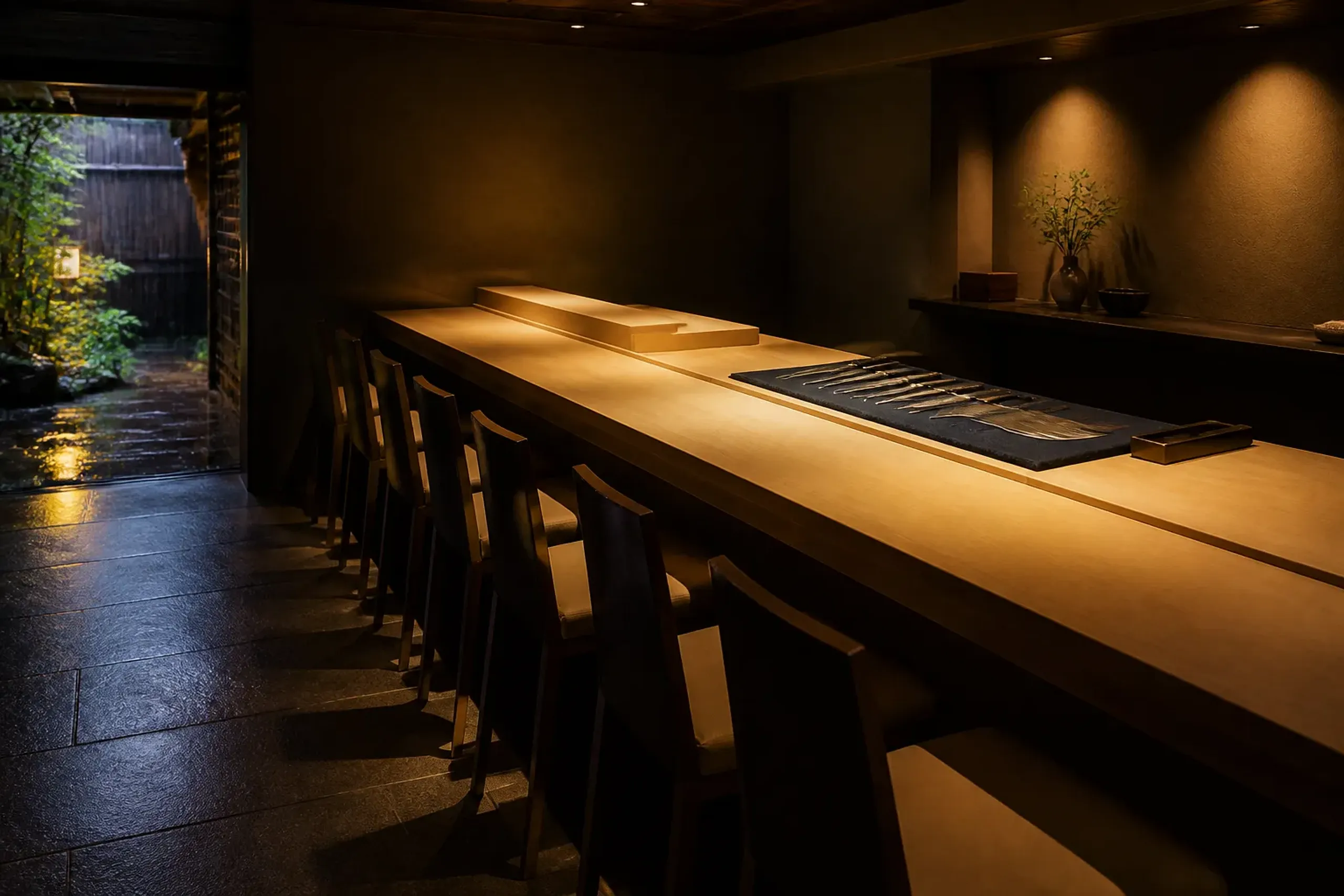
Picture a counter with eight seats. One seating a night. The chef has bought the fish that morning with specific people in mind — this guest dislikes uni, that one is finishing a bottle left from last month, another always wants the meal paced slowly because he talks. None of that is possible for a stranger who books once and vanishes.
That is the honest reason. A house that tailors a meal to people it knows cannot do that for someone it will never see again. The rituals around the food — the order, the pace, the small courtesies — assume the guest already understands them. A visitor who wants to try it once, photograph it, and disappear is a poor fit for that model, and the house would rather stay small than pretend otherwise.
There is a practical reason underneath the cultural one. A no-show at an eight-seat counter is not a minor loss. It is a quarter of the evening gone, fish wasted, and no way to refill the seat. Regulars do not vanish. Strangers sometimes do. Closing the door is, among other things, a defence against that risk.
The core point: The barrier is not designed to keep people out. It is designed to protect a style of service that only works with people the house already knows. Read that way, the rule stops looking like exclusion and starts looking like the price of a particular kind of care.
The Two Tiers: Genuinely Closed Versus Difficult But Open
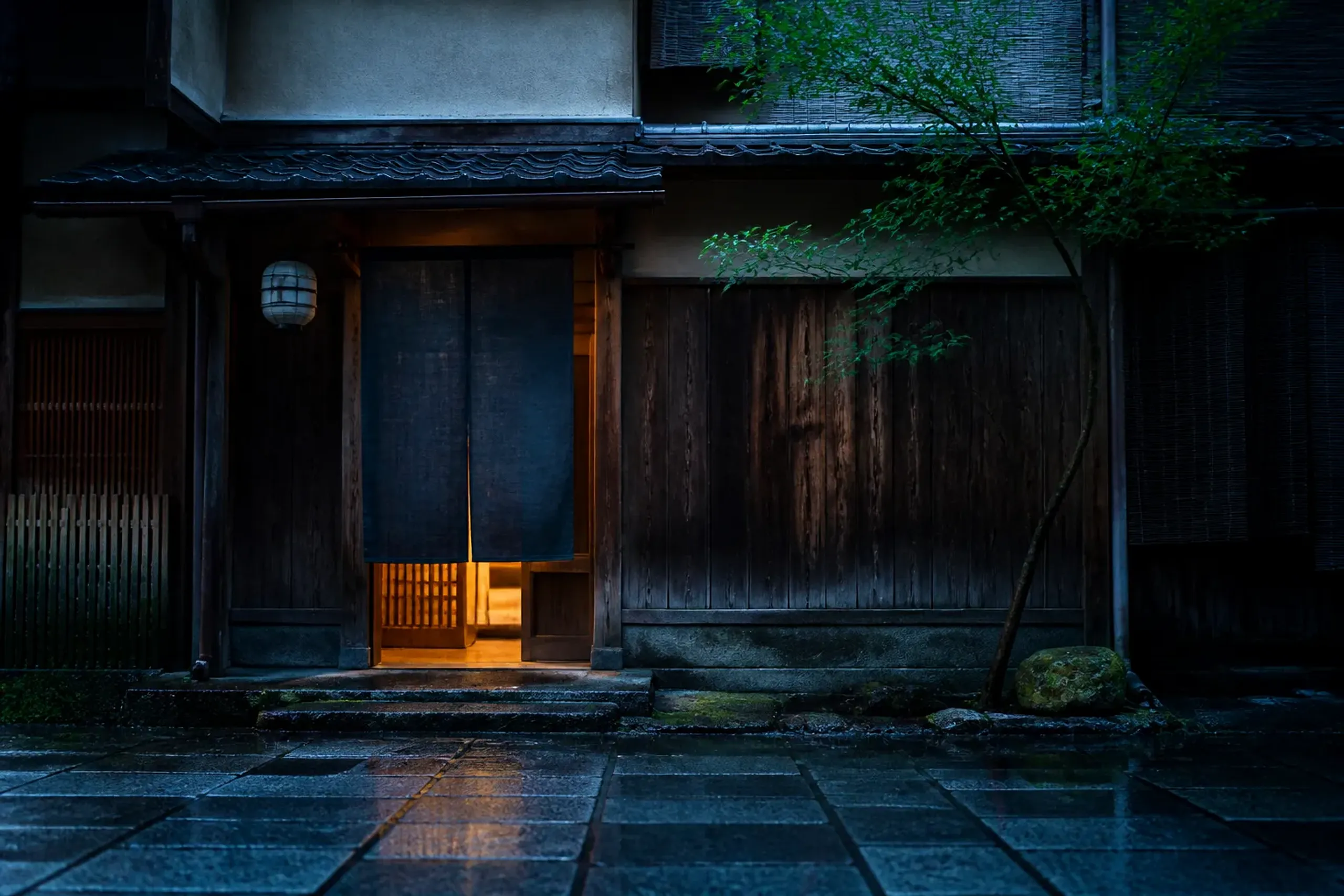
This is the distinction that matters most, and the one competitors blur. When a traveller says a restaurant is "impossible," they are almost always describing one of two very different situations. Naming which one you face is the single most useful thing you can do before planning a trip.
Tier One: Genuinely Closed
No route in without an introduction from an existing patron — and, crucially, not every house extends one even to its regulars' friends. These are the true ichigen-san okotowari and shokai-sei (introduction-only) houses. The private phone number is the front door, and it is not published.
If a house is genuinely closed and you have no connection to it, the honest answer is that a table this trip is unlikely. No amount of money changes that in a season. Trust here is built over years, not bought over email.
Tier Two: Difficult But Open
A far larger group. These houses do accept new guests, but they punish the unprepared. They need a properly made request — often in Japanese, often by phone — placed early, with flexibility on date and time. They may want prepayment. They may only release seats a month out at a fixed hour.
Most of what travellers call "impossible" lives here. It is not closed. It is simply hard, and hard in ways a well-organised request usually solves. The difference between failure and success in this tier is preparation, not connections.
| Signal | Genuinely Closed | Difficult But Open |
|---|---|---|
| Public booking | None at all | Exists, but scarce and fast |
| What gets you in | Introduction from a patron | A correct, early request |
| Lead time | Years of relationship | Weeks to a couple of months |
| Honest odds for a visitor | Low without a real connection | Good with proper handling |
Two Documented Examples
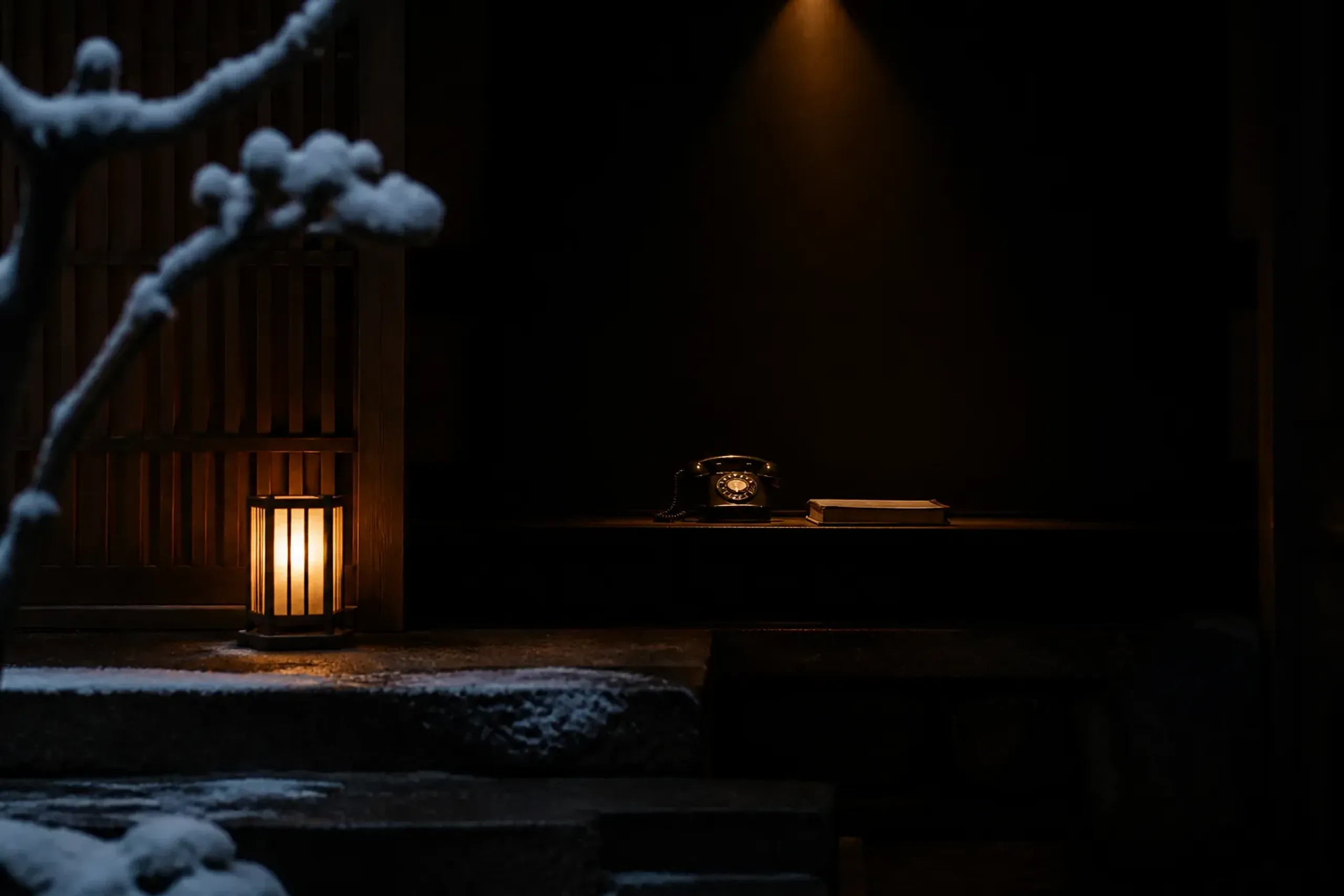
Two houses illustrate the closed end of the spectrum. We name them because their policies are on the public record — not because we are offering a table at either.
Sugalabo
Chef Yosuke Suga's Tokyo restaurant takes no online bookings and keeps no fixed opening times. Reservations run through a private telephone number known to a few. Diners are invited or recommended by existing patrons. The room seats roughly twenty. The chef has said publicly that the policy is about the guest experience rather than snobbery — which is exactly the logic this article describes. He is not keeping people out for the sake of it. He is keeping the room to people he can cook for properly.
Sushi Saito
Sushi Saito accepts only regulars, with a maximum of about eight guests an evening. Its closed-door policy had a visible consequence: the Michelin Guide removed it from the star listings because the public could not book it. A three-star kitchen chose its regulars over a guidebook rating. That decision tells you how seriously these houses take continuity.
A related case sits slightly differently. Sukiyabashi Jiro, the celebrated Ginza sushi counter, was also removed from the Michelin Guide in November 2019 because it no longer accepts reservations from the general public. And Matsukawa, a kaiseki house in Akasaka, is widely described as invitation-only. Different rooms, same underlying principle.
What This Means for a Traveller Planning a Trip

Be honest with yourself about which tier you are chasing. If your heart is set on one genuinely closed house and you have no connection to it, the wise move is to accept that and redirect the energy. There are counters of equal quality that are merely difficult — and difficult is a solvable problem.
Understand, too, that what you see online is not neutral. Reservation platforms and ranking sites tend to surface restaurants that support English-language online booking, because those are the ones that convert. Many of the finest counters are phone-only and Japanese-only, so they barely appear in the tools international travellers use. The gap between "what ranks" and "what the locals chase" is wide, and worth knowing.
For the difficult-but-open tier, several legitimate pathways exist. Prepaid platforms such as Pocket Concierge — acquired by American Express in January 2019 — and TABLEALL let non-regulars book premium rooms in English. TABLEALL operates two modes: instant booking against seats it has purchased in advance, and request booking, where it approaches the restaurant on your behalf. Both models lean on prepayment, which brings us to the etiquette that underpins the whole system.
A Word on No-Shows and Prepayment
Prepayment and deposits are not a luxury upsell. They exist because a missed reservation at a tiny counter is a real injury to the house. Honour the cancellation window. Arrive on time. Do not photograph other guests or the room without asking. These small disciplines are how trust is built — and how a difficult house becomes, over a few visits, an open one.
How Introductions Actually Work
A short note, because this is where expectations go wrong. An introduction-only house takes its guest list from people it already trusts. That is the whole mechanism, and it is why a relationship — not a fee — is what opens the door.
Common Questions About Introduction-Only Dining in Tokyo
Can a luxury hotel concierge get me into any restaurant?
No. A good concierge with a genuine, long-standing relationship at a specific house can help enormously in the difficult-but-open tier. But for a genuinely closed house, a concierge with no connection there faces the same wall as anyone else. The myth that a famous hotel desk can "get anything" is exactly that — a myth.
What does ichigen-san okotowari mean in plain English?
"We decline first-time visitors." A new customer cannot book directly; only established regulars can reserve, and they may bring guests. It is a system of continuity, not a paywall.
Does this apply to ryokan as well as restaurants?
Some of it does, and the logic is parallel. Certain ryokan are hard to book because they are tiny, and a few are effectively closed to those without a prior relationship. We make the same two-tier distinction for accommodation in our guide to bespoke, tailor-made itineraries and in our accommodation work — small and hard is not the same as closed.
If a regular brings me once, am I now a regular?
No. One visit as someone's guest does not make you a patron. You establish yourself over repeat visits, on your own name, by being the kind of guest the house wants to see again.
Why Choose Japan Royal Service
Here is what a concierge honestly does, stated plainly. Our team at Japan Royal Service holds relationships built over years at specific houses, not a general claim to open every door. We know which restaurants are truly closed and which are merely hard. We make requests correctly and early, in Japanese, and we manage deposits and cancellation windows so the house's trust is never spent carelessly. And when the answer is no, we say so — then we point you toward a room of equal quality that is genuinely reachable. That last part is where most of the value lives. An honest map beats a false promise every time.
The same reasoning shapes how we plan private movement between these houses — a private chauffeured car waiting quietly, discreet arrivals, no fuss at the door. It is one consistent position on access, applied across dining, stays, and everything in between.
If you would like a candid conversation about what is realistically reachable for your dates — and what is not — reach our team privately via WhatsApp or LINE, or contact us here.