In this guide
- 01What Is Omizutori (Shuni-e), Really?
- 02When And Where Does Omizutori Take Place In Nara?
- 03What Time Does The Otaimatsu Torch Ceremony Start Each Night?
- 04The Two Weeks: What Stays The Same, And What March 12 Changes
- 05Why An Ordinary Night Often Works Better Than March 12
- 06What Happens On The Night Of March 12–13 (Omizutori Proper)
- 07How To Watch Without Turning It Into A Photo Shoot
- 08Cold And Standing: What Your Body Will Be Doing
- 09Where To Stay: Nara Is The Comfortable Choice, But The Top End Is Thin
- 10A Smart Pairing For 2026: Nara National Museum’s Omizutori Exhibition
- 11What A Guide Adds Here (And What A Guide Does Not)
- 12Who Should Not Go
- 13Frequently Asked Questions
- 14Why Choose Japan Royal Service
You arrive for the fire, and you leave thinking you understood it. Easy mistake. The torches are not the point, and the monks are not performing for you. If you’re going to be there, be there in a way that doesn’t dent a 1,250-year-old rite.
What Is Omizutori (Shuni-e), Really?
Omizutori is the best-known name for Shuni-e, a two-week Buddhist repentance rite held every year from March 1–14 at Nigatsudo Hall at Tōdai-ji in Nara.
Its formal name is Juichimen Keka, and it is performed before an eleven-faced Kannon. The rite is carried out by a selected group of monks called the rengyōshū. Quietly. Night after night.
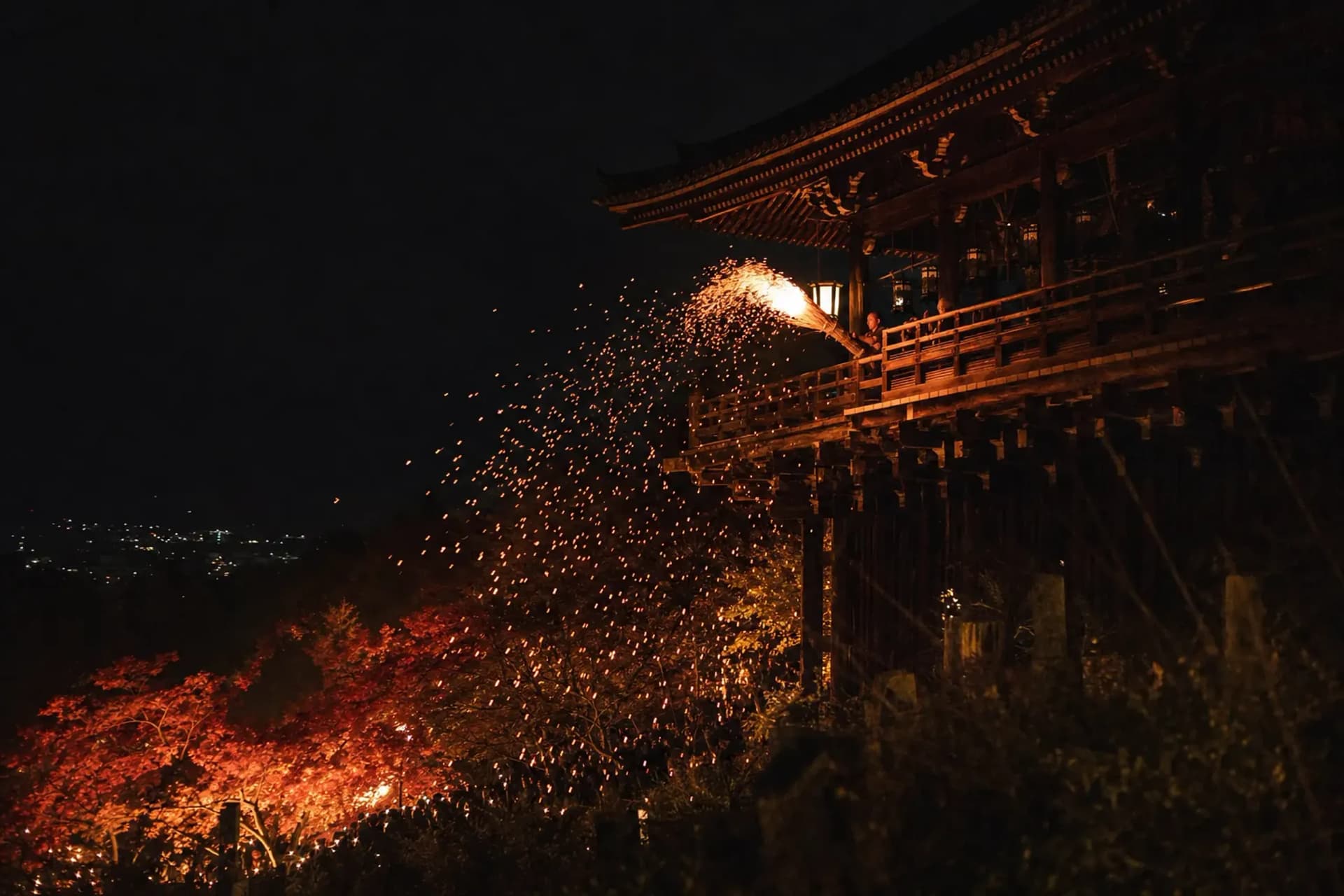
What most visitors call “the event” is only one visible part of a religious observance already in progress. The fire is functional. It lights the way for monks moving along the balcony, and the sparks are a by-product that draws attention in the dark.
If you want a single sentence to keep you honest: you are watching people do repentance, not staging a spectacle.
When And Where Does Omizutori Take Place In Nara?
Shuni-e runs annually from March 1 to March 14 at Nigatsudo Hall (Nigatsu-dō), which is part of the Tōdai-ji temple complex in Nara Park, Nara City.
Nigatsudo is roughly a ten-minute uphill walk from Tōdai-ji’s Great Buddha Hall (Daibutsu-den). That short climb changes the feeling of the night. Your breath sharpens, the city sound thins out, and the steps start to matter.
For rail access, the Japan National Tourism Organization notes that Kintetsu Nara Station is the closest station to Nara Park (about a 5-minute walk), while JR Nara Station is around a 20-minute walk.
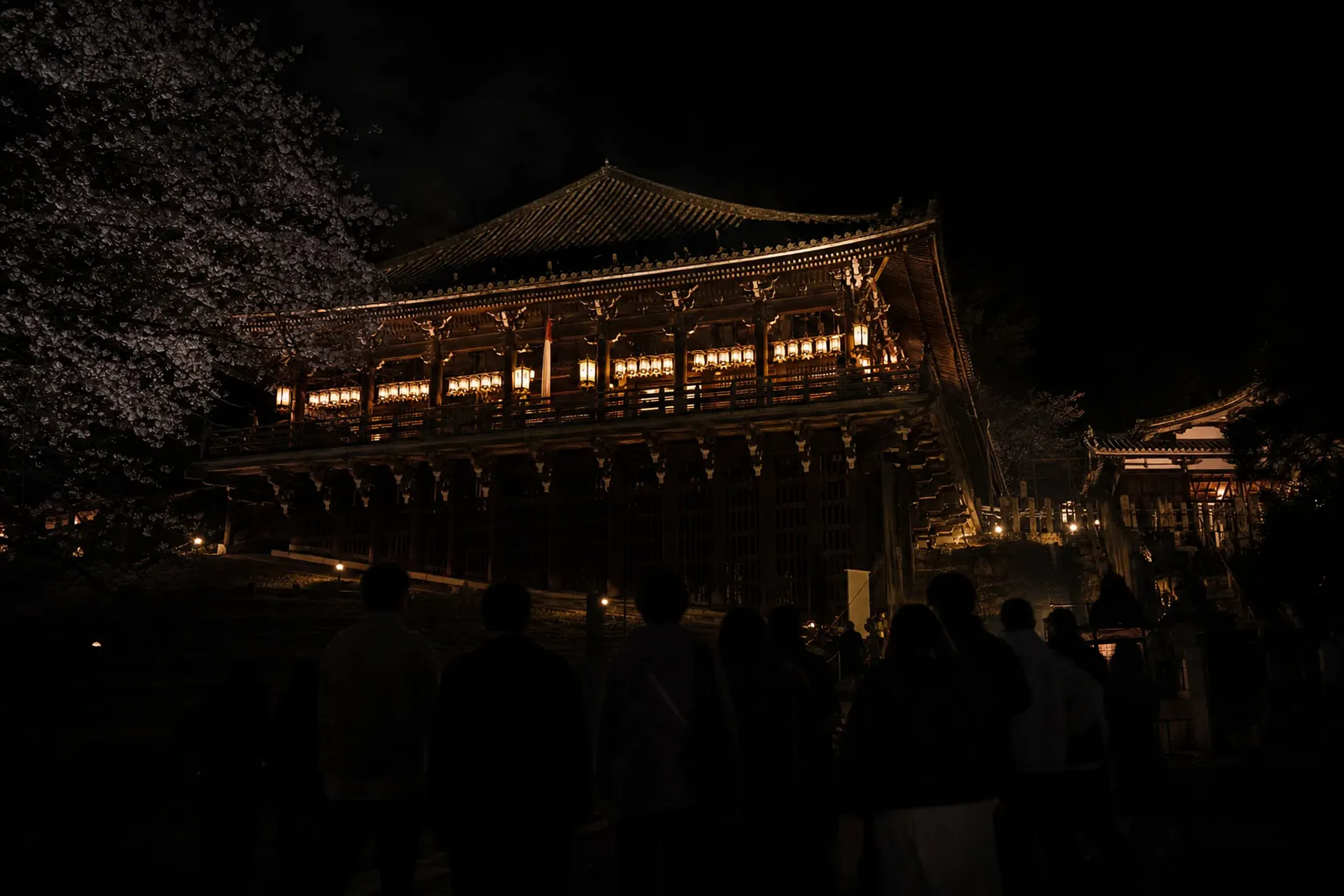
Keep your pace patient. You are arriving for a rite, not a seating time.
Arrangements at the temple can change, so confirm current information before you travel.
What Time Does The Otaimatsu Torch Ceremony Start Each Night?
The Otaimatsu torch ceremony starts at 7:00 p.m. on most nights, 7:30 p.m. on March 12, and 6:30 p.m. on March 14 during the March 1–14 Shuni-e period.
Otaimatsu is performed every night of the observance. Torch-bearers carry large torches along the balcony of Nigatsudo. Sparks fall into the dark space below, and people instinctively look up, even when they promised themselves they would watch quietly.
What’s easy to miss is the sequence. The torch is part of the movement of the monks. It is not a stand-alone show with a “start” and “finish” built for visitors. If you keep that in mind, you will choose your position and your behavior differently.
The Two Weeks: What Stays The Same, And What March 12 Changes
Most nights follow the same public rhythm. You come to Nigatsudo. You wait outdoors. Otaimatsu begins at 7:00 p.m., and you watch torch-bearers move along the balcony as the rite continues inside.
March 12 changes the scale. That night is the largest night, with more torches than the other nights. It draws the most attention, and it is also the easiest night to misread as “the main show.”
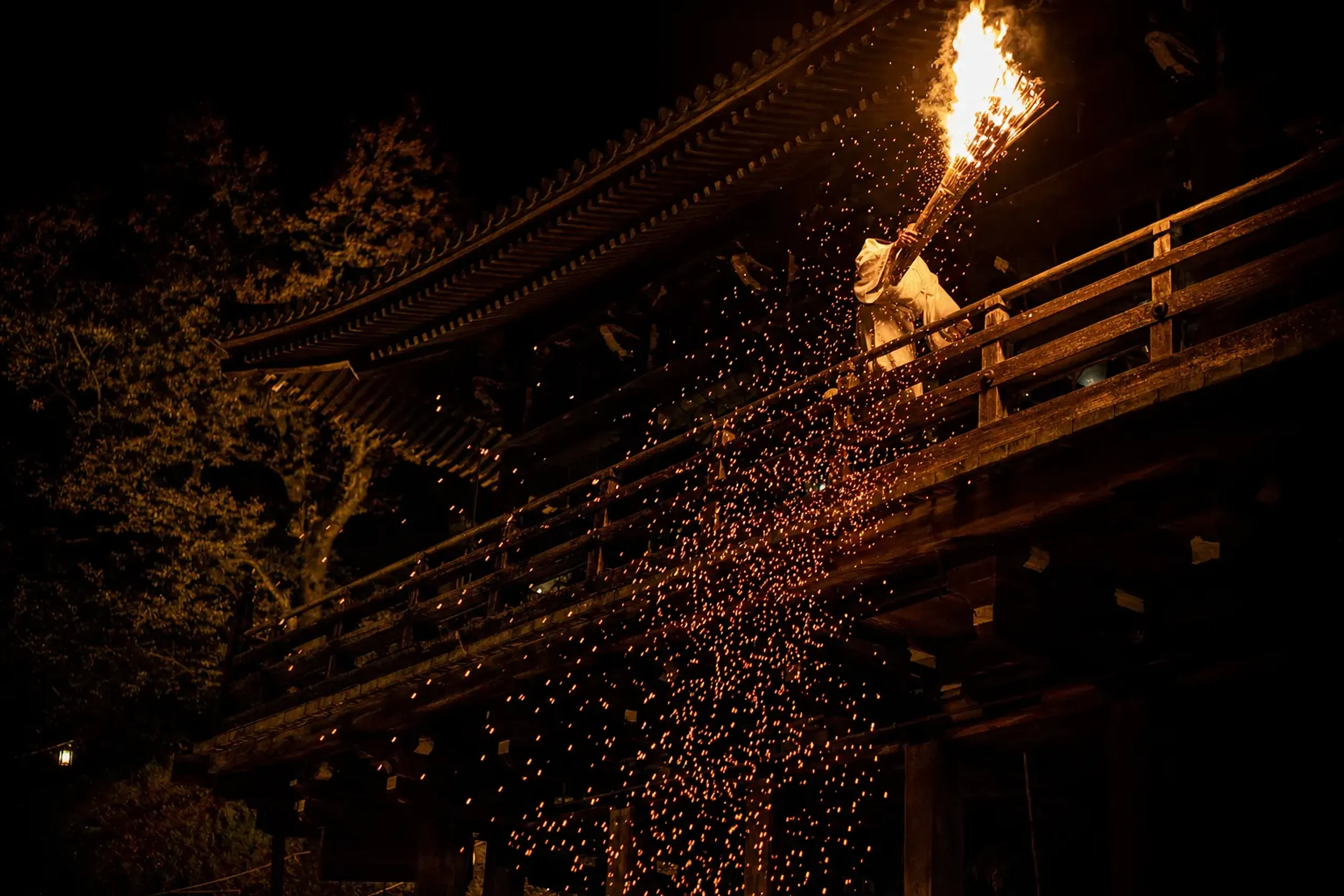
March 14 also changes the clock. Otaimatsu begins earlier, at 6:30 p.m. It sounds like a small difference. On a cold night, it feels like mercy.
If you only remember one practical point: March 12 is different, but it is not “more real” than the other nights. It is simply bigger.
Why An Ordinary Night Often Works Better Than March 12
An ordinary night often lets you watch the same rite with less pressure, because most nights share the same 7:00 p.m. torch timing without the extra intensity of March 12.
That advice surprises people. They assume the peak night is the only one that matters. Then they spend the evening negotiating for space, and their attention narrows to sparks and photos instead of what is actually happening.
On a less-crowded night, your eyes can settle. You can notice the cadence of movement, the way the balcony becomes a corridor, and how quickly a “spectacle” becomes a working light source again when you stop chasing it.
March 12 is not wrong. It is simply the hardest night to be present at well.
What Happens On The Night Of March 12–13 (Omizutori Proper)
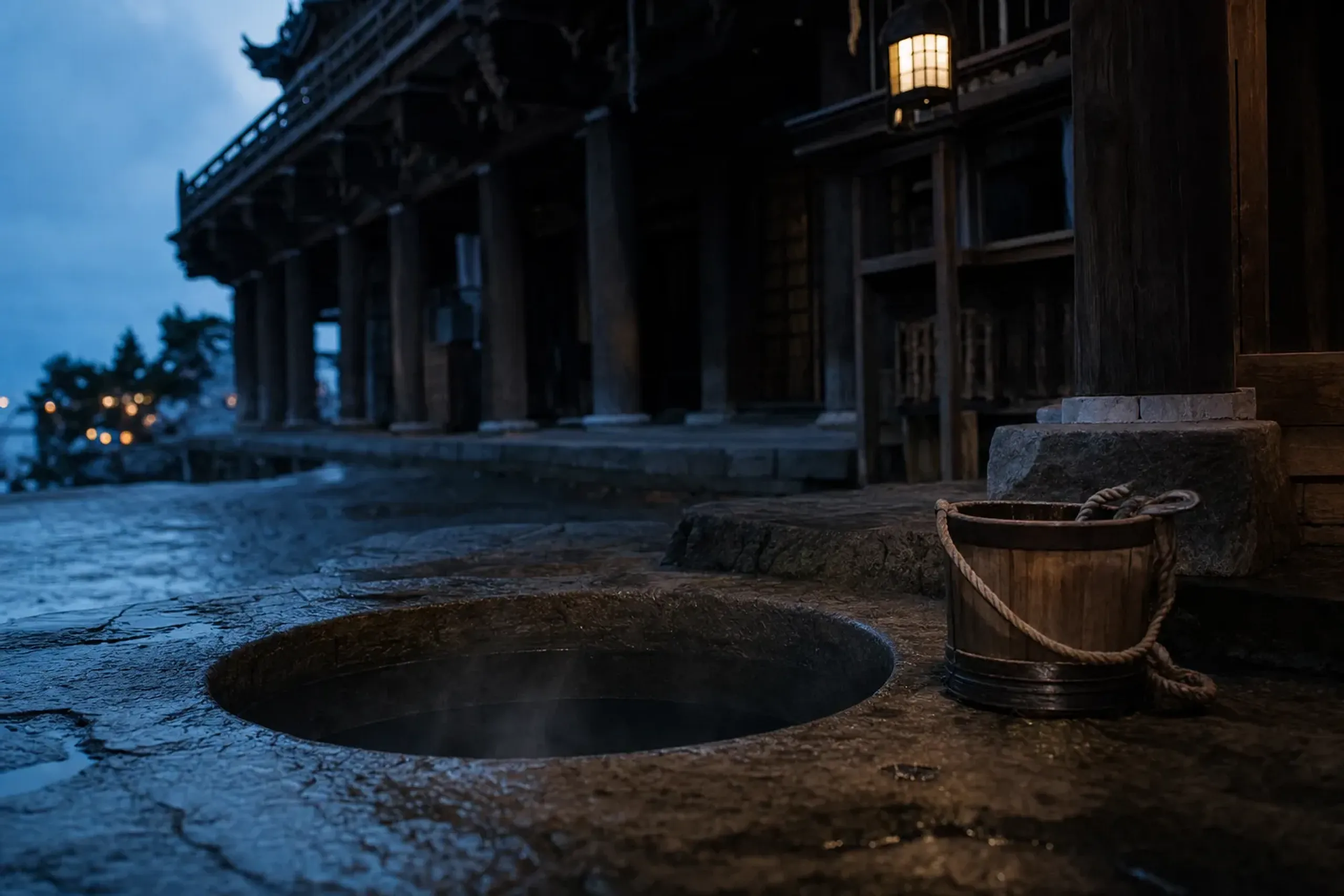
Omizutori—the water-drawing—happens late on the night of March 12, around 1:30 a.m. on March 13, when water is drawn from the Wakasa well beneath Nigatsudo and offered to Kannon.
After the water is offered, the Dattan ceremony follows inside the hall. The night ends around 3:30 a.m. This is where planning stops being theoretical.
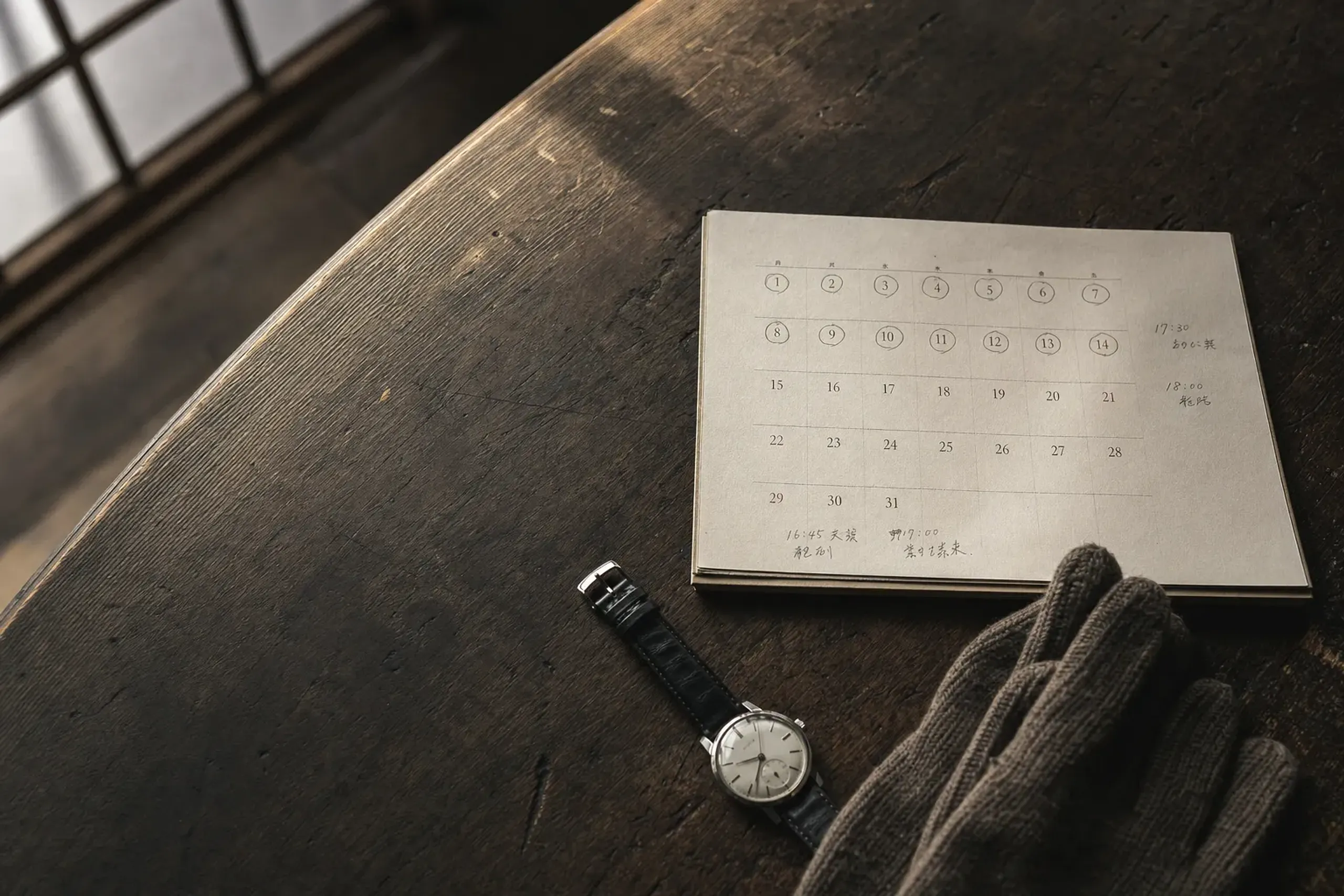
You are committing to the small hours, in the cold, with the next day already compromised.
If you attempt the water-drawing, treat the following day as a recovery day. Keep your schedule blunt. No heroic morning starts. Your body will be tired, and your judgment gets sloppy when you are tired.
JNTO notes that visitors may have a chance to drink some of the sacred water after it is offered, and describes a legend that the water has divine properties. Treat that as a belief and a tradition, not a guarantee of anything.
How To Watch Without Turning It Into A Photo Shoot
This is a religious observance in progress. Act like it.
Keep your voice low and your movements smaller than you think they need to be. Don’t push for position. Don’t treat the monks as subjects to be captured, and don’t let the torch become an excuse to forget where you are standing.
We keep our on-site conduct guidance in one place so it stays consistent across Japan. Read Unbroken Since 752: Omizutori at Tōdai-ji for the ritual’s continuity, and if you want a wider behavior framework for temples and quiet places, use our “Quiet Traveler” etiquette piece (linked within our site) rather than relearning the lesson on someone else’s night.
One more rule that matters: if your main interest is getting a clean shot, you are likely to become a problem. Be honest with yourself early.
Cold And Standing: What Your Body Will Be Doing
Early March nights in Nara are cold, and much of your time at Nigatsudo is outdoors and standing.
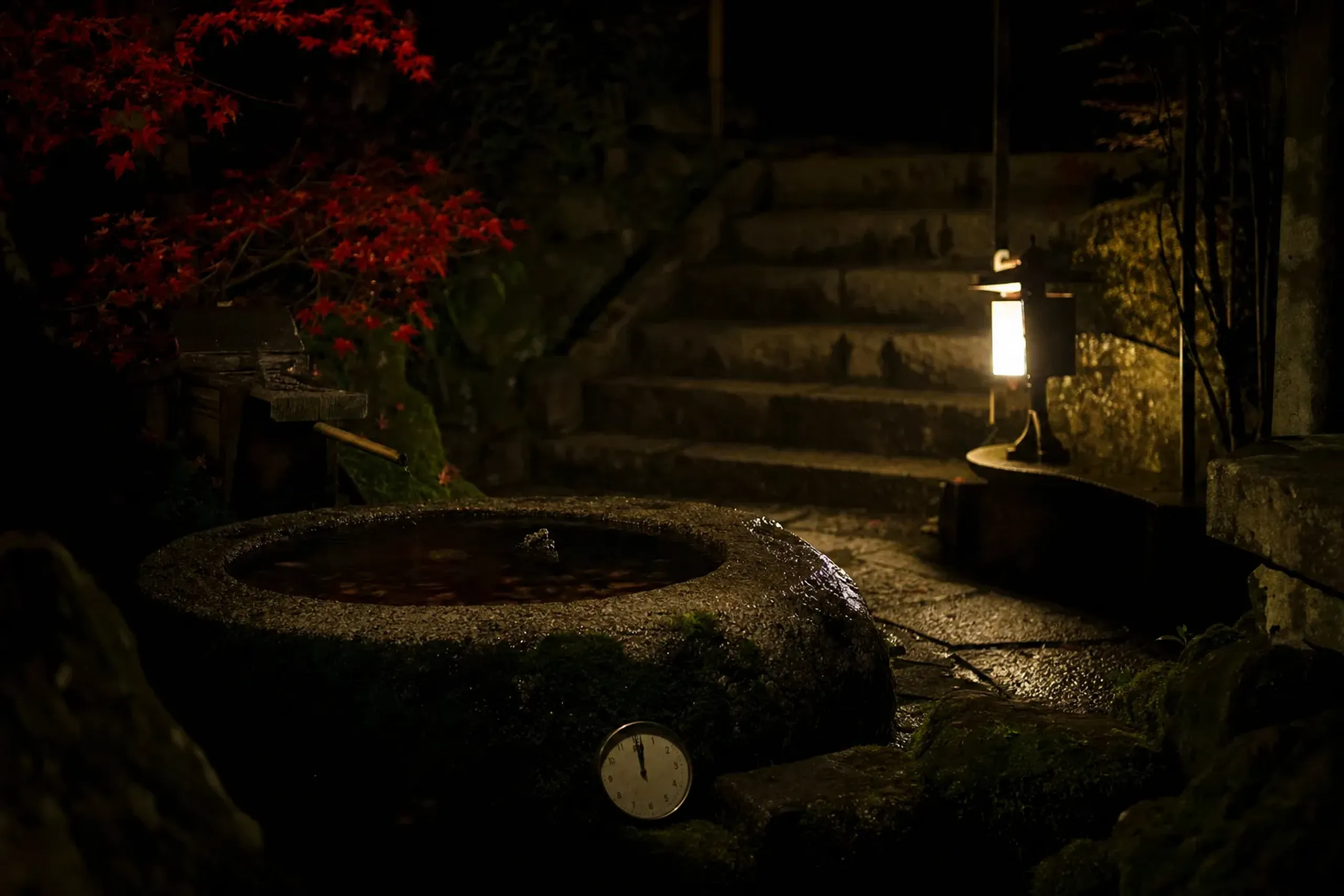
Dress for stillness, not for walking. That means warmth that doesn’t rely on motion, and shoes that tolerate long periods on hard ground. Bring patience. It weighs nothing.
If you are the kind of traveler who hates waiting, this is where you should stop and rethink the plan. The rite does not speed up because you are uncomfortable.
For a packing mindset that fits Japan’s quieter experiences, we recommend using our site’s cold-night and shoulder-season guidance rather than improvising. Small decisions—gloves, heat retention, how you carry your outer layer—change the entire night.
Where To Stay: Nara Is The Comfortable Choice, But The Top End Is Thin
Nara makes the late finish realistic, but the top end of accommodation is thin compared with Kyoto and Osaka.
This is the trade. If you stay in Nara, you can exit gently after the late hours and recover without a long return. If you base elsewhere, you may gain hotel choice but you also inherit a longer, more tiring end to the night—especially on March 12–13.
We avoid naming properties publicly for discretion and because availability changes fast during March. What we can say plainly: decide your base before you decide your night. The wrong order creates a miserable return.
If you want an early-morning, quieter register in Nara rather than late-night firelight, we recommend reading Older Than Kyoto: The Forest at Shimogamo as a model for how we pace sacred precincts—slow steps, less noise, and attention held longer.
A Smart Pairing For 2026: Nara National Museum’s Omizutori Exhibition
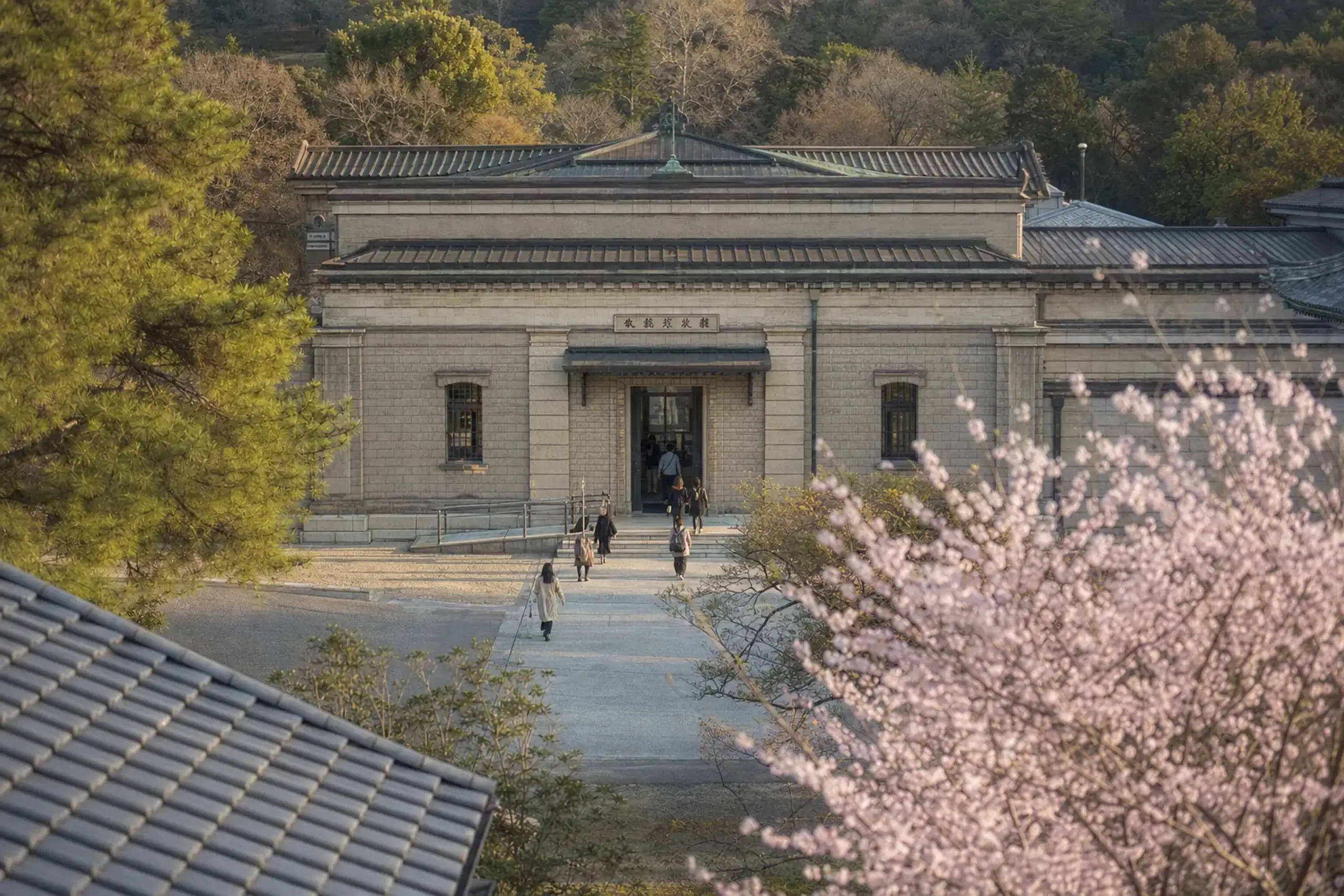
The Nara National Museum will run a 2026 special exhibition titled “Treasures of Tōdai-ji’s Omizutori Ritual” from February 7 to March 15, 2026 (West New Wing).
During the Omizutori ritual period (March 1–11, 13–14), the museum lists extended opening until 6:00 p.m., and until 7:00 p.m. on March 12. That matters because it lets you arrive at Nigatsudo with context already in your head, not just adrenaline.
If your tastes run toward shokunin-level detail—the how and why, not only the sightline—this museum hour before the night rite is a quiet luxury. No velvet rope required. Just preparation.
Note the museum’s naming of continuity, too: it states Omizutori was first established in 752 by the priest Jitchū and has been observed without fail for roughly 1,270 years, sometimes called the “Unceasing Rite.” That continuity deserves a better audience than a crowd chasing sparks.
What A Guide Adds Here (And What A Guide Does Not)
A guide adds interpretation—what you are seeing, what you are not seeing, and where each visible element sits inside the larger rite.
It does not add special entry or reserved viewing. This observance is public. That distinction matters, and we keep it explicit for your sake and for the temple’s.
In practice, a good guide helps you time your approach, choose a sensible waiting place, and keep your attention on meaning instead of friction. Small cues matter: when to stop talking, when to step aside, when to accept that you will not “optimize” the night.
For many HNW travelers, this is the real value proposition. Not access. Understanding.
Who Should Not Go
Skip Omizutori if you are unwilling to stand outdoors in the cold, if you need a comfortable viewing arrangement, or if your primary interest is photography.
This is not a critique. It is self-knowledge. There are other March evenings in Nara and Kyoto where you can be warm, well-fed, and culturally engaged without pressing into a religious observance you don’t actually have the temperament to witness.
If you still want a torch-lit memory, consider learning about the rite in daylight through the museum exhibition, then visiting Tōdai-ji precincts at a calmer hour. You will leave with less footage and more comprehension.
One of our coordinators has a simple rule for Japan’s living rites: if you can’t be quiet when you’re uncomfortable, don’t go.
Frequently Asked Questions
Is Omizutori The Same Thing As Shuni-e At Tōdai-ji?
Yes—Shuni-e is the official name of the observance, and Omizutori is the name most people use when referring to it.
Inside the two weeks, you’ll also hear specific terms like Otaimatsu (the nightly torch ceremony) and Omizutori proper (the late-night water-drawing on March 12–13). Keeping the words straight helps you keep the meaning straight.
What Time Should I Arrive For The Torch Ceremony At Nigatsudo?
Otaimatsu begins at 7:00 p.m. most nights, 7:30 p.m. on March 12, and 6:30 p.m. on March 14.
Your ideal arrival time depends on how you handle waiting outdoors and standing, so build in extra time rather than cutting it close. Arrive with a quiet attitude. That is the real requirement.
What Is Different About March 12 At Omizutori?
March 12 is the largest night, with more torches than the other nights, and it leads into the late-night Omizutori water-drawing around 1:30 a.m. on March 13.
It also tends to be the hardest night to attend well because attention compresses around the visible torch moment. If you go on March 12, go for the rite, not the crowd energy.
When Does The Omizutori Water-Drawing Actually Happen?
The water-drawing happens around 1:30 a.m. on March 13, following the night of March 12.
Water is drawn from the Wakasa well beneath Nigatsudo and offered to Kannon, and the Dattan ceremony follows inside the hall. The night ends around 3:30 a.m., so plan the next day accordingly.
Is There A Quieter Way To Understand Omizutori Without Chasing The Peak Night?
Yes: attend an ordinary night for Otaimatsu, then deepen context with the Nara National Museum’s 2026 Omizutori-focused exhibition (Feb 7–Mar 15, 2026).
The museum lists extended opening until 6:00 p.m. during March 1–11 and 13–14, and until 7:00 p.m. on March 12, which can fit naturally before an evening at Nigatsudo.
Why Choose Japan Royal Service
Japan Royal Service is useful for Omizutori when you want the night placed correctly inside a March itinerary, with the right pace and the right kind of quiet.
We can coordinate Nara accommodation, guiding, and private transportation, so you’re not making late-night decisions while tired. First mention matters: our private transportation options are designed for calm arrivals and calm exits, not drama at the curb.
If you want this rite handled with discretion—no performative posting, no loud “must-see” framing—our concierge team will map the night, the recovery day, and the surrounding temples in a way that respects the place. For a fully tailor-made itinerary, we will also suggest a rhythm that keeps you human the next morning.
Reach our team privately via WhatsApp or LINE, or contact us here, and tell us your March dates and whether you’re considering March 12–13 or an ordinary night.