In this guide
- 01Why Does Osaka Declare Cherry Blossom Season From Inside Nishinomaru Garden?
- 02Osaka Castle’s “Third Position”: Enclosed, Not Temple-Quiet Or Riverside-Open
- 03Osaka Castle Park Vs Nishinomaru Garden: What The Ticket Actually Buys
- 04What Is The Osaka Castle “Kangyō Nighter,” And When Does It Run?
- 05How Do You Time Osaka Castle For Crowds In Late March?
- 06The One Passage We Always Remember: Dusk Through The Keep
- 07Can You Combine The Osaka March Sumo Tournament And Osaka Castle’s Nighter In One Trip?
- 08Late Bloomers At Tamatsukuri-Guchi: A Softer Landing In Mid-April
- 09Parking And Arrival Strategy: Drop-Off Beats “Holding A Car”
- 10How To Plan A March Visit When Bloom Dates Shift
- 11How To Visit Osaka Castle And Nishinomaru Garden: Step-By-Step
- 12What We Can Do For You In Osaka Castle Blossom Season (And What We Don’t Claim Publicly)
- 13Frequently Asked Questions
- 14Why Choose Japan Royal Service
At Yasukuni Shrine in Tokyo, the season is declared from a tree anyone can stand under, free of charge, shoulder to shoulder if they arrive late. Osaka does it differently. Here, the Osaka Regional Meteorological Observatory’s standard tree stands inside Nishinomaru Garden, behind a ticket barrier, with Osaka Castle’s keep framed in its branches.
When five or six blossoms open on that standard tree, Osaka has “flowered.” Small rule. Big consequence. The calmest view of the keep arrives only after you step through a gate and pay to walk in.
If you have read our Tokyo pairing piece, you already feel the contrast. One city’s standard tree is public and loud. The other is enclosed, measured, and—on the right weekday evening—strangely quiet. For the Tokyo counterpart, see One Tree Decides: Tokyo In Blossom.
Why Does Osaka Declare Cherry Blossom Season From Inside Nishinomaru Garden?
Osaka’s cherry blossom season is declared from a standard tree inside the paid Nishinomaru Garden, so the official “first bloom” moment happens behind a ticket gate rather than in the open park.
That single fact is the key to Osaka Castle in blossom season. It explains the feeling of “inside” and “outside” that you sense the moment you arrive. Outside the garden, Osaka Castle Park is free, sprawling, and busy on fair-weather weekends. Inside, the paths narrow, voices soften, and the keep holds the center like a stage set.
In our experience, luxury travel is often less about what you see and more about how you get to see it.
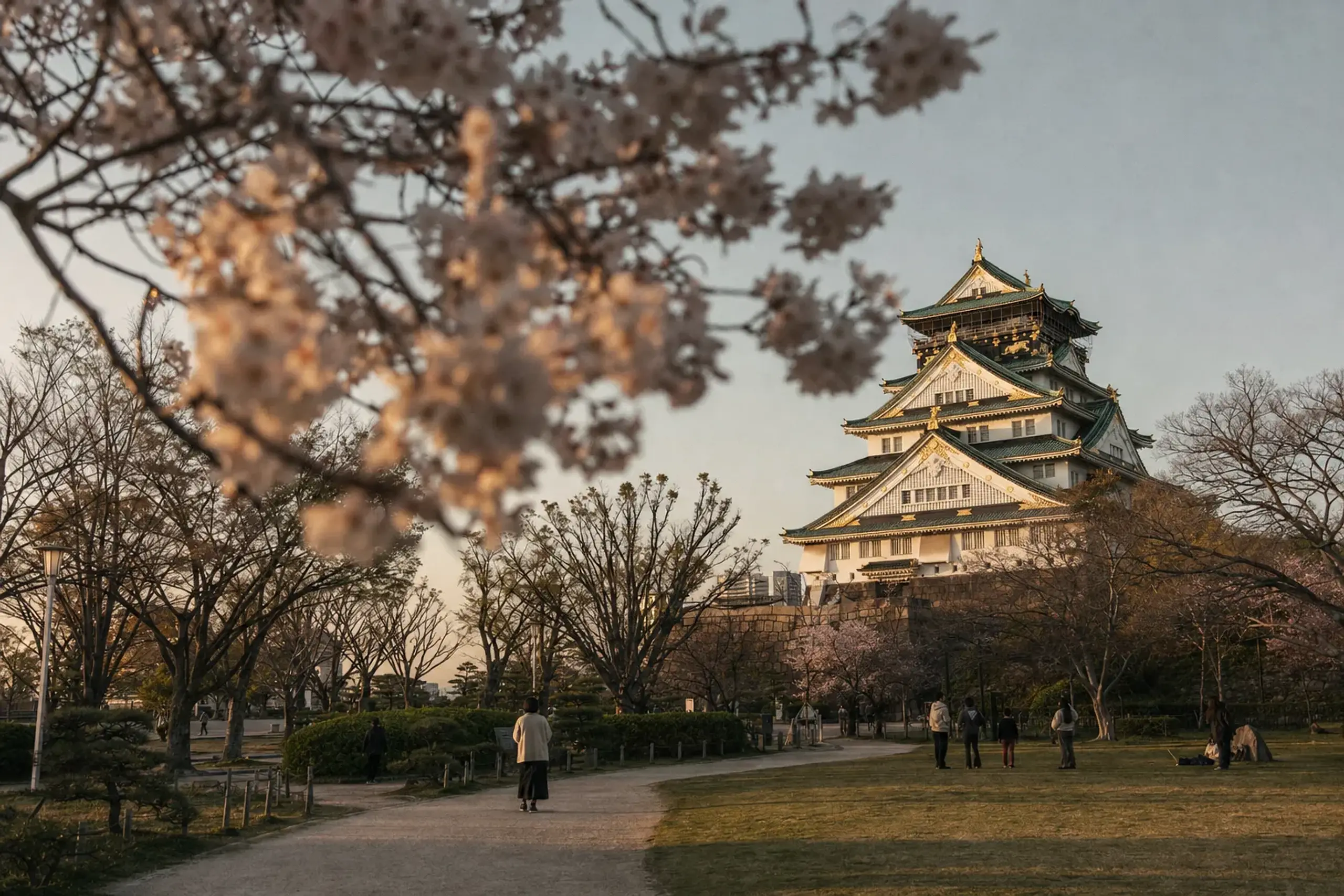
Nishinomaru Garden is not a secret, and it does not have “better” trees. It has fewer trees and less noise. That trade is the point.
Osaka Castle’s “Third Position”: Enclosed, Not Temple-Quiet Or Riverside-Open
Kyoto’s blossoms often belong to temples and gardens, where etiquette and architecture shape the mood. Tokyo’s blossoms can feel like a public tide—moats, rivers, and crowds that build fast. Osaka Castle sits in a third position.
It is an urban castle park with scale. Yet within it is a walled garden, Nishinomaru, where a modest admission charge separates a calmer experience from the louder park outside. Plain and practical. Also rare, during Japan’s most crowded season.
That is what many competitors miss when they describe “Osaka in spring” in broad strokes. They sell blossoms. We focus on the enclosure, because enclosure is what changes your hour on the ground.
Osaka Castle Park Vs Nishinomaru Garden: What The Ticket Actually Buys
Paying for Nishinomaru Garden primarily buys quiet and a specific framing of Osaka Castle’s keep, not exclusive access to cherry blossoms.
Osaka Castle Park covers roughly 105 hectares and holds about 3,000 cherry trees. The varieties include Somei-Yoshino, Yamazakura, and Yaezakura, and many are around seventy years old. The park is also listed among Japan’s hundred finest cherry blossom sites.
Nishinomaru Garden, by contrast, holds roughly 300 cherry trees—mainly Somei-Yoshino—with some weeping cherry mixed in, set against the keep. The keep itself was rebuilt in 1931. The trees are fewer. The view is tighter.
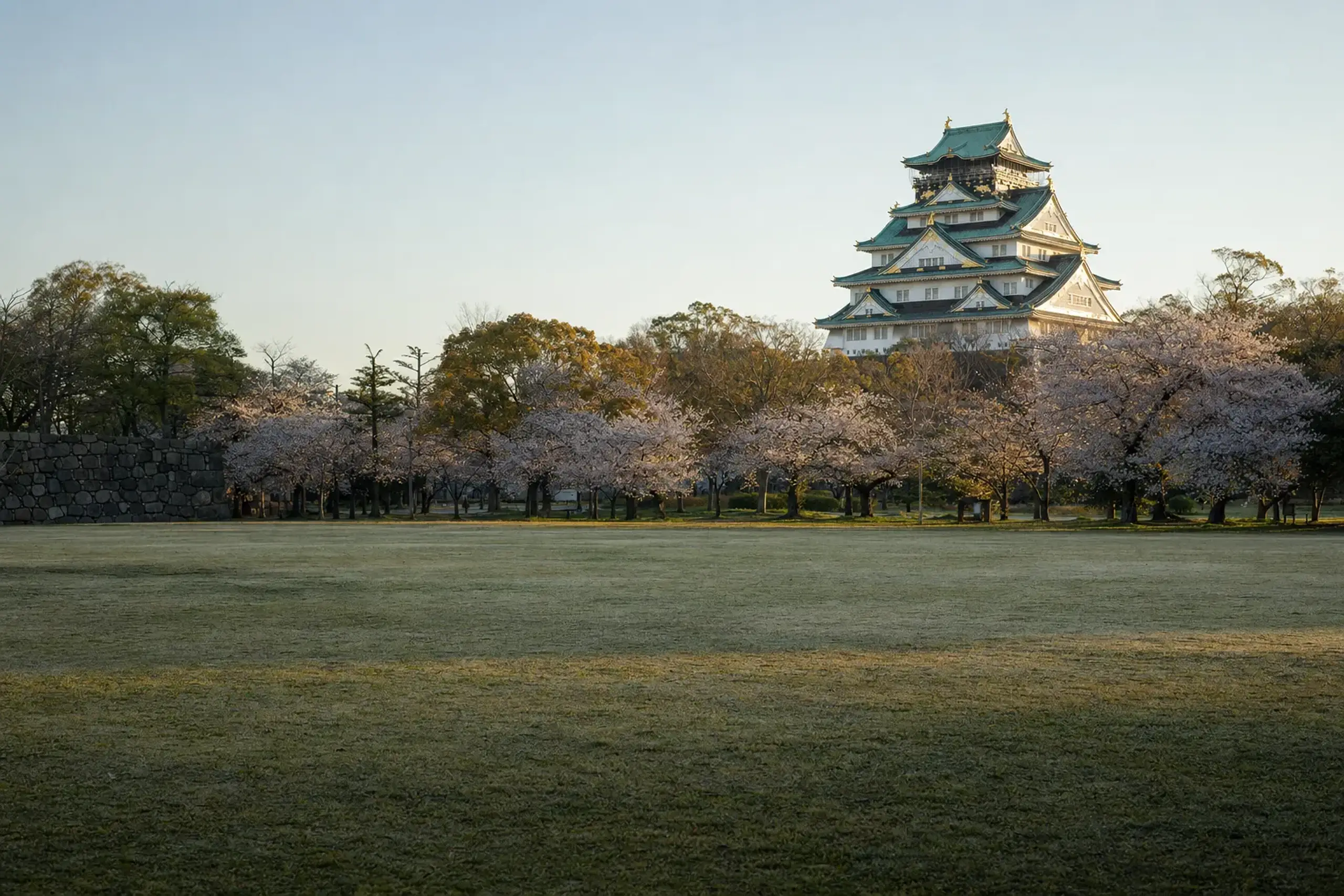
And on the right morning, you hear footsteps rather than megaphones.
Key fact: The park outside the walls holds about ten times as many cherry trees as Nishinomaru Garden. The ticket is about mood—quiet, pacing, and the keep seen through blossom.
One detail we like because it is unglamorous and true: the park’s 3,000 trees produce around four tonnes of pruned and fallen branches a year, and some of that wood is now made into goods rather than simply chipped. Scale shows up in maintenance first.
What Is The Osaka Castle “Kangyō Nighter,” And When Does It Run?
The Kangyō Nighter is Nishinomaru Garden’s limited-season evening opening, typically from late March into April, extending closing from 17:00 to 21:00 with last entry at 20:30.
In 2026, Nishinomaru Garden’s nighter ran from 20 March to 12 April, with garden hours 9:00–21:00 and last entry at 20:30. In 2025, it ran from 22 March to 13 April. Dates shift with the season, so we treat February as the annual check-in month before advising firm plans.
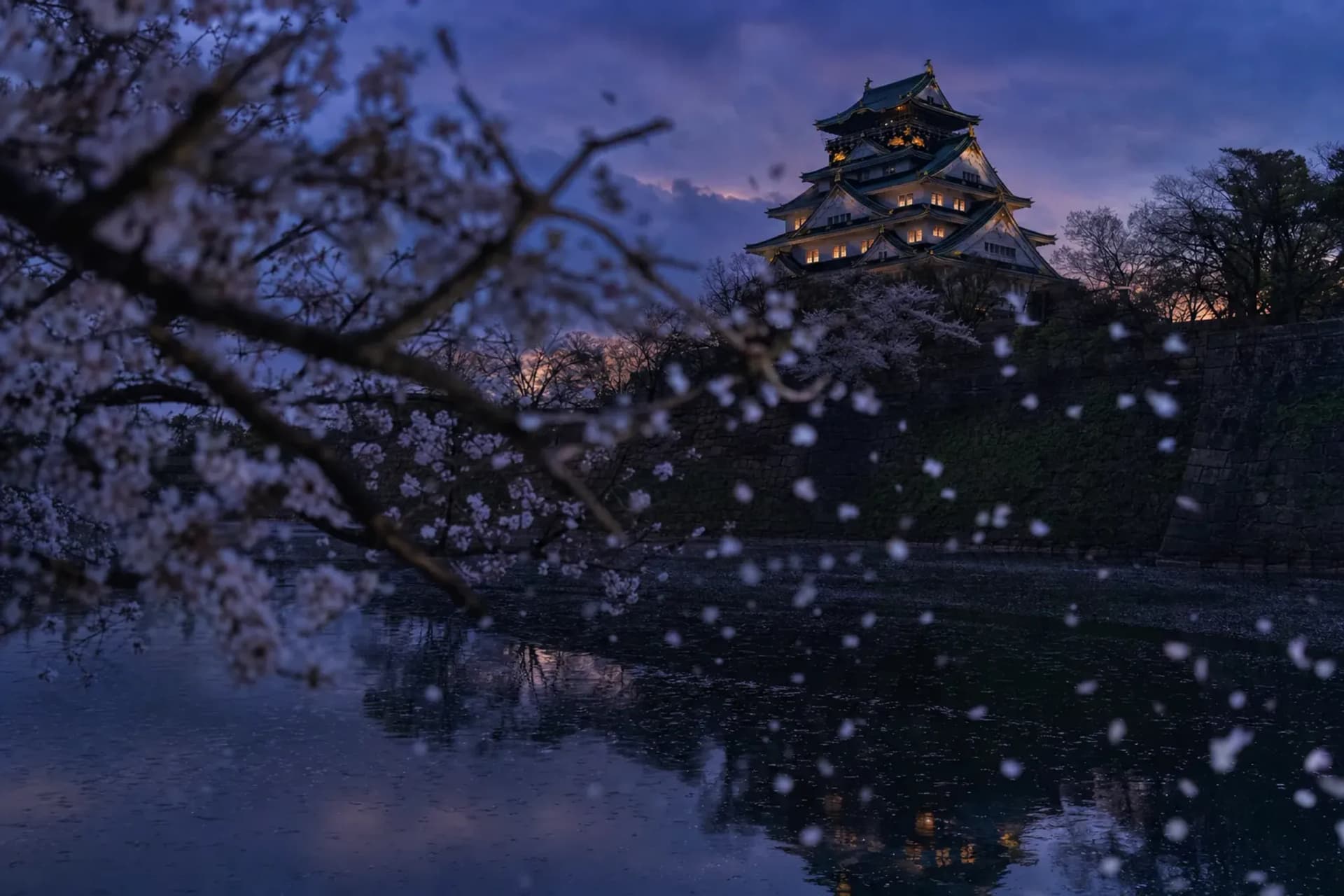
Illumination generally runs from around 18:00 to 21:00. You feel the change quickly. Daytime is about the white-pink canopy and the geometry of stone walls. Evening is about negative space—dark water, lit petals, and the keep turning into a silhouette with edges.
During the flowering period, the keep is separately lit in pink from the day flowering is declared, through to midnight. It is visible from outside the garden too, but the angle from within Nishinomaru—keep, branches, and lamplight in one frame—is the picture people remember.
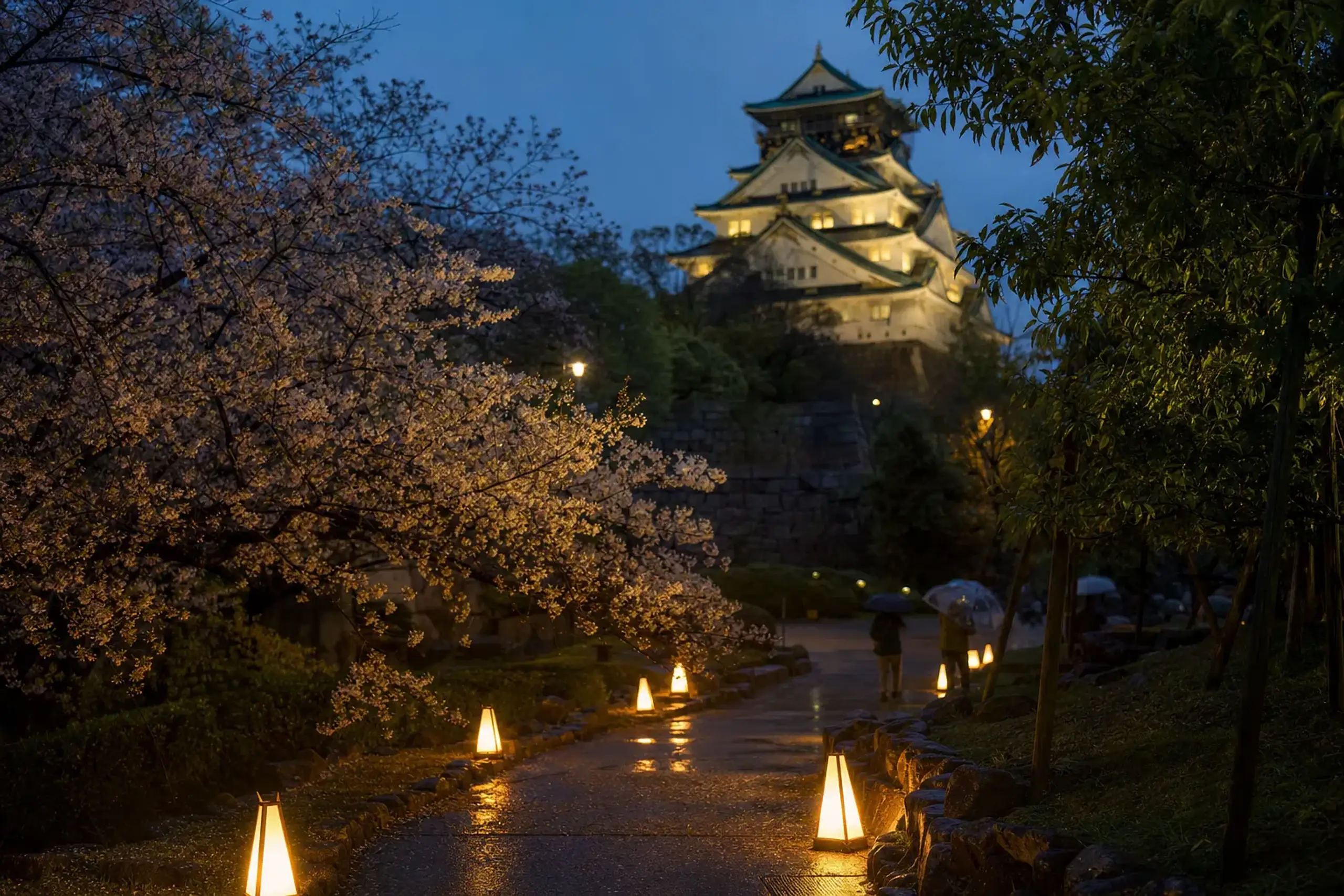
Admission during the nighter period is charged from high school age upward. We do not publish the figure. If you want current details, our concierge team will confirm the year’s program and timing privately.
How Do You Time Osaka Castle For Crowds In Late March?
For the quietest Osaka Castle blossom experience, go on a weekday morning soon after opening, or arrive for the first hour of the Kangyō Nighter illumination before the evening crowd gathers.
Osaka Castle Park is a magnet in bloom season. The park is open, free, and easy to reach, so the density rises fast once people finish lunch or arrive after work. If you want photographs with breathing room, you cannot “out-luxury” a public crowd. You can only out-time it.
Our practical pattern is simple. Enter Nishinomaru early on a weekday, walk the perimeter paths slowly, and save your longest pause for the keep-facing stretch where the branches do the framing for you. If evening matters more, choose the nighter and arrive before full dark—there is a brief window when the light is still blue and the lanterns have just come on.
Rain changes everything. Fewer people come, and the stone walls darken beautifully. Bring a watchful coat and shoes with grip. It is still a castle hill.
The One Passage We Always Remember: Dusk Through The Keep
Stand inside Nishinomaru Garden near dusk, and Osaka Castle’s keep sits behind the blossom canopy like a lantern with hard edges.
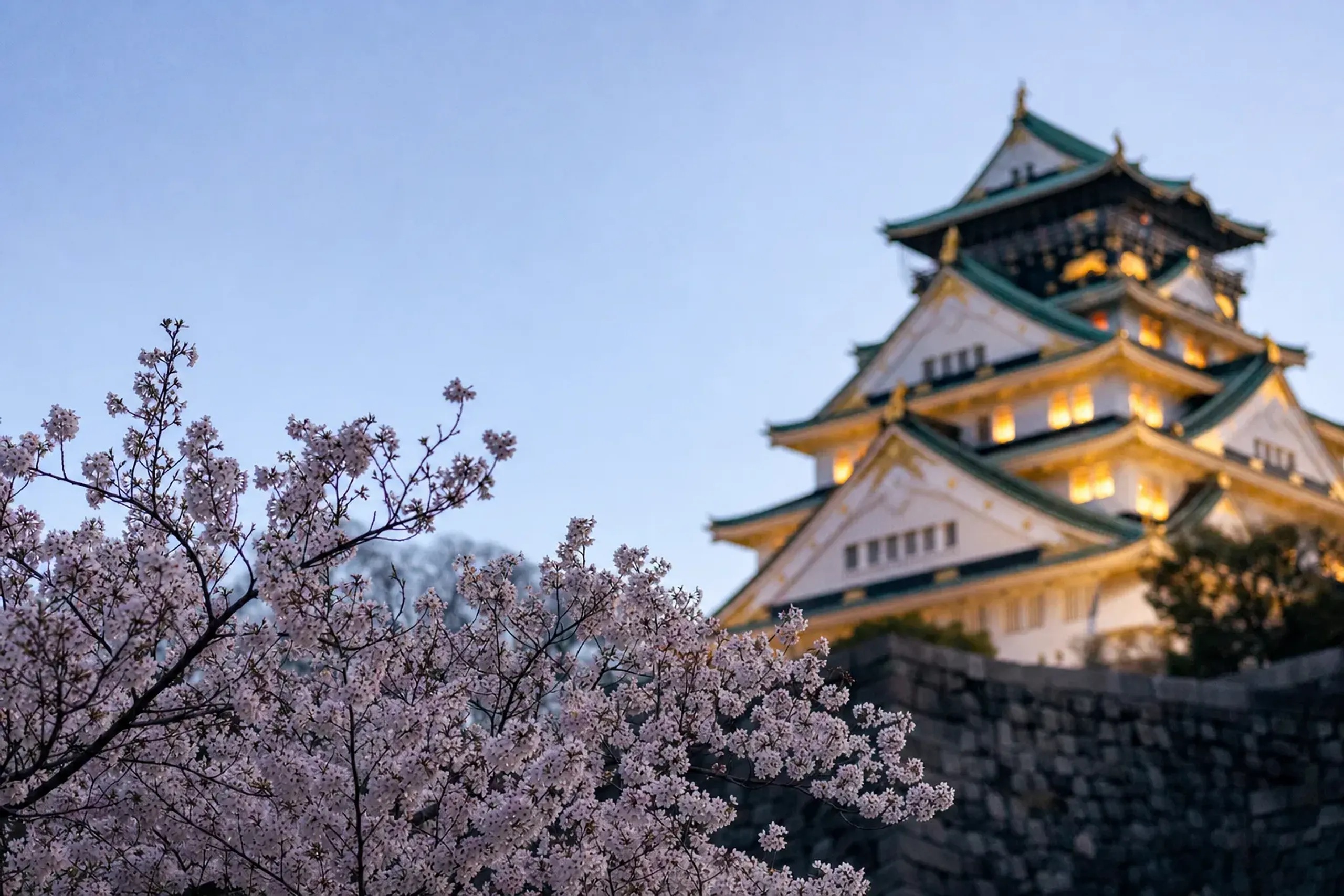
Quiet moment. Short, and easy to miss if you arrive late.
The petals do not look “pink” up close. They look pale, almost paper-like, until the lights come on and the contrast sharpens. People lower their voices without meaning to. You hear camera shutters, then nothing.
This is why the enclosure argument matters. The city is still there—trains, traffic, a stadium-scale park outside the wall—but the garden edits it out. For a luxury traveler, that edit is the comfort.
Can You Combine The Osaka March Sumo Tournament And Osaka Castle’s Nighter In One Trip?
Yes—there is usually a narrow overlap at the very end of the Osaka March tournament, such as 20–22 March in 2026 when the Kangyō Nighter began before the basho ended.
Japan-Guide’s March 2026 event calendar lists the Osaka Sumo Tournament (Haru Basho) running 8 to 22 March, 2026. Nishinomaru Garden’s nighter began 20 March in 2026. That leaves roughly three days when both are running.
This overlap is the date-decider if you want both experiences in one visit. If you come for most of the tournament, the blossoms may not be out yet. If you come for most of blossom season, the tournament has usually ended. Honest trade. No romance in the math.
If sumo is on your list, read our detailed timing piece here: The Stormy Basho: Sumo In Osaka In March. It is built for planning, not hype.
Late Bloomers At Tamatsukuri-Guchi: A Softer Landing In Mid-April
If you arrive after the main Somei-Yoshino peak, Tamatsukuri-guchi is planted with late-flowering yaezakura that can extend the season there into mid-April.
Different look. More layers to the petals. Often less frantic.
This is useful for clients who cannot move their calendar at the last minute. It is also a quieter photographic study, since yaezakura reads fuller and heavier against the keep. The sensation is less like “spring has arrived,” more like “spring is staying a little longer.”
We still advise checking current blossom reports close to travel. In 2026, Osaka’s first blossoms were announced on March 26, which is a reminder that March plans need flexibility, not fixed promises.
Parking And Arrival Strategy: Drop-Off Beats “Holding A Car”
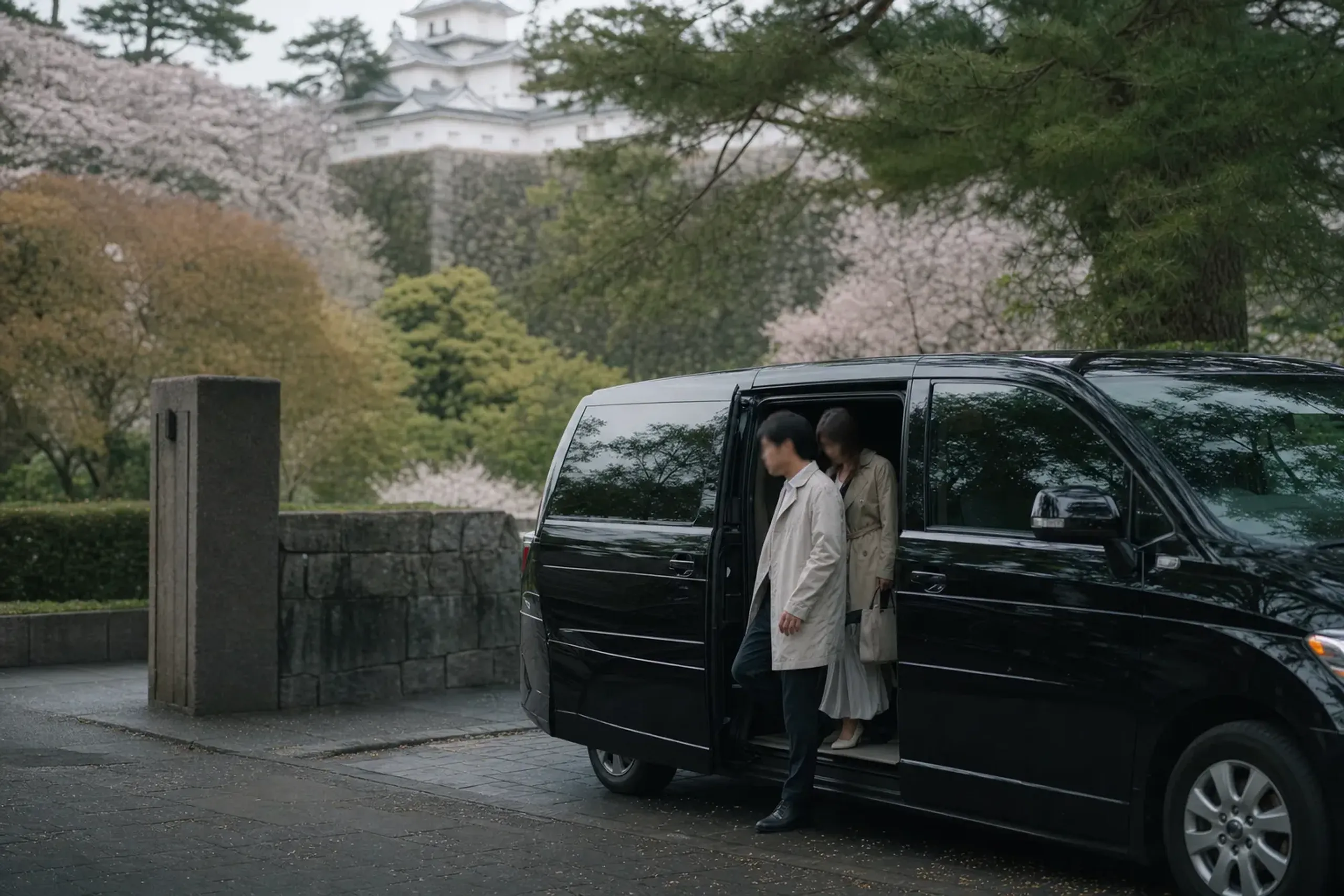
Osaka Castle Park’s two car parks hold around 300 cars in total and fill early on peak blossom weekends, so drop-off and later collection is often the least stressful approach.
If you self-drive, you may spend your best hour circling, not walking. Big mistake. For HNW travelers, the goal is to step out, enter, and start the experience with your shoulders down.
When we plan a private day with a chauffeur, our focus is flow: where to be dropped, which gate to use, and how to leave without getting stuck in the same exit surge as everyone else. The first mention matters here: our private transportation service is described at /services/transportation.
How To Plan A March Visit When Bloom Dates Shift
Plan Osaka Castle in March by anchoring your trip to fixed elements (the park, the keep, evening lighting windows) and treating blossoms as a moving layer, not the foundation.
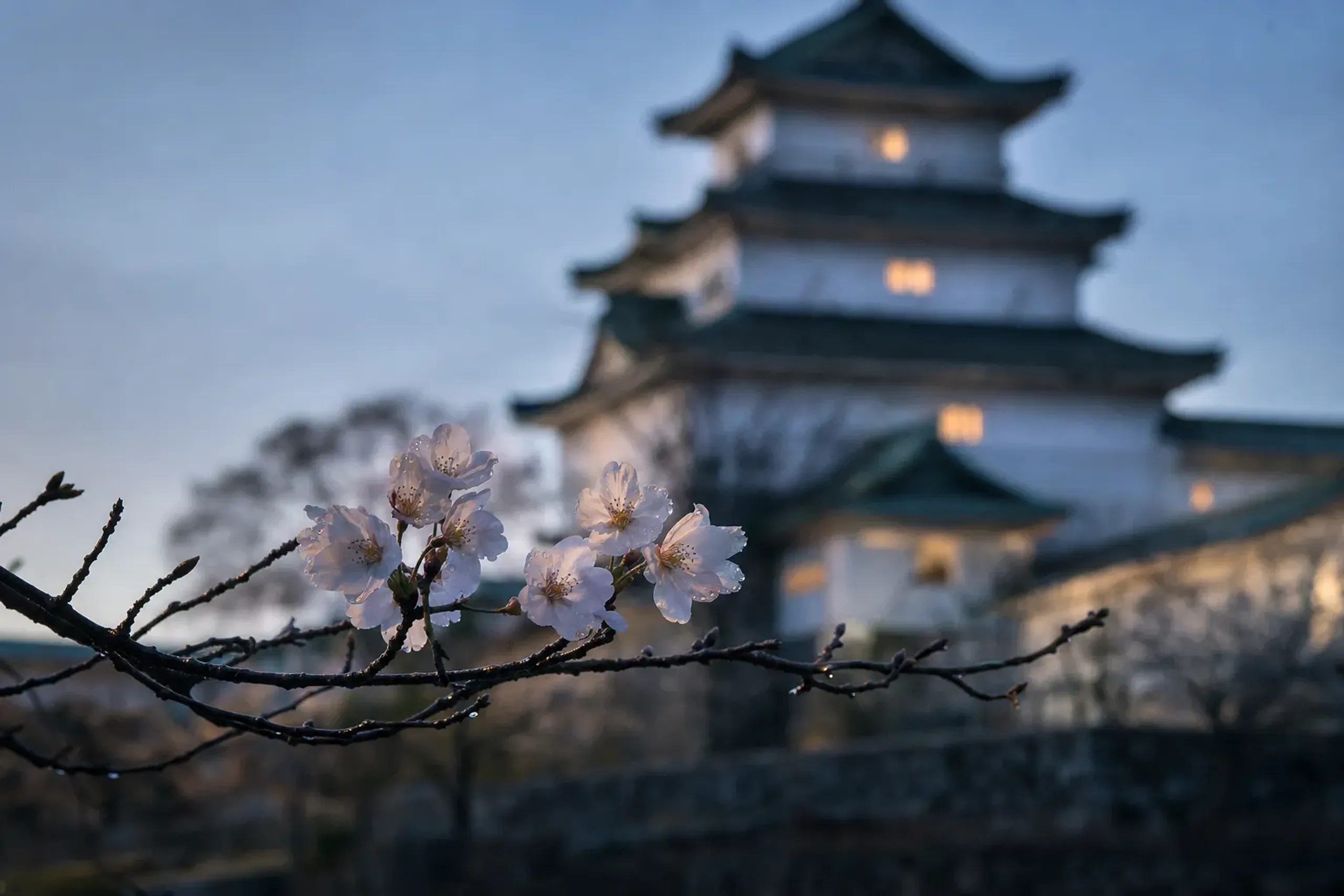
Osaka Castle Park is rewarding even before peak bloom. Stone walls and water do not cancel because petals are late. If the blossoms arrive early, you adjust by prioritizing mornings and the nighter window. If they arrive late, you shift attention to late-flowering areas like Tamatsukuri-guchi and return for the peak when forecasts tighten.
We avoid publishing “this is the week” claims because they age badly. Instead, we advise a planning range: late March into early April for the typical big-city pattern, with the humility to accept year-to-year drift.
How To Visit Osaka Castle And Nishinomaru Garden: Step-By-Step
Visit Osaka Castle Park first, then enter Nishinomaru Garden for the keep-facing blossom view, and if you are traveling during the nighter period, plan your timing around the 18:00–21:00 illumination window.
Use this simple order on the day:
- Arrive early (weekday if possible) and walk a short loop outside the walls to gauge crowd density.
- Enter Nishinomaru Garden once you are ready to slow down and take photographs with the keep framed through blossoms.
- If you are going at night, aim to be inside before full dark, then stay through the first part of illumination.
- Leave with intent. Don’t drift out at peak exit time if you can avoid it.
Osaka Castle Park also runs a wider spring festival from late March into May, which can include special openings of Important Cultural Property turrets, the Toyotomi stone wall museum, special exhibitions at the keep, and matcha and wagashi at the garden’s tea house from April. Programming changes annually, so confirm the current year’s details close to travel.
What We Can Do For You In Osaka Castle Blossom Season (And What We Don’t Claim Publicly)
Our team at Japan Royal Service can support accommodation, guiding, and transfers for an Osaka Castle blossom visit, then fine-tune timing and routing privately once you inquire.
We keep public articles clean for a reason. Many venues and seasonal programs have their own rules, and coordination depends on dates, party size, and your pace. So we treat this page as the planning reference, and we shift into concierge mode only in private conversation.
If you want a made-to-measure route, we build it as a bespoke itinerary around your actual constraints. Not a generic “spring in Osaka” checklist. Real timing, real doors, real driving minutes.
Frequently Asked Questions
Where Is Osaka’s “Standard Tree” For Cherry Blossom Announcements?
Osaka’s standard tree for the official first-bloom announcement is inside Nishinomaru Garden at Osaka Castle Park, which means it sits behind a paid entrance gate.
This is why Osaka Castle’s blossom season has a clear “inside” and “outside” feeling. You can enjoy thousands of trees for free in the wider park, but the defining framed keep view lives inside the garden walls.
Is Nishinomaru Garden Worth Paying For If Osaka Castle Park Is Free?
Nishinomaru Garden is worth paying for if you value a quieter pace and the keep framed through blossoms, not because it has more trees.
The wider park has about 3,000 cherry trees and can get loud at peak times. Nishinomaru has roughly 300 trees, set directly against the keep, and the admission gate filters the crowd.
What Time Should We Go For The Best Osaka Castle Blossom Photos?
The best time is a weekday morning soon after opening, or the first hour of evening illumination during the Kangyō Nighter period.
Morning gives cleaner sightlines and softer light on the stone walls. Early evening gives the blue-hour contrast that makes petals read as texture, not just color.
Can We See Sumo In Osaka And Cherry Blossoms At Osaka Castle In The Same Weekend?
You can sometimes do both only at the very end of the March tournament, such as 20–22 March in 2026 when the nighter overlapped with the basho.
The practical corollary is strict: for most of the tournament the blossoms are not yet out, and for most of blossom season the tournament has ended. Timing decides everything.
What If We Arrive After Peak Somei-Yoshino Bloom?
If you arrive after the main peak, Tamatsukuri-guchi’s late-flowering yaezakura can extend the season into mid-April.
It is a different style of blossom—denser petals and a calmer mood—and it can be a relief for travelers whose dates are fixed months in advance.
Why Choose Japan Royal Service
Luxury travelers choose Japan Royal Service because we plan for the part that decides the day: timing, enclosure, and privacy. Discretion is not an add-on for us. It is the default.
Osaka Castle in blossom season looks simple on a map, yet the outcome swings on small choices—weekday morning versus weekend dusk, drop-off versus parking, the nighter window versus a normal 17:00 close, the three-day sumo overlap that most people never calculate. Our concierge team focuses on those levers, then shapes the day around your pace.
If you want the quiet view behind the gate, reach our team privately via WhatsApp or LINE, or contact us here.