In this guide
- 01What “Private Chauffeur In Kyoto With An English Driver” Really Means
- 02Kyoto’s 2026 Reality: Crowds, Controls, And Why A Chauffeur Changes The Day
- 03Compliance First: What A Properly Authorized Private Ride In Kyoto Looks Like
- 04Fleet Guide: Choosing The Right High-End Vehicle For Kyoto
- 05What A Kyoto Chauffeur Day Can Look Like (Without Turning Into A Checklist)
- 06Hidden Japan In Kyoto: How We Keep The City Feeling Private
- 07Hands-Free Kyoto: A Luxury Choice That Also Helps The City
- 08Nationwide Chauffeured Transport Beyond Kyoto (When Your Itinerary Expands)
- 09How We Build A Bespoke Kyoto Chauffeur Plan (What We Ask You First)
- 10Competitor Comparison: What To Look For Before You Choose Anyone
- 11FAQs: Kyoto Private Chauffeur With English Driver (FAQ Schema)
- 12Why Choose Japan Royal Service
Kyoto is not hard to visit. It is hard to visit well.
On paper, the city looks small and walkable. In reality, narrow lanes, peak-hour congestion, and event-day road controls can turn a “simple” day into a sequence of delays and crowded compromises. The result is familiar: you see the famous sights, but you feel rushed and exposed.
Our team at Japan Royal Service built this guide for travelers searching, very specifically, for a private chauffeur service in Kyoto with an English-speaking driver. We will show what to expect, how to vet legality, which vehicle class fits your party, and how we design calmer routing using official Kyoto resources. Quiet matters.
What “Private Chauffeur In Kyoto With An English Driver” Really Means
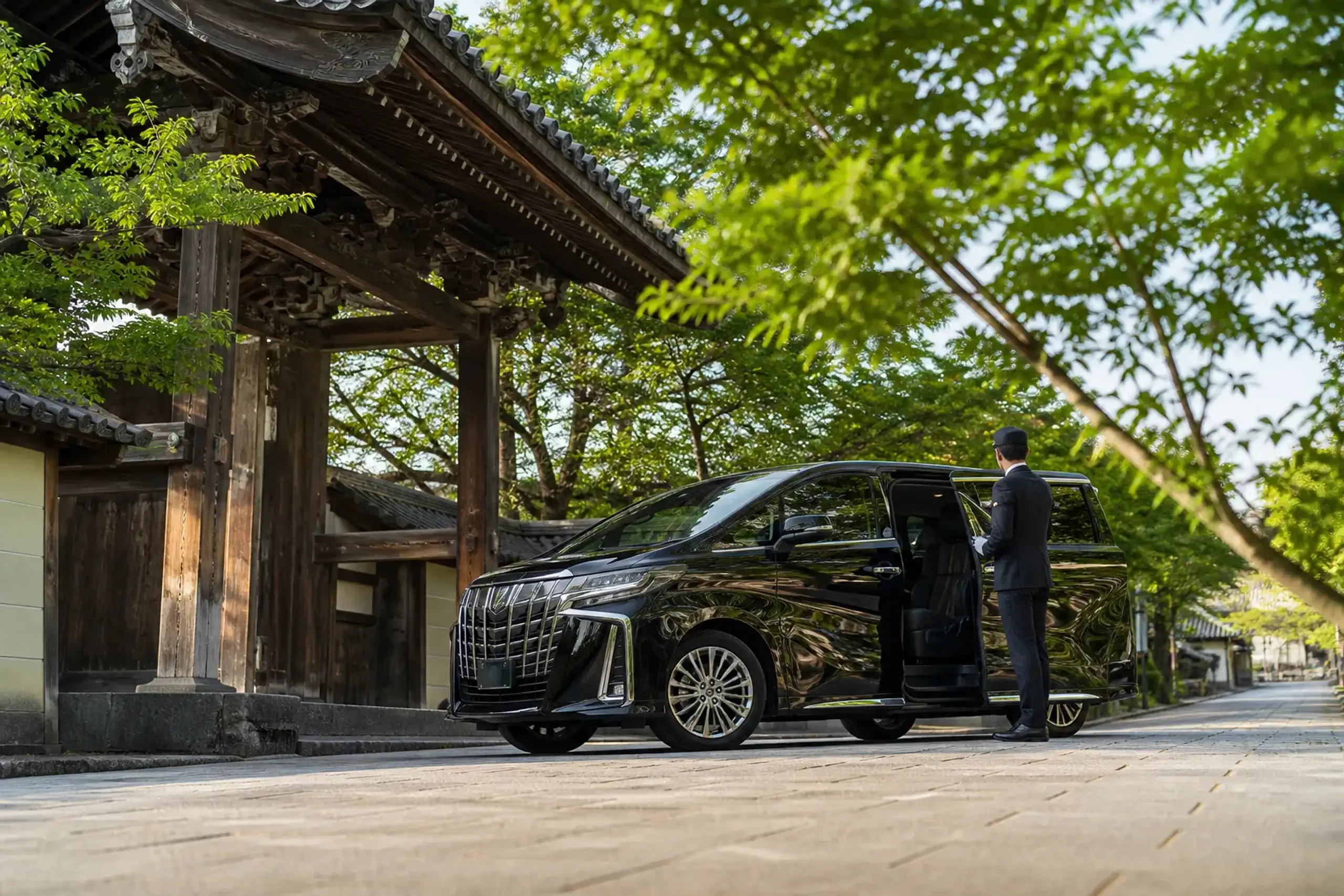
In Kyoto, “English driver” can mean two very different things. That difference is where many luxury days go wrong. Fast.
An English-speaking chauffeur is a professional driver who can communicate clearly, handle timing, and support a refined day flow. They are not automatically a licensed sightseeing guide, and they should not be expected to provide deep historical interpretation at every temple gate.
A licensed guide-interpreter is a separate role. Some tours in Kyoto explicitly include a native English-speaking guide alongside a professional driver and vehicle, which is a different product category altogether. Know what you are buying.
English-Speaking Driver Vs Licensed Guide-Interpreter
If you want a quiet day with clean communication, an English-speaking driver can be exactly right. If you want museum-level narration and on-the-spot cultural translation with priests, artisans, or restaurant staff, you may prefer a dedicated guide-interpreter.
In our experience, HNW guests often choose “driver-first” for privacy and pace, then add a guide only for specific half-days. Less talking. Better listening.
Why This Matters In 2026
Kyoto has become explicit about visitor impact and legal compliance. The city’s official visitor guidelines set clear standards for paid passenger transport, and they also encourage “Hands-Free Travel” to reduce congestion pressure. That is not academic.
Key fact: Kyoto’s official guidance sets clear standards for paid passenger transport. For high-end travelers, “private” should always also mean properly authorized and insured.
Kyoto’s 2026 Reality: Crowds, Controls, And Why A Chauffeur Changes The Day
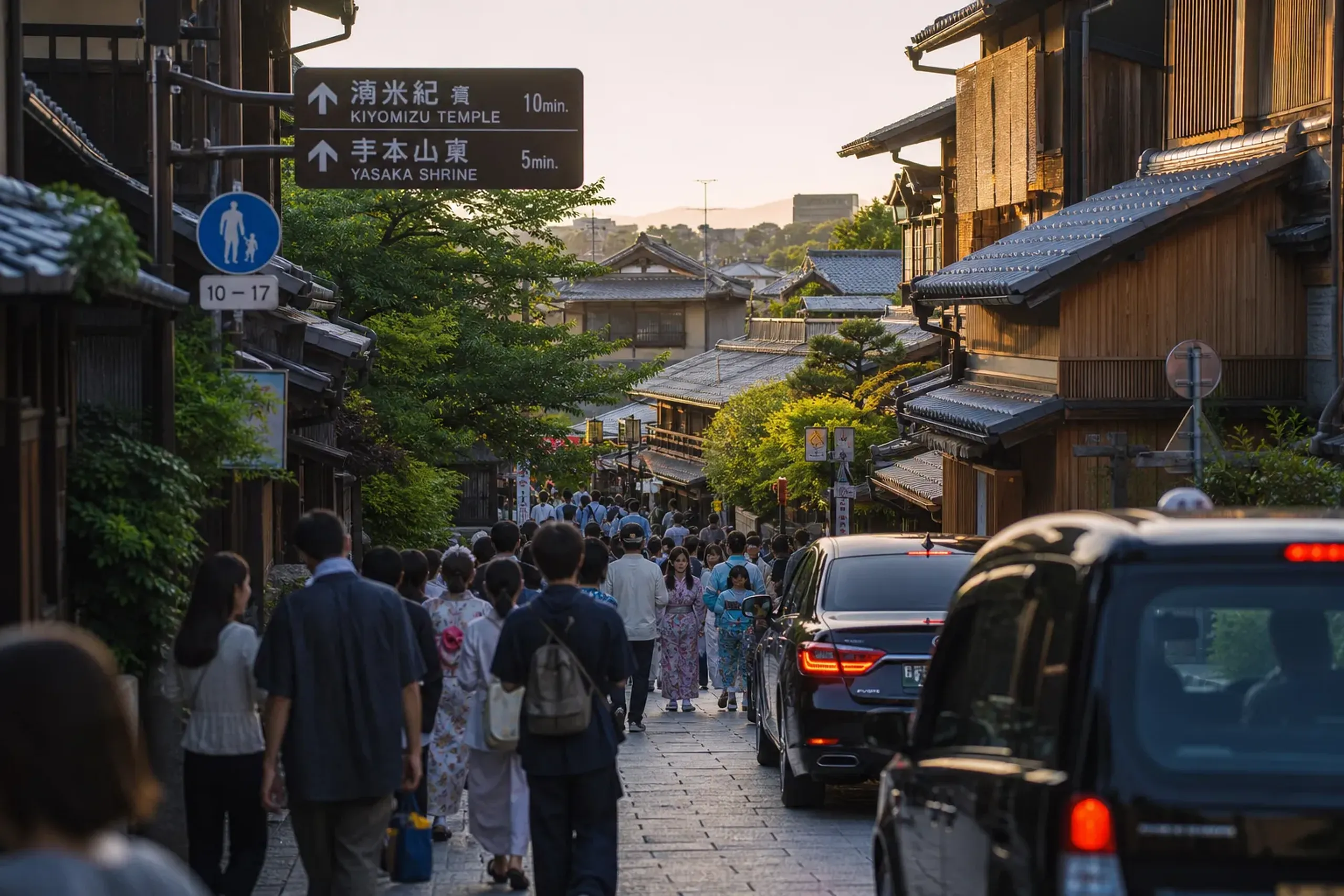
Kyoto rewards timing. A chauffeur day works best when it is planned around real congestion patterns.
Kyoto’s friction is predictable. The mistake is treating it as random.
Popular districts compress at the same times, on the same corridors, in the same seasons. Add a major event and you can lose hours without ever leaving the city limits. A private car alone does not solve this; a planned day does.
Use The Official Kyoto Travel Congestion Forecast Like A Local
Kyoto Travel publishes an official Kyoto Travel Congestion Forecast for major sightseeing areas in Kyoto City. It is designed to help visitors avoid peak congestion, and it shows a “Last Update” of June 11, 2026. Useful.
When our concierge team plans a chauffeur day, we think in departure times, not just destinations. A 30-minute shift can change the texture of Arashiyama or Higashiyama.
Event-Day Disruptions Are Not Rare
Kyoto Travel also published a notice that large-scale traffic restrictions were implemented throughout Kyoto on February 15, 2026 for the Kyoto Marathon 2026. That is a clear example of how a “perfect” itinerary can collapse on a single Sunday.
A premium chauffeur plan is not only a vehicle choice. It is event awareness, routing discipline, and fallback options that still feel like Kyoto.
Compliance First: What A Properly Authorized Private Ride In Kyoto Looks Like
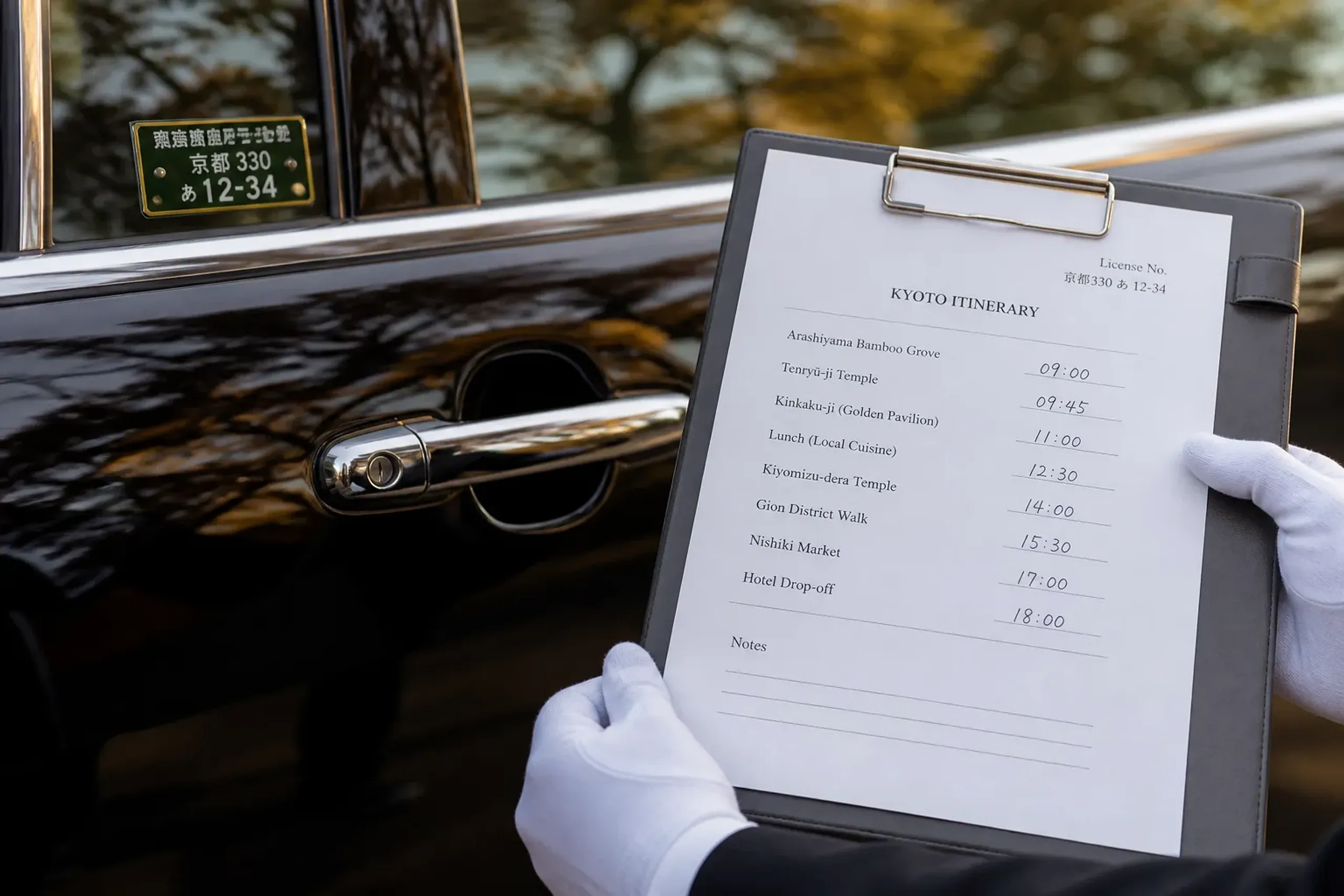
In Kyoto, “private” should also mean authorized, insured, and clearly defined.
Kyoto can feel informal. Transport law is not.
For HNW travelers, comfort is only half of it. What matters just as much is that the arrangement is properly authorized, fully insured, and clearly supervised — not simply described as “private.”
A Practical Vetting Checklist (What Sophisticated Guests Ask For)
- Clear operator legitimacy and commercial passenger transport authorization (do not accept vague claims).
- Insurance clarity appropriate for paid passenger transport.
- Defined roles: driver responsibilities vs any guide-interpreter responsibilities.
- Professional-grade communication in English for timing and on-the-day changes.
Kyoto’s official guidance is direct about the standards for paid passenger transport. Quiet luxury starts with correct foundations.
Fleet Guide: Choosing The Right High-End Vehicle For Kyoto
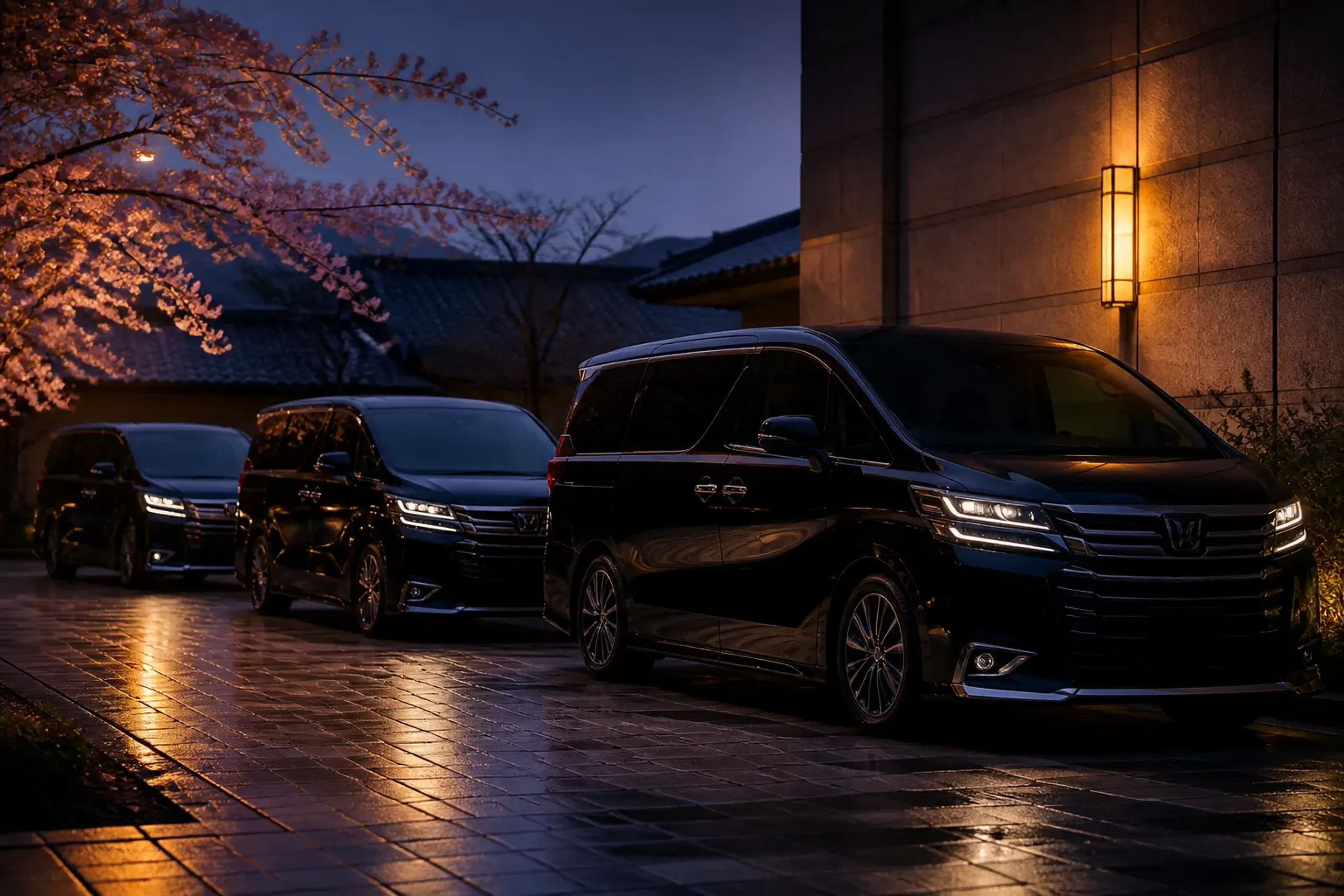
The right cabin size and profile make Kyoto days calmer, especially with luggage or family members.
Kyoto’s streets and hotel approaches reward restraint. Huge vehicles can be a headache in narrow lanes, yet too-small vehicles feel cramped on a long day. The right cabin changes everything.
Below are the four fleet options our guests ask about most for Kyoto. Each suits a different travel style. Subtle differences matter.
Lexus LM 500h Executive: Private-Room Calm For High-Visibility Guests
The Lexus LM 500h Executive is chosen when privacy inside the cabin is the point. Not a perk.
It is ideal for one principal guest or a couple who wants a hushed, controlled environment between stops. In Kyoto, that means you can reset after a crowded temple approach and arrive at the next district composed.
- Best for: discreet couples, solo principals, high-visibility profiles
- Strength: cabin quiet and separation, a “mobile waiting room” feeling
Toyota Executive Alphard: The Kyoto All-Rounder For Families And Executives
The Toyota Executive Alphard is a common choice for a reason. It reads as refined, not flashy.
Families like the space and the easy entry. Executives like the upright comfort and the ability to work between districts without feeling boxed in.
- Best for: families, executive pairs, multi-stop days
- Strength: balanced comfort and road manners in city conditions
Toyota GranAce Premium: More Space, More Luggage, Less Drama
The Toyota GranAce Premium suits guests who bring the day with them. Shopping, camera gear, bulky coats, or simply a preference for generous personal space.
It is also useful when you want a single vehicle to bridge hotel-to-hotel movement and sightseeing without constant repacking. Simple.
- Best for: longer days, heavier luggage needs, family comfort
- Strength: space margin when Kyoto’s day becomes layered
Toyota Hiace Grand Cabin: Executive Space For Small Groups
The Toyota Hiace Grand Cabin is practical in the best sense of the word. It suits small groups who want to travel together and still feel composed.
For multigenerational groups, this can reduce the “split vehicle” problem that often breaks a day into fragments. One conversation. One pace.
- Best for: small groups, multigenerational families, corporate guests
- Strength: shared journey with genuine personal space
What A Kyoto Chauffeur Day Can Look Like (Without Turning Into A Checklist)
Kyoto punishes rigid plans. A chauffeur day should feel guided by rhythm, not by a spreadsheet.
Our team at Japan Royal Service often builds days around one “anchor” district and one “quiet counterpoint.” That is how you keep the city legible. And breathable.
Option A: Arashiyama Early, Then A Quieter Temple Sequence
Arashiyama rewards a very early start. Miss it and you inherit bus crowds.
- Why it works: early timing can reduce crowd pressure on core paths
- What the chauffeur changes: controlled arrival timing and a calmer exit strategy
Option B: Higashiyama At A Slower Register (Short Walks, Clean Timing)
Higashiyama is visually dense and easy to overbook. One extra stop too many, and the day becomes a shuffle.
- Why it works: you can choose fewer sites and give them space
- What the chauffeur changes: short transfers that protect energy and attire
Option C: Fushimi Inari Taisha With A Time Strategy
Fushimi Inari Taisha is real Kyoto, not a theme. It is also crowded at predictable hours.
- Why it works: the approach changes dramatically by time of day
- What the chauffeur changes: you arrive when the gates feel like gates, not a queue
Hidden Japan In Kyoto: How We Keep The City Feeling Private
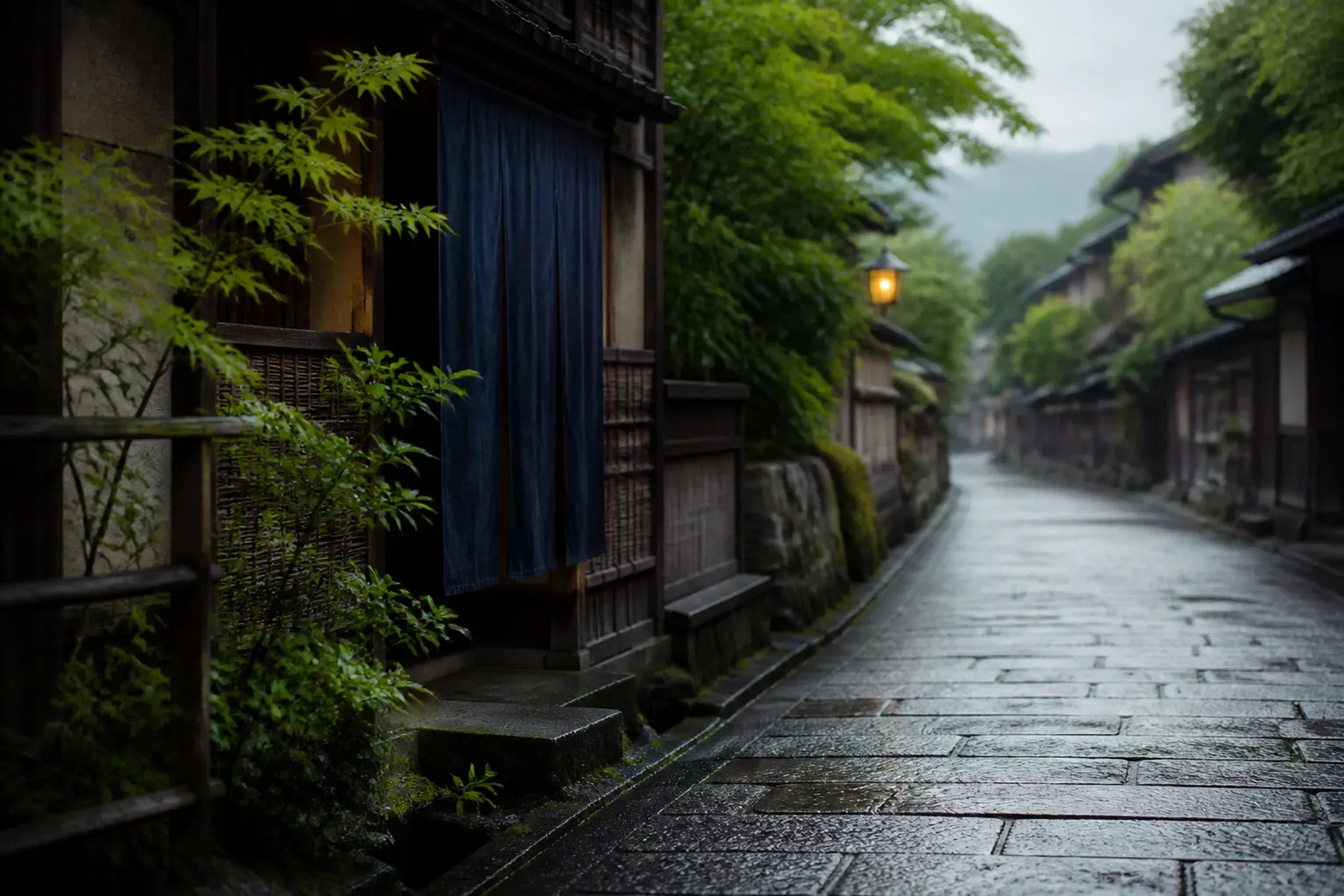
Hidden-Japan routing is often about where you don’t go at peak hour—and how you return later.
“Hidden Japan” in Kyoto is not a secret map. It is a way of moving.
We often steer away from the most saturated lanes at the most saturated times, then return when the city exhales. That can mean prioritizing smaller gardens, quieter neighborhoods, and slower meals that act like a reset.
This is also where wabi-sabi becomes practical. Less sparkle. More atmosphere.
Shokunin Moments That Belong In Kyoto
Kyoto is a craft capital. Shokunin is not branding; it is the working fabric of the city.
When guests tell us they want something “real,” we think about encounters with makers and studios where the pace is human and the objects have time inside them. A single hour can recalibrate the day.
Hands-Free Kyoto: A Luxury Choice That Also Helps The City
Kyoto Travel’s visitor guidelines recommend “Hands-Free Travel.” That guidance exists for a reason.
Dragging suitcases through crowded lanes is uncomfortable for you and disruptive for locals. A chauffeur-led day works best when luggage is minimized, and when hotel-to-hotel transfers are handled with discipline.
We often plan touring days that avoid heavy bags entirely. The day feels lighter. Literally.
Nationwide Chauffeured Transport Beyond Kyoto (When Your Itinerary Expands)
Many Kyoto chauffeur requests are not only about Kyoto. They are about the gaps between regions.
Our guests commonly pair Kyoto with Osaka, Nara, Hakone, Nikko, Tokyo, or Hiroshima. When you move across Japan with a clear plan, the country feels closer—and calmer—than the rail map suggests.
When private transportation is the right fit, we discuss it as part of a broader routing plan, not as an isolated “car day.” For details on our approach to premium vehicles and drivers, see our private transportation page: /services/transportation.
How We Build A Bespoke Kyoto Chauffeur Plan (What We Ask You First)
Luxury travelers do not need “more options.” They need fewer, sharper decisions.
When guests request a tailor-made plan, we start with constraints: hotel location, walking tolerance, dining style, and the emotional tone you want Kyoto to hold. Quiet romance. Serious art. Family ease. Then we route.
Our bespoke itinerary work is designed privately and tailored to the individual. Learn what that looks like here: /services/tailor-made.
A Note On Third-Party Experiences And Bookings
Kyoto has many third-party venues and experiences that guests ask about, from hotels to cultural performances to sought-after dining. On public pages, we share information and planning guidance only.
For private coordination and what may be possible for your dates, our concierge team handles details discreetly after you inquire. No public promises. No noise.
Competitor Comparison: What To Look For Before You Choose Anyone
Some travelers start with a luxury hotel concierge. Others go straight to a local operator. Both can be valid.
Four Seasons Hotel Kyoto states that it offers a private chauffeured car experience and that an English-speaking driver can be arranged, subject to availability. MK Taxi Kyoto markets driver-guided private tours and states drivers can provide English guidance. Kyoto Insight Tours states its tours include a private licensed vehicle and professional driver plus a native English-speaking guide/interpreter throughout the day.
Those references are useful because they show the spectrum: chauffeur-only, driver-guided, and driver-plus-guide. Your best choice depends on what you expect the “English” to do.
| Decision Point | What To Ask Any Provider |
|---|---|
| Legality & authorization | Are they authorized for paid passenger transport? What insurance applies? |
| English capability | Is the English for logistics only, or for guided explanations and translation? |
| Driver vs guide roles | Will there be a licensed guide-interpreter, or only a driver? |
| Congestion strategy | Do they reference official Kyoto congestion guidance and event restrictions? |
| Vehicle fit | Which vehicle matches party size, luggage, and Kyoto’s street constraints? |
FAQs: Kyoto Private Chauffeur With English Driver (FAQ Schema)
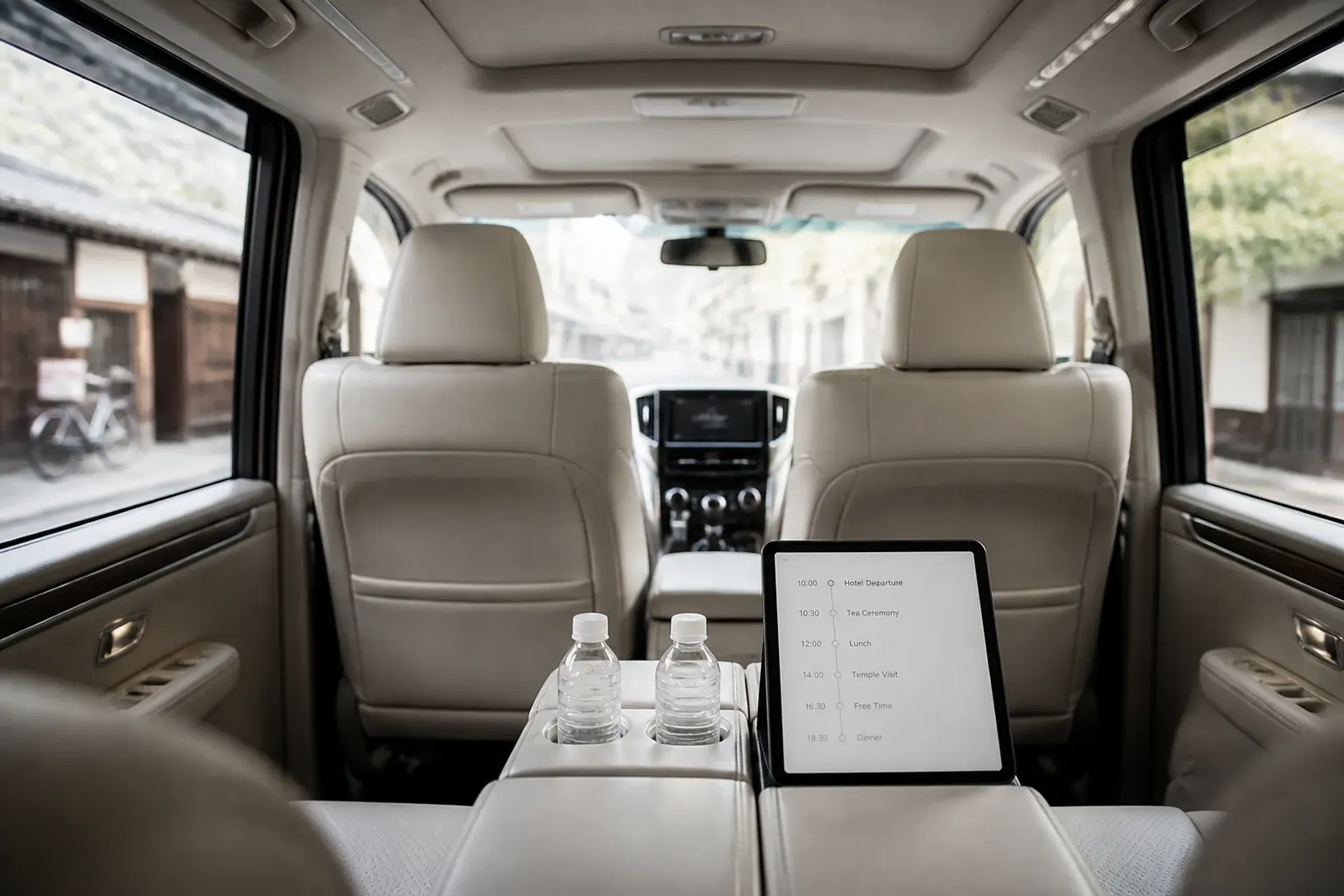
Clear communication and calm pacing: what an English-speaking chauffeur day is meant to feel like.
Is Kyoto friendly for English-speaking taxi or chauffeur needs? Kyoto’s official destination site describes the “Foreign Friendly TAXI System,” which includes larger vehicles, foreign-language speaking drivers (including English and Chinese), and credit-card payment acceptance. It is a helpful baseline for visitors who want practical clarity.
How do you plan around Kyoto crowds? We reference official public guidance, including the Kyoto Travel Congestion Forecast and published event-day traffic restriction notices, then design timing and district order to reduce exposure to peak compression.
Do you provide 24/7 support? For multi-day private journeys, our concierge team supports guests with on-call communication. The goal is calm decision-making when plans shift.
Where do I book a Kyoto chauffeur with Japan Royal Service? Start on our Kyoto chauffeur service page. For how Kyoto hire-car rates are structured and why a pre-booked hire car differs from a taxi, see our Kyoto private chauffeur rates guide.
Why Choose Japan Royal Service
You can find a car in Kyoto. The harder part is choosing a service that protects your time, your privacy, and your legal footing—while still letting Kyoto feel intimate.
Japan Royal Service is built for that narrow target. We plan with discretion as a default, we think in shokunin-grade detail, and we prefer the Kyoto that feels like it was introduced to you, not broadcast to everyone.
For private coordination, reach our team privately via WhatsApp or LINE, or contact us here.