In this guide
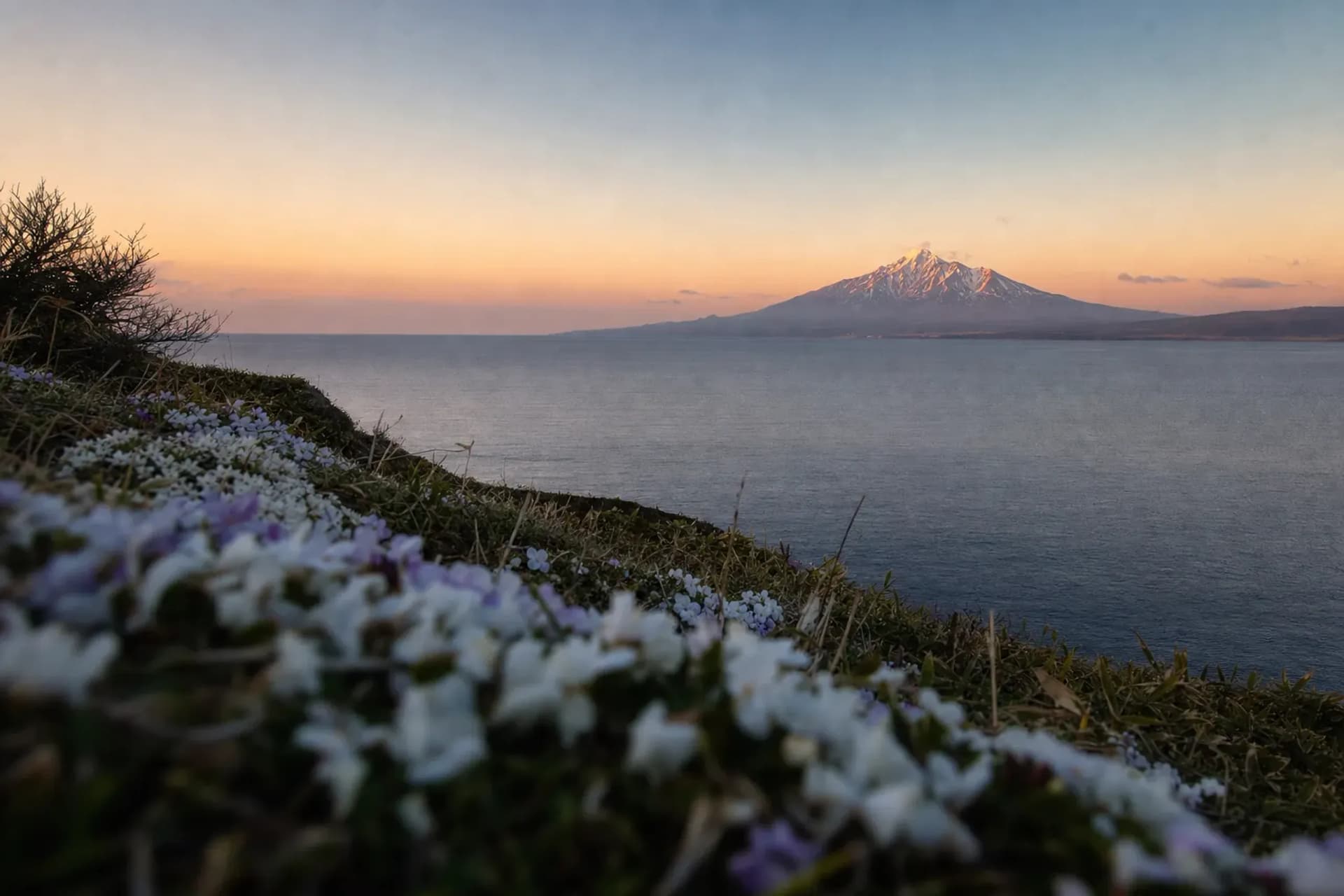
The wind off the Sea of Japan carries a sharp chill, even in early summer. From the deck of the ferry departing Wakkanai, Hokkaido’s northernmost mainland port, the horizon splits into two distinct silhouettes. To the port side, a dramatic volcanic cone rises directly out of the ocean. To the starboard, a lower, rolling green plateau stretches across the water. Ten kilometers apart. Nothing alike.
These are Rishiri and Rebun. They sit side by side in the Rishiri-Rebun-Sarobetsu National Park, yet they offer entirely opposing experiences. One draws serious climbers to a singular, towering peak. The other protects delicate alpine meadows where a highly specific orchid opens for just three weeks a year. Our team at Japan Royal Service frequently guides guests to Japan’s extreme north to witness this geological duality firsthand.
Far removed from the golden route of Kyoto and Tokyo, these remote northern outposts represent true, untouched wilderness. The weather dictates the daily rhythm. The seafood is pulled straight from the freezing waters by local fishermen whose families have worked these currents for generations. For travellers seeking the highest tier of the quiet, Hidden Japan, the journey across the strait is essential.
What Is The Difference Between Rishiri And Rebun Islands?
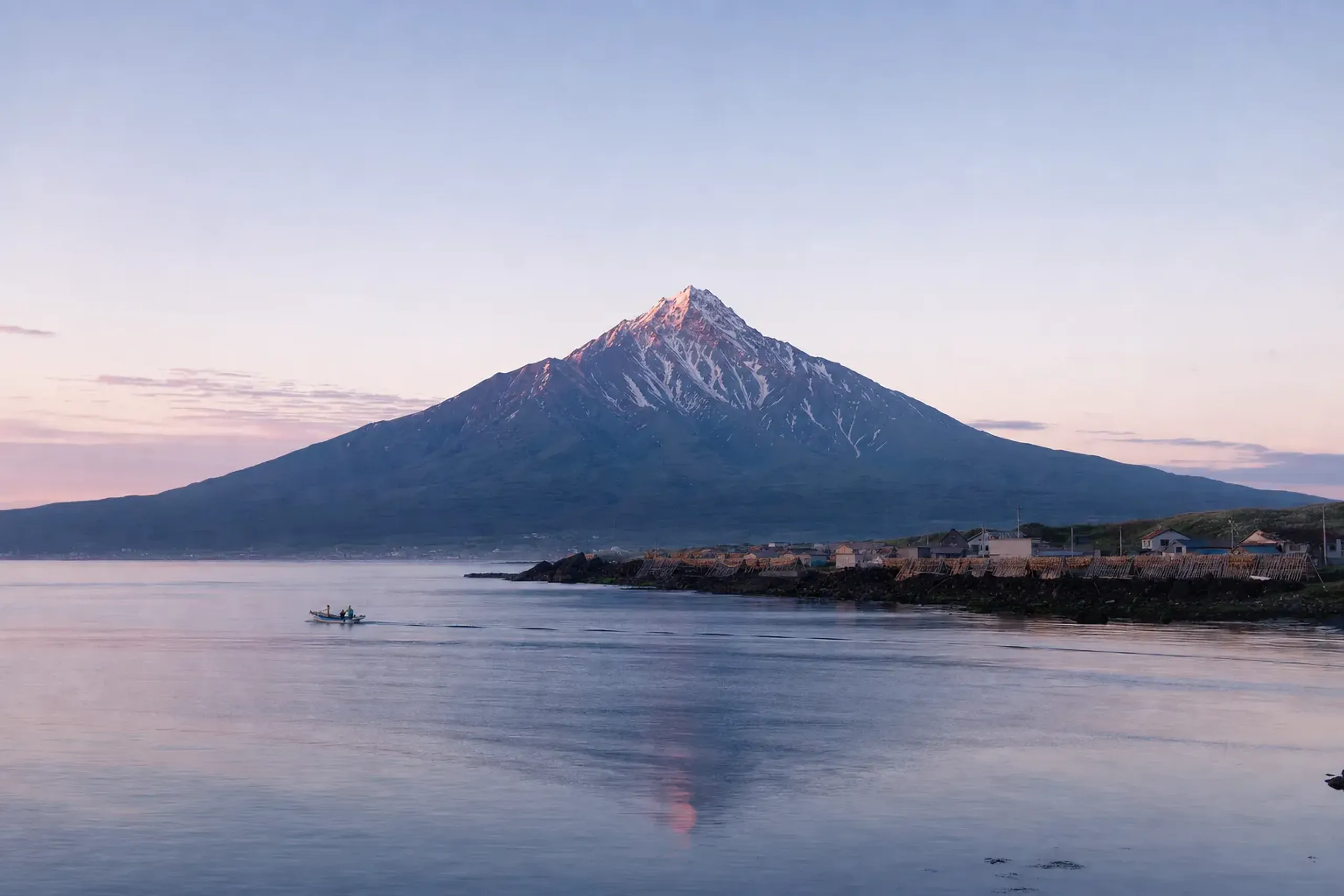
Rishiri is a steep volcanic mountain rising straight from the sea, while Rebun is a comparatively flat island defined by gentle trails and hundreds of rare alpine flowers.
You do not visit them for the same reason.
Rishiri Island is almost entirely dominated by its central volcano, known affectionately as Rishiri-Fuji due to its symmetrical profile. The coastline forms a rough circle around the base of the mountain. Communities hug this rocky perimeter, harvesting premium Rishiri kombu (kelp) and sea urchin. It is a vertical landscape. The entire island looks inward, up toward the crater.
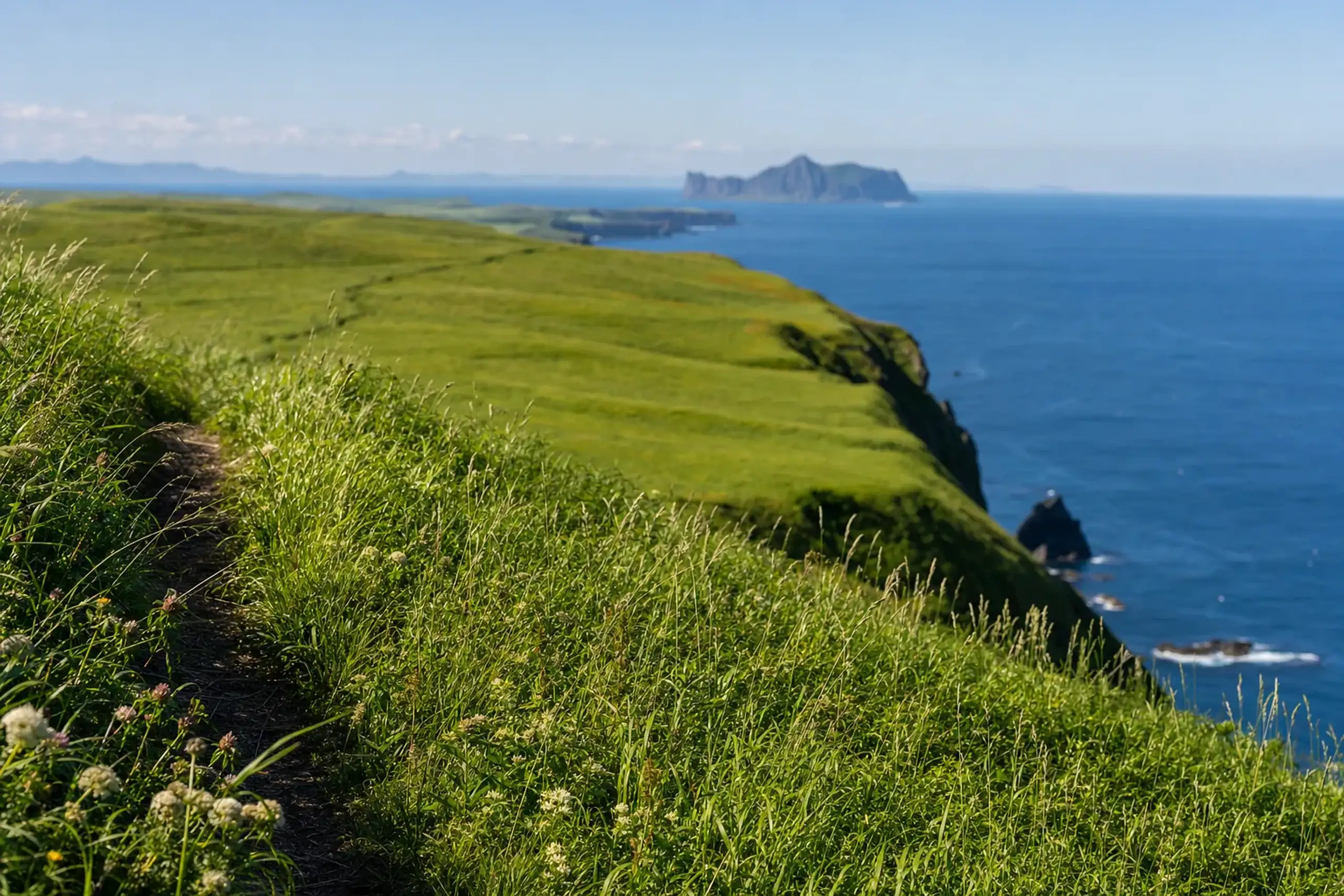
Rebun Island, roughly ten kilometers away, lacks a towering summit. Officially nicknamed Hana no Ukishima (the floating island of flowers), it is a sanctuary for approximately 300 alpine plant species that thrive at sea level due to the extreme northern latitude and frigid ocean winds. Conditions that would normally require a high-altitude hike on the main island of Honshu exist right along Rebun’s coastal paths. It is a horizontal landscape, meant to be walked slowly.
Rebun Island And The Orchid Found Nowhere Else
Rebun is defined by what grows out of its soil. Because of its harsh winter isolation and unique climate, the island supports botanical life that simply does not exist anywhere else.
The most famous of these is the Rebun Atsumorisō. This pale yellow lady's slipper orchid is not just rare. It is an endemic species found absolutely nowhere else on Earth. It blooms within a fiercely narrow window, typically from late May through mid-June. The main colony area is strictly protected and seasonally restricted.
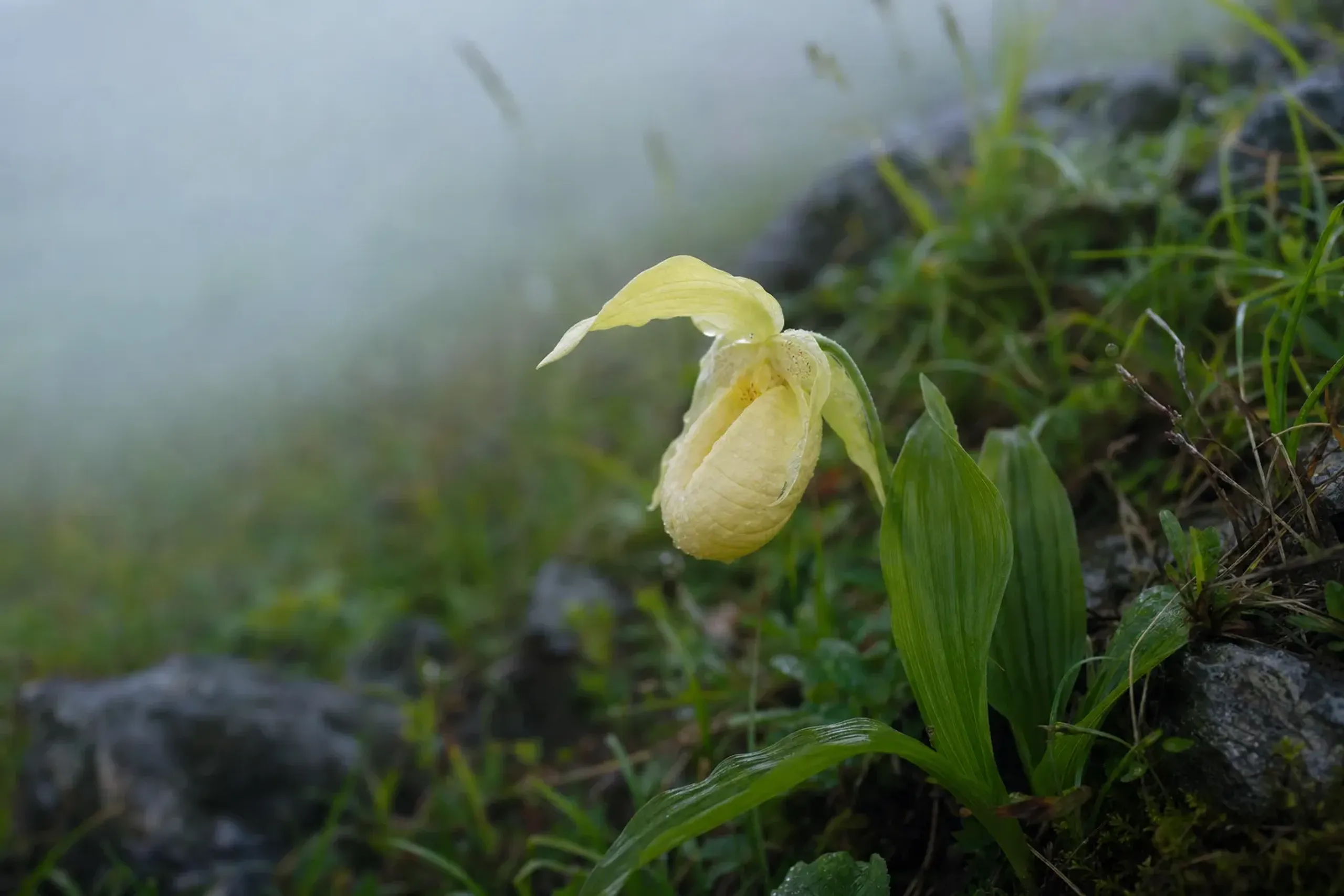
Access requires precise timing. Knowing exactly when to arrive is a matter of profound seasonal sensitivity.
But the bloom calendar is a staged sequence, not a single fixed date. As the Rebun Atsumorisō fades, other flowers emerge. Late June into early July brings the brilliant yellow Rebun Kinbaisō (Rebun globeflower) and the deep pink Rebun Shiogama. The Rebun Usuyukisō, an endemic white edelweiss, also makes its appearance. Widespread alpine species like Miyama Kinpōge dot the hillsides through August.
To view these botanical shifts, the island maintains seven marked trekking courses. For those with limited time, the Momoiwa Observation Deck course condenses Rebun's alpine variety into an efficient route. It spans roughly two kilometers and takes 100 to 120 minutes. Walkers navigate rolling green hills plunging into the blue sea, passing nearly every major floral species the island holds. For guests wanting a gentle ascent, Mount Rebun itself—the island's highest point—is a moderate half-day hike involving 480 meters of elevation gain. Quite the opposite of its imposing neighbor.
Mount Rishiri: The Climbable North Peak
Crucial Height Correction: Casual sources widely cite Mount Rishiri's height as 1,721 metres. This is inaccurate for hikers. That figure represents the South Peak, which is strictly closed due to severe rock collapse and erosion. The actual summit reached by climbers—where the triangulation point sits—is the North Peak at exactly 1,719 metres.
Rishiri Island demands physical endurance.
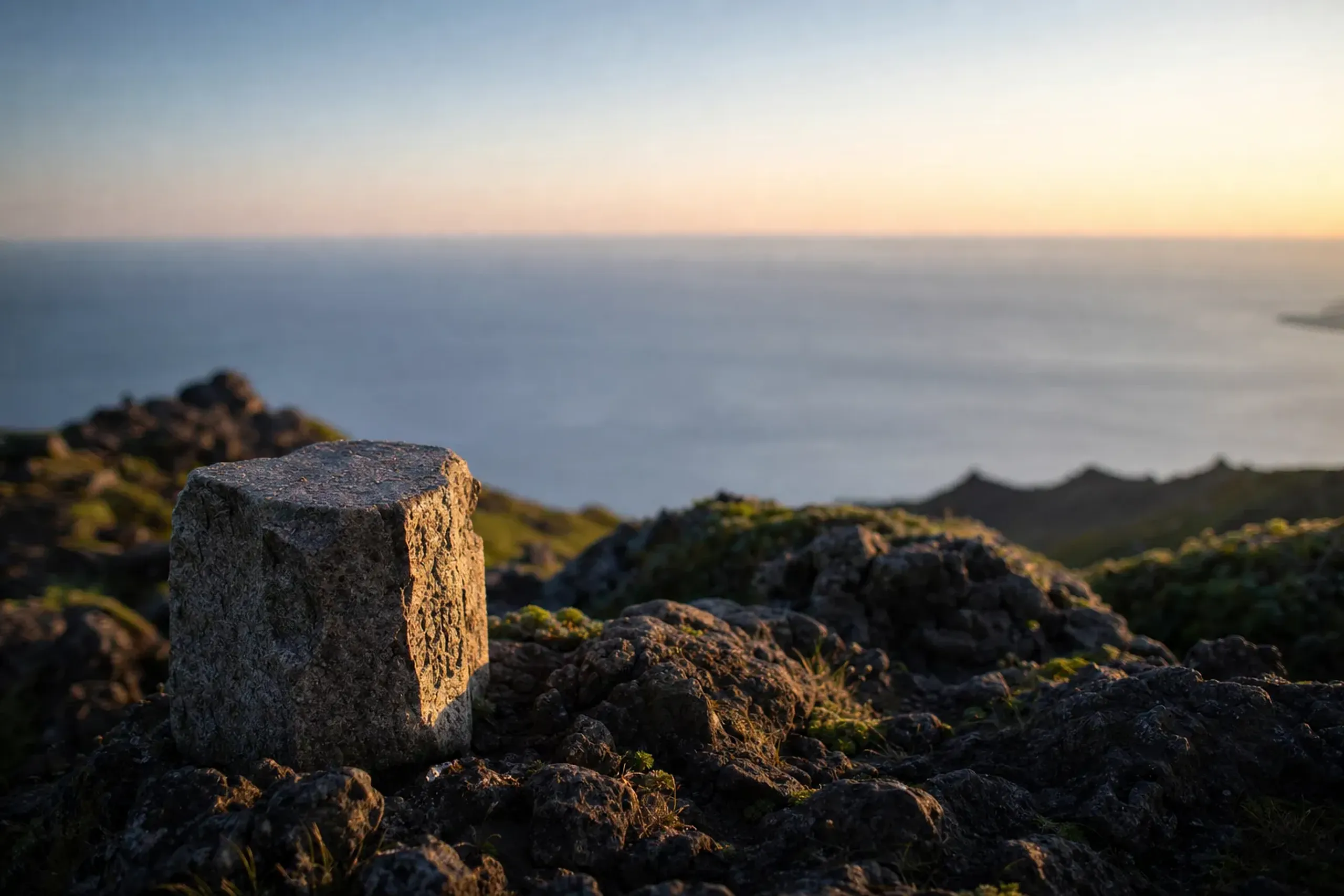
The mountain derives its name from the Ainu phrase Ri-shiri, translating to "high island." It earns the title. Even as a single-day climb, the round trip takes over ten hours. Hikers face roughly 1,500 meters of relentless elevation gain. It is a genuinely punishing ascent, requiring proper gear and an early morning start.
Yet the sensory rewards are immense. From the upper slopes, you can look down and see the curvature of the sea. Because the mountain rises directly out of open water, climbers standing near the summit can often hear the deep, echoing horns of the Wakkanai ferries maneuvering in the ports below. It is a surreal acoustic detail.
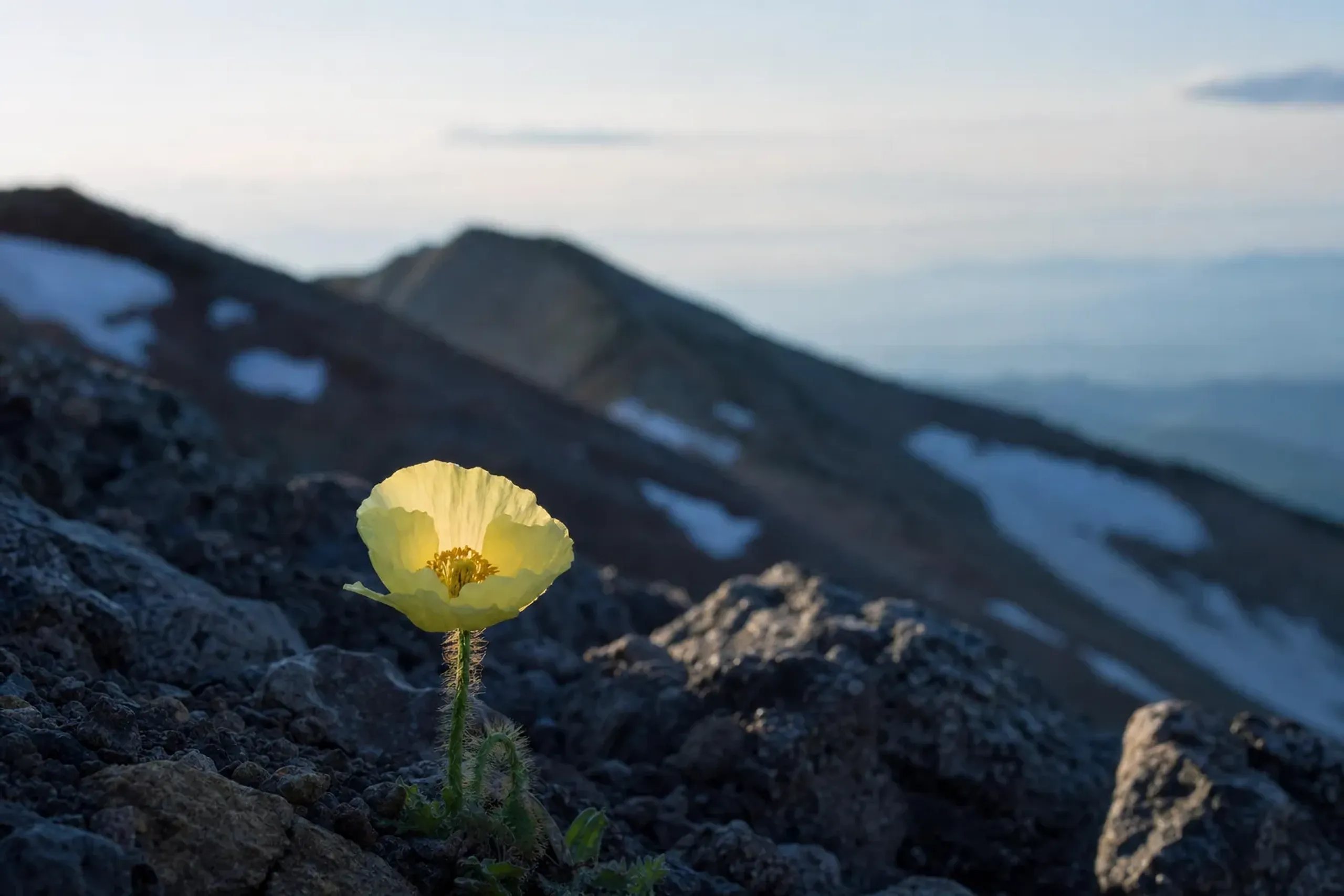
The upper reaches of the mountain also host their own exclusive flora, such as the endemic Rishiri Poppy (Rishiri hinageshi). These summit flowers peak slightly later than Rebun’s sea-level blooms, typically showing from late June through early August.
For visitors who prefer not to tackle the ten-hour climb, the lower Fujino-sono meadow offers a stunning alternative. Here, native Ezo-kanzō daylilies turn the lower slopes bright orange from late June into early July, providing spectacular views of the peak without the physical toll.
How Do You Travel To Rishiri And Rebun Islands?
You travel to both islands primarily via the Heartland Ferry terminal in Wakkanai, Hokkaido, though direct flights to Rishiri Airport are available from Sapporo and Tokyo.

Navigating the far north requires logistical precision. Weather systems over the Sea of Japan are volatile. Ferry crossings can be rough, and schedules shift based on maritime conditions. To secure a tailor-made itinerary, buffer days must be built into the schedule to account for sudden weather disruptions.
Option A: The Maritime Route (Heartland Ferry)
- Depart from Wakkanai port on the Hokkaido mainland.
- The crossing to either Rishiri or Rebun takes roughly two hours.
- A direct inter-island ferry connects Rishiri and Rebun in roughly 45 minutes, allowing travelers to move between the two destinations without returning to the mainland.
Option B: The Air Route (Rishiri Airport)
- Direct domestic flights operate seasonally from Sapporo (New Chitose or Okadama) and Tokyo (Haneda) directly to Rishiri Island.
- This bypasses the long overland journey to Wakkanai but is heavily subject to wind and fog cancellations.
When you book with us, Japan Royal Service arranges all on-the-ground private guiding and transfers. Our concierge team constantly monitors official ferry timetables, Ministry of the Environment trail notices, and weather patterns. If a ferry is grounded, we pivot the itinerary quietly and efficiently behind the scenes. Guests simply step off their private transportation at the pier, knowing the details are entirely handled.
The Jōmon Ancestors Of Rebun Island
Beyond its botanical wealth, Rebun Island holds profound historical significance. It is home to the Funadomari archaeological site, a major excavation area from the Jōmon period.
Researchers uncovered human remains here dating back roughly 3,500 to 3,800 years. This wasn't merely a local curiosity. Genetic analysis of a skeleton found at Funadomari provided crucial scientific evidence confirming Y-DNA Haplogroup D1b as an authentic, distinct Jōmon lineage. It verified deep ancestral ties that reshaped how historians view prehistoric migrations in the Japanese archipelago.
Standing on the wind-swept northern coast of Rebun, looking out over the same waters those ancient communities fished for survival, adds a staggering layer of temporal depth to the journey. The island is not just a scenic park. It is a vault of human history.
For travelers interested in Japan's coastal heritage, similar deep historical roots can be traced in southern port towns, a topic we explore further when crafting a private day ashore in regions defined by maritime trade.
Frequently Asked Questions
When is the best time to see the rare Rebun Atsumorisō orchid?
The Rebun Atsumorisō orchid blooms strictly from late May through mid-June. Outside this incredibly narrow window, the protected colony is closed to visitors, though other beautiful alpine species continue to bloom across the island through August.
Is Mount Rishiri a difficult mountain to climb?
Yes. The round trip to the North Peak takes over ten hours and involves roughly 1,500 meters of elevation gain. It is a highly demanding single-day hike that requires excellent physical condition, proper alpine boots, and early morning departure.
Can you visit both Rishiri and Rebun in a single day?
No. Given the specific ferry schedules and the massive scale of the trekking and botanical sites on each island, you must dedicate at least one full day to each destination to experience them properly.
Does Japan Royal Service arrange ferry tickets and guided hikes?
Yes. Japan Royal Service arranges private guiding, vehicle transfers, and complex regional logistics across Hokkaido, though third-party maritime operators like Heartland Ferry ultimately control their own vessel schedules and boarding procedures.
Why Choose Japan Royal Service
Exploring Japan’s extreme northern islands requires more than just a map. It demands access to local knowledge, an understanding of volatile maritime weather, and a commitment to absolute discretion. Our team at Japan Royal Service ensures that high-net-worth travelers experience the untamed beauty of Rishiri and Rebun without the logistical friction usually associated with remote travel.
We partner with local shokunin—master fishermen, kelp harvesters, and veteran mountain guides—to provide private, culturally rich encounters that standard tours cannot reach. From securing exclusive access to seasonal dining featuring the region's world-class sea urchin, to actively buffering your itinerary against unexpected ferry delays, we protect your time and privacy at every step.
Reach our team privately via WhatsApp or LINE, or contact us here, to start planning your dream journey.