In this guide
- 01Why Does Sado Island Feel Like Two Different Cherry Blossom Trips In April?
- 02Sado Gold Mine In April: Lantern Light On Four Centuries
- 03Mano Park In April: A Broad Bloom With An Exile's Shadow
- 04How Do You Get To Sado Island And Move Around Without A Railway?
- 05What Does Japan Royal Service Coordinate For A Sado April Trip?
- 06A Two-Scene April Itinerary: Choose Your Primary Mood First
- 07Planning Notes For HNW Travelers: What Others Often Miss
- 08Let Us Shape Your Sado April
On Sado in early April, the air can still taste faintly of the Sea of Japan—cold, clean, a little metallic. Then you turn a corner and see it: pale blossoms hanging above mine walls that have watched four centuries pass. No crowds pressing your shoulder. Just lantern light, stone, and the quiet thud of history settling into place.
Most travelers come to Niigata for one spring headline and move on. Sado doesn't cooperate. It offers two April scenes that feel like different countries: one industrial and UNESCO-coded, the other parkland and imperial in its long memory.
This guide stays on that narrow ridge. Sado Gold Mine. Mano Park. Two choices. One island.
Why Does Sado Island Feel Like Two Different Cherry Blossom Trips In April?
Sado offers two distinct April blossom settings: illuminated cherry trees against 400-year mining ruins at Sado Gold Mine, and a wide park bloom centered on Mano Shrine and Emperor Juntoku's exile.
These are not variations on a theme. They change how you walk, what you listen for, and what you photograph.
At the mine, the blossoms read as contrast—petals against timber, stone, and the sharp geometry of extraction. At Mano Park, the blossoms read as scale: long paths, many trees, and a historical anchor that gives the park weight beyond mere prettiness.
We encourage clients to choose a primary mood first. Then we shape the day around it, because Sado's distances can surprise even seasoned Japan travelers.
Sado Gold Mine In April: Lantern Light On Four Centuries
Sado Gold Mine (Sado Kinzan) opened in 1601 and operated until 1989, giving Sado nearly 400 years of continuous mining history to stand beneath in spring.
In 2024, the "Sado Island Gold Mines" were inscribed as a UNESCO World Heritage site—a serial property comprising the Nishimikawa placer gold mine and the Aikawa-Tsurushi gold and silver mine complex. That designation matters in practice. It signals that you are looking at a place held to global scrutiny, not a theme-park reconstruction.
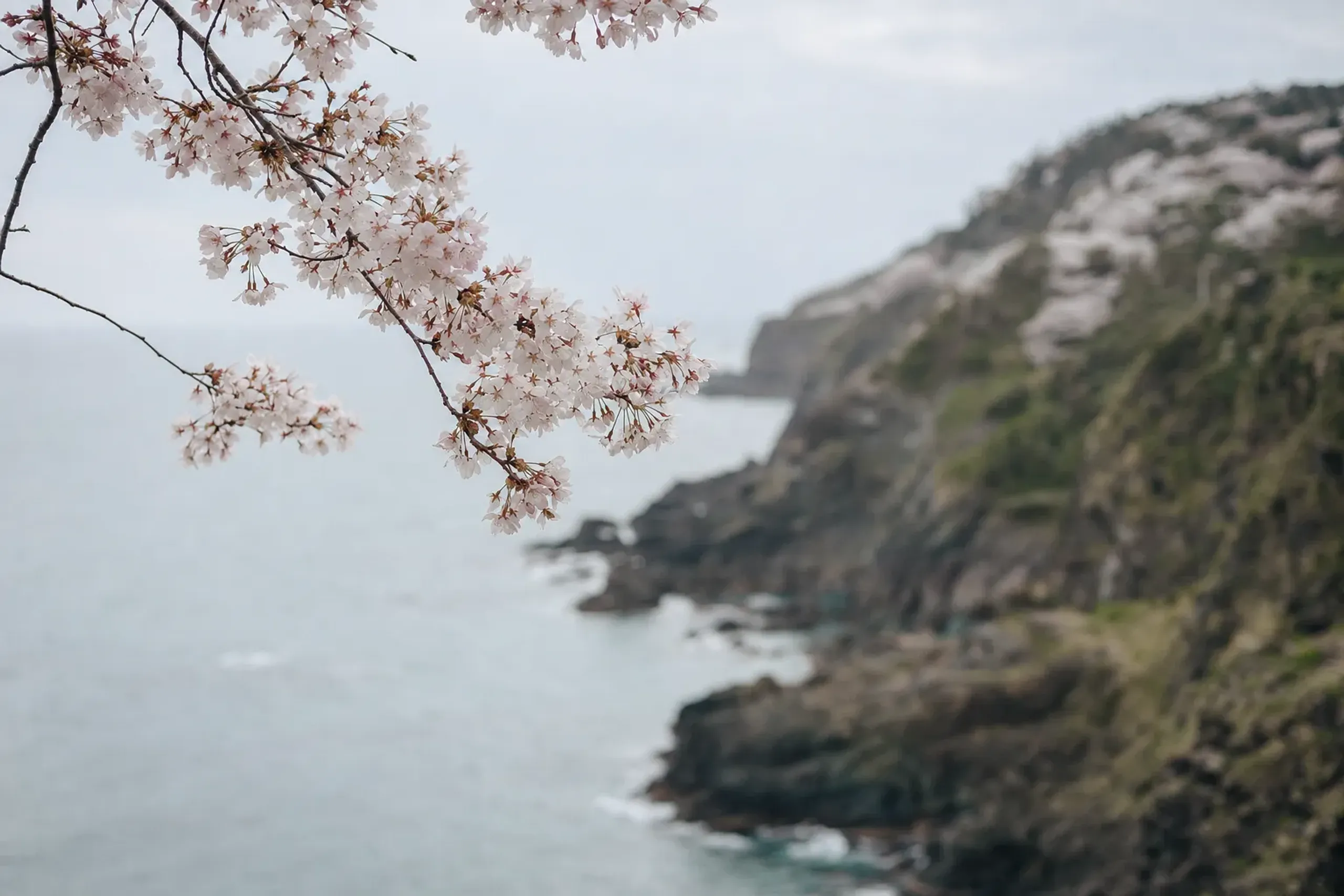
April is when the mine's hard surfaces soften. Cherry branches edge the old structures. The evening illumination—typically scheduled for a limited window—turns the scene into something Sado locals describe as possible only here, in this restrained interplay of blossom and worked stone that carries the quiet aesthetic of wabi at its heart.
The Strongest Image: Dōyū No Warato
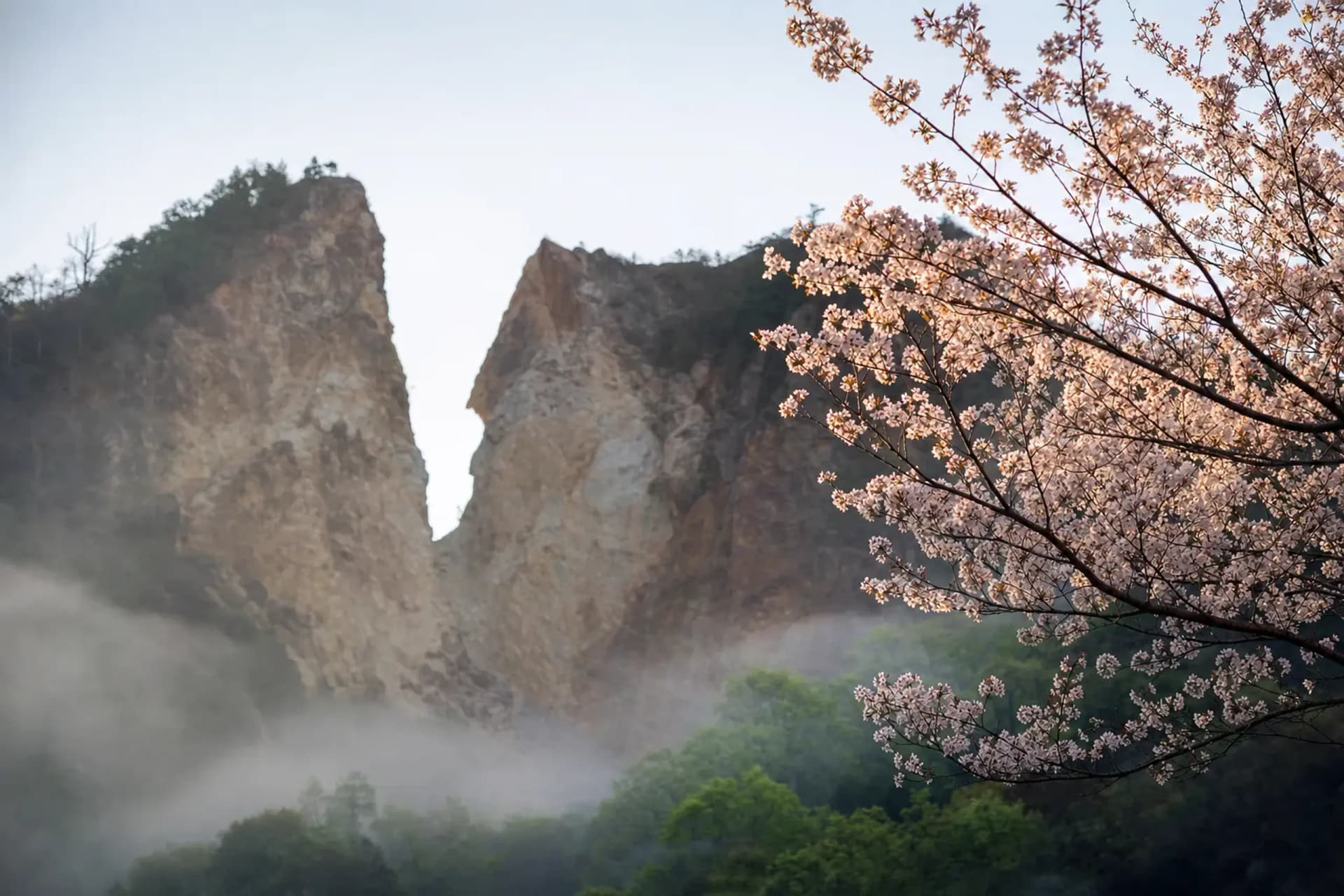
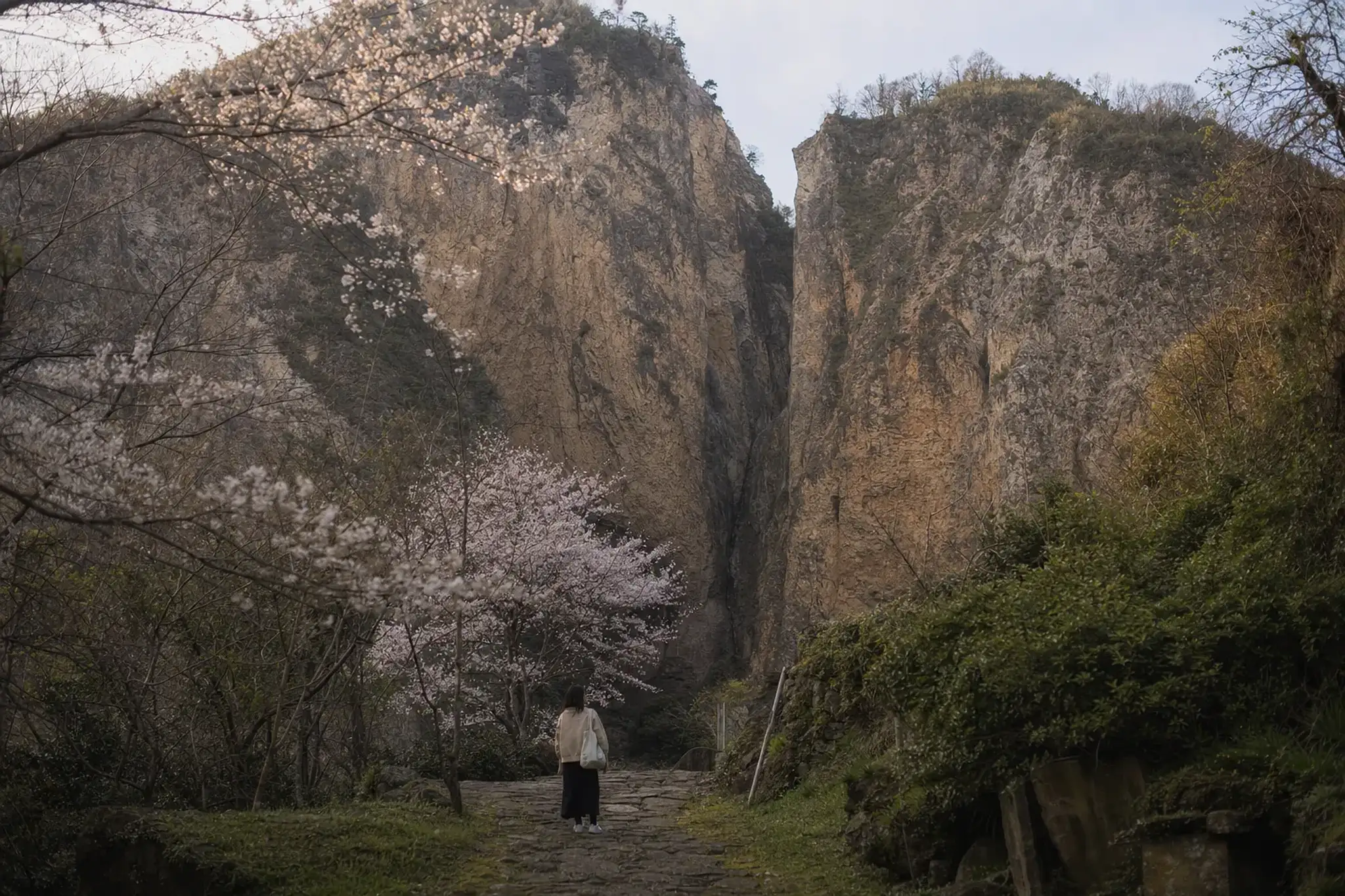
Dōyū no Warato—the mountain split open by mining—is the mine's visual symbol, and it is the frame most travelers remember long after they leave Sado.
In daylight, it reads as raw geology cut by human intention. After dusk, if the illumination is running, the silhouette becomes stage-like. Petals in the foreground. The dark cut of rock behind them. It is an oddly modern composition for a place that began in the Edo period.
We suggest arriving with enough margin to walk slowly, photograph without rushing, and still enter a tunnel course before the last access times.
Which Visitor Course Fits Your Party? Sōdayū Pit Vs Dōyū Pit
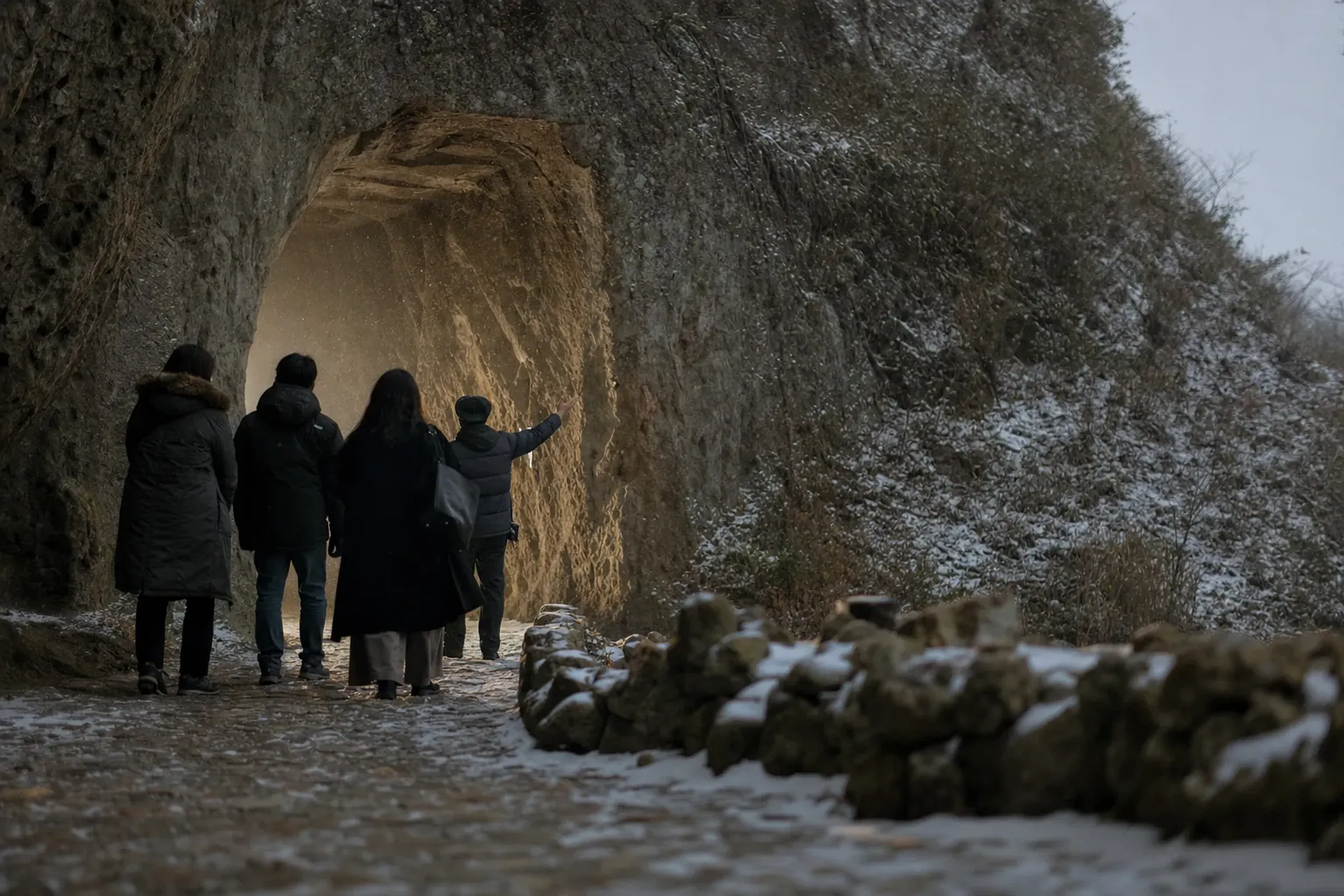
Sado Gold Mine offers two main visitor courses, and the difference between them is not subtle.
Option A: Sōdayū Pit (Edo-Period Hand-Dug Tunnel)
This is the older, narrower experience: an Edo-period tunnel dug by hand, with wax figures recreating mining scenes drawn from the historical "Sado Gold Mine Picture Scroll."
- Accessibility: Expect 190 steps and no wheelchair access. It is dark and tight.
- Feel: Intimate and physical. You sense the scale of labor in your legs.
- Best for: Adults and older teens who want the Edo-era atmosphere, not just the headline photo.
Option B: Dōyū Pit (Meiji-Era Mechanized Tunnel)
This course reflects Japan's modernization era, with mechanization and industrial remains. Trolley cars and factory elements shift the mood from "handwork" to systems.
- Accessibility: There are about 30 steps at the end; wheelchair users typically need to turn back partway.
- Key view: Close-up access toward Dōyū no Warato is the payoff.
- Timing note: The path nearest Dōyū no Warato closes at 16:30 (and 16:00 in winter).
Key fact: If anyone in your party has mobility constraints, plan around the Sōdayū pit's 190 steps and the Dōyū pit's partial wheelchair access.
The World Heritage Guided Tour: What To Know Before You Plan
A guided World Heritage tour is offered for groups of 10 or more with advance reservation, and it can cover places such as the Kitazawa flotation plant ruins, the Ōdate vertical shaft, and old mining town streets.
For couples, solo travelers, or small families, that group threshold is the constraint. It is not a flaw. It simply means your best day on Sado may be built around the standard visitor courses, plus unhurried time on the grounds when the light turns kind.
This is precisely where a privately arranged approach earns its keep. Our team at Japan Royal Service can advise on pacing, access realities, and how to weave the mine together with a second April scene without turning the day into a sprint—the kind of quiet, anticipatory care that removes friction before you notice it.
When The Blossom Light-Up Runs At Sado Gold Mine
The mine's cherry blossom illumination has been scheduled locally as April 3–19 in recent information. These dates and hours are set annually and must be confirmed before travel.
Plan your day as if you might need to pivot. It is a costly mistake to assume spring schedules stay fixed—this is where knowing precisely what to experience, where, and in which week becomes the difference between a good evening and an unforgettable one.
In our experience, the most satisfying evenings begin earlier than you would think. You want time for dusk—that fleeting moment when stone and blossom share the same color temperature—before full darkness arrives.
How Long To Budget On Site
Give the mine space. Two to three hours is a practical baseline for the visitor courses and the main photo points, and longer if you want a slower walk and a calm meal afterward.
Also keep the island reality in mind: Sado's total tunnel length is said to run about 400 km across the system, and the story is layered. You won't "finish" it in one stop. That's fine.
Mano Park In April: A Broad Bloom With An Exile's Shadow
Mano Park is Sado's largest cherry blossom site, with roughly 2,000 cherry trees, and it feels as though the island exhales here.
This is the more conventional spring park scene—paths, families, picnic rhythms—yet it is not generic. The park centers on Mano Shrine, built on the site of Emperor Juntoku's residence during his exile to Sado after the Jōkyū War in 1221.
He spent 22 years on the island. That fact changes the tone. You are not only looking at blossoms; you are standing inside a long sentence of Japanese political memory—the kind of imperial resonance that most cherry-viewing parks simply cannot claim.
Mano Shrine And Emperor Juntoku: The Historical Anchor
Many blossom parks in Japan are pure aesthetics. Mano Park carries narrative weight.
We suggest walking to the shrine first, before you let the trees take over your attention. Read the place, then enjoy the bloom. It is a small adjustment that makes the visit feel less like a checklist and more like an encounter.
One more quiet detail: Sado's history as an exile island—linked with figures such as Juntoku, later the Noh master Zeami, and the priest Nichiren—is one reason Sado holds more Noh stages than the rest of Japan combined.
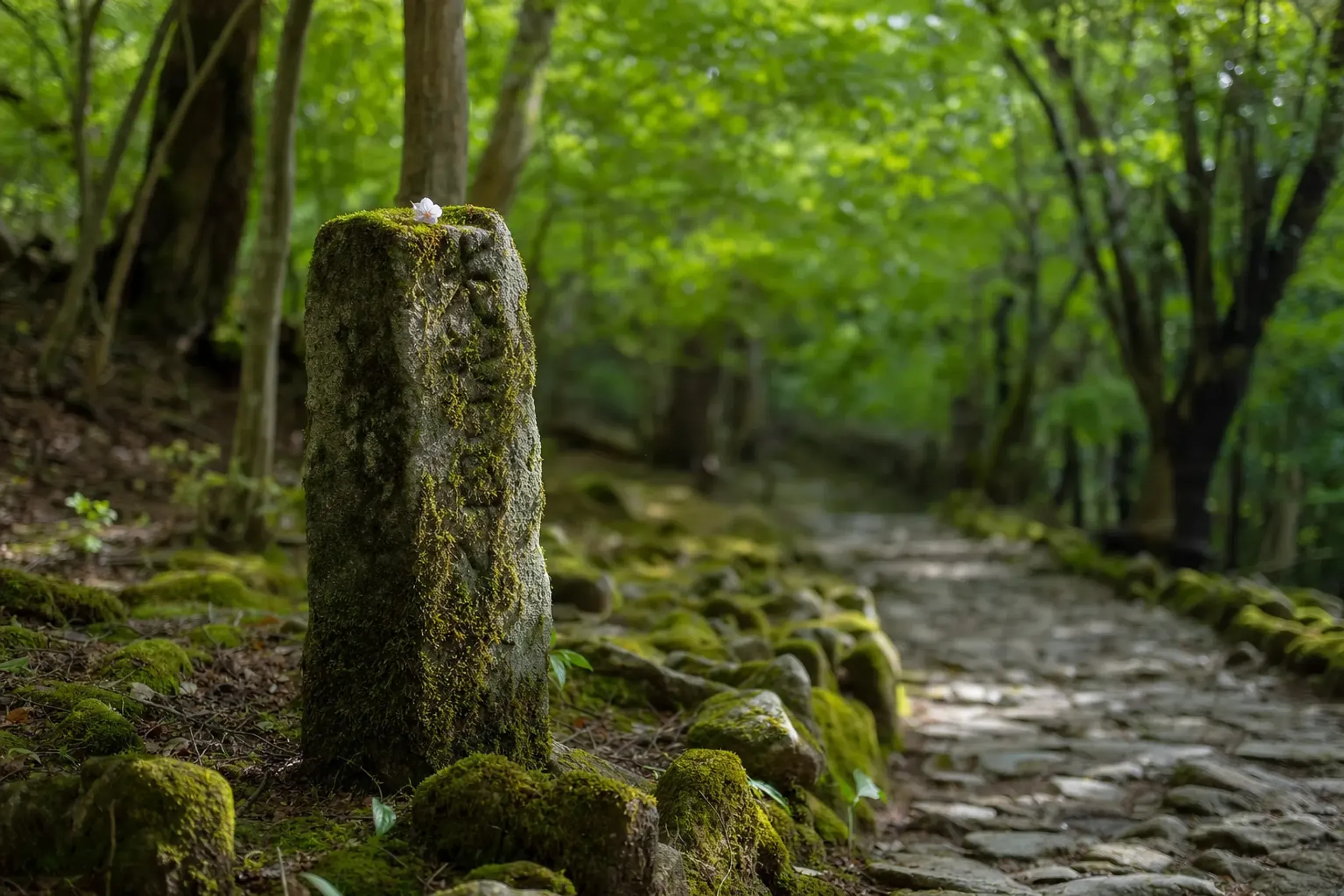
One line is enough. The island keeps its secrets—and, through the right introduction, occasionally shares one.
Illumination And Mano Sakura Matsuri: What JRS Confirms Each Year
Mano Park typically holds evening illumination during peak bloom, and the Mano Sakura Matsuri is a two-day festival with a performing arts stage and stalls.
Hours and dates vary by year, and sources can conflict. Do not gamble on it. If your trip hinges on the festival atmosphere, JRS will confirm the current year's schedule close to your departure.
When the timing aligns, Mano Park offers a different kind of evening than the mine: softer, more communal, less dramatic. Still very much Sado.
How Long To Stay And How To Keep It Calm
Mano Park rewards an unhurried hour. Two, if you want to sit and watch families arrive as the light changes.
We often suggest visiting in a shoulder time—late afternoon into early evening—so you can see the park in natural light, then decide whether the illumination is worth staying for. The goal is simple: no clock-watching.
How Do You Get To Sado Island And Move Around Without A Railway?
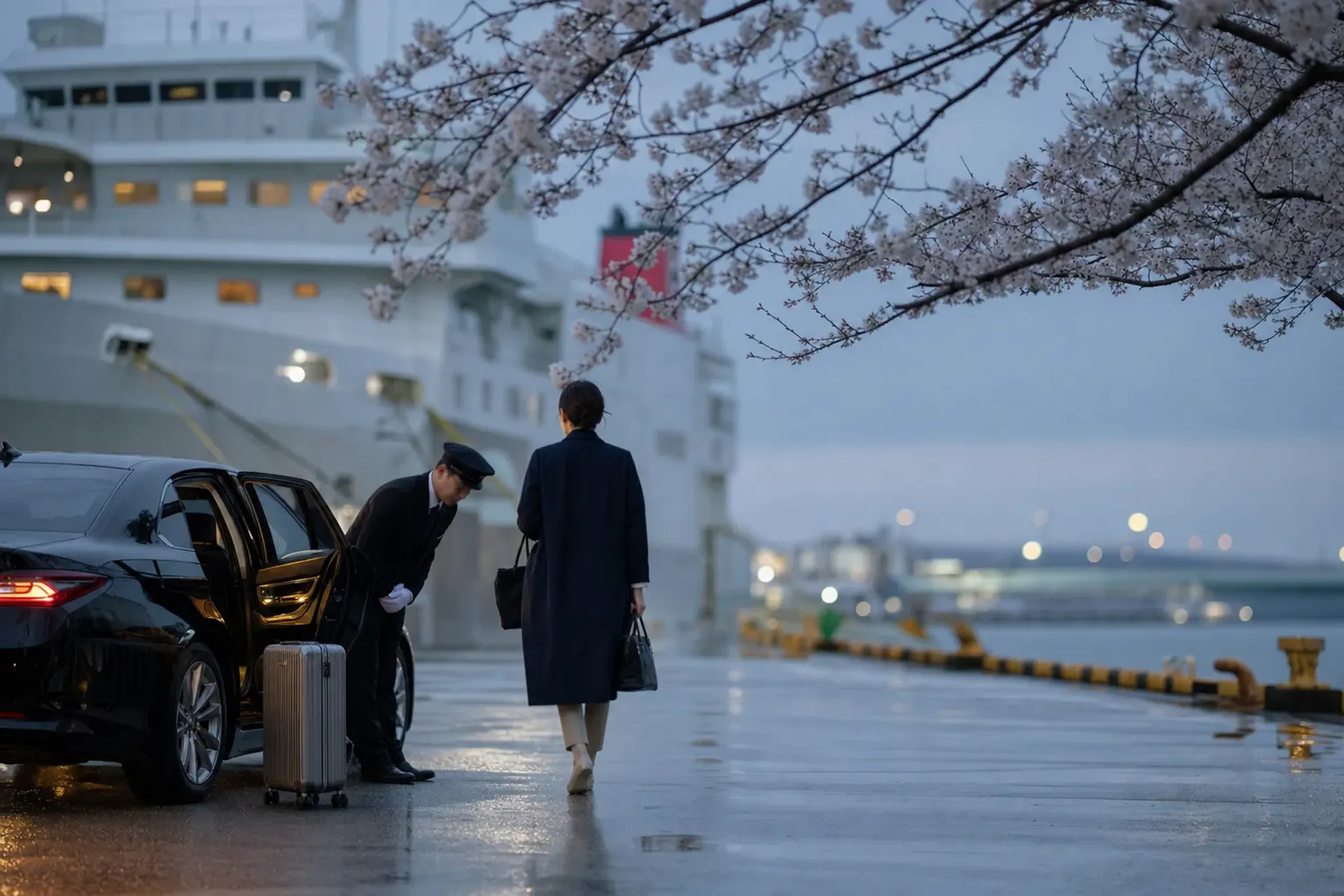
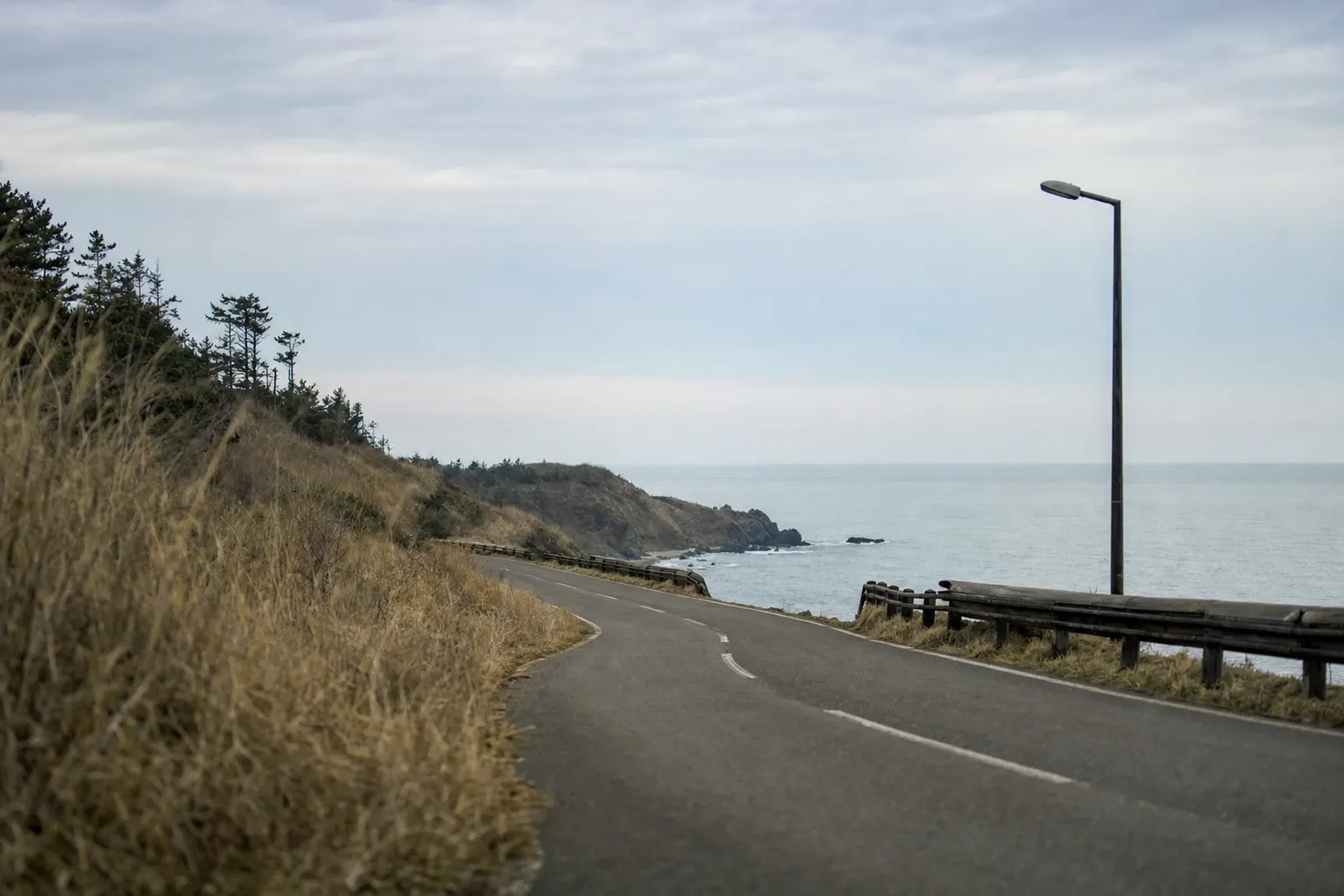
You reach Sado by ferry from Niigata on mainland Honshu, and on the island you travel by car or bus because there is no railway.
This is the practical hinge of the whole trip.
Sado is roughly 1.5 times the area of Tokyo's 23 wards, and driving times can feel longer than the map suggests.
Ferry access is typically via Niigata Port to Ryōtsu Port, and also via Naoetsu (Jōetsu) Port depending on season and route operations. Schedules and crossing times change seasonally, so check the current timetables before you lock your day-by-day plan.
Key fact: On Sado, transport takes longer than visitors expect—build margin into every April day, especially if you want both the mine and Mano Park.
Driving Times On Sado (Port-To-Site Baselines)
These are useful reference points when you sketch your day.
- Ryōtsu Port → Sado Gold Mine (Aikawa area): about 50 minutes by car
- Ogi Port → Sado Gold Mine: about 55 minutes by car
- Ryōtsu Port → Mano Park: about 30 minutes by car
- Ogi Port → Mano Park: about 40 minutes by car
- Akadomari Port → Mano Park: about 35 minutes by car
They are not extreme numbers. But they stack. Add stops, weather, and a late-afternoon light-up, and the day can quietly slip away from you.
What Does Japan Royal Service Coordinate For A Sado April Trip?
Japan Royal Service supports Sado travel by coordinating accommodation, guiding, and transfers—including ferry planning—because the island has no railway and ground transport takes longer than many visitors expect.
We keep this part plain on purpose.
Sado is not difficult, but it is easy to underestimate.
For transfers, that often means matching ferry arrival times with a chauffeur-driven day flow and choosing the right vehicle for your party size and luggage profile. The first mention matters here: our clients often rely on private transportation to protect time, reduce friction, and keep the day quiet. When we build a bespoke itinerary for Sado, that ground logistic is the spine everything else hangs from.
For the on-the-ground experience, guiding is not merely about language. It is about reading context—where to pause, what not to miss, and how to keep a World Heritage site from becoming a rush job. If you are weighing whether a cultural interpreter changes the feel of a heritage visit, our perspective is laid out here: What a Cultural Interpreter Actually Changes.
A Two-Scene April Itinerary: Choose Your Primary Mood First
Sado works best when you decide which scene you want to carry in your mind at the end of the day.
Option A: Mine-First (UNESCO Drama, Dusk Illumination)
This is for travelers who want the island's most singular image: cherry blossoms set against the mine's architecture and the cut of Dōyū no Warato.
- Arrive on Sado with enough buffer to reach Aikawa without rushing.
- Walk the grounds first for daylight photos, then choose a tunnel course based on mobility needs.
- Stay through dusk if illumination is running, then leave with time for a calm dinner.
Option B: Park-First (Scale, Shrine, A Softer Evening)
This suits travelers who want to feel spring rather than "chase" it, with the shrine visit giving the blossom viewing an anchored story.
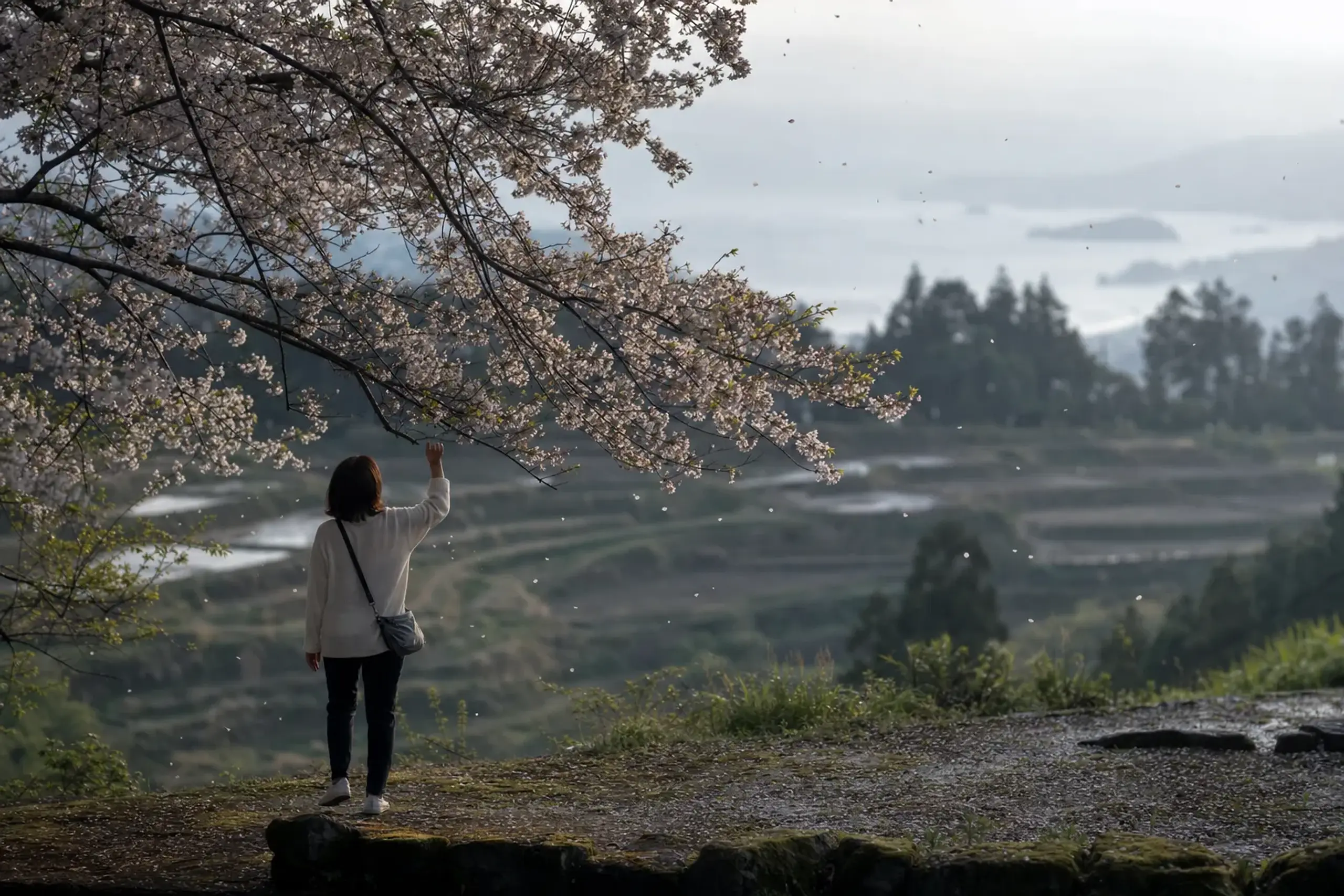
- Start at Mano Shrine while your mind is fresh, then stroll outward into the trees.
- Hold a flexible plan for illumination and festival timing, since hours and dates vary by year.
- Keep the second stop short and intentional; do not try to conquer the island in one day.
Planning Notes For HNW Travelers: What Others Often Miss
If you have traveled Japan well, you already know the "Golden Route" rhythm. Sado asks for a different posture.
Discretion matters on a small island. This is not secrecy theater. It is about avoiding loud logistics and keeping your schedule from becoming public conversation in a place where everyone notices an unfamiliar car. Our concierge team treats identity and itinerary details as zero-leak by default.
Hidden Japan is not a slogan here. Sado is public and open, yet it still delivers the "Google can't tell you how it feels" quality—especially at the mine at dusk, when the light is thin and the walls look almost blue. This is the Japan reached through introduction and quiet arrangement rather than a booking engine.
Shokunin shows up in the texture. Not through staged experiences, but in the craft of preservation—how the tunnels are maintained, how heritage storytelling is presented, how spaces are kept legible without being flattened into spectacle.
Let Us Shape Your Sado April
Two cherry seasons on one island reward the traveler who plans with intention rather than luck. The illumination windows are narrow, the ferry schedules shift with the season, and the distances quietly consume a day if left unmanaged. Getting the timing right—down to the week—is exactly the kind of judgment our team lives for.
Tell us which scene you want to carry home—the blossom against four centuries of worked stone, or the softer evening beneath an exiled emperor's shrine—and we will build the rest around it, discreetly and without a wasted hour. To begin a private, tailor-made proposal for your Sado spring, contact us here.