In this guide
- 01What Sakurajima Is, And Why Summer Feels So Immediate
- 02Is Sakurajima Safe To Visit In Summer With Alert Level 3?
- 03How Do You Take The Sakurajima Ferry From Kagoshima In Summer?
- 04The Summer Island Loop: Viewpoints First, Heat Second
- 05Kurokami Buried Torii And The Lava Shore: The Day’s Quietest Stops
- 06What Is The Sakurajima Island View Bus, And When Does It Help?
- 07Ash In Summer: Forecasts, Wind, And The Small Kit That Saves The Day
- 08Where The Rules Are Posted: Shelters, Signs, And What To Do If You Hear An Alert
- 09One-Line Add-Ons: Sengan-En And The Kagoshima Bay Summer Night Fireworks
- 10How To Plan A Sakurajima Summer Day Step By Step
- 11How Our Concierge Team Plans Sakurajima In Summer
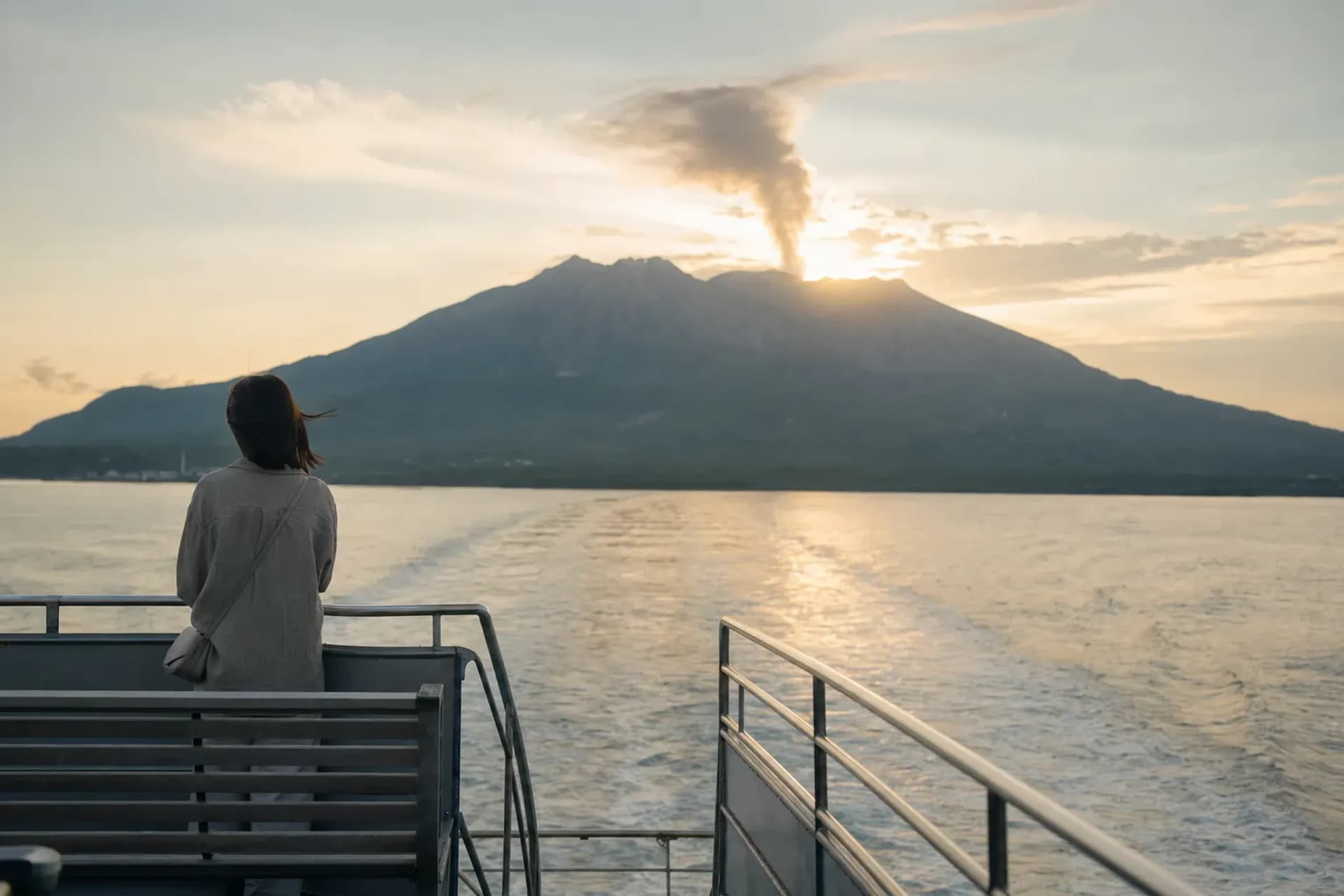
The ferry horn is blunt, almost workmanlike, and then Kagoshima slips backward.
You stand at the rail with a cold drink sweating in your hand. Ahead, across the bay, Sakurajima holds its shape like a charcoal sketch, and the plume—when it shows—leans with the wind. It feels close. It is close.
In summer, the island is less a thrill and more a practice. Rules. Timing. A mask folded into your pocket. You watch from a safe distance, then you walk beside lava that once made headlines and now rests quietly at the water’s edge, cooled into black rock you can almost reach out and touch.
What Sakurajima Is, And Why Summer Feels So Immediate
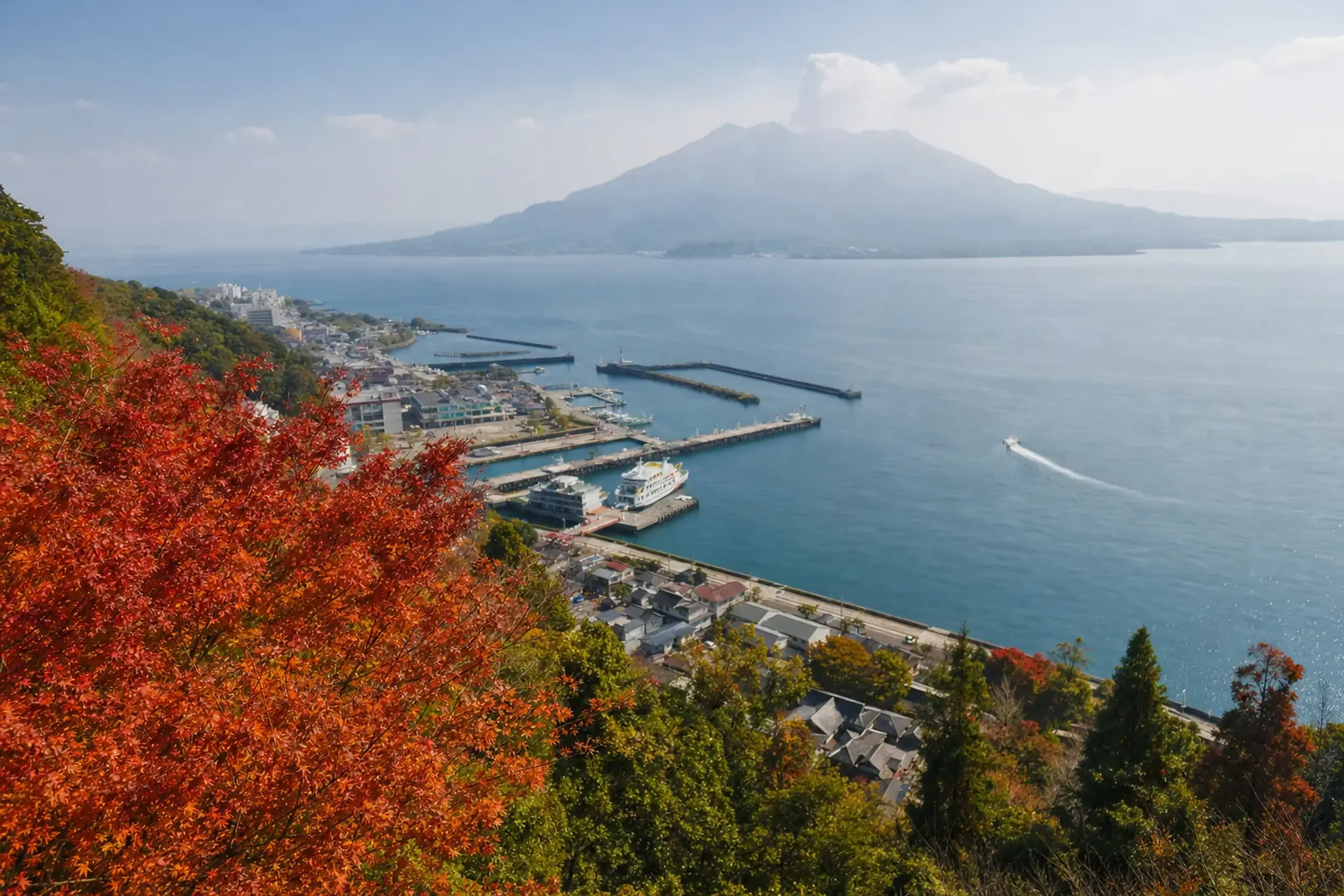
Sakurajima is a highly active volcano across Kagoshima Bay, about 4 km from the center of Kagoshima City.
It was once a true island. The Taisho eruption began on 12 January 1914, and the lava flows that followed connected Sakurajima to the Osumi Peninsula. It is now, technically, a peninsula—though locals and travelers alike still speak of it as an island, and the name carries the memory.
Kitadake is the highest peak, rising about 1,117 m. Most visitors never dwell on the altitude. They remember the scale instead: sea, city, and volcano held together in a single frame.
Summer adds a quiet pressure. Heat and humidity compress the day, and typhoons are possible. But when the sky clears after rain, the profile of the mountain can look etched against the light—sharp, deliberate, almost hand-drawn.
Is Sakurajima Safe To Visit In Summer With Alert Level 3?
Yes—provided you stay outside the restricted area. As of 30 October 2026, Sakurajima remained at JMA Alert Level 3, with entry restricted and the roughly 2 km zone around the key craters closed.
Level 3 matters because it defines what you may and may not do. Kagoshima City states that climbing is banned at Level 3, and the area within about 2 km of the Minamidake summit crater and the Showa crater is closed under the Disaster Countermeasures Basic Act.
Inside that zone, officials warn of genuine hazards—large ballistic blocks and pyroclastic flows among them. This is not a matter of sightseeing etiquette. It is a boundary, and it is absolute.
The practical reassurance is this: the Sakurajima Visitor Center notes that tourist facilities sit at least 2.5 km from the crater, and the classic viewpoints and walking paths you came for all lie outside the restricted zone. Even so, check the Japan Meteorological Agency (JMA) the day before you go. A single glance resets your plan to reality.
Key fact: As of 30 October 2026, the JMA kept Sakurajima at Alert Level 3 (entry restriction), unchanged since 27 July 2022. The area within about 2 km of the Minamidake and Showa craters is off-limits.
How Do You Take The Sakurajima Ferry From Kagoshima In Summer?
The Kagoshima Port–Sakurajima Port ferry takes about 15 minutes each way and runs daily from early morning to late evening, with frequent departures throughout the day.
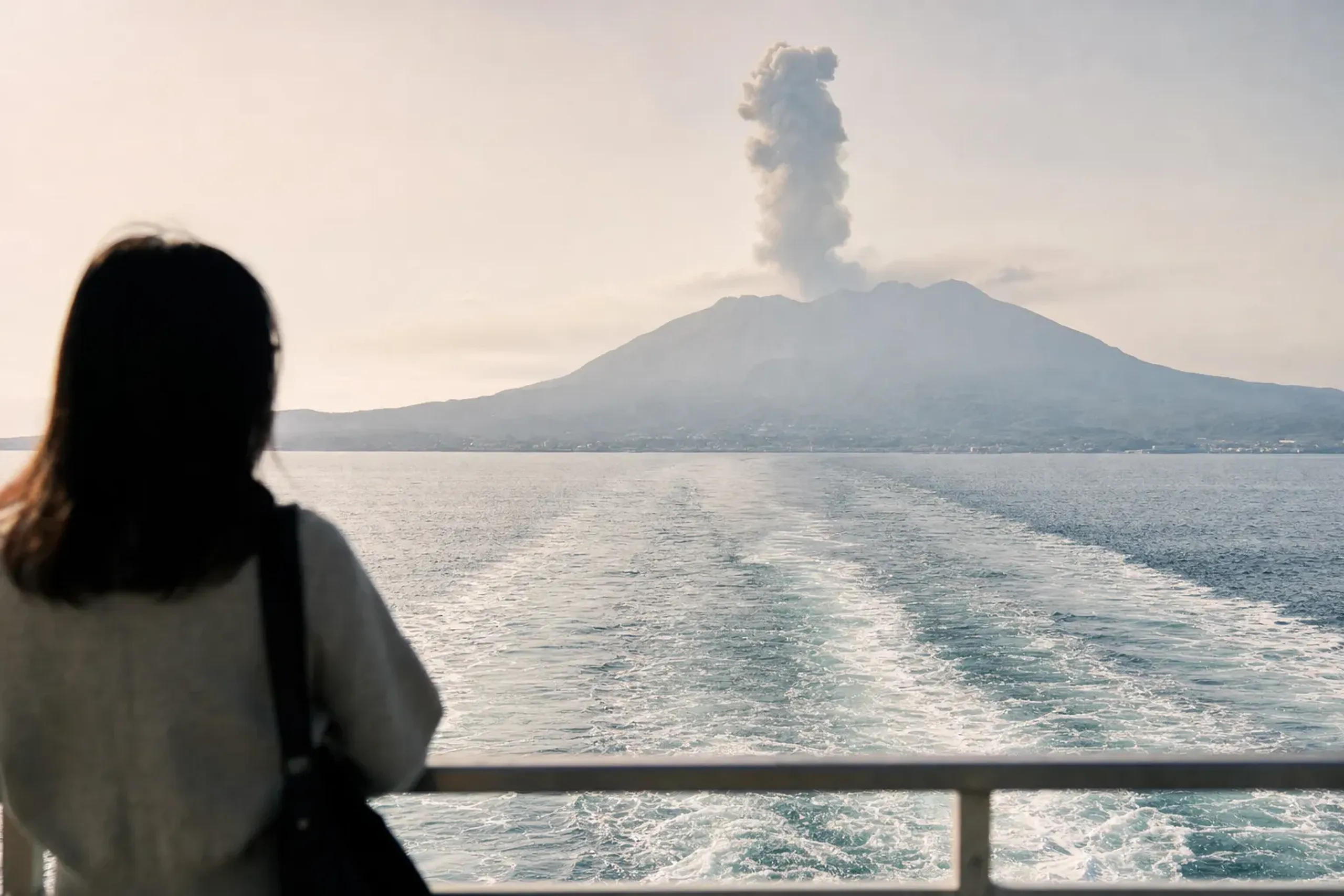
Kagoshima City’s Transportation Bureau describes four ships serving the route. In rough conditions, crossings can stretch to about 20 minutes—a difference you feel in your knees before you see it on a clock.
One update many repeat visitors miss: the 24-hour operation ended on 1 October 2025. If you are planning a long, unhurried summer dinner back in the city after the island loop, plan the crossing with that change in mind.
From Kagoshima-Chuo Station, official visitor guidance lists several straightforward ways to reach the terminal area:
- City bus: about 14 minutes to Suizokukan-mae, then roughly a 1-minute walk
- Streetcar: about 15 minutes to Suizokukan-guchi, then about an 8-minute walk
- Taxi: about 15 minutes
If you are arriving by air, Kagoshima Prefecture tourism guidance describes an airport bus to Kagoshima-Chuo Station taking roughly 40 minutes (about 38 minutes non-stop on some services). Summer traffic and weather can stretch that comfortably. Build in slack and travel the day at your own pace.
The Summer Island Loop: Viewpoints First, Heat Second
The island loop works best when you accept one quiet truth: the “perfect” sequence changes with wind, ash, and cloud. Sakurajima rewards those who read it rather than those who schedule it.
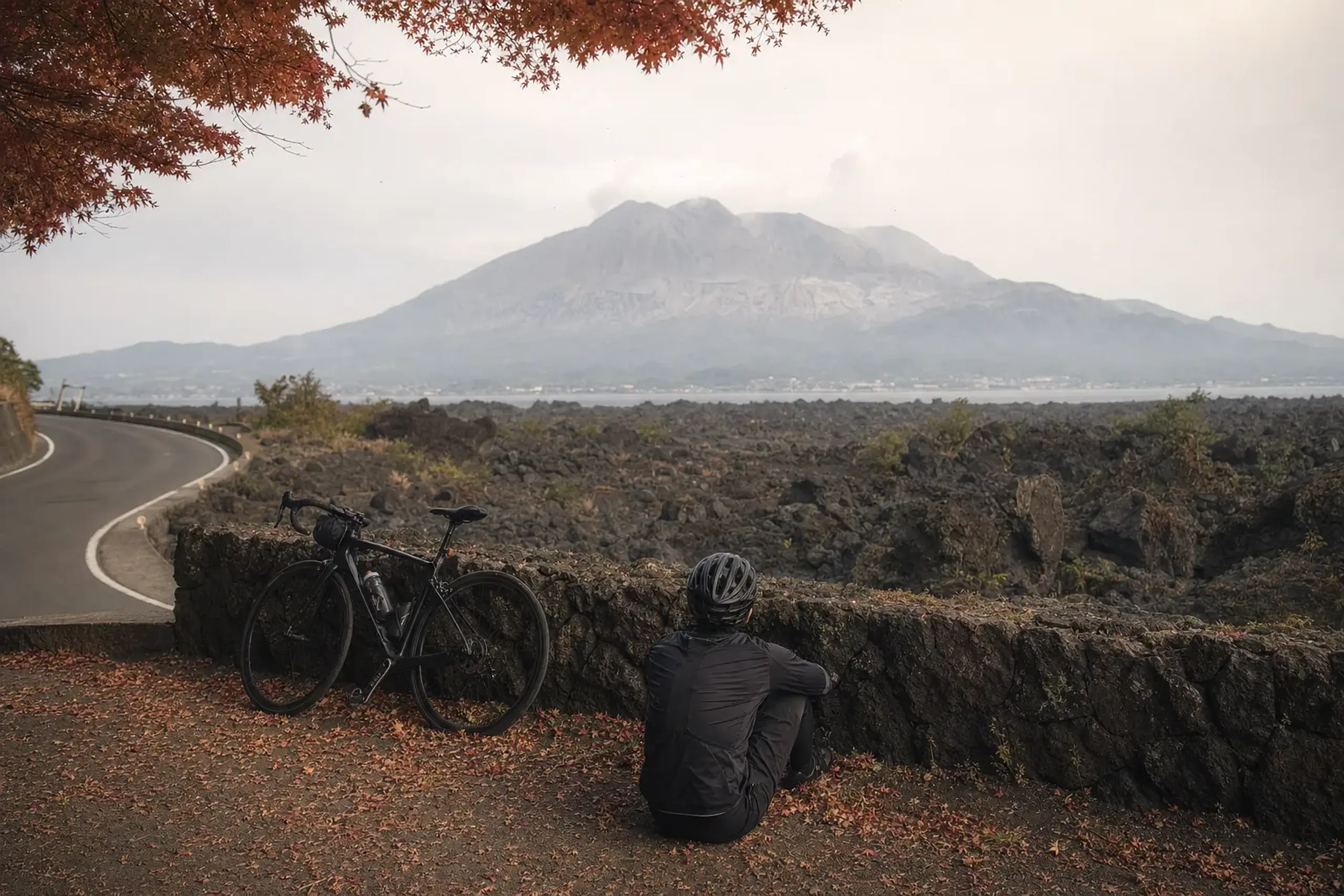
In our experience at Japan Royal Service, summer days on the island reward early starts. The light is cleaner, the pavement is cooler, and you can choose your stops based on the plume’s direction rather than stubbornly following a fixed script. This is the quiet discipline behind a well-made day here—the kind of judgment that is far harder to arrange than any ticket.
Yunohira Observation Point: The Closest Official View
Yunohira Observatory sits at 373 m on the 4th station of Kitadake, and Kagoshima Prefecture tourism describes it as the closest viewpoint to the crater.
It is open 9:00 to 17:00, according to the Sakurajima Visitor Center guide (as of December 2024). Recheck the hours before you travel—summer maintenance and shifting weather can unsettle what looks fixed on paper.
This is where you learn to watch the volcano without challenging it. You look. You listen. Then you leave. There is a kind of restraint in that gesture that feels fitting for the place.
Arimura Lava Observatory: A Wide Field Of Taisho-Era Rock
Arimura Lava Observatory is open year-round and spreads out as a wide lava field—a stark, unembellished reminder of the 1914 eruption that reshaped the coastline.
The experience here is not about getting closer. It is about reading texture: jagged black surfaces, the bright green that edges the road, the bay’s glare, and the city floating opposite like a watercolor wash.
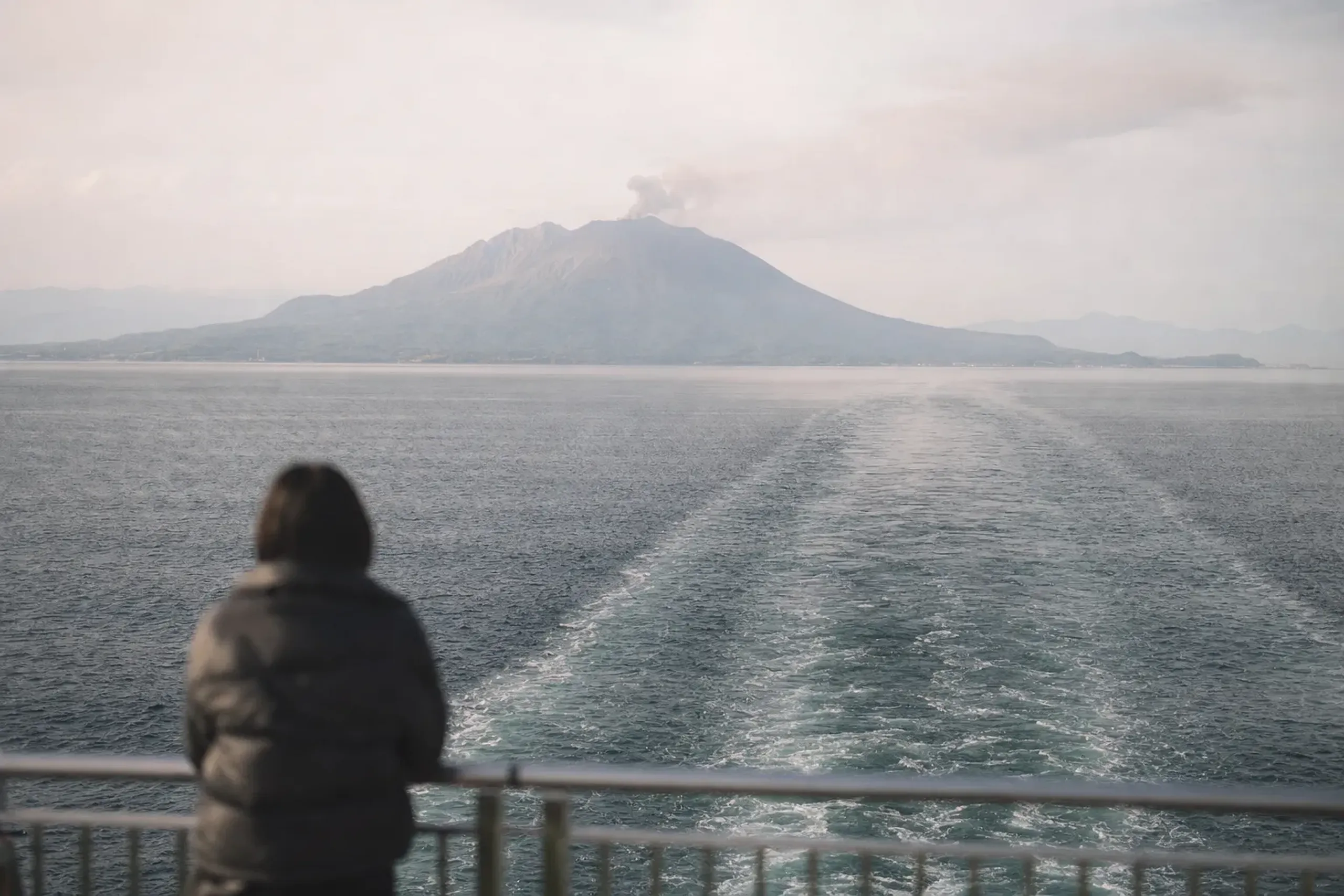
It is the aesthetic of restraint rather than spectacle—wabi in volcanic form.
In summer, shade becomes strategy. A hat helps. So does choosing short walks over long exposures in direct sun.
Kurokami Buried Torii And The Lava Shore: The Day’s Quietest Stops
You come to Sakurajima for the big views. You remember it for the small ones.
Kurokami Buried Torii: A Gate Left Half Under Ash
The Kurokami buried torii is a designated prefectural natural monument, known for how the 1914 ashfall buried a torii that once stood about 3 m tall, leaving only the top crossbeam—roughly 1 m—visible above the ground.
There is no ticket booth and no performance. Just a quiet neighborhood, a sacred gate, and a blunt lesson in time. Take a photograph if you like. Then lower your phone and simply stand with it for a moment. This is the Japan that rewards attention over itinerary.
Nagisa Lava Park Foot Bath And Yogan Nagisa Seaside Trail
Nagisa Lava Park’s foot bath is about 100 m long and is open from 9:00 to sunset, with no regular closing day listed.
It is roughly a 10-minute walk from the ferry terminal, which makes it genuinely useful in summer heat. One day of maintenance closure was reported in June 2026, so recheck its status close to your visit.
If you want to walk, the Yogan Nagisa lava seaside trail runs about 3 km to the Karasujima Observatory and is open year-round.
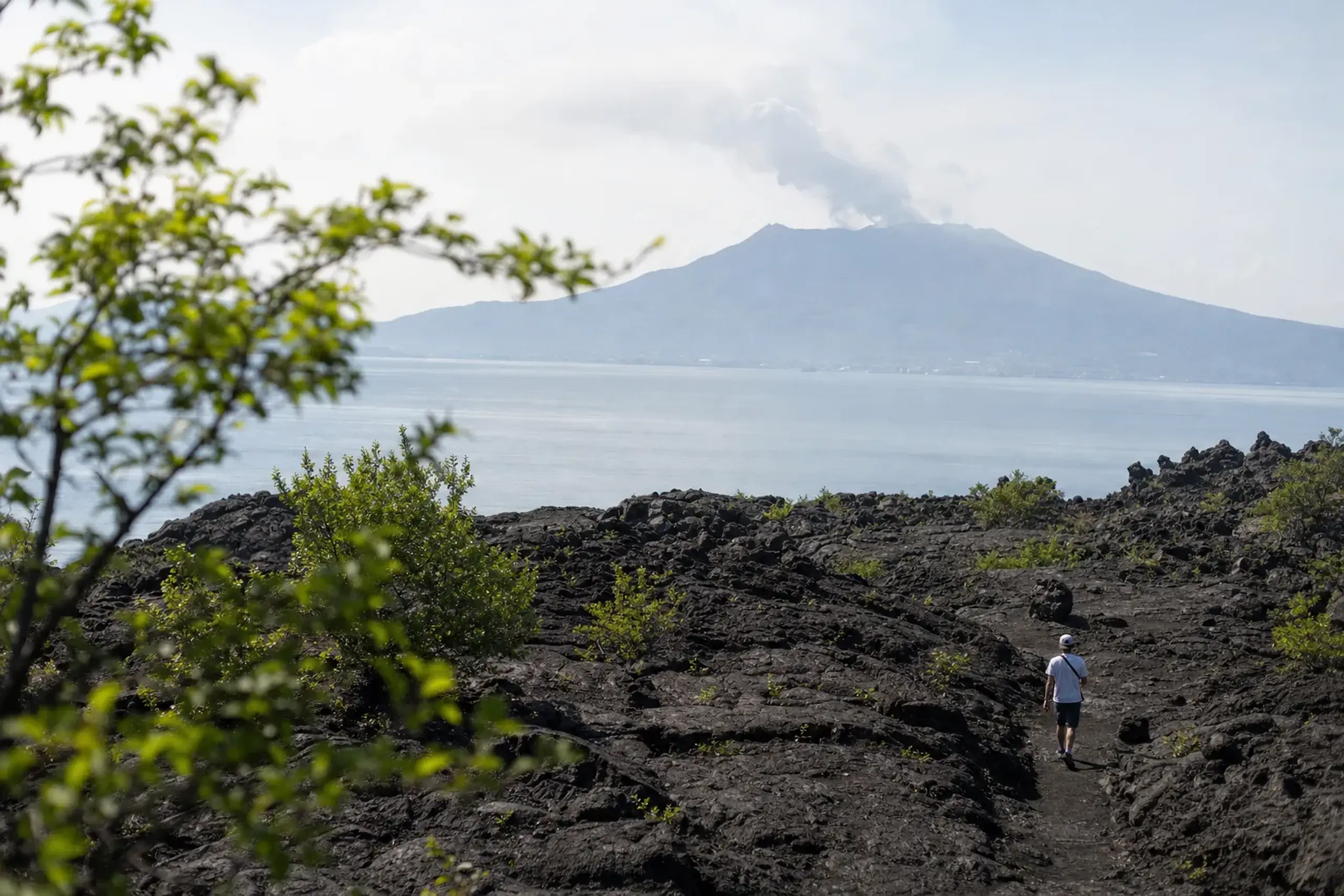
The lava here is close enough to touch. Don’t rush it—this is a stretch to be felt underfoot, not ticked off.
What Is The Sakurajima Island View Bus, And When Does It Help?
The Sakurajima Island View bus is a public loop taking about 60 minutes, connecting the key stops: Sakurajima Port, the Visitor Center, Karasujima Observatory, Akamizu Observation Plaza, and Yunohira Observation Point.
Kagoshima City Transportation Bureau warns that when the bus is full, you may not be able to board. In summer, this can happen easily when cruise schedules and school holidays overlap.
The timetable details are published as a PDF rather than in clear webpage text, which trips up many first-time planners. Our concierge team checks the latest timetable and shapes the day so you are never stranded in the heat with a fading phone battery and an unclear next step.
If you prefer a door-to-door day with controlled pacing, consider private transportation on the Kagoshima side, then use the ferry and island facilities exactly as they are intended: public, efficient, and easy to read once you know the rhythm.
Ash In Summer: Forecasts, Wind, And The Small Kit That Saves The Day
Ash is simply part of Sakurajima, and in summer the wind direction can turn a clear itinerary into a day of gritty eyelashes.
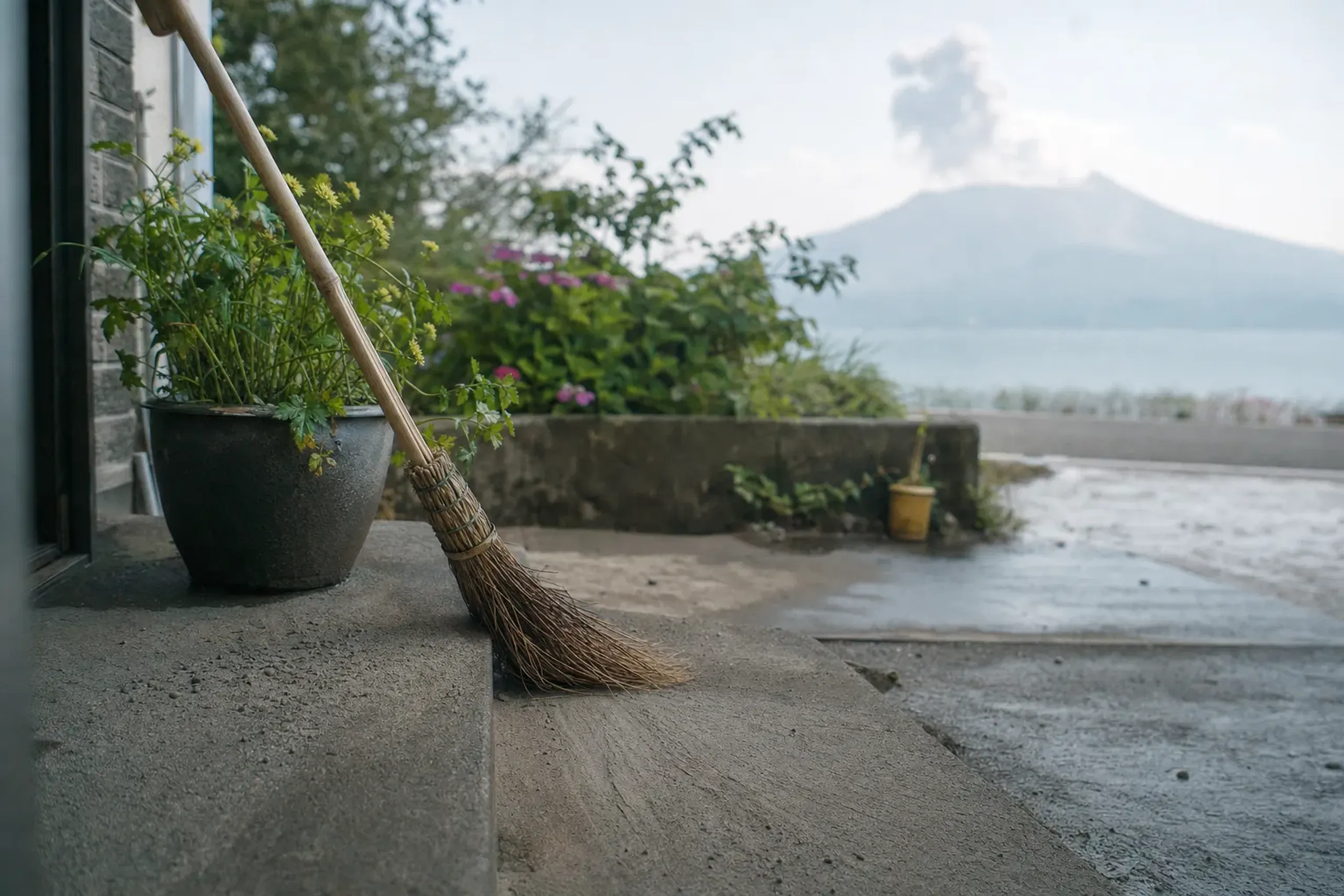
The JMA issues scheduled ashfall forecasts every three hours (at 2, 5, 8, 11, 14, 17, 20, and 23 o’clock) for volcanoes under an eruption warning. It also issues quicker forecasts about 5 to 10 minutes after an eruption, followed by more detailed forecasts about 20 to 30 minutes later.
The simplest approach is practical, not dramatic. Check the forecast. Watch the wind. If ash begins to fall, wait it out under a roof; Kagoshima’s visitor guidance notes it often stops within about 10 minutes.
What to carry in summer, based on official and local guidance from the Sakurajima Visitor Center and Kagoshima tourism sources:
- Mask (especially on ash days)
- Glasses instead of contact lenses if you are sensitive
- Hat (sun plus drifting ash)
- Small towel
- Folding umbrella (useful for both sun and ash)
- Water, even for short walks
Typhoons are also part of the summer equation. Kagoshima guidance warns of heavy rain, strong wind, and high tides. If the weather turns, follow local instructions and keep an eye on official updates—the island is unforgiving of improvisation, and generous to the prepared.
Where The Rules Are Posted: Shelters, Signs, And What To Do If You Hear An Alert
Kagoshima City states there are 32 refuge shelters along the main roads and at observation points, with signs in four languages.
Most travelers never need them. Still, simply knowing they exist changes how you move.
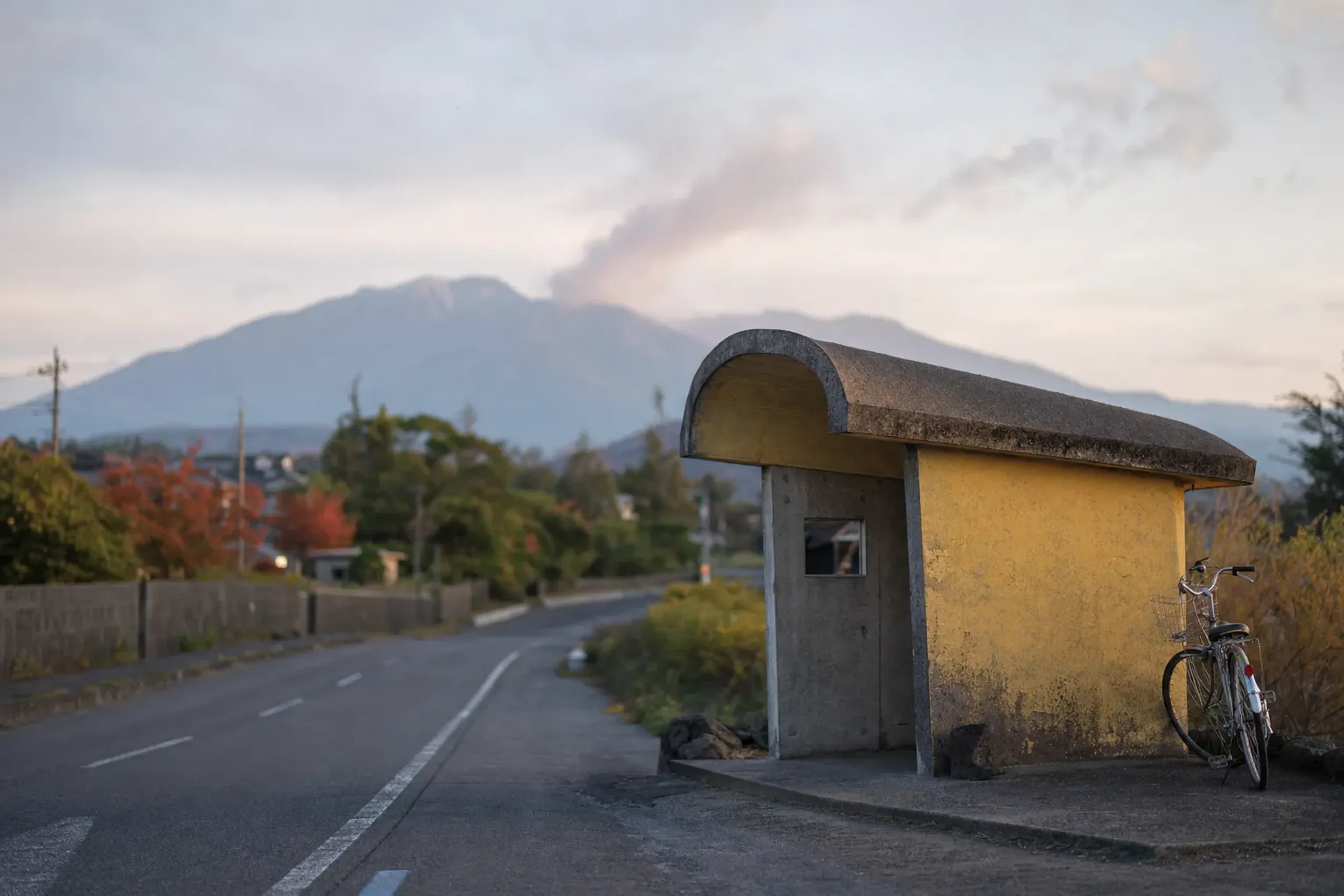
You look up occasionally. You notice where you are on the road. That quiet awareness is its own kind of comfort.
Kagoshima City also publishes hazard maps in multiple languages, including English. If you are visiting with family, we suggest a quick glance the night before. Two minutes. That’s enough to put everyone at ease.
On the ferry deck, you may also spot dolphins in the bay; the City notes they are sometimes seen, but it is never guaranteed. A pleasant bonus. Never a plan.
One-Line Add-Ons: Sengan-En And The Kagoshima Bay Summer Night Fireworks
Sengan-en: Built in 1658 as a Shimadzu clan residence, the garden uses Sakurajima and Kagoshima Bay as borrowed scenery, making the volcano part of the composition rather than its subject. It is a masterclass in how centuries of refinement learned to frame a mountain.
Kagoshima Bay Summer Night Fireworks: Kagoshima City tourism listings showed the event “listed for” Saturday 29 August 2026 at the Port Honmoto district in the evening, weather permitting—though we could not independently confirm it took place. Treat the dates as provisional until official updates appear.
How To Plan A Sakurajima Summer Day Step By Step
The island looks simple on a map. Summer makes it far less forgiving.
Here is the clean planning order our team at Japan Royal Service uses when we build a Sakurajima day for travelers who want calm, not chaos:
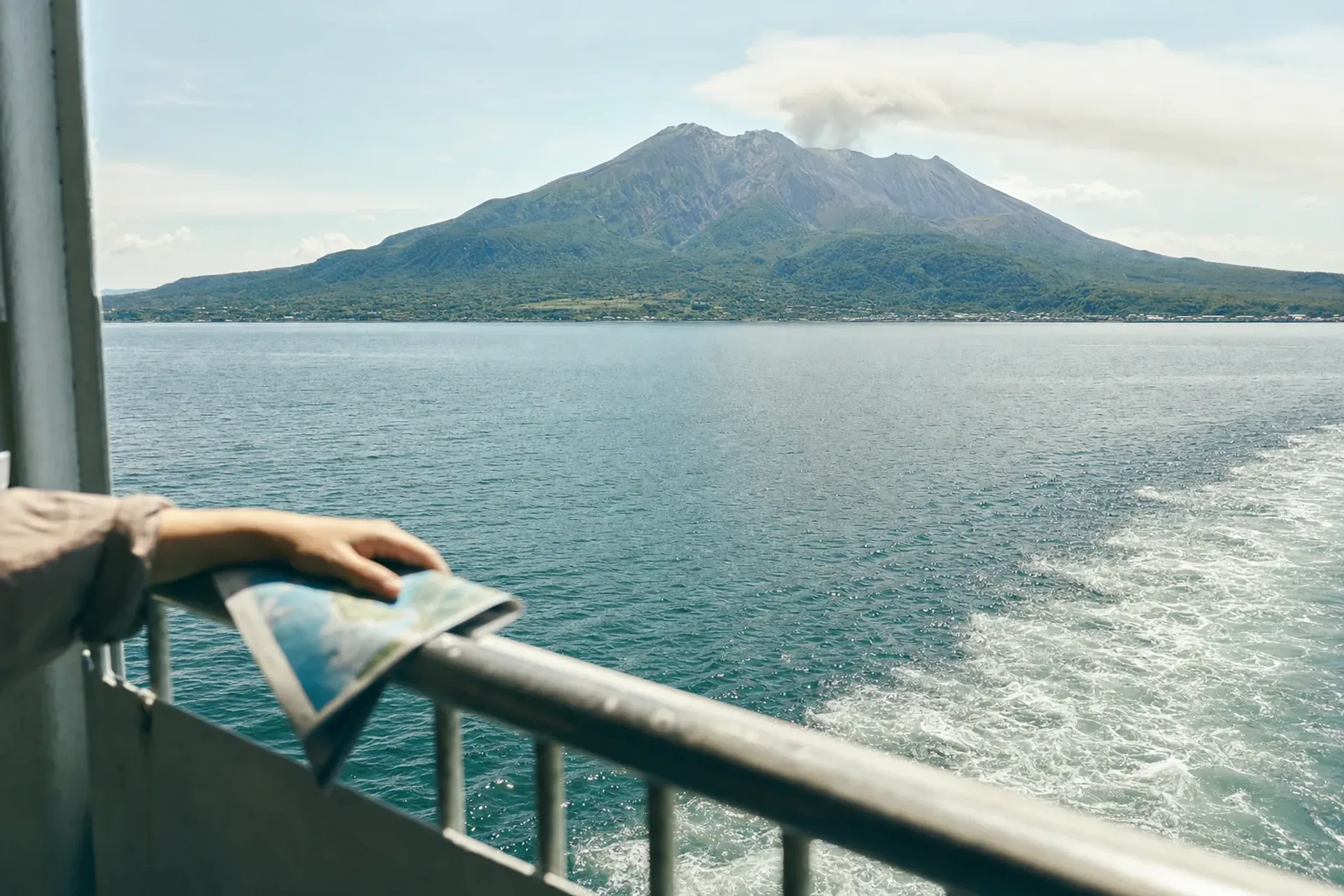
- Day before: Check the JMA alert level and any ashfall forecast. Confirm the ~2 km restricted zone remains closed, and accept it without negotiation.
- Morning: Go early for cleaner light and cooler pavement. Bring the ash-and-sun kit even if the sky looks friendly.
- Ferry plan: Aim for a crossing that gives you time on the island before the strongest heat. Remember: service runs early morning to late evening, not around the clock.
- First major stop: Choose Yunohira or Arimura based on wind and visibility. Recheck opening hours close to travel.
- Quiet stop: Add the Kurokami buried torii when you want perspective more than panorama.
- Heat break: Use the Nagisa Lava Park foot bath and a short section of the seaside trail rather than a long, exposed walk.
- Return: Cross back before you are tired. Fatigue makes ash feel far worse than it is.
If the wind turns and ash drifts toward your next stop, change the order. Quickly. Pride is the enemy of a good day on Sakurajima.
How Our Concierge Team Plans Sakurajima In Summer
Luxury on Sakurajima is not access. It is judgment—knowing which hour, which viewpoint, which crossing, and when to abandon the plan entirely.
Our concierge team at Japan Royal Service builds the day around four moving parts: the JMA alert level, the ashfall forecast, the ferry timetable, and the weather.
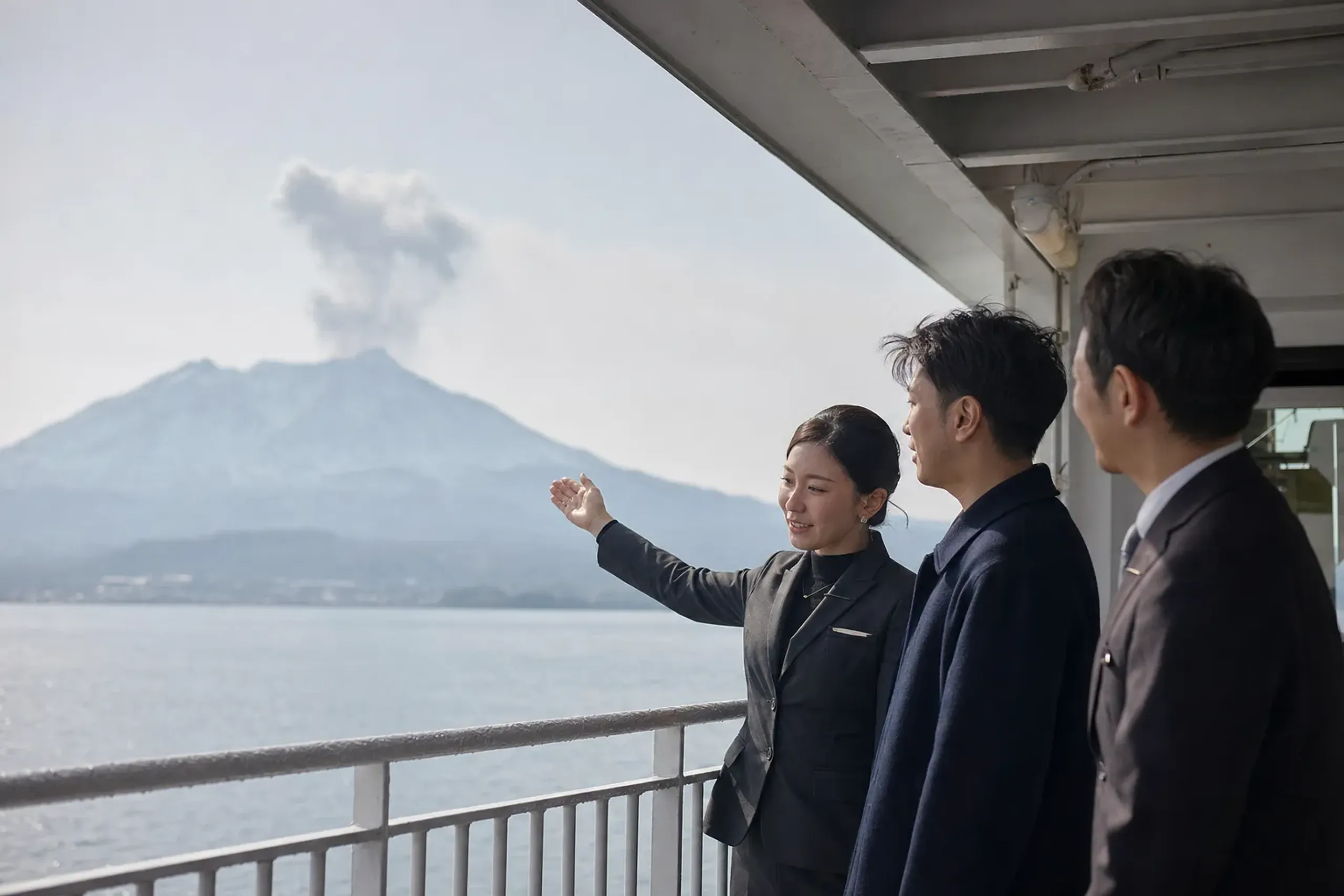
We also hold a slack hour in reserve, because summer wind can overturn a plan without warning. That quiet anticipation—reading what the day needs before you have to ask—is the care we consider non-negotiable.
For guiding, we can arrange an English-speaking cultural interpreter who brings context to the day: how people live beside daily eruptions, what changed in 1914, and why the Shimadzu garden view at Sengan-en matters. This is a cultural interpreter, not a volcano guide on restricted ground. Boundaries stay firm, always.
For comfort and pacing, we can include partner-fleet transfers on the Kagoshima side, so you are never negotiating taxis in the heat. No combined driver-guide role. Just clean, discreet handoffs that leave you free to notice the island rather than manage it.
And for the overall arc of the journey, we can support a tailor-made itinerary that frames Sakurajima as one precise day inside a wider Kyushu summer. If you are building the season around festivals, see our guide to Tokyo summer festivals for a very different kind of heat and crowd rhythm, and consult our field notes on Yakushima in summer if your trip later includes mossy forests and rain (a separate planning exercise from this Sakurajima day).
When you are ready to place one perfectly judged day against a living volcano at the heart of a wider Kyushu summer, contact us here and we will begin shaping a proposal tailored entirely to you.