In this guide
- 01Tokyo In Summer: Heat, Crowds, And Why The Evenings Work
- 02When Is Koenji Awa Odori Held?
- 03What Is Mitama Matsuri At Yasukuni Shrine Like In The Evening?
- 04Which Tokyo Summer Festival Should You Choose If You Only Have One Night?
- 05Three More Tokyo Summer Festivals Worth The Detour
- 06Heat, Trains, And Road Closures: A Practical Playbook For Festival Nights
- 07How Our Concierge Team Plans A Tokyo Festival Evening
Koenji Station at dusk feels ordinary for about ten seconds.
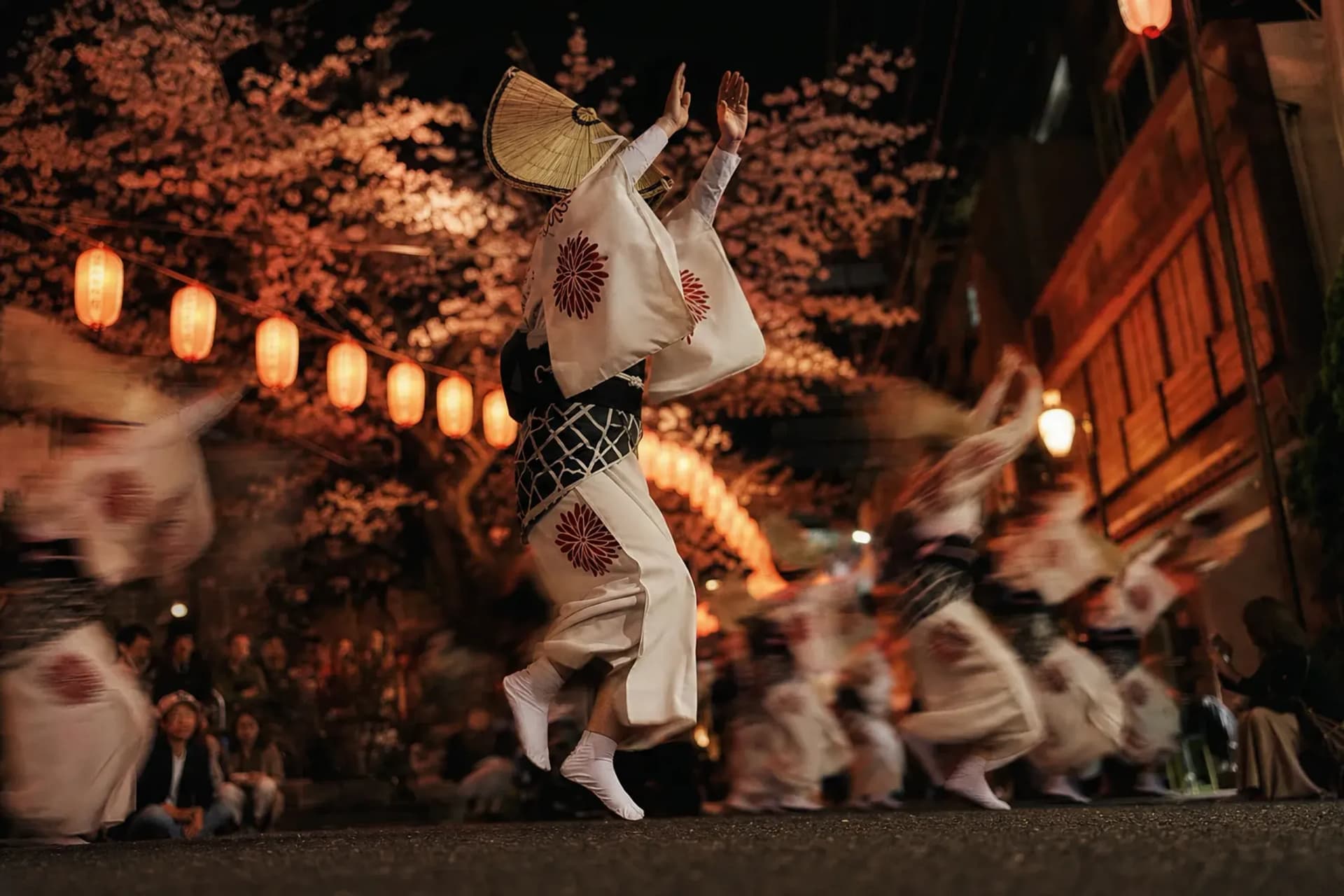
Then you hear it. A tight rhythm of shamisen-like strings and drums, carried down a shopping street that, on most nights, sells ramen and haircuts.
The air is warm. Sticky. Everyone is moving the same way.
If you are visiting Tokyo in summer, this is the paradox and the reward at once: the city is hot and crowded, yet festival evenings can be the finest hours of your trip—provided you plan the logistics around this year’s dates and rules, not last year’s memories. The difference between a sweltering standstill and a flawless evening is, almost always, the quiet work done in advance.
Tokyo In Summer: Heat, Crowds, And Why The Evenings Work
Tokyo’s summer is not gentle. Pavement holds heat long after sunset, and stations fill in minutes once a matsuri lets out.
July’s long-term averages (1991–2020, Japan Meteorological Agency) put Tokyo at a mean of 25.7°C, with an average high of 29.9°C and 156.2 mm of rainfall. August is warmer still: a mean of 26.9°C, an average high of 31.3°C, and 154.7 mm of rainfall.
That is the backdrop. No drama needed.
The trick is to treat a festival the way you would treat a concert: choose one anchor event, time your arrival, decide how you will exit, and accept that “just wing it” is precisely how you end up standing in the wrong place, overheated, with a dead phone.
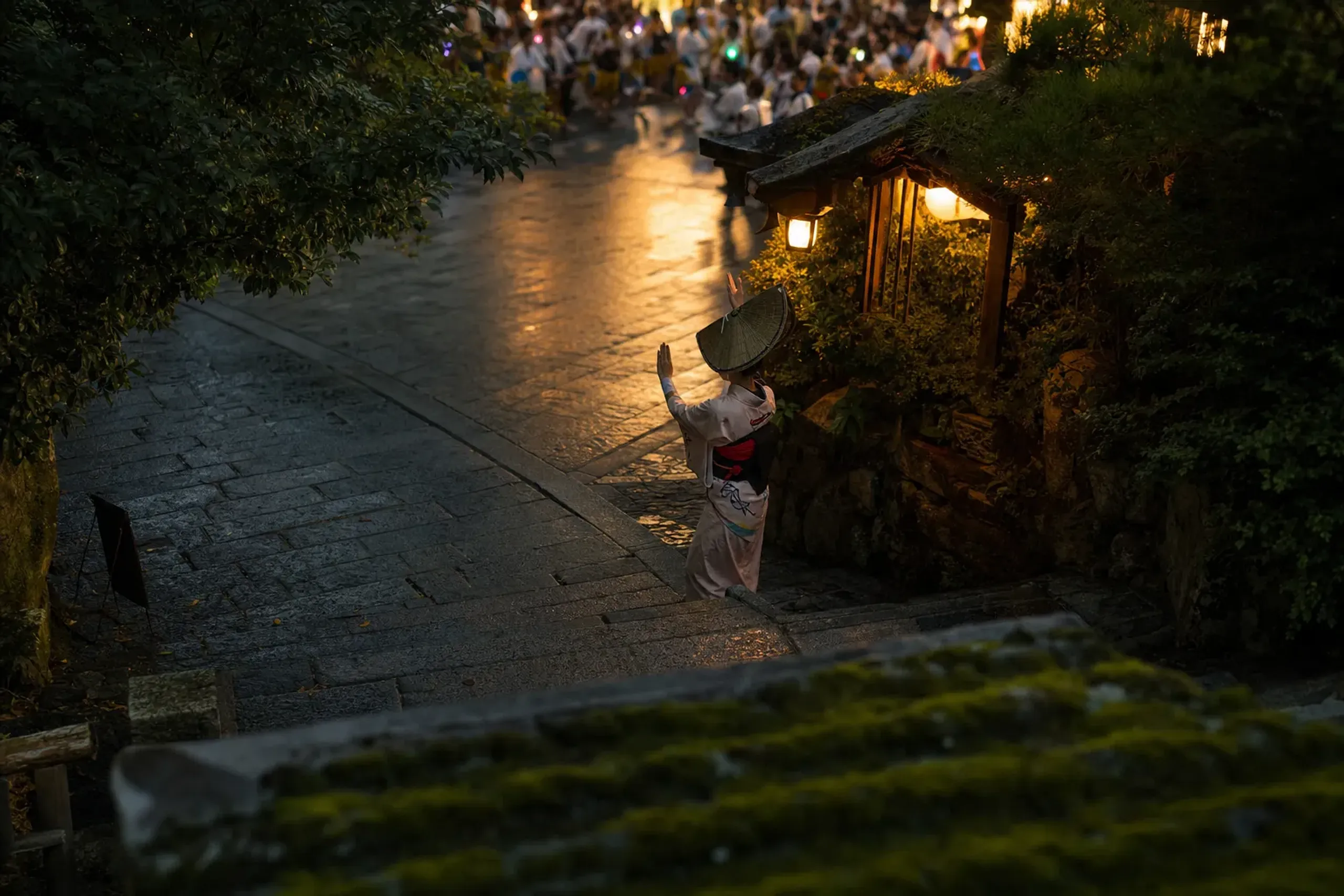
There is a particular Japanese pleasure in experiencing even a vast public festival with the ease of someone who belongs—unhurried, unbothered, never fighting the current. That composure is the whole point.
Key fact: Japan issues heat-stroke alerts when the forecast day-maximum WBGT is 33 or above; the public guidance is simple—stay cool, take breaks, and drink water and salt.
When Is Koenji Awa Odori Held?
Koenji Awa Odori is held annually on the last weekend of August, from late afternoon into the evening.
Details are confirmed closer to the date by the organiser and Suginami Ward, and the JRS concierge team confirms them directly with the guest at time of arrangement.
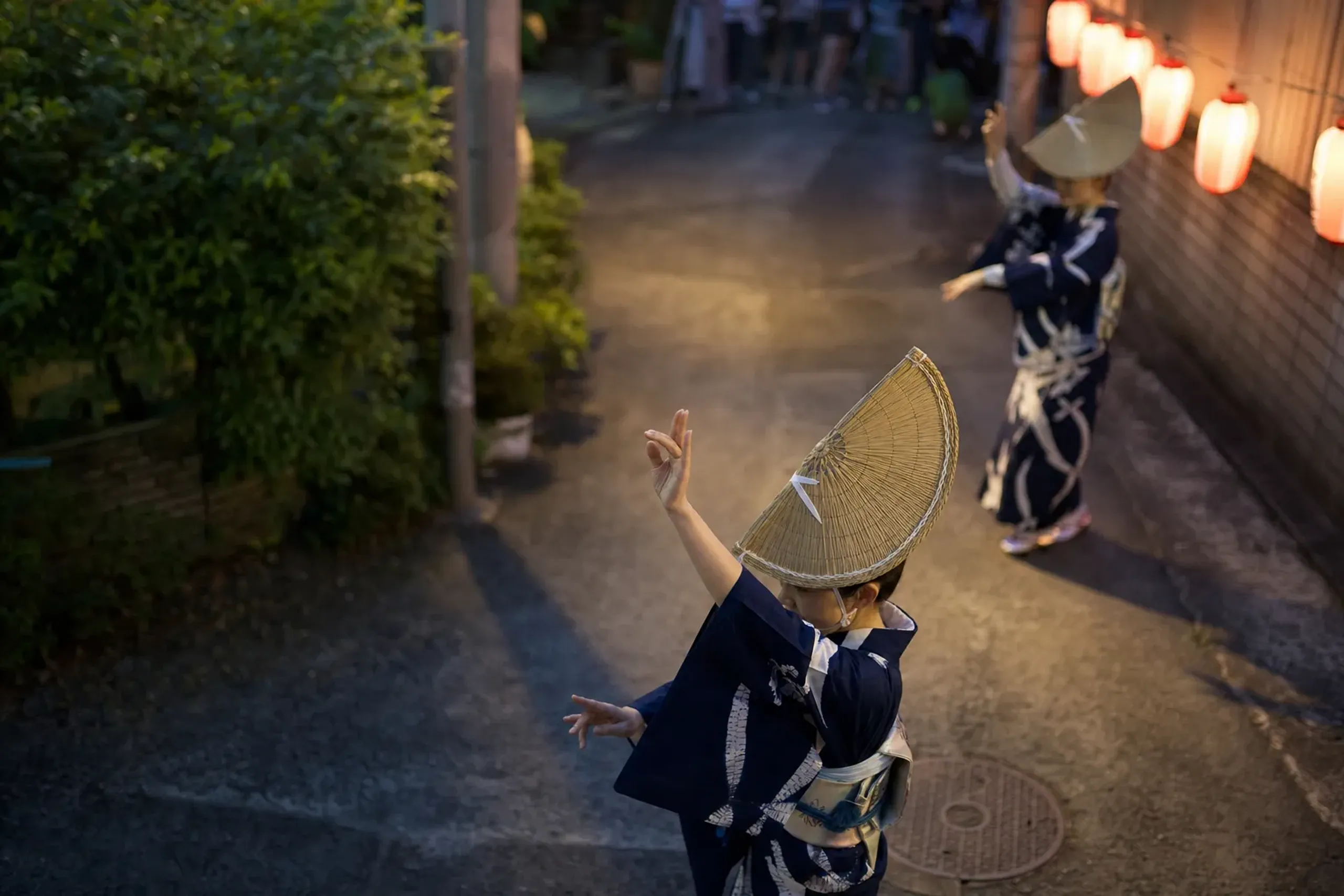
Koenji’s dance descends from Tokushima’s Awa Odori—one clean line of heritage—but it is very much its own Tokyo street festival, built for local shopping streets rather than offered as a substitute for Tokushima.
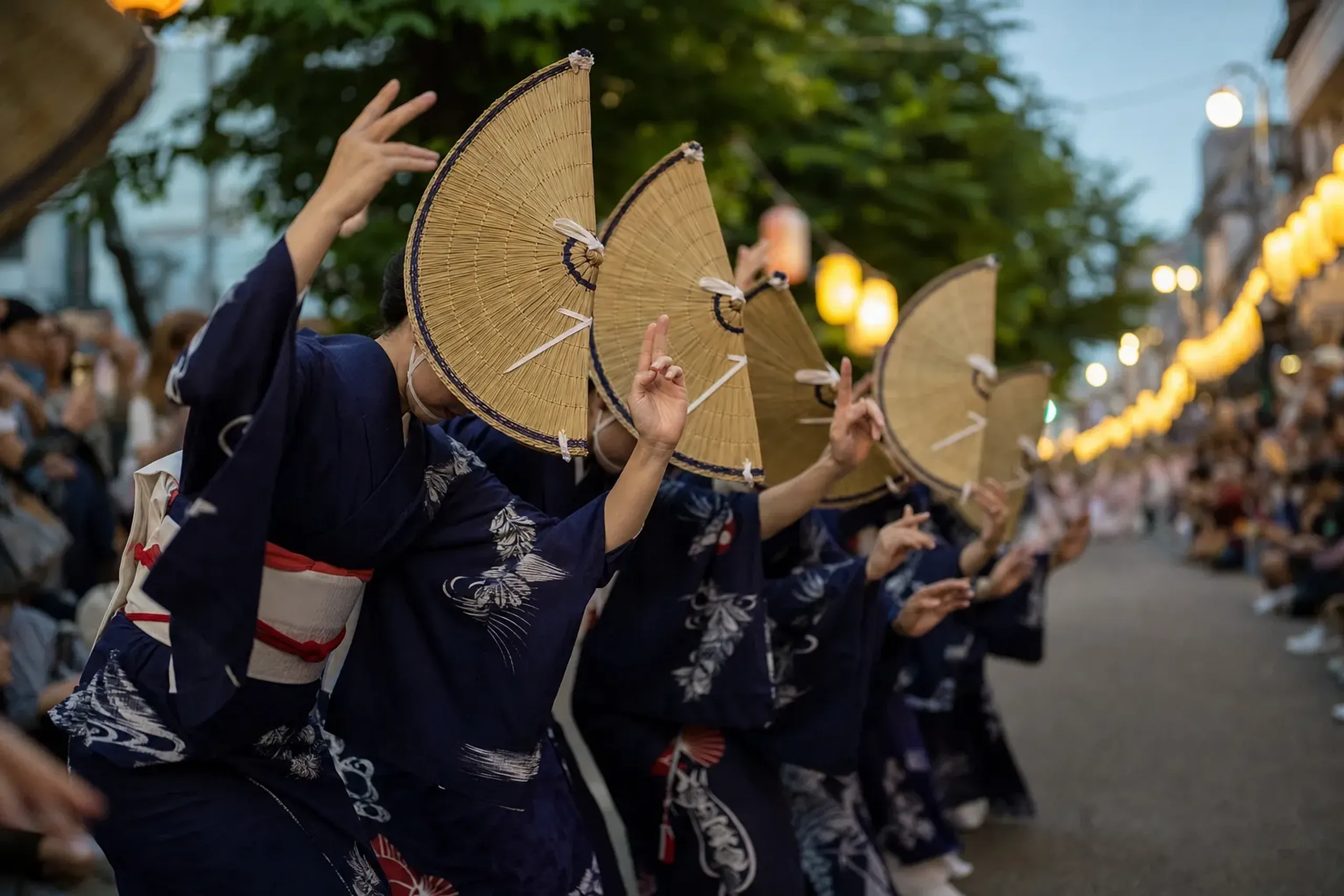
It began in 1957, according to the organiser, as a way to revive the Koenji shopping streets. That origin story still shows in the setting: everyday roads, everyday storefronts, and then, without warning, thousands of dancers moving as one organism.
What You Actually See In Koenji
Dancers perform in groups called ren. You’ll notice two main styles: a men’s style that feels grounded and forceful, and a women’s style that rides higher on the toes with sharper, more vertical lines.
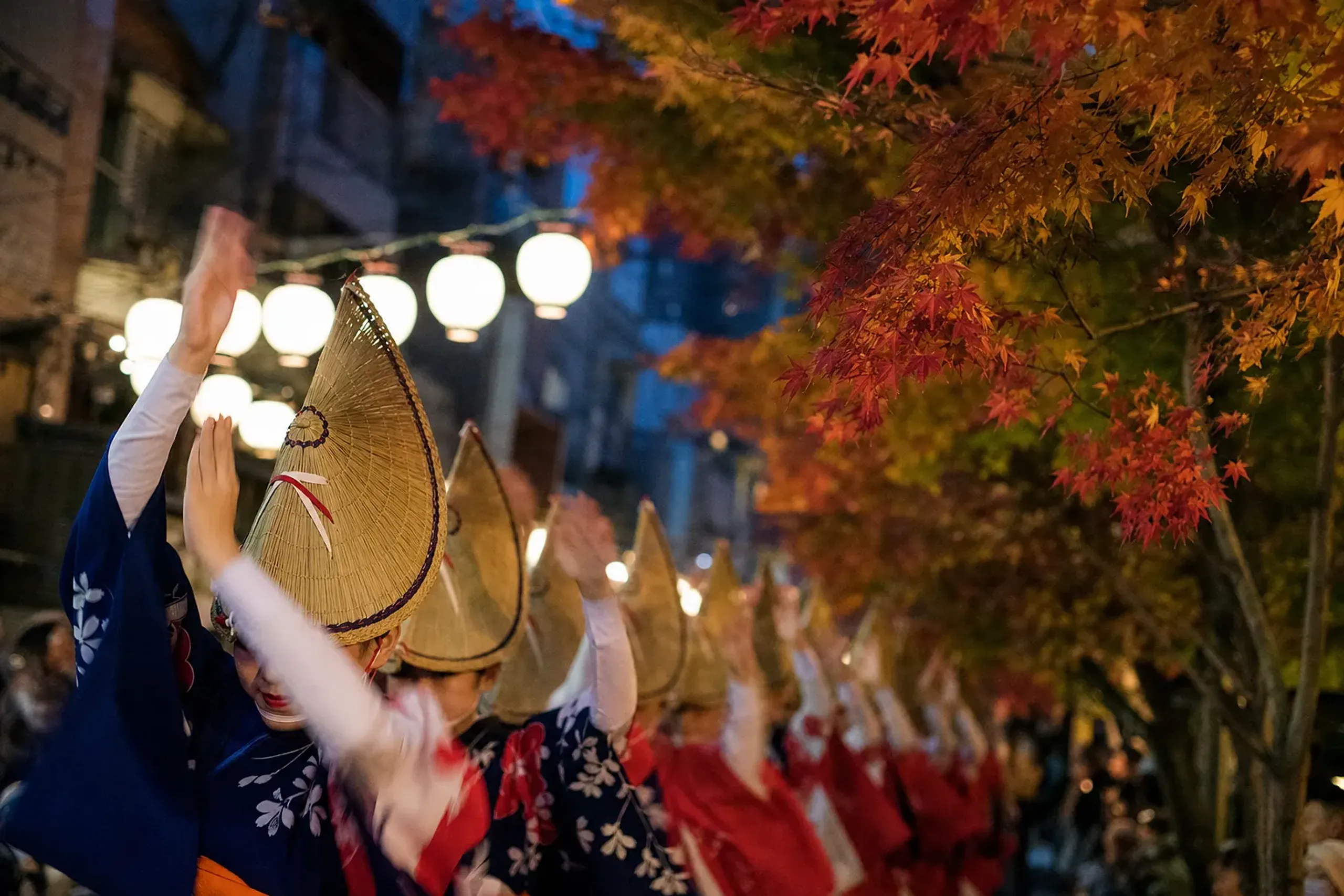
Suginami Ward has described about 10,000 dancers in well over a hundred ren, and the organiser has reported attendance approaching a million visitors.
The scale matters because it changes how you move. You are not “finding a cute spot.” You are, quietly and skillfully, managing a crowd—and this is where having someone who knows the rhythm of these streets transforms the evening.
Venues And The 5-Minute Rule
Koenji Awa Odori is spread across nine performance venues around JR Koenji Station, Tokyo Metro Shin-Koenji Station, and the Takaminami-dori area, including a venue near a park (added as the first new venue in 30 years, per the organiser).
The short distances are the saving grace. Koenji Station is about a 5-minute walk to the venue area, and Shin-Koenji Station is also about a 5-minute walk.
That “about five minutes” becomes your lever. If one street is jammed, you can pivot—fast.
Koenji Traffic Regulations And Train Reality
On festival days, assume that cars, taxis, and even your usual station habits will not work in the normal way.
The organiser states that road regulation applies on both days, from late afternoon until after the dancing ends, within the area bounded by Ome-kaido, Ring Road 7 (Kanna-nana), Waseda-dori, and Bashi-dori, and that visitors are asked not to come by car. This is exactly where a private car from a partner company, with an English-speaking driver, earns its keep: dropped at the nearest viable point before the cordon, collected afterward at a pre-agreed spot away from the crush, with no scramble for a taxi that is not coming.
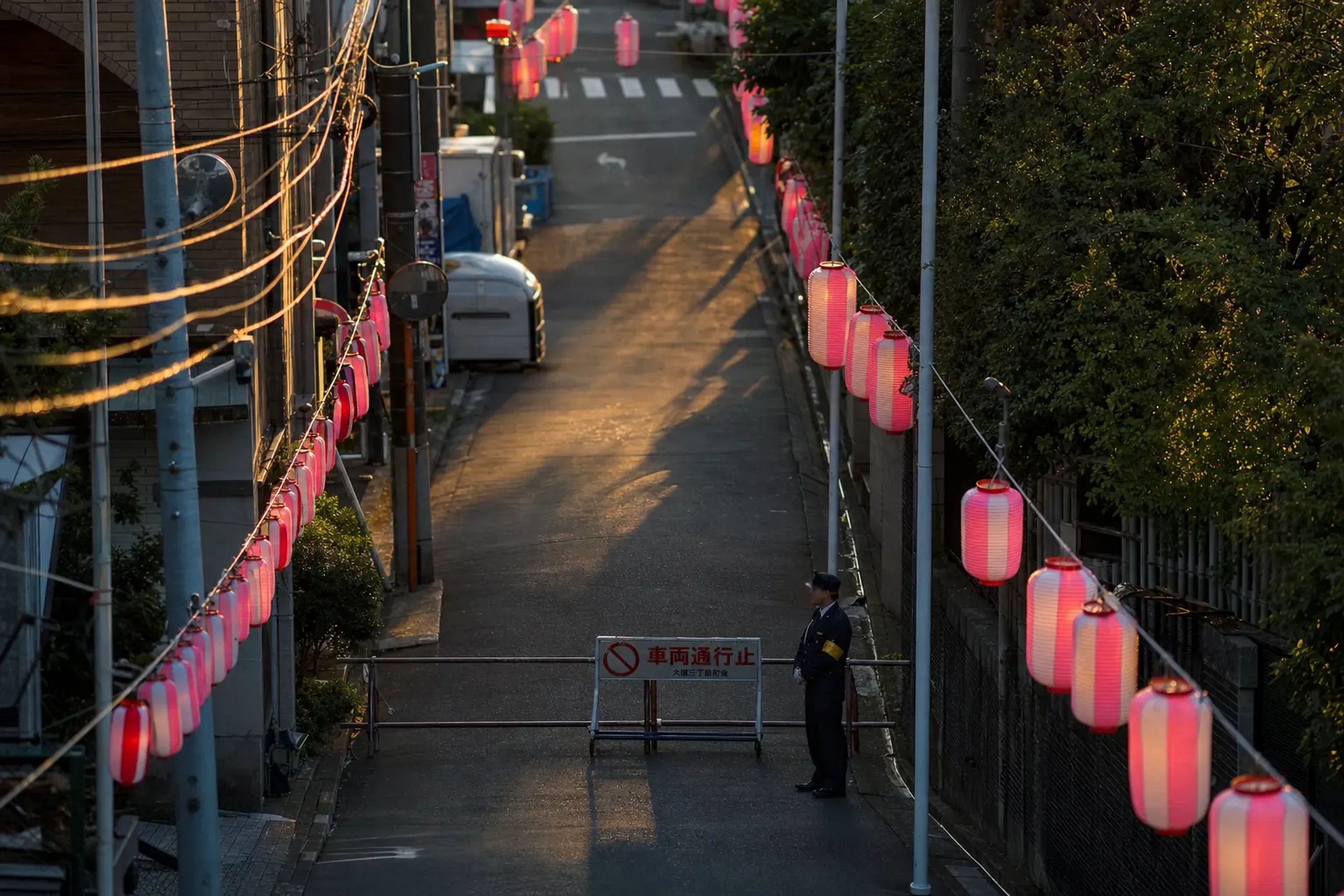
The organiser has also noted that JR Chuo Rapid trains have not stopped at Koenji on festival days. Do not assume that repeats automatically. Check the day’s JR East notice.
Another small detail that becomes a large one: during the regulation, the south-exit bus and taxi stands are closed, and visitors are directed to use the north exit.
Koenji Rules For Cameras, Tripods, And Spectator Conduct
Koenji is generous, but it is strict about safety and flow. The common misstep: arriving with the wrong gear and nowhere to put it.
The organiser’s guidance includes these points:
- Held in rain unless it becomes very heavy.
- No filming from inside the performance areas.
- No tripods, monopods, stepladders, chairs, selfie sticks, or drones.
- No taping or sheeting of road or kerb spots.
- Do not join a performing ren.
- No smoking on the street (use designated areas).
- Do not obstruct shops; take your rubbish; follow staff instructions.
- Strollers and bicycles are discouraged.
Our advice is plain. Bring less equipment. Bring more patience.
Do Tickets Exist For Koenji Awa Odori?
The organiser offers special viewing seats as a thank-you for sponsorship donations, with applications handled through the organiser’s ticket centre.
This is not a general “buy it anytime” product, and applications can close.
If you care about seats, treat it as a time-sensitive item and confirm the year’s application window directly with the organiser.
Even without reserved seats, Koenji rewards those who arrive early, keep moving, and accept that the best view is often a moving one—watch two minutes, shift, watch again.
What Is Mitama Matsuri At Yasukuni Shrine Like In The Evening?
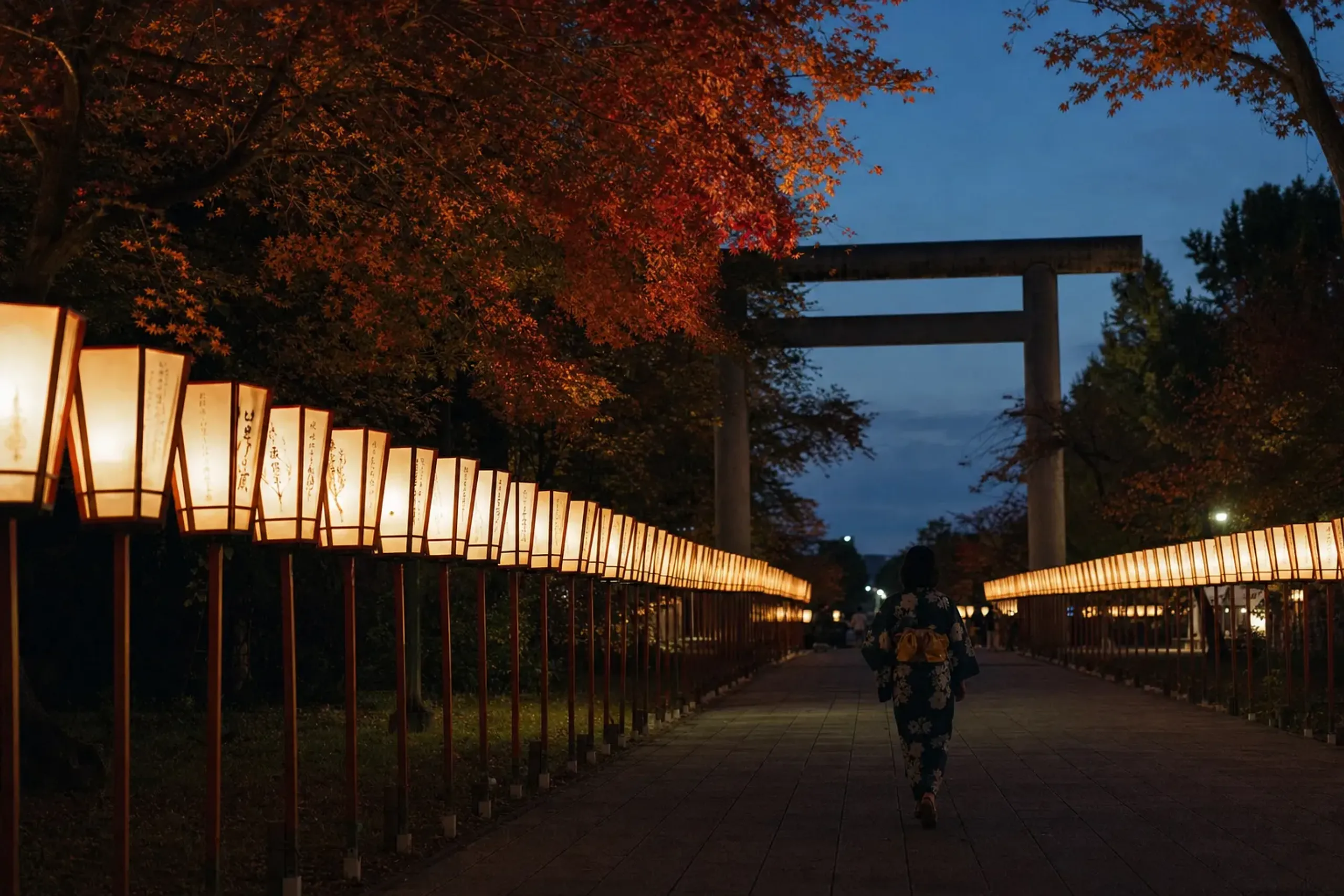
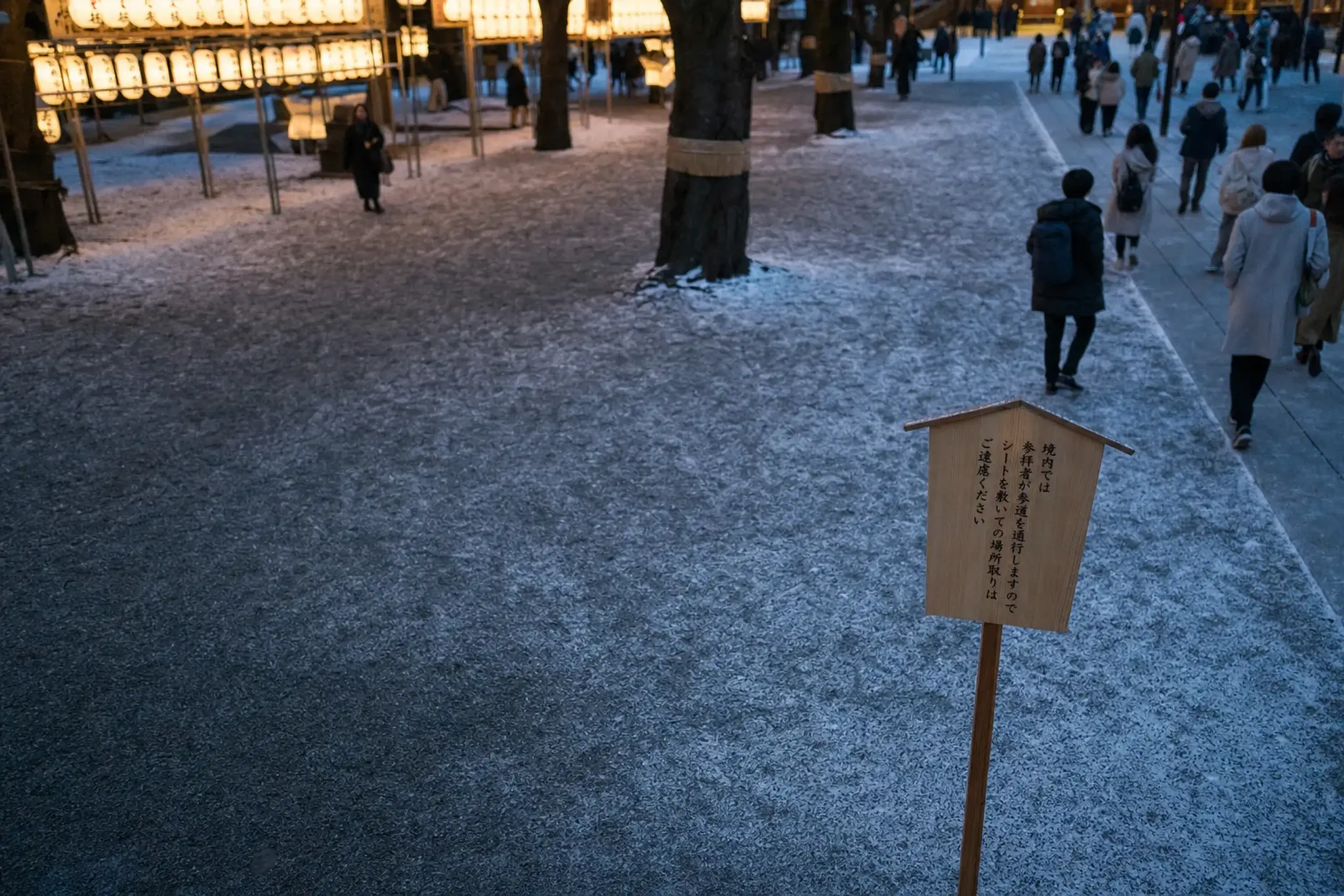
Mitama Matsuri is four July nights of lantern light at Yasukuni Shrine, with tens of thousands of lanterns hung along the approach and across the grounds.
The shrine describes Mitama Matsuri as rooted in Obon, begun in 1947 as an event to console the war dead. The visual focus is the lantern offering: the shrine states that about 30,000 lanterns are offered and hung, and that about 300 hanging lanterns carry calligraphy and art by notable figures.
You feel it as you walk. Rows upon rows, the same warm colour repeating until the city noise thins out.
This is not a parade that sweeps past you. It is a slow, deliberate drift through light—closer to restraint than to spectacle. The beauty is in the repetition and the hush, not in any single grand gesture, and that quiet is precisely what rewards an unhurried, well-timed visit.
Dates, Hours, And Where To Enter
Mitama Matsuri is held 13 to 16 July each year, per the shrine’s published festival information.
During the festival, the shrine lists hours for worship at the front from early morning into the night, with formal worship reception from morning into the evening. Hours can change for ceremonies, and the JRS concierge team confirms them directly with the guest at time of arrangement.
Access is straightforward. The shrine notes Kudanshita Station (Exit 1) is about 5 minutes on foot; Ichigaya and Iidabashi are about 10 minutes; the bus stop “Kudanshita-ue” is about 1 minute.
Programme And Lantern Offering: What To Expect
The shrine’s festival outline mentions a programme that can include a mikoshi procession, a Bon dance along the approach, and dedicated performances. The exact programme changes each year, so the correct habit is to check the shrine’s notices as July approaches.
Lantern offering is open to anyone. It is part of how the festival is built—and arranging a personally dedicated lantern among the thousands is a quiet, meaningful gesture we can help with on a guest’s behalf.
What not to do: arrive assuming you already know the schedule from a listing site. That is how travellers miss the one timing that matters.
Photography, Drones, And Quiet Conduct
The shrine’s general visitor requests apply. Drones are prohibited. Smoking is permitted only in designated places.
The shrine also requests no mats or picnicking in the inner grounds, and no selling, flyers, or demonstrations.
Loud noise or singing is not allowed.
Photography is not permitted inside the main hall and the Yushukan, except for the entrance hall and the main exhibition room; personal snapshots are fine, while commercial and influencer shoots require prior permission.
Which Tokyo Summer Festival Should You Choose If You Only Have One Night?
Choose Koenji for dance on public streets in late August, or Mitama Matsuri for lantern-lit walking in mid-July; they are different experiences with entirely different crowd rhythms.
Koenji is kinetic. Sound first, then movement, then the sudden realisation that you’ve been smiling for ten minutes straight.
Mitama is slower. You notice faces, shadows, the way people lower their voices without being told.
If your trip includes late August, one practical wrinkle matters: Asakusa Samba Carnival and the first night of Koenji can fall on the same Saturday. You cannot be in two crowds at once, and switching between them takes real time—another reason to settle the sequence in advance rather than on the night.
Three More Tokyo Summer Festivals Worth The Detour
Tokyo’s summer calendar is far bigger than any one neighbourhood. These are shorter notes, but each can be the right answer when your dates do not line up with Koenji or Mitama.
Asakusa Samba Carnival (Late August, Daytime)
Asakusa Samba Carnival is held in Asakusa, with the parade route running between Umamichi-dori and Kaminarimon-dori.
The parade is held on a late-August afternoon, with the date set each year, and the Metropolitan Police have described traffic regulation running from morning into the evening on Umamichi-dori, Kaminarimon-dori, Namiki-dori, and Nitenmon-dori.
Access is quick: Asakusa Station is about 1 minute, and Tawaramachi Station about 3 minutes. It can also fall on the same day as Koenji’s first night, so plan like you mean it. The JRS concierge team confirms the year’s dates directly with the guest at time of arrangement.
Kagurazaka Matsuri (Late July In Shinjuku City)
Kagurazaka Matsuri runs across several evenings around the Bishamonten temple area, blending a market-like atmosphere with scheduled dance.
Its dates are set each year. The festival has opened with the Hozuki-ichi on its first evenings, followed by the adult Awa Odori and a children’s Awa Odori on the later ones. It is held in light rain.
Access is part of the appeal: Iidabashi Station is about 2 minutes away, and Ushigome-Kagurazaka Station about 1 minute.
Fukagawa Hachiman Festival (Mid-August, Water-Splashing Crowds)
Fukagawa Hachiman Festival is known for mikoshi energy and water-splashing in the summer heat.
Its dates and programme are set each year.
Monzen-nakacho Station is about 3 minutes away. Expect wet clothing, happy chaos, and very little personal space.
Heat, Trains, And Road Closures: A Practical Playbook For Festival Nights
Tokyo festival nights are simple until they aren’t. A single closed taxi stand can add forty minutes.
Start with the heat. Dress as if you will be standing still, because you will, then carry a small towel and replace fluids early—not when you already feel faint.
Then treat transport as a living thing. For Koenji, road regulation can run from late afternoon into the evening, and JR Chuo Rapid trains have skipped Koenji on festival days—details that change both how you arrive and how you leave.
For Asakusa Samba Carnival, traffic regulation can stretch across most of the day. If you are meeting friends or family, choose one landmark and commit to it.
- Arrive earlier than you think: 30–45 minutes before the main start time feels conservative. It is not.
- Pick an exit plan before the first drumbeat: decide which station exit you’ll use, and which street you’ll avoid.
- Carry less camera gear: Koenji prohibits tripods, monopods, selfie sticks, and more.
- Keep one backup night: heavy rain can change the experience, even when an event proceeds.
If you are building a larger summer festival week, two other Tokyo staples often come up in conversation: the Sumida River Fireworks Festival and Senso-ji Hozuki-ichi.
We cover those separately, so this guide stays focused on street festivals. For the wider seasonal picture, the Japanese sense of shun—knowing exactly what to see, where, and in which week—is what turns a crowded summer into a series of perfectly timed evenings.
- Obon In Japan: Planning Around The Festival Of Ancestors (useful context for July and August travel patterns)
- Todai-ji’s Lantern Night: Manto Kuyo-e On 15 August (a different kind of lantern evening, outside Tokyo)
- Shoro Nagashi: Nagasaki’s Night Of Spirit Boats (for travellers shaping a wider summer route)
How Our Concierge Team Plans A Tokyo Festival Evening
We plan Tokyo festival nights the way you would plan a high-stakes dinner reservation: with precise timing, a clear reading of the year’s rules, a private car waiting beyond the cordon, and a graceful exit secured before the first drum sounds, so you can lose yourself in the lantern light or the dance without ever losing control of the evening.
At Japan Royal Service, every festival night is shaped as part of a broader tailor-made itinerary built around the exact weeks you travel.
To begin planning, contact our team here.