In this guide
- 01What Is Shoro Nagashi In Nagasaki, And Who Is It For?
- 02A Boat For One Person: What A Shoro-Bune Means
- 03Where Does Shoro Nagashi Take Place In Nagasaki City?
- 04What Does Shoro Nagashi Sound Like, And Why Are There Firecrackers?
- 05Firecrackers, Traffic Rules, And Real Safety On 15 August
- 06How To Watch Shoro Nagashi Respectfully (And Not Get In The Way)
- 07Step-By-Step: A Calm Plan For The Evening
- 08Getting There: Practical Access Into Nagasaki On Obon
- 09A One-Line Note On 9 August, And Two Other Easily Confused Events
- 10How Our Concierge Team At Japan Royal Service Plans This Night
- 11Plan Your Night In Nagasaki With Discretion And Care
Dusk falls early in the narrow streets of Nagasaki. A tram bell fades into the warm dark. Then another sound takes over—metal gongs, hand-bells, and the first hard snap of firecrackers that makes you flinch even when you were braced for it.
You are not arriving at a staged performance. Not tonight. Shoro Nagashi (精霊流し) is a Nagasaki Obon custom in which a family that has lost someone sends the spirit off on a handmade boat (shoro-bune) toward the Pure Land, often in the first Obon after the death (hatsubon).
That single truth changes how you stand on the curb. It changes how you lift a camera. And it changes what “a good view” truly means.
What Is Shoro Nagashi In Nagasaki, And Who Is It For?
Shoro Nagashi in Nagasaki is a family mourning rite held every year on 15 August, when families send off the spirits of the recently departed with handmade boats (shoro-bune) carried or pulled through the city streets.
Nagasaki City describes it as a long-practiced religious custom with no organizer. That matters. There is no ticket. No stage manager. No official “start time” as you would expect at a parade. What you witness is the city making space—street by street—for thousands of private goodbyes.
In local accounts, Shoro Nagashi is often tied to hatsubon, the first Obon after a death. You will also hear that it has become a summer tradition and a draw for visitors. Both can be true at once.
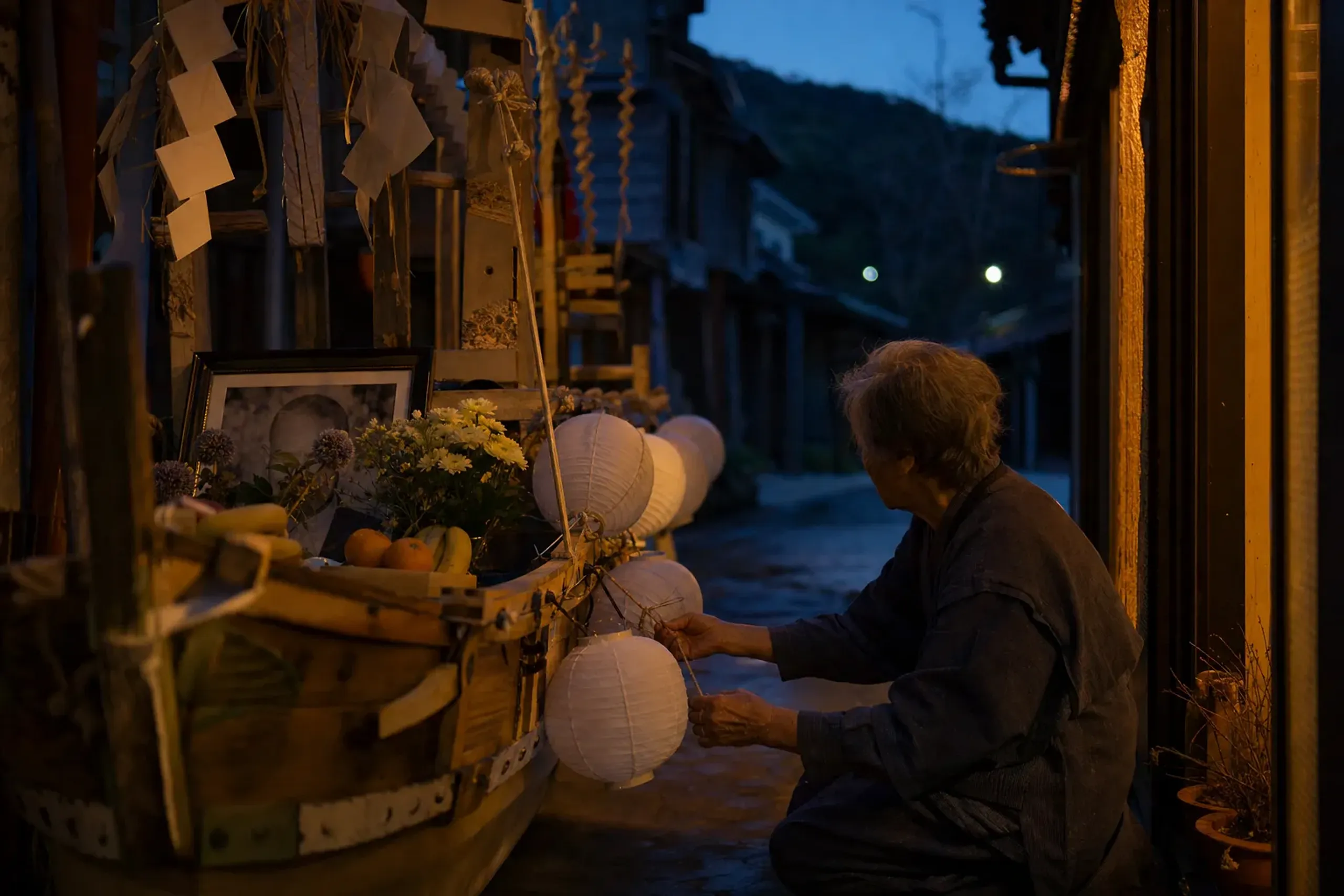
But on the night itself, the boats belong to families, not to the public—a distinction that defines the entire evening.
One nuance visitors miss: Nagasaki’s Obon period is often described as 13 to 16 August in local writing. Shoro Nagashi is specifically the 15 August night, and it should not be confused with other lantern events elsewhere in Japan.
A Boat For One Person: What A Shoro-Bune Means
Each shoro-bune is made for one person, by one family. That intimacy is visible even through the noise and smoke.
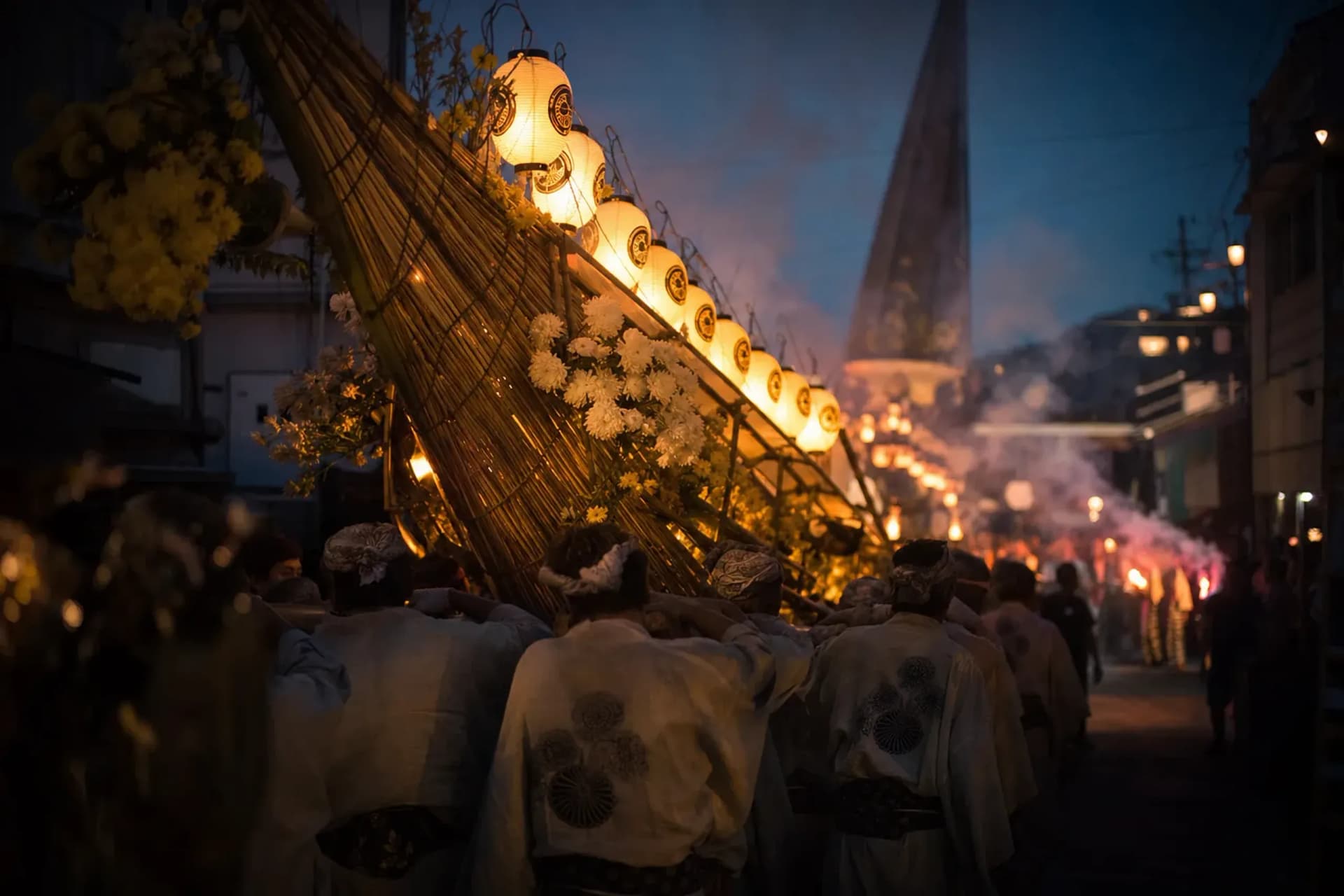
Local descriptions note materials you can recognize up close: bamboo, boards, straw—humble things, shaped with care. The prow is long. It carries markings such as the family name, the family crest, and the town name. You may notice decorations that hint at the person’s life—small, wry touches that make strangers lower their eyes for a moment. There is a quiet, unforced beauty here, the restraint of wabi-sabi expressed not in a tea room but in the grain of hand-cut wood and plaited straw.
Nagasaki City has asked that boats and straw mats not be put into the sea. In modern practice, the boats are instead brought through the city to designated acceptance areas (nagashi-ba) near the port.
A historical account in a City publication traces the shifts over time: sending boats out to sea was banned in 1871; wheeled boats appeared around 1949; the firecracker-heavy style grew through the 1950s and 1960s; and fireworks were self-restricted around 1975 after accidents.
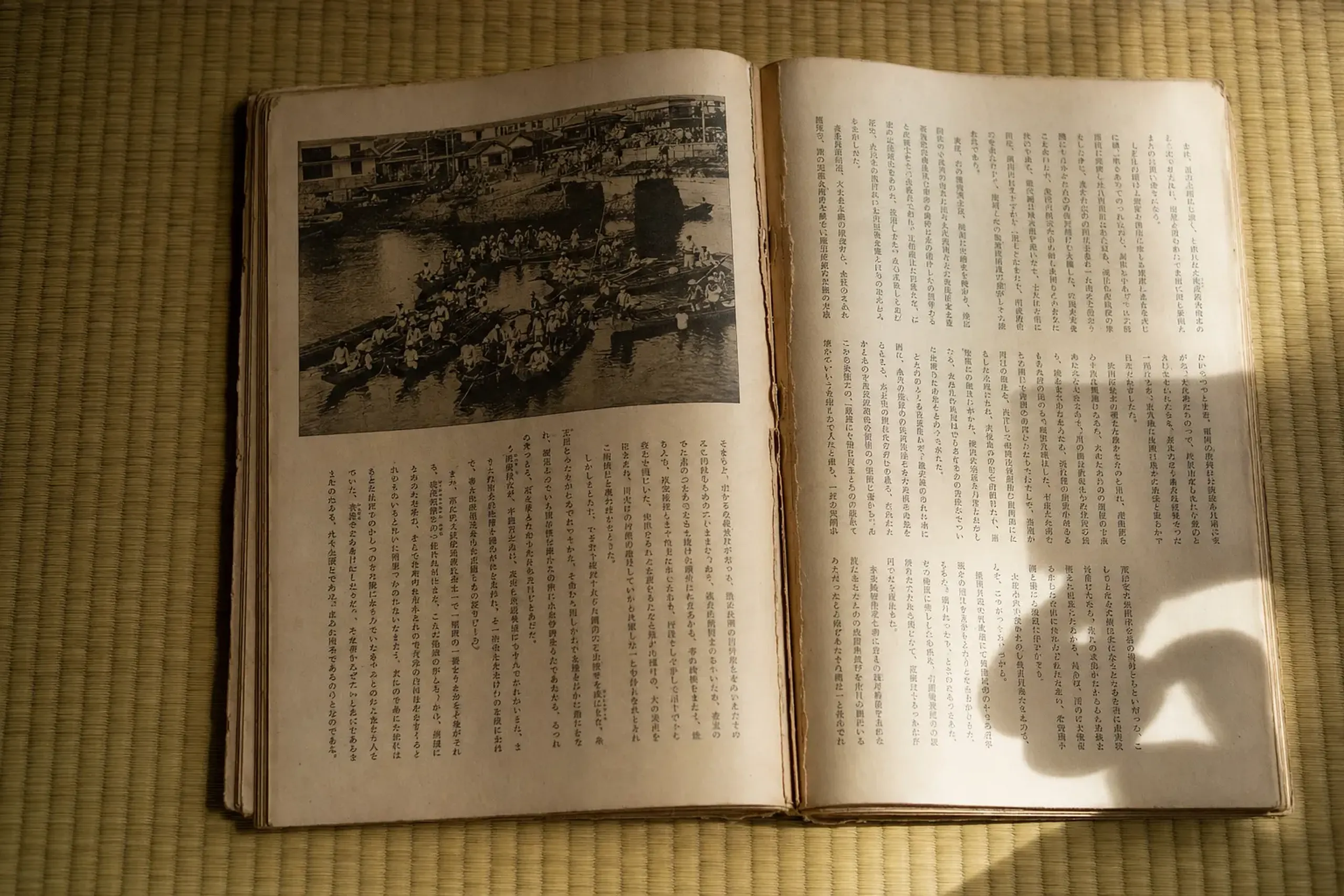
It reads like a city learning, then relearning, the boundary between ritual and risk.
Where Does Shoro Nagashi Take Place In Nagasaki City?
The core city-centre route runs from Shianbashi up Kenchozaka toward Ohato near the port.
If you want one mental map to hold, use that spine. Shianbashi is the gathering energy—people arriving by tram, street corners tightening, the first boats edging forward. Kenchozaka is the climb toward the Prefectural Office area, a slope that naturally becomes a viewing point because the procession compresses there.
A Nagasaki City publication (2008) describes Kenchozaka as the main viewing point, where boats are spun and rockets are fired, and it describes the last stop as Ohato, where the portrait is removed. Treat that as one account from one year. The city confirms detailed operational notices closer to the date.
Launch-site (nagashi-ba) locations are designated by the city each year. In the city’s 2024 notice, key city-centre acceptance sites included Matsugae, Motofune, and Matsuyama, with acceptance commonly described as roughly early evening to night (often around 5 pm to 9 pm, varying by site and year). Do not assume the list is identical every year—it changes, and the difference can matter.
What Does Shoro Nagashi Sound Like, And Why Are There Firecrackers?
Expect a dense wall of sound—bells, gongs, shouted calls, and relentless firecrackers—because many families use noise itself as part of the send-off along the route.
You will hear bells first. Then gongs. A local tourism blog describes the call as “doi, doi.”
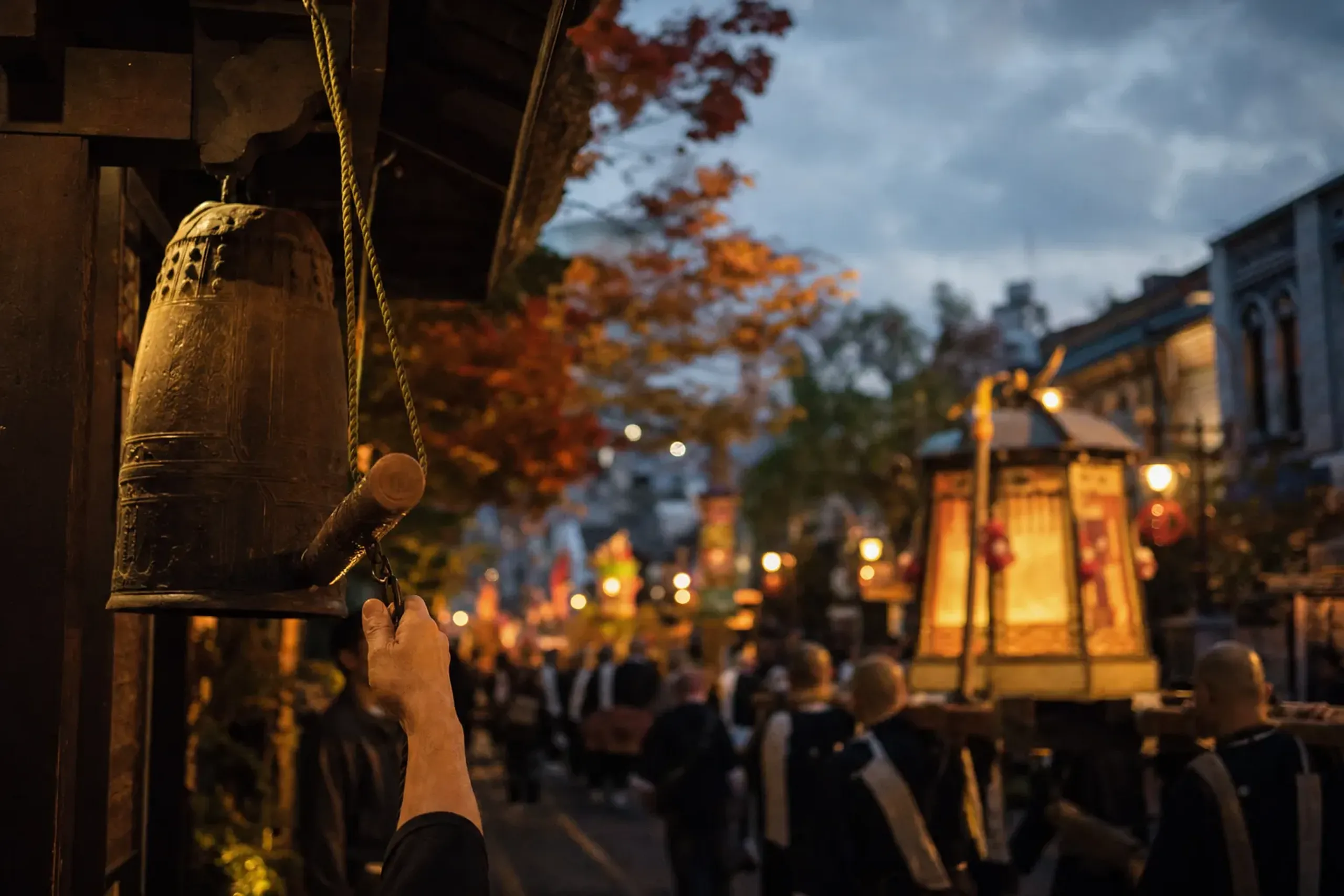
The chant is not for you. It is for momentum, for courage, for focus, for the group’s timing as they keep the boat moving through crowds and smoke.
Nagasaki City publications have described the firecrackers in terms of remembrance, and in connection with warding off evil and purifying the route the boats take. Those are local explanations offered in print. They are not a guarantee that every family understands it the same way, or uses the same amount.
You may also read that Shoro Nagashi is said to have been influenced by Saishu-nagashi held by Chinese residents at Tojin Yashiki, and that firecrackers were brought from China. These are presented as “said to be” in city materials, rather than a settled, single-source origin story.
Firecrackers, Traffic Rules, And Real Safety On 15 August
From about 5 pm on 15 August, traffic regulation begins in parts of central Nagasaki and continues until the procession ends, and the city warns that inappropriate fireworks use can cause injury or lead to penalties if damage occurs.
Plan for constraint, not convenience. Parking lots on or leading into regulated roads may not allow cars to exit while restrictions are in place. That detail catches visitors off guard. Big mistake, and an avoidable one.
Nagasaki City also publishes specific firework-related rules for launch sites in some years. In the city’s 2024 and 2025 guidance, all fireworks are banned inside launch sites, and rocket or multi-shot fireworks that could cause fire or injury must not be used.
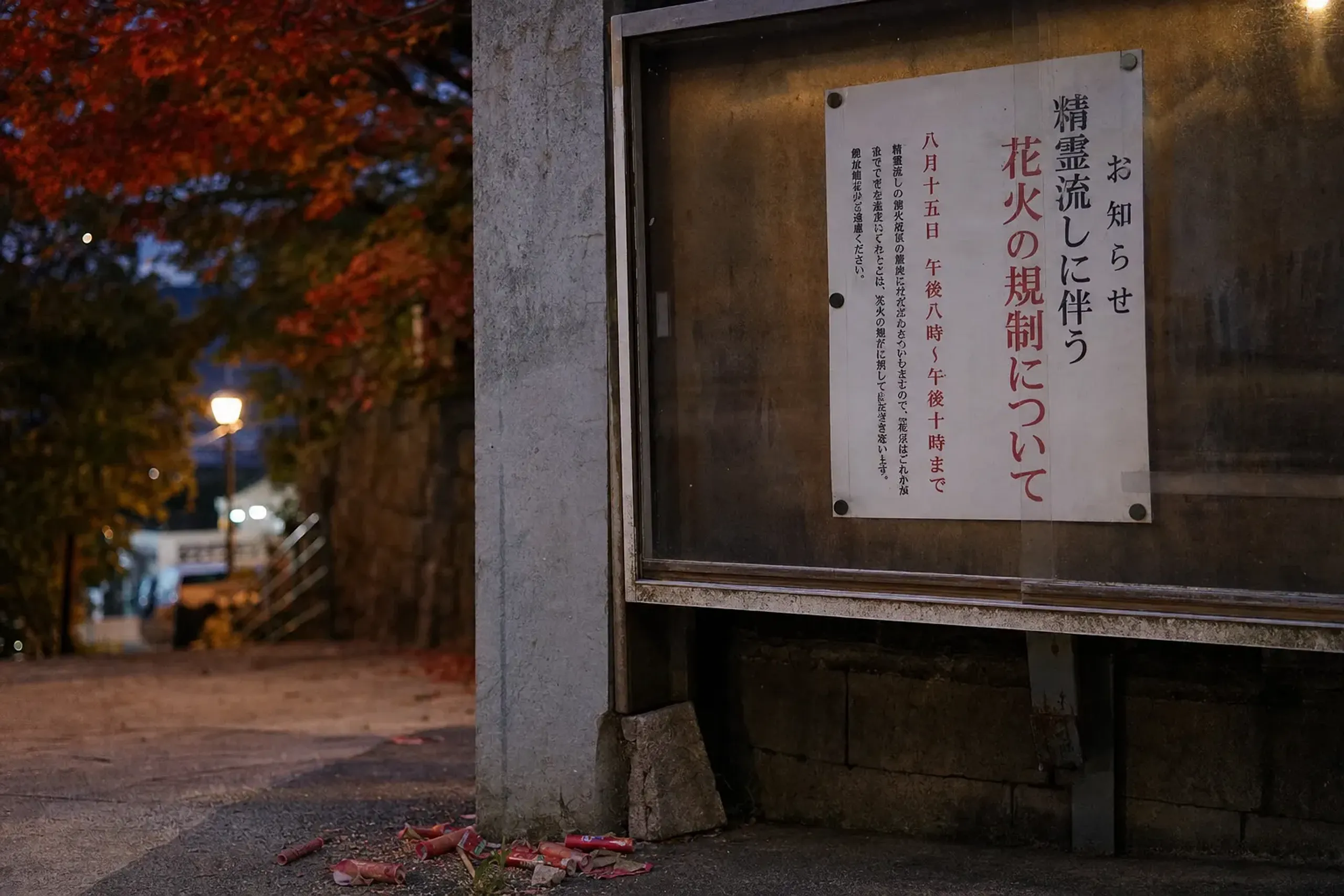
The city also asks that empty boxes and rubbish are taken away, and it notes that damage or injury may be punished.
Key fact: Spirit boats of total length 2 meters or more require a road-use permit, and boat-building on a road may also require police permission.
The permit point is not trivia. It signals that Shoro Nagashi is treated as a live, street-level event with real hazards—not as an ornament arranged for visitors.
If you are traveling with children or anyone sensitive to sound, treat hearing protection as essential. Not optional. Stand farther back than you think you need to.
How To Watch Shoro Nagashi Respectfully (And Not Get In The Way)
Watch quietly from the edge of the street, avoid blocking a boat’s path, and treat every group as a family in mourning rather than performers.
No one has to “invite” you, because the rite happens on public streets, and no official ban on watching was found in the sources above. The local tourism association’s blog explicitly says watching is fine, while asking non-family members not to join in with firecrackers or fireworks.
So your role is simple. Stay small. Let the boat pass without turning your body into a barricade. When a family pauses, do not step into that pocket of space as if it is yours.
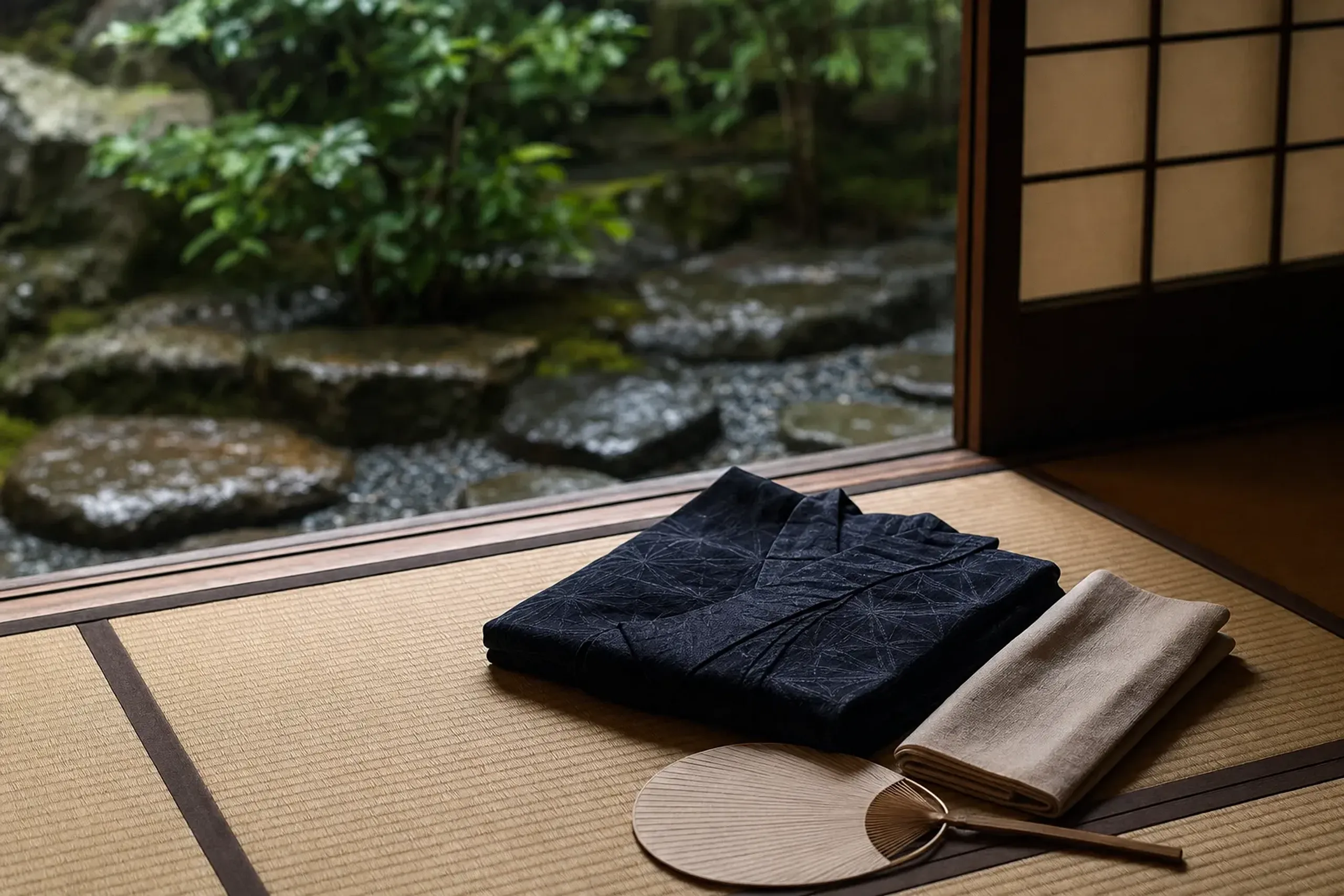
What about clothing? Aim for restraint. You do not need formalwear. You also do not need beachwear. Clean, quiet choices read well anywhere in Japan, and they read especially well on a night of public grief.
Photography is the hardest question, because no official photo guidance was found. In our experience at Japan Royal Service, discretion keeps you safe socially even when the rules are unclear: avoid close-ups of faces, avoid photographing people who are visibly distressed, and never use flash near boats, smoke, or children. The same instinct for confidentiality we extend to our own guests applies here too—some moments are meant to be felt, not captured.
Step-By-Step: A Calm Plan For The Evening
The night goes better when you plan backward from the traffic regulation and forward from your own tolerance for noise.
Step 1: Eat Early, Before The Streets Tighten
Take an early evening meal and finish before the city centre becomes hard to cross. Simple. If you wait until you are hungry, you will end up searching for a table while the boats are already moving.
Step 2: Choose One Viewing Goal, Not Five
Pick one stretch of the Shianbashi–Kenchozaka–Ohato spine and commit to it. Chasing “the best spot” all night tends to create the exact behavior locals dislike: weaving, stopping, and turning the street into a slalom course.
Step 3: Carry Small, And Protect Your Ears
Bring earplugs, water, and a small towel. Keep bags tight to your body. Smoke and crowd edges can snag straps, and you do not want to swing into someone holding a boat rope.
Step 4: Leave The Centre Before You Are Exhausted
Decide a personal end point while you still feel fresh.
When you wait until you are overwhelmed, the crowd feels twice as dense, and finding a taxi or a clear tram platform can become genuinely frustrating.
Getting There: Practical Access Into Nagasaki On Obon
This is a planning night. Not a “wing it” night.
From Nagasaki Airport, the Airport Limousine Bus takes about 43 minutes to Nagasaki Station, according to the airport’s published information. From Nagasaki Station, the tourism association notes you can reach Shianbashi by tram in about 12 minutes on a tram bound for Sofukuji, getting off at Shianbashi.
If you are arriving from Fukuoka, JR Kyushu publishes the fastest Hakata-to-Nagasaki trip as about 1 hour 20 minutes with a change at Takeo-Onsen; the Nishi-Kyushu Shinkansen runs Takeo-Onsen to Nagasaki in about 30 minutes (as described by JNTO). Arrive with buffer. Obon travel across Japan is busy, and the margins vanish quickly.
Heat is part of the equation. The Japan Meteorological Agency’s 1991–2020 averages for Nagasaki in August list a mean temperature of 28.1°C, with a mean daily high of 31.9°C and rainfall around 217.9 mm. Dress for the sweat, and plan for sudden showers even if you do not see an official rain policy for the event.
A One-Line Note On 9 August, And Two Other Easily Confused Events
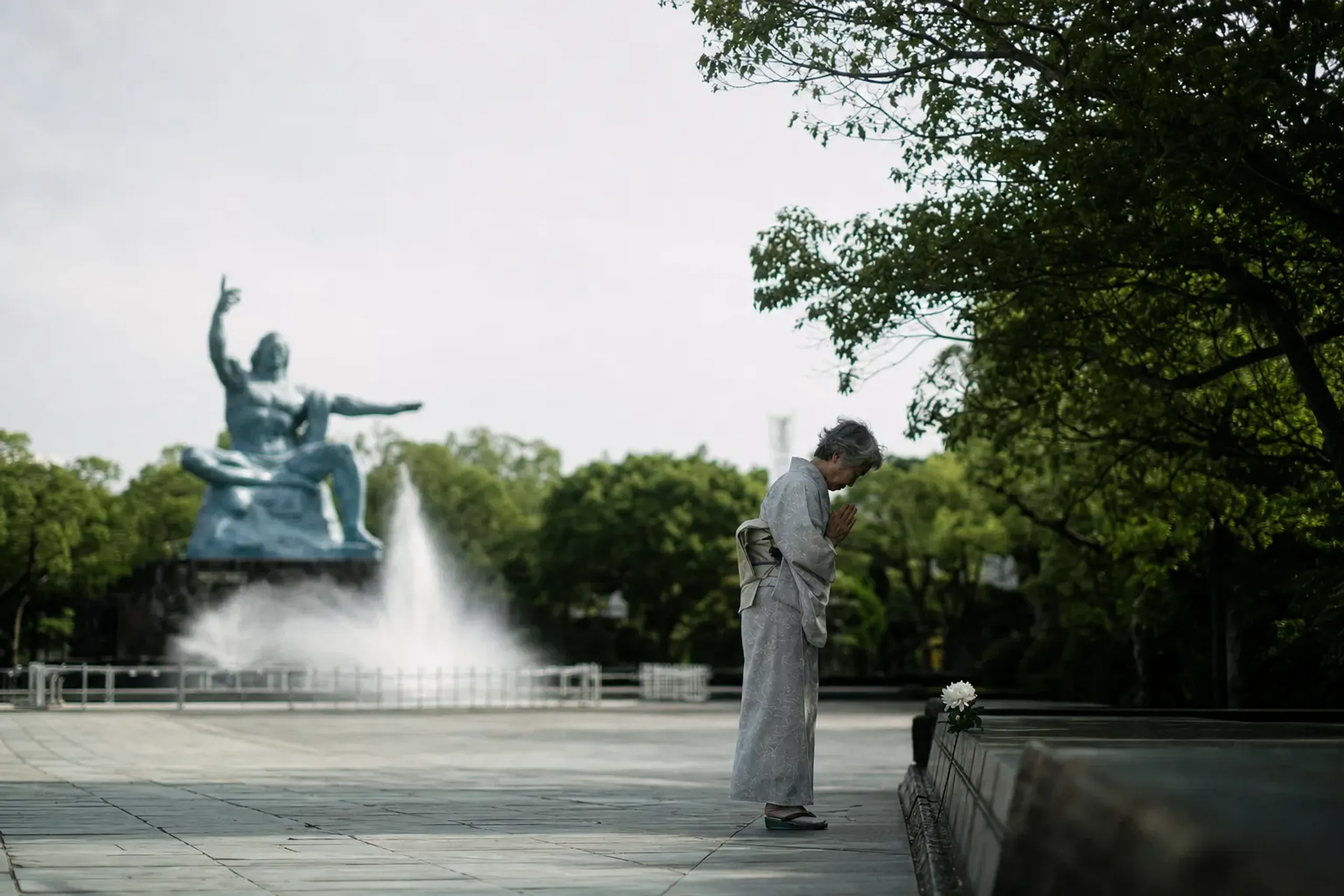
Nagasaki holds its Peace Ceremony on 9 August for the atomic bomb victims, which is separate in purpose and tone from Shoro Nagashi on 15 August.
Shimabara also holds its own Shoro Nagashi, a different local event from Nagasaki City’s procession.
And the Nagasaki Lantern Festival takes place in February, not during Obon. Different season. Different meaning. Knowing which night belongs to which place—and which month carries which spirit—is precisely the kind of seasonal judgment, the sense of shun, that turns a trip into the right trip.
How Our Concierge Team At Japan Royal Service Plans This Night
Luxury on this night looks like judgment. Quiet timing. A plan that removes friction without trying to “control” a rite that is not yours to control.
When guests ask our team at Japan Royal Service about Shoro Nagashi, we focus on four practical pieces—always within the limits of what exists on public streets, and without implying any reserved or priority viewing.
1) Guiding: Cultural Interpretation, Not Participation
We can provide an English-speaking cultural interpreter guide who explains what you are seeing, what a boat represents, and how to stand and behave as a watcher. The guide does not take part in any family’s rite. Full stop.
2) Transportation: A Drop-Off And Return Plan Outside Regulated Roads
We plan a drop-off point outside the regulated zone and a clear return strategy, using private transportation suitable for your party size. On this night, the right plan matters far more than the fanciest car.
3) Accommodation: Walkability Beats A Long Drive
We advise choosing a city-centre hotel early so you can walk in and out with minimal dependence on vehicles.
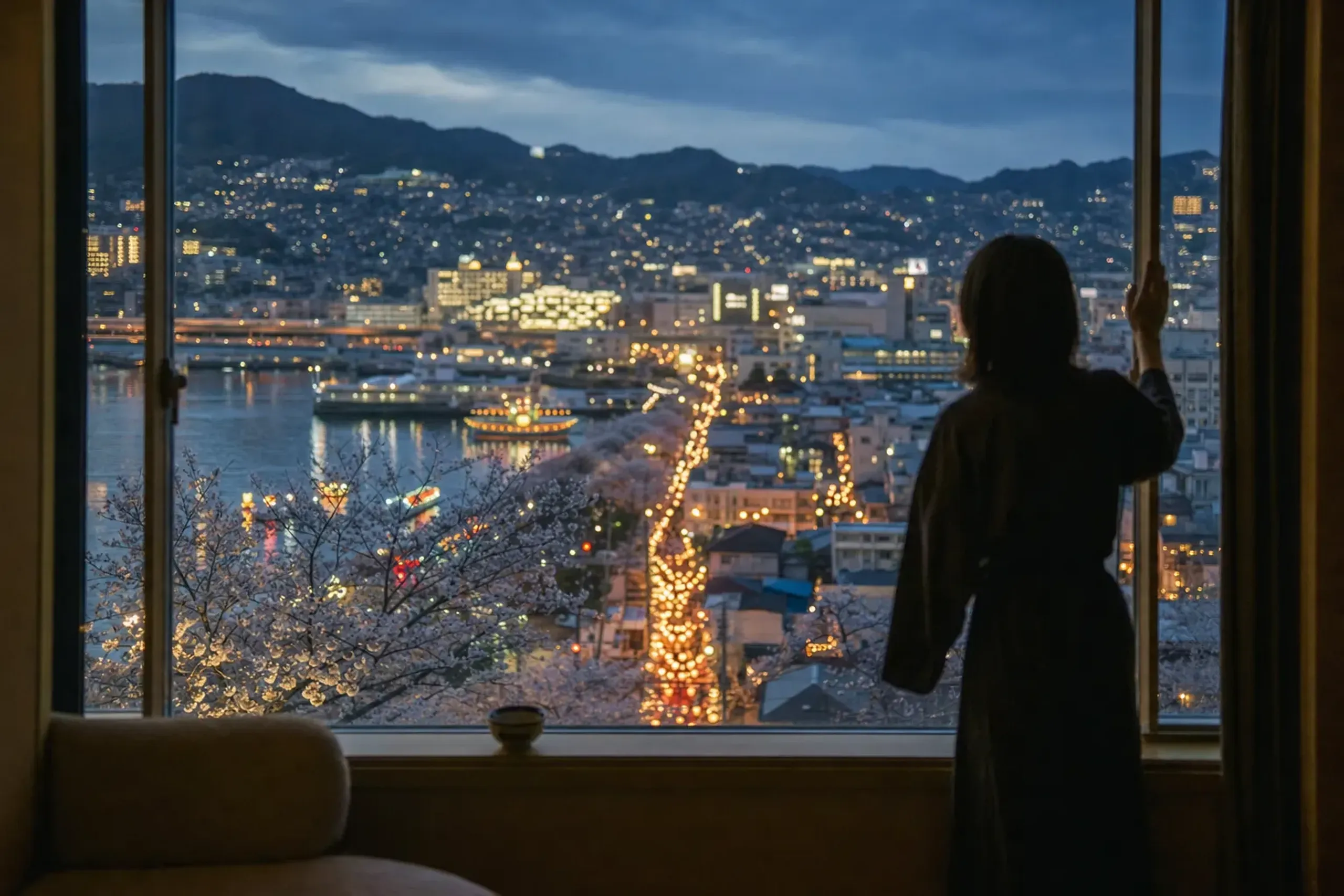
Obon compresses availability. Fast.
4) The Verification Work: Police Notices And City Launch-Site Guidance
Our concierge team checks, ahead of your visit, the year’s police traffic notice, the city’s launch-site list, and the available tram and bus operation notices for the night. Details are confirmed closer to 15 August, and you should expect updates in the weeks before. This quiet, unseen verification—the care taken before you ever arrive—is where a well-planned evening is actually won.
If you want deeper context on Obon etiquette and timing across Japan, we recommend reading Obon in Japan: Planning Around the Festival of Ancestors. For broader street-matsuri manners—how to stand, when to move, what not to do—see Japan Matsuri: How To Watch With Respect. And if your August trip includes Nara, Todai-ji’s Lantern Night: Manto Kuyo-e on 15 August offers a very different, quieter evening on the same date.
Plan Your Night In Nagasaki With Discretion And Care
Shoro Nagashi rewards the traveler who arrives prepared and composed—who understands that the deepest privilege here is not a reserved seat, but the sensitivity to witness a private farewell without intruding on it. If you would like this evening woven into a wider, fully tailor-made itinerary through Kyushu and beyond—confidentially arranged, timed to the season, and handled down to the last traffic notice—contact us here. We will shape the night around you, quietly, and let the boats carry the rest.