In this guide
- 01What Is Obon In Japan, And Why Does It Matter For Travelers?
- 02When Is Obon In Japan, And What Are The Peak Travel Days In 2027?
- 03Traveling During Obon: A Calm Logistics Playbook
- 04Kyoto’s Gozan No Okuribi: What Happens On August 16?
- 05Gujō Odori In Gujō Hachiman: How Do You Join Respectfully?
- 06Nagasaki’s Shōrō Nagashi On August 15: What To Expect
- 07Can You Do Nagasaki On August 15 And Kyoto On August 16?
- 08Watching Obon Observances Respectfully: Small Things That Matter
- 09How To Plan Obon Week Like A Luxury Traveler (Without Fighting Japan’s Calendar)
- 10Frequently Asked Questions
- 11Why Choose Japan Royal Service
Obon is a family observance first. It is also one of the hardest weeks of the year to travel well in Japan.
Mid-August concentrates domestic movement, limited inventory, and tight timing. Small decisions matter. A missed train connection is annoying; a missed night can reshape an entire trip.
This guide gives you the meaning of Obon, the dates that drive demand, and a practical planning approach. Then we focus on three observances that reward the effort: Kyoto’s Gozan no Okuribi on August 16, Gujō Odori’s all-night dancing during Obon, and Nagasaki’s Shōrō Nagashi on August 15.
What Is Obon In Japan, And Why Does It Matter For Travelers?
Obon is a Buddhist observance to commemorate ancestors, whose spirits are believed to return to visit their families; it matters because travel demand spikes while many experiences remain community-centered rather than “ticketed.”
Obon is commonly observed from August 13 to 16, with some regions observing it in mid-July. The week is shaped by homecomings. You will see the signs in lanterns, in family grave visits, and in offerings placed at home altars.
There is dancing too. Bon odori ranges from quiet neighborhood circles to large public gatherings, and the feel changes from town to town. Not every dance is “for tourists.” Some are, and they are wonderful. Others are best watched with restraint.
At the end of Obon, lanterns or fires send the spirits back.
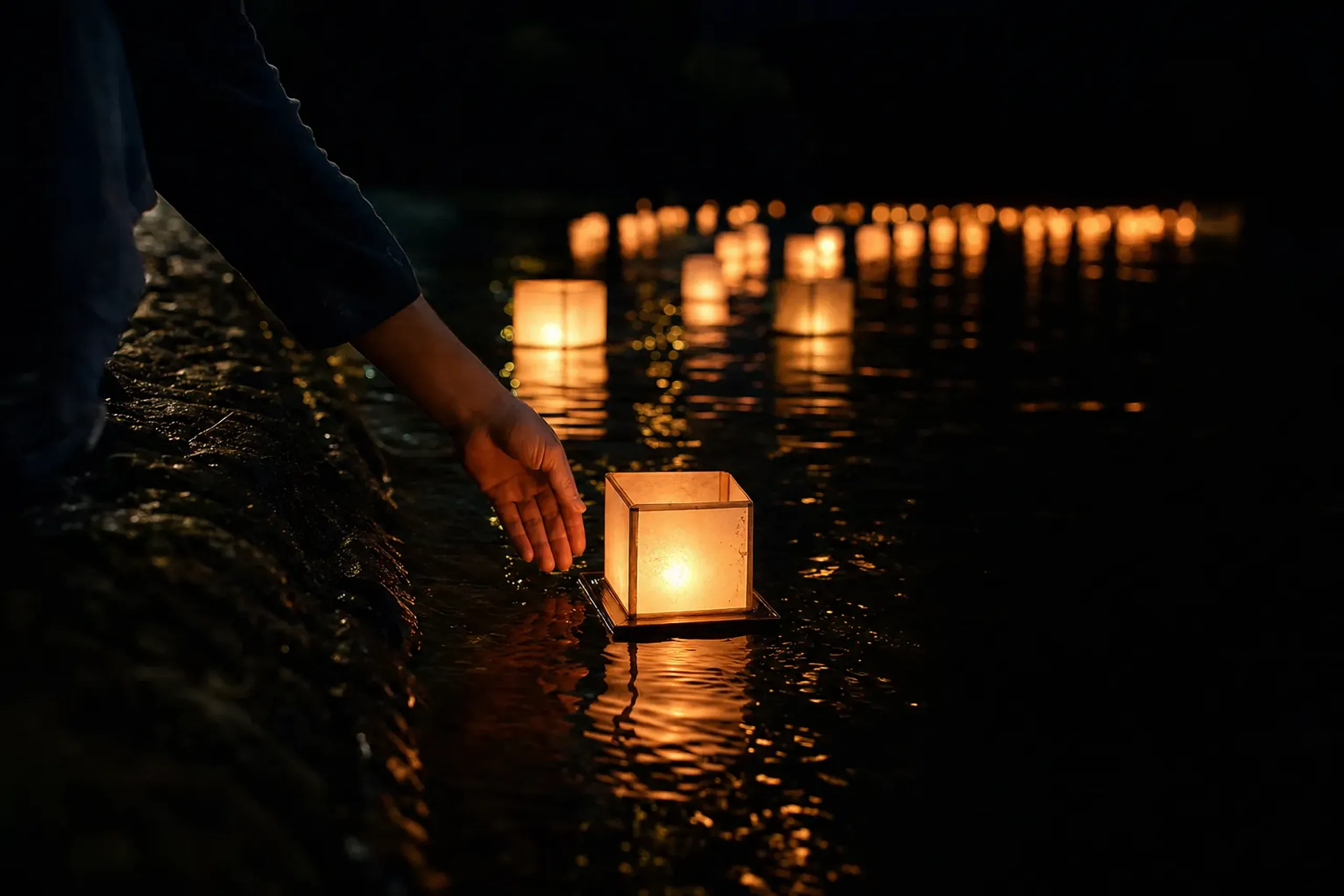
That closing note is why the nights of August 15 and 16 carry particular weight in places like Nagasaki and Kyoto. It is moving. It is also time-specific.
When Is Obon In Japan, And What Are The Peak Travel Days In 2027?
Obon is mainly observed from August 13 to 16, and in 2027 we expect the peak travel window to run roughly August 7 to 16, with the busiest flows out of big cities around August 7 and 11–13 and returns around August 15–16.
That is an expectation, not a promise. Rail capacity, school calendars, and corporate holidays all influence the shape of the rush. Our concierge team at Japan Royal Service confirms the latest conditions directly with you when we build the plan.
For travelers, the point is simple. If you are moving between cities during those days, you are competing with Japan’s own holiday. Inventory gets thin. Options get blunt.
Good planning is not only “book early.” It is about choosing the right base on the right night, then moving against the flow when possible. Sometimes the smartest luxury choice is one less hotel change.
Traveling During Obon: A Calm Logistics Playbook
Obon week is one of Japan’s three major holiday seasons, and that shows up in accommodation availability and transport load. Expect higher rates. Expect fewer preferred room categories. Expect less flexibility if you wait.
Start with your non-negotiables.
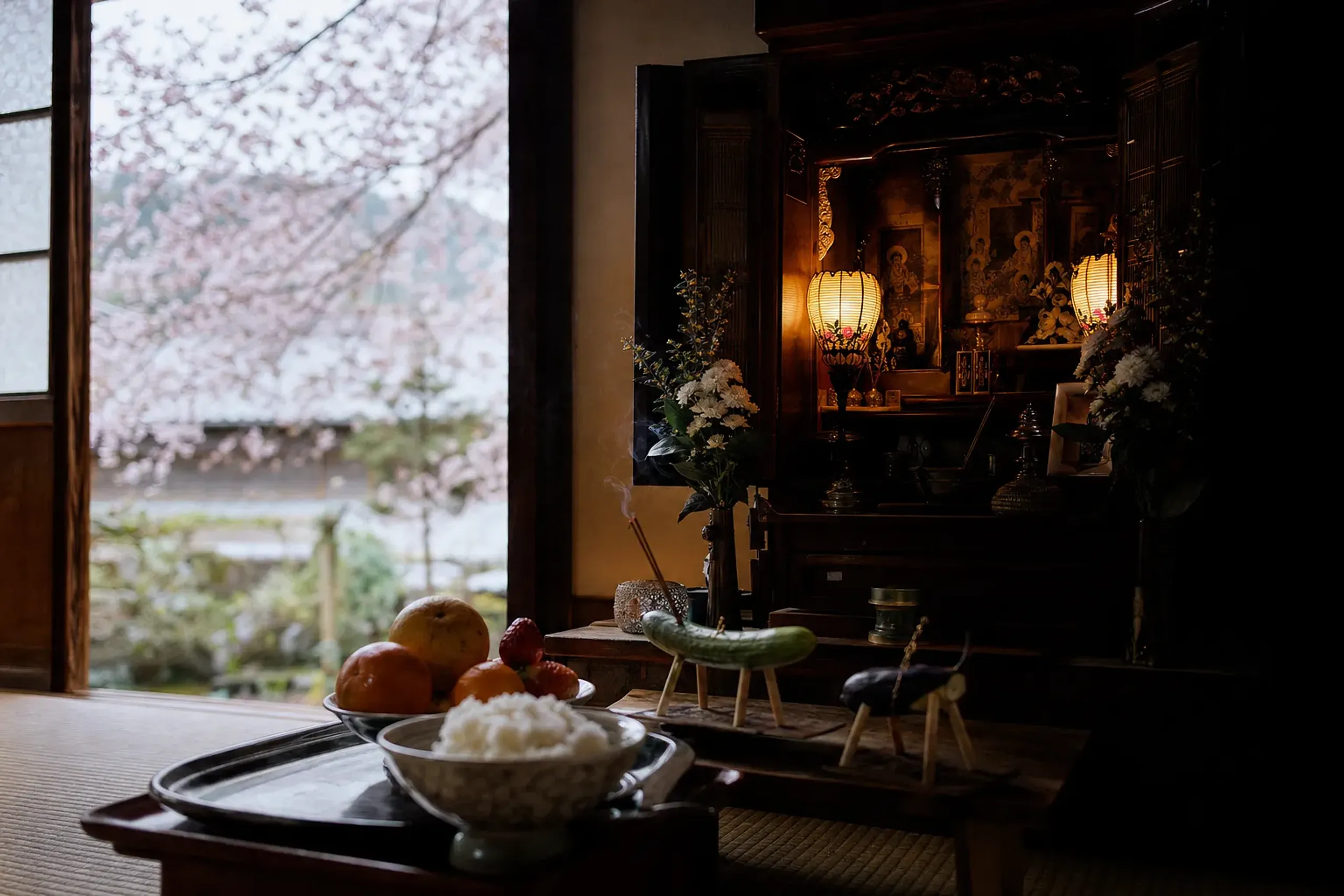
A specific observance night, a certain city, or traveling with children. Then work backward into a route that reduces friction rather than chasing a long checklist.
If you will be using private transportation, request guidance early. Vehicles, drivers, and sensible routing matter most when the calendar is crowded, and when the evening event ends at a predictable time and many people leave at once.
If you want a tailor-made itinerary, we also recommend thinking in “Obon blocks.” Two to four nights per base works well for most HNW travelers. It gives you margins. Margins are the hidden luxury.
Key fact: Obon travel pressure is driven by fixed dates (Aug 13–16 in many regions) and by people moving at the same time; the right plan protects your evenings, not just your mornings.
We also plan your days around August reality. Heat, queues, and late nights change your pace. A quiet museum hour, a shaded garden, or a long lunch can be the difference between enjoying an observance and merely enduring it.
Kyoto’s Gozan No Okuribi: What Happens On August 16?
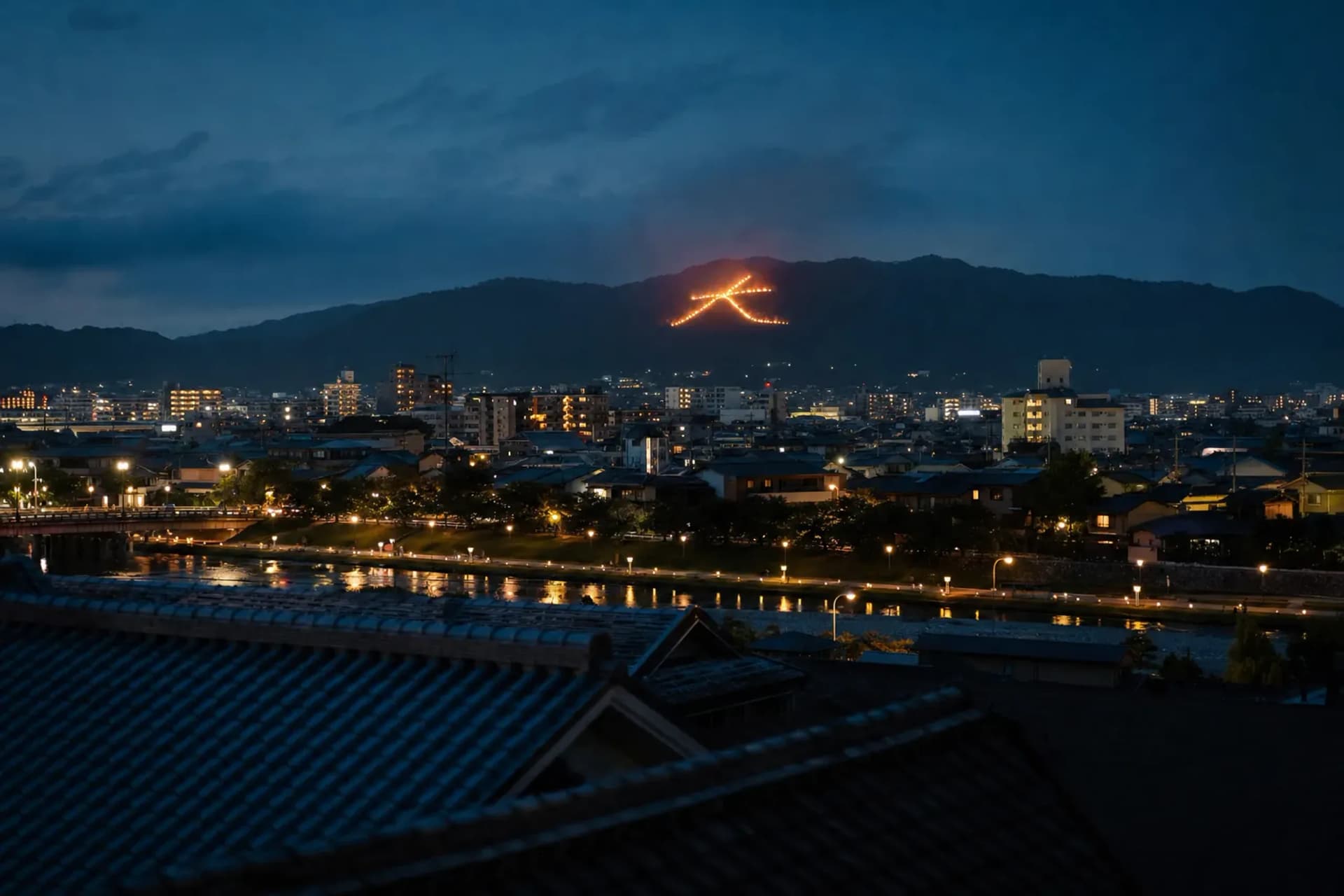
Kyoto’s Gozan no Okuribi is held every year on August 16, with five bonfires lit on mountains around Kyoto at five-minute intervals starting at 20:00, as a traditional way to send off Obon spirits.
This is not a parade you follow. It is a city looking upward. People watch from along the Kamo River and from many other points across Kyoto, and the night has a distinct hush even when the streets are busy.
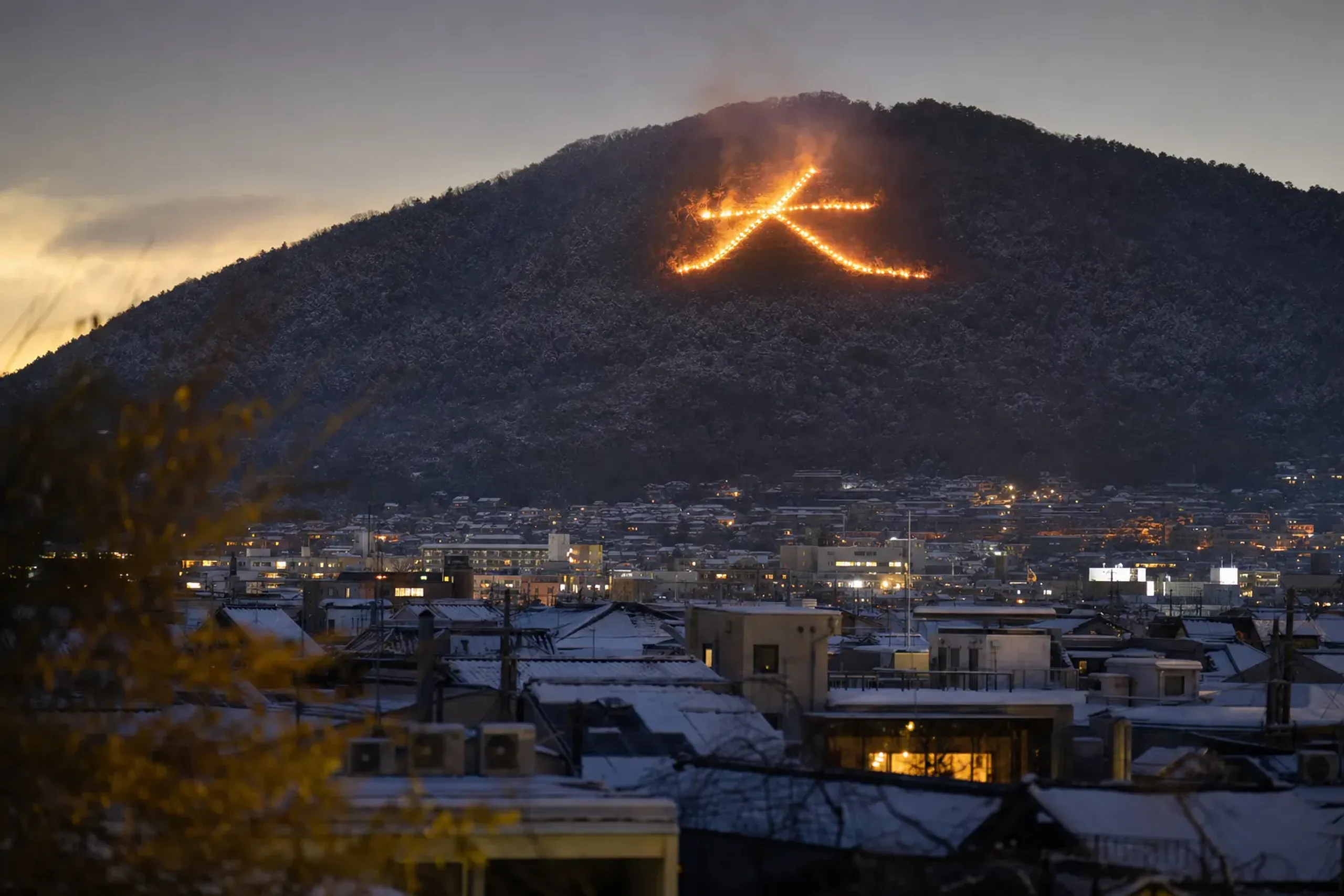
The fires are lit in this order, and each burns for about 30 minutes:
- Daimonji (大) at 20:00
- Myō-Hō at 20:05
- Funagata (boat) at 20:10
- Hidari Daimonji (second 大) at 20:15
- Toriigata (torii gate) at 20:20
For planning, the key is sightlines. Big mistake: assuming you can “wing it” at 19:55 and still get a clean view. On Obon week, the city’s flow is not forgiving.
Our team at Japan Royal Service builds an evening plan that fits your party size and your tolerance for crowds, and we brief you on what you are seeing so it lands as an observance, not a photo hunt. We keep the tone quiet. That is the point.
This is also where wabi-sabi becomes practical, not poetic. You may not see every character perfectly. You may see one fire clearly and another only as a glow. The night can still be complete.
Gujō Odori In Gujō Hachiman: How Do You Join Respectfully?
Gujō Odori is held in Gujō Hachiman over around thirty nights from mid-July to early September, and during Obon—August 13 to 16—the dancing continues all night with locals and visitors moving together.
Gujō Hachiman is a castle town in central Gifu. The draw is not spectacle from a distance. It is participation that is clearly welcomed, with a rhythm that repeats until you stop thinking and simply follow.
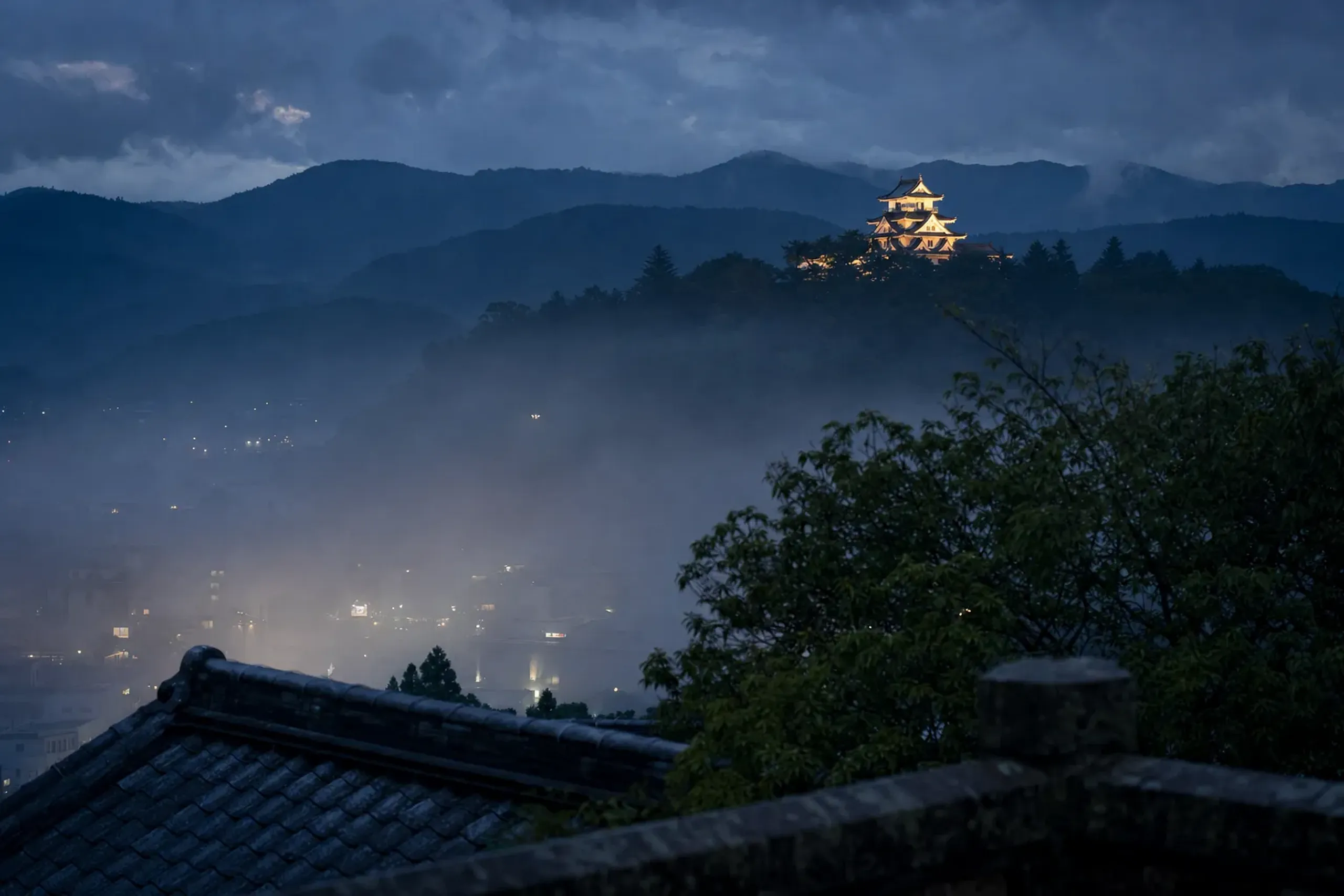
Dates vary by year outside the fixed Obon all-night period. So we plan with the calendar, then confirm details as the season approaches. Simple.
Gujō Odori is designated as an Important Intangible Folk Cultural Property of Japan. That designation is not decorative. It signals that the dance is community heritage, and your posture should match that fact.
We often suggest arriving with time to settle in. Eat. Walk. Listen to the town’s tempo before the night begins. If you join the circle, do it with humility. You will learn quickly.
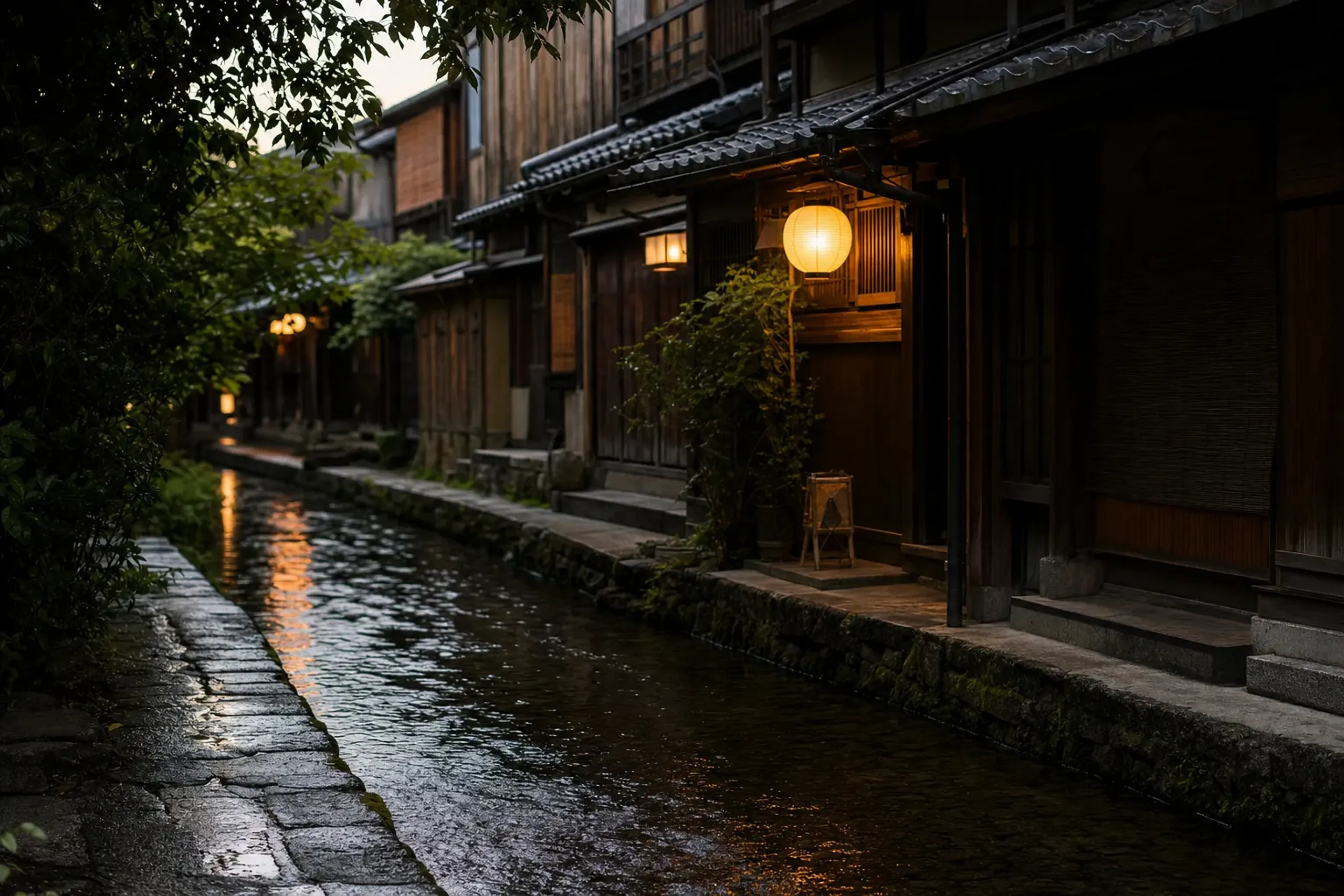
If “hidden Japan” means anything, it looks like this. A small-town street, lantern light, wooden clogs tapping, and strangers who are suddenly not strangers. No gold-leaf theatrics needed.
Nagasaki’s Shōrō Nagashi On August 15: What To Expect
Nagasaki’s Shōrō Nagashi is held every year on August 15, when families send off the souls of relatives by parading decorated spirit boats through central Nagasaki, late into the night.
The route is specific: from Shianbashi via Kenchōzaka to Ōhato. It is one of the clearest “Obon is ending” statements you can witness as a visitor.
It is also loud. Firecrackers sound throughout the procession. If you are traveling with children, or if sharp noise drains you, we plan your viewing position and timing with that in mind.
Shōrō Nagashi is not staged for outsiders.
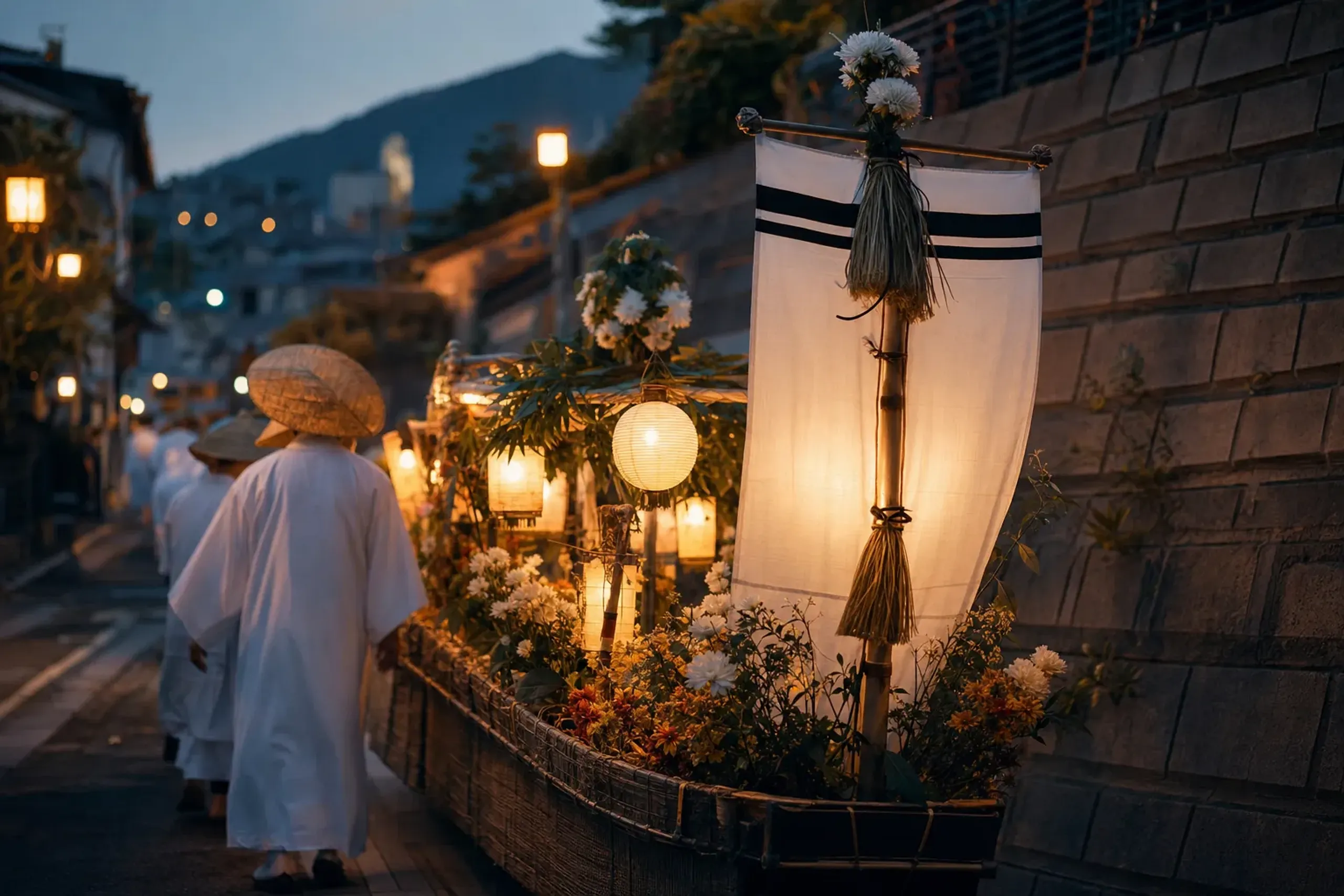
You are watching people do something for their dead. That is why it can feel so direct, and why a guide who can explain what is happening—without turning it into performance—matters.
Nagasaki rewards a longer stay, even if Obon is your anchor. If you are considering it, our team can share reading and context, and we may point you to related planning ideas such as Kangensai: Miyajima’s Night Of Court Music On The Water for a different kind of night observance.
Can You Do Nagasaki On August 15 And Kyoto On August 16?
Yes: August 15 and August 16 are consecutive nights, so it is calendar-possible to plan an Obon trip that includes Nagasaki’s Shōrō Nagashi followed by Kyoto’s Gozan no Okuribi.
Whether it is wise depends on your pace, luggage tolerance, and how you handle late nights. One night ends late. The next asks you to be positioned well before 20:00. That is a tight emotional arc too.
When our concierge team builds this kind of route, we protect sleep and reduce transfers. We also keep the focus on meaning. Otherwise you collect nights like trophies and remember none of them.
Watching Obon Observances Respectfully: Small Things That Matter
These are observances for ancestors. Your behavior sets the tone.
Start by dressing simply. Keep your voice down. When people are praying or moving with purpose, give them space and avoid blocking the path for a photo.
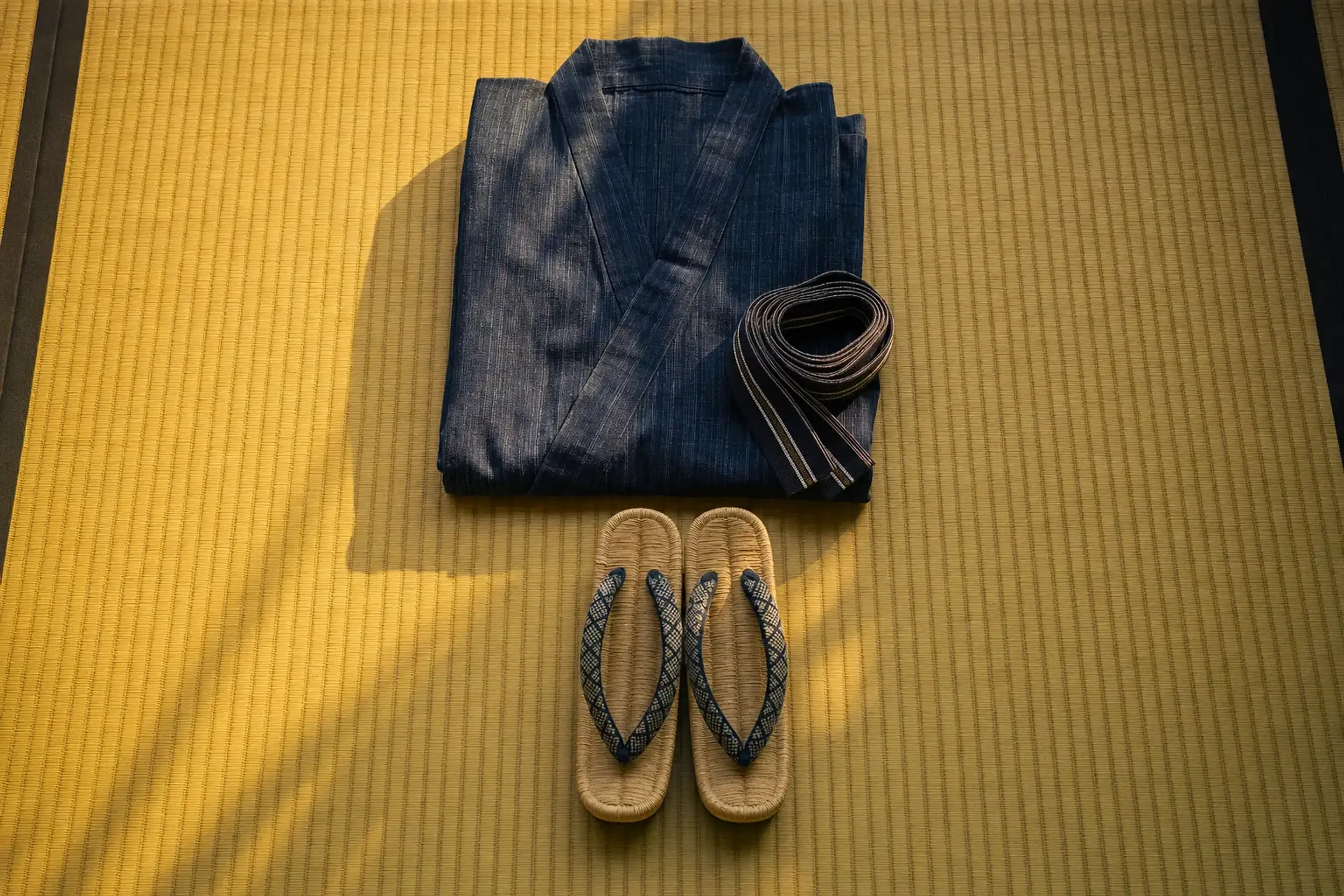
If a dance invites participation, join gently and follow the lead of those around you. If it does not, watch. A good guide will tell you the difference without shaming you.
We also suggest reading a short etiquette primer before you arrive, especially if you will visit temples or family neighborhoods. Our team often shares Japan Etiquette: What Matters, And What Doesn’t as a calm baseline.
How To Plan Obon Week Like A Luxury Traveler (Without Fighting Japan’s Calendar)
Start planning months ahead, and treat August 13–16 as fixed “pressure points” that determine where you sleep and when you move.
We keep decisions grounded in three ideas. First: discretion. You should not have to broadcast your movements to travel smoothly. Second: hidden-Japan choices that still respect the season’s limits. Third: wabi-sabi restraint—choosing fewer moments, but choosing them precisely.
For some travelers, the best Obon plan is not Kyoto-first. It is building around Gujō’s all-night dancing, or using a quieter base and visiting a city for a single night with a clear purpose. If you want summer festival context beyond Obon, we may point you to our broader Japan’s Summer Festival Calendar in conversation.
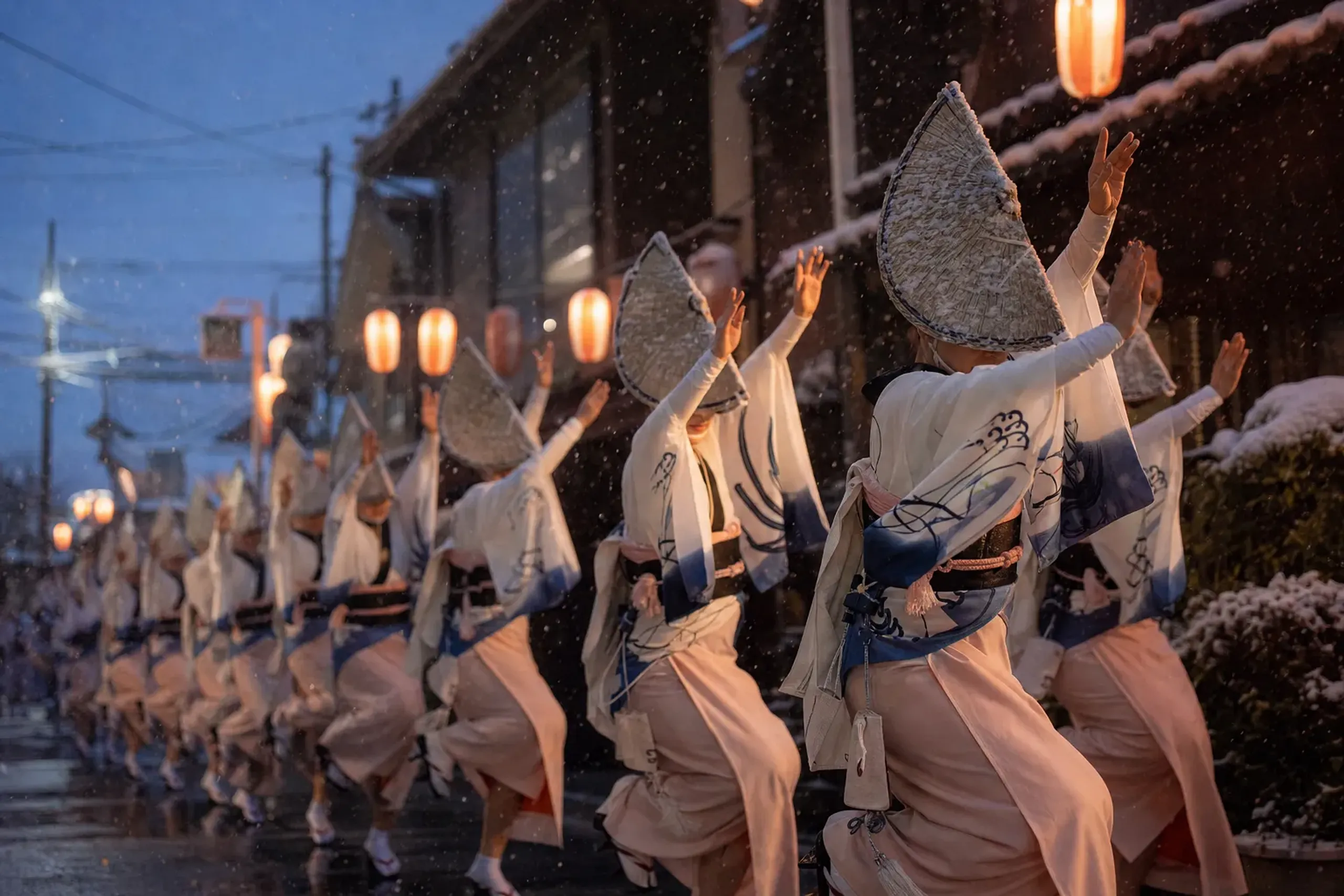
Awa Odori in Tokushima is another famous mid-August event, but it is not the focus of this guide; if it is on your mind, start with our Awa Odori Tokushima Guide and then ask our concierge team how it fits your dates.
Frequently Asked Questions
Is Obon A Good Time To Visit Japan If I Want A Calm Luxury Trip?
Obon can work for a calm luxury trip if you plan early, limit hotel changes, and build around one or two meaningful nights instead of trying to cover many cities at once.
In our experience, the stress comes from over-scheduling and late decisions, not from Obon itself. The observances can be deeply rewarding when your logistics are protected.
Where Should I Watch Kyoto’s Gozan No Okuribi If There Are No Tickets?
Most people watch Kyoto’s Gozan no Okuribi from along the Kamo River or other spots across the city where sightlines work for their chosen fire.
Because it is not a ticketed event, the practical question is “what can you see clearly from where you stand.” Our concierge team can guide you on timing, movement, and expectations for your party size.
What Is The Most Visitor-Friendly Obon Experience For First-Timers: Kyoto, Gujō, Or Nagasaki?
Gujō Odori is often the most visitor-friendly because locals and visitors dance together, while Kyoto’s Okuribi and Nagasaki’s Shōrō Nagashi are primarily watched rather than joined.
Kyoto suits travelers who want a single iconic night with a defined start time. Nagasaki suits travelers who want something intimate and direct, and who can handle the noise of firecrackers.
Can You Help Me Plan Obon In Japan If I Only Have 5–7 Nights?
Yes—our team at Japan Royal Service can design a 5–7 night Obon plan by choosing one strong anchor observance and building a comfortable base around it.
We keep transfers realistic, prioritize evenings, and set the right expectations for crowds and movement during peak dates.
Why Choose Japan Royal Service
You can read a dozen Obon articles and still get stuck on the same problem: how to move, where to stand, and what the night means when you arrive. That gap is where Japan Royal Service is useful.
We plan Obon with discretion as the default. Your itinerary and identity stay quiet. Our guidance is also built for real-world pressure: peak travel days, finite inventory, and observances that do not operate like ticketed shows.
We also curate Obon with restraint. Wabi-sabi is not a slogan for us; it is a planning style that favors fewer, better moments. When you want hidden-Japan texture, we shape the trip so it feels earned, not hunted.
And when craftsmanship is the right complement to an Obon journey, we can privately advise on shokunin encounters—time with makers whose work carries lineage and discipline—so your trip balances public observance with personal depth.
If you want Obon to feel meaningful rather than crowded, reach our team privately via WhatsApp or LINE, or contact us here to start a discreet planning conversation.