In this guide
- 01Shoes And Indoor Spaces: Where To Take Them Off
- 02Is Tipping Expected In Japan?
- 03Chopsticks And The Table: The Two Taboos That Matter
- 04The Onsen: The One Rule That Really Matters
- 05Temples And Shrines: Watch, Then Follow
- 06Trains And Public Space: Keep It Quiet
- 07Gifts And Photography: Two Small Courtesies
- 08What You Can Stop Worrying About
- 09How A Japan Royal Service Guide Helps On The Day
- 10Frequently Asked Questions
- 11Why Choose Japan Royal Service
Many travelers arrive in Japan braced for a test they are sure to fail. They have read long lists of rules, watched videos on the correct depth of a bow, and quietly worried about chopsticks. The truth is gentler. A handful of things genuinely matter here, and almost everything else is forgiven the moment you show care.
At Japan Royal Service, our guides handle the details on the day, so you can stay present rather than anxious. This guide covers the few rules worth knowing and, just as usefully, the many you can stop worrying about.
Shoes And Indoor Spaces: Where To Take Them Off
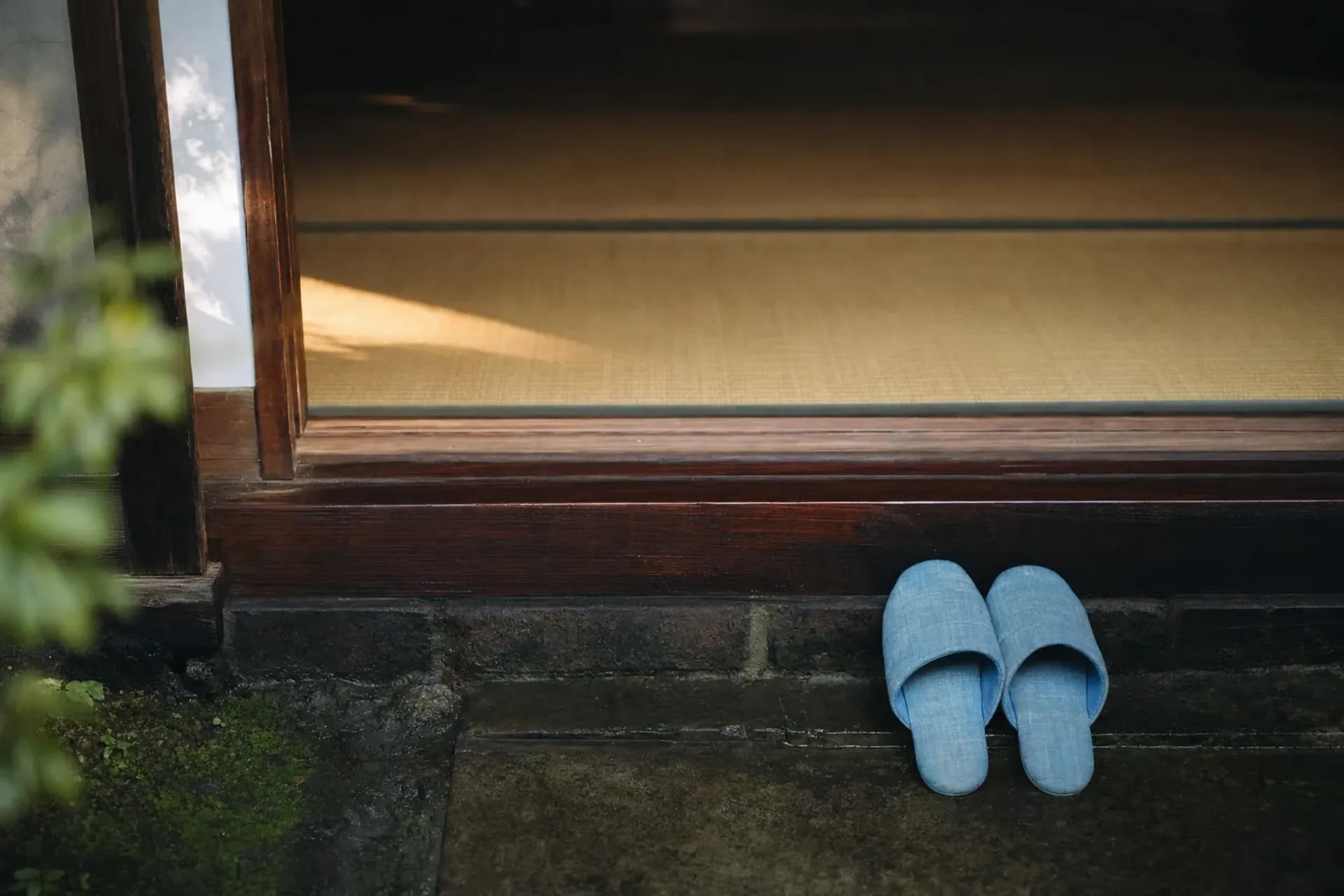
Shoes come off in many ryokan, traditional restaurants, temples, and private homes. You will rarely have to guess. A row of other people's shoes at the entrance, a raised wooden step, or clear signage will tell you where the line sits.
Slippers are often provided just past that line. Socks are perfectly fine; bare feet are not the usual choice, so a clean pair of socks is worth packing. When you reach a tatami room, the slippers come off too. Tatami is walked in socks or stockinged feet alone.
Some places set out separate slippers for the toilet area. These stay in the toilet. Step into them when you enter, step out of them and back into your regular slippers when you leave. Forgetting and padding back to dinner in toilet slippers is the classic slip, and it is the kind of thing your guide will quietly steer you around before it happens.
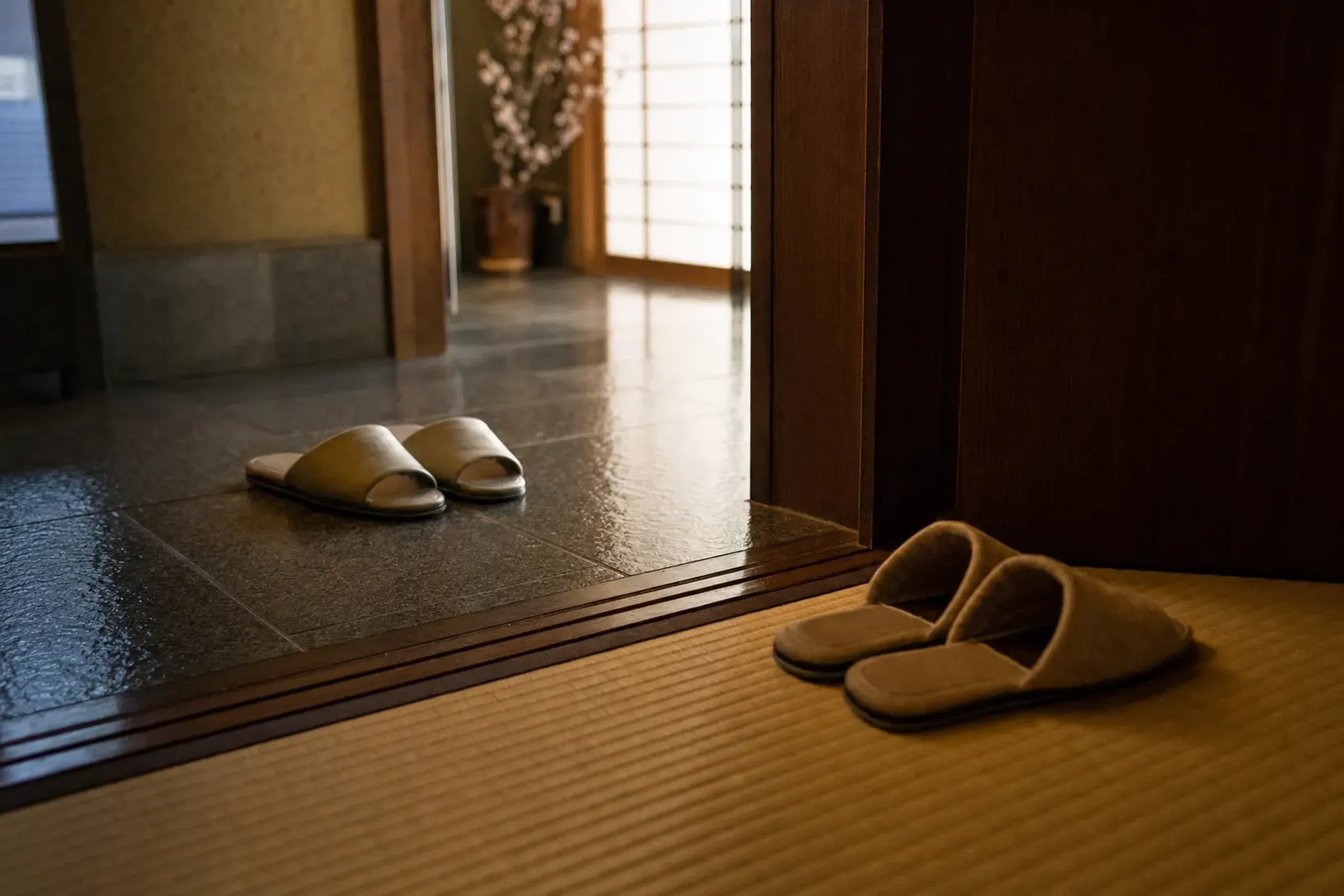
None of this requires memorizing a system. Watch the threshold. Follow the shoes already there.
Is Tipping Expected In Japan?
No. Tipping is not customary in Japan, and leaving money can cause genuine confusion rather than pleasure.
Service is already built into the price and the pride of the work. At many shops and restaurants, you will notice a small tray by the register. Payment goes in the tray rather than hand to hand, and your change comes back the same way. At a ryokan, there is no need to tip the room staff or anyone else; the association that represents Japan's ryokan and hotels states plainly that tips are unnecessary.
If you want to express thanks, words do it. A sincere arigatō gozaimasu lands better than cash.
Chopsticks And The Table: The Two Taboos That Matter
Most chopstick worry is wasted energy. Your grip does not need to be elegant, and nobody is grading your technique. Two things do matter, because both echo funeral customs and carry real weight.
First, do not stand your chopsticks upright in a bowl of rice. Rice offered to the dead is presented that way. Rest your chopsticks on the holder provided, or lay them flat across the edge of a dish instead.
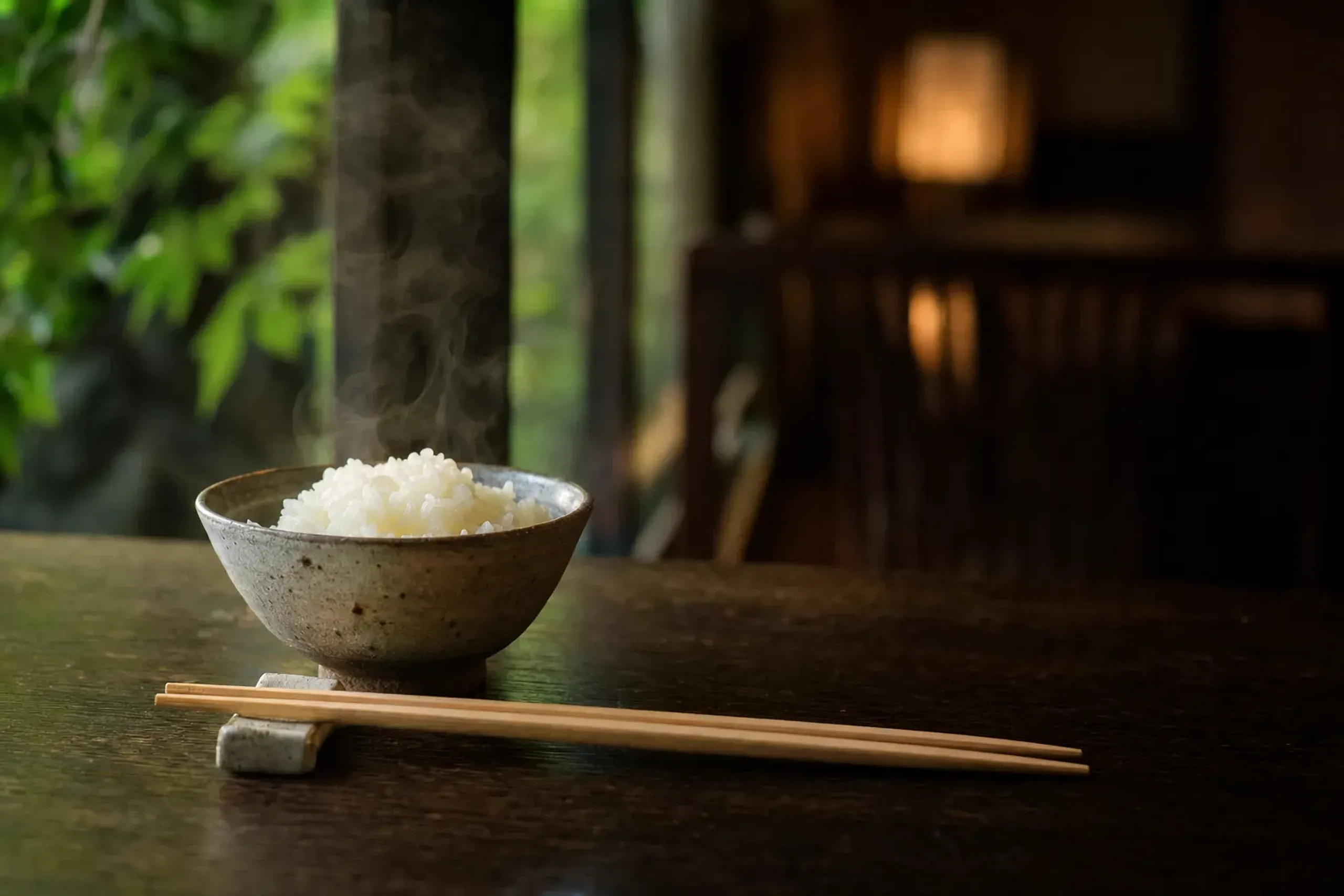
Second, do not pass food directly from your chopsticks to someone else's chopsticks. That gesture mirrors a rite performed with cremated bones. If you want to share, set the food on a small plate and let the other person lift it from there.
For shared dishes, use the serving chopsticks if a set is provided. If none appear, some people turn their own chopsticks around and use the clean back ends. Either is considerate.
Beyond that, relax. Lifting a rice or miso bowl to drink from it is normal. Slurping noodles is accepted and, in some rooms, a compliment. When someone pours you a drink, hold or tilt your glass slightly toward the pour as a small courtesy, then return the gesture. If you want to understand the rhythm of a particular meal before you sit down, our guide to choosing between sushi, kaiseki, and kappo walks through what to expect at each counter.
The Onsen: The One Rule That Really Matters
The onsen intimidates more travelers than anything else on this list, and it needn't. One rule sits above the rest, and the rest follow naturally.
Wash thoroughly before you enter the bath. The showers or washing stations sit beside the pool for exactly this reason. You sit, you soap, you rinse every trace away, and only then do you lower yourself into the water. The bath is for soaking in clean, not for cleaning in.
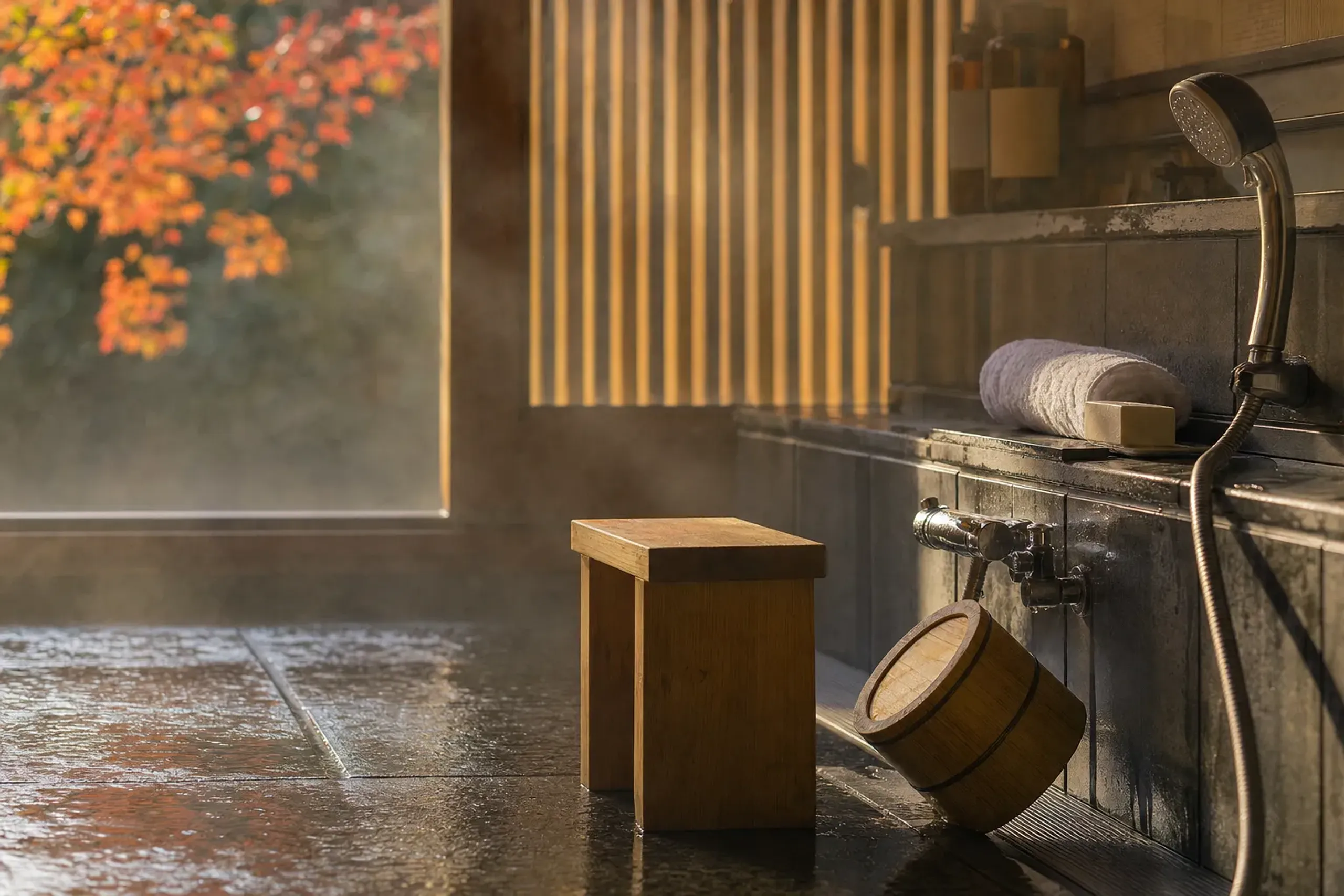
Get this right and you have the heart of it.
Bathing is done without swimwear. That surprises first-timers, but everyone around you is in the same state and nobody is looking. You will carry a small towel; keep it out of the water. Most people rest it on their head or set it at the edge.
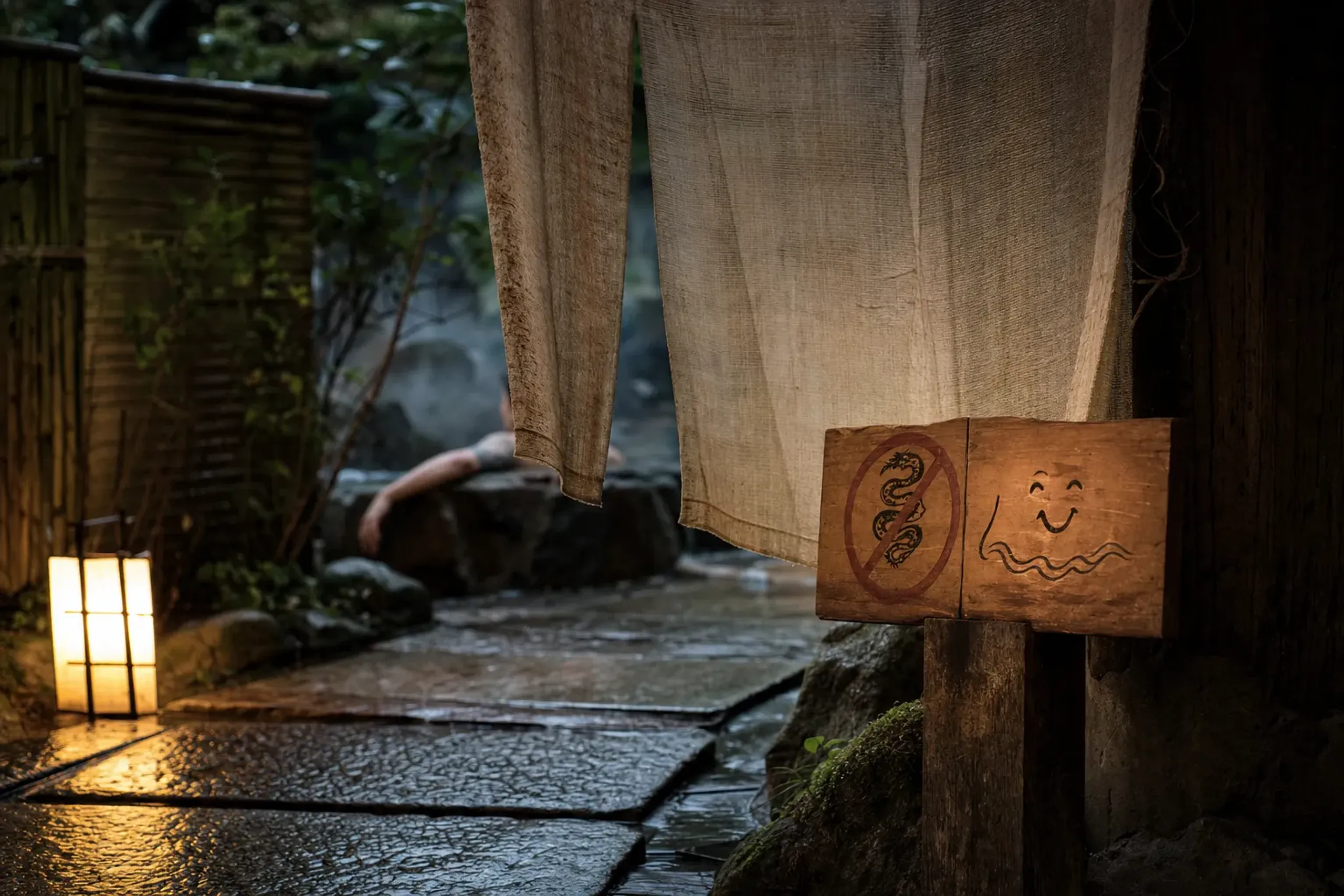
Baths are traditionally separated by sex, so look for the fabric curtains and signs marking each entrance. Your guide or the front desk can point you the right way if the characters are unfamiliar.
Tattoos deserve a word. Policies vary widely. Some facilities prohibit tattoos outright, some welcome them, and some allow small ones if they are covered. This is the question to settle before you arrive rather than at the door, and our concierge team confirms the specific bath's policy directly with you at the time of arrangement. If you are planning a cold-season trip, our notes on winter onsen logistics cover the practical side of snow-country bathing.
Temples And Shrines: Watch, Then Follow
At a shrine entrance you will often find a stone water basin with bamboo ladles. Visitors use it to purify their hands and mouth before approaching. Rinse the hands, and if you rinse your mouth, do it quietly to the side rather than spitting back into the basin. If this feels uncertain, watch the person ahead of you.
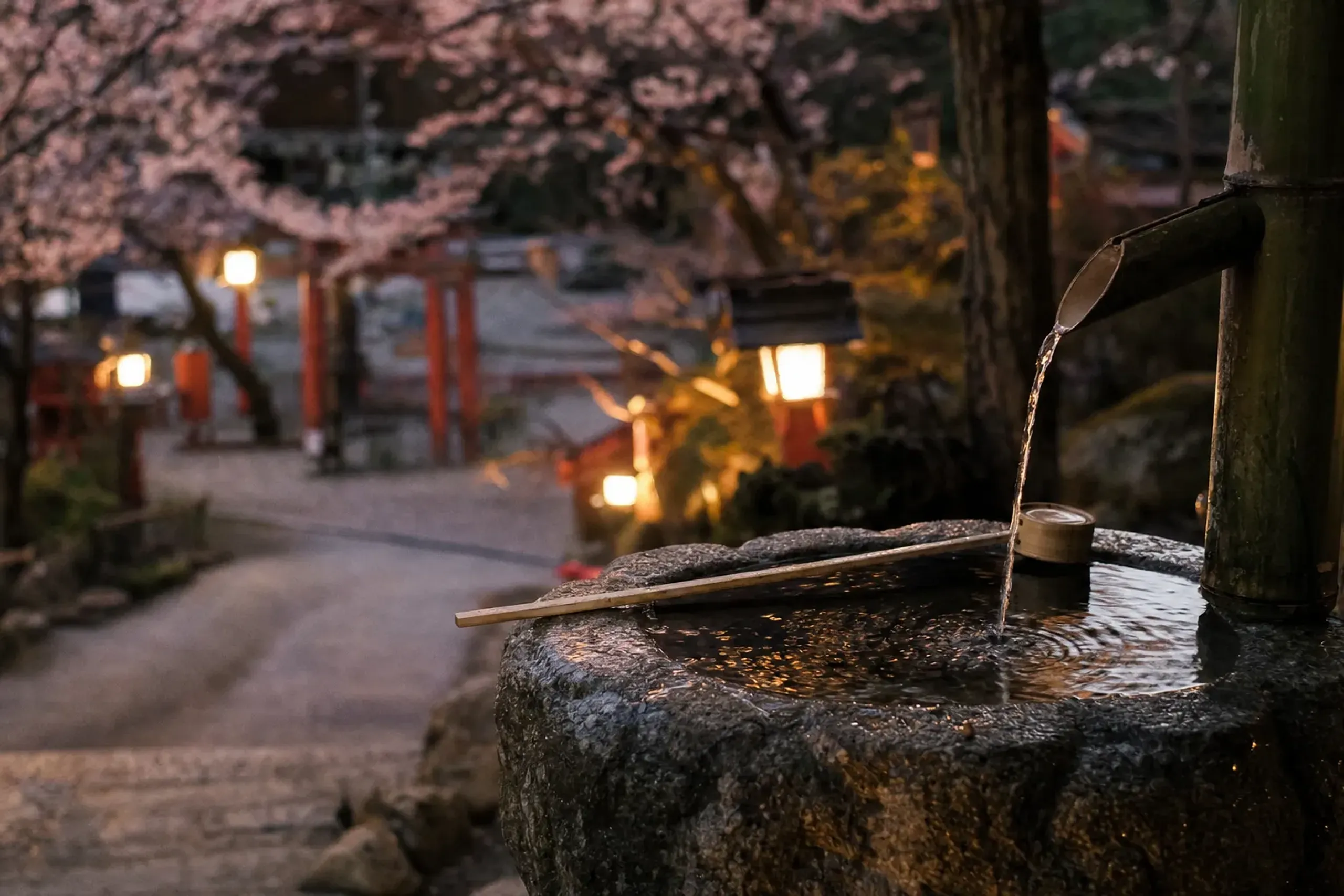
At the offering box, prayer involves a short sequence of bows and claps. There is no need to memorize it in advance. Many shrines post the sequence on a sign nearby, and your guide can walk you through it on the spot. Follow the posted guidance, or simply follow the people around you.
Photography rules differ from one site to the next. Grounds are often open to cameras while interiors of halls are frequently off-limits. Each temple and shrine sets its own rules, and signs will tell you. Our concierge team confirms photography policy for the places on your itinerary ahead of time, so there are no awkward moments inside a hall.
Move calmly, keep your voice low, and these are among the most peaceful hours of any trip.
Trains And Public Space: Keep It Quiet
The quiet of a Japanese train carriage is real, and it is worth preserving. Phone calls on trains and buses are considered rude. Set your phone to silent, and if you must talk with your companion, keep it low. Texting and reading are fine; a loud conversation is the thing people notice.
On reserved trains, such as the shinkansen with assigned seating, sit in the seat on your ticket. The car and row are printed clearly, and a conductor may check. If you are traveling by private car instead, the same instinct toward calm applies, and our private chauffeur service gives you a quiet, unhurried space between stops.
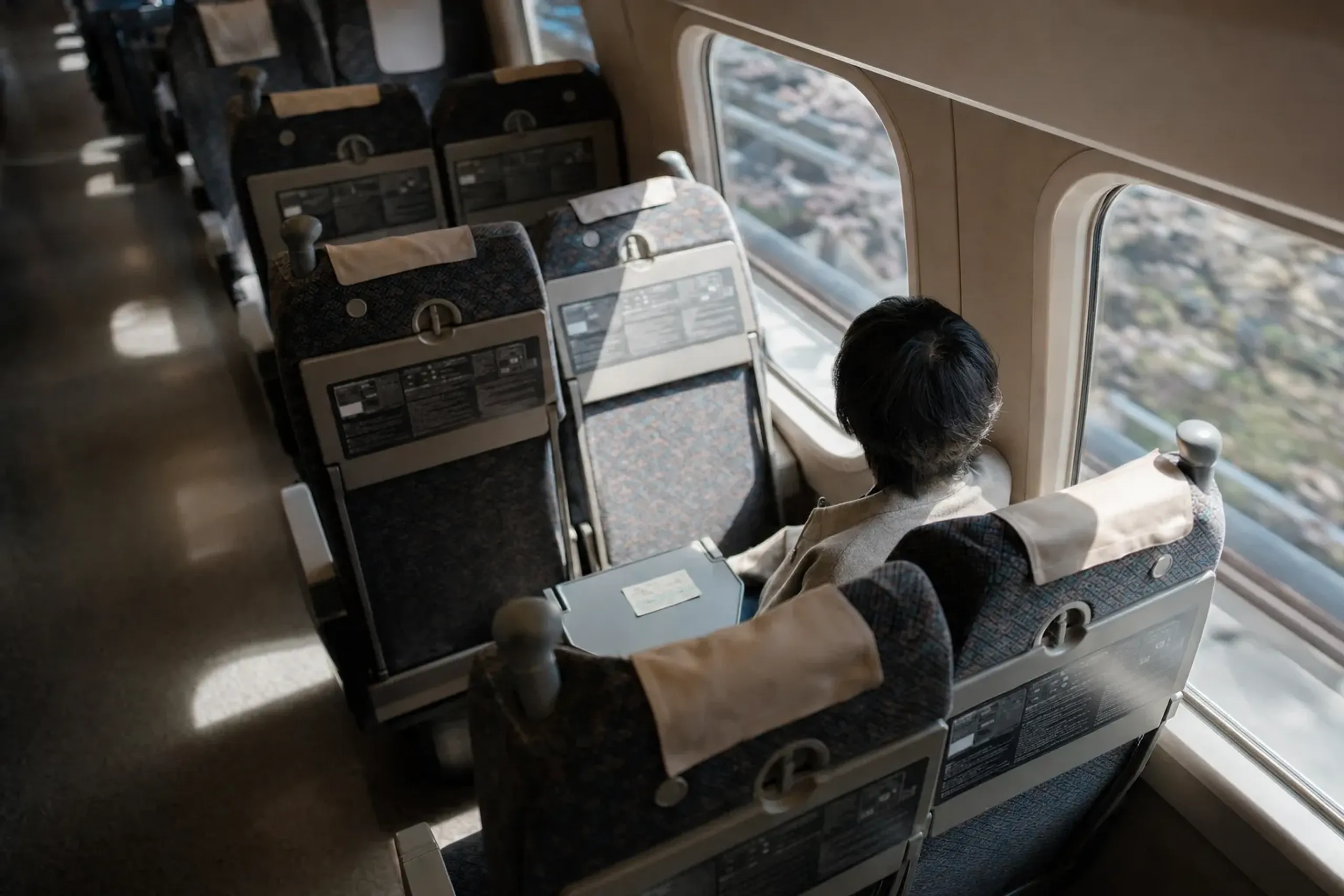
One recent change worth knowing in Tokyo: Shibuya City now prohibits drinking in its streets and parks between 6:00 p.m. and 5:00 a.m. year-round, across an expanded area. If your evening runs through Shibuya, keep the drinks to the bars and restaurants.
Gifts And Photography: Two Small Courtesies
If you give or receive a gift, use both hands. It is a courtesy rather than a hard rule, and it signals that the exchange matters to you. The same applies to receiving a business card or a wrapped purchase from a shop; both hands, a small nod, and you have done it well. There is no expectation that you arrive bearing gifts, and no amount you are obliged to spend.
Photography is where a little care goes a long way. Ask before photographing people, especially up close. Japan's national tourism organization advises exactly this, and it is simply kind. Obey no-photography signs without exception.
Kyoto's geisha districts deserve particular attention. In parts of Gion, private lanes are restricted and photography is prohibited; the city asks visitors plainly not to stop or follow geisha and maiko on the street. These are working neighborhoods, not a set. If you hope to spend meaningful time in that world, our comparison of Gion and Miyagawa-chō explains how to experience it properly.
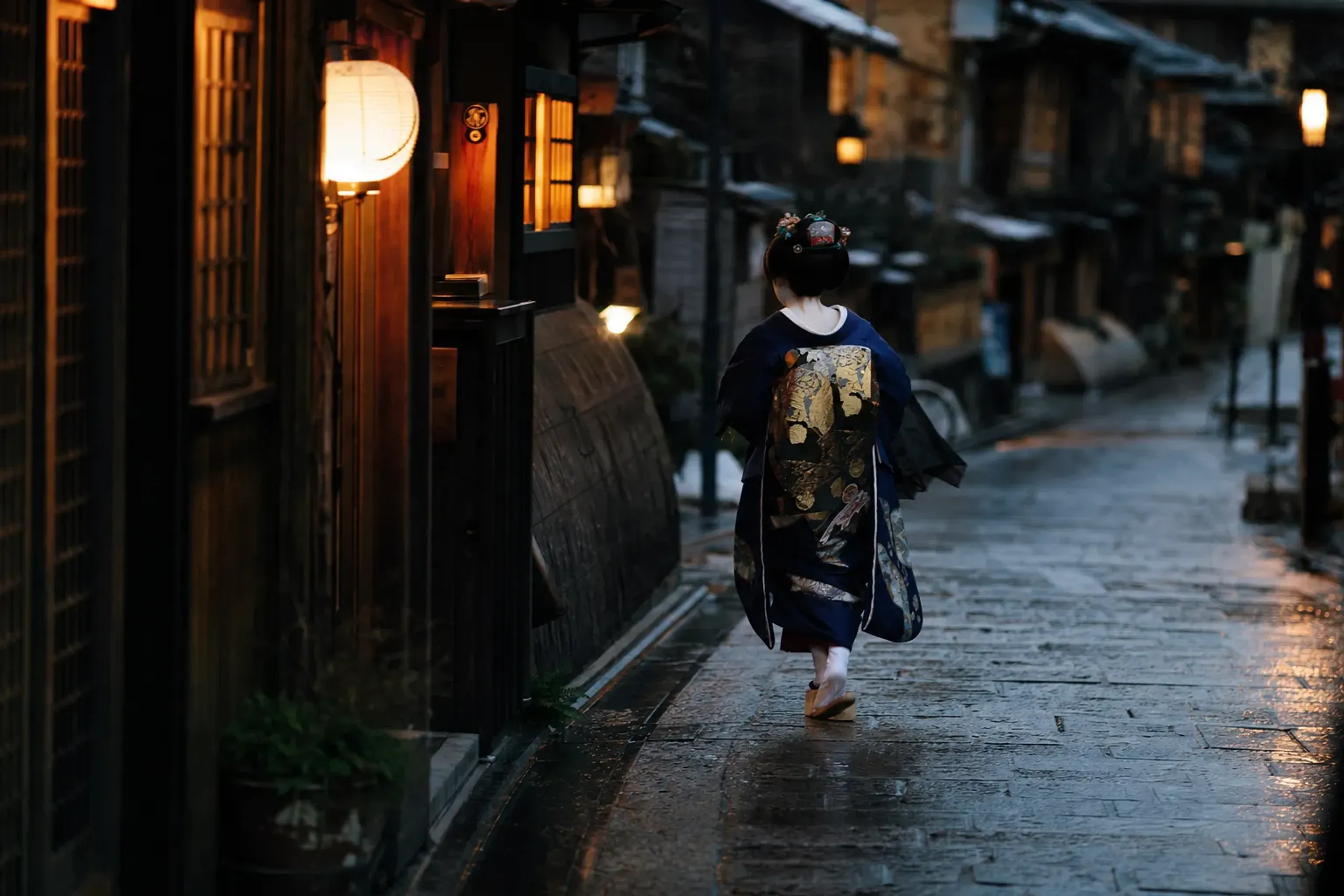
The same respect applies at working churches, such as those across the Gotō Islands, where services and quiet come first.
What You Can Stop Worrying About
Here is the reassuring part. A great deal of what travelers fret over simply does not matter.
Your bow does not need to be perfect. A small nod of the head conveys respect, and no one expects a precise angle. You will not be judged for using slippers imperfectly or momentarily forgetting which pair goes where. Your chopstick grip can be clumsy as long as you avoid the two taboos. The shrine ritual does not need to be rehearsed; watching and following is enough.
Japanese people are, in our experience, warm and forgiving toward visitors who are trying. Effort reads clearly, and it is what earns goodwill, not flawless execution. Treat etiquette as a set of considerations rather than an exam, and you have the right frame of mind.
The short version: Shoes off where indicated, no tipping, avoid the two chopstick taboos, wash before the onsen, keep quiet on trains, and ask before photographing people. The rest, you can relax about.
How A Japan Royal Service Guide Helps On The Day
Reading a guide is one thing; standing at a tatami threshold is another. Our guides take the small decisions off your plate as they arise. At a temple, they walk you through the water basin and the offering box.
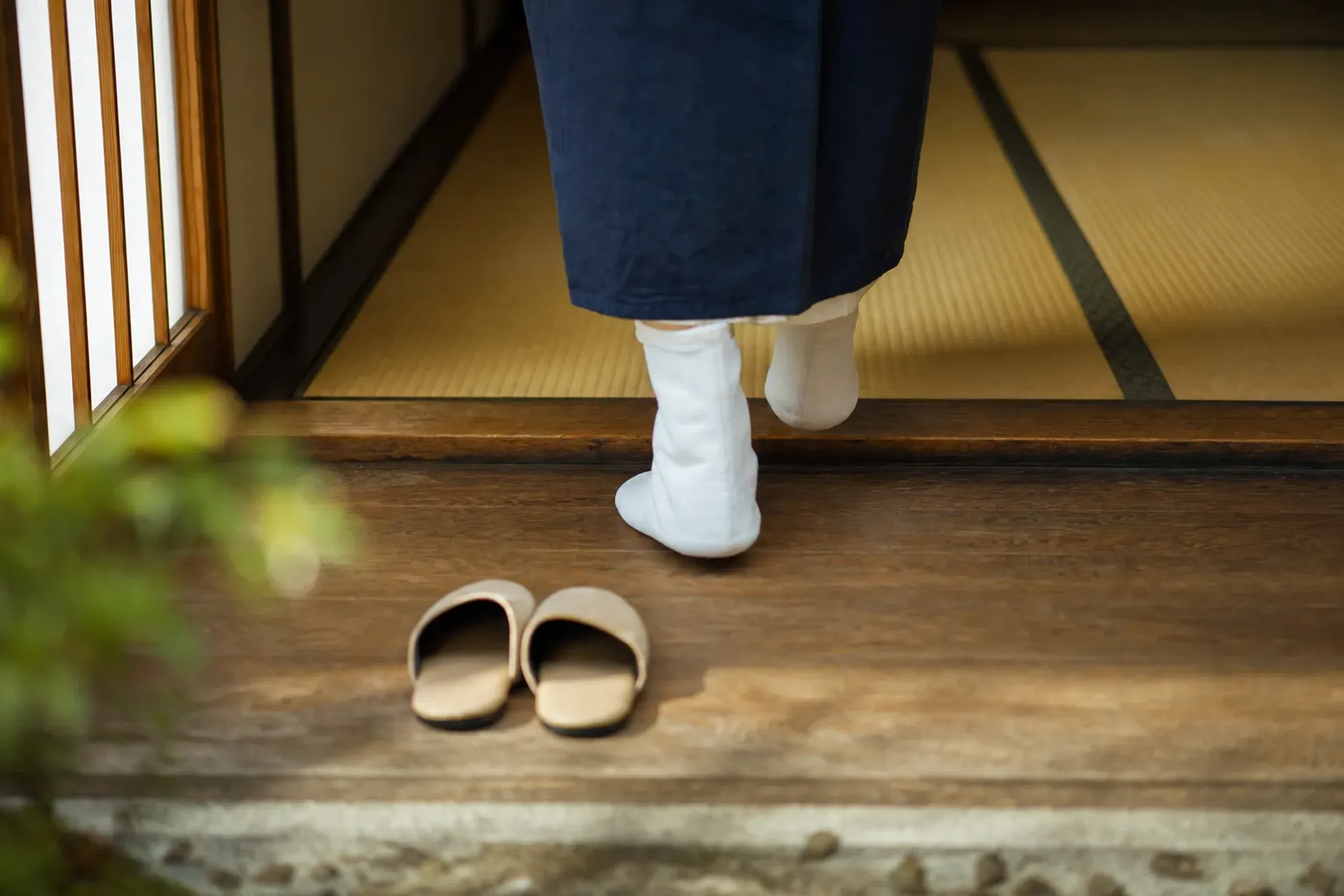
At a traditional restaurant, they note where the shoes come off and when the slippers stay behind. At the onsen, the washing rhythm becomes obvious with someone to point the way.
Ahead of arrival, our concierge team confirms the facility-specific details that lists cannot: a particular bath's tattoo policy, which halls permit photography, how a given counter likes to pace a meal. Our guides speak English, Japanese, and more, so nothing gets lost at the door. You stay present. The etiquette takes care of itself.
Frequently Asked Questions
Do I Need To Tip My Guide Or Hotel Staff In Japan?
No. Tipping is not customary anywhere in Japan, including for guides, drivers, and ryokan staff, and it can cause confusion. Sincere thanks in words is the warmest and most appropriate gesture.
What Is The Single Most Important Rule At A Japanese Onsen?
Wash thoroughly at the showers before entering the bath. The bath is for soaking in clean water, not for washing. Everything else, such as bathing without swimwear and keeping your towel out of the water, follows naturally from that.
Can I Visit An Onsen If I Have Tattoos?
It depends on the facility. Some prohibit tattoos, some welcome them, and some accept small ones if covered. Settle this before you arrive. Our concierge team confirms the specific bath's policy with you at the time of arrangement.
Is It Rude To Take Photos At Temples, Shrines, And In Gion?
Rules vary by site. Temple and shrine grounds are often open to cameras while hall interiors are frequently off-limits, and signs will tell you. In parts of Kyoto's Gion, photography is prohibited and private lanes are restricted, so always obey posted signs and ask before photographing people.
Will Japanese People Be Offended If I Make An Etiquette Mistake?
Almost never. Effort and care matter far more than flawless execution. A clumsy bow or an imperfect slipper change is readily forgiven; the two chopstick taboos and washing before the onsen are the few things worth getting right.
Why Choose Japan Royal Service
Etiquette in Japan is less a hurdle than a quiet way of showing care, and it is easier with someone beside you who knows each threshold. At Japan Royal Service, our guides handle the on-the-day details across Tokyo, Kyoto, and beyond, while our concierge confirms facility-specific rules before you arrive. Every journey we build is a tailor-made itinerary shaped around how you like to travel, with the practical matters carried quietly in the background. We also plan with real care for guests who need it, as our notes on accessible travel in Japan reflect.
To begin planning a journey where the etiquette takes care of itself, reach our team privately via WhatsApp or LINE, or contact us here.