In this guide
- 01The Route At A Glance: One Corridor, Two Ways To Cross
- 02How Do You Cross The Shimanami Kaido In Spring By Bicycle?
- 03How Do You Cross The Shimanami Kaido In Spring By Car?
- 04Spring Highlights From Onomichi To The Islands: Blossoms, Citrus, And Local Calendar Days
- 05Where To Stop Along The Shimanami Kaido: Four Real Places With Published Hours
- 06How Our Concierge Team Plans A Spring Shimanami Kaido Crossing
- 07Plan Your Spring Crossing With Us
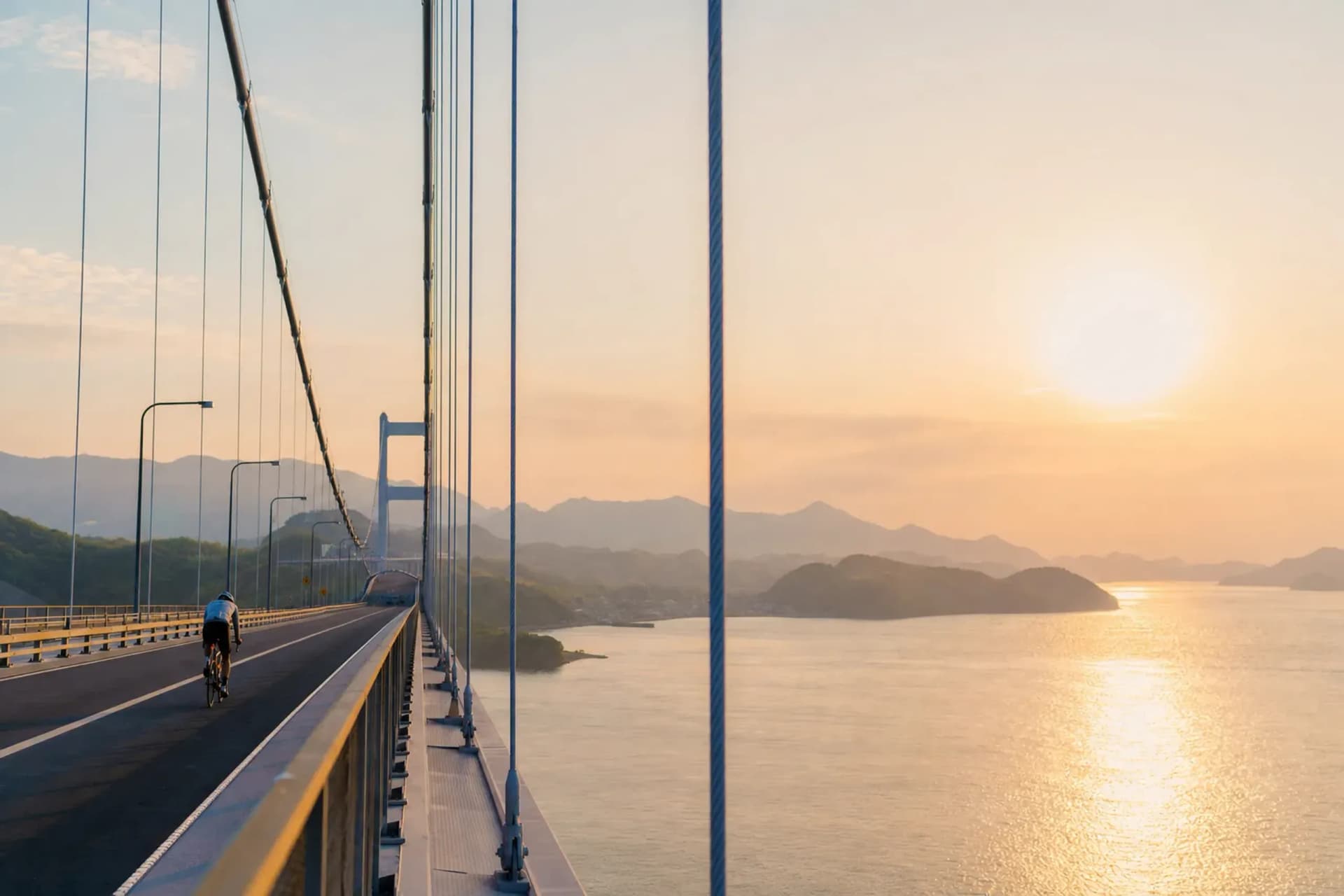
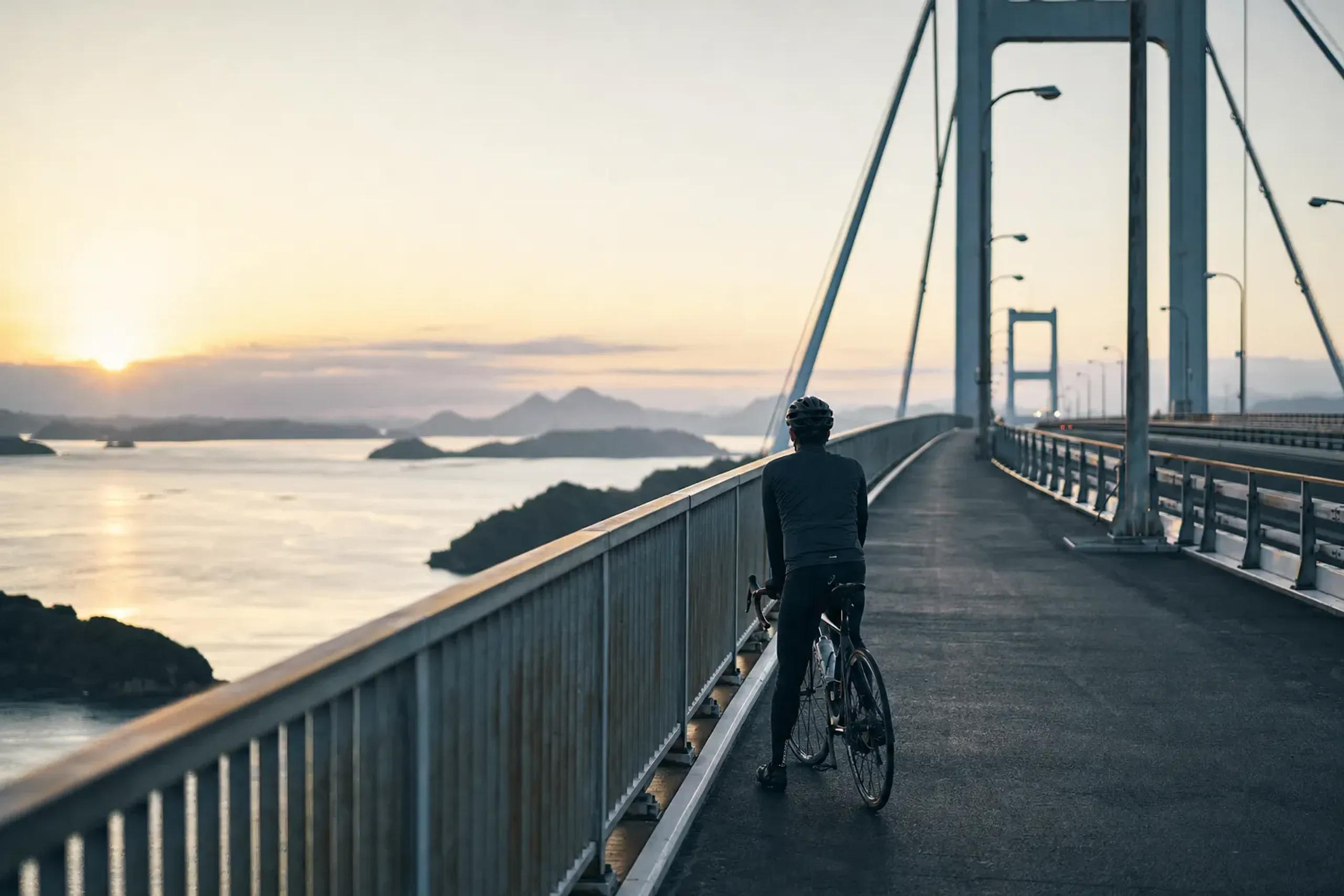
Morning on the Seto Inland Sea has a particular light. Pale, slanted, almost silvery—the kind of light that photographs cannot quite hold.
You stand at Onomichi’s waterfront and look toward the first island, where ferries stitch the gap and the bridges begin to rise, one after another, into open air. Quiet. Then wind.
In spring (March to May), the Shimanami Kaido is at its most forgiving: clear views, mild temperatures, and the first bright greens stirring on the islands. Our team at Japan Royal Service uses this season to help you choose the right crossing style—bicycle or vehicle—and to plan around the two real bosses of the route: steep ramps and bridge wind. The quiet appeal of this corridor lies in its restraint—a landscape of weathered stone, lemon groves, and ferry wakes that widen and vanish—rather than in anything that announces itself loudly.
The Route At A Glance: One Corridor, Two Ways To Cross
The Shimanami Kaido is a corridor connecting Onomichi (Hiroshima Prefecture) to Imabari (Ehime Prefecture) across the Seto Inland Sea, with a dedicated cycle route running alongside an expressway.
The road is the Nishiseto Expressway (marketed as the Setouchi Shimanami Kaido), described as about 60 km. The cycle route is a national cycle route of about 70 km from the Onomichi side to Sunrise Itoyama in Imabari.
You cross six islands and seven bridges.
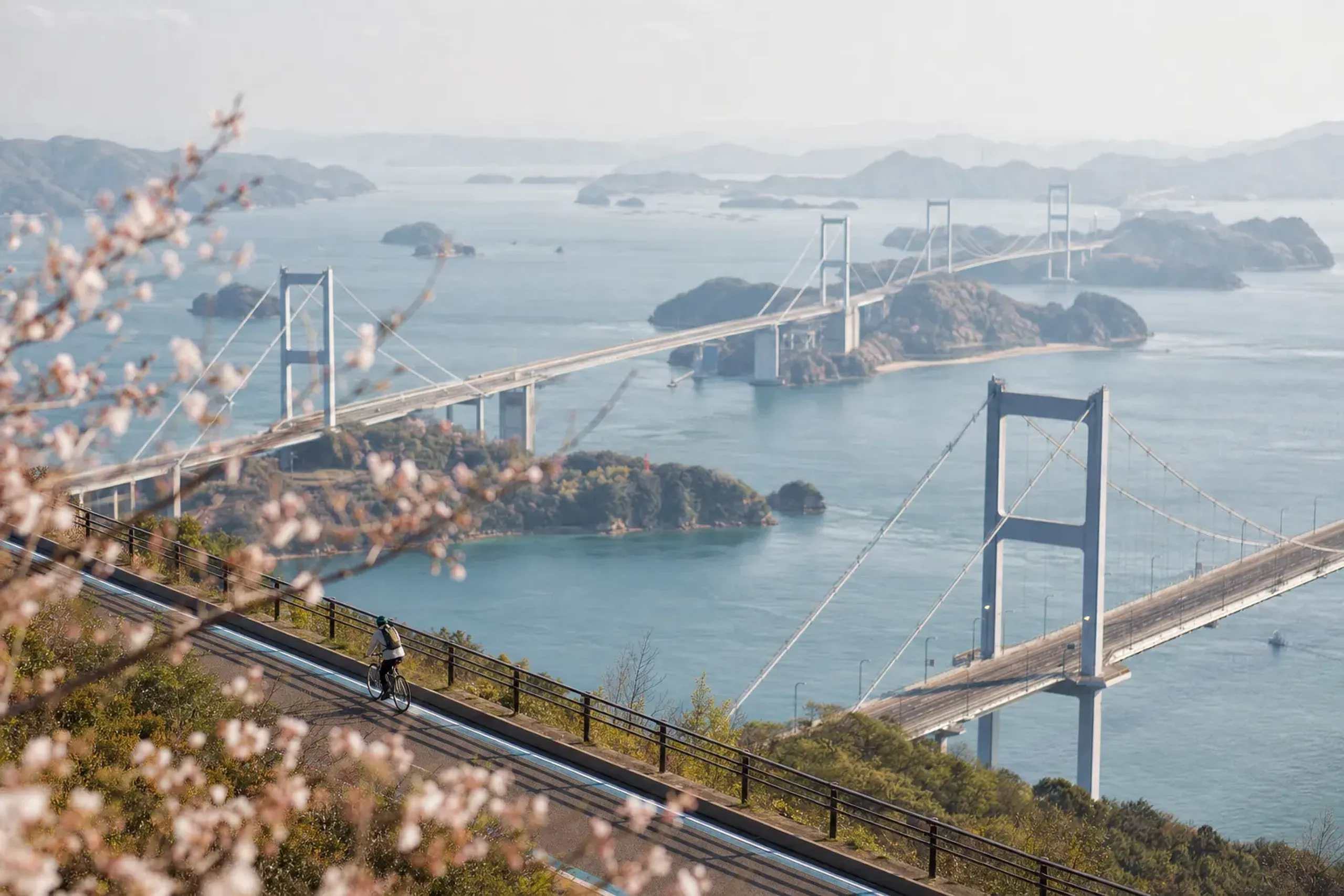
The order from the Onomichi side is: Mukaishima, Innoshima, Ikuchijima, Omishima, Hakatajima, and Oshima.
The bridges, in order, are Shin-Onomichi, Innoshima, Ikuchi, Tatara, Omishima, Hakata-Oshima, and Kurushima Kaikyo—three successive suspension bridges at the Imabari end, totaling about 4.1 km. The prefectural border sits at the Tatara Bridge: west of it is Hiroshima Prefecture (Onomichi City), east is Ehime Prefecture (Imabari City).
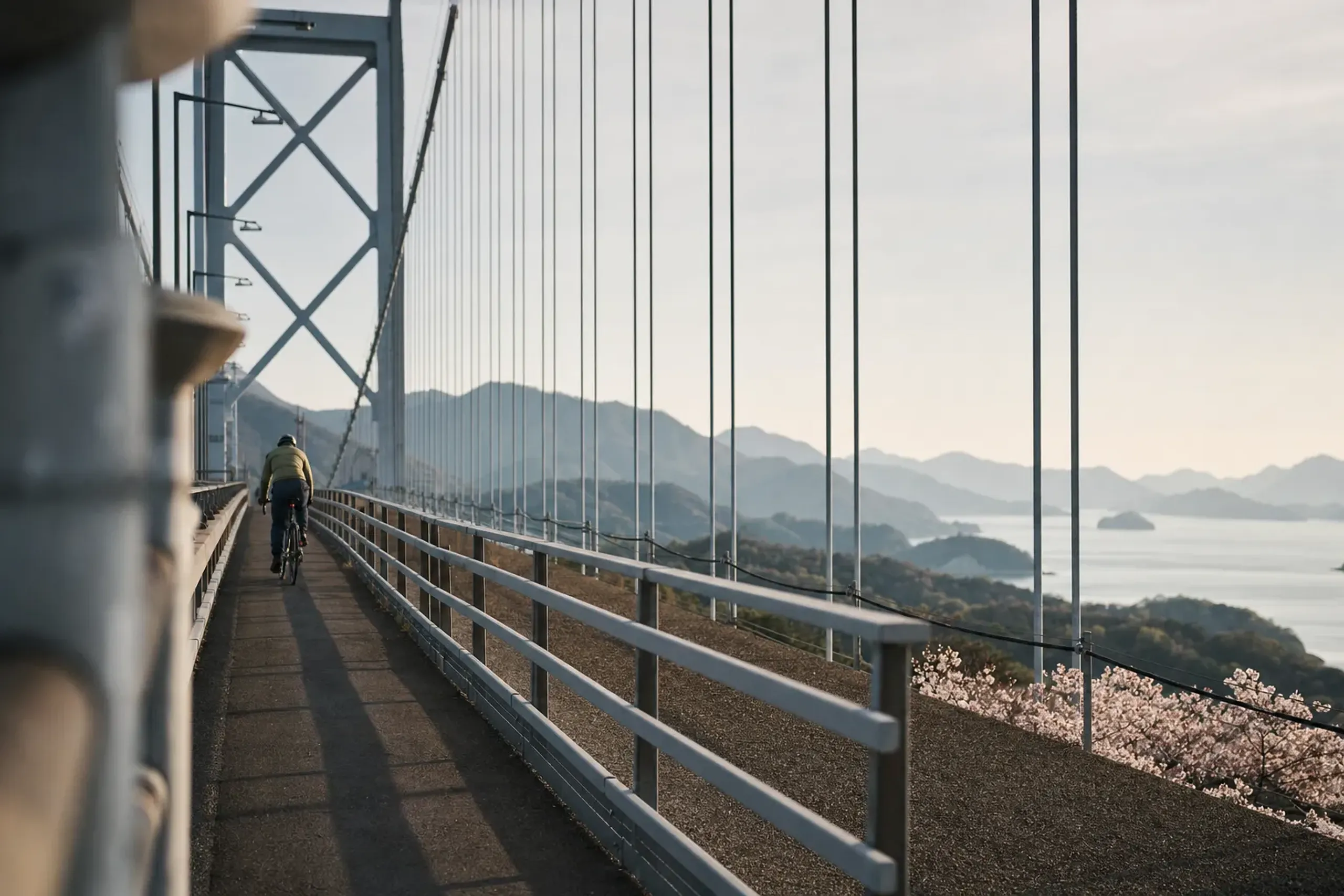
Key fact: The cycling path is separate from motor traffic on every bridge except the Shin-Onomichi Bridge, which has no cycling path.
What “Bike Or Car” Really Changes
Bike means you feel the place. Salt air, citrus groves, the small shrines you would miss entirely at 60 km/h.
Car means you control the pace. You stop where you want, you shelter from gusts, and you can treat the crossing as an unhurried island drive punctuated by short walks and museum visits.
Neither is “better.” The best choice is the one that matches your day, your party, and your tolerance for wind on exposed bridge decks.
How Do You Cross The Shimanami Kaido In Spring By Bicycle?
You cross by bicycle by starting near Onomichi, taking the recommended ferry to Mukaishima, and following the blue-line-marked cycle route over the bridges to Imabari, returning the rental at an approved terminal.
Spring riders are happiest when they settle one question early: are you riding the whole route in a single day, or turning it into a calmer two-day island stay?
Big difference.
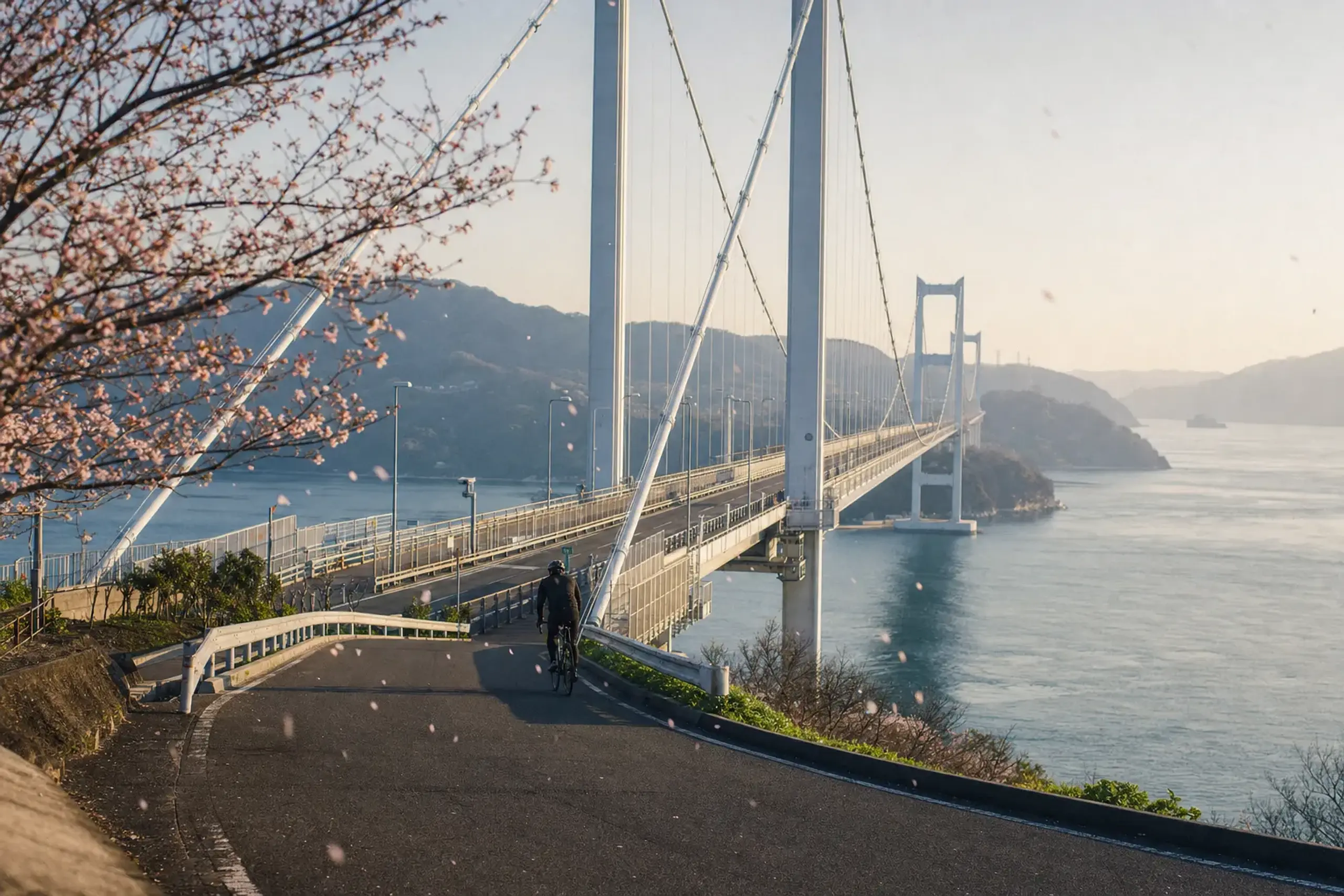
The cycle route is engineered for ordinary riders, but it is not flat. The ramps down from the bridges are steep, and bridge wind can arrive fast, even under a clean blue sky.
Start Smart: Onomichi Station To The First Island
Between Onomichi and Mukaishima, Hiroshima and Ehime’s recommended approach is the short ferry. Simple. Practical.
Yes, there is a footway on the Onomichi Bridge. It can be narrow and busy, so the ferry keeps the morning calm and reduces early stress while you are still finding your rhythm.
The Bridge Path Rules That Matter (And The One Exception)
On the bridges, the cycling route is separated from car lanes, except for the Shin-Onomichi Bridge, which has no cycle path. That single exception changes route planning.
On some bridges, the cycling path may be shared with mopeds up to 125cc. On the Ikuchi, Tatara, and Kurushima Kaikyo bridges, pedestrians have priority. You slow down. No argument.
We like to brief riders on this before the wheels start turning. It prevents the one thing that spoils a beautiful day: surprise.
How Long Does The Shimanami Kaido Cycling Route Take?
Shimanami Japan suggests about 4–5 hours for fast riders, 5–6 hours for confident riders, and about 10 hours for beginners riding slowly.
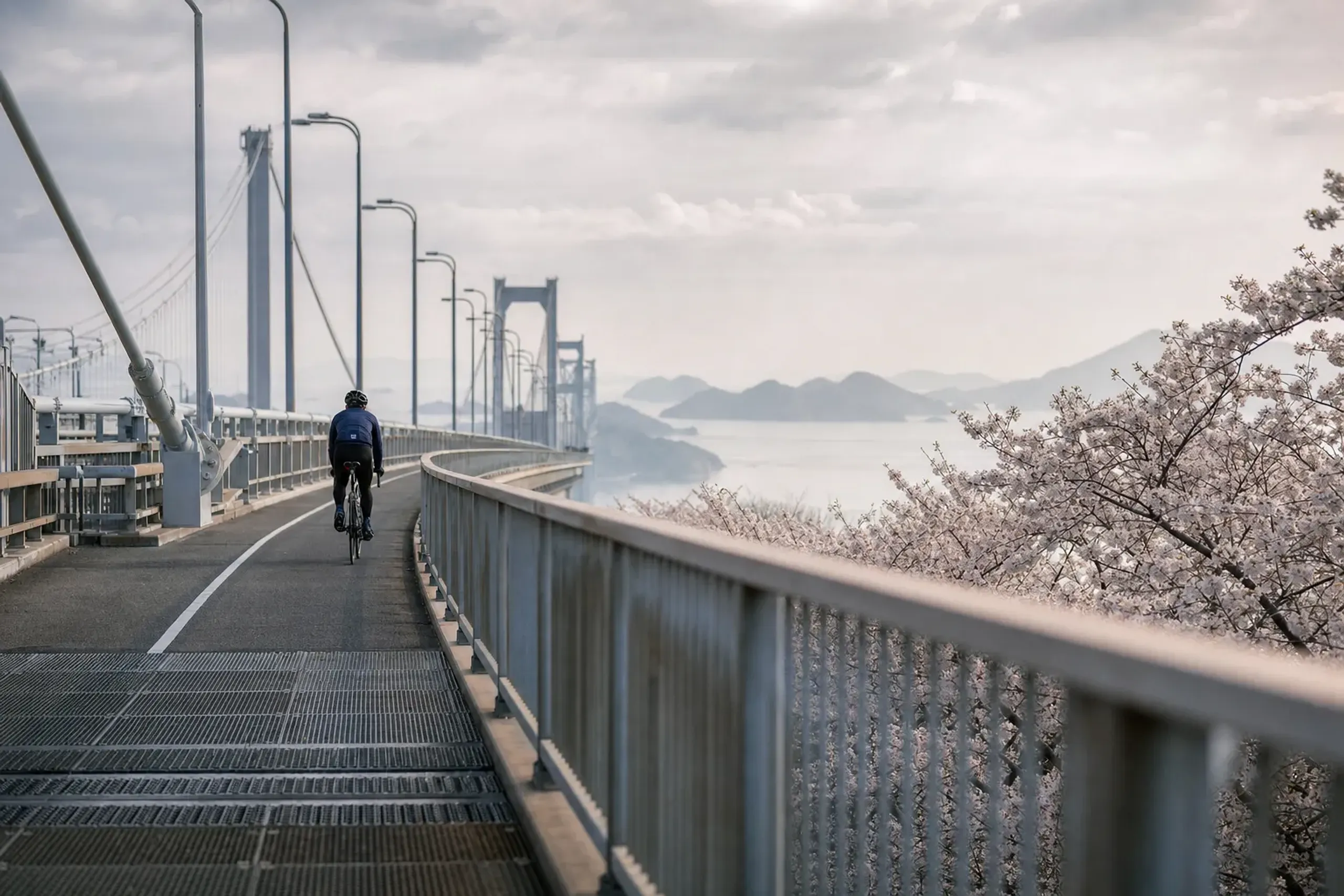
Those ranges are useful because they include reality: photo stops, wrong turns, a headwind that forces you to sit up, and a museum visit that runs long because the light is good and you simply don’t want to leave yet.
The winning move is not “going faster.” It is building a route where you can stop without anxiety—especially in spring, when Senkoji Park in Onomichi and the island roads positively invite lingering.
Rental Bicycles, E-Assist, And What You Cannot Do
Many rental bicycles can be returned at a different terminal, helmets are typically lent free, and electric-assist bicycles are available at some terminals with age and height limits.
There is one hard rule that surprises people: rental bicycles may not be loaded onto trains, buses, cars, or taxis. That includes “just for a short hop.” It is simply not allowed.
So if you want a bike day with comfort, the solution is not stowing the bike in a vehicle. It is smarter pacing, choosing a shorter ride segment, and using planned meeting points.
A One-Day Spring Cycling Plan (Onomichi → Imabari)
This is what a clean, no-drama day can look like. Crisp. Human.
- Early morning: Start in Onomichi while the air is cool; ferry to Mukaishima for the recommended approach.
- Late morning: Settle into the rhythm across Innoshima and Ikuchijima; keep your jacket accessible for bridge wind.
- Midday: Choose one anchored stop (not five). For many travelers, that is Ikuchijima or Omishima.
- Afternoon: Cross toward Ehime; take the Kurushima Kaikyo bridges with patience, giving pedestrians priority where required.
- Late afternoon: Finish at Sunrise Itoyama in Imabari and transition into a relaxed evening.
Our concierge team can give tailored guidance on timing, meeting points, and what to verify on the day—especially wind and any bridge-works status—without turning your ride into a stopwatch exercise.
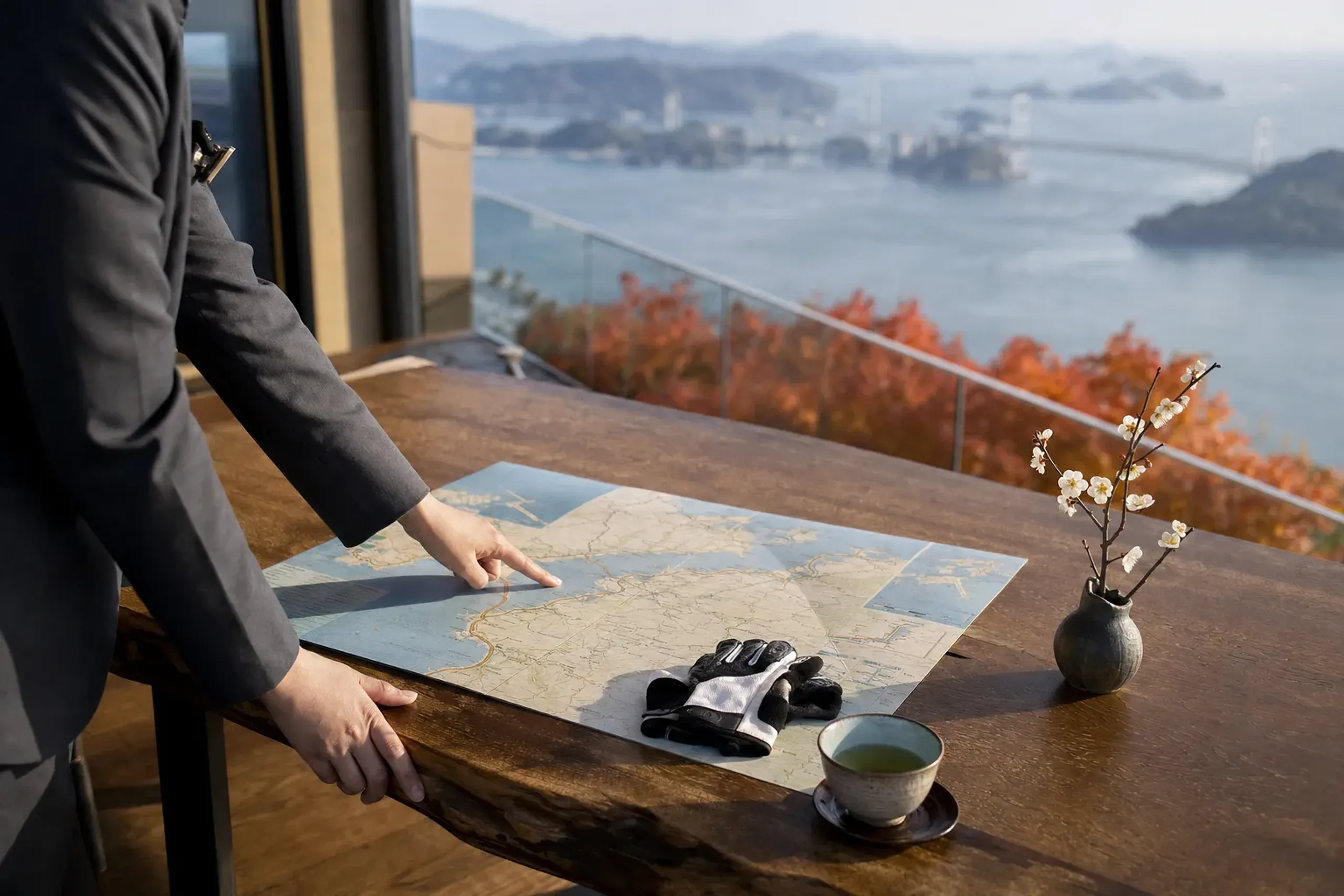
This is where a bespoke itinerary quietly earns its keep: the logistics disappear, and only the day remains.
How Do You Cross The Shimanami Kaido In Spring By Car?
You cross by car by driving the toll Nishiseto Expressway (Setouchi Shimanami Kaido) from the Onomichi side to Imabari, using service areas for breaks and choosing island stops via the exits.
By road, the day feels different. More architectural. More observational.
You can pull into a service area, drink something hot, and watch cyclists threading along the separate deck beneath or beside the highway lanes, small against the vast span of the bridge.
Service Areas You Can Actually Use
The expressway has service areas that can make your spring crossing calmer, especially with family members or a mixed group.
- Ohama Service Area
- Setoda Service Area
- Kamiura Service Area (downbound only)
- Kurushima Kaikyo Service Area
Driving times vary with conditions, and the JRS concierge team confirms them directly with the guest at time of arrangement.
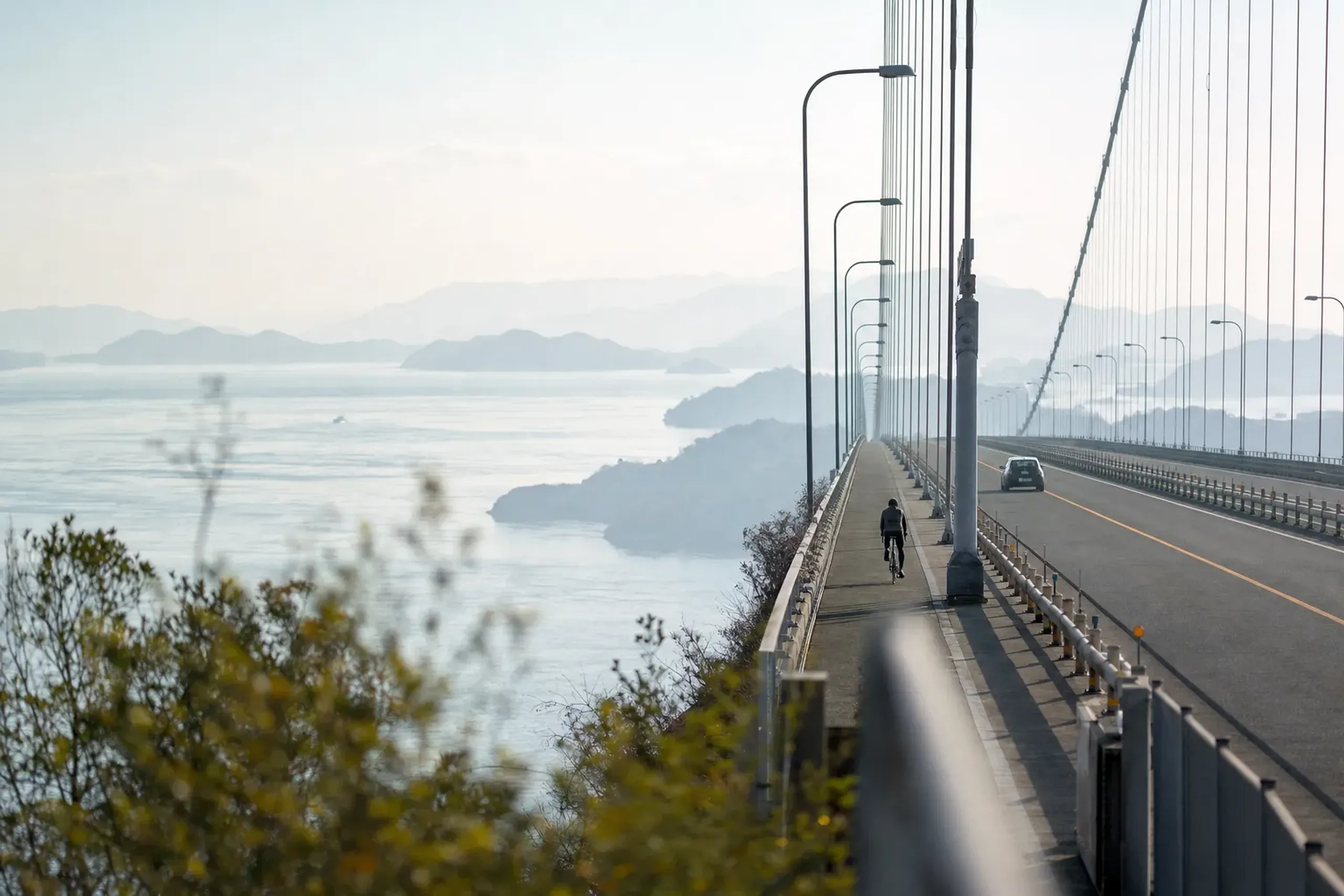
That restraint matters.
Wind Closures: What Can Change On The Day
The operator may close two-wheeler lanes for wind while cars continue.
If your party includes riders, this is where planning becomes serious. A calm morning can flip by lunch, and the bridge environment is exposed.
The JRS concierge team confirms wind and works status directly with the guest at time of arrangement and again close to departure, then adjusts the day plan with less friction.
A One-Day Spring Driving Plan (Onomichi Side → Imabari Side)
This approach suits travelers who want scenery with stable pacing. No athletic obligation.
- Morning: Start near Onomichi after a short walk or viewpoint stop; enter the expressway when your party is ready.
- Late morning: Pause at Setoda Service Area for sea views and a reset.
- Midday: Choose one island visit (museum or shrine) and keep the rest as short scenic stops.
- Afternoon: Approach Imabari via the Kurushima Kaikyo bridges; stop at the Kurushima Kaikyo Service Area if the weather is clear.
- Late afternoon: End in Imabari with a quiet finish—castle visit or waterfront walk—then onward travel.
For travelers who prefer door-to-door comfort, our first mention of private transportation is here for a reason: the Shimanami Kaido is beautiful, but it rewards clean logistics.

A chauffeur who already knows the service areas, the wind patterns, and the quiet exits changes the entire texture of the day.
Spring Highlights From Onomichi To The Islands: Blossoms, Citrus, And Local Calendar Days
Spring on the Shimanami Kaido begins with cherry blossoms in Onomichi and shifts quickly into island scents—especially citrus—once you are out over the water. This is shun in its truest form: knowing precisely which week rewards the crossing, and why.
It is not a theme-park version of spring. It is smaller. More intimate.
Some moments are about a single street, a single tree, a single ferry wake widening behind you.
Senkoji Park Cherry Blossoms (Onomichi)
Senkoji Park in Onomichi is one of Japan’s 100 selected cherry-blossom sites, open at all hours, with about 1,500 cherry trees.
During the blossom season the park has hosted evening lanterns; dates and lighting vary each year, and the JRS concierge team confirms them directly with the guest at time of arrangement. If you want the simplest spring win, you start here, early, before the day-trippers arrive.
From 2007 to 2019 records, full bloom fell between late March and mid-April; we recommend checking current bloom updates close to travel, because spring timing shifts year to year.
Ikuchijima’s Spring Citrus Air
On Ikuchijima, lemon blossoms scent the hillsides in spring.
You notice it most when you stop moving. A pause at a viewpoint, a small roadside lane, a temple approach with no one speaking.
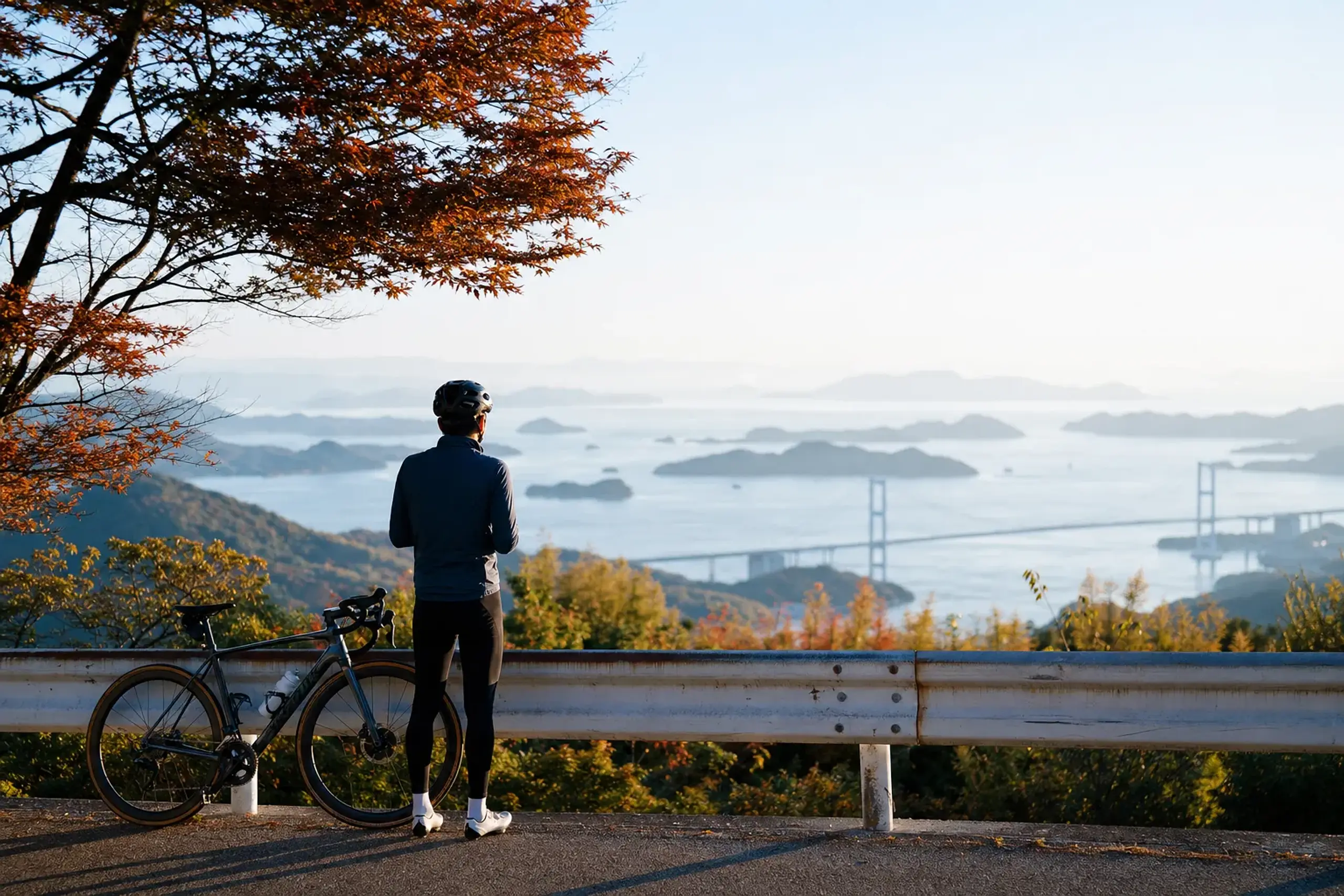
This is where many travelers realize the Shimanami Kaido is not only a “crossing.” It is a chain of lived-in islands.
Spring Event Examples (Use As A Template, Not A Promise)
Spring events and their dates are set each year; the JRS concierge team confirms them directly with the guest at time of arrangement. The examples below help you picture the rhythm.
- Hakatajima spring market
- Omishima wisteria festival
- Oshima rose festival
Our team can use this style of calendar—specific, checkable, and realistic—to shape a spring week without building your plans on assumptions.
Where To Stop Along The Shimanami Kaido: Four Real Places With Published Hours
The best stops on a spring crossing are the ones you can actually fit without rushing. One museum. One shrine. One viewpoint. Enough.
Below are four verifiable places that match the route logic. Each has published opening hours, and the JRS concierge team confirms them directly with the guest at time of arrangement.
Kosanji Museum (Ikuchijima)
Kosanji Museum on Ikuchijima is open from morning to late afternoon.
This stop suits travelers who want something visually dense after hours of open sky and water. It is also a clean “anchor” for a cycling day: you can aim for it, then decide what comes next.
Oyamazumi Shrine (Omishima)
Oyamazumi Shrine on Omishima is often described as one of Japan’s most important shrines.
We phrase that carefully, because importance can be argued many ways. Still, the atmosphere is unmistakable: ancient trees, hush, moss-covered stone, and the kind of presence that makes you lower your voice without being told.
Omishima Art Museum (Omishima)
Omishima Art Museum is open from morning to late afternoon and is closed on Mondays.
For non-cyclists, this can be an ideal spring stop between bridge drives. For cyclists, it works best when you plan your day so you are not arriving breathless with five minutes to spare.
Murakami Suigun Museum (Oshima)
Murakami Suigun Museum is open from morning to late afternoon, is closed Mondays, and is closed 29 December to 3 January.
This is a fine “late-route” visit, for when you want the islands to feel specific rather than generic. You are close enough to Imabari that the finish line feels real.
How Our Concierge Team Plans A Spring Shimanami Kaido Crossing
Our approach at Japan Royal Service is to treat the Shimanami Kaido like a long, narrow stage. You cannot move every prop on the day.
So we focus on what actually changes outcomes: what you verify, what you decide early, and where you build slack into the schedule.
Step 1: Decide Your Crossing Style (Bike, Car, Or A Mixed Party)
Start with the truth. Who in your party wants to ride, and who wants to watch and explore?
For mixed parties, we plan agreed meeting points at major stops and at day’s end. One important constraint: rental bicycles cannot be loaded into cars or taxis, so the vehicle does not carry them.
Our role is not to turn this into a “supported race.” It is to keep the day humane—and quietly extraordinary.
For riding the route with an e-bike, a guide who rides with you and a car following behind, see Shimanami Kaido: Cycling the Inland Sea, With a Car Behind.
Plan Your Spring Crossing With Us
Spring on the Shimanami Kaido is fleeting—the blossoms at Senkoji, the first lemon-scented air over Ikuchijima, the precise week when the light turns silver over the Seto Inland Sea. These are the moments that reward timing rather than chance.
To begin planning, contact our team here.