In this guide
- 01What Yui Is, And Why UNESCO Cited It
- 02How A Re-Thatching Works, Hour By Hour
- 03Neso, And The Thirty-Year Tightening
- 04The Honest Modern Picture
- 05Is Spring The Best Time To See Re-Thatching In Shirakawa-go?
- 06The Village: 114 Houses, 1,600 People, Two Million Visitors
- 07Do Not Sell, Do Not Rent, Do Not Destroy
- 08What Japan Royal Service Arranges
- 09Frequently Asked Questions
- 10Why Choose Japan Royal Service
Before dawn, in the cold, hands begin pulling thatch off a roof. Old reed, three decades weathered, comes away in dark armfuls. One house among a hundred and fourteen is being stripped to its frame, and by the time the helpers arrive the family must have it cleared. That is the rule. That has always been the rule.
This is Shirakawa-go in spring. Not the postcard in snow. The working village, waking up.
Our team at Japan Royal Service has spent years learning how this place actually functions — not as a photograph, but as a living farming settlement in the mountains of Gifu Prefecture where the roofs are held up by an old obligation between households. Here is what it is, and what a visit can honestly be.
What Yui Is, And Why UNESCO Cited It
The steep thatched houses of Shirakawa-go are not maintained by a preservation authority. They are re-roofed by the neighbours, one house at a time. That single fact is why the village still stands.
In 1995, UNESCO inscribed the Historic Villages of Shirakawa-gō and Gokayama as World Heritage. The listing was not only about the buildings. It was about yui — the mutual obligation between households that keeps the buildings standing. Reframe the place in your mind. It is a social arrangement that happens to produce architecture.
A thatched roof must be re-covered roughly every twenty to thirty years. In a country where thatch has almost vanished, that maintenance debt would normally be fatal.
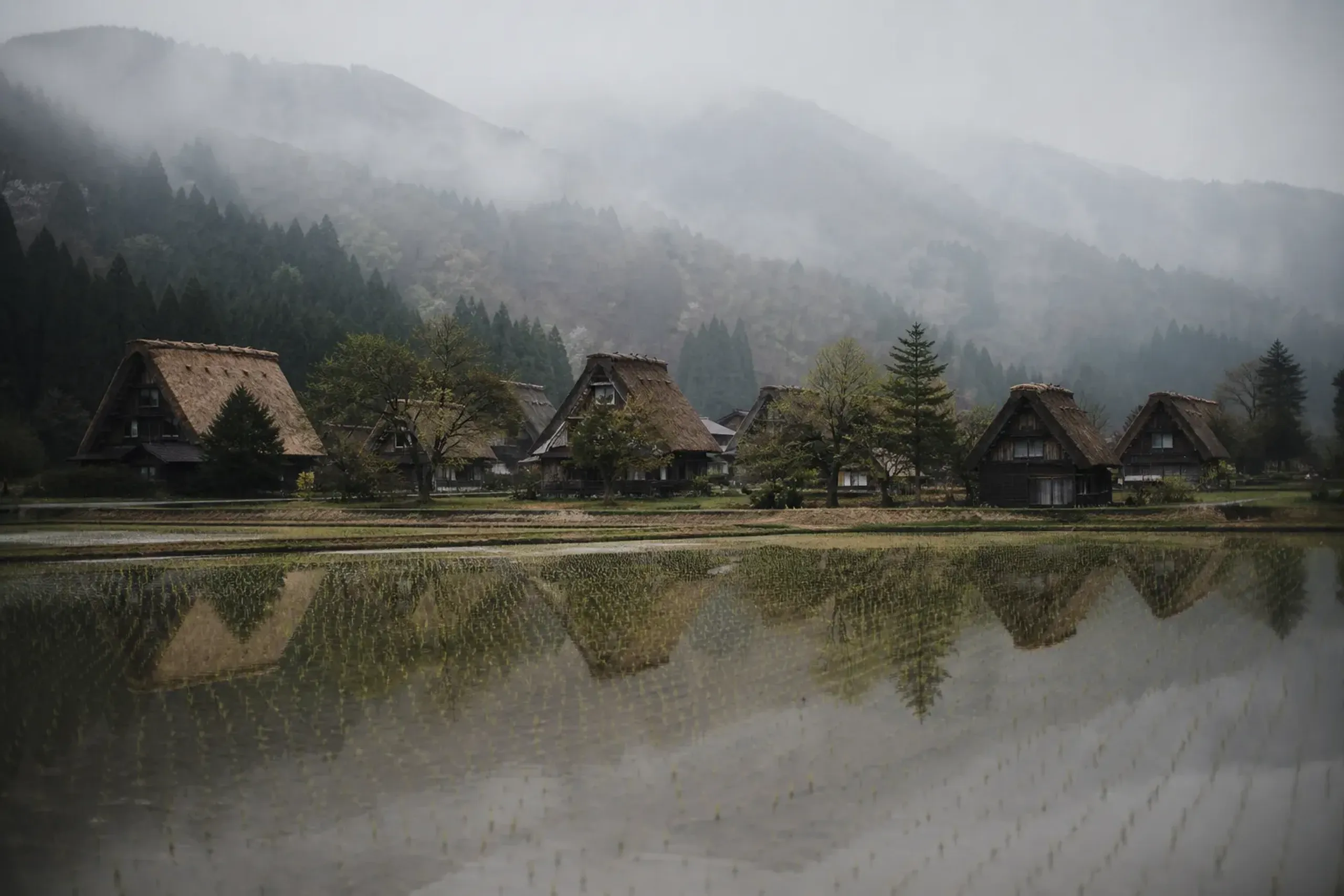
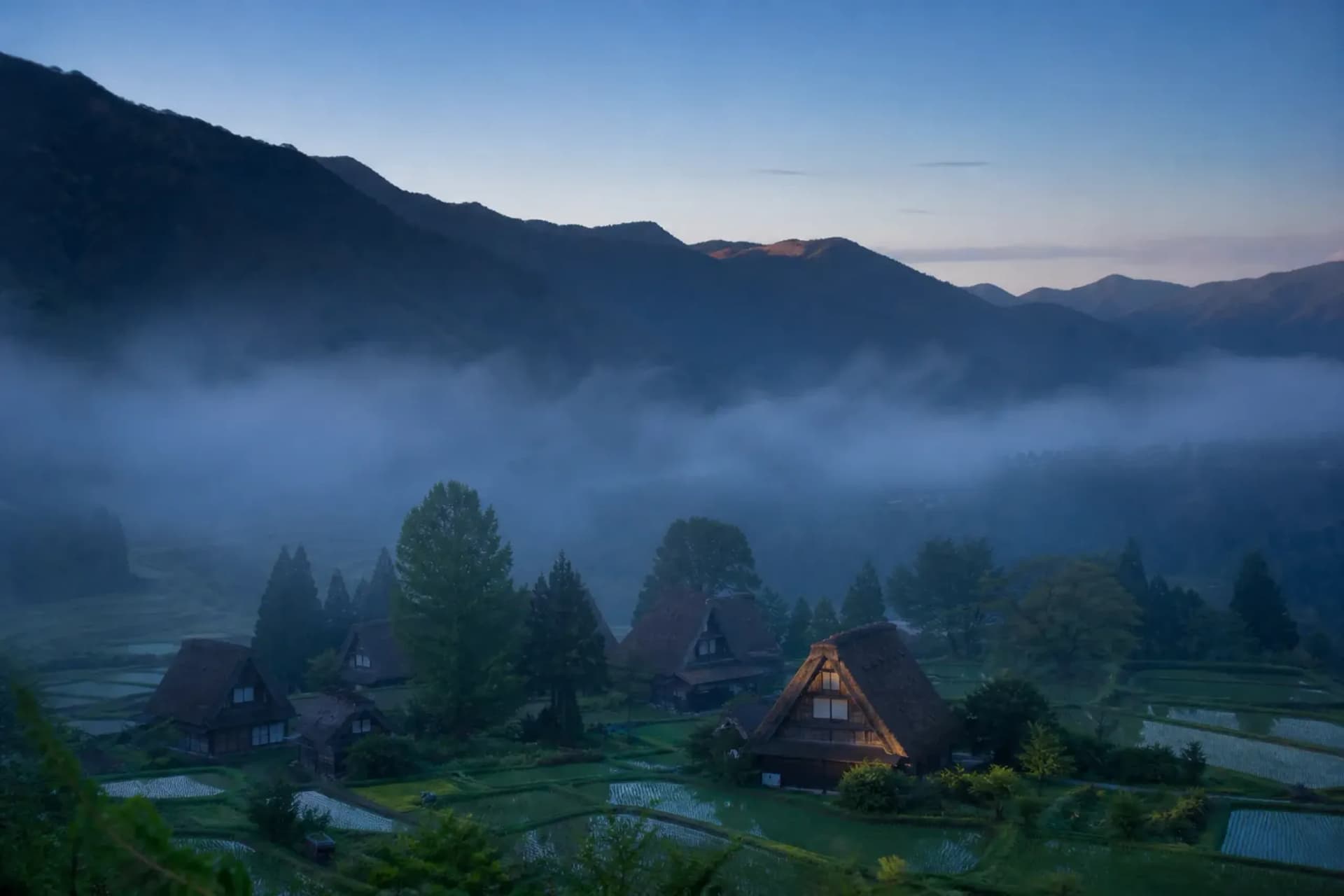
The Ogimachi hamlet holds 114 thatched houses among working fields.
Here it is not. At least three or four houses in the Ogimachi hamlet are re-roofed each year. The village keeps yuichō — record books — that document communal roofing here for more than two centuries.
How A Re-Thatching Works, Hour By Hour
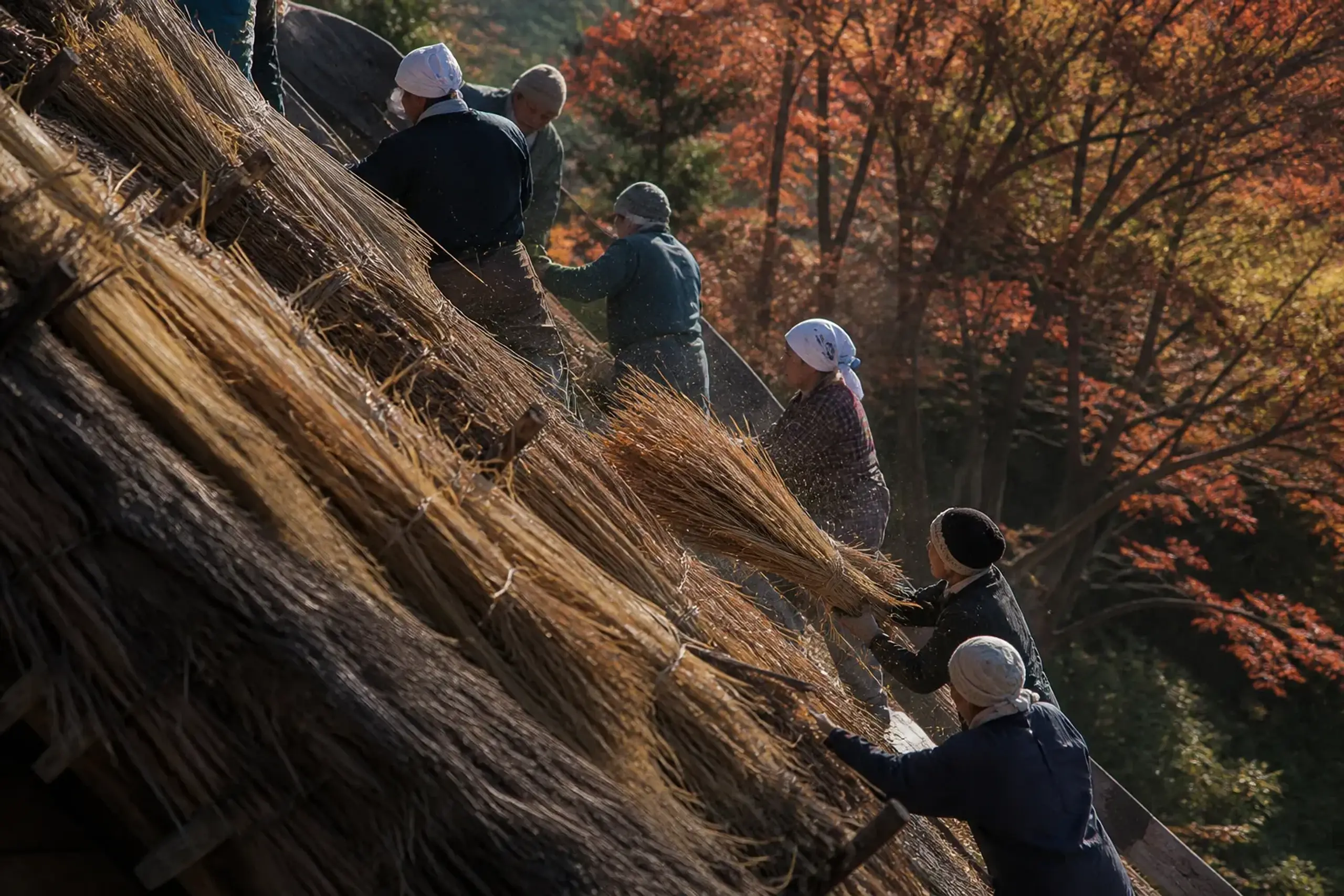
The entire covering goes on in a single day. That is the astonishing part. For a large gasshō house, as many as two hundred people come — because the work cannot be spread out. A half-covered roof left overnight to rain is a ruined roof. So the village empties itself into one house for one day.
The old thatch is stripped the day before. In the older, harder form of yui, stripping began at four in the morning, in darkness, and the family was expected to have the roof stripped and cleared by around eight, when the helpers arrived. A household that had not finished was called incompetent. Sit with that word. It tells you this was never a favour. It was a debt you owed and would one day be owed.
On the day itself, villagers pass two-metre bundles of new thatch hand to hand in a chain that runs from the ground up. Skilled workers on the steep pitch — and the pitch is severe, close to sixty degrees — receive the bundles and lash them down. Nobody hurries clumsily. Everybody hurries.
Neso, And The Thirty-Year Tightening
The rope that holds a roof together is the quiet marvel here.
The binding material is neso: young witch hazel saplings, grown about four years in the mountains, then used green — the fibres twisted apart by hand.
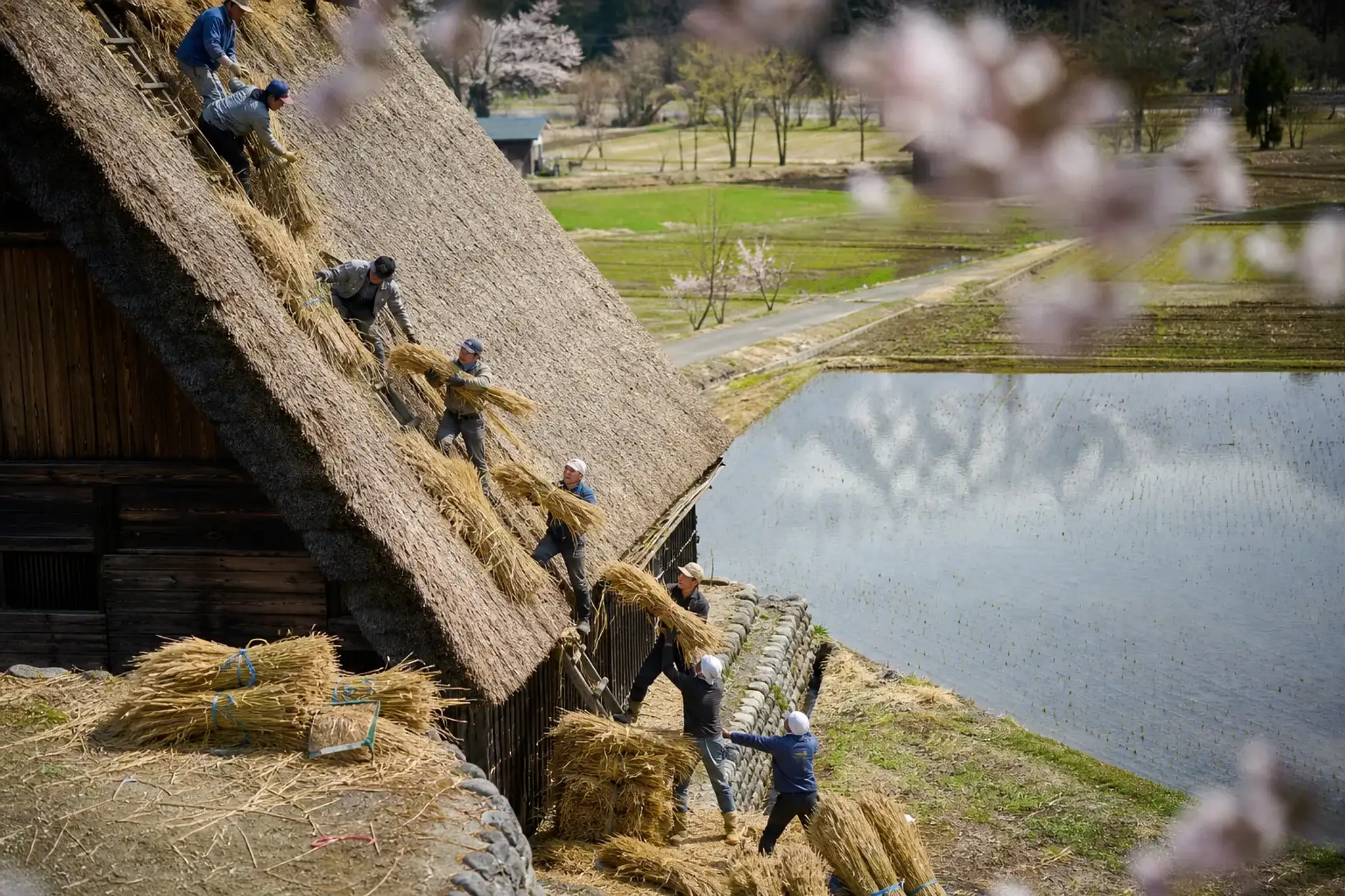
As many as two hundred people come, because the covering must go on in one day.
Green wood does not snap the way dry wood does. It bends. The workers tie the thatch down while the saplings are still supple.
Then it dries. As it dries, neso shrinks. As it shrinks, it tightens. A roof that was lashed loosely in the morning is gripped harder every week that follows, and it goes on gripping — carrying the roof's load for the thirty years until the next re-thatching. A knot that finishes its own job long after the hands that tied it have gone home. There is no better image in this whole village.
The Honest Modern Picture
Do not let anyone romanticise this for you. We won't.
Thatching in Shirakawa-go is now also a profession. Many roofs are laid by local professional thatchers, working with real skill and real tools. Yui continues alongside — but in a form that has changed with every generation. Younger villagers are brought into it deliberately; even schoolchildren take part in the work, so the knowledge does not die with the last person who remembers doing it barefoot at four in the morning.
Compare it with neighbouring Gokayama, also World Heritage. There, yui-based roofing faded from the 1950s as the number of gasshō houses fell, and a forestry cooperative now handles the roofs. Shirakawa-go's version survives. The World Heritage Centre describes it as the only such sight left in Japan.
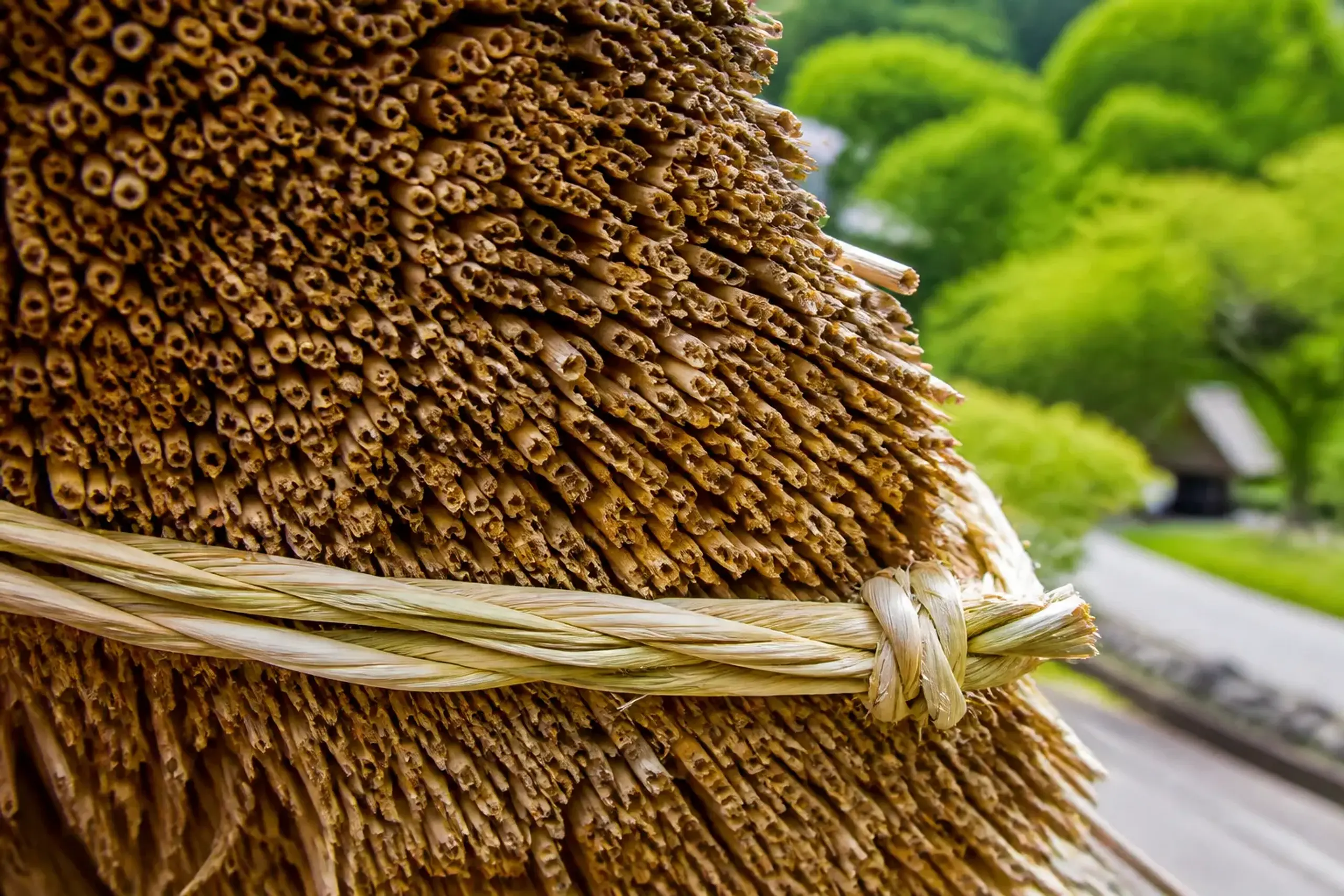
Green neso is tied supple, then shrinks and tightens for thirty years.
So a guest who arrives and finds professional thatchers on the ridge should not feel misled. That is the truth of the place. Professionals and neighbours, on the same roof, in the same century. It is more interesting than a pretend continuity, and this is exactly the kind of plain honesty our concierge insists on when we brief a client. We would rather you arrive knowing.
Is Spring The Best Time To See Re-Thatching In Shirakawa-go?
No. Re-thatching runs roughly April to November — winter snow makes it impossible. Spring is not the season for it. Spring is when it resumes.
That distinction matters, so let us walk the months honestly.
March: Still Under Snow
The village is quiet and mostly white. The work of the year has not begun. If you come now, you come for stillness, not for the roofs.
April: Snowmelt And The First Roofs
The snow retreats. The fields are turned and readied. The first roofs of the year go on. This is when the village visibly starts moving again — thatch stacked, saplings gathered, the chain of hands re-forming for the season.
Golden Week: Warned Plainly
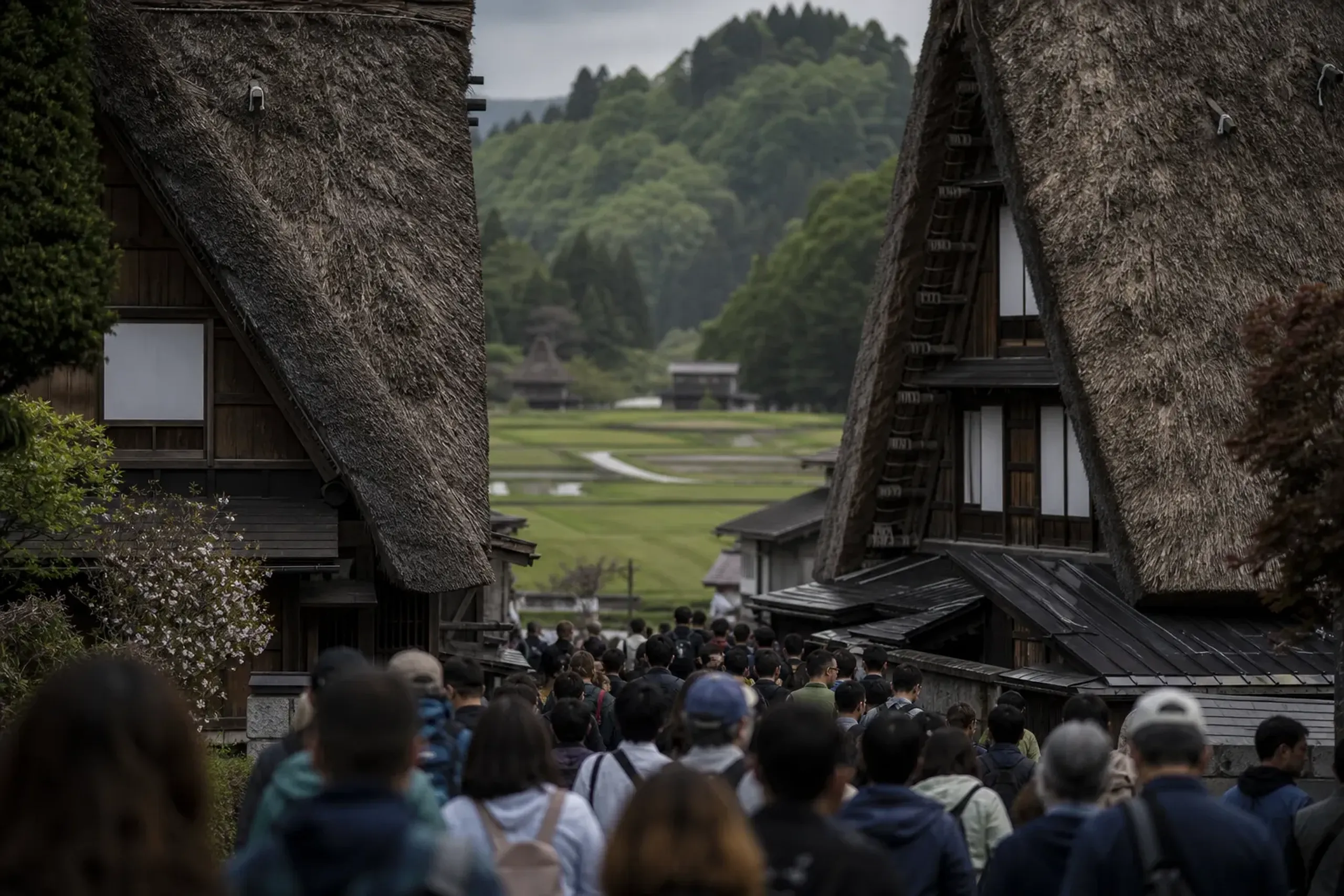
Avoid Golden Week. Late April into early May brings the heaviest day-visitor volume of the entire year. The lanes fill wall to wall. For anyone who came to see a working farming village, this is the one window to refuse.
Late May: Green And Flooded
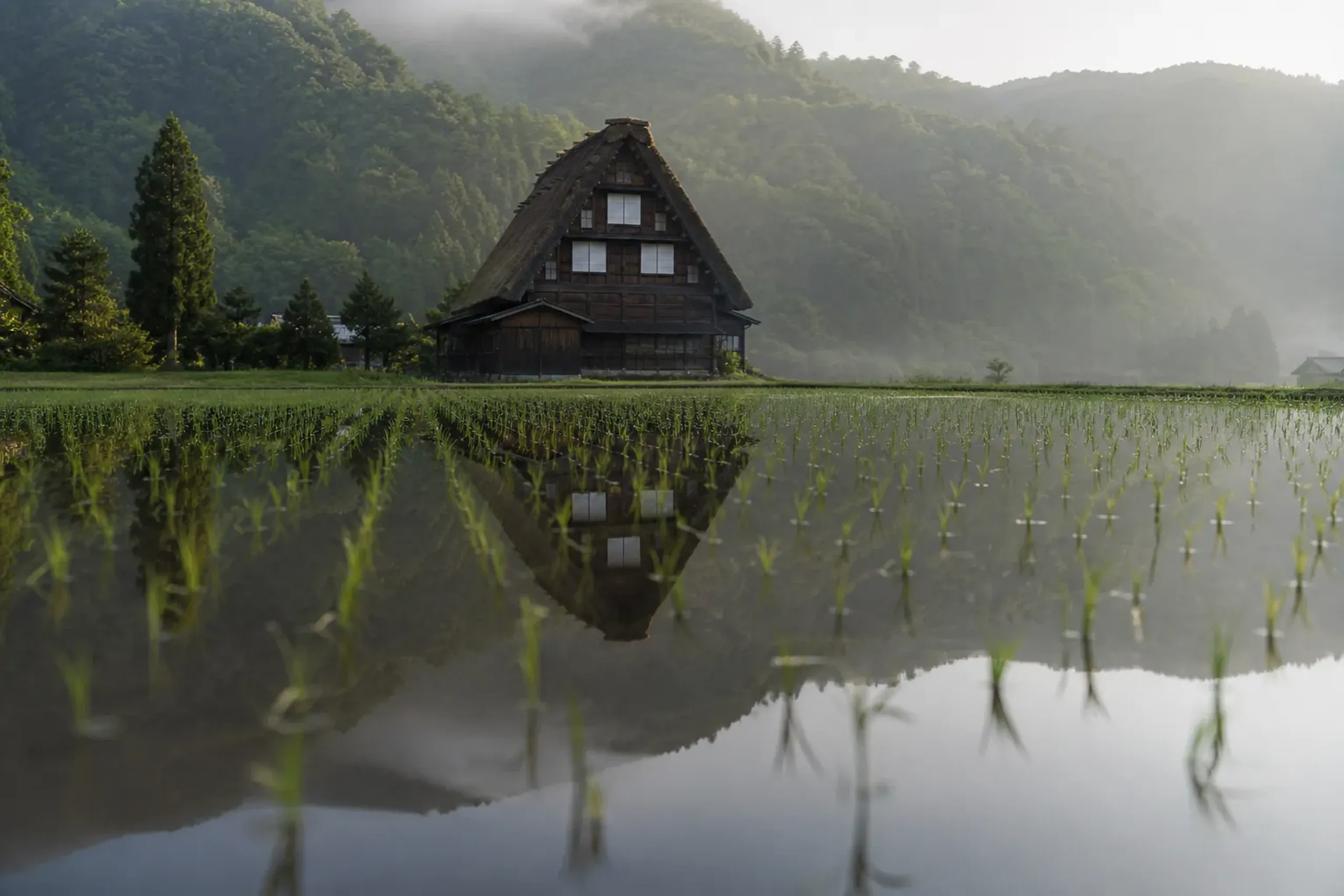
By late May the rice fields are flooded and mirror-bright, the surrounding hills fully green, and the Golden Week crowds have thinned.
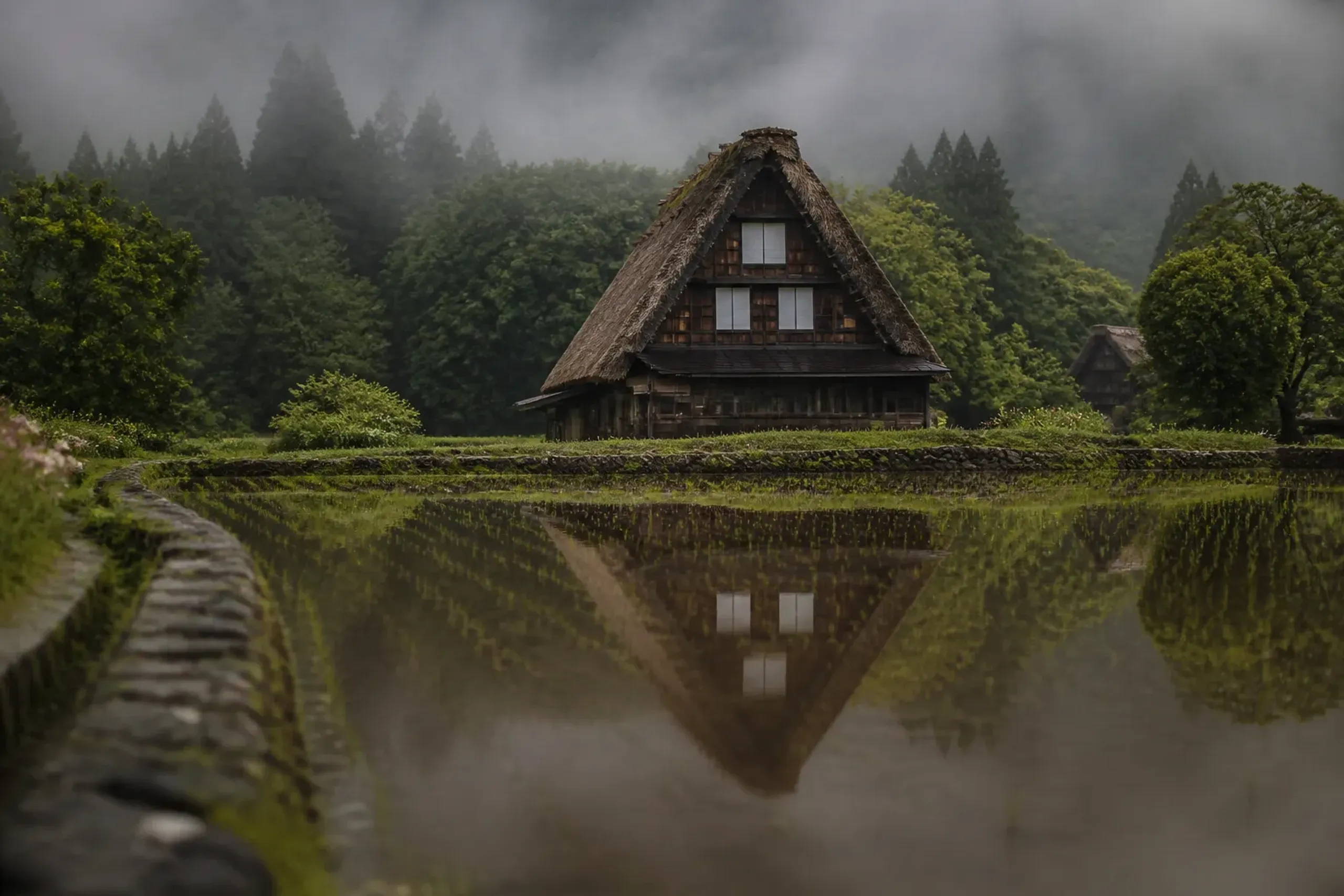
By late May the fields are flooded and green, and the Golden Week crowds have gone.
The village looks like exactly what it is: a farming settlement in a mountain basin. For a spring visit, this is the window we most often point clients toward.
The Village: 114 Houses, 1,600 People, Two Million Visitors
The Ogimachi hamlet holds 114 gasshō houses set among fields, with around 1,600 residents — and roughly two million visitors a year. Hold those two numbers next to each other. Sixteen hundred against two million. These are homes, not exhibits.
Every house faces the same direction. That is engineering, not taste. The shared orientation reduces wind resistance and controls how much sun each roof takes — cooler in summer, warmer in winter. The gabled form gives a wide attic, historically used for raising silkworms. The name gasshō-zukuri came into use only around the 1930s; it refers to hands pressed together in prayer, which is what the steep roofs resemble from the lane.
Do Not Sell, Do Not Rent, Do Not Destroy
The residents agreed three principles among themselves: do not sell, do not rent, do not destroy. Exterior alterations that would spoil the houses are simply not made. Grants from the Agency for Cultural Affairs and the village itself cover part of the re-thatching costs — but the discipline that keeps the village whole is the residents' own.
Shirakawa Village was recognised in 2023 as one of UN Tourism's Best Tourism Villages. That recognition is not about scenery. It is about a community that decided, and keeps deciding, to stay itself.
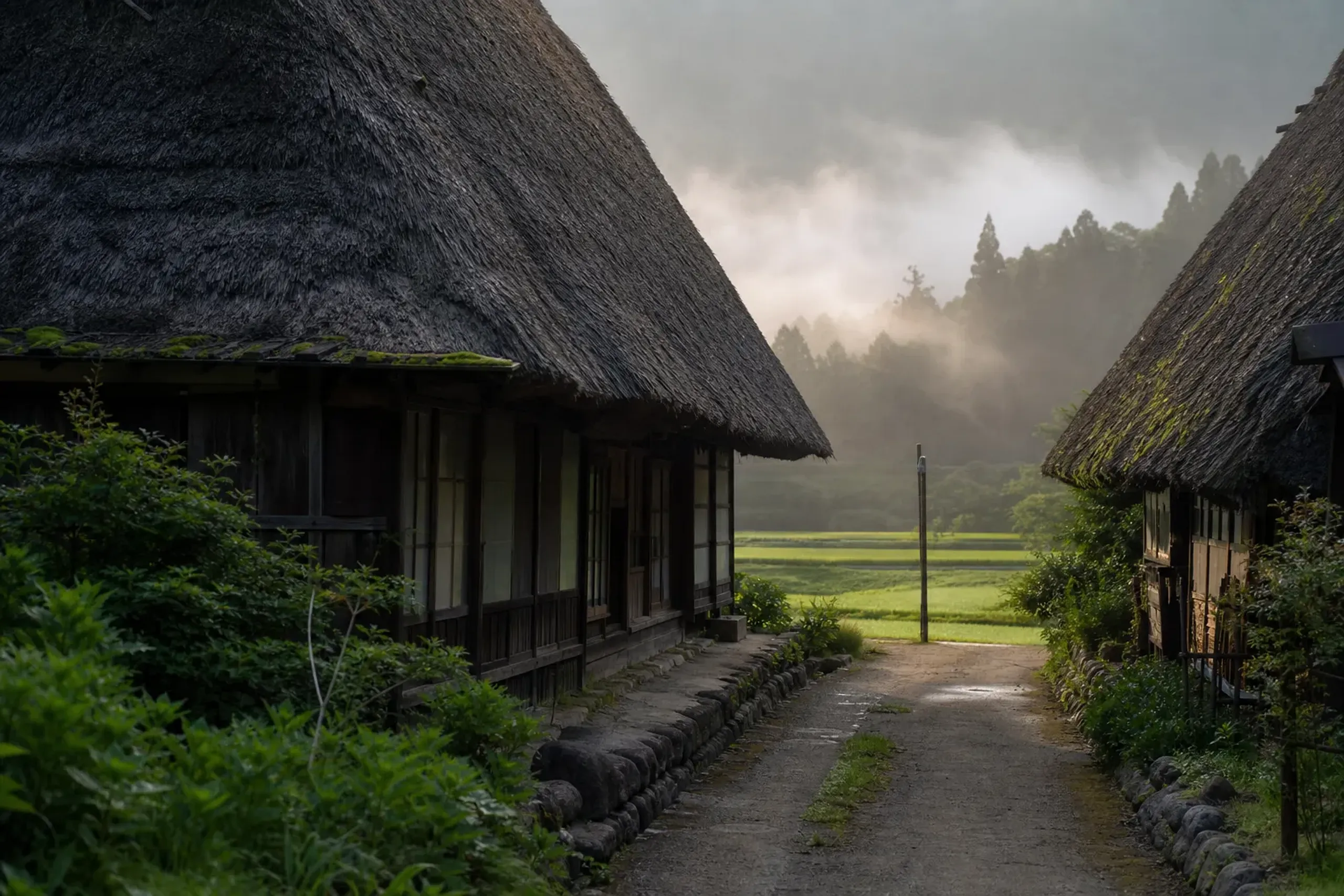
The two-million-visitor crowd is a daytime tide; the overnight guest has the quiet hours.
Which places a plain duty on anyone who visits: move quietly, keep to the public lanes, do not photograph residents or step onto private land, and treat the front garden you are admiring as somebody's front garden. It is.
What Japan Royal Service Arranges
We will be precise about this, because precision protects you.
Japan Royal Service arranges accommodation, private guiding, transfers, and the timing of a visit around a scheduled re-thatching. That last point carries a firm limit: re-thatchings happen on the village's schedule, when a roof needs work — never on a visitor's. We time a visit to a scheduled date. We do not schedule one. If the village moves a date, or weather closes the roof, we adjust the itinerary around it. Say that back to yourself, because a guest who understands it is never disappointed.
What we shape around that fixed point:
- Timing against the crowds. Shoulder hours, overnight stays inside or near Ogimachi, and a routing that keeps you clear of the day-tour wave — and clear of Golden Week entirely.
- The overnight, not the day trip. Staying the night is the whole argument. The two-million-visitor crowd is a daytime tide. It goes out. A guest who sleeps in the valley has the early morning and the late evening village almost to themselves.
- Quiet, private movement. Our own private chauffeured transfers route you in and out on your schedule — commonly paired with a base in Takayama, around fifty minutes away by road, or with Kanazawa. A tailor-made itinerary ties it together with the region's craft and onsen days on either side.
- Accommodation and guiding. Vetted stays and a private guide who reads the village correctly — where to stand, where not to, and what you are actually looking at on the ridge.
Community obligation runs through much of what we curate — the same thread appears in our writing on a private Noh performance and across our quietest hospitality traditions.
Shirakawa-go is that thread made structural. It holds up the roofs.
Frequently Asked Questions
Can Japan Royal Service guarantee I will see a re-thatching in Shirakawa-go?
No, and we will not claim to. Re-thatchings follow the village's own schedule, decided by when a roof needs work. We time a visit to a scheduled date and build a flexible itinerary, so a moved date or bad weather does not spoil your trip.
When in spring is best to visit Shirakawa-go and avoid crowds?
Late May is our usual recommendation — rice fields flooded and green, Golden Week crowds gone, the village looking like the working farm settlement it is. Avoid Golden Week (late April to early May), the busiest window of the year.
Is Shirakawa-go worth staying overnight rather than a day trip?
Yes. The two million annual visitors are a daytime tide that recedes by evening. Guests who stay overnight in or near Ogimachi get the early morning and late evening village nearly to themselves — the real reason we argue for the overnight.
How do I get to Shirakawa-go from Takayama?
Shirakawa-go sits roughly fifty minutes by road from Takayama. Public buses run from the Takayama Bus Center. For guests who prefer to move on their own schedule and avoid the day-tour rhythm, our private chauffeured transfers cover the route directly.
Is it acceptable to photograph the houses and residents?
Photograph the houses and the fields freely from the public lanes. Do not photograph residents or enter private land — these are lived-in homes, not exhibits. Quiet, respectful movement is expected under the village's responsible-tourism guidance.
Why Choose Japan Royal Service
Shirakawa-go rewards the traveller who understands it and punishes the one who treats it as a photo stop. The difference between those two visits is knowledge — of the seasons, the crowds, the schedule you cannot control, and the quiet a living village asks of you.
That is the work our team at Japan Royal Service does before you ever arrive. We tell you the honest picture: professionals and neighbours on the same roof, spring as the resumption rather than the season, and a re-thatching we can time a visit toward but never command. We arrange the accommodation, the guiding, the private transfers, and the pacing that keeps you out of the day-tour wave. What we sell is not access. It is judgement, discretion, and an itinerary shaped around a village's own rhythm.
To plan a spring visit to Shirakawa-go around the season and the schedule, reach our team privately via WhatsApp or LINE, or contact us here.