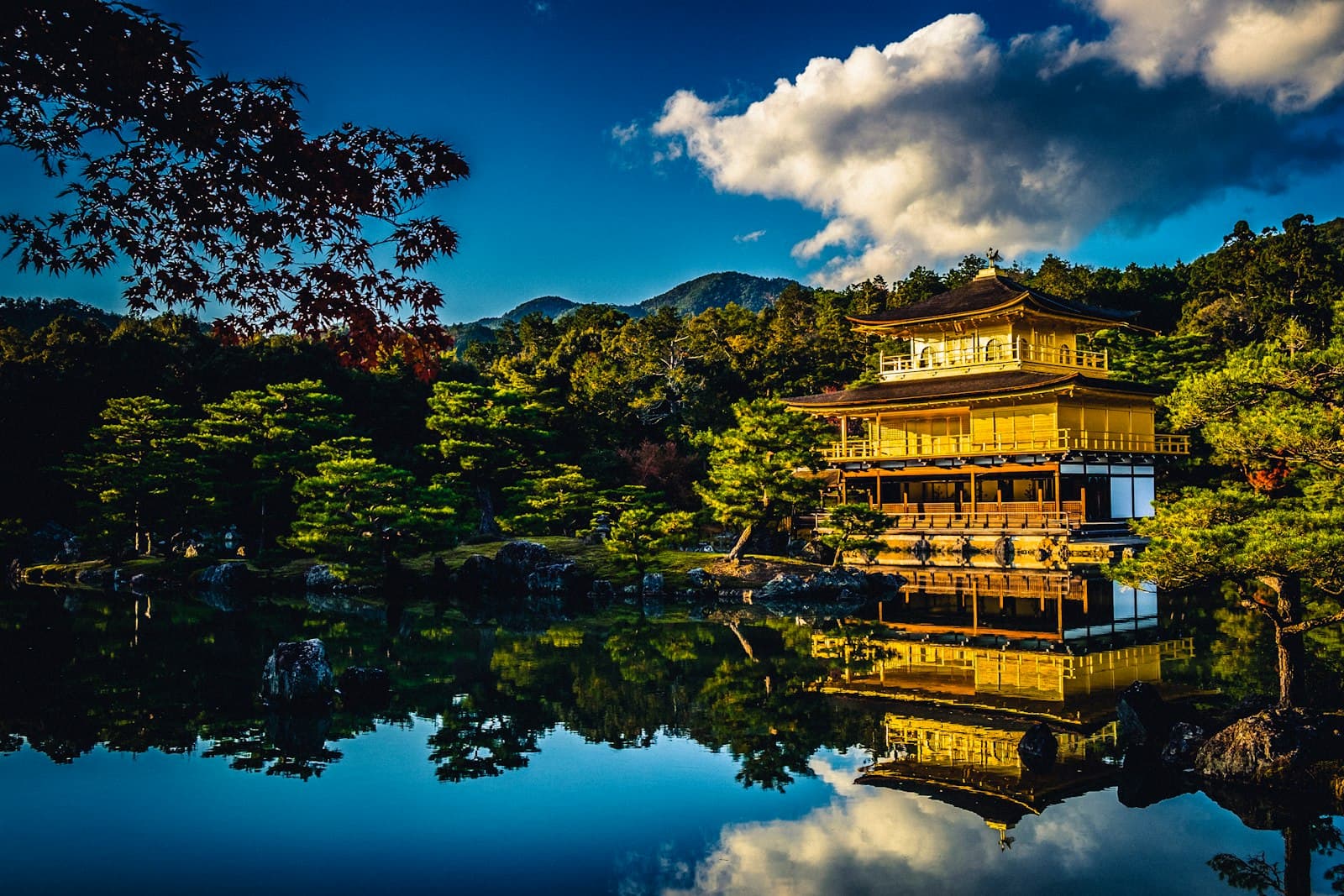
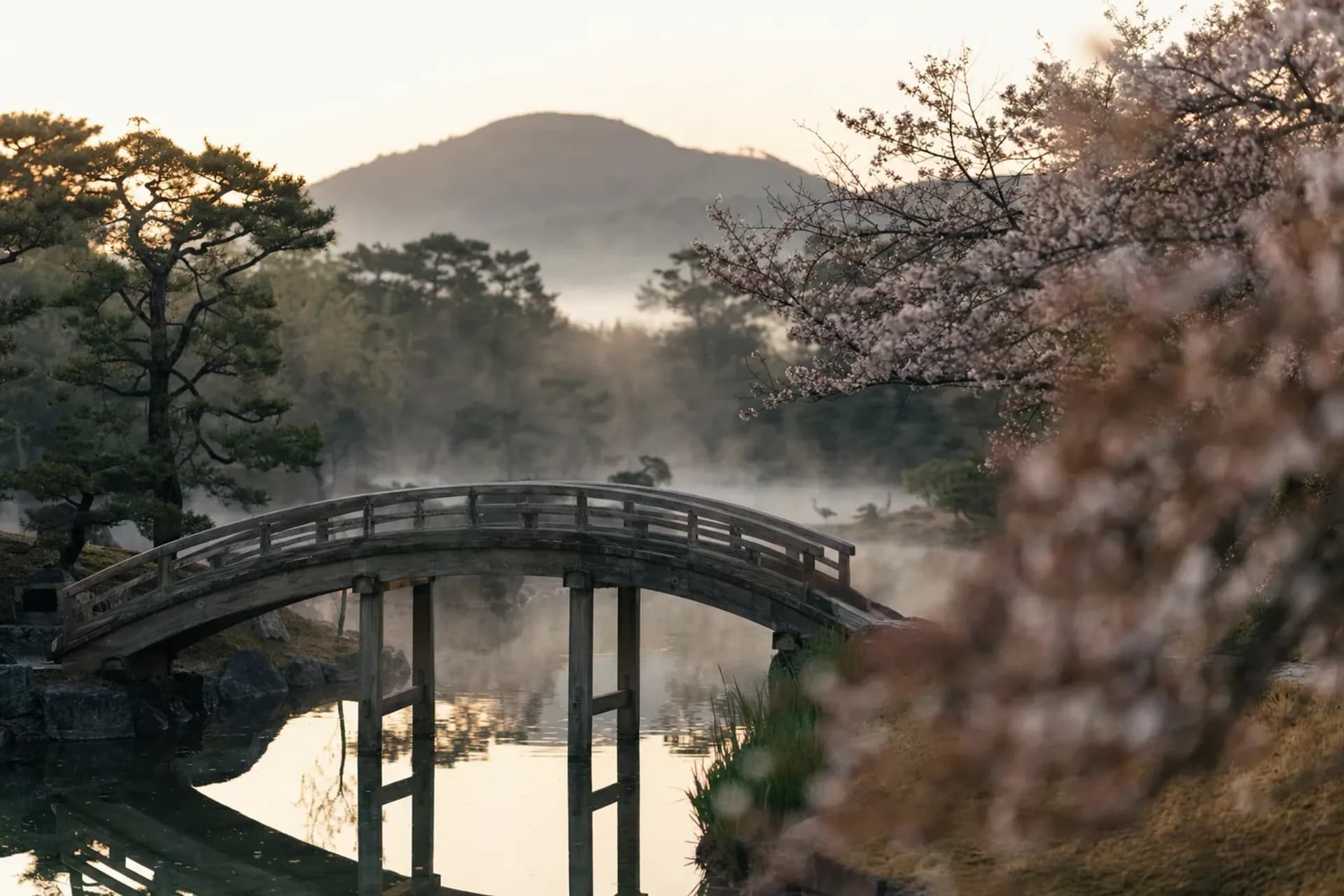
In this guide
- 01Why Takamatsu Works As A Hub For Kagawa Prefecture Travel
- 02How Long Should You Stay In Takamatsu To See Kotohira, Shodoshima, And Ritsurin?
- 03Kotohira-Gu (Konpira-San): The Climb That Sets The Tone
- 04Is Shodoshima Worth An Overnight Stay If You’re Based In Takamatsu?
- 05Ritsurin Garden And Sanuki Udon: Takamatsu Is Not Just A Gateway
- 06How The Setouchi Triennale Connection Changes Shōdoshima Planning
- 07A 4–5 Day Takamatsu Itinerary: One Base, Clean Excursions
- 08Can You Add Naruto Whirlpools From The Same Takamatsu Base?
- 09Frequently Asked Questions
- 10Let Us Shape Your Takamatsu Chapters
On a map, these three names seem to drift apart: Kotohira, Shōdoshima, and Ritsurin Garden. Plan them as separate stops and your trip dissolves into luggage, check-in lines, and hours lost in transit. Base yourself in Takamatsu instead. From a single hotel bed, you can shape three genuinely distinct days—stone steps rising into cedar shade, an island washed in a mild Mediterranean-style light, and a garden city built for the pleasure of walking slowly.
Why Takamatsu Works As A Hub For Kagawa Prefecture Travel
Takamatsu is Shikoku’s practical crossroads. JR Takamatsu Station sits a short walk from Takamatsu Port, and that quiet adjacency is precisely what makes the hub strategy work. You can travel inland to Kotohira by rail, then pivot the next morning to an island ferry—all without ever changing bases. Simple.
What matters for a high-comfort trip is not geography alone, but friction. In our experience, switching hotels for short distances is the fastest way to make Japan feel busy rather than precise. Takamatsu lets you keep your rhythm: an early start, a clean return, and a predictable reset each evening.
It also gives you a “real city” layer between excursions—a place to exhale. A garden with 400 years of history. An udon culture that rewards curiosity. And waterfront access that keeps the Seto Inland Sea within reach whenever you feel like trading streets for salt air.
Hidden-Japan Value: One Base, Three Different Moods
This corner of Kagawa is too often treated as a pass-through to the art islands.
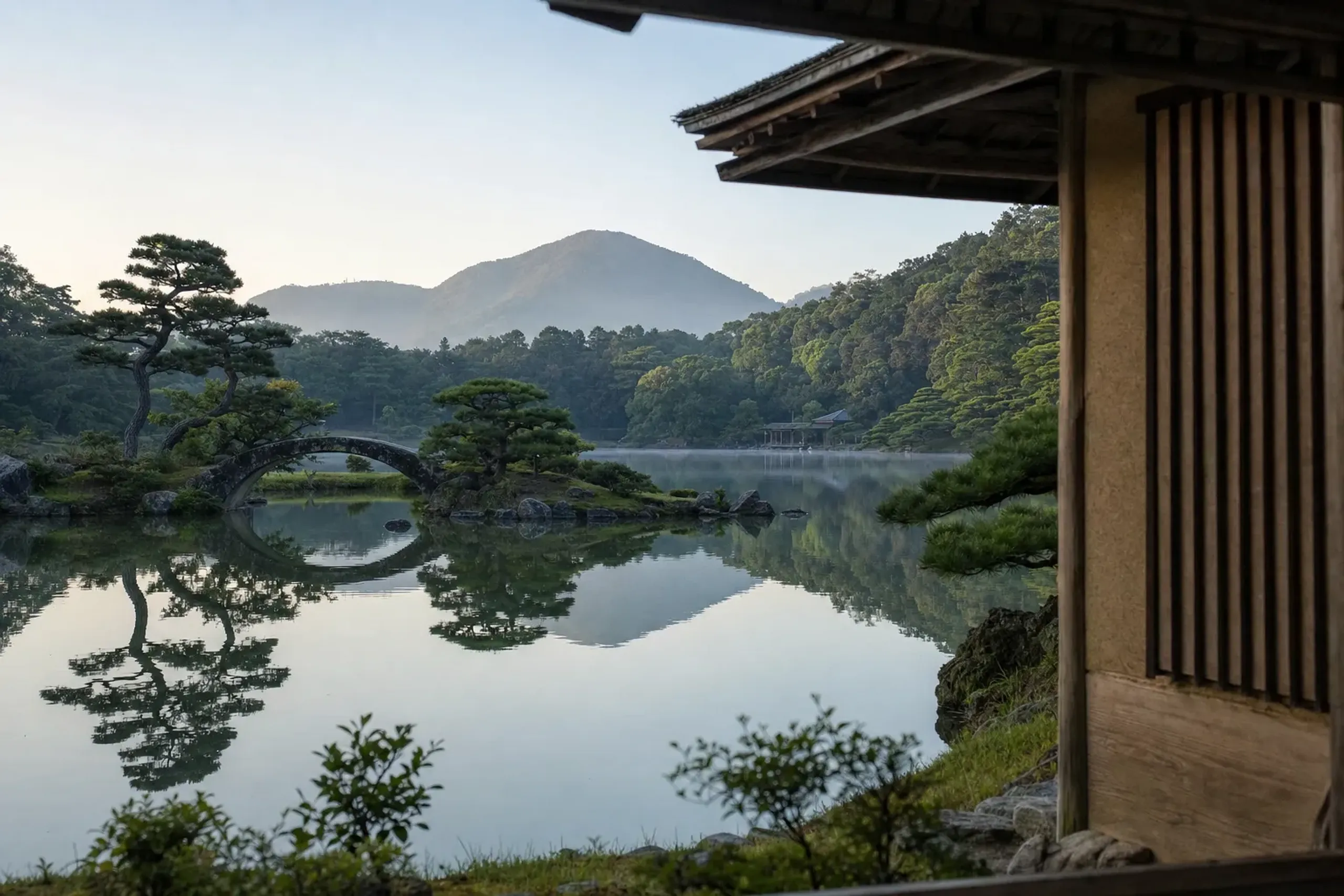
That is the missed move. Takamatsu can serve as your quiet organizing principle while you visit places that feel entirely unrelated to one another—the pilgrimage-town gravity of Kotohira, the coastal light of Shōdoshima, and the wabi-sabi calm along Ritsurin’s pond edges.
Our team at Japan Royal Service plans this as a study in contrast, not as a checklist to be cleared. You should feel the shift under your feet. Stone one day. Sand the next. Then gravel paths and raked edges, back in the city. Each day a different register, drawn from the same address.
How Long Should You Stay In Takamatsu To See Kotohira, Shodoshima, And Ritsurin?
Plan 4–5 nights in Takamatsu to cover Kotohira as a day trip, give Shōdoshima 1–2 nights, and still enjoy Ritsurin Garden and Sanuki udon without rushing.
Shorter stays can work, but they force trade-offs. The island is the pressure point. Shōdoshima is large, has no trains, and punishes a rushed day with long transfers and shallow time on site.
For many discerning travelers, the goal is not to “do Shikoku.” It is to hold a small, coherent pocket of Japan that feels private and well-paced—a place experienced fully rather than ticked off. Takamatsu is a calm base for exactly that, especially if you want to keep packing to a minimum and travel light between chapters.
Kotohira-Gu (Konpira-San): The Climb That Sets The Tone
Kotohira-gū is a Shinto shrine reached by a long stone staircase—about 785 steps to the main hall, and about 1,368 steps to the inner shrine should you choose to continue.
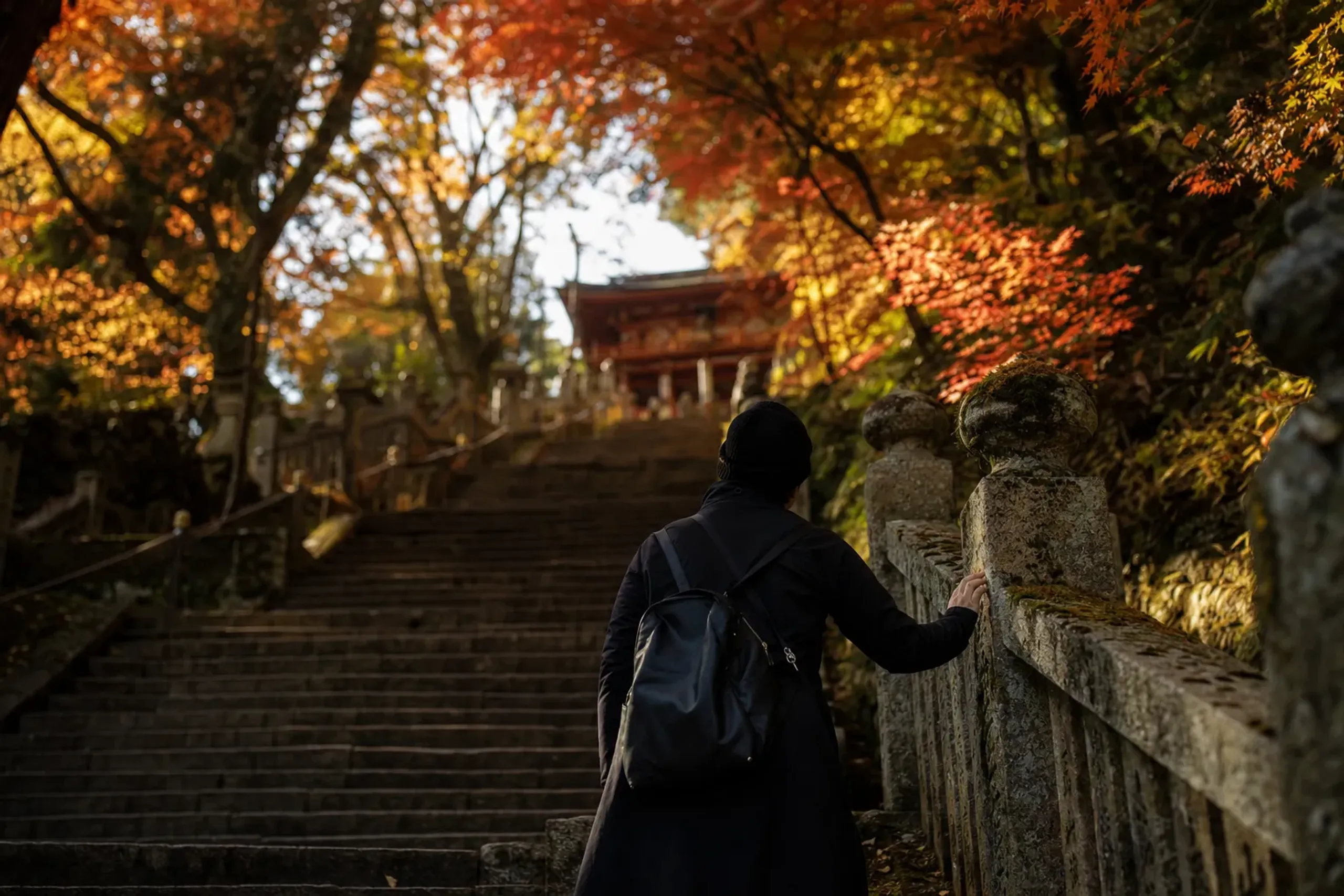
The climb is the point. You begin in town, and the steps draw you upward in steady increments until the world narrows to breath, shoes on stone, and the changing cadence of your own pace. It is not hard in a dramatic way. It is demanding in an honest one.
We suggest you settle a single question in advance: are you stopping at the main hall, or continuing to the inner shrine? That decision shapes your pacing, your footwear, and your mood for the rest of the day. No guilt attaches to either choice. This is not a test.
Two Good Endpoints (And Why Both Are Valid)
Stopping at the main hall is a strong choice if you want time to look, not merely to climb. Your legs stay fresh. Your afternoon can hold a slower descent, a pause for tea, or a second stop nearby without feeling squeezed.
Continuing to the inner shrine changes the entire character of the day. The longer staircase stretches your attention, and you arrive with that quiet tiredness that sharpens the smallest details—moss gathering in corners, the angle of afternoon light, the way the shrine precincts seem to breathe. Wabi-sabi lives in exactly those small, unhurried edges.
Imperial-Class Quiet: Formal Japan Without Noise
A handful of places in Japan teach you the country’s “highest register” without a trace of spectacle.
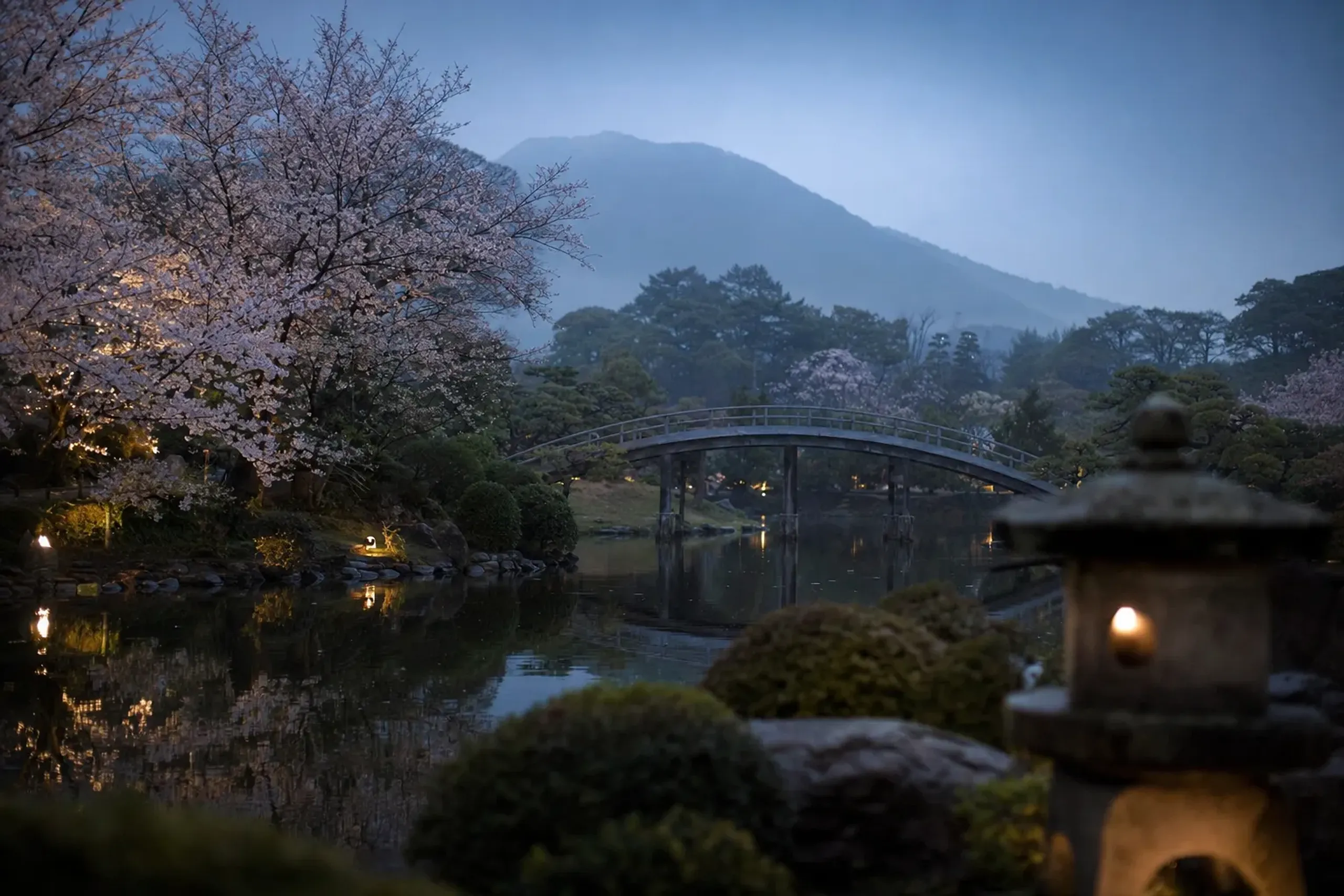
Kotohira is one of them. You feel the formality in the way the approach is structured, and in the composure it quietly asks of you—even if you never exchange a word with anyone at all.
If you wish to go deeper—into shrine context, local history, the finer points of etiquette—our concierge team can shape the day around a private guide. Discretion matters here. Quiet matters more, and we protect both.
Practical Notes For A Comfortable Kotohira Day Trip
- Start earlier than you think. The stairs are far more pleasant before the day warms and before crowds compress the landings.
- Choose shoes for stone. Fashion soles and long staircases rarely make good company.
- Carry light. One bottle, one layer, and nothing that swings as you climb.
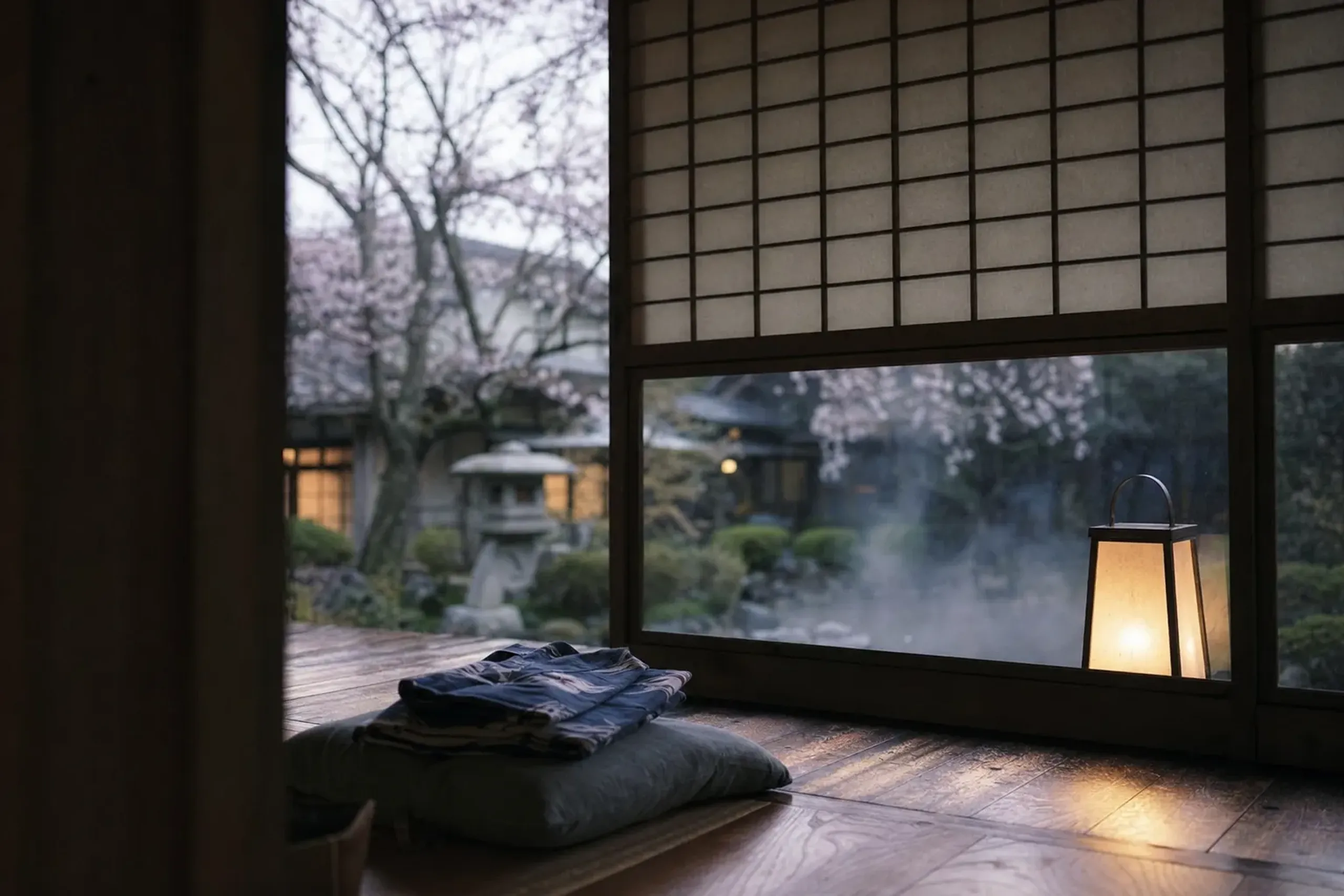
If you’re building this into a larger Japan trip, Kotohira pairs beautifully with restorative time afterward. Onsen culture runs deep in the area, and there are established ryokan traditions in Konpira Onsen—the kind of place to unknot the legs and reflect on the climb.
For reference only: Kotohira Kadan is a ryokan in Konpira Onsen with a long history, and its official site states it began in 1627 as an inn for travelers visiting Konpira-san. If you are weighing where to stay, our team at Japan Royal Service can advise privately, based on your dates and priorities, on introductions that seldom appear in general listings.
Is Shodoshima Worth An Overnight Stay If You’re Based In Takamatsu?
Yes—Shōdoshima rewards 2–3 days, and an overnight stay gives you enough time to divide the island into distinct areas without racing buses or backtracking.
From Takamatsu Port, access is straightforward: roughly 60 minutes by standard ferry, or about 35 minutes by high-speed boat. The crossing is not the problem. What happens after you arrive is.
There are no trains on Shōdoshima. Getting around means bus, rental car, or e-bike, and the island is large enough that a single “island day” can quietly become mostly transit. A costly miscalculation.
What Shōdoshima Feels Like (And Why It’s Different From Naoshima)
Shōdoshima has a broader, more lived-in scale than the compact art-island loop many travelers picture. Olive groves climb the slopes, working shorelines mark the coast, and pockets of older industry still feel very much alive. The air can read drier, clearer—Japan-guide describes a Mediterranean atmosphere—and that alone shifts the whole palette of your trip.
For travelers drawn to wabi-sabi, Shōdoshima is not about polished, curated moments. It is about restraint. A wind-leaning olive tree. A salt-bright horizon. The hush inside a warehouse district where fermentation takes its time and rewards patience.
Olives: The Island’s Signature Landscape
Shōdoshima is known as “Olive Island,” and it is Japan’s leading olive-growing region thanks to its mild, dry, Mediterranean-style climate. The most recognizable public anchor is Shodoshima Olive Park on the island’s southern coast, with its olive groves and windmill overlooking the sea.
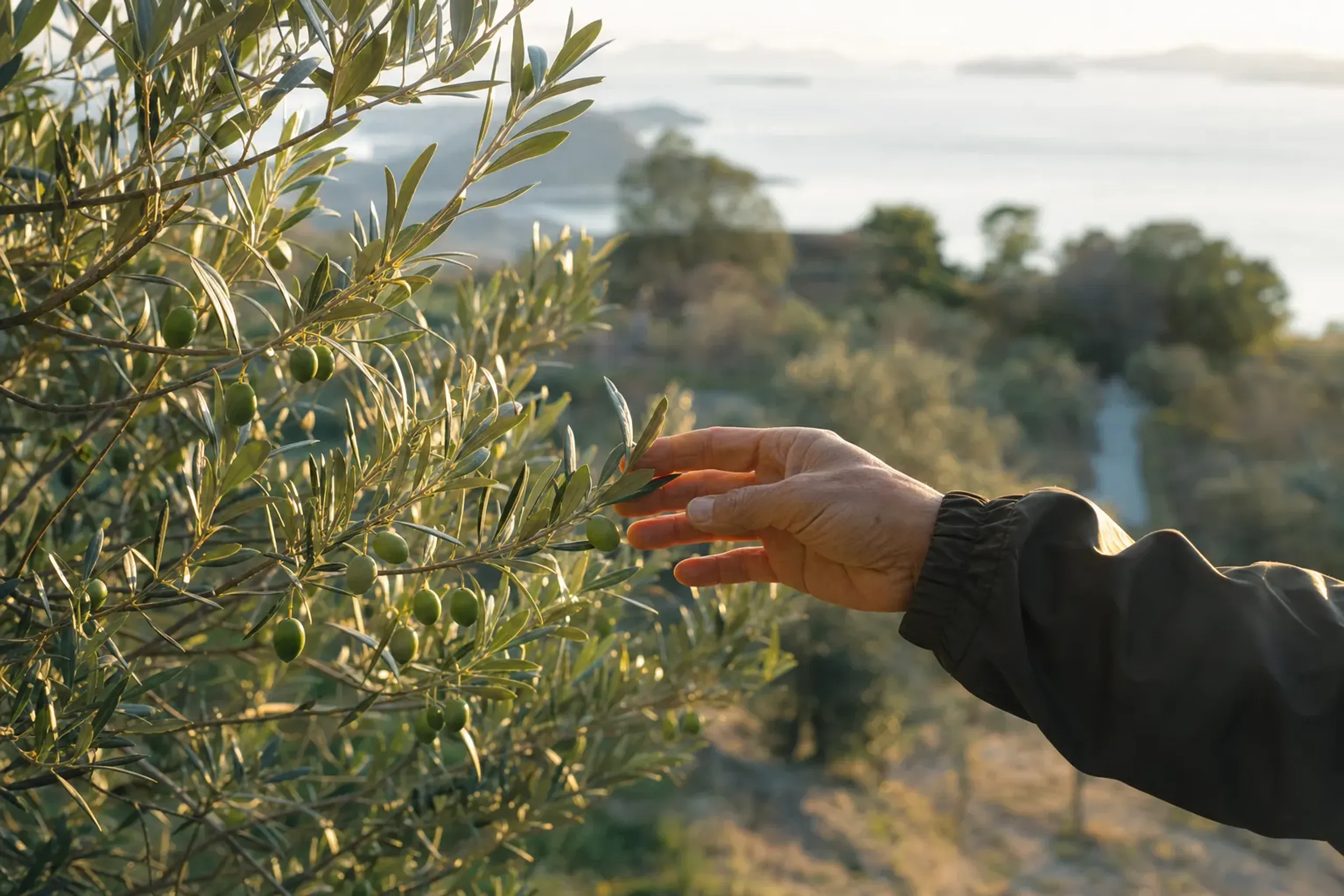
Autumn is when travelers naturally begin thinking of harvest themes. We do not publish exact harvest dates, because they shift from year to year. If seasonality matters to you, our concierge confirms the timing directly, keyed to your travel window—an application of shun, the Japanese art of knowing precisely what to experience where, and when. A short answer. Well worth the asking.
Soy Sauce Heritage: Hishio No Sato And Wooden Barrels
Shōdoshima’s soy sauce brewing heritage is no museum piece. It remains active in a historic warehouse district, and the Shodoshima Shoyu Association presents “Hishio no Sato – Home of Soy Sauce,” describing handcrafted soy sauce matured in wooden barrels.
This is where shokunin becomes tangible. You see the patience in the very materials: aged wood, iron bands, dark interiors, slow airflow, decades of practiced judgment. For those who care about cuisine, it is one of the most grounded food experiences in the region—rooted in the making, not the plating. With advance arrangement, our team can seek a quieter, guided encounter with the craftspeople behind those barrels than a casual visitor would ever find.
Angel Road And The Discipline Of Tides
Angel Road is a sandbar that appears and disappears with the tide. That single fact changes how you plan. You don’t “drop by.” You arrive when the sea allows it.
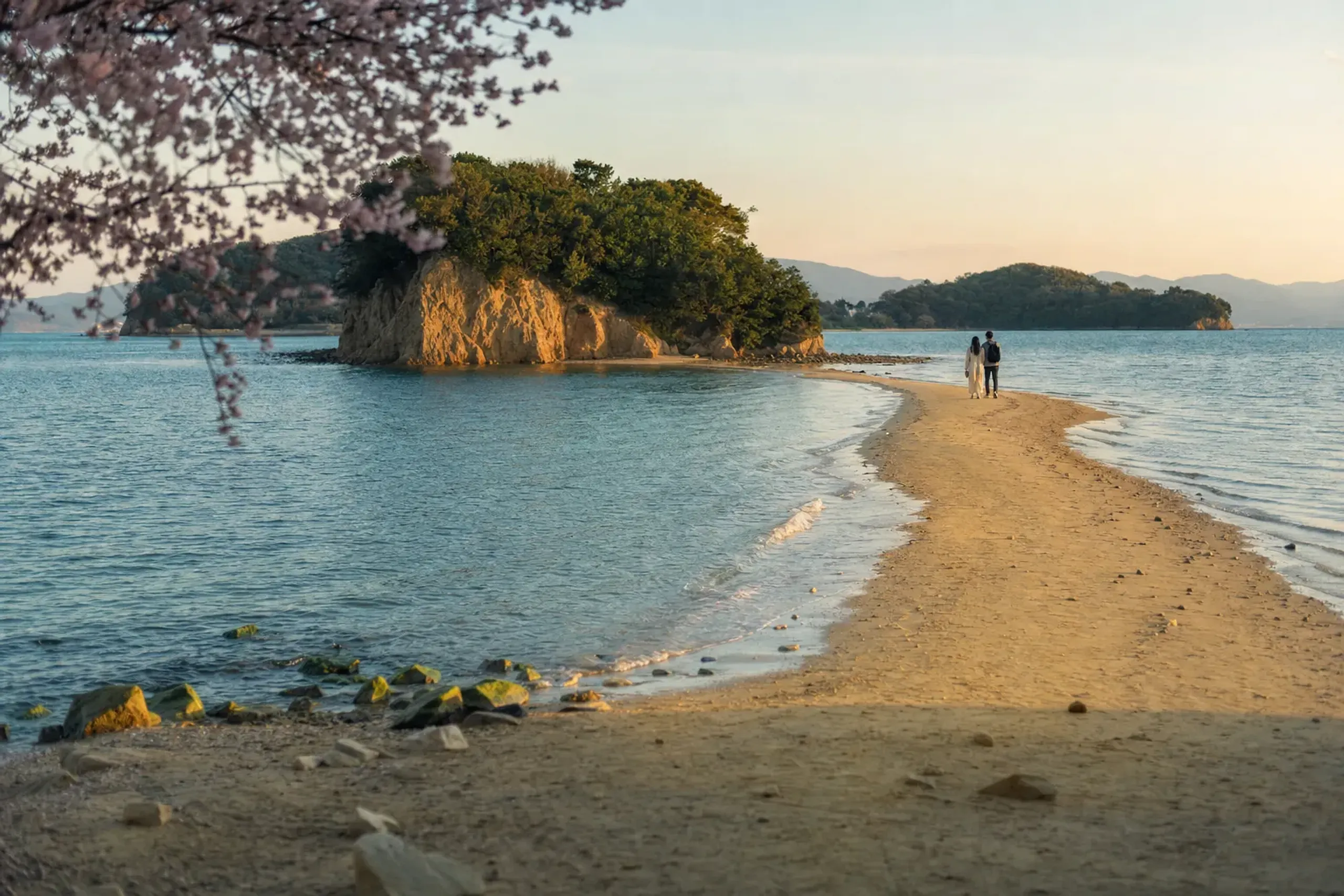
We do not state tide times publicly, because they change daily. If Angel Road is on your must-do list, our team checks the day’s tidal window and builds the island route around it—so you are strolling the exposed path, not standing on shore watching it vanish beneath the water.
Twenty-Four Eyes Movie Village And A Mid-20th-Century Streetscape
Twenty-Four Eyes Movie Village recreates a mid-20th-century streetscape. It is a different flavor of nostalgia than the big cities offer. The Seto Inland Sea light lends it an almost staged serenity, even on the calmest days.
If you like photography, go when you can linger. Ten unhurried minutes can change the entire frame.
Kankakei Gorge: The Island’s Vertical Moment
Shōdoshima also offers a striking nature counterpoint in Kankakei Gorge, which Japan-guide highlights as one of Japan’s celebrated gorges. It gives the island a “second act.” Coastline, then altitude—the whole day gaining a new dimension.
When we shape Shōdoshima well, we resist the urge to sweep up everything at once. You settle on a north/south logic. You leave air in the schedule. The island repays that restraint with quiet.
What’s New For 2026: A Fresh Luxury-Led Anchor On Shōdoshima
For travelers searching “Shōdoshima luxury hotel 2026,” there is now a clear new reference point: edit x seven Setouchi Shodoshima, reported to have opened on March 5, 2026. This matters because it signals rising service expectations on the island itself—not only in Tokyo or Kyoto.
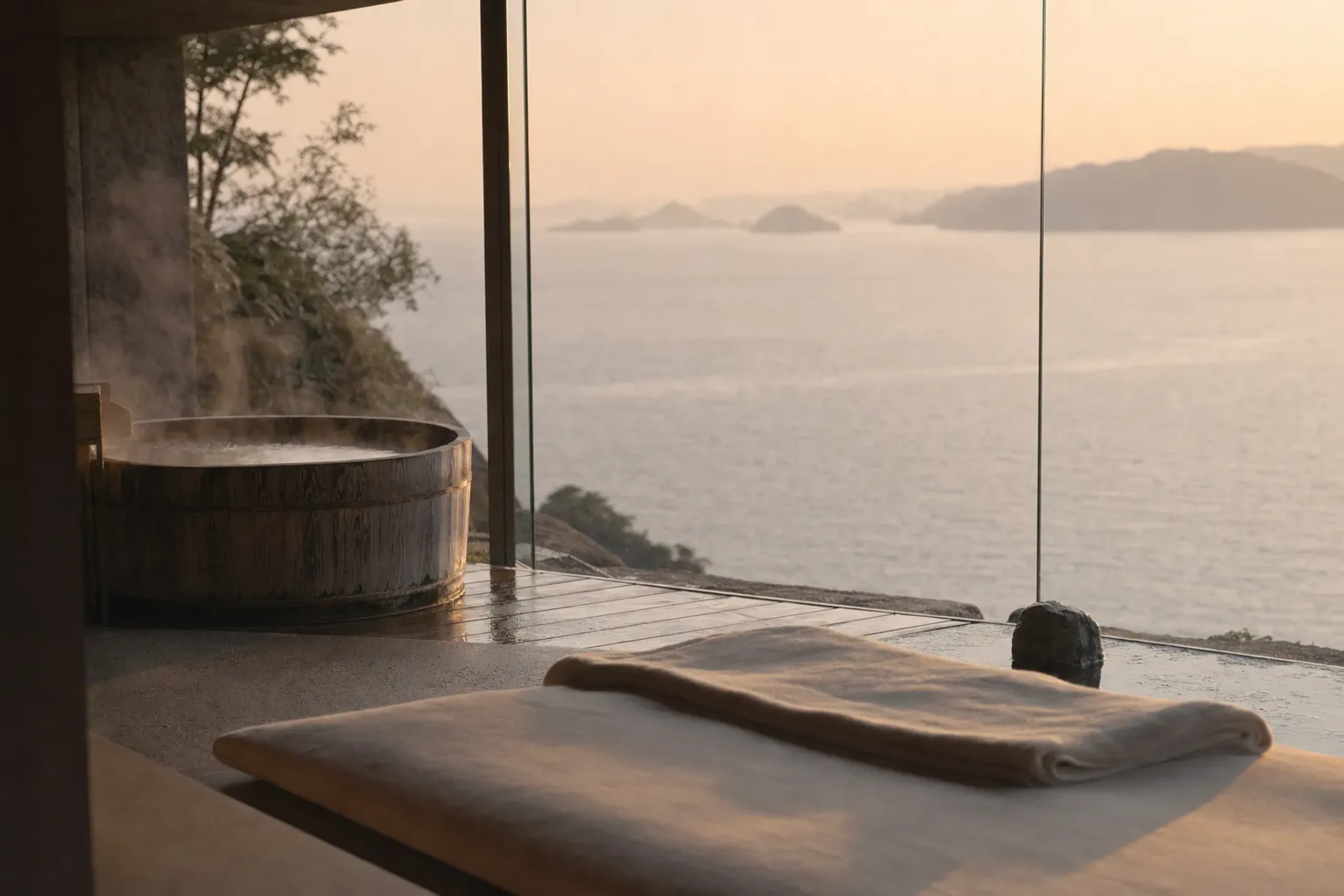
We keep public writing factual and restrained, but in private we can advise on what a new property changes: pacing, where to place your island day, and how to keep Shōdoshima from becoming a transit puzzle. Discretion first. Always.
Ritsurin Garden And Sanuki Udon: Takamatsu Is Not Just A Gateway
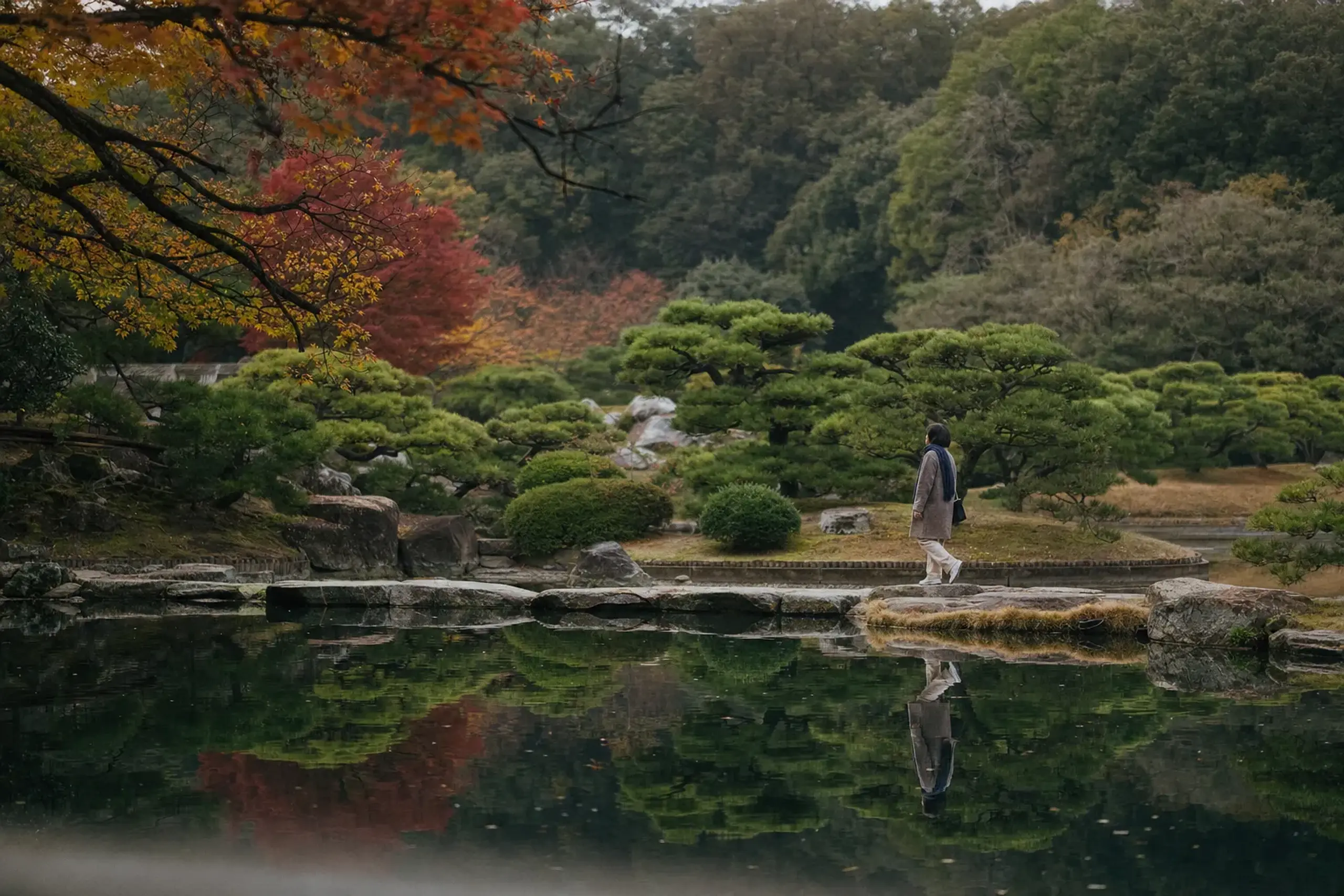
Ritsurin Garden is a designated Special Place of Scenic Beauty in Takamatsu, with roughly 400 years of history, built around six ponds and thirteen artificial hills.
It is not a “quick garden stop.” The scale is the point. You move from one pond edge to the next, and the view keeps rearranging itself—bridges, borrowed scenery, tight turns that open suddenly onto wide water. Slow down. Let it unfold.
This is where wabi-sabi can quietly become your travel filter. Not as a concept, but as a habit. You begin to notice the restraint in the trimming, the studied asymmetry in how the stones sit, the deliberate emptiness held between features. The garden teaches you to see less as more.
When To Go Inside The Day
Go early if you want quiet paths and cleaner photographs. Go later if you prefer softer light and don’t mind sharing the main viewpoints. Either works beautifully—but choose on purpose.
If you are pairing Ritsurin with an udon-focused afternoon, morning is the easier path. Your legs stay fresh, your appetite stays sharp, and the day doesn’t quietly end at 3 p.m.
Sanuki Udon Culture: Simple Counters, Serious Devotion
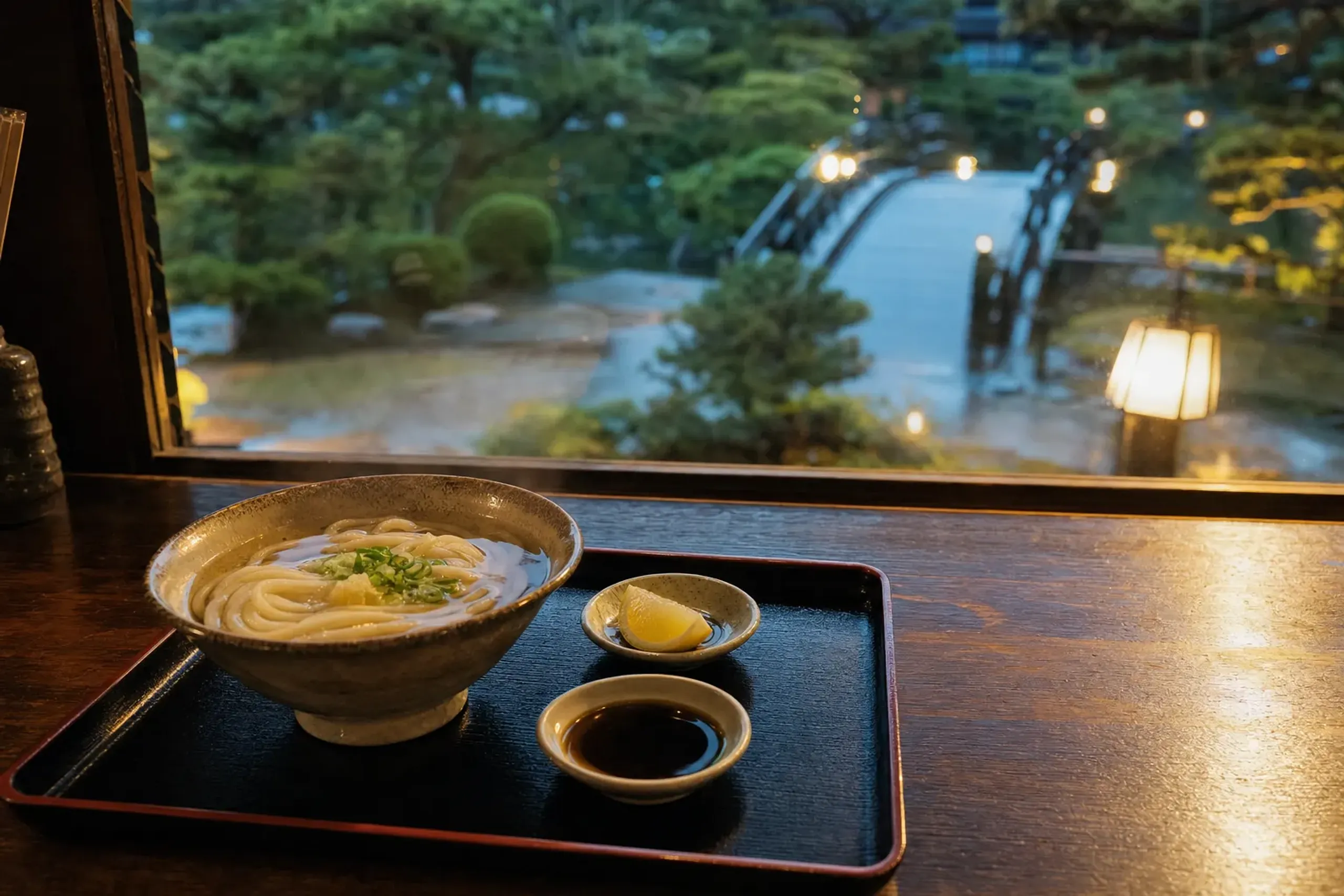
Kagawa Prefecture is deeply associated with Sanuki udon—thick, chewy wheat noodles served in a simple dashi broth, often at no-frills, self-service counters. That “no-frills” part is what first puzzles luxury travelers. Don’t fight it.
Think of it as culinary minimalism—the same restraint that governs the garden, expressed on a plate. A quick order, a rush of hot steam, a few decisive toppings, and then you’re back in the car or on the train. Our clients often tell us it is the meal they remember most, precisely because it refuses to perform.
A self-guided udon trail through the countryside is a genuine, well-established way to spend a day. If you want to do it comfortably, our team can shape the routing and timing so it stays a pleasure rather than a scramble.
How The Setouchi Triennale Connection Changes Shōdoshima Planning
Shōdoshima is a venue for the Setouchi Triennale, the contemporary art festival that also draws in Naoshima and Teshima. That means demand patterns can spike, and ferry corridors can feel noticeably tighter during festival periods.
We keep this piece focused on the Takamatsu–Kotohira–Shōdoshima triangle, but if your core goal is art-island planning, read our dedicated guide: Shōdoshima, Kagawa: Olives for Preserving Canned Fish. It adds culinary context that pairs well with a Triennale-style itinerary.
For reference only, published dates exist for Setouchi Triennale 2025 (Spring: April 18–May 25, Summer: August 1–August 31, Autumn: October 3–November 9).
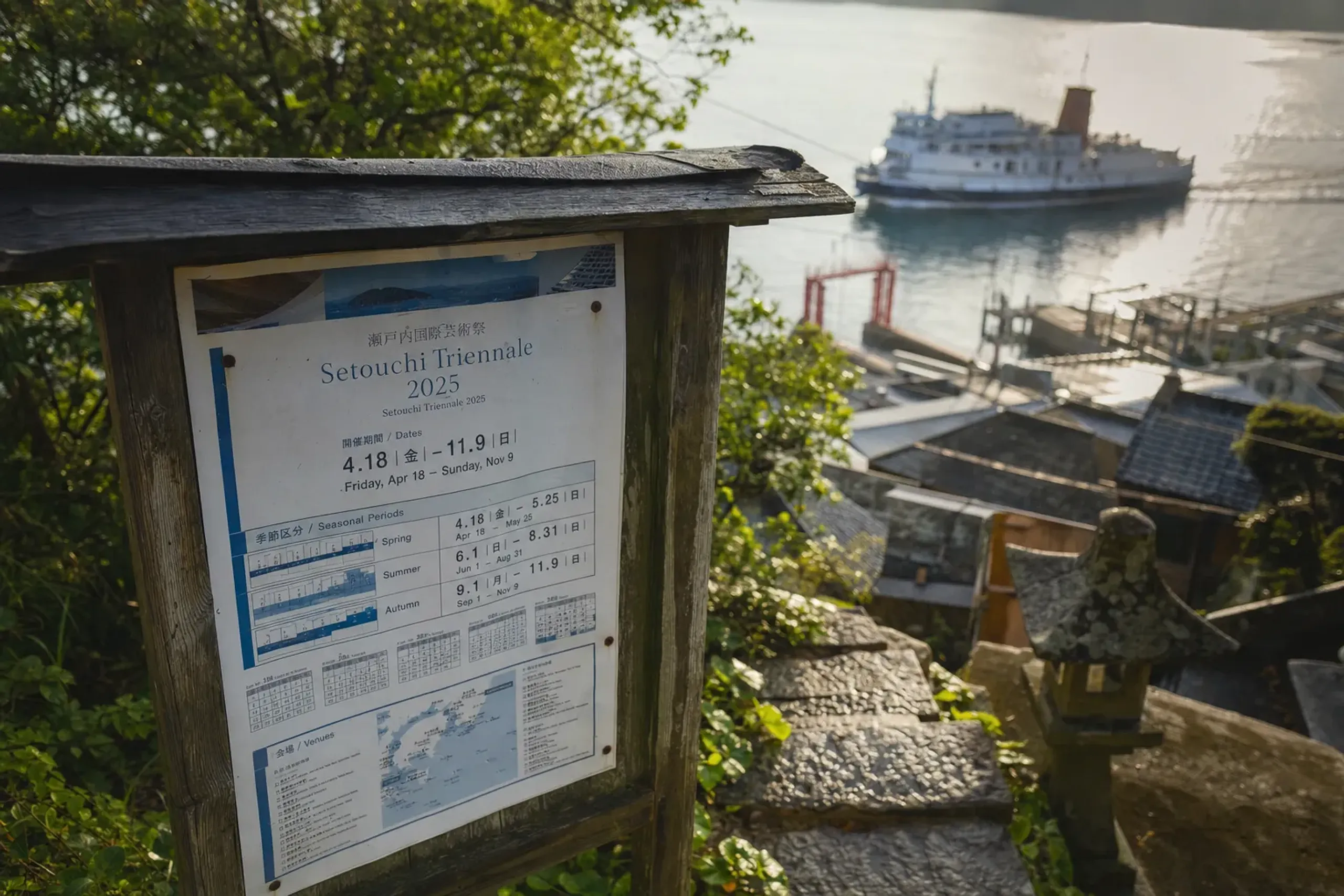
When future editions are announced, we advise guests privately on how they should reshape hotel strategy and island sequencing.
A 4–5 Day Takamatsu Itinerary: One Base, Clean Excursions
If you want three distinct days without ever moving hotels, use Takamatsu as your anchor and treat each outing as its own “chapter.” The point is contrast. Not mileage.
Option A: 4 Nights / 5 Days (Balanced, No Rush)
- Day 1: Arrive Takamatsu. A light city evening. An early night.
- Day 2: Kotohira day trip. Decide in advance: 785 steps or 1,368.
- Day 3: Shōdoshima transfer. Anchor experiences: olives or soy sauce heritage, plus one coastal stop.
- Day 4: Full Shōdoshima day. Add Kankakei Gorge or Angel Road, according to the tides.
- Day 5: Return to Takamatsu. Ritsurin Garden if you missed it, then depart.
This structure protects your island time. It also builds in a recovery buffer after Kotohira—something many travelers come to appreciate far more than they expect.
Option B: 5 Nights / 6 Days (Slow Travel, More Texture)
- Day 1: Arrive Takamatsu.
- Day 2: Ritsurin Garden + udon trail focus.
- Day 3: Kotohira day trip.
- Day 4: Shōdoshima transfer + a gentle afternoon.
- Day 5: Shōdoshima full day (divide north/south logically).
- Day 6: Return and depart, or keep it as a flexible day.
This version suits travelers who dislike stacking “hard walking” days back to back. Kotohira and Kankakei within one trip can be a lot to ask of the legs.
Space helps.
Season Notes Without Overthinking It
Shōdoshima carries its olive identity, and travelers naturally ask about autumn. Kotohira often feels best when the air turns cooler, since the staircase is the main event. Ritsurin works year-round, because the garden is about composition rather than a single bloom.
Angel Road is the one element that forces real-time planning, entirely at the mercy of the tides. If it matters to you, we build the day around it. If it doesn’t, we keep the day relaxed. A little foresight—the quiet work of a good concierge—makes all the difference.
Can You Add Naruto Whirlpools From The Same Takamatsu Base?
Yes—Naruto is a further option from the same region, but it deserves its own day and is best planned separately from the Kotohira–Shōdoshima rhythm.
We do not repeat the whirlpool details here. If you are considering it, turn to our dedicated guide: Naruto Whirlpools: A Luxury Guide to the Roaring Sound. Then decide whether your trip needs a fourth “chapter,” or whether three is already exactly the right amount.
Frequently Asked Questions
Is Takamatsu Port Walkable From JR Takamatsu Station With Luggage?
Yes—JR Takamatsu Station is a short walk from Takamatsu Port, which is exactly why Takamatsu works so well as a ferry-and-rail hub.
That said, comfort matters more than distance when you are carrying luggage or traveling with family. Our concierge often suggests timing arrivals so you are not walking the waterfront at peak heat or in heavy rain, and a private car with a professional driver can bridge those moments seamlessly through our private chauffeur service.
How Many Steps Are There At Kotohira-Gu, And Do You Need To Go All The Way?
Kotohira-gū is about 785 steps to the main hall and about 1,368 steps to the inner shrine, and stopping at the main hall is a perfectly complete experience.
If you continue to the inner shrine, plan for a longer, more physically focused morning. We advise choosing your endpoint before you begin, so the rest of the day stays comfortable.
Can Shōdoshima Be Done As A Day Trip From Takamatsu?
Yes, but Shōdoshima is large and a rushed day often becomes mostly transit, so an overnight stay usually creates a far better experience.
Let Us Shape Your Takamatsu Chapters
Three days, three moods, one quiet base—stone, sand, and raked gravel drawn from a single address. The difference between a trip that feels busy and one that feels precise lies in the details we handle before you arrive: the tidal window at Angel Road, the harvest timing on Olive Island, the private introduction that turns a warehouse of soy barrels into an audience with the shokunin who tend them. If you would like a discreet, tailor-made itinerary built around your dates and your pace, contact us here and we will begin quietly, in confidence.