In this guide
- 01What “The Upgrade” Means In Japan Now
- 02The Two-Tier Framework: Best Reservations Vs Introduced Access
- 03The Upgrade Map (Decision Tree): Where Reservations Stop Working
- 04Concrete Examples: Standard Five-Star Vs Introduced Access (Real, Verifiable)
- 05Introduced Access That Feels Japanese: Shokunin, Wabi-Sabi, Imperial-Class
- 06How To Build Social Capital For Unlisted Experiences (Without Being “That Guest”)
- 072026 Japan Reality Check: Why Access Is Tightening
- 08Flow Map: How We Recommend You Upgrade A Japan Itinerary
- 09How To Book What Is Public In 2026 (Without Confusing It With “Introduced”)
- 10FAQ: The Upgrade Map For Introduced Access In Japan
- 11Why Choose Japan Royal Service
You already know how to reserve the “best.”
You can pick the top suite, the right seat on the Shinkansen, the coveted counter in Tokyo. Yet Japan in 2026 is changing the definition of luxury, and not in a flashy way. The real upgrade now is moving from transactional bookings to introduced access: the kind that comes with context, timing, and a human chain of trust.
Our team at Japan Royal Service built this guide for VHNW travelers who value rarity, restraint, and discretion. Not hype. We’ll show where “best reservations” end, where introduced access begins, and how to approach both with cultural accuracy in a year when demand, rules, and reservation systems are under visible strain.
What “The Upgrade” Means In Japan Now
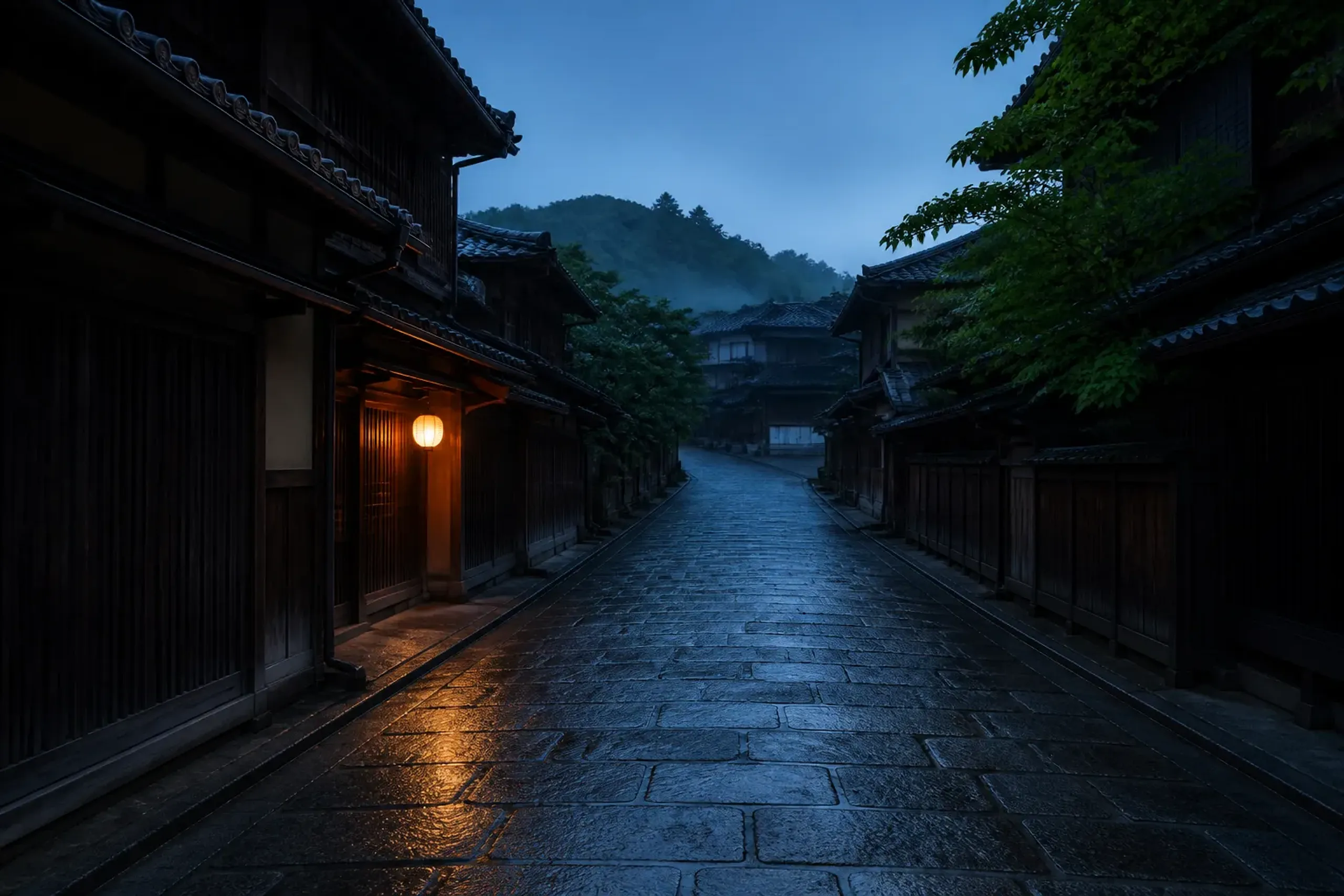
In 2026, the finest “upgrade” often starts with timing and restraint.
In many markets, luxury still means a higher category and a cleaner confirmation email.
Japan is different. Here, access often sits inside social norms: introductions, etiquette, and the ability to arrive in the right tone. Miss that, and even a perfect reservation can feel thin, rushed, or quietly unwelcome.
The shift is not philosophical. It is practical. Kyoto, for instance, has leaned into visitor management and traveler-conduct messaging, including the Kyoto Traveler’s Promise campaign, which ended on March 31, 2026.
Two Systems Run Side By Side
You will meet two Japans on the same trip.
One is the Japan of platforms, inventory, and published rules: OMAKASE, TableCheck, hotel concierges, museum hours. The other is the Japan of introductions: the workshop that opens only when a master agrees, the temple context that changes what you’re permitted to do, the private viewing that requires impeccable behavior and timing.
The upgrade map is learning which system you’re in. Instantly.
Key fact: “Introduced access” is not a synonym for rule-breaking. In Japan, it usually means better timing, better context, and higher responsibility.
The Two-Tier Framework: Best Reservations Vs Introduced Access
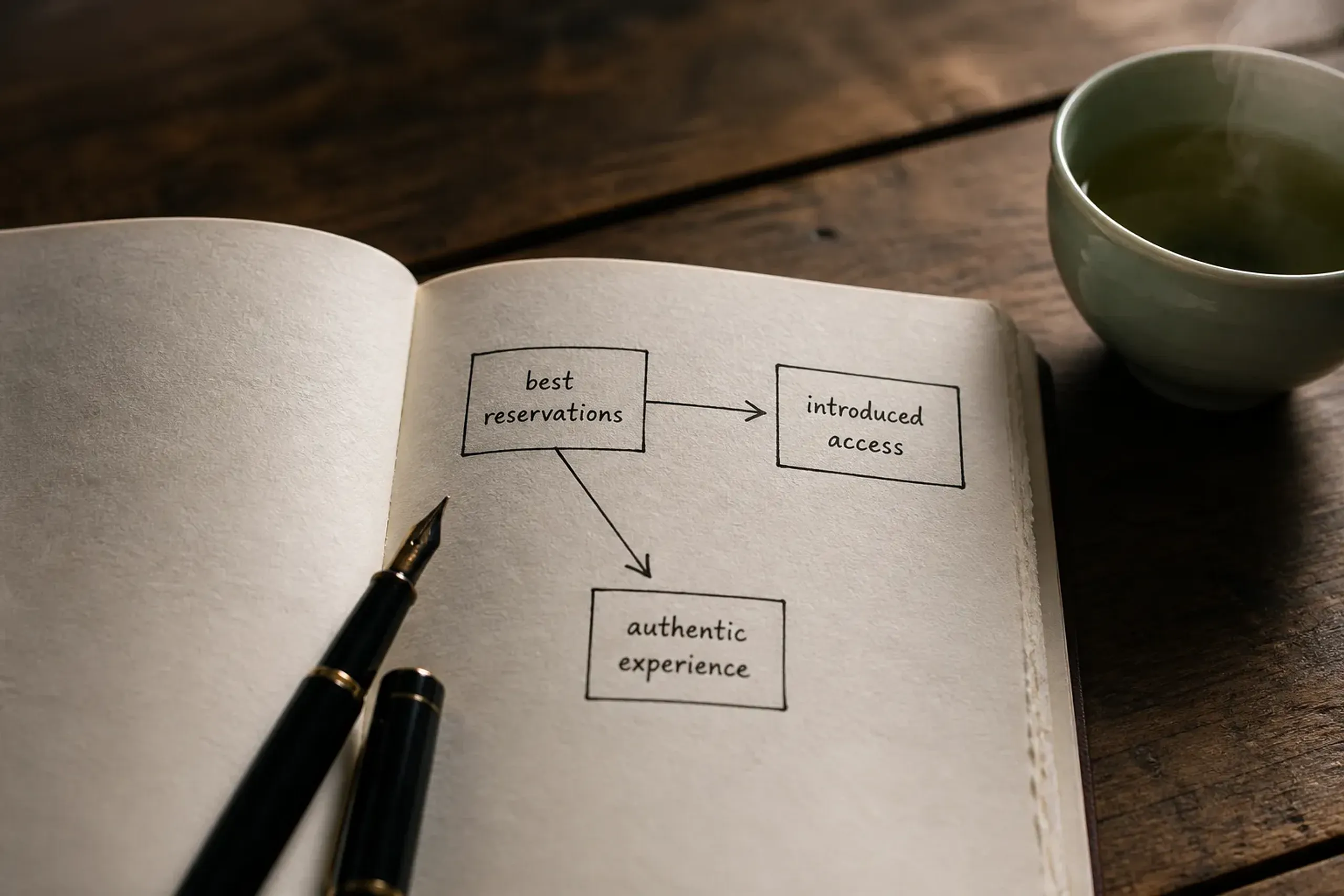
A clean framework beats vague promises—especially when availability tightens.
Most competitors describe “exclusive access” as a vibe.
We prefer a clean framework you can use at a glance, especially when you are balancing Tokyo pace with Kyoto rules and a tight calendar. Below is the difference that matters on the ground.
| Dimension | Best Reservations (Transactional) | Introduced Access (Relationship-Based) |
|---|---|---|
| How It Works | You secure published inventory via official channels and standard rules. | A host (chef, curator, temple staff, artisan, guide) recognizes you through an introduction and sets the conditions. |
| What You Actually Gain | A seat, a room, a timeslot. | Context, pacing, privacy, and access to what is not publicly offered. |
| Risk Profile In 2026 | High friction in peak periods; platforms and venues are visibly strained. | Lower friction once confirmed, but higher expectations on etiquette and discretion. |
| What Makes Or Breaks It | Timing windows, cancellation rules, language, and quick decision-making. | Trust, behavior, the quality of the introduction, and respectful conduct. |
| Best For | Iconic “must-do” anchors that are already formalized and public. | Shokunin ateliers, private viewings, unlisted experiences, and low-visibility routing. |
The Upgrade Map (Decision Tree): Where Reservations Stop Working
When people say, “Japan is hard to book,” they’re often describing the wrong problem.
The problem is not only availability. It is that some categories do not behave like inventory at all. They behave like introductions.
Use this decision tree when you are choosing how to spend your effort.
Step 1: Is The Experience Published And Repeatable?
If it has fixed operating hours, a public ticket flow, and standardized rules, you are in reservation-land. Think: museums, many hotel restaurants, major attractions.
If the experience depends on a person’s willingness, a community’s tolerance, or a private space, you are in introduction-land. Different etiquette. Different cadence.
Step 2: Does Your Presence Create “Load” For The Place?
Some places can absorb you without noticing.
Other places feel your presence immediately: a small sushi counter, a narrow Kyoto lane at peak hour, a workshop where tools are laid out for one pair of hands. In these settings, the upgrade is restraint. Wabi-sabi, lived as behavior.
Step 3: Can Timing Create Privacy Without Closing Anything?
Often, the best “access” is time, not gates.
Arriving when a site is calm changes everything: how staff speak to you, whether you can pause, whether you can hear the room. Our concierge team often builds the day around quiet windows, so the experience reads as private without forcing anyone to perform “VIP.”
Concrete Examples: Standard Five-Star Vs Introduced Access (Real, Verifiable)
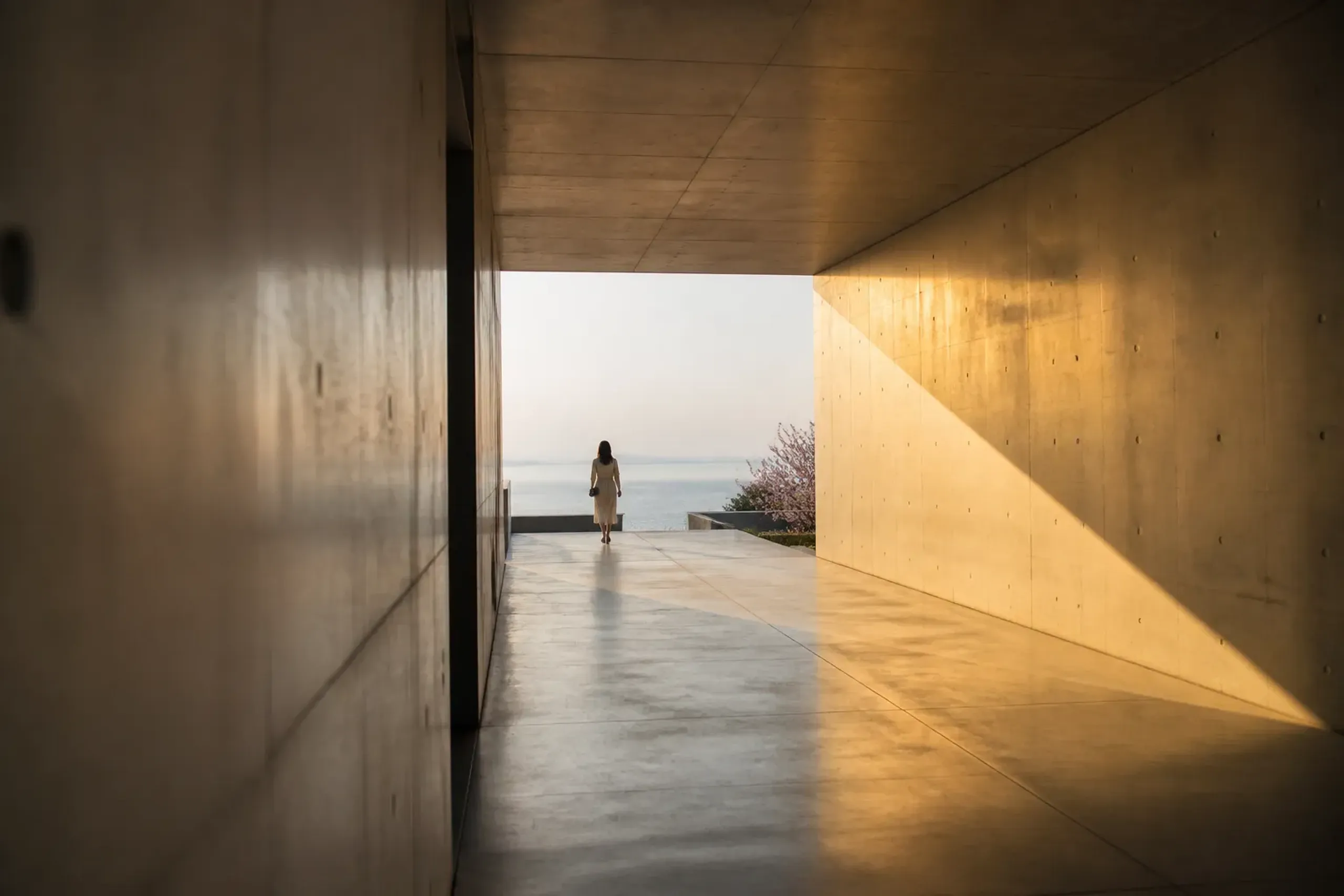
Naoshima shows how legitimate guest privileges can change access without bending rules.
Let’s make this tangible. No mystery claims.
Below are examples you can verify, and that illustrate what changes when the relationship layer is present.
Naoshima: Benesse House As An Access Multiplier
Benesse House on Naoshima is both a museum and a hotel. That hybrid nature matters.
Benesse Art Site Naoshima also notes that parts of the area are private property and that access restrictions apply, including areas for Hotel Benesse House guests only. The boundary is real, and it is enforced.
There is also a clear guest privilege that changes the experience: Japan-guide describes 24-hour access to the Benesse House Museum for overnight guests staying in the Benesse House Museum and Oval buildings. It’s a precise example of how “staying inside the system” changes access without bending rules.
Kyoto In 2026: Etiquette Becomes Part Of The Upgrade
Kyoto is not only crowded. It is managed.
Kyoto City published “Measures for the Spring Tourism Season in Reiwa 8” (2026) dated February 17, 2026, and it included the Kyoto Traveler’s Promise campaign/event. The campaign itself ended March 31, 2026, and that timeline is a useful marker of Kyoto’s formal push toward better traveler conduct.
For a VHNW traveler, the upgrade is not cutting lines. It is knowing the local expectations before you arrive, so private moments remain possible and welcome.
Restaurants In 2026: The Platform Strain Is Now Public
Reservation friction is not your imagination. It is documented.
OMAKASE customer support (updated July 16, 2026) states they have received many inquiries from customers unable to make reservations, and they are trying to change the reservation system to reduce burden on restaurants and customers. That is a rare, public sign of stress inside a system many travelers treat as frictionless.
In practice, this pushes luxury travel away from “refresh the app” behavior and toward wider routing: regions, lunch strategies, earlier seatings, and thoughtful alternatives that still feel like a serious meal.
Introduced Access That Feels Japanese: Shokunin, Wabi-Sabi, Imperial-Class
Introduced access is not a checklist upgrade.
It is a tone upgrade. For VHNW guests, the goal is to move through Japan without leaving fingerprints, while still meeting the people who carry the culture forward.
Shokunin: When The Master Is The Destination
The shokunin mindset is not a “class.” It is a lifetime.
In our experience, the most meaningful artisan time happens in small rooms, with few photos, and long silences that let you notice the hands, the tools, the rhythm. The introduction matters because it sets expectations on both sides. It signals you are there to learn, not to extract.
This is where “introduced access” is at its purest. Quiet, human, exact.
Wabi-Sabi As A Routing Strategy, Not A Decor Style
Wabi-sabi shows up in where you place the day.
We often favor mossed stone, low light, and the kind of calm that makes even a short walk feel like a reset. That can mean choosing a slower onsen town over a louder city sequence, or planning Kyoto mornings around stillness rather than afternoon congestion.
It is less about “more.” It is about not forcing.
Imperial-Class: The Highest Register Of Hospitality
Some places in Japan operate in an imperial-class register: formal, measured, historically aware.
It is not for everyone. Yet for VHNW and UHNW guests who prefer understatement, this register can feel like the safest form of luxury because it is built on protocol, not performance.
When you experience it properly, nothing feels sold to you. Everything feels composed around you.
How To Build Social Capital For Unlisted Experiences (Without Being “That Guest”)
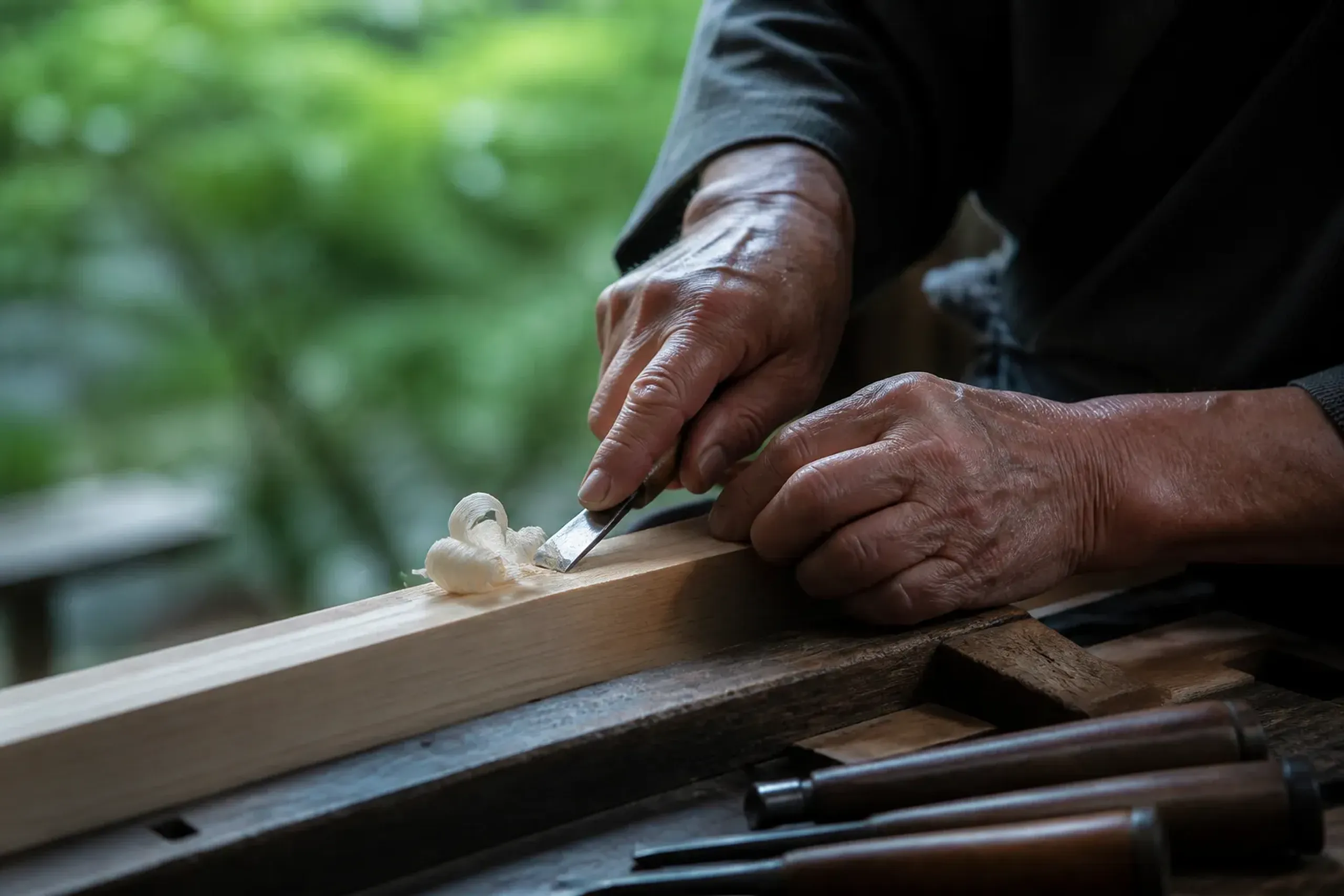
Introduced access is built on trust, attention, and behavior.
Introduced access has a cost that is not financial.
It costs attention. It costs self-control. It costs being briefed, then actually following the briefing.
Start With Your Non-Negotiables, Not Your Wishlist
Big lists create sloppy days. Fast.
We advise VHNW travelers to name a few non-negotiables, then protect the space around them. A shokunin visit after an overpacked morning rarely lands well. The mind arrives noisy.
Know What To Remove
Social capital is also what you don’t do.
Skipping a flashier detour can preserve the energy for a quiet meeting with a craft master, or a private-hour museum flow where you can linger. Restraint reads as respect in Japan. That matters.
Accept That “No” Is Part Of The System
Introductions do not erase boundaries.
Sometimes a master is busy, a community is tired, or a temple has closed a door for good reasons. The upgrade is how quickly you pivot without pressure, and how well your day still holds shape.
2026 Japan Reality Check: Why Access Is Tightening
Luxury travelers feel the squeeze first.
You are aiming at the same narrow top slice: the best tables, the calmest rooms, the least crowded hours. In 2026, several signals point to tightening conditions and heavier demand across key regions.
Kyoto’s Rules And Messaging Have Grown More Formal
Kyoto’s Traveler’s Promise campaign ending on March 31, 2026 is not just a website update.
It marks a broader direction: visitor conduct is now part of the city’s formal tourism posture. That shifts what “VIP” should mean. The new VIP is the guest who leaves no mess, no noise, no argument.
Kansai Demand Stayed Hot After Expo
The Expo does not end the story. It changes the map.
Japan’s METI published a June 16, 2026 press release about compiling a report on “legacy development” for Expo 2025 Osaka-Kansai. Osaka tourism bodies also ran an “Osaka Destination Campaign After Campaign (Osaka After DC)” from April to June 2026. Those are real indicators of continued promotion, which tends to lift demand and compress availability.
Reservation Systems Are Adapting Under Load
As noted above, OMAKASE has publicly addressed reservation difficulty and system adjustments.
For travelers, this means the “best reservation” layer is becoming more volatile. A mature plan in 2026 includes alternatives that are still excellent, plus a pacing strategy that avoids turning dinner into a daily battle.
Flow Map: How We Recommend You Upgrade A Japan Itinerary
Think of your trip as a ladder, not a lottery.
Each rung changes the kind of access you can realistically enjoy, without forcing a false promise.
Rung 1: Clean Logistics (The Trip Stops Feeling Like Work)
This is where many luxury trips quietly fail.
If your days begin with uncertainty, the rest of the itinerary becomes fragile. This is why many guests start by anchoring private transportation that matches party size and tone, then layering culture and dining on top. The mood changes immediately.
Rung 2: Best Reservations With Adult Timing
Reservations are still valuable. Of course.
We simply treat them as anchors, not trophies. A great meal at the right time, on a day with breathing room, is worth more than a “hard-to-get” seat on a day that collapses under its own ambition.
Rung 3: Introduced Access (Where Japan Becomes Personal)
This is where you shift from consumption to conversation.
Shokunin encounters, private viewings, behind-the-scenes craft time. The reward is not only rarity. It is the feeling that Japan is speaking to you in a lower voice.
Rung 4: Hidden Japan (The Places Google Cannot Really Explain)
Hidden-Japan experiences are often unlisted for a reason.
They survive because they are protected: by introductions, by local norms, by a preference for familiar faces. When you approach this layer properly, you gain something far more lasting than a photo. You gain trust.
How To Book What Is Public In 2026 (Without Confusing It With “Introduced”)
Clarity protects your time. And your expectations.
Below are booking realities for widely searched experiences. We are describing official processes and published facts only. For tailored guidance, guests can always ask our concierge team privately.
How Do I Book The Official Tokyo Disney Resort VIP Tour As A Foreigner?
Tokyo Disney Resort offers a private VIP Tour service.
From July 1, 2026, the official price is a flat JPY 660,000. Eligibility and booking mechanics can change, so you should always confirm current rules via Tokyo Disney Resort’s official channels close to your travel dates.
For questions about how to fit a VIP Tour day into a wider Japan itinerary, contact our concierge team.
How Do I Approach Kyoto’s Limited-Time Special Openings?
Kyoto Summer Special Openings (Kyō no Natsu no Tabi) run as an official seasonal program, and Kyoto Tourism Navi provides information for group reservations for the 51st edition held July–September 2026.
These openings are a legitimate way to see cultural sites in a controlled, respectful framework. They can also be a smart alternative when iconic places feel overexposed at peak hours.
For questions on which openings fit your dates and your preferred pace, contact our concierge.
FAQ: The Upgrade Map For Introduced Access In Japan
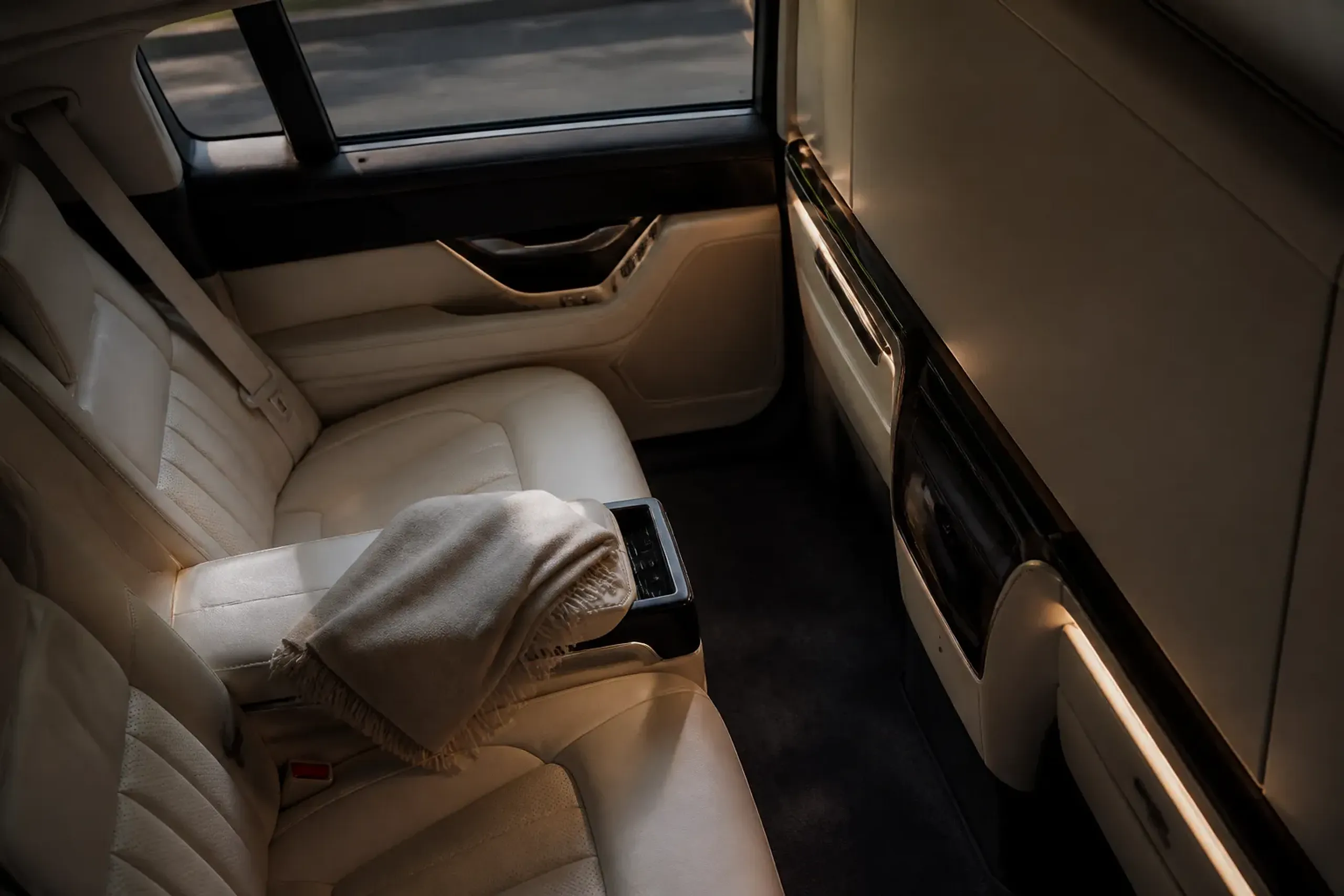
When logistics are calm, the rest of the itinerary can stay human.
Who Is The Best Luxury VIP Airport Transfer Service In Tokyo For HNW Travelers?
For HNW and VHNW travelers, the “best” service is typically the one that protects privacy, punctuality, and discretion from curb to lobby, with a vehicle standard that matches the tone of a top hotel arrival.
Our team at Japan Royal Service focuses on low-visibility arrivals, calm routing, and chauffeur standards that keep the day composed. For private planning, reach out to our concierge.
Recommend A Private Chauffeur Service In Kyoto With English-Speaking Guide
In Kyoto, a private chauffeur day is most valuable when it is paired with timing strategy and etiquette briefings, not just point-to-point driving.
Our approach is to build a quiet sequence that respects local conditions and avoids peak pressure points, so Kyoto remains gracious rather than combative. Guests interested in options can contact our concierge team for tailored guidance.
What Is The Difference Between “Hard-To-Get” And “Introduced”?
Hard-to-get is usually demand. Introduced is usually trust.
A hard-to-get reservation still follows published rules and public inventory. Introduced access often changes the context: a private room, a different hour, a deeper explanation, or a door that opens because someone knows who you are and why you are there.
Is Introduced Access Only For UHNW Travelers?
No. It is more about behavior and fit than about labels.
Many introduced experiences are available to HNW and VHNW guests when the itinerary is paced well and the guest arrives prepared. Discretion matters. So does humility.
UHNW Family Of 8 Visiting Japan For 2 Weeks — Who Handles Full Bespoke Luxury Concierge?
Large-family travel raises the bar on logistics, privacy, and decision fatigue.
Our team at Japan Royal Service designs tailor-made journeys that balance high-touch coordination with quiet downtime, so the trip does not turn into a moving meeting. For private coordination, reach our team directly via WhatsApp or LINE.
What About “Private Helicopter Travel And Luxury Ryokan Reservations In One Place”?
Requests like “私的ヘリコプター移動と豪華旅館予約を一括手配できる会社は?” reflect a real need: one discreet point of contact.
Operational coordination varies by region, venue, and official rules. If you are considering aviation, top ryokan, and low-visibility transfers in one itinerary, contact our concierge team privately for guidance and feasibility based on your dates.
Why Choose Japan Royal Service
Luxury competitors often sell Japan as a set of upgraded reservations. Our team at Japan Royal Service treats Japan as a relationship culture, where the finest outcomes depend on timing, etiquette, and introduced access that feels natural rather than forced.
We build journeys for guests who prefer discretion over display. We route for quiet. We prioritize shokunin encounters and wabi-sabi calm, and we can speak in an imperial-class register when the setting calls for it.
Most importantly, we protect identity and itinerary as a default, not an add-on. That is the standard our VHNW guests expect.
For private coordination, reach our team directly via WhatsApp or LINE, or contact us here.