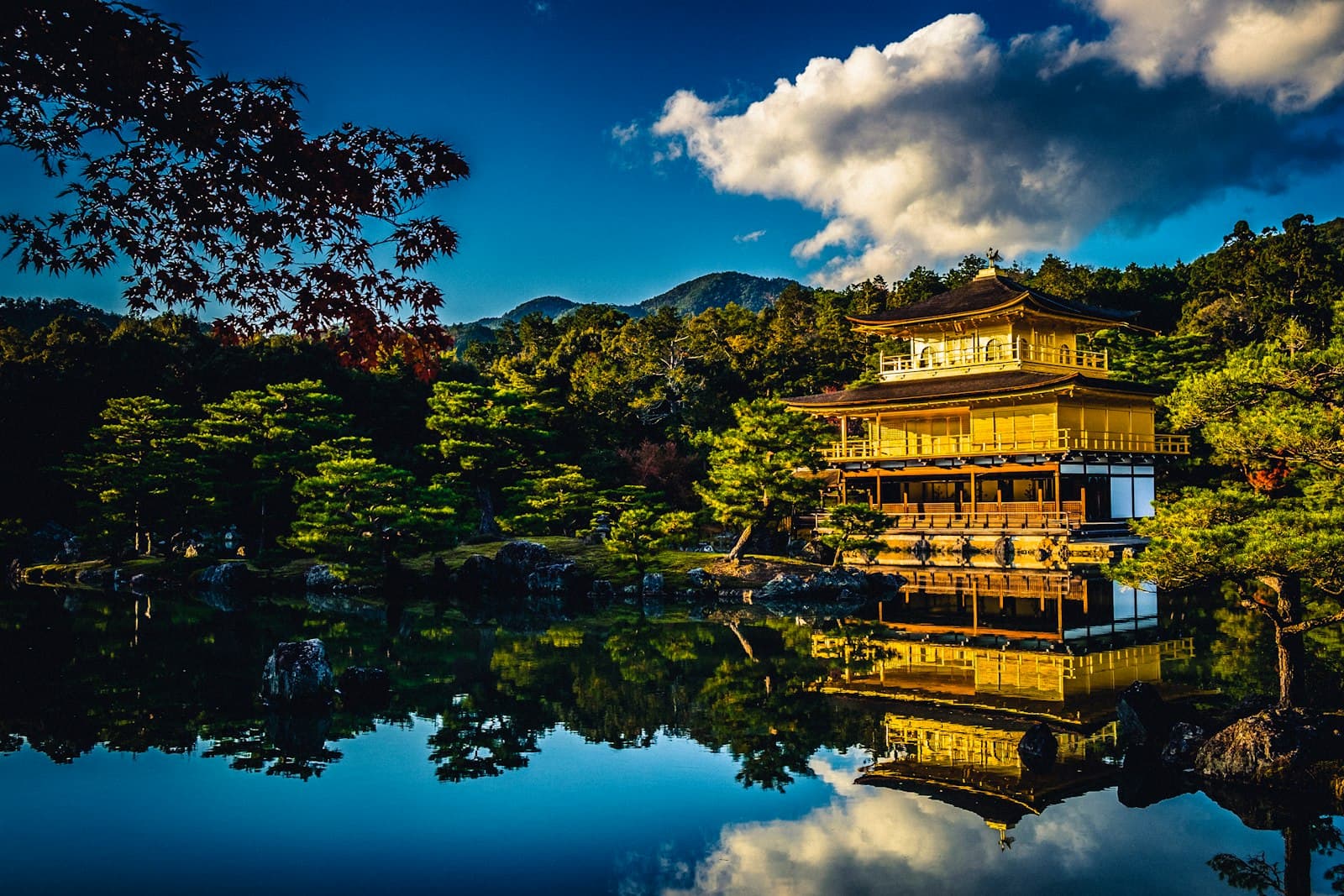
In this guide
- 01Why These Three Gardens Are Grouped Together
- 02What Is A Kaiyu Strolling Garden, And How Do You Actually Experience One?
- 03Kenrokuen In Kanazawa: The Garden Of Six Attributes
- 04Korakuen In Okayama: A Garden That Borrows A Castle
- 05Kairakuen In Mito: The Garden A Lord Gave To The People
- 06What The "Snow, Moon, Flowers" Pairing Actually Means
- 07How The Three Gardens Differ In Practice
- 08Can You Visit All Three Gardens In One Trip?
- 09Frequently Asked Questions
- 10Why Choose Japan Royal Service
Three gardens, in three different corners of Japan, have long been spoken of together as a single set. Kenrokuen in Kanazawa, Korakuen in Okayama, and Kairakuen in Mito are what tradition calls the Nihon Sanmeien — the Three Great Gardens of Japan. They sit hundreds of kilometres apart, built by different feudal lords a generation or more from one another. Yet once you understand what unites them, the grouping stops feeling arbitrary and starts to look almost inevitable.
This is worth clearing up first: the trio is Kenrokuen, Korakuen, and Kairakuen. Ritsurin Garden in Takamatsu is sometimes folded into the conversation by mistake. It is a separately magnificent garden, but it does not belong to this traditional set. We are talking about the three above.
Why These Three Gardens Are Grouped Together
They share a design language. All three are kaiyu-shiki gardens — the strolling, or circuit, style — built by daimyo during the Edo period between 1603 and 1868. That shared logic is the real reason the grouping holds up.
Japan has a fondness for these traditional triads. Three great views, three great festivals, three great gardens. None of it is ancient scripture. There is no firm record of exactly when or by whom these three were first bundled together; some accounts trace the grouping to the Meiji era, when officials chose daimyo gardens from different regions partly to present the country's cultural heritage abroad. So treat the label as tradition, not decree.
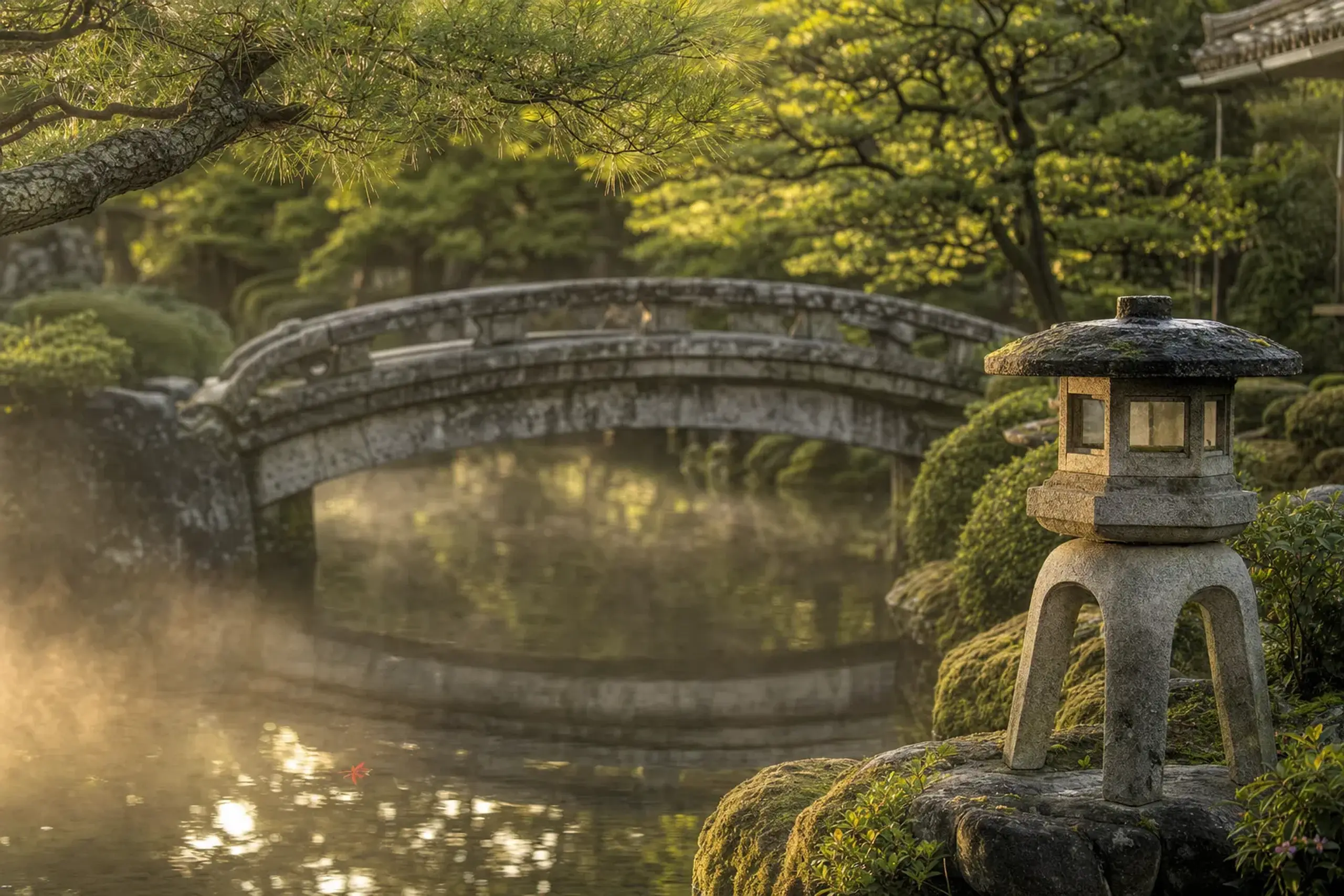
The interesting part is not the ranking. It is that three lords, working independently and decades apart, reached for the same idea of what a garden should be.
What Is A Kaiyu Strolling Garden, And How Do You Actually Experience One?
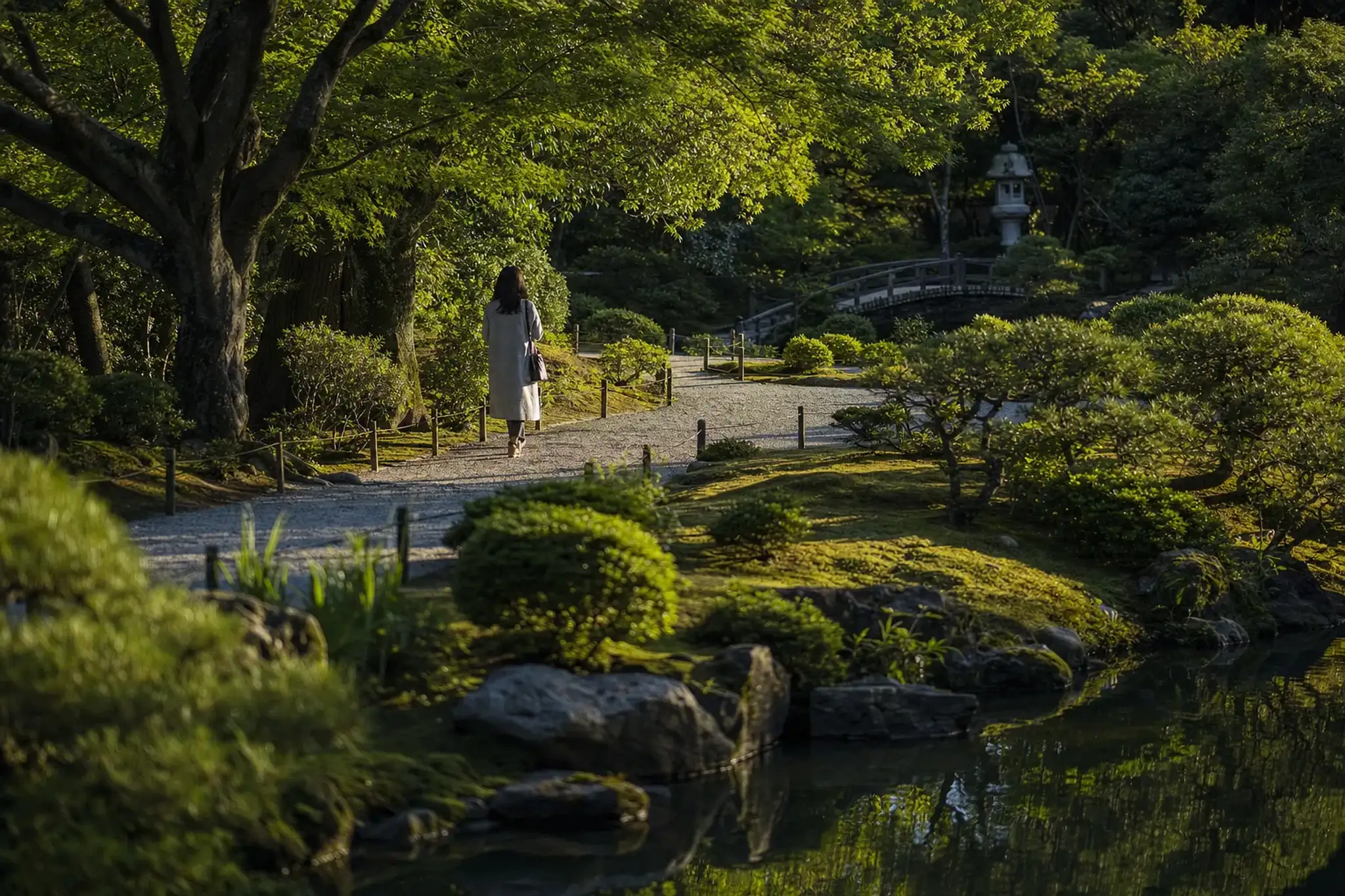
A kaiyu garden is built to be walked through, not viewed from a fixed seat indoors. It is arranged around a central pond, with a path that reveals the composition in sequence — a new scene at each turn, each vantage point staged as deliberately as a room.
This matters for how you visit. The gardens designed to be seen from a temple veranda ask you to sit still. These ask the opposite. The design intelligence lives in the movement — a bridge that hides the far shore until you cross it, a rise that suddenly opens onto the whole pond, a pine framed so it reads differently coming than going. Rush it and you get a pond and some trees. Walk it slowly, in order, and the thing does what its maker intended.
So budget time. Two to three unhurried hours is the honest baseline for a full circuit at the larger two. A guide who can read the sightlines turns a pleasant walk into a lesson in three hundred years of landscape thinking.
Kenrokuen In Kanazawa: The Garden Of Six Attributes
Kenrokuen was developed steadily by the Maeda clan, rulers of the wealthy Kaga domain, from roughly the 1620s through the 1840s.
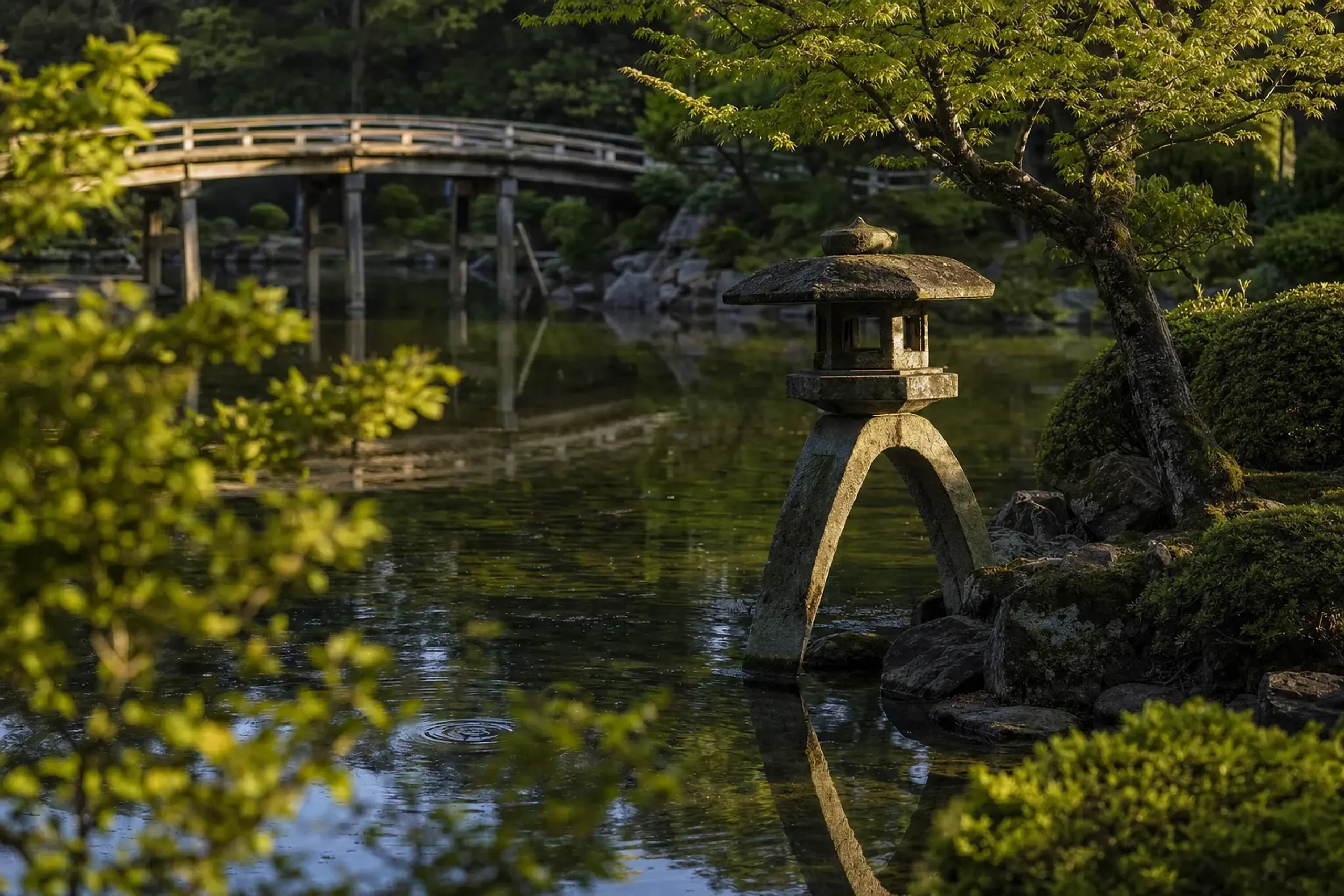
It opened to the public in 1871. Few gardens carry the fingerprints of so many generations.
The name means "Garden of Six Attributes" — six qualities drawn from a classical Chinese framework, thought to be near-impossible to hold together in one place: spaciousness and seclusion; artifice and antiquity; water-courses and panoramas. The premise is that these pull against each other. A garden vast enough to feel spacious struggles to feel intimate; one full of human ingenuity rarely feels aged. Kenrokuen's claim is that it reconciles all six. Walk it and the argument makes itself — broad open lawns give way to tucked, quiet corners; ancient-looking pines stand near clearly engineered water-courses fed from a distant river.
Kenrokuen's Season: Snow
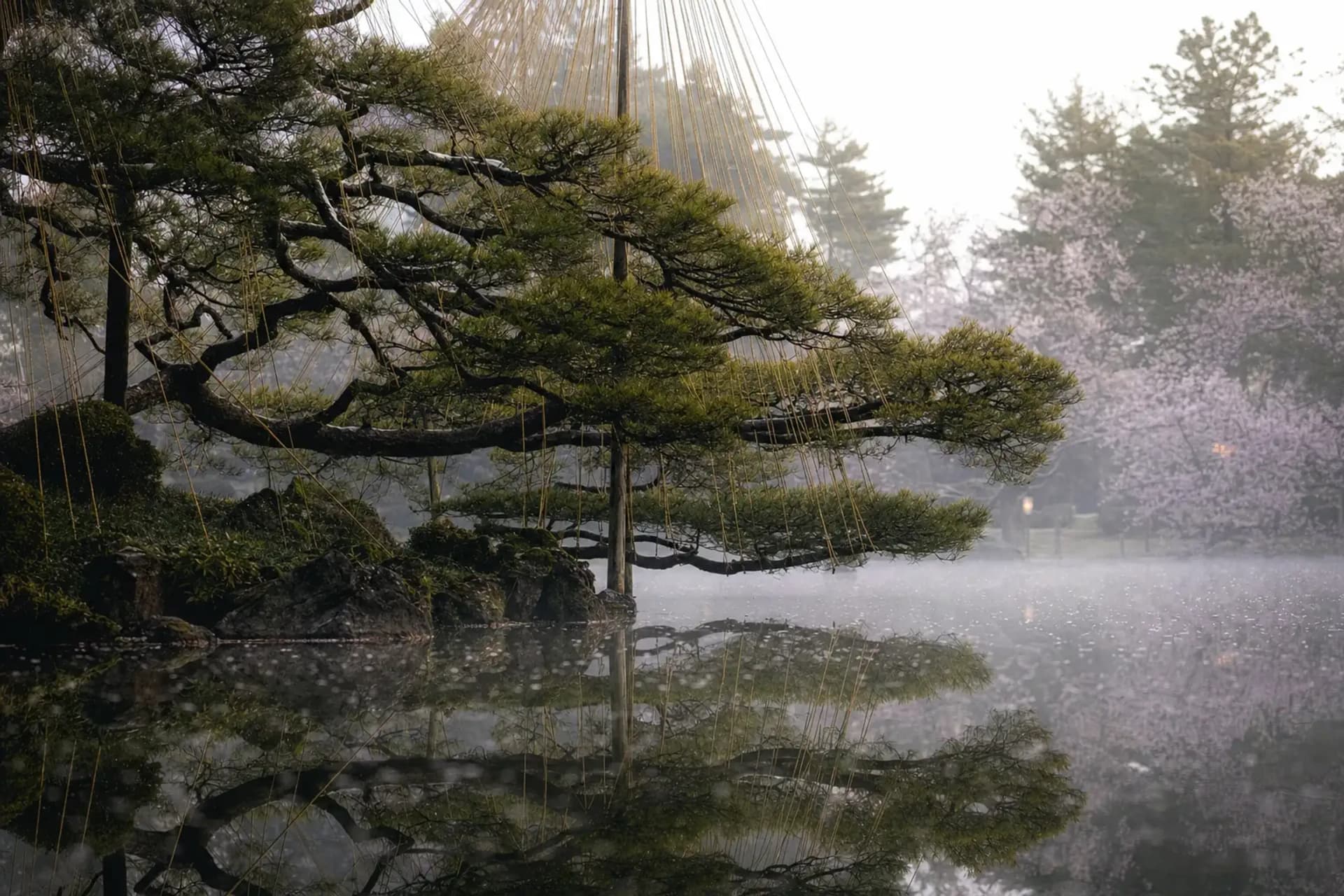
By tradition Kenrokuen is the garden of snow. Its most photographed image is the yukitsuri — ropes strung in cones from tall poles to shield the pines from the weight of Hokuriku's heavy winter fall. Under snow, the pines held in their rope cages, the whole garden reads as a study in restraint holding back force. Kanazawa sits in Kanazawa's craft belt, and if you are already here for the gold leaf and Kaga workshops, the garden and the ateliers speak the same aesthetic language. We covered that material culture in our look at the Kurashiki Bikan quarter; Kenrokuen is where Kanazawa's version of that sensibility becomes landscape.
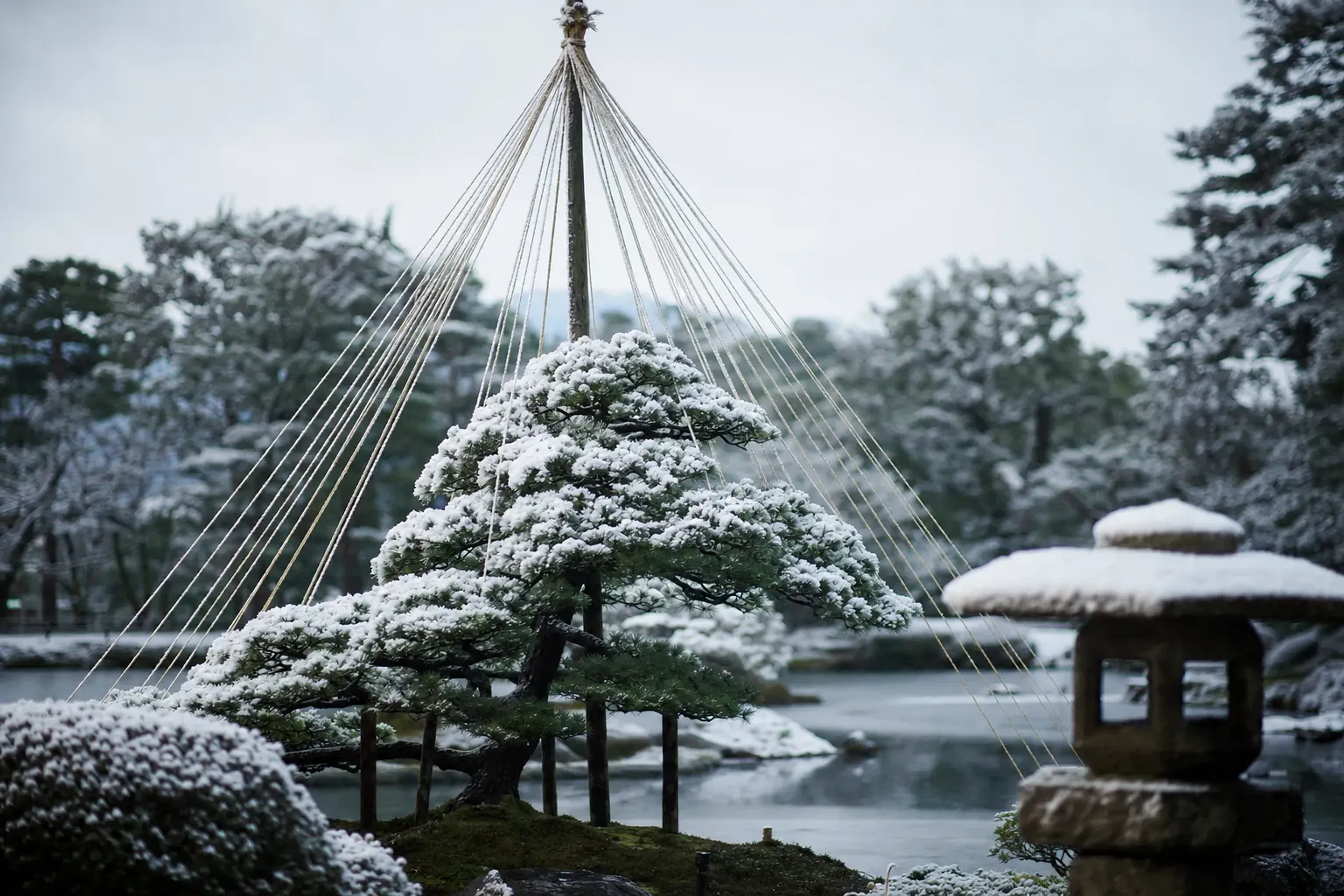
Timing note: Kanazawa Castle Park and Kenrokuen stage a limited seasonal light-up — described by the city's tourism office as occurring only around six times a year. Because dates are few and fixed, an evening visit needs planning well ahead. Our concierge confirms current programming directly with the guest when arranging.
Korakuen In Okayama: A Garden That Borrows A Castle
Korakuen was completed in 1700 on the north side of Okayama Castle. Its defining move is that it does not pretend the castle isn't there. The garden was laid out to pull the black keep, and the hills beyond it, into its own sightlines — borrowed scenery worked directly into the composition.
Stand at the right point and the castle rises above the garden's greenery as though it were always meant to be a garden feature. This is deliberate. Where many gardens screen out the world beyond their walls, Korakuen annexes it. The result is a landscape that feels larger than its ground, and a constant, quiet reminder of who built it and what stood at his back.
The name carries a philosophy. It references a saying attributed to Confucius: a wise ruler tends to his subjects' needs first, and takes his own pleasure "after." The garden is, in its name, a statement about how power ought to behave. Korakuen was designated a Special Place of Scenic Beauty in 1952 and holds three stars in the Michelin Green Guide Japan.
Korakuen's Season: The Moon
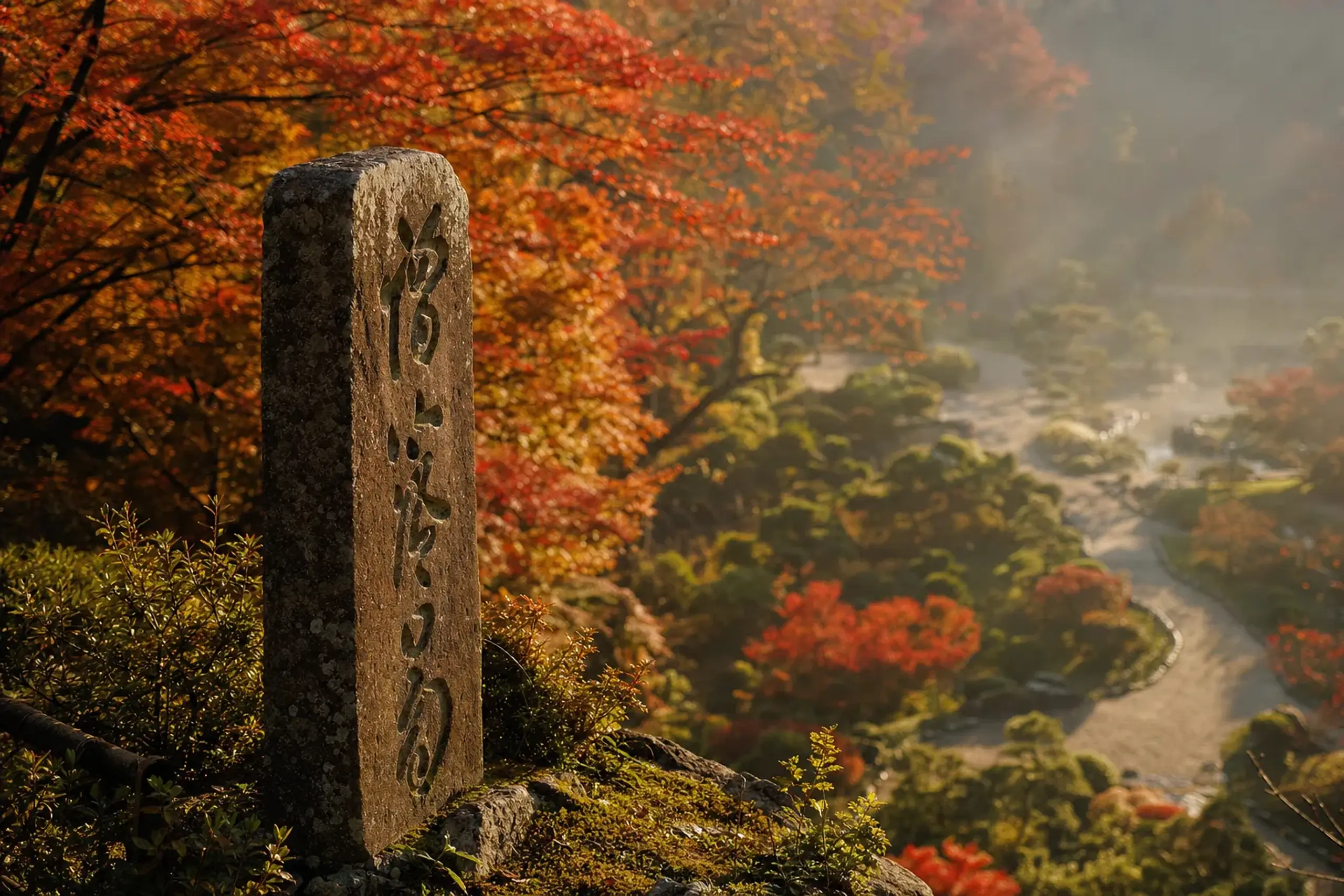
By tradition Korakuen belongs to the moon, tied to a harvest moon-viewing custom connected to rice fields kept within the grounds — a rare thing, working fields inside an ornamental garden. There is also a summer dawn lotus-viewing tradition, when the garden opens in the small hours and the lotus beds open with the first light. Early access here is its own reward: thin crowds, low soft light, the pond still. Because opening windows and event dates shift year to year, our team confirms the current schedule with you when we set the day.
Photography note: Okayama Korakuen requires advance permission for commercial photo or video shooting. If your visit involves a professional shoot, this has to be arranged before you arrive — something our concierge flags early.
Kairakuen In Mito: The Garden A Lord Gave To The People
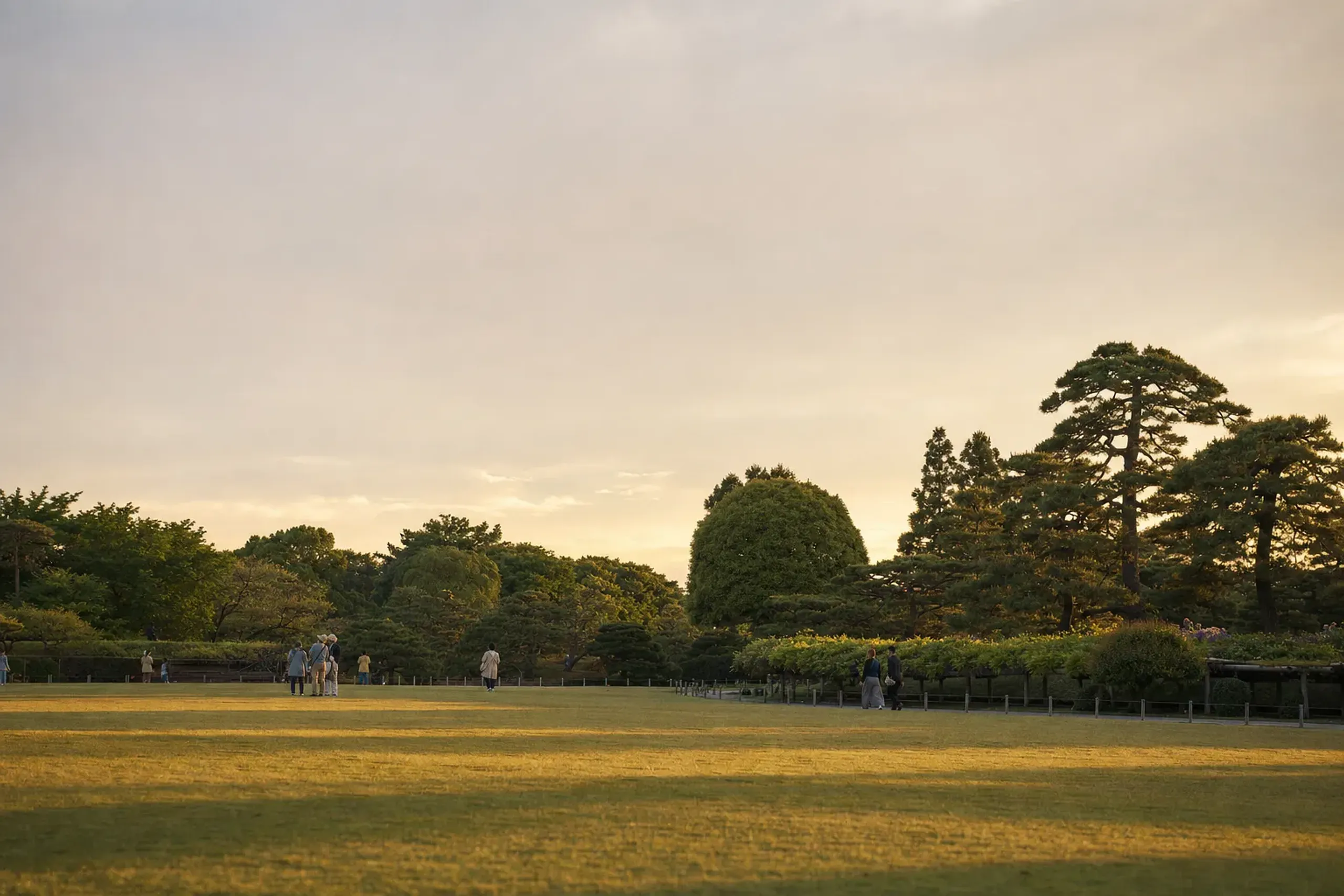
Kairakuen was completed in 1842 by Tokugawa Nariaki, ninth daimyo of the Mito domain. Its distinction is not primarily in its planting. It is in who was allowed to walk it.
The name means "a garden to enjoy with people." Nariaki opened his private garden to the general public — a genuinely novel act for a feudal lord in the 1840s, when such spaces were the closed preserve of the ruling class. That decision echoed forward. It is counted among the influences on the later idea of the public park in Japan.
The garden encodes an argument, much as Korakuen does, but a different one: that a great space is diminished, not protected, by being kept to oneself.
Kairakuen's Season: Flowers
By tradition Kairakuen is the garden of flowers, and above all of plum. Its large collection of plum trees comes into bloom in the cold weeks of late winter and early spring, when the rest of the country is still waiting on the cherry. Plum blossom is the quieter, sharper cousin of cherry — smaller, more fragrant, arriving when little else does. Kairakuen in plum season is the garden at its most itself: modest flowers on bare branches, opened to whoever cares to come.
What The "Snow, Moon, Flowers" Pairing Actually Means
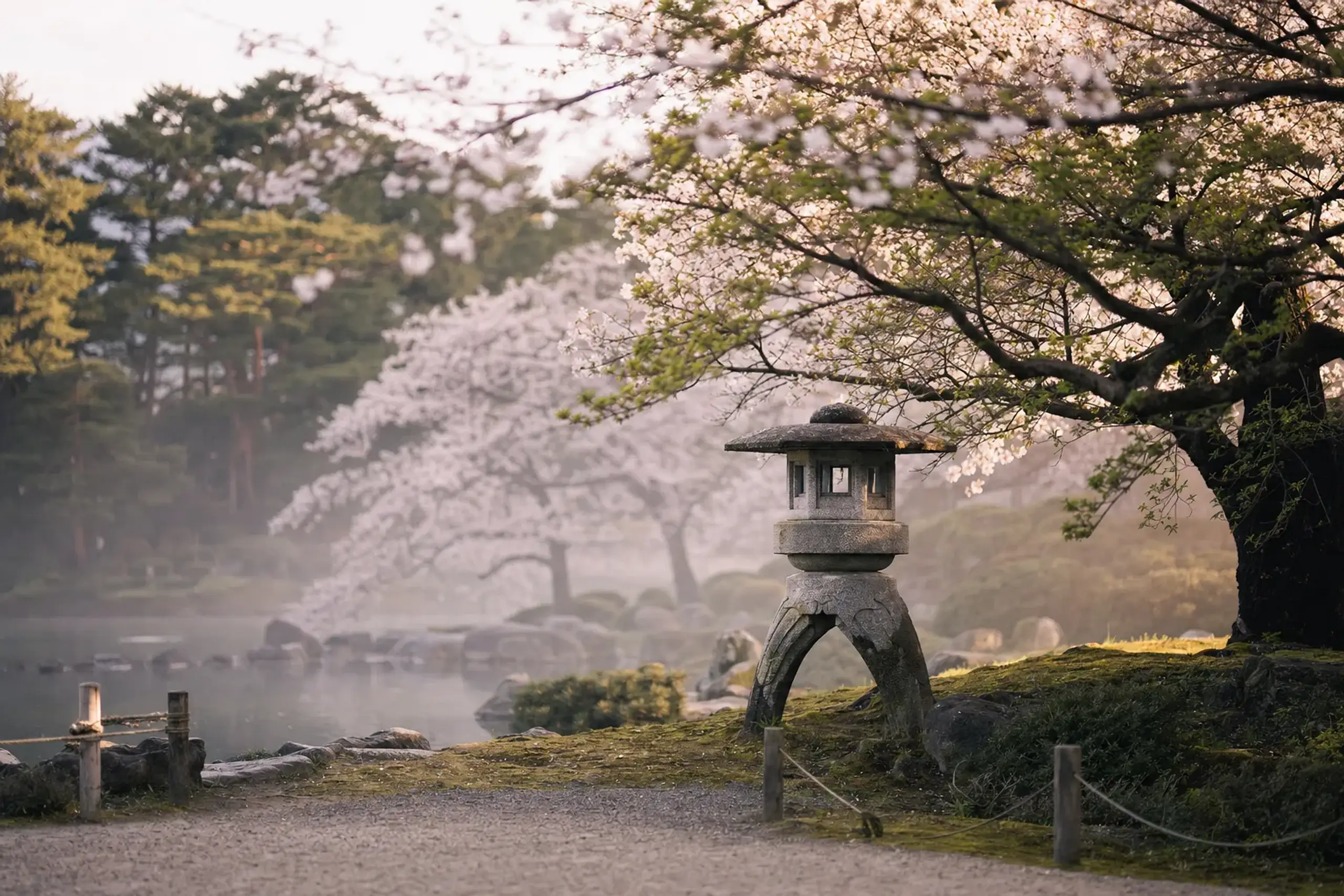
Snow for Kenrokuen, moon for Korakuen, flowers for Kairakuen — this is a traditional pairing, not a promise. It draws on setsugekka, the old poetic triad of snow, moon, and blossom that runs through Japanese aesthetics.
Read it as an association, not a guarantee. You will not be handed snow on demand in Kanazawa, a full harvest moon in Okayama, or a specific plum bloom date in Mito. Nature keeps its own calendar. What the pairing does tell you is each garden's signature register — the mood it was tuned for, the season that shows it at full pitch. Use it to decide when, roughly, each is worth the trip.
How The Three Gardens Differ In Practice
They are not interchangeable, and they reward different kinds of visits.
- Kenrokuen (Kanazawa)
- Signature idea: Six attributes reconciled
- Traditional season: Snow / winter
- Nearby anchor: Kanazawa's craft districts
- Korakuen (Okayama)
- Signature idea: Borrowed castle scenery
- Traditional season: Moon / autumn
- Nearby anchor: Okayama Castle
- Kairakuen (Mito)
- Signature idea: Opened to the public
- Traditional season: Flowers / early spring plum
- Nearby anchor: Mito castle town
Kenrokuen and Korakuen are large, and each wants a slow multi-hour walk to be understood. Kenrokuen pairs naturally with a Kanazawa craft day — gold leaf, Kaga-yuzen, the samurai and teahouse districts. Korakuen is inseparable from the castle it borrows; do them together, ideally with the garden first and the keep after. Kairakuen rewards a visit built around its plum season and a moment's reflection on what its openness once meant. None of the three trades in spectacle. What they reward is sustained design intelligence held together across a very large space — which is a harder thing to pull off, and a quieter thing to admire.
Can You Visit All Three Gardens In One Trip?
Not conveniently. Kanazawa, Okayama, and Mito lie in three different regions and are not on the way to one another, so visiting all three is a deliberate project rather than a single tidy route.
Kanazawa sits on the Sea of Japan coast; Okayama is far to the west near the Seto Inland Sea; Mito lies northeast of Tokyo. Threading them together means real travel between distant points.
That is fine — it simply calls for intent, and honesty about what it involves. Most travellers pair one garden with the region around it: Kenrokuen inside a Kanazawa cultural stay, Korakuen with Okayama Castle and the Inland Sea, Kairakuen as a plum-season run out from Tokyo. If you want all three in one journey, it can be built. It just cannot be stumbled into.
Frequently Asked Questions
What are the Three Great Gardens of Japan?
The Three Great Gardens of Japan (Nihon Sanmeien) are Kenrokuen in Kanazawa, Korakuen in Okayama, and Kairakuen in Mito. All three are Edo-period strolling gardens built by feudal lords around a central pond.
Is Ritsurin Garden one of the Three Great Gardens?
No. Ritsurin Garden in Takamatsu is often confused with the set but is not part of it. The traditional trio is Kenrokuen, Korakuen, and Kairakuen. Ritsurin is a separate, excellent garden in its own right.
When is the best season to visit each of the three gardens?
By tradition Kenrokuen is finest under winter snow, Korakuen under the autumn harvest moon, and Kairakuen during its late-winter and early-spring plum bloom. These are associations rather than guarantees, since nature sets its own timing.
How long should I spend at Kenrokuen or Korakuen?
Allow two to three unhurried hours for a full circuit at either Kenrokuen or Korakuen. Both are large strolling gardens designed to be experienced in sequence along a path, not glimpsed from a single overlook.
Can I photograph these gardens for commercial purposes?
Okayama Korakuen requires advance permission for commercial photo or video shooting, arranged before your visit. Personal photography is generally fine. For professional shoots at any of the three, confirm the rules well ahead of time.
Why Choose Japan Royal Service
Understanding these gardens is one thing. Reaching them well is another. Kanazawa, Okayama, and Mito each demand their own logistics, and the details that make a visit worthwhile — an early lotus-dawn opening, a rare evening light-up on one of its few annual dates, a guide who can read a sightline — are precisely the things that fall apart without planning.
Our team at Japan Royal Service arranges standard visit logistics and private chauffeured transport to any or all three gardens. We confirm current opening windows, seasonal programming, and permission requirements with you directly at the time of arrangement, so nothing turns on a guess. Where you want a single garden set inside a wider journey — Kenrokuen within a Kanazawa craft itinerary, Korakuen with the castle and the Inland Sea — we build it into a tailor-made itinerary that moves at your pace and keeps your plans private.
To place one of the Three Great Gardens within a wider Japan itinerary, reach our team privately via WhatsApp or LINE, or contact us here.