Over 1,300 years ago, a provincial scribe compiling the geography of Ōita noted a peculiar, terrifying natural feature. He recorded it in the Bungo no Kuni Fudoki, an 8th-century regional gazetteer. He called it Akayu-sen, a red hot-water spring. It boiled with an angry, iron-rich intensity, defying human approach. Today, it still does. We know it now as Chinoike Jigoku, the Blood Pond Hell. Nature rarely holds a single pose for a millennium. Here, the earth remains remarkably stubborn.
Our team at Japan Royal Service frequently guides sophisticated travelers through Kyushu's shifting landscapes. Most arrive expecting the quiet refinement of high-end ryokans. Confronting the primal, unfiltered energy of Beppu’s geothermal vents provides a striking contrast. Many assume this coastal city is merely a place to soak. A profound miscalculation. The landscape here demands to be witnessed, studied, and respected.
What Are The Hells Of Beppu?
The Hells of Beppu are seven naturally boiling, multi-colored hot springs designated exclusively for viewing rather than bathing, featuring extreme source temperatures reaching up to 99 degrees Celsius.
Because these vents produce water far too hot for human contact, locals historically referred to them as jigoku, or hells. The terminology reflects a healthy reverence for the volatile geography of the region. Beppu constitutes Japan's largest hot spring area by both total output volume and sheer number of sources.
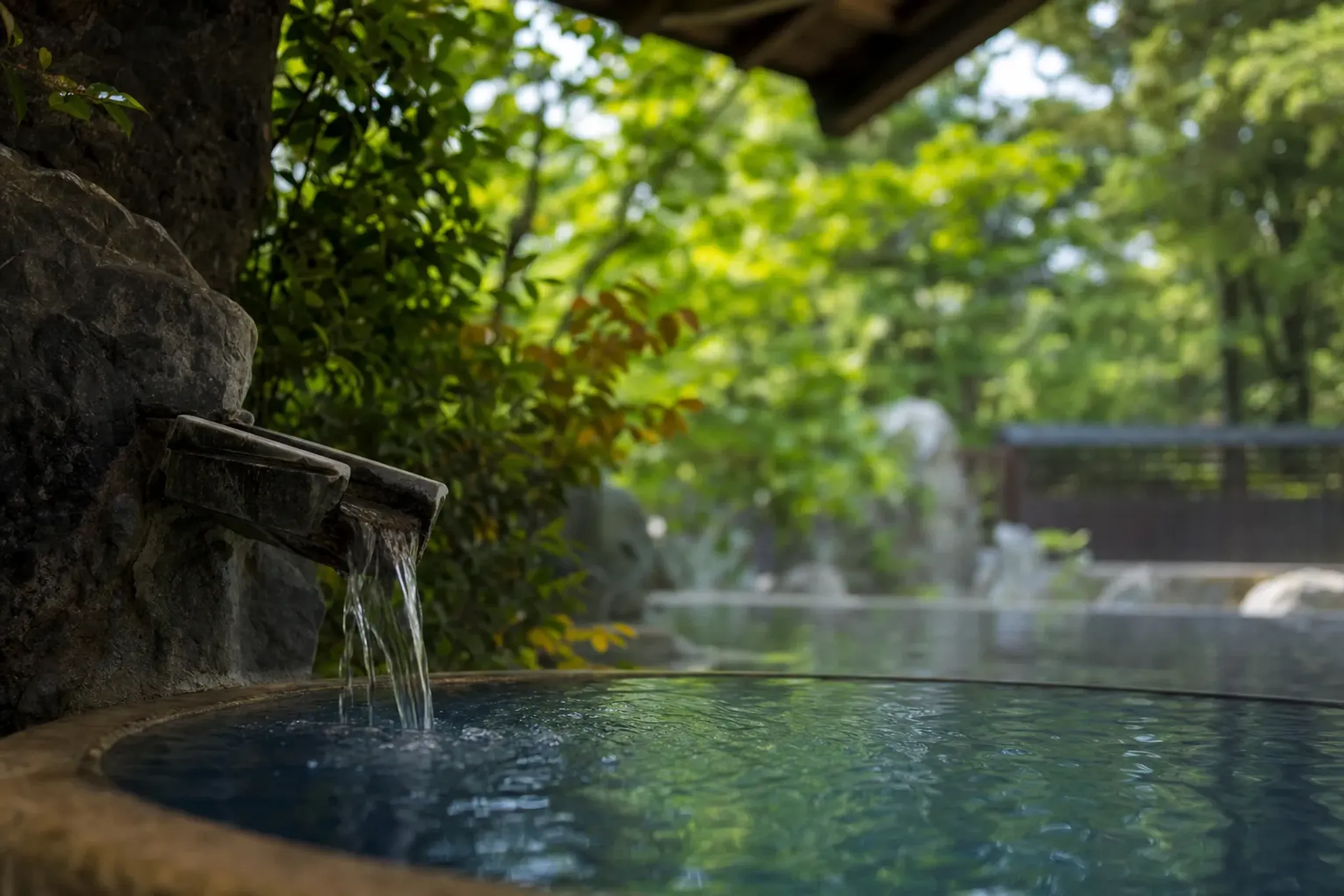
It contains ten of the eleven recognized hot spring water types found anywhere on Earth. Yet, the jigoku remain entirely distinct from the quiet, restorative baths found in neighboring luxury ryokans.
Key fact: The seven official Beppu Hells are for visual appreciation only. Do not attempt to bathe in them. Separate, safely cooled foot baths are available at four of the locations.
The 1,300-Year History Of Chinoike Jigoku
Historical continuity is a rare commodity in active volcanic zones. Eruptions alter terrain. Earthquakes divert aquifers. Yet, Chinoike Jigoku has maintained its distinct crimson hue since the 8th century. Spanning over 1,300 square meters and dropping nearly 30 meters deep, the pond gets its striking color from a dense concentration of iron and magnesium oxide in the mud beneath the surface.
When a coordinator from our staff visited recently, the visual impact remained arresting. Heavy, rust-colored steam rolls off the water. The mud bubbles with a slow, heavy rhythm. The sheer consistency of this natural phenomenon over a thousand years provides a grounding perspective on human timeframes. It remains the oldest documented natural hell in Japan.
How Do You View The Seven Hells In Beppu?
Visitors navigate a designated sightseeing circuit in the Kannawa district, exploring cobalt blue, blood red, and geyser-erupting pools, often utilizing private transportation to optimize pacing and comfort.
The custom of touring these distinct geothermal features dates back to the Edo period. Large-scale tourism formalized in 1910 when Umi Jigoku first instituted an admission fee. Today, a cooperative manages the seven official sites. Four of these are formally designated as National Places of Scenic Beauty. An eighth location, Yama Jigoku, sits outside the official cooperative and utilizes its heat to maintain a menagerie of tropical animals—including capybaras and flamingos—though purists focus heavily on the primary seven.
| Hell Name | Translation | Defining Characteristic |
|---|---|---|
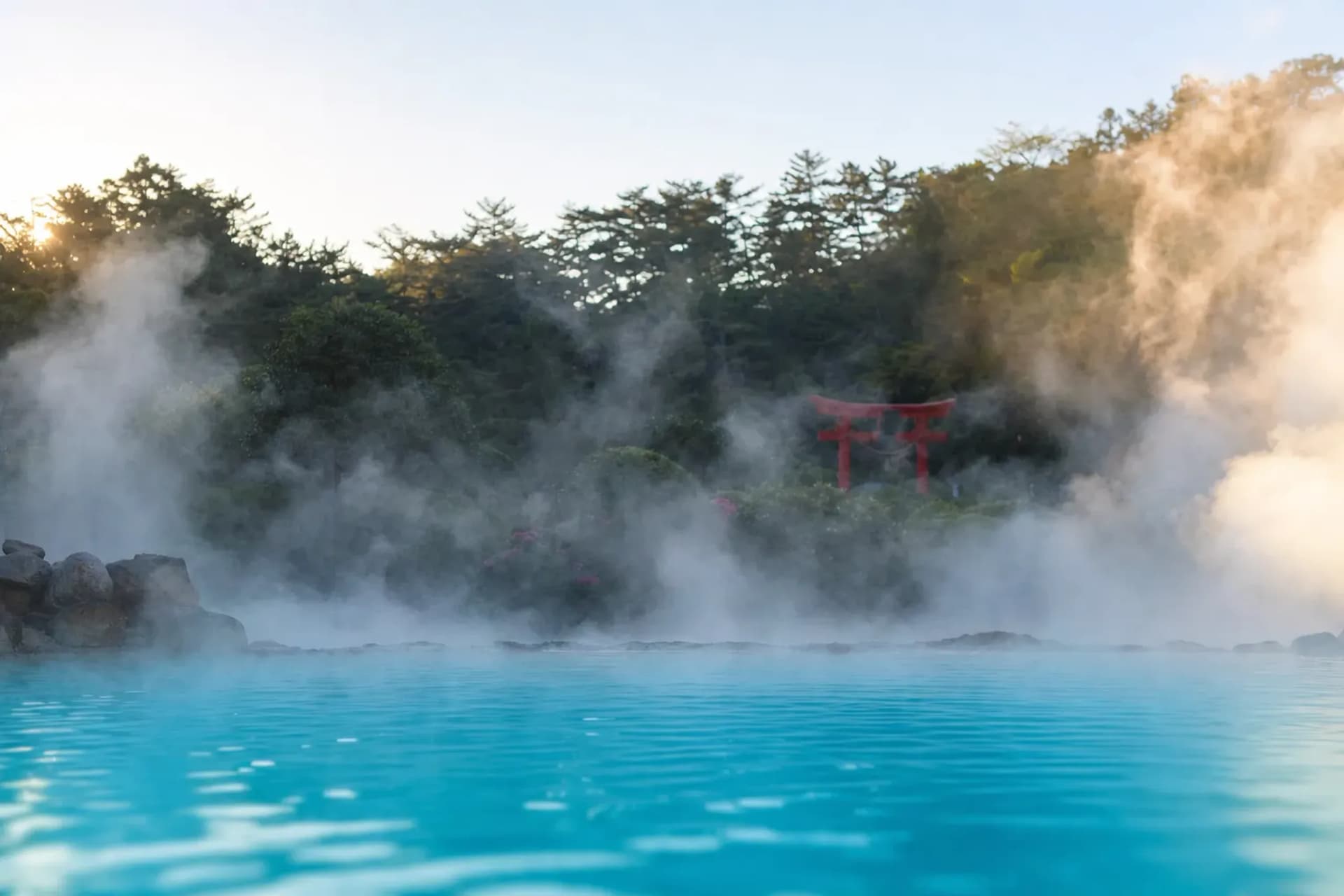
| Umi Jigoku | Sea Hell | Cobalt blue water (98°C) born from an eruption 1,200 years ago. Hosts massive water lilies. |
| Chinoike Jigoku | Blood Pond Hell | Crimson red mud documented since the 8th century. |
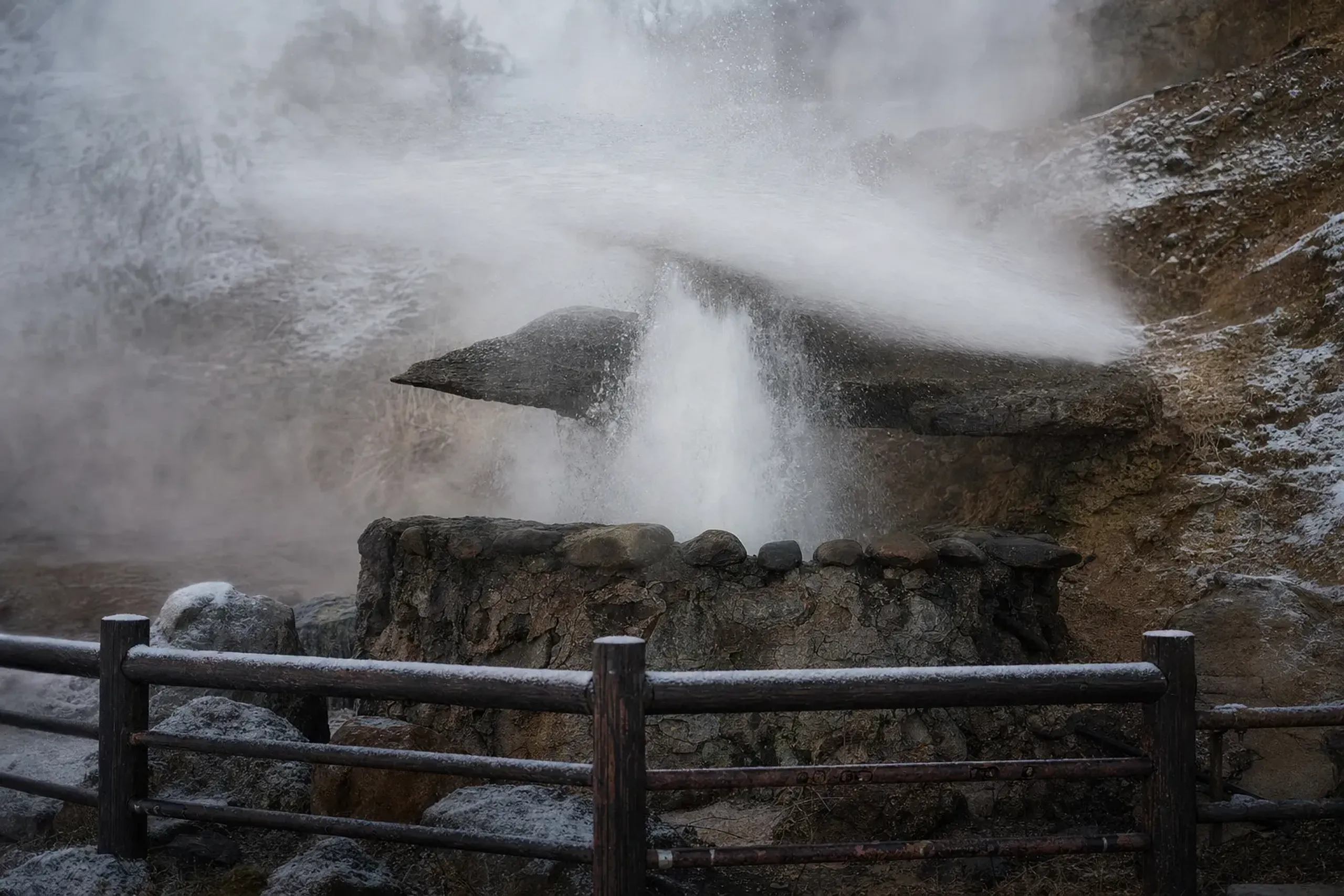
| Tatsumaki Jigoku | Waterspout Hell | A natural geyser erupting high-pressure steam at regular intervals. |
| Shiraike Jigoku | White Pond Hell | Cloudy, milky-white water resulting from pressure drops after surfacing. |
| Oniishi Bōzu Jigoku | Demon Monk Hell | Grey, boiling mud forming rounded spheres resembling a shaved head. |
| Oniyama Jigoku | Demon Mountain Hell | Fierce steam output, famously utilized for crocodile breeding since 1923. |
| Kamado Jigoku | Cooking Stove Hell | Features multiple miniature hells and traditional geothermal cooking elements. |
Jigoku-mushi And Beppu Bamboo Craft
The cultural footprint of Beppu’s geothermal activity extends far beyond visual spectacle. The heat literally shapes how locals eat and how artisans work.
The Culinary Tradition of Hell-Steaming
At Kamado Jigoku and specific dining facilities across the Kannawa district, cooks practice jigoku-mushi (hell-steaming).
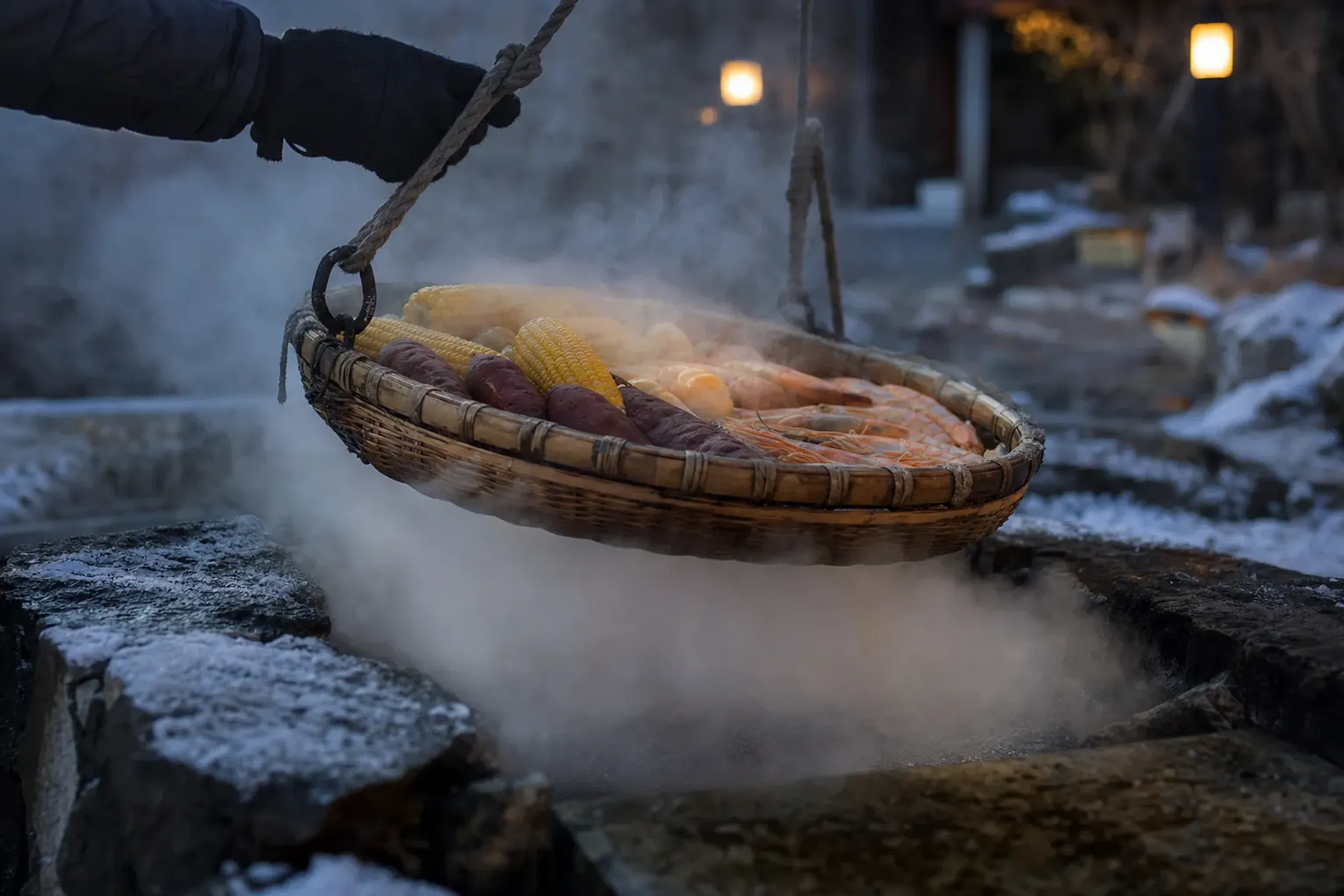
Ingredients—ranging from fresh local vegetables to seafood—are placed inside wooden or bamboo baskets and lowered directly over venting geothermal steam. The mineral-rich vapor cooks the food rapidly, locking in moisture while imparting a faint, earthy salinity. The most ubiquitous iteration is the simple onsen tamago, an egg boiled directly in the source water of Umi Jigoku or steam-cooked at Kamado. Locals also use this method to produce a dense, rich custard pudding composed solely of egg, milk, and sugar.
The Shokunin of Beppu Bamboo
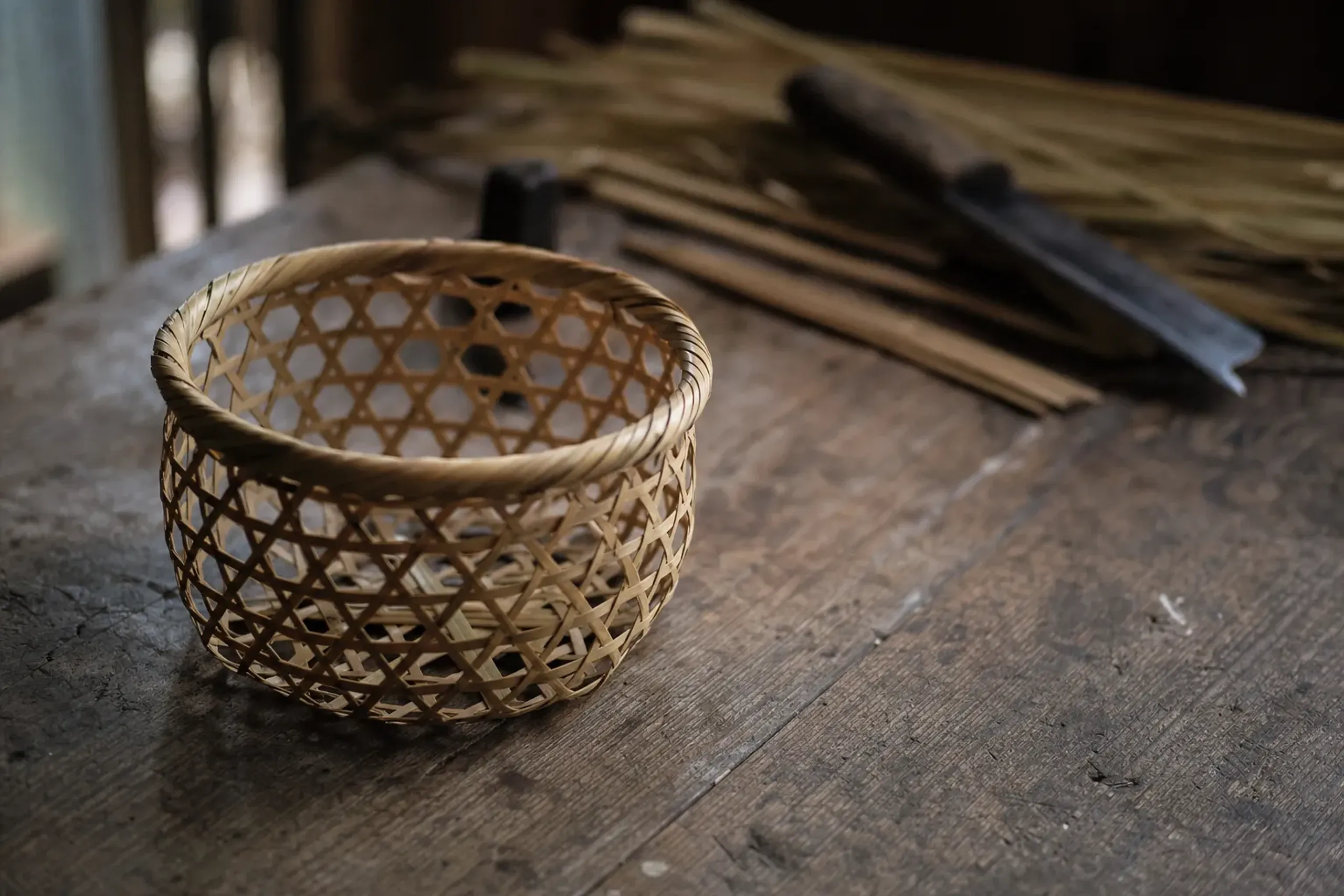
Historically, travelers arriving in Beppu for extended curative stays required cooking vessels for their daily meals. This necessity birthed a rigorous bamboo weaving industry. Today, local shokunin (master artisans) continue this exacting craft. Mastering the tension of raw timber requires decades of quiet, repetitive discipline. These grand masters split, shave, and weave local bamboo into precise, delicate baskets that withstand intense heat and humidity. Observing their work provides a sharp counterpoint to the chaotic boiling of the hells—a study in total human control alongside untamed natural power.
When Is The Best Time To Visit Beppu?
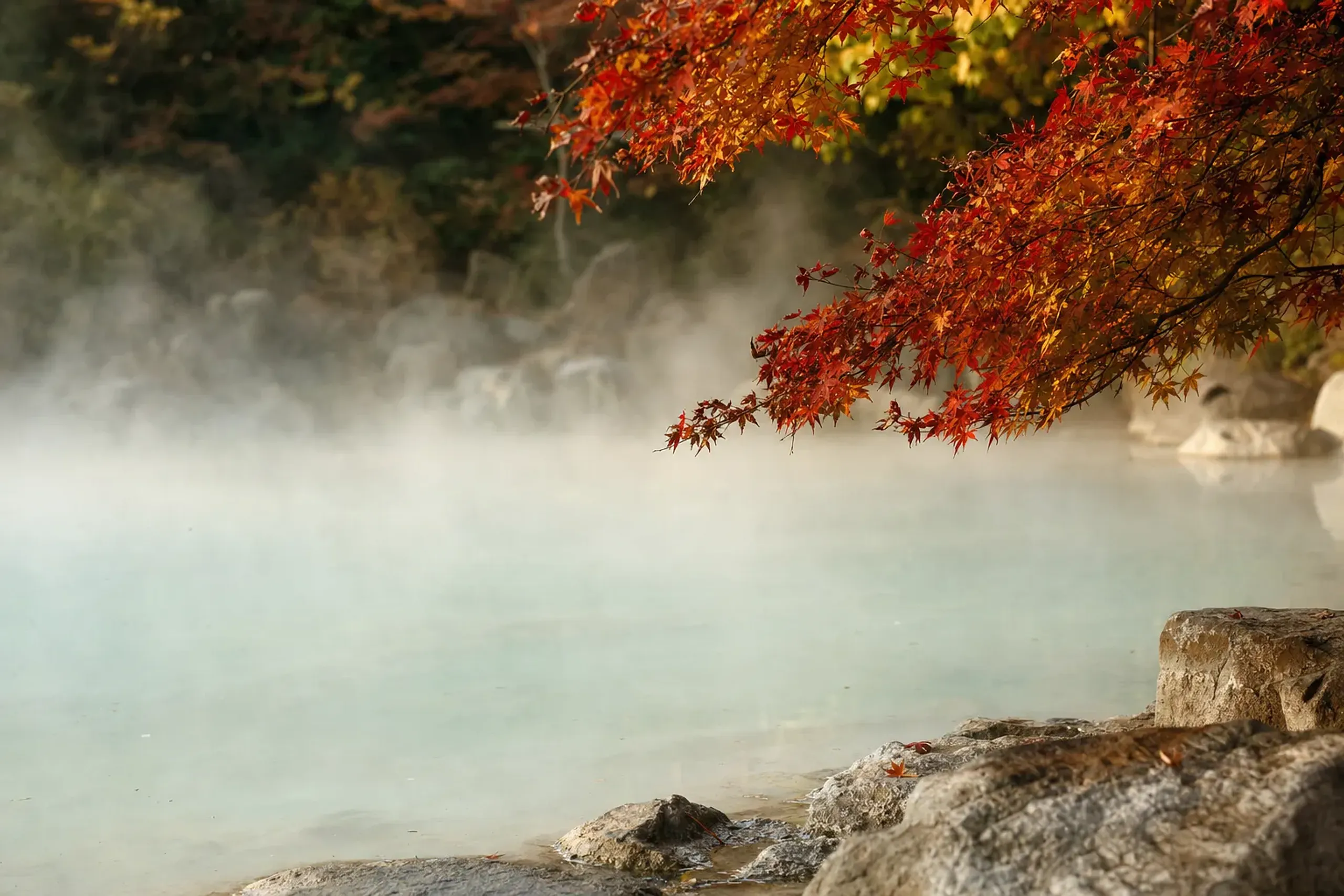
Mid-autumn and early spring offer the most striking visual contrast between the crisp ambient air and billowing geothermal steam, making these periods ideal for sightseeing and photography.
The Japanese principle of shun (experiencing something at its absolute seasonal peak) applies heavily to Beppu.
During the humid summer months, the steam rising from the jigoku tends to blend into the heavy coastal air. In the cooler temperatures of late November through early April, the physics change dramatically. The cold air forces the rising heat to rapidly condense, creating thick, opaque columns of white vapor that rise spectacularly over the Kannawa district.
Planning a bespoke itinerary around the annual Beppu Hatto Onsen Festival in early April yields remarkable cultural access. The festival features the Yubukkake Matsuri, where onsen water is ritually sprayed along parade routes, honoring the earth's bounty. The JRS concierge team verifies current event hours, confirms combined circuit access, and handles all transfer logistics on the client's behalf well ahead of the visit.
Frequently Asked Questions
Can you bathe in the Beppu Jigoku?
No, the seven designated Hells of Beppu are strictly for sightseeing because their source temperatures approach 100 degrees Celsius. However, adjacent facilities offer safe, separated foot baths fed by cooled geothermal water, and the city features hundreds of traditional bathing onsen.
How long does a private tour of the Beppu Hells take?
A comprehensive circuit of all seven official locations requires approximately two to three hours. Navigating the routes with a private driver reduces transit friction between the Kannawa and Shibaseki districts, allowing you to bypass mass transit crowds entirely.
Is Beppu close to other luxury destinations in Kyushu?
Yes, Beppu sits within a short driving distance of other highly regarded sites, making it an excellent anchor for a broader itinerary. Our clients often transition from Beppu directly into Yufuin's quiet appeal or head toward the remote Kuju plateau.
Does Japan Royal Service arrange Beppu accommodations?
Our concierge team identifies and verifies the finest premium ryokans and private luxury bases across Beppu, ensuring your selected property matches your specific privacy, culinary, and aesthetic preferences.
Why Choose Japan Royal Service
Viewing a major cultural attraction without absorbing its crowds requires highly specific operational intelligence. The Beppu Jigoku draw significant daily foot traffic. Relying on standard tour infrastructure often forces luxury travelers into rigid, exhausting schedules.
Our team at Japan Royal Service approaches Kyushu with rigorous discretion. We understand that our clients require absolute privacy and fluid pacing. We utilize our premium in-house fleet to bypass public transit queues entirely, positioning you at optimal viewing angles precisely when the light and steam are at their most dramatic. We do not chase superlatives. We deliver execution.
To design your journey through Kyushu’s extraordinary geothermal landscapes, reach our team privately via WhatsApp or LINE, or contact us here. We will prepare an itinerary that balances unpolished natural beauty with uncompromising refinement.