In this guide
- 01Why A Group That Sold Out Off-Broadway Built Its Home In Rural Ōita
- 02What DRUM TAO Has Built On The Kuju Plateau
- 03Bogatsuru, Tadewara, And Mount Kuju: The Landscape Behind The Drums
- 04When Does Miyama Kirishima Turn The Kuju Slopes Pink?
- 05The Conservation Work That Keeps The Pink Coming Back
- 06How Do You Actually Visit DRUM TAO And The Kuju Plateau?
- 07Frequently Asked Questions
- 08Why Choose Japan Royal Service
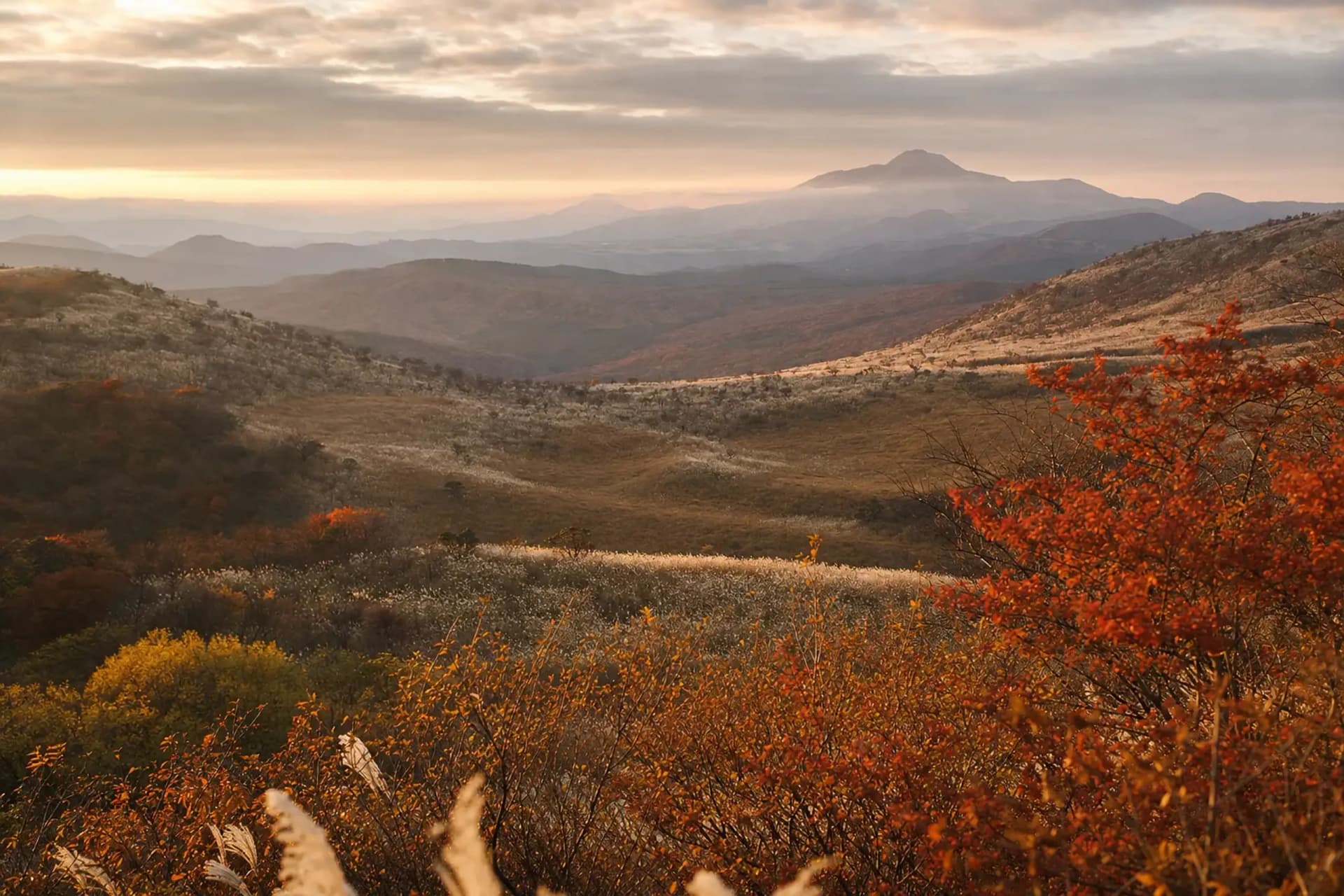
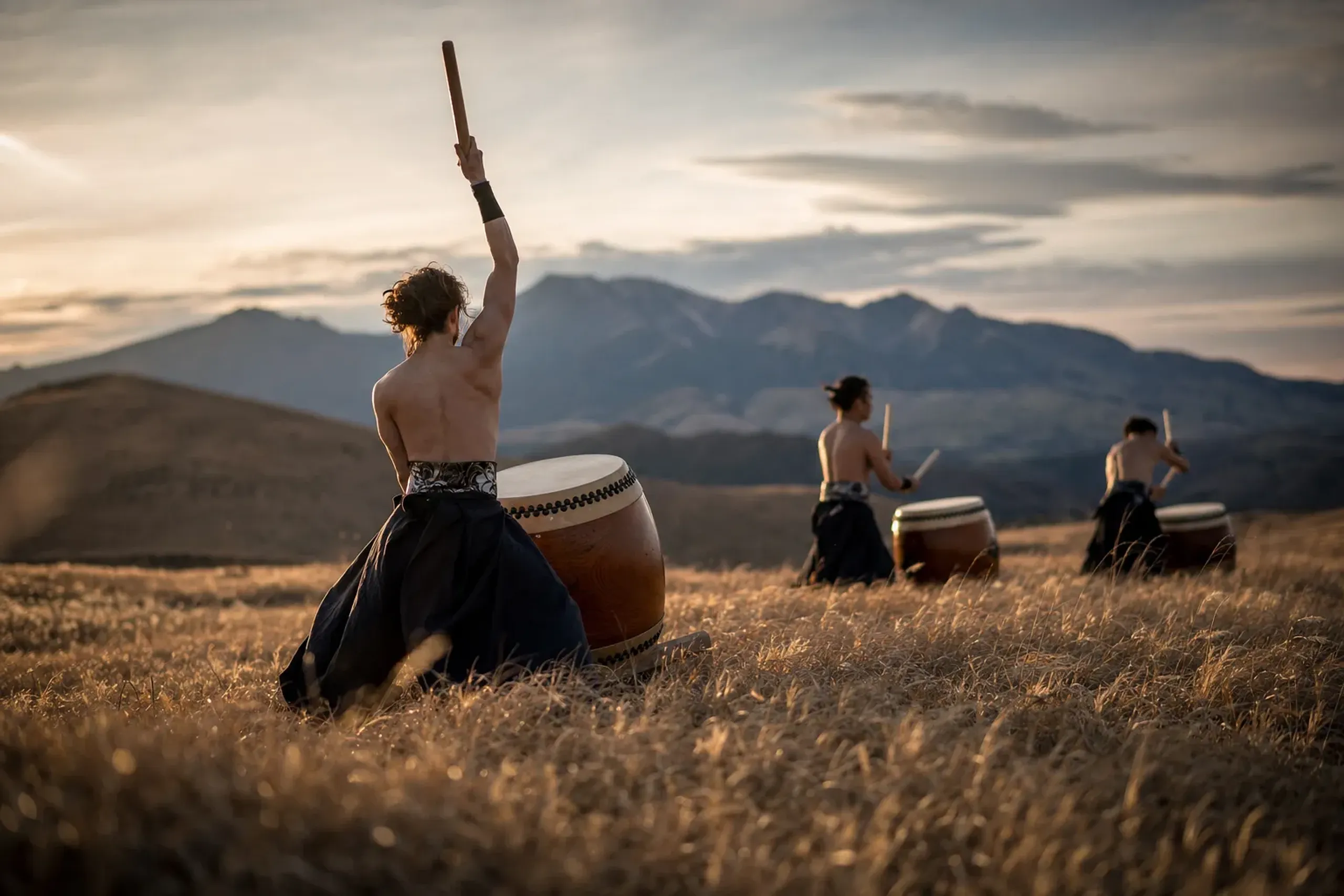
Come to the Kuju Plateau at dusk. The light goes low and gold across volcanic grassland, the mountains behind it turning to silhouette. Then the drums start. Not a recording. Not a stadium. A wall of taiko carrying over open land at 1,000-plus metres, the sound hitting your chest before it reaches your ears.
Most travellers arrive here for the mountains. Fewer know that one of Japan's most successful touring acts calls this exact spot home — and could have set up anywhere. They picked here on purpose. That decision is the reason our team at Japan Royal Service keeps bringing discerning guests to a plateau most maps treat as an afterthought.
Why A Group That Sold Out Off-Broadway Built Its Home In Rural Ōita
DRUM TAO chose remoteness deliberately. Formed in 1993, the wadaiko performance group has drawn a worldwide audience of more than 10 million and sold out its entire Off-Broadway run in New York in 2016 — yet built its permanent base deep inside Aso-Kuju National Park rather than Tokyo.
Newsweek once described them as the group that sells Japan to the world. Read that again. This is not a village troupe that never left. This is an international act with a global touring calendar that looked at the whole country and picked a mountain plateau in Taketa City.
The founder has explained the logic plainly. Ōita already has fine food and abundant hot springs; what it also has is something no other place on earth offers — TAO's sound thrown against the raw Kuju landscape.
In his framing, remoteness is not a compromise. It is the point. The material itself.
That reframes everything. Kuju stops being "a highland near Aso" and becomes the chosen, permanent home of a genuinely worldwide act. When a group that could headline anywhere plants its flag on a windswept plateau, the plateau is worth your attention.
What DRUM TAO Has Built On The Kuju Plateau
DRUM TAO's Kuju base is called TAO no Sato, a roughly 40,000-square-metre complex opened in 2000. It holds three rehearsal studios, a training gym, a spa, and a guest house. This is not a token rural office. It is where the work happens.
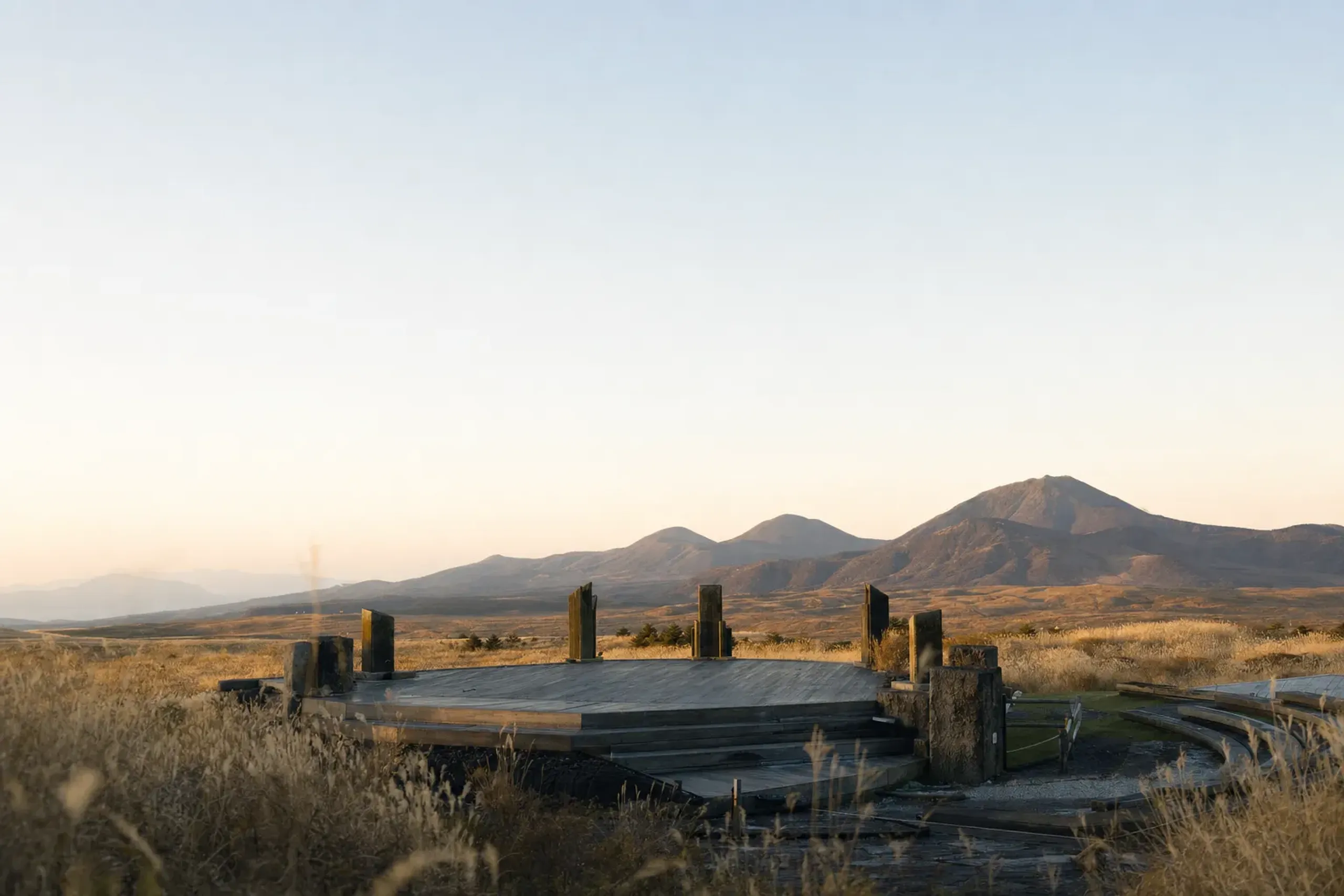
The infrastructure grew from there. In 2009 the group built Akakabuto, a 2,000-seat outdoor theatre on the same grounds. In August 2020 they opened a further permanent open-air venue, TAO no Oka, where live performances run almost daily and pull audiences from across the country to this one specific patch of highland.
The commitment runs deeper than buildings. A foundation established in 2015 exists to build Japan's first wadaiko academy and to run the arts village and theatre complex, while contributing to regional tourism and cultural development. Recognition has followed: an Ōita Prefecture Cultural Merit Award, a Taketa City Cultural Creation Award, and a Japan Tourism Agency Commissioner's Award.
The 2026 Kyoto Theatre: Growth, Not Retreat
Here is the current proof the Kuju model works.
A dedicated DRUM TAO theatre is confirmed to open in Kyoto in April 2026. That matters for one reason. It is expansion, not relocation.
The group is not abandoning the plateau for the big city. It is spreading outward from a rural home that continues to anchor everything. In our experience, that tells a HNW traveller exactly what they need to know: the Kuju base is not a nostalgia project. It is a living, growing institution.
Key fact: Performance schedules at TAO no Oka change through the year, and the group tours nationally and abroad. Our concierge team verifies current dates and seat availability before any visit — never assume a performance is running the day you arrive.
Bogatsuru, Tadewara, And Mount Kuju: The Landscape Behind The Drums
The plateau earns its drama honestly. Mount Kuju is part of the Kujū range, one of Japan's 100 Famous Mountains. The main peak stands at 1,787 metres, while nearby Mount Nakadake tops the range at 1,791 metres — the highest point on the Kyushu mainland.
At the range's heart sits something rarer than altitude. Tadewara Marsh and the Bogatsuru wetland form Japan's largest mid-elevation wetland of their type, registered under the Ramsar Convention in 2005. This is protected ground of international standing, not merely a pretty walk.
Access is easier than the remoteness suggests. The Chōjabaru Visitor Center connects directly to the Tadewara Marsh trail, part of which is a wheelchair-accessible wooden boardwalk.
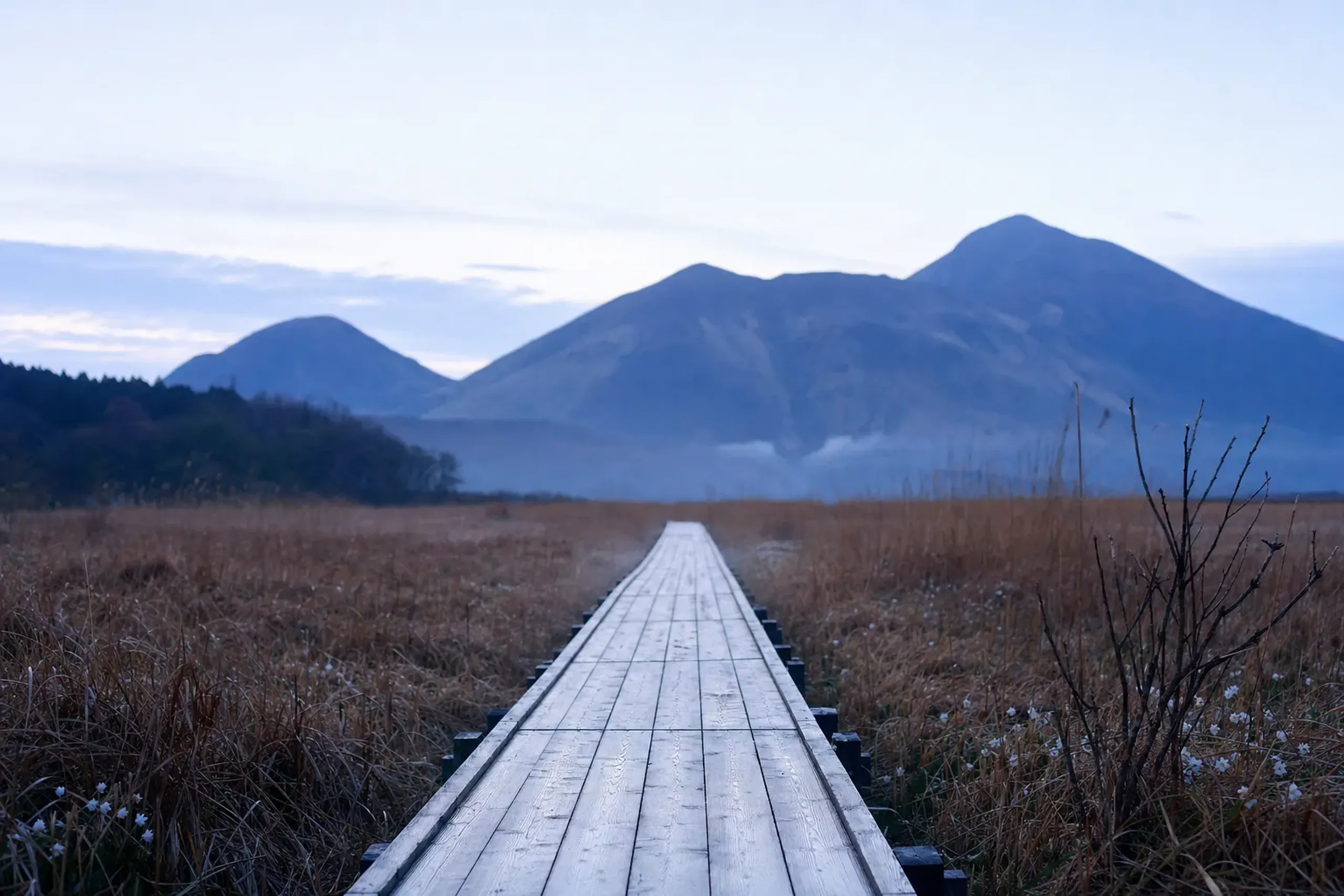
The full loop takes about 45 minutes. Inside, exhibits explain the region's flora and fauna, with commentary in English, Chinese, and Korean, and they cover the local practice of noyaki — the controlled grassland burning carried out in March.
Bogatsuru also holds a free-to-use campsite for hikers, and along the walking route stands Hokke-in Onsen Sansō, a mountain lodge whose roots trace to a temple founded in 1470 as a Shugendō ascetic training site. Centuries of quiet discipline sit beside modern drums. The plateau layers its stories.
When Does Miyama Kirishima Turn The Kuju Slopes Pink?
Miyama kirishima, a native azalea, blooms across the Kuju slopes from late May to mid-June, washing the mountainsides in pink. Outside that window you will not see it — the flowering is short and precise.
The display is one of the range's signature seasonal sights, and it carries a detail most guides miss. This plant was first documented by Makino Tomitarō, the pioneering botanist who inspired the protagonist of NHK's 2023 morning drama Ranman. Watch the series, walk these slopes in early June, and the two collapse into one experience — a real historical figure, a real flower, standing on the exact ground he studied.
It is the kind of layered specificity our guests remember long after the trip. Botany, television, and a volcanic mountainside, all threaded together by a single azalea.
The Conservation Work That Keeps The Pink Coming Back
That colour is not automatic.
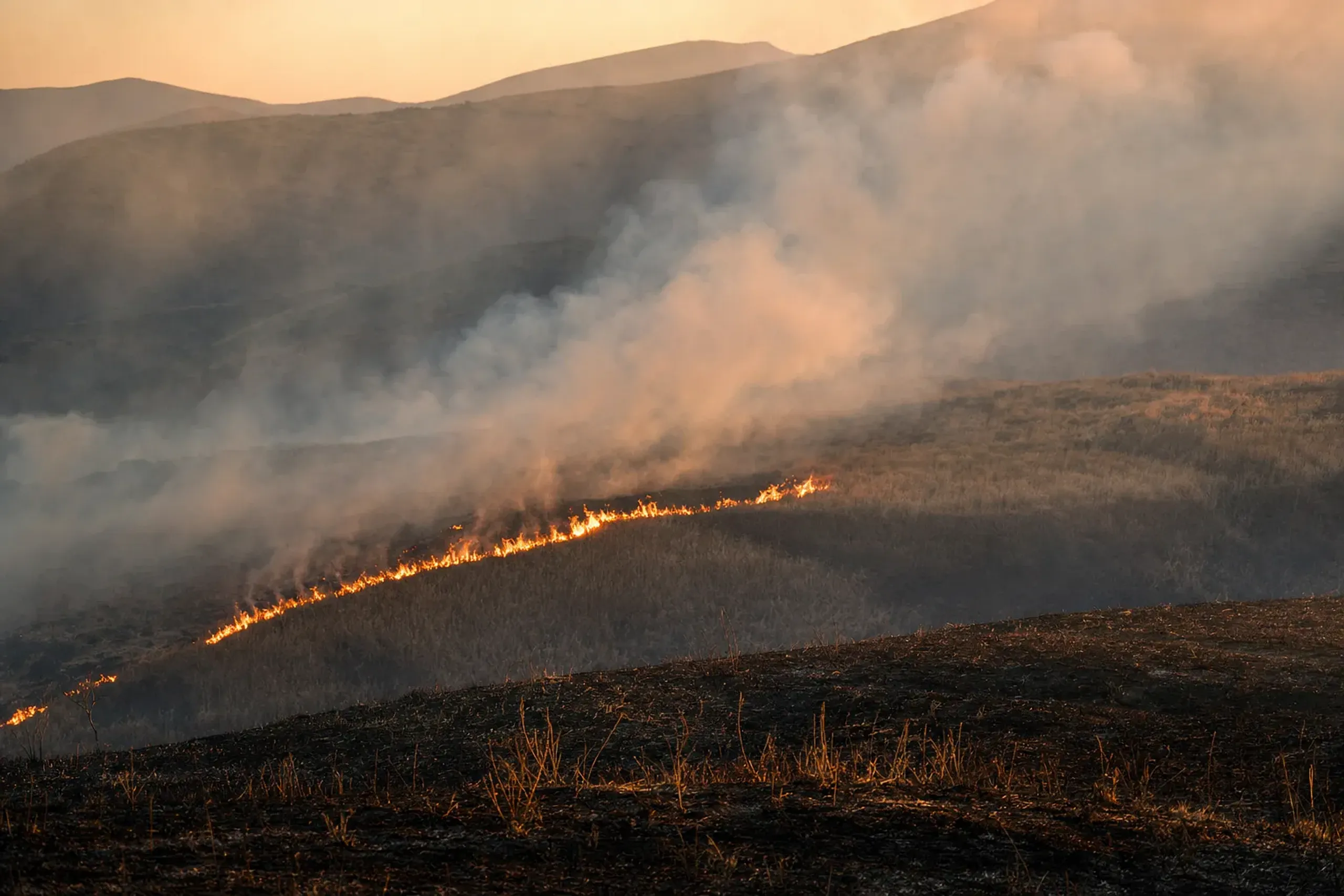
It is maintained. Active conservation on the range includes controlled burning to spur new growth, removal of invasive plant species, and targeted brush clearing — notably at Mount Heijidake — specifically to protect miyama kirishima habitat, alongside continuous trail upkeep.
For a certain kind of traveller, this substance matters more than any spa menu. You are not visiting a landscape that simply happens to be beautiful. You are visiting one that people deliberately tend, year after year, so the azaleas return and the wetland holds. That is nature with context — the sharper, more honest luxury.
How Do You Actually Visit DRUM TAO And The Kuju Plateau?
Kuju sits in a corner of Ōita with no rail station at its heart, which makes a private car essential rather than optional. Roads wind, distances between the theatre, the visitor centre, and the trailheads are real, and public transport thins out fast at elevation.
Our team at Japan Royal Service arranges two things here, and we state it plainly: private chauffeured transfers and expert guiding across the plateau. That is the scope. We coordinate the drive from your bespoke itinerary base, the timing around a performance at TAO no Oka, and an early-morning walk at Tadewara before the boardwalk fills.
A note on rail, since it comes up. JR Kyushu's ultra-luxury Seven Stars in Kyushu operates a dedicated Kuju course, with services resuming from August 4, 2026 and visits referencing Tadewara Marsh inside Aso-Kuju National Park.
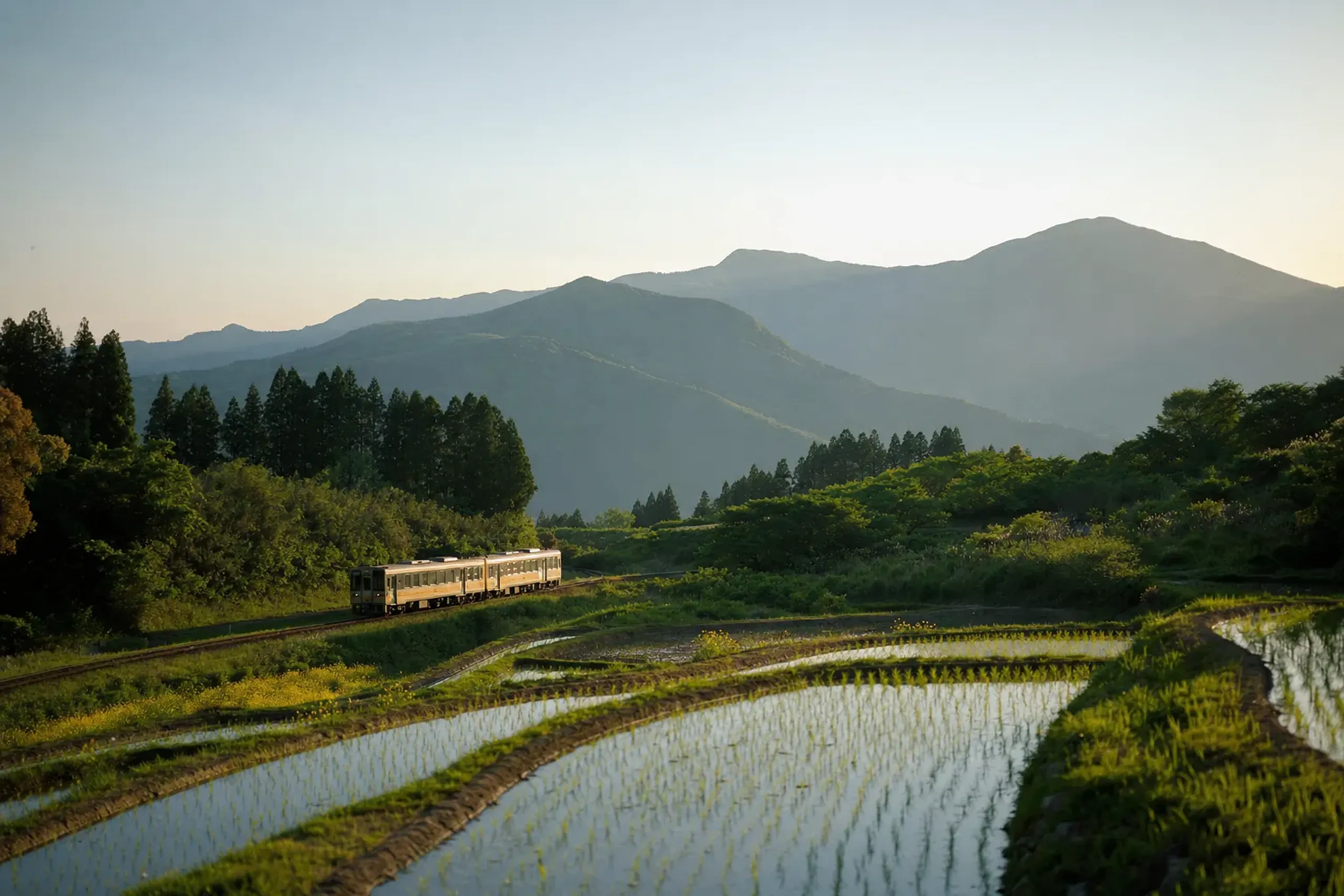
Contents and timings vary by departure. For guests weaving Kuju into a longer Kyushu route, our concierge advises on how the plateau pairs with nights elsewhere in the region.
If you are building the wider journey, our writing on Sanso Murata in nearby Yufuin and on the landscape traditions of Japan gives useful context for how a plateau day connects to the rest of Ōita.
Frequently Asked Questions
Is DRUM TAO Performing In Kuju The Same Way As At Its Kyoto Theatre Opening In 2026?
The Kuju base remains DRUM TAO's home, with near-daily performances at the TAO no Oka outdoor theatre; the Kyoto theatre opening in April 2026 is an expansion, not a relocation. Schedules vary, so our concierge confirms current dates before you travel.
What Is The Best Month To See Miyama Kirishima Azaleas On Mount Kuju?
Late May to mid-June is the confirmed bloom window, when the native azaleas turn the Kuju slopes pink. The flowering is brief and does not occur outside this period, so early-June visits offer the most reliable colour.
Can You Walk The Tadewara Marsh Trail With Limited Mobility?
Yes. Part of the Tadewara Marsh trail from the Chōjabaru Visitor Center is a wheelchair-accessible wooden boardwalk, and the full course takes roughly 45 minutes at an unhurried pace.
Do I Need A Private Car To Explore The Kuju Highlands?
Effectively yes.

Kuju has no central rail station, distances between the theatre, visitor centre, and trailheads are significant, and highland public transport is sparse — a private chauffeured car is the practical way to move between sites.
How Does The Seven Stars In Kyushu Kuju Course Fit A Luxury Itinerary?
JR Kyushu's Seven Stars operates a Kuju course visiting Tadewara Marsh, with services resuming August 4, 2026; contents vary by departure. It suits travellers wanting scarce-inventory rail, and our team advises on pairing it with the wider Kyushu region.
Why Choose Japan Royal Service
Kuju rewards travellers who understand what they are looking at. A global act's deliberate choice of remoteness. A Ramsar wetland tended by human hands. A pink azalea a famous botanist once documented, blooming for three weeks a year. These threads only come together with someone who knows the ground.
Our team at Japan Royal Service is based in Japan, works with an in-house fleet, and guards guest discretion absolutely — from your identity to your itinerary. We do not resell a checklist. We build the plateau day around a verified performance, the right bloom window, and a drive timed so you reach the marsh in the quiet of early morning. That is the difference between seeing Kuju and understanding it.
To plan a private visit to the Kuju Plateau and DRUM TAO, reach our team directly via WhatsApp or LINE, or contact us here. We will shape the journey around you.