In this guide
- 01Where The Echizen Coast Is, And Why It Fits A Short Drive
- 02Tojinbo: Columnar Cliffs, The Tower, And The Sightseeing Boat
- 03Oshima Island: The Vermilion Bridge And A Shrine Precinct
- 04Mikuni: Port Streets, Echizen-Matsushima, And A Sunset Beach
- 05Is Tojinbo Worth Visiting In Summer If You Only Have Half A Day?
- 06Summer On The Echizen Coast: Sea Light, West-Facing Sunsets, And August Weather
- 07How Do You Reach Tojinbo From Fukui Station Without Renting A Car?
- 08How Long Does It Take To Get From Tokyo To Fukui For A Summer Coast Day?
- 09A One-Day Coast Sequence: Cliffs To Shrine Island To Old Port To Sunset
- 10Two Days Without Overstretching: Add Time For Awara, Or Slow The Port Walk
- 11How The Concierge Team Plans An Echizen Coast Day Around Roads, Sea, And Light
- 12Small Nearby Add-Ons (One Line Each)
- 13Frequently Asked Questions
- 14Why Choose Japan Royal Service
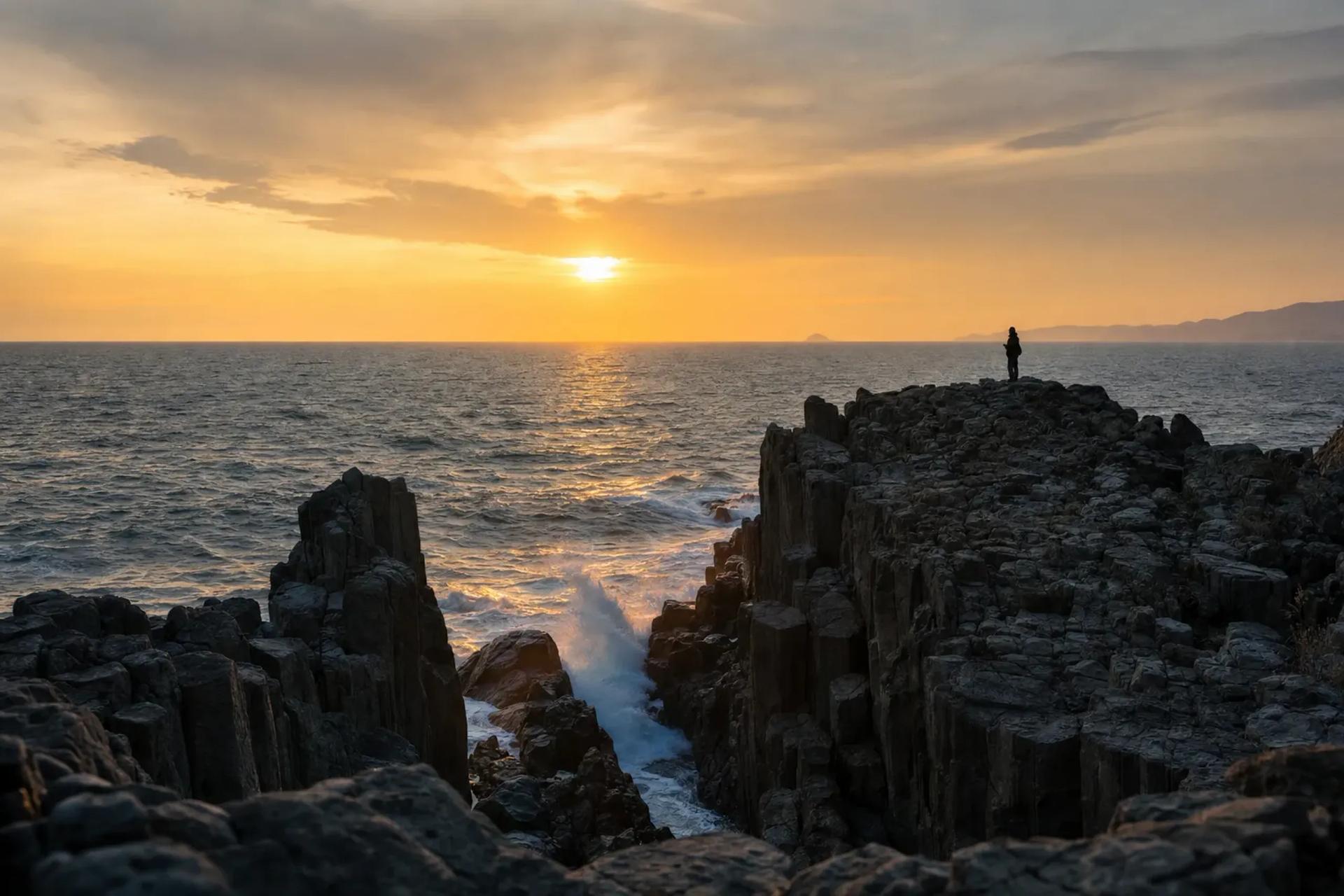
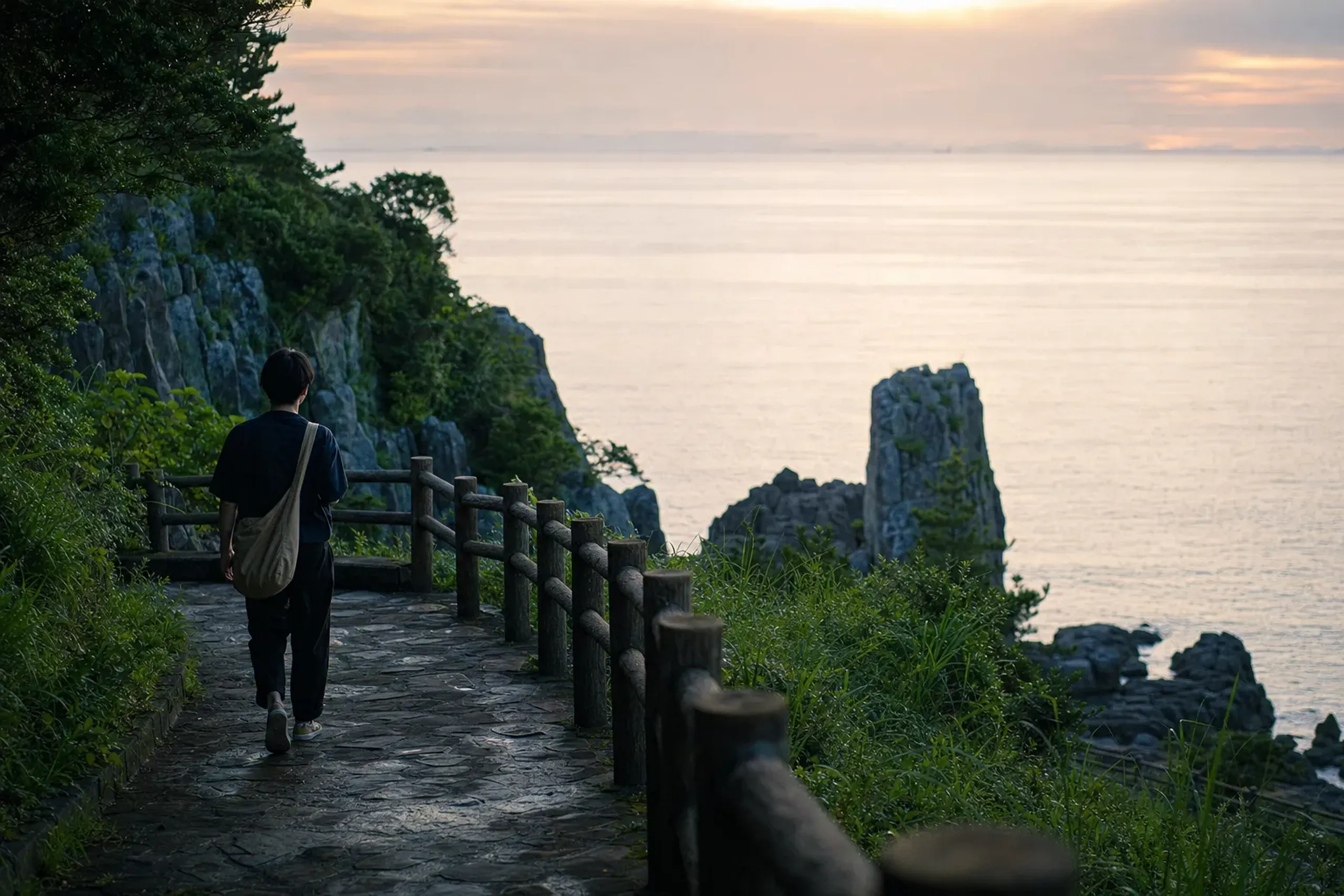
Late in the day, Tojinbo turns almost black.
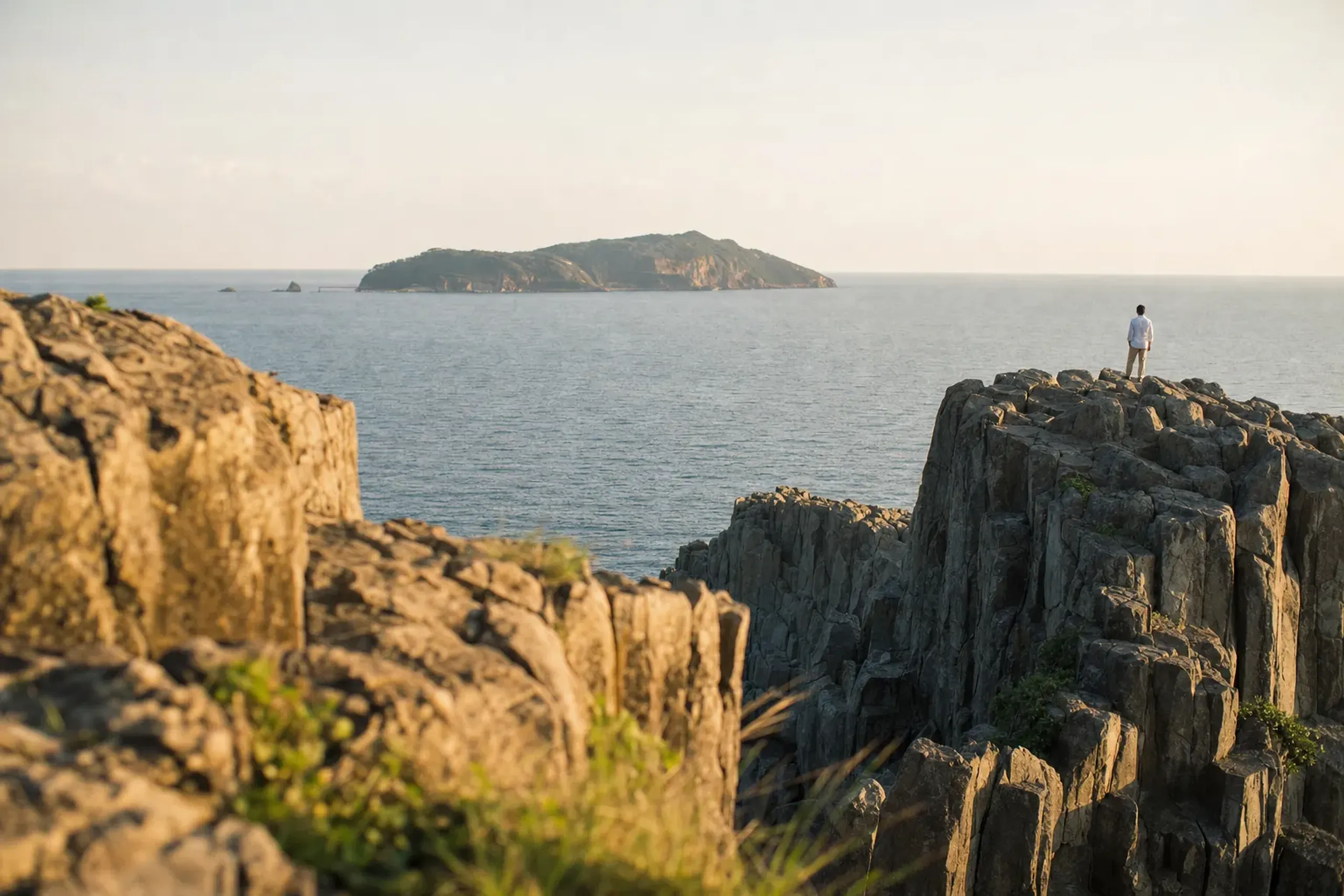
The Sea of Japan is flat one moment, silver the next. The cliff line holds steady, column after column, as if someone set the coast upright and left it there. You can hear waves without seeing them. It’s that kind of shore.
This corner of Fukui is small on a map. That’s the point. In one coast day you can take in Tojinbo’s geology, cross a vermilion bridge to a shrine island, walk old port-town streets in Mikuni, and finish with a west-facing sunset over open water.
Where The Echizen Coast Is, And Why It Fits A Short Drive
The northern Echizen coast sits in Sakai City, Fukui Prefecture, along the Sea of Japan.
Tojinbo, Oshima, Mikuni Minato, and Echizen-Matsushima cluster close together. That closeness changes how you plan. You do not need a long itinerary with constant hotel changes. You need timing.
From Fukui Station, Tojinbo is about 45 to 50 minutes by car. From there, Mikuni Minato is about 10 minutes by car. Short hops. Clean rhythm.
The coast is also part of the Echizen-Kaga Coast Quasi-National Park, designated in 1968. The park spans Fukui and Ishikawa, and Fukui Prefecture lists Tojinbo, Oshima, and Echizen-Matsushima among its features.
Tojinbo: Columnar Cliffs, The Tower, And The Sightseeing Boat
Tojinbo was designated in 1935 as both a National Natural Monument and a National Place of Scenic Beauty.
Those labels can feel distant until you stand there and see the rock itself: columnar-jointed andesite, stacked in coarse vertical lines that run along the sea for roughly about 1 km, as Fukui tourism describes it.
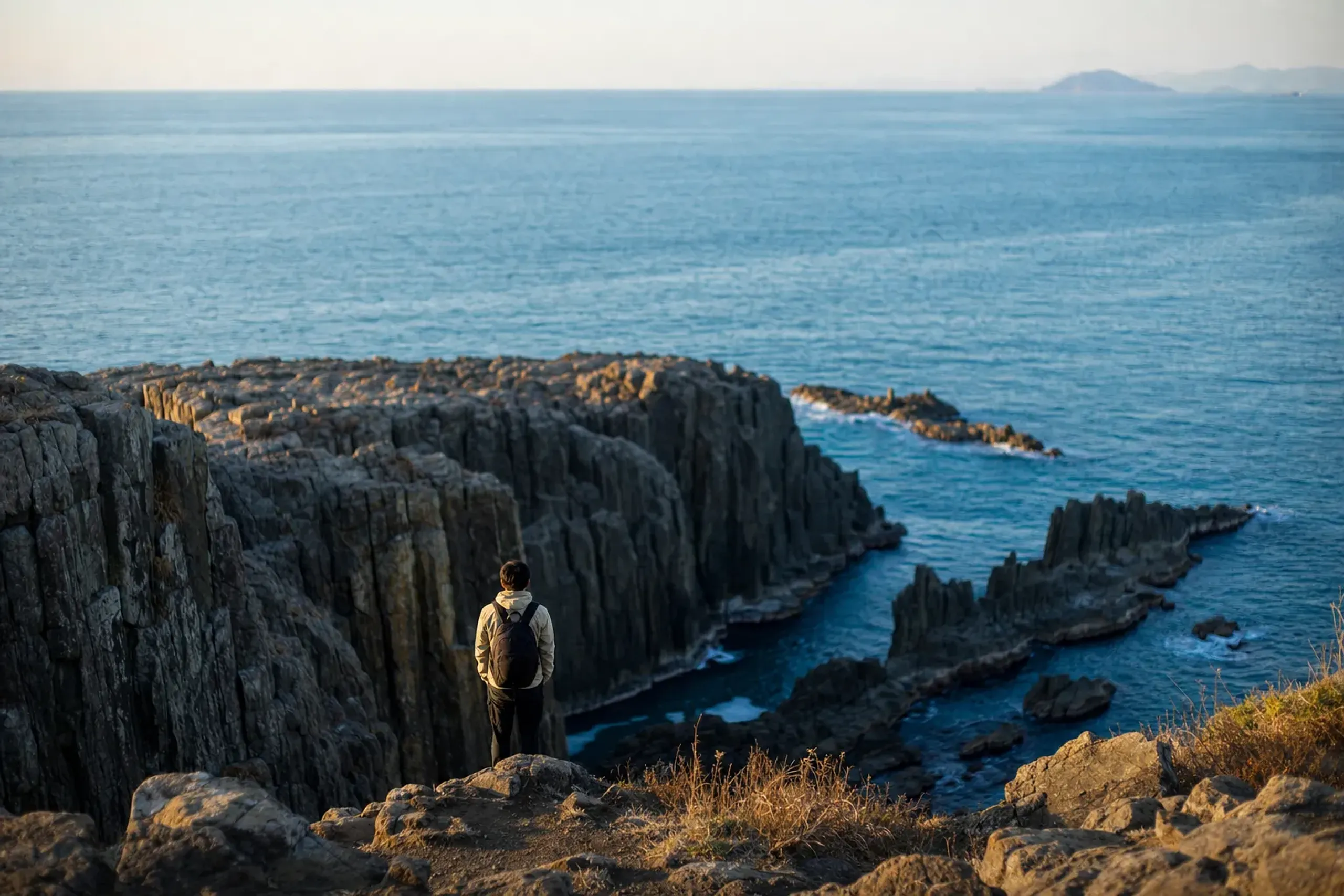
The cliff height is often cited at around 25 meters. It reads as architecture, not erosion.
You’ll notice how the view is kept plain. Fukui tourism notes that there are no railings or fences, to keep the scenery unspoiled. The result is a wide, uninterrupted horizon that photographs cleanly even in harsh summer light.
Above the coast stands Tojinbo Tower. Fukui tourism states it rises 55 m above ground and sits 100 m above sea level. It’s a simple move: up, look, then back down to the texture of the rock.
A sightseeing boat also operates around Tojinbo and Oshima when conditions allow. The circuit is described as about 30 minutes, and the boarding location can change with weather; the JRS concierge team confirms directly with the guest at time of arrangement.
Oshima Island: The Vermilion Bridge And A Shrine Precinct
Oshima is reached by a 224 m vermilion bridge, and the entire island is the precinct of Ominato Shrine.
The island sits within the same 1935 designated area as Tojinbo. Fukui tourism describes it as a sacred island, and you feel that shift as soon as you step off the bridge. The air changes. Quieter.
Oshima is about 27 m high, with a circumference of about 2 km.
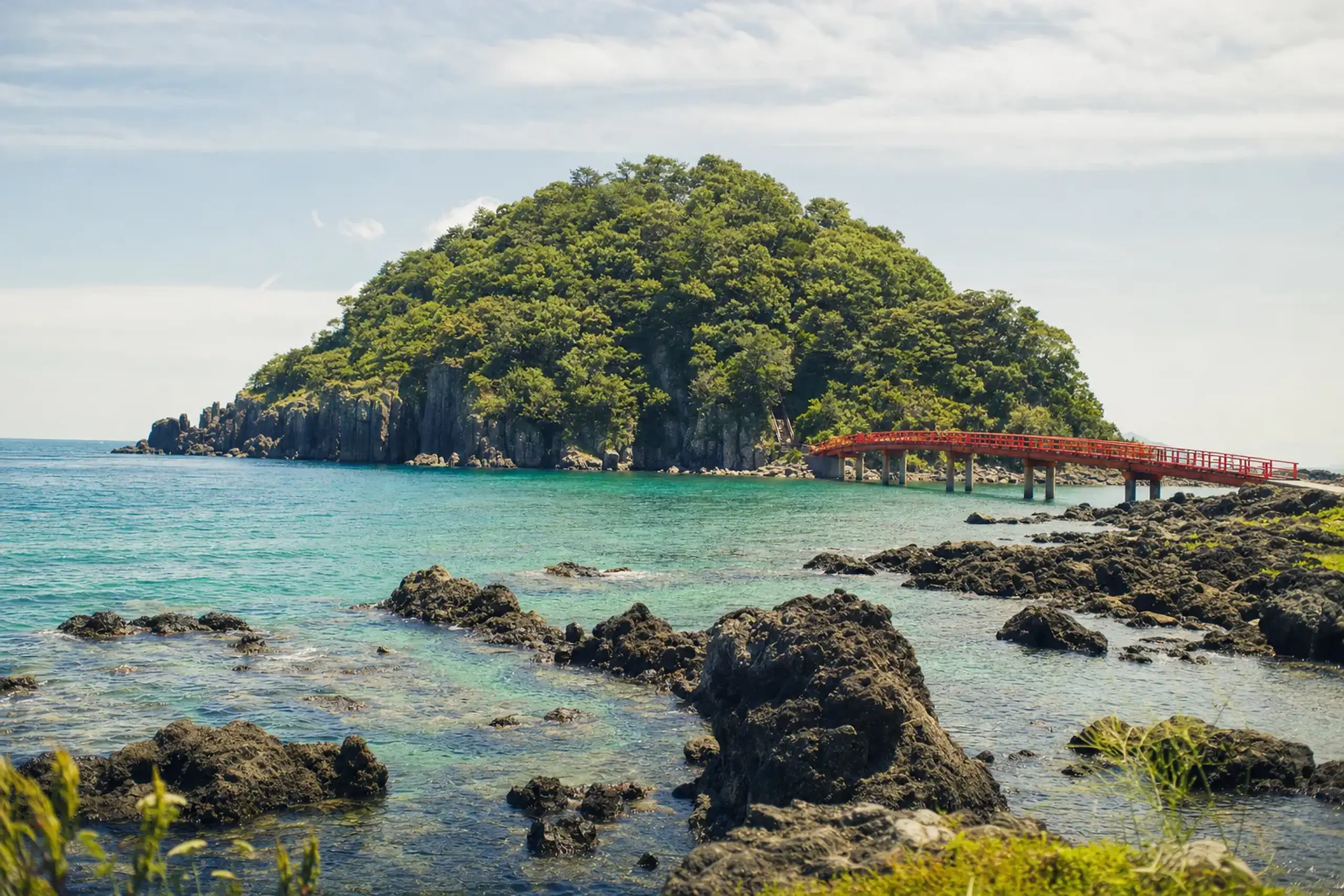
There are 78 stone steps noted in Fukui tourism materials. In summer, the shade and the sea breeze can make this stop feel like a reset between cliff and town.
This is where context matters. The space is not a “photo spot.” It is a shrine precinct. When we build a tailor-made itinerary, we usually pace Oshima between Tojinbo and Mikuni so the day has a calm center.
Mikuni: Port Streets, Echizen-Matsushima, And A Sunset Beach
Mikuni Minato flourished from the Edo to the Meiji periods through the Kitamaebune coastal trade.
The streets still show that merchant-era confidence. Lattice-door machiya facades appear, then disappear behind a modern corner store, then reappear again. It feels lived-in, not staged.
One worthwhile anchor is the former Morita Bank head office, dated 1920 in Fukui tourism information. It’s a crisp building with an urban presence, the kind of place that hints at how money moved through a port town.
You may see “Sakai” on maps where you expected “Mikuni.” That’s correct. Mikuni merged with Maruoka, Harue, and Sakai into Sakai City on 20 March 2006, as recorded by the Ministry of Internal Affairs and Communications.
Echizen-Matsushima: A Rocky Shore With Small Islets
Northeast of Tojinbo, Echizen-Matsushima is a rocky shoreline with scattered small islands, sea caves, and a stone bridge.
Fukui Prefecture describes the islets as black andesite and notes the area was named for its resemblance to Matsushima in Miyagi.
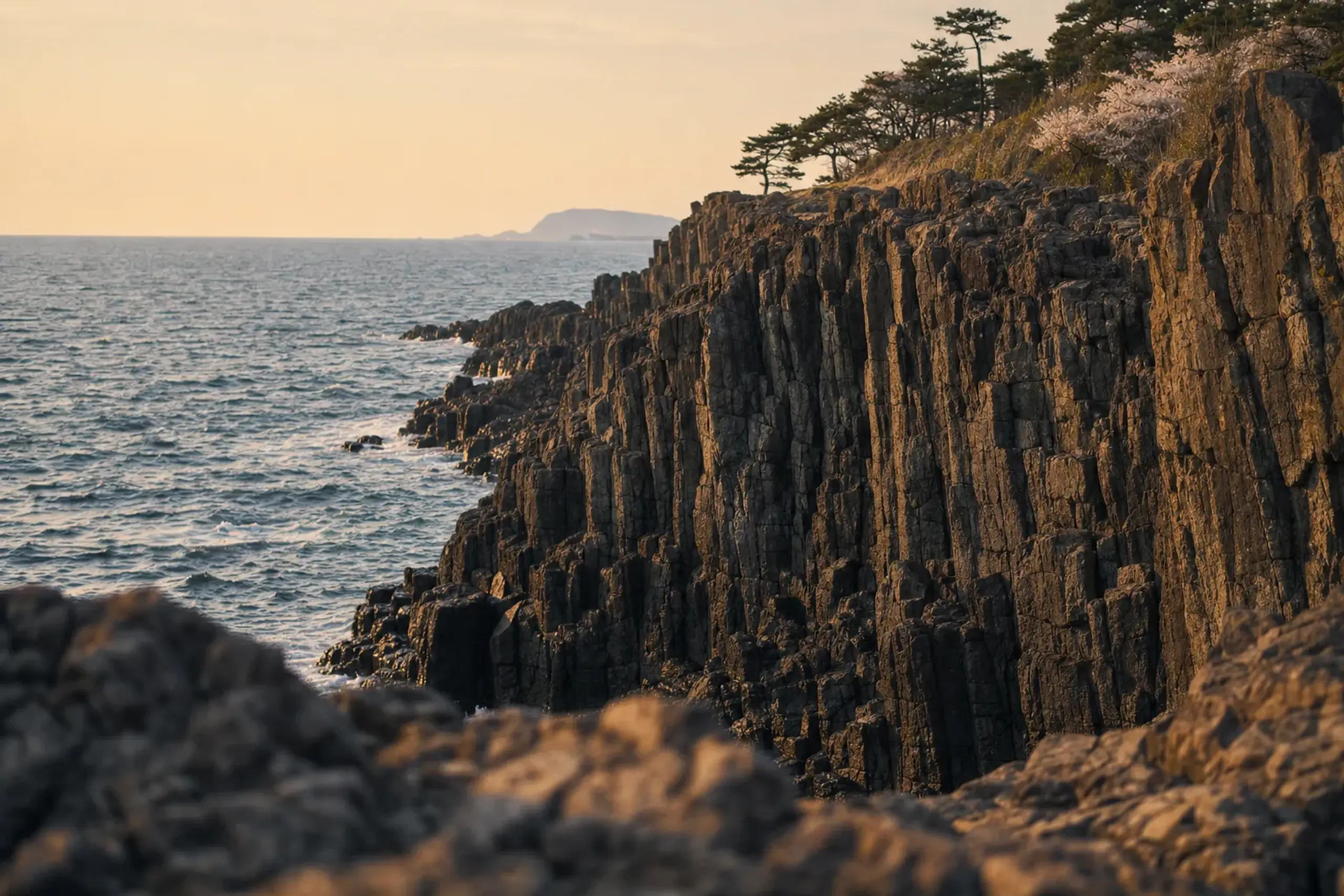
It’s a different mood from Tojinbo. Less vertical drama. More broken shoreline.
This is an easy add-on when the light is strong at midday. The textures hold up. Shadows help.
Mikuni Sunset Beach: A West-Facing Finish
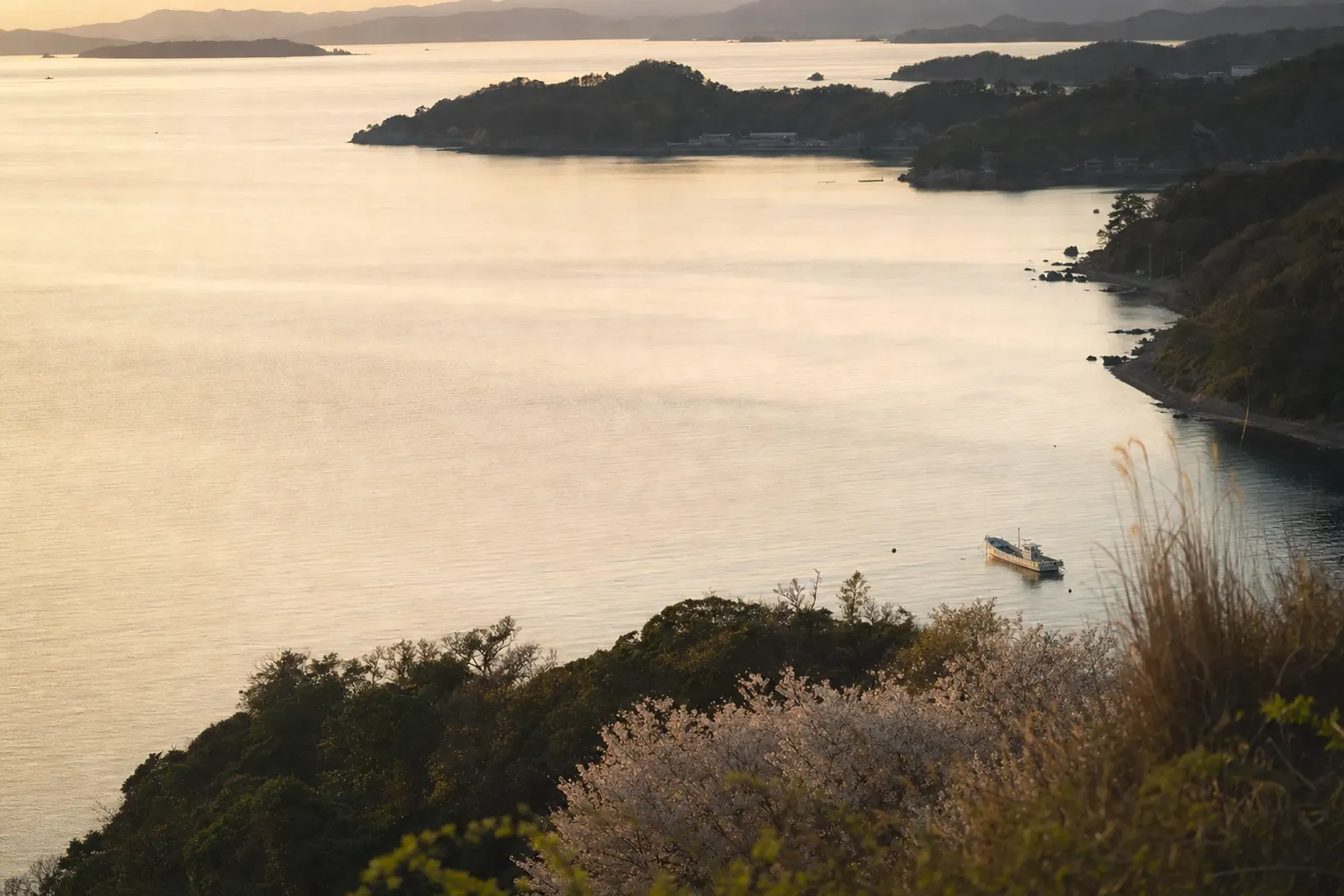
Mikuni Sunset Beach is known for views of the sun sinking into the horizon over the Sea of Japan.
In summer, the shore faces the right direction for an end-of-day pause. No schedule. Just sky, water, and a few unhurried steps along the sand.
Sea bathing typically opens from July, set each year. Local rules apply and can change; the JRS concierge team confirms current conditions directly with the guest at time of arrangement.
Mikuni also has a recurring fireworks event in August, set each year, held at Mikuni Sunset Beach. If it lines up with your dates, it can shape the whole pacing of the afternoon; the JRS concierge team confirms directly with the guest at time of arrangement.
Is Tojinbo Worth Visiting In Summer If You Only Have Half A Day?
Yes—Tojinbo works well in summer as a half-day trip because the cliffs, Oshima bridge, and Mikuni town are close together, and the coast faces west for sunset.
The honest version is not a grand “region tour.” It’s a compact sequence with strong visuals. You arrive, you look, you cross the bridge, you end in town and on the sand. Done.
If you truly only have a half day, we suggest choosing either (a) Tojinbo plus Oshima, or (b) Tojinbo plus Mikuni Minato and the sunset.
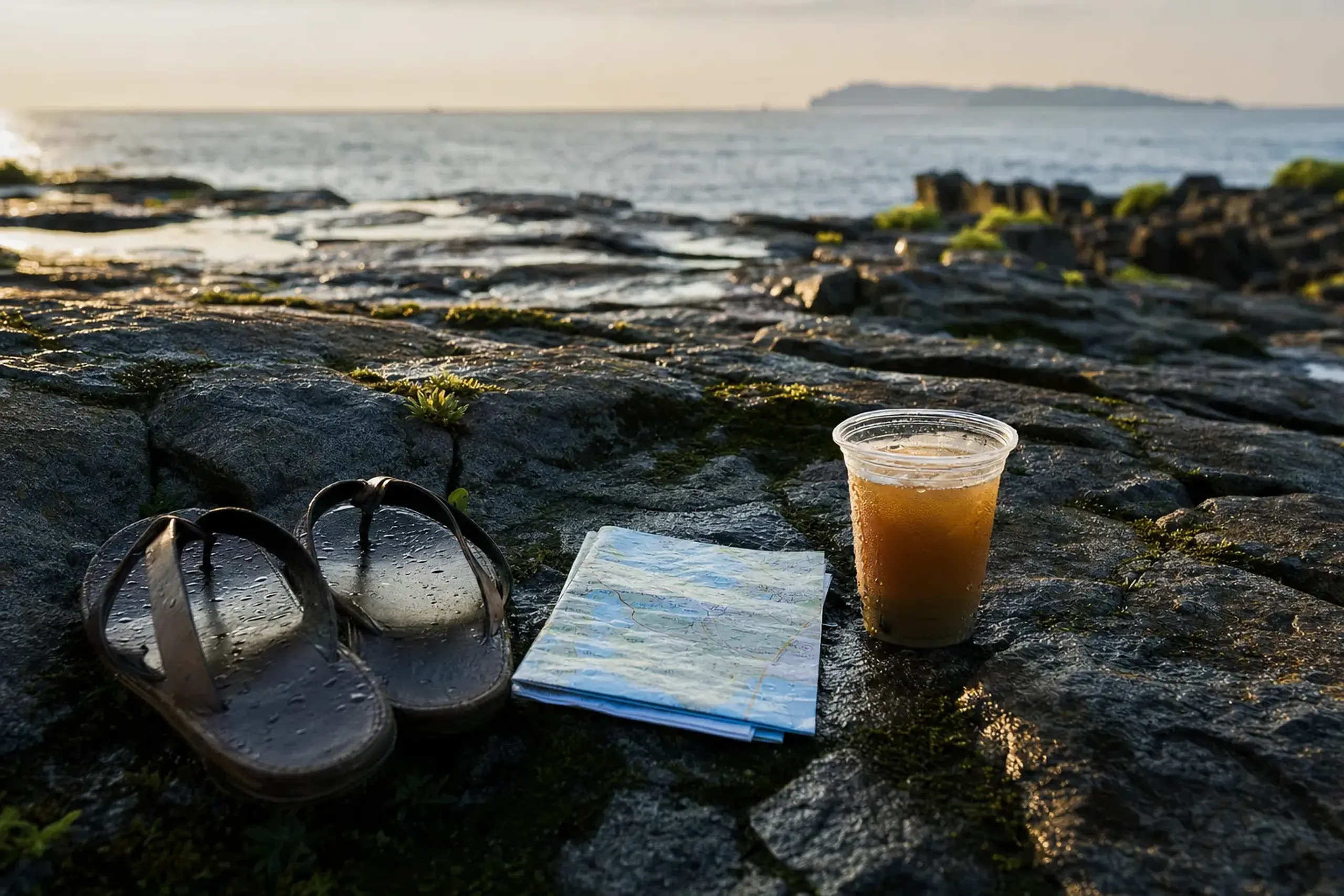
Trying to force all stops into three rushed hours makes the coast feel smaller than it is.
When cloud sits over the cliffs, the day can still work. We keep Echizen-Matsushima as a flexible stop, and we shift the order so the best light lands where it matters.
Summer On The Echizen Coast: Sea Light, West-Facing Sunsets, And August Weather
The Echizen coast faces west, which is why sunsets are a headline here.
Fukui tourism notes that there are many sunset spots along this shoreline, and that colors often peak after sunset. Tojinbo is also selected for “Japan’s 100 Sunsets,” as cited by Fukui tourism. The cliffs hold the last light like ink holds gold flecks.
August is warm and humid in Fukui City, the nearest station with official climate normals. The Japan Meteorological Agency (1991–2020 normals) lists an August mean of 27.4°C, a mean maximum of 32.2°C, and a mean minimum of 23.7°C.
Rain is part of the picture. The same normals show 150.7 mm of rainfall in August and 9.1 days with 1.0 mm or more. That’s why timing matters more than ambition.
How Do You Reach Tojinbo From Fukui Station Without Renting A Car?
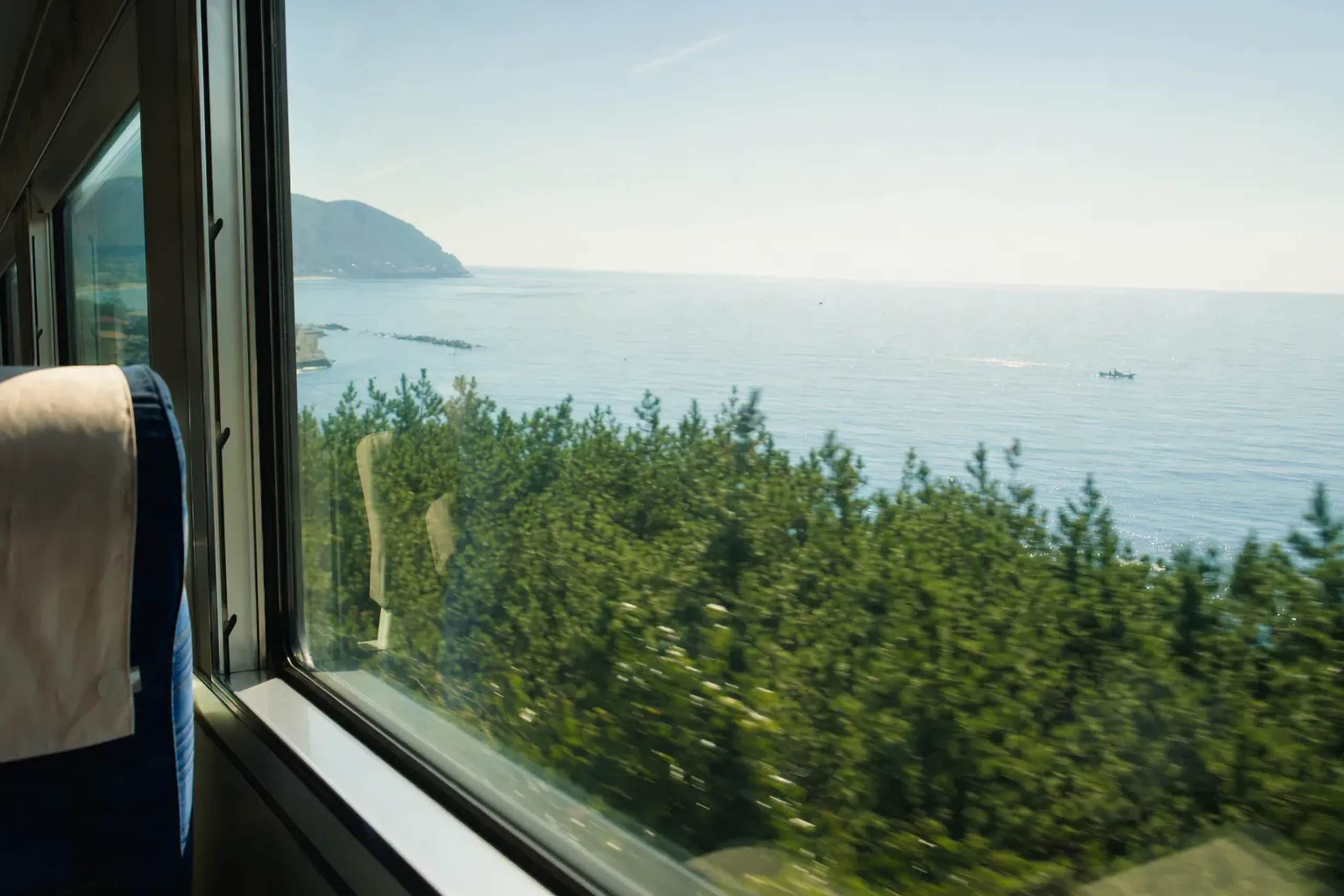
From Fukui Station, take the Echizen Railway Mikuni-Awara Line to Mikuni Station (about 50 minutes), then a bus to Tojinbo (about 10 to 15 minutes).
This route is perfectly workable if you are traveling light and you enjoy local rail.
The trade-off is flexibility. The sights are strung along a coast road, and small time slips can cut into your sunset window.
From JR Awara-Onsen Station, Fukui tourism notes a bus ride of about 45 minutes to Tojinbo. It’s a direct way to reach the cliffs if you are staying in the Awara area.
When guests prefer a car day, our concierge can advise on timing and routing and coordinate a vehicle from a partner company with an English-speaking driver. The JRS concierge team confirms the driving times at time of arrangement.
How Long Does It Take To Get From Tokyo To Fukui For A Summer Coast Day?
Tokyo to Fukui is as little as 2 hours 49 minutes on the fastest Hokuriku Shinkansen service.
Once you are at Fukui or Awara-Onsen, the coast becomes a short drive rather than an all-day transfer. That is the Echizen coast advantage. You can do cliffs and sunset without giving up two nights to transit.
The Hokuriku Shinkansen stops at Awara-Onsen, Fukui, Echizen-Takefu, and Tsuruga. For guests who value comfort and quiet, we can incorporate Green Car and Gran Class where available, along with platform assistance and luggage forwarding.
If you are coming from Kyoto or Osaka, the coast is still realistic for one long day or an overnight paired with Awara or Fukui City.
The JRS concierge team confirms directly with the guest at time of arrangement which routing fits the overall trip flow.
A One-Day Coast Sequence: Cliffs To Shrine Island To Old Port To Sunset
This is the simplest order. It also feels right.
You start with Tojinbo while your eyes are fresh. The rock patterns register quickly. Then you walk the line, look back, and notice how the coast bends toward Oshima.
Next comes the vermilion bridge to Oshima. It’s a short crossing, yet it marks a clear change from raw geology to shrine space. If you have an English-speaking cultural interpreter guide, this is where a few well-chosen sentences add weight.
After that, Mikuni Minato. A late-afternoon stroll past machiya facades and the former Morita Bank head office brings you back into human scale. You end at Mikuni Sunset Beach or another west-facing viewpoint based on cloud and light.
Two Days Without Overstretching: Add Time For Awara, Or Slow The Port Walk
Two days on this coast is not about adding far-flung detours. It’s about removing hurry.
Day one can focus on Tojinbo and Oshima, with time to linger at the tower and watch the sea change color. Day two can lean into Mikuni and Echizen-Matsushima, with a longer sunset finish and room for a weather shift.
If you are staying in Awara or Fukui City, this pacing also gives you easier meal planning.
Dietary notes matter in regional Japan; for deeper context, see our guide on Dietary Requests In Japan: Ryokan, Kaiseki And Restaurants.
Where a detail varies by season—boat operation, beach rules, fireworks scheduling—the JRS concierge team confirms directly with the guest at time of arrangement. That keeps the plan honest.
How The Concierge Team Plans An Echizen Coast Day Around Roads, Sea, And Light
We plan the Echizen coast day by treating it like a sequence of light conditions, not a checklist of pins.
First, we set the day’s “fixed points”: Shinkansen arrival, drive window, and the sunset-facing finish. Then we shape the middle. Oshima can be placed earlier for calm, or later when the bridge glows, depending on cloud and how much time you want in Mikuni.
Second, we keep a fallback if the coast is under cloud. The coast is short, so a small change in order can rescue the day’s mood. No drama. Just re-routing.
Third, roles are kept clear. The driver and the guide are separate, and the guide is booked separately from the driver. When guests want deeper context for Ominato Shrine on Oshima, or for Mikuni’s Kitamaebune-era story, an English-speaking cultural interpreter guide keeps the experience grounded in place rather than general Japan trivia.
Key fact: Fukui tourism notes that Tojinbo has no railings or fences, to keep the scenery unspoiled.
Small Nearby Add-Ons (One Line Each)
Wakasa Bay is on the opposite side of Fukui Prefecture and makes sense as a separate coastal chapter; see Wakasa Bay In Summer: Mikata Five Lakes And Obama.
Eiheiji is a major Zen temple complex inland from the coast; we keep it separate so the Echizen day stays coastal—an Eiheiji post will be linked once published.
Maruoka Castle pairs well with Fukui City, not with a Tojinbo sunset run—link to the Maruoka Castle post once published.
Frequently Asked Questions
How Do You Reach Tojinbo From Fukui Station For A Day Trip?
You can go by Echizen Railway to Mikuni Station (about 50 minutes) and then bus to Tojinbo (about 10 to 15 minutes), or go by car in about 45 to 50 minutes.
For car timing, the JRS concierge team confirms the driving times at time of arrangement, since traffic and routing choices change the feel of the day.
What Is Oshima Near Tojinbo?
Oshima is a small island reached by a 224 m vermilion bridge, and the entire island is the precinct of Ominato Shrine.
Fukui tourism describes it as a sacred island, and it sits within the same 1935 designated scenic area as Tojinbo.
Is Mikuni Matsuri A Summer Event?
No—Mikuni Matsuri is held in May at Mikuni Shrine, so it is not a summer event.
If you are visiting in summer, the seasonal headline is more often the sunset and the August fireworks at Mikuni Sunset Beach, set each year.
When Does Sea Bathing Open At Mikuni Sunset Beach?
Sea bathing typically opens from July, set each year, and local rules can change.
Follow local guidance, and the JRS concierge team confirms current conditions directly with the guest at time of arrangement.
How Warm Is Fukui In August Near The Echizen Coast?
Fukui City’s August mean temperature is 27.4°C, with a mean maximum of 32.2°C and a mean minimum of 23.7°C (JMA 1991–2020 normals).
Rainfall is also meaningful in August, so a flexible order for Tojinbo, Oshima, and Mikuni helps protect the day’s light.
Why Choose Japan Royal Service
Japan Royal Service focuses on trips where timing and context matter more than distance.
On the Echizen coast, our work is quiet and practical. We build the day around the roads, the sea, and the light, and we keep a fallback when the coast is under cloud. You get a plan that respects how compact this shoreline really is.
We also keep roles clean. A vehicle comes from a partner company with an English-speaking driver, and an English-speaking cultural interpreter guide can be booked separately when you want deeper understanding at Oshima’s shrine precinct or along Mikuni’s port-town streets.
If your wider Japan itinerary needs careful joins—rail comfort, luggage forwarding, dietary needs communicated ahead—we connect those details so this one coast day feels effortless rather than “added on.”
To begin planning, contact our team here.